







Abstract
This contribution makes the 26th part of the Social Change Indicators series in which we look at the indicators of education infrastructures across states in India.
The recent Economic Survey, 2024–2025, reaffirms that education and human capital are foundational pillars of development, a principle that anchors the National Education Policy (NEP), 2020 (GoI, 2025a). Achieving the NEP’s goal of quality education for all depends critically on the physical infrastructure of schools, which directly influences access, student well-being and instructional effectiveness. This infrastructure extends beyond buildings to all material resources, encompassing both basic necessities (electricity, drinking water and functional, gender-specific toilets) and advanced amenities (disabled access ramps, science laboratories, arts rooms and digital resources such as computers and internet access). According to the Unified District Information System for Education Plus (UDISE+) report for 2023–2024, while over 90% of schools now have basic facilities such as power; advanced resources such as working computers, internet and ramps remain scarce, highlighting critical gaps in digital readiness and physical accessibility.
This article analyses the status of education infrastructure across Indian states, focusing on key indicators, regional disparities, accomplishments and persistent challenges. The primary data source for monitoring school infrastructure in India is the UDISE+, a comprehensive system under the Ministry of Education. UDISE+ is an online, real-time data collection and management information system that annually tracks over a million schools nationwide. In addition, the Ministry of Education’s performance grading index assesses the performance of states and union territories using a subset of these infrastructure indicators. This article utilises the recent UDISE+ report of 2024–2025 to examine select education infrastructure indicators across Indian states.
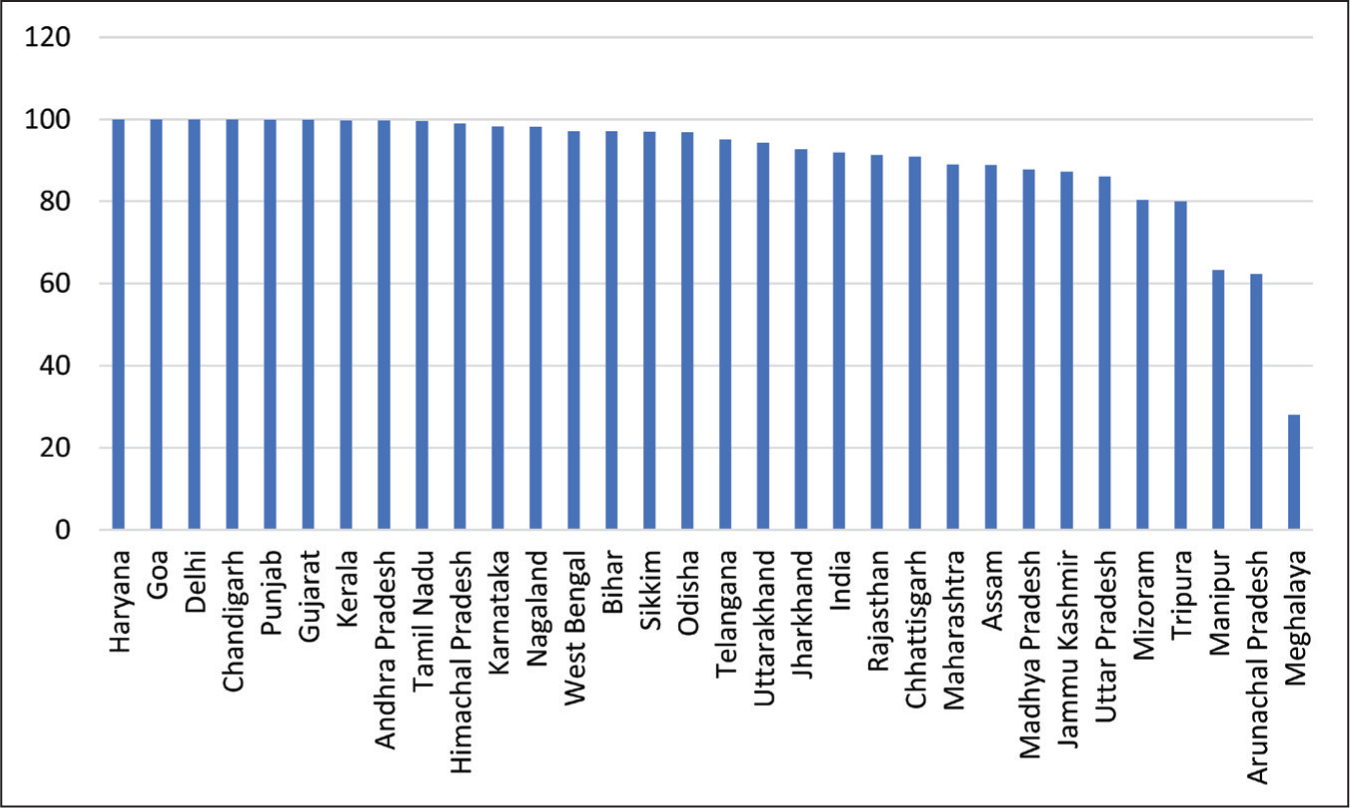
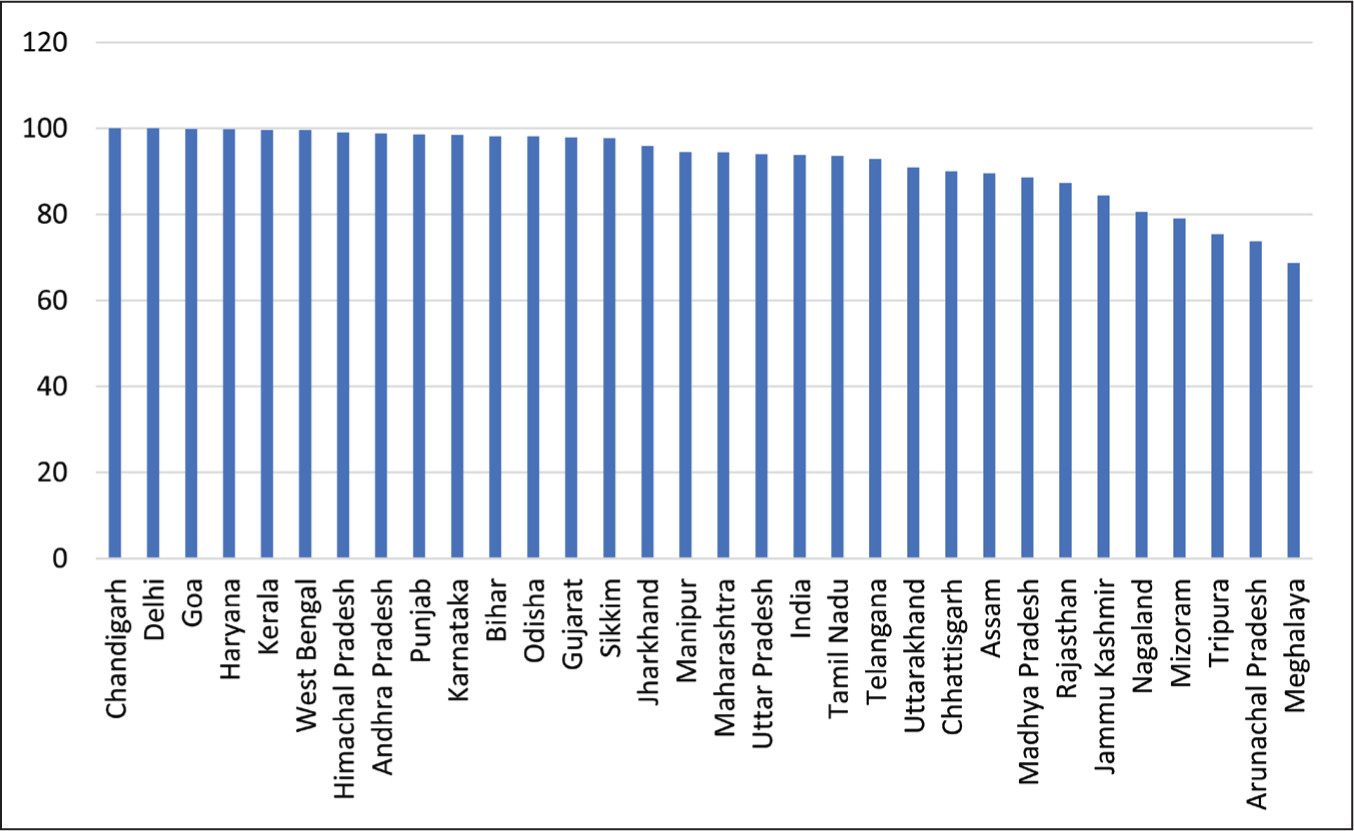
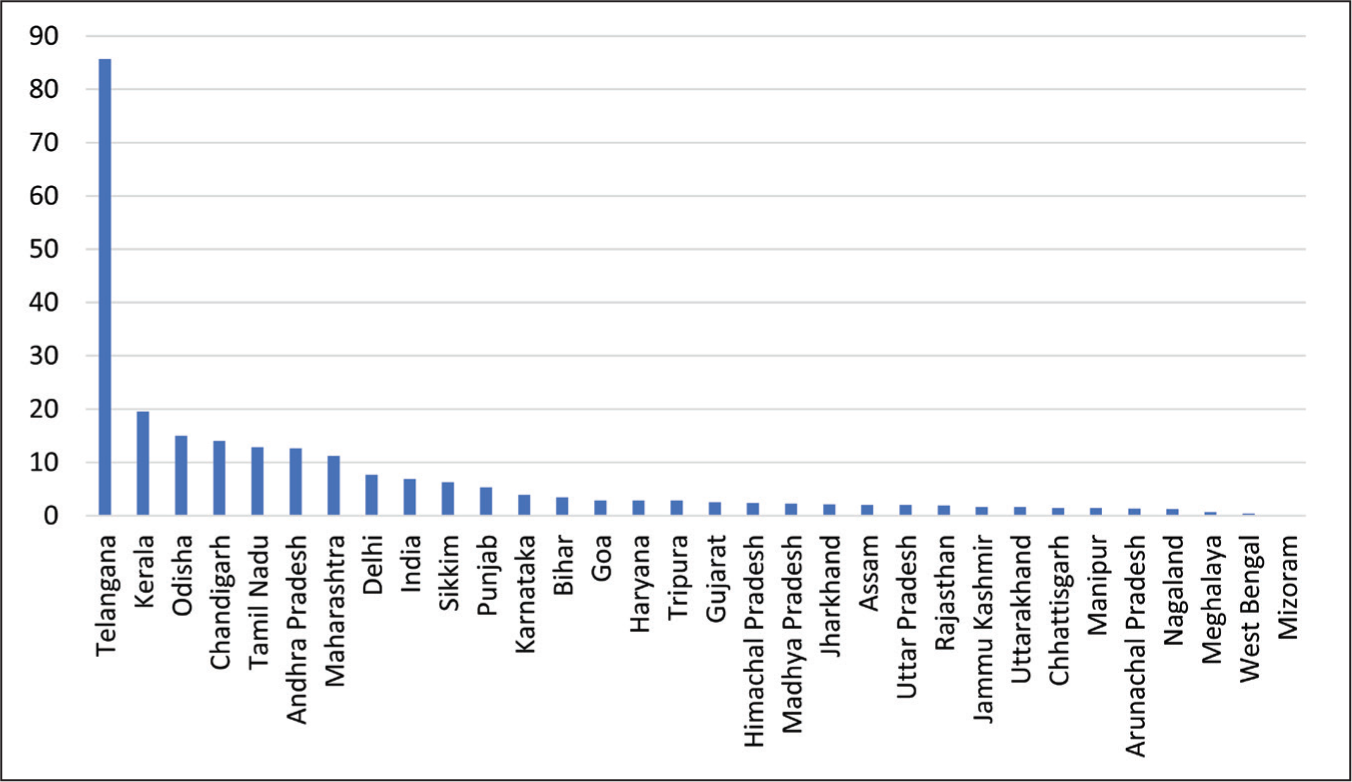
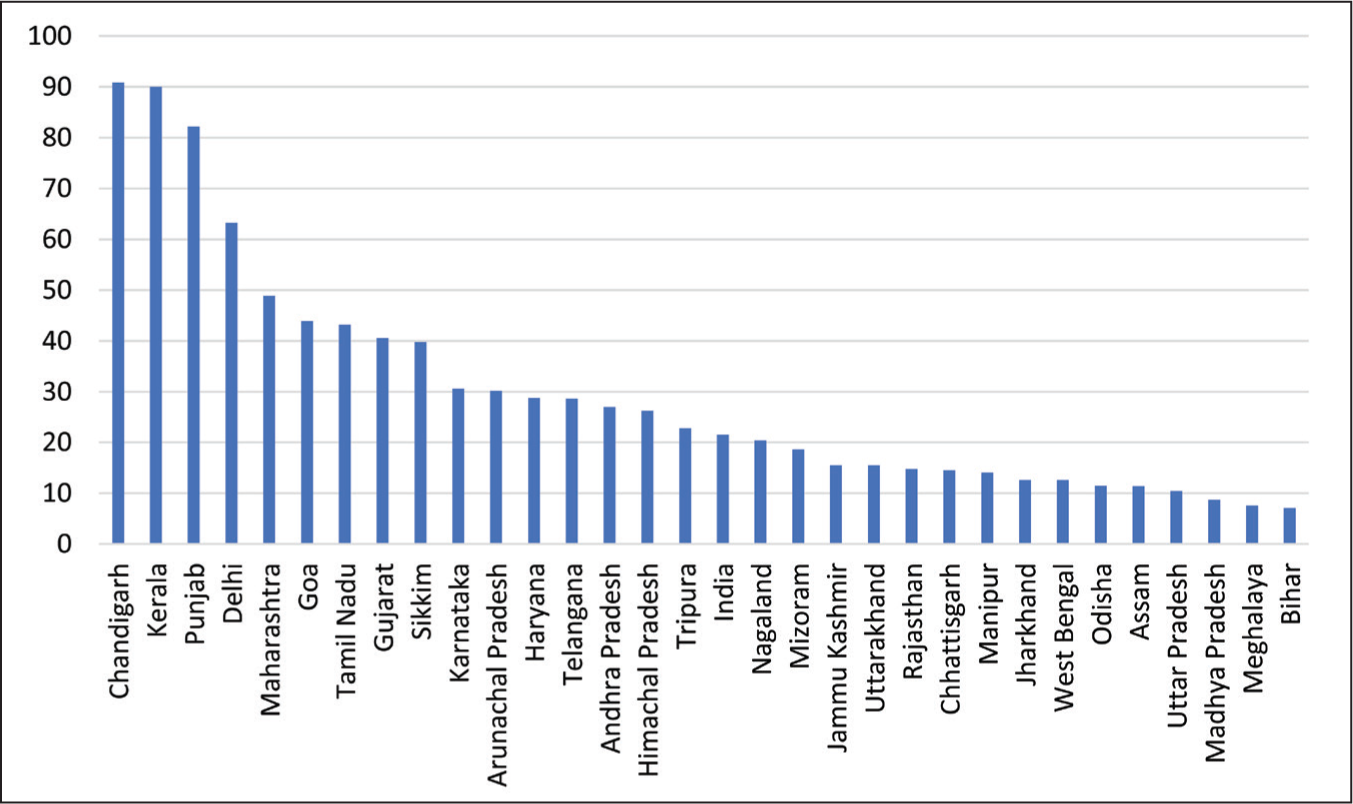
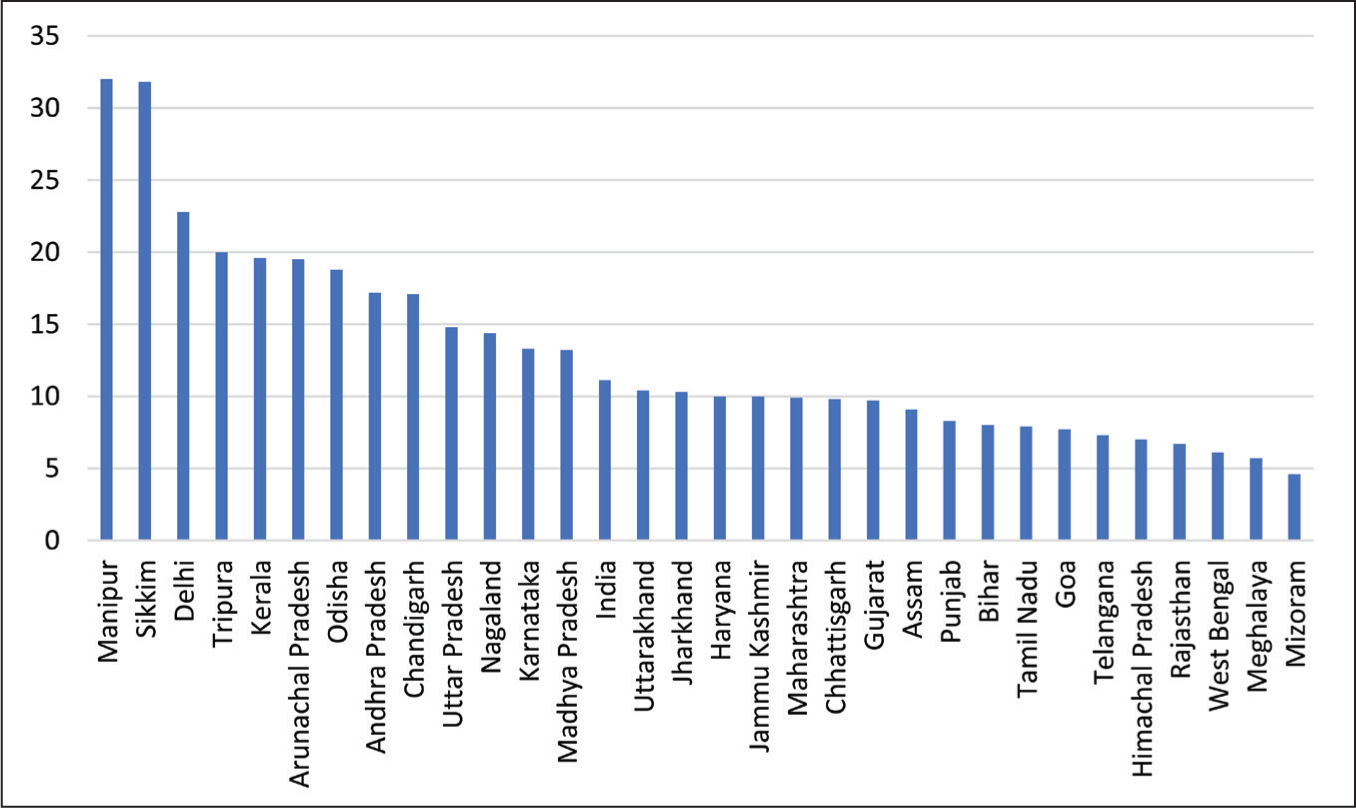
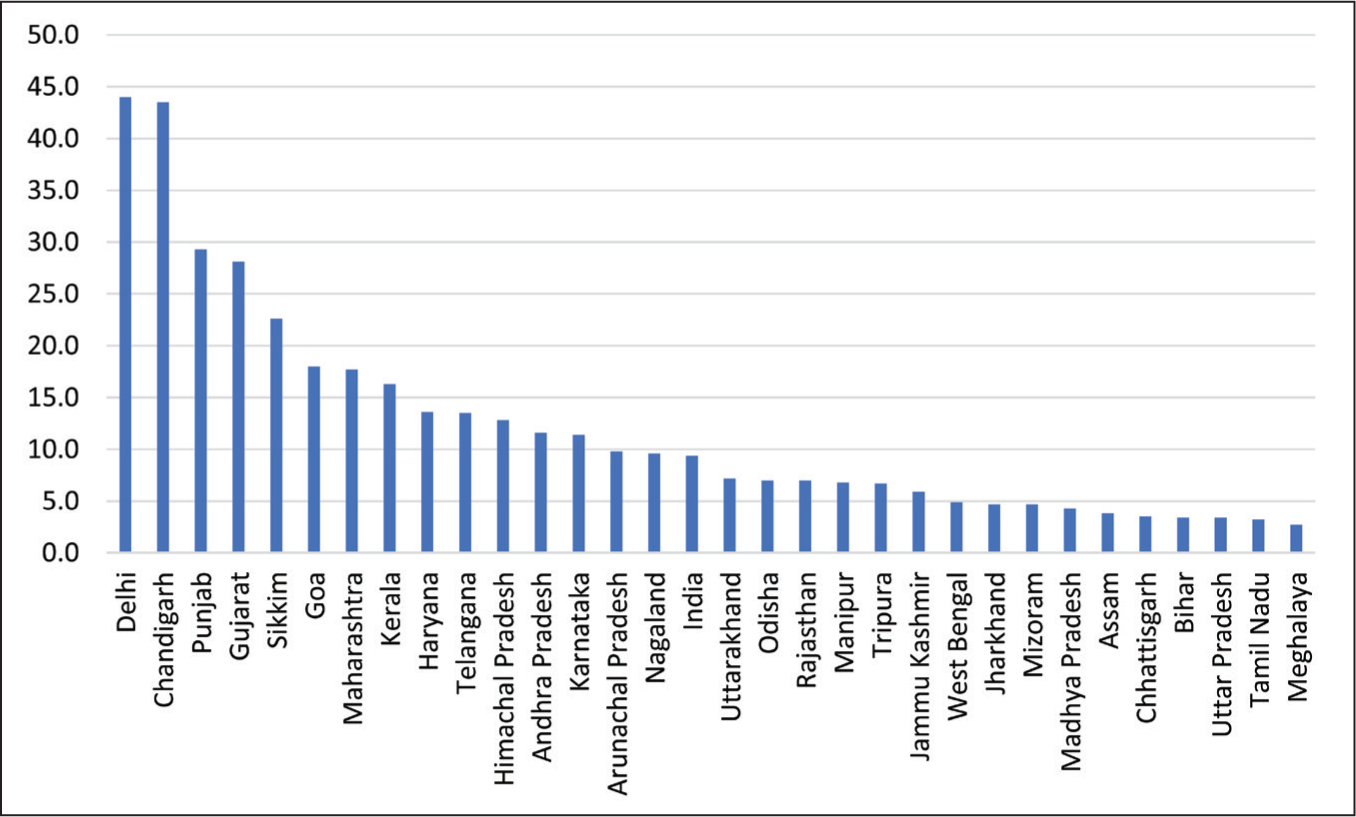
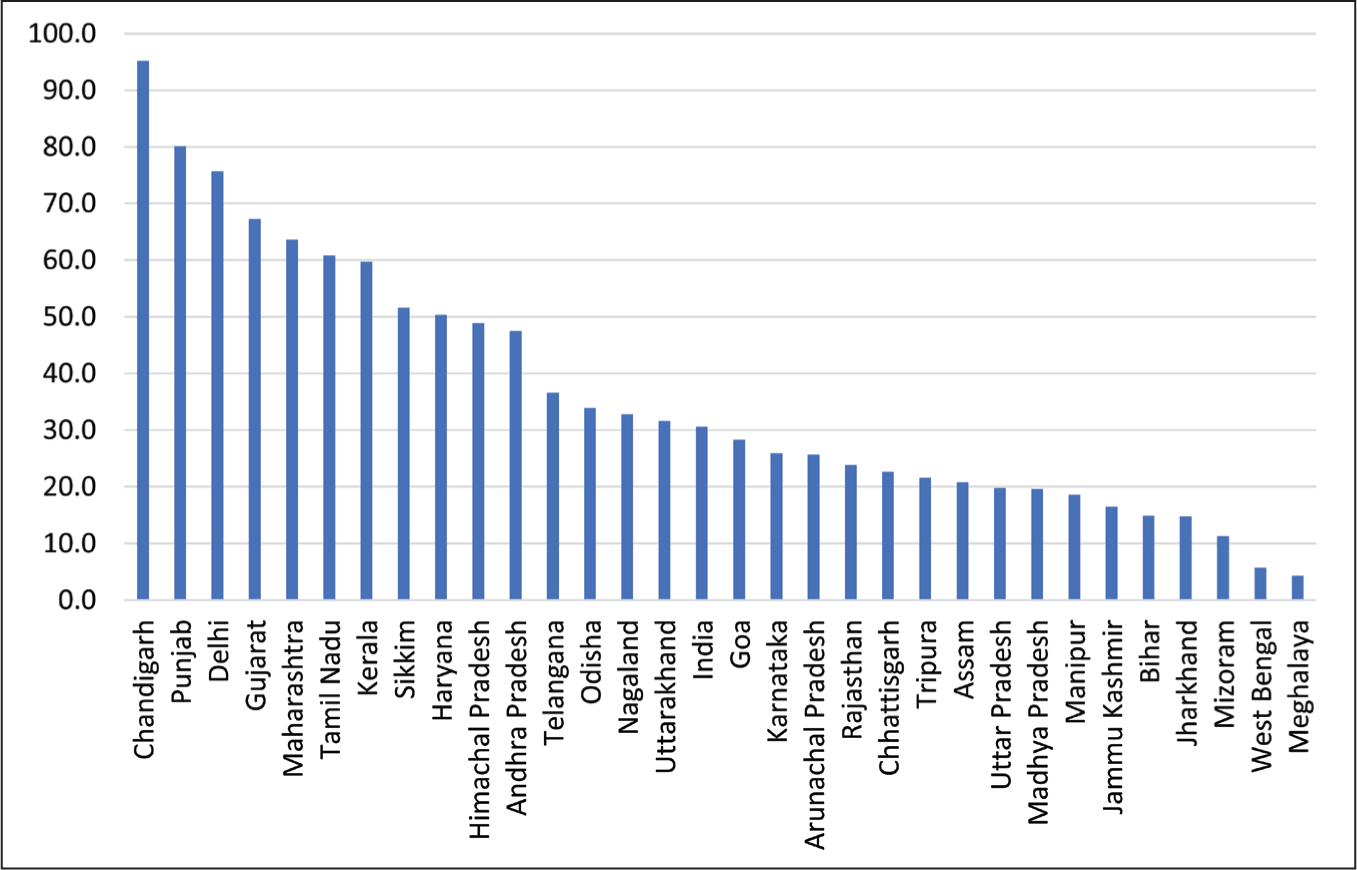
Functional electricity is fundamental to modern school operations, powering everything from digital tools and smart classes to ensuring student comfort (fans/lighting) and hygiene (water pumps). Despite widespread reported electrification efforts, many schools still contend with non-functional wiring, erratic supply of electricity or unusable infrastructure. Figure 1 shows the percentage of schools with functional electricity in 2024–2025. The provision of functional, gender-segregated toilets for girls is equally critical for advancing female education, health and safety. Mandated by the Right to Education Act, 2009, and emphasised by the Swachh Vidyalaya Abhiyan, this facility directly impacts female enrolment, attendance and retention. While access to separate toilets has improved, ensuring their usability and consistent maintenance remains a challenge. Figure 2 presents data on the percentage of schools with functional girls’ toilets. Digital libraries and functional projectors are vital for diversifying teaching and enhancing access to resources. They supply e-books and digital content, enabling teachers to utilise multimedia presentations for deeper conceptual understanding and increased student engagement. We examine the percentage of schools with a digital library facility (Figure 3) and functional projector availability (Figure 4) in 2024–2025.
A tinkering lab is a dedicated innovation space, equipped for robotics, 3D printing and electronics. Its primary role is to foster creativity and entrepreneurship by offering hands-on, experiential learning rooted in science, technology, engineering and mathematics (STEM) principles. Figure 5 provides data on the percentage of secondary and higher secondary schools with operational tinkering labs. Integrated Teaching and Learning (ITL) facilities represent a pedagogical shift towards unifying subjects and skills. This approach connects classroom concepts to real-world applications through interdisciplinary projects, thereby fostering problem-solving skills. Figure 6 shows the percentage of schools with computers that have a functional ITL facility. Finally, the smart classroom is a technologically advanced environment using tools such as interactive whiteboards and internet connectivity. Its role is to transform the teaching–learning process by seamlessly integrating digital technology to make lessons more effective. Figure 7 provides data on the proportion of schools with functional smart classrooms (equipped with digital board/smart board/virtual classroom/smart TV).
Footnotes
Declaration of Conflicting Interests
The author declared no potential conflicts of interest with respect to the research, authorship and/or publication of this article.
Funding
The author received no financial support for the research, authorship and/or publication of this article.