







Abstract
The study examines beneficiary perceptions of government schemes in Jammu and Kashmir after the abrogation of Article 370. It adopted a cross-sectional survey of 960 educated rural and urban respondents. It assessed the perceptions of 21 pre-existing, modified, and new schemes on a five-point Likert scale. The findings reveal moderate satisfaction in both settings and significant differences between individual schemes. More positive reactions were observed for several pre-existing schemes, such as Khelo India and JKIDFC Projects, modified schemes, such as Integrated Social Security Scheme and Ladli Beti, and newly introduced schemes, such as PM-AJAY, Post-Matric Scholarship, Tejaswini, and Mumkin; however, perceptions varied across schemes, with some receiving moderate or low ratings. Infrastructure and social security schemes were preferred by rural respondents, whereas urban participants preferred skill development and entrepreneurship programmes. The lowest level of satisfaction was observed among rural government workers and unemployed urban residents. The analysis shows that rural–urban strategies should be customised, new plans should have realistic schedules, and the needs of unsatisfied occupational groups should be targetted.
Introduction
Jammu and Kashmir (J&K) is a union territory in northern India. It borders Punjab, Ladakh and Himachal Pradesh and shares international boundaries with China and Pakistan. J&K had a unique constitutional and political status in the Indian constitutional and political system due to its special status under Articles 370 and 35A until August 2019. The constitutional structure defined the legislative power, the rights of property, and the extrapolation of the central legislation to the region (Press Information Bureau [PIB], 2019). But it is necessary to explain that J&K was not politically or administratively disconnected from the union government prior to 2019. Indicatively, the PDP–BJP coalition government (2015–2018) unveiled enduring institutional ties between the state and the centre (The Times of India, 2020).
Articles 370 and 35A limited the automatic renewal of some central laws, but there were a number of national welfare schemes in the area, usually in modified or state-specific forms (Jha & Goswami, 2022). There were flagship programmes such as Pradhan Mantri Awas Yojana-Gramin (PMAY-G), Pradhan Mantri Ujjwala Yojana (PMUY), Ayushman Bharat/PM-JAY, and MGNREGA that were launched prior to 2019 (Kashmir Life, 2024). Therefore, the time before 2019 cannot be referred to as the time of total policy exclusion, but as a differentiated implementation. Assessments during this time show lopsided results. Indicatively, in Indira Awaas Yojana, the quality of houses was poor, with only 34 per cent of the houses having sanitary latrines and 6 per cent having water supply (Programme Evaluation Organisation [PEO], 2009). Swarnjayanti Gram Swarozgar Yojana found that 58 per cent of self-help groups (SHGs) were dissatisfied with problems such as delayed loans and access to the market (PEO, 2009). According to the Comptroller and Auditor General (2018), the gaps in implementation were also reported as major target deficiencies and financial inefficiencies. These results indicate that the problem of governance existed before 2019, and the constitutional status was not the only reason.
The reorganisation of the former state into two union territories and the consistent extension of central laws on 5 August 2019 was an important administrative change (Ministry of Home Affairs [MHA], 2023). The policies after 2019 were highly focussed on integration with such programmes as BharatNet, infrastructure building, and welfare growth (Asharaf & Tol, 2024; Kathuria et al., 2018). Nevertheless, the research does not assume that constitutional change is a direct cause of socio-economic change. Instead, it examines how individuals perceive the effectiveness, availability, and consciousness of specific government programmes.
It is necessary to differentiate between schemes that were introduced recently and those that were restructured or extended since 2019. Other schemes, such as PMAY and PMUY, were implemented before 2019 but had their coverage extended, whereas the policies of industrial and tourism that were implemented after 2021 are newer interventions (PIB, 2022). This kind of differentiation is essential since the opinion of the population can be different in case the programmes are perceived as new benefits or ongoing initiatives.
However, policy expansion, awareness, and accessibility remain critical determinants of welfare effectiveness. Research indicates that administrative ability, local outreach, and income stability all affect the uptake of the scheme (Mani et al., 2020). Kathuria et al. (2018) and Human Rights Watch (2023) have identified that policy perception is substantially influenced by communication disruptions and institutional trust in conflict-affected contexts. That is why evaluating how citizens feel is important for understanding how the implementation worked out.
While most of the research that has been done on J&K since 2019 has concentrated on security aspects, constitutional disputes, and macroeconomic indicators, few sociological studies have systematically looked at how beneficiaries perceive the implementation of welfare in rural and urban areas. Most available analyses rely on aggregate statistics rather than grassroots-level experiential data. By adopting a rural–urban comparative perception approach, the present study addresses this documented gap in sociological inquiry and contributes micro-level empirical evidence on how administrative reforms are experienced across spatial categories.
Theoretical Framework
The study relies on three theoretically consistent approaches, including policy implementation theory, the legitimacy theory, and street-level bureaucracy.
To begin with, the classical implementation theory (Pressman & Wildavsky, 1973; Sabatier, 1986) points out that the success of public policy is determined not only by formal design but also by the way the policies are implemented at different levels of administration. There are usually implementation gaps between policy intent and field-level outcomes. Citizen perception in this respect is an indirect measure of effectiveness in implementation.
Second, the theory of legitimacy, especially the differentiation between diffuse and specific support as proposed by Easton (1965), implies that citizens consider the political systems in terms of lived experiences with the public institutions. Welfare schemes can enhance institutional legitimacy when they become more accessible, fair, and responsive. On the other hand, any displeasure with delivery may undermine trust despite policy announcements.
Third, the theory of street-level bureaucracy by Lipsky (1980) emphasises the importance of frontline officials in defining the experiences of policies by beneficiaries. In rural and conflict-prone regions, discretionary acts by local administrators, restrictions of access, and communication gaps largely affect the perception of schemes.
These theoretical approaches can be used to interpret perception data not as subjective opinion but as manifestations of the process of implementation, institutional legitimacy, and day-to-day governance in a transitional governance setting like post-2019 J&K. Using a comparison between rural and urban reactions, the study acknowledges that spatial and occupational inequalities mediate in the reception and evaluation of policies.
Universe and Significance of the Study
The universe of the study comprises inhabitants of the union territory of J&K, rural and urban, in the post-abrogation era since 5 August 2019. The region is geopolitically sensitive because of the Line of Control and the ongoing security dynamics, which is strategically placed in north-western India and surrounded by the Kashmir region, controlled by Pakistan, and China (Encyclopaedia Britannica, 2025). The Census of India (2011) indicated that J&K had an estimated population of 12.5 million, of which almost 73 per cent of the population lived in rural locations, and approximately 8.4 million of the population were literate. Reforms after 2019 have focussed on administrative reorganisation, infrastructure, and increased welfare provision (PIB, 2022), but security issues still affect the perception of the population (Reuters, 2024).
The area under study is important since the chosen districts are representative of the social, economic, and geographic diversity of J&K. The districts under the Jammu division have industrial, agricultural, border, and hilly regions, whereas the districts under the Kashmir division are tourism-based, horticulture-based, and border economies. The diversity guarantees equal representation of the two divisions and also urban, rural, and border areas, providing a holistic and analytical view (Kumar & Sethi, 2024).
Research Methodology
Research Design
The study uses a quantitative methodology with a cross-sectional descriptive survey design. Creswell and Creswell (2018) state that cross-sectional surveys are perfect for investigating the opinions of the population at a single point in time. The design is appropriate to the aim of the study to capture the rural–urban differences in the perception of government schemes following the abrogation of Article 370. It enables the systematic measurement of the opinions of the respondents, minimises researcher bias by using structured data collection, and offers credible evidence of the effectiveness of such schemes.
Sampling Procedure
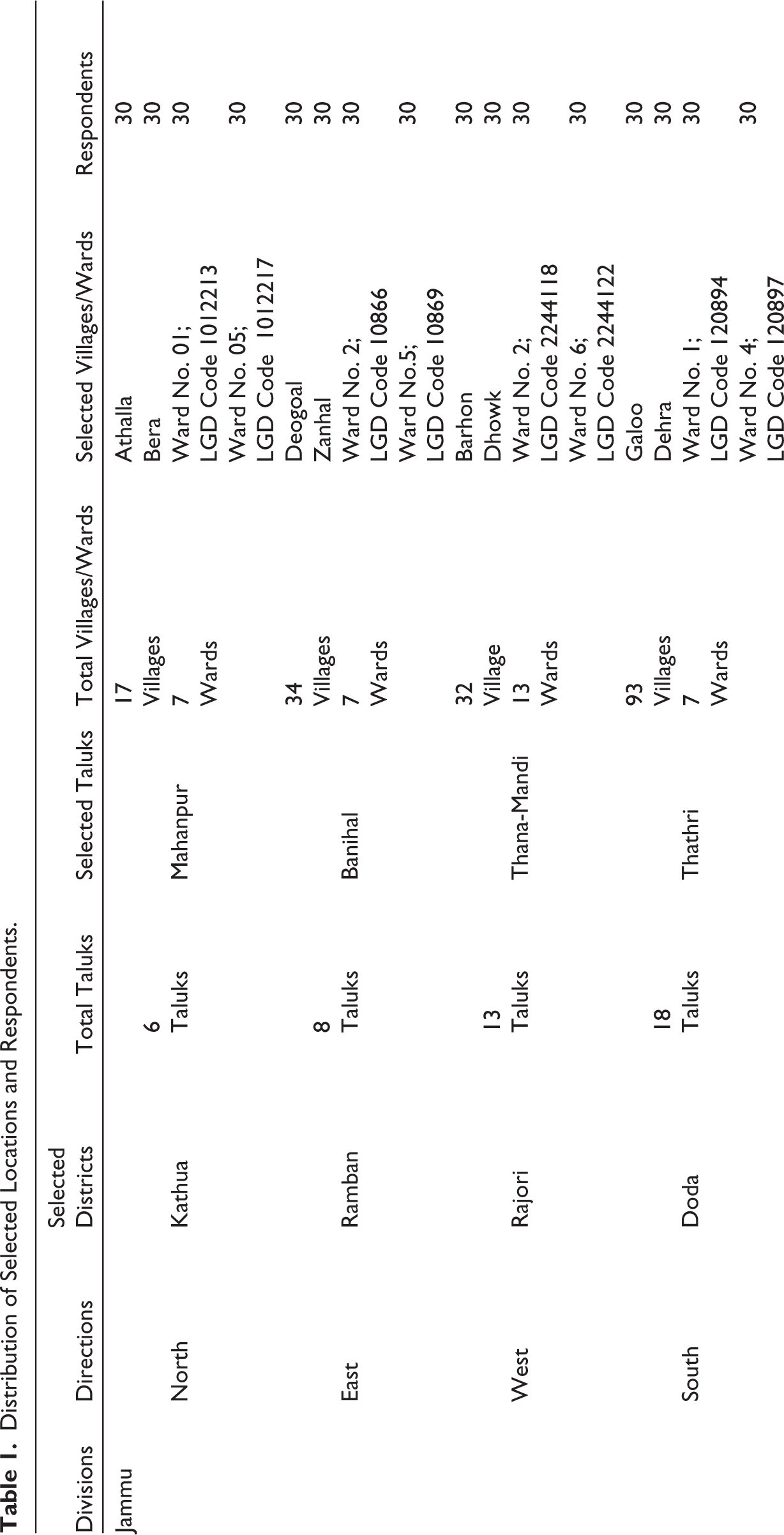
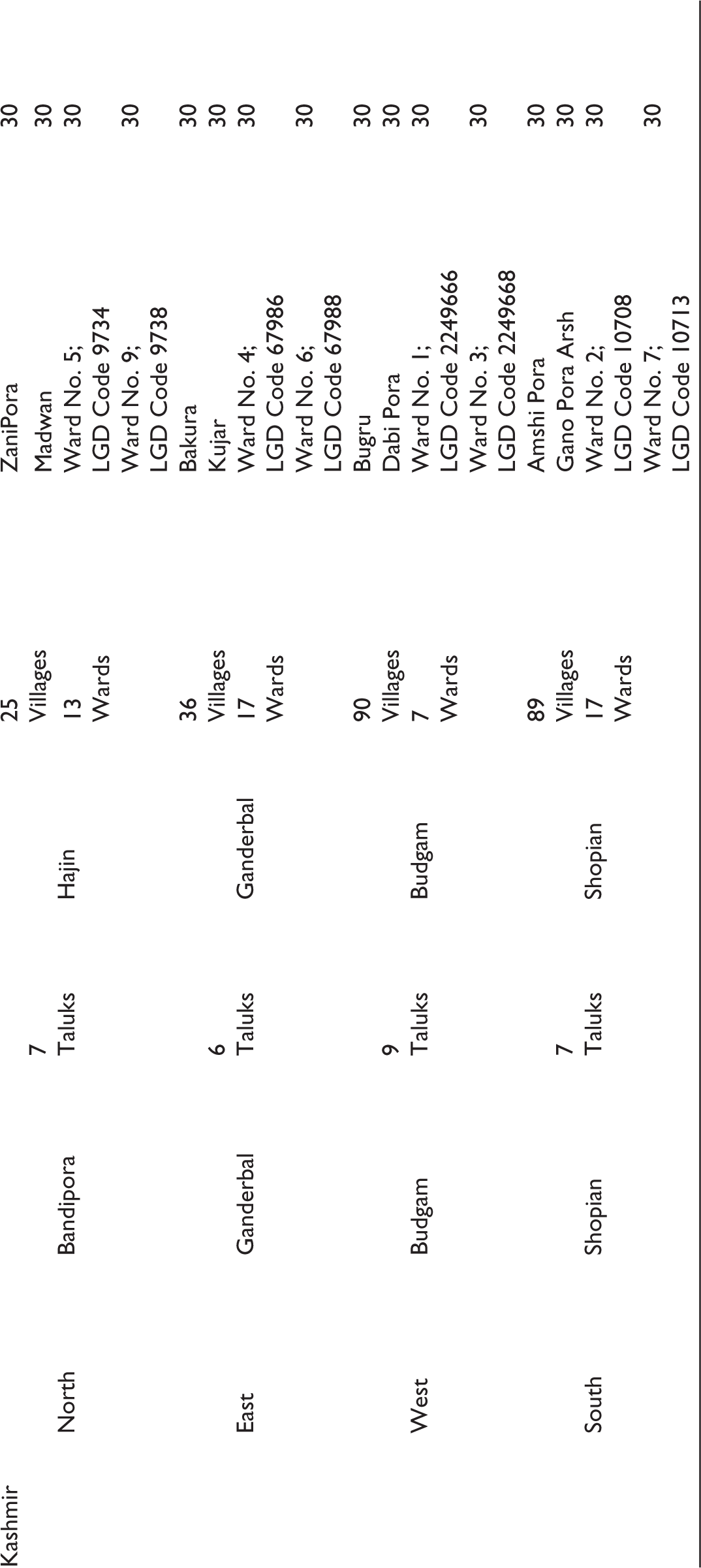
A multi-stage purposive sampling design was adopted in the union territory of J&K. The two divisions, Jammu and Kashmir, were divided into four geographic directions (north, south, east, and west). From each direction, one district was selected, making a total of eight districts. From each selected district, one taluk was chosen. From each selected taluk, two villages and two wards were included. Thus, each district consisted of four sampling units (two villages and two wards).
The respondents were selected purposively. During the pilot study, it was observed that illiterate individuals were unable to understand and respond clearly to scheme-related questions. So, only those who had completed senior secondary education and possessed basic awareness of government schemes were included to ensure meaningful and reliable responses. Minimum education ensured adequate comprehension. Data were collected through face-to-face interviews to improve clarity, interaction, and response accuracy. Interviews were conducted in local languages, Kashmiri in the Kashmir Division and Dogri and Urdu in the Jammu Division, to ensure better understanding and comfort. Simple explanations were provided whenever necessary. The answers were in terms of personal, family, or community experience and observable benefits, such as financial support and service access.
Table 1 shows the distribution of the selected divisions, districts, taluks, villages, wards, and respondents.
Distribution of Selected Locations and Respondents.
Sample Size Determination
To have a clear statistical basis for the sample, Cochran’s formula for large populations was used:
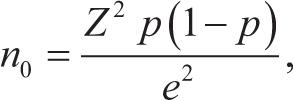
where Z = 1.96 (for 95 per cent confidence), p = 0.5 (maximum variability), and e = 0.09 (margin of error 9 per cent).
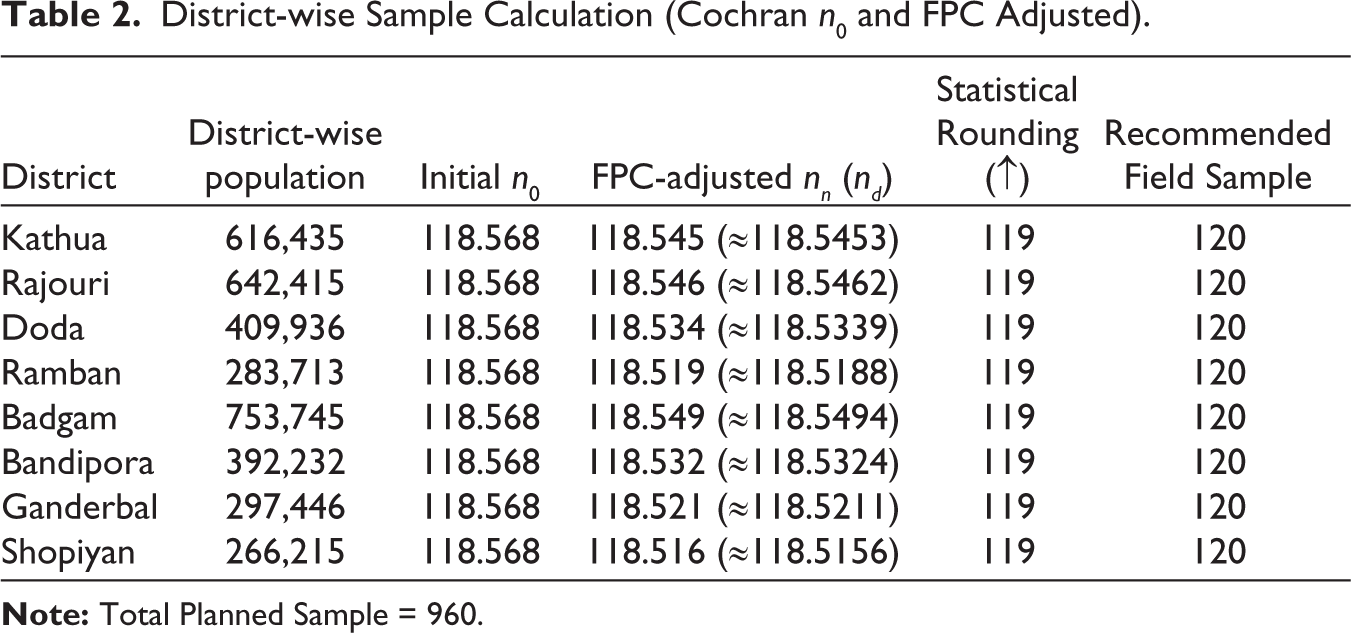
The calculated sample size (n0) was 118.57 (approximately 119 per district).
Since district populations are finite, the finite population correction (FPC) was applied:
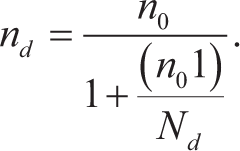
The FPC-adjusted values ranged between 118 and 119 across districts, showing negligible variation. Therefore, for operational convenience and to manage non-response, the sample was rounded to 120 respondents per district.
With eight selected districts: 8 × 120 = 960 respondents.
Since each district had four sampling units (two villages and two wards), the district sample of 120 was equally distributed: 120 ÷ 4 = 30 respondents per village and 30 per ward.
In the field, 1,263 people were interviewed as a way of countering incomplete or unusable responses. Following the screening, 303 responses were eliminated, and 960 valid responses were used for analysis.
Inclusion and Exclusion Criteria
The participants were required to be residents of the sampled villages or wards, aged over 18 years, and had to have completed senior secondary education. Only the willing participants who gave full answers were taken.
The district-wise sample size was calculated using Cochran’s formula with finite population correction, as shown in Table 2.
District-wise Sample Calculation (Cochran n0 and FPC Adjusted).
Research Tool
A self-structured interview schedule was used to assess perceptions of 21 government schemes implemented before and after the abrogation of Article 370. Responses were recorded on a five-point Likert scale: strongly agree, agree, neutral, disagree, and strongly disagree.
Validity and Reliability
Validity was ensured through expert review, pilot testing, and alignment with research objectives. Reliability was tested using internal consistency analysis on 960 respondents, yielding Cronbach’s alpha of 0.91, indicating excellent reliability suitable for further statistical analysis.
Ethical Considerations
The study followed basic ethical rules. Participants volunteered, and the study objective was communicated in their local language, and then verbal consent was obtained. No personal information or names were gathered. All data were stored securely in password-protected systems. The findings are presented in a summary manner. The participants were free to end the interview whenever they wished, and the field investigators were trained to be polite and respectful.
Results and Discussion
Table 3 shows the demographic profile of 960 respondents included in the study. The sample is equally divided between rural and urban areas, with 50 per cent from each, ensuring balanced representation. In terms of gender, males slightly outnumber females. Regarding occupation, students form the largest group, followed by those engaged in agriculture and housewives. Smaller proportions are involved in business, government service, private jobs, and unemployment. Concerning monthly family income, most respondents belong to the middle-income categories, especially ₹20,001–30,000 and ₹10,001–20,000. Only a small percentage falls in the highest and lowest income groups. Thus, the table indicates a socially and economically diverse sample suitable for meaningful analysis.
Demographic Profile of Respondents.
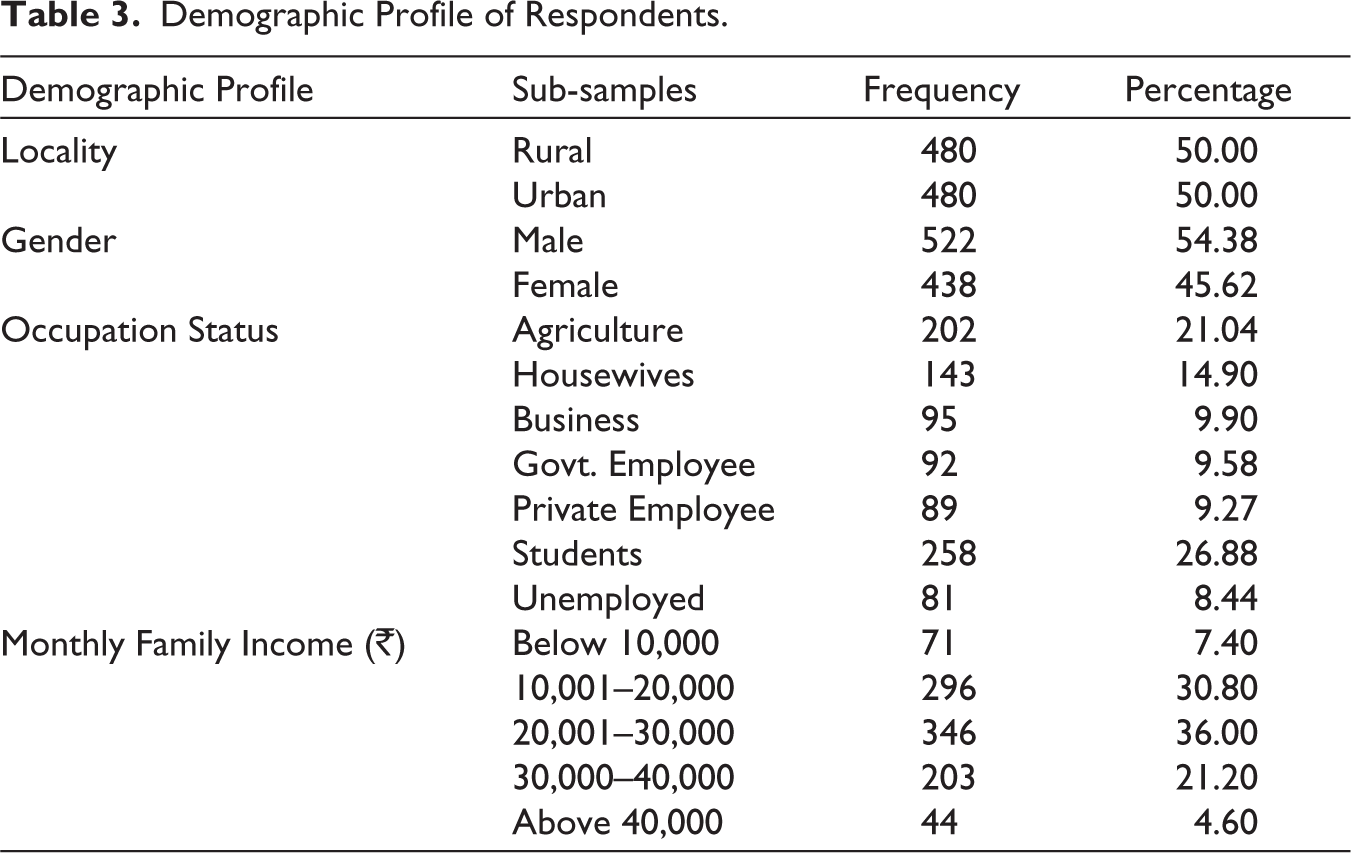
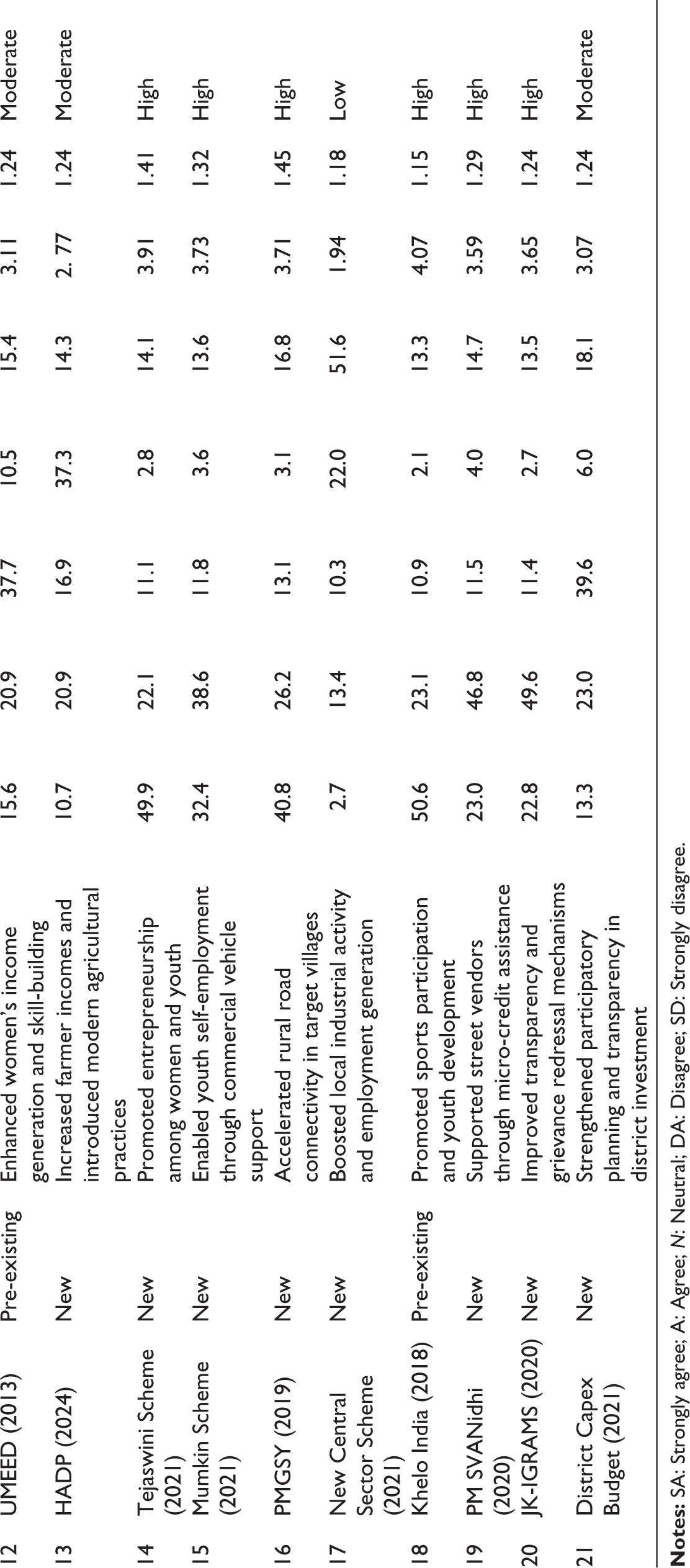
Table 4 presents respondents’ perceptions of 21 government schemes and programmes implemented in J&K, which aim to support people socially and economically after the abrogation of Article 370, measured on a five-point Likert scale. The perceptions are classified as high (mean ≥ 3.50), moderate (2.50 ≤ mean < 3.50), and low (mean < 2.50). The respondents evaluated these schemes based on their personal, family, and community-level experiences. Mean scores range from 1.94 to 3.95, with standard deviations ranging from 1.02 to 1.45, indicating variation in perceptions across the schemes.
Descriptive Statistics of Perceptions Towards Post-Article 370 Government Schemes in Jammu and Kashmir.
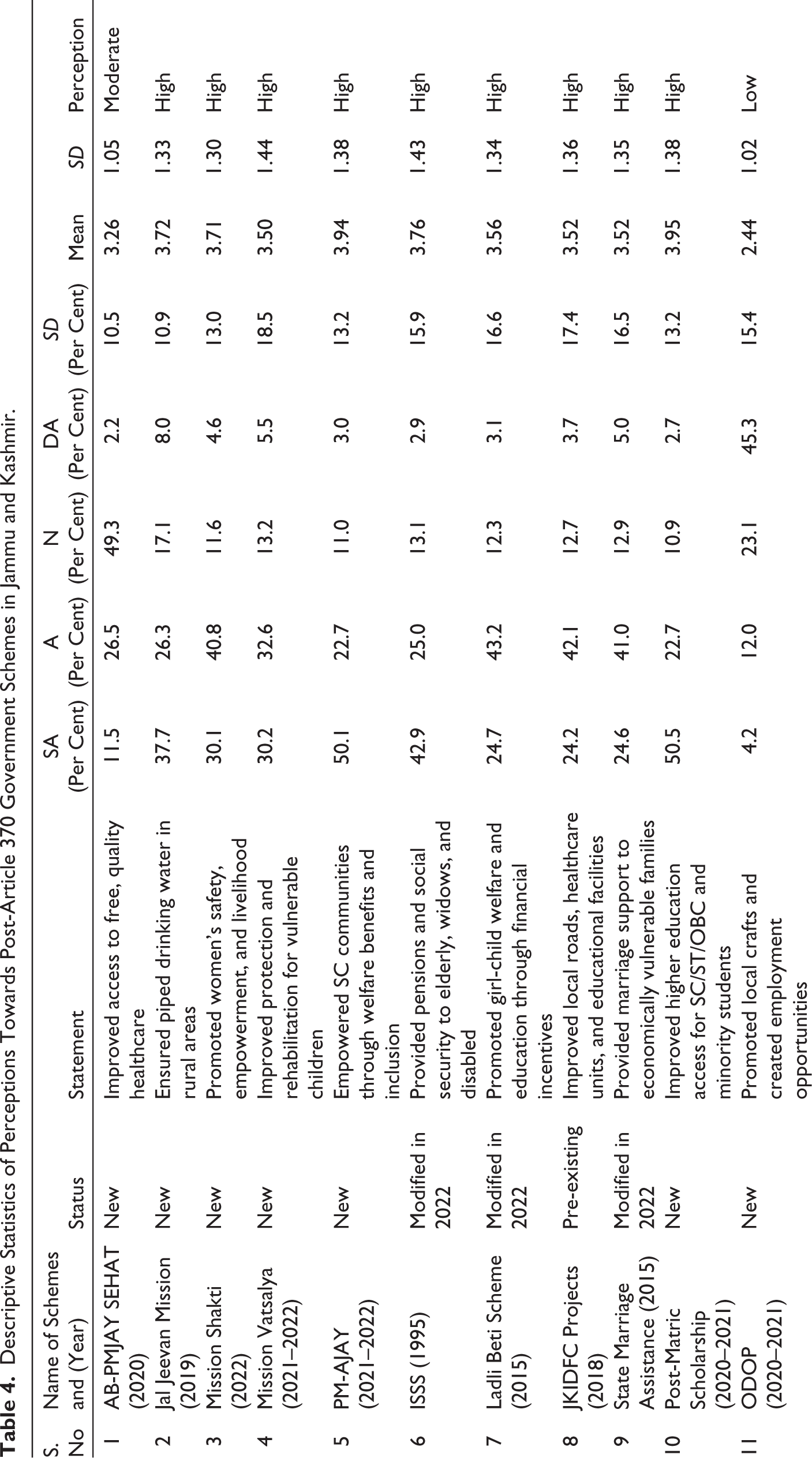
The AB-PMJAY SEHAT scheme (Jammu and Kashmir State Health Agency, 2020), launched on 26 December 2020, shows a moderate level of perception (M = 3.26, SD = 1.05), with only 38 per cent of respondents agreeing and strongly agreeing that healthcare access improved in the study area. It aligns with findings from J&K, where 88.5 per cent possessed SEHAT cards, yet 97.6 per cent still incurred out-of-pocket expenditure, highlighting gaps between coverage and actual benefits (Rasool & Geer, 2025). National studies similarly report awareness challenges under PM-JAY, with only 18.8 per cent of rural beneficiaries in Uttar Pradesh aware of benefits and just 14.3 per cent knowing how to use the scheme (Dixit et al., 2025).
The Jal Jeevan Mission (Ministry of Jal Shakti, Government of India, 2019), launched on 15 August 2019, received a high perception (M = 3.72, SD = 1.33), with 64 per cent of respondents acknowledging improved access to piped drinking water in rural areas. The perception may reflect coverage rather than functionality. According to the 2024 Functionality Assessment Survey, while 98 per cent of rural households have tap connections, only about 75 per cent receive a reliable and safe water supply (Vajiram Mains Team, 2026).
Mission Shakti (Ministry of Women and Child Development, Government of India, 2022), launched on 1 April 2022, showed a high perception (M = 3.71, SD = 1.30), with 70.9 per cent of respondents agreeing and strongly agreeing that it promoted women’s safety and livelihood opportunities in the study area. A study of similar programmes in Maharashtra found that 97 per cent of women achieved independent earnings through SHG-based approaches, with median annual income rising from ₹18,000 to ₹35,000 (Maharashtra State Rural Livelihoods Mission, 2017).
Mission Vatsalya (Ministry of Women and Child Development, Government of India, 2021), introduced in 2021–2022 after the abrogation of Article 370, showed a high perception (M = 3.50, SD = 1.44), with 62.8 per cent of respondents agreeing and strongly agreeing that protection and rehabilitation services for vulnerable children improved in the study area. The scheme aims to create an enabling environment for vulnerable children based on the principle of ‘Leave No Child Behind’ (Chakraborty et al., 2024).
PM-AJAY (Ministry of Social Justice and Empowerment, Government of India, 2021), launched in 2021–2022, shows a high perception (M = 3.94, SD = 1.38), with 72.8 per cent of respondents reporting that it promoted socio-economic empowerment, improved access to welfare benefits, and ensured the social and economic inclusion of Scheduled Caste communities.
The Integrated Social Security Scheme (ISSS), originally introduced in 1995 and modified in 2022 (Social Welfare Department, Government of Jammu and Kashmir, 2022a), showed a high perception (M = 3.76, SD = 1.43), with 47.9 per cent of respondents agreeing and strongly agreeing that it provides pensions to the elderly, widows, and persons with disabilities. In Srinagar district alone, over ₹700 million was disbursed to 61,300 beneficiaries under ISSS and the National Social Assistance Programme, with monthly pensions of ₹1,000. The scheme covers 55,296 beneficiaries in Srinagar, with no reported case pendency (Kashmir Life, 2023).
The Ladli Beti Scheme, launched on 1 April 2015 and revised in 2022 (Social Welfare Department, Government of Jammu and Kashmir, 2022b), showed a high perception (M = 3.56, SD = 1.34), with 67.9 per cent of respondents agreeing and strongly agreeing that it offers financial incentives promoting girl-child welfare and education. The scheme deposits ₹1,000 per month into girls’ accounts from birth until the age of 21, when beneficiaries receive a lump sum of ₹0.65 million (Khan, 2021).
Jammu and Kashmir Infrastructure Development Finance Corporation Projects (2018), a pre-existing initiative, showed a high perception (M = 3.52, SD = 1.36), with 66.3 per cent of respondents reporting improvements in roads, healthcare units, and educational facilities locally. The corporation has completed over 1,500 projects worth ₹25 billion, including infrastructure development in health, education, and transport sectors (Kashmir Scan Magazine, 2023).
The State Marriage Assistance Scheme, launched on 2 December 2015 and modified in 2022 (Social Welfare Department, Government of Jammu and Kashmir, 2022c), showed a high perception (M = 3.52, SD = 1.35), with 65.6 per cent of respondents reporting that it provided marriage support to economically vulnerable families.
The Post-Matric Scholarship, newly introduced in 2020–2021 (Ministry of Education, Government of India, 2020), showed a high perception (M = 3.95, SD = 1.38), with 73.2 per cent of respondents reporting improved access to higher education for SC/ST/OBC and minority students. Studies confirm that scholarships increase educational participation among marginalised communities (Ghosh et al., 2023).
The One District One Product (ODOP) Scheme, introduced in 2020–2021 (Department for Promotion of Industry and Internal Trade, Ministry of Commerce and Industry, Government of India, 2021), showed a low perception (M = 2.44, SD = 1.02), with 45.3 per cent of respondents disagreeing that it promoted local crafts and generated employment opportunities in the study area. A study in Uttar Pradesh found that ODOP primarily benefitted established large clusters in western regions, with limited employment impact data available (Tewari & Jha, 2024).
UMEED, a pre-existing scheme launched in 2013 (Jammu and Kashmir State Rural Livelihoods Mission, 2019), showed a moderate perception (M = 3.11, SD = 1.24), with 37.7 per cent of respondents neither agreeing nor disagreeing regarding its role in enhancing women’s income-generation opportunities and skill-building. A pre-abrogation study by Qasba et al. (2016) demonstrated that UMEED improved financial inclusion and women’s empowerment through SHG formation in J&K, with significant credit flow.
The Holistic Agriculture Development Programme, launched in March 2024 (Agriculture Production Department, Government of Jammu and Kashmir, 2024), showed a moderate perception (M = 2.77, SD = 1.24), with 51.6 per cent of respondents disagreeing that it increased farmers’ incomes and introduced modern agricultural practices in the study area. The perception is expected, given the scheme’s recent launch close to the study period. Recent government reviews indicate that HADP has since established over 91,600 agricultural units, generated ₹13.4 million person-days of employment, and created ₹2.98 billion in revenue (Dulloo, 2025).
The Tejaswini Scheme, newly introduced in 2021 to promote women’s and youth entrepreneurship, was implemented across J&K (Mission Youth, Government of Jammu and Kashmir, 2021). The data showed high perception (M = 3.91, SD = 1.41), with 70 per cent of respondents agreeing and strongly agreeing that it promoted entrepreneurship among women and youth. An evaluation in Maharashtra found that 97 per cent of SHG members achieved independent earnings, with a significant occupational shift from housewives to entrepreneurs and an increase in median annual income from ₹18,000 to ₹35,000 (MAVIM, 2017).
The Mumkin Scheme, introduced in 2021, aims to generate self-employment opportunities for unemployed youth (Mission Youth, Government of Jammu and Kashmir, 2021). The result showed high perception (M = 3.73, SD = 1.32), with 71 per cent of respondents agreeing and strongly agreeing that it enabled youth self-employment through the provision of commercial vehicles and related support.
PMGSY, introduced in 2019 after the abrogation of Article 370 (National Rural Infrastructure Development Agency, Ministry of Rural Development, Government of India, 2019), showed a high perception (M = 3.71, SD = 1.45), with 67 per cent of respondents agreeing and strongly agreeing that it accelerated rural road connectivity in target villages. World Bank research indicates that PMGSY reduces travel time by approximately six minutes per kilometre, enhances farm-to-market connectivity, and increases non-farm employment by 13 per cent (World Bank, 2021).
The New Central Sector Scheme, launched on 19 February 2021 (Ministry of Home Affairs, Government of India, 2021), showed a very low perception (M = 1.94, SD = 1.18), with 73.6 per cent of respondents disagreeing that it generated employment. Industrial schemes typically require three to five years to produce visible outcomes, which may explain the negative perception during the early phase of implementation (Ministry of Home Affairs, Government of India, 2021).
Khelo India, a pre-existing initiative launched in 2018 (Ministry of Youth Affairs and Sports, Government of India, 2018), showed the highest perception (M = 4.07, SD = 1.15), with 73.7 per cent of respondents agreeing and strongly agreeing that it promoted sports participation and youth development in the study area.
PM SVANidhi, launched on 1 June 2020 (Ministry of Housing and Urban Affairs, Government of India, 2020), shows that respondents perceived high perception (M = 3.59, SD = 1.29), with 69.8 per cent of respondents agreeing and strongly agreeing that it supported street vendors through micro-credit and working-capital assistance. A study in Indore found that 68 per cent of vendors experienced income increases, while 72 per cent reduced dependence on informal moneylenders.
JK-IGRAMS, introduced in October 2020 to strengthen grievance redressal mechanisms, enhanced administrative responsiveness in J&K (General Administration Department, Government of Jammu and Kashmir, 2020). The data highlighted that respondents perceived high perception (M = 3.65, SD = 1.24), with 70.4 per cent of respondents agreeing and strongly agreeing that it improved transparency and grievance redressal mechanisms in the study area. The platform integrates with CPGRAMS and provides real-time monitoring, achieving a 96 per cent grievance disposal rate (MHA, 2023).
Finally, the District Capex Budget, announced on 12 June 2021 (Finance Department, Government of Jammu and Kashmir, 2021), showed a moderate perception (M = 3.07, SD = 1.24), with 39.6 per cent of respondents neither agreeing nor disagreeing regarding its role in strengthening participatory planning and transparency in district-level investment. It suggests partial awareness of participatory mechanisms and highlights the need for improved community engagement in district investment decisions.
The comparative analysis shows that the attitude towards government schemes is generally moderate in both rural and urban environments, with only a slight difference between the two. The close resemblance to the general perception indicates that the 2019 welfare interventions have attained a comparatively homogenous coverage to spatial categories. The fact that both regions have maintained a significant neutral and negative response proportion indicates a lack of awareness, access, or efficiency. It implies that scheme expansion has been made, but the depth of impact and citizen engagement has been uneven and needs more specific implementation strategies than a standard delivery of policies.
The gender-based analysis shows very little difference in the perception between rural and urban settings, meaning that welfare schemes are perceived in a fairly gender-neutral fashion. The uniformity of perception indicates that there are no important differences in the scheme benefits and constraints across gender lines. But the moderate perception of all groups generally shows that schemes are not perceived as strong in their effectiveness. It underlines that perception can be more affected by structural and implementation aspects than gender-based differences.
Varying perceptions among occupational groups show more distinct variation than any other variable, such as gender or location. Most occupational groups present moderate satisfaction, but the results suggest that perception is highly related to the kind of economic activity and the direct advantage of schemes. Relatively favourable perceptions are demonstrated by the rural respondents who are involved in agriculture and in other individual activities, and this may be as a result of the actual benefits of infrastructure and schemes concerning livelihoods. Conversely, respondents in rural government jobs and urban unemployed are relatively less satisfied, implying that there is a gap between the policy design and the delivery of the benefits to these two groups. This trend underscores the fact that occupational positioning is very important in influencing the process of evaluating and experiencing welfare interventions.
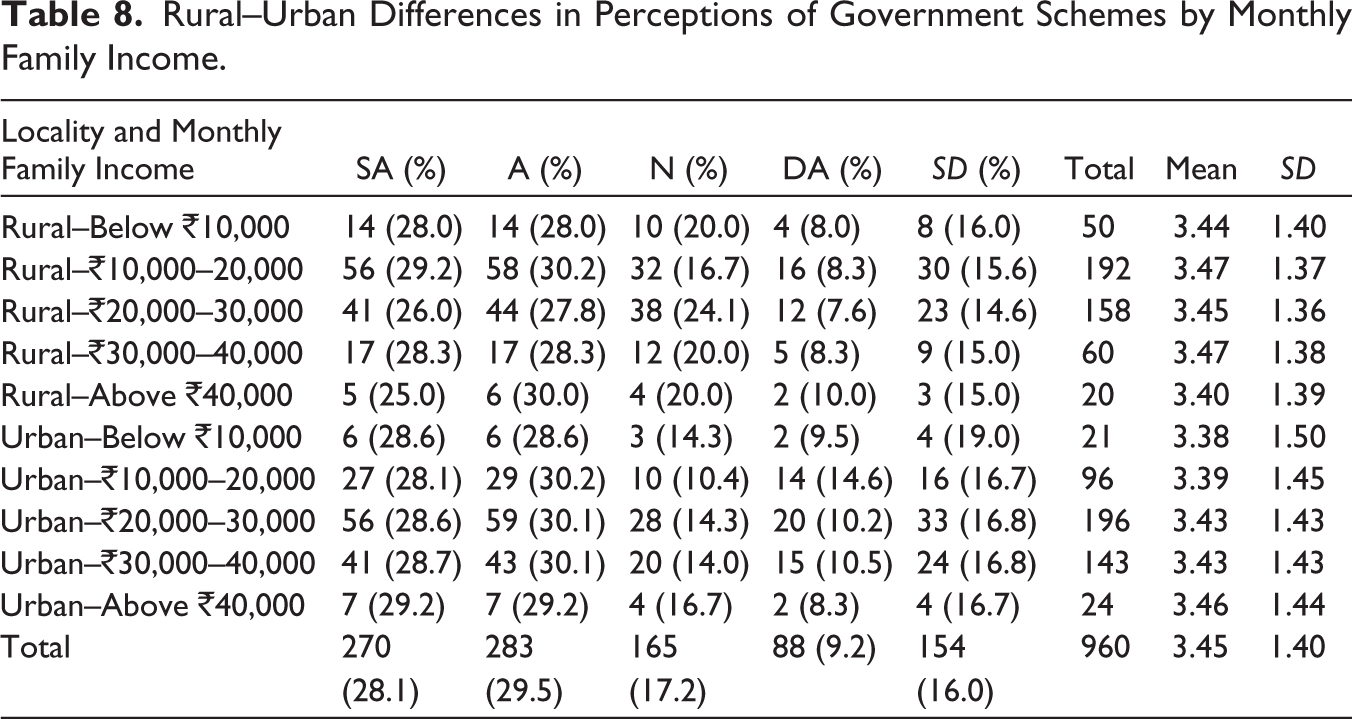
The analysis of income-based data indicates that the perception of government schemes is not significantly different among economic groups, which implies that the assessment of welfare interventions is rather equal and does not depend on income levels. This similarity suggests that access to and knowledge of schemes can be more powerful in influencing perceptions than economic status. The results also indicate that the welfare programmes are not only perceived to benefit certain income groups but are also experienced in a very similar way across the economic spectrum. Nonetheless, the fact that moderate perception remains in all categories shows that the delivery mechanisms and awareness have to be improved to result in overall satisfaction.
Hence, the statistics show that most of the respondents in both the rural and urban set-ups have a positive perception of the government schemes, with moderate satisfaction. The income disparity in families does not seem to have a substantial impact on the level of perception, which means that the personal experience and the availability of the schemes have a greater impact on the perception of the respondents than the economic status. It shows a moderate yet mostly positive view of government welfare programmes among the income groups.
Tables 5, 6, and 7 show the rural–urban comparative distribution of respondents’ perceptions of government welfare schemes in Jammu and Kashmir across locality, gender, and occupation categories. The response patterns on the five-point scale, along with the mean and standard deviation values, are shown in these tables.
Rural–Urban Comparative Distribution of Perceptions of Government Schemes in Jammu and Kashmir.

Rural–Urban Differences in Perceptions of Government Schemes by Gender.

Rural–Urban Differences in Perceptions of Government Schemes by Occupation.
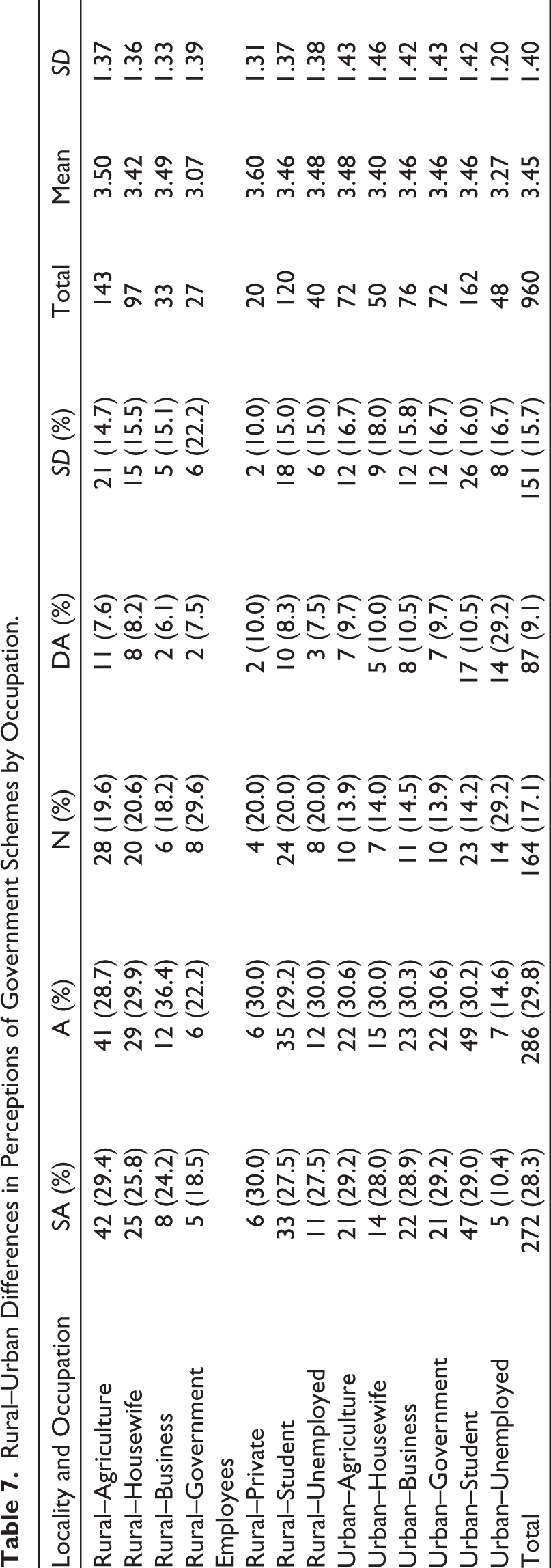
Table 8 presented the rural–urban differences in perceptions of government welfare schemes by monthly family income. The table showed how opinions varied across different income groups in both rural and urban areas.
Rural–Urban Differences in Perceptions of Government Schemes by Monthly Family Income.
Policy Implications
The findings suggest three evidence-based policy directions. First, the outreach strategies should vary in rural and urban settings. Rural respondents provided more neutral answers to planning mechanisms such as District Capex Budget, meaning that they required village-level meetings in local languages with simplified complaint processes. Urban respondents were more dissatisfied with industrial schemes, and although digital platforms such as JK-IGRAMS are more effective in urban areas, offline options are also necessary due to the lack of reliable internet connection.
Second, scheme schedules and priorities need to be differentiated. Established programmes (Khelo India, ISSS) had more positive responses compared to new ones (HADP, New Central Sector Scheme), which implies that realistic implementation schedules are required. Infrastructure (Jal Jeevan Mission, PMGSY) and social security were more valued by the rural respondents, and skill development was favoured by the urban respondents (Tejaswini, Mumkin). Thus, implying that rural policy must focus on basic services and connectivity, while the urban policy must focus on employment and support of small businesses.
Third, the occupational groups that are less satisfied, namely rural government workers and urban unemployed, need specific interventions. The former might require more orientation on community benefits; the latter more access to loans, market linkages, and mentorship in addition to existing self-employment programmes.
Conclusion
The study examines public perceptions of selected government schemes in J&K and highlights differentiated responses across rural–urban and occupational groups. The results show moderate satisfaction, and there is a significant difference between programme categories. Plans that have visible and tangible benefits seem to attract relatively more responses, and it is possible to conclude that perceived accessibility and direct influence impact judgements more than the time of programme introduction. The analysis is subjective and represents the measurement of assessment at one point in time and does not determine the causation between the development outcomes and the greater constitutional or administrative changes. Regional and occupational differences highlight the need to implement programmes in a contextualised manner and not through uniform approaches to policies. Due to the purposive and education-filtered sample, the results are to be taken with a grain of salt and not generalised to the whole population. Longitudinal designs, comparative state-level study, and the incorporation of perceptual data and administrative performance measures can be used in future studies to measure policy effects more effectively. Therefore, the research contributes to the comprehension of how beneficiaries perceive and judge welfare and development programmes in the evolving governance environment, and it takes into consideration methodological and interpretative shortcomings.
Footnotes
Declaration of Conflicting Interests
The authors declared no potential conflicts of interest with respect to the research, authorship, and/or publication of this article.
Disclosure Statement
The study is based on the Post-Doctoral Fellowship awarded to Dr Bilal Ahmad Mir by the Indian Council of Social Science Research (ICSSR), New Delhi. The author is solely responsible for the content, opinions, and conclusions.
Funding
The authors disclosed receipt of the following financial support for the research, authorship and/or publication of this article: The study was funded by ICSSR, New Delhi, Funding File No. 3-51/2023-24/PDF/GEN.