







Abstract
Since Independence, India has recognised the importance of decent work by ensuring job security, paid leave, and social security benefits through statutory provisions. However, these benefits largely remained confined to the formal sector, whose expansion was limited. During the neoliberal era, it was anticipated that labour law deregulation would boost the formal sector’s output and employment, expanding quality jobs with social protection. Recently, the emphasis of quality employment creation has shifted to entrepreneurship through incentives for greenfield enterprises. This article analyses trends in job security, paid leave, and social security benefits across enterprise types from 2004–2005 to 2023–2024, using NSSO Employment–Unemployment Survey and Periodic Labour Force Survey unit-level data to evaluate the linkage between labour law changes and expansion of quality employment.
Introduction
Social security provisions for workers enhance job satisfaction, reduce anxiety and stress, and significantly impact securing workers’ rights and dignity at work, and are crucial for a healthy working environment (Cahuc & Palladino, 2024). A successful structural transformation of the economy can hardly be perceived without witnessing substantive improvement in the quality of jobs to provide adequate social security for the workforce.
The ILO Report on Social Security 1 estimates that ‘only 29 per cent of the global population are covered by comprehensive social security systems that include the full range of benefits, from child and family benefits to old-age pensions’. In the Indian context, the situation is even worse, as more than 90 per cent of the workforce is engaged in the informal economy without any form of social security (Mehrotra, 2019). Since its Independence, India recognised the importance of social protection for workers and enacted several regulations—such as the Industrial Disputes Act (IDA), 1947; Factory Act, 1948; The Employees State Insurance Act, 1948 (ESIA); Employees Provident Funds and Miscellaneous Provisions Act, 1948 (EPFMPA); The Maternity Benefit Act (MBA), 1961; The Apprentices Act, 1961; the Contract Labour (Regulation and Abolition) Act (CLRA), 1970—to provide security of tenure and social security provisions to workers. However, such provisions were applicable only in the formal sector. Thus, with a limited expansion of the formal sector during the first four decades, the share of employment with job and social security provisions remained limited.
The output share of the formal sector improved during the 1980s, but the employment share remained largely stagnant (Sundaram & Tendulkar, 2002). Thus, it was argued that the limited expansion of the formal sector before liberalisation was due to such stringent labour laws (Besley & Burgess, 2004). It was expected that with the onset of neoliberal reforms, the economy would witness a higher growth rate led primarily by the formal private sector, which would become the leading provider of quality employment in the economy (GoI, 2003).
However, during the first decade and a half since neoliberal reforms, despite reasonable growth, there was no significant improvement in the share of formal employment (Sharma, 2006). Several economists blamed the continuation of stringent labour laws as the prime factor behind the divergence between economic growth and expansion of formal employment during this period (Besley & Burgess, 2004; Panagariya, 2004). Consequently, since the beginning of the decade of the 2000s, there have been several attempts to weaken the labour laws both directly and indirectly, with the expectation of strengthening the relationship between growth and formalisation of the workforce.
In this context, the article explores to what extent the weakening of labour laws led to the expansion of quality jobs with adequate job security and social security provisions within major enterprises for 2004–2024. It will also critically evaluate the linkage between higher growth and the capacity to create quality jobs. The next section accounts for labour laws, their transition, and the relationship between labour laws and quality employment. Subsequent sections discuss employment trends across enterprise types; trends in job tenure, paid leave, and social security provisions; and conclude with final remarks.
Data and Methodology
The article tries to capture the trends regarding job security and the provision of social security benefits across various types of enterprises. Unit-level data from the Employment–Unemployment Survey for 2004–2005 and 2011–2012 of the National Sample Survey Organisation (NSSO) and Periodic Labour Force Survey (PLFS) from 2017–2018 to 2023–2024 2 are used for the trend analysis. The ‘quality of employment’ in the article is explained through job security (tenure of contract), access to paid leave, and provision of various social security benefits. The article investigates how these have changed from 2004 to 2024 within each major type of enterprise. The article includes the provision of provident funds, health and maternity benefits, gratuity, and so on as indicators of social security benefits and quality of employment.
Labour Laws, Informality, and Social Security: A Literature Review
Since the inception of the neoliberal regime, it was presumed that a new policy environment—marked by liberalisation, globalisation, and privatisation strategies—would substantially elevate the economy’s growth rate, resulting in the expansion of the formal sector. The neoliberal reforms in India have been based on a few underlying assumptions. First, a liberal regime (with deregulations) will lead to stable, higher economic growth in the enhanced competitive environment (Panagariya, 2004). Second, higher growth led by the private sector in the absence of (or with limited) labour market regulations would expand the modern sector, in line with the optimism emanated from the seminal works of Clark (1940), Lewis (1954), and many others. Lastly, expanding the modern sector would automatically lead to expanding formal employment with better quality (GoI, 2003). 3 Employment policies during the first one-and-a-half decades of neoliberal reforms focussed on facilitating the growth of sectors with higher employment potential through various incentives, primarily tax benefits and credit provisions for corporations (Papola, 2008). While India’s GDP growth trajectory has been impressive for over first two decades since the neoliberal reforms, evidence fails to support a clear link between growth and employment quality (Bhattacharjea, 2006, 2022; Dash Mohapatra & Sahoo, 2023; Jha & Thakur, 2013; Mehrotra, 2019).
This delinking of growth from quality employment is perhaps the most documented and persistent feature of India’s post-reform development. The structural transformation of the workforce, anticipated to shift labour from agriculture to formal manufacturing and services, has remained far from satisfactory (Basole, 2022; Basole & Narayan, 2020; Nigam, 2021; Papola & Sahu, 2012; Thakur & Chaudhary, 2025). The India Employment Report 2024 (International Labour Organization 2024) highlights that informality remains a dominant feature of the labour market, with informal employment accounting for almost 90 per cent of the workforce. Furthermore, the report notes the widespread poor job quality, deteriorating real wages, and a small proportion of informal workers having access to any form of social security. The same has been demonstrated by Mehta and Awasthi (2022) for the urban labour market, showing that persistent informality is not limited to the rural sector. Datta and Chaudhuri (2022) note that this fragmentation of the labour market means that even as the economy expands, the benefits fail to translate into secure, protected employment for leaving an overwhelming proportion of workers outside such benefits (Farooqui & Pandey, 2020; Mehrotra & Sarkar, 2021).
One of India’s most debated provisions of labour laws has been the IDA of 1947. At the outset, the Act made it mandatory for enterprises employing a minimum of 200 workers to get authorisation from the government before laying off or retrenching workers, including the decision to close the enterprise (Ghose, 2019). However, the Act was later amended twice, in 1976 and 1984, making it more stringent by reducing the number of labourers from 200 to 100, allowing more enterprises to be covered under the law. The Act provided for job security statutorily. Other key regulations include the ESIA, which provides certain employee benefits in case of sickness, maternity, and employment injury, and the EPFMPA, which provides for post-retirement benefits. The CLRA 1970 regulated the employment of contract labour, and the MBA provided for maternity benefits. The Factory Act set safety standards and working conditions, including paid leave. Therefore, job security and social protection provisions have been prioritised since early planning.
Stringent labour laws have often been cited in mainstream Indian literature as a key factor in delinking growth from formal employment. Secki (2024) summarises such arguments into three categories: efficiency, institutional, and complexity. Efficiency arguments suggest that labour laws interfere with the functioning of the markets, resulting in suboptimal outcomes. Institutional arguments suggest that stringent labour laws increase the cost of formalisation, thereby disincentivising the automatic formalisation of labour. Complexity arguments suggest that India’s labour laws are unwieldy, resulting in higher compliance costs.
Critics argue that such regulations have rendered the labour market inflexible, raising hiring and firing costs and constraining formal employment growth, particularly since the 1984 amendments (Ahsan & Pagés, 2009; Besley & Burgess, 2004). It is also argued that such regulations discourage the expansion of the workforce and prevent it from being regulated under labour laws (Sharma, 2006). Furthermore, a seasonal adjustment in the size of the workforce in response to demand fluctuations also becomes challenging, leading to rapid growth in the size of the contractual labour in such enterprises (Sundar, 2011). Goldar and Aggarwal (2019) argued that in organised manufacturing, stricter labour regulations negatively impacted the formalisation of industrial labour, leading to an increased reliance on informal, contract labour within the formal sector.
However, the restrictive impact of the IDA and CLRA was limited as IDA regulations applied only to enterprises with 100 or more workers, excluding over 50 per cent of organised workers. Furthermore, state-level amendments diluted CLRA provisions, facilitating the employment of contract labour with minimal social security (Chaudhary & Sharma, 2022; Goswami & Paul, 2021; Roychowdhury, 2019). Bhattacharjea (2006) argues that the Besley–Burgess index of labour regulation was flawed and that their empirical results were not robust. Consequent to the weakening of IDA and CLRA regulations in states, the implementation of such provisions remained highly biased in favour of the employer (Sood et al., 2014).
Building on this critique, Srivastava (2016) argues that the rigidity of the Indian labour market is a myth and posits that firms have achieved a high degree of de facto flexibility not by challenging the laws, but by bypassing them through strategies of informalisation. Strategies such as the use of temporary and contract labour, outsourcing, and subcontracting down the value chains have been adopted at a substantial rate, creating a segmented labour market within the same organised firm, where a small proportion of permanent workers exist along with a large proportion of informal workers lacking any social security benefits (Srivastava, 2019). Further, data from 1979 to 2008 show higher employment growth in factories with more than 100 workers, while smaller factories, exempt from IDA regulations, saw no significant rise in employment share (Roychowdhuri, 2018). Moreover, there is evidence that during 2008–2013, enterprises with more than 100 employees reduced their workforce significantly (Bhattacharjea, 2021), implying the ineffectiveness of such regulations in restricting layoffs. This body of literature finds little evidence that labour laws constrain employment growth in the formal sector (Basole, 2019; Bhattacharjea, 2006, 2009; Fagernäs, 2010; Roychowdhuri, 2018), suggesting instead that labour market flexibility, by compressing the wage share, weakens wage-led domestic demand and thus suppresses manufacturing employment growth (Bardhan, 2014).
Given the limited success of formalisation in the economy and the persistent precarity of most of the workforce, a need to provide social security benefits to the unorganised sector was realised (GoI, 2007). This led to the Unorganised Workers’ Social Security Act (UWSSA) in 2008. While the Act introduced provisions for basic social security, including life and disability cover, health and maternity benefits, old age protection, and so on, to workers in the unorganised sector, in the absence of any concrete roadmap and explicit provisions, it remained far from fulfilling its objective (Jha, 2016). The Act’s reliance on a below-poverty-line criterion for many schemes also led to significant exclusion ( Goswami, 2009), leaving many provisions to the wishes and whims of the government without making them compulsory or time-bound (Dutta & Pal, 2012).
This failure is part of a broader critique of India’s welfare system. Breman (2019) argues that the state has promoted a fragmented and deceptive system of social security that fails to address the structural vulnerability of people with low incomes. This critique is confirmed in global analyses, wherein Razavi (2022) highlights how the COVID-19 pandemic revealed huge gaps in social protection globally, especially for informal workers who were excluded from formal work-related protections and often ineligible for social assistance, which targetted only the very poorest. This underscores the need to transition from fragmented, ad hoc schemes, such as those under the UWSSA, to a comprehensive, rights-based national social protection system grounded in international labour standards.
During the recent period, industrial policies have tried to balance GDP growth strategies with addressing this persistent informality. Schemes to promote manufacturing employment under the formal sector, such as Make in India, 4 Start-Up India, 5 and production-linked schemes, provide relaxation of labour laws as an incentive. Further, based on the recommendations of (GoI, 2002), 6 the government recently came up with a complete restructuring of the country’s labour laws into four new codes. The Social Security Code 2020, which primarily deals with workers’ social security, replaces nine social security laws. 7 The Act extends its coverage to unorganised, gig, and platform workers. However, not only is the implementation process of such laws unclear, but the division of power related to implementation between the state and centre is also highly vague (Mehrotra & Sarkar, 2021). The New Industrial Relations Code of 2020, which replaced the IDA 1947, the Trade Unions Act of 1926, and the Industrial Employment Standing Orders Act of 1946, might be putting workers on the receiving end. The new code limits workers’ power in collective bargaining by recognising fixed-term contracts, allowing individual settlement, by granting the power of bargaining to statutorily recognised unions, and including the requirement of 14 days’ notice before going for strike, and so on (Deepika & Madhusoodhan, 2022; Noronha & D’Cruz, 2024). Although the Act provides the benefit of gratuity to contractual labour, the direct recognition of fixed-term employment may lead to an increase in the contractualisation of the workforce, resulting in higher job insecurity. Thus, since 2005, there has been a consistent effort to dilute labour laws directly or indirectly in expectations of bridging the gap between growth and the generation of quality employment driven by the incentivised private sector. The following section will explore the extent to which relaxations in labour laws translated into the generation of quality employment across different types of enterprises in the post-2005 period.
Tracking the Change in the Share of Employment Across Enterprises
According to the NSS, an enterprise is an undertaking involved in the production or distribution of goods and services primarily for sale, owned and managed by individuals, households, or institutions. In India, enterprise employment data cover activities classified under the National Classification of Industries Code (NIC-2008). 8 It includes non-agricultural and select agricultural activities, excluding non-perennial and perennial crop cultivation, plant propagation, and mixed farming. Included are animal production, agricultural support services, hunting, trapping, and related activities (division 01), along with all other divisions (02–99) under NIC-2008.
Based on NSS EUS and PLFS unit-level data, enterprises have been divided into six types:
Proprietary and Partnership (PrP) Government or Public Sector enterprises (GnPub) Private Limited Company and Public Limited Company (PP) Co-operative Societies or Trust or Other Non-Profit Institutions (CTN) Employer’s Households (EH) Others (O).
It is vital to analyse the changes in the share of employment across different enterprises. Recently, a shift in the focus of industrial policy has been observed, with a greater emphasis on stimulating GDP growth by providing incentives to the private sector to create quality employment. This has led to tax benefits, relaxation of labour laws, and cheap credit to industrialised projects, which aim to increase the share of employment in PP. A rise in the share of employment in the GnPub and PP is also expected to raise the social security of the working masses, as these enterprises primarily come under formal arrangements. However, a shift towards PrP is ambiguous in describing the trend of social security benefits.
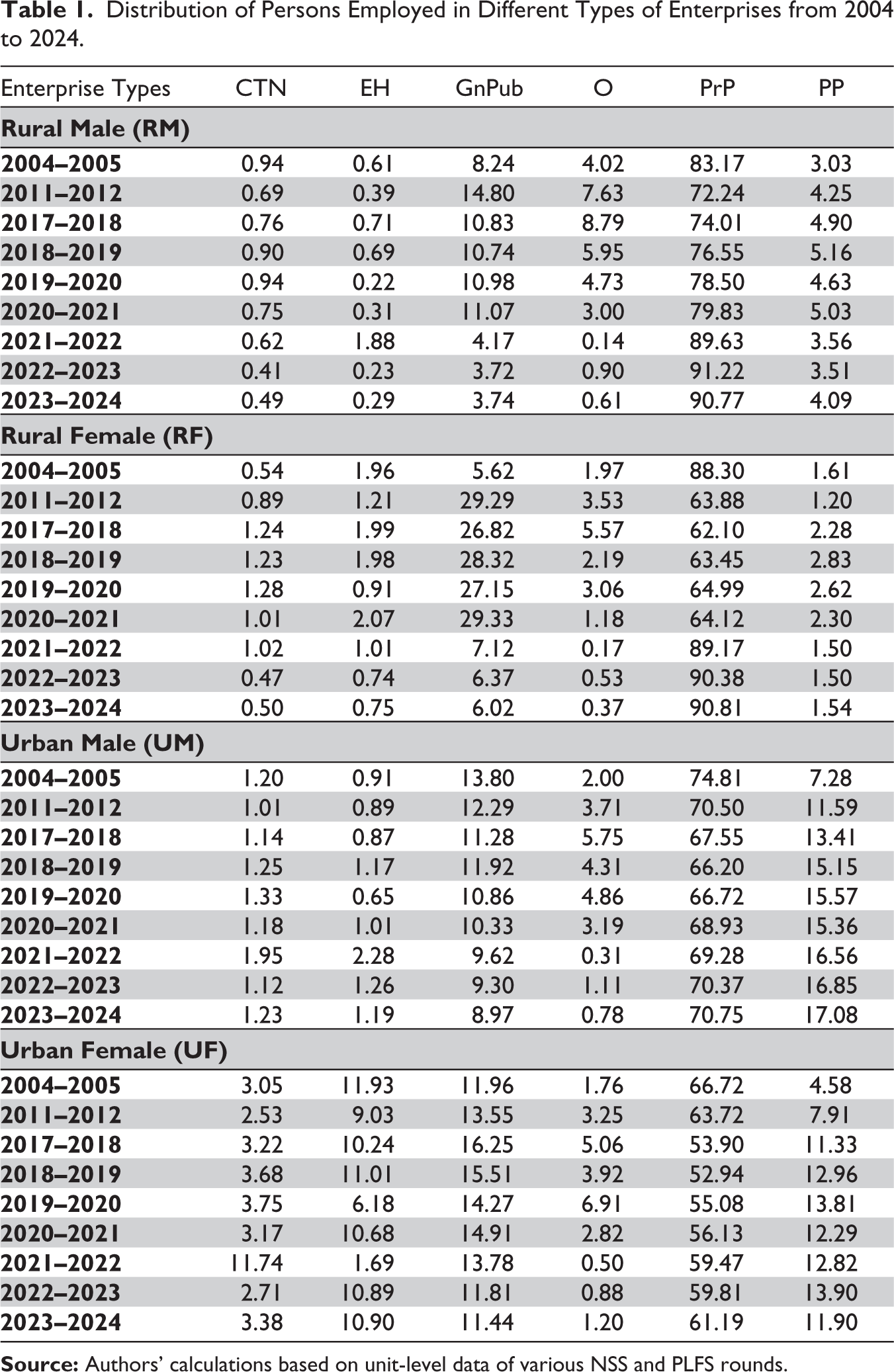
Examining social security, job tenure, and access to paid leave from the perspective of enterprises is particularly relevant because it excludes individuals directly involved in farming and related labour. While enterprise employment represents a considerably smaller segment of the workforce compared to the nation’s total labour force, it provides greater explanatory value, especially when assessing the dynamics of quality employment aimed at improving workers’ benefits and labour conditions. The share of employment across different enterprises during the period 2004 to 2024 showed two distinct trends (Table 1). From 2004 to 2021, there has been a rise in the share of employment in GnPub in both rural and urban areas, with a commensurate decline in the share of PrP enterprises. Much of the rise in GnPub was realised until 2011–2012, primarily due to the enactment and expansion of the Mahatma Gandhi National Rural Employment Guarantee Act (MGNREGA). However, the trend reversed since 2021, and there has been a substantial increase in the share of employment in PrP enterprises, with a commensurate decline in the GnPub. Such a reversal was largely due to COVID-19-led reverse migration in rural areas (Thakur, 2020). The reversal was so steep that it more than compensated for the changes observed during the earlier period, resulting in a significant decline in the share of GnPub employment and a corresponding rise in the share of PrP employment between 2004 and 2024. However, PP showed an improvement in the share of employment in urban areas during the entire period, albeit with some fluctuations for urban females in the post-COVID-19 period. Whereas the rural areas experienced either stagnation or decline during the entire period under study. Furthermore, during the post-COVID-19 period, the share of these enterprises remained stagnant or declined for both male and female workers in rural areas. Nevertheless, the share of PP remained very low throughout the period under study in rural and urban areas.
Distribution of Persons Employed in Different Types of Enterprises from 2004 to 2024.
The following section explores social security provisions.
Tenure of Job, Paid Leave, and Social Security Provisions Across Different Enterprise Types
As discussed in the preceding section, PrP, GnPub, and PP constitute an overwhelming proportion (more than 97 per cent) of total enterprise-level employment in 2024. Thus, this section explores the provision of job security and benefits for these three types of enterprises, categorised by their principal activity status. Three main aspects of employment structure are discussed in this section— the type of job contract, eligibility for paid leave, 9 and the provision of social security 10 within these enterprises.
When looking at the conditions of employment, it is important to note that the PLFS collects data only on job contracts, social security, and paid leave for regular salaried, casual, and public works labourers (activity status codes 31, 41, and 51) and not for the self-employed (codes 11, 12, and 21). Therefore, subsequent analysis of employment conditions is confined to this subset of the enterprises.
Proprietary and Partnership
Type of Job Contract
Long-term contracts offer job security, stability, career development, financial planning, and opportunities for growth. However, the share of rural males and females with contracts over three years (long-term contracts) has remained negligible and declined over the past 20 years (Figure 1). Conversely, the proportion of rural males and females with contracts under one year (short-term contracts) increased from 2004–2005 to 2020–2021, followed by a subsequent decline, accompanied by an increase in workers with no written contract. Nearly 97 per cent of rural wage and regular-salaried workers in PrP enterprises lacked a written contract between 2004–2005 and 2023–2024 (Figure 2).
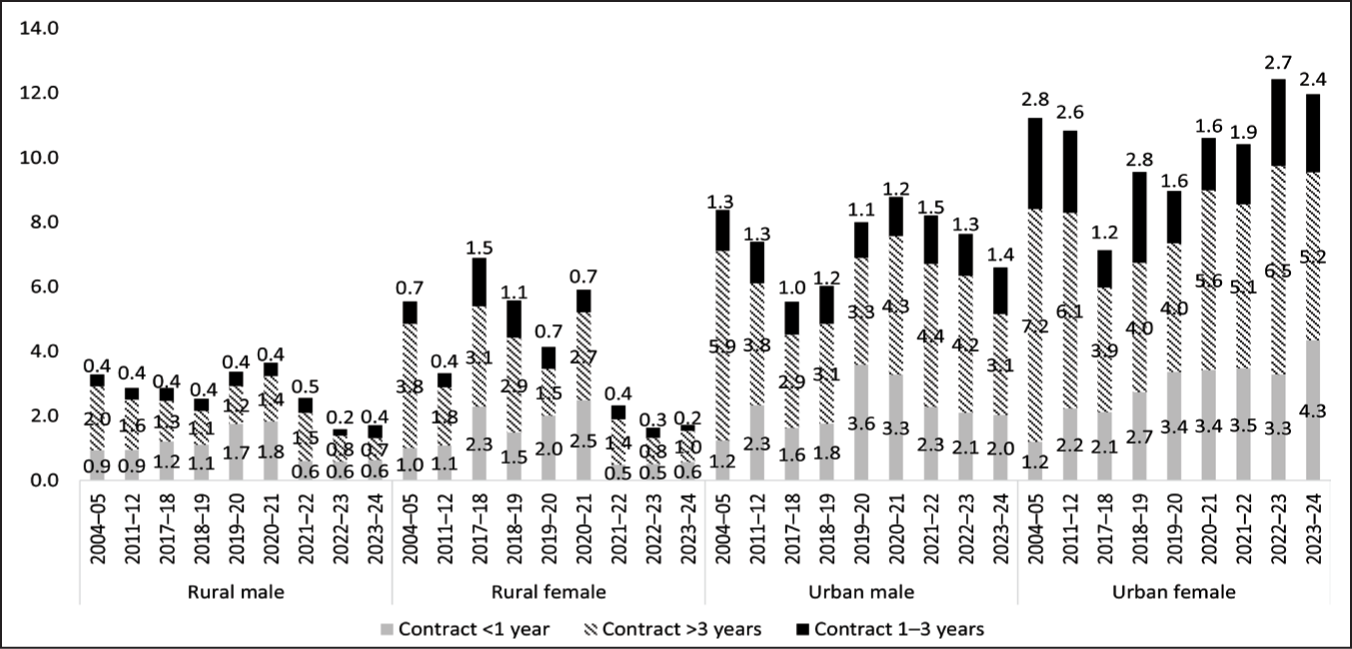
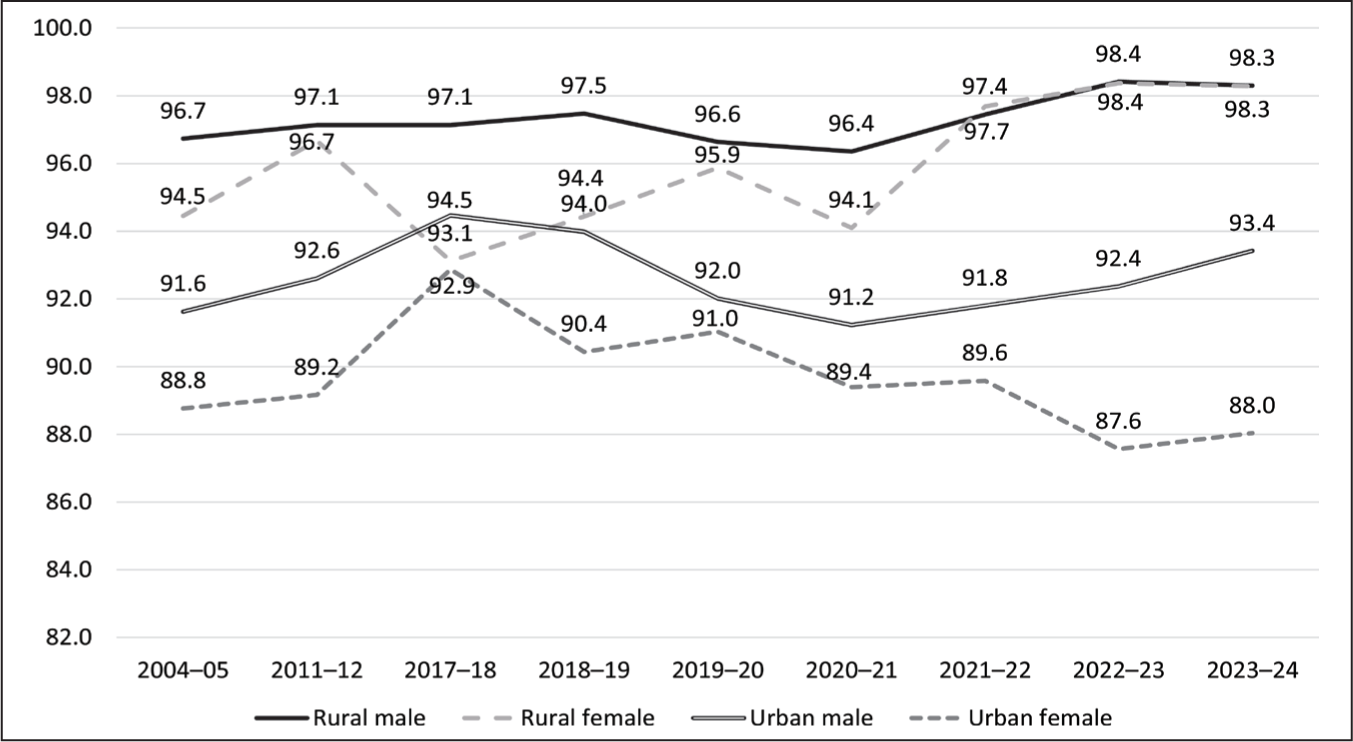
The proportion of urban males employed without a written contract rose until 2018–2019, followed by a decline till 2020–2021, and a slight reversal thereafter. Among those with written contracts, short-term contracts witnessed a sharp rise until 2018–2019, followed by fluctuation in the post-COVID-19 period, while long-term contracts peaked around 2020–2021 before declining. Among urban females, the proportion without a written contract increased from 2004 to 2019 and only slightly declined after the COVID-19 pandemic, indicating alarmingly increasing job insecurity. Despite accounting for the majority of employment in rural and urban areas, PrP enterprises show no improvement in providing written contracts, underscoring limited progress despite recent government initiatives and highlighting the worsening employment conditions post-2018.
Eligibility for Paid Leave
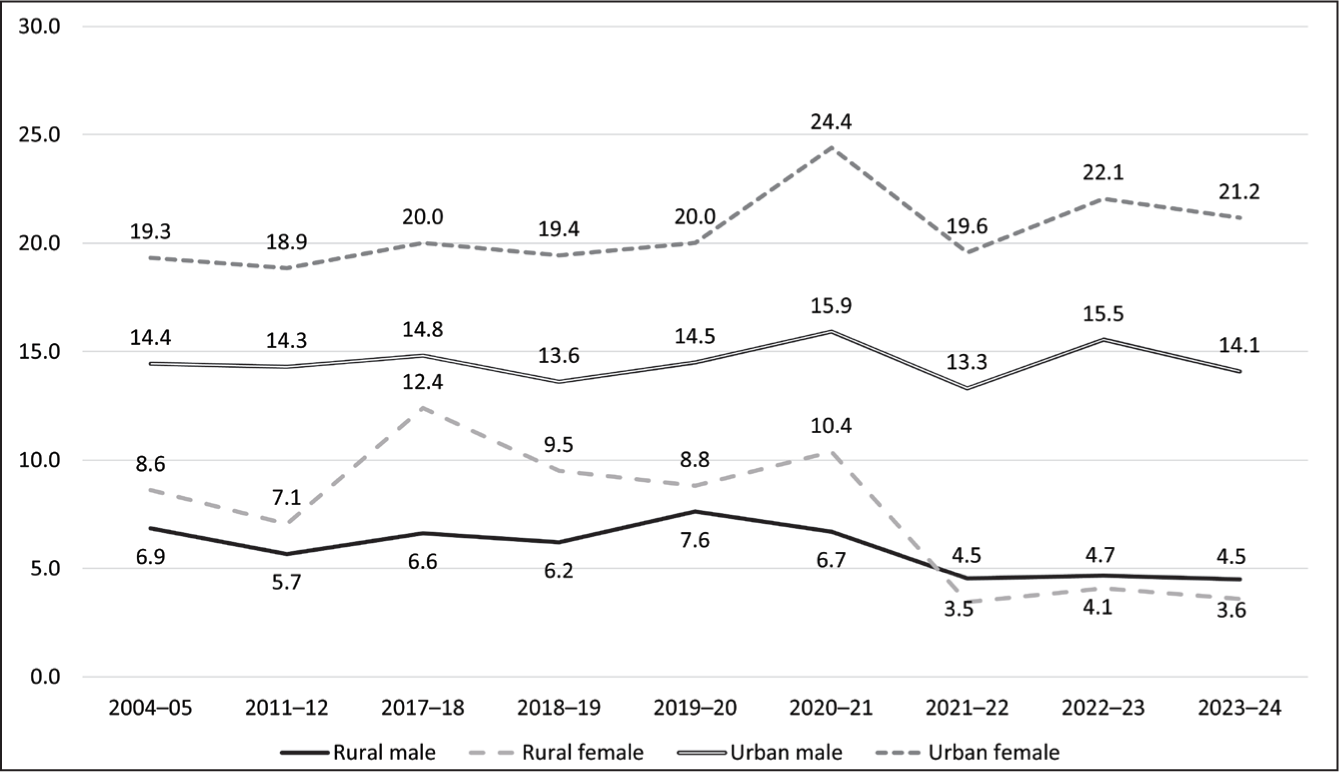
Figure 3 shows that the proportion of workers eligible for paid leave not only was very low in rural areas for PrP enterprises but also declined further for both males and females during the period 2004 to 2024. In urban areas, while the proportion improved marginally for females, a decline has been registered among male workers during the same period. What is more alarming is that since 2020, there has been a fall in the share of workers eligible for paid leave under all categories within this enterprise.
Provision of Social Security Benefits
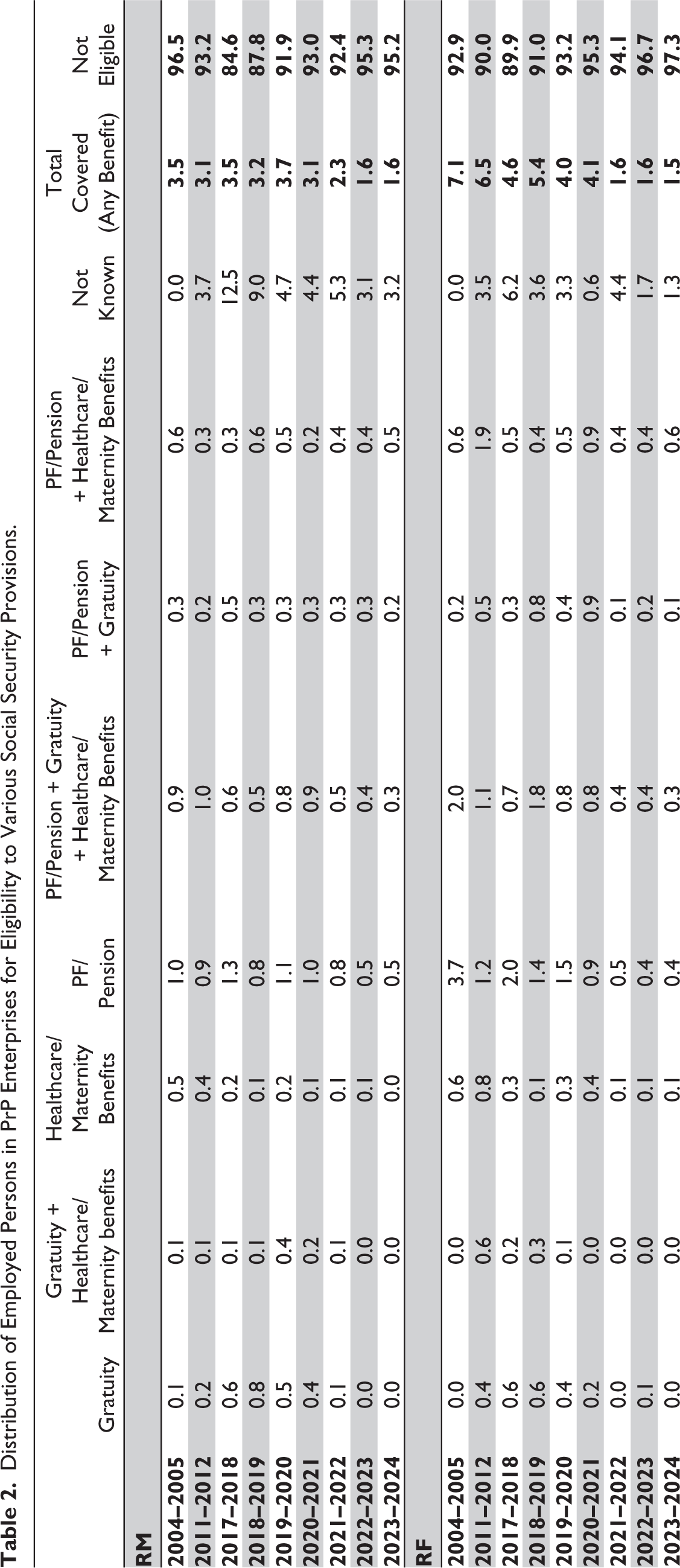
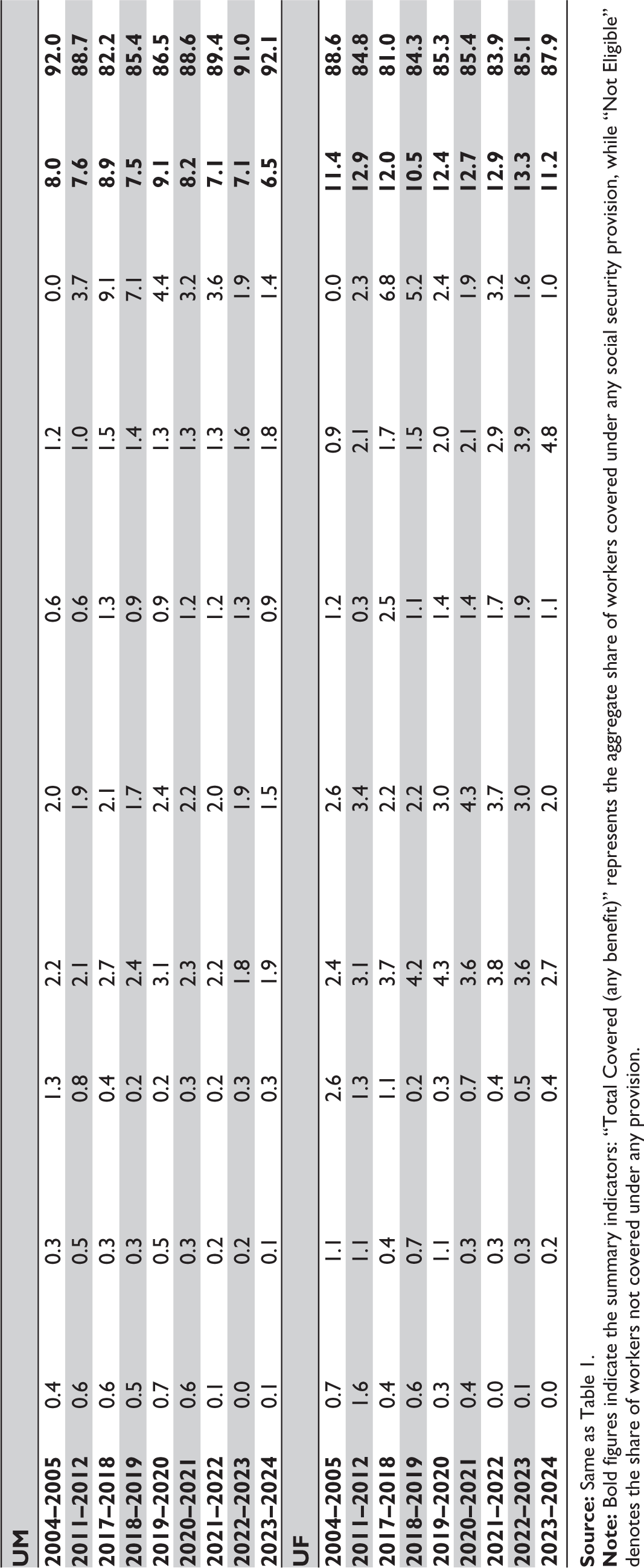
Within the PrP, the proportion of workers covered under the social security benefits increased marginally between 2004 and 2018 (Table 2). However, in the subsequent period, it witnessed a significant decline, resulting in a decrease in these proportions (for all categories except rural males, where they remained marginally better) for the entire period from 2004 to 2024. Thus, in 2024, the share of workers not covered under the social security benefits remained alarmingly high. This ratio remained at 95.2, 97.3, 92.2, and 87.9 for rural males, rural females, urban males, and urban females, respectively, in 2024.
Distribution of Employed Persons in PrP Enterprises for Eligibility to Various Social Security Provisions.
Government or Public Sector Enterprises
Type of Job Contract
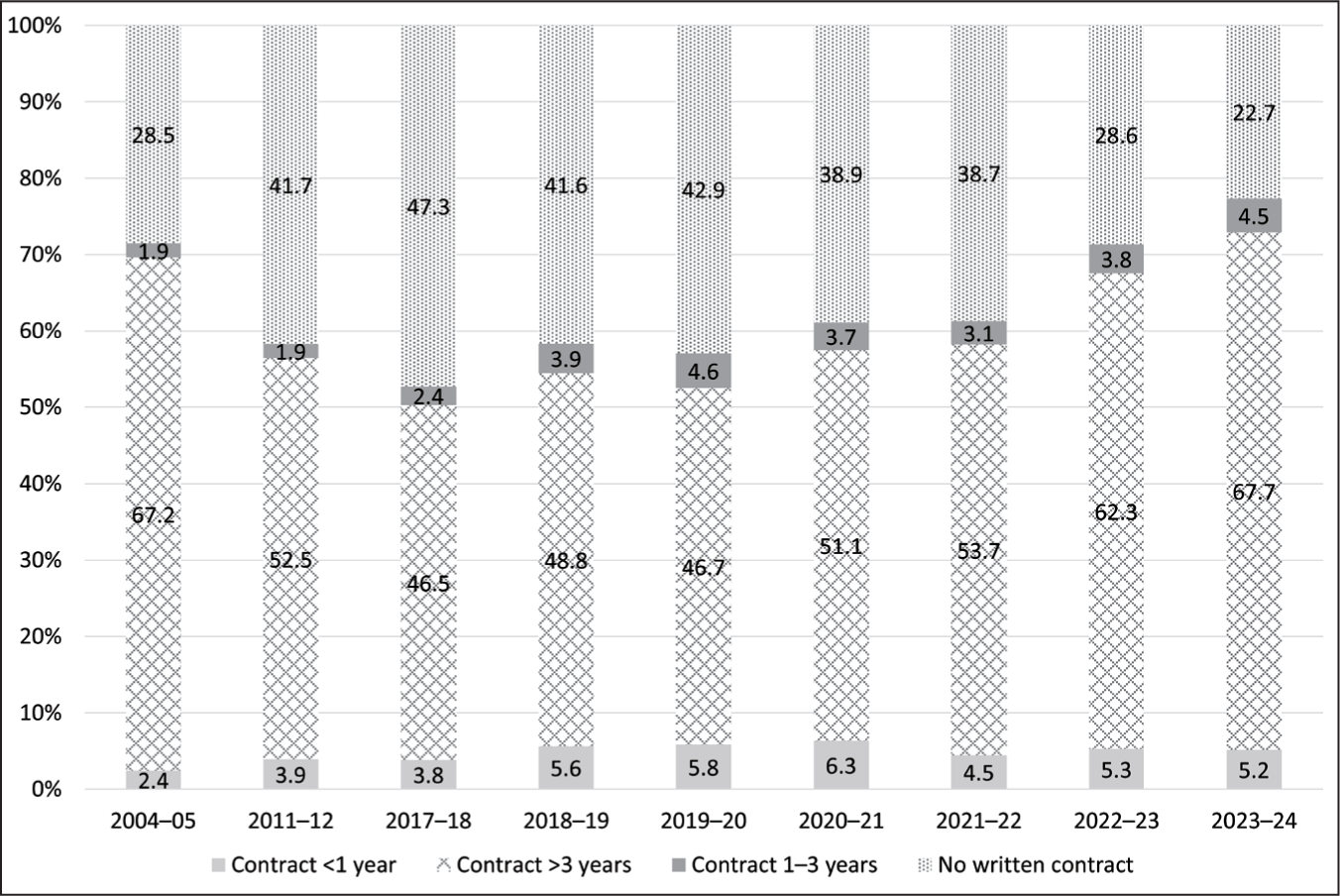
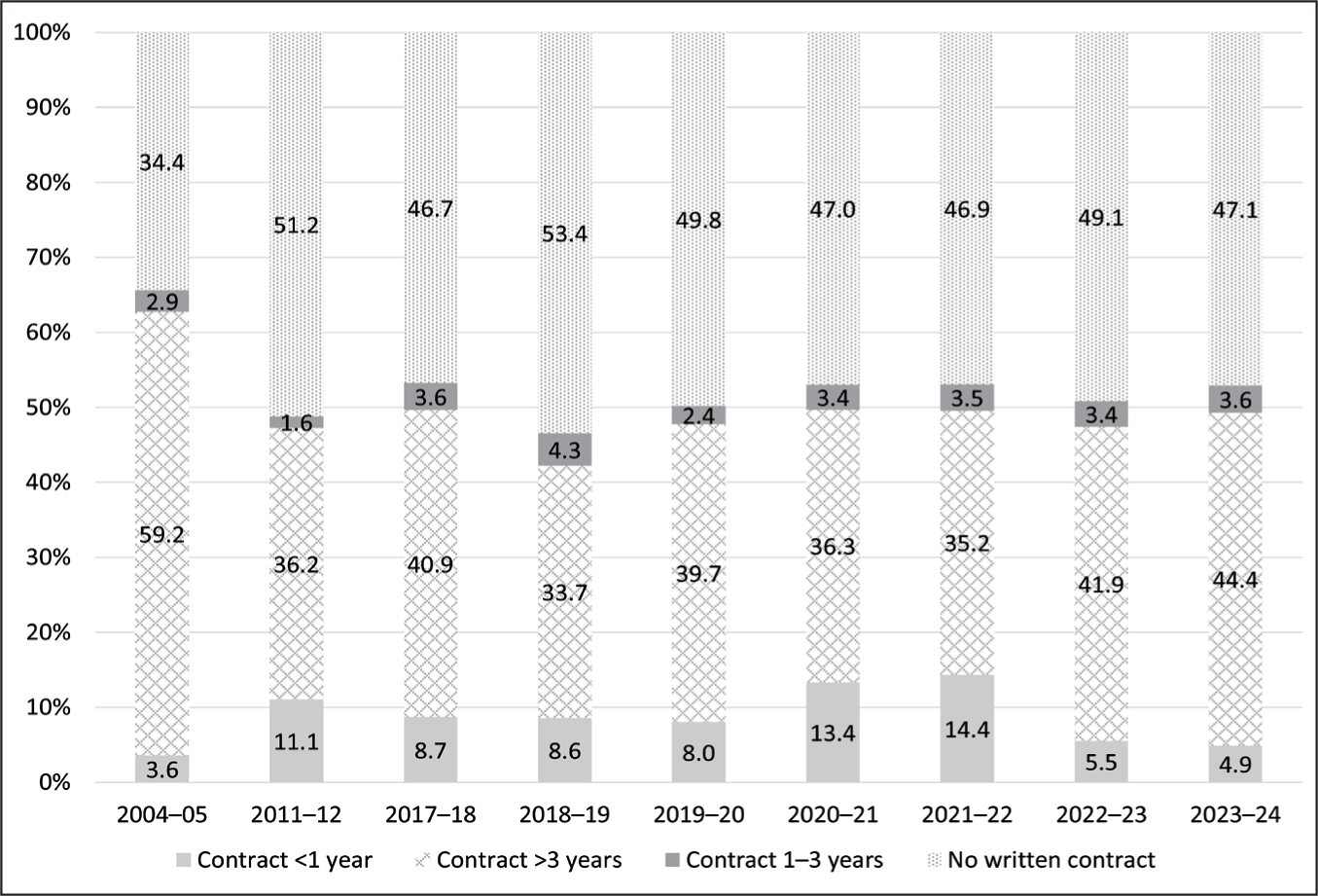
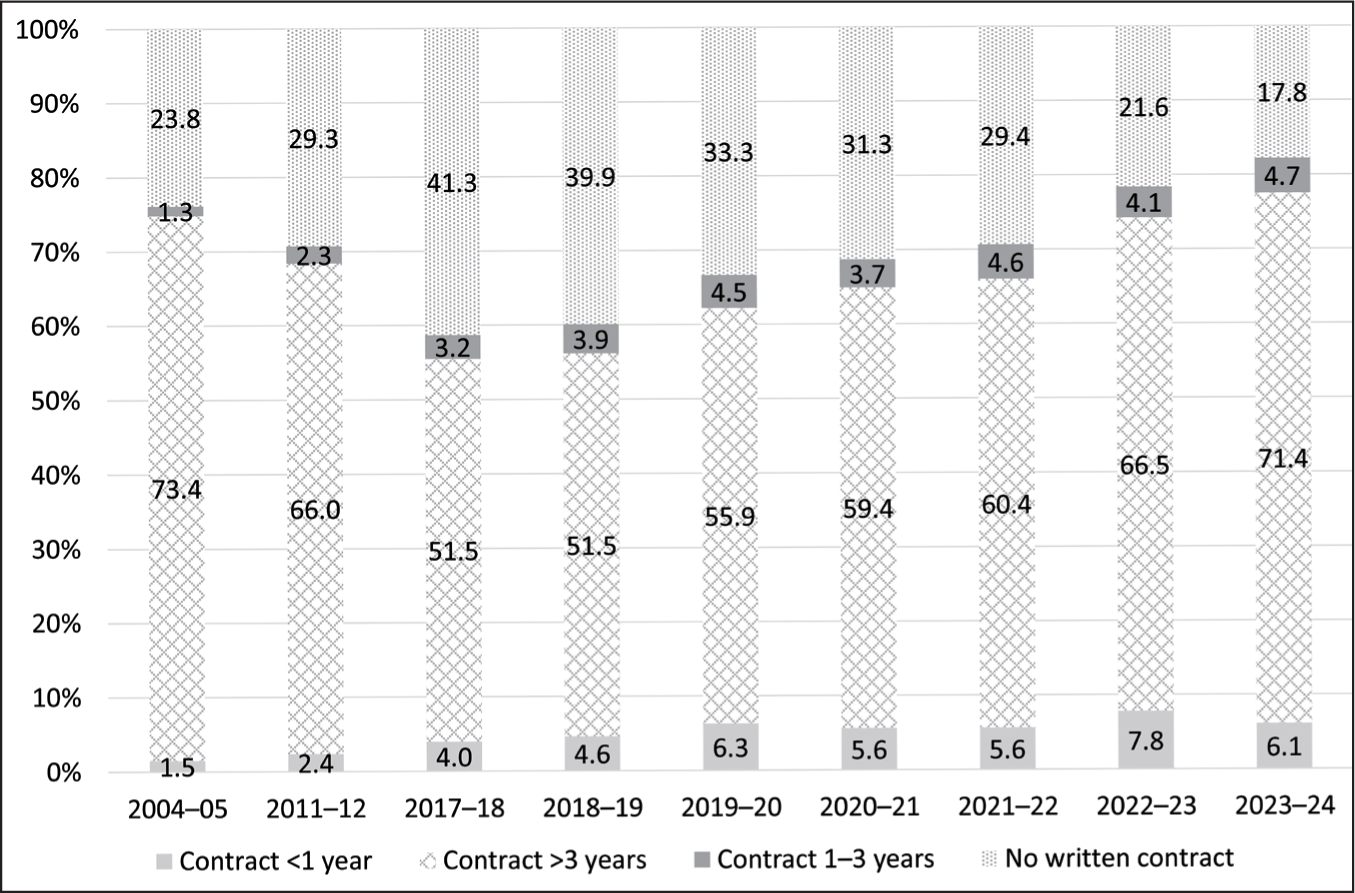
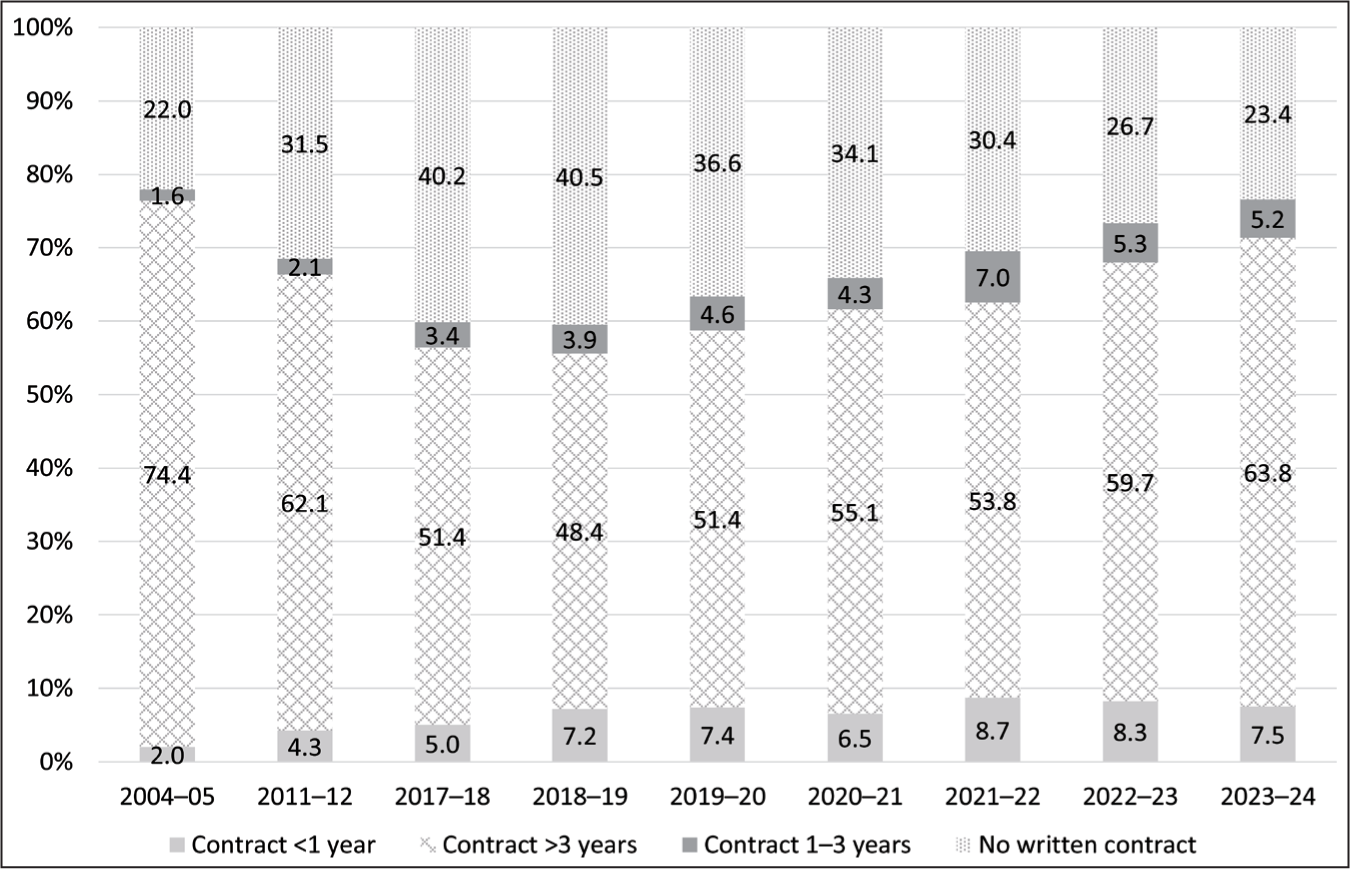
For the period 2004 to 2024, the share of long-term job contracts showed a visible decline for all categories of workers except rural males (where the ratio remains nearly stagnant) within the GnPub (Figures 4–7). While the proportion of male workers without written contracts declined in both rural and urban areas, accompanied by a commensurate rise in short-term contracts, the opposite trend was observed for females, with such ratios increasing in both rural and urban areas. It is important to note that the GnPub not only witnessed the fall in the share of total enterprise employment but also showed a contraction in the absolute number of workers in both rural and urban areas. Therefore, it is possible that such a reduction primarily occurred among workers without written contracts or those with short-term contracts, reflecting grimmer conditions.
Eligibility for Paid Leave
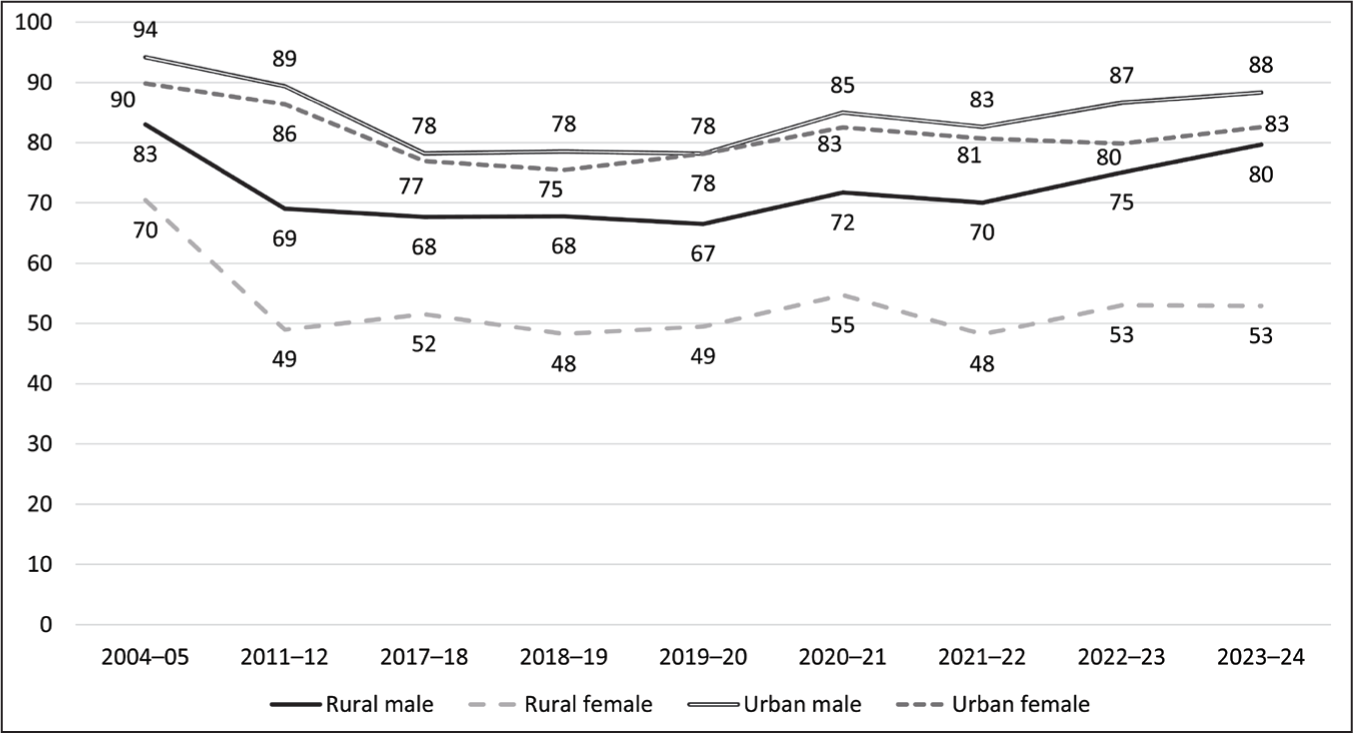
While the GnPub employees are expected to be eligible for paid leave, Figure 8 shows a different story. In rural areas, the proportion of people eligible for paid leave declined significantly between 2004–2005 and 2019–2020 (16.5 percentage points for males and 21 percentage points for females), with only a marginal increase seen in the last two years. In urban areas, this proportion declined from 2004–2005 to 2019–2020 for males (16 percentage points) and 2018–2019 for females (14.4 percentage points), followed by a slight increase till 2023–2024. Thus, for the period from 2004 to 2024, the eligibility for paid leave saw an overall decline, reflecting a rise in job insecurity in this sector.
Provision of Social Security Benefits
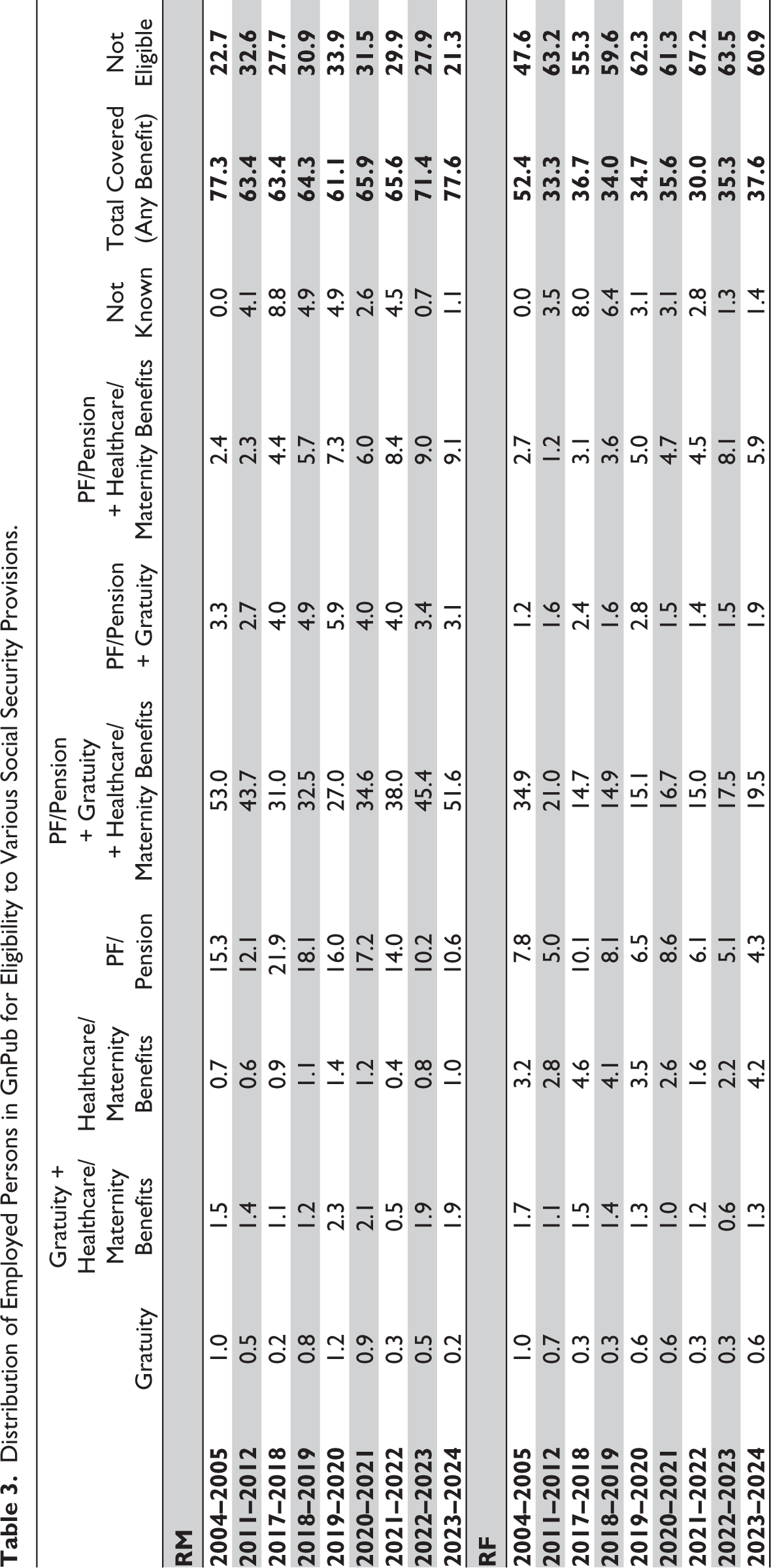
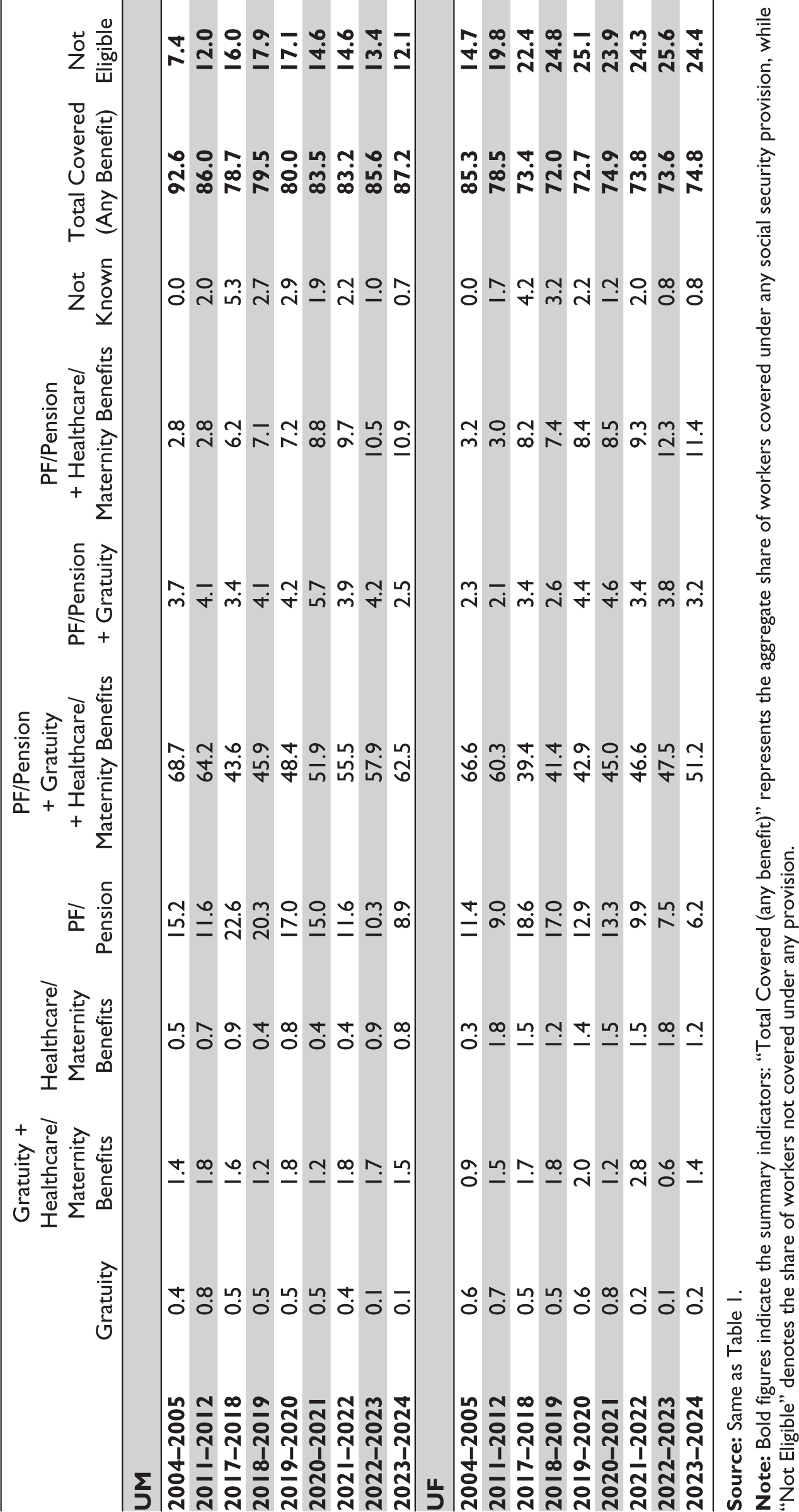
Across 2004–2024, the share of workers without social security benefits increased within GnPub for both genders in rural and urban areas, with rural workers being affected more (Table 3). Such deterioration was more visible for females in both rural and urban areas. Meanwhile, comprehensive social security coverage—including provident funds, pensions, gratuities, healthcare, and maternity benefits—declined significantly, especially for females. The data highlight growing employment vulnerability, particularly within rural GnPub.
Distribution of Employed Persons in GnPub for Eligibility to Various Social Security Provisions.
Private Limited Company and Public Limited Company
Type of Job Contract
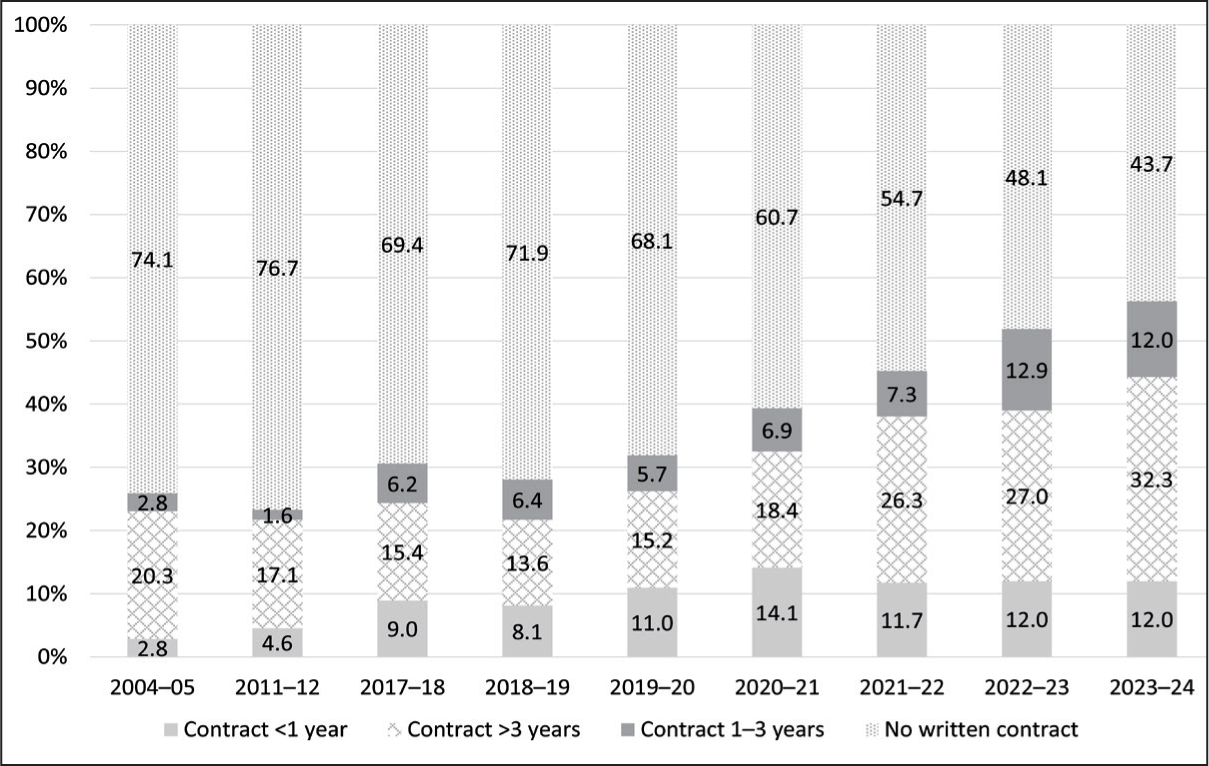
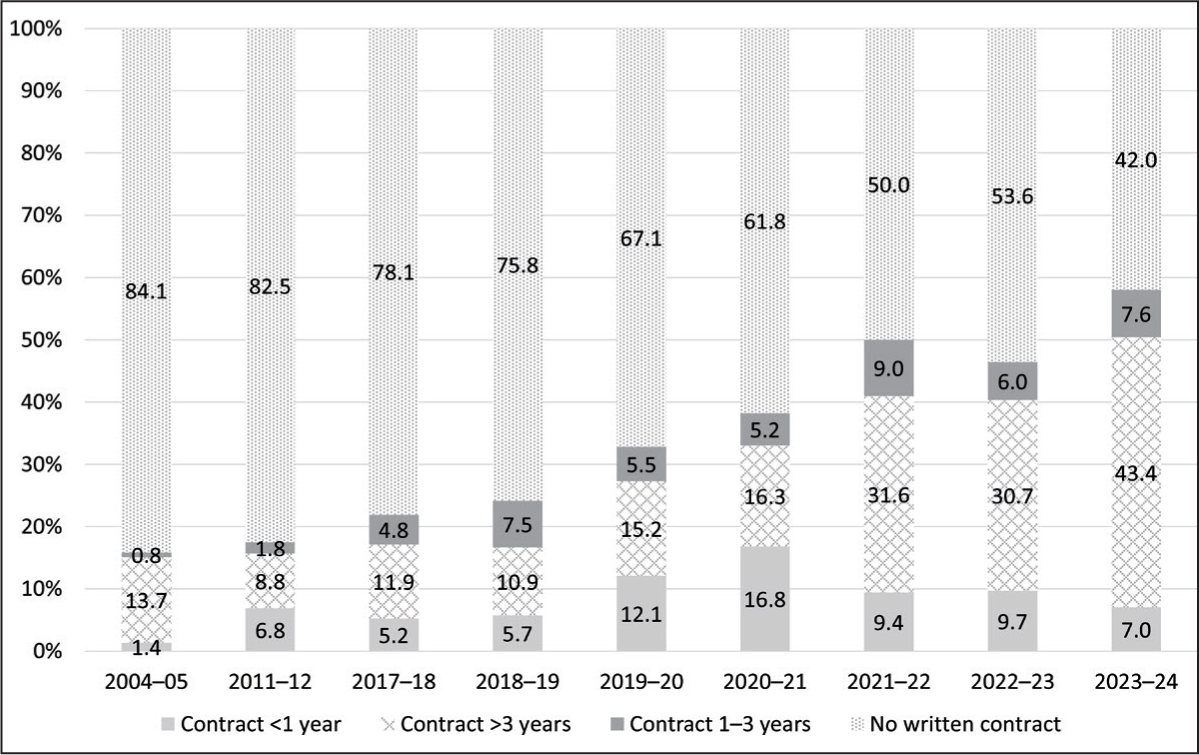
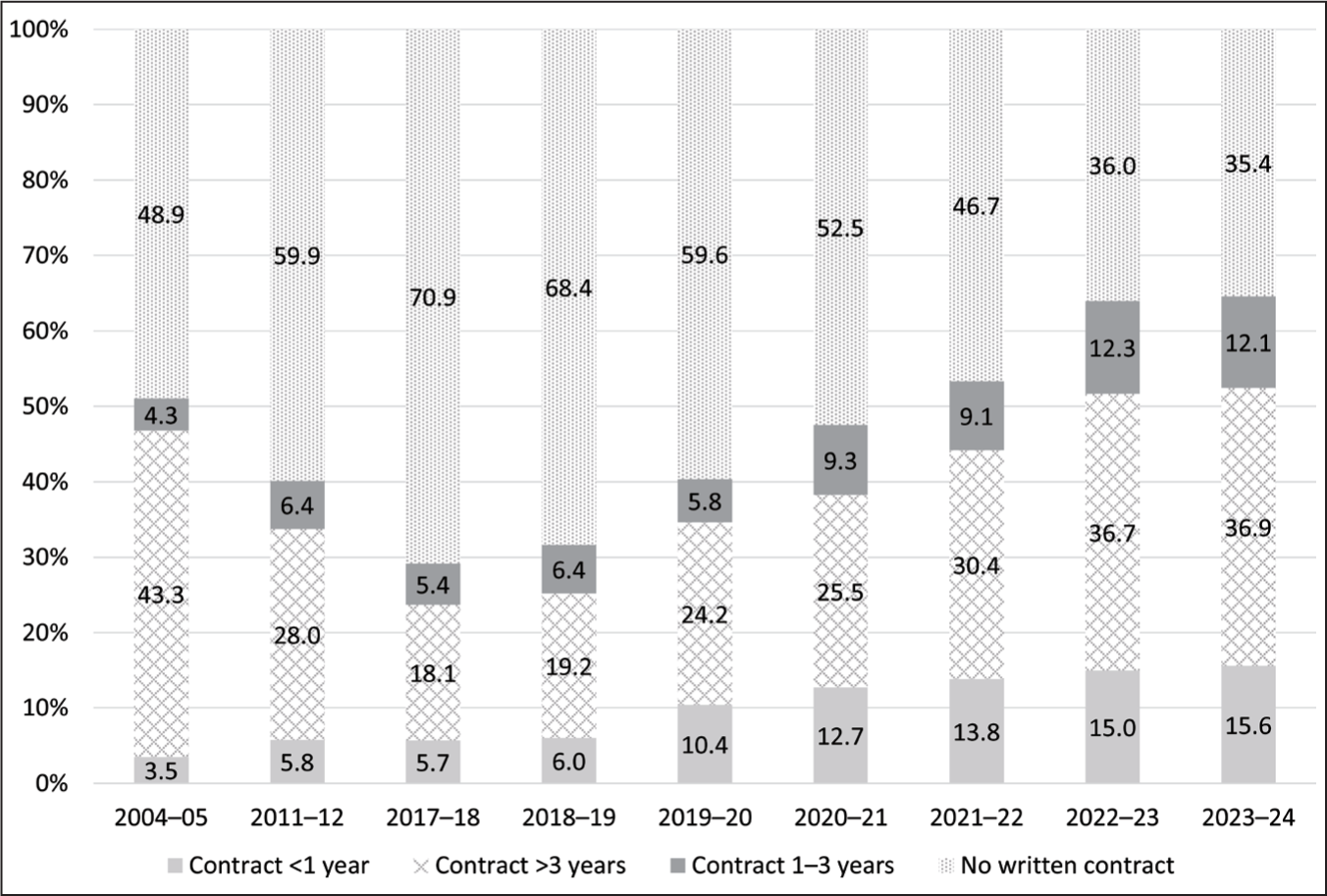
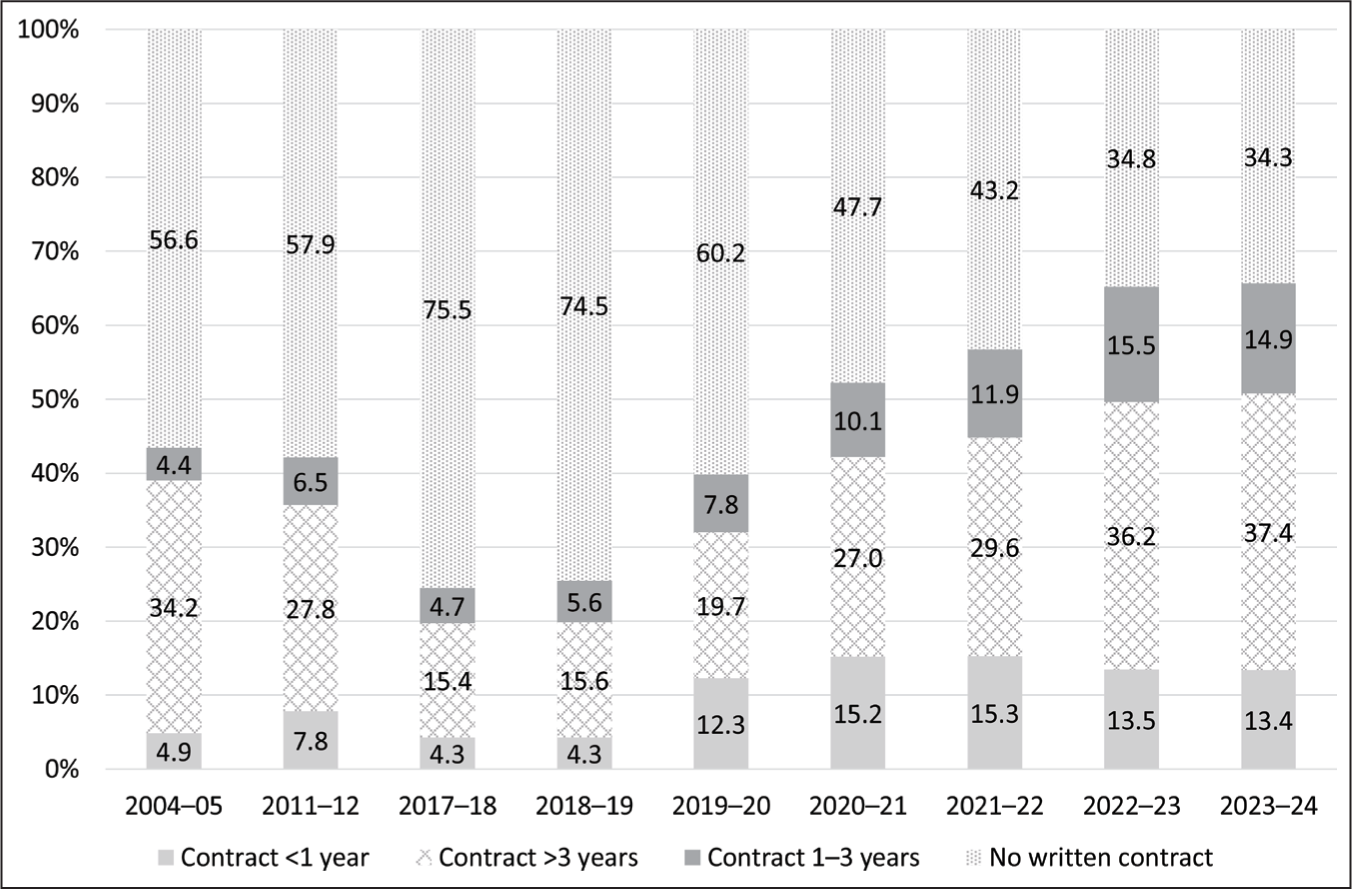
In PP, after witnessing a rise in the share of jobs without written contracts and a commensurate fall in the share of jobs with long-term contracts between 2004 and 2018, there has been a reversal in the trend since then (Figures 9–12). There was a steady growth in the number of long-term job contracts for men and women in both rural and urban areas. At the same time, the number of jobs without written contracts fell. The significant rise in long-term job contracts since 2018 has more than compensated for the decline in the previous period. This means that the share of long-term job contracts has gone up over the whole period since 2004. However, despite the improvements in contract quality within PP enterprises, the overall decline in the share of PP in total enterprise employment is indicative of the limited impact of such enterprises. Moreover, the near stagnation of long-term contract trends in urban areas following the COVID-19 pandemic raises concerns about the sustainability of the observed improvements, and consequently, about the ability of PP enterprises to facilitate a meaningful shift from informal to formal employment.
Eligibility for Paid Leave
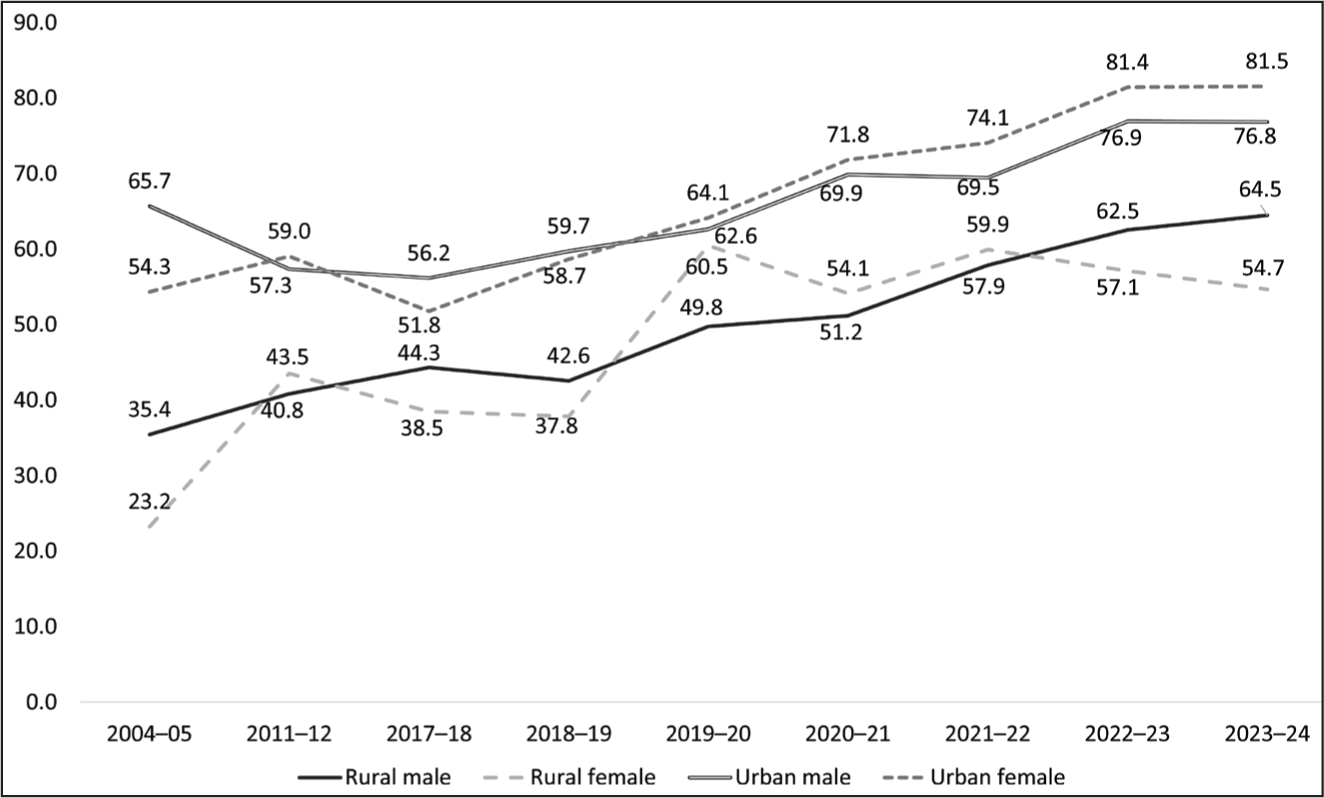
Access to paid leave within the PP remains moderately rising with some fluctuation until 2023 (Figure 13). However, except for rural males, all categories of workers experienced a decline in the share of access to paid leave in the terminal year (2023–2024). In fact, for rural females, this decline began in 2021. Therefore, it is likely that the rise in the share of paid leave during the COVID-19 pandemic could be the outcome of some of the temporary policy measures taken by the government as a response to the COVID-19-led shock. Furthermore, considering the overall decline in the share of this enterprise in total enterprise employment also makes such an improvement less significant in the long run.
Provision of Social Security Benefits
The data highlight a positive trend in social security access in rural and urban areas within the PP, albeit at a slower pace for rural females and urban males. Notably, the decline in the non-eligibility of social security slowed down for all except rural females post-2017–2018 (Table 4). Post-COVID-19, there was a reduction in non-eligibility for social security but a slight rise for rural females in 2023–2024. Thus, such a fall in the share of workers not having access to any form of social security during the post-COVID-19 period might be due to the various government incentives provided during the same time. Some deterioration observed during the most recent period, 2023–2024, also points towards the vulnerability of such trends.
Distribution of Employed Persons in PP Enterprises for Eligibility to Various Social Security Provisions.
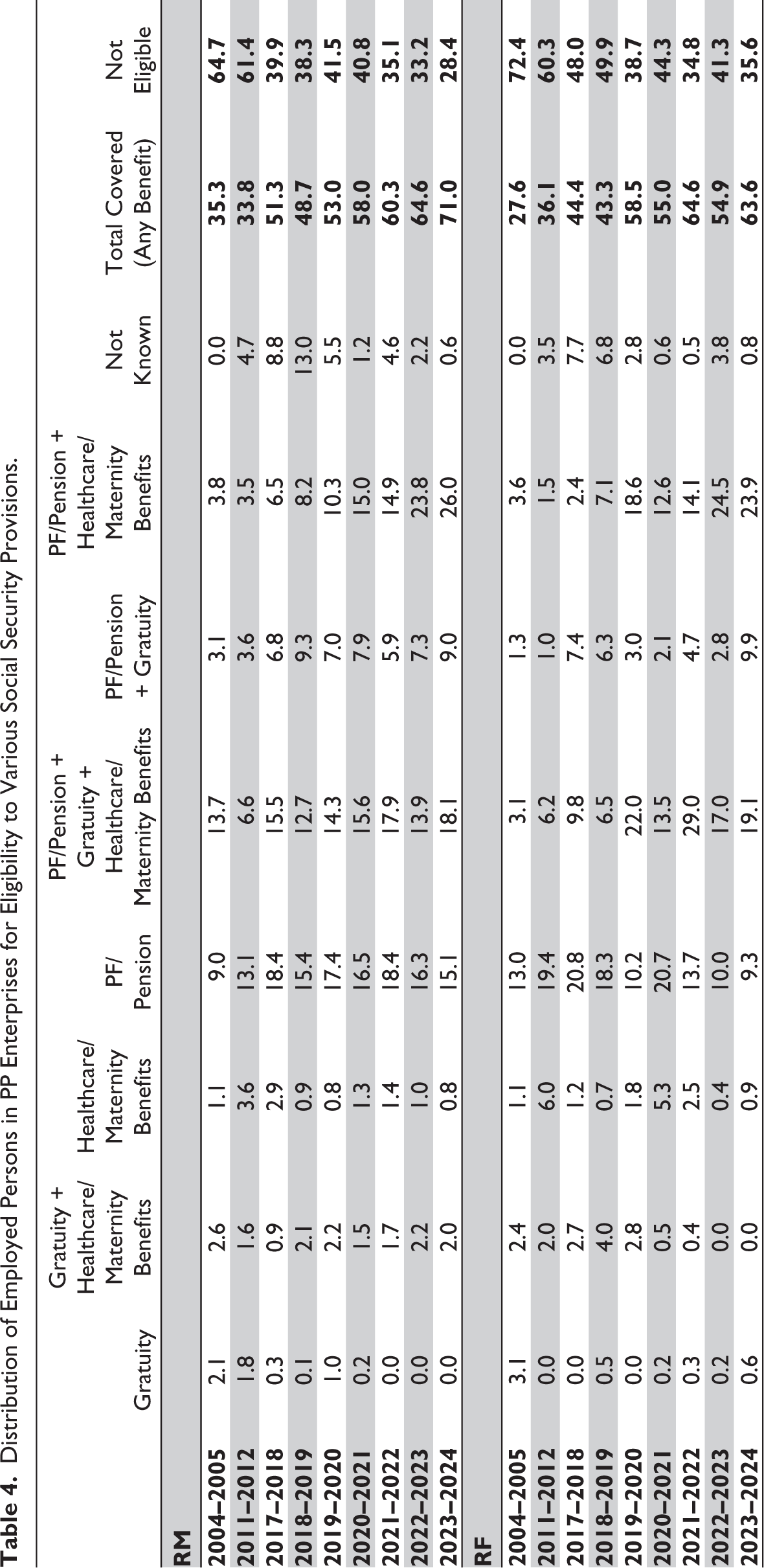
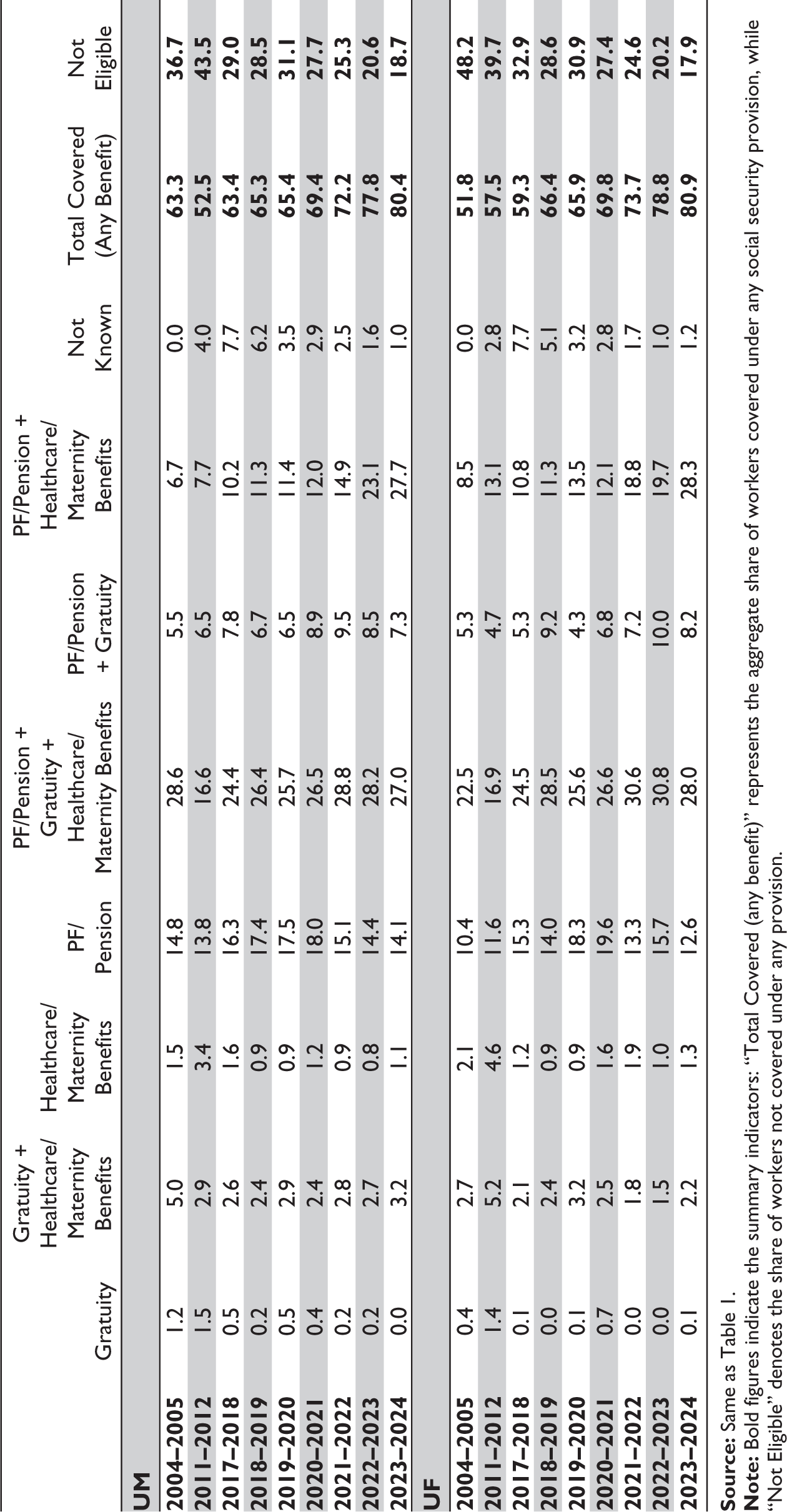
Further, a rise in the share of workers with social security is associated mainly with access to provident funds (PF). The central government has been giving incentives to the PP by covering their contribution towards the PF of their employees, which might be instrumental in higher enrolment of workers with PF in such companies.
Thus, on the whole, there has hardly been any substantial improvement in the provision of social security for workers in all three major types of enterprises, namely PrP, GnPub, and PP, employing an overwhelming majority of workers in both rural and urban areas. Even if, in some aspects, marginal improvements are discernible in PP, its share in total enterprise-level employment not only remained low but also witnessed a decline in rural areas in recent years. Since 2018, the share has increased only marginally in urban areas. Furthermore, a significant portion of the improvement during the most recent period can be attributed to external incentives provided by the government during the COVID-19 pandemic. Nevertheless, even in PP enterprises, the observed improvements are so minor that they hardly contribute to the overall improvement in the conditions of employment of workers.
The Weakening Linkage Between Economic Growth and Expansion of Formal (Quality) Employment
The period 2004–2024, characterised by high growth of the economy along with a substantial weakening of labour laws, witnessed a deterioration in the quality of employment. Such trends not only question the overemphasised role of labour laws in constraining formal employment but also raise serious doubts about the existing government policies targeting the expansion of quality employment. A continuous weakening of the linkage between growth and quality employment generation makes it imperative to delve deeper into the understanding of the functioning of the neoliberal economy, particularly regarding the capacity of the private sector to create gainful employment and the possible role of demand in this regard. While the first half of the period showed a visible improvement in most indicators reflecting the quality of employment, a relative worsening of the employment scenario is evident during the second half.
The rising capital intensity and falling employment elasticity in the formal sector characterised much of the neoliberal regime, embedded primarily in the uneven distribution of income and continuing squeeze in the real income of farmers and petty producers (Patnaik & Patnaik, 2021). However, the period from 2004 to 2015 witnessed an improvement. The MGNREGA not only expanded employment in GnPub but was also successful in pushing the real wage rate in both rural and urban India substantially (Jha & Thakur, 2013) and remained instrumental in enhancing the overall demand in the economy. Further rising terms of trade for agriculture were also instrumental in expanding the purchasing power of a sizeable rural population during 2007–2013 (Basole, 2017; Dev & Rao, 2015). This period also witnessed a rising allocation of credit in rural areas, though much of the gain was realised as indirect credit; nevertheless, the positive impact of credit expansion in creating opportunities for rural enterprises cannot be ignored (Ramakumar & Chavan, 2014).
However, since then, a reversal in several of these policies has been instrumental in changing the overall demand in the economy. The dual impact of demonetisation and hurried implementation of Goods and Services Tax (GST) has negatively impacted the country’s sizeable productive units, and the effect was harsher on the micro and small enterprises, primarily within the informal economy (Bhattacharjea, 2022). Thus, along with the possibility of direct expulsion of several small units, the impact on overall economic demand was also adverse during this period (Ghosh, 2020). The negative impact of demonetisation is also evident in the agricultural sector, as seen by disruptions to supply chains (Reddy et al., 2022). Many indicators relating to the performance of MGNREGA have also worsened in this period, indicating the weakening of the Act in managing the rural demand in the economy (Reddy et al., 2021). Thus, one can argue that due to the inadequate expansion of the country’s sizeable population’s purchasing power, the expansion of manufacturing or the formal sector remained limited. Further, increasing adaptations of labour-displacing techniques in production make the situation even worse, with continuously falling employment elasticities in the economy in general (Nigam, 2021). The economy in recent periods has witnessed a sharp rise in labour productivity and an increasingly rising share of profit in total value-added, leading to a scenario where the wage costs in the manufacturing sector have already been pushed to a very low level compared to any international standard (Roy, 2016). Thus, labour laws seem misplaced as an explanation for the limited growth in formal employment, which offers better quality jobs and adequate social security. Instead, any attempt to dilute labour laws would simply weaken the workers’ bargaining power, which might lead to a further deterioration in the quality of jobs in the economy. Additionally, it may lead to significantly exacerbating demand conditions, further constraining the economy’s future growth prospects.
Concluding Remarks
During the last two decades, there have been consistent trends of worsening social security status in PrP and the GnPub, affecting a sizeable proportion of workers in rural and urban areas for both males and females. Thus, the study suggests that expanding the social security base of workers through the automatic route of promoting GDP growth may be inadequate. Despite several incentives, such as relaxation of labour laws, environmental laws, and the provision of cheap credit, the impact on the expansion of the formal sector of the economy in terms of employment share remains off the mark. More precisely, the strategy to assign greater responsibility for providing quality employment to PP has hardly been satisfactory.
Providing universal social security to workers will be costly and inconvenient for employers. Nonetheless, given rising labour productivity in the economy and the expected positive impact of social security provisions, such provisions seem feasible and worth attempting. For small enterprises with low profits, a more significant role in providing social security and payments of related premiums may be borne by the government. Alternatively, for relatively larger and viable enterprises, such a role might be shifted to the employer. To balance the disincentive of enlargement, the scale of production and fiscal or monetary incentives could be linked with the performance of the enterprises in providing social security to their employees. The recent reorganisation of labour laws into the four labour codes also does not represent any substantial departure from the existing strategy, as it continues to rely on the voluntary and automatic routes for expanding the social security base of workers. Thus, such reorganisation of labour laws will have a limited impact in expanding the social security base of the workers in any substantial manner.
Footnotes
Declaration of Conflicting Interests
The authors declare no potential conflicts of interest with respect to the research, authorship, and/or publication of this article.
Funding
The authors received no financial support for the research, authorship, and/or publication of this article.