







Abstract
Disparities across race, gender, and class are important targets of descriptive research. But rather than only describe disparities, research would ideally inform interventions to close those gaps. The gap-closing estimand quantifies how much a gap (e.g., incomes by race) would close if we intervened to equalize a treatment (e.g., access to college). Drawing on causal decomposition analyses, this type of research question yields several benefits. First, gap-closing estimands place categories like race in a causal framework without making them play the role of the treatment (which is philosophically fraught for non-manipulable variables). Second, gap-closing estimands empower researchers to study disparities using new statistical and machine learning estimators designed for causal effects. Third, gap-closing estimands can directly inform policy: if we sampled from the population and actually changed treatment assignments, how much could we close gaps in outcomes? I provide open-source software (the R package
Introduction
Gaps in socioeconomic outcomes are among the strongest indictments of inequality. For example, the net worth of the median black household in America in 2016 was 10 cents for every dollar held by the median white household (McIntosh et al., 2020). Among those employed full-time in 2014, the median woman earned 79 cents for every dollar earned by the median man (Blau and Kahn, 2017). People raised by high-income parents have higher incomes themselves as adults (Chetty et al., 2014). These disparities are compelling in part because they are simple: the difference in a summary statistic across populations. Yet having done the important work of describing a gap, one might turn to a further object of research: how we could intervene to close that gap.
Learning how to close a gap requires one to think about causal counterfactuals. What racial wealth gap would remain if access to homeownership were equalized? What sex gap in pay would remain if men and women were assigned equitably to occupations? What income mobility would be observed if access to college were equalized? Each of these questions involves a disparity across categories (race, sex, family origin) that would persist under counterfactual assignment of some treatment (homeownership, occupation, college). For some treatments (e.g., occupation), gap-closing estimands speak to scientific understanding. For instance, we can assess the degree to which the sex gap in pay is a causal consequence of occupational segregation. Other treatments (e.g., access to college) may be directly amenable to policy manipulation. Evidence about these treatments would directly inform interventions to promote equality.
A gap-closing estimand places categories of race, class, and gender within a causal framework. It begins with a set of units labeled by categories (e.g., race). Then it posits that we could take a sample of those units from the population and conduct a counterfactual intervention to a treatment variable (e.g., attaining a college degree). The gap-closing estimand is the expected disparity in an outcome (e.g., income) across categories of units in that sample who receive that counterfactual intervention to the treatment (Figure 1). This way of thinking about the problem is useful for three reasons. First, we never have to posit a counterfactual manipulation of the category itself (e.g., race), thereby avoiding the pitfalls of estimating the causal effect of seemingly immutable characteristics (Holland, 1986; Kohler-Hausmann, 2018). Second, by focusing on what would happen if the treatment were applied to a sample we avoid the interference problems that would arise from giving treatment to the full population. To know what would happen in a sample, we do not need formal models of interference and can directly apply standard statistical and machine learning procedures. Third, this framing is useful for policy: we cannot change people’s race, but we can send them to college.
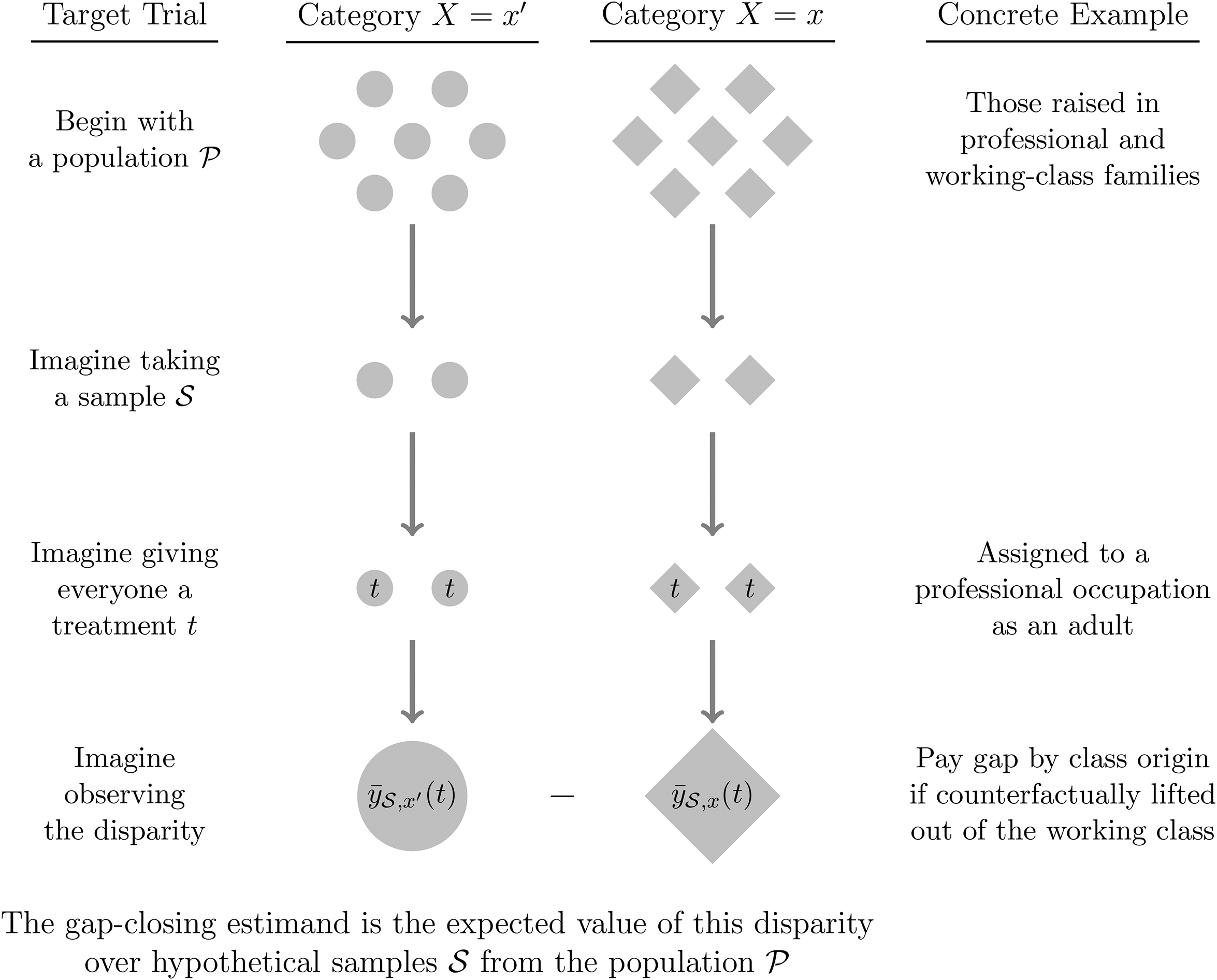
The gap-closing estimand uses observational data to emulate a hypothetical experiment. Social categories (e.g., class origin) are denoted by
The gap-closing estimand complements other research approaches. For example, assessments of discrimination necessarily involve the causal effect of the category: when someone perceived as black is not hired for a job, would they have been hired if the prospective employer had perceived them as white? Audit studies assess discrimination by experimentally manipulating signals of a category like race while holding all else constant (Pager, 2003; Bertrand and Mullainathan, 2004). Doing so identifies the causal effect of one signal of that category, such as the name at the top of one’s resume (Kaufman, 2008; Greiner and Rubin, 2011; Sen and Wasow, 2016). But audit studies do not capture other aspects of race, such as how racism produces barriers to educational opportunity that create inequality in the content of resumes across racial categories. A similar argument would hold when the category is gender. In order to make a social category manipulable, audit studies reduce the operationalization to one small slice of the broader social and historical construct (Omi and Winant, 1994; Sen and Wasow, 2016; Kohler-Hausmann, 2018). Doing so is worthwhile: causal evidence of discrimination is extremely important. Likewise, descriptive research about disparities is extremely important. Gap-closing estimands complement each of those existing approaches: what disparity would persist under an intervention to a treatment variable?
Gap-closing estimands are rooted in causal decomposition analyses in epidemiology (Vander Weele and Robinson, 2014; Jackson and VanderWeele, 2018) and are related to causal perspectives on fairness (Zhang and Bareinboim, 2018). But they apply in a much wider range of settings. The paper proceeds in several sections. First, I argue that gap-closing estimands formalize a widespread problem. Second, I define gap-closing estimands in the potential outcomes framework and discuss two important considerations: the scope of the claim and the credibility of the intervention. Third, I present causal assumptions. Fourth, I present estimation strategies. Fifth, I illustrate the method by extending previous work that described gaps in pay by class origins (Laurison and Friedman, 2016). After detailing the method and how it can be applied, I present more detailed connections to previous research. I then conclude with implications for social science practice: gap-closing estimands would free researchers to make explicitly causal claims about interventions that could close gaps across social categories of race, gender, and class, thereby promoting transparency about research goals and assumptions as well as improving the relevance of social science to policy.
Gap-Closing Estimands Address Questions of Widespread Interest
Researchers frequently consider disparities across social categories. They also routinely consider how those disparities would change in some counterfactual scenario. Gap-closing estimands are therefore already implicit in the goals of existing research, especially in the study of race, class, and gender.
Those who study race frequently explore the degree to which racial inequality would be different under alternative institutional arrangements. Western (2006) studies the role of incarceration in the racial earnings gap among men. Although incarceration substantially harms earnings, it is rare enough that “the difference in earnings between blacks and whites would be reduced only by about 3 percent if the incarceration rate were zero,” (Western 2006:127). This is a gap-closing estimand because it involves descriptive components (the initial racial gap and the proportion incarcerated) but turns crucially on a causal effect (the effect of incarceration on the earnings of black and white men). Ciocca Eller and DiPrete (2018) examine the black-white gap in college degree completion. They conclude “if black students matched to colleges in the same way as white students with similar backgrounds, their dropout rate would decrease from 50.4 to 47.5 percent, and the BA attainment rate would increase from about 19 to 20 percent,” (Ciocca Eller and DiPrete 2018:1194). Some studies make explicit the fact that the estimand of interest involves the causal effect of some treatment. Killewald and Bryan (2016:123) identify the effect of home ownership on wealth and then conduct a simulation to show that “altering their [blacks’] homeownership experiences to be comparable to those of whites would substantially narrow race gaps in midlife wealth.” Each interpretation above appeals to the notion that gaps would change if an intervention occurred to some policy-amenable variable.
Studies of social class likewise routinely involve questions about the gap that would persist across class origins (some operationalization of one’s family background) if we intervened to help people attain some treatment that could potentially break them free from the constraints of birth. In the example to which this paper returns repeatedly, Laurison and Friedman (2016) study the earnings of British workers in higher managerial and professional occupations. Within this category, the authors examine the class gap in pay between the intergenerationally stable (those whose parents were in the professional class) and the upwardly mobile (those whose parents were in the working class). The authors control for a series of variables that might be consequences of class origins (parents’ occupational class) but causes of class destinations (own occupational class). One could interpret that research goal causally as a gap-closing estimand: the difference in pay between those of professional- and working-class backgrounds, if we intervened to lift them personally to the professional class. Similarly, studies about the role of education in social mobility often involve implicit claims about the gap-closing estimand between those of different family origins if we intervened to send them to college (Hout, 1988; Torche, 2011; Zhou, 2019).
Gender inequality likewise begets claims about how gender gaps would be different under alternative conditions. For instance, the gender wage gap within jobs is very small. Petersen and Morgan (1995:338) motivate this estimand in language that closely resembles a gap-closing estimand: “Suppose sex segregation—by occupation, establishment, or occupation-establishment—were abolished; what then would the remaining gender relative wages be?” The gender wage gap is purely a descriptive quantity, but the hypothetical intervention of equalizing the distribution across occupations and establishments invokes a causal effect of occupations and establishments on wages. Given persistent gender segregation across occupations with unequal pay (Blau and Kahn, 2017), this gap-closing estimand remains central to the study of gender wage inequality today.
Many of the examples above explicitly state that the research goal is descriptive rather than causal. On one hand, that caveat is correct: absent causal assumptions, observational evidence is necessarily descriptive. Yet one reason these claims are compelling is because the descriptive evidence points toward a possible causal claim: if we intervened on the treatment, the gap might close. For researchers who want to make that causal claim, the gap-closing estimand provides a method to do so.
Define the Goal: Gap-Closing Estimands Provide a Causal Framework for Social Categories
A gap-closing estimand explicitly appeals to a counterfactual world in which a treatment variable was reassigned. Because it is a world that does not exist, great care is needed to define that world. This section begins by defining gap-closing estimands with fixed treatment assignments (assign treatment value
To make the gap-closing estimand precise, it is helpful to follow the advice of Hernán and Robins (2016) and specify a target trial: the hypothetical experiment which we hope to approximate by analyzing observational data. The motivation for a target trial comes from experimental settings, where the protocol for assigning the treatment makes the research goal unambiguous. Randomization is not possible in observational settings, yet we can still gain clarity about the research goal by specifying the procedure we would like to apply if it were possible. Figure 1 presents a target trial for the gap-closing estimand. Suppose you draw a sample 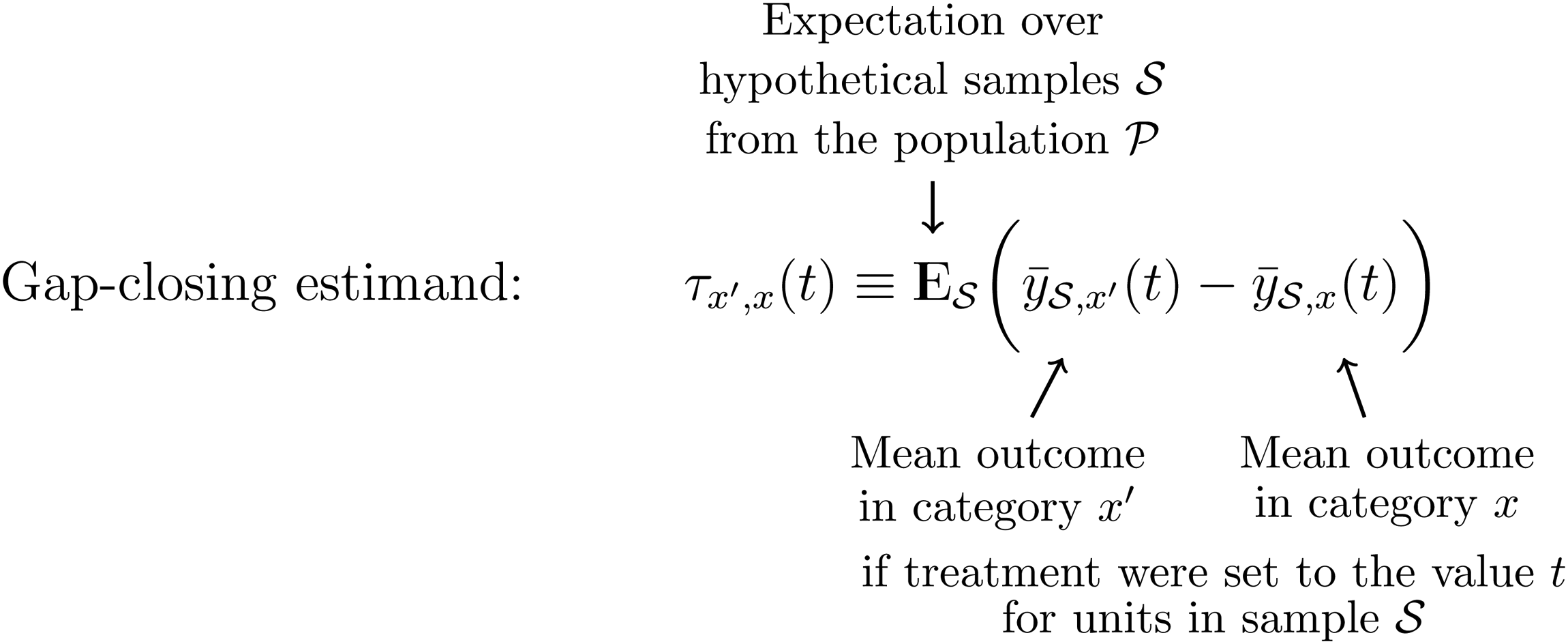 (1)
(1)
The right column of Figure 1 makes this concrete. Suppose we begin with those raised in professional and working-class families, defined by the occupation of one’s father figure (
Sometimes our theoretical question might not involve assigning everyone to a single treatment condition. Instead, we might want to know what would happen if we shuffled the treatment assignments (possibly as a function of covariates) while keeping their relative prevalence fixed. The gap-closing estimand extends to this type of stochastic treatment assignment rule. In the target trial, a unit
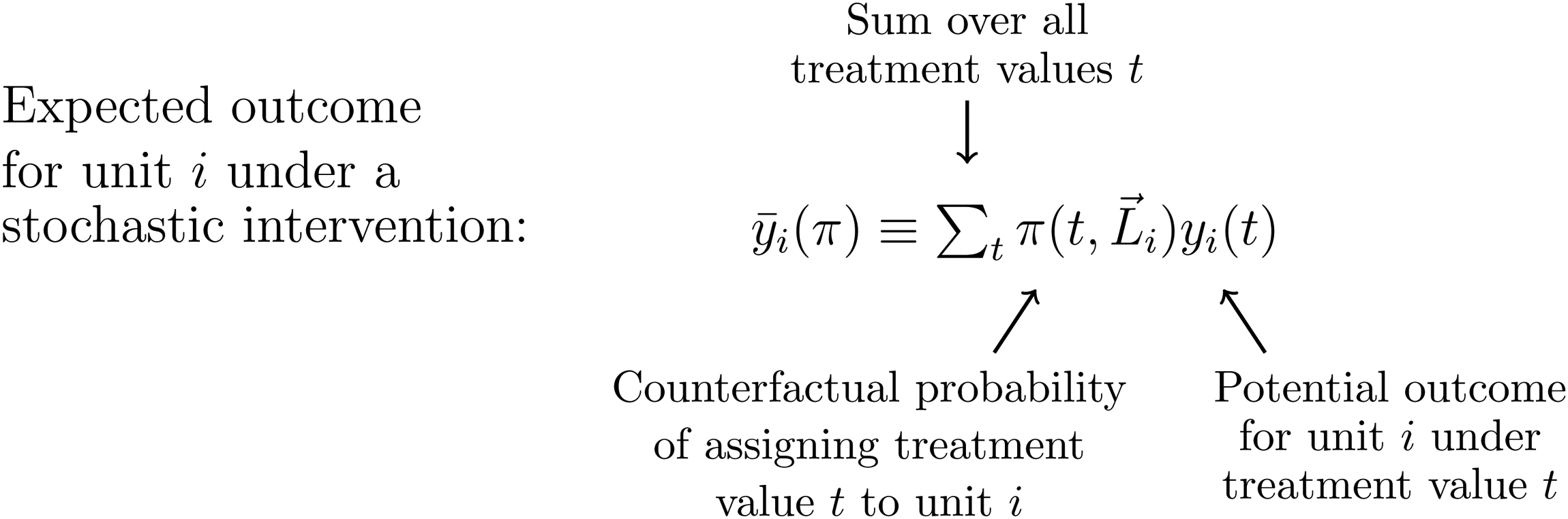 (2)
(2)
Given the unit-specific expected outcome
Regardless of whether treatments are hypothetically assigned by a fixed rule (assign one treatment value
Consideration 1: Make a Claim With Credible Scope
It can be tempting to interpret a gap-closing estimand in terms of a global claim: what would happen if every unit in the entire population received treatment value
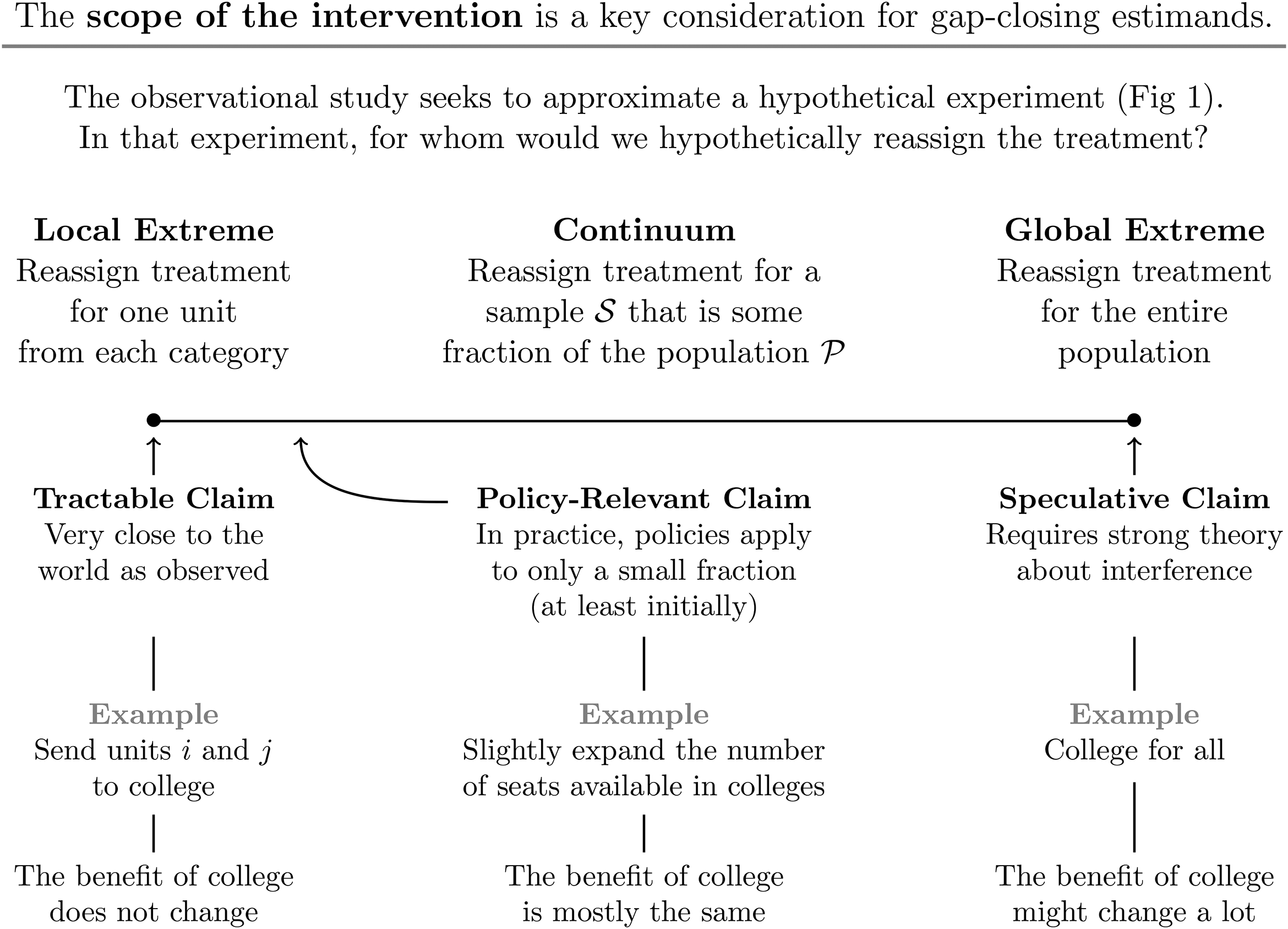
Clarify the scope of the intervention. A gap-closing estimand invokes a counterfactual world where treatment is reassigned for a sample
To take one example, only 35 percent of the U.S. population ages 25 and older in 2018 held a bachelor’s degree or higher (author’s tabulation from Table 3 in U.S. Census Bureau, 2019). A world in which everyone attended college would be radically different from the world in which we live. A college degree would no longer have the same meaning. Past studies of education expansion have shown that elites find ways to maintain their advantages (Raftery and Hout, 1993; Lucas, 2001) and that the benefits of being in the pool of college graduates may decline as the size of that pool grows (Horowitz, 2018). Thus, the outcome realized under a college degree depends on how many other people are also assigned to a college degree. There is a serious problem of interference: intervening to change the treatment value of unit
The interference concerns that arise with global claims involve violations of an assumption which is often overlooked: the consistency assumption (Hernán and Robins, 2020). The consistency assumption defines the potential outcomes
Researchers concerned with global claims have at least three options. One option is to theorize how the system would change under the intervention and encode that theory into a formal model like an agent-based simulation (Jackson and Arah, 2020). Yet, doing so requires strong social theory about how units interfere with each other, which may not be available in some substantive settings. A second option is to select an estimand for which the interactions among units may be less severe. For example, one of the most severe threats to validity arises when the effectiveness of the treatment is a function of the proportion of the population to receive the treatment. This is the case, for example, when college helps you secure access to an occupation for which the number of available positions is limited. This particularly severe threat can be averted by shifting to a stochastic estimand that keeps the marginal distribution of the treatment at its observed distribution. We might be more willing to speculate about a world where college degrees were randomly shuffled among the population (assignment rule
In many settings, a third option is most promising: make a local (rather than global) version of the claim. Following this path, a gap-closing estimand is the expected result of a hypothetical experiment: if we sample a small fraction of the population and assign them to the treatment, what disparity would we expect to observe in that sample? The local extreme of Figure 2 is a conceptually helpful edge case: suppose we sample one unit from each category and carry out the intervention on only those two units. In that limiting case, interference problems are unlikely—if the treatment is a college degree, assigning two people to receive college degrees would not change the meaning of the treatment. Moving back from the limiting case, we may often be able to credibly infer what would happen if treatment were provided to a small sample from the population: if that small sample is randomly spread throughout the much larger population, the risk of interference is reduced. That empirically tractable target is also relevant to certain types of policies. Policymakers generally cannot intervene on the entire population at once, so what would happen if treatment is provided to a sample may be what the policymaker wants to know. At least in principle, the researcher could update the evidence with new observational analyses conducted in real time as the policy expands to ever-greater shares of the population.
Consideration 2: Define a Realistic Intervention
One can speculate about the disparity under any treatment assignment
When defining a realistic intervention, researchers may face a tradeoff between an equitable intervention and a credible intervention. It might be most equitable to assign treatment irrespective of the covariates
Identify the Estimand: Causal Assumptions are Agnostic About the Effect of Social Categories
Like causal effects, gap-closing estimands involve potential outcomes that are not observed for some units (Holland, 1986). This section focuses on the link between the theoretical estimand and an empirical estimand defined in terms of observable data (Lundberg et al., 2021). The identification assumptions for gap-closing estimands are the same as those for estimating causal effects and are untestable—they must be defended on conceptual grounds. These assumptions include consistency, conditional mean independence, and positivity (following the terminology of Hernán and Robins, 2020). Consistency defines the potential outcomes and equates the observed outcome with the potential outcome under the observed treatment condition (
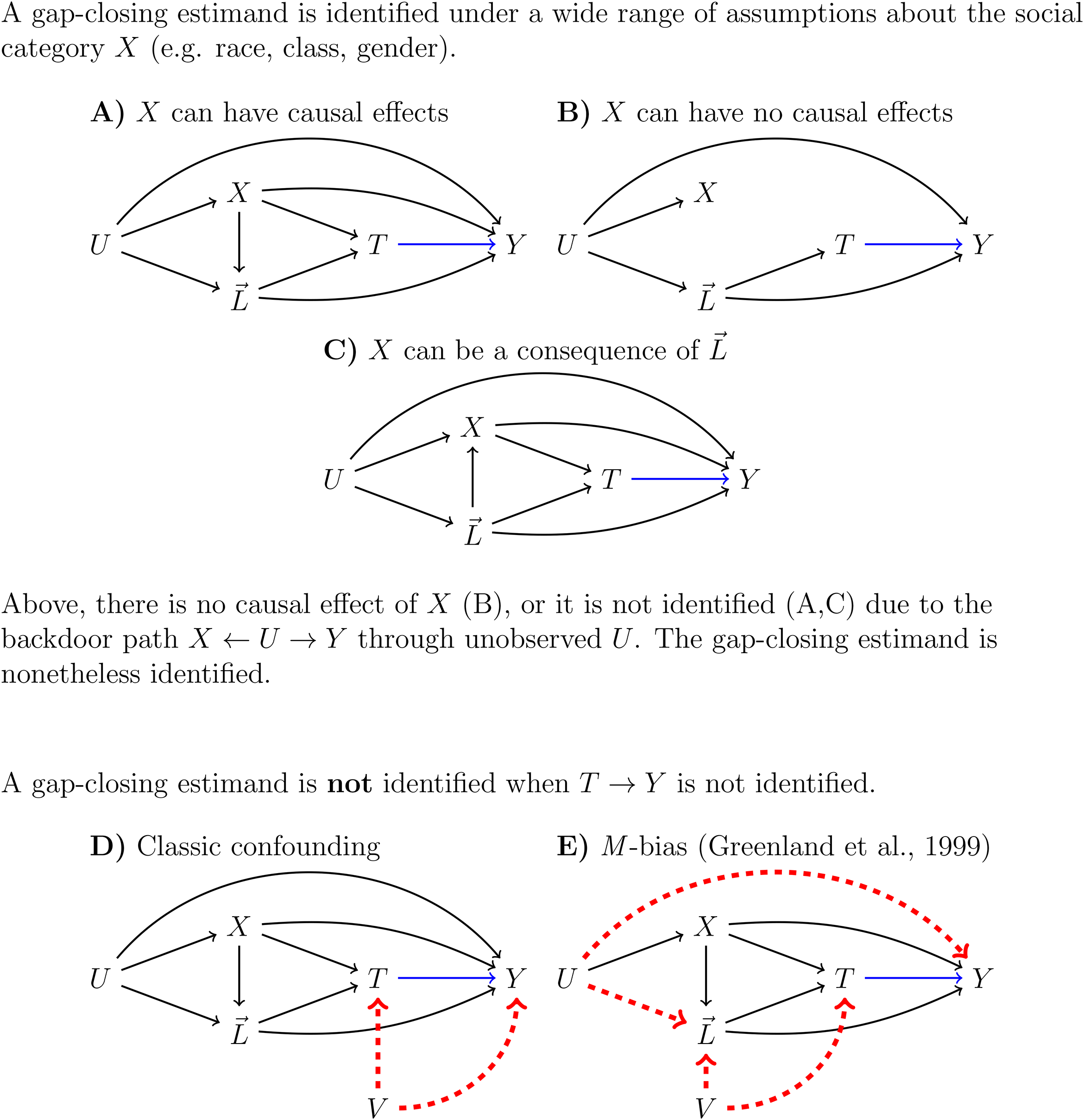
Identification of gap-closing estimands. Observed variables include the social category
Figure 3 illustrates key issues using Directed Acyclic Graphs (DAGs, Pearl, 2000).
1
The central benefit of gap-closing estimands is that counterfactuals are defined over hypothetical interventions to the treatment
The settings that threaten causal identification for gap-closing estimands are the same settings that threaten identification for the causal effect of the treatment
Estimation: Learn From Data
The central hurdle for estimation is that some potential outcomes
To simplify the discussion of estimation, it is helpful to break the gap-closing estimand into two components, which I call post-intervention means.
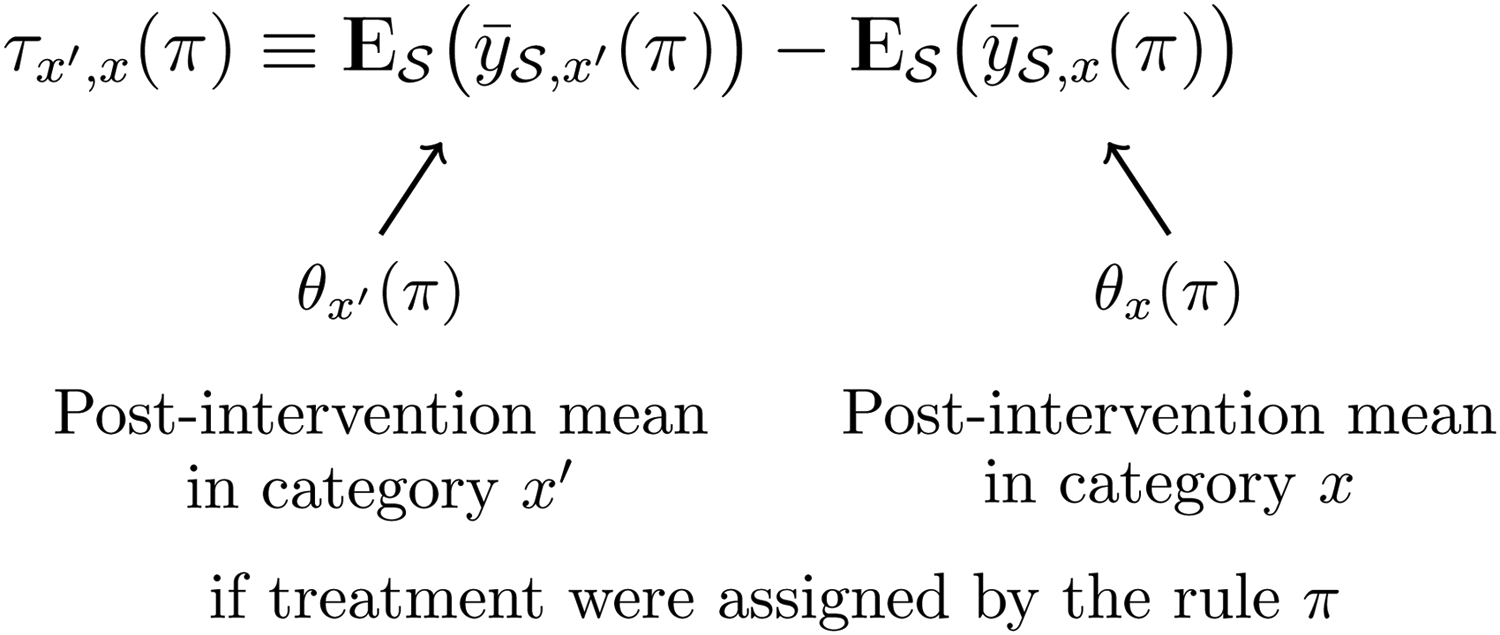 (3)
(3)
Once you have an estimator for each post-intervention mean
Estimation by Predicted Outcomes
One estimation approach relies on a function

A function to predict outcomes can be converted to an estimate of the gap-closing estimand by an approach known as the parametric 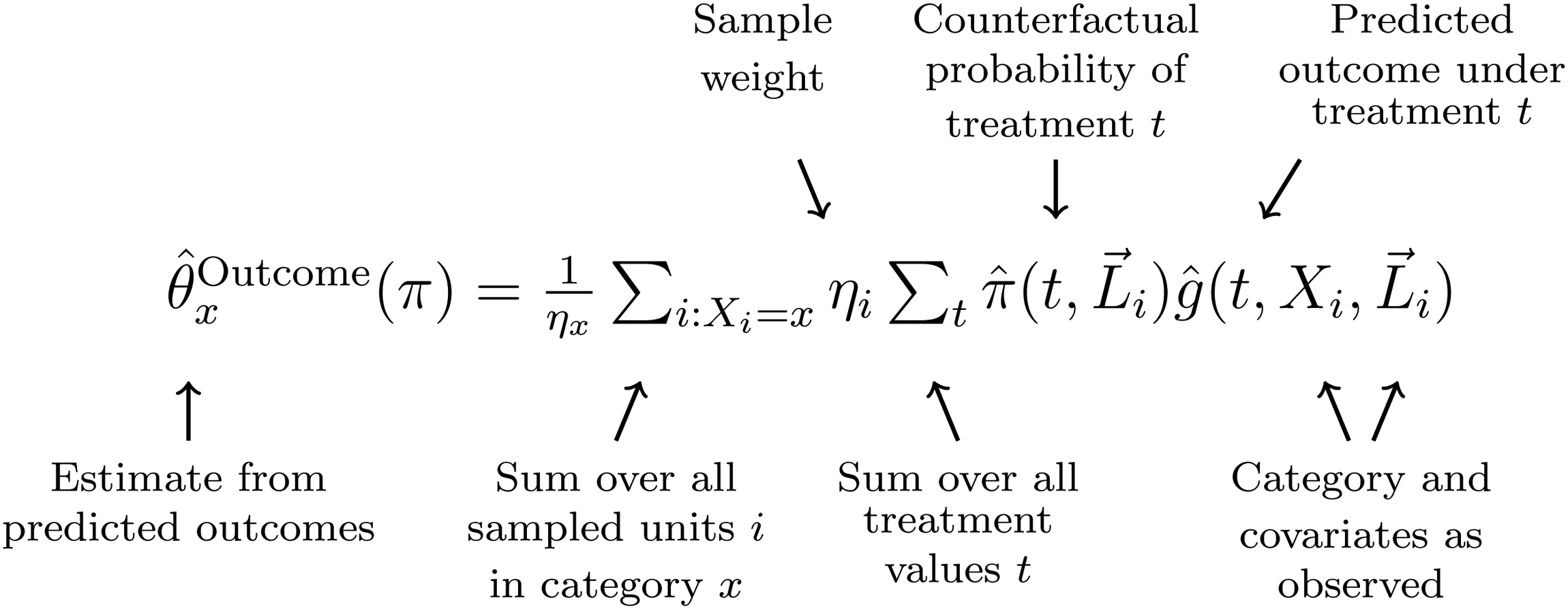 (5)
where
(5)
where
Estimation by Predicted Treatment Probabilities
Instead of predicting the unobserved outcomes, one can also reweight the observed outcomes to draw inference about the average outcome under treatment in the population. This approach begins with a function 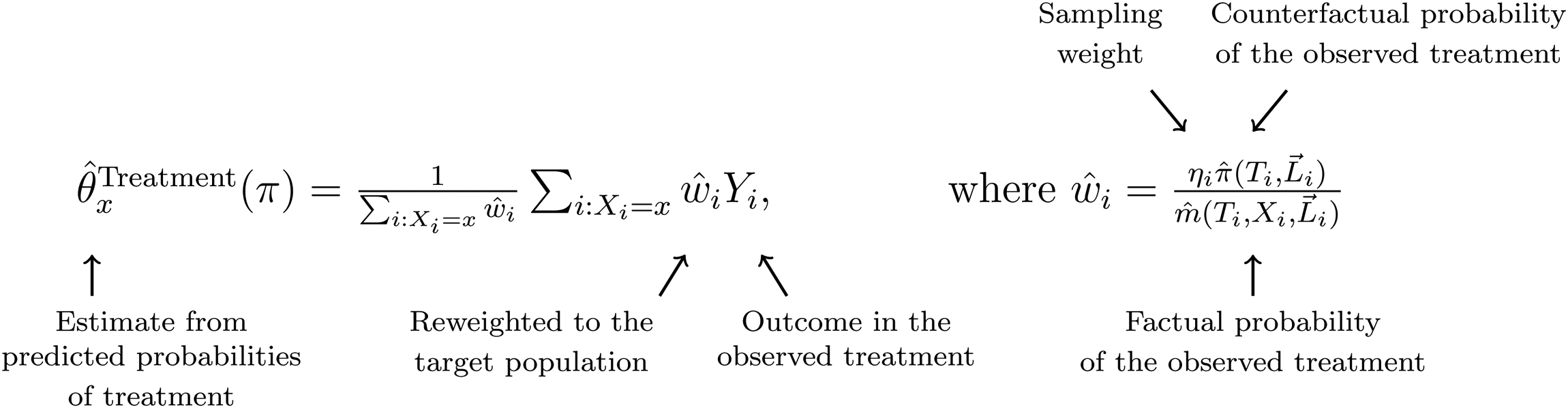 (7)
where
(7)
where

Doubly Robust Estimation
Doubly robust estimation combines predicted outcomes and treatment probabilities to produce an estimator that is consistent if either the estimator for the outcome prediction function is consistent for the true conditional mean function or the estimator for the treatment prediction function is consistent for the true conditional probability of treatment (Figure 4, see Robins et al., 1994; Bang and Robins, 2005; Glynn and Quinn, 2010).
2
Begin with an estimate 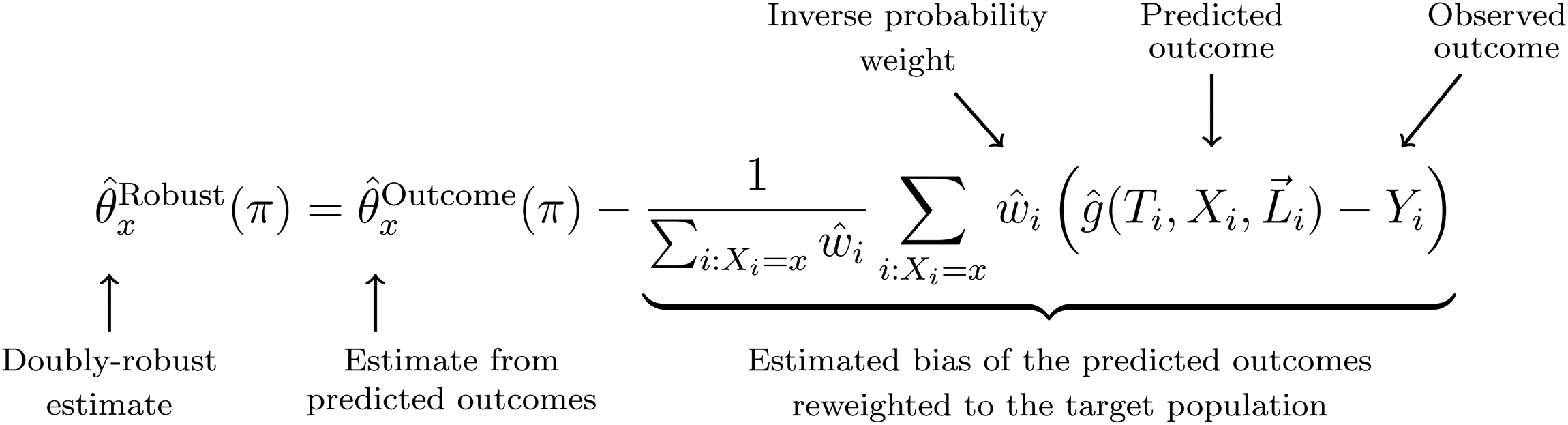 (8)
where
(8)
where
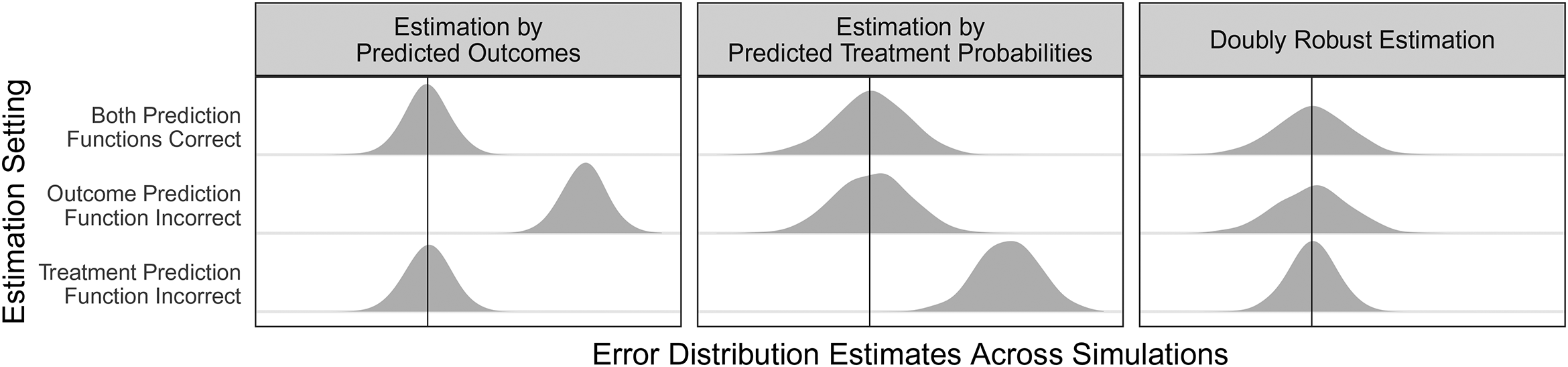
Doubly robust estimation helps when one of two prediction functions is correct. The data in this example are simulated, so the truth is known. The vertical line indicates the true gap-closing estimand
Doubly robust estimates are consistent if either
Estimation With Cross Fitting
At the core of doubly robust estimation is an estimated bias that involves residuals
When the treatment probabilities and expected outcomes follow unknown functional forms, cross fitting becomes especially important. In these settings, the researcher can learn the treatment and outcome functions with flexible machine learning estimators (as in McCaffrey et al., 2004; Lee et al., 2010; Hill, 2011; van der Laan and Rose, 2011). For example, a random forest would automatically learn interactions and nonlinearities (Breiman, 2001). Machine learning estimators balance bias against variance to produce a result optimized for individual-level prediction. But the task when estimating a gap-closing estimand is not individual level prediction; a small but desirable bias for individual-level prediction could correspond to a large and undesirable bias once aggregated across individuals. For this reason, the bias correction of doubly robust estimation is important when using machine learning estinators, and is especially helpful when carried out with cross-fitting (Chernozhukov et al., 2018).
The most pronounced benefit of cross fitting with machine learning estimators is improved convergence toward the truth as the sample size grows. Figure 5 illustrates in a simulated setting. The true gap-closing estimand is known and we can observe the root mean squared error (RMSE) of the gap-closing estimator over many simulations at various sample sizes. As the sample size grows, the RMSE approaches zero more quickly when cross fitting is used in the estimation procedure (details in Appendix simulation 3).
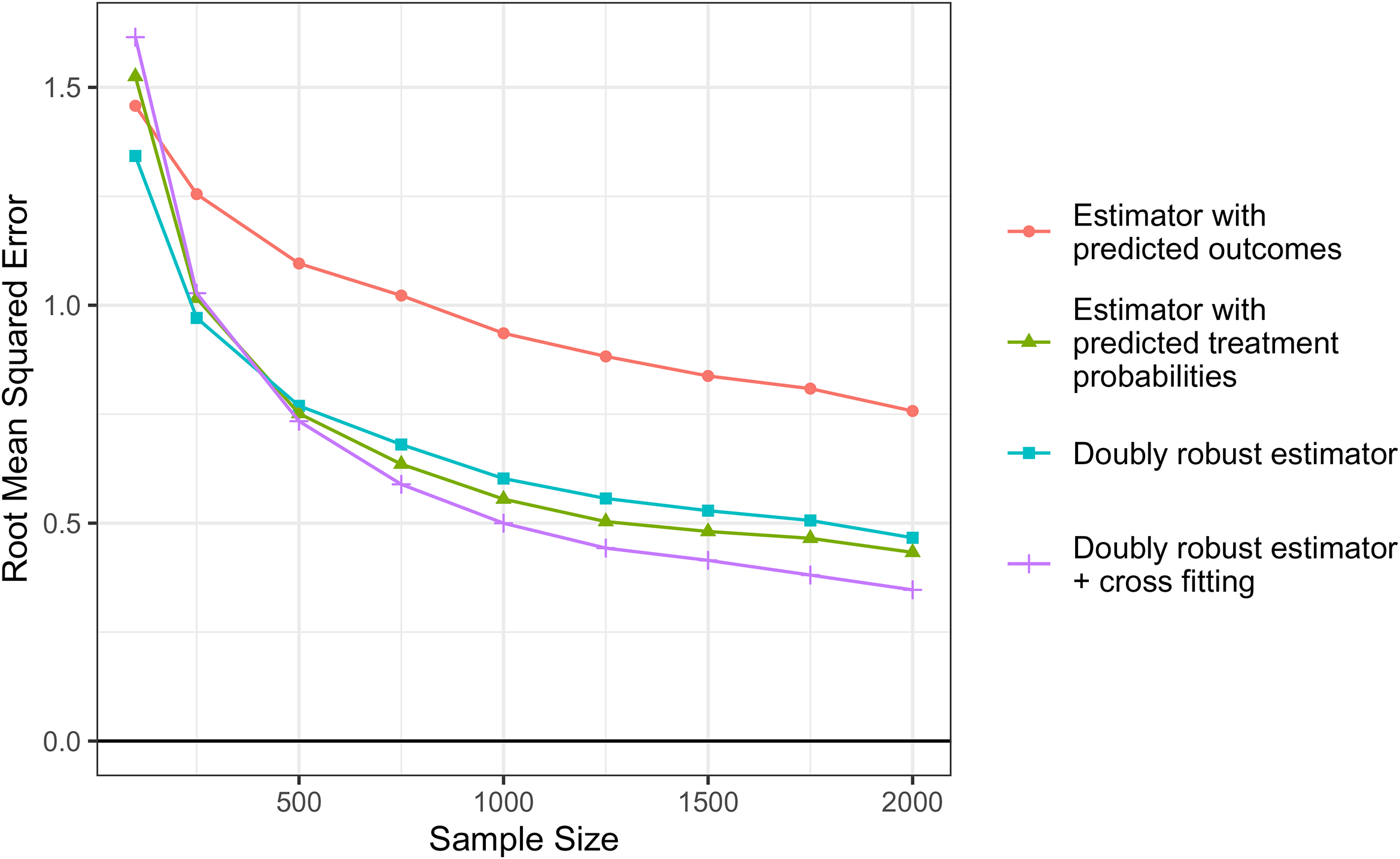
Cross fitting can improve convergence rates. The data in this example are simulated, so the truth is known. Potential outcomes are a linear function of a binary treatment and 10 continuous confounders in this simulation. In the true data generating process, there is no disparity across categories
Standard Error Estimation for Gap-Closing Estimands
The estimators discussed above all involve multiple steps: fit a predictive algorithm for the treatment and/or outcome, make predictions, and report some function of those predictions. Analytical standard errors for this procedure are not straightforward. Instead, researchers should produce standard errors computationally by resampling-based methods that mimic the process by which the sample was drawn. If the sample is a simple random sample, then the variance can be estimated by the nonparametric bootstrap: sample
Empirical Example: Class Ceiling in Pay
Laurison and Friedman (2016) describe the log incomes of British workers who attain higher managerial and professional occupations (hereafter “professional class”). Among this high-attainment category, mean log income is still lower for those whose father held a working-class occupation. The authors coin the term “class ceiling” for this intriguing descriptive result. This section extends the idea to a related causal estimand: what pay gap by class origin would persist if we intervened to assign some individuals to professional class destinations? This gap-closing estimand makes no restrictions on the meaning or causal importance of class origin
I assess this new question in the U.S. context, analyzing data from the 1975–2018 General Social Survey (GSS, Smith et al., 2018), which is conducted each year on a national probability sample (
Identification
Suppose we took a sample from the population and reassigned the class destinations of that sample. To what degree would the pay gap by class origin close for that sample? Answering this question requires us to identify the causal effect of one’s own occupational class on pay. As in section “Identify the Estimand: Causal Assumptions are Agnostic About the Effect of Social Categories,” this requires the assumption that the population average potential log income that would be realized in a professional occupation is equal to the observable outcome among those who factually hold a professional occupation, within subgroups defined by race, sex, age, education, and father’s occupational class. Because education is such a strong determinant of both occupational attainment and pay, its inclusion in this adjustment set is essential. Nonetheless, this conditioning set is likely to yield only imperfect identification. Because the aim of this analysis is only to illustrate the method, I proceed with this simple example and leave it to future work to conduct similar analyses in settings where the identification assumptions are more plausible but which would be more complex for illustrating the method.
Estimation
I estimate the outcome function
Results
Figure 6 presents results. Descriptively, log incomes are 0.32 points higher for those from professional class origins compared with working-class origins. One might argue that this pay gap is caused by the unequal rates at which people from these categories attain professional class destinations themselves: 24% among those from professional origins attain professional destinations compared with only 8% among those from working-class origins (Appendix Table 1). The gap-closing estimand allows us to estimate the gap that would persist if we took a sample and assigned them to professional class destinations, thus cutting off this potential explanation for the disparity in that sample. Under that intervention, the disparity would remain at 0.27 (84% of its original size, Panel A). Assigning a professional destination would increase pay in both groups, but the causal effects are about the same size so that the gap is almost unchanged. Thus, the disparity in class destinations does not explain the pay disparity by class origin—the pay disparity would be almost the same size even if we equalized class destinations. This reinforces the general conclusion of Laurison and Friedman (2016): attaining a professional destination is insufficient to erase the disparity by class origin. It reinforces it to a much larger degree: intervening to assign a professional class destination would reduce the pay gap by class origin by a tiny amount. Likewise, a substantial disparity by class origin would persist if we intervened to assign a working-class occupation (Panel B), if we stochastically intervened to assign a random class proportional to their population prevalence (Panel C), or if we stochastically intervened to assign a random class within subgroups of covariates (Panel D). In all cases, the gap-closing estimand is nearly as large as the descriptive disparity.
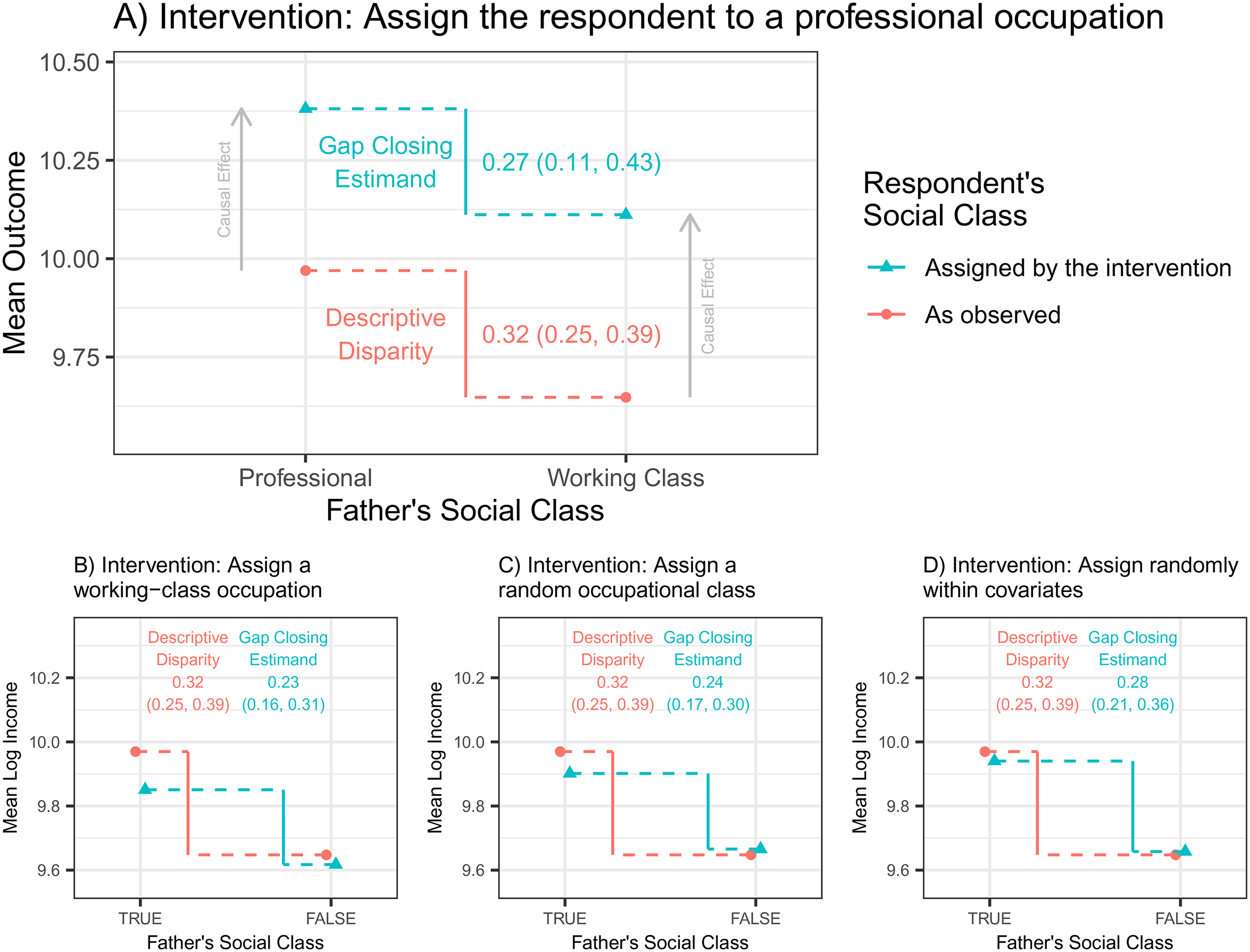
An intervention to change one’s own social class would do little to close the pay gap across categories of one’s father’s social class. Among those whose father held a professional occupation, mean log income is 0.32 points higher than among those whose father held a working-class occupation. But what if we intervened on a sample to send people personally to professional occupations? Would the gap close? That intervention (Panel A) would causally increase pay in both categories but would leave the gap across categories almost unchanged. Similarly, the gap would be almost unchanged if we counterfactually assigned people to a working-class occupation (Panel B), to an occupational class selected randomly proportional to its prevalence in the population (Panel C), or to an occupational class selected randomly proportional to its prevalence among those who match the covariates of the person in question (Panel D). In no case does an intervention to class destination substantially close the pay gap by class origin. The Appendix presents details for this illustration, including sample selection, definitions of the interventions, and the regression specifications. Conceptually, this figure builds on Laurison and Friedman (2016). Data are pooled from the 1975–2018 General Social Survey (
These results speak to theories of social mobility. Theories often posit a status attainment process that begins with one’s family background as a constraint on life chances. Over the life course, attaining a high level of education or a professional occupation might gradually free one from those constraints, as one’s own status overpowers disparities determined by one’s family of origin (e.g., the discussion of college in Hout, 1988). But the evidence here casts doubt on that set of theories. Even if we intervened to assign people to professional occupations, the pay disparity by class origin would almost entirely remain. Occupational attainment does not have the power to liberate individuals from the shadow of their family background.
The test of those theories in this empirical example is limited; all of these claims rely on identification assumptions involving no unobserved confounding, and these assumptions are unlikely to hold in the current example because of the very limited adjustment set. Yet unobserved selection into treatment may actually bias the estimate toward an overstatement of the degree to which an intervention to class destinations would close the pay gap by class origins. Those from working-class origins face greater barriers to occupational attainment, so those who attain professional destinations may be more positively selected among those from working-class origins than professional origins. This would upwardly bias the estimated post-intervention means, but moreso among those of working-class origins, which would downwardly bias the gap-closing estimand (discussed in greater depth in the Appendix). Due to this bias, the disparity by class origin if we assigned people to professional class destinations might be even bigger than the estimate reported in this paper. Overall, there is good reason to believe that personally attaining a professional class occupation does very little to attenuate the pay disparity by class origin.
Contribution and Related Work
This paper introduces gap-closing estimands for social scientists, drawing on a growing literature on causal decomposition analysis in epidemiology and biostatistics (Vander Weele and Robinson, 2014; Jackson and VanderWeele, 2018; Jackson, 2018; Jackson and Arah, 2020; Jackson, 2021). Studies of fairness in machine learning are beginning to consider the causal process that produces an observed disparity (Zhang and Bareinboim, 2018). The present paper connects those research goals to a broader class of social science settings. In the service of that primary goal, there are three specific contributions: a conceptual contribution delimiting the scope of the intervention, a technical contribution deriving a doubly robust estimator for this setting, and a contribution to the accessibility of these methods by introducing them with examples intended to reach a broad social science audience.
The conceptual contribution delimits the scope of the intervention: the gap-closing estimand is the expected disparity in a sample
The technical contribution is a doubly robust estimator for this particular setting: stochastic treatment assignments in a complex survey sample. Doubly robust estimators have a long history in causal inference (Robins et al., 1994; Bang and Robins, 2005; Kang and Schafer, 2007), including for the setting with stochastic treatment assignments (see Dudík et al., 2014 Sec. 3.3 and Murphy et al., 2001 Sec. 5.2).
4
There is also growing interest in applying doubly robust estimators in complex survey samples (Rudolph et al., 2014), albeit with a focus on non-stochastic treatment assignment rules. The present paper proves double robustness for stochastic treatment assignment rules when the sample contains units selected from the population with unequal probabilities (proofs in the Appendix). Given a doubly robust estimator, the extension to machine learning estimation of nuisance functions with unknown functional forms follows directly from the literature for causal effects (van der Laan and Rose, 2011; Chernozhukov et al., 2018). This paper also argues that double robustness for the treatment and outcome prediction functions
Each contribution above serves the third and main contribution: bringing a range of existing ideas together in an accessible framework designed to support social science inquiry to define interventions, estimate the resulting disparities, and inform policy to close gaps. By illustrating the relevance of gap-closing estimands to a range of substantive questions about inequality, this paper builds a bridge between the questions sociologists are already asking implicitly and a set of methods that can answer those questions more explicitly. In the service of this third contribution, the
Comparing Coefficients Across Regressions Does Not Estimate a Gap-Closing Estimand
There is a common research practice that does not estimate a gap-closing estimand. Suppose a researcher estimates two regression models, one with and one without the treatment variable


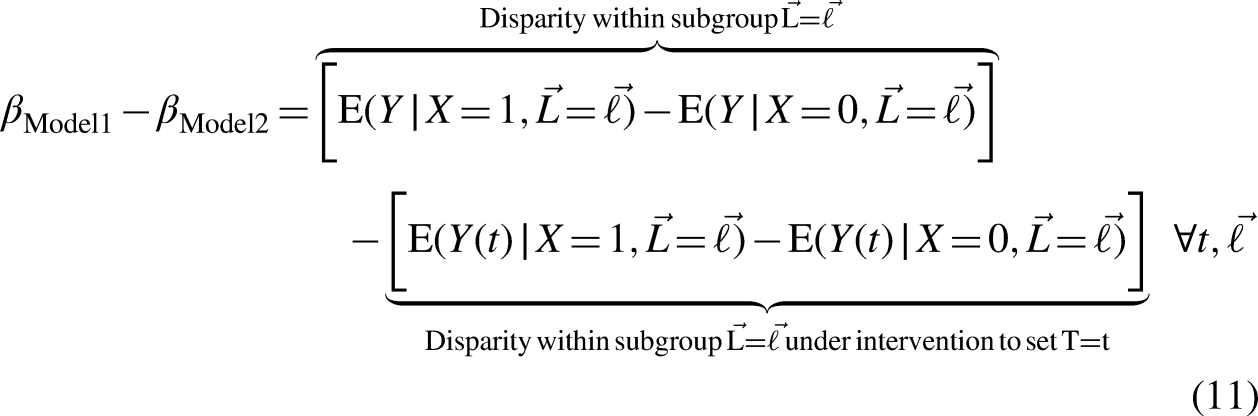
The comparison in equation (11) is difficult to interpret for two reasons. First, neither
Past Work on Neighboring Descriptive and Causal Topics Does Not Speak to Gap-Closing Estimands
Descriptive work may seem related but is distinct from gap-closing estimands because it does not invoke a causal claim. Substantial scholarship within sociology has summarized disparities by Kitagawa-Blinder-Oaxaca decompositions (Kitagawa, 1955; Blinder, 1973; Oaxaca, 1973). This technique (or the extension to generalized linear models by Fairlie, 2005) appears in examinations of inequality over numerous social categories in sociology: class origins (Laurison and Friedman, 2016), race (Ciocca Eller and DiPrete, 2018), disability (Shandra, 2018), sexual orientation (Mize, 2016), and gender (Weisshaar, 2017), to name a few. Absent causal assumptions, these decompositions are purely descriptive: they provide evidence about the disparity across categories among units who are identical along all covariates. Gap-closing estimands are different because they speak to whether an intervention would causally close a disparity. To use Kitagawa-Blinder-Oaxaca decompositions to estimate gap-closing estimands requires careful interpretation under a specific set of causal assumptions and a specific assumed functional form (Jackson and VanderWeele, 2018). 5
Causal work on controlled direct effects may seem related but is distinct because it posits a different kind of intervention. A controlled direct effect (Pearl, 2001; Robins, 2003; Acharya et al., 2016; Zhou, 2019) is best understood in the context of a hypothetical experiment: the expected difference in an outcome
Discussion
Gap-closing estimands provide opportunities to not only study disparities, but to learn about interventions to close them. By making an explicitly causal claim, researchers who estimate gap-closing estimands gain transparency about required causal assumptions needed for identification. They also gain opportunites to estimate by flexible predictive algorithms, which are implemented in open-source software (the
The knowledge we can gain from gap-closing estimands complements existing bodies of research that focus on descriptive disparities and causal assessments of discrimination. Descriptive research could proceed in tandem with gap-closing research; a descriptive study documenting the presence of a large disparity would set the stage for subsequent studies to explore interventions to close that disparity. Causal assessments of discrimination in audit studies provide one type of understanding about why a gap exists: a gap may exist because decision makers react differently when they perceive a person to be of one category versus another. Gap-closing estimands provide a complementary type of understanding about disparities: how would a gap change if some other treatment variable took a different value? To fully understand disparities, we need both types of understanding.
An embrace of gap-closing estimands would both sharpen theory and change the language with which social scientists discuss race, class, and gender in observational studies. Too often, theory about disparities involves vague claims about the role that some treatment
Substantively, a shift away from conditional comparisons (e.g., coefficients that statistically adjust for many covariates) and toward gap-closing estimands (e.g., the outcome of an intervention on one variable) might reveal that post-intervention disparities are actually larger than researchers might have otherwise thought. This shift would improve rhetorical clarity and also contribute to the policy-relevance of research: policymakers can understand that the research implies that an intervention to the variable studied might plausibly close a gap. Finally, formalizing the hypothetical experiment provides an opportunity to clarify the scope of the intervention (to a sample vs. to the population). Gap-closing estimands provide a framework for clarity about the target of statistical inference, thereby promoting transparent research and new estimators like the one developed in this paper to help us build evidence on interventions to close gaps.
Footnotes
Appendix
Acknowledgments
The methods presented in this paper are implemented in the R package
Declaration of Conflicting Interests
The author(s) declared no potential conflicts of interest with respect to the research, authorship and/or publication of this article.
Funding
Research reported in this publication was supported by the National Science Foundation under Award Number 2104607 and by The Eunice Kennedy Shriver National Institute of Child Health & Human Development of the National Institutes of Health under Award Numbers P2CHD047879 and P2CHD041022.

Supplemental material
Supplemental material for this article is available online.