






Abstract
How do social network interactions at the micro level generate novel network structures at the macro level? While recent methodological advancements have enabled the statistical analysis of micro–macro network effects, the current literature says little about the conditions sufficient to draw causal inference, how to evaluate indirect pathways that generate macro-level structures, or how to assess the sensitivity of empirical estimates to model choice. We address each of these problems in the micro effects on macro structure (MEMS) framework for micro–macro network analysis. We first report new formal results showing that the MEMS is nonparametrically identified under the conditional ignorability assumption and that, when identified, the MEMS can be interpreted under the “causes of effects” framework. We then show that the MEMS can be decomposed into direct and indirect effects to conduct mediation analysis when the interest is in multimechanistic pathways, where micro mechanisms shape macro outcomes by acting indirectly via intervening micro mechanisms. Finally, we build on these results to introduce a simple sensitivity test for the robustness of empirical estimates to model selection. We illustrate the utility of the methods in an empirical analysis of direct and indirect pathways linking in-group preference, out-group avoidance, and triadic closure to network segregation.
Foundational sociological theory considers how macro social network structures emerge from micro-level interactions (Blau 1964; Coleman 1990; Granovetter 1973). Macro social network structures, such as segregation, brokerage, and cohesion, are defined from the entire network. Micro-level mechanisms are dyadic network selection mechanisms, such as choice-based homophily and reciprocity, and are most often represented by the parameterized terms in a statistical network model. The importance of macro network structures for sociological outcomes ranging from firm performance (Burt 1992; Khanna and Guler 2022) to disease spread (Bearman, Moody, and Stovel 2004), perceptions of inequality (Newman 2014; Schulz, Mayerhoffer, and Gebhard 2022), and prejudice (Allport 1954) has motivated a large body of research examining micro–macro network linkages in empirical social networks (Bearman, Moody, and Stovel 2004; Diviak 2023; Huang and Butts 2023; McMillan, Kreager, and Veenstra 2022; Robins, Pattison, and Woolock 2005; Rosche 2025; Wimmer and Lewis 2008; Xu, Clark, and Pak 2024). Often, such questions are causal: they aim to understand why macro network outcomes emerge and how micro-level selection processes contribute to them.
Network studies have historically relied on generative network models—such as exponential random graph models (ERGMs) or stochastic actor-oriented models (SAOMs)—to answer micro–macro questions by conducting empirically calibrated simulations (e.g., Robins, Pattison, and Woolock 2005; Snijders and Steglich 2015). Scholars have recently sought to bolster the statistical basis of micro–macro network analysis by formalizing these in silico approaches (Chabot 2024; Duxbury 2024a). These studies define target quantities (estimands) and develop estimation algorithms to enable null hypothesis testing in micro–macro research. These recent frameworks advance earlier approaches by providing a statistical basis to falsify hypotheses on the micro foundations of specific network structures. As such, they have been quickly adopted in the applied social networks literature in a range of empirical settings (Chabot 2024; Duxbury and Haynie 2024; Hoffman and Chabot 2023; Jeffrey 2025; Rosche 2025).
Despite opening the door for principled hypothesis testing, the state of statistical micro–macro methods is limited in several important ways. Specifically, current frameworks do not clarify the conditions sufficient to interpret micro–macro estimands as causal effects, outline procedures for disentangling direct from indirect micro–macro effects, or consider sensitivity to researchers’ modeling choices. These problems are pertinent, as some studies caution against causal interpretation of micro–macro network estimates (Block 2023; Chabot 2024), and current methodological debates center on how model selection affects inference in longitudinal network analysis (see Block et al. 2018; Leifeld and Cranmer 2019).
We address each problem within the micro effects on macro structure (MEMS) framework for micro–macro network analysis (Duxbury 2024a). First, we report new formal results on the conditions sufficient to interpret the MEMS as a causal quantity. We show that the MEMS is identified under the conditional ignorability assumption common to counterfactual analysis. We show that the MEMS is closely related to known causal quantities, namely the attributable effect of Rosenbaum (2001) and the overall causal effect of Hudgens and Halloran (2008). We situate the MEMS in the “causes of effects” framework using the modified Halpern–Pearl definition of “specific” causation (Halpern 2016) to show that the MEMS supports an attributional causal interpretation (see Yamamoto 2012) when conditional ignorability is met.
Second, we describe how the MEMS can be decomposed into direct and indirect effects to conduct mediation analyses that implicate multimechanistic pathways linking multiple micro mechanisms. Mediation analysis with the MEMS is relevant when the research interest is in how interactions between multiple micro-level processes create novel macro structures (Goodreau, Kitts, and Morris 2009; Kossinets and Watts 2009; Wimmer and Lewis 2008). For example, actors’ preferences to create ties with similar alters at the micro level (in-group preference) may have direct effects on segregation between social groups as well as indirect effects by creating opportunities for social closure through triadic structures (triadic closure). We define total, direct, and indirect effects within the MEMS framework and formally show that each estimand is identified under the sequential ignorability assumption common to mediation analysis.
Third, we show how a small modification to our mediation approach can be used as a sensitivity test to gauge the robustness of empirical estimates to model choice. This is important in network modeling, as different models include specific assumptions about a network-generating process. The sensitivity analysis enables researchers to quantify by how much an MEMS estimate changes under distinct assumptions about a true generative model. We conclude with an example examining the direct and indirect effects of in-group preference and out-group avoidance on friendship network segregation. The methods are implemented in the netmediate R software package freely available on CRAN (Duxbury 2023).
Micro Effects on Macro Structure
The MEMS defines how much a micro process contributes to a specific macro network structure (Duxbury 2024a). Micro processes are the dyadic selection mechanisms that determine whether two nodes are connected and are usually represented by the parameterized terms in a statistical network model. Commonly studied micro mechanisms include choice-based homophily, reciprocity, and triadic closure. Macro structures are network statistics calculated on nodes (e.g., brokerage), subgraphs (e.g., community size or density), or the complete network (e.g., segregation, clustering). Note that macro structures are not necessarily network level. Node-level statistics, such as the number of connections a person has to members of the same social group or individual brokerage, are referred to as “macro” structures in micro–macro network analysis because each node-level statistic is determined by connections in the entire network (see, e.g., Snijders and Steglich 2015).
Historically, scholars have examined micro–macro relationships using in-silico simulations (Block 2018, 2023; Huang and Butts 2023; McMillan, Kreager, and Veenstra 2022; Robins, Pattison, and Woolock 2005; Snijders and Steglich 2015). These approaches capitalize on the architecture of parametric network modeling, usually fitting a generative model like an ERGM or an SAOM to observational network data and then manipulating the parameter values to generate hypothetical networks under those alterations. By comparing the simulations to the observed network, researchers gain insights into how much of an observed macro structure results from the micro selection mechanism of interest. The most common procedure is what Huang and Butts (2023) call a “knock out” experiment, where a focal parameter is fixed at 0, and the resulting synthetic networks are compared to networks simulated without alteration. The utility of the “knock out” approach is that it quantifies the total contribution of a micro process to a macro structure while holding all other model parameters at their estimated values.
Definition, Notation, and Language
The MEMS was developed to formalize widely used “knock out” approaches. To start, assume a binary, undirected cross-sectional network and a macro structure measured at the network level to simplify mathematical expressions, though the MEMS framework allows for directed, weighted, longitudinal, hyperpartite, and multilevel network data and accommodates macro measures at the node, subgraph, or complete network levels. The observed network is usually assumed to be a random draw from a superpopulation of networks, 1 though infinite and finite population inferences are possible as well (see Schweinberger et al. 2020).
Define a binary cross-sectional network A with N nodes. Let Y be a network-level characteristic, such as segregation, modularity, or average path length, which is expressed as a function of the network,
The original definition of the MEMS relied on parametric notation to align with the logic and procedures commonly used in the “knock out” approach (Duxbury 2024a). Begin with a parametric network model,
The distribution of
Although this definition aligns with how micro–macro analyses have historically been implemented, it poses conceptual ambiguities for causal inference. Specifically, the parametric definition defines counterfactuals in terms of a causal effect (the value of
Following this approach, we assume there exists a potential network, and therefore a potential macro structure calculated from that network, for each treatment state. We define potential outcomes at the network level as functions of treatment distributions observed at the dyad level. While this departs from the unit-level treatment effects that are usually studied, it is consistent with related work on micro–macro network analysis (e.g., Chabot 2024; Duxbury 2024b) and with the treatment program framework for causal inference discussed further below (Hudgens and Halloran 2008). Let
The micro–macro effect for a given network is the change in the value of a macro structure when treatment statuses change in value:

The MEMS is the expected value of
Relationship to Known Causal Estimands
Expressing the MEMS nonparametrically clarifies its relationship to known causal estimands. Rosenbaum (2001) defines the attributable effect as the number of observed binary outcomes in an observational study that can be attributed to observed treatment statuses. Let
The MEMS is also related to the treatment effect on treated. The sample average treatment effect on treated (sATT) is

Estimation
The MEMS is estimated algorithmically in postestimation from a converged network model using either Monte Carlo quadrature or bootstrapping (Duxbury 2024a). Even though we define the MEMS nonparametrically, it can be estimated either parametrically or nonparametrically, depending on the generative model used by the researcher. Parametric models are the most widely used network models in practice and parametric estimation is typically computationally faster, so researchers usually use parametric estimation to obtain the MEMS. Parametric estimation uses the estimates of a converged model to generate a synthetic distribution of macro outcomes under different treatment states. Let
Identification and Interpretation of the MEMS
While recent studies define the MEMS and outline procedures for estimating it, two ambiguities exist. First, the MEMS relies on counterfactual values that can never be observed directly (e.g., Holland 1986). Identification is further complicated in network data because the treatment statuses of connected units can interfere with treatment effects for a given unit. Second, studies have debated the interpretation of micro–macro quantities that rely on the counterfactual values used to define the MEMS (Block 2018, 2023; Chabot 2024; Stadtfeld, Takacs, and Voros 2021). These two problems raise questions about when the MEMS can be identified from observed data and what types of causal interpretation the MEMS supports.
Identification with Network Interference
A causal effect is usually defined as the difference in a unit's potential outcome value under exposure to different treatment states. This unit-level effect is not well-defined without the stable unit treatment value assumption, which requires no multiple versions of treatment and no interference—that treatments on other units do not affect a focal unit's outcomes (Rubin 1980). The no-interference assumption is regularly violated in networks because data points are interdependent. For a given dyad, the no-interference assumption holds:
Although network interference problematizes treatment effect identification at the dyad level, it can be relaxed when examining micro-level effects on macro outcomes. The treatment program framework defines group-level
6
causal estimands that allow for interference among units (Halloran and Struchiner 1991; Hudgens and Halloran 2008). We focus on a specific estimand in the treatment program framework, the overall causal effect. Let
The MEMS can be viewed as a superpopulation average of the overall causal effect. The “group” outcome is captured by the macro structure Y. The observed vector of dyad-level statistics
Identification Result
We show that the MEMS can be nonparametrically identified from observed data under the conditional ignorability assumption. First, let


The primary implication of equation (3) is that, under the assumption of conditional ignorability,
Interpretation within the “Causes of Effects” Framework
A common refrain among researchers conducting micro–macro network analysis is that agents may update their preferences in the absence of treatment. As Block (2023:49) cautions, the “assumption that only one predictor of individuals’ behavior changes while all others remain constant is unrealistic,” so changes in macro structures cannot be interpreted as “an expectation of what would happen in the real world” (see also Chabot 2024; Stadtfeld, Takacs, and Voros 2021). In the MEMS framework, the counterfactuals captured by
Interpretation of the MEMS under these conditions can be clarified by distinguishing between causal inference in the “causes of effects” framework and the “effects of causes” framework. The difference between the two frameworks is whether the substantive interest is in how a potential treatment will shape a potential outcome (“effects of causes”) versus whether an observed outcome can be causally attributed to an observed treatment (“causes of effects”). Dawid, Faigman, and Fienberg (2015) differentiate the types of questions answered by each framework:
“Causes of effects” are established using the “but–for” criterion: Given that a treatment and an outcome are both observed, would we still observe the outcome if the treatment were not observed? 8 As Dawid and Musio (2022) detail, the “but–for” test requires careful philosophical considerations when choosing counterfactuals, as there are many ways observed outcomes could behave in the absence of observed treatments (see also Pearl 1999). Note that this is the same concern raised by Block (2023) and others regarding how social agents adapt their network preferences in counterfactual worlds where the treatment program disappears.
One principled approach to choosing a counterfactual in the “causes of effects” framework is the modified Halpern–Pearl definition of “specific” causation 9 (Halpern 2016; Halpern and Pearl 2005). The modified Halpern–Pearl model defines causality between an observed treatment and an observed outcome by “freezing” confounders at their observed values and only considering conditions where the treatment—or treatment program—changes. All variables on the causal pathway focal to analysis, including outcomes and mediators, are allowed to vary as a function of the treatment, but confounders retain their observed values. The causal effect is the change in the outcome when comparing its observed value to a counterfactual world where observed treatment is removed and all variables outside of the focal causal pathway are held at their observed values. When situated in a mediation framework, the value of the mediating variable is allowed to vary as a function of the treatment while all confounders and any alternative mediators are frozen.
The key idea in the modified Halpern–Pearl model is that counterfactuals do not need to represent how variables outside of a focal causal path under evaluation would behave without treatment. Rather, it is sufficient to show that the absence of an observed treatment yields a meaningful change in an observed outcome when holding confounders at their observed values (Halpern and Pearl 2005:895–901). Hence,
We emphasize that these definitional criteria are consistent with the caution expressed by Block (2023) and others. The MEMS captures the overall causal contributions of an observed micro treatment program to an observed macro outcome. It does not necessarily forecast how a macro structure would change were a micro treatment program to disappear. 10 This makes the type of causal inference supported by the MEMS somewhat weaker than a randomized controlled trial. Nonetheless, it aligns nicely with the goals of the MEMS and network inference more generally, where the focus is typically on the generative processes that produce an observed macro structure from a superpopulation (e.g., Schweinberger et al. 2020).
Note that, since macro structures are often produced by multiple network mechanisms operating in conjunction or as part of an indirect causal pathway, holding confounders constant can over- or understate the contributions of a treatment of interest depending on how the researcher specifies a model and its relationship to a true generative process. In particular, if an intervening variable is simultaneously shaped by the treatment and shapes the outcome, conditioning on that variable by holding it at its observed value can create overcontrol bias (e.g., Elwert and Winship 2014). This problem motivates our mediation approach, which allows researchers to decompose the MEMS into its direct effect on a macro outcome as well as indirect effects that operate by shaping intervening micro processes. Appendix C of the online Supplemental materials describes how some “confounders” can be unfrozen to assess the contributions of multiple micro-level processes acting in conjunction (see also Duxbury 2024a).
Mediation Analysis with the MEMS
Clarifying sufficient conditions for identifying and interpreting the MEMS provides a basis for mediation analysis that decomposes the MEMS into its direct and indirect causal effects. Mediation analysis is of interest when researchers posit multimechanistic pathways that generate macro network structures. For example, in-group preference may directly contribute to network segregation by increasing the number of in-group ties, but it may also contribute indirectly by increasing opportunities for social closure within groups. The empirical goal would be to disentangle the direct effect of in-group preference from the indirect effect of in-group preference on network segregation acting through triadic closure.
Total, Direct, and Indirect MEMS
As stated above, express network A as a function of the distribution of the micro treatment (
The mediating variable

The total MEMS can be decomposed into direct and indirect contributions of a micro explanatory process. The direct effect of

The indirect effect quantifies the treatment effect that operates through the mediator. It captures the change in Y attributable to

The two indirect effects are isolated by holding constant the treatment status while switching the mediator to its value without treatment. The indirect effects capture the indirect contribution of
The indirect

It is worth noting that the “direct” effect represents the residual portion of the total effect not explained by a mediator of interest. It is often the case that the direct effect in a mediation analysis can be further decomposed into additional indirect effects operating through multiple mediators. Appendix E of the online Supplemental materials shows that the indirect MEMS can be obtained for multiple mediators in a single analysis, and that each indirect MEMS is identified under the sequential ignorability assumption as long as the mediators are not themselves causally related.
Identification Result
The indirect MEMS is not an explicit function of the change in coefficients or expected values between nested models. Thus, prior identification results for indirect effects that rely on changes in coefficients and marginal effects (e.g., Duxbury 2023; Karlson, Holm and Breen 2012) do not apply to mediation analysis using the MEMS. We show that the direct and indirect MEMS are both identified under the sequential ignorability assumption (see Pearl 2001). Formally, we assume:



Although the assumption of sequential ignorability is used to identify indirect effects in most contemporary mediation frameworks (Imai, Keele, and Tingley 2010; Karlson, Holm, and Breen 2012; Pearl 2001), it is an extremely strong assumption. Sequential ignorability requires that no omitted variable confounds the relationship between treatment and mediator, and that no omitted post-treatment confounder affects the relationship between mediator and outcome. This means that if an omitted variable confounds the effect of a treatment on a mediator, the indirect MEMS will not be identified, even if the omitted variable has no effect on the outcome. If an omitted variable confounds the effect of a mediator on an outcome, neither the direct nor indirect MEMS are identified, even if the omitted confounder is uncorrelated with the treatment. Note that equations (8) and (9) rule out the possibility of collider bias by assumption.
Estimation
The total, direct, and indirect MEMS can be estimated by extending the algorithm described by Duxbury (2024a). The functional form of the relationship between the micro mechanisms and observed network is captured with a generative network model:
Pseudocode for Estimation Algorithm.
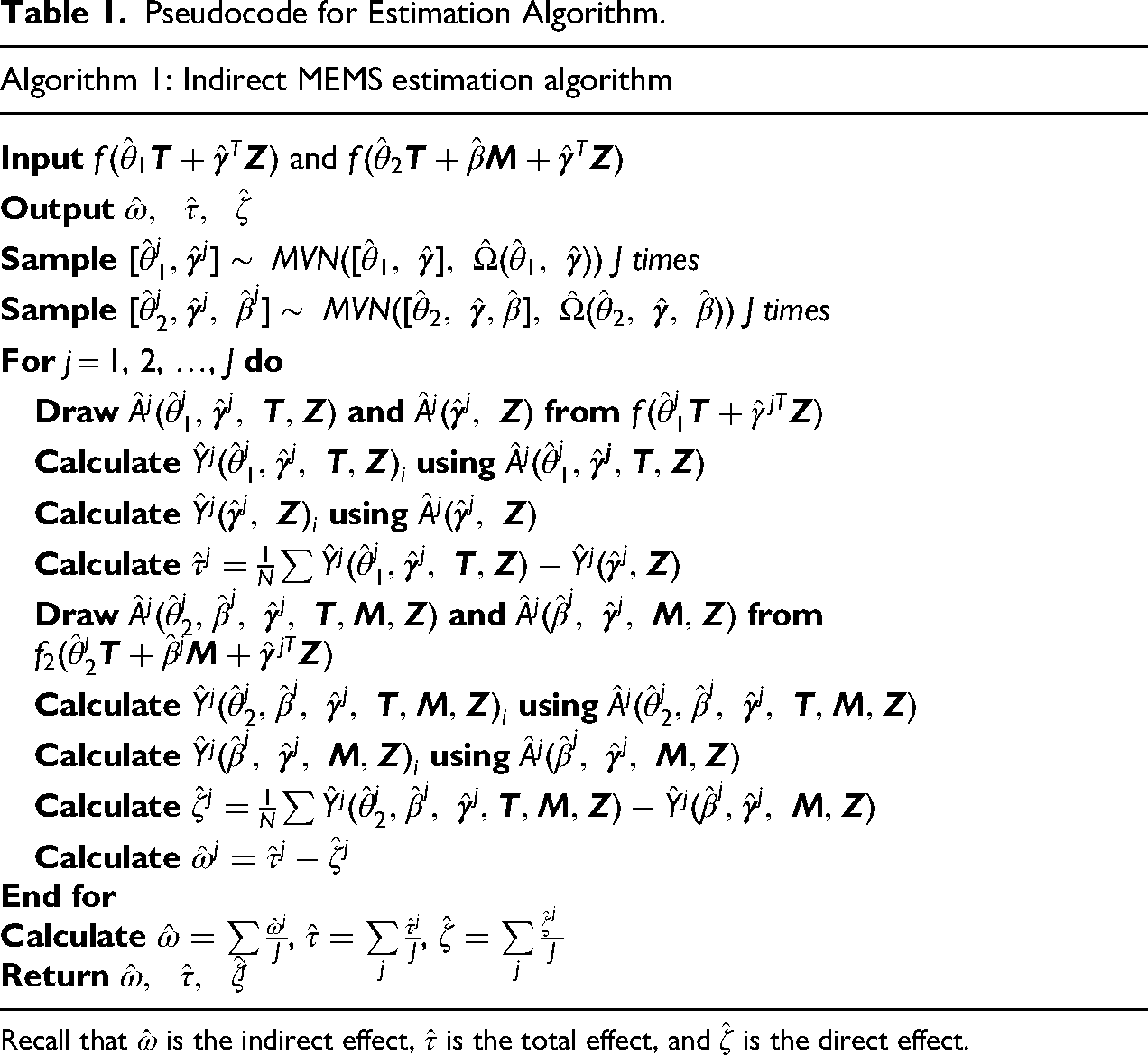
Recall that
This estimation algorithm uses two nested models to create two distributions of networks, draws a network from each distribution, calculates the total, direct, and indirect MEMS using each pair of networks, and summarizes these effects across many iterations to output a point estimate and standard error. Fit two models of the forms
Sensitivity Analysis for Model Choice
Estimating the MEMS assumes that the functional form of a chosen model is correct. However, network models make distinct assumptions about underlying generative processes, and some generative network models are unable to fully control for the range of micro-level network and behavioral dynamics that generate behavioral network segregation (see Almquist and Butts 2014; Steglich, Snijders, and Pearson 2010). This has led to an active debate in the literature on longitudinal network models, where the temporal ERGM (TERGM) and SAOM differ in their assumptions on continuous or discrete time, the temporal ordering of unobserved tie changes, and the agent- or tie-based nature of tie changes (see Block et al. 2018, Block, Stadtfeld, and Snijders 2019, 2023; Leifeld and Cranmer 2019, 2023, for debate). We introduce a simple sensitivity test that allows researchers to assess the robustness of MEMS estimates and associated mediational quantities by comparing two models that differ only in the assumed functional form.
Sensitivity Analysis for Model Selection
Consider two potential models for the network A:
Since the estimates of 

It is rare in practice that
Note that the sensitivity analysis only assesses the robustness of MEMS estimates to model choice. It does not tell researchers which model should be preferred or whether either model is correct. Although robustness is an important criterion for establishing the validity of causal estimates (Frank et al. 2013; Imai, Keele, and Tingley 2010; VanderWeele 2013), it is possible that a true result is sensitive to model choice or that a result is robust to model choice even when there are other identification problems (e.g., omitted variables). In cases where the sensitivity test reveals differences between estimated models, researchers should determine their preferred model using substantive knowledge of the data-generating process and criteria for model selection described in prior literature (see Block, Stadtfeld, and Snijders 2019; Duxbury 2022; Snijders 2011).
Sensitivity Analysis for Total, Direct, and Indirect MEMS
The sensitivity test can be extended to the total, direct, and indirect MEMS. This involves obtaining estimates for the direct, indirect, and total MEMS from two models that assume two distinct functional forms. Let 


Each sensitivity test can be estimated using Algorithm 1. This involves first obtaining the empirical total, direct, and indirect MEMS estimates when
Note that it is possible for only one of the mediational quantities to be sensitive to model selection. This may occur when an indirect (or direct) relationship is contingent on an assumed model, while the direct (or indirect) relationship is not. For example, discrete-time longitudinal network models like TERGM assume that network structures emerge de novo as ties are assumed to change in parallel between observed time points. Continuous time models like SAOM, however, assume that actors choose to either pursue or avoid structures as those opportunities emerge in sequential order. This suggests that indirect MEMS estimates for the effects of in-group preference on network segregation operating through triadic closure may differ between TERGM and SAOM due to the assumptions that each model makes about the ordering of tie changes and associated triadic structures (see Block, Stadtfeld, and Snijders 2019).
Empirical Example: Direct and Indirect Effects of Group Preference and Avoidance on Network Segregation
Classic research on friendship networks conceptualizes segregation as resulting from in-group preferences with effects amplified by balancing mechanisms such as triadic closure (Kossinets and Watts 2009; McPherson, Smith-Lovin, and Cook 2001; Wimmer and Lewis 2008). Recent studies complicate this view by demonstrating that friendship network segregation results from both preference- and avoidance-based mechanisms (Kretschmer and Leszczensky 2022; Schaefer, Kornienko, and Fox 2011), and that out-group avoidance on its own can produce segregation in simulated networks (Henry, Pralat, and Zhang 2011). While studies increasingly debate the direct and indirect effects of in-group preference, out-group avoidance, and triadic effects on friendship network segregation, most research relies on in silico methods, and the few studies conducting statistical assessments of micro–macro linkages have only examined the direct effects of in-group preference and triadic closure on socioeconomic segregation (Chabot 2024; Rosche 2025).
We build on these studies by testing the direct effects of in-group preference, out-group avoidance, and triadic closure on racial segregation, as well as the indirect effects of preference and avoidance acting through triadic closure. We capitalize on sensitivity analysis to assess the robustness of our effect estimates to model selection. Our analysis uses friendship network data collected in the National Longitudinal Study of Adolescent Health (AddHealth). We focus on binary, directed friendship nominations from the largest school in the saturated sample in-home sample. The final data contains 2,044 friendships from Wave 1 and 1,618 friendships from Wave 2 among 1,105 students in grades 10–12 observed in both waves of data.
The macro outcome of interest is racial segregation in the friendship network. We operationalize friendship network segregation using Coleman's homophily index (Bojanowski and Corten 2014). This group-wise index measures the tendency for an actor to send a tie to someone from the same group as compared to sending a within-group tie by random chance. Formally, let 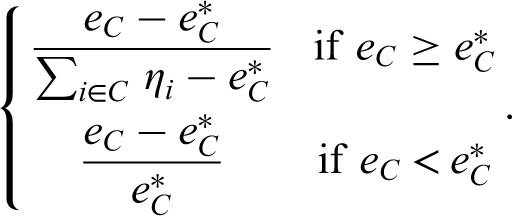
A value of −1 indicates that there are no observed ties sent to actors in the same group, while a value of 1 indicates that all ties sent are to actors of the same group. Asian students are both the numeric majority and the most segregated in the observed network (Table 2), so we treat them as the focal racial group for analysis. 15 The Coleman index in Wave 1 is 0.81 and increases to 0.85 in Wave 2, meaning that Asian students are 81–85 percent more likely to send ties to other Asian students than would be expected by random chance.
Number of Students by Race and Coleman Segregation Index by Race and Wave.

The micro processes of interest, or treatment variables, are Asian in-group preference and out-group avoidance of Asian students. We follow the strategy used by Kretschmer and Leszczensky (2022) to capture in-group preference and out-group avoidance using linear combinations of covariates. This involves using SAOM to model network change and then decomposing the choice function parameters into preference and avoidance effects. SAOM models the probability that an actor will create, maintain, or withdraw a tie at a fine-grained moment in time (“mini-step”) using a rate function
The choice function for an agent i dictates the (multinomial) probability that an agent will make a network change when given the opportunity,
Following Kretschmer and Leszczensky (2022), we include ego, alter, and same race terms for all groups, treating Asian as the reference. The ego term for each racial group is the tendency for students of a given race to nominate friends; the alter term is the tendency for students of a given race to be nominated as a friend; and the same race term captures the tendency for an ego to select friends of the same race. We write our objective function: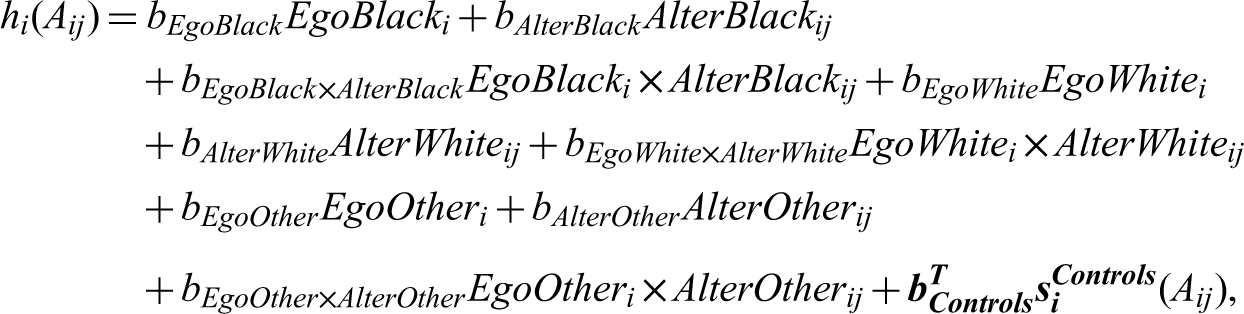
The total contributions of race across all terms and groups are given by: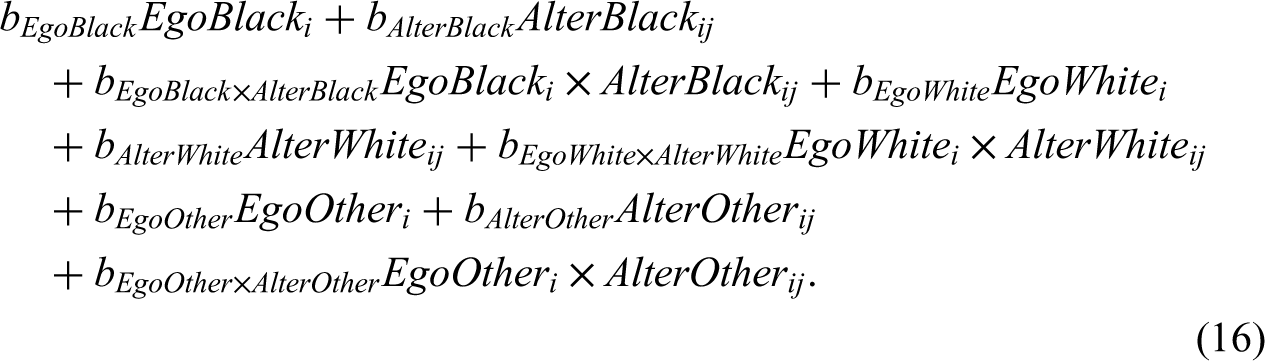
The treatment programs are in-group preference and out-group avoidance. Following Kretschmer and Leszczensky's (2022) decomposition, they are empirically captured by taking subsets of the terms in equation (16). Since Asian students are referent, the tendency for Asian students to befriend one another is given when all race covariates are set to zero. Asian students’ tendency to befriend students in other racial groups is:
Asian in-group preference is the difference between Asian students’ tendency to befriend other Asian students and Asian students’ tendency to befriend students of other races:
Out-group avoidance of Asian students is defined separately for all non-Asian racial groups. It is the difference between a focal racial group's tendency to befriend non-Asian students and the same group's tendency to befriend Asian students: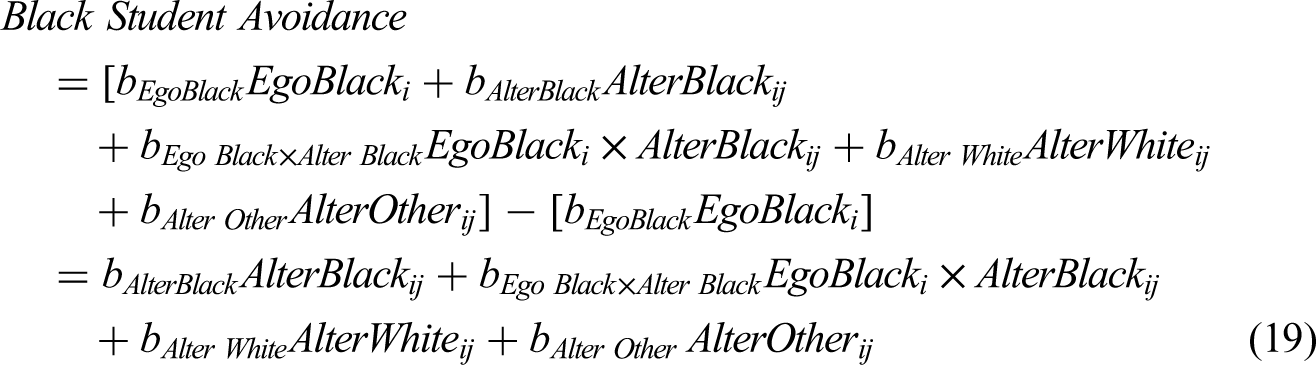
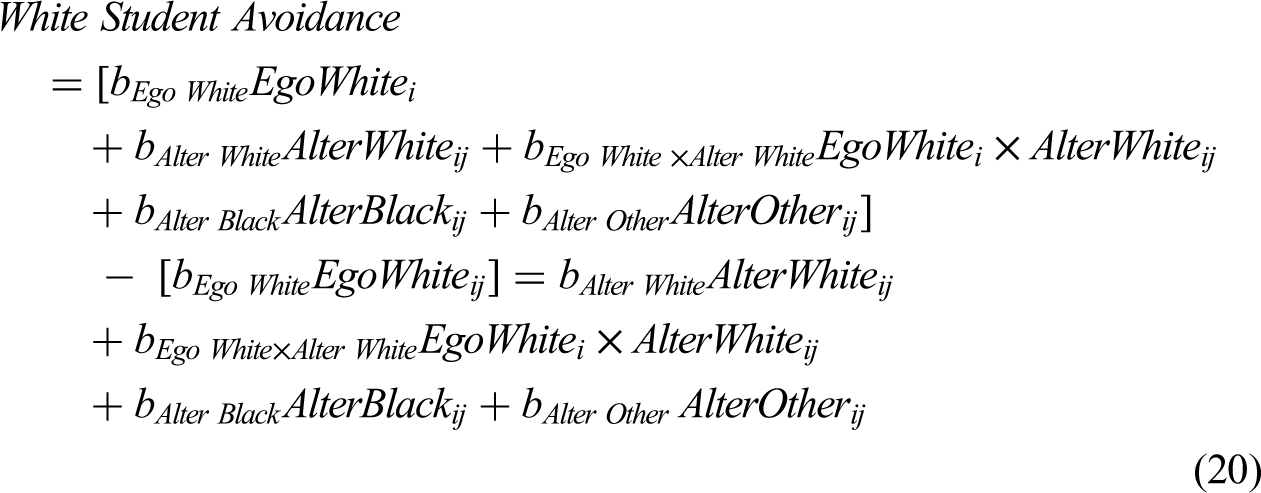
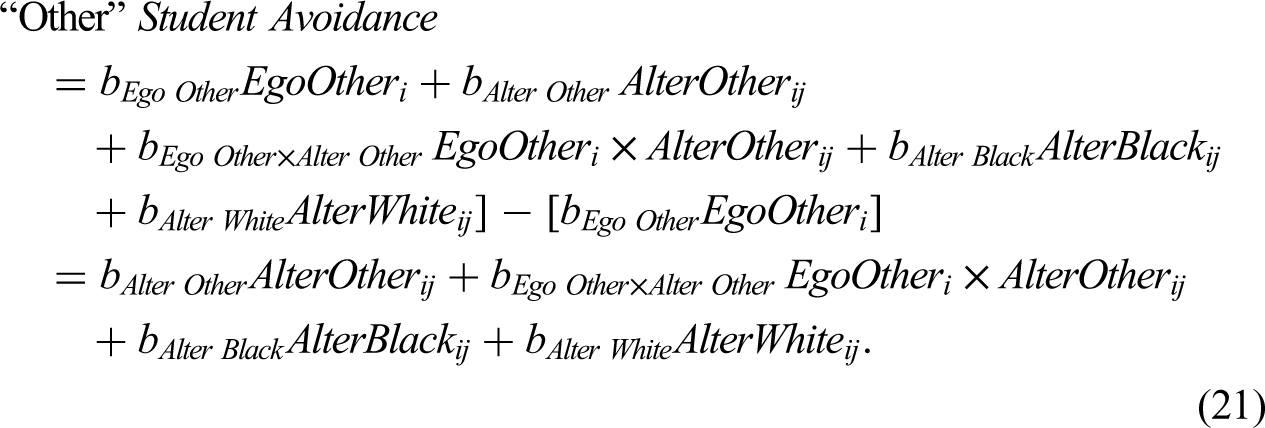
The total tendency to avoid Asian students is the sum of equations (19) to (21):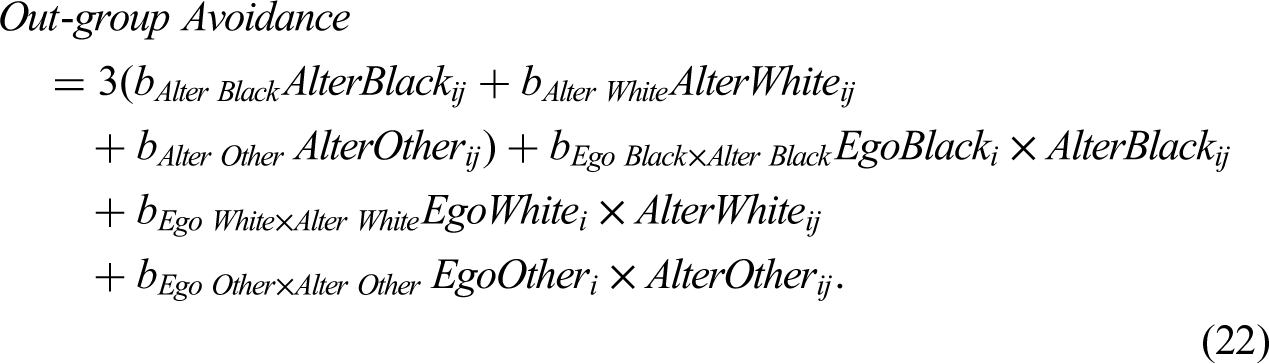
We focus our analysis on the effects of out-group avoidance and in-group preference on the Coleman index by using joint parameter tests for the MEMS (see Appendix C of the online Supplemental materials). This involves analyzing the change in the Coleman index when the covariates in equations (18) and (22) are set to 0. In addition to these treatment covariates, we also include structural controls and other relevant sorting mechanisms. We include triadic closure effects with a transitive triplets term, which counts the number of triads created when an ij tie closes an outgoing two path. We control for reciprocity, ego gender, alter gender, same gender, and the absolute difference in grade. The SAOM is estimated using the method of moments with a stochastic approximation algorithm (five phase 2 subphases and 2,000 phase 3 simulations). All parameter t-convergence ratios had an absolute value below 0.1 and the model convergence ratio was below 0.25. We further estimate the indirect effects of each joint parameter test acting through transitive triplets. All MEMS are estimated parametrically with 500 Monte Carlo simulations.
Table 3 presents the SAOM results and MEMS estimates before (Model 1) and after (Model 2) controlling for transitive triplets. All same-race SAOM coefficients are positive, indicating that in-group preference contributes to tie-formation in all racial groups. These effects are robust after controlling for triadic effects in Model 2. The transitive triplets term is positive, meaning that students tend to befriend students within transitive triplet structures.
Results from SAOMs and MEMS Estimates that Treats Coleman Homophily Index for Asian Students as the Outcome.
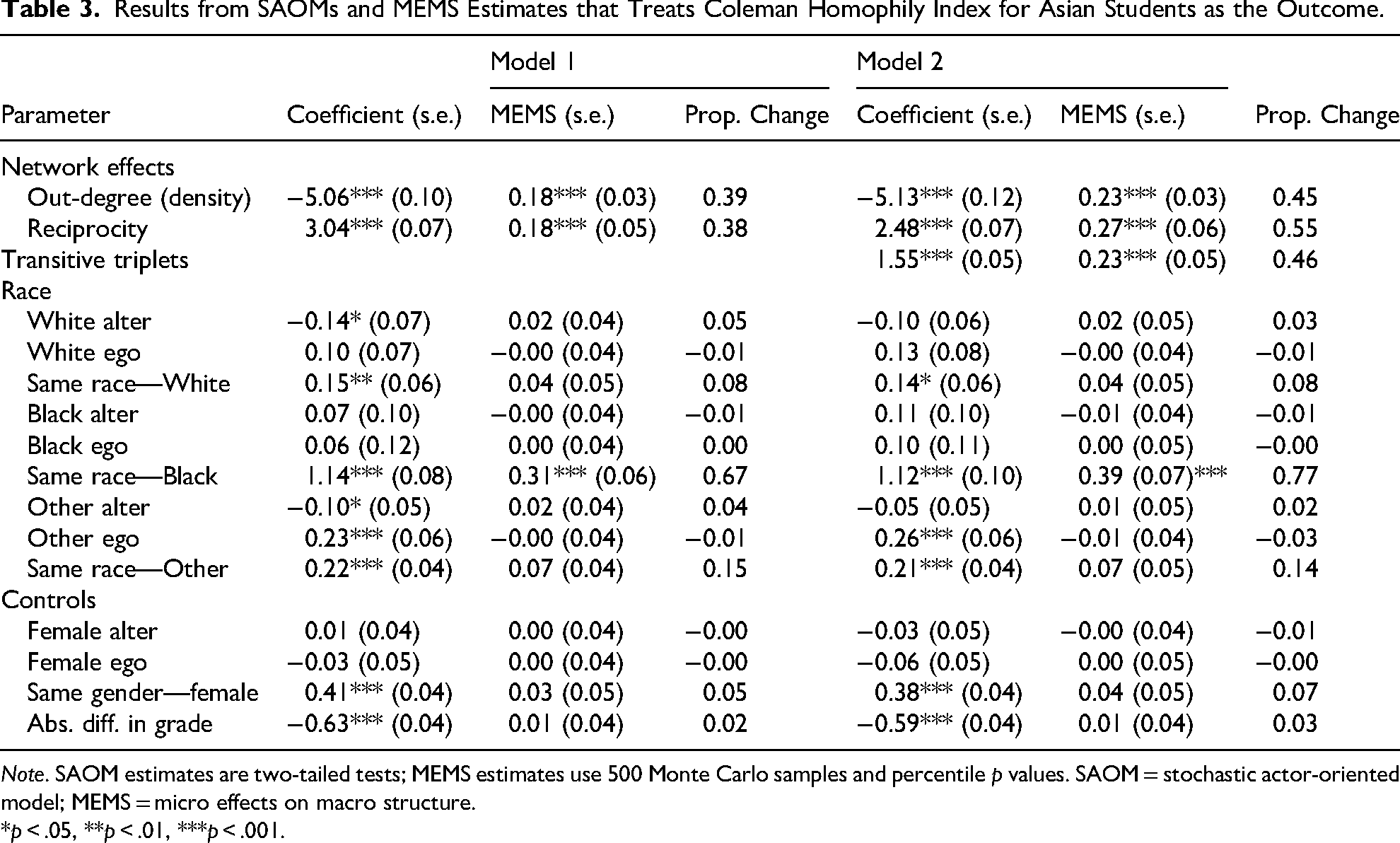
Note. SAOM estimates are two-tailed tests; MEMS estimates use 500 Monte Carlo samples and percentile p values. SAOM = stochastic actor-oriented model; MEMS = micro effects on macro structure.
*p < .05, **p < .01, ***p < .001.
While SAOM assesses selection preferences, it does not evaluate effects on Asian student segregation. The MEMS estimates in Table 3 address this by treating the Coleman index as the explanandum. Consistent with the “causes of effects” framework, we interpret the MEMS in terms of how the observed values of a treatment variable increase or decrease the observed values of a macro outcome—that is, how much of the observed value of a macro outcome can be attributed to the observed micro treatment. The only significant same-race MEMS is among Black students. Black students’ observed tendencies to befriend other Black students account for 67 percent of the observed Asian student segregation. The MEMS estimate is robust even after controlling for transitive triplets. The observed transitive triplet effects account for 46 percent of the observed level of Asian student segregation. These findings provide preliminary evidence that out-group avoidance, especially among Black students, and triadic closure independently contribute to Asian student segregation in the observed network.
We now report MEMS estimates for the fully specified in-group preference and out-group avoidance mechanisms (Table 4). These are total effect estimates as they do not condition on transitive triplets. Each MEMS is estimated as a joint parameter test of the terms included in equations (18) and (22). Interestingly, the in-group preference effect is nonsignificant, suggesting that observed in-group preference among Asian students does little to increase observed Asian student segregation. On the other hand, out-group avoidance among all racial groups accounts for 92 percent of the observed Asian student segregation. This suggests that observed levels of out-group avoidance of Asian students, rather than observed levels of in-group preference among Asian students, account for most of the observed Asian student segregation.
SAOM: Joint Parameter Test of MEMS for In-Group Preference and Out-Group Avoidance and Mediation by Triadic Closure.

Note. MEMS estimates use 500 Monte Carlo samples and percentile p values. Note that Model 2 includes triadic closure. SAOM = stochastic actor-oriented model; MEMS = micro effects on macro structure.
*p < .05, **p < .01, ***p < .001.
We test for mediation by estimating the direct and indirect MEMS for in-group preference and out-group avoidance (Table 4). The indirect effects of in-group preference and out-group avoidance acting through triadic closure are both nonsignificant. These mediation results suggest that neither observed levels of in-group preference nor observed out-group avoidance operate indirectly to affect observed Asian student segregation by increasing observed levels of triadic closure in transitive triplet structures.
Our main results suggest null effects from in-group preference and minimal indirect effects acting through transitive triplets, but it is possible that our estimates are over- or understated due to improper model selection. We assess the robustness of our estimates to model selection by comparing the MEMS estimates from SAOM to a TERGM specified to capture the same underlying selection processes as the SAOM (full TERGM specification and results are given in Table F1, Appendix F of the online Supplemental materials). Table 5 presents the results. We begin with total MEMS estimates. In contrast to SAOM, the TERGM-based total MEMS estimates suggest that observed in-group preference increases observed Asian student segregation. The sensitivity test on the difference in MEMS between SAOM and TERGM indicates that the in-group preference MEMS roughly triples in size in TERGM when compared to SAOM (
Sensitivity Test for MEMS.

Note. MEMS estimates use 500 Monte Carlo samples and percentile p values. This compares the MEMS for in-group preference and out-group avoidance between SAOM and TERGM. MEMS = micro effects on macro structure; SAOM = stochastic actor-oriented model; TERGM = temporal exponential random graph model.
*p < .05, **p < .01, ***p < .001.
Out-group avoidance estimates are also sensitive. The out-group avoidance MEMS estimate decreases by 74 percent when using TERGM instead of SAOM. The observed levels of out-group avoidance account for 94 percent of the observed Asian student segregation in SAOM but only 17 percent of the observed Asian student segregation in TERGM. Direct MEMS estimates are comparably sensitive to model choice, where in-group preference direct MEMS estimates increase fourfold and out-group avoidance direct MEMS estimates decrease by 83 percent in TERGM as compared to SAOM. However, indirect MEMS estimates for both in-group preference and out-group avoidance acting through transitive triplets are nonsignificant in both SAOM and TERGM, and sensitivity tests of the indirect MEMS to model selection are nonsignificant as well.
In summary, primary findings suggest that observed Asian student segregation in the largest AddHealth friendship network is mostly attributable to other racial groups’ observed outgroup avoidance of Asian students, as opposed to in-group preference among Asian students. We find that neither observed in-group preference nor observed out-group avoidance indirectly affects observed network segregation by acting through triadic closure. However, we also find that direct effect estimates are highly sensitive to model selection. When modeled with a TERGM rather than an SAOM, the effect of out-group avoidance and in-group preference is comparable, while SAOM only provides evidence of out-group avoidance. Indirect MEMS estimates are robust to model selection.
Discussion
We extended the MEMS framework to address several limitations in micro–macro network analysis. First, we provide new formal results showing that the MEMS can be identified from observed data, interpreted within the “causes of effects” framework, and that the MEMS is closely related to known causal estimands, namely the attributional effect of Rosenbaum (2001), the ATT, and the overall causal effect of Hudgens and Halloran (2008). Then, we show that, under the sequential ignorability assumption, the total, direct, and indirect effect of a micro mechanism on a macro structure acting through an intervening micro mechanism is identifiable from observed data. We introduced a flexible algorithm to estimate each mediational quantity. Lastly, we developed a simple sensitivity test for MEMS robustness to model choice.
Our example demonstrates the importance of model selection for MEMS analysis. Our TERGM-based MEMS estimates suggest that the observed levels of out-group avoidance and in-group preference equally contribute to the observed levels of Asian student network segregation in the largest AddHealth friendship network, while SAOM-based MEMS estimates suggest that only the observed levels of out-group avoidance contribute, and that the effect of the observed levels of out-group avoidance outweigh almost any other factor. When empirical MEMS estimates are sensitive to model choice, researchers must make informed decisions about which estimates to prefer based on substantive knowledge. In our case, we prefer the SAOM-based estimates because our analysis is fundamentally about disentangling two types of choice behavior: in-group preference and out-group avoidance. Such choice behaviors are explicitly incorporated into the SAOM framework but are not modeled directly by TERGM. This means that MEMS estimates for TERGM may contaminate choice behavior with nonchoice-related processes and may explain elevated estimates for in-group preference in TERGM.
We showed that the counterfactuals used to define the MEMS are consistent with the modified Halpern–Pearl model of “specific” causation. This is appealing for our purposes as it grounds MEMS interpretation in a well-established formal definition of causality. However, counterfactual selection in the “causes of effects” framework is not a settled issue (see Dawid, Faigman, and Fienberg 2015; Pearl 2015). A major benefit of our identification results is that they are sufficiently general that the expected change in macro structure can be identified regardless of the (real) value assigned to micro treatment. This suggests that many causal quantities with distinct counterfactuals can likely be identified within the current MEMS frameworks.
We encourage further work on counterfactual selection using the MEMS, especially inference under weaker identifying conditions. In particular, we emphasize that although we focused on a “causes of effects” interpretation of the MEMS, it is possible that extensions or variations in the MEMS may support “effects of causes” interpretations under interventional logic. For example, it may be possible to replace the observed distribution of
Future research can further expand upon our findings by extending MEMS mediation analysis to allow for multiple causally dependent mediators. Our current framework allows for multiple conditionally independent mediators, but it is often the case that multiple intervening variables causally affect one another, often with feedback (e.g., An, Beauvile, and Rosche 2022). Moreover, we have focused mostly on the formal properties of causal estimands and procedures to estimate them from observed data. However, identification of causal network quantities is notoriously difficult in empirical settings. A promising direction for future research is to develop empirical identification strategies for micro–macro network analysis. Sensitivity analyses for omitted variables that are now common in observational studies (e.g., Frank et al. 2013) can also be developed to bolster faith in the quality of MEMS estimates.
In sum, our study sought to strengthen the formal, conceptual, and practical basis of micro–macro network analysis in the MEMS framework. As research interest in micro–macro linkages continues to blossom, we provide applied researchers with stronger foundations to interpret the MEMS, assess mediation, and test robustness in empirical settings.
Supplemental Material
sj-docx-1-smr-10.1177_00491241261461250 - Supplemental material for Micro Effects on Macro Structure: Identification, Interpretation, Mediation, and Sensitivity Analysis for Model Selection
Supplemental material, sj-docx-1-smr-10.1177_00491241261461250 for Micro Effects on Macro Structure: Identification, Interpretation, Mediation, and Sensitivity Analysis for Model Selection by Jenna Wertsching and Scott W. Duxbury in Sociological Methods & Research
Footnotes
Acknowledgments
This research benefited from feedback at the University of Manchester Mitchell Centre for Social Network Analysis. This research uses data from AddHealth, funded by grant P01 HD31921 (Harris) from the Eunice Kennedy Shriver National Institute of Child Health and Human Development (NICHD), with cooperative funding from 23 other federal agencies and foundations. AddHealth is currently directed by Robert A. Hummer and funded by the National Institute on Aging cooperative agreements U01 AG071448 (Hummer) and U01AG071450 (Aiello and Hummer) at the University of North Carolina at Chapel Hill. AddHealth was designed by J. Richard Udry, Peter S. Bearman, and Kathleen Mullan Harris at the University of North Carolina at Chapel Hill.
Funding
The authors received no financial support for the research, authorship, and/or publication of this article.
Declaration of Conflicting Interests
The authors declared no potential conflicts of interest with respect to the research, authorship, and/or publication of this article.
Data,Code,and Materials Availability Statement
Replication code for the empirical example is available at the Harvard Dataverse: https://doi.org/10.7910/DVN/PZ2LUR ( ). Data cannot be publicly shared due to contract requirements by AddHealth. Access can be granted to users who have an active AddHealth contract that permits access to the Waves 1 and 2 saturated samples and who have undergone IRB approval with their home institutions.
Preregistration Statement
This study was not preregistered.
Notes
Author Biographies
References
Supplementary Material
Please find the following supplemental material available below.
For Open Access articles published under a Creative Commons License, all supplemental material carries the same license as the article it is associated with.
For non-Open Access articles published, all supplemental material carries a non-exclusive license, and permission requests for re-use of supplemental material or any part of supplemental material shall be sent directly to the copyright owner as specified in the copyright notice associated with the article.
