







Abstract
This article aims to look at the contemporary neo-Vaishnavite style paintings of Assam which have their roots in the pre-modern age. An offshoot of the Indian Bhakti movement, neo-Vaishnavism was introduced in Assam in the 15th century
I Introduction
A sociology of the visual arts has to approach artists and their artworks as a part and product of the society they are embedded in, and that society’s values, norms, ideas, sentiments and faith. At the same time, this is not a unilateral but a reciprocal relationship. As much as art and its makers are a product of its society, society is also influenced by artists and their artworks.
This complex relationship is dynamic, impinged upon by other actors and agencies such as religious and cultural institutions, political patrons, the economy and even consumers of the arts. It is dependent on social changes such as the changing location of the arts and their valuation within society, as well as socio-economic and political transformations. Yet these changes often form a part of long-drawn historical processes, which make the historical perspective important for the understanding of present-day visual arts (Morris 1958: 320). The arts have to be understood in their social and historical location, and seen as constituted in specific conditions and practices of production and reception (Wolff 1993: 27).
Keeping this broad context in view, the contemporary neo-Vaishnavite paintings of Assam have their roots in a 15th-century religious movement in the region. Neo-Vaishnavism, or Eka Sharana Nama Dharma (literally translated as ‘religion of sole refuge in the name of God’), was a strand of the pan-Indian Bhakti movement. Started in Assam by Shankaradeva (1449–1568
The survey conducted by the National Manuscript Mission in 2005 found about 40,000 such manuscripts on different subjects in Assam (Boruah 2012: 30). So far, 65 illustrated manuscripts have come to light. Of these, 57 manuscripts, containing more than 3,500 paintings, are stored in the Assam State Museum. Most of these manuscripts are based on Hindu religious texts such as the Bhagavata Purana, the Ramayana and the Mahabharata and are written in Assamese. A few exceptions include manuscripts which deal with secular subjects and are written in Sanskrit, in the Assamese script (ibid.: 30). These manuscripts are made of sacipat (bark of the aloeswood tree—Aquilaria agallocha) or tulapat (ginned cotton) folios, also employing colours from mineral and vegetal sources. Written with pens and brushes made from plant and animal sources, the language adopted for the text in the manuscripts was vernacular Brajawali, a literary language which combines Maithili and Assamese. The script adopted was Kaitheli, Lahkari or Bamuniya, precursors to the modern Assamese script.
The paintings are marked by a red background against which human beings are featured, topped by a blue-green background (Figure 1). Figures are placed on a horizontal plane and under multifoil arches. The figures show broad chests with tapering waists, angular limbs and wide fish-shaped eyes arched by elongated eyebrows. Simple architectural forms are discernible, showing cross-section views of houses with gabled roofs and supporting pillars, and decorative parasols. A simplified landscape and basket-patterned water bodies highlight some characteristic features. The images are accompanied by textual captions.
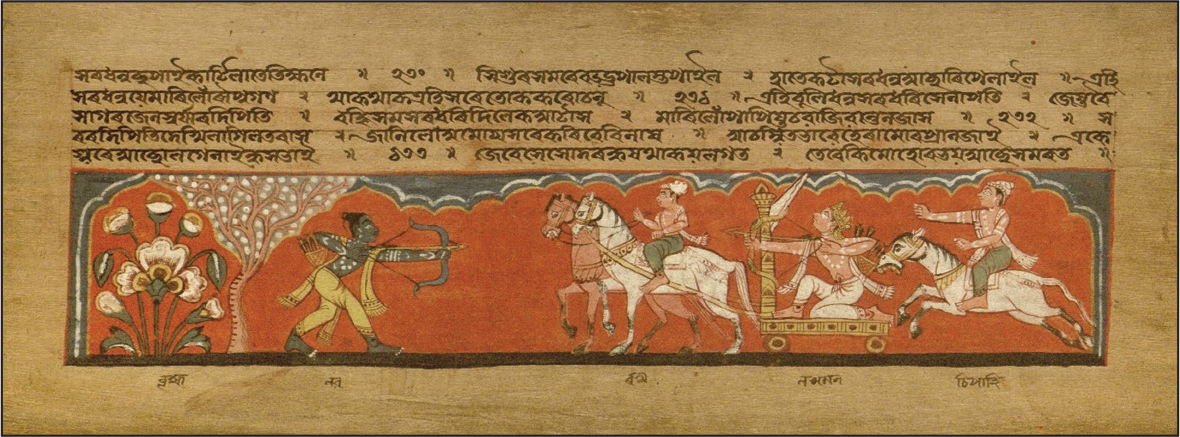
The predominant colours are saturated shades of red, yellow, black, white, green and blue, although some secondary colours are also used. The painted area is not broken up into foreground, background and horizon. Individualisation of figures through physiognomy is also not attempted. The nude is avoided. Men wear a shawl hanging towards the front called caleng-cadar, a kind of waist band called the tangali and a dhoti-like garment called suriya. Women wear a blouse, a breast-wrapper called riha, the caleng-cadar and a lower garment which resembles the lehenga (ankle-length skirt) called ghuri. Figures are delineated in black. The entire painting is placed inside a rectangular box with red borders, although the borders of some of the painted compartments also feature zig-zag or stepped lines (see Figure 1).
One of the media through which religious communities imagine themselves is a sacred language and written script (Anderson 2006: 12–13). People build a material culture, which can include visual images on which the community is centred (Graham 1987). Neo-Vaishnavism, too, similarly involved a particular textual and visual language based on the material manuscript and collectively recognised by the community of believers as that through which they could communicate with and understand each other and themselves.
From the late 19th century onwards, however, there occurred a gradual decline in the practice of manuscript-making. This can be attributed to several reasons, such as major political upheavals in the region, apathy of the public, advent of the printing press, influence of realism in painting and natural calamities such as earthquakes, for instance, the Great Assam Earthquake of 1897. Yet, a few artists in Assam currently continue this practice of making, writing and painting manuscripts, along with the associated neo-Vaishnavite beliefs and rituals. Most of the modern manuscripts still retain the Brajawali language, but the script is that of modern Assamese. In others, the makers have replaced Brajawali with Assamese. In some paintings, the text has been abandoned altogether and primacy placed on the image. In the visual language, too, certain stylistic changes have been introduced while some aspects have been retained by the artists. Alterations have also occurred in the process of making and in the material bases of the modern manuscripts.
But, regardless of the changes and variations introduced with time, when one juxtaposes the contemporary artworks with the medieval painted manuscripts, it is obvious that there has also been a transhistorical and transcultural migration of the neo-Vaishnavite themes and pictorial idiom. This indicates the possibility that it is not only images that are being re-created but also associated meanings of tradition and heritage, as well as the emotional and sensual responses which are being attempted to be rekindled and evoked. Based on interviews with the artists, 1 it is evident that even when these Vaishnavite images are made in a different setting and for different purposes today, they are not always totally disengaged from the religious system. The way these artists talk about their work and a consideration of their beliefs and attitudes about their work, in particular, and the neo-Vaishnavite manuscript artistic practice, in general, show how, whatever the professional skills of an artist, they are members of a society that influences their artistic skills, experiments and perceptions (Geertz 1983: 103). Besides the continued practice of painting of the neo-Vaishnavite images, we also see a preservation of their associated religion, ideas, beliefs and rituals, indicating how art is connected to other modes of social activity (ibid.: 97) and the latter’s continuation or discontinuation.
Indeed, it is not just the neo-Vaishnavite pictorial tradition that has persisted. The neo-Vaishnavite religion is a living tradition in Assam even today, with the number of satras having been variedly estimated to range from 300 to over 1,000 across the Brahmaputra valley. Although presently, there is no recorded census data on the exact proportion of the Vaishnavite population in Assam, according to the District Gazetteer of Assam dated 1905, 80 per cent of the Hindus in Assam were Vaishnavites (Sarma 1966: 190). Therefore, it can be said that, through ebbs and flows, continuations and transformations, the neo-Vaishnavite paintings or images have been made and remade till the present times. These images also provide fertile ground for probing into how artists negotiate between tradition and modernity in religious and ritualistic art, such as these neo-Vaishnavite paintings, which bring in their own specific sets of artistic restrictions and liberties.
II Methodology
The current study uses a qualitative research methodology, focusing on a selection of artworks by contemporary artists from Assam to investigate the conceptual, stylistic and material aspects of the neo-Vaishnavite painting style of Assam. The neo-Vaishnavite painting school has its roots in the 15th century, when neo-Vaishnavism was introduced in Assam; the earliest extant painted neo-Vaishnavite manuscripts found are from the 17th century. However, the perception and meaning of artworks shift and evolve, sometimes even dramatically, over decades or centuries, influenced by new cultural contexts and historical events. Additionally, the material form and visual style of artworks may also alter, consequently influencing how we perceive them.
Tapati Guha-Thakurta (2004) extensively discusses how these changes are shaped by a confluence of scholarly, nationalist and popular discourses. Morris (1958) and Wolff (1993) write that such changes taking place in artworks have to be recognised as a part of long-drawn processes in which historical and cultural contexts play a significant role. Anderson (2006) and Graham (1987) further postulate the reasoning behind the development of a visual material culture in a religious community. People build a material culture which can include visual images on which the community is centred (Graham 1987). These visual images or material culture are faculties by virtue of which a community imagines its identity (Anderson 2006). Therefore, in the present study, descriptions of contemporary paintings are followed by an analysis of the underlying reasons for their specific features. The stylistic analysis of the contemporary paintings includes examining their formal elements such as line, colour, composition and perspective, and influences of the historical illustrated manuscripts. This is juxtaposed with their pre-modern counterparts, highlighting points of continuity, departure and innovation. Material analysis includes analysis of materials and techniques used by contemporary and historical artists, showcasing the impact of material choices on the artworks’ aesthetics and accessibility.
At the same time, interviews and studio visits with practicing neo-Vaishnavite artists in Assam, such as Hari Narayan Konwar in Nagaon, and Mridul Baruah and Rajib Kakati in Majuli, provide firsthand perspectives into their creative processes, religious motivations and interpretations of the traditional themes and style. Historically, certain artists have been denied a voice because their perspectives are dismissed as mere everyday life, myth or trade rather than legitimate artistic discourse (Geertz 1983). Neither have such artists been considered as ‘political beings’ (Ranciere 2006). But an artist’s stance on religion, morality, politics and laws reveals their deeper personal values and attitudes. In the case of the Assamese artists, their artistic practices reflect the beliefs, social systems and structures of their time. Their stylistic choices are not only aesthetic decisions. Instead, their creative processes, also influenced by the religion itself, have also contributed to the evolution of the artworks’ status. Such paintings, originally created for religious instruction and devotion, are now also cultural artefacts, celebrated for their artistic merit as well as their spiritual value.
When neo-Vaishnavite paintings are mass-produced or displayed in secular environments, their subject matter begins to transcend their original form. This shift is evident in the documentation and analysis of works used by private companies, such as Soziosi Foods and Kumbhi Kagaz Pvt Ltd, as well as those displayed in public hubs like Guwahati’s Lokapriya Gopinath Bordoloi International Airport. DeMarraiss and Robb (2013) have indicated how insights are also gained from the locations where art is displayed or used, its scale, its visibility and its accessibility. These factors also show how artworks are often repurposed as instruments of ideas or purposes far different from their original intent, therefore assuming a new social identity or status (Kopytoff 1986; Smith 2006). At the same time, Kajri Jain (2007) argues that even when mass-produced in unorthodox media or displayed in public, for many people, religious images are about faith, and not aesthetics. In the case of the contemporary neo-Vaishnavite artists of Assam, this is exemplified by their beliefs, ritualistic practices and feelings of piety towards their neo-Vaishnavite style paintings, proven by their interview statements.
Through the artists’ statements and interviews, the study also explores how they perceive the concepts of heritage, tradition, spirituality and modernity, which, in turn, are reflected in their work. Walter Benjamin (1969) writes that a work of art cannot be completely disassociated from the tradition that gave rise to that particular kind of art, even though such a tradition is also dynamic and mutable. Consequently, when the discussion turns to the subjects of tradition, heritage, culture or politics, it also sheds light on the reciprocal relationship that exists between art and society (Mukerjee 1948). Both reflect and shape social and cultural values.
III Results and discussion
Evolution of style and material
Works of art are reproducible and are reproduced for different reasons. Replicas were made by masters to transmit their works, by pupils in the practice of their craft and finally by third parties in the pursuit of different gains (Benjamin 1969: 2–3). Many of the neo-Vaishnavite manuscripts, painted folios and images produced today are not by ecclesiastical members of the satras, as was the case earlier. They are also made by non-ecclesiastical professional artists.
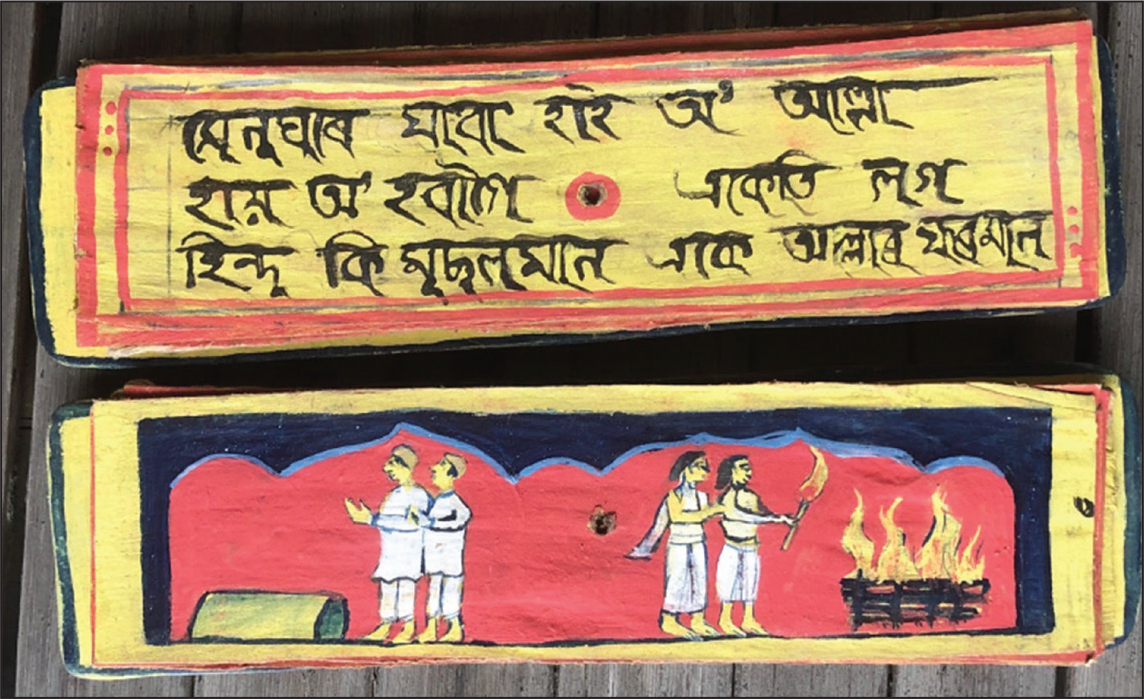
Hari Narayan Konwar is a non-ecclesiastical professional calligrapher and manuscript artist from Bordowa in Assam. He engages in making manuscripts or single folios using the traditional medium of sacipat and employing the neo-Vaishnavite style. His paintings reveal the same horizontal format, the flat and contrasting vibrant primary colour palette, monochrome backgrounds, bordered compositions, distinct contour lines, stylised water bodies and flora and fauna. The human figures, too, show faces in profile, fish-shaped eyes, the use of hand gestures, traditional costumes and an absence of modelling. The figures are placed on a horizontal plane and within arches, and decorative floral and geometrical borders of the historical manuscripts (see Figure 2).
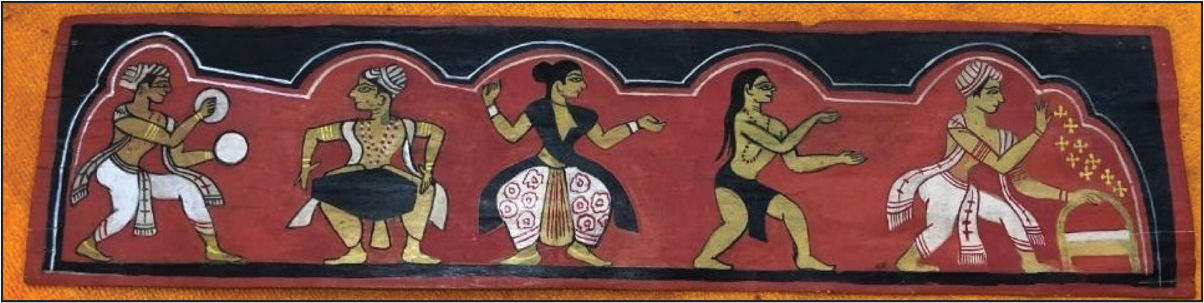
According to Konwar, some of the characteristic elements of the neo-Vaishnavite paintings are faces in profile and a lean and non-muscular human physiognomy. These define the ‘basic character’ of these paintings. However, although his works are based on Vaishnavite religious texts, he is open to artists incorporating secular, modern and current themes. According to Konwar, as long as the distinctive style of the paintings is continued, the content can be altered or adapted according to the changing needs of the artists and consumers.
A similar emphasis on style over the thematic content is witnessed in the works of Meghna Baruah, a graphic designer, painter and illustrator. Her artworks testify to how a visual language rooted in religion and ritual may also be used to narrate or illustrate secular and modern stories. Her work also reveals changes in the medium of these neo-Vaishnavite style paintings. Her 2022 book project, Folktales of Assam in Manuscript Painting: A Gendered Retelling, published by Zubaan Publishers Pvt Ltd, is a graphic narration of three Assamese folk tales by the Assamese author Lakshminath Bezbaroa (1868–1938). The book incorporates Baruah’s hand-painted illustrations, done in the characteristic style of the Assamese neo-Vaishnavite manuscript paintings (see Figure 3).
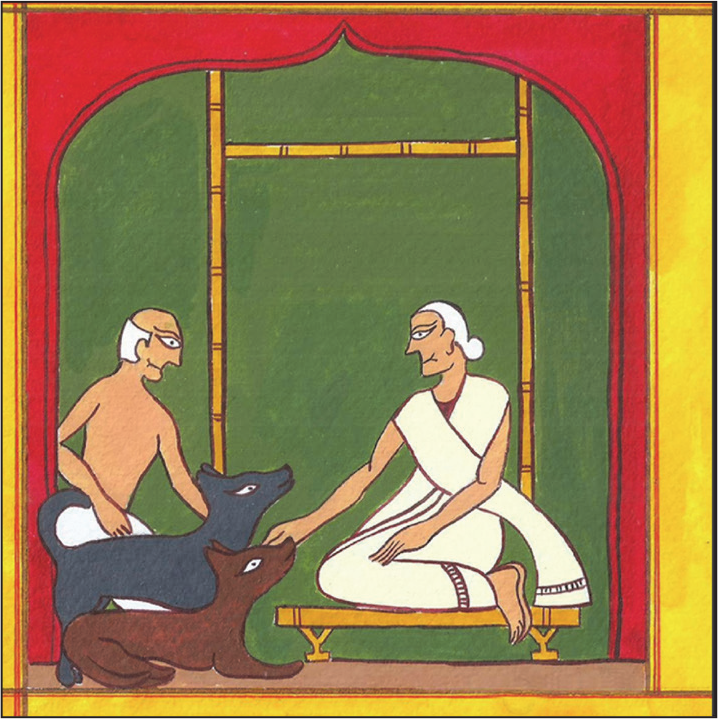
Here, Baruah retains the distinctive elements of the historical neo-Vaishnavite paintings, such as the use of line to delineate figures, flat washes of colour, figures placed under arches and on a horizontal base, human faces in strict profile, human bodies in three-quarter profile, traditional garments, stylised natural elements and conventional treatment of animals. But, instead of using colours and inks made from vegetal, mineral and animal sources, she uses water colours. The handmade sacipat and tulapat bases of the historical paintings have also been replaced with paper in Baruah’s work. Although the use of sacipat and tulapat in a horizontal format forms a distinctive material characteristic of the neo-Vaishnavite manuscript tradition, Baruah, in her project, renders her paintings in a square format in a different medium. Artists often bring such innovations to a visual language. But, in the case of the neo-Vaishnavite paintings, changes in their material bases and process of making are most striking. Other artists, too, continue to make changes in these very features.
Sujit Das is another artist and illustrator who is also engaged in manuscript painting. According to Das, one should focus more on keeping the art form alive rather than drawing with and on only traditional materials, because there is already a scarcity of these materials. So, he places more significance on the style rather than the medium of the painted manuscripts. While he paints on sacipat with traditional colours, he also draws on paper and canvas with acrylic colours. 2
Similarly, Mridu Moucham Bora, an artist based in Dhing in the Nagaon district, has partly deviated from the traditional material medium of the Vaishnavite manuscripts. He not only designs neo-Vaishnavite-themed folios and even paints manuscripts on sacipat but also makes folios of paintings in the Assamese neo-Vaishnavite style on canvas, handmade paper and sacipat, using both traditional natural colours and artificial colours.
Present-day artists, therefore, have to negotiate between the standards set by the ritualistic production of images and their own artistic experiments. Seemingly, they undertake the most liberties in the material bases of these paintings, and not in the stylistic aspects. This is perhaps because a visual language with its origins in ritual cannot be changed by individuals at will and places particular constraints on their artistic practitioners. Although there may be differences of opinion about minor details, the existence of some standards for correctness and incorrectness is a precondition for the use and continuity of that visual language (Berger 1967: 12). Authority and faith also play an important role in these artistic restrictions, adherences and deviations.
According to neo-Vaishnavite narratives, Shankaradeva was the progenitor of these painted neo-Vaishnavite images in Assam. The guru (the spiritual preceptor) is a guide, but he is also one of the main exponents of worship in the Eka Sharana Nama Dharma practice (Neog 1985). Excessive deviation from the visual idiom and standards set by him is a deviation not only from the religious path itself, but it would also strip the images of their essence as products of a devotional act. After all, the images, like many religious representations, are meant to deepen human awareness of the spiritual dimensions of neo-Vaishnavism. They were introduced as visual invitations for reflections on the truths of the doctrine (Geertz 1983: 104). Too much alteration of the visual canon or formula would interfere with this function of the images. This is corroborated by Mridul Baruah, an artist from Garmur in Majuli district, who also teaches the art of manuscript-making and manuscript-reading at Majuli University. Baruah was not supportive of individual choice in the change of style or themes of these paintings, holding that these were essentially religious paintings.
The shift to secular narratives
But, artworks of the past often come to mean something very different from what they were at the time of their creation or even in intermediate periods (Morris 1958: 318). The cultural significance attributed to an art is always a local matter, dependent on particular spaces and times (Geertz 1983: 97). Artworks do not possess innate and immutable meanings and values. Instead, they undergo social, cultural and even political processes through which meanings and values are assigned to them by human beings. With time, these are even reworked and remade to the extent that they may come to symbolise and act as instruments of something different from what was earlier envisaged (Smith 2006: 4). The neo-Vaishnavite images made today, even if they seem like replicas of the pre-modern ones, are actually embedded in a different context. And they may not be just stylistically different from their predecessors, but they also differ in their conceptualisation and perception, as well as in the messages that they convey to consumers.
The makers of these paintings today may be followers of neo-Vaishnavism, but the act of making a Vaishnavite artwork is not always a devotional or religious ritual for them. The paintings are often made for consumers and as a means of earning an income. So, while they may emulate the older paintings, some artists have also created new paintings based on modern themes while simultaneously retaining certain stylistic features of the historical illustrated manuscripts. Apart from creating paintings, these artists also engage in the promotion of this art form. They conduct workshops and hold classes for students. In order to expand the base of current consumers and due to the limited availability and expense entailed in buying the traditional materials used for making these manuscripts, some also engage in painting on new bases like canvas, cloth and paper with the use of synthetic colours, as discussed previously. A few artists have also started painting welcome notes and letters of appreciation on sacipat.
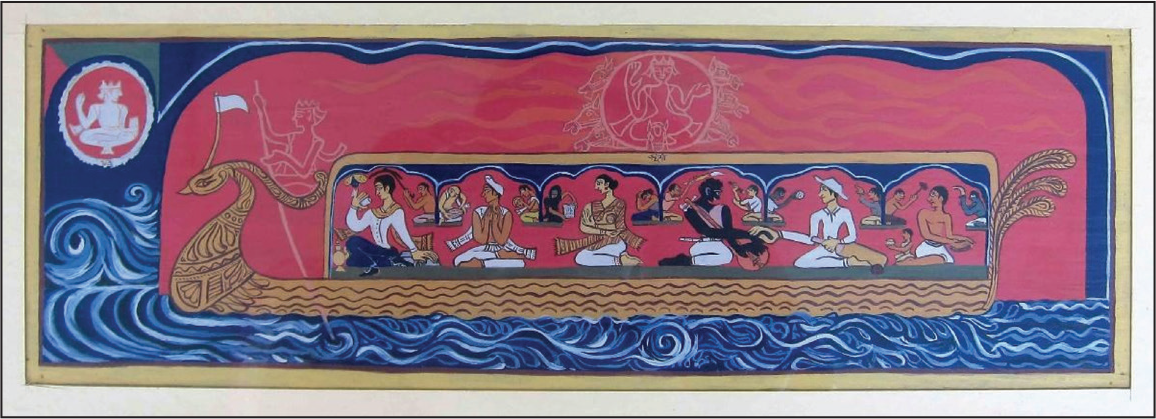
This shift towards creative experimentation is best exemplified by the work of contemporary practitioners who are reimagining the tradition’s thematic and material boundaries. As already mentioned, Meghna Baruah is an artist who used the neo-Vaishnavite style to create paintings based on non-religious themes for her project. Chittaranjan Borah is an artist and the founder of an organisation called Kolong Kala Kendra in Puranigudam in Assam. Along with mask-making, terracotta works and wood carving, he also practises and teaches the art of manuscript painting. Although he started out copying paintings of the historical manuscripts, he gradually began to create paintings on new issues and themes, while keeping the old style intact. For instance, Borah’s painting titled ‘We are on the same boat, brother’ is based on the song of the same name composed by Lead Belly and popularised in Assam by the Assamese singer Bhupen Hazarika (1926–2011) (see Figure 4). In the painting, six centrally seated figures are shown sailing on a boat; they are attended by 11 minute figures. The figures wear both traditional Indian garments and European clothes. The boat is shaped in the figure of a bird, on whose head is hoisted a white flag, perhaps indicating peace amongst all people. A sailor is drawn in outline, seated on the plume of the bird. Above the boat is a line figure of Surya in his chariot with six horses. The top left corner of the painting features the moon god, Chandra, seated cross-legged within an oval frame. The boat is placed on blue waters whose swirls are indicated in white.
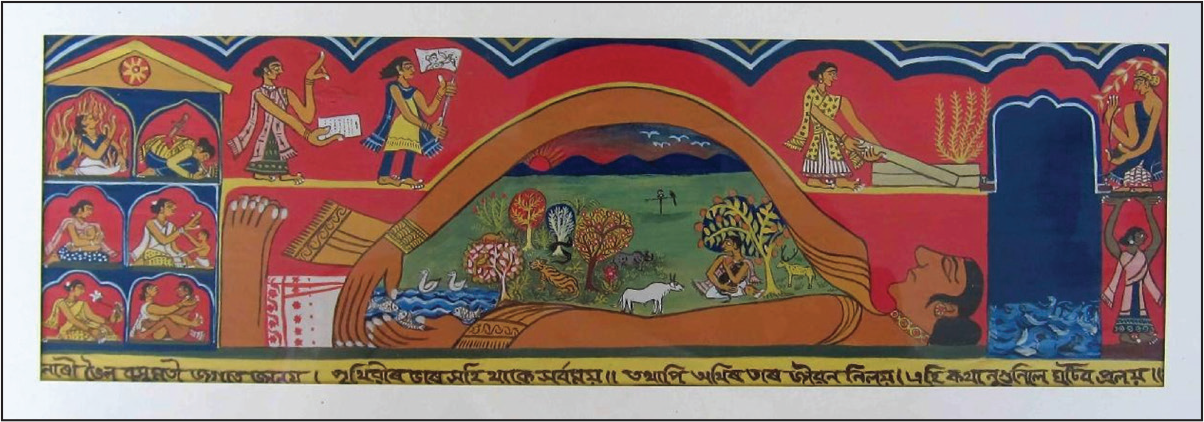
In another painting, Borah depicts Jyoti Prasad Agarwala (1903–51), the Assamese playwright, songwriter, poet, writer and filmmaker, along with an assistant, apparently engaging in a discourse with the public seated in front of him. The text dictates that one should follow the path of jyoti (probably meaning the words of Agarwala) and discard all greed and attachments. In another painted work, Borah likens women to prakriti (nature) and represents the earth inside the woman’s womb. In the same painting, he depicts the different roles that women play in society as well as the hardships that they undergo. The text predicts the downfall of the world unless women are treated better (see Figure 5).
In the workshops that Borah conducts at Kolong Kala Kendra, he encourages students to explore diverse themes which had perhaps resulted in a small manuscript based on the jikirs (devotional songs) composed by the 17th-century
Mridu Moucham Bora uses his neo-Vaishnavite style paintings to illustrate modern, secular issues. During the anti-Citizenship Amendment Act protests in Assam in 2020, Bora made a painted folio titled ‘Democracy’, using the traditional medium of the Vaishnavite manuscripts. Although he adheres to the traditional style and composition of the older manuscripts, the content of this folio is different. Here, he depicts a king-like crowned figure piercing a man in the chest with a spear, while a female figure appeals to him for mercy. On the right-hand side of the composition lies the guruasana, the multi-tiered wooden throne which enthrones the manuscript idol in satras. A serpent is wrapped around the guruasana, almost completely engulfing it. While the common citizen is shown to be attacked and oppressed by the powerful ruler or the government, the guruasana, here, indicates that the state of Assam is endangered. While this folio functions as protest art and indicates the stand of the artist, the guruasana symbolising the state of Assam also indicates that the religion of Eka Sharana Nama Dharma can come to stand for the entire people of Assam.
Bora presents his personal and modern take on traditional themes or Vaishnavite stories. In a painting made on canvas with natural colours, he depicts the Gajendra Moksha Puranic episode in the traditional way, with the Grah attacking Gajendra, while Vishnu arrives on a Garuda to rescue the elephant king. In another painting made on canvas with acrylic colours, he presents a different take on the same story. Here, a tearful elephant is now in the claws of a crane, which has seemingly caused massive deforestation. At a distance, another predatory crane is similarly in the process of catching hold of a tiger. Bora has titled both paintings ‘Gajendra Moksha’. The crane might here stand for urbanisation and development activities, which cause deforestation and endangerment of animals. But here too, the elephant appeals with a leaf to a saviour, depicted as a lotus placed on a golden throne. The lotus is also the symbol of the Bharatiya Janata Party government, which has been ruling the state of Assam since 2016.
From cult object to commodity
The earliest works of art originated in the service of a religious ritual, and the pre-modern neo-Vaishnavite illustrated manuscripts were no exception. Making a manuscript was a tedious job that demanded skill and knowledge as well as a sense of devotion from the artist. It was considered sacred work, and any act that adversely affected the manuscript was treated as immoral. In a religion that iconised the manuscript and put utmost emphasis on the word, the making of manuscripts was considered to be an offering to the divinity. It is mentioned in the biographical works of neo-Vaishnavite saints that devotees always aspired to transcribe the writings of Vaishnava saints, Shankaradeva and Madhavadeva (Nath 2016: 222–24).
Initially, these manuscripts were not considered works of art, but rather, instruments of cultic and magical value, as is the case with most works produced in a ritualistic context. And when such a work was produced to serve in a cult, what mattered was its existence and not its exhibition. Indeed, it could be demanded that such a cult object remain hidden (Benjamin 1969: 7). It is not only the iconised manuscript that is put away from the sight of the devotees in the interior sanctum sanctorum of the satra. Even the collections of manuscripts in the satras are not on display for visitors, although they may be brought out upon request. On the other hand, if a work is emancipated from ritual, the chances of it being used or exhibited, even in secular spaces, are upped.
The framed paintings of Mridu Moucham Bora, based on both religious and secular historical Assamese manuscripts, are sold as wall décor. Bora has also executed images drawn from the neo-Vaishnavite illustrated manuscripts on leather bags sold online. One such bag features lata-kata or floral motifs, seen prominently in an 18th-century Bhagavata Purana (sixth–seventh canto) manuscript stored at Srimanta Sankaradeva Research Institute in Nagaon district. Another bag features the rasaleela (the play of divine love of Krishna and Radha) scene from the Bhagavata Purana (10th canto) manuscript stored at Bali satra in the same district.
In the cultural shaping of an object’s biography, the object is stripped of its previous social identity. Then it is acquired by a person or group where it is resocialised and acquires a new status (not necessarily a lowly one) (Kopytoff 1986: 65). As neo-Vaishnavite images radically change their medium, they are also transported from their sacred space to a secular one. Their identity as religious paintings for religious propagation and devotion is transformed into paintings to be exhibited, decorated, witnessed and also utilised in an everyday mode. This change in form and status makes these images more accessible than the older neo-Vaishnavite manuscript paintings. Now, they may also be used to market goods such as food and notebooks.
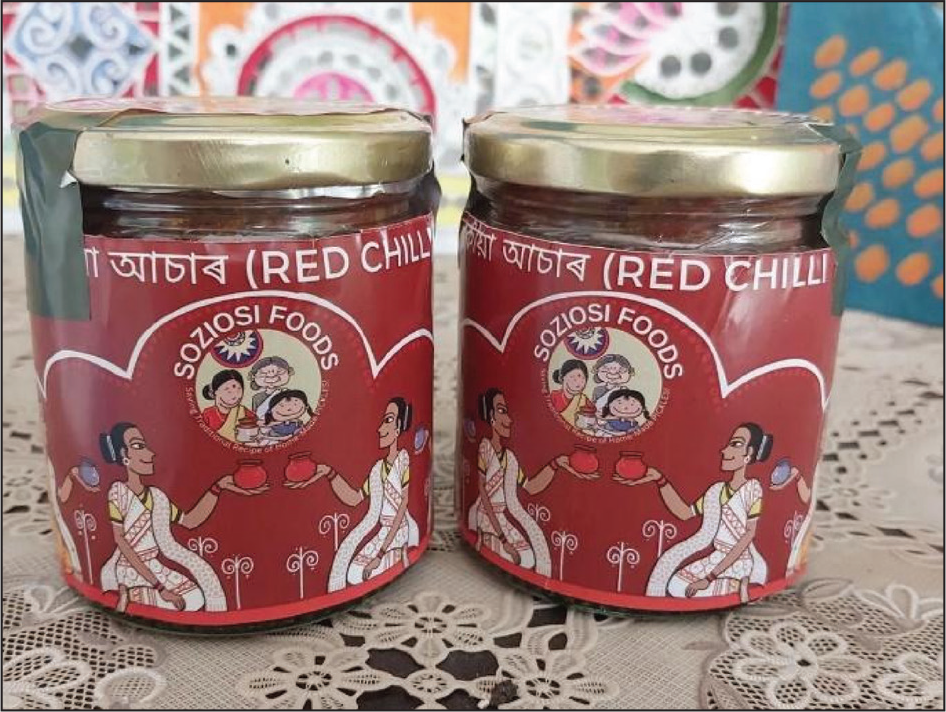
Soziosi Foods, a brand of pickles run by a family from Assam, uses these neo-Vaishnavite paintings as labels on pickle bottles sold by them. Although they do not use the images of Krishna or any deity, their labels clearly derive their style from the neo-Vaishnavite paintings (see Figure 7). The labels use the characteristic flat red background against which an image of four seated women is placed on a horizontal plane, under white bordered arches. The women wear the traditional white garments. Their hair is coiffured in buns. Their faces are in profile. They have fish-shaped eyes. Vegetation, as usual, is sparse, and the images are peppered with plants drawn in rudimentary style. Although printed on paper, the style and composition of these labels are undoubtedly drawn from the Assamese manuscript paintings.
Kumbhi Kagaz Pvt Ltd, another company from Assam, which specialises in the making of paper products, has introduced notebooks whose covers feature scenes directly from the life episodes of Krishna as featured in the historical painted manuscripts. The covers feature five rows of paintings which depict the celebration of celestial beings; Krishna in the forest with his cowherd friends and gopis (milkmaids); the rasaleela and Krishna as a child with Yashoda. Although the medium for these pages is made from water hyacinth, as opposed to the traditional sacipat, the images are stylistically identical to the ones in the illustrated manuscripts. Promoted as notebooks which ‘celebrate the rich heritage of Majuli manuscripts’, 3 the images of neo-Vaishnavite manuscript paintings are used to adorn another non-religious product.
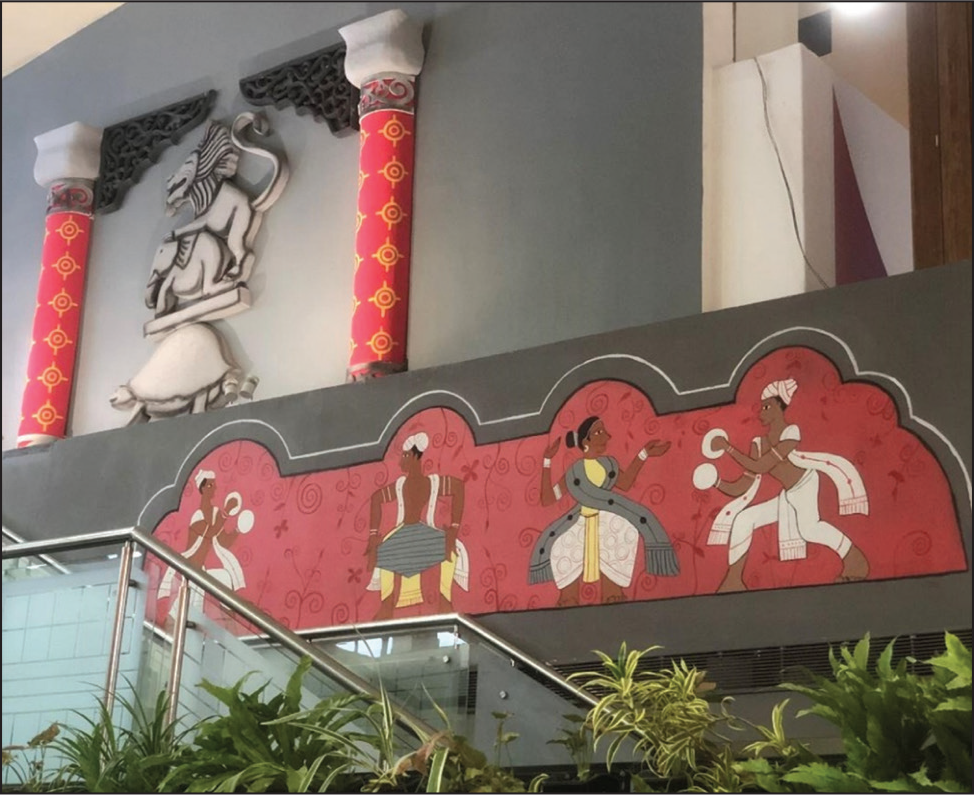
In contrast to historical periods and cultures, when paintings had essential religious and ritualistic roles and functions, today these serve as objects to be shown in places built for no other purpose than to exhibit these works (Morris 1958: 311). Paintings, in the neo-Vaishnavite style, are some of the first items that one notices upon arriving at the Lokapriya Gopinath Bordoloi International Airport in Guwahati. The walls and pillars of the airport are beautified with paintings whose content, style and composition are drawn directly from the illustrated manuscripts. In the airport, these images now serve as decoration (see Figures 8 and 9).
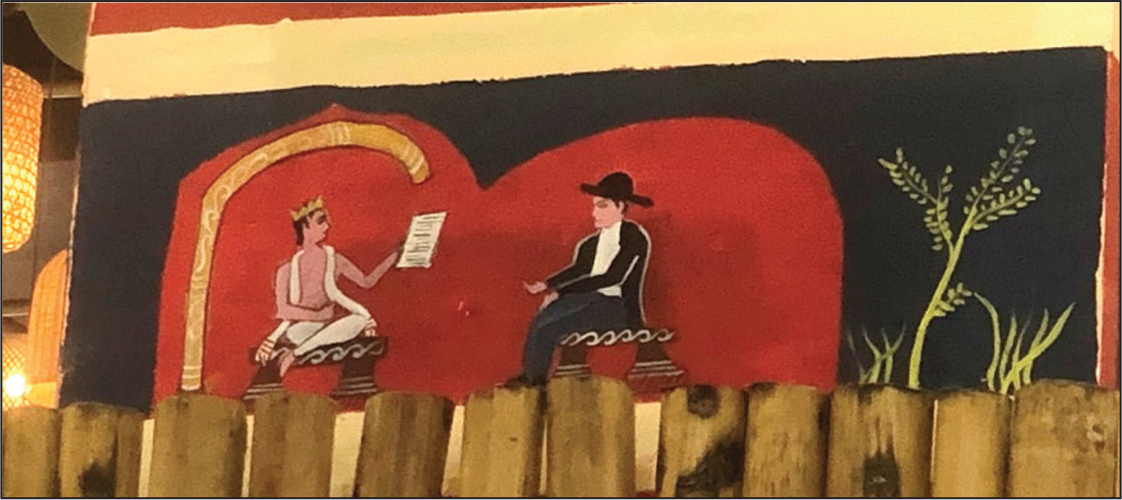
In this way, the neo-Vaishnavite images, which have taken the form of wall décor, product labels and book covers, present the paradox of showing things (images) that were never meant to be displayed initially and yet appear now in both public and domestic spheres in the form of décor and utility objects. The manuscript paintings, which were initially confined to the sacred spaces of the satras, may now be viewed more easily and regularly by people. These images sometimes no longer bear the materiality of the manuscript paintings. Sometimes, they are also mass-produced.
Mridul Baruah remarked that the government once sent a designer to his manuscript workshop and asked him to incorporate some changes in the design of the paintings while keeping the base intact. This was done in order that these paintings could be sent to compete with bark paintings from other regions. According to Baruah, the patron may introduce changes in a tradition, but the artists may not be as free to do so. This indicates the significance of patronage in the artistic process and the agency of institutions other than the religious in orienting an artistic sensibility (Geertz 1983: 104). Political patrons, along with state-sanctioned institutions, play a great role in sustaining, altering and even introducing a visual language and style to suit changing times and changing needs.
Hari Narayan Konwar also deviates a little in his artistic executions from the older manuscripts. The makers of the historical manuscripts did not directly write the date the work was produced, but instead wrote it in a chronogram. Therefore, in order to know the date of a manuscript, one had to read the entire text. But Konwar directly dates his manuscripts in the colophon. Moreover, he uses the modern Assamese script to write the text, instead of the older scripts. But, even when it seems as if changes are being introduced by an artist or generated by art itself in a vacuum, this is not so. Nelson Goodman calls this ‘the absurd and awkward myth of the insularity of aesthetic experience’ (Geertz 1983: 118). Artists, like their fellow beings, are social beings, producers and products of society (Hauser 2011: 41). Similarly, artistic activity is dominated by norms and values that are largely of a social origin. So, the styles, symbols, motifs and content of an art object are also social and not individual products. If a particular style is the culmination of a long series of creative experiments, inventions, techniques and achievements, it may also undergo changes to serve the purpose of a changing medium or subjects. Artistic developments, therefore, depend as much on new technical procedures as on the personal visions of the artist (Mukerjee 1948).
But some of these modern neo-Vaishnavite images differ so much in their reproduction and are so commoditised that they also do not intend to nor evoke any religiosity or devotionalism. The stylistic inspiration for Meghna Baruah’s illustration of the folktales for her book may have been neo-Vaishnavite images. But, the contents of her illustrations are not religious. Instead, they are retellings of folk stories by Lakshminath Bezbaroa that reflect the tempo of life in the small towns and villages of Assam. It is, therefore, that even though she adopts the style of neo-Vaishnavite manuscript paintings, her images are a visual translation of another kind (Baruah 2022: 8). The same also goes for some of the works of Chittaranjan Borah and Mridu Moucham Bora, as well as the labels and covers of the brands which have adopted these historical images. Artists, in this way, play a significant role in developing new forms of expression (Morris 1958: 316).
Can it happen that the past context or utility of some images is so thoroughly erased that they no longer bring up any memories of the thing they once indicated? (Benjamin 1969: 23) Budhindra Nath Borpathak, Chittaranjan Borah’s teacher, had expressed this very fear. Borpathak was the chief pathak (reader of traditional scriptures) at Auniati satra in Majuli and also practised the making of sacipat manuscripts. Borah says that, according to Borpathak, the traditional knowledge of manuscript-making and painting should not be shared with everyone—many art and dance forms had moved outside the institution of the satras and lost their distinctive characteristics by mixing with other forms. 4 Perhaps the Vaishnavite images, now found in the form of wall décor and utility objects, are the very material realisations of Borpathak’s anxieties.
The persistence of piety
However, while according to post-Enlightenment scholars like Walter Benjamin, people started looking at religious images displayed in public and often also mass-produced more for their ‘aesthetic value’ than their ‘cult value’, Kajri Jain (2007), based on conversations with artists and publishers of Indian (and specifically Hindu) calendar art, turns this argument on its head. Jain argues that most people who actually buy and use religious images do not really care about these artistic judgements. For them, it is about their faith, not whether the picture is ‘good art’. What was once sacred may now often be seen as art. But when we try to apply our modern art standards to religious images, these criteria do not always account for the spiritual or ritual functions of the works. Even talking about the ‘artistic quality’ of these images is more about showing social differences, such as the refined, soft colours endorsed by bourgeois religiosity, than about actual artistic appreciation. For many people, religious images are still about faith, not aesthetics (Jain 2007: 181–83).
In the case of the neo-Vaiṣhṇavite images, this might be exemplified by the fact that, despite the move from the religiosity of these images, some artists, in their own lives, have still strived to continue the ritualistic practices and more ephemeral feelings and emotions of devotionalism traditionally attached to the production of these neo-Vaishnavite images. This exemplifies the significant role played by the social and ideological background of the artist (Mukerjee 1948: 48). Most of the artists mentioned above are followers of Eka Sharana Nama Dharma and stress the greatness of the Bhagavata Purana and Shankaradeva, as well as the importance of continuing the religion and its accompanying artistic tradition. Even when they are not ecclesiastical members of the satras, some of them attach a feeling of piety to their artistic practice and also follow certain preliminary and accompanying religious rituals.
Hari Narayan Konwar considers his labour and the resultant artworks to be an offering to the deity, and the artistic endeavour of making manuscripts also a spiritual one. He says that when he works, he thinks he is making an offering to God. During that period, he visits the Batadrava namghar (prayer hall in a satra) in Nagaon district every day, offering prayers to the enshrined book idol before making a Gunamala (a text based on the Bhagavata Purana) manuscript. In that period, he does not write anything else, not even holding another pen. Other rules that he follows include bathing before sitting down to make a manuscript.
Mridul Baruah too does not wear sandals inside the Guru Griha (the house outside his residence where manuscript production and workshops take place) and bathes before taking on the making of these manuscripts. One who wishes to make these manuscripts, he says, has to read the Guru Charita, which is a biography of Shankaradeva, by Ramacharana Thakur, indicating the respect paid to the saint-scholar who started the Assamese neo-Vaishnavite manuscript tradition. He also says that it is necessary to study about Eka Sharana Nama Dharma in order to make these manuscripts, because one has to know everything, and everything (language, performance and images) is connected. It is pertinent to read and understand the history of this doctrine as well as neo-Vaishnavite literature in order to understand the content of these manuscripts. This, in turn, is important because the text also explains and illustrates the image, just like the image, in turn, illustrates the text.
Rajib Kakati, who is an ecclesiastical member of Uttar Kamalabari satra in Majuli and practices painting on paper and canvas, said he would light an earthen lamp in the namghar before making a neo-Vaishnavite sacipat manuscript, indicating the homage paid to the book idol for whom the manuscript is an offering.
So, the neo-Vaishnavite artworks, even when they are made in a different context and for different gains today, are not totally disengaged from the religious system. The ritualistic practices and self-imposed restrictions of these artists reflect how they operate in a context where their art has a heightened kind of status, a moral substance and a distinctive significance (Geertz 1983: 109). Therefore, in a way, the continuation of the neo-Vaishnavite painting practice is simultaneously a continuation of its associated religious system and its ideas, beliefs, rituals and resultant emotions and feelings, even though products of individual creativity and expression, cultural environment, social values, experience and judgement inevitably impinge upon these works (Mukerjee 1948: 48).
Artistic tradition as a living system
According to Walter Benjamin, a work of art is inseparable from the fabric of tradition, and this tradition is thoroughly alive and extremely changeable (Benjamin 1969: 2–6). Jan Assmann defines tradition as a system whose information is not exchanged reciprocally and horizontally, but is transmitted vertically through the generations (Assmann 2006: 8). ‘Tradition’, ‘heritage’ and ‘culture’ are some of the terms that are repeated by scholars of the neo-Vaishnavite manuscripts, currently practicing artists or the political patrons of neo-Vaishnavism. According to Meghna Baruah, her project, based on folk stories, has been an ‘attempt at keeping this tradition alive’. She calls this ‘traditional medium of manuscript painting’ ‘an innate part of Assamese culture for centuries’ (Baruah 2022: 6–8). Although Hari Narayan Konwar also undertakes commissioned work, he is of the opinion that there is no immediate economic benefit, but it will help keep the tradition alive and make people feel proud of their cultural heritage. 5
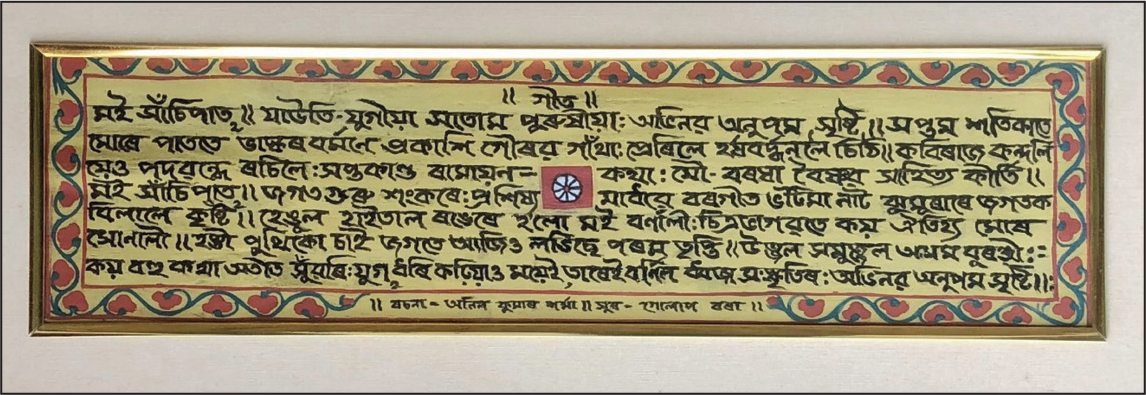
Besides the artists themselves, a particular painted folio, stored at Kolong Kala Kendra, itself talks about the legacy and historical importance of sacipat manuscripts (see Figure 10). The text in the folio is in the form of a song written by Anil Kumar Sharma and composed by Golap Bora. It is bordered with floral designs and also features a single flower at the centre in the primary colours, typical of many historical neo-Vaishnavite painted manuscripts. The text is written in Assamese, and the work introduces itself as ‘I am sacipat (manuscript leaf). Carrying the heritage of generations, I am a unique and unparalleled creation…. I have a golden history’. In the end, the text emphasises how across the ages, sacipat works have always carried the vibrant flag of Assamese culture. 6
When the artistic process is not based on ritual, it begins to draw even more heavily on politics, which does not only lie in individual or even policy statements and intentions. According to Aristotle, a speaking being is a political being (Ranciere 2006: 12). Politics is also found in apparently non-political minor details, such as what is displayed where, who decides what is to be displayed, the processes, interest groups and negotiations involved in displays, what is left invisible or silent and how displays form and inform public knowledge and understandings (Macdonald 1998: 1–3). For instance, the presence of neo-Vaishnavite visual culture at the Lokapriya Gopinath Bordoloi International Airport is a strategic placement given the arrival of a huge number of passengers both from different parts of India and abroad.
Such public artistic strategies and supportive narratives are a crucial means of endowing objects with significance and value. The historical illustrated manuscripts are attributed to a nostalgia of an incredible past. Shankaradeva is a hallowed figure in the history of Assam, evident not only from the neo-Vaishnavite hagiographies but also from the words of today’s artists and many scholars of Assamese art history. Such accounts enable the members of a community to indulge in reminiscing about a shared heritage. First, the images persuade the viewer through corporeality and spectacle. Then, the narrative tends to affect the image as well as the viewer’s ways of seeing and reading it into an already-defined script (Brosius 2005: 7–8).
The illustrated manuscripts were culturally constructed entities to begin with, endowed with culturally specific meanings, but they or parts of them (the painted images) have since been reclassified into different, even commoditised categories. Moreover, the displaying of these images not only shows, but it also does. It always has cultural, social and political implications. Display is a means that intervenes in, decides and transforms what works are shown to be heritage. Display, along with knowledge, therefore, animates these images and makes them heritage. Heritage is a mode of cultural production in which the present makes use of the past (Kirshenblatt-Gimblett 1998: 2–8). In the interactions between art, heritage and identity, art can be taken to either constitute heritage or be a vehicle through which heritage is communicated. As a process, heritage uses tangible artworks for the transmission of social norms, values, ideas, behaviours and beliefs in order to satisfy various contemporary needs (Ashworth 2011: 19–22). Enmeshed in the fabric of relationships between patrons, artists and recipients, the displayed images then acquire an intention and an agency to cause events to happen. In such a scenario, art objects have also been equated with persons who have the capacity to significantly shape human lives (Gell 1998: 7). So, while itself undergoing transformations, art may also shape or reshape society.
IV Conclusion
Art has been called the autobiography of society because it fully expresses the values, ideas, sentiments and faith of a culture (Mukerjee 1948: 75). But societies are rarely static, and accordingly, art also changes in different periods in its form, materiality, meaning and functions. Artists across time and culture, both in India and elsewhere, have reworked religious traditions, reinterpreting sacred iconographies and materialities to reflect contemporary themes and values and personal perspectives. This process, in turn, also makes the faith and its corresponding art form relevant to the present day, blending the spiritual with the secular and the traditional with the modern.
From the 14th to the 17th centuries, the Renaissance witnessed a massive reinterpretation of Christian themes by artists such as Leonardo da Vinci and Michelangelo. Moving away from stylised depictions of biblical figures, they imbued the painted characters with anatomical accuracy, human emotions and a sense of three-dimensional space. Similarly, Western academic realism was blended into traditional Hindu mythological scenes by Raja Ravi Varma during the 19th century in India through oleographs. This was an instance of changes introduced not only in the style of artworks but also in their medium, which made the divine figures relatable and human-like to the masses. Modern artists have also explored the usage of digital art, mixed media and installation art, breaking down conventional representations of religious themes. At times, cross-cultural dialogue is also witnessed in the work of artists such as those of the Mughal miniature tradition, who adapted biblical figures and narratives into the intricate and delicate style of Mughal painting. Madhubani and Patachitra paintings also sometimes depict deities in modern contexts or use them to address social issues such as environmentalism or gender equality, reminding us of the paintings executed in Kolong Kala Kendra discussed above (see Figures 4–6). In this way, religious art may also broaden its scope beyond spirituality to address various societal needs, including social, political, cultural and economic issues.
At the same time, a change in the materiality of traditionally religious artworks and their foray into public spaces like airports or homes in the form of wall décor, book covers, product labels and so on results in a greater public presence of the religion. As Kajri Jain (2007) postulates, such images are not entirely stripped of their religious identity, even when they enter the ‘bazaar’. Moreover, the state, when acting as a patron of such art, may actively promote religious revivalism. A look at public statements by politicians, state grants to satras, promotion and publication of neo-Vaishnavite visual and performance arts, publication of historical manuscripts in the form of printed books, translation of the texts, popular press and television programmes indicates the continuation of the political patronage to neo-Vaishavism. While the historical and ongoing relationship between the state and neo-Vaishnavism is a fascinating subject, a full exploration of its complexities falls outside the scope of this article, which focuses specifically on contemporary neo-Vaishnavite-style painted images.
Evolving historical, cultural and political contexts activated by the desires of states, communities and individual artists and consumers bring in new narratives and documentation and exhibition practices. This also has a bearing on the artworks themselves, whose perception and meaning, besides materiality, are refigured or reconstituted. Therefore, artists, although they themselves are also social products, are not without agency. From the works of the currently practicing artists and their own statements, it is evident that there is a tendency for the artists to emulate the style of the historical manuscripts. At the same time, they also exercise a choice and select which elements of composition, colour scheme, form, materiality and message, for instance, have to be continued and which can be altered; otherwise, the style and heritage of the Assamese manuscript painting cannot be expressed, and the tradition will not be continued. At the same time, however, their artistic choices, selections and experiments are also dependent on the hierarchy of values placed upon the elements of a style. This, in turn, is dependent on individuals such as patron-clients and consumers, as well as sociopolitical and economic trends. Nevertheless, it can be concluded that instead of literal reproductions, people flexibly use past creations, thus negotiating between a need for continuity through time and the need to innovate for current and future needs. In the process, artworks reflect the beliefs, attitudes and aspirations of not only the makers of those artworks but also of the community, political regimes and the era.
Footnotes
Acknowledgements
I want to express my sincere thanks to Hari Narayan Konwar, Chittaranjan Borah, Mridul Baruah and Rajib Kakati for taking the time to be interviewed. I am also deeply grateful to Meghna Baruah for allowing me to use images from her book project for this article, and to Soziosi Foods for granting me permission to use images from their product labels.
Declaration of Conflicting Interests
The author declared no potential conflicts of interest with respect to the research, authorship and/or publication of this article.
Funding
The author received no financial support for the research, authorship and/or publication of this article.