






Abstract

Saba Mahmood (1962–2018)
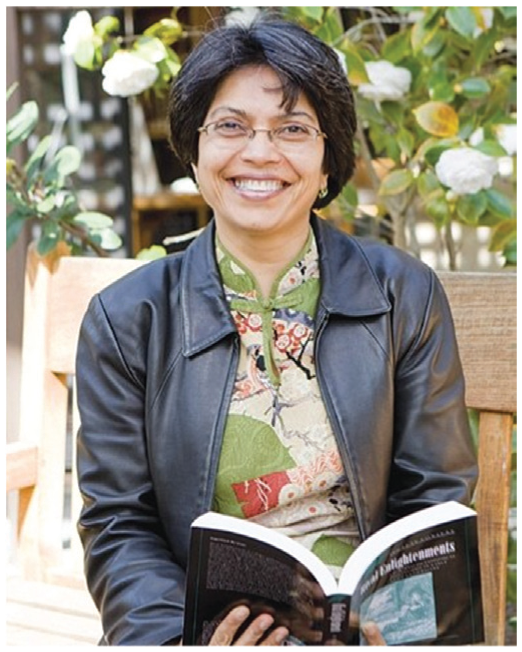
I read The Politics of Piety soon after it came out, in preparation for a research programme on women and religion involving feminist scholars from different parts of the world. The questions we asked in that project were prompted by certain social changes taking place in urban Bangladesh and elsewhere, where women were being drawn to Islam anew, and living and interpreting Islam in ways that seemed quite removed from ‘secular’ goals. My social proximity to many of these women, along with the post-9/11 turbulence that left many ‘cultural’ Muslims such as myself with questions on Islam’s myriad textual interpretations and relevance through history, made this rising appeal for an Islamic life intriguing on many levels. Saba Mahmood’s book struck a special chord with me given its focus on certain kinds of impassioned embodied subjectivities and relationship with ideals that liberal feminist politics did not find legible. I read and reread the book to validate my own understanding of the changes around me and out of the deep intellectual realisation that a scholar had finally and so perfectly articulated the pull and force of norms that was so central to the grammar of religiosity for many and had yet been so difficult for much of the academic world to grapple with. Through the course of that research project and subsequently onto my dissertation research, the arguments the book made, and I echoed, were heard with a certain discomfort, if not outright outrage by scholars and activists who were convinced of the unequivocal truth of the secular dispensation, and loath to questioning the assumptions on which their certainties were perched.
Undeterred by the misgivings, we invited Saba to a conference in Dhaka in December 2010. I remember going to the airport to pick her up, somewhat intimidated at the prospect of meeting and interacting with her. On our drive to the hotel, as we got talking, my nerves were calmed as she so disarmingly declared that she was surprised to receive an invitation from us given the fact that she has not worked on South Asia. I told her that, that detail notwithstanding, we were honoured to have her, and that South Asia needed more of what she had to say. During the course of the next 3 days, we struck a friendship as she delivered the keynote at the conference, took active part in the discussions and socialised with us in the evenings. Beyond the respect she commanded as an intellectual, I felt a certain warmth towards her which I felt reciprocated as we bonded over motherhood and the love of cooking. And what was especially wonderful about Saba was the genuineness with which she would inquire about the work of a much junior scholar in a part of the world that she did not even work on. She urged me to write and offered to read and leave comments, and always suggested openings for me to avail in order to learn and write. Then one morning in February 2016, I woke up to an email from her that her next project was going to be on sectarian differences in South Asia—spanning India, Pakistan and Bangladesh and that she wanted me on board. Needless to say, I was overjoyed as I supplied her the information she required and questions that could be asked for Bangladesh.
The project was to begin in the Fall of 2016. But fate had other things in store. We were losing this brilliant scholar at the prime of her life and I was losing a friend and the opportunity to learn from her. But almost 2 months into Saba Mahmood’s passing, it is the loss of the occasion to think differently, and a little more critically in a way that questions much of South Asia’s postcolonial intellectual inheritance and its address to political formations that I, along with many others, are bemoaning. The Politics of Piety’s focuses on rethinking agency, autonomy and subjectivity and her last book Religious Difference in a Secular Age: A Minority Report (2015), which further consolidates the argument that secularism cannot live and thrive without its inherent dependence on religious formations, was premised on anti-imperialist ideas that demonstrated a certain kind of modernity’s hand in creating and bringing to the surface political failures and fault lines that we are quick to attribute to religion’s public call. To take a step back from promises of colonial inheritances, to assess how these promises unfolded through history as contingent on different epistemological frameworks, without necessarily falling for any and every religious idea as authentic (which I know Saba Mahmood did not), would have been a middle ground between the polarities that mark the religious–secular divide in thinking about politics and religion in South Asia. Saba Mahmood was ready to take on that challenge. I know that her scholarship and sharp analyses would have stood firmly against any detractors. Let us hope that with Saba Mahmood’s light dimmed out all too soon, the boundaries of academic thinking and political understanding are not restricted by the resistance to a rethinking of modernity, politics and the secular in South Asia. It is in continually pushing these boundaries that we may keep Saba Mahmood’s light and memory alive.