






Abstract
This article examines the career of Alice Mossie Brues (1913–2007), a prominent yet ambivalent figure in twentieth-century physical anthropology, to explore how gender and race shaped scientific authority and knowledge production during a period of profound disciplinary transformation. Trained under Earnest A. Hooton at Harvard, Brues combined classical racial anthropology with emerging approaches from population genetics, evolutionary theory, and, from the 1960s onward, computer simulation. She became an early innovator in the statistical and computational analysis of human variation and played a key role in integrating physical anthropology into the framework of modern evolutionary synthesis. At the same time, Brues consistently defended the biological validity of race, understood as geographically patterned population differences in gene frequencies, even as contemporaries moved toward clinal models of human diversity or rejected the race concept altogether. Through a close analysis of her publications, professional activities, and rhetorical strategies, this article situates Brues within debates over race, scientific neutrality, and political engagement. It argues that her insistence on an objective, socially neutral science – coupled with an explicit rejection of racism – formed a central but tension-laden aspect of her scientific persona. The article further shows how Brues’s success as one of the few women to attain leadership roles in physical anthropology was facilitated by her familial background and her willingness and ability to align herself with a masculinized culture of quantification, rigor, and disciplinary authority, while downplaying gender discrimination. Brues’s career thus illuminates the entangled histories of race, gender, and objectivity in the sciences of human diversity.
Introduction
Alice Mossie Brues (1913–2007) was a pioneering actor in twentieth-century physical anthropology whose career spanned six decades. Her academic engagement covered a period of profound transformation in the biological sciences, during which the modern synthesis left its mark on physical anthropology and the concept of race was both central to it and increasingly contested. Her work encompassed a wide range of scientific domains – from classical physical anthropology, human population genetics, and evolutionary modeling to forensic anthropology. It was marked by methodological innovation, particularly in the use of statistical and computational tools to analyze genetic data. At the same time, her persistent engagement with the biological concept of race at a time when the field was undergoing significant epistemological and ideological changes was ambiguous.
Trained under Earnest A. Hooton at Harvard when enrolled at Radcliffe, Brues combined a classical physical-anthropological education with a keen interest in genetics, statistics, and later, computer simulation. In the 1960s, she was among the first anthropologists to use computer simulations to model evolutionary processes. Brues’s career in particular sheds light on broader debates about the concept of race in anthropology. In reference to the “race-versus-cline” debate, she used computer models to demonstrate how patterns of gene flow and selection could produce both clinal and clustered distributions of traits. Throughout her career, she maintained that race, defined as populations differing in gene frequencies, was a valid biological category. As late as 1977, she presented a detailed account of human variation, combining classical racial typologies with modern genetic data in her textbook People and Races. While the book was widely used in classrooms, it was also criticized for its use of racial categories and for downplaying the social and political dimensions of race.
While Brues rejected racism and emphasized the moral irrelevance of group differences, she remained committed to the idea that race, understood as geographically patterned genetic variation, was a valid and useful scientific category. She argued that moral principles, not scientific claims about group differences, should underpin opposition to racism. She warned that insisting on the absence of group differences as a basis for equality risked conceding that discrimination would be justified if such differences were found. Brues upheld that there was something like a scientifically objective and by inference socially neutral kind of science, which, though necessarily free from social concerns or political influence, could have a beneficial impact on society. Her attempt to separate science from ideology and her insistence on the biological reality of race, even as she recognized its social dangers, placed her at odds with those of her contemporaries who were moving toward clinal models of human diversity and engagement with racism.
Brues’s career also highlights the gender dynamics of twentieth-century science. As a woman in a field dominated by men, she faced structural barriers and social expectations that affected her career. Nonetheless, Brues succeeded, and not only due to her intellectual excellence. She also relied on her personal background. Finally, she managed to navigate the masculine field of physical anthropology by developing a scientific persona that bore the marks of a gendered scientific culture. Lorraine Daston and H. Otto Siebum (2003) perceive scientific personae as culturally sanctioned models of scientific selfhood that link epistemic virtues to moral, political, and social norms. Following this understanding, I approach Brues not simply as an individual researcher but as an instantiation of historically specific norms of scientific authority: Scientific personae shape perception, character, and forms of problem-solving, as well as voice and posture. 1
Brues’s emphasis on quantification, objectivity, and technical innovation aligned with the masculinized ideals of scientific authority. Another aspect of that scientific persona was her style of expression. In this, as in many other respects, she seems to have been influenced by her superior, Hooton, who also adopted a very particular voice that included wit but also very flippant language even where racist topics were concerned. Further in line with the masculinized culture of physical anthropology, and reflecting a broader pattern among women scientists of her generation, Brues downplayed the significance of gender discrimination. It was the combination of these factors – scientific excellence, the support of family connections in science, and the willingness to adapt to the existing scientific culture – that helped Brues to rise to leadership roles in professional organizations and to make influential contributions to forensic anthropology besides human population genetics.
Brues thus occupies a complex position in the history of science. As a pioneering woman in physical anthropology, she contributed to significant advances in the field and broke professional glass ceilings, becoming a role model for women in the subdiscipline. Her work on population genetics remains influential, her methodological innovations prefiguring later developments in evolutionary biology. At the same time, her commitment to the biological concept of race and her ambivalence toward the social critique of racial categories reflect the tensions of her time. Brues’s legacy invites a critical reflection on the interplay of science, politics, and identity in the study of human diversity. Her career illustrates both the possibilities and the limits of scientific objectivity in a field inherently entangled with questions of race and gender.
Brues’s life and work are thus notable for their intersection with two deeply contested domains in anthropology: race and gender. This article explores how gender and race shaped her scientific persona, professional trajectory, and the knowledge she produced in a field long dominated by White men. It situates her scientific contributions within the broader historical context of physical anthropology, examining how her ideas were impacted by and responded to debates on racial classification, evolutionary theory, and the role of women in science. By analyzing Brues’s methodological choices, rhetorical strategies, and institutional affiliations, I aim to understand not only what she contributed to anthropology, but also how she embodied or challenged the norms of her time.
Gender, authority, and scientific persona
Margaret Rossiter has shown how the so-called professionalization of science in the United States of the 1880s and 1890s also meant a (conscious or unconscious) reaction of men against a “feminization of science.” Evoking “higher standards” in scientific practice, they retained male dominance against an increasing presence of women. Therefore, while by the 1920s women did enter science in growing numbers, they were mainly barred from the prestigious fields and attractive positions. As Rossiter’s work has made abundantly clear, there was no way for women to escape the issue of gender in science, and different strategies were developed in view of the entrenched gender stereotypes. Women addressed gender inequality openly in letters and demanded full access by all means available, or they embraced the female stereotypes in order to open up or gain access to particularly “feminine” occupations and fields. Still, there was another possibility, even if unavailable to most women – that of riding on one’s familial and social background and, in particular, and possibly connected to this, on the support of an employer or advisor. 2
This third option, while highly unlikely to be open to women, could mean that rather than accepting nineteenth-century stereotypes of female nature that were in such strong opposition to the ideals of “a hard science,” a woman might come to embody masculine virtues – to adopt a role as “one of the boys.” Alexandra Rutherford has described the gendering of science as the ways in which scientific ideas, theories, practices, epistemic values, and institutions are masculinized or feminized. 3 Gendering defines what a scientist ought to be like, codetermines access to and success in a scientific field, and has been shown not only to influence the way in which a science is done and lived, but also the knowledge it produces. Several scholars have discussed how the notion of hardness of a scientific field refers to its subject matter, its methodologies, its perceived inaccessibility and objectivity, and that the degree of hardness of a (sub)discipline correlates with its prestige and gendering. 4
Brues entered a field – physical anthropology – that exactly strove for such hardness since its inception, during the nineteenth century increasingly becoming a science of exact measurement and in search of universal standards, developing sophisticated instruments to establish race quantitatively and diagrammatically. 5 With new levels of abstraction, formalization, and mathematization, the advent of computers, modern laboratory apparatus and automatization, and the “fundamental” epistemic object of the gene and later the DNA sequence as supposedly the source of racial identities and histories, this notion of a data-driven, objective, exact, and pure science reached its apex. The concept of objectivity that marked such approaches to anthropology was associated with the sense of political neutrality. For many, this conception encompassed the understanding of science as a free activity, independent of societal concerns. Scientists should therefore be at liberty in their choice of subject and unhampered by outside interference, beyond the notion of their own disinterestedness, while the seemingly value-free knowledge they produced about group identities was at the same time perceived as a remedy to racism. 6 And as we will see, the notion of a neutral science also precluded addressing its gender stereotypes and sexism.
It was exactly at the time of increasing professionalization of physical anthropology and the beginning of a transition in the twentieth century toward new forms of theorizing, quantification, and automation that Brues endeavored to find her place in the masculinized field of physical anthropology, defined her position in it, and became a successful part of this very process. Brues’s career unfolded in a subdiscipline that was overwhelmingly male dominated, both in terms of institutional power and intellectual authority. Her success depended on a complex negotiation of gender norms that structured disciplinary authority and scientific personae. She navigated the male as well as masculine environment by theoretical and technical innovativeness and rhetorical sharpness, a voice marked by wit, rigor, and independence, which were instrumental to her achievement of leadership in institutions and renown in the research field. At the same time, what we can know of her strongly suggests that, in contrast to her women peers, Brues’s access to this male domain and scientific persona was strongly aided by her family background – she was the third member of her immediate relations to enter and gain employment at Harvard University. Doubtlessly, her privileged position in terms of social status (including race) was conducive to her extraordinary success. Her trajectory is therefore certainly exceptional and thus offers a particularly revealing case study in the gendered dynamics of scientific personae, practices, and knowledge in twentieth-century anthropology.
Alice Brues was born in Boston in 1913 into a family deeply embedded in the natural sciences. Her father, Charles Thomas Brues, was an instructor of entomology and zoology at Harvard University, publishing on the embryology and habits of insects as well as creating a key to North American insect families. Her mother, Beirne Barrett Brues, had studied biology at the University of Texas and was a collector interested in botany and Native American culture. The Brues family’s frequent travels across the United States exposed Alice Brues to a wide range of ecological and cultural environments, apparently fostering an early appreciation for biological diversity and human variation. Her elder brother, Austin M. Brues, studied medicine at Harvard and went on to professorships at that university. In 1945, he took on a professorship of medicine at the University of Chicago, his career further underscoring the scientific orientation of the household. 7 Alice Brues, too, excelled. Her formal education began at Bryn Mawr College, which she entered at an unusually young age with credit grades and a scholastic aptitude test of A, and where she majored in philosophy and psychology, earning her BA cum laude in 1933. 8 She took up graduate studies at Radcliffe College, initially with an interest in comparative religion. However, she shifted her focus after taking a summer course in anthropology in 1932. This pivotal moment brought her under the influence of Hooton, the charismatic founder of Harvard’s physical anthropology program, for which she enrolled at Radcliffe for a master’s degree in 1933. 9
Brues started doctoral studies at Radcliffe College in 1936, at a time when Harvard did not admit women to its undergraduate programs and only reluctantly allowed them into graduate-level instruction. Radcliffe students were often barred from attending lectures directly and were instead required to sit in doorways or rely on separate instruction. Brues’s father reportedly intervened with Hooton to allow her at least access to his lectures from the hallway. 10 The time from the mid-1920s marked a transitional period for women in anthropology at Harvard. While the number of women graduate students increased modestly, they still made up only about 20–25 percent of graduates. Women were dissuaded from pursuing PhDs, especially in anthropology. Nonetheless, Brues was among the first substantial cohort of female anthropology PhDs at Harvard. In accordance with Rossiter’s general observation that women tended to enter fields for which they were considered more suitable, these Radcliffe women were mostly engaged in archeological research. Some Radcliffe students went into sociocultural anthropology. In fact, Brues was the only woman to earn a doctorate in physical anthropology under Hooton during this period, a program that trained many of the most influential male physical anthropologists of the mid-century. 11
Women thus entered anthropology under conditions of structural exclusion: barred from lecture halls and often discouraged from pursuing advanced degrees. And while Brues, too, faced many obstacles, she could count on the prestige of her relatives and the influence of her father. In fact, Hooton himself was among those who dissuaded young women from training and careers in anthropology and who could at times exhibit crass sexism. In spite of this, Brues gained access to Hooton’s laboratories – possibly again aided by her father’s academic standing at Harvard – and became deeply involved in both Hooton’s osteological and statistical research programs. She conducted the research for her PhD in Hooton’s statistical laboratory, which was equipped with the most advanced early data-processing machines and reflected a methodological shift toward quantification and population-based analysis. 12 In her doctoral dissertation, completed in 1940, Brues focused on the inheritance of eye color, body build, and freckling in sibling groups, applying statistical genetics to human phenotypic traits. 13
Women in science were often relegated to assistant roles, and many of the early Radcliff graduates worked at museums. Their biographies include typical female aspects such as being helpers of male anthropologists, sometimes their husbands. 14 Rossiter describes how, in general, professional recognition to a large degree depended on “extrascientific assets” and mainly “the enthusiastic backing of powerful and politically astute male colleagues, without whose support even the most meritorious work would go unrewarded.” 15 Women were predominantly excluded from such support because they were perceived as a threat to the prestige of a field, as lowering the relevance of a masculine science. It is therefore extraordinary that, following the completion of her doctorate, Brues was offered the opportunity to remain at Harvard University as research associate at the Peabody Museum and director of Hooton’s statistical laboratory, which contained “electric calculating machines, and electric sorting and tabulating apparatus” that made it possible to deal with (for that time) enormous amounts of data from large anthropometric surveys. 16
This opportunity opened the way for Brues to entrench herself in, and make her mark on, the physical-anthropological vanguard. The advanced data-processing system available in the laboratory was, for example, used to sort and tabulate pre-coded measurements and observations of human crania and postcranial skeletons that were collected on a set of forms designed by Hooton (ten pages per specimen) and entered on punch cards. According to Brues, this “Harvard form” (or system of observations and measurements) was introduced at other universities through Hooton’s students. From this anthropological stronghold, there were thus generated ties to other institutions, and in it, Brues seems to have found her place among ‘the boys.’ In her capacity as “caretaker of the skeletal collection,” she would, for instance, every week select a skull and make physical anthropologists guess its provenance (a prank that she reported to have inspired her work on the racial identification of skulls). 17 On a more official level, Brues described osseous remains from archeological sites and collaborated with Hooton in the application of statistical methods to the analysis of anthropometric data collected from U.S. military personnel. The primary objective of this research was the design of uniforms and equipment, including gas and oxygen masks. During World War II, Brues continued this work as “a highly skilled statistician” at the Aero Medical Laboratory, Wright Field, Ohio (1942–4), on Hooton’s recommendation, specifically to improve equipment for the considerable number of women who had become involved in flying. 18 She was further active as a consultant at the chemical warfare service of the Massachusetts Institute of Technology. 19
Given the way in which Brues was set on her path by Hooton, it is worthwhile to inquire after Hooton’s positions in order to grasp how being a Hooten student shaped not only Brues’s scholarly work but also her scientific persona, especially with regard to race and gender. What exactly might have been Hooton’s influence on Brues beyond the introduction to the description of individual skeletal remains, the morphological, metric, and statistical analysis of large series of such material (which encompassed studies of pathologies), and anthropometric studies of living people? Hooton had trained in Oxford and was appointed at Harvard in 1913. He also gained the curatorship of somatology (physical anthropology) at the Peabody Museum and became a central figure in shaping American physical anthropology in the first half of the twentieth century. He was known for his typological approach to race, his extensive anthropometric surveys, and his belief in the scientific utility of racial classification. As well as in racial anthropology and military applications, Hooton made use of anthropometry in criminology. 20 A closer look at his understanding of, and contributions to, the anthropology of his time squarely locates him in a context in which the race concept was being scrutinized from several angles – something that profoundly impacted Brues.
During the interwar period, right when Brues crossed his path, Hooton published on the concept of race, emphasizing the lack of consensus regarding its definition, significance, and relevance with regard to human beings. In the book Up from the Ape, he classified anthropologists into three distinct camps: the environmentalists – often associated with Franz Boas – who rejected any correlation between biological race and cultural or psychological traits; the racists, who asserted a strong connection between racial type, culture, and psychology without empirical evidence; and the biometricians, who conducted physical measurements but refrained from making racial classifications. Although Hooton positioned himself as a moderate, he nonetheless sought to substantiate the reality of human races through biometric methods, including attempts to correlate physical features with mental characteristics. For Hooton, race remained a functional category for organizing human diversity. After reviewing morphological and physiological traits that could serve classificatory purposes, he reaffirmed the traditional division into “Negroids, Mongoloids, Whites, and Composites,” and proceeded to further subdivide these groups. 21
In a Science article published right before Brues entered doctoral studies, Hooton acknowledged that the resurgence of Mendelian genetics necessitated more precise measurements by physical anthropologists to detect subtle differences potentially linked to hereditary units. He stressed that insights from experimental genetics demanded careful consideration of what might be deemed heritable. He again felt the need to address Boas’s influential school of environmentalists, who strongly opposed Nordicist racial ideologies. Hooton conceded that recent studies on racial hybridization had demonstrated that such mixing did not result in infertility or inferiority, and that simple Mendelian inheritance models were inadequate for explaining much of human heredity. He argued that human genetic complexity rendered predictions of character distribution based on Mendelian laws untenable. Nevertheless, he maintained that Karl Pearson’s biometric techniques – along with innovations such as the electric calculator – had significantly enhanced the methodological rigor of physical anthropology. Hooton remained optimistic that, with sufficient data and the application of these new technologies, a scientifically valid racial classification could eventually be achieved. Until such a framework was established, he admitted, any claims of racial superiority or inferiority must be regarded as unscientific. 22
At the same time, Hooton had engaged in the search for a biological and racial basis for criminality from 1926 onward, and published books on his ideas during the time Brues worked on her thesis. In Apes, Men, and Morons (1937) and The American Criminal (1939) (for which he tabulated and statistically analyzed data from a large anthropometric survey of criminals; Crime and the Man was the more popular version), Hooton discussed eugenic means such as controlled breeding and the elimination of the supposedly inferior – which rendered these contributions controversial in the community. 23 Also important to our context is Hooton’s style of writing, which, especially in view of the contents, is very disturbing to the current reader. To give an example from Twilight of Man (1939): “The markets of the world are glutted with a surplus of human material of inferior quality. Why do not paternalistic governments offer bonuses for crop restriction?” 24 Hooton did not hesitate to emphasize his disapproval of current medical practice, which in his view resulted in the survival and propagation of “moronic masses” that indulged in criminality and idled in “feeblemindedness.” Further along these lines and in this tone: “If we ourselves have any feeble stirrings of cerebral initiative in our atrophied brains, let us go to work and try to develop a stock with a native fund of intelligence upon which we can rebuild civilization and the biological future of man.” 25
Hooton was shocked by Nazi sadism in Germany and grew increasingly wary of a too open racism, but he adhered to a belief in racial typology and its correlation with mental and behavioral traits, and therefore its applicability. As we have seen, Hooton turned the war into an opportunity to further prove the applicability of anthropometry (referred to as Human Engineering). He organized a survey for the Air Corps to ascertain the distribution of body sizes in relation to airplane turret space and various items of equipment including oxygen and gas masks, work in which Brues was involved. 26 Hooton’s influence was great in many respects, but particularly in view of the anthropology program at Harvard. He trained a generation of physical anthropologists who would go on to help define the discipline. However, as he himself noticed, times were changing. Among his most prominent students were Carleton S. Coon, William W. Howells, Frederick S. Hulse, and Joseph B. Birdsell. These figures contributed to the development of evolutionary and racial theories in American anthropology, though they diverged significantly in their approaches.
Coon, for example, maintained a polygenist view of the evolution of the human races, clearly evidencing the influence of racial typology, and Howells, who followed Hooton to the chair of anthropology at Harvard, pioneered multivariate statistical methods for analyzing cranial variation in humans to define races and their relations on an objective basis. 27 Hulse, who initially produced a PhD on a standard notion of race according to which historical constituents may be determined through bodily measurements, came to criticize evolutionary polygenism and the hyperdiversity view of human phylogeny according to which different Homo sapiens races originated in diverse hominid fossil species or even genera. 28 Brues’s intellectual trajectory was shaped by Hooton but also in dialogue with this male cohort. Like Howells, she embraced craniometry, statistical rigor, and computational analysis. Like Howells and Coon, and unlike Bridsell, who did important work on clinal variation, she retained a belief in the biological significance of race, though her understanding of race was closer to the one Hulse arrived at: as groups with distinctive gene frequencies. 29 As we will see, her work thus reflects both continuity and divergence within the Hootonian lineage.
Hooton’s students (with a few exceptions) flew out. Rossiter discusses that wartime gains for women in science were minimal in America, and while men returned from the war and (re-)entered science education and faculty, women in science – despite the increase in college-level faculty and in federal funding for certain branches of research – continued to be directed to more serviceable employments such as librarians and editors, or to subservient posts like associated staff members, temporary assistants, and nontenured instructors. 30 This was not Brues’s fate, however. Hooton was responsible for a boost in professional physical anthropologists holding positions in U.S. universities through a large number of PhD students (about twenty between 1926 and the beginning of World War II) and his support of their ensuing careers. 31 Brues joined the University of Oklahoma School of Medicine as an assistant professor of anatomy in 1946. In addition, she was curator of physical anthropology at the Stovall Museum (1956–65, today Sam Noble Museum of Natural History). Thus, like many physical anthropologists of her generation, she continued her career at medical schools and museums rather than anthropology departments.
During this important time, Brues built on her expertise developed at Harvard and engaged in osteological analyses of material from five prehistoric sites in Oklahoma. Perhaps not too surprisingly in view of Hooton’s interest in applied and criminal anthropology, she also ventured into forensic anthropology in the context of law enforcement cases. While practicing cranial typology, she was also an early investigator of paleopathology, although this may have been overshadowed by her widely received article “The Spearman and the Archer – An Essay on Selection in Body Build,” in which she hypothesized that the introduction of spear-throwing induced selection for longer arms, while bow and arrow use were associated with a stockier body build. 32 Besides these areas of research, Brues began her influential work on the population genetics of the ABO blood group system. 33 A pivotal moment in her career came in 1959, when Brues, well versed in the work with computers, enrolled in the first computer programming course offered at the University of Oklahoma. This training enabled her to develop simulation models of genetic change, making her one of the first anthropologists to use computational methods to test evolutionary hypotheses. 34
In 1965, Brues moved to the University of Colorado at Boulder as visiting professor and became full professor of anthropology the following year. She then chaired the anthropology department from 1968 to 1971 and was instrumental in expanding its curriculum to include, among other topics, courses in gross anatomy, quantitative methods, osteology, human variation, and advanced genetics. Brues was an associate editor of the American Journal of Physical Anthropology and she served on the executive board, as vice president, and (as the second female) president (1971–3) of the American Association of Physical Anthropologists (an association that, according to Emily K. Wilson in 1940, counted 14 female out of 144 male members). 35 In the 1970s, Brues was also on the executive board and vice president of the Human Biology Council. 36 After she retired in 1984, she remained active in research and publishing. She has been recognized for her contributions by the American Academy of Forensic Sciences in 1986, and, in 1992, she received the American Association of Physical Anthropologists’ Charles R. Darwin Lifetime Achievement Award as one of three initial nominees. Finally, in 1998, she was given the Franz Boas Distinguished Achievement Award by the Human Biology Association. 37 Toward the end of the 1970s, Coon and Hulse had even tried to have Brues elected a member of the National Academy of Sciences – an endeavor that seems to have failed. 38
In sum, Brues’s career unfolded within a scientific culture that was deeply gendered. Women in twentieth-century science were often relegated to subordinate roles, denied access to resources, and judged by standards that emphasized masculine ideals of objectivity, detachment, and quantification. In early physical anthropology, women were socially and financially discouraged at all stages of training. Those who made it through the education system tended to find places within the field of research by focusing on women and children, often obtaining only temporary and lower-paid positions, and frequently for the federal government or military. They might have dropped out early in their careers, their contributions attributed to or valued less than those of their male colleagues. 39 Trudy Turner and colleagues have shown that even in the 1970s the ratio of women to men in persons obtaining their first tenure-track position in physical anthropology was 30 to 70 percent, but that in the 1980s it was already nearly even, only to be changed in favor of women in the 1990s. 40 However, there were still fewer women full professors, and invited presentations or published articles had not reached the gender distribution according to the number of male and female students even in the 2010s. The only subdiscipline in which female participation reflects the number of women students in the discipline of biological anthropology at large is bioarcheology.
Brues navigated the constraints of her time, securing access to male education and working in male-dominated labs. Brues’s achievements are pioneering and inspirational to women anthropologists, which is documented by the positive pictures drawn of her and her work in renderings of her life and career. These often sound very similar to eulogies written for famous male scientists:
Alice Mossie Brues, a prominent, pioneering 20th-century American physical anthropologist, combined her vast knowledge as a “Renaissance woman” with the observational acuity of a consummate naturalist and anatomist . . .. Examples of her intellectual prowess – often delivered with dry, self-deprecating wit – were legendary among her students and colleagues; she could recite from memory the genus and species names of flies (and many other insects), conjugate Latin and Greek verbs, identify bird calls, and draw the intricacies of the brachial plexus. Her astonishing degree of humility – and the joy and depth with which she answered questions – made her a much loved and admired teacher and colleague. She enjoyed relating anecdotes about historical figures in anthropology and giving slide presentations of her travels to such places as Iceland or the Galapagos. She loved hiking, bird watching, and plant identification, and she was as completely at home in the foothills of the Colorado Rockies as she was dissecting a human brain or explaining Mendelian genetics.
41
This passage is possibly noteworthy for its emphasis on humility and self-deprecation. Despite this, the authors of the above quotation make it clear that Brues was known for speaking her mind and holding her own in intellectual debates. As will be of concern in the following section, Brues aimed for research questions that were at the epicenter of human genetics and population genetics, reacting to, expanding on, and correcting research results of the most dominant male voices in these fields. I show how she embraced statistical analysis, computer modeling, and evolutionary theory, fields that were seen as “hard” science and were thus especially prestigious.
Attaining a voice in the “hard” science of human variation
In the mid-twentieth century, physical anthropology stood at a crossroads. The integration of Mendelian genetics with Darwinian evolution in biology – what was known as the modern synthesis – offered new tools and frameworks for understanding human biological diversity. During the 1950s and 1960s, these perspectives began to transform physical anthropology from a largely descriptive approach to the typology and classification of races to a focus on populations grounded in evolutionary theory and genetics. Researchers became interested in the variation within and among populations and their change through factors such as mutation, selection and adaptation, drift, and gene flow. 42 Brues’s scientific work was representative as well as a driver of this move from racial anthropological concerns to the populational approach, spanning from classical anthropometry to population genetics and evolutionary modeling. While we have seen that, at Harvard, Brues was introduced to typological anthropometry and osteology, we have also learned that Hooton took account of newer developments in theory and methodology (anthropometric surveys with large amounts of data with the help of computers, Mendelian and experimental genetics, and biometry). Brues’s own scientific publications testify to this legacy, which also entailed the drive to keep pace with the latest advancements in fields outside anthropology. In fact, she tirelessly endeavored to introduce new approaches and knowledge from biology – genetics and later population genetics – to physical anthropology, positioning herself on a par with the male leaders in these fields.
In the 1930s, Brues focused on the inheritance of human phenotypic traits. Her 1946 article, “A Genetic Analysis of Human Eye Color,” published in the American Journal of Physical Anthropology, was based on her doctoral dissertation and represented an attempt to apply Mendelian principles and statistical analysis to complex human traits in a physical-anthropological context. Situating her work in the genetics of “great men” such as Wilhelm Weinberg, R. A. Fisher, J. B. S. Haldane, and Lionel Penrose, she used sibling comparisons to identify multiple factors – some dominant, some recessive, and some sex-linked – that contributed to the phenotypic variation in the iris. In doing so, Brues was aware of the limitations of applying genetic models to traits with continuous variation, such as hair color or body build, noting that “the stage in which precise formulae can properly be applied to the type of data with which anthropology deals is still far ahead.” 43 She observed that her sample did not allow taking racial differences in the genetics of eye color into consideration. The sole “racial sorting” it permitted, according to her, was the isolation of an Irish-American and a German-American group, “neither one very different from the total or, for that matter, of pure stock,” however. 44
A year later the subject was more strongly focused on the issue of race, when Brues had measured the heads and faces of 3,000 American soldiers for the design of gas masks and reported that there was no such thing as an American race. Rather, she made out British, Scandinavian, Slavic, Mediterranean, and Indian-admixed types, as well as a most widespread Irish type, which she interpreted to mean that instead of there being a “melting pot,” the original European types were still discernable. 45
Brues returned to her interest in human genetics with a 1950 publication on the linkage of body build with sex, eye color, and freckling that again drew on her dissertation and extended her approach of the 1946 paper. She lamented that the insights gained by geneticists had so far not been very helpful to physical anthropologists, because the first dealt with discrete and definite traits of simple inheritance and little environmental “disturbance,” while the second, with their focus on human races, were interested in continuous traits of multiple genetic determination and susceptibility to the environment. Clearly, her intention was to remedy the situation. She used sibling pair differences and standard deviation measures to test for chromosomal linkage, drawing on the methods of Penrose. She concluded that body build was influenced by surprisingly few major genetic factors, some of which showed linkage with sex or freckling. Calling to mind Hooton’s caution that anthropologists needed to find ways of determining which phenotypic aspects might be linked to hereditary units, Brues saw in her linkage study a test case for evaluating the genetic relevance of anthropometric measurements such as indices. 46 These early studies positioned Brues at the intersection of classical physical anthropology and the application of insights from genetics to the field. In contrast to her analysis of American soldiers reported on in Science News Letter, her genetic studies reflected a growing awareness of the complexity of polygeny and the environmentally sensitive nature of anthropological traits.
Brues’s most influential contribution was in the field of human population genetics, particularly her work on the ABO blood group system. The population genetics of Theodosius Dobzhansky eventually had a strong influence on physical anthropology, not least through his personal ties to practitioners. 47 Betty Smocovitis has shown how Dobzhansky and his work forged a bridge between the theoretical and methodological framework of the modern synthesis and anthropology that began to take hold in the 1950s. 48 Brues’s work exemplifies this. She worked toward implementing this approach in her field, drawing strongly on Dobzhansky. In her 1954 paper, “Selection and Polymorphism in the A-B-O Blood Groups,” she observed that, despite Sewall Wright’s and Dobzhansky’s work, in anthropology, the concept of genetic drift was often not grasped in its full complexity. She challenged the dominant view that the global distribution of ABO alleles was the result of genetic drift only and a simple measure for the relatedness of human populations. Due to the inherent complexity, “the affinities of some most interesting groups, Lapps, Bushmen, Congo Pygmies, etc., are perhaps beyond the reach of valid deduction from blood group evidence, though much attention has been given to them.” 49 Brues constructed a mathematical model and used frequency data from diverse populations to demonstrate that the range of ABO allele frequencies observed worldwide was narrower than would be expected under drift alone. She argued that this pattern was inconsistent with neutral evolution and, following preliminary findings by geneticists, including Lancelot Hogben, she suggested that selection pressures, such as maternal–fetal incompatibility and disease resistance, were likely at play.
When blood group data had been introduced as a new way to classify and relate human races, some physical anthropologists resented the intrusion of biochemical methods into the study of race. Howells observed a significant change in 1950 through William C. Boyd’s work on blood group data, even if, because Boyd was an immunologist and not a physical anthropologist, some of the guild were “nettled” at first. 50 After all, Boyd subtitled his book Genetics and the Races of Man of 1950 with An Introduction to Modern Physical Anthropology. 51 However, many anthropologists came to treat blood groups as selectively neutral markers of ancestry. As Coon portrayed the developments: “In 1950 Boyd published his Genetics and the Races of Man, in which he classified races by blood groups alone. This caused a loud splash. Now we could fold up our calipers and anthropometers and creep away.” 52 “Still, it made peace-loving people more comfortable to classify others by a coded alphabet soup than to use old-fashioned words for well-known races.” 53 It is this supposedly unprejudiced approach to the subject of race and racial relations through genes that were seemingly unrelated to the phenotype and thus commonsense races which Brues threatened with her research findings. Or again, as Coon put it: “Then the hawk-eyed Alice Brues showed that the A and B substances had to be subject to selection like other genetic traits.” 54 Nonetheless, Brues’s contribution was highly recognized by contemporaries, and research into the kind of selective pressures affecting the distribution of the ABO blood groups intensified (see, for example, Chung and Morton, who cited Brues’s 1954 paper as a foundational contribution to the study of ABO selection). 55
Computer modeling was introduced to human population genetics around the mid-1960s, marking a shift from purely analytical mathematical models to stochastic simulations that could handle complex demographic variables.
56
Brues’s use of computer modeling was especially innovative, and she was among the first anthropologists to write her own simulation programs to test evolutionary hypotheses.
57
In the 1963 article “Stochastic Tests of Selection in the ABO Blood Groups,” she revisited her 1954 paper, making good use of technological developments. In 1954, she had “[a] desk calculator,” but “[p]resent-day computer equipment has made it possible to improve greatly on this methodology.”
58
More precisely,
For the present study a program was written which makes it possible to simulate the actual behavior of a population of any desired size, with any desired probabilities for events (as the survival of a certain genotype or the elimination of a zygote in a particular incompatibility situation) and with the actual occurrence of such events on particular occasions determined by chance factors. This process can be performed rapidly enough that it is feasible to make a series of runs, each with the same probabilities, but with different random factors, so as to give a sample of possible population histories. Thus, the interaction of genetic drift with selective or other constant factors may be graphically illustrated, in a way which, for a situation with such involved interactions, is impossible by the use of conventional methods.
59
Since the mid-fifties, other researchers had worked on selection regarding the ABO blood group system, and several mother–fetus incompatibilities had become known. Brues used computer simulations to model the interaction of drift and selection in small, stable, and isolated populations. She concluded that a selection pattern favoring heterozygotes (for example, AB over AA or BB) was necessary through the small-population stages of human history to maintain the polymorphism observed today. 60 Brues’s work on blood groups exemplified her broader commitment to integrating evolutionary theory, statistical modeling, and empirical data. It can be generally noted that Brues used quantitative models to evaluate the role of evolutionary mechanism (natural selection, genetic drift, gene flow, etc.) and found the results to speak for the importance of natural selection (vis-à-vis mutation, drift, neutral evolution), heterozygosis, and polymorphism, as well as polytypic species. 61 This positioned her as a methodological innovator and at the forefront of the reform of a physical anthropology focused on typological classification.
Brues’s 1963 article related to the one of a year later, “The Cost of Evolution vs. the Cost of Not Evolving,” which responded to Haldane’s work on the cost of natural selection (particularly Haldane’s 1957 paper). 62 Haldane posited that a considerable number of deaths are requisite for each allelic substitution, thereby establishing an upper limit on the rate of adaptation. 63 Brues criticized the concept of the cost of evolution, arguing that the cost of failing to evolve could be greater than the cost of selection as a population adapts to new conditions or against deleterious mutations that resulted in many deaths. She developed a computer program for testing the cost of evolution versus the cost of not evolving and compared the outcome to Haldane’s model and calculations. Brues also discussed Ernst Mayr’s elaboration on the concept of the cost of evolution and Hermann Muller’s original understanding of genetic load. Her critique of the usage of such terms as load or cost again indicates that she partook in the most forefront debates in exchange with the “big scientific figures” of the day – in fact she discussed the content of her paper with Mayr in correspondence, who congratulated her and was aware of her other work as well. 64 Also attesting to her standing, this article led to a request from the editor of Science for a review paper on genetic load, which Brues published in 1969. 65
The observations so far generally show that Brues viewed herself as in scientific communication and as on a par with the “great men of science,” that is, the founders of mathematical population genetics and the modern synthesis. This is supported by the fact that she wrote about the state of physical anthropology for the Biennial Review of Anthropology, as well as by what she had to say.
66
Mid-sixties American physical anthropology was portrayed as still deeply concerned with racial classification and racial admixture, increasingly having added genetic studies of such problems to the more traditional physical-anthropological approaches. Again, the genetic models did not necessarily fare better in Brues’s assessment:
To a limited view it may appear that the widespread surveys of clear polymorphic traits such as information from the blood may be capable of solving certain problems of physical anthropology so far as the phylogenetic relations of races are concerned. However, these relative certainties only bring more sharply into focus the question of why other observable variations of man have failed to distribute themselves in a parallel fashion.
67
Simultaneously, Brues emphasized the relevance of the evolutionary synthesis for anthropology and the indispensability of the works of the likes of Dobzhansky and Mayr. Physical anthropologists should acquaint themselves with “Mendelian Darwinism,” for example the meaning of the notion of polytypic species for the physical-anthropological concepts of species and races. 68 Not surprisingly, given her pioneering attempts to bring mathematical population genetics and the framework of the modern synthesis to physical anthropology, Brues was involved in the biggest question of the time: the existence or nature of human races.
In her 1972 paper “Models of Race and Cline,” Brues addressed this contentious issue. She constructed a computer program to simulate gene flow and selection across a hypothetical continent divided into forty-seven subpopulations. She explored how gene flow and local selection pressures could produce different patterns of genetic variation – either clinal (gradual) or racial (clustered). Her results suggested that even modest barriers to gene flow could produce clustered trait distributions resembling racial boundaries, while uniform gene flow produced smooth clinal gradients. Her simulations implied that racial clustering could emerge from clinal processes when gene flow was restricted, and that clinal variation could exist within racially defined regions. Brues thus argued that both race and cline were valid descriptors of human variation, depending on the spatial and evolutionary context.
69
While this was already a big argument, Brues also brought her computer modeling of human diversity in relation to current debates about human evolution. She read the results from her study of the effects of locally differential natural selection and various amounts of gene flow between regions as in support of such views as expressed by Dobzhansky, which we might characterize as a predominantly multiregional model with aspects of the out-of-Africa model in that some local races could have contributed more to living humans than others.
70
In recent years many students have leaned towards the assumption that man and his immediate ancestors have for a very long time comprised a widespread species with various local races, and that gene exchange between widely separated populations has made possible the spread through the entire species of mutations which control traits of universally advantageous effect, at the same time that local or racial differences developed and were maintained in response to selection of a local nature.
71
Overall, we have so far seen how Brues positioned herself at the forefront not only of integrating physical anthropology into the framework of the modern synthesis, but also of pushing its boundaries with regard to computer simulation for human population-genetic questions. Her 1972 paper discussed in this section was part of the volume Computer Simulation in Human Population Studies, which came out of a conference with the aim to bring together the “small but growing number” of anthropologists who had developed computer simulation models of human populations over the last decade, or since the publication of Brues’s first paper in the field. 72 The insight that Brues entered prestigious and frontier fields like human population genetics, with contributions to the newest technologies and most burning controversies, like the one about the biological nature of human variation, begs the question of her ethical stance. In the next section, I therefore focus on Brues’s work on race and her understanding of her science in the context of the race debates, zooming in on the kind of scientific persona she developed in a field that we have identified as male dominated and of a masculine culture.
As Londa Schiebinger has put it: “Women who consider themselves ‘old boys’ become the darlings of conservatives; institutions gain respectability by showcasing a few high-profile women, but the fundamentals do not change.” 73 It will be of further concern in the next section how the position that Brues carved out for herself was a masculine space. The “old-boys” persona Brues assumed was associated with the notion of an epistemologically “hard” and politically neutral science, and this in a field in which the main interest was in human variation. This meant that, increasingly in contrast to other female and male anthropologists, she neither developed a feminist nor an anti-race voice. Yet, though ostensibly speaking from a place of no culture, of pure science, it is exactly such a standpoint in no culture that is of culture, that is political. 74 In fact, Brues downplayed the significance of gender discrimination in her own career, stating later in life that “people were not so painfully conscious of those things as they are now.” 75 Put differently, we will see that the kind of objectivity Brues defended was a weak kind that did not grapple with ethical, economic, and political aspects in the development of research interests and designs. Only a strong kind of objectivity in Sandra Harding’s understanding could have accounted for beliefs and interests structuring Brues’s field: Why would anyone be interested in, and who could profit from, racial anthropology? 76
Partaking in the race debates
During Brues’s active life, major forces wrestled with each other over the definition of human variation. As Hooton observed (see the section on gender, authority, and scientific persona), in the 1930s, when Brues began her career, there was the classical typological, the novel populational, and the also new environmental approach that he associated with Boas’s school. American physical anthropology had served to rationalize slavery and racial hierarchy, by the late nineteenth and early twentieth century attaining the authority on race. Boas challenged the notion of fixed racial types, emphasizing adaptability, while others reinforced typological race concepts. As the racial politics of national socialism became undeniable, Boas pushed the American Anthropological Association to condemn Nazi racial science. After internal conflict, the 1938 resolution was affirmed. This showed that while scientists were increasingly forced to confront the moral and political stakes of racial anthropology, attempts at controlling their work met with opposition. By mid-century, anthropology was marked by intense debates over the meaning of race, the role of selection versus drift, and the ethical responsibilities of anthropologists in a postwar world increasingly attuned to the dangers of scientific racism. UNESCO sought to rehabilitate scientific authority by issuing statements on race, which again provoked backlash, indicating that the issues of race as well as the question of scientific responsibility remained unsettled within anthropology. While, in the 1950s and 1960s, segregationists worked to resurrect biological race hierarchy, these attempts were countered by the civil rights movements. 77
We have seen that in the 1950s and 60s, the populational approach gained ground in physical anthropology, and its proponents were also outspoken in the race debates. Figures like Ashley Montagu and Dobzhansky fought racial essentialism in science and beyond. This was the time when Brues contributed to the discussion and was instrumental in her contribution to the science part. She repeatedly argued that races were not types, that they were not discrete or pure, but rather statistical populations. However, this also means that she maintained that these populations could be meaningfully grouped and described, and that such groupings had evolutionary relevance. Not everyone shared this notion of biological races as populations with allele frequencies that differ from the frequencies of other populations, as worked with by Dobzhansky and Mayr. Other reformers of anthropology, like Montagu, Frank Livingstone, and Loring C. Brace, denied the existence of human races. Livingstone reintroduced the concept of the cline to describe the fact that a trait varies continuously, not abruptly, across space. He emphasized that the frequency distributions of different alleles do not coincide to form clusters. 78 Besides being at odds with this scientific position, we will see how Brues was among those who resented and opposed what they perceived as the politicization of anthropology in matters of race.
Brues responded to these debates of the 1960s with her article “Models of Race and Cline.” 79 While her article seems to reconcile these positions through simulation, her conclusion that racial patterns could arise from partial barriers to gene flow could be read as a defense of the race concept under a new name. In fact, while Brues made groundbreaking contributions to the transition from the typological race concept in physical anthropology to a modern-synthetic concept of humans as a polytypic species, the corpus of her work carries traces of all three positions – the typological, populational, and clinal. She did not break away entirely from Hooton’s teachings in typological anthropometry, nor did she fully embrace the cline approach. All three positions were also represented within Brues’s Harvard Hooton-students cohort, which might be illustrated by a 1966 paper by Howells on which others commented. 80
Howells studied data from eighteen ethnic groups on the Island of Bougainville and found correlations between geographical distances and generalized shape distances (anthropometry). The data also suggested that body proportions, external features, altitude (geographical), and language distances were correlated, that linguistic distances correlated well with geographical distances as well as with biological distances, and that the biological distances were intercorrelated. Howells turned these findings into a statement against the clinal and Boasian schools by observing that “[i]n the early days of physical anthropology, population (‘racial’) differences were assigned entirely, if seldom explicitly, to differences in genetic origin, that is, to ancestral ‘pure races,’ modified only through mixture.” 81 Howells saw this assignment supported by his findings. Positioning himself explicitly against Livingstone, he stated that there was no evidence for clines in the data or of environmental effects. The above excerpt also shows that the term population could indeed also be used as a mere substitute for the typological race concept. The paper was followed by critical responses, some of which were from members of the Hooton-students cohort. Birdsell, for example, argued for the concept of clinal variation in humans, while Brues was more nuanced in her criticism, and Coon congratulated Howells on his important work and hoped that the latter’s method might be applied to older anthropometric series “now collecting dust because of the unpopularity of racial studies.” 82
Brues not only repeatedly expressed her views regarding the science of human variation from the 1960s onward, but also regarding its relation to society and politics. In 1964, she responded to the “Statement on Racism” by the antiracist cultural anthropologist Stanley Diamond in Current Anthropology. Diamond had called on anthropologists to affirm the biological equality of all human groups. Brues countered that such declarations were politically motivated and scientifically unnecessary. She insisted on the difference between equality before the law and genetic identity, and doubted that racism would end if science showed that all groups have the same innate intelligence. Drawing a comparison to gender, she asserted that gender equality was not enhanced by science proving women’s equal intelligence, but by politics. Even if the article is placed at the very dawning of second-wave feminism and the reception of Simone de Beauvoir’s The Second Sex, which inspired Betty Friedan’s The Feminine Mystique, this seems naïve at best, particularly given Brues’s own experiences in a masculinist field and her success in it. 83 Regarding race, Brues argued that demands like Diamond’s played into the hands of racists: “by claiming a complete absence of group differences as an argument against racial discrimination, we appear to admit that if such differences did exist, discrimination would be justified.” 84 With this position – and, as we will continue to see, in many other respects – she echoed Dobzhansky, who, in a critique of Livingstone’s declaration of the nonexistence of human races, warned that “[t]o say that mankind has no races is to play into the hands of race bigots, and this is least of all desirable when the ‘scientific’ racism attempts to rear its ugly head [. . .]” 85
Thus, according to Brues, moral equality should not depend on empirical claims about group differences. Defending a particular understanding of the freedom of research, she insisted that “[t]he anthropologist as a specialist should be free to pursue his studies in the conviction that correct information cannot be morally destructive and need not to be feared.” 86 Brues saw the anthropologist’s role in providing accurate information, and not in affirming moral dogma. Diamond’s reply was scathing. He accused Brues of defending outdated biological determinism and of misunderstanding the social responsibilities of scientists – of not grasping the fact that scientists, too, are part of their society and share in its values. He argued that anthropologists had a duty to challenge racism directly and to reject the race concept as scientifically and morally bankrupt. This exchange crystallized a broader divide between physical and cultural anthropology that we have already seen Hooton pointing at. Brues’s insistence on scientific autonomy and her skepticism toward what she saw as moralistic science placed her in opposition to a growing movement within anthropology that understood the discipline as inherently political. Her position reflected a generational and institutional divide: Brues had been trained under Hooton and steeped in the typological traditions of racial and criminal anthropology, while her junior, Diamond, had received his PhD from Columbia University and was strongly influenced by Boas’s antiracist writings. 87
In her 1965 review of physical anthropology with the forensic anthropologist Clyde C. Snow, Brues also took up the issue and felt greater sympathy for scientists who adhered to the biological reality of race (and to those who stayed out of politics):
No discussion of physical anthropology in 1962-63 would be complete without mention of the way in which contemporary political developments brought irritating pressures to bear on the physical anthropologist. This pressure originated with persons whose prime interest in human taxonomy was to use one or another hypothesis as some sort of weapon in a political or ideological argument. Some anthropologists have felt a social obligation to rephrase opinions so as to serve a worthy cause; others have reacted rather intransigently to outside interference; and still others have regarded the controversy with an elaborate indifference. These various reactions tend to be mutually annoying, with the result that, paralleling events outside the academic sphere, professionals concerned with human classification relaxed their heroic calm sufficiently to enjoy a sort of race riot in Valhalla. The pages of Current Anthropology, with its informal editorial policy, afforded opportunity for uninhibited discussion.
88
Leaving aside her particular choice of tone for the moment, the above quote indicates that Brues was a consistent critic of what she saw as the politicization of anthropology. She was skeptical of the statements of the American Association of Physical Anthropologists and the American Association for the Advancement of Science regarding race in the early 1960s. And she was not alone with this stance. Other colleagues, like Hulse, and even scientists like Dobzhansky, Livingstone, and Arthur Mourant, were irritated by what they felt to be intrusions into their autonomy.
89
Along these lines, Brues protested the passage of political resolutions, such as the American Anthropological Association’s condemnation of the Vietnam War of 1966, arguing in a 1970 letter that the association should remain an academic body and stay away from politics:
The AAA should get out of the resolution passing business. The Association is an academic association and not a political one, and its proper function is to promote exchange of opinion between its members and not to present dogma to the world in general with all the phony unanimity that is inherent in a resolution.
90
This stance reflected Brues’s broader belief in the autonomy of science and her skepticism toward moral or political imperatives in research. Yet, while many scientists and scholars resented being told what to do and what to avoid in their research, some nonetheless engaged with the race concept in science under an ethical perspective and/or addressed race issues in public – even Hooton had supported Boas’s antiracist campaigns as early as the 1930s. 91 Brues’s more general notion of science as neutral information thus increasingly isolated her from a growing movement within anthropology that saw scientific neutrality as complicit in systems of inequality. Her resistance to politicization was consistent with her broader scientific philosophy, but it also revealed the limits of her engagement with the social and ethical dimensions of race science or science and gender.
This position was increasingly controversial by the 1970s. The race concept had come under sustained critique for its historical association with colonialism, eugenics, national socialism, and racism.
92
While the population-genetic approach emphasized clines, local adaptation, and continuous variation rather than discrete races, cultural anthropologists and humanists developed critical race theory, highlighting race as a historical, political, and social construct.
93
Critics thus argued that the biological race concept reified social categories, ignored clinal variation, and lacked predictive power. It was in this climate that Brues made her most significant contribution to the debate: People and Races, in which she again defined race as “a division of a species which differs from other divisions by the frequency with which certain hereditary traits appear among its members.”
94
Two years before the book came out, Brues had returned to the genetics of human pigmentation, which she considered to have been neglected for years. Demonstrating that, like her doctoral supervisor, she could use flippant language in the context of the most serious topics, she reasoned that the issue of racism surrounding it would be solved politically, meaning by a society considered to be outside science:
For one thing, it [the subject of human pigmentation] has suffered by being an obvious and popularly recognizable correlate of human geographical variation, or to use that wicked word, race. We may not like to admit that political pressures, including those within our universities, can affect our choice of research topics, but it can be so. Fortunately at the present time we are receiving more political input from minority groups, who thoroughly approve of their own color, to somewhat outweigh that of their honky friends, who are still bravely trying to conceal the fact that skin color upsets them.
95
Brues went on arguing that human genetics, for its part, tended to work on traits with no visible expression, which were for that reason considered more neutral politically (besides being more straightforward genetically). This might have made anthropologists “more respectable in the eyes of other biologists,” but it “tended to distract [them] from the study of functional, adaptive and evolutionarily significant traits which are still an important part of [their] proper subject matter and scientific responsibility.” 96
Brues certainly lived up to that scientific responsibility in her textbook People and Races, in which she focused on the complex traits of physical anthropology such as pigmentation, aspects of the skull and the face, and body size, besides going into the genetics of human variation. The book was based on her long-running undergraduate course at the University of Colorado and dedicated to her father “who taught [her] to think biologically at a very early age.” 97 It was also the one publication with which Brues clearly addressed a wider audience. She clarified at the outset of People and Races that it was about physical and not cultural anthropology and would thus steer clear of the social and political implications of race, in the spirit that “in a period in which the word ‘race’ has become politically and emotionally charged, most people welcome an opportunity to discuss the perfectly simple physical differences that distinguish populations of geographically different ancestry.” 98 In the turbulent 1970s, Brues perceived of physical anthropology – with all its historical baggage – as a neutral arbiter, a welcome and respected beacon of a “simple” truth.
Among the more rewarding aspects of the book are the history of race and the discussion of racial terms that once again demonstrate Brues’s vast knowledge, although she continued to use labels like “Negro” and “Mongoloids” throughout. 99 Further noteworthy is her perceptive critique of human population-genetic attempts at genetic classification and the reconstruction of intrahuman phylogeny, which goes beyond her older points that, on the one hand, studied traits might neither be selectively neutral nor anthropologically the most important, and, on the other, the models employed were much too simple. She also pointed her finger at the fact that historical population genetics deals with a pre-Columbian “map,” in which, for example, the American continent only contained Indigenous peoples of the Americas. To build this fantasy, geneticists needed blood samples from peoples as isolated as possible – researchers wanted to avoid recently admixed samples, which Brues ruled to be virtually impossible. 100 To be sure, Brues’s People and Races was widely recommended and used in classrooms in the 1970s and 1980s. 101 It was praised for its clarity, wit, and breadth. The anthropologist A. T. Steegmann expected it to become “a standard,” noting its originality and pedagogical value. Yet even positive reviewers commented on its limitations. The demographer D. A. Coleman (1979) criticized the book for taking the existence of major races for granted. He described the book as having a “distinctly period flavour,” and indeed its structure according to complex morphological, craniological, and other anatomical traits is reminiscent of the physical-anthropological treatises of the first hour. 102
Brues’s own reviews of the works of others, too, reveal her dislike toward what she saw as the over-politicization of race. In her 1965 review of Human Biology, she wrote: “There appears to be a feeling of embarrassment about the subject of race which lays its inhibiting hand on the whole discussion of variation.”
103
“It seems that the authors, in an attempt to teach physical anthropology without race, have almost succeeded in teaching it without people.”
104
Similarly, she attacked James C. King for tainting a straightforward population-genetic and statistical treatment of the subject with moral considerations in his The Biology of Race (1981): “Here [regarding the genetic basis of intelligence] the author speaks as a concerned citizen, with a strong nondeterministic bias. This sudden change of tone gives the book a certain schizophrenic quality.”
105
In a review of a history of science book, she commented:
In the 19th century, theories in human evolution became involved with the assessment of contemporary human populations, and were made to support the then existing colonial organization of the world. (Now, by contrast, scientists find themselves looking over their shoulders for critics who may think their interpretations are not sufficiently egalitarian.)
106
At the same time, Brues could dismiss race science in sharp, even sardonic, tones. In reviewing Morgan Worthy’s Eye Color, Sex, and Race, in which the author correlated human eye color and race with behaviors such as proactive sports – which were supposedly favored by bright-eyed/White people – and reactive sports – ostensibly favored by dark-eyed/Black people, Brues rejected the book’s racialized psychology with a jab: “The brown-eyed reviewer apologizes for having been so non-reactive in the matter of producing the review as to delay its appearance for a number of months.” 107 In an equally flippant tone she dismissed Muller’s eugenics as well as his socialism. 108 Breaking away from Hooton’s ideas, Brues repeatedly wrote against eugenics in the past and present, particularly defending the positive value of human diversity. This was very much along the lines of some of the pioneers of mathematical population genetics and the modern synthesis in biology who spearheaded the critique of the anthropological and popular race concepts as well as of eugenics in the 1920s and 1930s, and to whom I have elsewhere referred to as the triple H – Julian Huxley, Haldane, and Hogben. Dobzhansky was among the most prominent carriers of this torch, and Brues followed: “The advantages of human diversity over human uniformity are more easily ascertained than any advantage of one genotype over another.” 109
Brues thus rejected racism and eugenics. Simultaneously, she continued to define races as geographically bounded populations with distinct gene pools and to classify human races based on traditional physical-anthropological criteria such as cranial characteristics and skin color, a position that many anthropologists by then saw as scientifically and ethically problematic. The influential critics of racial theories Leonard Lieberman and Rachel Caspari both identified Brues as one of the few (women) anthropologists who continued to support the race concept. 110 Lieberman and Fatimah Linda C. Jackson found that during the late 1960s and early 1970s, when the civil rights movement changed perceptions, followed by the movement against the Vietnam War and the women’s movement, anthropologists increasingly became skeptical of the biological meaning of race. 111 As Brues observed in her 1965 review of physical anthropology quoted in this section, the debate over the existence of races was fought in Current Anthropology even shortly before the beginning of these political upheavals, that is from 1962 to 1964, with renowned experts on both sides. Among those who contested the race concept were Montagu, Livingstone, and Brace. Among the most prominent supporters was Dobzhansky. 112 Indeed, at that time Brues applauded Dobzhansky’s Mankind Evolving (1962) in a review, among other things because “most anthropologists will welcome his opinion of verbal subterfuges to avoid the use of the word race.” 113 With Dobzhansky, she pronounced it unlikely that anthropology would ever give up the race concept.
It has thus become increasingly clear that also with regard to the debates about race politics, Brues’s stance cannot be fully understood without reference to the great influence of Dobzhansky. Dobzhansky, a key figure in the modern evolutionary synthesis, maintained that human races were real biological populations defined by gene frequency differences, but that these differences did not justify racism or inequality. He insisted on the difference between genetic identity and equality before the law and considered human genetic variability to be a great asset. He believed that objective scientific facts could function as information that would enlighten the public in matters of race and racism. 114 This stance eventually set him apart from others like Montagu, who came to argue that the concept of race was scientifically invalid as well as socially dangerous, advocating for its complete abandonment in favor of ethnic group or population. 115
This renders obvious that Brues’s position overall aligned closely with Dobzhansky’s. In her review of his Genetics of the Evolutionary Process of 1972 (an extensive revision of Genetics and the Origin of Species), she highly praised the book and recommended it to all anthropologists. She defended the book’s emphasis on anagenesis (evolution within a lineage) over cladogenesis (branching evolution) and with it the idea that all human races, past and present, were “collaborators in the progressive evolution of the species.”
116
In contrast, Brues warned, cladogenetic models could be misused to justify racial hierarchies:
If charges of racism are to be leveled against an evolutionary theory, it should be against cladogenesis – the theory picturing evolution as a continuous splitting into multiple species most of which become extinct. Cladogenesis suggests that at any one time there is one regional population of a given species that is “more advanced” and is alone destined to survive and displace all the others. Numerous persons not versed in evolutionary theory have from time to time tried to accelerate this process.
117
Here at least is a moment in which Brues admitted the political nature of anthropology and evolutionary histories. In general, Brues, like Dobzhansky, adhered to a certain population-genetic concept of race. She positioned herself as a defender of a nonhierarchical, evolutionary understanding of race, one that acknowledged genetic diversity without endorsing typological or essentialist views. Thus, with her continued use of the term race, her resistance to completely abandoning it in favor of cline, and her differentiation between genetic diversity and moral worth, she was within the realm of the antiracists. At the same time, with her dismissal of the question after anthropology’s politics and her refusal to raise her voice for racial (and gender) equality, she fell short of the engagement of the likes of Dobzhansky. Even though her stance was very similar to Dobzhansky’s, she did not engage in popularization (beyond writing a textbook), while Dobzhansky published widely on the social messages and political implications of human population genetics in ways accessible to general readerships. 118
Brues’s belief that a particular kind of science constituted socially neutral information induced her to defend the scientific as a sphere hermetically separated from the social. In this respect, it is worth looking at another area of her work before closing this section. Brues engaged in forensic anthropology in cooperation with law enforcement, but it never seems to have occurred to her that such explicit scientific engagement in the service of society could contradict this belief. In this line of work, she ascribed human remains to one of the racial categories fundamental to her society. In fact, Brues’s contributions to forensic anthropology were foundational. She was among the early figures who helped establish forensic anthropology as a distinct subfield, applying anatomical and osteological expertise to the identification of human remains in legal contexts. Her 1958 article “Identification of Skeletal Remains,” published in The Journal of Criminal Law, Criminology, and Police Science, is considered among the twentieth-century “landmark publications.”
119
It laid out a systematic approach to determining sex, age, stature, and race from skeletal material. She categorized racial traits into three classes: those visible only in soft tissue, those also reflected in bone contours, and those visible only in the skeleton. The last type would include:
The formation of the lower border of the nasal aperture, very distinctive in reasonably full-blooded Negros; characteristics of the zygomatic arches in Indian [sic]; certain details of the posterior surface of the incisor teeth in Indians; contours of the part of the cheek bone which is concealed by fleshy parts in the living; and certain extra suture lines of the skull, which although neither common nor absolutely confined to one race, give, if present, a rather high presumption of a particular racial diagnosis.
120
Such passages reflected the typological framework of Brues’s training, but she also acknowledged the limitations of racial diagnosis, especially in cases of admixture. She stated that admixture might be a phenomenon going so far back in human evolution that “pure races” never existed. At the same time, the assumption has an awkward presence in the text that especially the mixture between White and Black Americans created hybrid types that showed a “racial mismatch” between traits only visible in soft tissue and such also present in facial contours, so that such persons were hard to pinpoint and, depending on their traits, might either “pass” as White or as Black citizens. In such cases, the anthropologist’s “racial diagnosis” might be biologically correct but sociologically misleading. Brues emphasized the importance of morphological features such as the pelvis, skull, and teeth in determining sex, and she acknowledged the overlap and ambiguity inherent in racial as well as sex attribution. Nonetheless, she maintained that careful analysis could yield reliable assessments, especially when multiple traits were considered in combination, and, in the case of sex determination, race was taken into account on the basis of the skull, and particularly the face, so as to avoid the mistake “to judge a Negro female as ‘male’.” 121
Overall, both race and sex emerged as squarely rooted in genes, bones, and soft tissue, and as interdependent categories. While Brues cautioned against overreliance on single traits, her framework depended on the assumption that race as well as sex could be inferred from skeletal morphology. Beyond that, frank assertions such as “typical Negro hair can make a race diagnosis without anything else” point to indelicacy. 122 Brues’s forensic work was widely cited and contributed to the professionalization of forensic anthropology. She served as a consultant for law enforcement agencies and was an early staff member of the Southwestern Homicide Investigation Seminar (established in 1945 and initially offered at Harvard University). But she was less reflexive in this practice than others in the course of time. In 1990, she contributed a paper titled “The Once and Future Diagnosis of Race,” in which she observed that “[b]ones and races are still of paramount interest to those involved with forensics.” 123 In “Forensic Diagnosis of Race” of 1992, she still defended the use of racial categories in skeletal identification, arguing that race remained a useful heuristic in forensic contexts. She critically reviewed existing methods for race identification, but at the same time suggested novel and in her view improved ways to determine the race of a skull. 124
A few pages before Brues’s “Forensic Diagnosis of Race,” in the same issue of Social Science & Medicine, Norman Sauer, to the contrary, made an interesting observation in an article that was based on a talk held at the annual American Anthropological Association meeting in 1988. 125 He explained the success rate with which forensic anthropologists like him ascribed human remains to one of a few, mostly three, races by differentiating this practice from the nature of human biological variation and the subject of physical anthropology proper. Forensic anthropologists in this view produced a fit between skeletal traits and socially constructed racial labels. Based on skeletal remains, they made a prediction about what racial label members of the same society would have used for the individual, which improved the chance of identifying the person. Sauer did not have a ready solution but was among the scientists who saw it as one task of anthropology to distribute the nonexistence-of-race stance, and he suggested the word might be dropped in forensic work. Especially viewed in front of the background of such positions, Brues’s pragmatic approach to race and sex in forensics seems incompatible with her scientific philosophy that empirical data, carefully analyzed, could yield objective and politically neutral insights. Rather, her forensics shows that also her “purely anthropological work” was about human categories that in reality were mutually supportive social structures of discrimination.
Concluding remarks: the intersection of gender and race
Brues was a pivotal figure in twentieth-century physical anthropology whose work bridged the transition from typological to population-based thinking. She was a pioneering figure in the application of population genetics to physical anthropology, introducing simulation to model evolutionary processes. She was part of a movement toward a stronger reliance on statistics and computation in anthropological genetics. Her work on the ABO blood group system challenged prevailing assumptions about the role of genetic drift in their distribution, and in her 1972 article “Models of Race and Cline” she used a computer program to explore how gene flow and selection could produce different patterns of human variation. Her conclusion – that both clinal and racial patterns could emerge from the same evolutionary processes – challenged the either/or structure of the discussions. Brues’s simulations showed that even partial barriers to gene flow could produce trait clustering that resembled racial boundaries. She argued that race and cline were endpoints on a continuum of possible distribution patterns, and that both had explanatory value depending on the context. This insight was important for understanding how social and geographic structures could shape genetic variation, but it also reinforced the idea that race had a biological basis.
In forensic anthropology, Brues helped establish foundational methods for skeletal identification, thereby, however, relying on racial typologies. Indeed, to this day forensic anthropology is seen as lagging behind in developments within what is now called biological anthropology, regarding issues of race and gender, both in the sense of practitioner diversity and ethical sensibility. Urges to abolish the practice of race estimation (now called ancestry), because it validates notions of a biological and commonsense reality of race, are still being issued. 126 In her work as a whole, Brues insisted on the biological reality of race. Her continued defense of the race concept, her somewhat dismissive stance toward cultural anthropology, and her resistance to acknowledging the politics of science placed her at odds with an increasing body of her contemporaries and with the direction of the discipline, especially after the 1960s. While she rejected racism, she maintained that race was a valid biological category about which an objective approach to physical anthropology could produce true and thus socially harmless knowledge. Brues’s legacy is therefore complex: She was both a traditionalist and methodological innovator.
These issues are related to the gendered dynamics of scientific authority during Brues’s life. As one of the few women to rise to prominence in physical anthropology during her time, she navigated a male-dominated as well as masculinely gendered field. As Wilson and others have shown, women in early physical anthropology were often relegated to assistant roles, denied credit for their work, and discouraged from pursuing advanced degrees. 127 Brues’s rise to prominence was both exceptional and emblematic of the structural barriers women faced. Her success reflected her ability to conform to the expectations of a masculinized scientific culture. She cultivated a gendered scientific persona that combined technical authority with rhetorical wit. In reviews she was often flippant, mocking the “New Prudery” around race, or dismissing speculative psychology with a jab about her own eye color. 128 This scientific persona and rhetorical style served multiple functions. They allowed her to assert authority in a masculinely structured field. They also positioned her as a defender of “real” (meaning objective, neutral, and free) science against what she attacked as ideological distortion. In a letter to Science, in which she argued for the freedom of research against governmental interference, she dared to identify a tendency in scientists “to become, first, smug and, then, bossy.” 129
Brues was under the strong influence of her PhD supervisor and boss, Hooton, who was instrumental to her career. Hooton was an outspoken eugenicist, engaged in racial and criminal typology, all the while maintaining an inappropriate style that renders some of his books impossible to digest for the present-day reader. And Hooton was certainly not a feminist. It seems that Brues imitated his style while clearly moving beyond his science, transcending the typological race concept – even if never in full – and criticizing eugenics on a scientific basis. While she went with the trend, or indeed was among the leaders of the move, from classical physical anthropology to an integration of the field into the tenets of the modern synthesis, she stayed aloof of identity politics. She did not identify as a feminist and downplayed the sexism she faced. This stance may have helped her to succeed, but it also limited her engagement with the structural inequalities that shaped her own career. Put differently, she was in fact constantly engaging in identity politics in her affirmation of race and a male, untouchable scientific authority.
Brues’s success was extraordinary, but it also came at the cost of distancing herself from feminist and antiracist concerns that were reshaping the discipline, when she criticized political interference in science as well as vice versa. In contrast, according to Lieberman, a great number of women anthropologists challenged racism in the first half of the twentieth century, and they participated in the women’s rights and/or civil rights movements, eventually deconstructing the very use of race in science, among other things because they themselves were experiencing discrimination and a sexism that was justified by means of biological reasoning. 130 However, among these women critics were hardly any working on physical anthropology. In fact, Brues was in line with contemporary physical anthropologist Mildred Trotter, who made foundational contributions to forensic anthropology. Both women shared a commitment to empirical rigor and a pragmatic approach to institutional inequality. Trotter, like Brues, downplayed the sexism she faced. Trotter’s career is also comparable to Brues’s in terms of institutional success, which included many “firsts.” Trotter was the first female full professor at Washington University School of Medicine (if only after sixteen years as associate professor and having been passed over repeatedly), the first woman to serve as president of the American Association of Physical Anthropologists, and the first woman to receive the Viking Fund Medal. However, Trotter began to refer to herself as a feminist in the 1960s and became more outspoken in the 1970s about the sexual discrimination that she encountered in her field. 131
At the same time, Brues’s career contrasts with the careers of many others, or lack thereof. Caroline Bond Day, for example, was an African American woman who also studied under Hooton but whose work on “interracial crossings” had little impact. Although Hooton drew attention to it, to gain funding and in the use of her data, it was otherwise marginalized and largely forgotten. 132 In an article on her research in The Crisis of 1930, Day described her findings that (contrary to anthropological notions and common beliefs) such unions did not result in defective offspring (or in offspring superior to the “contributing race/s”). 133 Writing on Day’s life and work, Hubert B. Ross and colleagues not only surmised that she might not have been altogether candid about her conclusions in her scientific publication because of Hooton, they also observed for the time under consideration that “[n]either blacks nor women could be scientists because neither was [sic] considered capable of scientific or objective analysis.” 134 However, we have seen how Brues was able to acquire exactly the kind of White masculine scientific persona associated with a particular notion of scientific objectivity. Contrary to Day, she received a PhD and could publish widely, shaping the field’s discourse. Brues did so differently from other female contemporaries like Ruth Benedict and Gene Weltfish, who used anthropology to challenge racism. 135 While Benedict and Weltfish coauthored the influential pamphlet The Races of Mankind, which was banned by the U.S. army for its egalitarian message, Brues resisted such politicization. 136 Brues held on to the stance that science should remain autonomous and that moral equality should not depend on empirical claims about group differences.
As we have seen, it was not only women who began to criticize the science of race and social racism. Especially Coon’s The Origin of Races of 1962 rekindled the debate about race in anthropology. Brues, this time even in stark contrast to Dobzhansky, continued to defend Coon’s work – as Hooton had done – to Coon’s satisfaction: “Alice Brues’ kind words are very welcome.”
137
However, the analysis of textbooks in physical anthropology by Lieberman and Larry T. Reynolds suggests that race was indeed quietly vanishing as a concept in the field, but that this conceptual shift only took place between 1975 and 1984. They observed that:
Aside from Brues’ book on human races (1977), the trend in scholarly books and monographs on race is clearly away from the use of the concept in anthropology. Save for Carleton Coon’s Racial Adaptations (1982), no major scholarly work in biology or anthropology published since 1975 has taken a traditional approach to biological race among humans.
138
Such findings seem to stretch the explanation that Brues’s desire for a neutral position in the race question originated in the gender matrix of her field. After all, Brues supported the race concept, in a population-genetic as well as a phenotypic or anthropological sense, into the 1990s. She upheld the conviction that the scientific study of race could produce the truth about race, and that it was this kind of truth, or objective and disinterested knowledge, that needed to be taught in schools and on the streets: “I, for one, propose to stick to biological reality, which is something solid to cling to amidst the changing winds of the political scene” – as if this so-called “biological reality” about race did not have a history but formed the steady rock beneath volatile social and political life. 139 Or was Brues never alone in this stance after all? Contrary to Lieberman and Reynolds, Paul Lawrence Farber, in his analysis of journals, found that in general, the race concept survived in physical and forensic anthropology, unlike in cultural anthropology. 140 It certainly did in human population genetics. 141
In sum, Brues’s career sheds light on the multidimensional history of race in physical anthropology of the twentieth century and the complex manner in which it intersected with gender. Gender and race shaped scientific authority, the ways in which science was done and the knowledge it produced. Besides strong family connections, Brues’s success was related to her ability to conform to the norms of masculine science, technical rigor, rhetorical authority, and the claim of political neutrality. Yet her refusal to engage with the politics of race and gender came at the cost of a diminishment of her influence in the long run in a field that was becoming more reflexive and critical. The conclusion suggests itself that biological anthropology was built and perceived as a particularly masculine field, associated as it was not only with the notion of a rigorous natural science but also with the authority to define people and to position them in hierarchies with very real everyday-life consequences in the past and present. Women seem to have eschewed the field and/or been discouraged from pursuing it, and if they did anyway, they were discriminated against. To succeed in this culture as Brues did seems to have demanded not only support from within family and profession but also subjection to the rules of the game – but while these rules changed during her career, Brues remained steadfast (Figure 1).
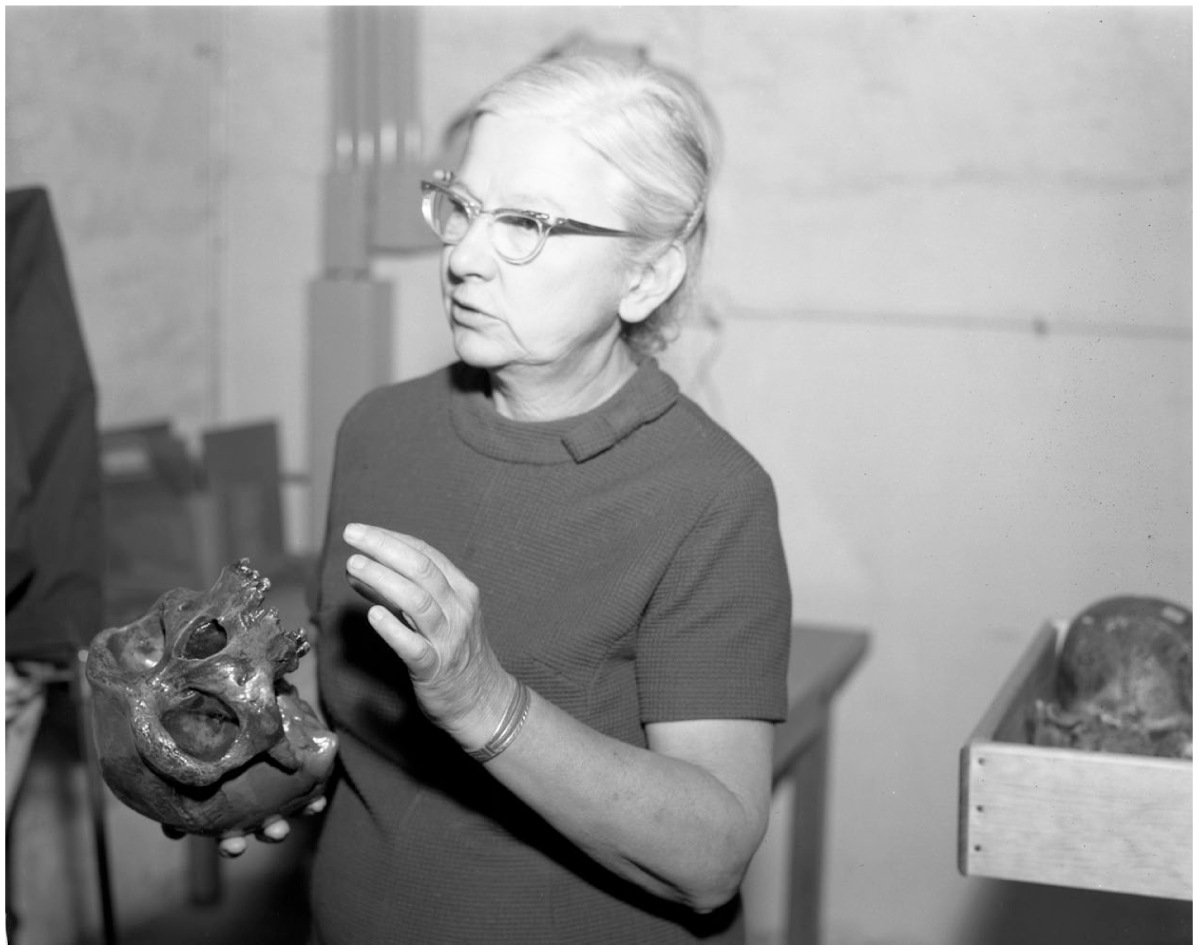
Alice Brues (Informal) for Silver and Gold 9-18-70.
Footnotes
Declaration of conflicting interests
The author declared no potential conflicts of interest with respect to the research, authorship, and/or publication of this article.
Funding
The author received no financial support for the research, authorship, and/or publication of this article.
1.
Lorraine Daston and H. Otto Sibum, “Scientific Personae and Their Histories,” Science in Context 16, no. 1/2 (2003): 1–8.
2.
Margaret Rossiter, Women Scientists in America: Struggles and Strategies to 1940 (Boltimore, MD: Johns Hopkins University Press, 1982).
3.
Alexandra Rutherford, “Doing Science, Doing Gender: Using History in the Present,” Journal of Theoretical and Philosophical Psychology 40, no. 1 (2020): 21–31, 22.
4.
Margaret W. Rossiter, “Which Science, Which Women?” Osiris 12 (1997): 169–85, 177–9; Londa Schiebinger, “Creating Sustainable Science,” Osiris 12 (1997): 201–16, 206–7.
5.
6.
Marianne Sommer, “History in the Gene: Negotiations between Molecular and Organismal Anthropology,” Journal for the History of Biology 41, no. 3 (2008): 473–528; Marianne Sommer, History Within: The Science, Culture, and Politics of Bones, Organisms, and Molecules (Chicago, IL: University of Chicago Press, 2016), part III.
7.
Darna L. Dufour, “Alice Mossie Brues (1913–),” in Ute Gacs, Aisha Khan, Jerrie McIntyre, and Ruth Weinberg (eds.), Women Anthropologists: A Biographical Dictionary (New York, NY: Greenwood Press, 1988), pp.23–8, 23.
8.
“Freshmen Records,” College News 16 (Bryn Mawr), no. 4, October 30, 1929, p.4; Alice Brues’s student and alumna file (Undergraduate files, Deceased Alumnae/i files, Bryn Mawr Special Collections, Bryn Mawr, PA, 1933: Brues, Alice, Box 90, Folder 1).
9.
Dufour, “Alice Mossie Brues,” pp.23–4 (note 7).
10.
Ibid., p.23; Emily K. Wilson, “Women’s Experiences in Early Physical Anthropology,” American Journal of Physical Anthropology 170, no. 2 (2019): 308–18, 311.
11.
David L. Browman and Stephen Williams, Anthropology at Harvard: A Biographical History, 1790–1940 (Cambridge, MA: Peabody Museum Press, 2013), pp.397–458.
12.
Wilson, “Women’s Experiences in Early Physical Anthropology,” pp.310–12 (note 10); Emily K. Wilson, Mildred Trotter and the Invisible Histories of Physical and Forensic Anthropology (London: CRC Press, 2022), p.121.
13.
Alice M. Brues, “A Genetic Analysis of Human Eye Color,” American Journal of Physical Anthropology 4, no. 1 (1946): 1–36; Alice M. Brues, “Linkage of Body Build with Sex, Eye Color, and Freckling,” American Journal of Human Genetics 2, no. 3 (1950): 215–39.
14.
Browman and Williams, Anthropology at Harvard, chap. 12 (note 11).
15.
Rossiter, Women Scientists in America, p.268 (note 2).
16.
Earnest Albert Hooton, “Development and Correlation of Research in Physical Anthropology at Harvard University,” Proceedings of the American Philosophical Society 75, no. 6 (1935): 499–516, 508.
17.
Alice M. Brues, “The Once and Future Diagnosis of Race,” in George W. Gill and Stanley Rhine (eds.), Skeletal Attribution of Race (Albuquerque, NM: Maxwell Museum of Anthropology, 1990), pp.1–7, 2.
18.
Alice Brues Dossier, Box 14, Carleton Stevens Coon papers, National Anthropological Archives, Smithsonian Institution. MS of “Alice M. Brues’ Contribution to Human Engineering,” pp.1–8, 4, in letter from H. T. E. Hertzberg to Carleton Coon, May 17, 1978.
19.
Dufour, “Alice Mossie Brues,” p.24 (note 7); Mary K. Sandford, Lynn Kilgore, and Diane L. France, “Alice Mossie Brues (1913–2007),” in Jane Buikstra and Charlotte Roberts (eds.), The Global History of Paleopathology: Pioneers and Prospects (Oxford: Oxford University Press, 2012), pp.156–61, 157.
20.
William W. Howells, “Yesterday, Today and Tomorrow,” Annual Review of Anthropology 21 (1992): 1–17; Browman and Williams, Anthropology at Harvard, pp.335–6 (note 11).
21.
Earnest Albert Hooton, Up from the Ape (New York, NY: Macmillan, 1931), pp.394–605.
22.
Earnest Albert Hooton, “Homo Sapiens – Whence and Whither,” Science, New Series 82, no. 2115 (1935): 19–31; Sommer, The Diagrammatics of ‘Race’, pp.177–8, further on Hooton pp.179–81 (note 5).
23.
Earnest Albert Hooton, Apes, Men, and Morons (New York, NY: G. P. Putnam’s Sons, 1937); Earnest Albert Hooton, The American Criminal (Cambridge, MA: Harvard University Press, 1939); Earnest Albert Hooton, Crime and the Man (Cambridge, MA: Harvard University Press, 1939); Elazar Barkan, The Retreat of Scientific Racism: Changing Concepts of Race in Britain and the United States between the World Wars (Cambridge: Cambridge University Press, 1992), pp.100–108; National Academy of Science, “Earnest Albert Hooton,” in National Academy of Science (ed.), Biographical Memoirs: Volume 68 (Washington, DC: The National Academies Press, 1995), pp.167–97, 175,  0.
0.
24.
Earnest Albert Hooton, Twilight of Man (New York, NY: G. P. Putnam’s Sons, 1939), p.3.
25.
Ibid., p.59.
26.
Sommer, The Diagrammatics of ‘Race’, pp.177–81 (note 5).
27.
For example, Carleton S. Coon, The Origin of Races (New York, NY: Alfred A. Knopf, 1962); William W. Howells, Cranial Variation in Man: A Study by Multivariate Analysis of Patterns of Difference Among Recent Human Populations (Cambridge, MA: Harvard University Press, 1973).
28.
For example, Frederick S. Hulse, “Race as an Evolutionary Episode,” American Anthropologist 64, no. 5 (1962): 929–45; on these issues, see Sommer, The Diagrammatics of ‘Race’, chaps. 11, 13, and p.219 (note 5).
29.
Eugene Giles, “Frederick Seymour Hulse, 1906-1990,” in National Academy of Sciences of the USA (ed.) National Academies of Sciences, Engineering, and Medicine, Biographical Memoirs 70 (Washington, D.C.: National Academies Press, 1996), pp.175–89; see also Shelley L. Smith, “(Sub)species Then and Now: An Examination of the Nonracial Perspective of C. Loring Brace,” American Journal of Physical Anthropology 165 (2018): 104–25.
30.
Margaret Rossiter, Women Scientists in America: Before Affirmative Action 1940–1972 (Baltimore, MD: Johns Hopkins University Press, 1995), chaps. 1–2.
31.
For example, Michael A. Little and Robert W. Sussman, “History of Biological Anthropology,” in Clark Spencer Larsen (ed.), A Companion to Biological Anthropology (Chichester: Wiley-Blackwell, 2010), pp.13–38, 21; Giles, “Frederick Seymour Hulse” (note 29).
32.
Alice M. Brues, “The Spearman and the Archer – An Essay on Selection in Body Build,” American Anthropologist 61, no. 3 (1959): 457–69.
33.
Alice M. Brues, “Selection and Polymorphism in the A-B-O Blood Groups,” American Journal of Physical Anthropology 12, no. 4 (1954): 559–97; Alice M. Brues, “Stochastic Tests of Selection in the ABO Blood Groups,” American Journal of Physical Anthropology 21 (1963): 287–300.
34.
Dufour, “Alice Mossie Brues,” pp.24–5 (note 7); Sandford, Kilgore, and France, “Alice Mossie Brues (1913–2007),” pp.158–9 (note 19).
35.
Wilson, “Women’s Experiences in Early Physical Anthropology,” p.308 (note 10).
36.
In 1978, her colleague Hulse, with the help of Coon and H. T. E. Hertzberg, proposed Brues for membership in the National Academy of Sciences (Alice Brues Dossier, Box 14, Carleton Stevens Coon papers, National Anthropological Archives, Smithsonian Institution).
37.
Sandford, Kilgore, and France, “Alice Mossie Brues (1913–2007),” p.157 (note 19); Dufour, “Alice Mossie Brues” (note 7); Mary K. Sandford, “Brues, Alice M.,” in Wenda Trevathan, Matt Cartmill, Darna Dufour, Clark Larsen, Dennis O’Rourke, Karen Rosenberg, and Karen Strier (eds.), The International Encyclopedia of Biological Anthropology (Oxford: John Wiley, 2018), pp.284–5; Mary K. Sandford et al., “Alice Mossie Brues (1913–2007),” American Anthropologist 110, no. 1 (2008): 157–68; Wilson, “Women’s Experiences in Early Physical Anthropology” (note 10); Records of the Radcliffe College Alumnae Association, Series 2, ca. 1894–2004, RG IX Ser 2, Box 40, Folder: “Brues, Alice,” Schlesinger Library, Radcliffe Institute, Harvard University; Radcliffe College Student Files, RG XXI Ser 2, Box 107, Folder: “Brues, Alice”; Brues’s alumna file, Deceased Alumnae/i files, Bryn Mawr Special Collections, Bryn Mawr, PA, 1933: Brues, Alice, Box 90, Folder 1.
38.
Alice Brues Dossier, Box 14, Carleton Stevens Coon Papers, National Anthropological Archives, Smithsonian Institution.
39.
Wilson, “Women’s Experiences in Early Physical Anthropology,” p.309 (note 10).
40.
Trudy R. Turner et al., “Participation, Representation, and Shared Experiences of Women Scholars in Biological Anthropology,” American Journal of Physical Anthropology 165, supp. 65 (2018): 126–57, 127–32.
41.
Sandford, Kilgore and France, “Alice Mossie Brues (1913–2007),” p.156 (note 19).
42.
For example, Marianne Sommer, Evolutionäre Anthropologie (Hamburg: Junius, 2015), part 2.
43.
Alice M. Brues, “A Genetic Analysis of Human Eye Color,” American Journal of Physical Anthropology 4, no. 1 (1946): 1–36, 2.
44.
Ibid., p.35.
45.
“No American Race Exists,” The Science News Letter 51, no. 3 (1947): 37.
46.
Alice M. Brues, “Linkage of Body Build with Sex, Eye Color, and Freckling,” American Journal of Human Genetics 2, no. 3 (1950): 215–39.
47.
Little and Sussman, “Biological Anthropology,” p.27 (note 31).
48.
Betty Smocovitis, “Humanizing Evolution: Anthropology, the Evolutionary Synthesis, and the Prehistory of Biological Anthropology, 1927–1962,” Current Anthropology 53, supp. 5 (2012): S108–25; see also Jenny Reardon, Race to the Finish: Identity and Governance in an Age of Genomics (Princeton, NJ: Princeton University Press, 2004), chaps. 1–2.
49.
Brues, “Selection and Polymorphism in the A-B-O Blood Groups,” p.563 (note 33).
50.
Howells, “Yesterday, Today and Tomorrow,” p.11 (note 20).
51.
William C. Boyd, Genetics and the Races of Man: An Introduction to Modern Physical Anthropology (Oxford: Blackwell, 1950).
52.
Carleton S. Coon, “Overview,” Annual Review of Anthropology 6 (1977): 1–10, 7.
53.
Ibid., p.7.
54.
Ibid., p.7.
55.
C. S. Chung and N. E. Morton, “Selection at the ABO Locus,” American Journal of Human Genetics 13, no. 1 (1961): 9–27; Sommer, “History in the Gene” (note 6).
56.
Compare W. J. Schull and B. R. Levin, “Monte Carlo Simulation: Some Uses in the Genetic Study of Primitive Man,” in John Gurland (ed.), Stochastic Models in Medicine and Biology (Maddison: University of Wisconsin Press, 1964), pp.179–96, which details the modest beginnings of such approaches and discusses Brues’s 1963 paper as a first for computer simulation with regard to human population genetics (pp.181–2); for anthropology broadly understood, see Dell Hymes (ed.), The Use of Computers in Anthropology (The Hague: Mouton, 1965). On the early computational human population genetics of Luca Luigi Cavalli-Sforza and colleagues in the 1960s and 1970s, see Marianne Sommer, “Population-Genetic Trees, Maps and Narratives of the Great Human Diaspora,” History of the Human Sciences 28, no. 5 (2015): 108–45.
57.
Little and Sussman, “History of Biological Anthropology,” 27 (note 31).
58.
Brues, “Stochastic Tests of Selection in the ABO Blood Groups,” p.289 (note 33).
59.
Ibid., p.289.
60.
Ibid., p.298.
61.
For example, also, Alice M. Brues, “Mutation and Selection – A Quantitative Evaluation,” American Journal of Physical Anthropology 29 (1968): 437–8; Alice M. Brues, The Maintenance of Genetic Diversity in Man (an Addison-Wesley Module in Anthropology 42) (Reading, MA: Addison-Wesley, 1973), pp.1–17; Alice M. Brues, “Interactions of Gene Flow and Selection or, Australia Revisited for the Nth Time,” Anthropology UCLA 7 (1981): 55–64.
62.
Alice M. Brues, “The Cost of Evolution vs. the Cost of Not Evolving,” Evolution 18, no. 3 (1964): 379–83; J. B. S. Haldane, “The Cost of Natural Selection,” Journal of Genetics 55 (1957): 511–24.
63.
Haldane had tried to quantify the cost of evolution, referring to the loss of fitness resulting from natural selection that leads to the elimination of less fit individuals who carry harmful genes. The cost of natural selection then refers to the decrease in the mean level of fitness of a given population relative to a population consisting exclusively of individuals with optimal genotypes, devoid of deleterious alleles.
64.
Harvard University Archives, Papers of Ernst Mayr, HUGFP 74.7, Box 10, Folder 847, item TN1063334: Brues, Alice (addressee), October 23, 1964 (Courtesy of the Harvard University Archives).
65.
Alice M. Brues, “Genetic Load and Its Varieties,” Science 164, no. 3884 (1969): 1130–6; Dufour, “Alice Mossie Brues,” p.25 (note 7).
66.
Alice M. Brues and Clyde C. Snow, “Physical Anthropology,” Biennial Review of Anthropology 4 (1965): 1–39.
67.
Ibid., p.13.
68.
Ibid., p.14.
69.
Alice M. Brues, “Models of Race and Cline,” American Journal of Physical Anthropology 37 (1972): 389–99.
70.
Theodosius Dobzhansky, “On Species and Races of Living and Fossil Man,” American Journal of Physical Anthropology 2, no. 3 (1944): 251–65.
71.
Alice M. Brues, “Models Applicable to Geographic Variation in Man,” in Bennett Dyke and Jean Walters MacCluer (eds.), Computer Simulation in Human Population Studies (New York, NY: Academic Press, 1974), pp.129–41, 138.
72.
Bennett Dyke and Jean Walters MacCluer (eds.), Computer Simulation in Human Population Studies (New York, NY: Academic Press, 1974), xi.
73.
Schiebinger, “Creating Sustainable Science,” p.210 (note 4).
74.
Sharon Traweek, Beamtimes and Lifetimes: The World of High Energy Physics (Cambridge, MA: Harvard University Press, 1988).
75.
Quoted in Dufour, “Alice Mossie Brues,” p.23 (note 7).
76.
Sandra Harding, Whose Science? Whose Knowledge? Thinking from Women’s Lives (Ithaca, NY: Cornell University Press, 1991), chap. 6.
77.
Jonathan Marks, “The Two 20th-Century Crises of Racial Anthropology,” in M. A. Little and K. A. R. Kennedy (eds.), History of Physical Anthropology in the Twentieth Century (Lanham, MD: Lexington, 2010), pp.187–206; Perrin Selcer, “Beyond the Cephalic Index: Negotiating Politics to Produce UNESCO’s Scientific Statements on Race,” Current Anthropology 53, Supp. 5 (2012): 173–84, 177; on UNESCO’s use of science, particularly genetics, as a diplomatic tool to combat racism and reshape public understanding of race in the early 1950s, see, for example, Jenny Bangham, “What Is Race? UNESCO, Mass Communication and Human Genetics in the Early 1950s,” History of the Human Sciences 28, no. 5 (2015): 80–107.
78.
Frank B. Livingstone, “On the Non-Existence of Human Races,” Current Anthropology 3 (1962): 279–81; Loring C. Brace, “On the Race Concept,” Current Anthropology 5, no. 4 (1964): 313–30; for example, Sommer, Evolutionäre Anthropologie, part 2 (note 43).
79.
Brues, “Models of Race and Cline” (note 69).
80.
William W. Howells et al., “Population Distances: Biological, Linguistic, Geographical, and Environmental [and Comments and Reply],” Current Anthropology 7, no. 5 (1966): 531–40.
81.
Ibid., p.531.
82.
Ibid., p.538.
83.
Simone de Beauvoir, The Second Sex, trans. into English by H. M. Parshley (London: Jonathan Cape, 1953); Betty Friedan, The Feminine Mystique (New York, NY: W. W. Norton, 1963).
84.
Alice M. Brues and Stanley Diamond, “Statement on Statements on Racism,” Current Anthropology 5, no. 2 (1964): 107–8, 107.
85.
Theodosius Dobzhansky, “Comment on Livingstone,” Current Anthropology 3 (1962): 279–80, 280.
86.
Brues and Diamond, “Statement on Statements on Racism,” p.108 (note 84).
87.
The Editorial Committee of Dialectical Anthropology, “Stanley Diamond: In Memoriam,” Dialectical Anthropology 16 (1991): 105–6, 105; Nadia C. Seremetakis, An Introduction to Cultural Anthropology (Cambridge: Cambridge Scholars, 2017), p.13.
88.
Brues and Snow, “Physical Anthropology,” p.13 (note 66).
89.
Frederick S. Hulse, “Scientific Ethics and Physical Anthropology,” American Journal of Physical Anthropology 31 (1969): 245–8; Brues and Snow, “Physical Anthropology,” pp.19–20 (note 66).
90.
Alice M. Brues, “Letter to the Editor,” Newsletter of the American Anthropological Association 11, no. 1 (1970): 2, quoted in Susan R. Trencher, “The American Anthropological Association and the Values of Science, 1935–70,” American Anthropologist 104, no. 2 (2002): 450–62, 457.
91.
Barkan, The Retreat of Scientific Racism, pp.310–18, and 328–32 (note 23).
92.
93.
Marks, “The Two 20th-Century Crises” (note 77). On the history of a 1970s–90s Boston-based network of women scientists who challenged gender/racial biases in research, see Christa Kuljian, Our Science, Ourselves: How Gender, Race, and Social Movements Shaped the Study of Science (Amherst: University of Massachusetts Press, 2024). It engages with figures like Ruth Hubbard and Anne Fausto-Sterling, documenting how social movements influenced their critiques of sociobiology and scientific objectivity.
94.
Alice M. Brues, People and Races (New York, NY: Macmillan, 1977), p.1.
95.
Alice M. Brues, “Rethinking Human Pigmentation,” American Journal of Physical Anthropology 43 (1975): 387–91, 387. Brues would publicly address another issue that had occupied Hooton – population growth – in a comparable style: “‘People keep having babies because babies are cute, which was
96.
Brues, “Rethinking Human Pigmentation,” p.387 (note 95).
97.
Brues, People and Races, n.p. (note 94).
98.
Ibid., vii–viii.
99.
Ibid., chaps. 2–3, quotes throughout the book, beginning on p.21 and 12 respectively.
100.
Ibid., chap. 11, see also chap. 13.
101.
For example, Elizabeth J. Glenn, “People and Races by Alice M. Brues,” Man 13, no. 1 (1978): 139.
102.
A. T. Steegmann, “Review of People and Races by Alice M. Brues,” Human Biology 50, no. 3 (1978): 396–8, 398; D. A. Coleman, “People and Races by Alice M. Brues,” Population Studies 33, no. 2 (1979): 379–80, 380; Sommer, The Diagrammatics of ‘Race’, part I (note 5).
103.
Alice M. Brues, “Human Biology by G. A. Harrison, J. S. Weiner, J. M. Tanner, and N. A. Barnicot,” American Anthropologist 67, no. 2 (1965): 515–17, 516.
104.
Ibid., p.517.
105.
Alice M. Brues, “The Biology of Race by James C. King,” American Anthropologist 84, no. 4 (1982): 957–8, 958.
106.
Alice M. Brues, “Theories of Human Evolution: A Century of Debate, 1844–1944 by Peter J. Bowler,” American Anthropologist 90, no. 1 (1988): 172; see also, for example, Alice M. Brues, “Human Variation: Races, Types, and Ethnic Groups by Stephen Molnar,” The Quarterly Review of Biology 58, no. 3 (1983): 472.
107.
Alice M. Brues, “Eye Color, Sex, and Race: Keys to Human and Animal Behavior by Morgan Worthy,” Human Biology 48, no. 3 (1976): 648–9, 649.
108.
Alice M. Brues, “Genes, Radiation, and Society: The Life and Work of H. J. Muller by Elof Axel Carlson,” Human Biology 55, no. 1 (1983): 197–9.
109.
Marianne Sommer, “Biology as a Technology of Social Justice in Interwar Britain: Arguments from Evolutionary History, Heredity, and Human Diversity,” Science, Technology & Human Values 39, no. 4 (2014): 560–85; Marianne Sommer, “From Descent to Ascent: The Human Exception in the Evolutionary Synthesis,” Nuncius 25, no. 1 (2010): 41–67; Brues, The Maintenance of Genetic Diversity in Man, p.17 (note 61).
110.
Leonard Lieberman, “Gender and the Deconstruction of the Race Concept,” American Anthropologist 99, no. 3 (1997): 545–58; Rachel Caspari, “From Types to Populations: A Century of Race, Physical Anthropology, and the American Anthropological Association,” American Anthropologist 105, no. 1 (2003): 65–76.
111.
Leonard Lieberman and Fatimah Linda C. Jackson, “Race and Three Models of Human Origin,” American Anthropologist 97, no. 2 (1995): 231–42.
112.
For example, Leonard Lieberman, “The Debate Over Race: A Study in the Sociology of Knowledge,” Phylon 39 (1968): 127–41.
113.
Alice M. Brues, “Mankind Evolving, by Theodosius Dobzhansky,” American Journal of Physical Anthropology 21 (1963): 383–5, 383.
114.
Sommer, “From Descent to Ascent” (note 109).
115.
John P. Jackson Jr., and David J. Depew, Darwinism, Democracy, and Race: American Anthropology and Evolutionary Biology in the Twentieth Century (New York, NY: Routledge, 2017), pp.105 and 108–19.
116.
Alice M. Brues, “Genetics and the Evolutionary Process by Theodosius Dobzhansky,” American Journal of Physical Anthropology 36, no. 2 (1972): 146.
117.
Ibid. See also the paper by Grover S. Krantz with comments, where Brues made it clear in her reply to Krantz’s contribution that, from the three scenarios of human evolution he discussed, she was “personally partial” to the “gene-flow-selection model” that assumed the development of local Homo sapiens populations from local erectus populations and the evolution of Homo as one species globally through gene flow (Grover S. Krantz et al., “Sapienization and Speech [and Comments and Reply],” Current Anthropology 21, no. 6 (1980): 773–92, 779). Such a picture of a polytypic transition from Homo erectus to sapiens populations implying constant gene flow between regional “lines” amounts to a multiregional scenario as introduced by Franz Weidenreich (on these issues, see Sommer, The Diagrammatics of ‘Race’, part III [note 5]).
118.
Sommer, “From Descent to Ascent” (note 109).
119.
Douglas H. Ubelaker, “A History of Forensic Anthropology,” American Journal of Physical Anthropology 165, no. 4 (2018): 915–23.
120.
Alice M. Brues, “Identification of Skeletal Remains,” Journal of Criminal Law, Criminology, and Police Science 48, no. 5 (1958): 551–63, 559.
121.
Ibid., p.557.
122.
Ibid., p.559.
123.
Brues, “The Once and Future Diagnosis of Race,” p.1 (note 17).
124.
Alice M. Brues, “Forensic Diagnosis of Race – General Race vs Specific Populations,” Social Science & Medicine 34, no. 2 (1992): 125–8.
125.
Norman Sauer, “Forensic Anthropology and the Concept of Race: If Races Don’t Exist, Why Are Forensic Anthropologists So Good at Identifying Them?” Social Science & Medicine 34, no. 2 (1992): 107–11; see also Smith, “(Sub)species Then and Now,” 117–18 (note 29).
126.
Elizabeth A. DiGangi and Jonathan D. Bethard, “Uncloaking a Lost Cause: Decolonizing Ancestry Estimation in the United States,” American Journal of Physical Anthropology 175, no. 2 (2021): 422–36.
127.
Wilson, “Women’s Experiences in Early Physical Anthropology” (note 10).
128.
Comment by Brues in Carleton S. Coon and Edward E. Hunt Jr., “The Living Races of Man,” Current Anthropology 8, no. 1/2 (1967): 112–26, 117.
129.
Alice M. Brues, “Scientists: Smug and Bossy?” Science 124, no. 3218 (1956): 409.
130.
Lieberman, “Gender and the Deconstruction of the Race Concept,” p.551 (note 110).
131.
Emily K. Wilson, Mildred Trotter (note 12).
132.
Hooton, “Physical Anthropology at Harvard University,” p.507 (note 16).
133.
Caroline Bond Day, “Race Crossings in the United States,” The Crisis 37, no. 3 (1930): 81–2 and 103.
134.
Hubert B. Ross, Amelia Marie Adams, and Lynne Mallory Williams, “Caroline Bond Day: Pioneer Black Physical Anthropologist,” in Ira E. Harrison and Faye V. Harrison (eds.), African-American Pioneers in Anthropology (Urbana, IL: University of Illinois Press, 1999), pp.37–50, 43; see also Wilson, “Women’s Experiences in Early Physical Anthropology,” pp.312 and 314–15 (note 10). For a more positive picture of specifically Hooton and his relationship with Day, see Eugene Giles, “Two Faces of Earnest A. Hooton,” Yearbook of Physical Anthropology 55 (2012): 105–13.
135.
Lieberman, “Gender and the Deconstruction of the Race Concept,” pp.545–6 (note 110).
136.
Ruth Benedict and Gene Weltfish, The Races of Mankind, Public Affairs Pamphlet no. 85 (Public Affairs Committee, 1943).
137.
Coon and Hunt, “The Living Races of Man,” p.124 (note 128); on the debate, for example, Sommer, The Diagrammatics of ‘Race’, pp.189–95 (note 5).
138.
Leonard Lieberman and Larry T. Reynolds, “The Future Status of the Race Concept,” Michigan Sociological Review 9 (1995): 1–18, 4.
139.
Alice M. Brues, “Racial Concepts: The Objective View of Race,” in Claire C. Gordon (ed.), Race, Ethnicity, and Applied Bioanthropology (Bulletin no. 13) (National Association Practice Anthropology: American Anthropological Association, 1993), pp.74–8, 78.
140.
Lieberman and Reynolds, “The Future Status of the Race Concept” (note 138); Paul Lawrence Farber, “Dobzhansky and Montagu’s Debate on Race: The Aftermath,” Journal of the History of Biology 49, no. 4 (2016): 625–39.
141.
Sommer, The Diagrammatics of ‘Race’, part IV (note 5). There is no unanimity between different surveys. This is confirmed by the summary of Jennifer K. Wagner and colleagues, who, in their own study, contrary to Farber, found “a ‘dramatic rejection’ of race concepts” among professional anthropologists of all fields. Wagner et al. also confirmed results from preceding evaluations that privileged persons, understood as White men and women, were more prone to splitting (accepting variation to conform to discrete categories) than non-White men and women. The divergences are most likely due to the data analyzed (for example, published material versus questionnaires) and different notions of what counts as a concept of race. Wagner et al., for example, found that most professionals in their study adhered to the concept of genetic ancestry and its importance in medicine. (Jennifer K. Wagner et al., “Anthropologists’ Views on Race, Ancestry, and Genetics,” American Journal of Physical Anthropology 162, no. 2 (2017): 318–27, 318–19 and 323–6, quote on 325; Farber, “Dobzhansky and Montagu’s Debate on Race” [note 140]). To mention yet another survey, Matt Cartmill’s analysis of the American Journal of Physical Anthropology (1965–95) indicated that the importance of racial taxonomy in studies of human variation had changed little: of the 810 papers under concern, 40.5 percent used racial categories, with the annual mean remaining nearly identical over the thirty years. (Matt Cartmill, “The Status of the Race Concept in Physical Anthropology,” American Anthropologist 100, no. 3 (1998): 651–66, 654–6).