







Abstract
A cross-sectional study of the Virgin Island’s public sector was conducted to ascertain whether its human resource management (HRM) practices were related to the employees’ organizational citizenship behavior (OCB) and intentions to leave. A quantitative approach was taken to evaluate employees’ perception of the organization’s HRM practices. Multivariate analysis demonstrated the following demographics: residence, gender, human resource (HR) staff, and supervisory/managerial positions were determining factors in the relationship. Residence correlated to turnover intentions (TIs); gender and supervisor/manager correlated to OCB, while being an HR staff correlated to the HRM factor, employee skill/organizational structure. The results of multiple regression analysis indicated that HRM practices did not predict OCB or TIs.
Keywords
Introduction
Organizational human resource practices have been under investigation for many decades dating back to the 18th century (Litterer, 1959). Studies have sought to find correlations between elements of organizational success such as productivity, profit margins, customer satisfaction, organizational culture, and so on, and factors that impact employee motivation like pay, turnover, absenteeism, and organizational citizenship behavior (OCB; Ayanda & Sani, 2010; Huselid, 1995; Koys, 2001). Researchers have also used various theories to explain the relationship between the primary domains of organizational success and the human factor, and concluded that the management of human resource is very important to organizational success (Condrey, 1995; Huselid, 1995; Koys, 2001).
Much of the research conducted in the area of human resource management (HRM) surrounds private sector organizations, but some scholars (Akinbode, 2011; Ayanda & Sani, 2010) who ventured to study public sector organizations have suggested that the importance of human capital management is also significant on a national level, because the development of any nation depends to a very large extent on the caliber, organization, and motivation of the human resources. As governments often employ large numbers of workers to carry out the varied social responsibilities expected by their citizens (Linna, Pekkola, Ukko, & Melkas, 2010), questions about public sector inefficiency persist as do the attempts to address such concern (Kim, 2010). In response to challenging conditions, organizations have established or adopted policies and practices to manage the workforce to either secure a competitive advantage (Akinbode, 2011; Ayanda & Sani, 2010; Huselid, 1995; Kim, 2010) or meet the expectations of stakeholders (Akinbode, 2011). Similarly, it is suggested that the Government of the U.S. Virgin Islands (GVI) should be interested in the effectiveness of its workers to insure desirable outcomes for its citizens.
The U.S. Virgin Islands (USVI) is a small unincorporated territory of the United States comprised of several islands and cays located approximately 50 miles east of Puerto Rico (Community Foundation of the Virgin Islands, 2012). The population is approximately 106,405. The three highly populated islands consisting of St. John, St. Thomas, and St. Croix are the focus of this study. Due to the territory’s size, economic conditions, and location, the USVI is dependent on support from the federal government to fund much of the services provided to the community. The USVI faces challenging economical conditions marked by federal government oversight evidenced in special conditions attached to grants awarded to various agencies: the 2002 Compliance Agreement between the local government and the U.S. Department of Education (Federal Register, 2007), the Consent Decree between the Virgin Islands Police Department, and the U.S. Department of Justice (Virgin Islands Police Department, 2009), and the administrative receivership of the Virgin Housing Authority in 2003 (“HUD names a new receiver,” 2005). The closing of the largest private sector employer, HOVENSA, a joint venture oil refinery corporation between Hess Corporation and Petroleos de Venezuela, S.A. (PDVSA) augments the USVI’s economic challenges placing greater burdens on the workforce and the public sector (“HOVENSA Announces Closure,” 2012). Government officials described the refinery’s closure as the USVI’s worst nightmare, because it meant the termination of 10% of the territory’s workforce and an increased unemployment rate on St. Croix to 18.7% (“HOVENSA Refinery Closure,” 2012). The unemployment rate in the USVI has fluctuated from 6.2% in 2004 to 9.7% in 2011 (Appendix A).
The worsening economic conditions have propelled the government to examine its human resource and business practices to position itself for stability and competitive advantage. Downsizing, hiring freeze, budget reductions, and non-implemented negotiated pay increases are some of the austerity measures imposed to achieve this goal. These conditions coupled with high public expectations exert pressures on the government to manage its workforce efficiently while providing satisfactory services to the public as discussed in the media, legislative debates, and other public forums. The existing economic conditions and the transient population increase the importance for the public sector to maintain a level of skilled and satisfied workforce necessary to carry out its mission as it competes for federal dollars and in the tourism market. Hence, this study explores the relationship between the HRM practices within the USVI public sector and its employees’ OCB and turnover intentions (TI) anchored on the premises of social exchange theory as suggested by Blau (1964). Based on prior research conducted by Huselid (1995), the study sought to explore if the HRM practices Huselid identified are prevalent in the USVI public sector and whether they are correlated to employees’ OCB, and TIs. In particular, this study explored the research question: Is there a relationship between the HRM practices of the USVI public sector and its employees’ OCB and TIs? The key variables of the study are defined and perused through preceding research. Dynamics of the current study are discussed followed by conclusions and recommendations derived from the results of the study.
Theoretical Framework
This study is founded on the principles of social exchange theory, which posits that a reciprocal obligation exists between two parties in a relationship (Lee, 2007). Similarly, the employment relationship involves exchanges among workers as illustrated by the number of studies (Gillis, 2008; Ko, 2005; Rice, 2009; Schakett, 2009; Swift, 2007) utilizing social exchange theory as a basis for explaining the relationship between employee behaviors and various aspects of organizational HRM practices and outcomes. Social exchange theory suggests that HRM practices have the potential to induce OCBs from employees, which in turn can improve performance (Husin, Chelladurai, & Musa, 2012) and reduce turnover (Huselid, 1995; Udechukwu & Mujtaba, 2007). Earlier researchers alluded to the impact of these relationships on organizational outcomes (Huselid, 1995; Koys, 2001), but Moideenkutty (2009) captures the essence of the employment relationship in stating that OCB contributes to organizational success by enhancing worker and managerial productivity, promoting better use of scarce resources, improving coordination, strengthening the organization’s ability to attract and retain better employees, reducing variability of performance, enabling better adaptability to environmental changes, and improving customer service quality. In addition, Lavelle, McMahan, and Harris (2009) noted that high levels of social exchange can reduce turnover, absenteeism, and tardiness, and motivate employees into the engagement of positive behaviors such as OCB. Therefore, social exchange theory can be a useful mechanism for understanding the employment relationship, because it describes the dynamics of interpersonal relations and social interactions (Gillis, 2008) via which organizational goals are met (Haenisch, 2008; Huselid, 1995; Lam, Chen, & Takeuchi, 2009).
OCB
Organ (1988) initially defined OCB as discretionary extra-role behaviors not directly or explicitly recognized by the organization’s formal reward system, which aggregately promote the smooth operation of the organization. These behaviors were initially classified into seven domains: altruism, courtesy, conscientiousness, civic virtue, loyalty, teambuilding, and sportsmanship. However, the number of domains were later reduced by subsequent researchers, because it was thought that some domains entailed similar characteristics, as in the case of sportsmanship and loyalty, civic virtue and altruism, and civic virtue and courtesy (Husin et al., 2012). Some studies involving OCB recognized five domains, while others recognized four domains. This study embraces the five domain concept, which includes altruism, conscientiousness, courtesy, civic virtue, and sportsmanship as utilized in the Huselid (1995) and Lam et al. (2009) studies.
Conscientiousness means employees carry out in-role behaviors (compliance with prescribed rules). Altruism implies that employees provide assistance to others (helpfulness). Civic virtue suggests that employees participate in the political life of the organization responsibly. Courtesy infers that the employees treat others with respect, and sportsmanship indicates employees do not complain or exhibit undesirable behaviors and attitudes toward leaders and the organization they serve. In-role behavior is defined as the organization’s prescribed behaviors delineated in job specifications, whereas extra-role behavior is voluntary in nature (Huselid, 1995; Lam et al., 2009; Moideenkutty, 2009; Organ, 1988). Extra-role behaviors may be pro-social in that they either promote organizational outcomes, or they may be prohibitive in that they hinder the attainment of organizational goals (Moideenkutty, 2009). Pro-social behaviors involve actions such as taking short breaks, skipping lunch, spreading good news about the organization (Husin et al., 2012). Therefore, OCB can be viewed as extra-role pro-social behaviors that foster organizational benefits, but are not stipulated in an organization’s official discipline and reward system.
HRM
The concept of HRM evolved over time and was influenced by a number of social, political, economical, and scholarly developments dating back to the 1800s. Changes in the labor market were orchestrated by post-Civil War conditions of social unrest and high unemployment, followed by the assassination of President James A. Garfield, which inspired the enactment of the Pendleton Act of 1883 to ensure federal jobs are awarded on the basis of merit (“Our Documents,” n.d.). Other pivotal legislation of the 1900s such as the National Employment System Act of 1933, National Labor Relations Act (NLRA) and the Social Security Act of 1935, the Fair Labor Standards Act of 1938, the Civil Rights Act of 1964 (Acts, Bills, and Laws, 1938-Present, n.d.), significantly impacted labor relations and the management of employees in the workplace.
Increased competition and globalization exerted further pressure for reform in management (Smith, 2008; Tsui & Wu, 2005) as did the Civil Rights movement of the 1960s while private and public sector organizations sought to improve effectiveness (Pinnington & Edwards, 2000; Wortman, 1970). The increased legislation placed added responsibility on employers to demonstrate compliance and fostered the traditional view of personnel management, which Litterer (1959) stated was developed from the need for better management and recording keeping. However, a more holistic view of managing people in the workplace emerged as an ideology and a remedy for managing the employment relationship (Pinnington & Edwards, 2000) and redefined the roles and responsibilities of human resource (HR; Brewster & Mayrhofer, 2012).
Scholarly investigations also influenced the development of theories primarily around the concept of productivity and motivation (Wortman, 1970). Motivation is described as a force that initiates, guides, and maintains goal-oriented behavior and can be biological, emotional, social, or cognitive in nature. Some foundational theories have been put forth to explain motivation within the employment relationship such as Maslow’s hierarchy of needs, McGregor’s theory Y, Hertberg’s hygiene theory, Alderfer’s Existence, Relatedness, and Growth (ERG) theory, McCleland’s need theory, Locke’s goal-setting theory, Vroom’s expectancy theory (Halachmi, 1994). Social exchange, the theoretical basis for this study, has posited that behavior and motivation of parties in a relationship is based on the principle of voluntary exchange of benefits between two parties (Lester, Meglino, & Korsgaard, 2008).
Most HRM models originated in the United States and Britain then spread to other nations, as the model for organizations seeking to compete in a global economy (Brewster & Mayrhofer, 2012). However, Brewster and Mayrhofer suggested that the one size fit all does not always apply across national cultures and application of practices developed in Western cultures may produce different results in other cultures. Therefore, the question is raised whether this is the case in the USVI as it is not part of the contiguous United States and in many ways shares the history, cultural, and values common to most of its Caribbean neighbors. A typical example is the cultural expectation of a greeting prior to engaging in a conversation. Non-Caribbean consultants and workers who come to the USVI learn that new practices, ideas, or policies will not gain buy in unless they learn to appreciate the culture and the people.
Key HRM Practices Affecting the Employment Relationship
Practices addressing key areas of recruitment, training and development, compensation, performance management, and employee relations impact all organizations and define their failure or success. Research has presented some guiding principles in developing HRM practices. These include fairness and organizational support (Husin et al., 2012) flexibility that demonstrates an understanding of what it takes to make workers happy (Solomon, 2000), and a tenacity to attract and retain good employees, particularly the exceptional performers (Huselid, 1995). Recruitment involves the activities that generate a pool of qualified applicants who have the desire to become part of an organization. Staffing the organization is one of the toughest, most complicated aspects of HR’s responsibilities (Solomon, 2000) and inadequate or overstaffing can be costly (Rashmi, 2010). Recruitment efforts vary among organizations based on needs, strategic goal, and competencies sought, and they are in a constant battle to win over capable personnel at all levels of the organization (Christopher & Sumantra, 2002), particularly in competitive markets. This challenge often forces some organizations to differentiate themselves through recruitment incentives and their pay strategy. However, decisions around pay may negatively influence perception within and outside the organization as seen in the recent recruitment efforts to entice prospects from outside the territory for public jobs, which included differentiated pay for the departments of Education, Health, and Police executives. Sign on bonuses, short-term housing allowance along with visa filing for foreign teachers are strategies used in the public sector. However, implementation of these recruitment strategies is often accompanied by much public noise and indicates that organizational and community goals when not aligned can cause friction. Internally, it may have an impact on morale and extra-role behaviors.
Compensation describes all the rewards employees receive in exchange for their work including base pay, commissions, bonuses, benefits, and other incentives (Darlington, 2007). Compensation systems include different forms of direct and indirect compensation (Husin et al., 2012). Benefits involve paid leave, health care, bonuses, allowances, transportation, flexible hours, child care, and social recognition or awards. Benefit programs represent a significant commitment by the employer to the welfare of its employees and the retention of qualified employees (Wolf, 1989). Compensation strategies such as profit sharing can act as an instrument of change or simply serve to support the overall HR strategy to signal competitors or encourage employees to identify with organization performance goals and support its values (Perry, 2010). Nevertheless, exorbitant and untimely perks can seem unfair and help to create disparity among workers, which may cause conflict and withholding of OCB. Recent increase in Commissioner’s pay for hard-to-fill areas and some semi-autonomous entities in the USVI while the territory grappled with its economic woes by downsizing and reducing salaries across the board speaks to the point that compensation and recruitment can work together to achieve strategic goals. However, these exceptions can be perceived by others as unfair and unjustified. As organizations develop their compensation plans, a degree of flexibility may be warranted. Yet, caution must be exercised as alterations are made to meet specific needs.
Performance management involves the establishment and the implementation of policies and procedures for planning, managing, and evaluating employee performance, as well as productivity improvement (Wolf, 1989). Policies are essential in defining the rights and obligations of employment, and the employee handbook serves as a good communication tool to help guide behavior of participants in the employment relationship. Pervasive and frequent communication in the form of feedback keep employees informed about their performance and the use of thoughtfully developed appraisals can effectively facilitate this process.
Training and development are important for skill enhancement and capacity building build. Perry (2010) noted it tops the list of topics in HRM public discourse. Training and development is costly both in time and cost, but the reward is seen in the retention of high performers (Husin et al., 2012). Taking care of existing employees should take priority over recruitment (Guld, 2007), because failure results in high turnover rates. Solomon (2000) emphasized that though it is challenging to find good employees, it is much more difficult to replace those who are exceptional performers. Furthermore, in-house career development and promotion opportunities are highly effective strategies for attracting and retaining talented and capable employees to the organization. Continuous development is a mandate throughout the staffs’ tenure (Gilster & Dalessandro, 2008). The USVI has taken on the challenge of developing talent from within, where possible. Professional development opportunities are published via the Division of Personnel website and through mass emails throughout government agencies by way of their human resource divisions. Many are offered by off-territory consultants, but others are done in collaboration with the University of the Virgin Islands (UVI). The Department of Education, for example, continues to collaborate with UVI on a number of training initiatives for teachers to meet certification requirements and for support staff to develop required skill sets for their jobs. These opportunities are published on the department’s websites and public media.
Another important element of HRM is the employee relation systems. This involves interpreting and maintaining consistent policies, mediating conflicts, managing the grievance system, coordinating communications programs and recognition programs, and interpreting and implementing Equal Employment Opportunity (EEO) legislation (Wolf, 1989). Employee relation is closely tied to organizational culture in that it is intended to create and maintain a positive relationship between employees and management by facilitating fair and consistent treatment of all employees. Conflict resolution should be a strategic goal of any organization, because conflict is present in every workplace though not all conflict has negative results (Dobson, 2009; Liberman, Levy, & Segal, 2009). HR, through the employee relations system, can significantly contribute to organizational success (Guttman, 2009) by helping to minimize the harmful effects of conflict and maintaining a culture that fosters healthy competition and growth (Bethanis, 2007). The USVI public sector is unionized with established grievance procedures delineated in contracts, employee handbooks, and policy and procedure manuals. However, if the information-contained documents are not disseminated and updated routinely so that employees are aware of their existence, they become ineffective in mitigating conflict in the employment relationship.
When conflicts arise and are not resolved at the lowest levels in the grievance process, conflict management may take on several forms of intervention primarily, alternative dispute resolution (ADR) methods or litigation. ADR is an umbrella term that covers a wide range of non-litigious options (Blackard, 2001) and advantages. The Federal Arbitration Act of 1925, the Uniform Arbitration Act of 1955, and the Uniform Mediation Act established the legal basis for ADR (Jacobs, 1992). Techniques include ad hoc processes, mediation, arbitration, mini-trials and combinations of these. Benefits are evident in speedy and cost-effective results, confidentiality, cooperative and productive organizational climate. Organizations that take full advantage of these methods will have a competitive advantage over those that do not (Carver, 2004).
In general, it can be concluded that employees who are satisfied with conditions at work seldom leave, and the transfer of resources from one organization to another can be limited by taking a comprehensive approach to HRM instead of a fragmented approach (Wright, Gardner, Moynihan, & Allen, 2005). Research has shown a link between employee satisfaction with regard to the nature of their work, compensation, organizational support, and other elements that make up or contribute to the organizational culture or work environment. HRM is the driving force of the work environment and acts as a mediating agent on performance, attitudes, and behaviors. It is believed that failure in one aspect of HRM can influence failure in another. All elements of HRM must complement each other to be truly successful.
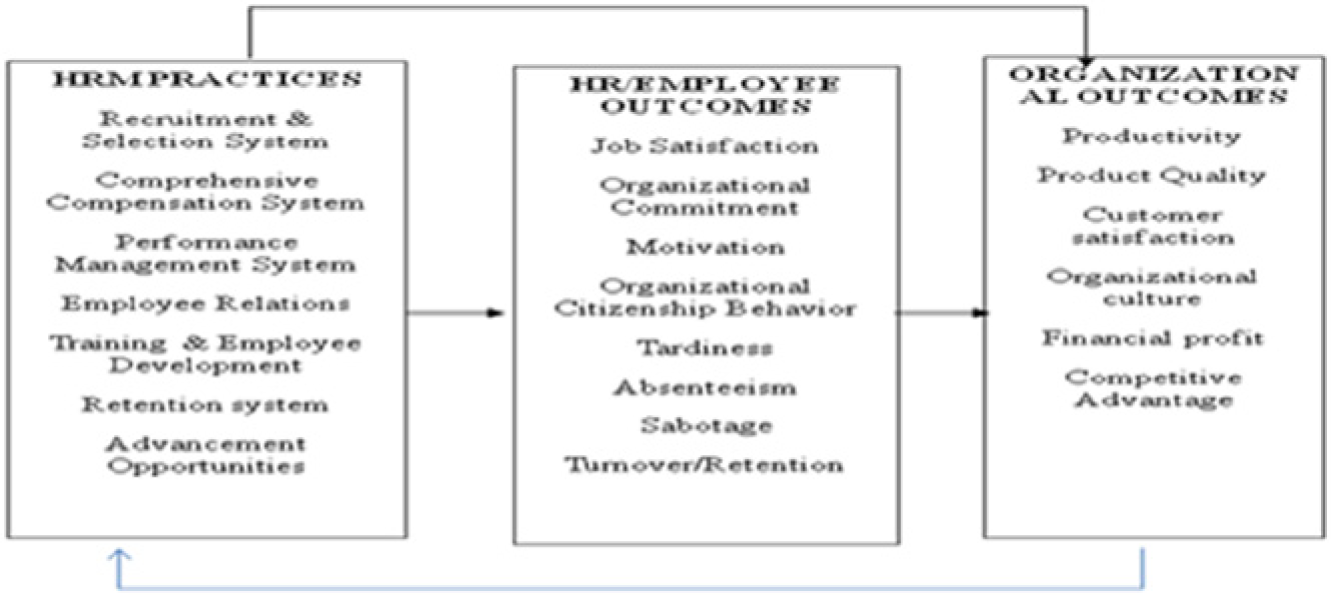
The theoretical arguments that underpin the HRM-performance relationship state that the HRM practices lead to HRM outcomes, which in turn affect both individual level and organizational level performance (Huselid, 1995). Almost all the existing HRM-performance research has either implicitly or explicitly posited a casual relationship, which flows from HRM practices to HRM outcomes thence to organizational performance, rather than from performance to HRM outcomes (Tsai, Edwards, & Sengupta, 2008). Figure 1 developed from the review of the literature on the subject matter captures the general relationship postulated by this stream of research.
Impact of HRM practices on employee and organizational outcomes.
The top arrow depicts a causal relationship posited by most authors, while the bottom arrow illustrates infusion and support of high performing HRM practices that may result from the organization’s financial success as Wright et al. (2005) suggested. A reinvestment of profits in HRM can be viewed as the organization’s commitment to employee welfare and the employees in turn may reciprocate with increased OCB and retention. A cyclical exchange relationship of reciprocating actions between the employer and employee is suggested, which seems to support the causal perspective to some degree and the unanimously held idea that HRM practices influence individual outcomes as well as organizational outcomes.
Previous research has consistently suggested that employees may have the tendency to contribute discretionary efforts to organizations, and they do so through decentralization of work responsibilities. Worker identity, emotions, attitudes, and beliefs can be controlled to reduce turnover by cultivating the OCB value through sophisticated HRM practices (Lam et al., 2009). Pinnington and Edwards (2000) agreed that the public sector has a vested interest in effectively managing its employees and the quality of public sector services as these services are extremely dependent on employees’ motivation, skills, and service orientation. OCB therefore provides a critical link between an organization’s HRM practices and its level of customer service (Morrison, 1996; Organ & Lingl, 1995). Prior research has also shown that OCB is influenced by a number of antecedents including perception of fairness, job satisfaction, and organizational commitment (Alotaibi, 2001). However, trust and job satisfaction were leading predictors of OCB (Sharma, Barjpai, & Holani, 2011) and OCB has been described as a catalyst for enhancing employee job satisfaction levels.
Prior research investigating the relationship between OCB and TIs determined that job satisfaction, whether intrinsic or extrinsic, is related to turnover. Intrinsic satisfaction appears to play a greater role in turnover of employees than extrinsic satisfaction and either type of satisfaction could be responsible for the satisfaction or dissatisfaction of employees (Udechukwu & Mujtaba, 2007). High turnover means the organization is saddled with a workforce that is inexperienced and negatively impacting its outcomes (Koys, 2001). Most antecedents studied seem to be poor predictors of turnover and only a survey of intentions to leave can provide insight into employees’ intentions, and then observing or monitoring OCB is posited as the best option available to managers and supervisors in predicting turnover.
Research Questions and Hypotheses
Is there a relationship between the HRM practices of the USVI public sector and its employees’ OCB and TIs?
Research Methodology
The GVI is patterned after the United States and consists of three main branches of government, the Executive, the Judiciary, and the Legislative. The Executive Branch comprises of 26 agencies and several semi-autonomous agencies. The non-semi-autonomous agencies were the target population for this study. Permission was sought from agency heads to participate in the study and approximately six agencies consented. The survey packets were transmitted to the HR managers through the agency heads. The HR managers facilitated the distribution of the surveys to employees in their agencies. Survey packets included an invitation letter to participants introducing the survey, notice of informed consent, the three survey instruments, and a self-addressed stamped envelope for returning the completed surveys. Two follow-up emails were sent to HR managers to remind participants to complete and transmit their response over a 15-day period. The data collection period lasted approximately 6 weeks. The sample population was projected at 500 full-time employees in the two districts. Therefore, the surveys distributed evenly on St. Croix and on St. Thomas, but were staggered based on the size of the agency.
Instrumentation
The measure used for evaluating HRM practices is the 13-item model developed by Huselid (1995). This is a condensed version of a 30-item self-assessment administered to supervisors and managers to report on organizations’ HRM practices. It entails the evaluation of two domains (employee skills/organizational structure and employee motivation). A sample statement reads, “What proportion of the workforce receives formal performance appraisals?” OCB was evaluated based on a model used by Lam et al. (2009) comprising of a 15-item scaled down version of the measure developed by Farh, Earley, and Lin (1997) as referenced by Lam et al. The response format is a Likert-type scale ranging from 1 (strongly disagree) to 7 (strongly agree). A sample question is “Willingness to assist new colleagues in adjusting to the work environment.” This instrument was selected over the original OCB instrument developed and utilized in the Blau (1964) study, because of its parsimony and construct validity. As this study utilized three instruments simultaneously to survey employees, the researcher felt it is necessary to reduce the time it took to complete the survey knowing that it would be a factor impacting responsiveness. Finally, the measure for TI is a 3-item questionnaire utilized by Udechukwu and Mujtaba (2007) that was conceptualized by Colarelli (1984) to determine the extent to which employees would voluntarily exit the organization if provided a viable opportunity. The response format is a 5-point Likert-type scale where participants can indicate the extent to which they agree with the statement. Questions included: “If I had my own way, I will be working for my organization 1 year from now,” “I frequently think of quitting my job,” and “I am planning to search for a new job during the next 12 months.” The TI scale was reversed to match the direction of other scales and avoid confusion. Demographic information was collected via an instrument developed by the researcher and can be viewed in Appendix B.
Research Analysis
A total of 185 participants took part in the study. Many of the participants were either 36 to 45 years old (61, 34%) or 26 to 35 years old (56, 31%). The tenure for many of the participants was either 1 to 5 years (46, 26%) or 6 to 10 years (44, 25%). The residence for many of the participants was St. Croix (124, 68%) with the remaining being St. Thomas (58, 32%). Most of the participants were female (144, 80%). Only 13 of the participants (7%) were HR staff, and 52 (29%) were supervisor/managers. Most of the participants were not exempt (129, 73%) and most of the participants were classified (129, 73%). Frequencies and percentages for participant demographics are reported in Appendix C.
Confirmatory Factor Analyses (CFAs)
CFAs were conducted on the research subscales: employee skills/organizational structures, employee motivation, TI, and OCB. The HRM subscales were derived from prior research (Huselid, 1995). Model fit for the CFAs was determined using guidelines from Kline (2005). To have a good model fit, the χ2 statistic should be non-significant, a comparative fit index (CFI) value above .90, a Tucker Lewis index (TLI) above .90, a root mean square error of approximation (RMSEA) below .08. If poor model fit was found, then the modification indices will be examined to determine the problematic items that should be removed.
The first CFA conducted on the employee skills/organizational structures subscale comprised of Items 1 through 9 from the HRM survey. As the HRM survey had items that were not on the same scale, all of the items on the survey were standardized to ensure they were all on the same scale. Due to a poor model fit up to four iterations of CFAs were conducted and items deleted to achieve a model fit for the employee skills/organizational structure subscales. The final model used Items 1, 3, 4, 5, 6, and 8 from the HRM survey. Table 1 shows the results for all four model fits for the employee skills/organizational structure subscales. The second HRM subscale, employee motivation comprised of Items 10 through 13 of the HRM survey. The CFA conducted for employee motivation had a good fit for the first model, χ2(2) = 1.04, p = .595, CFI = 100, TLI = 1.02, RMSEA = .00.
Model Fit for Employee Skills and Organizational Structures CFAs.
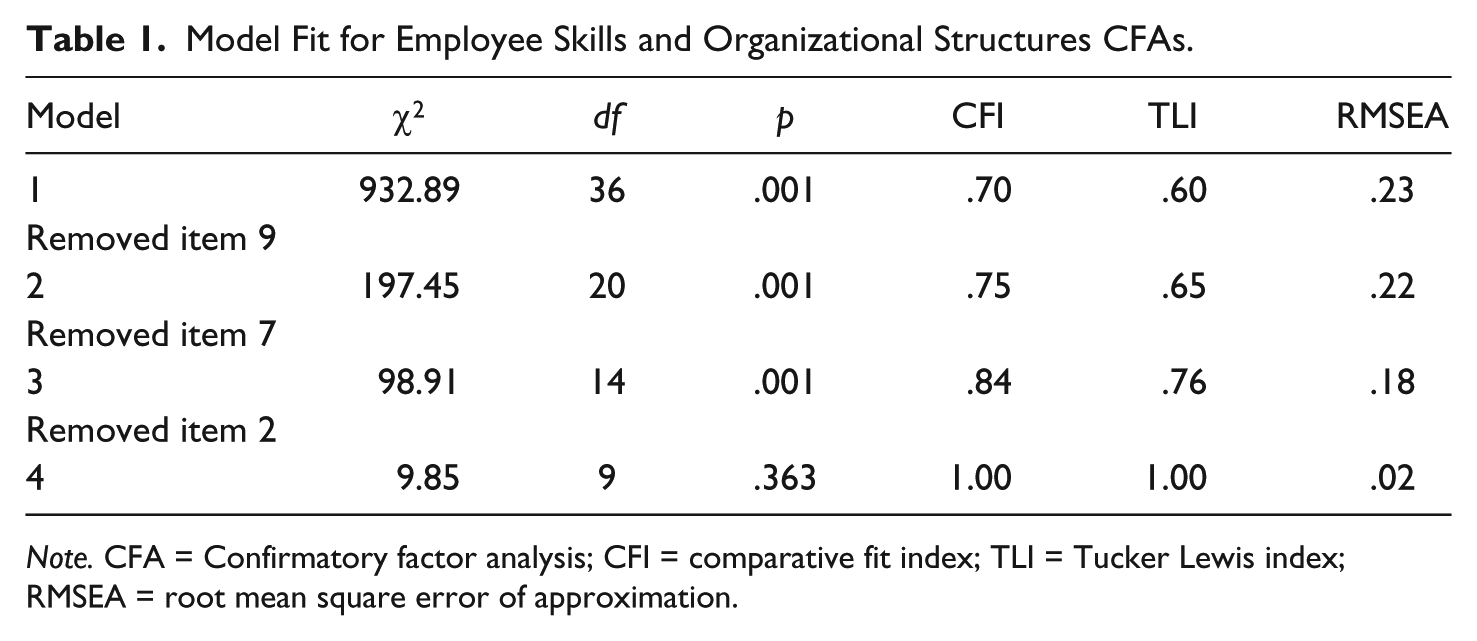
Note. CFA = Confirmatory factor analysis; CFI = comparative fit index; TLI = Tucker Lewis index; RMSEA = root mean square error of approximation.
As the TI subscale only had three items for the survey, the CFA could not be conducted on that subscale alone because the chi-square statistic had 0 degrees of freedom. Therefore, it was combined with the CFA for OCB and four CFAs were conducted to achieve a model fit. A significant chi-square does not necessarily mean the model has a poor fit (Kline, 2005). The CFI, TLI, and RMSEA fit indices are a better indication of model fit. Therefore, the OCB subscale comprised of Items 1, 4, 5, 6, 7, 8, and 9. Table 2 presents the results of the model fit for TIs and OBC.
Model Fit for Turnover Intentions and OCB.
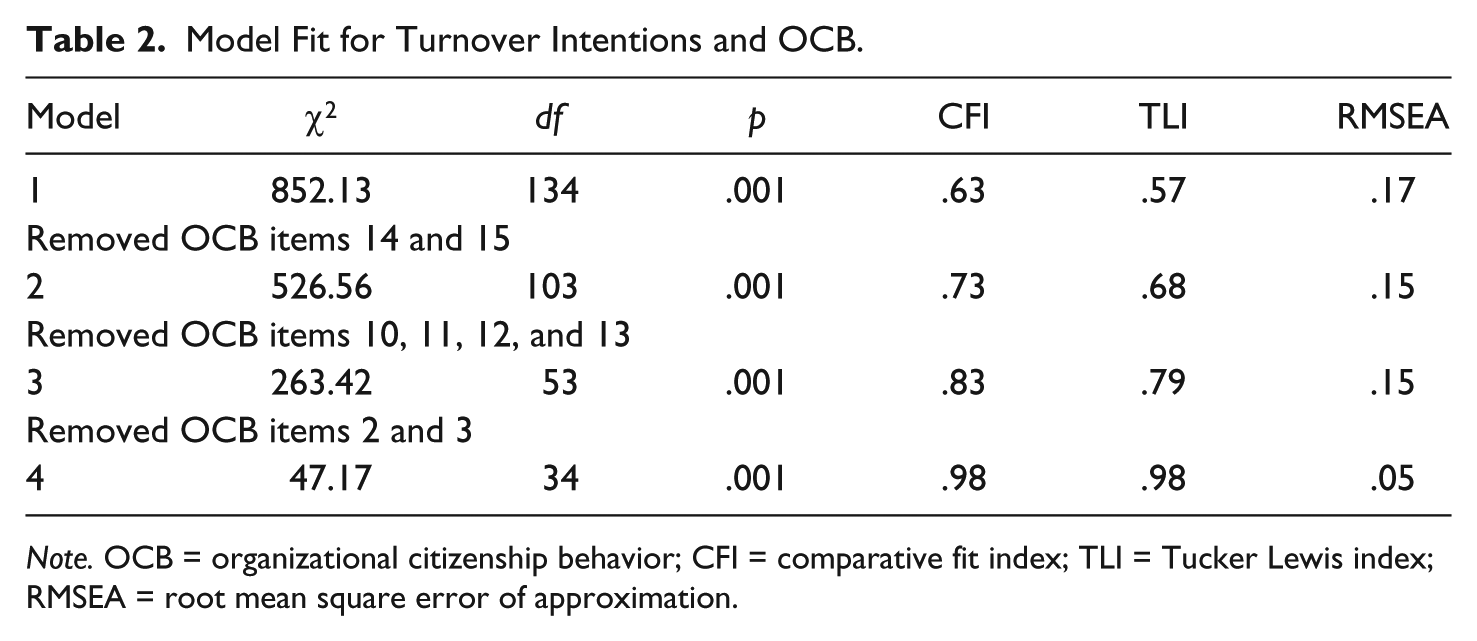
Note. OCB = organizational citizenship behavior; CFI = comparative fit index; TLI = Tucker Lewis index; RMSEA = root mean square error of approximation.
The four subscales were created based on the mean of the items that comprised them after the CFA results. Cronbach’s alpha reliability was conducted on the four subscales and ranged from 0.43 to 0.92. Means and standard deviations were also conducted on the four subscales. Table 3 presents the Cronbach’s alpha reliability, means, and standard deviations for the subscales.
Cronbach’s Alpha, Means, and Standard Deviations for Research Subscales.
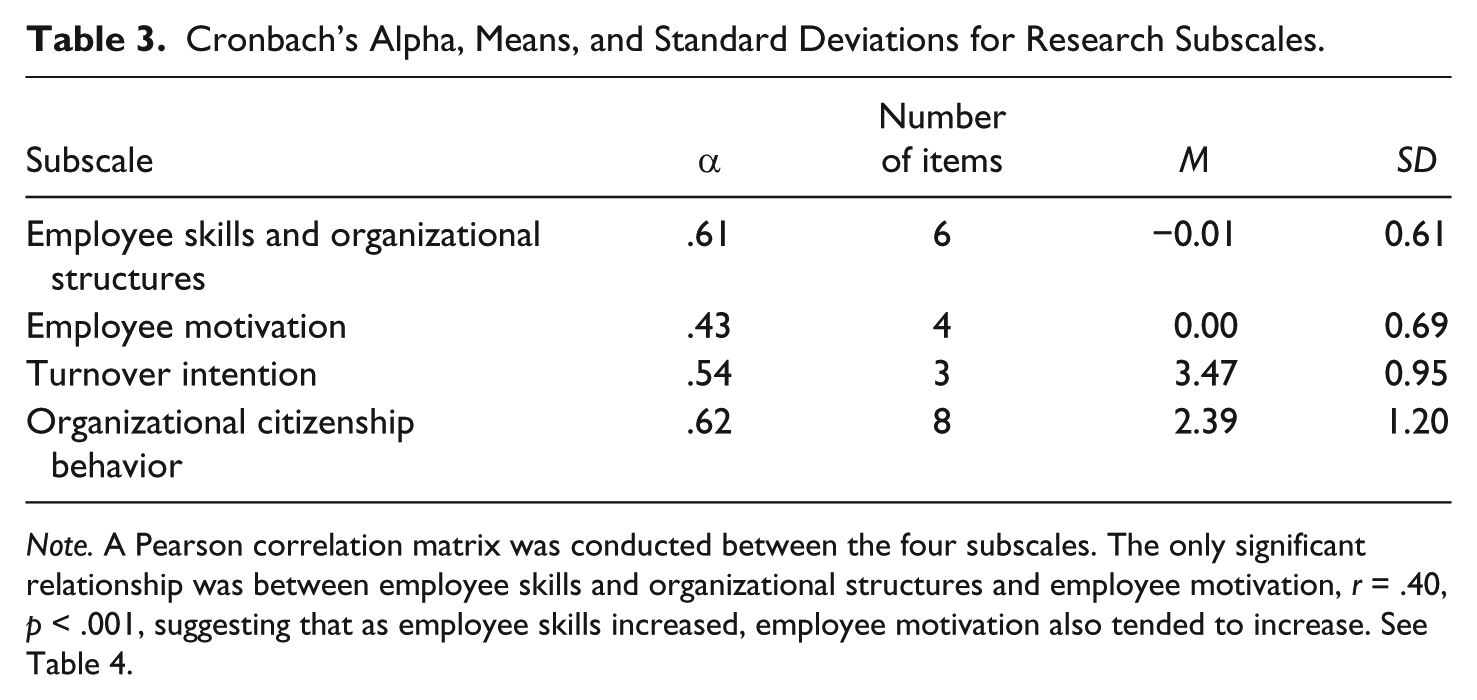
Note. A Pearson correlation matrix was conducted between the four subscales. The only significant relationship was between employee skills and organizational structures and employee motivation, r = .40, p < .001, suggesting that as employee skills increased, employee motivation also tended to increase. See Table 4.
A Pearson correlation matrix was conducted between the four subscales. The only significant relationship was between employee skills and organizational structures and employee motivation, r = .40, p < .001, suggesting that as employee skills increased, employee motivation also tended to increase. See Table 4.
Results of Pearson Correlation Matrix between Subscales.
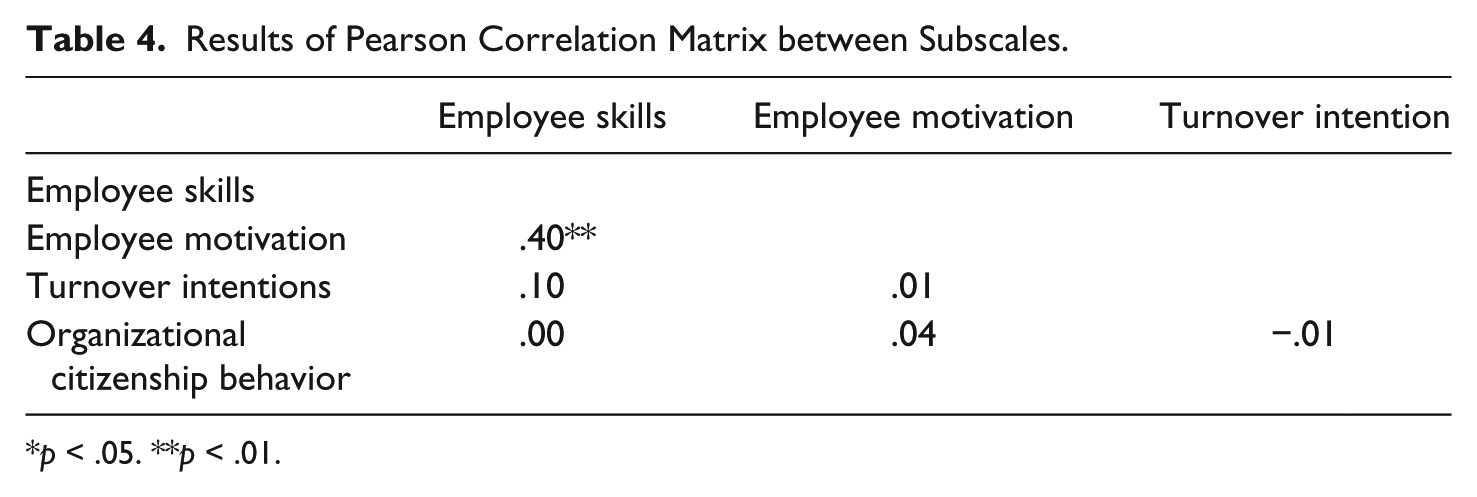
p < .05. **p < .01.
Eight ANOVAs were conducted to assess the relationship between the eight demographics (age, tenure, residence, gender, HR staff, supervisor/manager, exempt, and classified) and the four subscales. Results of the ANOVAs are presented in Table 5. The ANOVAs showed relationships between residence and TI scores, gender and OCB scores, HR staff and employee skills/organizational structures scale, and between supervisor/manager and OCB scores. Therefore, in the regressions used to analyze the hypotheses, gender and supervisor/manager was controlled for in Hypothesis 1, and residence will be controlled for in Hypothesis 2.
Results for MANOVAs Between Demographics and Research Subscales.
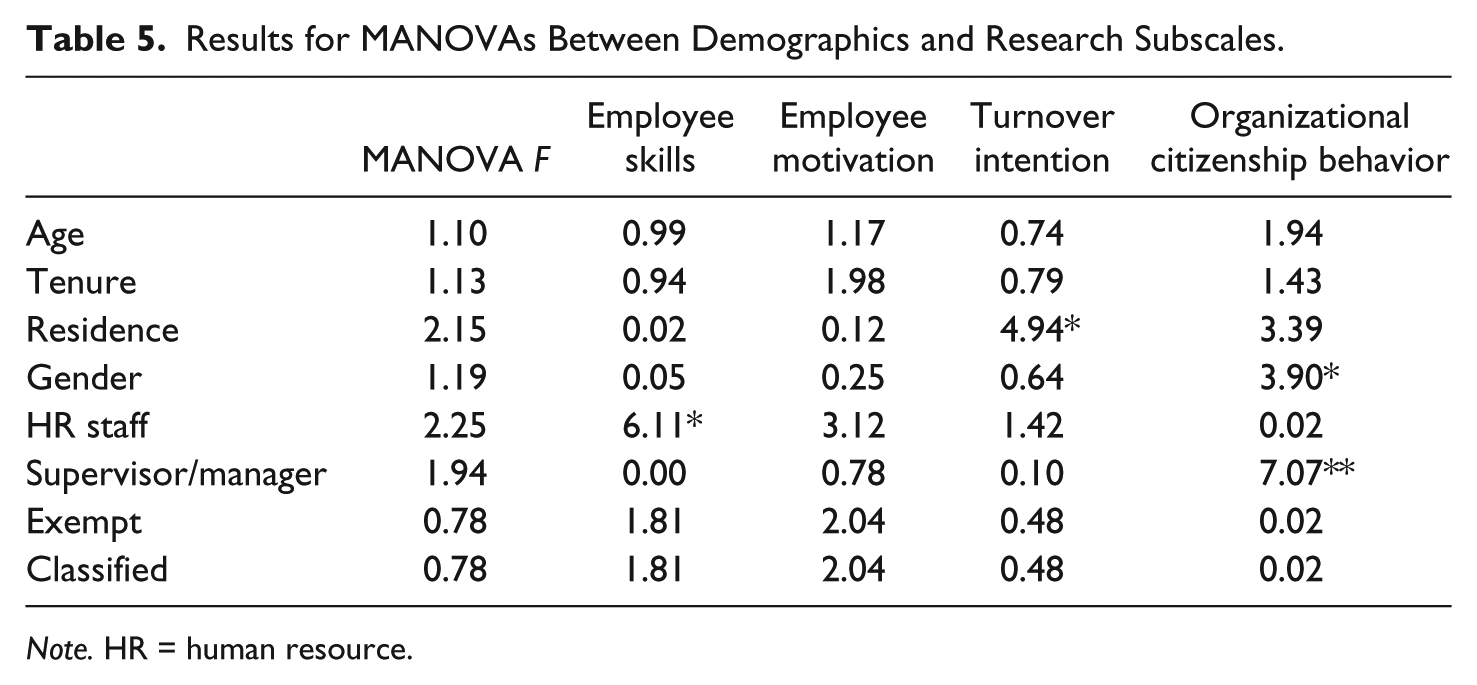
Note. HR = human resource.
Hypothesis 1
To assess Hypothesis 1, a multiple linear regression was conducted to assess if the HRM subscales (employee skills and organizational structures and employee motivation) predicted OCB. Gender and supervisor/manager was controlled for based on the ANOVAs previously conducted. Prior to analysis, the assumption of normality was assessed with a P-P scatterplot. The scatterplot showed very little deviation from normality and the assumption was met. The assumption of homoscedasticity was assessed with a residuals scatterplot. The scatterplot was rectangularly distributed about the origin (0,0) and the assumption was met (Appendix D).
The results of the multiple regression were significant, F(4, 160) = 2.85, p = .026. On further examination of the predictor variables, only gender and supervisor/manager were significantly related to OCB, employee skills/organizational structures and employee motivation were not significant. As the independent variables of interest were not significant, the null hypothesis cannot be rejected in favor of the alternative hypothesis. Results of the multiple linear regressions are presented in Table 6.
Multiple Linear Regressions With HRM Subscales Predicting OCB.
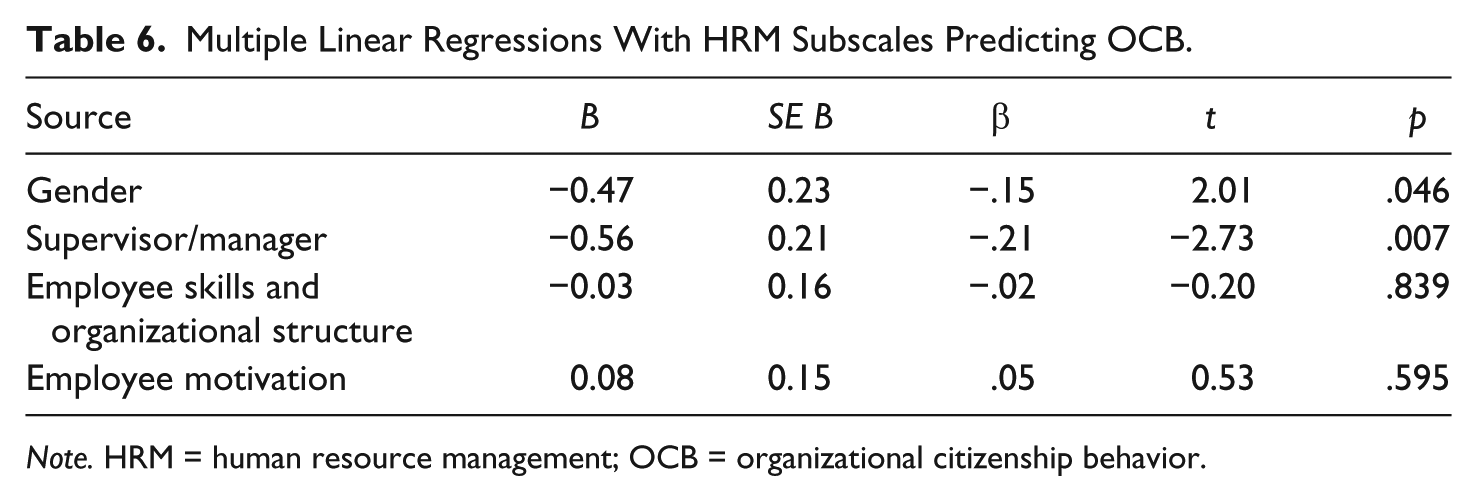
Note. HRM = human resource management; OCB = organizational citizenship behavior.
Hypothesis 2
To assess Hypothesis 2, a multiple linear regression was conducted to assess if the HRM subscales (employee skills and organizational structures and employee motivation) predicted TIs. Residence was used as a covariate due to the ANOVAs conducted previously. Prior to analysis, the assumption of normality was assessed with a P-P scatterplot. The scatterplot showed very little deviation from normality and the assumption was met (see Appendix D, Figure D2). The assumption of homoscedasticity was assessed with a residuals scatterplot. The scatterplot was rectangularly distributed about the origin (0,0) and the assumption was met.
The results of the multiple regression were not significant, F(3, 164) = 2.50, p = .062. This suggests that employee skills and organizational structures and employee motivation did not successfully predict TI scores. As the regression was not significant, the null hypothesis cannot be rejected in favor of the alternative hypothesis. Results of the multiple linear regressions are presented in Table 7.
Multiple Linear Regressions With HRM Subscales Predicting Turnover Intentions.
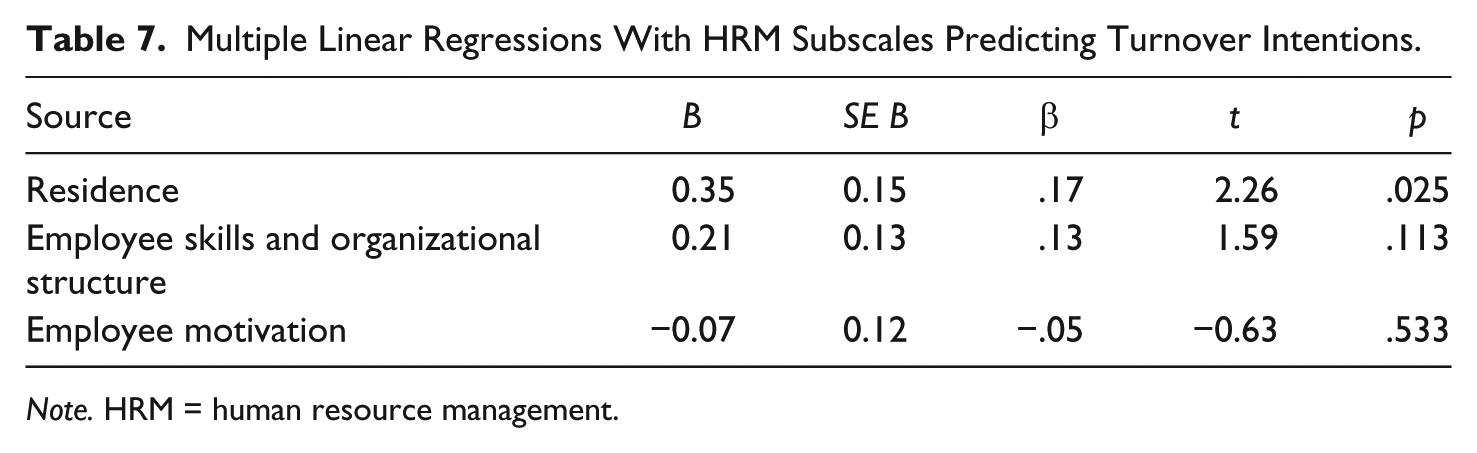
Note. HRM = human resource management.
Discussion
The results show a low response rate while reflecting an unwillingness to participate in the study, particularly at the executive level as only five agencies granted approval for the study. This unwillingness to participate may be attributed to a sense of insecurity and a fear of backlash particularly given the challenging economical conditions. Most of the participants answered a majority of the questions on the turnover and OCB scales, while fewer respondents answered the HRM scale. This suggests either unfamiliarity with the practices engaged in their organizations or an unwillingness to provide their best estimate of what they believe occurs.
Initial analysis of the TIs was conducted by summating the number of persons who strongly agreed to Question 1 on the turnover intentions scale (TIQ1) and those who simply agreed (Ratings of 1 and 2). The results showed that 54% (100) of the respondents had a desire to remain with their organizations at least 1 year from the time the survey was administered (Appendix E). The analysis suggested participants had no immediate plans of leaving, or they are unlikely to quit, but it may also be indicative of low voluntary turnover in the participating agencies.
Analysis of the responses to the OCB scale demonstrated high levels of cooperative behaviors among public sector employees. Exploratory factoring of the OCB scale produced three factors instead of the five or seven noted in other studies. The factors noted appear to cover the traits of altruism, sportsmanship, and civic virtue.
Overall, responders to the HRM scale indicated that some core HRM practices are evident in the public sector. However, the degree to which they are utilized suggests some inconsistencies, or that the organization is in the early stages of implementation of these high performance practices, perhaps the lag syndrome indicated in the Ayanda and Sani (2010) study. Of particular note are the responses to Human Resource Management Questionnaire–12 (HRMQ-12)—promotional basis is noteworthy. Fourteen percent of the responders indicated they were unsure of their agency’s promotional basis. Nine percent stated that none of the suggested bases were utilized in their organizations (Appendix F). This suggests employees are not fully aware of agency’s promotional practices and a degree of bias exist. However, seniority, merit, and performance ranked high as bases for promotion.
Conclusions
The hypotheses were tested using CFA and multiple regression procedures following Kline (2005) and resulted in the deletion of many items from the HRM and OCB scales. The deleted items can be viewed as areas for improvement in the HRM divisions or perhaps a need for better communication of HR roles and responsibilities. MANOVAs conducted to evaluate whether the demographic variables impacted the key variables showed significance between residence and turnover, gender and OCB, and HR staff and HRM factor—employee skill.
As the results did not confirm the findings of other studies, one wonders whether mitigating conditions exist in the USVI public sectors that are not evidenced elsewhere. Furthermore, the findings appear to validate the concept that HRM practices modeled in the United States may have different results elsewhere as suggested by Brewster and Mayrhofer (2012), or that the implementation of high performance practices are in the early stages of implementation, the lag syndrome noted by Ayanda and Sani (2010) as many items had to be deleted during the CFAs. Another consideration may be the public sector motivation (PSM) factor discussed by Perry, Hondeghem, and Wise (2010). PSM is based on the beliefs that unique motives are found among public employees that are different from those of their private sector counterparts and is described as an individual’s predisposition to respond to motives grounded primarily or uniquely in public institutions and organizations. However, the influence of current economic conditions as a contributing factor in the USVI should not be negated as employment opportunities are not as abundant and varied as in the continental United States.
Recommendations for future studies include a suggested broader scope of participating agencies that involves the semi-autonomous agencies and an increased number of participants from the St. Thomas−St. John district to gain a better understanding of what is taking place in that district. In addition, a comparative study between districts and between the semi-autonomous agencies and non-semi-autonomous agencies is suggested. Due to the low reliability found in the turnover scale as a result of the second and third items suggests a different scale may be needed to measure TIs or the scale improved based on a pilot study. Additional measures should be taken to improve the response rate of the HRM scale. Another area of investigation for future studies could be a comparative study of the variables between public and private sector organizations in the USVI. Such a study would confirm or reject the findings of this study and the PSM factor Perry, Hondeghem, and Wise (2010) discussed. Clarity would also be gained on the role of economic conditions as a mitigating factor.
Footnotes
Appendix A
USVI Unemployment Rates 2006-2012.
| Year | Territory | St. Croix district | St. Thomas–St. John district |
|---|---|---|---|
| 2012 | 11.7 | 14.1 | 9.6 |
| 2011 | 8.9 | 9.8 | 8.5 |
| 2010 | 8.1 | 8.8 | 7.5 |
| 2009 | 7.6 | 8.8 | 6.6 |
| 2008 | 5.9 | 7.0 | 5.0 |
| 2007 | 5.9 | 7.1 | 5.0 |
| 2006 | 6.1 | 7.3 | 5.2 |
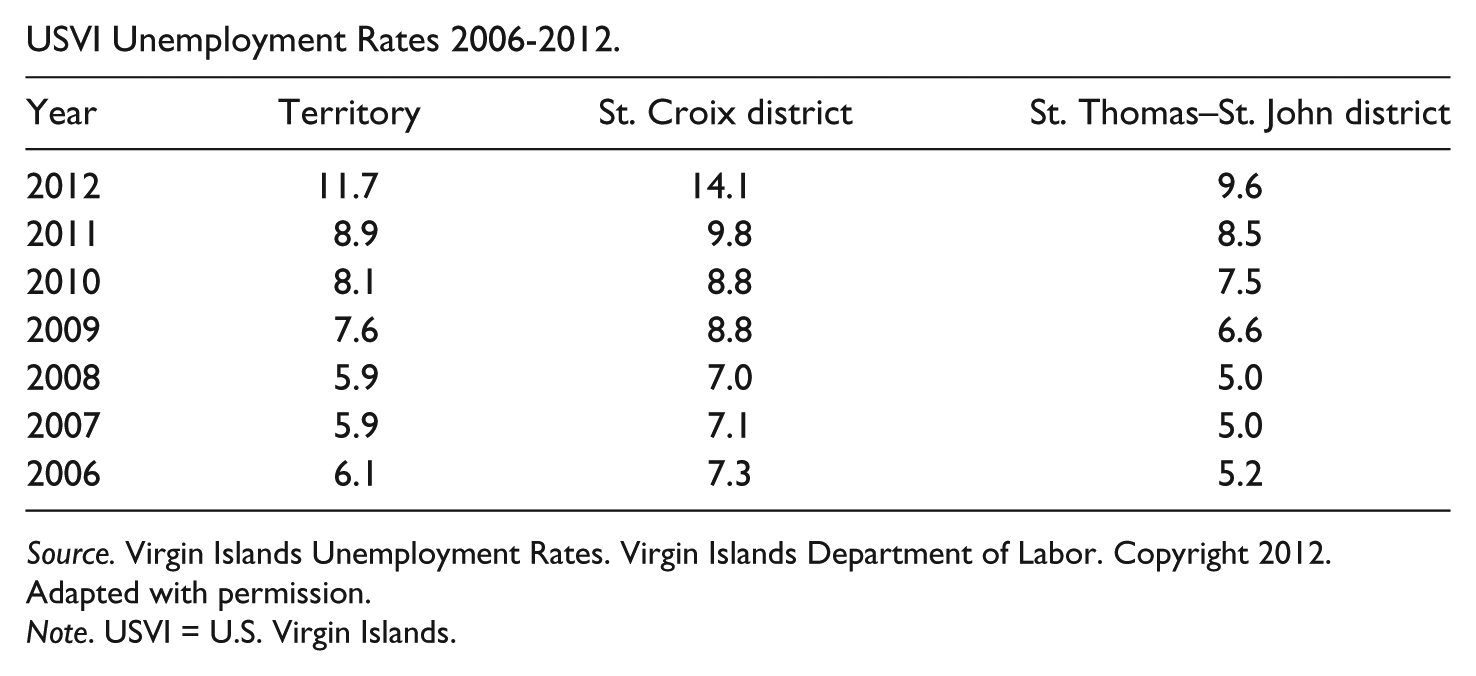
Source. Virgin Islands Unemployment Rates. Virgin Islands Department of Labor. Copyright 2012. Adapted with permission.
Note. USVI = U.S. Virgin Islands.
Appendix B
Demographic Questionnaire.
| Demographics | |||||
|---|---|---|---|---|---|
| Number of years I have worked for the VI government | 1-5 | 6-10 | 11-15 | 16-20 | >20 |
| I reside on the island of | Water island | STX | STT | STJ | |
| My Gender is | Male | Female | |||
| I work in the human resource division/office of my agency | Yes | No | |||
| I am a full-time government employee | Yes | No | |||
| I supervise or manage other employees | Yes | No | |||
| I am an exempt employee | Yes | No | |||
| I am a classified employee | Yes | No | |||
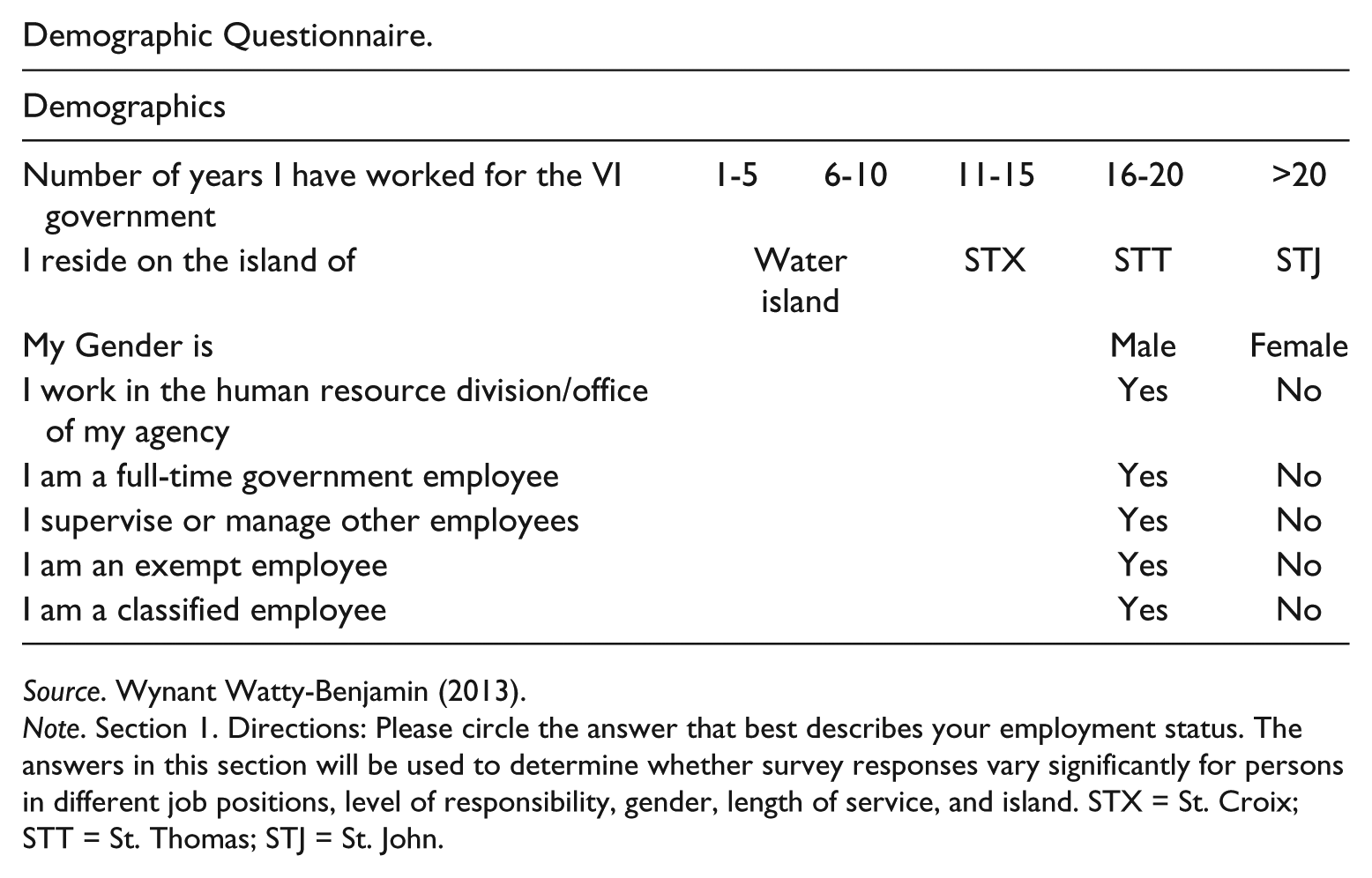
Source. Wynant Watty-Benjamin (2013).
Note. Section 1. Directions: Please circle the answer that best describes your employment status. The answers in this section will be used to determine whether survey responses vary significantly for persons in different job positions, level of responsibility, gender, length of service, and island. STX = St. Croix; STT = St. Thomas; STJ = St. John.
Appendix C
Appendix D
Appendix E
Appendix F
Declaration of Conflicting Interests
The author(s) declared no potential conflicts of interest with respect to the research, authorship, and/or publication of this article.
Funding
The author(s) received no financial support for the research, authorship, and/or publication of this article.