







Abstract
This study examines and compares how the perceptions of individual- and organization-level work environments relate to millennial and older generation civil servants’ turnover intention, using the 2021 survey of South Korean government employees. Both split-sample OLS and moderated multiple regression models were estimated, and the findings reveal significant differences between the two generational groups. Most of all, perceived pay competitiveness, task meaningfulness, and innovative organizational culture are more strongly related to turnover intentions among millennial civil servants than among their predecessors. The findings suggest that addressing millennial civil servants’ retention should take a distinctive approach from the traditional public sector retention strategies. This study presents policy recommendations for government human resources management.
Introduction
One in three U.S. labor force participants (35%) is a millennial, a person who was born between 1981 and 1996 (Dimock, 2018), and millennials’ share in the workforce is predicted to increase over the next decade (Timmes, 2022; Torpey, 2020). Although researchers use slightly different boundaries to define the millennial generation 1 , they agree that the exact boundaries are less important than the shared historical events and experiences by people who are classified as millennials (Ng & McGinnis Johnson, 2015). What they also agree on is that millennials have been shaped in their formative years by the advancement of technology, parental and societal focus on children and family, and emphasis on educational attainment and wealth (Stafford & Griffis, 2008).
In the United States, the millennial generation makes up about a third of the state and local government employees (Bond & Kenneally, 2020). The emergence of millennials in the public sector workforce is not limited to the United States, and they have been stepping into various government leadership roles around the world (DeShazo, 2016). They are also expected to assume primary leadership positions in the public sector over the next few years when the older generation civil servants retire (AbouAssi et al., 2021; Casey & Vogel, 2019; Zachara, 2020).
With the increasing importance of the millennial generation in the government workforce and the upcoming intergenerational leadership transfer, concerns about keeping them in the public sector have become an imminent issue (AbouAssi et al., 2021). Studies report rising voluntary turnover rates in the public sector worldwide and point to the turnover among millennial civil servants as a major challenge for government agencies (Alcantar, 2020; Wen et al., 2016). There has been a steady increase in voluntary turnover rates among public sector employees in Europe and North America, especially among younger generation workers (Castillo, 2022; Cregård & Corin, 2019; Mission Square Research Institute, 2022). Even in some Asian countries where civil service has long been a coveted occupation, turnover rates of government employees continue to grow, and the rates are higher among younger generations than older generation civil servants (Dong, 2023; Nguyen et al., 2022).
Although not all turnovers negatively impact organizational performance, not being able to retain employees can lead to a loss of institutional knowledge, as well as incurring costs for training new employees (O’Connell & Kung, 2007; Ryu & Lee, 2013). Millennials’ higher turnover rates and the important roles they play, and will play, in the public sector imply that their turnover will be highly costly to government agencies. Hence, understanding millennial civil servants’ turnover intention is critical for both public management researchers and practitioners alike. If there exist differences in what affects the turnover intentions of the two generations of civil servants, these differences should be incorporated into government human resources policies and practices to better retain millennial civil servants.
Traditionally, public management literature has emphasized the role of public service motivation (PSM) in attracting and retaining talents in government, suggesting that individuals with a high level of PSM choose to work for government even when the pay and other working conditions are not comparable to those available in the private sector (Cregård et al., 2017; Lee & Sabharwal, 2016; Naff & Crum, 1999). Yet, recent research suggests that it is more difficult for today’s government agencies to rely on PSM for employee retention than in the past (Asseburg & Homberg, 2020). While PSM-related content is still an important recruitment and retention tool, studies underscore the increasing importance of extrinsic rewards in keeping younger generations in the public sector workforce (Asseburg & Homberg, 2020; Breitsohl & Ruhle, 2016). Moreover, the government is no longer the only employment option for people who want to contribute to public interests and serve the community; the growth of the nonprofit sector and the emergence of hybrid organizations pursuing social missions offer ample opportunities to create social change. Consequently, relying on employees’ commitment to public interests and altruism alone may not be sufficient in retaining today’s government employees.
The South Korean Context
In South Korea, civil service has been a highly esteemed career path, having topped the jobs preferred by young people for the past few decades (Kim & Park, 2021). New civil servants are typically hired through civil service exams, and there had been an upper age limit (32 years old) for the exam until it was removed in 2009 (Kim, 2021). As a result, most government employees in the country entered the public sector workforce at a young age and stayed until their retirement (Ministry of Personnel Management, 2019). Such a system has led to an emphasis on seniority and collective efforts in the government workplace (Fischer, 2008).
To South Korean baby boomers and Gen Xers, the seniority system and collectivism in government agencies made civil service an attractive career path. In particular, the two generational cohorts’ experiences were shaped in a distinctive historical context, including the reconstruction following the Korean War and the rapid economic development in the 1960s and 1970s. Boomers and Gen Xers were also directly affected by the national debt crisis of 1997, contributing to their predilection for job security and stability (Park & Park, 2024). In other words, these cohorts’ interests in civil service were largely driven by the stable income and solid retirement plans that public sector employment offered (Park & Park, 2024).
Unlike boomers or Gen Xers, South Korean millennials grew up with forces such as globalization and technological advancements, and this unique environment contributes to millennials’ values and attitudes that are differentiated from those of older generations (Lee, 2023; Park & Park, 2018). South Korean millennials are realistic, self-confident, and self-involved, with a strong sense of entitlement and distrust of institutions, and these characteristics are shared with millennials around the globe (Lee & Yu, 2013). Research also finds that South Korean millennial civil servants are less likely to commit to the organization, which is evidenced by their higher turnover rates compared with their predecessors (Kyeong & Kim, 2024).
Hence, it may not be a surprise that the South Korean government is afflicted by the increasing turnover rate of millennial civil servants (Kim & Park, 2021; Yoon, 2024). Generational differences in organizational commitment and turnover in the public sector workforce have also been observed in other countries, and governments in many countries face challenges in retaining millennial civil servants (Castillo, 2022; Mission Square Research Institute, 2022). Despite the growing turnover rates of millennial civil servants, little is known regarding the differences in what affects the turnover intentions of millennial versus older generation civil servants. This study investigates these differences, focusing on how perceptions of individual- and organization-level work environments are associated with turnover intentions of millennial and older generation civil servants.
Although this study uses the survey data from South Korean government employees, the findings can provide relevant implications for other national contexts facing challenges in retaining millennial civil servants, given this generation’s shared experiences in the formative years worldwide. The subsequent section reviews the literature on how the perceptions of both individual- and organizational-level work environments may affect civil servants’ turnover intentions using the social exchange theory (SET) and how this relationship may vary between millennials and older generations. Hypotheses are also presented. The data and statistical model are explained next, followed by the presentation of the regression results. The study concludes with a discussion of the findings’ implications for retention strategies in the public sector.
Perceptions of Individual- and Group-level Work Contexts and Public Sector Employees’ Turnover Intentions: Generational Differences
The term generation is defined as a “cohort of persons passing through time who come to share a common habitus and lifestyle” (Turner, 1998, p. 302). The generation theory views that members of a generation share “a collective cultural field and a set of embodied practices” (Parry & Urwin, 2011, p. 81), and the shared experiences result in unique patterns of behaviors and attitudes, predisposing the members of the cohort to a certain “habitus” (Lyons & Kuron, 2014, S. 140). According to this view, each generational cohort has distinctive characteristics, work values, and motivations that are shared by the members of the cohort, which can have far-reaching implications for human resources management (Heyns & Kerr, 2018).
With the emergence of the millennial generation in the public sector, scholars have paid special attention to this cohort. Compared to the older generations, millennials are considered to have a stronger sense of entitlement, individualism, and self-confidence, and this view has been held up to the light of empirical studies in diverse national contexts (Allen et al., 2015; Cogin, 2012; Edmunds & Turner, 2005). Millennials grew up in an environment characterized by unprecedented levels of support and involvement from their parents, and such upbringing shaped millennials’ unique mentality, which in turn has significant implications for their work values, attitudes, and expectations (Brant & Castro, 2019; Twenge & Campbell, 2012). Research on the public sector workforce across nations also finds that millennial civil servants have distinctive job motivations and different views on various work environments when compared with their predecessors (Asseburg & Homberg, 2020; Ertas, 2015; Forastero et al., 2018; García et al., 2019; Jiang & Hui, 2016; Park & Park, 2018). Therefore, millennials’ unique motivations and perceptions of work environments must be considered in managing this emerging group of workers (Espinoza & Ukleja, 2016; McGinnis Johnson & Ng, 2016).
In examining how the perception of different work environments relates to turnover intentions of millennial and older generation civil servants, this study employs the social exchange theory (SET). SET offers a framework for understanding how employees’ perceptions impact their intention to leave an organization (Gharbi et al., 2022). According to SET, when employees perceive positive initiating actions from the organization, manifested in their individual and collective work environment, they reciprocate those actions with good behaviors (Cropanzano et al., 2017). Gould-Williams and Davies (2005) tested this relationship in the public sector and found that SET effectively predicted civil servants’ turnover intentions. Such findings suggest that the success of public sector human resources management (HRM) relies in part on ensuring the balance in the exchange relationship, which is shaped by employees’ perception of their individual- and organization-level work environments (Aryee et al., 2002).
Perceptions of Individual-level Work Environment
A person’s perception of their work environment is an important element of social exchange because positive perceptions can lead to an increased sense of obligation and commitment to the organization (Flint et al., 2013). In other words, when employees perceive that their individual-level work environments are favorable, they will attempt to reciprocate the positive environments with a strong commitment to the organization. As a result, employees with positive perceptions of their work environment are less likely to leave the organization. This study presents the following hypotheses on the relationship between the two generations of civil servants’ perceptions of individual-level work environments and their turnover intentions.
Pay Competitiveness
According to SET (Blau, 1964; Wayne, Shore, & Liden, 1997), regardless of economic sector or industry, monetary compensation is one of the most important considerations in social exchange (Cropanzano et al., 2017; Redy, 2023). Research has unequivocally shown that dissatisfaction with pay leads to undesirable consequences, including increased shirking and turnover, and accordingly, offering comparable compensation to employees’ responsibility, performance, and equivalent work in other sectors is a key to retention (Singh & Loncar, 2010; Tekleab et al., 2005). In this sense, an organization’s reward system is a strategic tool for aligning the interests of employees and those of the organization, as a pay system can facilitate strategic behaviors of employees by creating a sense of reciprocity (Lawler, 1990).
While competitive pay is a critical retention factor across generations, research finds that millennials place a stronger emphasis on pay competitiveness than older generations (McGinnis Johnson & Ng, 2016). The unprecedented levels of positive reinforcement and attention by their baby boomer parents have built up millennials’ strong sense of self-esteem and entitlement (Alsop, 2008; Magni & Manzoni, 2020; Twenge et al., 2010). Empirical studies on work motivations in various national contexts report that millennials’ interest in government employment has to do more with extrinsic rewards, including pay and job security, than with intrinsic rewards, and their strong sense of entitlement results in a greater sensitivity to pay competitiveness when compared with older generations (Allen et al., 2015; Henstra & McGowan, 2016; McGinnis Johnson & Ng, 2016; Ng et al., 2016). Accordingly, this study hypothesizes that the perception of pay competitiveness is more important for millennial civil servants than their predecessors.
Hypothesis 1. Perception of pay competitiveness is more negatively associated with the turnover intentions of millennial civil servants than the turnover intentions of their predecessors.
Role/Task Ambiguity
Clearly defined tasks positively impact a person’s work experience, while the lack of clarity about tasks and responsibilities increases work pressure and negatively affects work experience (Lee, 2016; Tarrant & Sabo, 2010). When employees do not have clear information about their tasks, they are unable to properly evaluate different behaviors concerning goals and expectations (Abdi et al., 2019; Campbell, 2016). SET suggests that role and task ambiguities reduce employees’ sense of mutual obligation and commitment by creating role conflicts and destroying trust in the organizational leadership (Rai, 2016). Hence, role and task ambiguities will increase turnover intention, and minimizing them will contribute to employee retention (Hur & Abner, 2023).
Millennials, compared with older generations, grew up in an educational environment characterized by standardized testing, objective rubrics, and well-defined expectations (Andrade et al., 2020; Knowlton & Hagopian, 2013). Growing up in an environment emphasizing clearly defined rules and expectations has contributed to millennials’ intolerance of ambiguity in workplaces (Farhan, 2021; Hershatter & Epstein, 2010). Empirical studies indeed show that millennials have a stronger preference for well-defined rules and structure and have greater difficulty dealing with ambiguity than their predecessors (Campione, 2015; Hershatter & Epstein, 2010). Therefore, this study hypothesizes that the lack of role/task clarity is a more serious concern for millennial civil servants than older generation civil servants.
Hypothesis 2. Perceived task/role ambiguity is more positively associated with the turnover intentions of millennial civil servants than the turnover intentions of their predecessors.
Job Autonomy
Job autonomy is defined as “the degree to which a job provides substantial freedom, independence, and discretion to the employee in scheduling the work and in determining the procedures to be used in carrying it out” (Hackman & Oldham, 1975, p. 163). Autonomy is an important dimension of social exchange in the workplace, and employees are likely to reciprocate the autonomy they perceive with organizational citizenship behaviors and high performance (Coyle-Shapiro & Conway, 2005; Dysvik & Kuvaas, 2013). Research indeed finds that an employee’s perception of autonomy is closely related to the level of affective commitment (Farr-Wharton et al., 2011).
However, greater autonomy may not have the same positive consequences for everyone. Millennials’ expectations for clearly defined tasks and rules in workplaces imply that they may prefer centralized and formalized work procedures compared with older generations (Hershatter & Epstein, 2010). Studies also show that millennials find comfort in a team-based direction and want to avoid the risk associated with independent decision-making regarding their work (Alsop, 2008; Myers & Sadaghiani, 2010). Hence, this study hypothesizes that job autonomy is less important for millennial civil servants than older generations.
Hypothesis 3. Job autonomy is less negatively associated with the turnover intentions of millennial civil servants than the turnover intentions of their predecessors.
Meaningfulness of Work
Tasks that are interesting enough and of high significance can provide individuals with a sense of fulfillment. According to Koh and Joseph (2016), when people experience a low level of meaningfulness at work, they seek other motivations to perform. On the other hand, those who find their work personally and socially meaningful are motivated by the work itself. Empirical research also finds that people who perform tasks with a low level of significance are more likely to quit than those who consider their work meaningful (Ferreira et al., 2017). Consequently, meaningful work experience is an essential part of a social exchange relationship, and SET predicts that employees perceiving that their work makes meaningful contributions exhibit higher levels of responsibility and commitment (Cropanzano et al., 2017).
Nevertheless, the importance of meaningful work experience in social exchange may not be the same across generations. In particular, studies find that millennials have a lower level of work-centrality, suggesting that meaningfulness of work has less value to this generation than to older generations (Twenge & Kasser, 2013). Scholars assert that, compared with boomers and Gen Xers, millennials tend to value extrinsic work rewards more and intrinsic rewards less (Ng & McGinnis Johnson, 2015; Twenge et al., 2010). A recent study of U.S. government employees by Ertas (2015) also shows that older generation civil servants exhibit a higher sense of personal gratification with meaningful work experience than younger generations. These research findings suggest that the meaningfulness of work may be less important for millennials than older generations.
Hypothesis 4. Perceived meaningfulness of the task is less negatively associated with the turnover intention of millennial civil servants than the turnover intentions of their predecessors.
Job Resources
The availability of human, financial, and technological resources necessary for completing one’s task is critical in achieving job objectives, and lack of resources can result in dissatisfaction and burnout (Jiang & Hui, 2016; Schaufeli & Bakker, 2004). Employees’ access to job resources reduces job demands and the physiological and psychological costs associated with conducting the job, which prevents negative outcomes and improves job performance (Zito et al., 2018). Research finds that employees’ sense of commitment and obligation to their employer increases when they are provided with ample job resources, implying that their access to job resources is a critical factor in fostering social exchange relationships (Gould-Williams & Davies, 2005). The increased sense of commitment and obligation can lead to a higher level of engagement, decreasing their intention to quit (Hakanen & Roodt, 2010).
Compared with Gen Xers or boomers, millennials were raised in an environment where required resources are readily available, with a greater emphasis on achievement (Hershatter & Epstein, 2010; Wesner et al., 2008). Parents of millennials have higher levels of parental involvement, providing financial and nonfinancial resources their children need for success even after the children become adults (Crumpacker & Crumpacker, 2007; Fingerman et al., 2016; Tyler, 2007). Growing up in an environment where they had access to necessary resources and support suggests that millennials are more likely to expect resources for task completion to be available than their predecessors (Allen et al., 2015). Therefore, lack of resources may have a more negative impact on millennial workers’ well-being and their retention.
Hypothesis 5. Perceived availability of resources for task completion is more negatively associated with the turnover intentions of millennial civil servants than the turnover intentions of their predecessors.
Relationship with Supervisor
Employees’ relationship with their supervisors has a critical impact on their overall work experience (Griffin et al., 2001; Harris et al., 2009). Supervisors play a critical role in shaping reciprocal relationships with employees, constituting an important dimension of social exchange (Gould-Williams & Davies, 2005; Wayne, Shore, & Liden, 1997). In an exchange relationship, both parties must provide something of value to each other, and employees’ perception of their relationship with the supervisor influences their level of commitment to the organization (Dysvik & Kuvaas, 2013). Because employees tend to view their supervisor as a representative of the organization, their relationship with the supervisor affects their perception of person–organization fit (Nabawanuka & Ekmekcioglu, 2022). In this sense, an employee–supervisor relationship characterized by trust and support increases employees’ well-being and retention (Gordon et al., 2019). On the other hand, dissatisfaction with one’s supervisor can lead to an increase in job stress and turnover (DeConinck et al., 2004).
While growing up, millennials have been encouraged to establish and maintain close and personal relationships with people with authority, including parents, teachers, mentors, and advisors (Zemke et al., 2013). As a result, millennials generally expect that their supervisors will take an interest in them, trust them, guide them, and become friends with them, unlike Gen Xers and boomers, who are more likely to view supervisors as authority figures (Espinoza & Ukleja, 2016; Hershatter & Epstein, 2010). This study hypothesizes that experiencing a positive relationship with one’s supervisor is more important to millennial public sector employees than older generations.
Hypothesis 6. A positive relationship with a supervisor is more negatively associated with the turnover intentions among millennial civil servants than the turnover intentions of their predecessors.
Organizational-level Context
Every organization is a social group, and its culture and practices can determine employees’ experiences (Belias & Koustelios, 2014). SET suggests that employees’ perception of organizational culture and support has a defining impact on exchange relationships (Cropanzano et al., 2017; Dysvik & Kuvaas, 2013). This suggests that employees’ perceptions of organization-level work contexts, as well as their perceptions of pay and other individual-level work contexts, affect their turnover intentions (Flint et al., 2013). Research reports that, compared with older generations, millennials hold more egalitarian attitudes and have more negative views on bureaucracy (Ng & McGinnis Johnson, 2015). Such generational differences imply that millennial and older generation civil servants may have distinct expectations of organizational culture and environment. This study tests the following three hypotheses.
Procedural Justice
The procedural justice within an organization is an important dimension of a social exchange, which in turn affects turnover decisions (DeConinck & Stillwell, 2004; Gharbi et al., 2022; Konovsky, 2000). In a workplace setting, procedural justice focuses on the fairness of the rules and processes that govern how important organizational decisions affecting employees’ welfare are made (Tekleab et al., 2005). The perception of procedural justice in a workplace is, therefore, about the impartiality of the performance evaluation process, which determines allocation decisions, including pay raises and promotions (Siers, 2007). When employees perceive procedural injustice, they have low expectations for reciprocal benefits in the future (Kyeong & Kim, 2024). Research also finds that employees’ perception of procedural justice enhances their positive view of their employer, and violation of procedural justice or perceptions of procedural injustice may result in negative views and voluntary turnover (Ertas, 2015; Konovsky, 2000; Siers, 2007).
Studies report that older generations, especially Gen Xers, have an acute awareness of inequalities and of the fact that life is rarely played on a level field. (Hershatter & Epstein, 2010). The heightened awareness of injustice may make older generation civil servants more sensitive about procedural fairness than millennials. Accordingly, this study hypothesizes that the perception of procedural justice is more important for older generation civil servants than millennials.
Hypothesis 7. Perception of procedural justice in performance evaluation and promotion is less negatively associated with the turnover intentions of millennial civil servants than with the turnover intentions of their predecessors.
Participatory Decision-making
Research finds that the culture of participatory decision-making, where employees have direct input in the process of making organizational decisions, is linked to positive outcomes such as job satisfaction and retention (Kim & Fernandez, 2017). According to SET, employees are more likely to commit to an organization where there is a greater level of employee empowerment and involvement (Cropanzano et al., 2017). Giving employees a voice in organizational decision-making gives them a sense of empowerment, which in turn reduces their turnover intentions (Kim, 2005; Wright & Kim, 2004).
Participatory decision-making, however, may hold different significances for millennial and older generation government employees. Research suggests that millennials expect to have more direct involvement in decision-making compared with older generational cohorts (Hartman & McCambridge, 2011; Pasko et al., 2021). A study by García et al. (2018) also reports that millennial employees want to be heard, and they are more satisfied if they are heard at the highest level of the organization. Therefore, this study hypothesizes that participatory decision-making is a more crucial factor in millennial civil servants’ retention.
Hypothesis 8: Perception of participatory decision-making is more negatively associated with the turnover intentions of millennial civil servants than with the turnover intentions of their predecessors.
Innovative Culture
Hamel (1999) defines innovation as “a marked departure from traditional management principles, processes, and practices or a departure from customary organizational forms that significantly alter the way the work of management is performed” (Hamel, 1999; Sadegh Sharifirad & Ataei, 2012). Organizational culture of innovation promotes a work environment where individual and organizational creativities are nurtured, and accordingly, it contributes to employee retention (Azanza et al., 2013; Madueke & Emerole, 2017; Woodman et al., 1993). Public management scholars, however, argue that employees’ perceptions of innovation and risk preferences differ substantially between the public and private sectors. In particular, they emphasize that stability and job security are more critical than innovation for government employees (Dong, 2017; Lee & Wilkins, 2011).
Nevertheless, recent studies suggest that the difference between public and private sectors in terms of the importance of innovative culture has narrowed, with the emergence of millennials who tend to be less rule-bound and more risk-taking than older generations (Ismail & Lu, 2014). Studies also show that millennial civil servants consider innovation more positively than older generation civil servants (Ng et al., 2016). Accordingly, scholars suggest that organizational support in fostering an innovative culture is essential in strengthening the sense of reciprocity of millennial workers (Altunoğlu & Gürel, 2015). Ng and McGinnis Johnson (2015) even argue that millennials’ perception of the government being less innovative and behind the times is what drives them away from government careers. These research findings imply that millennials consider innovative culture more important than older generations do.
Hypothesis 9. The perception of innovative organizational culture is more negatively associated with the turnover intentions of millennial civil servants than with the turnover intentions of their predecessors.
Data and Method
This study uses the data from the 2021 Public Employee Perception Survey (PEPS), developed and administered by the Korean Institute of Public Administration (KIPA). Responses were collected from August 12 to September 30, 2021. The sample consists of 4,133 public sector employees working in one of the 47 South Korean National Government departments and agencies and 17 metropolitan city and provincial governments 2 . In 2020, there were 76,797 career civil servants, 24,441 employed at the national level, and 52,356 in metropolitan city and provincial governments (KIPA, 2022). 3 The 2021 PEPS used stratified random sampling, based on the workforce size in each department and agency of the national government and in metropolitan city and provincial governments, which constitutes the PEPS’ population. Participating departments and teams were selected using cluster sampling, and individual participants were recruited randomly in proportion to the workforce size 4 . All survey participants received pre-survey information explaining the purpose of this survey and the instructions for completing the survey before they participated (KIPA, 2022). This procedural strategy can improve the accuracy of survey responses (Podsakoff et al., 2003, 2012; Jordan & Troth, 2020). The survey also includes reverse-worded questionnaires, which helps improve the construct validity of single-survey items and mitigate common method bias (Jordan & Troth, 2020). The sample consists of 1,578 millennial civil servants and 2,555 older generation civil servants (Gen Xers and boomers), with a response rate of 81.8%.
Dependent Variable
The dependent variable is a person’s turnover intention. Survey participants were asked to indicate how much they agreed with the statement, “I have the intention to leave my current employer.” The participants used a five-point Likert-type scale in responding to the question, consisting of “strongly disagree, disagree, neutral, agree, and strongly agree.” This study uses an ordinary least squares (OLS) regression for its simplicity of interpretation, even though the distance between adjacent levels of agreement is not necessarily the same. The biggest advantage of using an OLS regression is that OLS estimates allow a direct comparison of regression coefficients between the two groups. The literature suggests that an OLS model produces similar estimates to those of an ordered model when there are more than four categories, and the distribution is quasi-normal (Lee et al., 2012). The frequency distribution of turnover intentions in Figure 1 is close to the normal distribution.
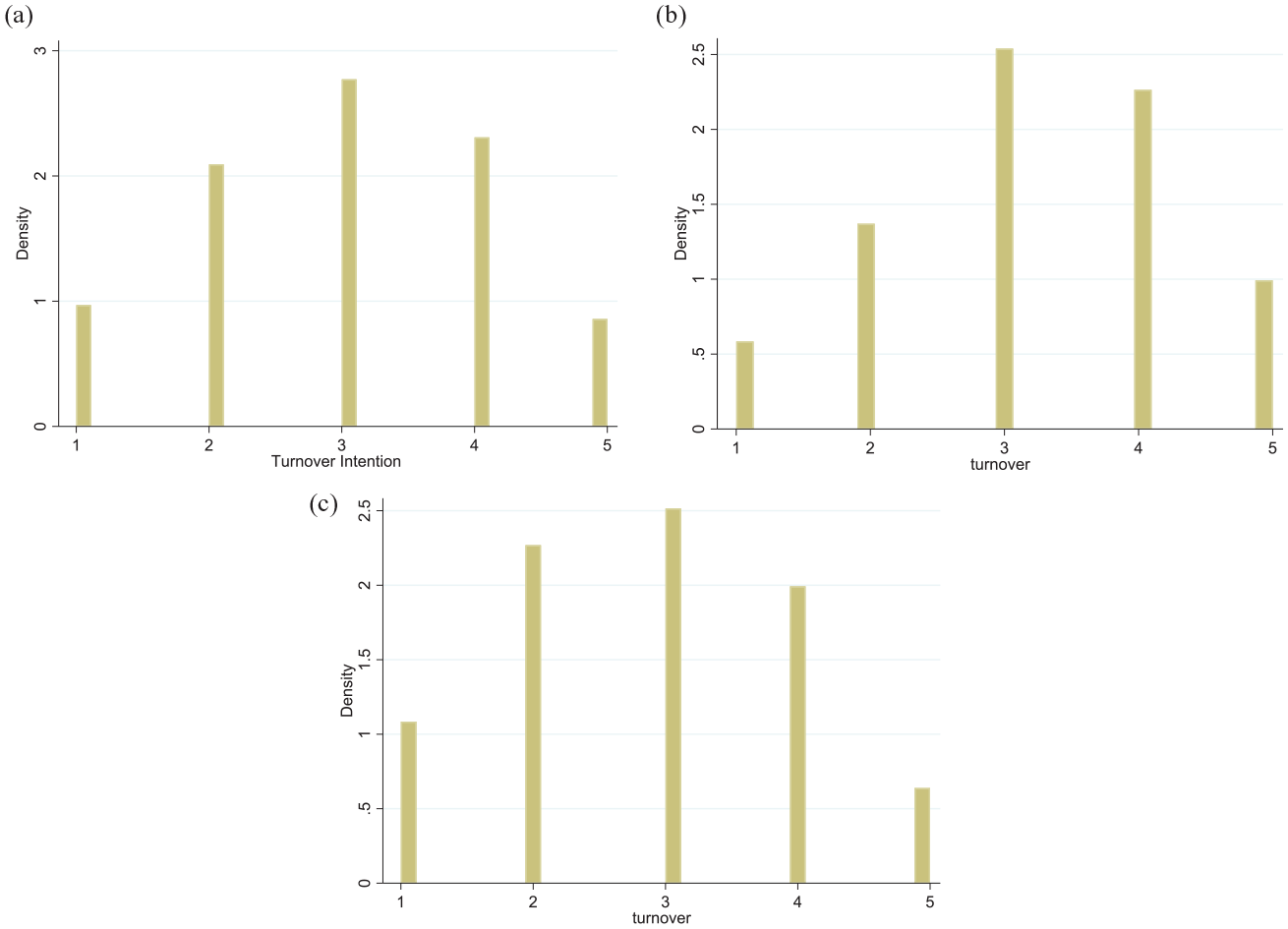
Distributions of Turnover Intention: (a) Entire sample, (b) Millennials, and (c) Older generations.
Table 1 describes the entire sample, the subsample of older generation civil servants, and the subsample of millennial civil servants. The mean turnover intention of older generation civil servants is 2.86, and the mean turnover intention of millennial civil servants is 3.22. The T-test of group difference suggests that there is a statistically significant difference between the two groups’ turnover intention, with millennials having stronger intentions to leave than older generation civil servants 5 . Figure 1a, 1b, and 1c shows the distribution of turnover intentions between the two generational groups.
Sample Description.
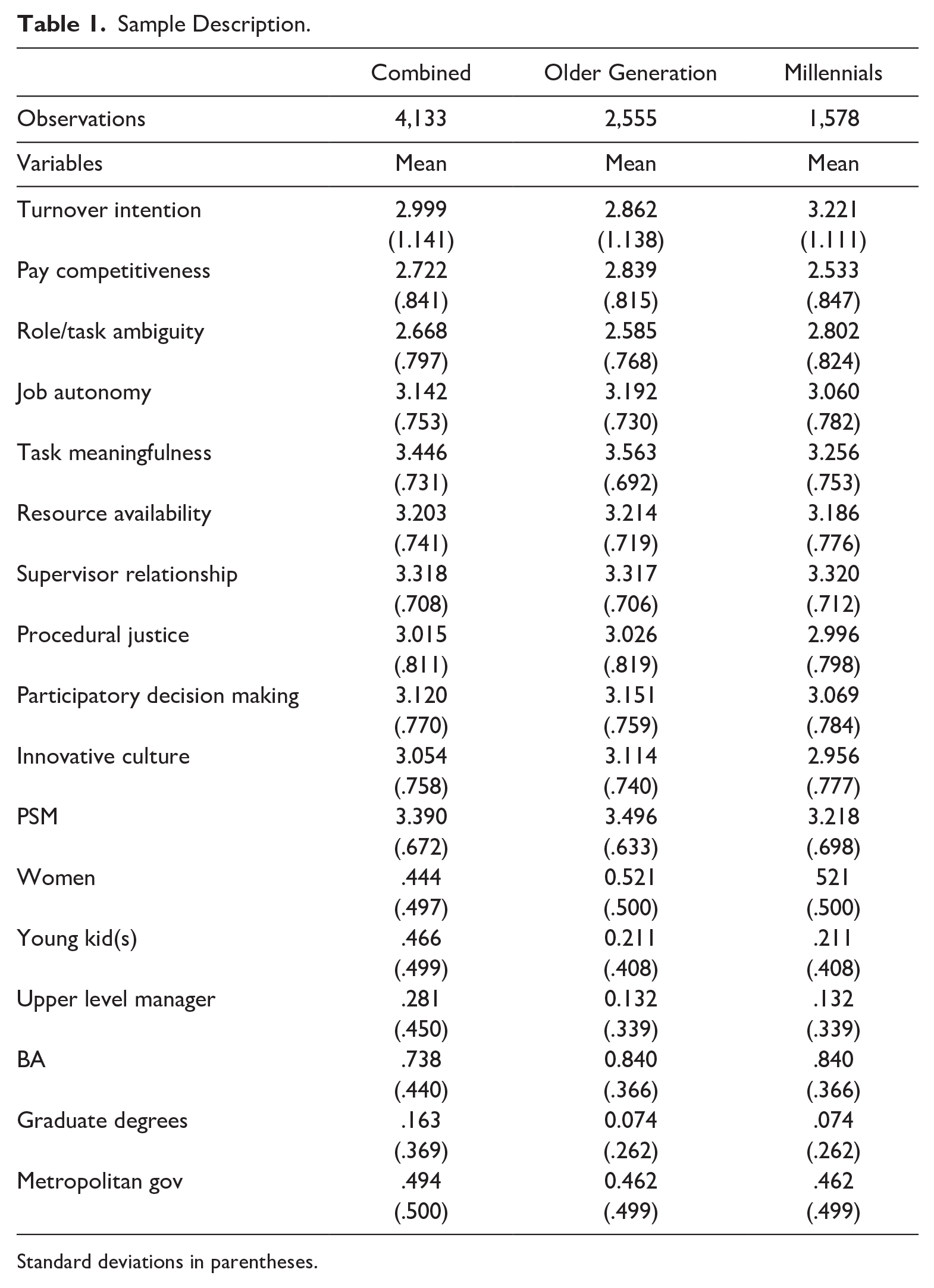
Standard deviations in parentheses.
Independent Variables
Independent variables consist of employees’ perceptions of nine work-related contexts—six individual-level and three organizational-level aspects. The survey items used for the construction of each independent variable are measured with five-point Likert-type scales, ranging from 1 (strongly disagree) to 5 (strongly agree). Table 2 lists the survey items used for each variable, and an unstandardized factor score in each category is used as an independent variable. Table 2 shows high levels of internal validity, with all factor loadings and composite reliabilities (CR) being above 0.70 (Ab Hamid et al., 2017).
Pay competitiveness
Role/task ambiguity
Job autonomy
Task meaningfulness
Resource availability
Relationship with supervisor
Procedural justice
Participatory decision-making
Innovative culture
Overview of the factors and items in the models.
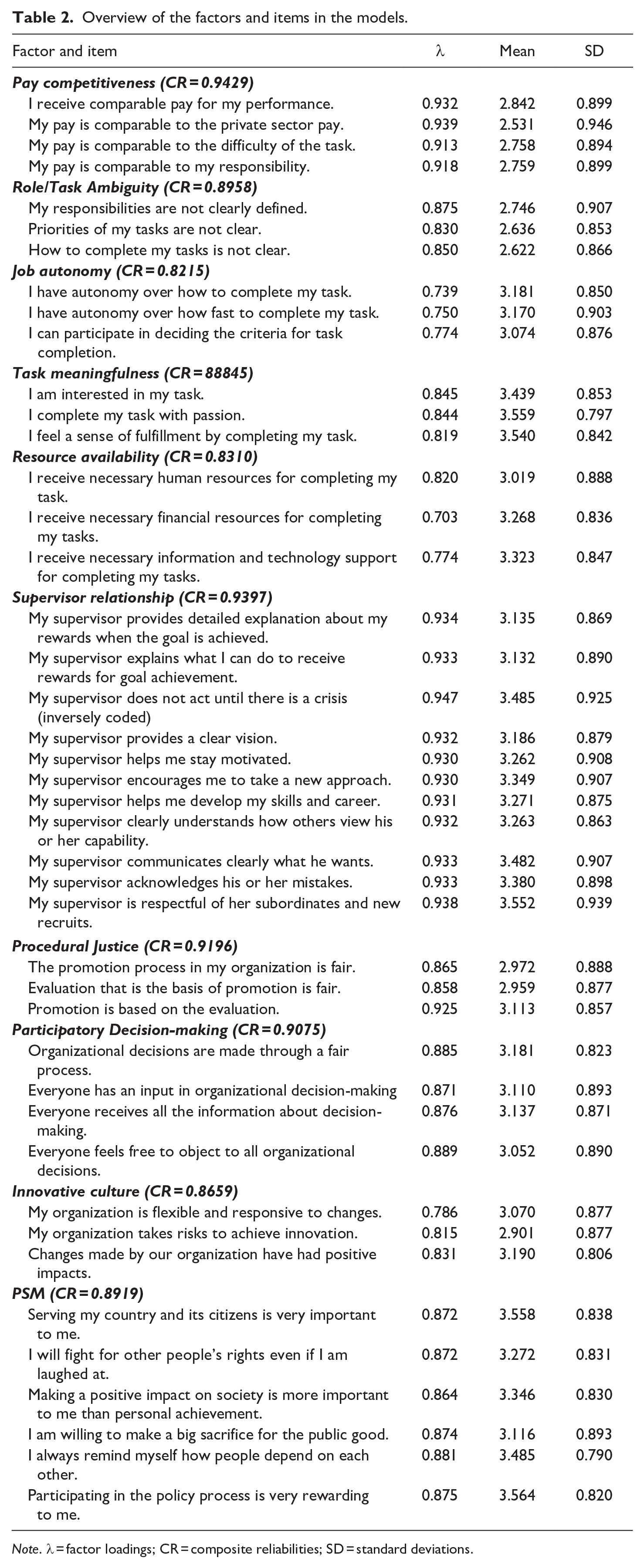
Note. λ = factor loadings; CR = composite reliabilities; SD = standard deviations.
Control Variables
In addition to the above work-related context, the regression includes a person’s level of public service motivation (PSM) as it can enhance civil servants’ commitment to public organizations and positive attitudes toward their work, which, in turn, may increase their retention (Campbell & Im, 2016; Crewson, 1997). The model also controls for sociodemographic characteristics such as gender (female), having children under 18 in the household, and the level of educational attainment (less than BA, BA, and graduate degree). In addition, the regression includes whether respondents held a managerial position (1 if a respondent’s civil service rank is at grade 5 or higher and 0 if lower than grade 5) 6 and whether they worked in a metropolitan or provincial government (1 if employed in a metropolitan or provincial government and 0 if employed in the national government). The millennial generation variable is a dichotomous—1 if a person was born between 1981 and 1996 and 0 if they were born before 1981 7 .
Analytical Strategies
First, we ran split-sample regressions for millennial and older generation civil servants. To determine whether the regression model could be estimated separately for millennial and older generation civil servants, the Chow test was conducted. The purpose of the test is to find out whether the coefficients in two linear regressions are equal (Gujarati, 1970). The results indicate structural differences between the regression coefficients of the equation with millennials and the coefficients of the equation with older generations 8 , suggesting that the models for the two generations should be estimated separately. Next, we ran a set of moderated multiple regression (MMR) models with the millennial generation variable as a moderator (Figure 2) as a robustness check (Aguinis & Gottfredson, 2010).

Research Model with a Moderator.
As all the variables are from a single survey source, multicollinearity and common method bias were checked. The mean variance inflation factors (VIF) of the combined model, older generation model, and millennials’ model are 1.78, 1.85, and 1.62, respectively, suggesting that multicollinearity is not of concern. To check for common method bias, we conducted a Harman’s single-factor test with all items from each of the latent variables (Jordan & Troth, 2020). The results reveal that the total variance extracted by one single factor is 36.75%, suggesting common method bias is not of concern (Fuller et al., 2016). In addition to the VIF and Harman test, we employed a confirmatory factor analysis (CFA) to demonstrate the construct validity of all study constructs in the analytical framework. The standard loadings are higher than 0.5, except for an item in the relationship with the supervisor variable (b = 0.413), and they are significant at the 0.001 level. The CFA results in Table 2 show that all the average variance extracted (AVE) values are higher than 0.5, exceeding the strictest cutoff point of 0.5 for convergent validity (Huang et al., 2013; Malhotra, 2010). Discriminant validity is examined by obtaining the square roots of the AVE values compared with the corresponding factor’s interfactor correlations (Fornell & Larcker, 1981). Table 2 reveals that the square-rooted AVE value of each construct is greater than its interfactor correlation, which provides evidence for discriminant validity. We also extracted composite reliability (CR) estimates on the standard loadings, and they range from 0.822 to 0.942, which are higher than the cutoff of 0.7 (Malhotra, 2010; Raykov, 1997) (Table 3). 9
Composite Scale Correlations.
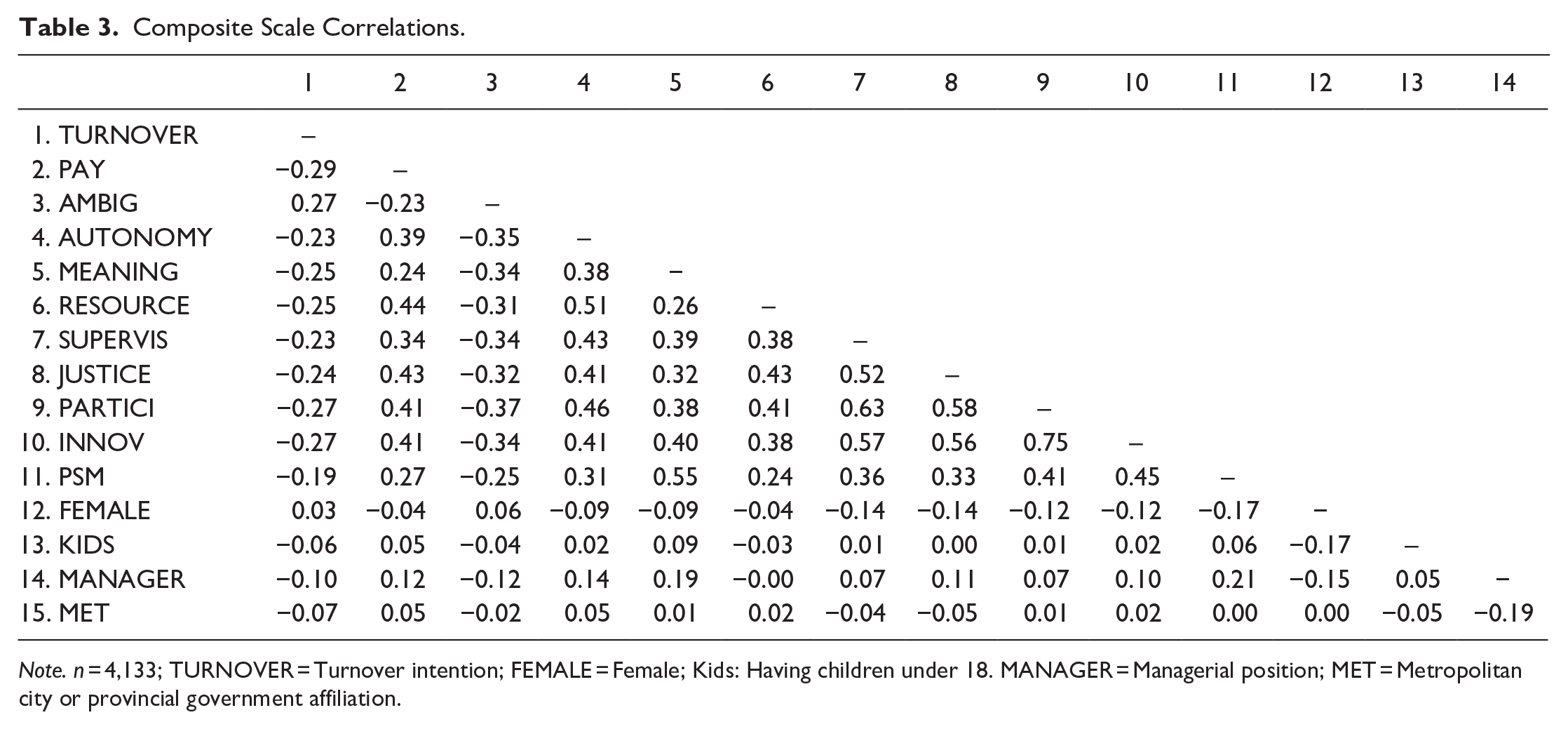
Note. n = 4,133; TURNOVER = Turnover intention; FEMALE = Female; Kids: Having children under 18. MANAGER = Managerial position; MET = Metropolitan city or provincial government affiliation.
Results
The results of the split-sample regressions with the two groups of civil servants are presented in Table 4. Overall, the findings reveal that some of the work-related contexts relate distinctively to the two generations’ turnover intention. First, although perceived pay competitiveness is negatively associated with the turnover intention of both groups, the results show that the absolute value of its coefficient is larger in the millennial model than in the older generation model. The finding that the perception of pay competitiveness is more negatively associated with millennial civil servants’ turnover intention suggests that millennials consider comparable pay more important than their predecessors. Next, the results indicate that role ambiguity is positively associated with the turnover intentions of both generations of civil servants. Still, the coefficient is larger in the older generation model than in the millennial model. This result is contrary to what is hypothesized and suggests that role ambiguity may have a more critical impact on older generation civil servants’ turnover. The results indicate that the meaningfulness of tasks is negatively associated with the turnover intention of both generations, but the size of the coefficient is larger for millennial civil servants than for older generations. Table 4 also shows that, for both millennial and older generation civil servants, perceived job autonomy is not significantly associated with turnover intention. The results reveal that resource availability for task completion is negatively associated with the turnover intentions of older generation civil servants but not with millennial civil servants’ turnover intentions. Satisfaction with supervisors is not correlated with the turnover intentions of older generation civil servants, but it is negatively associated with millennial civil servants’ turnover intentions.
OLS Regressions: Combined, Older Generation, and Millennials.
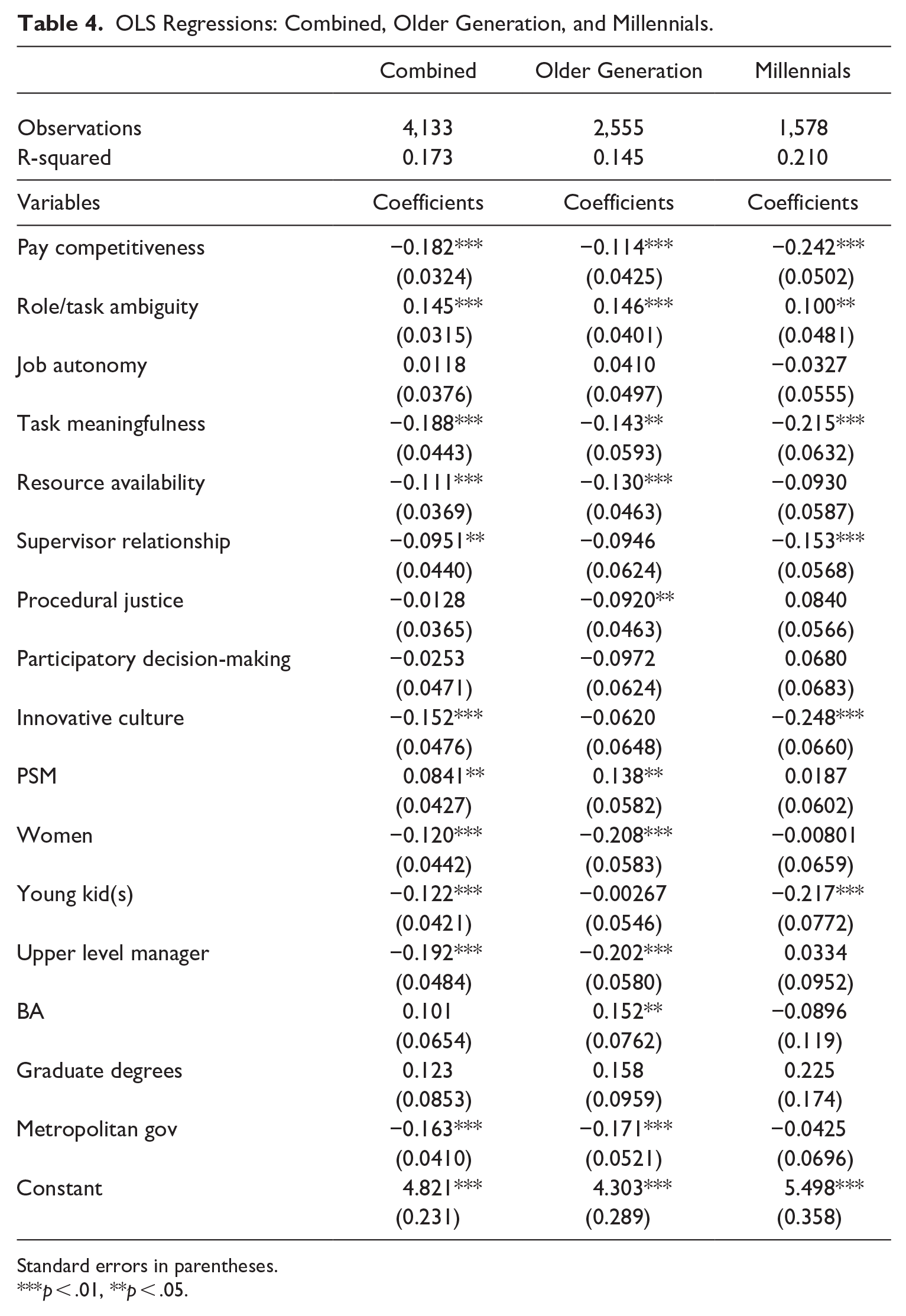
Standard errors in parentheses.
p < .01, **p < .05.
Table 4 shows that perceived procedural justice is negatively associated with the turnover intentions of older generation civil servants but not with the turnover intentions of millennial civil servants. However, the results indicate that the coefficient of the perception of participatory decision-making is not statistically significant for either group. Lastly, the results show that millennial civil servants’ perception of innovative organizational culture is negatively associated with their turnover intention, but the coefficient of this variable is not statistically significant for older generations. 10
Table 4 also shows that PSM is not associated with the turnover intentions of millennial civil servants. More surprisingly, PSM is positively associated with older generation civil servants’ turnover intention. Although further research is required to better understand the relationship between PSM and turnover intention, the result may provide evidence for the limited effectiveness of PSM for younger generations as a retention tool. The results also reveal gender differences in turnover intentions of older generation public sector employees—women are less likely to consider leaving their jobs than men. However, there is no gender difference in millennial civil servants’ turnover intentions. Having young (18 or younger) children is negatively associated with millennials’ turnover intentions, probably because the children of millennials are generally younger than those of older generations. The results indicate that educational attainment is positively correlated with turnover intentions, with those with graduate degrees reporting stronger intentions to leave. Among older generation civil servants, those who work in metropolitan and provincial governments have less intention to leave their organization than those who work in the national government. There is no such difference among millennial civil servants, however.
The MMR results using the millennial generation as a moderator are presented in Table 5, and they allow us to compare the effects of each independent variable between the two groups more directly. Table 5 shows the coefficients of the interaction terms between each independent variable and the moderator in Models 1 to 9, and four of these coefficients are statistically significant. First, the results in Model 1 indicate that the coefficient of the interaction term between pay competitiveness and the millennial generation is negative, implying that perceived pay competitiveness is a more important consideration in millennials’ retention. Second, the interaction term between autonomy and the millennial generation is also negative, which means that perceived job autonomy is more negatively associated with millennials’ turnover intentions. Similarly, the results of Model 4 show that the interaction term between task meaningfulness and the millennial generation is negative, suggesting that perceptions of doing meaningful work matter more for millennials than for older generations. Lastly, the interaction term between innovative organizational culture and the millennial generation in Model 9 is also negative, which implies that an organizational culture of innovation is a more critical factor in millennial civil servants’ intention to leave.
Moderated Multiple Regression (N = 4,133).
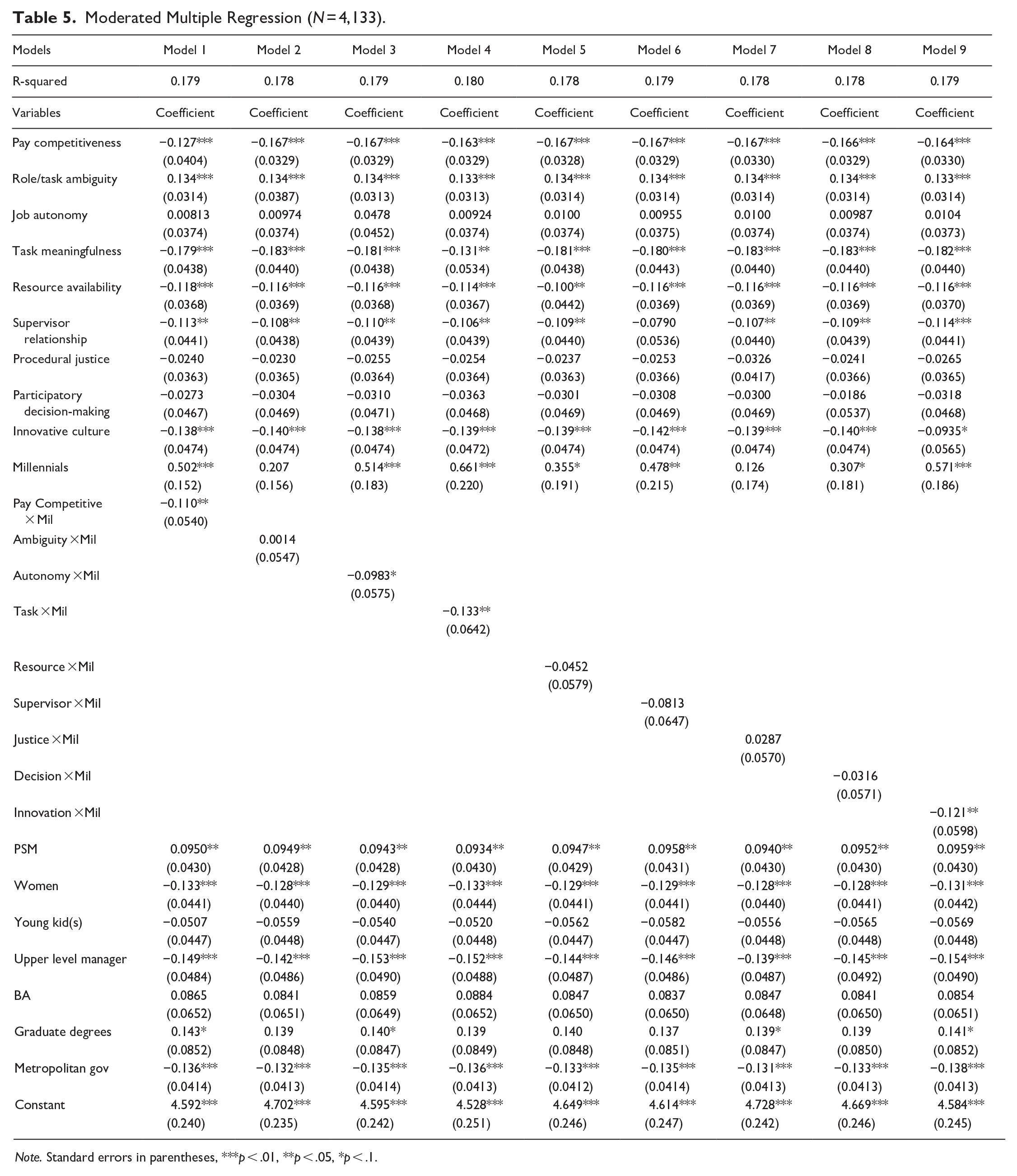
Note. Standard errors in parentheses, ***p < .01, **p < .05, *p < .1.
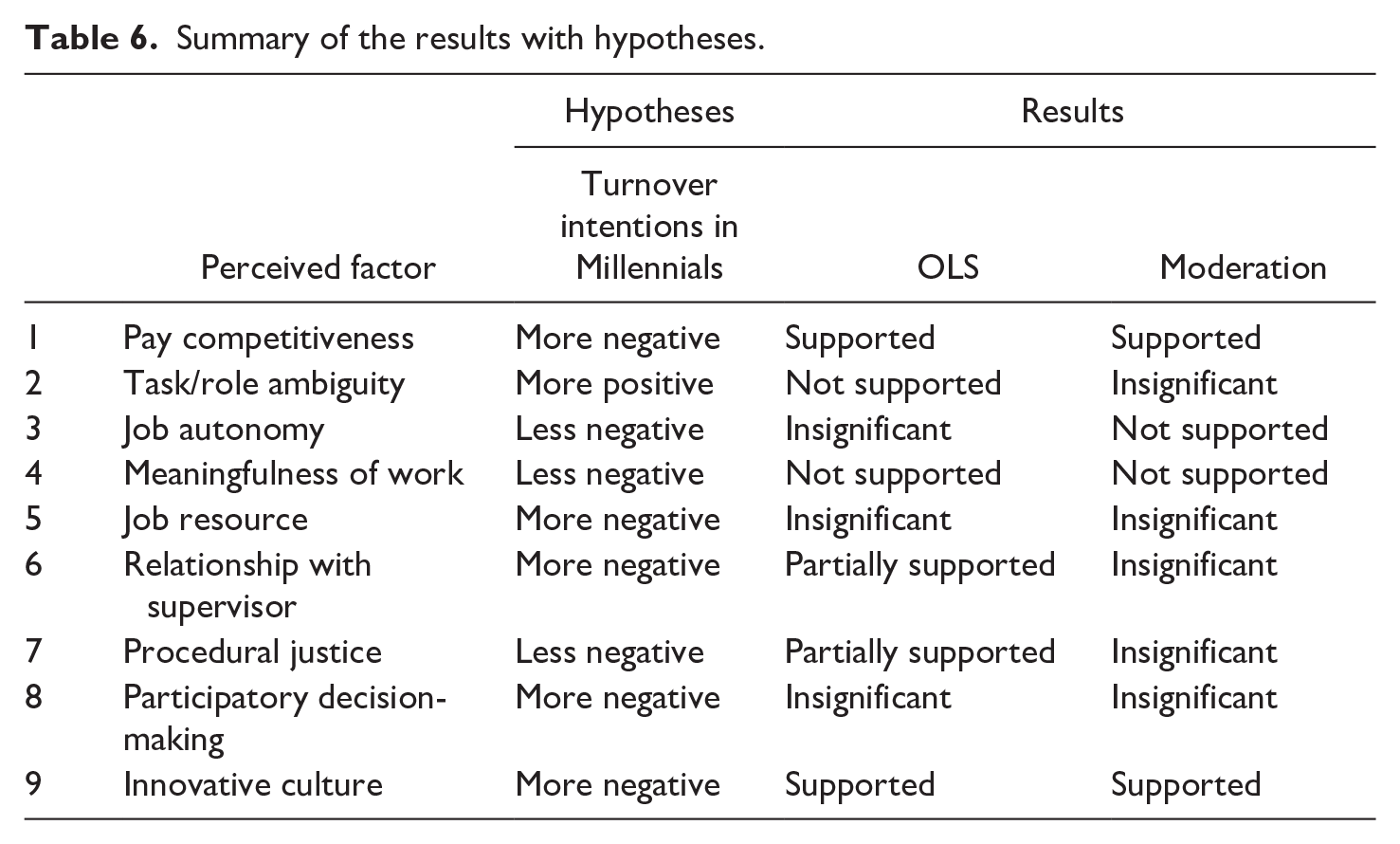
In both the split-sample regressions and MMR models, three factors— perceptions of pay competitiveness, task meaningfulness, and innovative organizational culture—are more negatively associated with the turnover intentions of millennial civil servants when compared with their predecessors. Figure 3 describes how the predicted turnover intention changes much more rapidly for millennials than for older generations as the perceived pay competitiveness changes. The same trends are observed for task meaningfulness and innovative culture (see Figures 4 and 5, respectively). Table 6 summarizes the results of the hypothesis testing based on linear and moderation regression models.
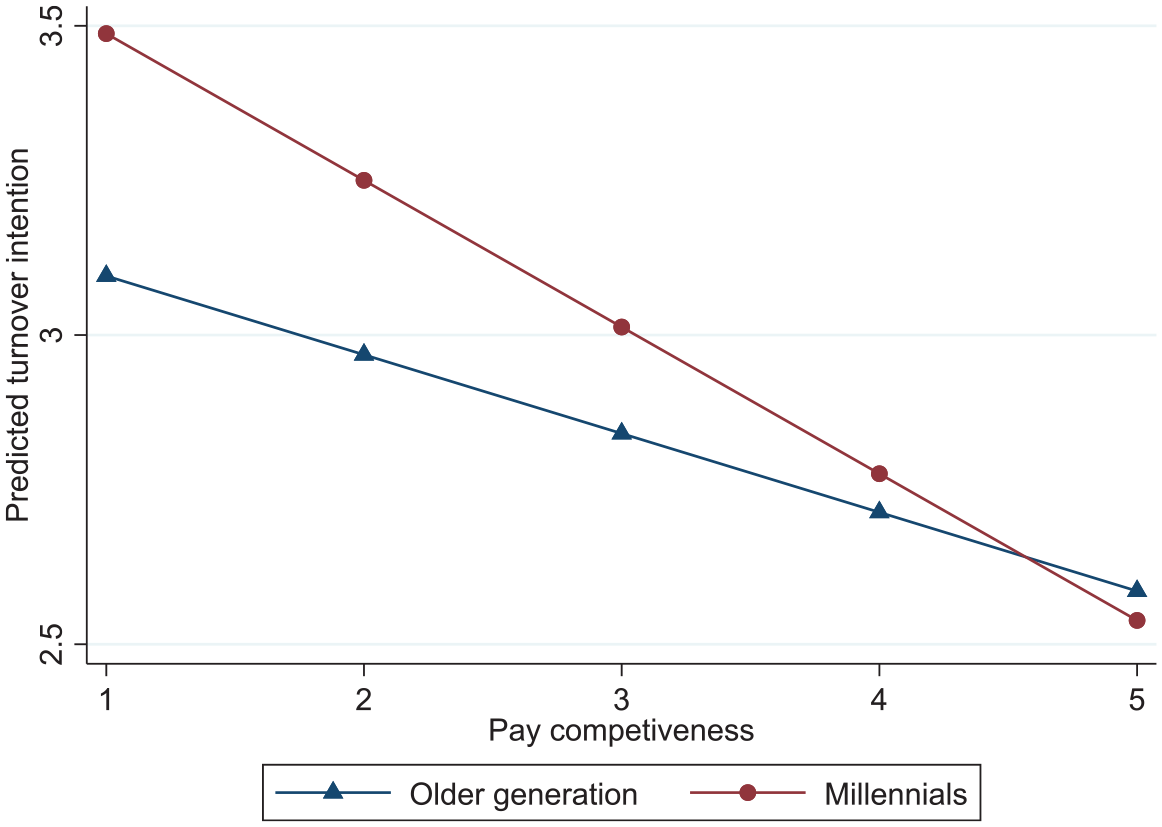
Moderation Effects of Millennial Generation: Pay Competitiveness and Turnover Intention. (Model 5-1).
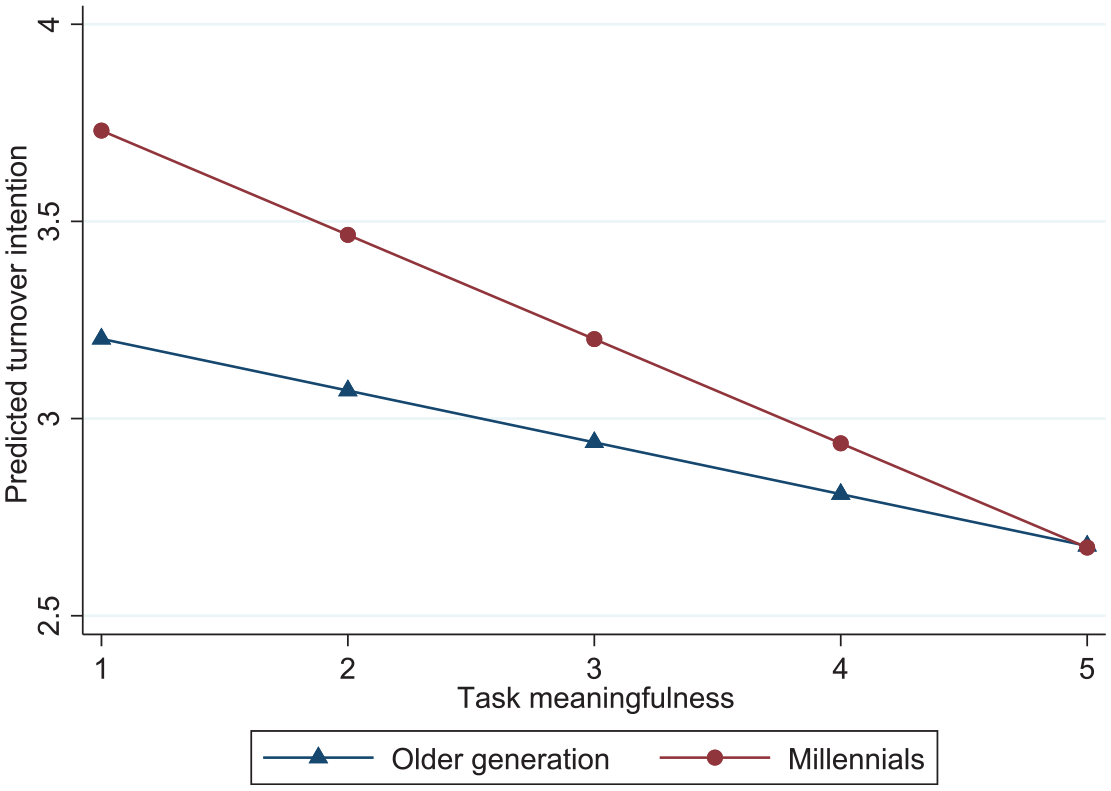
Moderation Effects of Millennial Generation: Task Meaningfulness and Turnover Intention (Model 5-4).
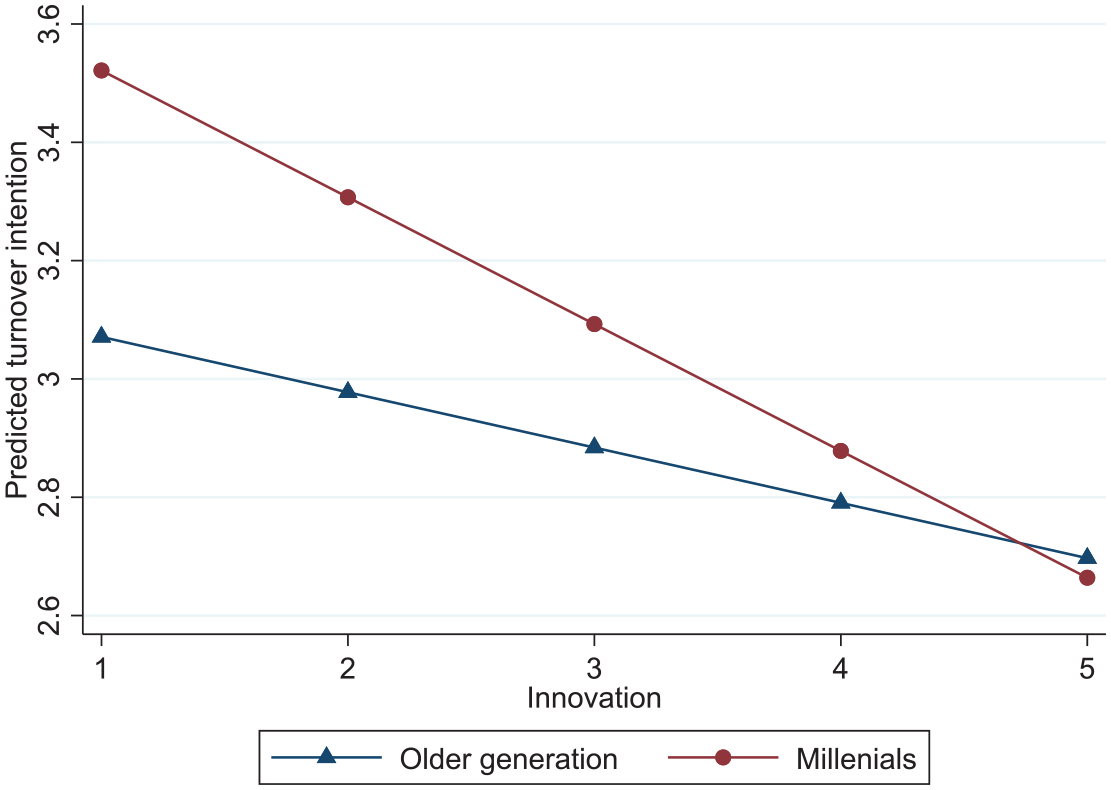
Moderation Effects of Millennial Generation: Innovative Culture and Turnover Intention (Model 5-9).
Summary of the results with hypotheses.
Discussion
Overall, the findings show that civil servants’ perceptions of individual- and organization-level work environments relate distinctively to the turnover intentions between millennial and older generation employees. In particular, the analysis of the 2021 survey of Korean government employees suggests that three factors – perceived pay competitiveness, task meaningfulness, and organizational culture of innovation – are more important retention factors for millennial civil servants than for older generation civil servants. These findings confirm the prevailing view that competitive compensation is a key factor in millennials’ retention. More importantly, however, the findings imply that providing competitive pay alone may not be sufficient to keep this generation in the government workforce. Millennial civil servants consider the meaningfulness of their work and a culture of innovation within their organization more important than their predecessors. SET helps understand the implications of these findings, in terms of keeping the millennial generation in the public sector. First, work meaningfulness may be a more important part of social exchange for millennial civil servants since they exhibit high levels of self-confidence and job engagement (Hoole & Bonnema, 2015; Park & Park, 2024). Next, the greatest importance of innovative organizational culture among millennial civil servants suggests that establishing a culture of innovation in government can create a sense of reciprocation among millennial civil servants (Ng et al., 2016).
These findings may not be generalizable due to the following limitations. First, this study examines how various work-related contexts are linked to civil servants’ turnover intentions rather than actual turnover. Even though research finds a strong correlation between turnover intention and actual turnover, future studies should examine how civil servants’ perceptions of work contexts relate to actual turnover, not just their intention to leave (Ertas, 2015). Second, there is a multitude of work-related contexts affecting employees’ turnover intentions, and not all of them were tested in this study. More questions about other critical factors affecting turnover should be included in the future survey. Third, this study examines how an individual’s perceptions of organization-level work contexts relate to turnover intentions. Due to the lack of agency/department information, this study cannot test how collective perceptions of these contexts, combined at the organizational level, are associated with turnover intentions. Fourth, the study used a single cross-sectional dataset, and therefore, it cannot distinguish whether the differences are generational or age-related. A longitudinal analysis using multiple years of data will help differentiate between age and cohort effects. Lastly, this study’s data are from a survey of South Korean civil servants, and focusing on a single national context can limit the generalizability of the findings. Nevertheless, research in different national contexts finds consistent patterns of generational differences in terms of work motivations and values, suggesting that the findings may well apply to other countries (Cogin, 2012; Edmunds & Turner, 2005).
This study’s findings provide important policy implications for public sector HRM in South Korea and beyond. First, government agencies should assess the current pay gap between the public and private sectors and consider incorporating market-based principles into their compensation system. Especially in countries where civil servants’ pay is based primarily on seniority, including South Korea and Denmark, adopting a more flexible incentive structure could help retain millennial civil servants (Kyeong & Kim, 2024). Next, government agencies must ensure millennial civil servants have meaningful work experience in an innovative workplace culture. Although there is no one-size-fits-all solution, ethical leadership contributes to public sector employees’ perception of work meaningfulness through linking employees’ self-concept to larger purposes (Mostafa & Abed El-Motalib, 2020; Tummers & Knies, 2013). Research also stresses the importance of institutional support, both political and policy support, in creating positive perceptions of risk-taking and providing sufficient funding for innovation (Moussa et al., 2018). The institutional support for extending and entrenching the innovative practices will encourage millennial civil servants’ innovative and creative behaviors and contribute to their retention.
Conclusion
Millennial civil servants play crucial roles in today’s government and will play even more important roles in the future. Therefore, understanding their turnover intentions will also contribute to developing more effective government HRM practices. This study’s findings suggest that managing millennial civil servants should take different approaches from managing older generation civil servants. Although this study’s findings confirm that providing competitive pay has greater importance in keeping millennials in the government workforce, they also reveal that the staying power of pay is not the only distinction between the two generations of civil servants. In particular, the findings suggest that providing meaningful tasks and establishing a culture of innovation be a part of retention strategies for the millennial government workforce. Hence, improving these conditions through ethical leadership and government-wide support for innovative and creative practices should be the priority of the public sector HRM to keep millennial civil servants.
Footnotes
Declaration of Conflicting Interests
The author(s) declared no potential conflicts of interest with respect to the research, authorship, and/or publication of this article.
Funding
The author(s) received no financial support for the research, authorship, and/or publication of this article.
