






Abstract
Although extensive research has examined the relationship between public service motivation and job-related outcomes among civil servants, limited attention has been paid to its career-related consequences. Drawing on the model of proactive motivation, this study investigates how and when public service motivation fosters civil servants’ subjective career success. Through a two-wave questionnaire survey of 270 civil servants from China, the findings reveal that public service motivation has a positive effect on civil servants’ subjective career success via the mediating role of career crafting. Moreover, visionary leadership and future work self-salience can strengthen this mediated relationship. Theoretical and practical implications are also discussed.
Keywords
Introduction
Long-term career success has increasingly attracted attention in public sector human resource management, as it sustains civil servants’ motivation and enhances public service performance (Ahmad & Saad, 2020; Chen et al., 2022; X. Lu & Guy, 2018). Career success comprises objective and subjective dimensions: objective career success refers to observable achievements such as salary and rank, whereas subjective career success reflects evaluations of career fulfillment, including growth, goal attainment, and self-identity (Arthur et al., 2005; Colakoglu, 2011; Ng et al., 2005). In the public sector, rigid pay systems, limited promotion opportunities, and tenure-based advancement constrain the attainability of objective success and motivational value (X. Lu & Guy, 2018; Ma et al., 2015). Consequently, subjective career success becomes a more relevant and attainable indicator of career fulfillment and a key mechanism for sustaining motivation and long-term engagement (Chen et al., 2022). It is important to clarify that subjective career success is conceptually distinct from general job satisfaction, which reflects employees’ emotional response to their current job or work environment (Judge et al., 2017). In contrast, subjective career success refers to a broader evaluation of one’s entire career trajectory, including personal growth, goal achievement, and self-identity fulfillment (Arthur et al., 2005; Spurk et al., 2019). In the public sector, where objective career advancement is constrained, individuals’ perception of career success extends beyond job conditions to a sense of mission, social contribution, and long-term professional value (Chen et al., 2022; Van der Heijden & Vermeeren, 2025). Thus, enhancing subjective career success has become an increasing focus in public administration research and practice (Ahmad & Saad, 2020; Chen et al., 2022; Van der Heijden & Vermeeren, 2025).
Previous research on subjective career success among public employees has mostly concentrated on organization-level contextual antecedents (e.g., training and mentoring from supervisors) and individual-level antecedents, including demographic characteristics and personal ability such as political skills (Chen et al., 2022; Mohd Rasdi et al., 2011; Muhammad et al., 2022). While these studies provide valuable insights, they largely overlook the intrinsic motivational processes that shape how civil servants evaluate their long-term career development. This gap is critical because career development pathways and definitions of success here differ greatly from those in the private sector (Piatak, 2015). In the public sector, constrained opportunities for objective advancement (e.g., salary and promotion) make subjective evaluations of career success more central, often grounded in social recognition, policy impact, and public value creation (Abele et al., 2011; Piatak, 2015). Therefore, focusing solely on demographic, personal ability, or organizational factors may not be sufficient to fully explain the formation of subjective career success, but a deeper understanding of the psychological and motivational drivers embedded in the public service context is especially needed (Q. Wang et al., 2024). In this vein, public service motivation (PSM), defined as an individual’s intrinsic orientation toward serving the public interest (Perry & Wise, 1990; Vandenabeele, 2007), offers a promising explanatory perspective. As a core motivational force driving civil servants to pursue socially meaningful goals, PSM may play a significant role in shaping subjective career success (Bright, 2008; Ritz et al., 2016). However, existing studies mainly focus on its short-term, work-related outcomes, such as job satisfaction and organizational commitment (S. Kim, 2012; Liu & Perry, 2016), leaving its long-term career implications underexplored. To address this critical gap and advance career theories and sustainable talent management strategies in public organizations, this study aims to investigate how PSM influences civil servants’ subjective career success, as well as the underlying mechanisms and boundary conditions that may strengthen this relationship.
The model of proactive motivation provides a theoretical framework for this research question. This framework underscores the pivotal role of an individual’s internal drive to proactively initiate and sustain behaviors in shaping future career development (Parker et al., 2010). By focusing on personal agency and proactivity, the theory posits that individuals’ characteristics can stimulate specific motivational states (i.e., “can do,” “reason to,” and “energized to”), which in turn foster proactive goal-oriented behaviors that ultimately lead to future outcomes (Parker et al., 2010). This study argues that career crafting is such a behavior that shapes long-term, career-related outcomes and plays a mediating role linking PSM and subjective career success. Career crafting is individuals’ active professional behaviors (De Vos et al., 2019; Tims & Akkermans, 2020), which is conducive to professional self-management in public organizations and promote career growth (Leeuwen et al., 2021; Ni et al., 2024). As a highly altruistic and socially oriented motivation (Vandenabeele, 2007), PSM aligns with the “goal motivation” of the model of proactive motivation. Individuals with high PSM tend to have clear career goals that drive active career construction and career reflection (Hu et al., 2025; Piatak, 2016). Career crafting encompasses both (a) proactive reflection on career goals, which improves professional clarity (De Vos et al., 2019; Vidwans, 2016), and (b) proactive construction of career goals to achieve them, which enhances career competence (Tims & Akkermans, 2020). This active adaptability helps individuals successfully manage their career development, thus improving subjective career success (Zacher, 2014).
Furthermore, it is important to note that the above process is conditional. The model of proactive motivation emphasizes that proactive behaviors are jointly shaped by personal characteristics and contextual factors (Parker et al., 2010). Career crafting is inherently future-oriented, encompassing both adaptation to current roles and long-term career planning (De Vos et al., 2019; Tims & Akkermans, 2020). From an organizational perspective, structural constraints such as limited promotion pathways lead to ambiguous career goals and a diminished sense of personal achievement (Campbell, 2025; Jung, 2014; Napitupulu et al., 2017). Factors that strengthen future orientation and career meaning are particularly relevant in this process. This study focuses on two such factors: future work self-salience (FWSS) and visionary leadership. As an individual difference factor, FWSS refers to the clarity of one’s future work self and has been shown to strengthen career goal orientation and organizational identification (Strauss et al., 2012; Xu & Yu, 2025; H. Yu et al., 2018). Civil servants with high FWSS are more likely to perceive their work as meaningful and to engage in proactive career behaviors, such as career crafting, to align their actions with future career goals (Guo et al., 2022; Strauss et al., 2012; Talluri et al., 2025). From an organizational perspective, visionary leadership, as a future-oriented leadership style that enhances individual career satisfaction by articulating a clear organizational vision, is widely acknowledged for promoting individuals’ long-term career development (J. Kim et al., 2023; Van Knippenberg & Stam, 2014). Visionary leaders can help employees clarify organizational direction and strengthen employees’ career aspirations, thereby encouraging proactive career behaviors such as career crafting (Griffin et al., 2010; Song et al., 2025). Therefore, both FWSS and visionary leadership, as future-oriented factors closely tied to career development, are expected to act as boundary conditions affecting the indirect effect of PSM on subjective career success.
To sum up, based on the model of proactive motivation, this study examines how PSM affects civil servants’ subjective career success through career crafting, and how this process is moderated by FWSS and visionary leadership (see Figure 1). It offers three theoretical contributions. First, it extends PSM’s career-related outcomes by identifying career crafting as the mediating mechanism, highlighting how PSM shapes long-term career development beyond short-term career implications. Second, it integrates career crafting into public administration theory, demonstrating its relevance in contexts where career autonomy is usually constrained. Finally, it enriches research on the model of proactive motivation by incorporating FWSS and visionary leadership as boundary conditions, thereby enhancing its explanatory power for career development in public organizations.
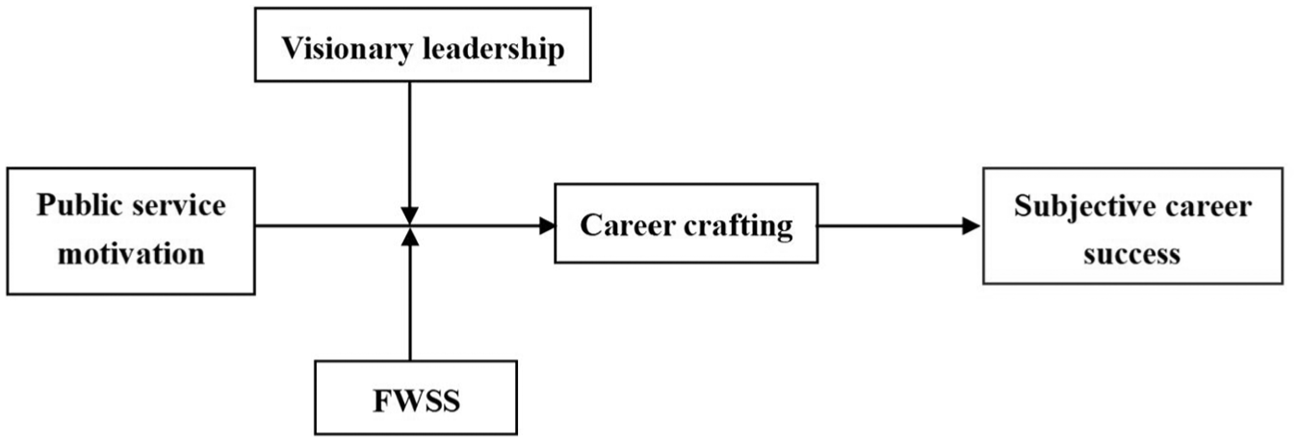
The Theoretical Model.
Theories and Hypotheses
The Model of Proactive Motivation
The model of proactive motivation was proposed by Parker et al. (2010) to explain the process by which an individual proactively strives to change their work environment and/or themselves to achieve a different future. First, the model of proactive motivation suggests that being proactive is “being proactive is about taking control to make things happen rather than watching things happen” (Parker et al., 2010, p. 828). Thus, the model of proactive motivation identifies proactivity as a goal-driven process that involves setting a positive goal (proactive goal generation) and striving to achieve that positive goal (proactive goal striving; Ng et al., 2021). Second, the model of proactive motivation suggests that individuals, having identified a set of prospective goals that they can personally pursue, will be in a position of motivational states of “can do,” having “reason to” do, and being “energized to” do (Parker et al., 2010). Third, the model of proactive motivation suggests that an individual’s proactive motivational state will be influenced by both individual and contextual factors, which will jointly affect the proactive process and outcome (Zhang & Inness, 2019). Fourth, the model of proactive motivation explains an individual’s potential career outcomes. Therefore, this framework focuses on a conscious, self-initiated, goal-driven process, highlighting the role of individual agency and proactivity in active self-regulation (Parker et al., 2010). It can be used to explain positive behaviors or positive outcomes of individuals in various kinds of organizations, such as constructive voice behavior (Ng et al., 2021), higher job performance (W. C. Lu & Kuo, 2016), well-being (Afzal et al., 2024), and so on.
Recently, some scholars have extended the model of proactive motivation to career management research, pointing out that individual cognitive factors (e.g., career self-efficacy beliefs, Valero et al., 2015; future work self, Guan et al., 2014), affective factors (e.g., expected positive emotions at work, Hirschi et al., 2013), and motivational state factors (e.g., career stress and career exploration, Strauss et al., 2017) have a critical impact on career development. Individual proactivity can motivate individuals to proactively engage in career self-management behaviors (e.g., career exploration, Hirschi et al., 2013), which in turn produce positive outcomes (e.g., improved job performance and reduced propensity to leave, Guan et al., 2014). However, current research based on the model of proactive motivation exploring individual proactivity for individual career outcomes remains under-researched. Subjective career success refers to “an individual’s perceptual appraisal and emotional response to their career” (Ng & Feldman, 2014, p. 170). As individuals need to take more responsibility for career development (Spurk et al., 2019), more and more individuals take subjective career success as the goal of self-career pursuit (Enache et al., 2011). Therefore, it is of theoretical and practical interest to explore how and when individual proactivity influences subjective career success using the model of proactive motivation (Ng & Feldman, 2014).
Career crafting is defined as “the proactive behavior of individuals to optimize career outcomes by improving the personal-career fit” (De Vos et al., 2019, p. 128). Compared to other proactive behaviors, such as job crafting, career crafting represents their active reflection on and construction of career development, whereas job crafting tends to focus on an individual’s proactive changes to their current work (Ge et al., 2023; Tims & Akkermans, 2020). Thus, career crafting focuses on long-term outcomes, encompasses a broader range of role behaviors, and can be examined within more extensive research contexts (Lee et al., 2021). In this study, we concentrate specifically on the proactive career behaviors individuals undertake during their career development process (Tims & Akkermans, 2020). Therefore, this study proposes that career crafting is the key mediator linking civil servants’ PSM and their subjective career success.
The Mediating Effect of Career Crafting
According to the model of proactive motivation, individuals are influenced by both individual differences and contextual factors, leading them to exhibit proactive job or career behaviors and pursue positive work or career outcomes (Parker et al., 2010). PSM, as a motivating force for employees in public organizations to advance public missions and interests both within and outside these organizations (Tuan, 2016), is defined as “the belief, values and attitudes that go beyond self-interest and organizational interest, that concern the interest of a larger political entity and that motivate individuals to act accordingly whenever appropriate” (Vandenabeele, 2007, p. 549). This study posits that PSM can foster individuals’ unique career inclinations and sense of career mission, compelling them to engage in proactive career crafting behaviors.
On the one hand, PSM motivates individuals toward active construction of their careers due to its relatively stable nature as an individual characteristic (Perry et al., 2008). Those with high levels of PSM tend to have a “predisposition to respond to motives grounded primarily or uniquely in public institutions and organizations” (Perry & Wise, 1990, p. 368). This makes them have a career preference for non-profit careers (Bright, 2016), they tend to choose public sector jobs, and they have a stronger professional identity for non-profit organizations and careers (Q. Wang et al., 2024). Therefore, civil servants with high PSM have clearer and more value-consistent career goals. In order to achieve career goals, they will take the initiative to adopt a series of proactive behaviors, for example, crafting their work resources and challenges (Bakker, 2015), crafting their job (Tuan, 2018), etc. At the same time, employees in public organizations with higher PSM tend to devote more to public service in the process of career development and strive to achieve higher performance (De Simone et al., 2016; Q. Wang et al., 2024), to accumulate more career resources to achieve their career goals.
On the other hand, PSM will trigger the individual to actively reflect on their career. For civil servants with high PSM, the desire to change society by helping those in need—they empathize with the vulnerable, and they are prepared to make sacrifices for the good of society (Perry, 1996). Serving the common good is not only a source of meaning for their work but also a source of meaning for their lives (Luu, 2021). Civil servants with higher PSM tend to have a stronger sense of mission during their career development—they hope to do good for others and devote themselves to the public interest (S. Kim et al., 2013). This allows them to position themselves as givers in their career development and to identify public value as one of the “most important motives, values, and guiding principles in life” (Grant et al., 2008, p. 900). Such career orientation and respect for public values will make individuals pay more attention to the pursuit of continuous satisfaction of higher-order needs in career development, such as helping others, benefiting society, and self-realization (Tuan, 2018). Therefore, they will constantly think about their career value at work, which helps them gain a sense of meaning and mission in career development (Tims & Akkermans, 2020) and promote their career success.
To sum up, this study believes that PSM will push employees to place the interests of public organizations and citizens above their own interests in their career development (Jaskyte, 2017) as one of the most important motivations, values, and guiding principles (Grant et al., 2008). This will drive them to constantly take the initiative to construct their career, and reflect on the significance and value of their occupational development, that is, to take the initiative of career crafting behavior. Therefore, based on the above analysis, this study makes the following hypothesis:
According to the model of proactive motivation, employees who engage in active behavior will experience proactive goal generation (e.g., planning self and situational change) and proactive goal striving (e.g., insisting on overcoming obstacles and self-regulation), and the degree of participation in the two processes affects their different career futures (Parker et al., 2010). Subjective career success encompasses internal factors such as personal values and self-accomplishment (Wei et al., 2024). Existing literature has identified multiple predictors of subjective career success, including human capital, organizational sponsorship, sociodemographic factors, and stable individual differences (Ng et al., 2005). As a proactive career behavior that an individual actively conducts to cultivate their career life (De Vos et al., 2019), career crafting can more effectively emphasize an individual’s agentic and subjective role throughout their career (Tims & Akkermans, 2020). Career crafting includes career goals and the behavior of achieving career goals; it is possible to further affect an individual’s career and stimulate his or her subjective career success (Jiang et al., 2023).
In detail, on the one hand, the proactive construction of the career by civil servants is conducive to the stimulation of their own subjective career success. It encompasses behaviors such as actively seeking development opportunities, engaging in continuous learning, and building professional networks, all of which strengthen individuals’ self-management capabilities and enhance essential career competencies in planning, communication, and reflection (Leeuwen et al., 2021; Tims & Akkermans, 2020). These proactive efforts allow civil servants to intentionally shape their career paths and align their work experiences with their personal goals and values. This alignment typically manifests as a congruence between PSM and the mission of public organizations, or as a fit between individual competencies, role expectations, and the requirements of a public sector position (Gould-Williams et al., 2015). Such congruence, in turn, serves as a key determinant of their subjective career success (Akkermans et al., 2013). Research has shown that these proactive tendencies not only increase perceived employability and recognition but also contribute to greater psychological well-being and career satisfaction (Eby et al., 2003; Spurk et al., 2019). By taking ownership of their professional growth, civil servants create a stronger sense of agency and meaningfulness in their work, which ultimately enhances their overall career fulfillment.
On the other hand, proactive reflection on one’s career also plays a vital role in shaping subjective career success. Reflection on personal values, aspirations, and motivations enhances civil servants’ career clarity, public service mission, and self-understanding (De Vos et al., 2019; Vidwans, 2016). This process not only enhances civil servants’ career clarity and self-awareness but also guides them to evaluate their professional development based on intrinsic criteria such as PSM and commitment to public values (Holt, 2018), rather than external factors like job titles or salary metrics. This reflective process encourages civil servants to recognize meaningful goals, identify developmental needs, and maintain a coherent sense of direction in their career development (Akkermans & Tims, 2017; Akkermans et al., 2013). Through continuous self-reflection, they become more aware of their strengths and limitations, which promotes a more authentic alignment between personal identity and professional roles (Hall & Chandler, 2005). Such alignment not only reinforces psychological well-being and work engagement but also enhances the perception of success derived from personal growth and contribution (Ng & Feldman, 2014; Spurk et al., 2019). Hence, reflection serves as a self-regulatory mechanism through which civil servants cultivate meaning, purpose, and sustained satisfaction in their public sector careers.
Furthermore, career crafting serves as a bridge between the PSM and subjective career success. In one way, civil servants with high PSM are motivated to have a strong preference and professional identity (Q. Wang et al., 2024) and to alter their work resources and requirements to deliver higher-quality public services (Bakker, 2015; Tuan, 2018). This type of active career construction enhances civil servants’ career abilities and promotes their subjective career success (Akkermans et al., 2013). In another way, employees with high PSM are dedicated to serving the public interest and working toward it (Francois, 2000). They are encouraged by this value orientation to continually consider their professional values, which leads to greater career clarity and an enhanced feeling of significance and career progress (Tims & Akkermans, 2020; Vidwans, 2016). These improvements are favorable to subjective career success. Therefore, based on the above analysis, this study makes the following hypothesis:
The Moderating Role of FWSS
The model of proactive motivation emphasizes that different individual characteristics lead to variations in how motivational states are activated and how proactive behaviors are generated across individuals (Parker et al., 2006, 2010). Research suggests that an individual’s beliefs about future work and career development often serve as a critical boundary condition that stimulates proactive behaviors. FWSS, which refers to “the ease of construction and clarity of an individual’s hoped-for work-based identity” (K. Yu et al., 2016, p. 28), is commonly regarded in the literature as the cognitive representation of one’s future self in relation to their career (Strauss et al., 2012). It reflects a stronger sense of control over one’s career development (Lin et al., 2016; Voigt & Strauss, 2024) and can foster ambitious career aspirations (O’Brien, 1996), thereby playing a significant role in facilitating proactive career behaviors. Therefore, given that the salience of possible identities may exert different effects across contexts (Ashforth, 2001), this study proposes that FWSS is likely to strengthen the positive relationship between PSM and subjective career success.
On the one hand, FWSS provides a vivid, goal-oriented vision for an individual’s future career (Guo et al., 2022). For people with high PSM, this clarity helps direct their altruistic motivation to specific professional shaping behaviors (e.g., identifying their role in public service and actively advocating for public policy change). On the other hand, individuals with high FWSS generally have a relatively high sense of control over their future career prospects. They believe that their future is controllable and achievable (Voigt & Strauss, 2024). This will enable them to engage in more positive motivational states and engage in career crafting behaviors, resulting in more positive career outcomes. In contrast, individuals with low FWSS will find it difficult to identify what their career ideals are, which makes it difficult for them to find the gap between their current career development status and career development goals (Zeng et al., 2025), so that they cannot strive for clear career goals. In addition, a low level of FWSS means that individuals have difficulty in enhancing their sense of control when facing possible setbacks and challenges on the career development path; it is difficult to adapt to the uncertainty on the career path (K. Yu et al., 2016), which is not conducive to the generation of proactive career behaviors. Therefore, based on the above analysis, this study makes the following assumptions:
The Moderating Role of Visionary Leadership
The model of proactive motivation further posits that contextual factors may also influence the process through which proactive motivational states and behaviors are driven (Parker et al., 2006, 2010). Among various contextual factors, the role of leadership has garnered significant attention from emerging career scholars (Chughtai, 2018; Litano & Major, 2016). There is a growing discussion on how leadership styles serve as important conditional factors affecting individual career development, as leaders are generally recognized to directly help employees generate career goals, provide career planning, and implement career development training and counseling (Ni et al., 2024). For civil servants, the structural constraints on career progression and the prevalent ambiguity in organizational mission significantly amplify uncertainties in career development (Cohen & Duberley, 2015; Dafou, 2018). Consequently, the guidance on career objectives, resources for career advancement, and sense of purpose conveyed by leaders becomes critically important. Visionary leadership, as a positive leadership style defined as “the communication of a future image of a collective with the intention to persuade others to contribute to its realization” (Van Knippenberg & Stam, 2014, p. 241), is widely recognized by public administration scholars for its positive influence on the development of individual civil servants and team dynamics. For example, visionary leadership has been shown to reduce civil servants’ cognitive uncertainty and foster team innovation in the public sector by enhancing team cohesion (Bernards, 2023; Van der Voet & Steijn, 2021). This means that visionary leadership may play a crucial boundary condition in the process of PSM promoting civil servants’ subjective career success.
Specifically, first, visionary leadership communicates clear organizational and personal objectives, thereby enhancing individuals’ intrinsic motivation for career exploration and their confidence in achieving career development goals (Stam et al., 2010). This increased clarity and motivation, in turn, promote proactive career crafting behaviors (Greco & Kraimer, 2020). Second, visionary leaders offer autonomous support and encouragement, as well as provide employees with appropriate developmental opportunities and guidance in realizing the organizational vision (Khan et al., 2024). Such support enhances employees’ identification with the organization and commitment to public service (T. Wang et al., 2025), enabling them to adapt more effectively during the career crafting process and achieve career development more efficiently. Finally, visionary leadership helps reduce employees’ perceived uncertainty about future career paths through clear communication and consistent action (Bernards, 2023; Utomo et al., 2022). This fosters a positive and optimistic outlook (Mascareño et al., 2020), enables individuals to clarify future goals, buffers the negative impact of unexpected challenges on proactive behavior, and facilitates the achievement of career aspirations. Therefore, based on the above analysis, this study makes the following assumptions:
Research Design
Sample and Procedure
The sample for this study comprised grassroots-level civil servants working in subdistrict offices and township governments in Beijing, China. This group was selected because their roles often require close interaction with citizens and frequent engagement in public affairs, making them a particularly suitable population for examining how PSM shapes career attitudes and behaviors. Additionally, despite the hierarchical organizational structure and merit-based promotion mechanisms within Chinese government agencies, these organizations consistently emphasize proactive organizational development and strategic planning. They actively enhance civil servants’ sense of career purpose and professional competence through cadre development systems. Consequently, the grassroots personnel in China’s public sector provide an important research context for exploring PSM and career outcomes.
Participants were recruited in collaboration with local administrative departments. Civil servants from multiple subdistrict and township units were randomly invited to participate, ensuring adequate variation across departments and job functions. Each participant was informed of the purpose of the survey and assured of confidentiality before participation, and their consent was obtained. Upon completion of both waves of the survey, a reward of 10 RMB yuan was provided to each participant. Initially, this study obtained 382 individual samples. Subsequently, all participants were included in group chats on WeChat, a well-known Chinese instant messaging social media platform, where online electronic questionnaires were administered to minimize missing values. Prior to the survey, researchers informed participants of the survey’s purpose and ensured their informed consent. In the first wave of data collection, this study gathered participants’ self-rated PSM, FWSS, their evaluations of immediate leaders’ visionary leadership, and their demographic information. One month later, the second wave collected participants’ self-assessed career crafting and subjective career success.
For sample collection, this study received 327 samples in the first round of the survey and 293 samples in the second round. Finally, this study collected a total of 270 valid samples with an effective collection rate of 82.57%. In the final sample, the average organizational tenure of the samples was 7.17 years, with a standard deviation of 4.22. In terms of gender, the sample consists of 100 males (37.04%) and 170 females (62.96%). In terms of age, the average age of the sample was 33.31 years, with a standard deviation of 6.08. In terms of education level, there were a total of 12 people with a vocational college school background, accounting for 4.44%; a total of 158 people with a bachelor’s degree, accounting for 58.52%; a total of 95 people with a master’s degree, accounting for 35.19%; and a total of 5 people with a doctoral degree, accounting for 1.85%.
Measures
The measures used in this study are all well-established English scales from papers published in top international management or psychology journals (all measurement items can be seen in the Table A1 in Appendix A). This study strictly followed Brislin’s (1970) back-translation approach to translate the scales into Chinese. All the measures in this study were based on a five-point Likert scale (“1” for “totally disagree” and “5” for “totally agree”).
Public Service Motivation
This study measured PSM using the 5-item Merit Systems Protection Board scale adapted from the 40-item PSM scale developed by Perry (1996), which has been widely used in previous public administration research (Miao et al., 2018; Wright et al., 2013). A sample item was “Meaningful public service is very important to me.” (Cronbach’s α = .82).
Career Crafting
Tims and Akkermans (2020)’s eight-item scale was used in this study to measure career crafting. A sample item was “I strengthen my career goals and make sure that they remain up to date.” (Cronbach’s α = .75).
Subjective Career Success
Greenhaus et al. (1990)’s five-item scale was used in this study to measure subjective career success. A sample item was “I am satisfied with the success I have achieved in my career.” (Cronbach’s α = .76).
Future Work Self-Salience
Strauss et al. (2012)’s three-item scale was used in this study to measure FWSS. A sample item was “My career future is very easy for me to imagine.” (Cronbach’s α = .78).
Visionary Leadership
Drawing on methodological precedents in prior public administration literature (Bernards, 2023), J. Kim et al. (2023)’s three-item scale was adopted in this study to measure each employee’s perception of their immediate supervisor’s visionary leadership. The decision to employ employee ratings rather than leader self-reports is primarily grounded in the recognition by public administration scholars that there is a significant discrepancy in accuracy between leader self-assessed leadership and subordinate-assessed leadership. The latter approach is not only more commonly associated with individual performance and other work outcomes but is also the prevailing method employed in leadership research within the public sector (Jacobsen & Bøgh Andersen, 2015). A sample item was “My immediate leader clearly articulates his/her vision of the future.” (Cronbach’s α = .73).
Control Variables
This study controlled for some demographic information (including gender, age, education, and organizational tenure) of participated civil servants.
Testing Multicollinearity
To examine potential multicollinearity issues in the research model, this study calculated tolerance and variance inflation factor (VIF) scores. As shown in Table 1, the results indicate that the tolerance values for all research variables are greater than 0.20, and the VIF scores are all below the threshold of 10 (Hair et al., 2009). Therefore, multicollinearity does not pose a major concern in the research model of this study.
Testing Multicollinearity.
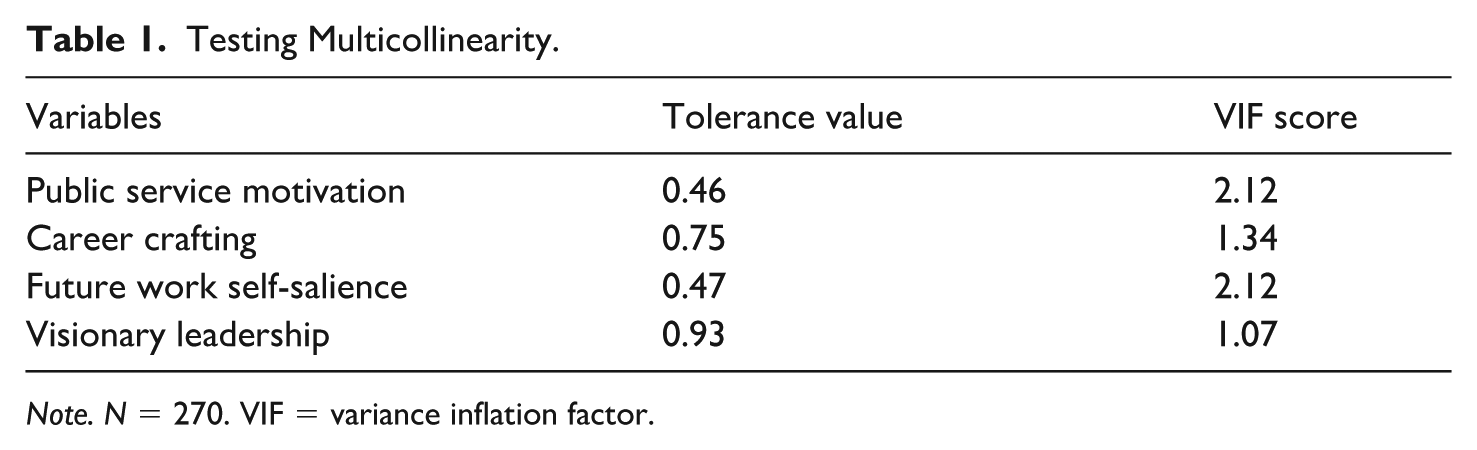
Note. N = 270. VIF = variance inflation factor.
Results
Confirmatory Factor Analysis
By using Mplus 8.0 software, this study performed a series of confirmatory factor analyses (CFAs). As shown in Table 2, the five-factor model (including PSM, career crafting, subjective career success, FWSS, and visionary leadership) demonstrated superior model fit compared to alternative competing models (χ2/df = 1.58, CFI = 0.93, TLI = 0.92, RMSEA = 0.05, and SRMR = 0.06). To further test the convergent validity and discriminant validity, this study calculated the average variance extracted (AVE) and construct reliability (CR) of each research variable. The AVE values for all variables exceed 0.50, and the CR values all surpass 0.70 (see Table 3). Besides, the square roots of the AVE for all variables exceed their correlation coefficients with all other variables. The evidence confirms that the theoretical model proposed in this study exhibits satisfactory convergent validity and discriminant validity.
Confirmatory Factor Analyses Results.
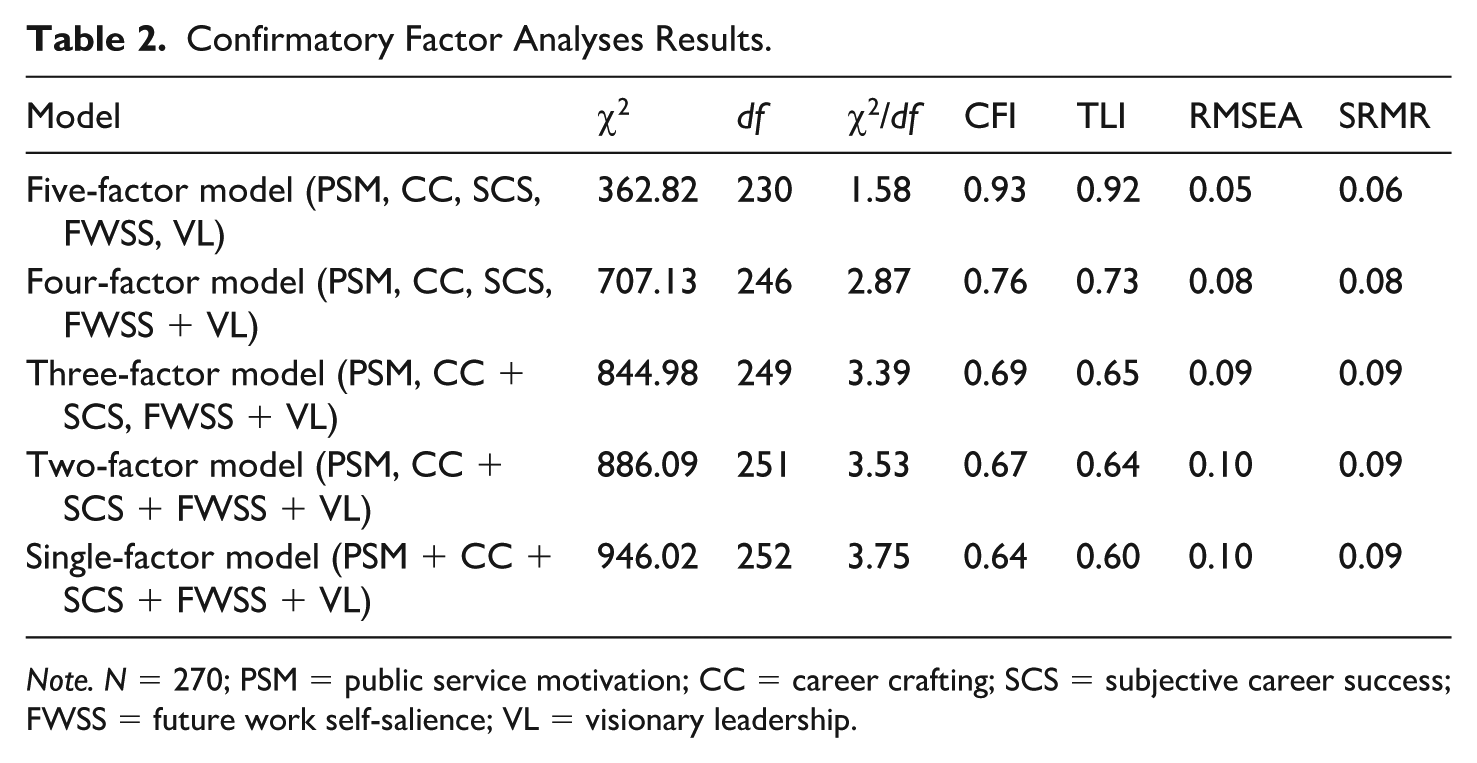
Note. N = 270; PSM = public service motivation; CC = career crafting; SCS = subjective career success; FWSS = future work self-salience; VL = visionary leadership.
Means, Standardized Deviations, and Correlations.
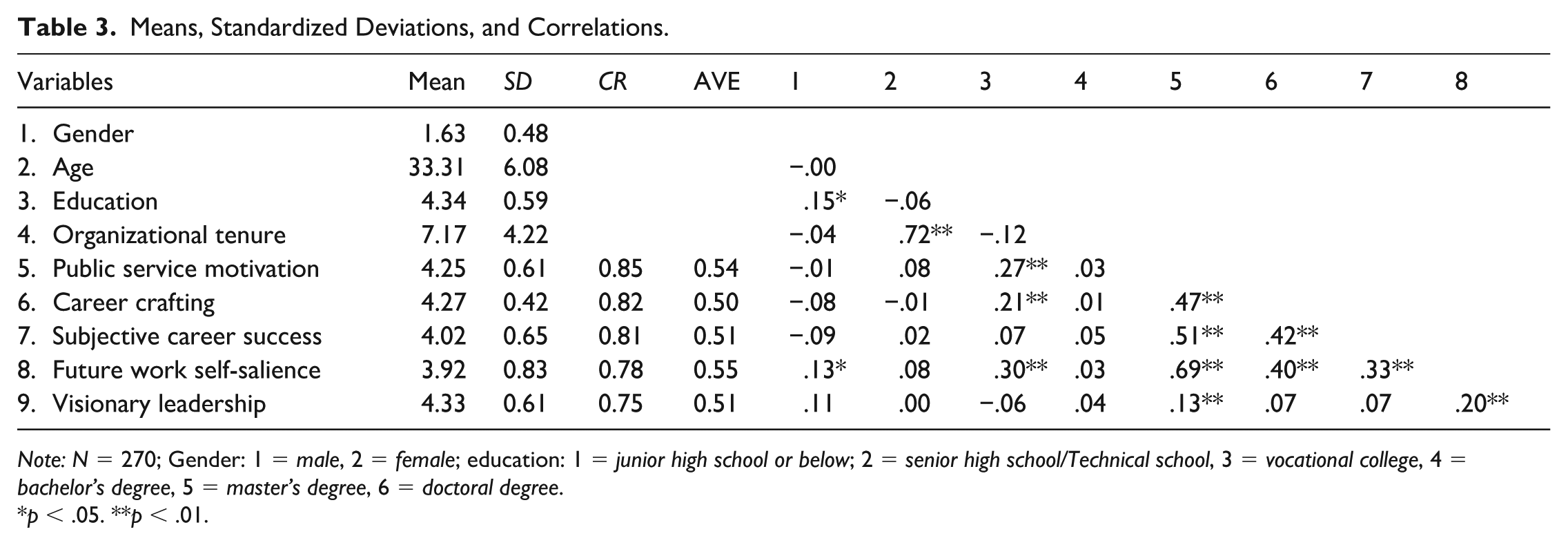
Note: N = 270; Gender: 1 = male, 2 = female; education: 1 = junior high school or below; 2 = senior high school/Technical school, 3 = vocational college, 4 = bachelor’s degree, 5 = master’s degree, 6 = doctoral degree.
p < .05. **p < .01.
Testing Common Method Bias
Although this study employed a multiwave, time-lagged survey design, the potential for common method bias (CMB) remains, necessitating further assessment. First, following Podsakoff et al. (2003), Harman’s single-factor test was conducted. The analysis extracted six common factors with eigenvalues greater than 1, cumulatively explaining 60.48% of the variance. The first factor accounted for 27.24% of the variance, which is below the critical threshold of 50%, indicating no severe CMB issue. Second, using CFA results, this study compared different factor models to test CMB. The results showed that the fit of a single-factor model (loading all items onto one common factor, χ2/df = 3.75, CFI (Comparative Fit Index) = 0.64, TLI (Tucker–Lewis Index) = 0.60, RMSEA (Root Mean Square Error of Approximation) = 0.10, SRMR (Standardized Root Mean Square Residual) = 0.09) was significantly worse than that of the theoretical model (χ2/df = 1.58, CFI = 0.93, TLI = 0.92, RMSEA = 0.05, and SRMR = 0.06) suggesting no significant CMB problem in the theoretical model. Third, following the approach recommended by Williams and Anderson (1994), this study controlled for the effects of an unmeasured latent method factor. Specifically, a CMB factor was added as an unmeasured latent variable with all items loaded on it, and models with and without this factor were compared. The results show that the change in CFI is 0.006, which is below the 0.01 threshold suggested by Cheung and Rensvold (2002). This further suggests the absence of a CMB problem in this study. Taken together, the evidence above indicates that CMB is not a serious issue in this study.
Descriptive Statistics and Correlations
This study analyzed descriptive statistics of research variables and examined correlation coefficients using SPSS 26.0 software. As shown in Table 3, the relationships between key variables align with the theoretical hypotheses proposed in this study. For instance, PSM has significant positive relationships with career crafting (r = .47, p < .01) and subjective career success (r = .51, p < .01). Similarly, career crafting showed a significant positive association with subjective career success (r = .42, p < .01). These findings provide some evidence supporting the theoretical framework of this investigation.
Hypothesis Testing
This study tested the research hypotheses using SPSS 26.0 developed by IBM and Mplus 8.0 developed by Bengt Muthén and Linda K. Muthén software. First, regression analyses were conducted using SPSS 26.0. As shown in Models 2 and 5 of Table 4, PSM demonstrated a positive relationship with career crafting (B = 0.31, SE = 0.04, p < .01), while career crafting exhibited a positive association with subjective career success (B = 0.37, SE = 0.09, p < .01). Subsequently, this study employed the PROCESS macro to examine the indirect effect of PSM on subjective career success. Using bootstrapping with 5,000 resamples, the results revealed a significant mediation effect (indirect effect = 0.11, 95% CI [0.03, 0.22]), indicating that career crafting mediates the relationship between PSM and subjective career success. These findings support Hypotheses 1 and 2.
Regression Results.
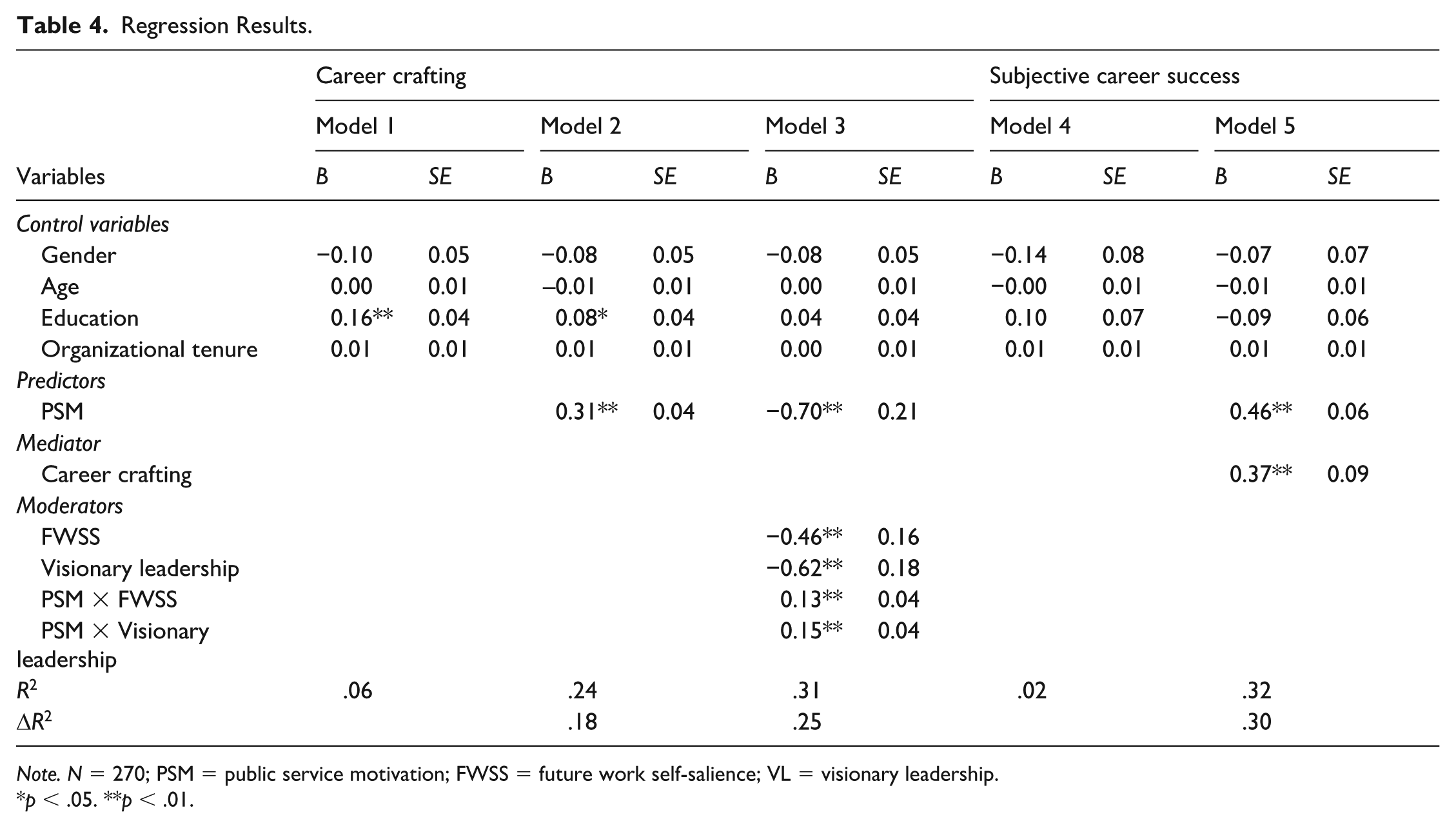
Note. N = 270; PSM = public service motivation; FWSS = future work self-salience; VL = visionary leadership.
p < .05. **p < .01.
Following the confirmation of Hypothesis 2, this study further examined the moderating hypotheses. Model 3 in Table 4 shows that the interaction terms (PSM × FWSS and PSM × visionary leadership) were significantly positively associated with career crafting (BPSM × FWSS = 0.13, SE = 0.04, p < 0.01; BPSM × visionary leadership = 0.15, SE = 0.04, p < .01), suggesting preliminary support for the moderating effects. To clarify the nature of these interactions, this study calculated simple slopes at high (Mean + 1 SD) and low (Mean − 1 SD) levels of the moderators. As shown in Figure 2, the positive effect of PSM on career crafting was stronger when the level of FWSS was high (b = 0.54, SE = 0.11, p < .01) compared to lower FWSS conditions (b = 0.34, SE = 0.06, p < .01). Similarly, Figure 3 shows enhanced effects of PSM on career crafting under higher levels of visionary leadership (b = 0.40, SE = 0.05, p < .01) relative to lower levels (b = 0.22, SE = 0.05, p < .01). These results confirm Hypotheses 3a and 4a.
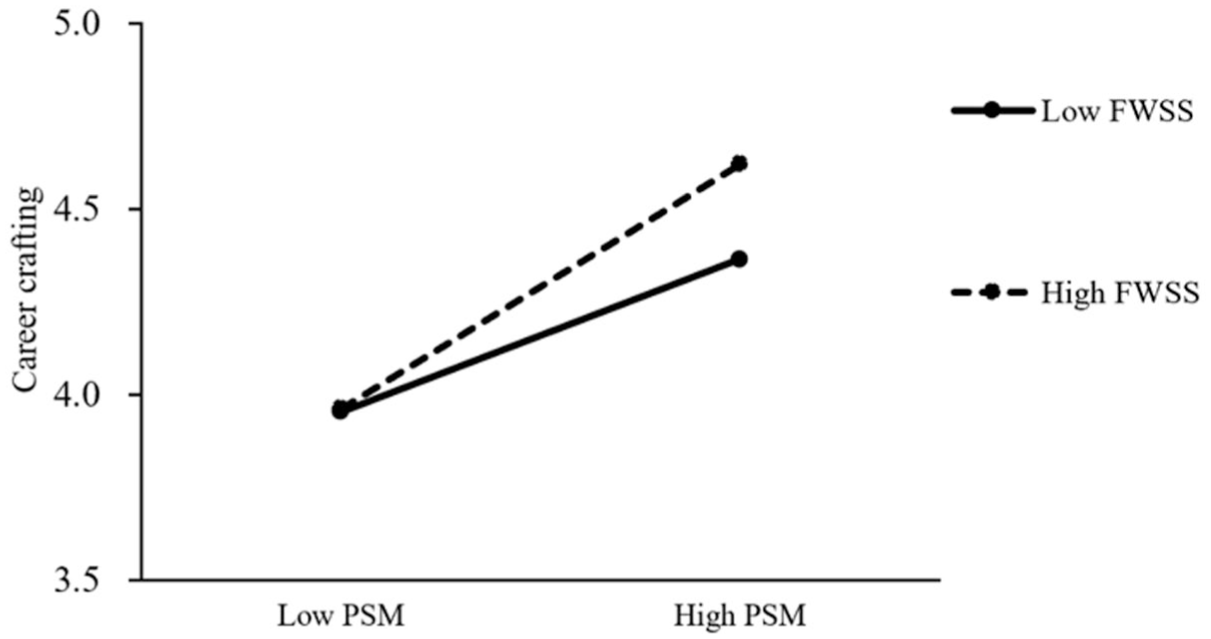
The Moderating Effect of FWSS.
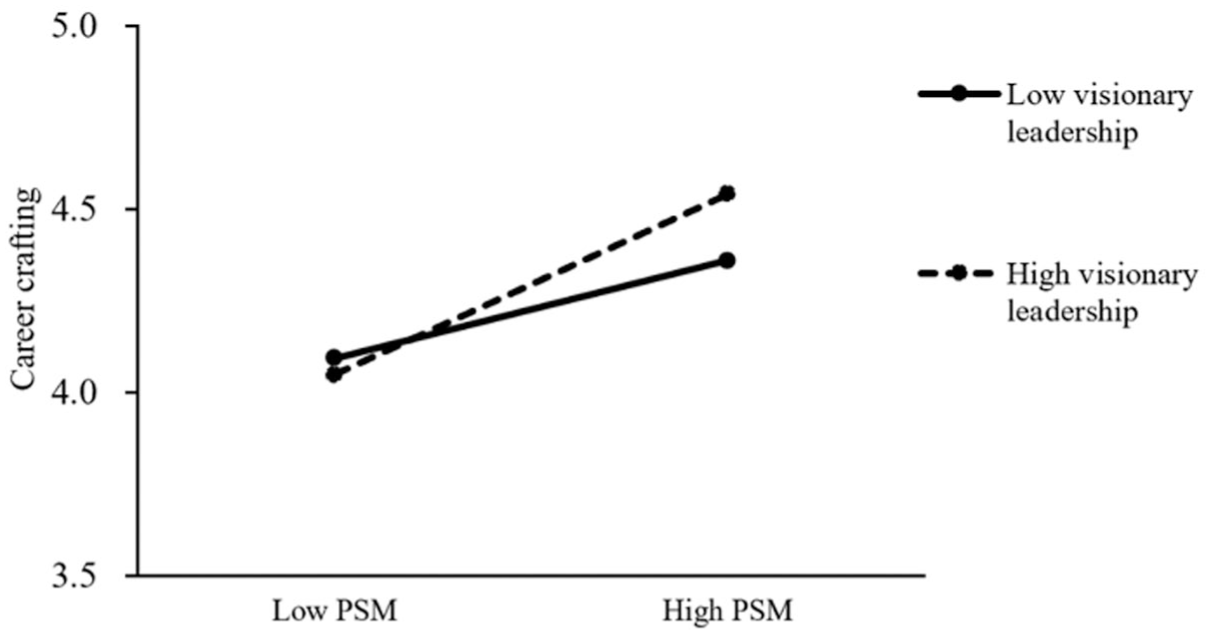
The Moderating Effect of Visionary Leadership.
Finally, to test the integrated moderated mediation hypotheses (Hypotheses 3b and 4b), this study examined the conditional indirect effects at different levels of the moderators by using Mplus 8.0 software. As shown in Table 5, the indirect effect of PSM on subjective career success through career crafting was stronger when FWSS was high (indirect effect = 0.21, 95% CI [0.07, 0.40]) than when it was low (indirect effect = 0.13, 95%CI [0.04, 0.26]). The difference between these conditional indirect effects was statistically significant (difference = 0.08, 95%CI [0.02, 0.15]). Similarly, regarding the moderating role of visionary leadership, the indirect effect was stronger under high levels of visionary leadership (indirect effect = 0.20, 95%CI [0.07, 0.38]) compared to low levels (indirect effect = 0.13, 95%CI [0.03, 0.29]). This difference was also significant (difference = 0.07, 95%CI [0.005, 0.14]). These findings provide robust support for Hypotheses 3b and 4b, confirming that both FWSS and visionary leadership significantly strengthen the indirect effect of PSM on subjective career success via the mediating role of career crafting.
Testing Mediating Effects and Moderated Mediation Effects.
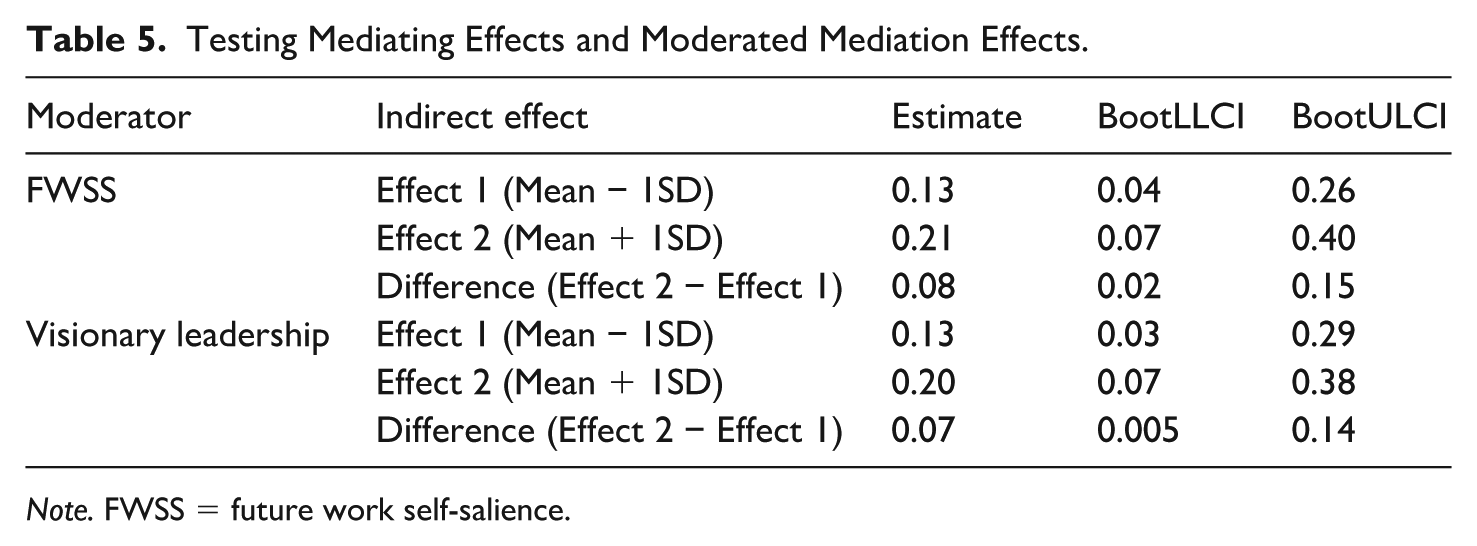
Note. FWSS = future work self-salience.
Discussion and Conclusion
Based on the model of proactive motivation, this study constructed a moderated mediation model to examine how PSM among civil servants contributes to their subjective career success. Based on two-wave questionnaire data collected from civil servants in China, this study yielded several key findings. First, career crafting fully mediated PSM’s influence on subjective career success, and the direct effect was insignificant. The Chinese public sector’s unique cultural context can explain this indirect pathway (Sun & Gu, 2016). Employees with high PSM derive meaning from contributing to the public good, yet the bureaucratic structures may limit direct and autonomous value expression (Tao & Wen, 2022; Wright & Pandey, 2008). Therefore, civil servants with high PSM leverage career crafting to actively create conditions for the fulfillment of their prosocial values, thereby fostering stronger subjective career success.
Furthermore, this study identified two important boundary conditions. For high-FWSS civil servants, PSM’s positive indirect effect on subjective career success was significantly stronger, as a clear and compelling vision of one’s future career provides a concrete career goal and makes them strive for it (Guo et al., 2022; Strauss et al., 2012). Likewise, visionary leadership strengthened the relationship between PSM and career crafting. Visionary leaders provide coherent direction and purpose, aligning employees’ public service values with organizational goals, fostering a supportive environment for proactive career shaping in the public sector (Stam et al., 2010; Van Knippenberg & Stam, 2014).
Theoretical Implications
This study offers several theoretical contributions. To begin with, this study offers a critical theoretical extension to the PSM literature by reconceptualizing PSM from an antecedent of sector choice to a dynamic motivational resource for ongoing career management within the public sector. While established research firmly positions PSM as a predictor of entering and remaining in public service (Perry & Wise, 1990; Rose, 2013; Wright & Pandey, 2008), the findings reveal its sustained, proactive role after entry. This study demonstrates that PSM is not merely a stable trait but a driver of career crafting, such as role tailoring and relationship building, which subsequently enhances subjective career success. This mechanism has two key implications. First, the theoretical focus moves away from PSM’s impact on organizational outcomes (Awan et al., 2020; Bakker, 2015), individual work attitudes (Homberg et al., 2015; Liu & Perry, 2016), and work behaviors (Awan et al., 2020). Instead, this study emphasizes PSM’s role in shaping employee career trajectories and evaluations. This shift bridges public administration theory with contemporary career studies (Ng et al., 2005). Second, it clarifies the black box between prosocial motivation and personal success. By identifying career crafting as the mediating conduit, this study specifies how the abstract desire to contribute to the public good translates into concrete, satisfying career experiences, addressing a gap noted in prior work on public sector careers (Giraud et al., 2019). Thus, this study enriches the PSM construct by theorizing its active, agentic function in the career development of civil servants.
This study makes a second key contribution by theoretically extending the concept of career crafting into the public sector context, an underexplored domain in the extant literature. While career crafting is recognized as a proactive behavior that enhances work satisfaction (Diaa et al., 2024), empirical research has predominantly centered on corporate employees (Ge et al., 2023). The findings demonstrate that civil servants, even within the structured and stable environment characteristic of public institutions, actively engage in career crafting to pursue personal growth and career satisfaction. This extension is theoretically significant for two reasons. First, it challenges the passive stereotype of public employees and refines career crafting theory by showing its relevance beyond market-driven, private-sector dynamics. Second, by identifying PSM as a key antecedent and subjective career success as a core outcome, this research provides a contextualized theoretical framework for understanding why and toward what ends civil servants proactively shape their careers. This addresses a critical gap, as public sector careers, traditionally symbols of stability, now face challenges of disengagement and turnover (Hur & Abner, 2024). The research model thus enriches career crafting literature by anchoring it within the unique motivational (PSM) and structural realities of public administration, offering a more nuanced lens for understanding proactive career management in institutionalized settings.
Finally, this study makes a theoretical contribution by extending the model of proactive motivation proposed by Parker et al. (2010) into the domain of long-term career development within the public sector, thereby validating and refining its explanatory scope. While the model has been widely used to explain discrete workplace behaviors like voice and taking charge (Arshad et al., 2024; Liang et al., 2023), its application to sustained, self-directed career processes remain limited. This research addresses the gap and advances the model in two key ways. First, it theoretically positions PSM as a central enabling motivational state within the framework, demonstrating how this public service-specific drive activates the agentic behavior of career crafting. Second, the study specifies and tests a set of boundary conditions that elaborate the model’s underlying motivational mechanisms: individual-level FWSS strengthens future-oriented proactive motivation, while contextual visionary leadership fosters a supportive environment that legitimizes and reinforces goal alignment. By integrating these personal and contextual factors, the findings provide a more nuanced account of the motivational pathway from PSM to subjective career success. Thus, this study does not merely apply an existing framework; it expands the theoretical utility of the model of proactive motivation by demonstrating its robustness in explaining career-related agency within the structured context of public administration, offering a more integrated view of how stable traits, contextual signals, and motivational states jointly shape proactive career behaviors.
Practical Implications
This study has implications for the management practice of public organizations. First, public organizations should incorporate PSM into their human resource practices by screening for, developing, and promoting PSM among employees. Using evidence-based recruitment methods can help identify candidates with strong PSM from the outset. To sustain this focus, organizations should also implement incentive mechanisms and establish ongoing training frameworks that reinforce PSM. This approach encourages employees to engage in career crafting, thereby enhancing their sense of subjective career success. Second, public organizations should encourage career crafting as a strategic practice that benefits both employees and the organization. This can be supported through resources such as career development workshops, mentorship programs, and cross-departmental training. Fostering a culture that values feedback, learning, and innovation will further motivate initiative-taking among employees. Ultimately, these measures enhance individual well-being while strengthening organizational adaptability, performance, and talent retention in the public sector. Third, public organizations should actively cultivate and enhance the visionary leadership capabilities of their superiors. Visionary leadership can foster a strong sense of purpose and alignment, helping civil servants understand not only what the organization aims to achieve but also how their daily work supports these goals. To achieve this, public organizations need to invest in leadership development programs that build leaders’ skills in strategic communication, vision articulation, and employee engagement. Additionally, public organizations should carefully consider the impact of individual differences in FWSS when designing management practices. Employees with a clear and vivid vision of their future career selves tend to be more proactive and motivated in shaping their career paths. Public organizations can offer regular and targeted vocational training programs that help employees clarify their long-term career goals and develop the skills needed to achieve them.
Limitations and Future Research Directions
This study has several limitations that could guide future research. First, it focuses on the relationship between PSM and subjective career success using self-reported data. Although appropriate given public-sector constraints, career success also includes objective dimensions, which may interact with subjective perceptions (Ng et al., 2005). Future studies should incorporate objective indicators (e.g., promotion or salary) and longitudinal designs to examine how PSM affects objective outcomes and how these outcomes influence subjective career success. They could also consider short-term work outcomes, such as job satisfaction, to capture both immediate experiences and long-term career trajectories. Second, the sample is limited to civil servants in Beijing, which may constrain generalizability (Migchelbrink & Van de Walle, 2020). Beijing’s abundant resources and institutionalized career system may shape career crafting and perceptions of success (Ma, 2017). Although PSM is relatively stable (Vandenabeele, 2007), future research should test the model in other regions and cross-national contexts using multicity or multilevel designs to examine potential contextual boundary conditions. Third, while this study identifies career crafting as a key mediator, other psychological mechanisms may also operate. For example, high-PSM individuals may experience greater job satisfaction from fulfilling prosocial values, which could enhance subjective career success (Breaugh et al., 2017). Future research should explore multiple mediators and consider structural impediments, such as rigid promotion quotas and seniority-based advancement, as moderators through multilevel designs integrating individual and institutional factors. Finally, methodological limitations include using unidimensional scales for complex constructs like PSM and career crafting, which may obscure the effects of distinct dimensions (S. Kim et al., 2013). All measures relied on self-reports, but leadership-related variables could be assessed more objectively in future studies, for example, using natural language processing or large language models to analyze archival meeting data (Huang & Villadsen, 2023), enhancing validity and robustness.
Footnotes
Appendix A
Measurements and Item Descriptions.
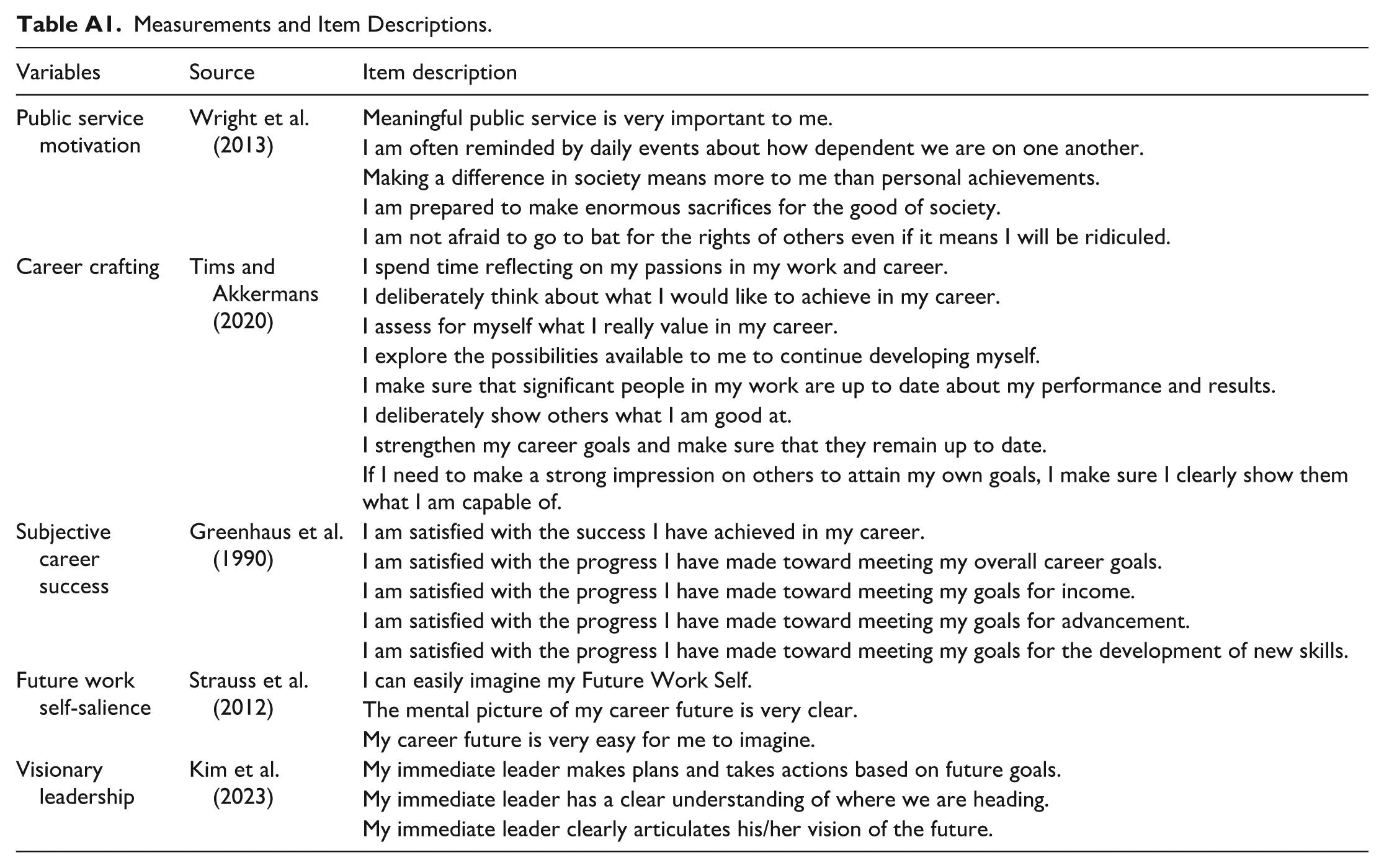
| Variables | Source | Item description |
|---|---|---|
| Public service motivation | Wright et al. (2013) | Meaningful public service is very important to me. |
| I am often reminded by daily events about how dependent we are on one another. | ||
| Making a difference in society means more to me than personal achievements. | ||
| I am prepared to make enormous sacrifices for the good of society. | ||
| I am not afraid to go to bat for the rights of others even if it means I will be ridiculed. | ||
| Career crafting | Tims and Akkermans (2020) | I spend time reflecting on my passions in my work and career. |
| I deliberately think about what I would like to achieve in my career. | ||
| I assess for myself what I really value in my career. | ||
| I explore the possibilities available to me to continue developing myself. | ||
| I make sure that significant people in my work are up to date about my performance and results. | ||
| I deliberately show others what I am good at. | ||
| I strengthen my career goals and make sure that they remain up to date. | ||
| If I need to make a strong impression on others to attain my own goals, I make sure I clearly show them what I am capable of. | ||
| Subjective career success | Greenhaus et al. (1990) | I am satisfied with the success I have achieved in my career. |
| I am satisfied with the progress I have made toward meeting my overall career goals. | ||
| I am satisfied with the progress I have made toward meeting my goals for income. | ||
| I am satisfied with the progress I have made toward meeting my goals for advancement. | ||
| I am satisfied with the progress I have made toward meeting my goals for the development of new skills. | ||
| Future work self-salience | Strauss et al. (2012) | I can easily imagine my Future Work Self. |
| The mental picture of my career future is very clear. | ||
| My career future is very easy for me to imagine. | ||
| Visionary leadership | Kim et al. (2023) | My immediate leader makes plans and takes actions based on future goals. |
| My immediate leader has a clear understanding of where we are heading. | ||
| My immediate leader clearly articulates his/her vision of the future. |
Ethical Considerations
No ethical approval was necessary for this work. Institutional Review Board approval is not required for our study in accordance with the local legislation and institutional requirements (Measures for Ethical Review of Life Sciences and Medical Research Involving Human Beings of China; detailed information can be found at  , accessed on 20 September 2023), as it did not entail clinical trials or manipulations involving humans or animals.
Consent to Participate
Written informed consent was obtained for anonymized individual information to be published in this article. Prior to data collection, we inform participants that the survey will collect their personal information. If they agree to engage in this survey, they can proceed; if not, they can withdraw.
Author Contributions
Funding
The authors disclosed receipt of the following financial support for the research, authorship, and/or publication of this article: This study is supported by the Research Start-up Fund for New Young Teachers of Capital University of Economics and Business [XRZ2026027].
Declaration of Conflicting Interests
The authors declared no potential conflicts of interest with respect to the research, authorship, and/or publication of this article.
Data Availability Statement
The data that support the findings of this study are available on request from the corresponding author. The data are not publicly available due to privacy or ethical restrictions.