







Abstract
Objective
The aim is to comparatively study Shugan Jieyu capsule and sertraline for non-inferiority in the treatment of patients with acute myocardial infarction and depression (observing the curative effects and safety) by the randomized controlled experiment.
Methods
A total of 149 patients with acute myocardial infarction and depression were randomly divided into two groups, the Shugan Jieyu group (76 cases) and the sertraline group (73 cases), and received treatments for 24 weeks. Depression states were assessed by the rote diagnostic checklist, and effects were evaluated by the Hamilton depression scale. Drug safety for heart was assessed by left ventricular ejection fraction (reduced by 5%), blood pressure, heart rate, P-wave and R wave interval, Q-R-S complex wave, and corrected Q-T interval after 12 weeks of treatment.
Results
There were no significant differences in the effective rates of Shugan Jieyu and sertraline groups. Significantly lower adverse event rate was observed in the Shugan Jieyu group. Two groups had a similar cardiac safety.
Conclusion
Shugan Jieyu capsule has a reliable effect and high safety in patients with acute myocardial infarction and depression.
Keywords
Introduction
The association of depression with cardiovascular disease is well reported since the mid-1970s. 1 On one hand, depression is a significant and independent risk factor for the death of the first-episode myocardial infarction (MI).2–5 On the other hand, the incidence of depression after MI is 15%–23%.6–10 It is worth determining whether treatment/intervention of depression can reduce the incidence and mortality of acute myocardium infarction and whether antidepressants could improve the efficacy and safety in acute MI patients accompanied with depressive symptoms. However, studies have reported that tricyclic antidepressants are very dangerous for patients with acute MI. 11 Sertraline is among one of the few safe SSRIs for MI. 12 In 2009, Shugan Jieyu capsule had been approved as a novel antidepressant by SFDA and is the first traditional Chinese medicine (TCM) approved by the State Food and Drug Administration (SFDA) of China. We sought to assess whether Shugan Jieyu capsule has better safety than SSRIs and revealed the non-inferiority of Shugan Jieyu capsule and sertraline in patients with acute MI and depression.
Materials and methods
Case selection
A total of 149 patients suffering from acute MI and depression from Cardiology of Harbin Medical University Hospital Department were divided into two groups (treated by Shugan Jieyu capsules and sertraline) randomly and received 24 weeks treatment. Specifically, 149 patients were numbered chronologically and then labeled by a random number. If the random number was an odd number, the patient was included by the Shugan Jieyu group, otherwise in the sertraline group. Shugan Jieyu group included 76 patients (52–65 years old, averagely 53.4 ± 10.3); the sertraline group included 73 patients (54–66 years old, averagely 54.1 + 10.8). Two groups had no significant differences in ages and patient cases (p > 0.05). Patients were admitted to the group experiment after two weeks of treatment in the hospital. Before admission, they were screened by a special form or by a doctor to meet the preliminary screening criteria and they should sign on a consent. Their diagnosis was determined by a trained examiner using the Hamilton depression rating scale.
Cardiac safety
Cardiac safety was assessed by the following indexes: the number of cases that left ventricular ejection fraction (LVEF) reduced more than 5%, blood pressure including systolic blood pressure and diastolic blood pressure (mean ± SD), heart rate (mean ± SD), P-wave and R wave interval ms (mean ± SD), the time of QRS (mean ± SD), corrected Q-T interval (mean ± SD), and percentage of patients whose QTc > 450 ms.
Entry criteria and exclusion criteria
Entry criteria: (1) over 18 years old, plagued by MI in the past month (diagnosis of acute MI according to the Braunwald standard of cardiology 13 ) and the Hamilton depression rating scale ≥ 18. 14 (2) MI patients must comply with symptomatic myocardial ischemia (with typical chest pain or shortness of breath), and the ECG appears to Ischemic st-segment decline or the ST segment elevation or the new pathological Q wave, myocardial enzyme changing observed, such as elevated serum creatine kinase CK-MB, increased lactate dehydrogenase (LDH1), increased CK (CPK).
Exclusion criteria
Those suffering cardiovascular disease: (1.1) acute MI caused by non-atherosclerotic disease; (1.2) Uncontrollable hypertension (systolic blood pressure > 180 mmHg or diastolic blood pressure > 100 mmHg); (1.3) Less than 3 months after arterial bypass surgery; (1.4) suffering from Arrhythmia; (1.5) suffering from non-arterial sclerosis (such as anemia). Those suffering from other somatic diseases: (2.1) an obvious laboratory examination exception; (2.2) distinct hepatic and renal dysfunction; (2.3) with a history of allergies to sertraline, hyperforin, and acanthopanax. Those suffering from mental illness: (3.1) with alcohol or other substance abuse in the last six months; (3.2) with psychotic symptoms, psychiatric history or suffering from bipolar disorder, organic mental disorder, dementia, and other diseases; (3.3) frequently receiving benzodiazepines; (3.4) receiving psychological treatment in the last three months; (3.5) with suicide attempts; (3.6) receiving monoamine oxidase inhibitor in the last four weeks; (3.7) if the patient has a suicidal attempt or the depressive symptoms are aggravated in the course of treatment, the psychiatrist would advise the patient to quit the experiment; (3.8) with a history of depression and the HAM-D24 score higher than 35 before MI.
Treatment method
The patients who conformed to the entry criteria were divided into two groups: one group received Shugan Jieyu capsule and sertraline placebo treatment, and the other received sertraline and the placebo of Shugan Jieyu capsule treatment. The Shugan Jieyu capsule was produced by Chengdu Kang Hong Pharmaceutical Group Limited (lot number 121225). Sertraline’s trade name was Zoloft, produced by Pfizer Pharmaceuticals Ltd (lot number H80403). Patients suffering from insomnia were admitted to receive chloral hydrate enema treatment and the maximum dose was 1 g.
Observation target
We used the double-blind experiment, and the patients were tested with HAM-D24, CGI-S, and CGI-I in the following weeks: 4, 8, 12, and 24.
The main observation is the non-inferiority of the effects of Shugan Jieyu capsule on acute MI patients with depression; the secondary is the security of Shugan Jieyu capsule on these patients.
Our clinical experience suggested that many patients with acute MI were close to adaptive barriers, which might result in a high rate of self-healing and placebo effect. So, we re-evaluated the patients one month later after treatment.
Heart ejection fraction (LVEF) is the best indicator of cardiac function. Besides, heart rate, blood pressure, PR interval, Q-R-S complex wave interval, and QTc interval were used as the auxiliary parameters. According to the actual situation of the subjects, we set baselines of parameters in two groups, respectively.
Result
General information
Entry criteria process
There were 3907 patients screened: 1105 were identified as acute MI; 742 cases did not conform to the diagnostic criteria of depression; 13 cases had alcohol abuses in the past six months; 147 cases had psychotic symptoms, brain organic mental disorders or dementia; 30 cases had obvious suicide behaviors; 7 patients were pregnant or nursing; 17 cases refused to sign on the informed consent; and only 149 patients were in accordance with the experimental requirements. After 24 weeks of treatment for Shugan Jieyu group, there were six cases of interruption, three cases of adverse events, three cases of poor efficacy, and five cases of against the agreement. Besides, there were two cases died, six cases lost to follow-up, three cases out of the experiment. Only 48 cases completed the experiment (76 cases were included in the analysis). In the Seculin group, there were seven cases of interruption, two cases of adverse events, five cases of death, four cases of poor efficacy, four cases of against the agreement, three cases lost to follow-up, and two cases out of the experiment. Only 46 completed the experiment (73 cases were included in the analysis).
Baseline characteristics of patients.
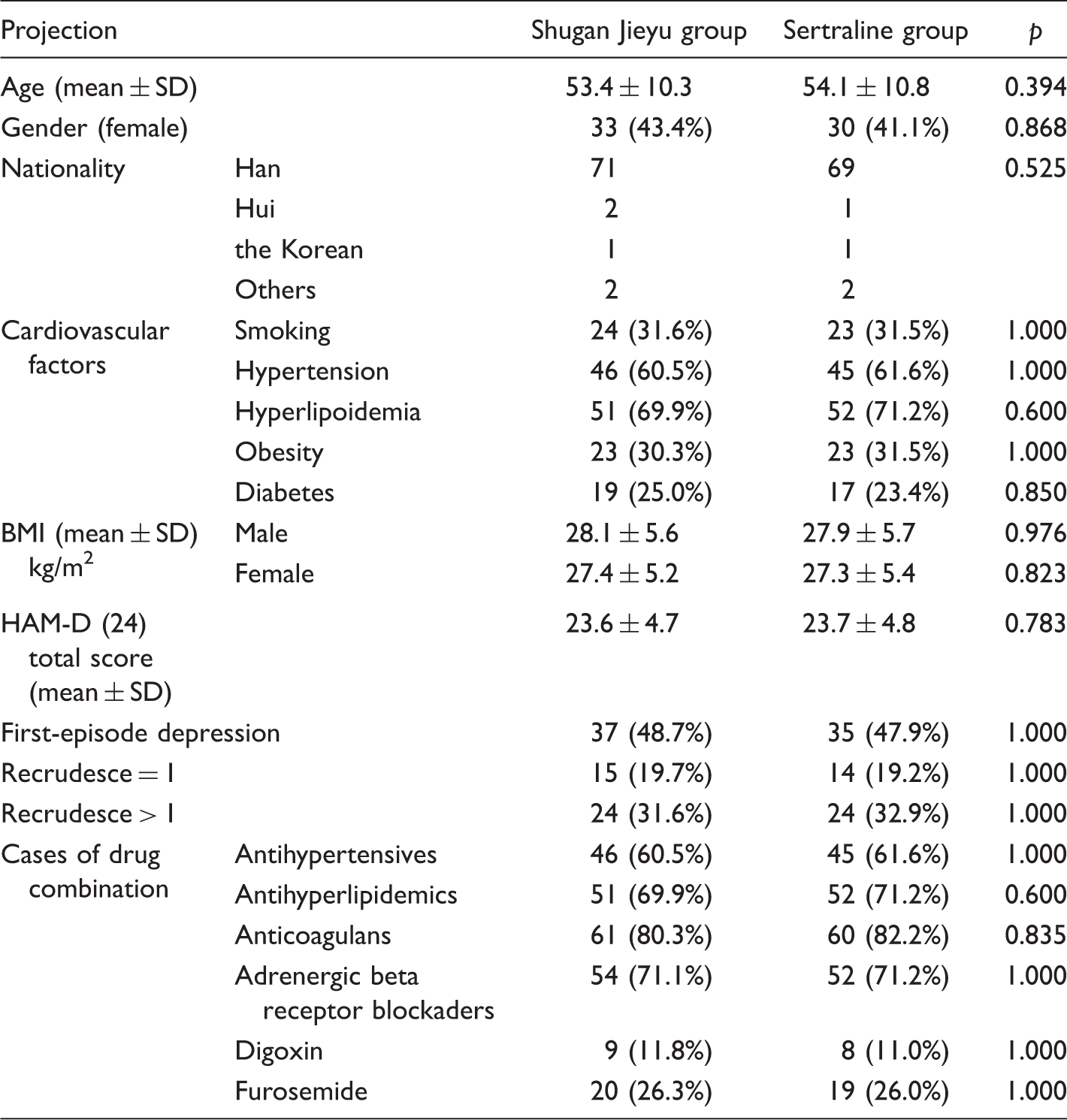
BMI: body mass index; SD: standard deviation.
Observation of the cardiac safety of Shugan Jieyu capsule and Sertraline.
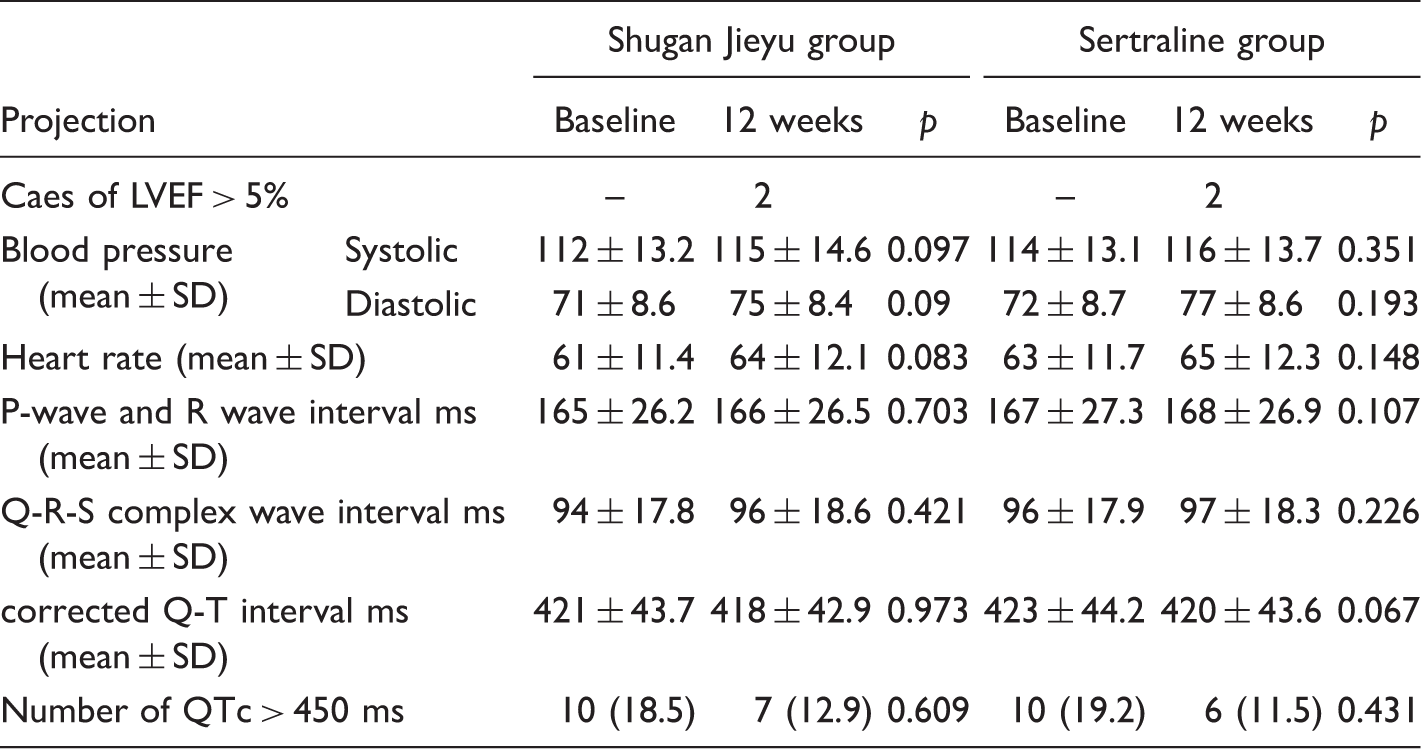
LVEF: left ventricular ejection fraction; SD: standard deviation.
Efficacy of antidepressant drugs after 12 weeks of treatment.

CGI-I: clinical global impression; HAM-D: Hamilton depression rating scale.
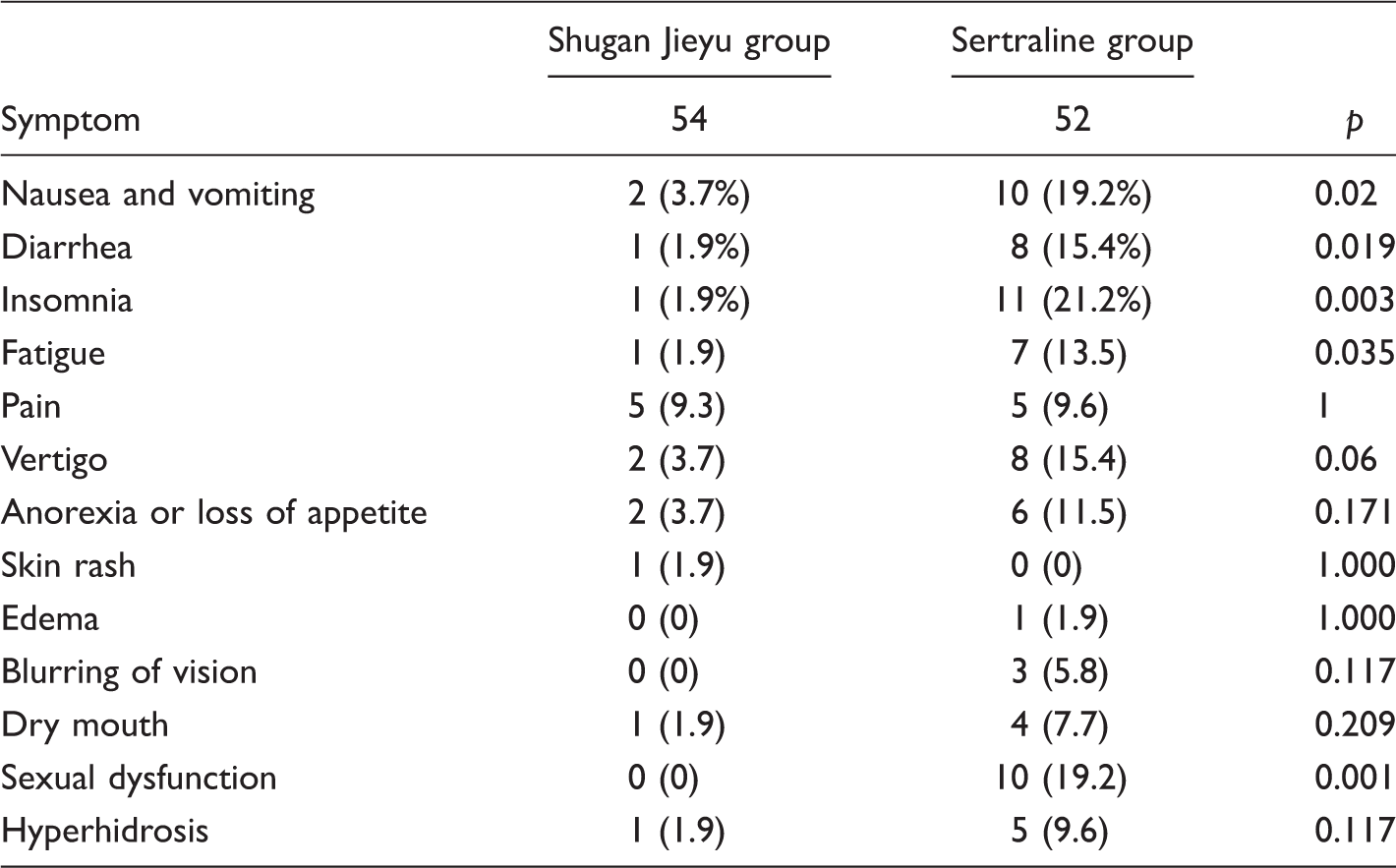
Adverse events occurred during 12 weeks of treatment.
The sample number we needed to achieve the conclusion of non-inferiority was 42 (calculated as n = 2 × [(1.645 + 1.282) × 4.675/3]2 ≈ 41.96 ≈ 42), given the following conditions: a reduction of 6 scores in the HAMD24 scale meant an effective treatment; the overall standard deviation was 4.675.
Discussion
Recent studies have indicated that depression may be an independent risk factor for the development and prognosis of coronary heart disease. Shapiro found that 16%–22% patients suffered from severe depression after MI, and the presence of depression also significantly increased the short-term and long-term mortality of patients. On the other hand, the incidence of coronary heart disease in patients with depression was also significantly higher. Depression after acute MI can affect the autonomic nerve function, resulting in ventricular fibrillation, ventricular tachycardia, and sudden cardiac death, and affecting the prognosis of patients. 15 Compared with the patients suffered from cardiovascular disease only, depression complicating acute MI often suggests a poor prognosis. 16 As a result, the patients suffered from acute MI combined with depression should be treated with antidepressants and cardiovascular drugs to improve the prognosis of patients and to improve the quality of life of patients. However, due to limitations of the body disease, the safety of antidepressants draws increasing attention. At present, heart safety of antidepressants is not well ensured, and even some antidepressants have clear cardiovascular adverse reactions. This limits the use of antidepressants, and results in the acute MI patients with comorbidities having little drug selection range. TCM is well accepted for the high security in China. Shugan Jieyu capsule is a TCM compound preparation containing Hypericum perforatum and acanthopanax; Hypericum perforatum has the roles of “heat-clearing and detoxifying,” “nourishing yin and tonifying blood,” “resolving stagnation for tranquilization,” and “eliminating dampness and relieving pain.” In Europe, Asia, and North America, Hypericum perforatum has been widely used in the treatment of depression and other mental disorders in a long history. 17 Acanthopanax has “the benefit for stomach, spleen and kidney,” and can be used in the treatment of neurosis, neurasthenia, depression, etc. 18 The compatibility of Hypericum perforatum and acanthopanax has synergistic effects, which “tranquilize the mind,” “strengthen the spleen,” “improve sedation,” anti-fatigue, and promote immunity.19,20 For the above pharmacological effects, Shugan Jieyu capsule has a good curative effect in treatment of depression. The effect of sertraline on acute MI with depression is affirmatory. 12 Our study shows that, in antidepressant effects, there is no significant difference between two groups, suggesting the Shugan Jieyu capsule has similar benefits to sertraline in the treatment of mild-to-moderate depression. We did not observe any cardiovascular harmness of the Shugan Jieyu capsule, in terms of heart injection fraction and heart rate, QTC interphase, etc. In addition, our results indicate that the Shugan Jieyu capsule has obvious advantages in safety, in terms of digestive system adverse reactions and sexual dysfunctions.
Possible mechanisms of the antidepressant effect of the Shugan Jieyu capsule was reported as that it restrains the reuptake of central neurotransmitters (such as 5-HT, DA, and NE) and thus rises the monoamine levels or inhibits monoamine oxidases.21,22 Many foreign studies on Hypericum perforatum extract showed that the drug has an antidepressant effect and is especially suitable for patients with mild-to-moderate depression.23–30 Consistently, our study proved the Shugan Jieyu capsule has a definite curative effect in treatment of acute MI patients with depression.
These results still merit further study. For example, our patients suffered from mild depression, and the effect on patients with severe depression needs further revealing. Moreover, follow-up study of the patients was not carried out.
In summary, the curative effect of the Shugan Jieyu capsule on acute MI patients with depression is distinct and of high safety, and it might be a first choice for these patients.
Footnotes
Declaration of Conflicting Interests
The author(s) declared no potential conflicts of interest with respect to the research, authorship, and/or publication of this article.
Funding
The author(s) received no financial support for the research, authorship, and/or publication of this article.