







Abstract
As longevity increases, so does the need for care of older relatives by working family members. This research examined the interactive effect of core self-evaluations and supervisor support on turnover intentions in two samples of employees with informal caregiving responsibilities. Data were obtained from 57 employees from Australia (Study 1) and 66 employees from the United States and India (Study 2). Results of Study 1 revealed a resource compensation effect, that is, an inverse relationship between core self-evaluations and turnover intentions when supervisor care support was low. Results of Study 2 extended these findings by demonstrating resource boosting effects. Specifically, there was an inverse relationship between core self-evaluations and subsequent turnover intentions for those with high supervisor work and care support. In addition, employees' satisfaction and emotional exhaustion from their work mediated the inverse relationship between core self-evaluations and subsequent turnover intentions when supervisor work support and care support were high. Overall, these findings highlight the importance of employee- and supervisor-focused intervention strategies in organizations to support informal caregivers.
Keywords
Trends of extended longevity have increased the prevalence of chronic diseases and disability among older people, placing greater demands upon family members to manage both paid work and informal unpaid eldercare (Cohen, 2003; Crimmins & Beltrán-Sánchez, 2011; Neal & Hammer, 2007). Although descriptions vary, eldercare is the provision of informal unpaid care by family or friends to assist with the physical and psychological needs of an older person (Smith, 2004). Eldercare has been associated with high levels of strain and poor well-being on the part of the caregiver (Pinquart & Sörensen, 2003; Zacher, Jimmieson, & Winter, 2012). As a result, a growing number of organizations face the dilemma of how to retain employees with eldercare responsibilities (Calvano, 2013; Zacher & Winter, 2011). Indeed, research shows a negative impact of providing eldercare on the number of hours worked (Kotsadam, 2011). In addition, incompatibility between work and care obligations can impede engagement in informal care and consequently increase usage of already overburdened formal care providers (Fast, Williamson, & Keating, 1999). Therefore, the goal of the present article is to examine how the joint effects of personal and work-related social resources reduce the turnover intentions of employed informal caregivers. Our findings offer insight to employers regarding how to provide greater support to those employed informal caregivers who need it most.
Managing multiple roles can be challenging for employees, especially for those providing informal unpaid eldercare (Calvano, 2015; Zacher et al., 2012). Competing responsibilities in family and work domains are associated with greater intentions to leave an organization (Boyar, Maertz, Pearson, & Keough, 2003). These turnover intentions are part of the withdrawal process, whereby an employee intends to leave the organization voluntarily. Research further demonstrates that these intentions are predictive of actual turnover behavior (Armitage & Conner, 2001; Holtom, Mitchell, Lee, & Eberly, 2008). The unfolding model of voluntary turnover (Lee & Mitchell, 1994) approaches this phenomenon as a decision-making process initiated by both push (e.g., time demands for work that impair care responsibilities) and pull (e.g., engaging in one's caregiving obligations) forces. The impact of turnover on the organization includes recruitment and training costs, as well as lost revenue (Sturman, Trevor, Boudreau, & Gerhart, 2003). Alas, research on eldercare and its impact on turnover has been limited in comparison with other caregiving arrangements, such as childcare (Lee, Foos, & Clow, 2010), which is concerning, as eldercare is arguably more exhausting and less rewarding due to increasing dependency over time (Duxbury, Higgins, & Smart, 2011; Lee, 1997).
Investigation into how employees successfully manage eldercare and work responsibilities has focused on the unique role of various personal and work-related resources (Premeaux, Adkins, & Mossholder, 2007; Semiatin & O'Connor, 2012; Zacher, & Winter, 2011). Until now, no research has examined the interactive effects of informal caregivers' personal and work-related resources on turnover intentions. This omission is significant, as neglecting the combined effects of different resources results in a limited understanding of the nuances of turnover intentions for this group of employees. Therefore, our research provides the first step toward addressing this gap. Specifically, we extend previous work by examining the interactive effects of two prominent resources in the stress literature and apply these to the elder caregiver experience.
First, we focus on core self-evaluations as a key personal resource of employed caregivers. Core self-evaluations are based on individuals' judgments about their competence and capability and comprise self-esteem, emotional stability, locus of control, and general self-efficacy (Judge, 2009; Judge, Bono, & Locke, 2005). Second, we focus on employees' perceptions of supervisor support as a work-related form of social support. Supervisor support has been shown to buffer the negative effects of demanding work and caregiving (Earle & Heymann, 2011; Stewart, 2013; Zacher & Schulz, 2015) and encompasses instrumental help (e.g., feedback) and emotional assistance (e.g., sympathy). We also distinguish between two foci of supervisor support, that is, support directed at employees' work and care roles. We conceptualize supervisor work support as concern or assistance intended to facilitate effectiveness at work. In contrast, supervisor care support enhances the employees' capacity to manage their work and caregiving roles.
In addition, we address the mediating mechanisms of the relationship between caregivers' resources and their turnover intentions, which remain underinvestigated. Specifically, we examine employees' satisfaction and emotional exhaustion from their work as research shows that these factors are predictors of turnover intentions (Boswell, Boudreau, & Tichy, 2005; Lee & Ashforth, 1996). In addition, we investigate employees' satisfaction and emotional exhaustion from their care role. The distinction between the work and home domains when exploring mediating mechanisms is important for the identification of their relative influence in the turnover process.
To achieve the aims of this research and examine our theoretical model, we conducted two studies (see Figure 1). Study 1 investigated the direct effects and interaction of core self-evaluations and supervisor care support on turnover intentions in a sample of employed caregivers from Australia. Study 2 extended Study 1 by incorporating supervisor care and work support simultaneously. The design of Study 2 used two measurement waves to investigate the mediating process of employees' satisfaction and emotional exhaustion in a sample of informal caregivers from the United States and India. In the next section, we outline our arguments for the main and interactive effects of core self-evaluations and supervisor support on turnover intentions.
Conceptual model of the hypothesized moderated meditation process on Time 1 (T1) and Time 2 (T2) turnover intentions for Study 1 and Study 2.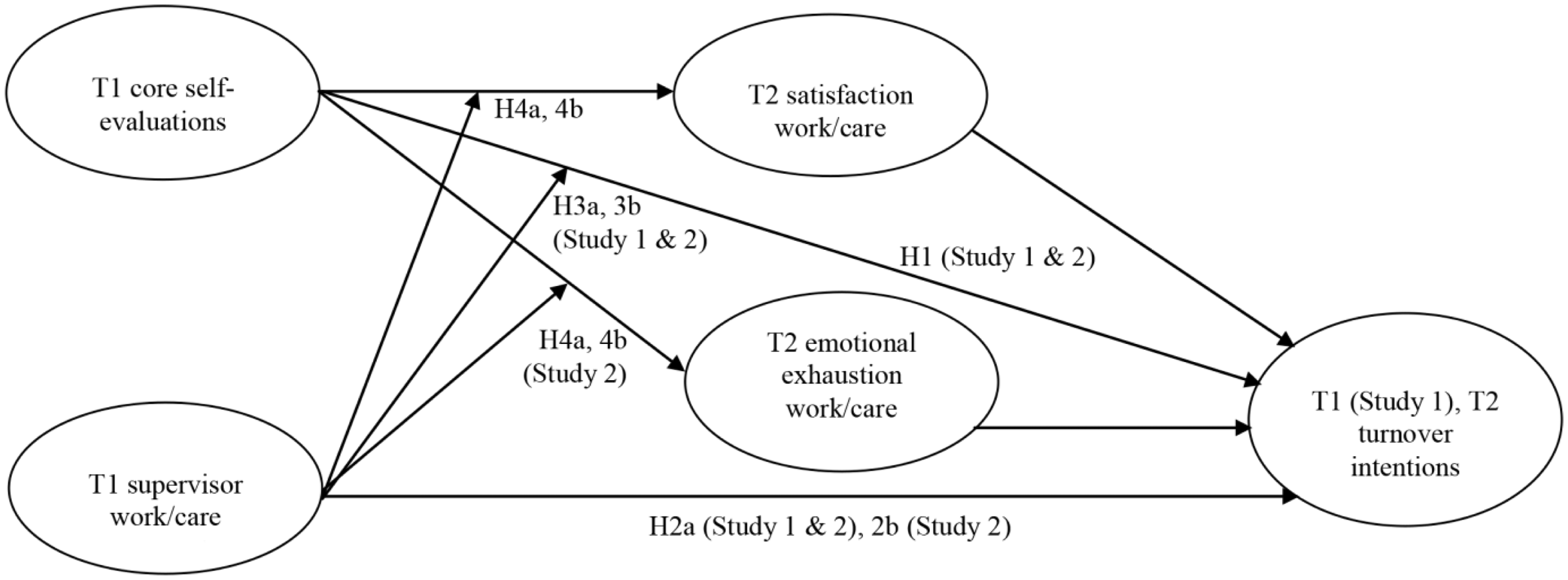
Influence of Resources on Turnover Intentions
Conservation of resources (COR) theory (Hobfoll, 1989, 2002) defines resources as conditions, characteristics, or skills valued by an individual. As such, resources can include emotional and instrumental support from others, psychological characteristics, and the physical, psychological, and organizational aspects of a job that are functional in achieving work goals (Bakker, Demerouti, Taris, Schaufeli, & Schreurs, 2003; Edwards & Rothbard, 2000). Within the caregiving context, managing multiple competing roles drains individuals' resources (Edwards & Rothbard, 2000). From this perspective, negative outcomes such as intentions to turnover may be representative of the individuals' reactions to the gradual depletion of psychological and social resources. Thus, people invest resources to protect against this resource loss, by allocating resources to maximize fit within the demands of their environment (Halbesleben, Neveu, Paustian-Underdahl, & Westman, 2014).
Core Self-Evaluations
COR theory stipulates that resources protect individuals from experiencing negative outcomes. Consistent with this view, high core self-evaluations enable individuals to manage multiple, highly demanding roles (Friede & Ryan, 2005) and are associated with a number of important workplace outcomes, such as satisfaction and performance (Judge & Bono, 2001). Meta-analytic findings suggest that emotional stability is negatively related to turnover intentions as those that are more emotionally stable are more likely to flexibly adapt to environments or seek environments that elicit positive emotional responses (Salgado, 2002; Zimmerman, 2008). Similarly, those with an internal locus of control are more likely to report low turnover intentions, as they perceive a greater capacity to control events and attribute success or failure to themselves (Spector, 1982). Thus, we posit the following hypothesis: Hypothesis 1: Core self-evaluations are inversely related to turnover intentions.
Supervisor Support
Social support resource theory (Hobfoll, Freedy, Lane, & Geller, 1990), grounded in COR theory, has specific implications for the relationship between social support and turnover intentions. Social support can expand employees' available resources and strengthen other resources that have been lacking. In the organizational psychology and work–family literatures, supervisor support is conceptualized as an important form of workplace social support (Kossek, Pichler, Bodner, & Hammer, 2011; Li, Shaffer, & Bagger, 2015). Findings from meta-analyses demonstrate the importance of workplace social support showing that higher support from coworkers and supervisors is linked to lower turnover intentions across numerous occupational groups (Humphrey, Nahrgang, & Morgeson, 2007; Ng & Sorensen, 2008). Supervisor support also facilitates the management of both work and care roles (Kossek et al., 2011). When supervisors are perceived as providers of important benefits, they are viewed as the primary source of employee support (Maertz, Griffeth, Campbell, & Allen, 2007). Moreover, greater perceived supervisor support is associated with lower turnover behavior (Eisenberger, Stinglhamber, Vandenberghe, Sucharski, & Rhoades, 2002) and ameliorates the negative health outcomes of caregiver stress (Earle & Heymann, 2011; Zacher & Schulz, 2015). Existing research has typically omitted the integration of different foci of social support in a single model. This omission is significant, as certain forms of social support may become more important for the reduction of turnover intentions in the context of eldercare. Based on COR theory, we hypothesize the following: Hypothesis 2a: Supervisor care support is inversely associated with turnover intentions. Hypothesis 2b: Supervisor work support is inversely associated with turnover intentions.
Resource Interactions
While interactive effects of resources have been largely neglected in the literature, the few existing studies in this area suggest that two types of interactive effects play a pivotal role in determining employee outcomes. First, the substitution hypothesis (Hobfoll & Leiberman, 1987) suggests that when a given resource is absent or depleted, another resource may compensate for it. For compensation, those possessing few personal or contextual resources engage additional sources of support (Hobfoll, Johnson, Ennis, & Jackson, 2003). For example, research examining whether core self-evaluations and perceived organizational support interacted in predicting beneficial work–family outcomes demonstrated that, when organizational support was low, high core self-evaluations compensated to enable beneficial work–family outcomes (McNall, Masuda, Shanock, & Nicklin, 2011).
Second, the boosting effect of resources is a process whereby individuals with strong personal resources (e.g., high core self-evaluations) are in a better position to use other auxiliary resources (e.g., social networks) to maximize outcomes. For instance, such individuals view situations more positively, perceive themselves as more worthy of aid, and will work harder to extricate benefits. Supporting this view, research examining personal (i.e., coping strategies) and contextual (i.e., support and control at work or home) resources as predictors of work–family conflict and work–family enrichment (Mauno & Rantanen, 2013). These authors found that a combination of high personal and high contextual resources led to the most positive outcomes. Overall, extant research appears to demonstrate the plausibility of both theoretical standpoints.
Drawing on trait activation theory (Tett & Guterman, 2000) and person–situation interaction theory (Mischel & Shoda, 1995), we propose that turnover intentions are contingent upon personality and situational factors, as well as their interaction. These theories both posit that one's behavioral intentions in a given situation are determined by the interaction of personality traits and contextual features. That is, situational factors, such as support, moderate the effect of individual characteristics on behavioral outcomes (Tett & Burnett, 2003). Applying these theoretical frameworks to the current context, we propose that core self-evaluations will be inversely associated with turnover intentions and that this effect is moderated by supervisor support. In this way, high supervisor support may strengthen the inverse relationship between core self-evaluations and turnover intentions (i.e., resource boosting). An individual may simultaneously receive high levels of support at work and have high core self-evaluations, resulting in lower turnover intentions. Alternatively, low supervisor support may be compensated for by high core self-evaluations such that turnover intentions are reduced (i.e., resource compensating). An employee may perceive they are not receiving the necessary support from their supervisor but their high core self-evaluations can compensate for this and, in turn, reduce turnover intentions. Therefore, we expect that both types of resource interactions are plausible. As such, we have included competing hypotheses for the inverse relationship between core self-evaluations and turnover intentions as a function of supervisor support. Hypothesis 3a (Boosting effect): The inverse relationship between core self-evaluations and turnover intentions is stronger for high supervisor support compared with low supervisor support. For a boosting effect, the effect of high core self-evaluations on turnover intentions at high supervisor support needs to predict lower scores on turnover intentions than at low supervisor support. Hypothesis 3b (Compensation effect): The inverse relationship between core self-evaluations and turnover intentions is stronger for low supervisor support compared with high supervisor support. For a compensation effect, the effect of high core self-evaluations on turnover intentions at low supervisor support needs to predict the same level of turnover intentions as at high supervisor support.
Study 1
Method
Sampling procedure
Targeted sampling of participants in Australia focused on employees providing care for any family member aged over 55 years (inclusion criterion 1) who also were in paid work (inclusion criterion 2). Similar criteria have been used in previous eldercare research (e.g., Tolkacheva, Broese van Groenou, & van Tilburg, 2014). Many caregivers in Australia are not current workforce participants. Therefore, two sampling strategies were used, as sampling informal caregivers who were still engaged in the workforce proved to be difficult. The first included an e-mail with a link to an online survey sent to Australian care associations and organizations, requesting broad dissemination and advertisement of the study to employees, clients, and clients' carers (n = 49), while the second involved the use of paper surveys disseminated across a range of local businesses (n = 8). The original sample comprised 112 participants. However, 55 were excluded for not meeting both inclusion criteria. Despite explaining our inclusion criteria to participants before they took the survey, some respondents indicated they were no longer employed, as they were now providing full-time care, thereby not meeting our criteria of employment. Alternatively, some respondents were omitted, as they were not providing eldercare to a family member over the age of 55 years. Thus, participants included in the final sample comprised 57 employees with eldercare responsibilities.
Sample characteristics
Forty-one participants were women, and 16 were men. Ages ranged between 21 and 67 years (M = 47.95, SD = 12.85). Many participants held a bachelor degree (35%), technical and further education certificate or diploma (25%), or postgraduate degree (18%). Thirty-five participants indicated that they worked full-time, 16 reported working part-time, and six reported casual work arrangements. The participants aged over 65 were casual or part-time employed (n = 2). Length of employment in current organization ranged between 1 and 39 years (M = 8.14, SD = 7.88). The age of care recipients ranged from 58 to 95 years, with a mean of 79.04 years (SD = 10.89). At the time of participation, employees had been providing care from 1 to 21 years (M = 5.91, SD = 4.78). On a scale from 1 to 5, the mean care dependency score in the sample was 3.30 (range = 3.93, SD = 0.96; see Measures section below regarding this scale). The main reasons for care included age-related disease and frailty (44%), Alzheimer's disease (16%), and physical disability (12%). Care recipients predominantly lived independently in their own homes (61%) with fewer living with the participant (26%), in a nursing home (7%), or with another family member (2%). Most participants had a spouse (70%), and many had no children living at home (53%).
Measures
Core self-evaluations were measured using a reliable and well-validated 12-item scale (Judge & Bono, 2001). Six items were positively phrased, for example, “When I try, I generally succeed.” Six items were reverse scored, for example, “Sometimes when I fail, I feel worthless.” The response scale ranged from 1 = strongly disagree to 5 = strongly agree. Internal consistency was α = .77.
Supervisor care support was measured using a previously validated 4-item scale (Thompson & Prottas, 2006) and included items such as “I feel comfortable bringing up the issue of my eldercare responsibilities with my supervisor.” Employees rated their level of agreement with each statement from 1 = completely disagree to 6 = completely agree. Internal consistency was α = .91.
Turnover intentions were assessed with a single item (Spector, Dwyer, & Jex, 1988), “Taking everything into consideration, how likely is it that you will make a genuine effort to find a new job in the next 6 months?” with scale anchors ranging from 1 = very unlikely to 7 = very likely. This single-item measure was found in previous studies to have significant associations with satisfaction from work and turnover behavior (Spector, 1991). Single-item measures can be as psychometrically reliable and valid as they offer transparency and clarity about what is being measured (Nagy, 2002; Wanous & Hudy, 2001). They are used routinely in organizational research (Bergkvist & Rossiter, 2007; Gardner, Cummings, Dunham, & Pierce, 1998). The result of a Kolmogorov–Smirnov test for normality on our single-item measure of turnover intentions was significant (D = .206, p < .001). As such, we conducted a log-transformation of the variable. Our results were replicated using the log-transformed variable; therefore, as results involving transformed variables are difficult to interpret, we report only the results of analyses with the untransformed variable (Feng et al., 2014).
Potential controls assessed included participants' gender (1 = male, 2 = female), age in years, employment status (1 = part-time, 2 = full-time), age of the care recipient in years, and highest level of education (1 = junior certificate, 2 = senior certificate, 3 = technical and further education certificate or diploma, 4 = undergraduate degree, 5 = postgraduate degree). In addition, we measured work and care demands as potential controls. Demands may be an important precursor to the utility of resources, as the level of demands may influence the need for resources (Bakker & Demerouti, 2007; Hobfoll, 1989). Work demands were measured with the Quantitative Workload Inventory (Spector & Jex, 1998) comprising four items (ranging from 1 = less than once per month or never to 5 = several times per day). For example, “How often does your work require you to work very hard?” Internal consistency was α = .88. Care demands were measured using the 15-item Care Dependency Scale (Dijkstra et al., 2008), which contains items pertaining to care tasks and duties such as the care recipient's ability to autonomously manage their own personal hygiene and general activities of daily living. Items were scored from 1 = recipient is completely dependent on care from others to 5 = recipient is almost independent from care from others. Internal consistency was α = .94.
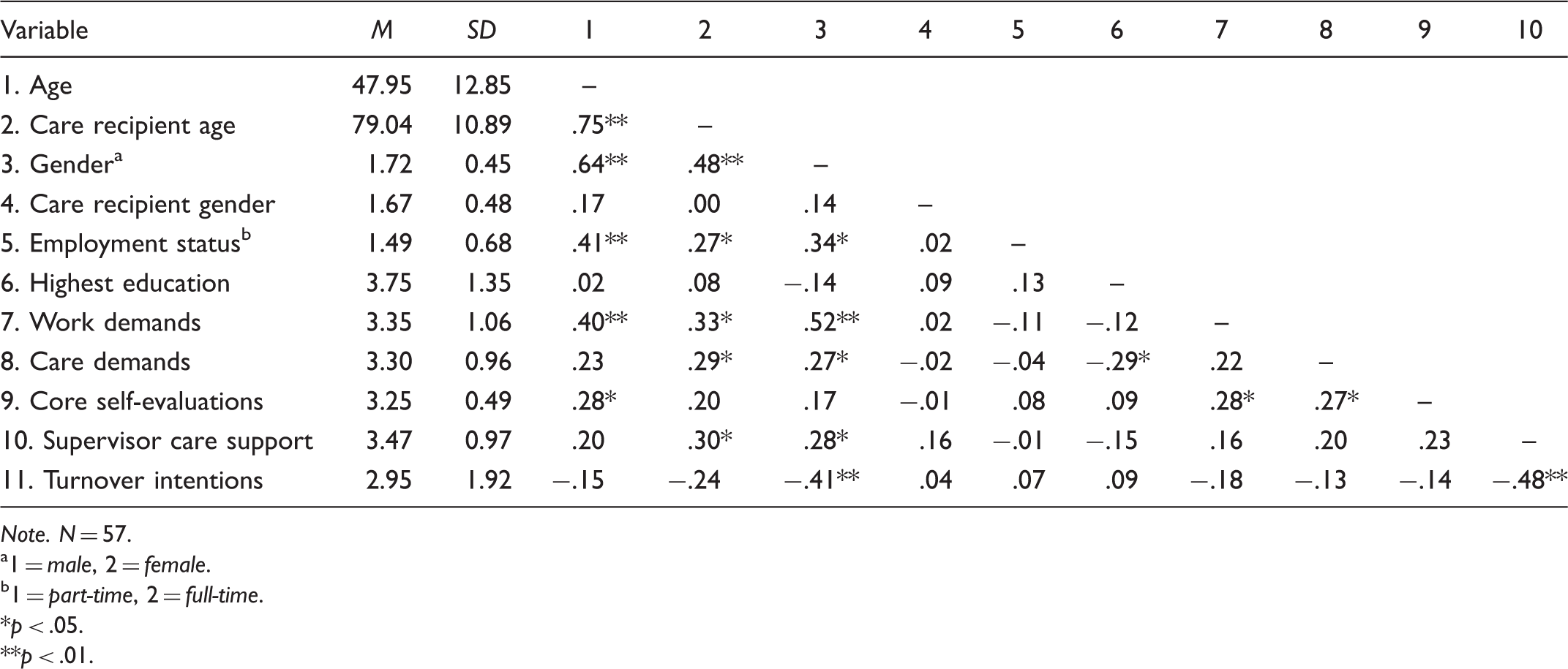
There is ongoing debate about the use of statistical control variables in psychological research as indiscriminant statistical control of variables can increase Type II errors by partialing true variance from the relationship of interest (Becker, 2005; Spector, Zapf, Chen, & Frese, 2000). In addition, controls can increase Type I error if they are associated with the predictors but not the criterion. Therefore, recommendations are to avoid impotent control variables; those uncorrelated with the dependent variable. Therefore, to preserve statistical power and avoid biased results, all potential controls were assessed for their influence on turnover intentions. Only participant gender was significantly correlated with turnover intentions and, as such, we conducted our analyses with and without this variable included as a control. There were no differences to the significance of effects across the two sets of analyses. Consequently, the results reported are the most parsimonious model (i.e., excluding controls).
Results
Descriptive Statistics and Correlations Among Variables (Study 1).
Note. N = 57.
1 = male, 2 = female.
1 = part-time, 2 = full-time.
p < .05.
p < .01.
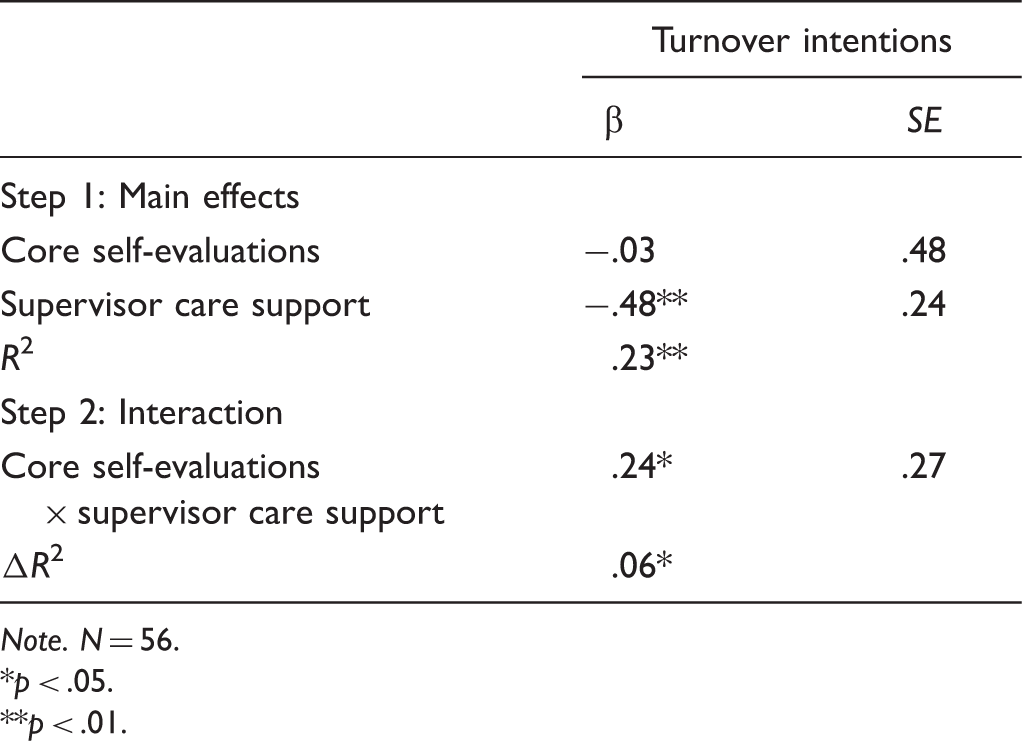
Hierarchical Multiple Regression Analysis Predicting Employee Turnover Intentions (Study 1).
Note. N = 56.
p < .05.
p < .01.
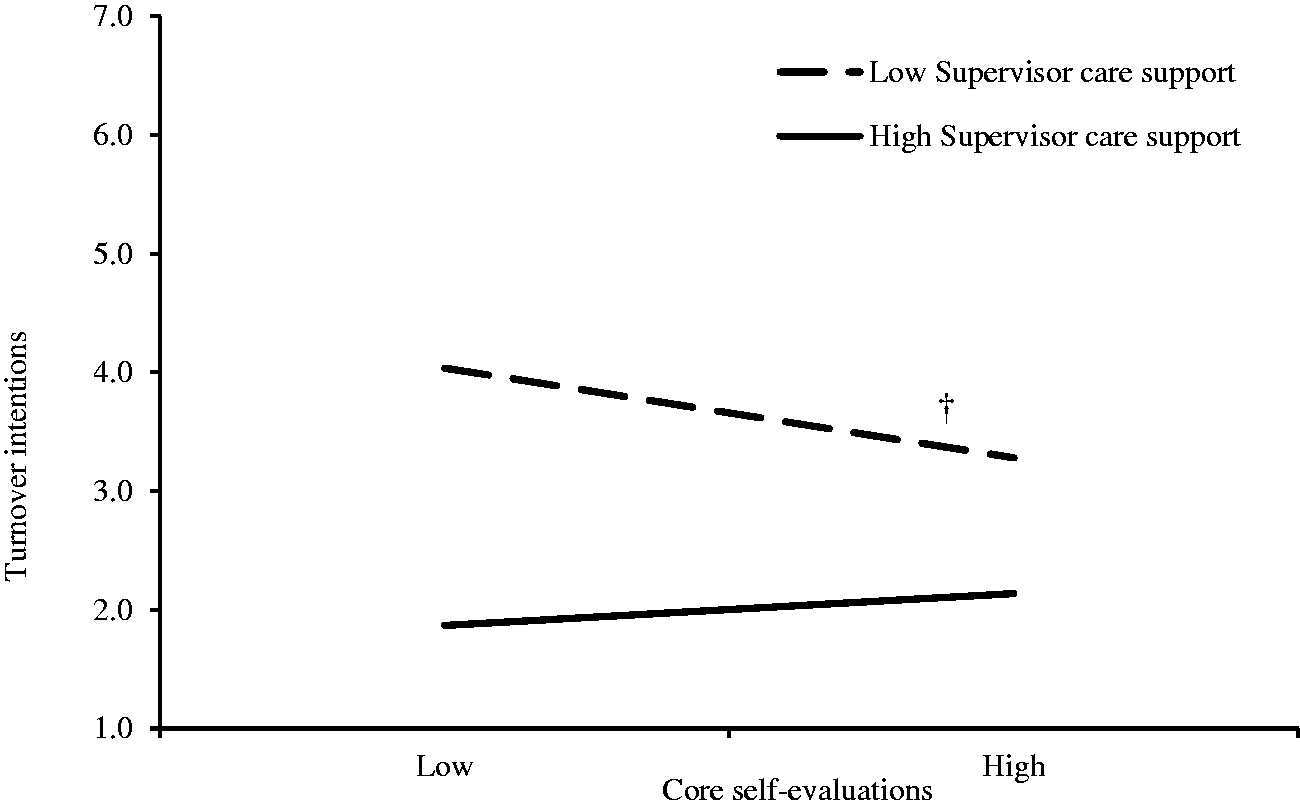
Study 1 simple slopes for the interaction between core self-evaluations and supervisor care support on turnover intentions. Note. †p < .10.
Study 2
The results of Study 1 lend partial support to the hypotheses. Although the relationship between core self-evaluations and turnover intentions was nonsignificant, supervisor care support was inversely related to turnover intentions. The interactive effect of the two resources was consistent with the substitution hypothesis, whereby core self-evaluations compensated for deficits in supervisor care support in the prediction of turnover intentions. In Study 2, we continue to examine the relationships between core self-evaluations (Hypothesis 1), supervisor support (Hypothesis 2), and their interaction (Hypothesis 3) on turnover intentions (see Figure 1). To address the limitations of Study 1, in Study 2, a second measurement after 3 months was included to better elucidate the turnover process. Study 2 also incorporates supervisor work support. Work and family-directed supervisor support play a central role in managing both work and care responsibilities (Kossek et al., 2011). Furthermore, Study 2 extends the Study 1 moderation model by including mediators, namely satisfaction and emotional exhaustion from both care and work.
Mediators of the Relationship Between Resources and Turnover Intentions
The present research examined the interaction of core self-evaluations and supervisor support, as well as the mediating role of satisfaction and emotional exhaustion from both the work and care contexts, on turnover intentions. Most turnover models acknowledge the role of satisfaction from work and emotional exhaustion as proximal predictors of turnover (Barak, Nissly, & Levin, 2001; Griffeth, Hom, & Gaertner, 2000; Mobley, 1977). However, research on turnover has not considered the influence of satisfaction and emotional exhaustion associated with managing both paid work and unpaid eldercare. Thus, the distinction between the work and home domains for satisfaction and emotional exhaustion enables us to identify their relative influence in the turnover process.
Research investigating the work–family interface has explored the permeability of the boundaries between the domains and found that both positive and negative effects transmit from one to the other (Ford, Heinen, & Langkamer, 2007). Within role theory, the scarcity hypothesis (Marks, 1977) posits that negative effects occur due to individuals having a limited, finite amount of resources. Conflicts arise between domains when different roles compete for these limited resources. This form of bidirectional interrole conflict is well documented (Ford et al., 2007; Greenhaus & Powell, 2006) and demonstrates numerous negative consequences for employees, including lower satisfaction from their work and family roles, and higher emotional exhaustion and turnover. Our model conceptualizes the negative transmission of emotional exhaustion from the care role onto turnover intentions.
In contrast, positive cross-domain effects also may occur from participating in multiple roles that improve employee functioning (Amstad, Meier, Fasel, Elfering, & Semmer, 2011). The accumulation hypothesis (Sieber, 1974) suggests that by participating in multiple roles, individuals generate resources that help them manage their work and family more successfully. For instance, they are likely to develop skills in one domain that enhances their performance in another (e.g., greater flexibility and time management skills). This form of bidirectional enrichment has been associated with positive outcomes including greater satisfaction with one's work and family roles (McNall, Masuda, & Nicklin, 2009). Thus, we also conceptualize the positive transmission of satisfaction from the care role onto turnover intentions.
Resources are important precursors to the experience of positive states such as satisfaction from one's work or care roles. According to COR theory (Hobfoll, 1989), personal and work-related social resources are antecedents to generating other resources and enabling future successes. Indeed, studies show that satisfaction is influenced by core self-evaluations and supervisor support (Baruch-Feldman, Brondolo, Ben-Dayan, & Schwartz, 2002; Brown, Ferris, Heller, & Keeping, 2007; Judge & Bono, 2001). Aspects of core self-evaluations such as emotional stability and internal locus of control positively influence individuals' perceptions of control, being able to perform adequately, and how they appraise the role undertaken (Ito & Brotheridge, 2003). Supervisor support also promotes satisfaction with one's life roles, as it encourages persistence to actively engage with their environment (Ford et al., 2007). Considering these findings, our model incorporates core self-evaluations and supervisor support as important antecedents that heighten satisfaction, which, in turn, has consequences for turnover intentions.
Resources reduce the experience of negative states including emotional exhaustion. In fact, core self-evaluations (Best, Stapleton, & Downey, 2005; Yagil, Luria, & Gal, 2008) and supervisor support (Ray & Miller, 1994) are negatively associated with emotional exhaustion. For instance, individuals with high self-esteem are likely to view a challenging role as an opportunity to master their environment rather than a chance to fail, thereby alleviating or counteracting negative experiences that lead to emotional exhaustion (Best et al., 2005; Yagil et al., 2008). In addition, supervisor support bolsters employees' sense of self-worth, and belief in their skills and abilities, which further reduces emotional exhaustion (Ray & Miller, 1994). Extending these findings, our model incorporates core self-evaluations and supervisor support as important antecedents that reduce the experience of emotional exhaustion, which, in turn, has consequences for turnover intentions.
From the perspective of COR theory (Bakker et al., 2003; Hobfoll, 2002), decreased satisfaction and increased emotional exhaustion are stress-inducing events for the individual because they are indicative of a process of resource loss. As outlined earlier, core self-evaluations are integral precursors to satisfaction and emotional exhaustion, with high supervisor support bolstering (i.e., strengthening the positive effect of core self-evaluations on satisfaction) and mitigating (i.e., strengthening the negative effect of core self-evaluations on emotional exhaustion) the effect of these experiences. Therefore, our research proposes that a lack of personal or work-related social resources is positively related to emotional exhaustion and subsequent turnover intentions. In addition, the presence of personal and work-related social resources is positively related to satisfaction, which reduces turnover intentions. Thus, we hypothesize the following: Hypothesis 4a: When supervisor support for work and care is high, the inverse relationship between core self-evaluations and turnover intentions is mediated by higher satisfaction from work and lower emotional exhaustion from work. Hypothesis 4b: When supervisor support for work and care is high, the inverse relationship between core self-evaluations and turnover intentions is mediated by higher satisfaction from care and lower emotional exhaustion from care.
Method
Sampling procedure and research design
This study was conducted online through Mechanical Turk, a research platform often used for social psychological research (Buhrmester, Kwang, & Gosling, 2011). We recruited employees with eldercare responsibilities from the United States and India, as these nationalities are most strongly represented through Mechanical Turk. A screening process was used to ensure that participants met our criteria for inclusion. Participants who were not employed, did not provide care for an individual over 55 years, or were under 18 years of age were redirected from the survey to prevent participation. Those who met the criteria continued through to the survey questions.
The time interval between the two surveys was 3 months. Core self-evaluations and supervisor care and work support were measured at Time 1. The mediating variables of satisfaction from work and care, emotional exhaustion from work and care, and the outcome of turnover intentions were assessed at Time 2. Shorter time lags are especially important to enable a richer understanding of, and investigation into, the stress and coping process (Dormann & Griffin, 2015). Shortitudinal designs also avoid common method bias, interim (e.g., interruptions), and attrition effects (Dormann & van de Ven, 2014).
Sample characteristics
The original sample comprised 101 participants. However, nine participants persisted in completing the survey despite not meeting the inclusion criteria for the research. Also, 26 were excluded, as they only completed the Time 1 survey. Participants, therefore, comprised 66 employees with eldercare responsibilities from the United States (n = 35) and India (n = 31). To determine the nature of nonresponse across the two waves of data collection, analysis of covariance demonstrated that participants who completed both Time 1 and Time 2 (n = 66) did not differ on the study variables to those who only completed Time 1 (n = 26).
Thirty-two participants were women, and 34 were men, with ages ranging between 20 and 60 years (M = 35.86, SD = 10.89). Thirty-four participants had children living at home, and 45 participants were married (65%). Most participants had obtained a bachelor degree (54%), with fewer holding high school certificates (21%) or postgraduate degrees (14%). Forty-two participants indicated that they worked full-time, 24 reported working part-time. On average, participants worked 37.06 hours per week (SD = 15.78). Participants reported working for their current organization between 1 and 28 years (M = 5.53, SD = 5.18). At the time of participation, employees had been providing care from 1 to 20 years (M = 4.28, SD = 3.55). The age of care recipients ranged from 55 to 93 years (M = 74.24 years, SD = 10.08). On a scale from 1 to 5, the mean care dependency score in the sample was 2.45 (range = 3.8, SD = 0.86; see Control Variables section of Study 1 regarding this scale). The main causes of care were age-related disease and frailty (74%), physical disability (14%), and Alzheimer's disease (6%). Elders predominantly lived with the participant (45%) with fewer living independently in their own homes (41%), in a nursing home (9%), or with another family member (4%).
Measures
Core self-evaluations were measured using the same scale as Study 1 (α = .84).
Supervisor support was measured at Time 1 using four items (Caplan, Cobb, French, Harrison, & Pinneau, 1975) that were adapted to the care and work contexts with items such as “How much did your supervisor go out of their way to do things to make your eldercare easier for you?” Employees rated their level of agreement with each statement from 1 = not at all to 5 = very much. Internal consistency estimates were acceptable for supervisor care (α = .91) and work (α = .87) support.
Satisfaction with work and care were measured at Time 2. Satisfaction with work was measured using five items (Price & Mueller, 1986). For example, “I feel fairly well satisfied with my job.” Participants responded on a 5-point scale ranging from 1 = strongly disagree to 5 = strongly agree. Internal consistency estimates were good (α = .83). Satisfaction from care was measured using three items (Tarlow et al., 2004; Zacher et al., 2012), for example, “In general, how satisfied are you with your eldercare tasks and responsibilities?” Participants responded on a 5-point scale ranging from 1 = very dissatisfied to 5 = very satisfied. Internal consistency was high (α = .90).
Emotional exhaustion from work and care were measured at Time 2 using three items selected for their highest factor loadings from the emotional exhaustion subscale in the Maslach Burnout Inventory (Maslach & Jackson, 1981). This scale was adapted to both the care and work contexts with items including, “I felt emotionally drained from my work (eldercare),” “I felt used up at the end of the day due to my work (eldercare) responsibilities,” and “I felt burned out from my work (eldercare).” Items were rated from 1 = never to 5 = every day. Internal consistency estimates were strong for emotional exhaustion from work (α = .87) and care (α = .96).
Turnover intentions were measured at Time 2 with three items using the reflective stem “In the past 4 weeks.” The first two items were “I am planning to leave my job for another in the near future” and “I often think of quitting this job and finding another” (Rosin & Korabik, 1991). The third item was “I would like to quit this job and find another in the near future” (Michaels & Spector, 1982). Scale anchors ranged from 1 = strongly disagree to 5 = strongly agree. Internal consistency was strong: α = .94. The result of a Kolmogorov–Smirnov test for normality on this variable was significant (D = .169, p < .001). Our results were replicated using a log-transformed dependent variable; therefore, as results involving transformed variables are difficult to interpret, we report results of analyses with untransformed variables (Feng et al., 2014).
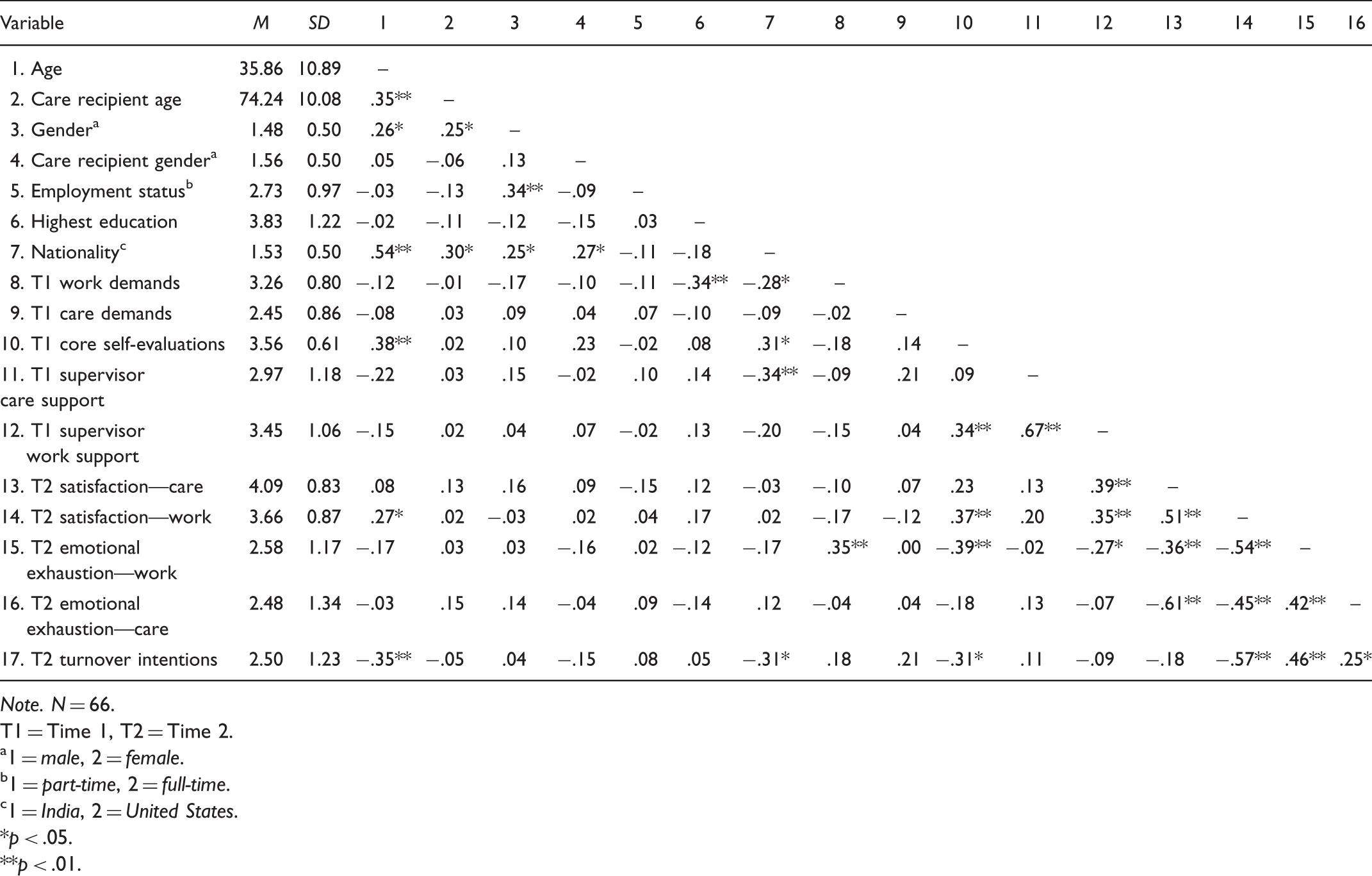
We assessed a number of potential controls at Time 1 including participants' nationality (0 = USA, 1 = India), gender (1 = male, 2 = female), age in years, employment status (1 = part-time, 2 = full-time), and the care recipients' age and gender (1 = male, 2 = female). As in Study 1, work (α = .75) and care demands (α = .94). T-tests found differences between nationalities on supervisor care support, work demands, core self-evaluations, and turnover intentions variables. Nationality and participant age also were significantly correlated with turnover intentions. No other control variables had any bearing on turnover intentions. Thus, we conducted our analyses with and without nationality and participant age included as controls. There were no differences to the significance of effects across the two sets of analyses. Consequently, the results reported are the most parsimonious model (i.e., without inclusion of control variables).
Results
Descriptive Statistics and Correlations Among Variables (Study 2).
Note. N = 66.
T1 = Time 1, T2 = Time 2.
1 = male, 2 = female.
1 = part-time, 2 = full-time.
1 = India, 2 = United States.
p < .05.
p < .01.
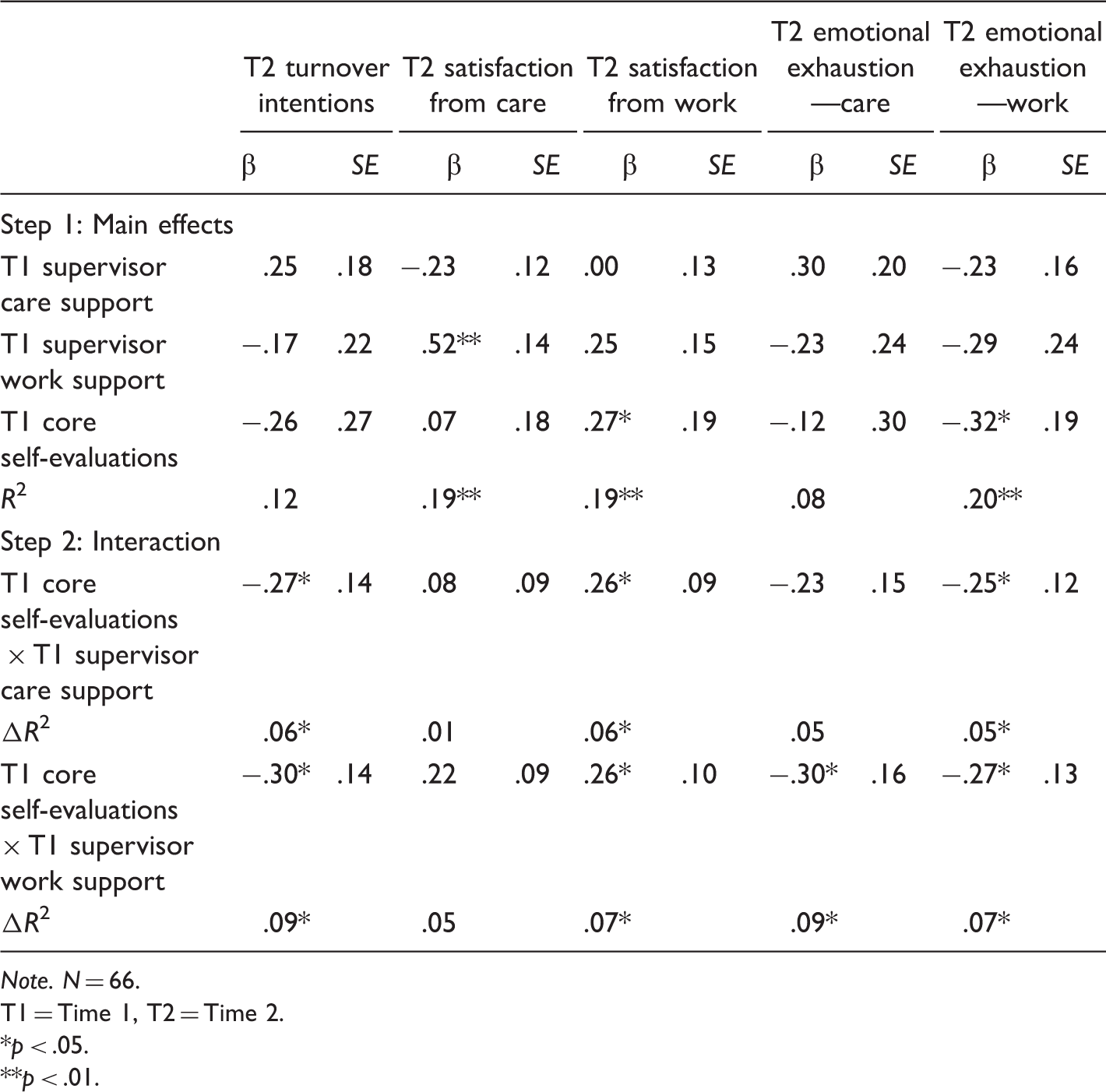
Hierarchical Multiple Regression Analysis Predicting Time 2 Turnover Intentions and Time 2 Mediators (Study 2).
Note. N = 66.
T1 = Time 1, T2 = Time 2.
p < .05.
p < .01.
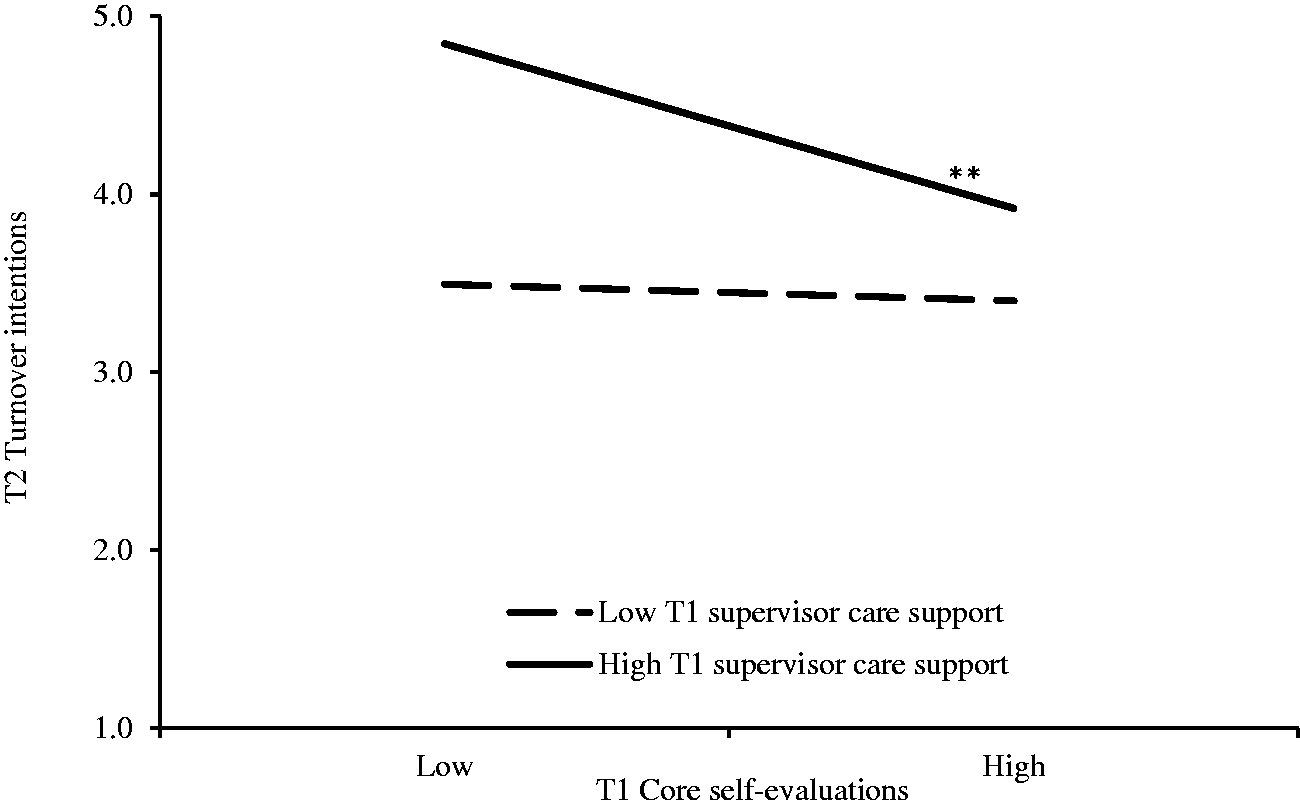
There were no relationships of Time 1 core self-evaluations, Time 1 supervisor work support, or Time 1 supervisor care support, and Time 2 turnover intentions. However, as predicted in Hypothesis 3a, there was a two-way interaction of Time 1 core self-evaluations and Time 1 supervisor work support (β = −.30, p = .014), and Time 1 core self-evaluations and Time 1 supervisor care support (β = −.27, p = .039), on Time 2 turnover intentions. Specifically, there was an inverse relationship between high Time 1 core self-evaluations and Time 2 turnover intentions for those with high Time 1 supervisor work support (β = −.56, p = .002; Figure 3) and high Time 1 supervisor care support (β = −.44, p = .007; Figure 4). In contrast, there was no significant relationship for those with low Time 1 supervisor work (β = .04, p = .830, ns) or care (β = .03, p = .869, ns) support.
Study 2 simple slopes for the interaction between Time 1 core self-evaluations and Time 1 supervisor work support on Time 2 turnover intentions. Note. **p < .01. T1 = Time 1; T2 = Time 2. Study 2 simple slopes for the interaction between Time 1 core self-evaluations and Time 1 supervisor care support on Time 2 turnover intentions. Note. **p < .01. T1 = Time 1; T2 = Time 2.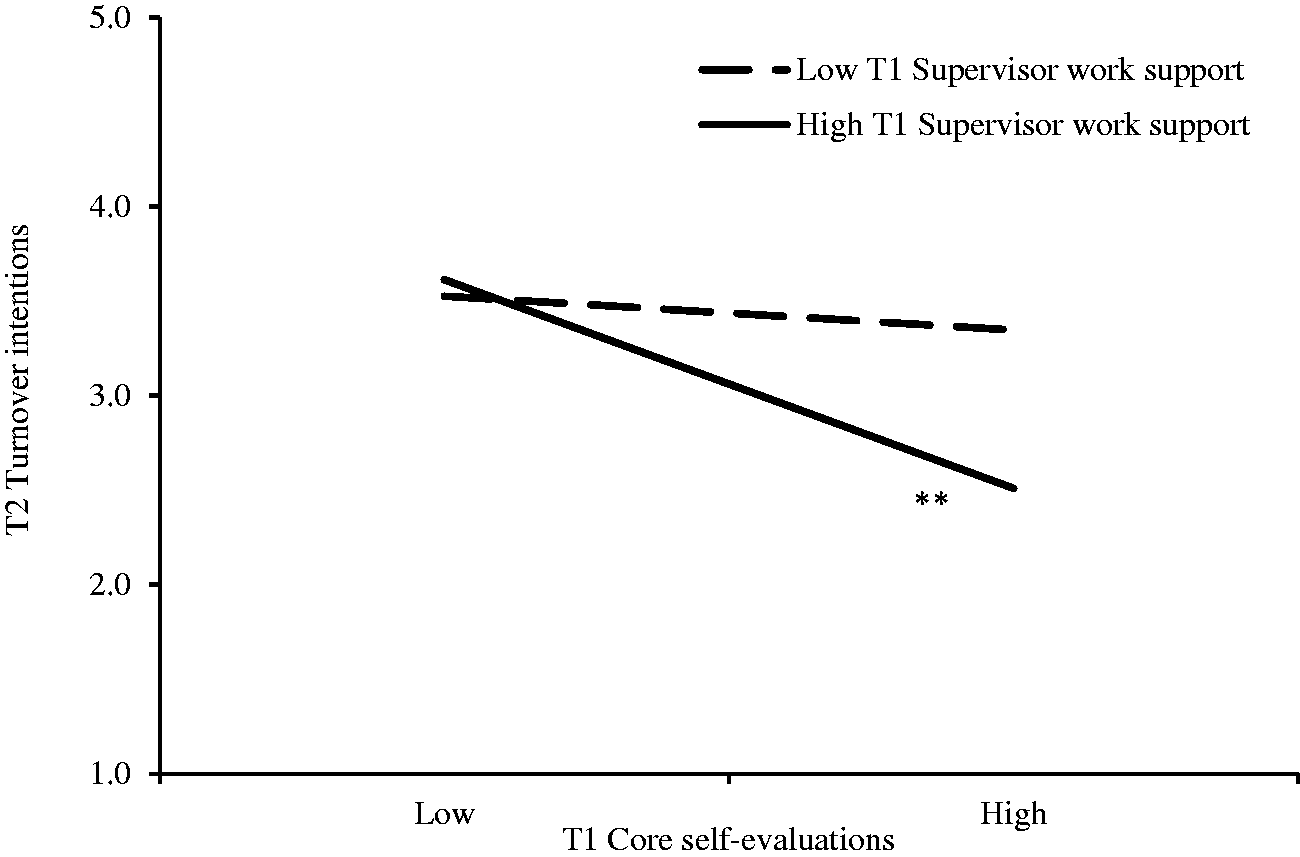
Analyses on the proposed care-domain mediators showed there was a positive relationship of Time 1 supervisor work support and Time 2 satisfaction from care (β = .52, p = .005). There was, however, no significant relationship of Time 1 core self-evaluations or Time 1 supervisor care support, with Time 2 satisfaction from care. There also were no two-way interactions found. In addition, there were no relationships of Time 1 core self-evaluations, or Time 1 supervisor care and work support, and Time 2 emotional exhaustion from care. There was, however, a two-way interaction of Time 1 core self-evaluations and Time 1 supervisor work support (β = −.30, p = .015), but not Time 1 supervisor care support, on Time 2 emotional exhaustion from care. Specifically, there was an inverse relationship between Time 1 core self-evaluations and Time 2 emotional exhaustion from care for those with high Time 1 supervisor work support (β = −.42, p = .022; Figure 5). There was no relationship for those with low Time 1 supervisor work support (β = .19, p = .309, ns).
Study 2 simple slopes for the interaction between Time 1 core self-evaluations and Time 1 supervisor work support on Time 2 emotional exhaustion from care. Note. *p < .05. T1 = Time 1; T2 = Time 2.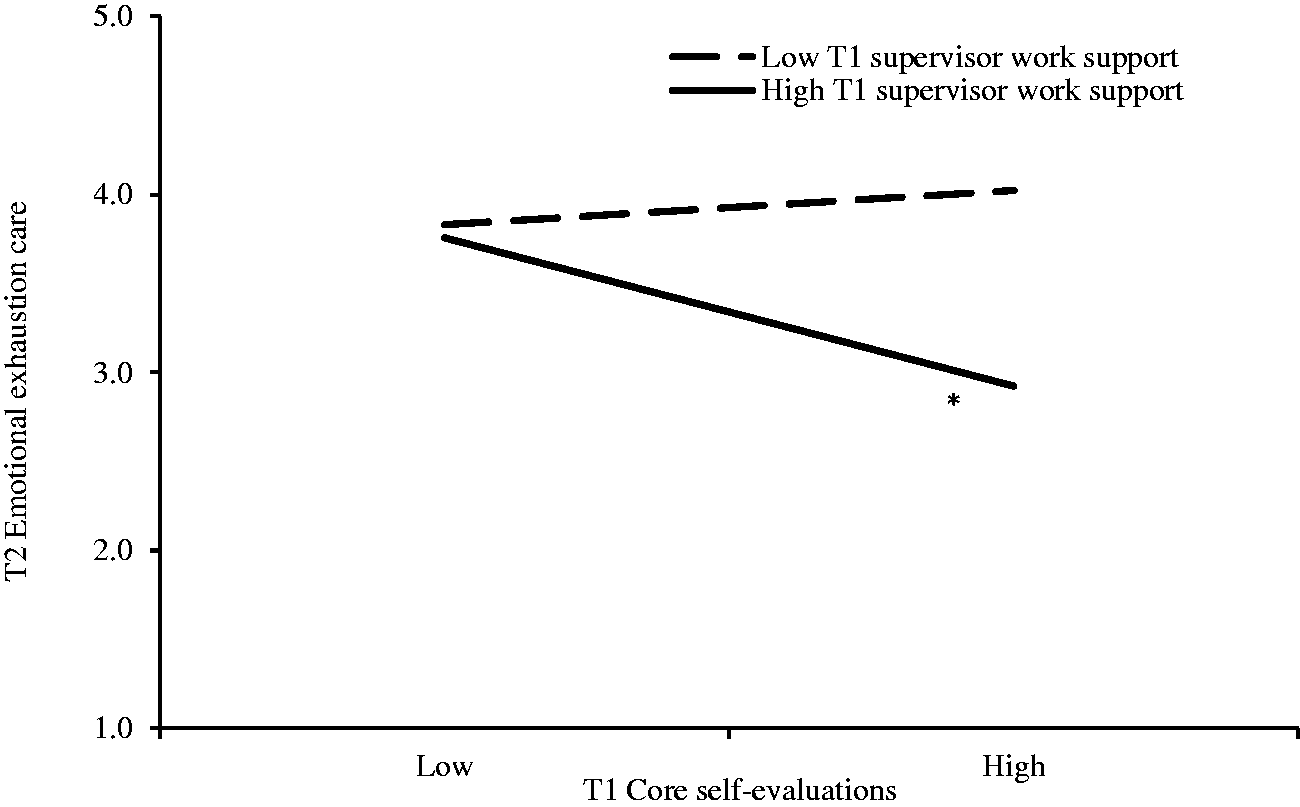
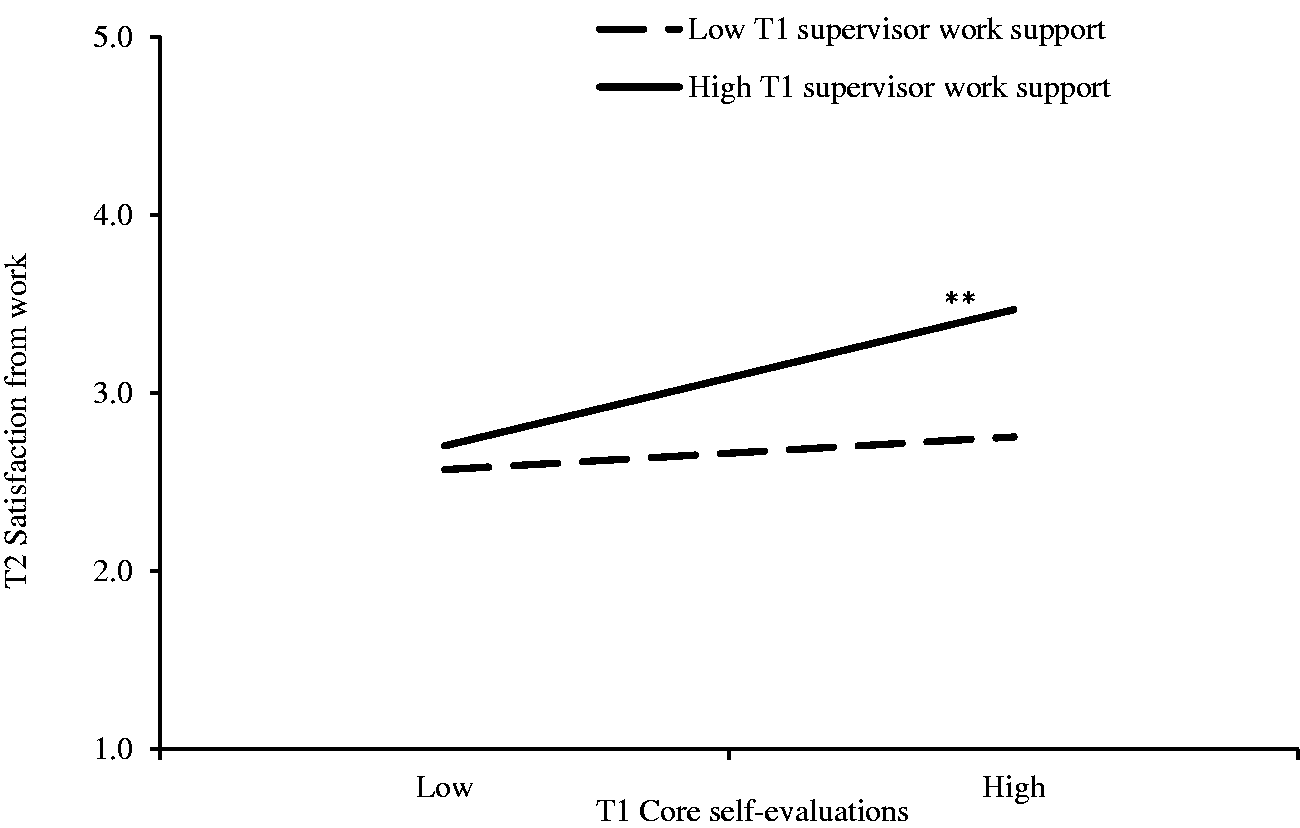
Analyses on the proposed work-domain mediators showed there was a positive relationship of Time 1 core self-evaluations and Time 2 satisfaction from work (β = .27, p = .041). There was, however, no relationship of Time 1 supervisor work support or Time 1 supervisor care support, with Time 2 satisfaction from work. There were, however, two-way interactions of Time 1 core self-evaluations and Time 1 supervisor care support, (β = −.26, p = .037), and Time 1 supervisor work support, (β = −.26, p = .026) on Time 2 satisfaction from work. Specifically, there was a positive relationship between Time 1 core self-evaluations and Time 2 satisfaction from work for those with high Time 1 supervisor care support (β = .44, p = .004; Figure 6), and high Time 1 supervisor work support, (β = .53, p = .003; Figure 7). There was no relationship for those with low Time 1 supervisor care support (β = −.01, p = .946, ns) or Time 1 supervisor work support (β = .01, p = .965, ns).
Study 2 simple slopes for the interaction between Time 1 core self-evaluations and Time 1 supervisor care support on Time 2 satisfaction from work. Note. **p < .01. T1 = Time 1; T2 = Time 2. Study 2 simple slopes for the interaction between Time 1 core self-evaluations and Time 1 supervisor work support on Time 2 satisfaction from work. Note. **p < .01. T1 = Time 1; T2 = Time 2.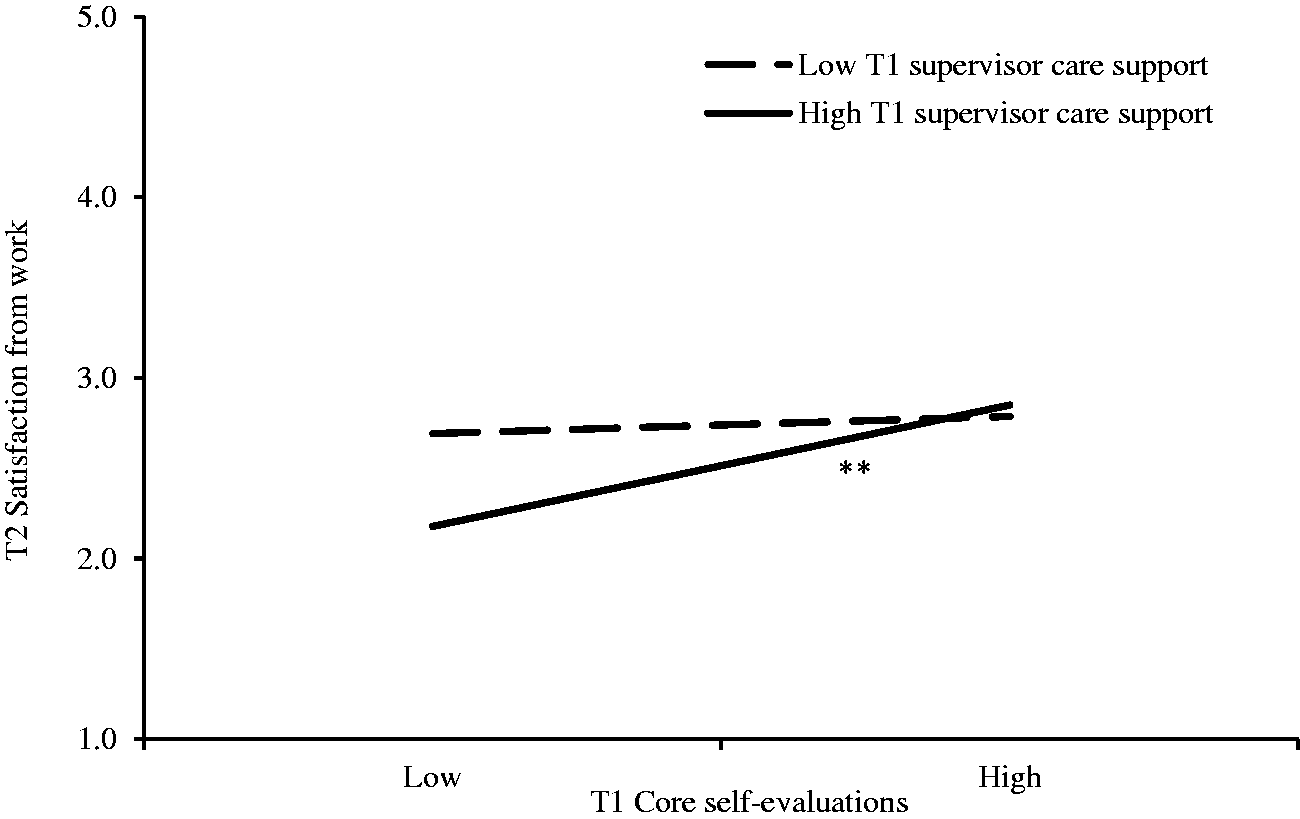
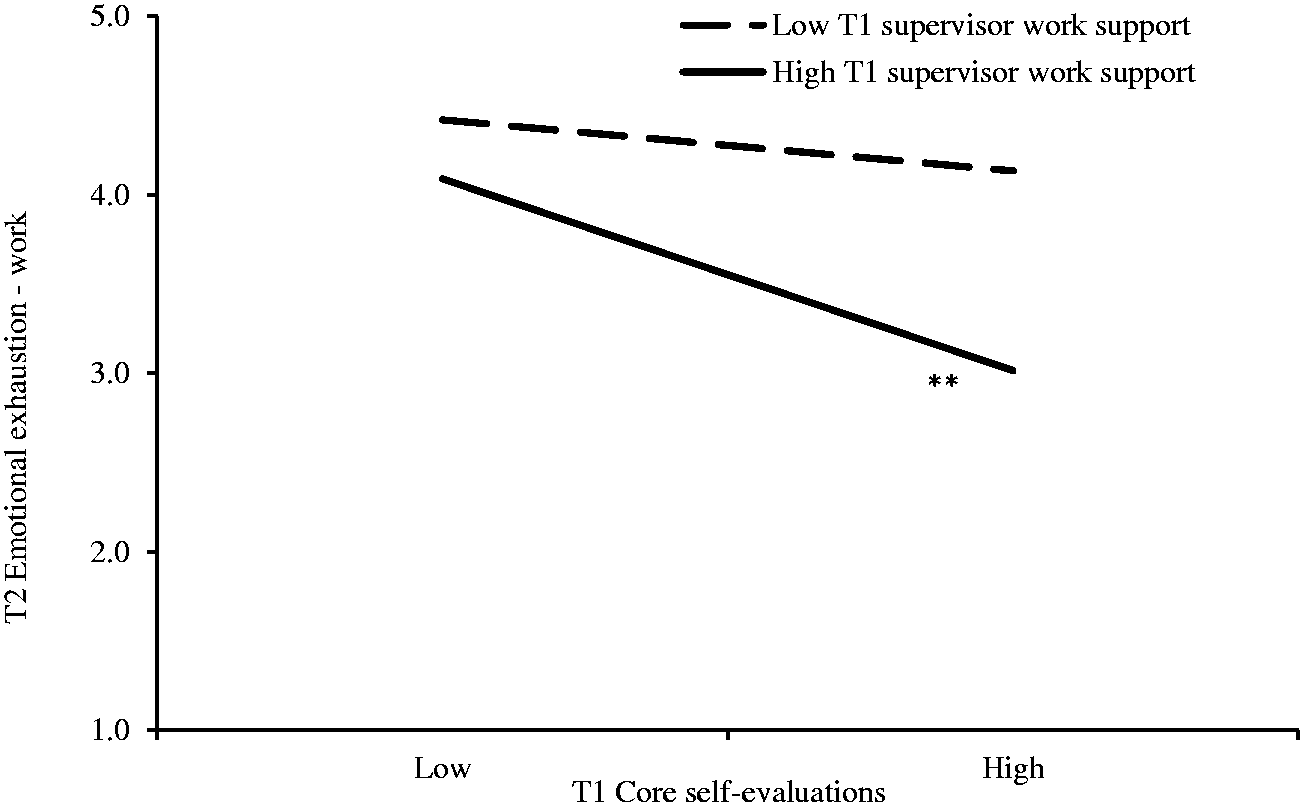
Finally, there was an inverse relationship of Time 1 core self-evaluations and Time 2 emotional exhaustion from work (β = −.29, p = .026). There was, however, no relationship of Time 1 supervisor work support, or Time 1 supervisor care support, with Time 2 emotional exhaustion from work. There were two-way interactions of Time 1 core self-evaluations and Time 1 supervisor care support (β = −.25, p = .049) and Time 1 supervisor work support (β = −.27, p = .021) on Time 2 emotional exhaustion from work. Specifically, there was an inverse relationship between Time 1 core self-evaluations and Time 2 emotional exhaustion from work for those with high Time 1 supervisor care support, (β = −.46, p = .003; Figure 8), and high Time 1 supervisor work support (β = −.56, p = .001; Figure 9). There was no relationship for those with low Time 1 supervisor care support (β = −.03, p = .879, ns) or Time 1 supervisor work support (β = −.02, p = .886, ns).
Study 2 simple slopes for the interaction between Time 1 core self-evaluations and Time 1 supervisor care support on Time 2 emotional exhaustion from work. Note. **p < .01. T1 = Time 1; T2 = Time 2. Study 2 simple slopes for the interaction between Time 1 core self-evaluations and Time 1 supervisor work support on Time 2 emotional exhaustion from work. Note. **p < .01. T1 = Time 1; T2 = Time 2.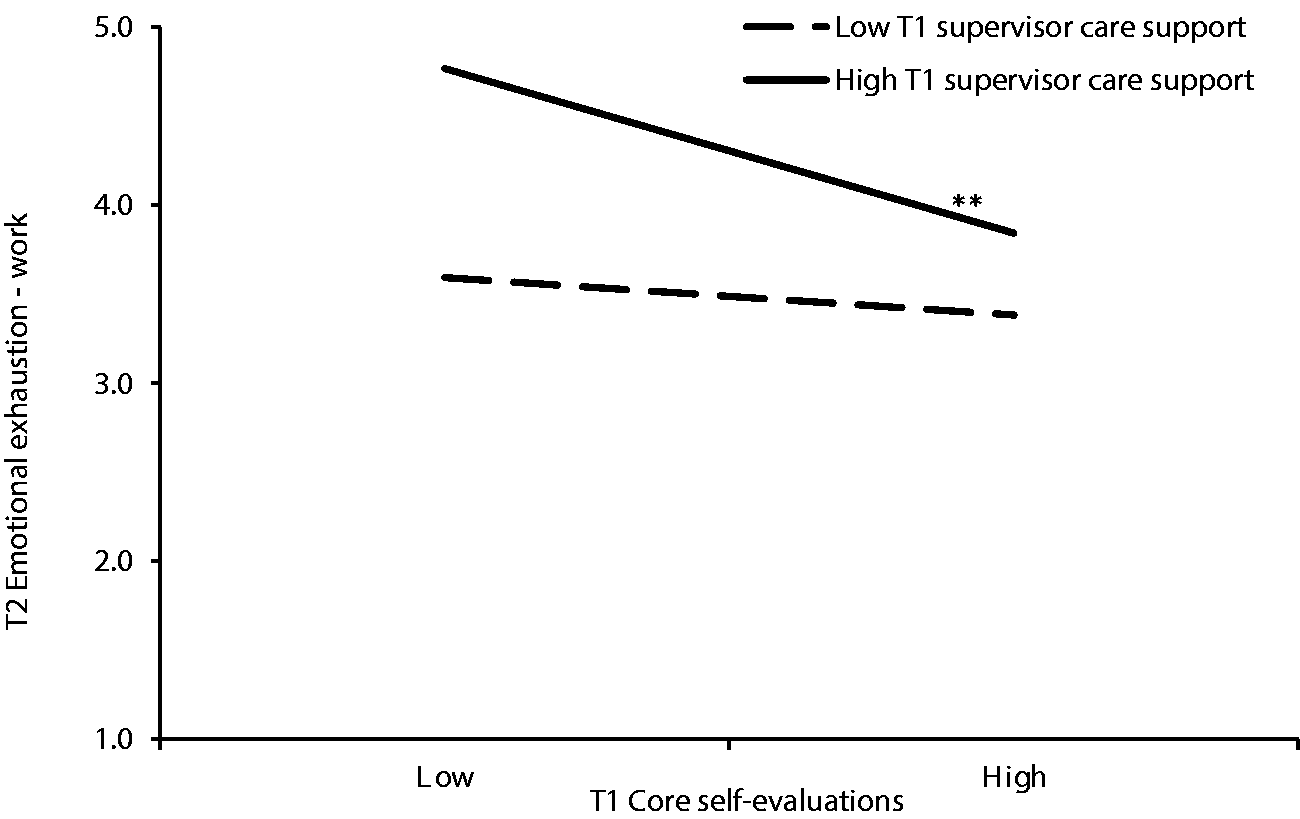
Conditional indirect effects
Conditional Indirect Effects of Time 1 Core Self-Evaluations on Time 2 Turnover Intentions (Through Time 2 Satisfaction From Work and Care, Depending on Types of Time 2 Supervisor Support).
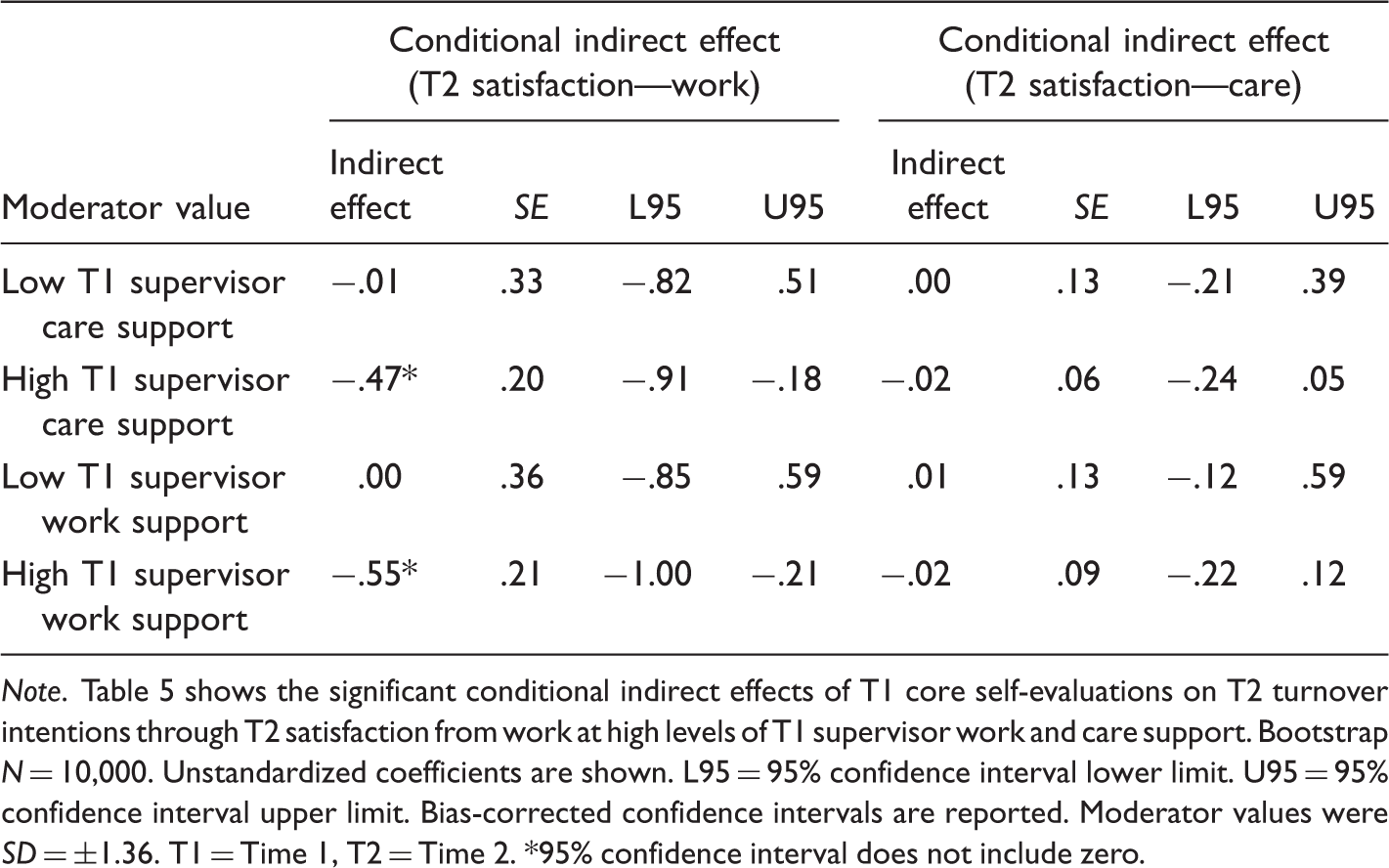
Note. Table 5 shows the significant conditional indirect effects of T1 core self-evaluations on T2 turnover intentions through T2 satisfaction from work at high levels of T1 supervisor work and care support. Bootstrap N = 10,000. Unstandardized coefficients are shown. L95 = 95% confidence interval lower limit. U95 = 95% confidence interval upper limit. Bias-corrected confidence intervals are reported. Moderator values were SD = ±1.36. T1 = Time 1, T2 = Time 2. *95% confidence interval does not include zero.
Conditional Indirect Effects of Time 1 Core Self-Evaluations on Time 2 Turnover Intentions (Through Time 2 Emotional Exhaustion From Work and Care, Depending on Types of Time 2 Supervisor Support).
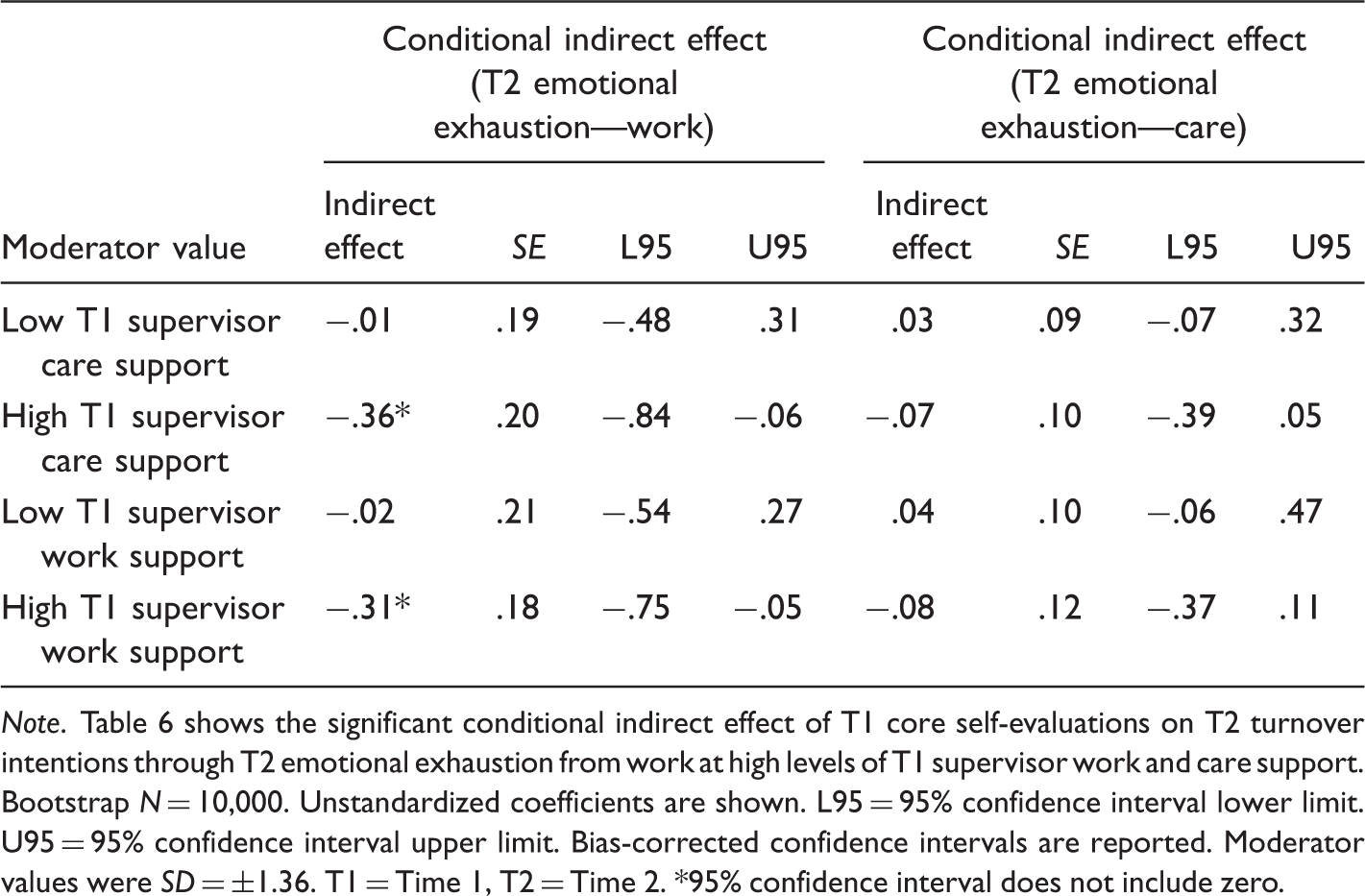
Note. Table 6 shows the significant conditional indirect effect of T1 core self-evaluations on T2 turnover intentions through T2 emotional exhaustion from work at high levels of T1 supervisor work and care support. Bootstrap N = 10,000. Unstandardized coefficients are shown. L95 = 95% confidence interval lower limit. U95 = 95% confidence interval upper limit. Bias-corrected confidence intervals are reported. Moderator values were SD = ±1.36. T1 = Time 1, T2 = Time 2. *95% confidence interval does not include zero.
General Discussion
The results of Study 1, based on data obtained from 57 Australian employees with eldercare responsibilities, provided some initial support for our hypotheses. The inverse relationship between core self-evaluations and turnover intentions was not supported (Hypothesis 1). However, consistent with Hypothesis 2a, supervisor care support was inversely related to turnover intentions. The interactive effect of the two resources was consistent with the substitution hypothesis (Hobfoll & Leiberman, 1987), whereby resources compensate for deficits in one another. Specifically, in support of Hypothesis 3b, for those low in core self-evaluations, high supervisor care support compensated to reduce turnover intentions. Based on COR theory, supervisor care support constitutes a focal contextual resource that, beyond the caregiver's personal resources, replenishes energy and therefore maintains functioning at work. This research is consistent with other findings that support the compensatory nature of resources (McNall et al., 2011). However, Study 1 only included supervisor care support. Consequently, Study 2 incorporated work-based support. In addition, Study 2 investigated the extent to which individuals' core self-evaluations and their supervisors' work and care support interact to influence turnover intentions 3 months later. We also examined whether satisfaction and emotional exhaustion from work and care mediated the relationship between resources and turnover intentions.
The findings of Study 2, based on data obtained from 66 employees in the United States and India with eldercare responsibilities, provided additional support for the model. Hypothesis 1 positing the inverse effect of core self-evaluations on subsequent turnover intentions was not supported. There also was no support for Hypothesis 2 or the inverse effect of supervisor work and care support on subsequent turnover intentions. However, there was evidence for the interactive effects of resources and indirect effects through satisfaction and emotional exhaustion from work. In contrast to the findings of Study 1, the interaction of core self-evaluations and supervisor work and care support on subsequent turnover intentions showed a boosting effect (Hypothesis 3a). Specifically, there was an inverse relationship between high core self-evaluations and turnover intentions for those with high supervisor work and care support. This finding is in line with other research that has found boosting effects of resources (Mauno & Rantanen, 2013). Taken together, the findings of Study 1 and Study 2 indicate that both resource interaction effects (i.e., compensation and boosting) are plausible for predicting caregivers' turnover intentions.
As expected in Hypothesis 4a, there was full support for the model for the work-domain mediators. Specifically, there was an inverse indirect effect of core self-evaluations on subsequent turnover intentions, explained by an increase in satisfaction from work and a decrease in emotional exhaustion from work, observed when both supervisor work and care support were high. Although there was an inverse relationship between high core self-evaluations and subsequent emotional exhaustion from care for those with high supervisor work support, there was no support for the care-domain mediational process on subsequent turnover intentions as proposed in Hypothesis 4b. This suggests that support at work may not reduce turnover intentions by crossing over to the home environment to relieve emotional exhaustion or improve satisfaction with caregiving. This finding is in line with research on boundary theory; specifically, the desire for segmentation or boundary management between work and nonwork roles (Kossek, Noe, & DeMarr, 1999). However, the interactive effect of core self-evaluations and both types of supervisor support suggests that employees who are supported by their supervisors, for both their work and caregiving responsibilities, do experience reduced intentions to turnover via improved satisfaction from work and reduced emotional exhaustion from work. This finding extrapolates on Study 1 and is in line with previous research (Kossek et al., 2011) suggesting that supervisor support for both roles is important for informal caregivers in managing their dual work and care commitments.
The differential findings of compensation and boosting effects across Studies 1 and 2 could be considered in view of the different design methodologies (i.e., cross-sectional vs. two-wave design). As Study 1 only used one time point of measurement, the temporal processes of depletion and enrichment in predicting future turnover intentions could not be investigated. Indeed, some relationships may be less contiguous in nature and appear only after a period of time (Cook & Campbell, 1979). Furthermore, the situational context may play a role in the way in which resources are used. From a global research perspective, public policy initiatives may influence divergent findings (Calvano, 2013). As Study 2 was conducted with caregivers in the United States and India, there may be different macro influences that were not incorporated in our investigation. In addition, family values may also influence the caregiving and work experience. Australia, for example, may have alternative macro factors such as norms and public policies that are less supportive or introduce other burdens that reduce capacity of caregivers to manage their work and care roles. These factors may account for the compensation effect observed in Study 1.
The main contribution of this study is the examination of the process of turnover intentions for employees with eldercare responsibilities. We expand upon current theorizing of the turnover process by demonstrating that it is influenced by the combined effects of personal and social resources, and through the mechanisms of satisfaction from work and emotional exhaustion from work. This process is pertinent to the eldercare context in understanding the specific factors that contribute to turnover intentions. This research highlights the crucial moderating influence of the work environment on employees' turnover intentions, in particular supervisor support, rather than focusing on the burdens of the caregiving role. In support of our findings, prior research into the antecedents and mediating mechanisms of the turnover process for employees has emphasized satisfaction from work, emotional exhaustion, personality, and social support (Ferris et al., 2013; Kobasa & Puccetti, 1983; Wright & Cropanzano, 1998; Zimmerman, 2008). However, until now studies have not considered the integration of the many pathways between these factors for employees with caregiving responsibilities.
Limitations and Future Research
This research has a number of limitations that could be addressed in future research. As convenience samples were used across three continents, this method of sampling may impact the generalizability and capacity to replicate results. Statistical power also may have been reduced due to low sample sizes, as sampling of employed informal caregivers proved to be difficult. Indeed, data obtained from the Australian Bureau of Statistics (2012) indicate that at the time of data collection for Study 1, only 769,800 Australians were identified as primary caregivers, and only 42% of these caregivers were participating in the labor force. Unfortunately, national data do not provide information on how many of these caregivers were providing eldercare as opposed to childcare. Overall, our experience is consistent with other researchers investigating employees with eldercare responsibilities (Zacher & Winter, 2011), and future research using larger samples is recommended.
Although intentions predict future behavior to some extent (Armitage & Conner, 2001; Holtom et al., 2008), actual turnover behavior was not assessed in this research. Measuring turnover prospectively using survival analysis may provide greater understanding of the turnover process for informal caregivers. Furthermore, we did not distinguish between organizational turnover intentions, workforce exit intentions to be a full-time carer, and unrelated retirement intentions. These factors may be a pertinent distinction, as some employees may be eligible to retire or able to alter their working conditions, which autonomously influences their exit decisions.
It is important to acknowledge that the resources of core self-evaluations and supervisor support used in our studies are only two of a multitude of conceivable resources. Therefore, this research may not fully capture the variety of support to which employees have access, such as that provided by partners or family members. Another limitation was the inclusion of participants from countries with varying social norms and expectations for eldercare. Consideration of individualistic and collectivist ideologies is pertinent for future international investigations. Although we employed a 3-month period between survey measurements in Study 2, it may be worthwhile to use longer time intervals to examine these effects. We also recommend investigation into the longer term consequences of resource compensation and boosting for caregivers.
Theoretical and Practical Implications
Our finding of both compensatory and boosting effects supports the plausibility of both interactive effects. The boosting and compensatory effects found in our studies represent two distinct coping profiles. Boosting effects may arise for those with high personal resources because under conditions of high support, their resources are maximized. Conversely, individuals low in personal resources may choose to use or allocate external supports to maintain coping (Grawitch, Barber, & Justice, 2010). Indeed, the needs and motivational orientations of individuals with personal resources and those without them may differ (Ferris et al., 2013; Grawitch et al., 2010). Our examination of the process of turnover intentions in the eldercare context reinforces how resources can be influential drivers of satisfaction from work and emotional exhaustion from work and that both these mechanisms influence the turnover intentions of employees with eldercare responsibilities. However, further research is required to extricate the nuances of these effects and to determine the direct conditions under which they are most likely to occur. These interactive and meditational effects need to be examined temporally and within different cultural milieus to extend current understanding.
This research also highlights two key practical contributions. First, it emphasizes the important role of supervisors in promoting supportive environments especially for employees with eldercare responsibilities. Unfortunately, most employer policies that focus on caregiving needs continue to address only childcare and not eldercare (Koerin, Harrigan, & Secret, 2008). The pivotal role of supervisory support in our findings suggests that training and development of supervisors may facilitate greater awareness of eldercare in the workplace, thus promoting open dialogue surrounding eldercare needs (Earl & Taylor, 2015; Shoptaugh, Phelps, & Visio, 2004). Such training will equip supervisors and employees with the resources necessary to enable greater retention and consideration of both work and care responsibilities.
Second, our research highlights the necessity of bolstering personal resources. Organizations could provide skills training to enhance caregivers' self-efficacy and resilience for effectively managing competing roles. Such programs have shown that caregivers can increase psychological resources and adaptive coping skills (Sörensen, Pinquart, & Duberstein, 2002). However, if supports in the environment are lacking, placing entire emphasis on an individual's personal resources to cope may not be ideal. As found in Study 1, the compensating resource (i.e., core self-evaluations) did not reduce turnover intentions to the same extent as having high levels of supervisor care support. Although compensation may provide relief for employees, it may provide only small short-term benefits. Research has yet to address the longer term consequences of compensation, and our research suggests this profile of coping is less effective compared with boosting effects.
Concluding Remarks
In conclusion, our findings contribute to the literature on eldercare by examining a more complex model of intentions to turnover, including moderating and mediating mechanisms. We provided empirical support for the beneficial effects of resources, namely core self-evaluations and supervisor support for both care and work. In addition, we found support for two types of resource interactions—compensation and boosting effects. A particular strength of this research is the investigation of the complex process of turnover, particularly Study 2 that used two time points and incorporated the mediating mechanisms of satisfaction and exhaustion from both the work and care domains. Our research has extended resource theory to the eldercare domain. These findings have important practical implications for employees and employers alike, by illustrating the resource-protective and resource-depleting processes associated with caregivers' turnover intentions.
Footnotes
Declaration of Conflicting Interests
The authors declared no potential conflicts of interest with respect to the research, authorship, and/or publication of this article.
Funding
The authors disclosed receipt of the following financial support for the research, authorship, and/or publication of this article: This work was supported by a Discovery Early Career Researcher Award (DE120100359) from the Australian Research Council awarded to the third author.