







Abstract
Indonesian employees in state-owned enterprises (SOEs) often face psychological challenges after retirement due to strong emotional ties to their workplace. This study examined the effectiveness of coping strategy training in enhancing happiness among retired SOE personnel. Using a field-based randomized pretest–posttest design with a comparison group, 556 retirees were assigned to a training group (n = 278) or a comparison group (n = 278). The intervention integrated problem-focused and emotion-focused coping strategies, including laughter techniques and relaxation. Happiness was measured using the Oxford Happiness Questionnaire at pretest, posttest (1 month after the intervention), and follow-up assessments at 2 and 3 months, reflecting a longitudinal design to capture sustained effects. Mixed ANOVA results indicate a significant and sustained increase in happiness among participants who received the training. Qualitative findings showed improvements in emotional regulation, meaning-making, social connectedness, and engagement in daily activities, highlighting the potential of structured coping programs to support positive ageing.
Introduction
This study focuses on retired employees of Indonesian state-owned enterprises (SOEs) who are undergoing the transition to post-retirement life. Retirement represents a significant life transition, particularly for SOE employees who have devoted many years of service to a single organization (Mustika & Martdianty, 2023). Compared with workers in other sectors, SOE personnel are often characterized by strong organizational cultures, high levels of loyalty to their institutions, and more structured work systems (Earl et al., 2015).
As a result, retirement can be a major life change for many SOE employees who have spent decades within the same organizational environment (Raynard et al., 2020). If this transition is not well managed, it may lead to psychological difficulties such as stress, depression, and feelings of worthlessness (Yeung & Zhou, 2017). In the Indonesian context, research by Haerawati and Hasri (2023) found that some retired civil servants experience mild to moderate depressive symptoms, accompanied by a perceived loss of social roles and a decline in life meaning.
The happiness of post-retirement employees is an important aspect of the well-being of individuals who have devoted themselves to the world of work for many years (Holahan et al., 2008; Woźniak et al., 2022). Post-retirement employee happiness is greatly influenced by a variety of factors, including social support, financial readiness, physical and mental health, and an individual's ability to find meaningful activities after retirement (Woźniak et al., 2022). In addition, the happiness of post-retirement employees also depends on how they interpret the new phase of their lives.
Previous research has shown that psychological interventions, such as psychosocial adaptation training, coping strategies, and stress management programs, can help individuals experience retirement more positively, particularly in terms of life satisfaction and well-being (Durgante et al., 2022). Therefore, coping strategy is essential to help them manage this transition in a more targeted and systematic way (Bellet et al., 2024). Research examining coping strategies among retired employees in Indonesia, particularly former state-owned enterprise employees, remains limited and has not been a major focus in academic studies or organizational policies. Most studies in Indonesia so far have emphasized the exploration of physical and psychological conditions, namely research on mental health exploration (Wulansari & Suwarjo, 2023), retirement plan readiness (Larisa et al., 2021; Septiany et al., 2024), retirement dynamics in civil servants (Ananta et al., 2021).
Previous research in Indonesia indicates that coping mechanisms for post-retirement adjustment have not been thoroughly investigated, particularly among employees of SOEs. Furthermore, it is uncommon for organized coping strategy approaches that fully incorporate both emotion-focused (such as laughter and relaxation treatment) and problem-focused coping strategies to be applied methodically in organizational contexts. This indicates a major research deficit in creating context-specific and culturally appropriate coping strategy intervention for Indonesian SOE retirees. The need for coping strategy training (CST) is becoming increasingly urgent, given the rising number of SOE employees who are retiring each year in Indonesia.
Research Questions and Hypothesis
Against this background, empirical intervention studies examining structured psychological programs that strengthen coping capacity during the retirement transition remain limited, particularly within the context of Indonesian SOEs. To address this gap, the present study evaluates the effectiveness of a CST program in enhancing post-retirement happiness among retired SOE employees. The study employs a field-based randomized pretest–posttest experimental design with a comparison group to assess the effectiveness of the intervention (Creswell, 2014).
The study addresses the following research question: Does CST enhance post-retirement happiness among employees of SOEs in Indonesia? It is hypothesized that participation in CST will significantly increase post-retirement happiness compared with individuals who do not participate in the training. The effects are examined across four measurement points: pretest, posttest (1 month after the intervention), and follow-up assessments conducted 2 and 3 months after the training. By employing a field-based experimental design with longitudinal follow-up measurements, this study contributes empirical evidence on the effectiveness of coping-based psychological interventions in supporting post-retirement happiness among SOE retirees.
Theoretical Framework
Happiness and Retirement Adjustment
Happiness is a central construct in positive psychology and reflects overall psychological functioning that includes both emotional experiences and cognitive evaluations of life. Within positive psychology, happiness is commonly conceptualized as subjective well-being, characterized by frequent positive emotions, infrequent negative emotions, and a positive evaluation of life satisfaction (Diener & Tay, 2017; Seligman, 2019). According to Diener and Tay (2017), happiness consists of three core components, namely life satisfaction, high levels of positive affect, and low levels of negative affect. Individuals who achieve a balanced emotional state tend to demonstrate stronger adaptive capacities when facing major life transitions.
Retirement represents one of the most significant developmental transitions in later adulthood and has important implications for happiness and psychological adjustment. Research over the past decade indicates that retirement can influence happiness in diverse ways, depending on individual characteristics and contextual factors (Abramowska Kmon & Łątkowski, 2021). Several studies have shown that retirement is associated with changes in life satisfaction and emotional functioning, particularly as individuals adjust to the loss of work roles, changes in daily structure, and shifts in social identity (Joo et al., 2023; Ugwu et al., 2024).
Empirical findings suggest that retirees who maintain meaningful activities, social participation, and psychological resources report higher levels of happiness compared to those who experience social withdrawal or loss of purpose. Joo et al. (2023) found that engagement in leisure activities and perceived social support were positively associated with happiness among retirees. Similarly, Suparmi et al. (2024) demonstrated that social connectedness and participation in community activities played a significant role in maintaining happiness in later life.
Recent studies further emphasize that happiness in retirement is shaped not only by external conditions but also by psychological processes such as perceived control, emotional regulation, and coping capacity. Ugwu et al. (2024) highlighted that effective coping and psychological adjustment processes are critical in reducing retirement-related distress and enhancing happiness. These findings support developmental perspectives which argue that successful adaptation to retirement requires active psychological adjustment rather than passive disengagement. Overall, the literature suggests that happiness in retirement is a dynamic process influenced by emotional balance, cognitive evaluation of life circumstances, social engagement, and adaptive coping strategies.
Coping Strategy Training
CST is a type of psychological intervention used to increase happiness. Its goal is to give people the tools they need to deal with life's obstacles, specifically through Emotion and Problem-Focused Coping (Bagheriniya et al., 2022; Malouff & Schutte, 2017). By combining the Problem-Focused Coping and Emotion-Focused Coping approaches through laughter and relaxation therapy (Bagheriniya et al., 2022; Chen et al., 2018), CST can be an effective approach not only helps individuals solve problems, but also strengthens their psychological resilience in the face of life's stresses. Thus, these interventions contribute significantly to improving individual happiness in the long run.
The Problem-Focused Coping approach teaches people how to apply problem-solving techniques to pinpoint and deal with the root of the issue. This strategy works well when the issues at hand are manageable and amenable to logical resolution (Taiwo, 2015). Emotion-Focused Coping (Bagheriniya et al., 2022) places greater emphasis on controlling feelings that emerge from an issue, particularly when the situation is unchangeable. Laughter and relaxation treatment are among the methods frequently employed in this approach (Akimbekov & Razzaque, 2021). Relaxation techniques, such as deep breathing and meditation, help individuals reduce physical and emotional tension, thus allowing them to deal with life's stresses more calmly (Urbanska et al., 2018). These findings from previous studies indicate that this body of evidence provides a strong theoretical foundation for psychosocial interventions that focus on strengthening coping skills and emotional regulation as key pathways to enhancing happiness among retirees.
Linking Coping Strategy Training and Post-Retirement Happiness
To contextualize the present study within existing scholarship, a summary of empirical research published over the past decade on retirement transition and happiness is presented in Table 1. Table 1 highlights key findings from studies that examine how retirement affects subjective happiness and psychological adjustment, as well as the role of psychosocial resources and coping processes during this life transition.
Key Recent Empirical Findings on Retirement Transition and Happiness (2016–2025).
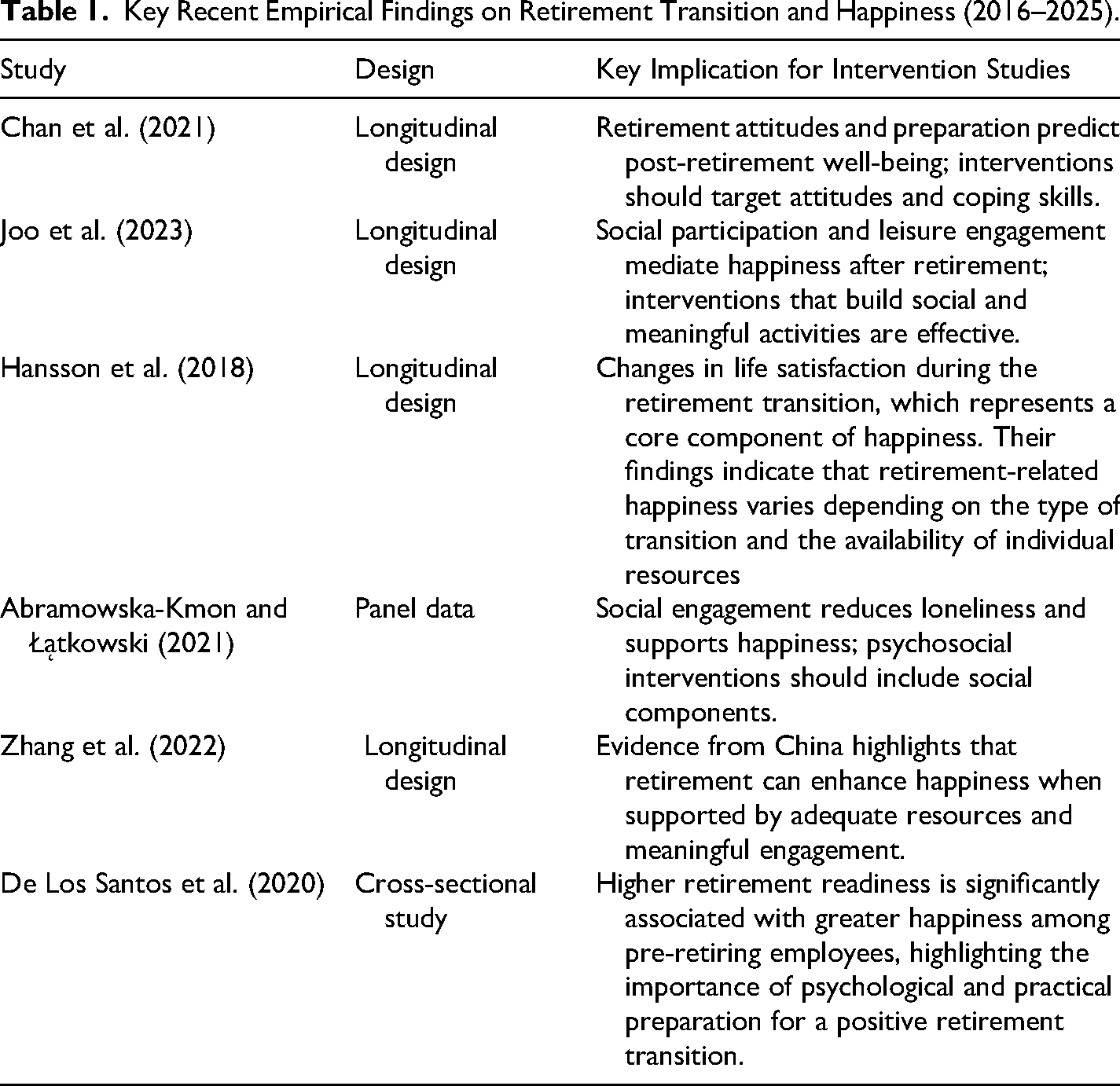
The empirical evidence summarized in Table 1 consistently demonstrates that retirement-related happiness is not an automatic outcome of retirement itself but is strongly shaped by psychological, social, and contextual resources. Positive adjustment to retirement is associated with favorable retirement attitudes, adequate preparation, social participation, meaningful activities, and effective coping strategies. These findings collectively support the need for psychosocial intervention programs that strengthen coping skills, foster social engagement, enhance retirement readiness, and promote purposeful post-retirement activities to sustain and improve happiness during the retirement transition.
Method
Participants
This research included 556 retired employees from a SOE in Indonesia who are experiencing a transition period after retirement. The participants were randomly assigned to two groups. The experimental group participated in CST aimed at enhancing happiness during the retirement transition, whereas the control group did not undergo the intervention. Participants’ demographic characteristics (Table 2), including age (55–65 years), length of retirement (1–5 years), were controlled to ensure the validity of the study results.
Demographic Characteristics of Participants.
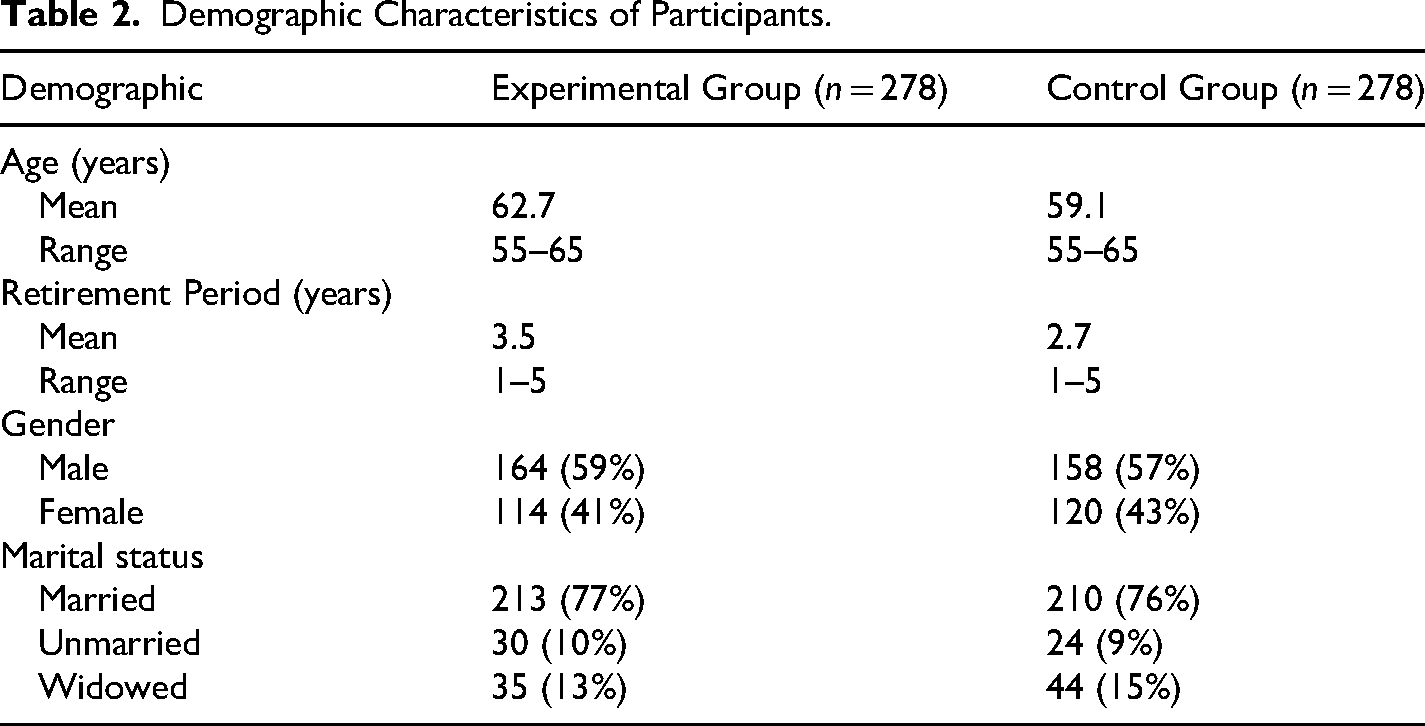
The retirement period of 1 to 5 years was selected because this stage represents an early adjustment phase in which individuals are still adapting to changes in roles, routines, and identity following retirement. During this period, retirees often experience fluctuations in well-being and actively develop coping strategies to adjust to post-retirement life (Amorim & França, 2019; Wang & Shi, 2014).
Measurement
This research utilized the Oxford Happiness Questionnaire developed by Hills and Argyle (2002) for both pretest and posttest evaluations (Table 3). The OHQ comprises 29 items that were translated into Indonesian by Rahmawati et al. (2016). This assessment tool employs a 6-point rating scale, ranging from 1 = strongly disagree to 6 = strongly agree. The reliability of the OHQ is determined using Cronbach's alpha, with a score of (α = .885). Examples of items from the OHQ include, “I believe that life is quite fulfilling,” “I am content with all aspects of my life,” and “I see beauty in certain things”.
The Oxford Happiness Questionnaire Blueprints.
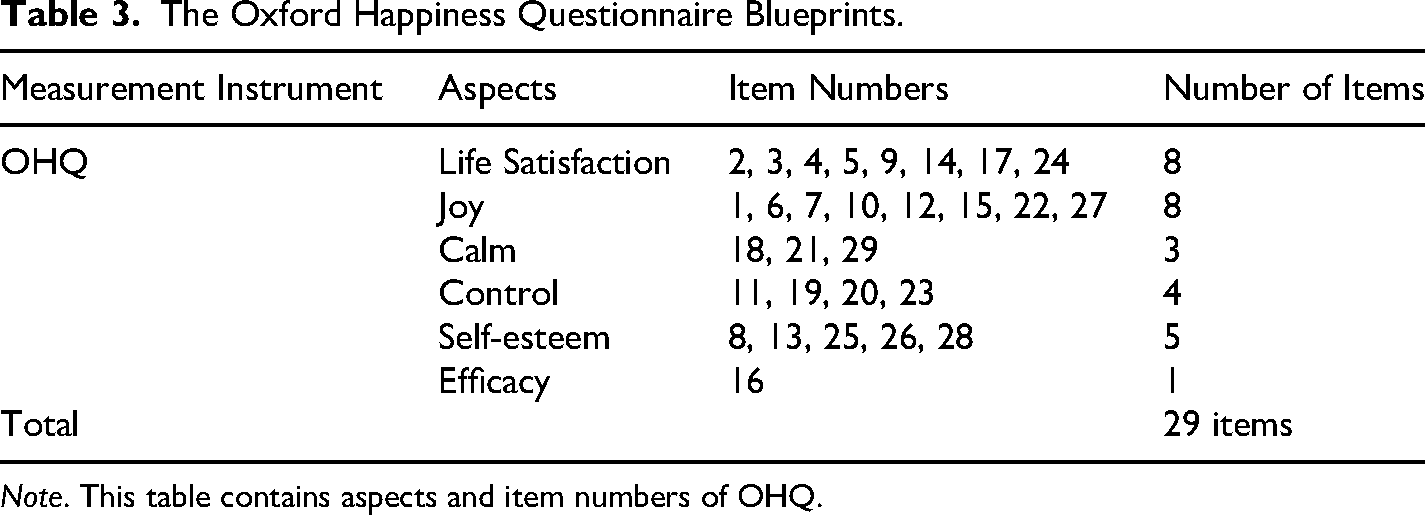
Note. This table contains aspects and item numbers of OHQ.
The content validity of the Oxford Happiness Questionnaire in this study employed the qualitative content validity analysis, which was carried out by reviewing the suitability of the items with theory and language based on three expert assessments. The results of the qualitative content validity analysis in Table 4 indicate good content validity of OHQ. Quantitative content validity analysis was also performed in this study using Aiken's V coefficient. The Aiken's V coefficient was 0.93, indicating satisfactory content validity of the OHQ.
Qualitative Content Validity Analysis.

Experimental Design
This study employed a field-based randomized pretest–posttest experimental design with a comparison group to evaluate the effectiveness of CST as a psychological intervention to enhance post-retirement happiness. Participants were randomly assigned to either the experimental group or the comparison group to minimize selection bias. Because the study involved non-clinical psychological skill training and minimal risk, it was not classified as a clinical trial requiring formal registration.
Baseline equivalence between groups was examined using pretest scores. An independent samples t-test indicated no significant difference in baseline happiness between the experimental and comparison groups (P > .05), suggesting that the groups were statistically comparable prior to the intervention. The experimental group (n = 278) participated in eight CST sessions integrating emotion-focused coping strategies (including laughter and relaxation techniques) and problem-focused coping approaches, whereas the comparison group (n = 278) did not receive the intervention during the study period. Happiness was measured at four time points: pretest, posttest (1 month after the intervention), and follow-up assessments at 2 and 3 months (Table 5).
Field-Based Randomized Experimental Design.
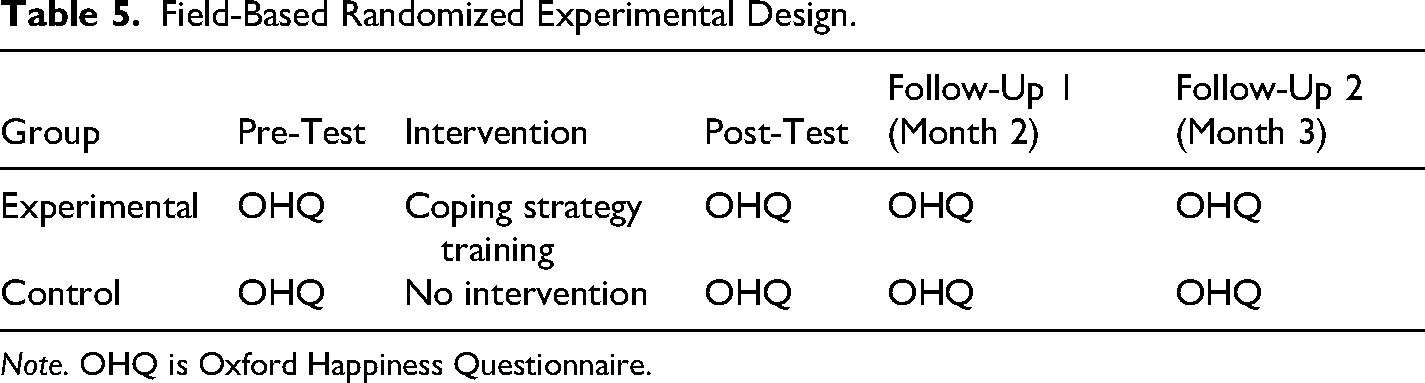
Note. OHQ is Oxford Happiness Questionnaire.
Measurements were taken at four time points: before the intervention (pre-test), after the intervention (post-test) or month 1, follow-up 1 (month 2), and follow-up 2 (month 3), using an Oxford Happiness Questionnaire that had been adapted into Indonesian (Table 5). Data analysis was carried out using Mixed ANOVA to test differences in effectiveness between time and between groups and the interaction between the two, in order to determine the direct and sustainable effects of the intervention.
Procedure
The procedure of the study followed a structured sequence of sessions designed to evaluate the effectiveness of the intervention. The intervention consisted of a structured CST, incorporating problem-focused coping, emotional reflection, laughter therapy, and relaxation techniques to enhance the happiness of retired employees during the retirement transition (Bagheriniya et al., 2022).
Design of Coping Strategy Training
The CST consists of eight main sessions in a month, with a frequency of two sessions per week (Table 6). The effectiveness of the program was assessed using a pretest administered in the Session 1 and a post-test conducted in Session 9, both using the Oxford Happiness Questionnaire (OHQ). Following the completion of all main intervention sessions (Table 6), the program included two follow-up assessments: Follow-up 1 in Session 10 (Month 2), which aimed to reflect on the application of learned coping strategies and strengthen initial adaptation, and Follow-up 2 in Session 11 (Month 3), which focused on evaluating the sustainability of the intervention effects, assessing medium-term positive changes, and supporting the development of a personal sustainability plan to maintain happiness.
Implementation of Coping Strategy Training.
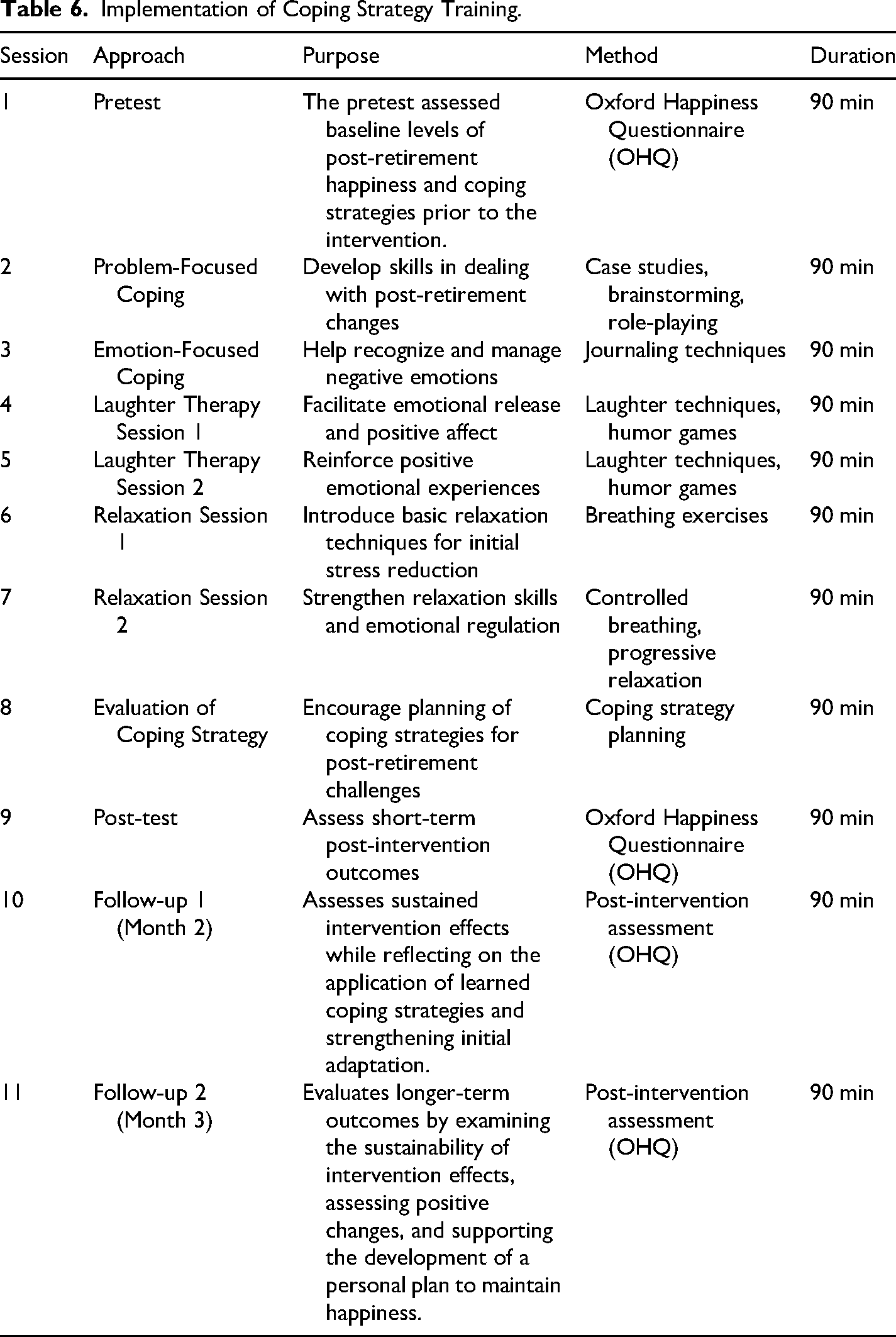
As this study employed a group-based intervention, a potential concern is that improvements in happiness may arise from increased social interaction rather than from the intervention content itself. To minimize this potential extraneous influence, several design features were implemented. First, participants were randomly assigned to the experimental and control groups, a procedure commonly used to distribute uncontrolled variables across groups and strengthen internal validity (Creswell, 2014). Second, the intervention sessions followed a structured and standardized curriculum focusing on specific coping skill development activities, including problem-focused coping, emotional reflection, laughter therapy, and relaxation techniques. Third, the study incorporated longitudinal follow-up assessments 2 and 3 months after the intervention to examine whether the effects persisted beyond the immediate training context (Creswell, 2014).
As a group-based psychological intervention, CST also allows supportive interpersonal interaction, which is recognized as one of the mechanisms that can facilitate psychological adjustment and emotional well-being in group interventions (Rosendahl et al., 2021). However, the sustained improvements observed during the follow-up assessments suggest that participants not only benefited from the group interaction but also internalized and applied the coping strategies learned during the training in their daily lives.
Results
Descriptive Analysis
Descriptive analysis in Table 7 showed that the mean scores of the experimental and control groups at the pretest were nearly identical, with M = 104.9 (SD = 9.7) for the experimental group and M = 105.2 (SD = 9.9) for the control group. This indicates that both groups were in comparable baseline conditions before the intervention began. After 1 month (post-test), the experimental group experienced a significant increase in scores to M = 116.8 (SD = 10.5), while the control group showed only a slight increase to M = 107.1 (SD = 9.6). This improvement continued during the second-month follow-up, with the experimental group achieving M = 119.4 (SD = 10.9) and the control group M = 108.3 (SD = 9.8). In the third-month follow-up, the experimental group recorded the highest score, namely M = 121.5 (SD = 11.3), while the control group showed only a modest increase to M = 109.0 (SD = 10.0). Based on Table 7, it is confirmed that the CST intervention significantly improved happiness levels among retired SOE employees in the experimental group and that this positive effect persisted over time.
Descriptive Statistics.
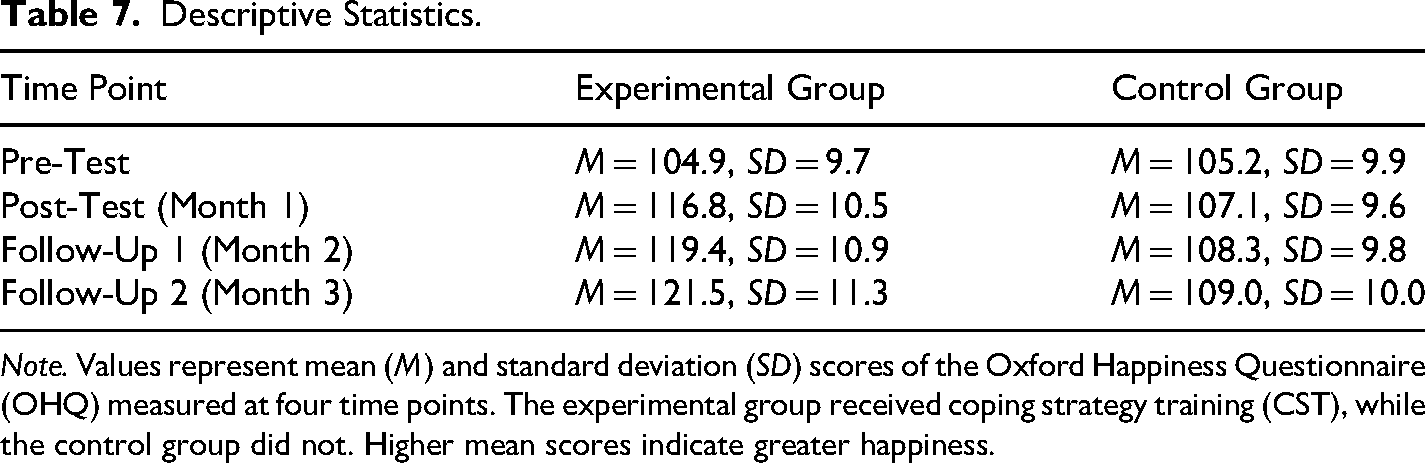
Note. Values represent mean (M) and standard deviation (SD) scores of the Oxford Happiness Questionnaire (OHQ) measured at four time points. The experimental group received coping strategy training (CST), while the control group did not. Higher mean scores indicate greater happiness.
Distribution of Happiness Across Demographics
Post-retirement employee happiness scores (Table 8) were categorized for participants in the experimental group and the control group at four measurement time points: pretest, posttest, second-month follow-up, and third-month follow-up. Based on the categorization results of the post-retirement employee happiness scores in the experimental and control groups at four measurement time points (pretest, first-month posttest, second-month follow-up, and third-month follow-up), significant differences were observed between the two groups.
Happiness Categories of Experimental and Control Groups at Each Time Point.
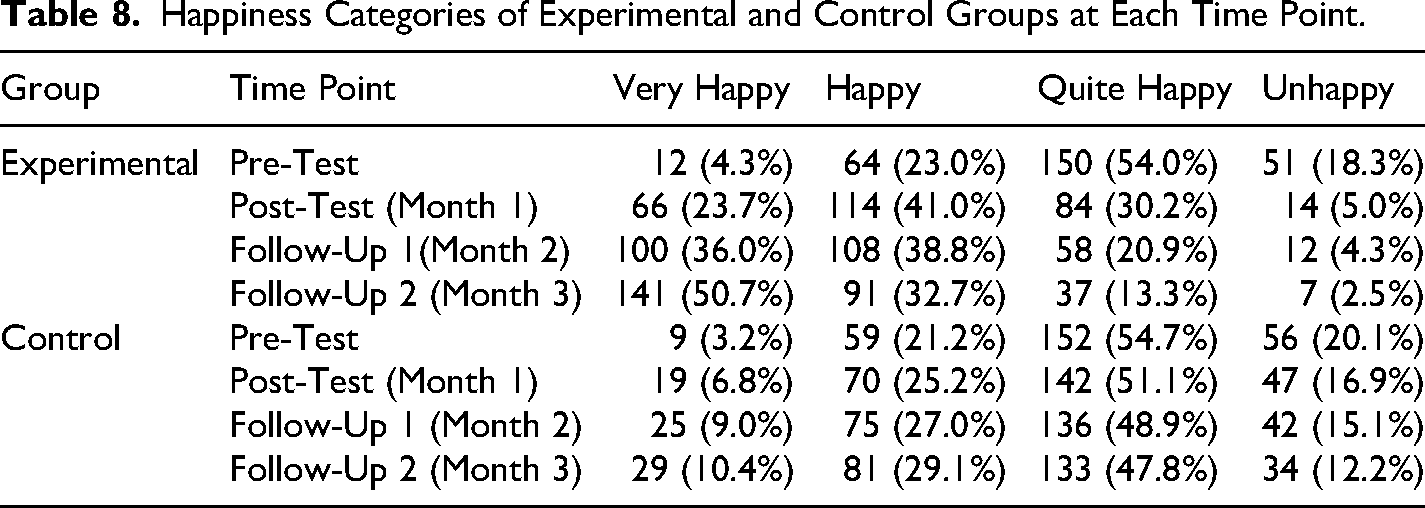
In the experimental group (Table 8), there was a consistent increase in the proportion of participants categorized as “Very Happy,” from only 4.3% at the pretest to 50.7% at the third-month follow-up. The “Unhappy” category also experienced a drastic decrease from 18.3% to only 2.5%. In contrast, the control group (Table 8) showed a much slower and less significant change, with the “Very Happy” category only increasing from 3.2% to 10.4%, and the “Unhappy” category remaining relatively high, only slightly decreasing from 20.1% to 12.2%. These findings confirm that the CST provided to the experimental group produced significant and sustained improvements post-retirement happiness compared to the control group.
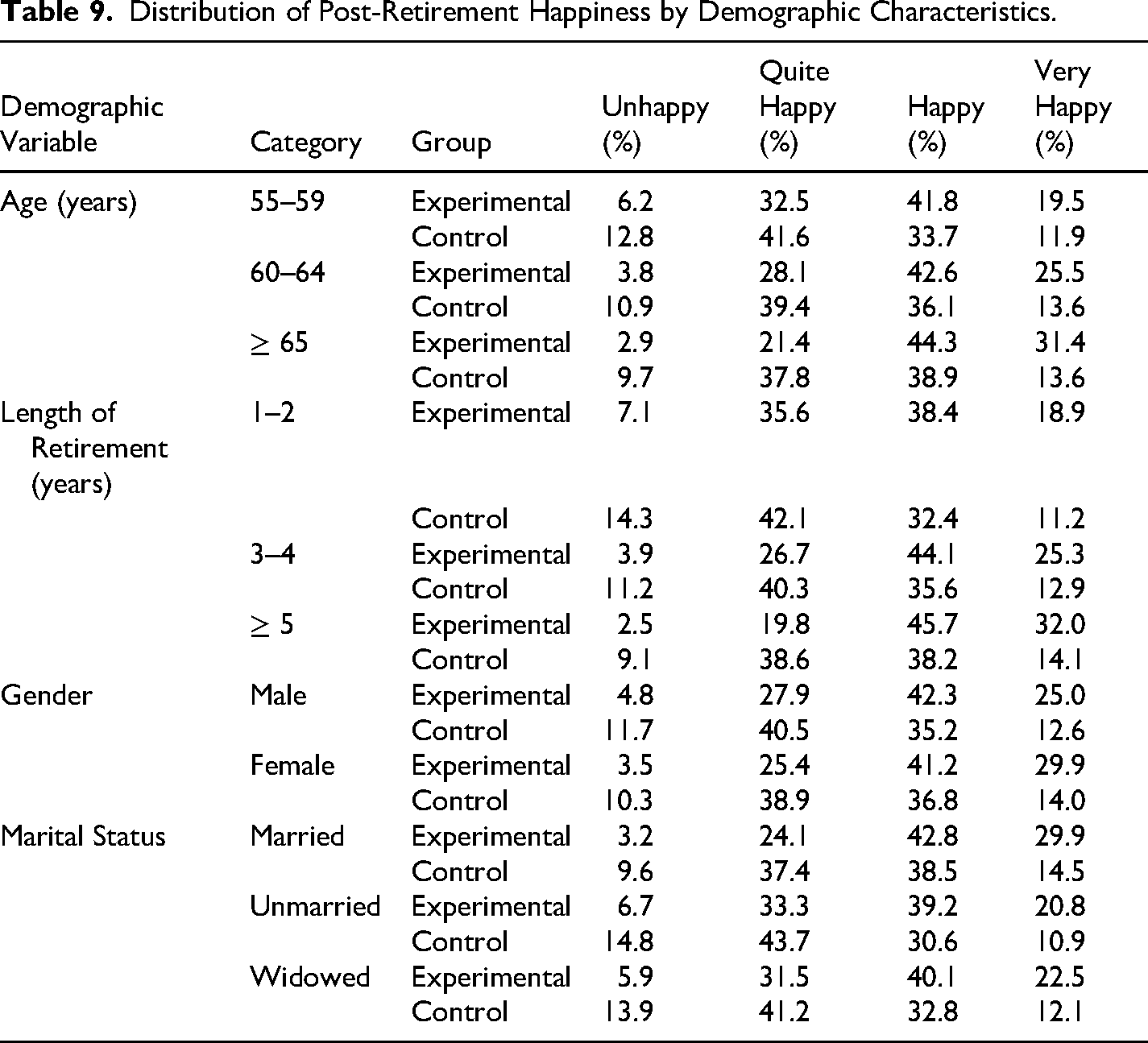
In addition to the analysis, a demographic analysis was conducted to examine whether the improvement in happiness was consistent across participant characteristics. As presented in Table 9, the experimental group consistently showed higher proportions of participants classified as happy and very happy compared with the control group across all demographic categories, including age, retirement duration, gender, and marital status. In contrast, the control group as presented in Table 9, remained predominantly represented in the quite happy and unhappy categories. These findings suggest that the observed improvements in post-retirement happiness were consistently associated with participation in the CST rather than being explained solely by demographic differences.
Distribution of Post-Retirement Happiness by Demographic Characteristics.
Mixed ANOVA Results
The effectiveness of CST in improving the happiness of SOE employees during the post-retirement transition period was demonstrated through a mixed ANOVA statistical analysis (Table 10). A mixed ANOVA was used to test differences in effectiveness across time, between groups (experimental and control groups).
Mixed ANOVA Results.
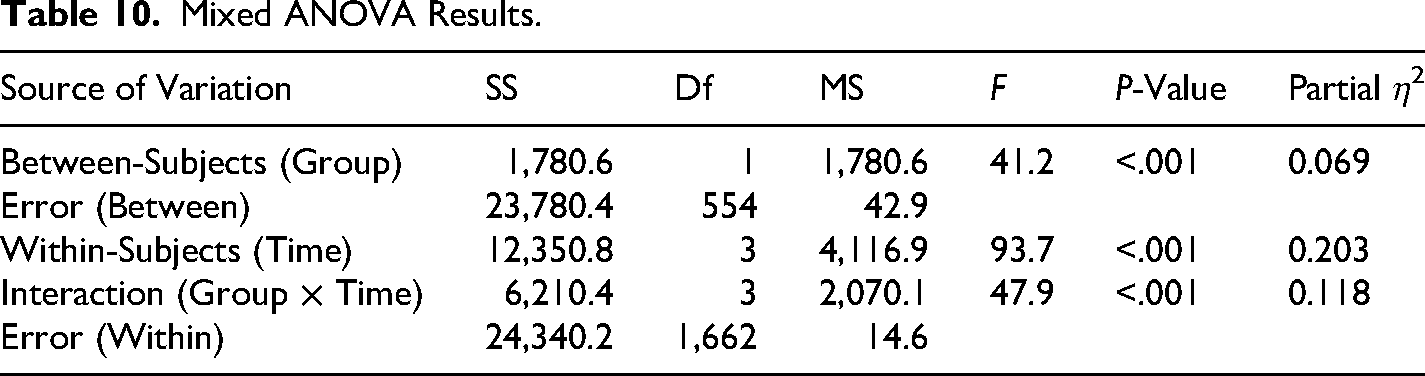
The results of the Mixed ANOVA analysis in Table 10 show a significant main effect of time, F(3, 1662) = 93.7, P < .001, partial η2 = 0.203, indicating that participants’ happiness levels changed significantly over time across the pre-test, first-month post-test, second-month follow-up, and third-month follow-up. In addition, there was a significant main effect of group, F(1, 554) = 41.2, P < .001, partial η2 = 0.069, showing that the experimental group consistently had higher Oxford Happiness Questionnaire (OHQ) scores than the control group.
The mean OHQ score of the experimental group increased from M = 104.9 (SD = 9.7) at pre-test to M = 121.5 (SD = 11.3) at the third-month follow-up. In contrast, the control group showed only a minor increase, from M = 105.2 (SD = 9.9) to M = 109.0 (SD = 10.0). A significant interaction effect between time and group was also found, F(3, 1662) = 47.9, P < .001, indicating that the pattern of improvement in happiness differed significantly between the two groups. The interaction effect (partial η2 = 0.118) indicates a moderate-sized effect, consistent with a meaningful intervention impact. While the magnitude is closer to the lower bound of the medium range based on Cohen's benchmarks, the finding nonetheless reflects a substantive and practically relevant improvement in post-retirement happiness.
The experimental group showed a steady and significant increase after the intervention, while the control group experienced minimal change. These results suggest that CST is effective in improving post-retirement happiness in the short term and sustaining its positive effects for at least 3 months after the program's completion.
Qualitative Findings
In addition to quantitative analysis, qualitative feedback from participants (summarized in Table 11) further supports the statistical findings, highlighting meaningful improvements in emotional regulation, social engagement, and perceived purpose in life following the intervention.
Qualitative Results of Participants (Experimental and Control Group).
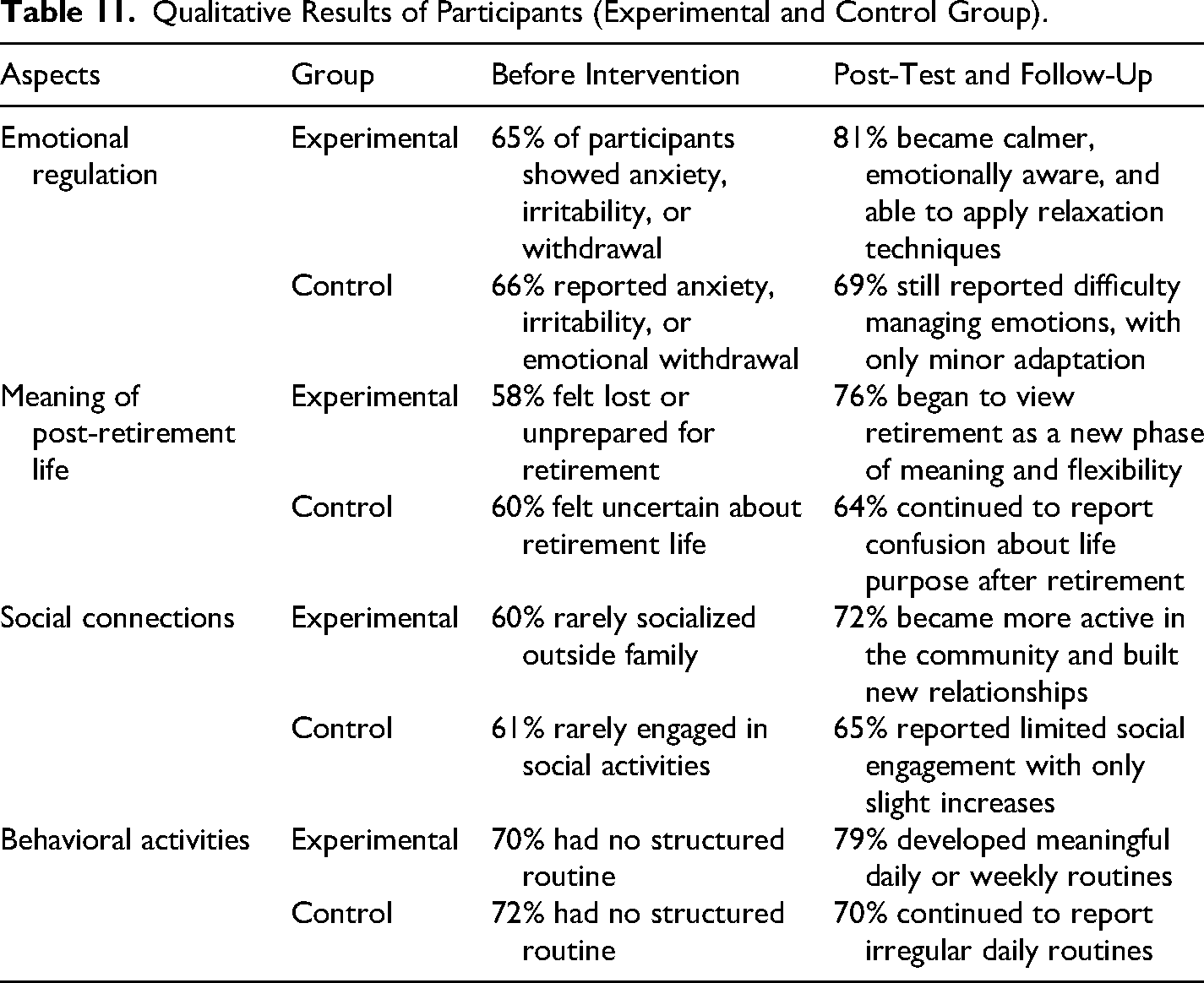
In the qualitative analysis based on Table 11, four main aspects were explored: emotional regulation, the meaning of post-retirement life, social connections, and behavioral activities. The qualitative comparison in Table 11 shows a clear difference between the experimental and control groups. Participants in the experimental group demonstrated substantial improvements across all aspects, particularly in emotional regulation, meaning-making, social engagement, and behavioral activities. In contrast, the control group showed only minor changes, suggesting that most participants continued to experience adjustment difficulties during the retirement transition. These findings further support the interpretation that the observed improvements were associated with participation in the CST rather than with natural adjustment alone.
Before the intervention, participants in the experimental group frequently reported negative emotions such as sadness, anxiety, and a loss of direction. Many retirees acknowledged a diminished sense of self-worth and felt disconnected from their social surroundings. In general, these participants had limited coping mechanisms and found it difficult to manage the psychological demands associated with the transition to retirement.
After participating in the intervention, emotional regulation through structured reflection emerged as one of the key strategies among participants in the experimental group. Through writing activities and guided self-evaluation, participants were encouraged to identify specific stressors and express their emotions more openly. This process of self-awareness played an important role in emotional regulation and contributed to the development of more adaptive coping strategies. One participant reflected during the follow-up: “I came to see that the fear of being useless was the true cause of a large portion of my worry. I realized after keeping a daily journaling that it was only my thoughts and not reality.”—Participant 102
Laughter therapy, although sometimes perceived as a simple intervention, was mentioned by many participants as a transformative experience for social connections. The release of tension and the shared joy created a psychologically safe space that enabled emotional and social breakthroughs. One participant in the experimental group described it as follows: “At first, I was embarrassed to laugh. But when everyone joined in, I felt so relieved. It felt like the burden I'd been carrying had been released through laughter.”—Participant 119
The meaning of post-retirement life through group discussions was two more powerful mechanisms. A lot of participants in the experimental group said that sharing experiences in a safe setting was incredibly healing. Peer support regulated their emotional reactions and promoted adaptive thinking and creation of new meanings when they heard about similar difficulties. One participant reflected: “ I sensed that I was not alone. It turns out that a lot of people experienced confusion and loss as well. However, following the group session, I began to believe that retirement is a fresh start rather than the end.”—Participant 051
The intervention also worked through positive reinforcement of behavioral activities, where participants in the experimental group were encouraged to plan and engage in purposeful activities. Many developed new routines such as gardening, joining local senior groups, or volunteering, which helped restore a sense of competence and autonomy. As stated by one participant: “I used to be confused about what to do every morning. But now I have a schedule for exercise, meeting friends, and participating in community health. My life has more direction.”—Participant 076
Discussion
Happiness Theory: A Psychological Adjustment to Retirement
From a theoretical standpoint, the present findings are consistent with contemporary happiness theories that conceptualize well-being in later adulthood as a dynamic and adaptive process rather than a static emotional state (Thompson and Bruk-Lee, 2021). Within lifespan and positive psychology frameworks, happiness is understood as encompassing life satisfaction, emotional balance, perceived control, and a sense of meaning—dimensions that are particularly salient during major life transitions such as retirement (Abaei & Martin, 2026; Kim & Moen, 2020). Retirement often disrupts established routines, social roles, and identity, especially for individuals leaving long-term, hierarchical organizational environments such as SOEs (Babbage et al., 2022).
Theories of retirement adjustment emphasize that successful adaptation depends on individuals’ ability to reconstruct purpose, regulate emotions, and maintain agency following the loss of work-related roles (Amorim & França, 2019; Brunner et al., 2024). CST directly aligns with these theoretical principles by fostering both problem-focused coping (e.g., goal setting, planning, and role redefinition) and emotion-focused coping (e.g., emotional awareness, relaxation, and positive reinterpretation). Prior research suggests that interventions integrating these coping dimensions are more effective in sustaining happiness among retirees than approaches that focus on a single strategy (Kim & Moen, 2020).
The sustained improvements observed in this study further support theoretical models highlighting the importance of internalized psychological resources in maintaining happiness over time. Happiness in retirement is more likely to be stable when individuals develop skills that can be applied flexibly in daily life, such as managing time, maintaining social relationships, and cultivating new sources of meaning (Tanzer & Weyandt, 2020). Longitudinal studies similarly indicate that retirees who establish new, meaningful routines and remain proactively engaged in life report higher and more stable levels of well-being (Amorim & França, 2019).
Cultural perspectives on happiness also provide important context for interpreting the findings. In collectivist societies such as Indonesia, happiness is closely linked to social harmony, relational roles, and emotional balance (Athifah et al., 2024). Retirement may therefore pose a greater threat to well-being by disrupting culturally embedded sources of identity and purpose (Wang & Shi, 2014). By incorporating group discussions, reflective storytelling, and laughter-based activities, CST utilized culturally congruent pathways to emotional regulation and meaning-making, which likely enhanced participant engagement and effectiveness of the intervention.
Furthermore, CST promoted proactive adjustment, a factor consistently associated with higher post-retirement happiness. Retirees who actively plan for retirement, pursue new goals, and remain socially engaged tend to report greater life satisfaction and emotional well-being (Alanazi, 2024; Brunner et al., 2024). By encouraging participants to envision a meaningful post-retirement life and reframe challenges as manageable, CST supported the development of this proactive orientation.
Overall, the present study contributes to happiness and aging literature by demonstrating that a theoretically grounded psychological intervention can facilitate adaptive adjustment to retirement. The findings support the view that post-retirement happiness emerges from an interaction between coping capacity, meaning-making, and cultural context, and that these processes can be strengthened through structured intervention.
Effects of Coping Strategy Training on Post-Retirement Happiness
The findings of this study indicate that CST produced a meaningful and sustained improvement in post-retirement happiness among participants in the experimental group. Happiness scores increased steadily from the pretest to the third-month follow-up, indicating that the intervention generated not only short-term gains but also medium-term effects. Importantly, descriptive analyses across demographic characteristics revealed that participants in the experimental group consistently reported higher proportions of happy and very happy outcomes than those in the control group across all categories of age, length of retirement, gender, and marital status. This consistent pattern across demographic subgroups strengthens the interpretation that the observed improvements were attributable to participation in CST rather than to demographic differences or group composition alone (Chen et al., 2018).
These results address concerns regarding the possibility that increased happiness was merely a consequence of social interaction. While the experimental group did participate in group-based sessions, the sustained effects observed at follow-up, combined with consistent advantages across demographic categories, suggest that the outcomes cannot be explained solely by temporary social engagement. Instead, the findings indicate that CST facilitated the acquisition and internalization of psychological coping skills that participants were able to apply beyond the intervention context. This interpretation is further supported by qualitative data indicating improvements in emotional regulation, perceived control, social engagement, and meaning-making in daily life.
The effectiveness of CST aligns with prior evidence showing that multi-component psychological interventions integrating problem-focused and emotion-focused coping are particularly effective in promoting well-being among older adults (Kim & Moen, 2020). Laughter therapy and relaxation techniques, which were incorporated into CST, have been shown to reduce emotional tension and foster positive affect and social connectedness, thereby supporting psychological resilience in later life (Seraj et al., 2025; Vambheim et al., 2021). The maintenance of improved happiness levels through the third month suggests that participants did not merely experience transient mood elevation, but rather developed transferable coping resources that supported ongoing adjustment (Tanzer & Weyandt, 2020).
Taken together, these findings indicate that CST functioned as an effective retirement transition intervention by equipping retirees with practical coping strategies and emotional regulation skills. The convergence of quantitative trends, demographic consistency, and qualitative evidence provides robust support for the conclusion that CST played a central role in enhancing post-retirement happiness among former employees of SOEs. This study contributes to the growing literature on retirement adjustment by providing empirical evidence from a large-scale field-based intervention involving retired employees in Indonesian SOEs.
Conclusion
The results of this study highlight how retirement transition programs can be more effectively designed within Indonesian SOEs. The findings suggest that CST represents a promising and potentially feasible intervention that can be implemented in a sustainable manner to support post-retirement happiness. Beyond enhancing individual happiness, such programs may also function as a meaningful form of organizational recognition for employees’ long-term contributions, reinforcing a sense of value and continuity beyond formal employment.
The results highlight the importance of adopting a more holistic approach to retirement preparation, in which organizations attend not only to financial security but also to the psychosocial adjustment of retirees. Providing structured psychological support during the transition to retirement may facilitate adaptive coping, happiness, and the development of purposeful post-retirement lives.
Limitations and Future Research
Future research is encouraged to incorporate variables relevant to retirement adjustment, such as physical and mental health status, socioeconomic conditions, and reasons for retirement, to provide a more comprehensive understanding of post-retirement happiness. In addition, examining the applicability of the intervention across diverse occupational groups and cultural contexts, as well as exploring digital or hybrid delivery formats, may enhance its generalizability and accessibility among older adults.
Footnotes
Acknowledgments
The authors would like to express their gratitude because this research was supported by Faculty of Psychology, Universitas Diponegoro.

Ethics Approval
This research is in accordance with research guidelines for psychological research. The basic principle of this research has followed the Declaration of Helsinki, namely by giving respect to participants, the right of participants to self-determination to give consent after receiving an explanation of their involvement in the research.
Authors’ Contributions
All authors contributed to the study conception and design. Material preparation, data collection and analysis were performed by all authors. The first draft of the manuscript was written by Anggun Resdasari Prasetyo and all authors commented on previous versions of the manuscript. All authors read and approved the final manuscript.
Funding
The authors received no financial support for the research, authorship, and/or publication of this article.
Declaration of Conflicting Interests
The authors declared no potential conflicts of interest with respect to the research, authorship, and/or publication of this article.
Data Availability Statement
This manuscript will not include a data availability statement.