







Abstract
This study examines whether aging anxiety (based on terror management theory) or demographic and experiential factors better explain attitudes toward older adults among social work students and professionals. Cross-sectional data were collected via an online survey from a sample of 309 social work students and professionals in Crete. Ageism and aging anxiety were assessed using the relating to older people evaluation scale and the aging anxiety scale. Multivariable analyses revealed that among students, positive attitudes toward older adults were primarily associated with fear of old people, while no significant multivariate predictors were identified for negative attitudes. Among social workers, positive attitudes were negatively associated with psychological concerns, urban origin, and higher educational attainment, and positively associated with fear of losses and early career experience. Negative attitudes were negatively associated with higher educational attainment. These findings underscore the need for targeted education, intergenerational programs, and further research to address ageism in social work practice.
Introduction
The aging population of European citizens is increasing significantly due to rising longevity and declining fertility rates (United Nations, Department of Economic and Social Affairs, Population Division, 2019). It is estimated that the European population of older adults will reach 129.78 million by 2050 (Eurostat, 2024). In other words, Europe's population is aging, increasing the proportion of citizens who rely on others for care and support. According to Eurostat, this trend is particularly pronounced in rural and remote areas of southern Europe, with Greece among the countries facing the highest old-age dependency ratios (Tzouganatou, 2022).
Greece, in particular, presents a unique context for studying predictors of ageism due to its rapidly aging population, limited welfare infrastructure, and strong intergenerational family ties, which often place the burden of care for older adults on individuals rather than institutions (Lamnisos et al., 2021). These cultural, economic, and demographic dynamics make Greece a critical case for examining how age-related attitudes are shaped and expressed, particularly in regions under strain from demographic shifts and resource constraints.
This demographic shift means that older adults will increasingly become a key population within health and social care services. Literature highlights that older adults are more likely to experience multiple chronic conditions and, as a consequence, face a range of physical, social, and psychological challenges (Abdi et al., 2019). Given its central role in supporting older adults and their families, social work faces a growing imperative to respond to the multifaceted challenges posed by an aging population
Ageism is defined as stereotypes, prejudice, and age discrimination against older adults, and it is expressed through positive and negative aspects, conscious or unconscious forms, and often referred to as the third “ism” after racism and sexism (Iversen et al., 2009; Palmore, 2001). Ageism is a pervasive societal issue with significant negative implications for individuals and for shaping social policy decisions, particularly in the context of older care (Allen et al., 2009; Chonody & Teater, 2018). These biases also influence professional priorities within social work, as evidence suggests that social workers are not immune to stereotypes about older adults (Azulai, 2014; Chonody & Wang, 2014b).
Literature has identified several barriers to working with older adults among social work students and professionals, which stem from ageism. However, research among professionals is scarce.
A review of 20 studies examining the attitudes of social workers and students highlights mixed findings (Wang & Chonody, 2013). While some studies report positive or neutral attitudes toward aging, others indicate that negative attitudes are more prevalent than positive ones. Moreover, the resistance against Gerontological Social Work by students is found in: perceptions that older adults cannot change, be independent and productive (Gellis et al., 2003), are depressed and lonely and have poor hygiene (Mason & Sanders, 2008) beliefs about low-wage earnings (Chonody & Wang, 2014b) and lack of professional challenges (Chonody & Wang, 2014b; John A. Hartford Foundation, 2009).
Beyond the above barriers, findings from the literature indicate that aging anxiety has a strong relationship with attitudes toward older adults (Allan & Johnson, 2009; Anderson & Wiscott, 2003). Anxiety about aging, defined as “combined concern and anticipation of losses centered around the aging process” (Lasher & Faulkender, 1993, p. 247), is a related concept that has also been examined as a predictor of ageism. Several studies have demonstrated a relationship between increased anxiety about aging and increased ageism (Allan et al., 2014; Allan & Johnson, 2009; Boswell, 2012). This concept is a significant predictor of ageism as it is conceptually different from other types of anxiety. Nevertheless, it could play a potential role between attitudes and behaviors toward older adults and the aging process (Allan & Johnson, 2009; Allan et al., 2014).
As previously documented, ageism and the implicit or explicit avoidance of older adults have often interpreted by the terror management theory (TMT) (Chonody & Teater, 2016; Chonody & Teater, 2018). TMT proposes that awareness of mortality may trigger defensive responses, and older adults may function as symbolic reminders of ageing, decline, and death. Humans, unlike other animals, are realized of their death as inevitable (Chonody & Teater, 2016; Martens et al., 2004, 2005). Moreover, TMT could be interpreted as death anxiety indirectly. Individuals may experience heightened death anxiety when confronted with the physical signs of aging—such as wrinkles or gray hair—as these visible changes serve as reminders of the inevitability of death. In this context, aging becomes a symbolic threat, triggering existential fears associated with mortality (Connery et al., 2025). These findings further support the need to understand aging not only as a biological process, but also as a psychological one, particularly in cultures where old age is closely tied to illness and mortality. Previous studies have also emphasized the associations between contact (formal or informal) or exposure to older adults and ageism. Positive contact with older adults is associated with reduced fear and improved attitudes toward aging and older individuals (Chonody et al., 2 014a; Kim et al., 2017). These findings are broadly in line with the principles of contact theory (Allport, 1954; Chonody et al., 2014a; Chonody & Teater, 2018). According to contact theory, contact between two different groups could improve negative attitudes under certain conditions (equal status, common goal, cooperative interaction, institutional support) (Chonody & Teater, 2018). However, the quality of contact plays a significant role in reducing negative attitudes toward older adults than the quantity of contact (Allan & Johnson, 2009; Chonody & Wanget al., 2014a, 2014b). Prior studies on aging stereotypes indicate that both the quality and frequency of contact with older adults play a crucial role in reducing ageist attitudes (Teater & Chonody, 2017). This indicates that the type of contact can lead to the reduction of ageism.
As regards the association between anxiety and ageism, the results in the literature are conflicting. Cummings et al. (2003) did not confirm any association between anxiety and willingness to work with older adults. On the other hand, some other studies have found an association between ageism and anxiety in terms of death anxiety or aging anxiety (Anderson & Wiscott, 2003; Chonody et al., 2014a).
Although several studies have examined attitudes toward older adults and the relationship between aging anxiety, contact with older adults, and age-related attitudes within the field of social work, most have focused primarily on social work students, with fewer investigations involving practicing professionals. Moreover, to the authors’ knowledge, no study to date has examined these factors in a large sample of students and professionals across diverse settings in Greece or other Southern European countries, regions characterized by a rapidly aging population.
To address this gap in the literature, the present study aims to investigate the predictors of ageism among social work students and professionals. Specifically, it examines whether aging anxiety, conceptualized within TMT, influences attitudes toward older adults, or whether such attitudes are better explained by independent variables including gender, age, place of origin, frequency of contact with older adults, professional experience, and years of study.
Methods
The study sample included 309 social work students and practitioners. The study was performed via an online survey. Students from the Hellenic Mediterranean University, Department of Social Work, and practitioners from the various sectors of the region of Crete were invited to participate in the study. Students were recruited via announcements in various classes, and practitioners via an email invitation to participate in the online survey that was sent to all the social services in the region of Crete. A response rate could not be calculated for either the practitioner or student samples, as the number of individuals who viewed the study's online questionnaire is unknown.
The study protocol was reviewed and approved by the Bioethics Committee of the Hellenic Mediterranean University (Approval No. 108/08-05-2023). All participants completed the questionnaire voluntarily, without receiving any type of incentive, and provided informed consent.
Measures
Aging Anxiety
Aging anxiety was assessed using the anxiety about aging scale (AAS) developed by Lasher and Faulkender (1993). The AAS is a 20-item instrument rated on a 5-point Likert scale and measures four distinct dimensions of anxiety related to aging: (i) Fear of Old People (e.g., “I enjoy being around old people”), (ii) Psychological Concerns (e.g., “I fear it will be very hard for me to find contentment in old age”), (iii) Physical Appearance Concerns (e.g., “I have never lied about my age in order to appear younger”), and (iv) Fear of Loss (e.g., “I fear that when I’m old all my friends will be gone”). The scale provides a comprehensive measure of individuals’ emotional responses to the aging process. The 20 items were summed to create a total score (seven items were reverse-scored so that higher scores indicate a higher level of anxiety). Ηowever, this total score was not used in subsequent analyses. Instead, analyses were conducted at the subscale level to reflect the multidimensional structure of the scale. The questionnaire was translated into Greek and piloted for this particular study. Initially, it was translated from English into the Greek language by a bilingual translator and then translated back into English by an English bilingual translator to check whether or not the Greek translation conveyed the original meaning intended by the developers
The AAS has been used and validated in the Greek population previously reporting Cronbach's alpha for the subscales ranged from .57 to .88 (Koukouli et al., 2014). For the present study, internal consistency was assessed for all subscales using Cronbach's alpha, separately for students and social workers. Among students, Cronbach's alpha values were as follows: [α = .861] for the anxiety fear subscale, [α = .756] for the psychological concerns subscale, [α = .741] for the physical appearance subscale, and [α = .751] for the fear of loss subscale. For social workers, the corresponding values were [α = .836], [α = .760], [α = .770], and [α = .713], respectively.
Ageist Attitudes
Ageism was measured using the relating to older people evaluation (ROPE) questionnaire (Cherry & Palmore, 2008). The ROPE is a 20-item, self-rated, Likert-type questionnaire that assesses ageist behaviors individuals may engage in during everyday life. It includes six positive forms of ageism (e.g., “Hold doors open for old people because of their age”) and 14 negative forms of ageism (e.g., “Use simple words when talking to old people”). Item responses range from 1 = never to 3 = often. Scores are summed separately for positive and negative forms of ageism. The score range for positive ageism is 6–18, and for negative ageism 14–46. Higher scores indicate a higher frequency of ageist behaviors.
The ROPE scale has previously been used with Greek populations. In the present study, Revised Older People's Evaluation (ROPE) was selected due to its proven relevance and applicability in the Greek context, as highlighted by Papadaki et al. (2012).
In the current study, Cronbach's alpha for the ROPE Positive subscale was .712 for the student sample and .714 for the social worker sample. For the ROPE negative subscale, Cronbach's alpha was .538 for the student sample and .637 for the social worker sample.
Sociodemographic Variables
Sociodemographic and other variables were included in the present study as well. Age was reported in years. Gender was reported as male or female or as unspecified. Place of residence and place of origin were reported as rural, semi-urban, and urban. Family status was reported as married or unmarried (including or not a partner), divorced or widow or widower.
Prior educational status was categorized as either high school graduate or holder of a university degree, while current educational status was classified as undergraduate student, graduate student, or PhD candidate, along with their year of study. Practitioners’ educational status was categorized as holding a Bachelor's degree in Social Work, a Master's degree, or a PhD, Additionally, professionals’ work experience was assessed by asking participants to report their total years of professional practice and indicate their current work setting (e.g., hospital, elder care unit, school, etc.). Information on students’ and professionals’ experience and contact with older adults was collected through self-report questions. Students were asked to indicate if they had undertaken a field practicum in the area of aging, as well as whether they currently maintained any contact with older adults through family, social relationships, or educational settings. Professionals were asked if they had previous professional contact with older adults (and the duration of this contact in years) and if they had any familiar, social, or professional contact with older adults. Any contact with older adults was measured with a frequency scale (1 = never to 5 = very often).
Statistical Analysis
Statistical analyses were conducted using IBM SPSS Statistics for Windows, Version 25.0 (Armonk, NY: IBM Corp.). The primary dependent variables were ageist attitudes, while the main independent variables included demographic and educational factors, as well as aging anxiety. Descriptive statistics summarized the baseline characteristics of the participants. The Kolmogorov–Smirnov test was applied to assess the normality of continuous variables. Univariate associations between dependent and independent variables were examined using Pearson's or Spearman's correlation coefficients, depending on data distribution. For within-group comparisons, independent samples t-tests were used for normally distributed continuous variables, and Mann–Whitney U tests for non-normally distributed ones. One-way ANOVA followed by Bonferroni post hoc tests was performed for comparisons across more than two groups when data met normality assumptions.
To further examine the relationship between ageist attitudes and the independent variables, hierarchical multiple linear regression analysis was applied. The variables included in the analysis were based on past research and theory. The results are presented as β coefficients with corresponding p-values. For all analyses, significant results were detected for p < .05.
Results
Descriptive Characteristics
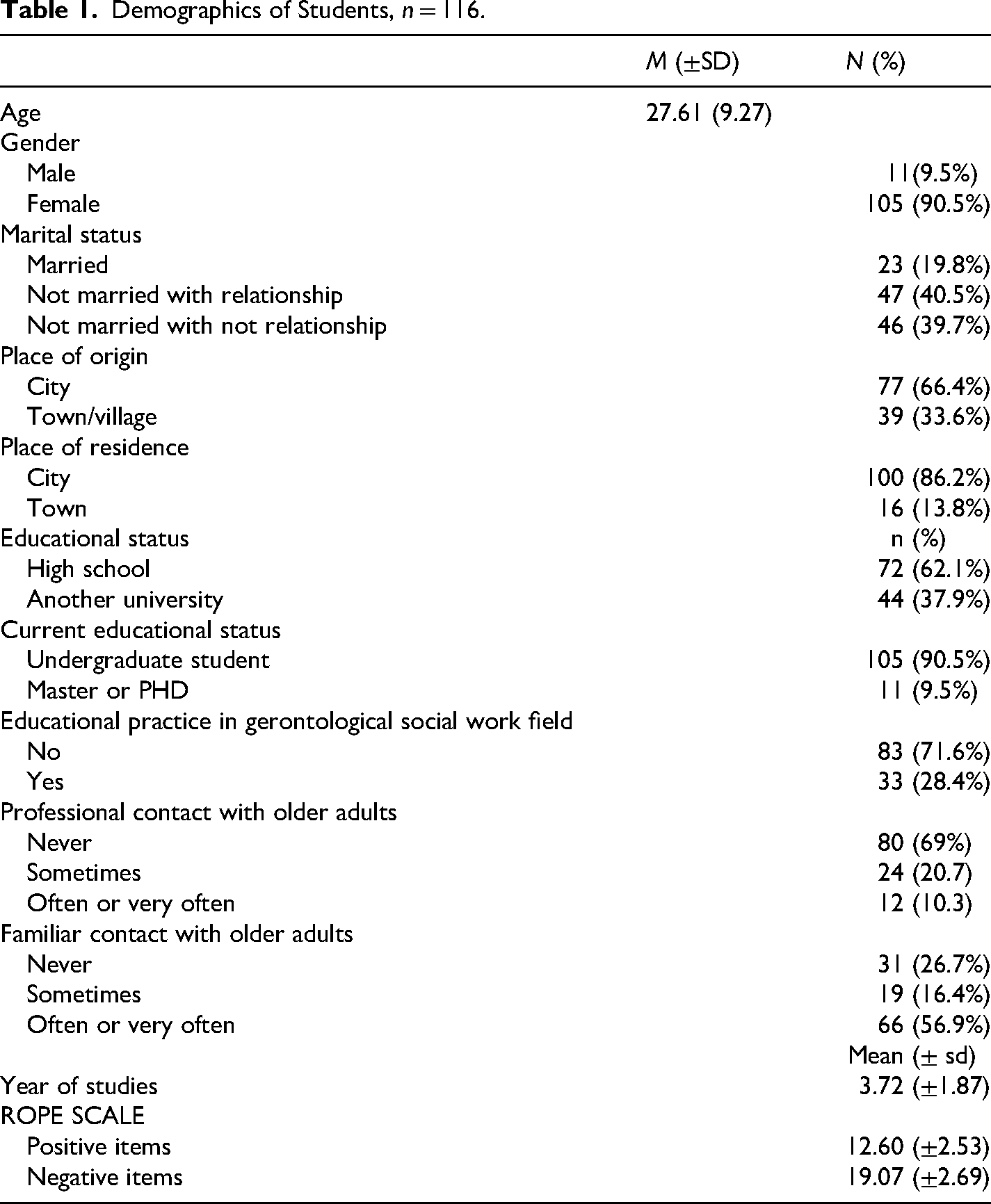
Tables 1 and 2 present the demographic characteristics of the two study groups. The student sample (n = 116) had a mean age of 27.61 years (SD = 9.27), and the vast majority identified as female (90.5%). Approximately 40.5% reported being in a relationship. In terms of geographic background, 66.4% were originally from an urban area, and 86.2% were currently residing in a city. Regarding educational background, 62.1% had completed secondary education, and 90.5% were undergraduate social work students. Most students (71.6%) reported no prior educational contact with older adults. In terms of contact with older individuals, 10.3% indicated frequent professional contact, while 56.9% reported regular contact through family or personal relationships. In comparison, the social worker sample (n = 193) had a higher mean age of 41.48 years (SD = 10.37), with 91.7% identifying as female. Over half (55.4%) were married, 65.3% originated from urban areas, and 81.9% were currently living in a city. Regarding educational attainment, 34.7% held a master's or doctoral degree, and 37.3% had more than 16 years of professional experience. A majority (51.3%) reported prior experience with older adults, along with frequent current professional contact (42.5%). Similarly, most participants reported frequent personal or familial contact with older adults (52.8%).
Demographics of Students, n = 116.
Demographics of Social Workers, n = 193.
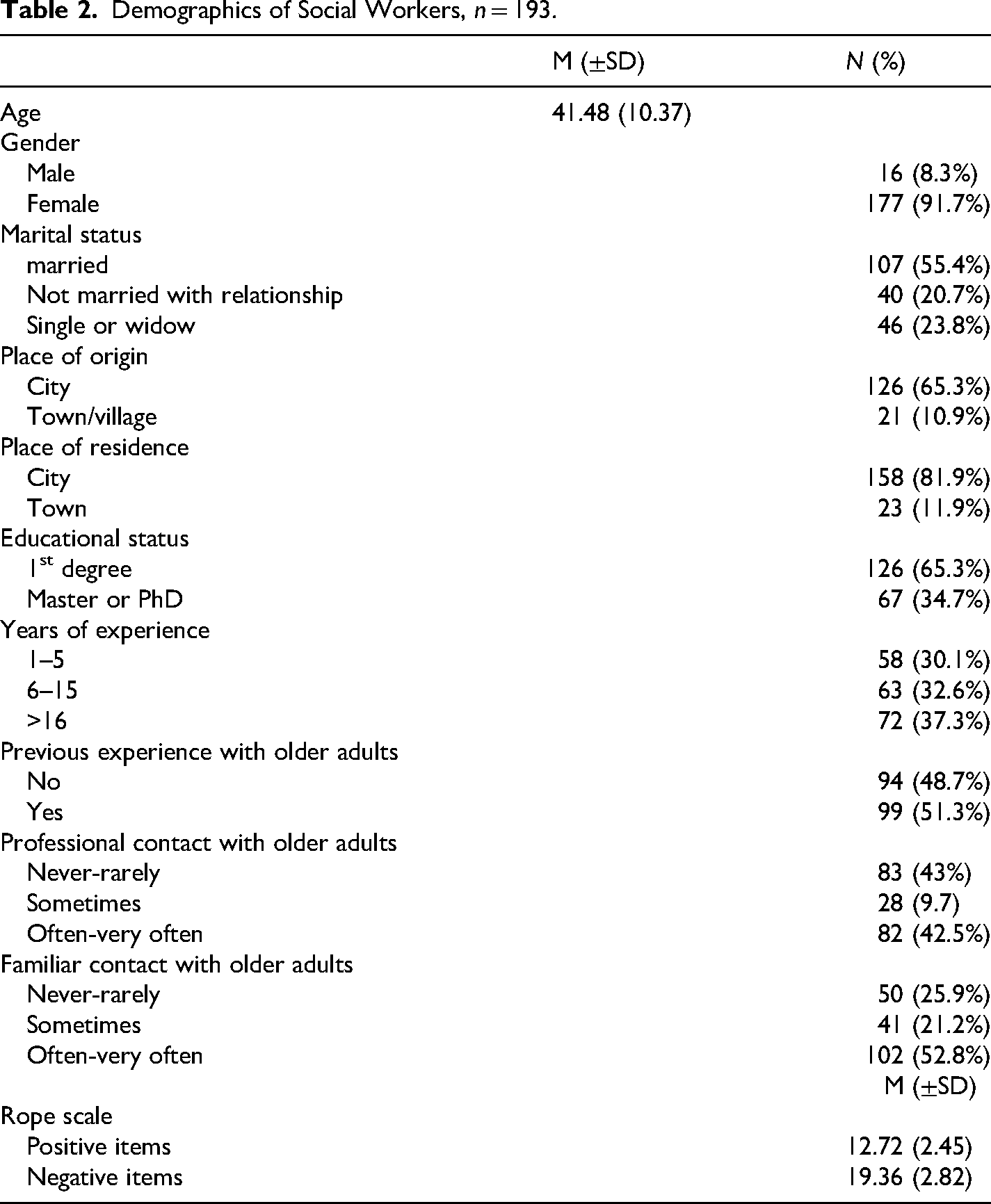
With regard to attitudes toward older adults, students reported a mean score of 12.51 on the positive attitudes subscale and 19.00 on the negative attitudes subscale. Social workers demonstrated slightly higher mean scores, with 12.72 on the positive attitudes subscale and 19.36 on the negative attitudes subscale.
Univariate Associations
Positive Attitudes
Among students, positive attitudes were significantly positively associated with age (p < .001), frequent family contact (p = .011), marital status (being married, p = .038), urban origin (p = .038), and previous education (p = .021) (Tables 3 and 4). Furthermore, higher positive attitudes were associated with lower levels of aging anxiety, including lower fear of older people (p < .001), less anxiety about appearance (p = .002), and fewer psychological concerns (p = .002), as measured by the aging anxiety scale.
Associations Between Students’ Demographic Variables and Ageism.
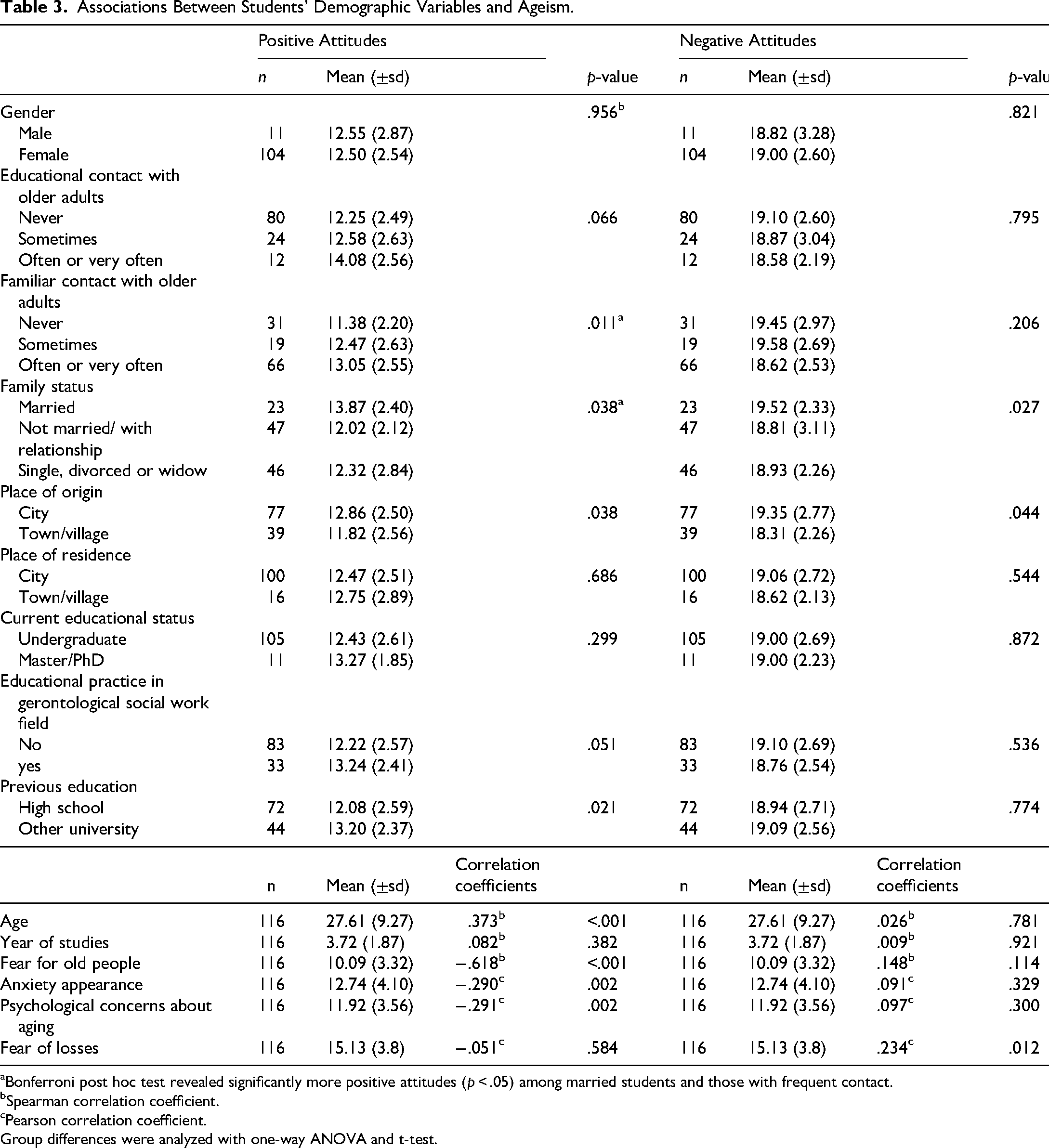
Bonferroni post hoc test revealed significantly more positive attitudes (p < .05) among married students and those with frequent contact.
Spearman correlation coefficient.
Pearson correlation coefficient.
Group differences were analyzed with one-way ANOVA and t-test.
Associations Between Social Workers’ Demographic Variables and Ageism.
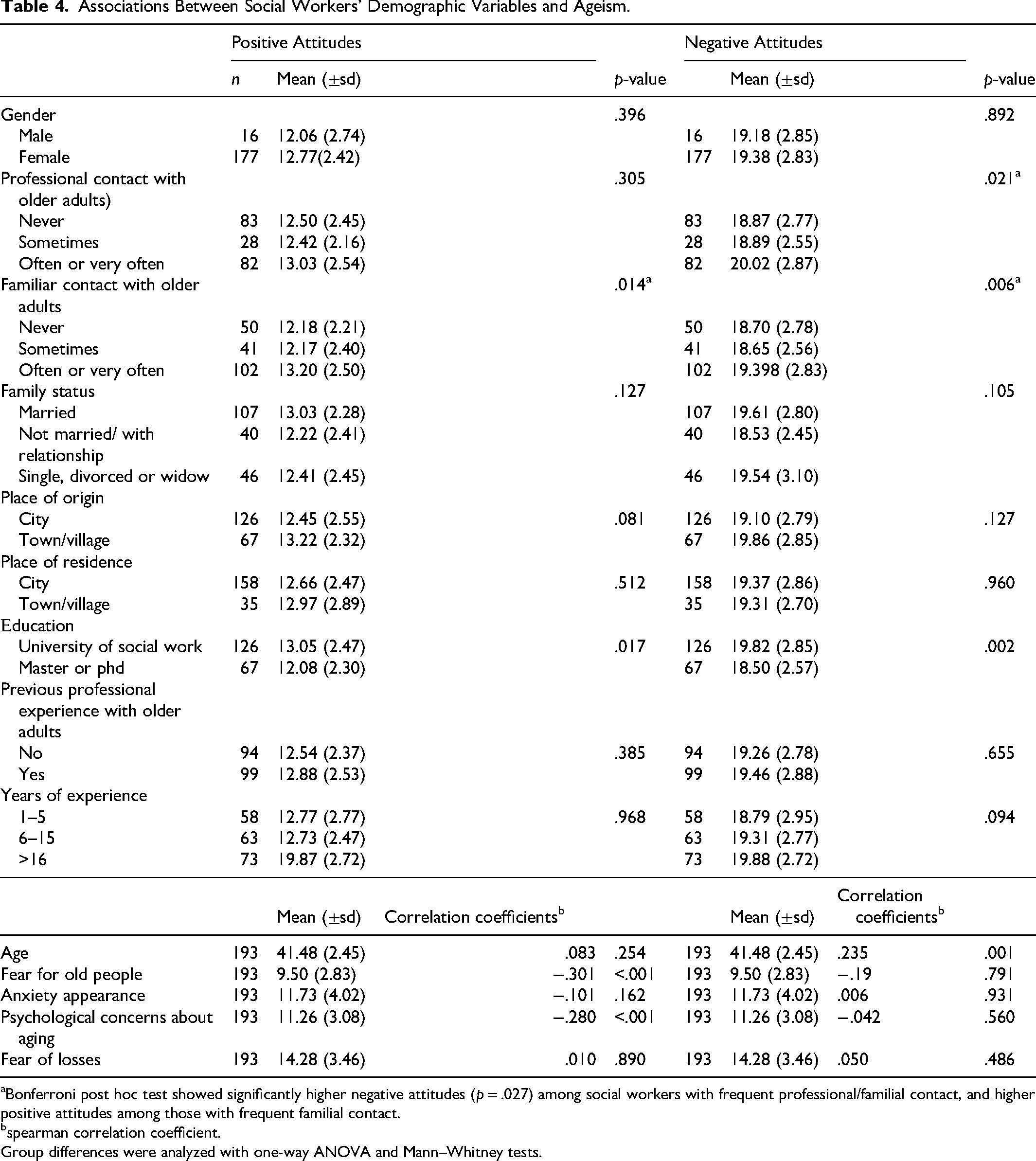
Bonferroni post hoc test showed significantly higher negative attitudes (p = .027) among social workers with frequent professional/familial contact, and higher positive attitudes among those with frequent familial contact.
spearman correlation coefficient.
Group differences were analyzed with one-way ANOVA and Mann–Whitney tests.
Similarly, among social workers, positive attitudes were significantly associated with lower levels of aging anxiety—specifically, lower fear of older people (p < .001) and fewer psychological concerns (p < .001)—as well as frequent family contact (p = .014) and possession of a bachelor's degree (p = .017).
Negative Attitudes)
Among students, negative attitudes were significantly associated with marital status (being married, p = .027), urban origin (p = .044), and higher levels of aging anxiety, particularly fear of losses (p = .012) (Tables 3 and 4). Similarly, among social workers, negative attitudes were significantly associated with frequent current educational contact with older adults (p = .021), regular family contact (p = .006), possession of a bachelor's degree (p = .002), and age (p = .001).
Multivariable Analysis
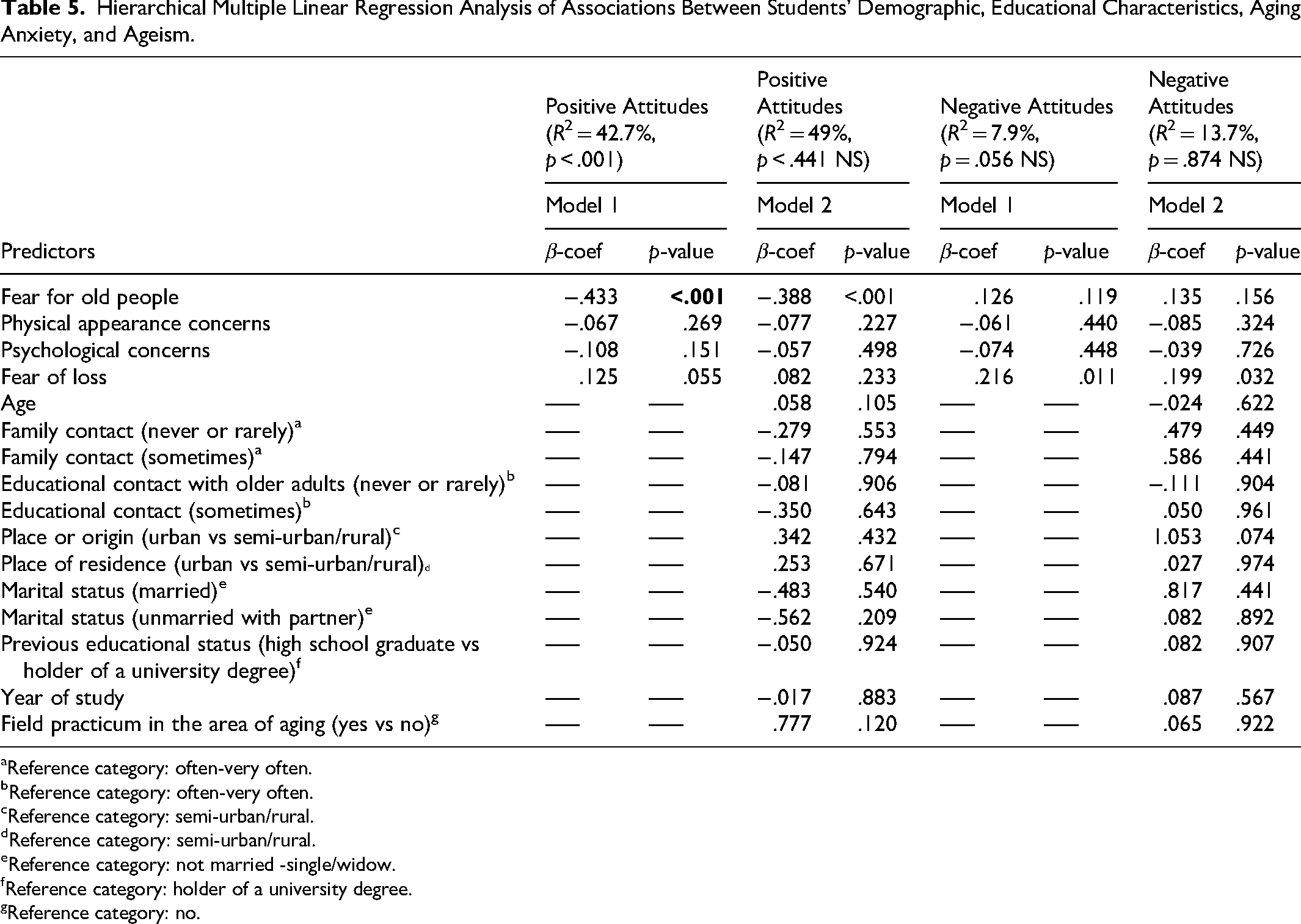
Table 5 presents the results of the hierarchical multiple regression analysis examining associations between students’ demographic and educational characteristics, AAS subscales, and ageist attitudes.
Hierarchical Multiple Linear Regression Analysis of Associations Between Students’ Demographic, Educational Characteristics, Aging Anxiety, and Ageism.
Reference category: often-very often.
Reference category: often-very often.
Reference category: semi-urban/rural.
Reference category: semi-urban/rural.
Reference category: not married -single/widow.
Reference category: holder of a university degree.
Reference category: no.
In Model 1, aging anxiety subscales (fear of old people, physical appearance concerns, psychological concerns, and fear of loss) were entered. In Model 2, demographic and educational variables (age, family contact, educational contact, place of origin and residence, marital status, previous educational status, year of study, and field practice with older adults) were added. Model 1 for positive attitudes was statistically significant (R2 = 42.7%, p < .001), suggesting that the included variables were associated with a substantial proportion of the variance. Within model 1, the subscale “fear of old people” was found to be negatively associated with positive attitudes (β = -0.433, p < .001). The remaining dimensions of aging anxiety (physical appearance concerns, psychological concerns, and fear of loss) were not statistically significantly associated with positive attitudes. The addition of variables in Model 2 increased the explained variance to 49%; however, this increase was not statistically significant (p = .441). Therefore, Model 1 was retained as the final model. In this model, only aging anxiety variables emerged as significant predictors of positive ageist attitudes among students. Regarding negative attitudes, neither Model 1 nor Model 2 was significant (p > .05) and could not explain a significant proportion of the variance.
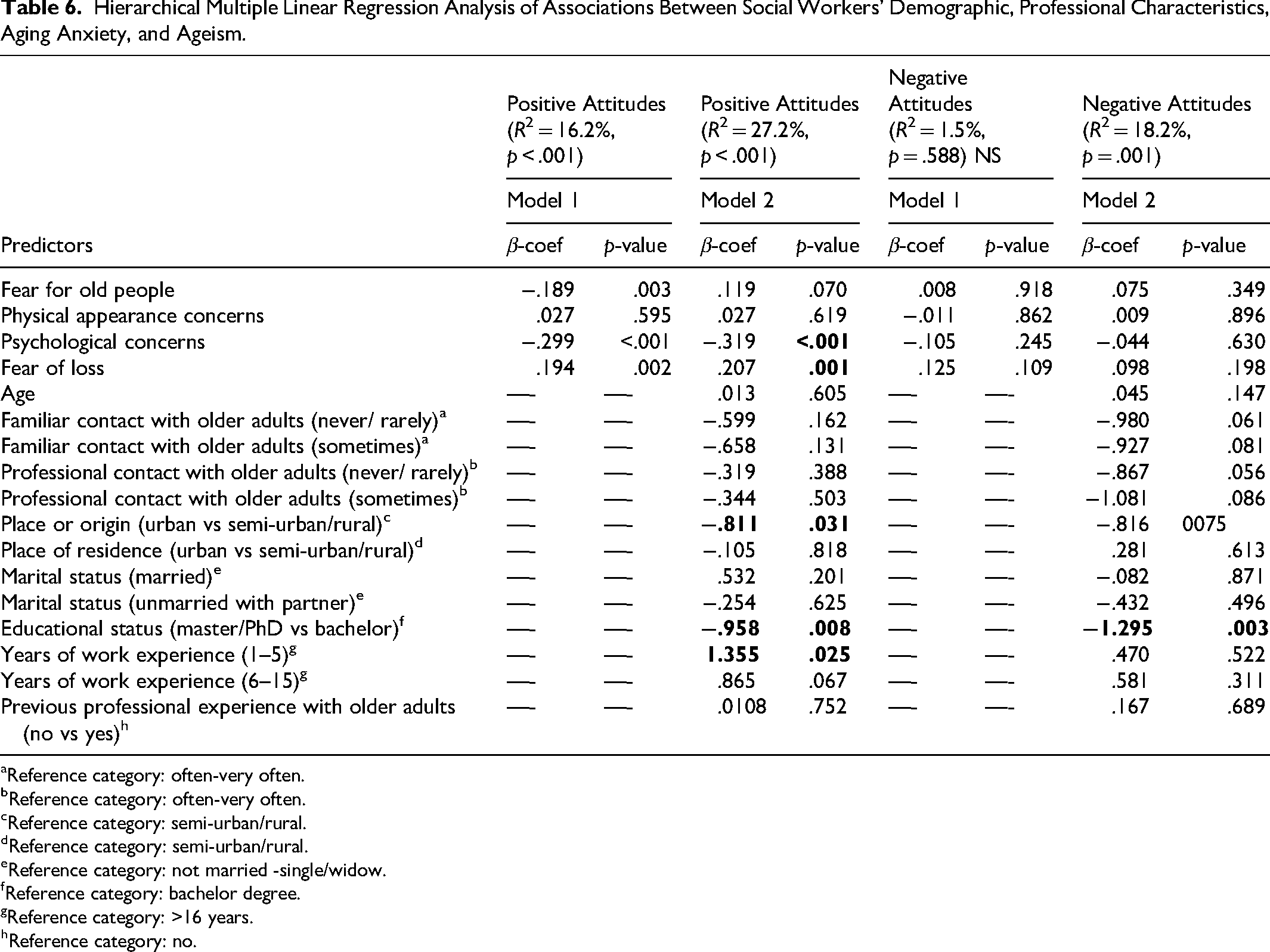
Table 6 presents the results of the hierarchical multiple regression analysis examining associations between social workers’ demographic and professional characteristics, fear of aging subscales, and ageism attitudes.
Hierarchical Multiple Linear Regression Analysis of Associations Between Social Workers’ Demographic, Professional Characteristics, Aging Anxiety, and Ageism.
Reference category: often-very often.
Reference category: often-very often.
Reference category: semi-urban/rural.
Reference category: semi-urban/rural.
Reference category: not married -single/widow.
Reference category: bachelor degree.
Reference category: >16 years.
Reference category: no.
In Model 1, aging anxiety subscales (fear of old people, physical appearance concerns, psychological concerns, and fear of loss) were entered. In Model 2, demographic and professional variables (age, marital status, professional/familiar contact with older adults, place of origin/residence, professionals’ education, professional previous experience with older adults, years of experience) were added. Μodel 2 for positive attitudes was statistically significant (R2 = 27.2%, p < .001), indicating that the variables included in the model were associated with part of the variance, and was therefore retained as the final model. Positive attitudes toward aging were negatively associated with the AAS subscale of psychological concerns (β = -.319, p < .001), urban area of origin (β = −0.811, p = .031) and holding a Master's or PhD degree (β = - .958, p = .008). Conversely, positive attitudes were positively associated with the AAS subscale of fear of losses (β = .207, p = .001), and 1–5 years of work experience (β = 1.355, p = .025). Regarding negative attitudes, model 2 was statistically significant (R2 = 18.2%, p = .001) with holding a Master's or PhD degree being negatively associated with negative attitudes (β = -.125, p = .003).
Discussion
The present study sought to address a significant gap in the literature by investigating the predictors of ageism among social work students and professionals. Based on TMT as a theoretical framework, the study examined the potential role of anxiety related to aging in shaping attitudes toward older adults, alongside demographic and educational factors. However, it should be noted that death anxiety was not directly measured in the present study. It is only indirectly reflected through the subscales of the Aging Anxiety Scale Among students, fear of old people – a dimension of aging anxiety – was significantly associated with less positive attitudes. In contrast, the non-significant findings for negative attitudes may indicate an absence of detectable associations with the variables examined, although this should be interpreted cautiously.
In contrast, among social work professionals, several factors were negatively associated with more positive attitudes toward older adults originating from an urban area holding a higher level of education (master's or PhD), and reporting lower levels psychological concerns related to aging. Moreover, years of work experience (1–5) and fear of losses were positively associated with more positive attitudes. The positive association between fear of losses and more positive attitudes toward older adults may reflect a more mature or empathetic understanding of the challenges associated with aging. Interestingly, professionals with higher educational attainment (Master's or PhD) reported lower levels of both positive and negative attitudes toward older adults, which may reflect a more neutral or less polarized pattern of responses. However, given the cross-sectional design, this finding should be interpreted in terms of association only.
The Impact of Aging Anxiety on Attitudes Toward the Elderly
Regarding aging anxiety among students, findings suggested that fear of old people (a subscale of AAS) was associated with less positive beliefs. One possible explanation for these patterns may be drawn from TMT. Aging, as a process, leads to the deterioration of the physical body and ultimately to death; for this reason, elderly individuals function as reminders of this inevitability, triggering anxiety (Martens et al., 2004, 2005). From this perspective, the presence of older adults may be perceived as a reminder of individuals’ mortality and their limited ability to meet cultural standards, which may be associated with challenges to self-esteem (Martens et al., 2005) Moreover, according to the literature, fear of losses as a component related to ageism, may be associated with concerns about death, physical decline, and the loss of characteristics that are closely tied to one's sense of self-worth. Consequently, the way individuals cognitively represent and emotionally process aging is critical. Fear of losses symbolically may reflect concerns about self-worth, which may serve as a psychological buffer against mortality-related anxiety and the awareness of life's transience
Regarding social workers, the findings showed that professionals expressed more positive attitudes in relation to fear of losses. However, this finding suggests that among professionals, fear of losses may not operate only as a source of distancing. It may also reflect greater awareness of the challenges associated with aging and, in turn, greater empathy and professional sensitivity toward older adults. This interpretation is supported by contact theory, which suggests that meaningful contact with older adults can improve attitudes, especially when that contact is positive and of high quality (Allport, 1954; Allan & Johnson, 2009; Chonody & Wanget al., 2014a, 2014b; Chonody & Teater, 2018; Kim et al., 2017; Teater & Chonody, 2017). Taken together, these perspectives suggest that fear of aging-related losses may lead to different outcomes depending on context: in some cases, avoidance and ageism; in others, particularly among professionals with sustained exposure, greater understanding and more positive attitudes. Fear of loss often centers on the disappearance of intangible elements of life, such as a sense of purpose, close relationships, and independence (Koukouli et al., 2014). Based on this interpretation, it might be expected that professionals in middle adulthood would associate more negative beliefs with fear of losses. However, in our sample, potential professional exposure may foster a sense of be associated with greater familiarity that offsets the fear of losses associated with aging. This result aligns with previous international research showing that paid employment of social work educators was associated with lower a reduction in ageism (Chonody & Wang, 2014a). Psychological concern about aging among professionals was associated with lower levels of positive beliefs in our study. This finding is consistent with previous studies (Chonody & Wang, 2014a). This factor refers to more internalized and personal fears related to aging, including concerns about psychological adjustment, emotional challenges, and other changes commonly associated with the aging process (Koukouli et al., 2014; Sargent-Cox et al., 2014). A possible explanation may relate to the sample's middle age, as participants may themselves be approaching later life and are potentially preoccupied with age-related changes. Additionally, it is possible that professionals may project their insecurities onto older adults, which could be linked to forms of implicit ageism (Chonody & Wang, 2014a).
It should be noted, as mentioned earlier in the methodology, that death anxiety was not directly measured in this study but was inferred through the AAS subscales. Consequently, interpretations concerning death anxiety remain speculative and should be approached with caution within a theoretical framework, such as TMT, rather than being construed as evidence of a direct causal relationship.
Educational Level and Ageism
In terms of educational status, our results indicated that social work professionals holding a master's degree exhibited both fewer positive and fewer negative beliefs toward older adults. At first glance, this outcome may seem paradoxical. To the best of our knowledge, there are currently no existing studies that specifically examine the association between educational level and ageism among professional social workers. These particular findings may reflect the tendency toward greater neutrality. It is possible that individuals with higher education levels have developed a more objective, less paternalistic, and less emotionally driven stance toward older adults.
Although years of professional experience were not significantly associated with ageism in this sample, it is possible that experience— particularly when considered in combination with years of education—may contribute to a more neutral attitude. Further research examining the relationship between professional experience, personal contact with older adults, personality traits, and educational level may provide a more comprehensive understanding of ageism among professional social workers.
Years of Experience and Ageism
In the present study, social work professionals with 1–5 years of experience reported more positive attitudes toward older adults, a finding that is generally consistent with previous international research. This pattern may reflect limited exposure to complex or demanding care situations, which could contribute to more idealized perceptions of older adults. While such attitudes may facilitate willingness to engage in practice with older populations, the literature suggests that a more balanced and realistic perspective—acknowledging both strengths and limitations—is more conducive to the delivery of high-quality care (Chonody et al., 2014). However, positive ageism is not without limitations, as it may manifest in paternalistic practices that, although well-intentioned, can undermine older adults’ autonomy and empowerment (Allen et al., 2009). It is possible that professionals, through their ongoing engagement and familiarity with older adults, have compensated for negative attitudes and may, perhaps unconsciously, express ageist beliefs in a more benevolent or subtle form. Indeed, literature has highlighted the lack of measurement of implicit ageism, which remains present and poses risks for older individuals (Micheli et al., 2024). Moreover, working with older adults who rely on social services may unintentionally perpetuate ageist attitudes (Chonody & Wang, 2014a). It is important to adopt more nuanced and multidimensional approaches to investigate this issue, given the strong influence of personal experience on attitudes and interests (Cummings et al., 2003; French & Mosher-Ashley, 2000; Kane, 2004). Future research should examine both explicit and implicit forms of ageism, as well as how ageist attitudes are manifested across different gerontological settings.
These findings should be interpreted with caution given the cross-sectional design of the study, which precludes causal inferences. Future research would benefit from longitudinal and multi-method approaches that examine both explicit and implicit dimensions of ageism across diverse gerontological practice contexts.
Origin Status and Ageism
Social workers originating from urban areas were associated with tend to hold less positive beliefs toward older adults. This finding is partially consistent with some studies (Ayguler & Buz, 2022), yet contradicts others (Çamur Duyan et al., 2016; Ozuturker, 2019). This discrepancy reflects abrupt cultural changes driven by rapid modernization and industrialization, combined with the swift growth of the aging population. As North and Fiske (2015) have noted, in rapidly aging and industrializing societies such as those structured today negative beliefs toward older adults may be more prevalent tend to prevail, potentially possibly due to social conflicts over resources (North & Fiske, 2015).
Limitations of the Study
There are several limitations to this study. Firstly, due to its cross-sectional design, the causality of the associations found cannot be assessed. Secondly, certain variables that could potentially offer stronger predictive power regarding ageism, such as religion, personality traits, and qualitative characteristics of family relationships, were not included. Future research aiming to identify the determinants of ageism should take these variables into account.
Furthermore, students were recruited from only one academic institution and professionals were drawn from one geographic region (Crete), which may limit the representativeness of the sample and, consequently, the generalizability of the findings to broader social work education and professional contexts in Greece at the national level, variation in social work curricula, educational practices, professional structures, and regional cultural contexts across Greece may also influence attitudes toward older adults. Future studies including participants from multiple institutions and regions could help to enhance the generalizability of the findings. In addition, the limited participation of males, although consistent with the female-dominated nature of the social work profession in Greece, may limit the generalizability of the results in terms of gender. Given evidence that women tend to report higher levels of empathy and more positive attitudes toward older adults, this imbalance may have influenced the observed results. Future research involving a larger male sample could provide deeper insight into the phenomenon of ageism and possible gender-based differences.
Both students and professionals knew the study examined attitudes toward aging, which could have led to response bias. Participants might have given socially desirable answers, resulting in an over-reporting of positive attitudes toward older adults.
Moreover, it should be noted that the internal consistency of the ROPE negative subscale among students was suboptimal (α = .538), which may have affected the reliability of findings related to negative ageism and should therefore be interpreted with caution.
In the present study, we assessed TMT mechanisms using the Aging Anxiety Scale, which includes four subscales: fear of old age, fear of losses, psychological concerns, and physical appearance. However, incorporating additional scales that specifically assess fear of death, along with personality measures, might better capture the psychological mechanisms through which TMT contributes to ageism.
Our study also has several strengths. Firstly, it was based on a sample of social work students who represent the future of the profession, providing important insights into the attitudes that the new generation will bring to practice. Furthermore, the study focuses on the investigation of ageism within the Greek context, a country experiencing a rapid increase in its elderly population, whose care will pose a significant challenge for the social work field. This addresses a gap in the international literature, where corresponding studies using Greek samples are scarce. Additionally, our study employs widely used instruments both for measuring ageism (ROPE scale) and aging anxiety (Aging Anxiety Scale), thereby enhancing the validity of the findings.
Nevertheless, we believe the findings are significant, as they carry important implications for social work education.
Recommendations for Future Research and Social Work Education
Based on the results of our study, several recommendations for future research and education in the field of social work are proposed.
Our findings revealed that, among students, ageism was influenced by fear related to older adults. Among professionals, ageism was influenced by fear of losses associated with aging and was further shaped by concerns regarding the psychological tasks and changes that accompany old age.
Gerontology-related content should form a foundational part of the social work curriculum. This content must address both the knowledge dimension (i.e., biological, psychological, and social aspects of aging), as well as
In addition, experienced professionals in aging and social work could contribute significantly to student education by serving as guest lecturers in both theoretical and experiential settings. Their lived insights into the realities, challenges, and rewards of social work with older adults can help dismantle prevailing myths and misconceptions about this population.
Concerning professional social workers, the anxiety about aging highlighted in our findings underscores the need for continuous education on aging-related issues, including professional development and self-awareness programs. Self-reflection and the exploration of personal biases as part of lifelong learning are crucial in reducing prejudice (Anderson & Wiscott, 2003). This, in turn, promotes the development of non-discriminatory attitudes toward older adults, which is key to improving the quality of services delivered to individuals and families (Katz, 1990; Papadaki et al., 2012).
Ageism manifests in various forms—implicit, explicit, and self-directed—making it a more insidious and internalized phenomenon (Iversen et al., 2009). It is both useful and necessary to explore aspects of implicit ageism, as well as forms of benevolent or paternalistic attitudes that may stem from seemingly positive beliefs, expressed by both professionals and students (Micheli et al., 2024). Through ethnographic studies, the collection of qualitative data could offer valuable insights into everyday practices and behaviors that reflect and reinforce unconscious ageism, elements that are not easily captured through questionnaires or standardized tools. Moreover, qualitative research can reveal how ageism infiltrates the workplace environment, often due to the lack of appropriate infrastructure or support systems. Qualitative evaluations of unconscious bias or paternalistic attitudes could serve as a precursor to the development of measurement tools for assessing implicit ageism. These tools would, in turn, enable systematic quantitative studies, ultimately contributing to the design and implementation of more effective strategies for confronting and mitigating ageism in social work practice.
Conclusions
Different factors appear to influence ageist attitudes among students and professional social workers. Among students, ageist attitudes were primarily associated with aging anxiety, particularly fear of old people, while demographic variables did not retain significance in multivariable models. Among social work professionals, both demographic and anxiety-related factors contributed to attitudes toward older adults, including psychological concerns, fear of losses, educational level, urban origin and early career experience. These findings highlight the importance of addressing both individual and contextual factors in understanding ageism in social work. They also underscore the need for ongoing professional and personal development programs, as well as the integration of structured gerontology curricula that include practical or field-based placements in elder care settings and intergenerational initiatives. Furthermore, qualitative research and longitudinal quantitative studies are essential to deepen our understanding of ageism and develop effective, evidence-based strategies for addressing it at the micro, meso, and macro levels of social work practice.
Footnotes
Acknowledgments
The authors have no acknowledgments to declare.

Ethical Approval and Informed Consent Statements
The study protocol was approved by the Bioethics Committee of the Hellenic Mediterranean University (Approval No. 108/08-05-2023). All participants completed the questionnaire voluntarily, without receiving any type of incentive, and provided informed consent.
Author Contributions
Conceptualization was done by KM; methodology was done by KM, KK, GM; data collection by KM; formal analysis and investigation by KM and GM; writing—original draft preparation by KM, KK; writing—review and editing was done by KM, KK, and GM.
Funding
The authors received no financial support for the research, authorship, and/or publication of this article.
Declaration of Conflicting Interests
The authors declared no potential conflicts of interest with respect to the research, authorship, and/or publication of this article.
Data Availability Statement
The data that support the findings of this study are not publicly available due to privacy or ethical restrictions.