







Abstract
The growing number of older adults in our societies has not been matched by balanced representation in the press, which tends to portray older people stereotypically. This study used computational methods to analyze the representation of older people in a large corpus of articles from a sample of major Italian newspapers between 2017 and 2024. The results suggest that, although the range of topics associated with older people has increased compared to previous research, both positive and negative stereotypical views still prevail. However, content related to older adults is more positive than content on the same topics that does not specifically reference older adults. While the pandemic has brought renewed attention to older people, it has also increased the prevalence of negative narratives that focus on their frailty. Nevertheless, Italian newspapers have increased their focus on content related to the cultural and social life of older people, thus paving the way for a more positive perspective on ageing.
Introduction
According to the World Health Organization, the number of people aged 60 and older is projected to increase from 1.1 billion in 2023 to 1.4 billion by 2030 worldwide (WHO, 2025). Italy, in particular, is the country experiencing the fastest population ageing in Europe and the third in the world after Japan and Korea (ISPI, 2023). Given that audiences are the lifeblood of the media, it is likely that the growing proportion of older adults in the population will be reflected in the topics covered by the press, particularly considering that older adults are more likely to read newspapers than other age groups (Thurman & Fletcher, 2019; Wattenberg, 2020).
However, the increase in the number of people over 65 has not been accompanied by balanced media representation of older people. Conversely, older characters are underrepresented in entertainment programs, advertisements, and newspapers in both television and the print media (Vasil & Wass, 1993; Ylanne, 2015). While the visibility and positive portrayal of older people in the media have increased in the 21st century (Ylanne, 2015), they are still generally underrepresented in the media relative to their respective proportion of the population—even in countries such as Italy and South Korea were this proportion is higher (Family and Media, 2017; Lee et al., 2006).
Furthermore, studies on the portrayal of older people in the media tend to be polarized, presenting them in either negative or positive terms without much nuance. The most frequent negative attributes include frailty, loneliness, mental and physical decline, ill-health, intolerance, pessimism, and suspicion (Allidi & Pezzati-Pinciroli, 1989; Chen, 2015; Family and Media, 2017; Lepianka, 2015; Makita et al., 2021). In contrast, positive attributes usually refer only to their role as grandparents (Ylanne, 2015). Nevertheless, negative depictions usually prevail over positive ones (Family and Media, 2017; Jeong et al., 2022), thus contributing to reinforce ageism, that is, the stereotypes, prejudice, and discrimination toward others or oneself based on age.
This suggests that the media portrays older people mainly in a stereotypical manner. Two frames are typically employed: the decline frame and the dawn frame (Wangler & Jansky, 2023). The former aligns with a compassionate view of ageing, depicting older people as frail and emphasizing their physical, mental, and social decline. In contrast, the dawn frame depicts older people as active and productive despite their age. Examples of this frame include stereotypes such as “the adventurous golden ager,” “the perfect grandparent,” and “the productive golden ager” (Ylanne, 2015). Despite being positive, these representations subtly imply that the physical and mental decline is a choice. These aspirational images of successful ageing tied to consumerist lifestyles are frequently used in third-age marketing.
Furthermore, the media mainly portrays older adults as a homogeneous group (Allidi & Pezzati-Pinciroli, 1989; Morgan et al., 2021; Rasi, 2022; Yang et al., 2024, 2025), meaning that social, economic, cultural and physical diversity is not represented (Allidi & Pezzati-Pinciroli, 1989) and portrayals rely on stereotypic, rhetorical terms. As Lepianka (2015) stated in her content analysis of Dutch news media, people aged 65 or above are treated as objects rather than subjects. They have no voice or opportunity to express their perspective and are reified in a coherent social group, reduced to a few stereotypical images. For instance, despite being a relevant audience, older people in the newspapers are often nameless and referenced with collective nouns and phrases (Fealy et al., 2012; Morgan et al., 2021).
The way in which older adults are represented in public communication is important because the media both shape and are shaped by societal attitudes and beliefs. Scarce and stereotyped representations of older people may reflect the average person's or an analyst's personal attitudes toward old age, but they also play an active role in reinforcing these stereotypical beliefs (Lepianka, 2015). Furthermore, the prevalence of stereotypical views about ageing acts as a self-fulfilling prophecy. As Morgan et al. (2021) have noted, “age is not a stable category reflecting biological truth but is rather an identity shaped also by economic, political, social and cultural contexts in which individuals live.” Older people internalize the representation offered by the media, which may affect their self-concept and the way they experience ageing (Vasil & Wass, 1993; Wangler & Jansky, 2023).
In the context of media representation of older adults, newspapers are a particularly interesting focus. Data shows a progressive ageing among newspaper readers due to generational replacement, with each new cohort of young people being less likely than their elders to read newspapers (Wattenberg, 2020). A study conducted by Ipsos for the European Parliament found that older people (55+ yo) and adults (25–54 yo) make much greater use of traditional news media (TV, radio and the written press) than younger people (15–24 yo), who, in contrast, are more likely to use social media platforms for information (Ipsos, 2022). However, depictions in this type of media were found to be more negative than in others (Chen, 2015; Koskinen et al., 2014).
Previous research on how older people are portrayed in newspapers has produced mixed results. For instance, Fealy et al. (2012) conducted a critical discourse analysis on 227 Irish newspaper articles published after the promulgation of the Health Act of 2001. The results confirmed a tendency to depict older people as hapless, undeserving victims, or as frail, infirm or at risk of illness. Similar results were reported in a critical discourse analysis conducted on 62 Taiwanese articles (Chen, 2015), where older people were depicted as recipients of social resources and portrayed as being responsible for their physical decline. As in Fealy et al. (2012), where older people were often nameless: their full name was disclosed only when they were portrayed as fitting in the “golden ager” stereotype, that is, as being socially active, physically fit or younger-looking for their age.
A study by Yang et al. (2024) on three popular newspapers in Hong Kong explored this tendency to rely on stereotypes. The authors examined how these newspapers portrayed older people, and whether their ideological inclinations influenced the construction of this image. Content analysis of 814 articles confirmed the tendency to overgeneralize older people as a homogeneous population. However, various forms of ageism against older people were represented depending on the political predisposition of the newspaper. Despite the degree of diversity in terms of themes—both positive and negative—the ideological stance toward ageing was consistent.
Furthermore, Yang et al. (2025) identified seven main topics discussed in Malaysian newspapers regarding ageing, that is, welfare for older people, health, science and technology, advice, the promotion of filial piety, human-interest stories, and challenges facing older people and an ageing society. In contrast, in a study on three Finnish newspapers, Koskinen et al. (2014) found that older people were represented as important rather than as a burden. They found portrayals of older people that varied in terms of both their health and the concept of successful ageing. When older people were portrayed as frail, they were not blamed for their condition; instead, their functional ability was attributed to their residential environment rather than their chronological age.
There is limited empirical evidence on the media representation of older people, and the existing studies have been conducted in different national contexts. Cultural factors may therefore shape both how older individuals are portrayed and the extent of cross-country differences in these representations. Despite such sociocultural variation, the findings are largely consistent, with the notable exception of the Finnish study (Koskinen et al., 2014). As the authors suggest, this divergence may be attributable to the Nordic model, which emphasizes the equal value of all members of society.
This study aims to contribute to the existing literature on the representation of older people and old age in the media, with a specific focus on Italy due to its significant population ageing. To the best of our knowledge, only two previous studies have examined older adults in Italian newspapers. Allidi and Pezzati-Pinciroli (1989) analyzed twelve newspapers published between January and March 1989. They found that articles about older people mainly focused on health and its implications for care, portraying older people as a homogeneous, stereotypical group. The second, more recent study (Family and Media, 2017) performed a content analysis on a sample of 121 Italian newspaper articles published over three months. The researchers found that older people were mentioned on average in one article per day, and that negative news prevailed over positive news, particularly in articles in which older people were the primary subjects. As with other international newspapers, most news reports depicted older people as victims who were frail and exposed to violence. They were less frequently portrayed as active, independent and resourceful.
We analyzed a sample of Italian newspapers to investigate (a) the trend in the number of articles published, (b) the sentiment of the articles, and (c) the topics addressed in the articles. Adopting a comparative perspective in terms of both time (before, during and after the COVID-19 pandemic) and other targets, the study included a control group of unrelated articles.
This study contributes to existing knowledge on the topic in various ways. First, unlike previous studies, that have predominantly relied on qualitative approaches, this study applied a quantitative method based on machine learning techniques to identify sentiments and topics, and regression analysis to assess variation. This approach enhances objectivity and analytical consistency, reduces interpretative bias, and enables substantially larger corpora to be analyzed than in previous newspaper-based studies. Current knowledge on newspaper representations is also relatively outdated, with only two recent studies available in the literature, both of which were conducted in Asia (Yang et al., 2024, 2025).
Secondly, the study contributes to the literature on the social impacts of the COVID-19 pandemic. As highlighted in previous research (Jeong et al., 2022), the pandemic shifted public attention toward older adults, who were consistently identified as one of the most vulnerable groups. Consequently, media coverage of the pandemic frequently focused on older people. This provides a particularly relevant context for examining whether such exogenous shock altered media attention and influenced both the sentiment and thematic framing of older adults in newspaper reporting (Sánchez-Izquierdo et al., 2023). Finally, the study adds evidence on the Italian context, which has received limited attention in recent years and has predominantly been analyzed through qualitative methods. By updating and quantifying media representations in Italy, this study provides more recent and systematically comparable evidence on how older adults are portrayed in the Italian press.
Method
We adopted a computational text analysis approach to examine a corpus of newspaper articles, combining sentiment analysis with topic modeling to identify and interpret recurring themes. Sentiment analysis (Zhao et al., 2010) is used to measure the sentiment, that is, the emotional tone, of a text by determining its polarity, that is, whether it expresses a positive, negative, or neutral opinion. Topic modeling (Vayansky & Kumar, 2020), on the other hand, identifies the main themes discussed in a set of articles by grouping related words and content into recurring topics. Finally, we used regression models to test for differences in sentiment prevalence between articles about older adults and a control corpus of articles from the same newspapers. We also investigated whether the prevalence of sentiments had changed due to the pandemic. The analysis was conducted using the R programming language (R Core Team, 2022) and the following packages: stm (Roberts et al., 2019), quanteda (Benoit et al., 2018), plm (Croissant & Millo, 2008), and topicmodels (Grün & Hornik, 2011).
Data Collection and Cleaning
To increase comparability while controlling for context, we decided to focus on newspaper sections covering one of Italy's largest urban areas, Milan. Milan is one of the northern Italian cities most affected by the pandemic, with one of the highest proportions of older adults in the population (20% of the population was over 65 in 2025). It is also a major media hub, with several national and regional newsrooms based in the city. Here, we extended the analysis conducted in a previous report (Family and Media, 2017) to cover seven years (from 2017 to 2024) to capture the pre-, during- and post-pandemic years. The sample consisted of 7,114 articles published in the local editions of four major Italian newspapers between January 1, 2017 and June 30, 2024.
These newspapers include the two most widely read national newspapers with authoritative local sections on Milan (Newspapers 2 and 4 in the analysis); a newspaper that has been established in Milan for a long time and has one of the largest local readerships (Newspaper 3 in the analysis); and the most authoritative newspaper in the Catholic community, which is also based in Milan (Newspaper 1 in the analysis). This period was chosen to capture potential shifts in the narrative about ageing before, during and after the COVID-19 pandemic. All of the newspapers are published daily. Twelve articles were automatically removed from the initial sample during the preprocessing phase (e.g., for excessively short text or the presence of overly common or overly rare tokens), leaving us with a final sample of 7,102 articles.
The final sample included 6,392 articles referring to either older adults or ageing. The keywords used for the search referred to seven related concepts, i.e., older people (“anzian*”), ageing (“invecchi*” OR “ageing”), longevity (“longev*”), senility (“senil*”), retirement (“pension*”), demographic group (“demograf*”), and old age (“vecchiaia”). The remaining 710 articles—the control group—were randomly selected from the four newspapers to reflect their general editorial output. As they were selected at random, some of the articles in the control group also mentioned older people, albeit only marginally.
After extraction, the data were cleaned for analysis. Texts were lowercased, stripped of punctuation and stop words, tokenized and stemmed. Metadata (author name and inferred gender, date and newspaper) were standardized, merging all sources. The author's gender was inferred using typical Italian naming conventions and searched manually when ambiguous. Otherwise, the label “Unknown” was assigned.
Sentiment Analysis
We used machine learning models for sentiment analysis to examine the overall tone and narrative of the texts. Random subsamples of 315 (main corpus) and 143 (control corpus) texts were manually labelled by the second author as positive, negative or neutral. Rather than using predefined, stereotype-based categories, labeling was based on a holistic reading of each article, considering its overall framing and linguistic cues. Usually, negative texts framed ageing as decline or social burden, positive texts highlighted active participation or generational contribution, while neutral texts did not convey any particular emotional framing. Control articles were labelled based on overall tone. Training sets were balanced across categories. To avoid introducing bias into the model performance, the training sets were balanced across the three sentiment categories.
The texts were pre-processed by removing stopwords, punctuation, and numbers, and by applying standard normalization procedures. We then constructed a document-term matrix in which each document is represented by word (or n-gram) frequencies. This matrix was used as input for the machine learning classifiers, which learned associations between lexical patterns and sentiment categories based on the training sets.
We compared three machine learning models, that is, Naïve Bayes (Majka, 2024), Random Forest (Liaw & Wiener, 2002) and Gradient Boosting (Chen & Guestrin, 2016) using accuracy, precision, recall, and F1-scores. Naïve Bayes performed best (main corpus: accuracy = 0.65, F1 = 0.64; control: accuracy = 0.73, F1 = 0.72) and was used for classification. Five-fold cross-validation ensured robustness and reduced overfitting (Gorriz et al., 2026).
Topic Modeling
We applied a structural topic model (STM) to identify latent themes while incorporating metadata (Roberts et al., 2016). We tested different values of k and selected those balancing interpretability and granularity (i.e., the level of detail at which topics are distinguished), resulting in 11 topics in the ageing corpus and 9 in the control. Topics were identified based on word co-occurrence patterns within documents and estimated probabilistic word distributions produced by the STM. Topic meaning was interpreted through top terms and a close reading of representative documents. In parallel, we conducted a quantitative assessment of topic prevalence and dynamics, examining how specific themes—particularly those relating to representations of old age—fluctuated over the examined time span. As a validity check, we also estimated the correlations between topics based on their co-occurrence patterns across documents. Finally, we generated a topic correlation network in which the nodes represent the topics and the edges indicate statistically significant positive correlations.
Regression Analysis
Finally, regression models assessed (a) whether sentiment and topic prevalence were associated with variables of interest and (b) whether ageing-related coverage differed from the control corpus. Articles were grouped into three periods: pre-pandemic (Jan 1, 2017–Jan 30, 2020), pandemic (Jan 31, 2020–Mar 31, 2022), and post-pandemic (Apr 1, 2022–Jun 30, 2024), based on Italian government declarations. Two multinomial logistic regression models were estimated for the ageing corpus, using sentiment and topic as dependent variables and period as the main predictor, with author's gender, season and date included as covariates. The topic was also included when modeling sentiment. Fixed effects accounted for articles nested within newspapers. A further model on the full sample included group (ageing vs. control) as an additional covariate.
Results
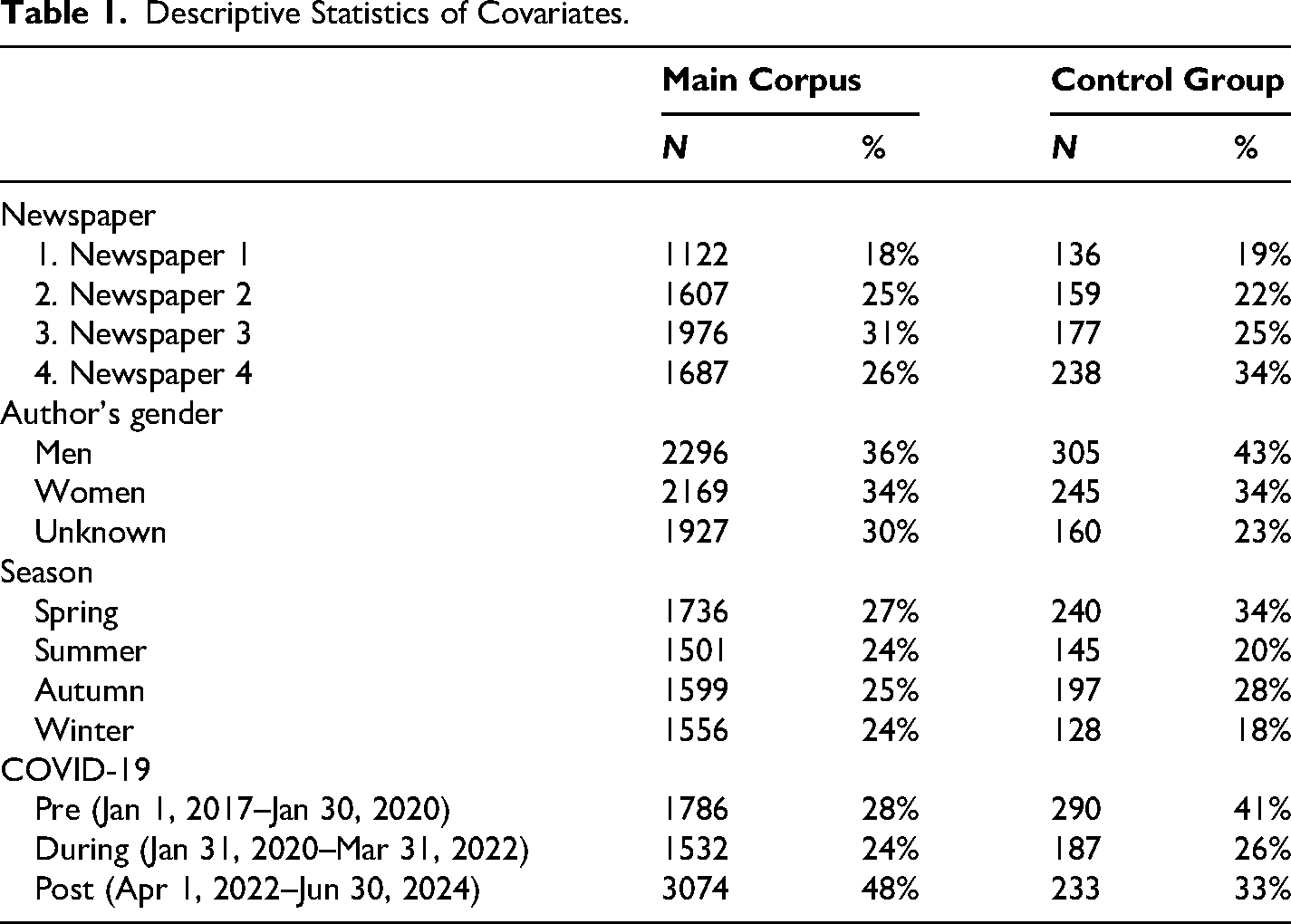
Table 1 shows the descriptive statistics of covariates in both corpora. The distribution of articles in the four newspapers was similar in both the main and control groups, with a slight less prevalence of articles from Newspaper 1 compared to the others. As regards the authors, the gender distribution was slightly less balanced in the control group, with male authors more frequent than female ones. Finally, articles were published equally in the four seasons, but the total number of articles about older people has increased over time. Therefore, those published after the pandemic are more numerous. Conversely, in the control group, a higher proportion of articles were published before the beginning of the pandemic. The distribution among seasons was also less balanced in this group compared to the main corpus.
Descriptive Statistics of Covariates.
Trend in the Publication of Articles About Older People
Figure 1 shows that the number of articles published on this subject has increased over the years, particularly since the start of the COVID-19 pandemic. Since the number of articles published in these newspapers has remained stable over time, this suggests that interest in older people has increased relative to other topics.
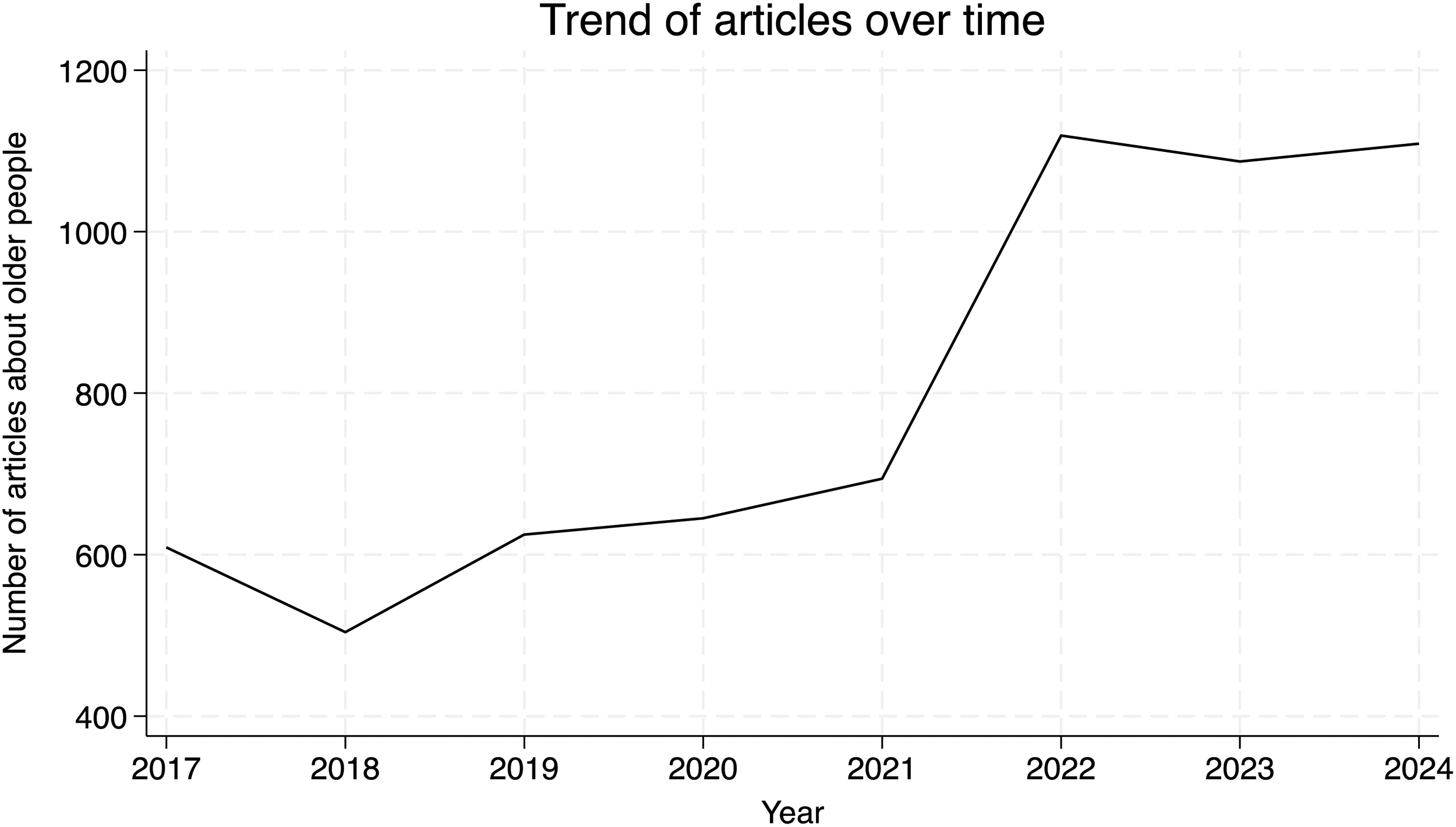
Trend of articles about older people from 2017 to 2024.
Sentiment Analysis
The sentiment of the article on older adults was classified as neutral in 39% of the cases, negative in 31% of cases and positive in the remaining 30% of cases. Similar results were found in the control group, where 37% of the articles were classified as neutral, 34% as negative, and 29% as positive.
Some of the tokens included in the corpus were more frequently associated with one of the three sentiments and thus played a more important role in classifying the articles (see Table A1 in the Appendix). For negative articles, these words were “home,” “euro,” “day,” “work,” “children” (intended as sons and daughters), “community,” “service,” “retirement,” “medicine,” “end,” and “population.” For positive articles, the most relevant words for the classification were “life,” “people,” “grandparent,” “time,” “social,” “live,” “younger people,” and “care.”
Examining word co-occurrences revealed clear thematic patterns. In negative articles, “home” frequently appeared with terms such as “retirement” and “nurse,” referring to the living situation of older adults and often highlighting their vulnerability. Many articles also reported crimes such as fraud, homicide or violence against older adults, where “home” denoted the crime location and older people were depicted as victims, portrayed as frail, weak or lonely. The term also appeared in coverage of financial difficulties faced by retired people and their families. Words such as “euro,” “work,” and “retirement” were common in discussions of population ageing and the financial sustainability of the pension system.
In positive articles, words such as “life,” “vital,” and “vitality” appeared in expressions like “quality of life,” “lifestyle,” and “life expectancy,” emphasizing the advantages of active and healthy ageing. “Life” also featured in articles describing the lives of well-known or ordinary older individuals. Another frequently occurring term related to the role of older people in the family, particularly highlighting grandparents as valuable supports for younger generations and custodians of family memory.
Topic Modeling
The topic modeling identified eleven topics in the main corpus, which we labelled as follows: (1) culture and arts, (2) crime news, (3) religion and voluntary work, (4) Milan, (5) research and innovation—R&I, (6) welfare, (7) health and nursing homes, (8) the COVID-19 pandemic, (9) justice, (10) politics, and (11) events and institutional releases.
The two most frequent topics in the main corpus were “Culture and arts” and “Crime news” (953 articles each). “Culture and arts” included biographies, interviews, and cultural events relating to older adults, while “Crime news” covered cases in which older people were victims, reinforcing their portrayal as highly vulnerable. Another common topic was “Religion and voluntary work,” which reported Vatican news, papal homilies and activities of religious associations. Older adults appeared either because they were referenced in homilies or were involved in projects run by religious volunteer groups.
The prominence of religion-related articles (753) reflected the contribution of Newspaper 1, a Catholic outlet providing extensive coverage of Church affairs; 39% of articles in this topic came from this source. Similarly, the large number of articles about Milan (715) resulted from sampling local editions of the four newspapers. These articles covered public debates on governance and local challenges, with older adults mentioned either in descriptions of municipal initiatives or in criticisms of inadequate services such as accessibility, infrastructure and safety.
The topic “Research and Innovation” (621 articles) reported new scientific advances targeting older adults, including health research, technological developments for geriatric care and recommendations for improving longevity and well-being. “Welfare” (556 articles) focused on policies and social services, often discussing pensions, contributions and broader welfare structures.
Articles in “Health and nursing homes” (515) focused on residential care, including abuse cases and the financial burden on families. “COVID-19” (454 articles) reported on the pandemic and its effects, with older adults frequently cited as the most vulnerable population. “Justice” (452 articles) included legal proceedings and court cases involving older adults, mainly as injured parties. The topic “Politics” (349 articles) was more heterogeneous, including voting behavior, demographic debates, and political developments affecting older adults. A final small topic (34 articles) reported information about events or press releases, where older adults were mentioned as organizers, targets or beneficiaries (e.g., discounted access).
Comparing these results with the control corpus provides insight into whether coverage of older adults was concentrated on particular themes. Topic modeling of the control articles produced nine topics: (1) social issues, (2) events, (3) politics, (4) crime news, (5) sport, (6) justice, (7) Milan, (8) culture and arts, and (9) welfare. While some topics overlapped with the main corpus, religion and COVID-19 did not emerge as independent topics. This does not mean they were absent, but that references were embedded within other thematic contexts—for example, pandemic news was often discussed in political terms and therefore classified under “politics” rather than forming a separate COVID-related topic.
Figure 2 shows two new topics in the control group, that is, sport and social issues. Unlike the main corpus, where references to physical activity were related to longevity and thus health, or mentioned in the interviews with retired athletes, the discourse on sport in the control group was more generic. It appeared in articles about sports and sports events, with no reference to the health implications typically associated with the older population. The topic “social issues” included articles that in the main corpus would have been classified in “religion”—for example, appeals for solidarity—or under other categories unrelated to religion—for example, interviews focusing on social topics.
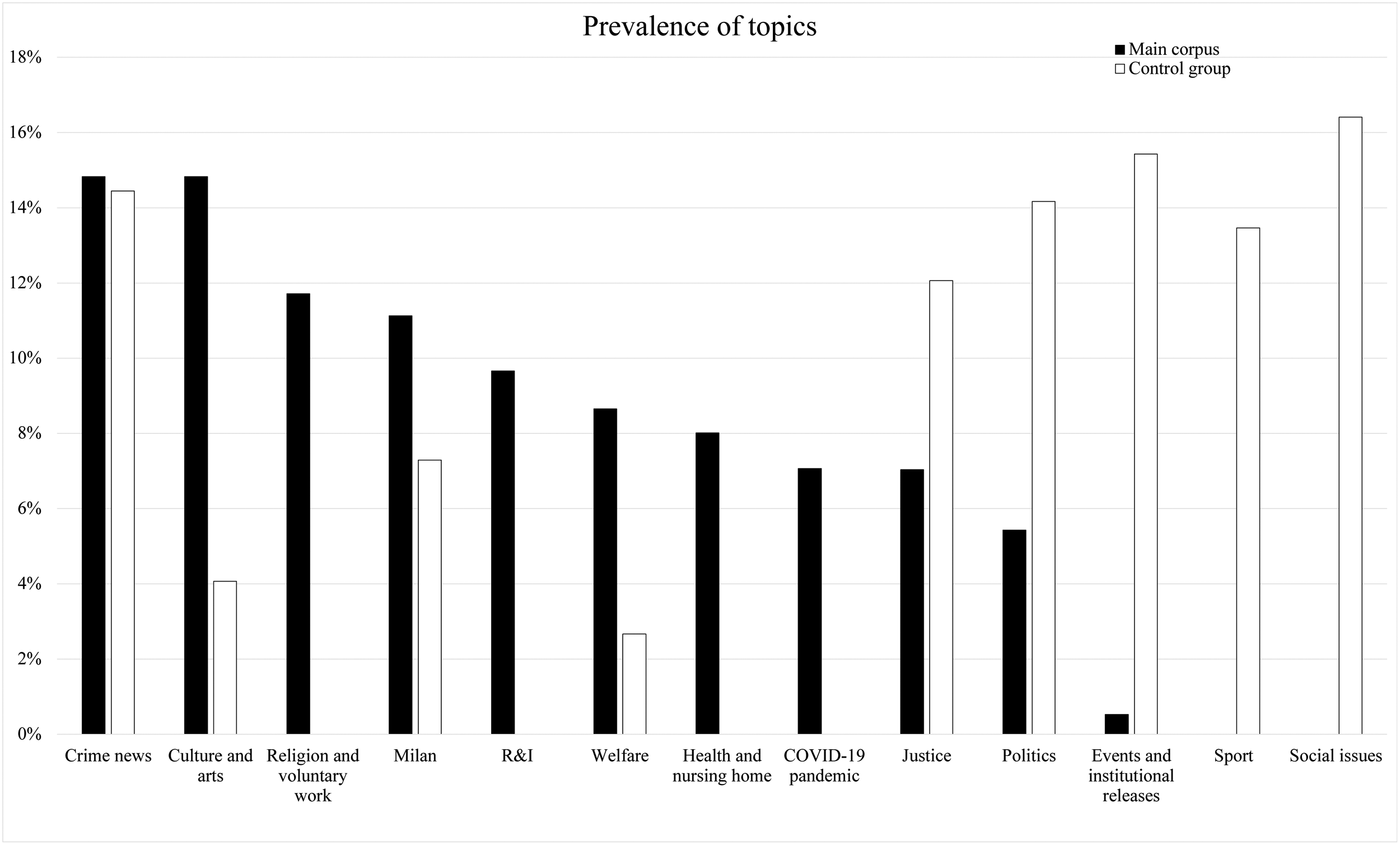
Prevalence of topics in the main corpus and the control group.
Furthermore, even if some of the topics were common to both corpora, differences emerged in the prevalence of articles devoted to them. The prevalence of articles about crime news was similar in both corpora. However, articles about politics, justice and events were more prevalent in the control group. Conversely, articles about culture, welfare and Milan were less prevalent. Finally, articles in the control group about religion and voluntary work, research and innovation, health or COVID-19 were either absent or incorporated into other topics.
Additionally, we found some differences in how the topics included in both corpora were addressed. Regarding “crime,” both corpora tended to use sentimental language when referring to victims. However, in the case of older adults, terms such as “fragile” and “vulnerable” were commonly used in the main group, but never in the control group. There were also differences in the types of crimes mentioned: fraud and scams were very frequent in the main corpus, whereas assaults, femicides and shootings were mentioned more often in the control group.
The same applies to the coverage of the COVID-19 pandemic. In the main corpus, articles adopted a more dramatic tone and focused on the idea that older adults are fragile, that getting sick is dangerous for them, and that they suffered from loneliness during the pandemic. In contrast, the articles on the COVID-19 pandemic in the control group were more varied, ranging from messages of hope and the importance of vaccination to political discussions, information on the spread of the virus and the progress of research. Generally, articles that did not mention older adults tended to be more varied. The presence of older adults in a text usually indicated that the article intended to convey a particular message.
Finally, since articles can belong to one or more topics simultaneously, it is interesting to examine the relationships between the identified topics. Figure 3 shows the network of the topics. Topics connected by a line indicate a positive and statistically significant correlation. The topic events and institutional releases emerged as a sub-theme common to many topics in the corpus. In contrast, the other topics seemed to be quite isolated.
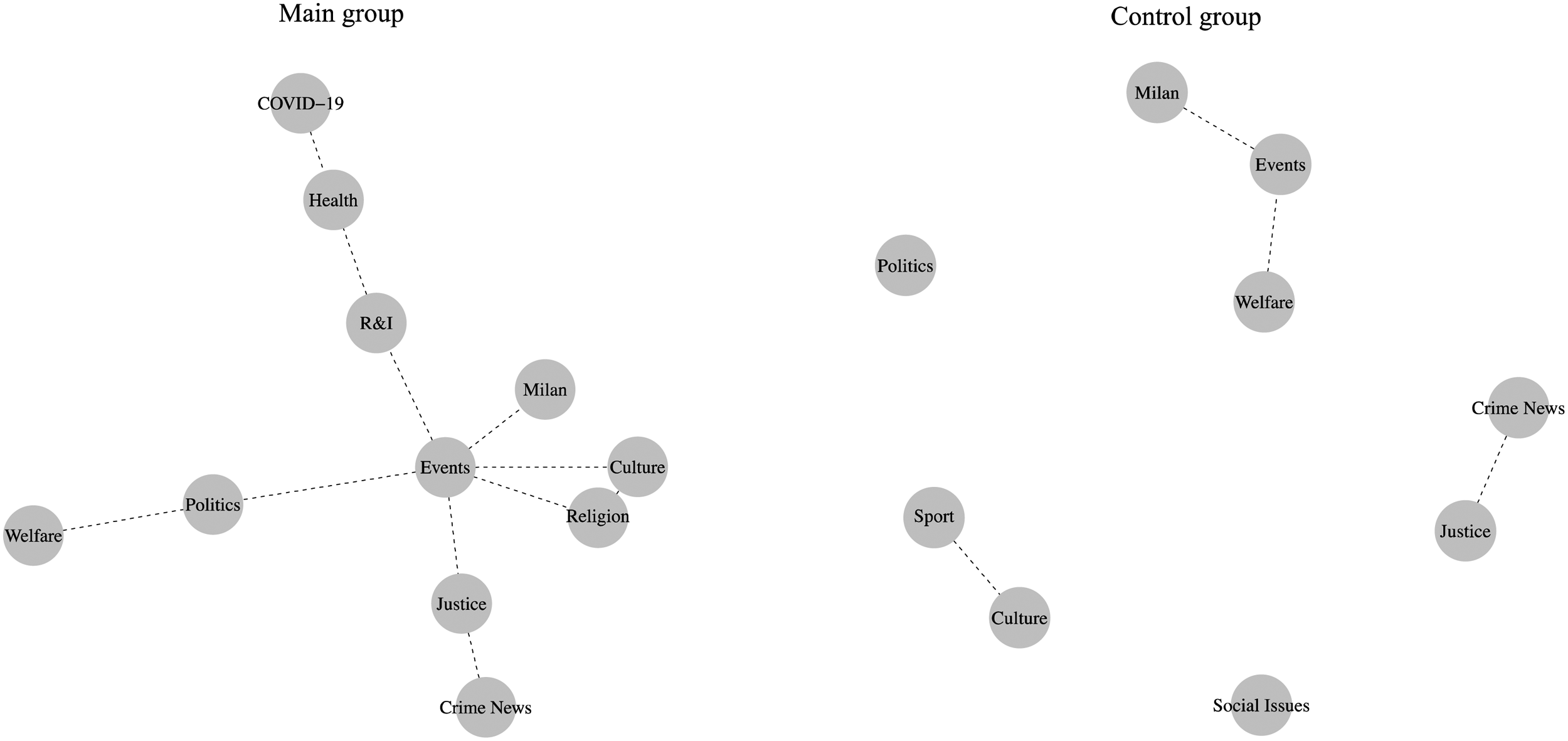
Network of topics in the main and control groups.
Nevertheless, the resulting correlations were consistent with what we might have expected based on common sense. Articles about crimes often also mentioned justice-related arguments. Similarly, articles about politics and welfare were often found together. Finally, articles about health and nursing homes were correlated with research and innovation, as well as with the COVID-19 pandemic. This is not surprising, given that the consequences of the pandemic for older adults were frequently discussed in health-related terms. Furthermore, nursing homes were monitored during the pandemic period due to the potential consequences of the virus spreading among their patients.
The network of topics of the control group differs from that of the main corpus. Besides the similar correlations between “Milan” and “events,” two new correlations emerged in the main corpus: that between “events” and “welfare,” and that between “culture” and “sports.” Overall, this suggests that articles about older people tend to focus on multiple topics by connecting seemingly unrelated subjects, whereas articles that do not reference older adults tend to focus on just one specific topic.
Regression Analysis on Topics
Figure 4 shows the predicted margins of the variables of interest, i.e., the time period and author's gender (the detailed results of the regression model on topics are in Table A2 in the Appendix). The results show that, except for the topics “culture,” “religion,” and “events,” a statistically significant change was observed over time. More specifically, articles on “crime” and “R&I” declined over time, while local news on the city of Milan increased. As expected, the topic of the “COVID-19 pandemic” was the subject of articles during the pandemic and remained so even after the end of the more dramatic period, albeit to a far lesser extent. The probability of articles about health increased during the pandemic and then returned to the pre-pandemic levels, while the opposite trend was observed for articles on “welfare.” Finally, the probability of finding articles about “politics” and “justice” remained consistent before and during the pandemic, but increased in the subsequent years.
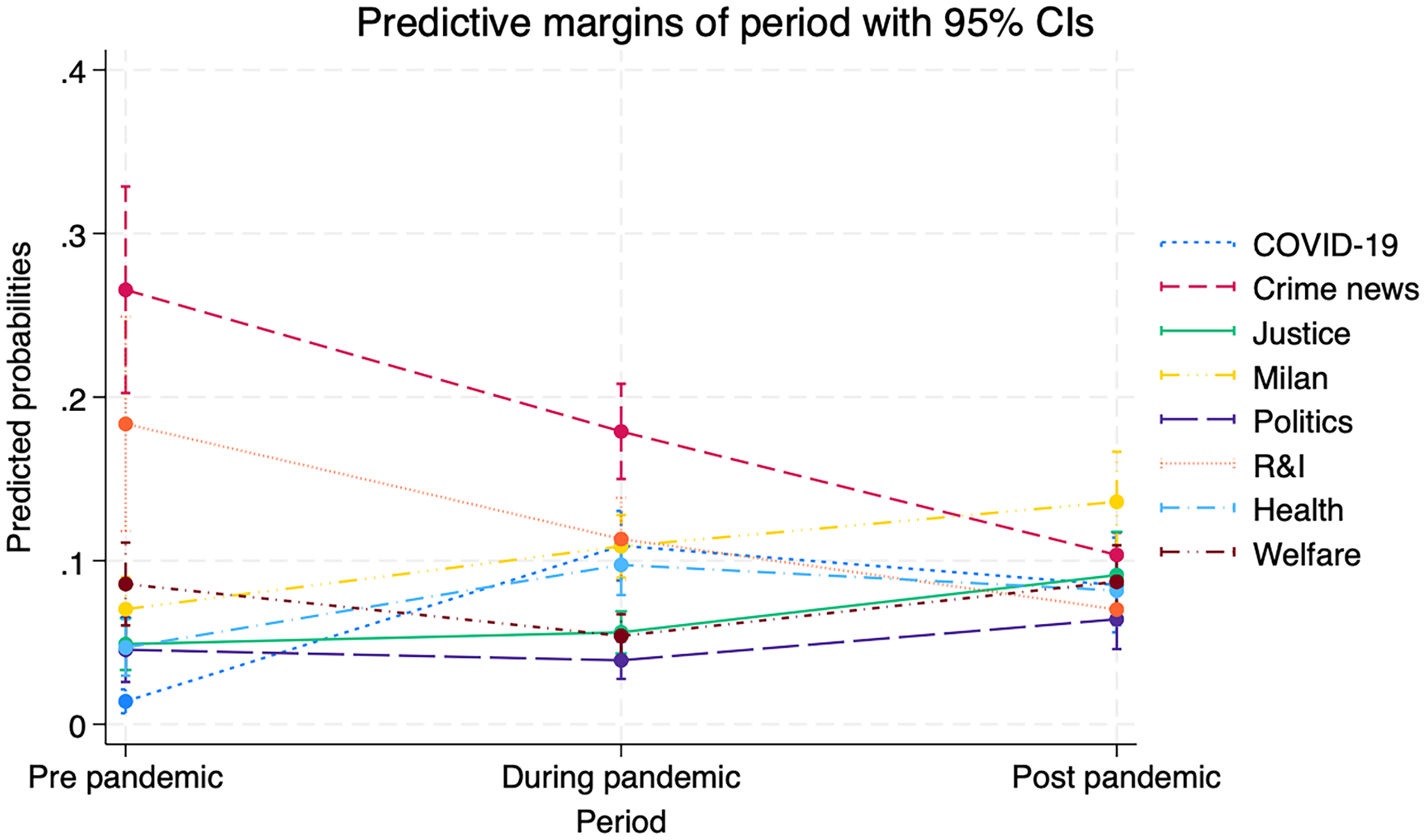
Predictive margins of period on topics.
Some statistically significant differences were found between articles written by women and men. More specifically, women were more likely to write about culture, the pandemic, Milan and R&I, and less about crime news, justice, politics and welfare. No differences, instead, were found for religion, health or events (see Table 2 for the marginal effects for both variables).
Marginal Effects of the Time Period and the Author's Gender on Topics.
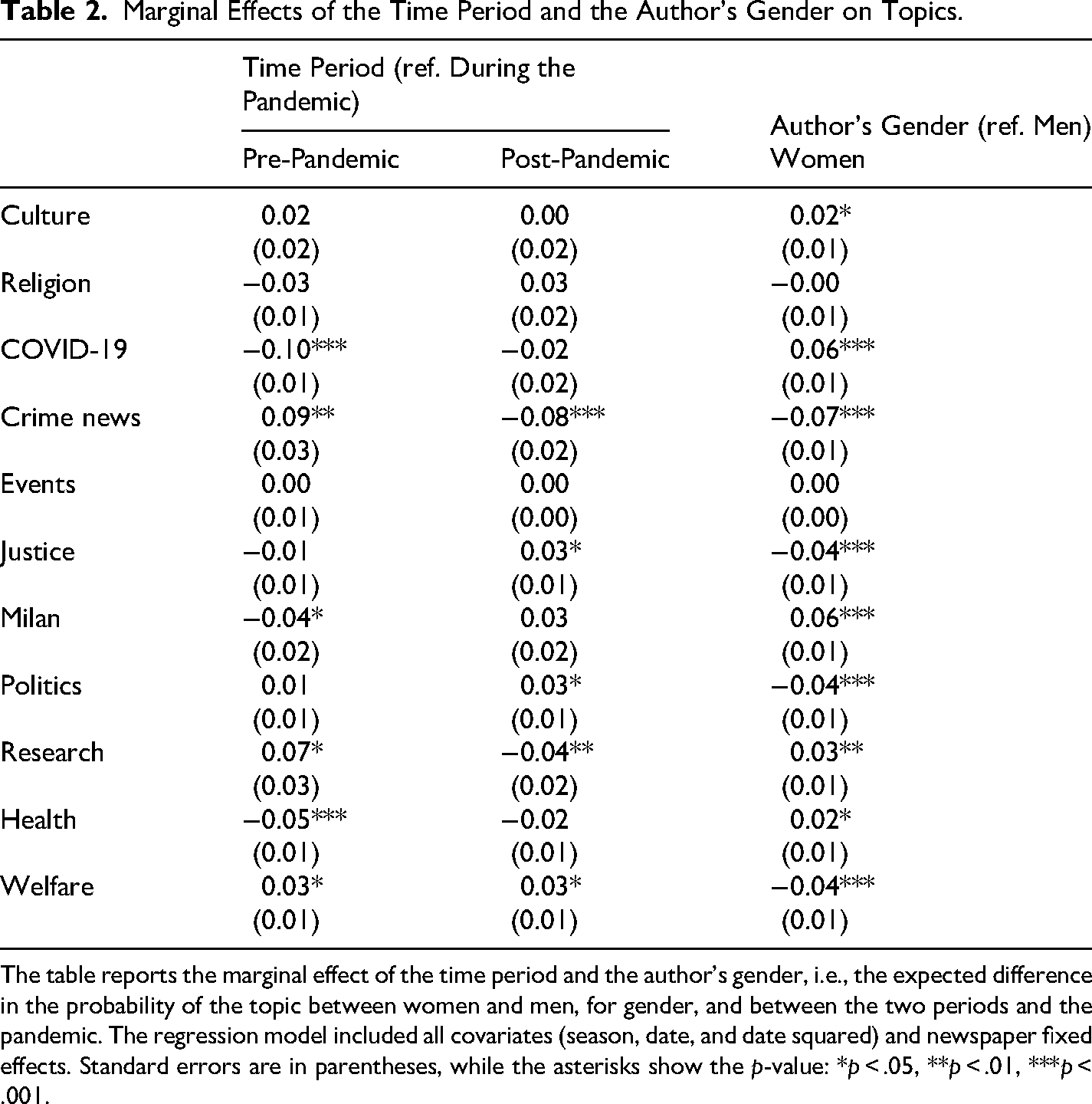
The table reports the marginal effect of the time period and the author's gender, i.e., the expected difference in the probability of the topic between women and men, for gender, and between the two periods and the pandemic. The regression model included all covariates (season, date, and date squared) and newspaper fixed effects. Standard errors are in parentheses, while the asterisks show the p-value: *p < .05, **p < .01, ***p < .001.
Regression Analysis on Sentiment
Based on the pivotal role played by older people in the discourse about COVID-19, we checked whether there was a change in the sentiment of the articles about older people after the beginning of the pandemic. As shown in Figure 5, the model regressing the variables of interest on sentiment suggested that, while neutral articles were always more likely than polarized articles, there was a decrease in the proportion of neutral articles during the pandemic, accompanied by an increase in negative ones (for the results of the regression model, see Table A3 in the Appendix). No statistically significant change was observed for positive articles, and the proportion of neutral and negative articles remained stable, also after the pandemic.
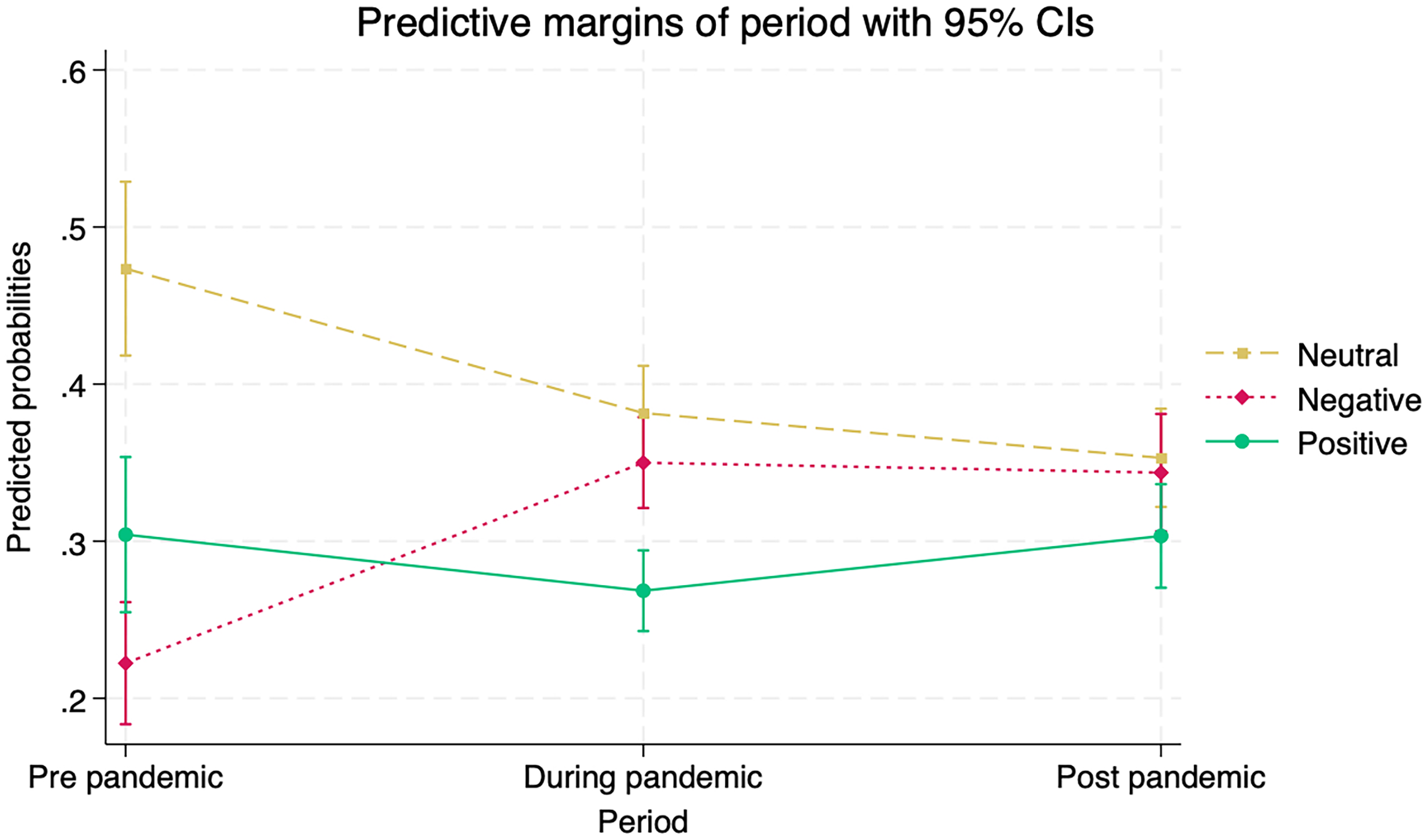
Predictive margins of period on sentiment.
However, when we added the topic of the articles to the model, we found that this difference was driven by changes in the topics. The topics that became more popular during the pandemic (e.g., “COVID-19” and “health”) were also more likely to be reported negatively (see Figure 6). Conversely, crime news articles, which were less likely to be published during the pandemic, were more likely to be neutral than negative or positive (see the marginal effects of topic in Table A4 in the Appendix). This would thus explain why articles were, on average, more negative and less neutral during the pandemic than before.
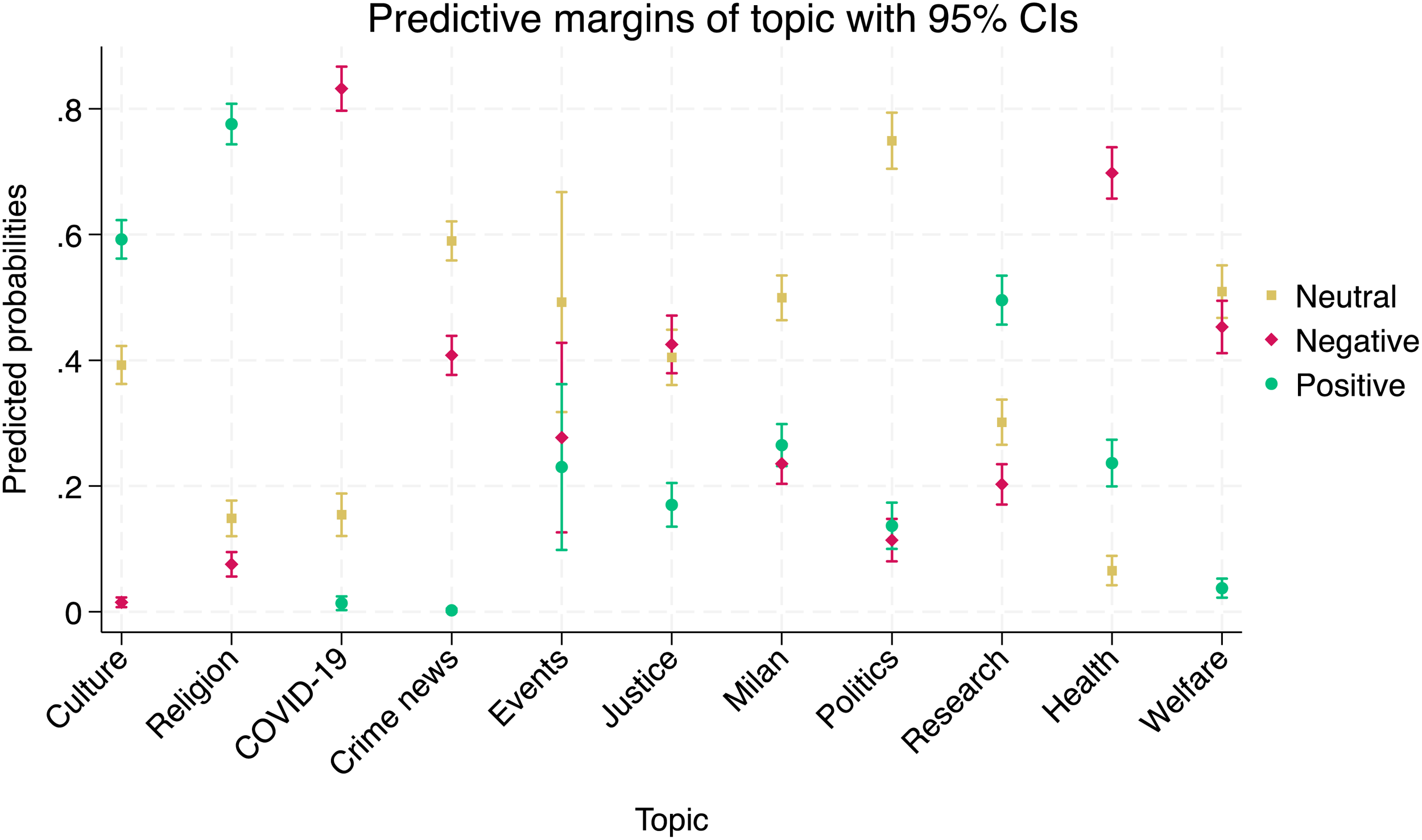
Predictive margins of the topic on sentiment.
Regarding the gender of the author, women were less likely than men to write neutral articles, but more likely to write positive articles (Table 3). In a model that did not control for topics, women were also more likely than men to write negative articles. However, this was because—as shown in Table 2—women were more likely than men to write about the COVID-19 pandemic. Therefore, when controlling for the topic of the article, this difference was not confirmed. Interestingly, the marginal effect of the author's gender on neutral articles was higher when topics were not controlled for (AME = 0.10, SE = 0.01, p < .001), but this was still confirmed in the complete model. The same was also observed for positive articles (AME = 0.07, SE = 0.01, p < .001). This suggests that, even if women were more likely to write about topics that were generally treated positively, for example, “culture” and “R&I,” the gender difference in the topics cannot fully explain the general trend of women adopting a more positive and less neutral tone when reporting about older adults.
Marginal Effects of Period and Gender on Sentiment.
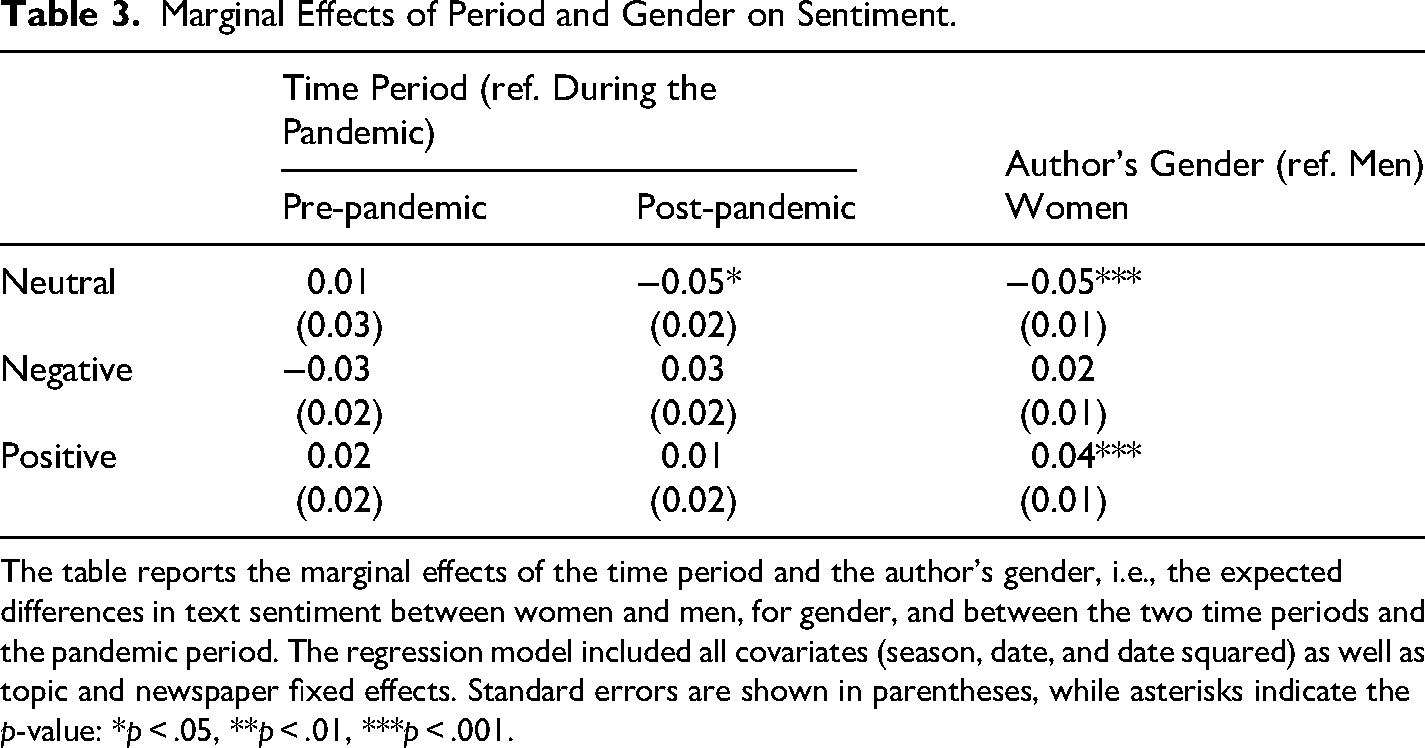
The table reports the marginal effects of the time period and the author's gender, i.e., the expected differences in text sentiment between women and men, for gender, and between the two time periods and the pandemic period. The regression model included all covariates (season, date, and date squared) as well as topic and newspaper fixed effects. Standard errors are shown in parentheses, while asterisks indicate the p-value: *p < .05, **p < .01, ***p < .001.
Difference Between the Main and Control Corpora
We investigated whether the trends identified in the regression analysis of the articles about older adults were also evident in the control group. More specifically, we first tested for differences in the sentiment of the articles. The marginal effects of the corpus on sentiment suggest that articles about older people were more likely to be positive (AME = 0.05, SE = 0.02, p = .013), neutral (AME = 0.10, SE = 0.02, p < .001) and less likely to be negative (AME = -0.16, SE = 0.02, p < .001) than articles in the control corpus.
We then tested for differences in the sentiment of the articles based on the time period (with and without controlling for the topics). The results suggested that there was no statistically significant difference in the sentiment of the articles across the three time periods for the control group, except for a higher probability of having positive articles after the pandemic than during it (AME = 0.11, SE = 0.05, p = .039). In contrast, the author's gender difference in the sentiment of articles was also confirmed in the control group. Women were more likely to write positive articles (AME = 0.04, SE = 0.01, p < .001) and less likely to write neutral articles (AME = -0.06, SE = 0.01, p < .001), even when controlling for topics.
Discussion and Conclusion
Although the visibility of positive portrayals of older people in the media has increased in the 21st century, older adults are still generally underrepresented in the media relative to their respective proportion of the population. This study analyzed the representation of older people in the main local Italian newspapers in Milan, focusing especially on the topics addressed when talking about older adults and the sentiment of the articles.
Between 2017 and 2024, the number of articles mentioning older people increased progressively, a trend that accelerated with the outbreak of the COVID-19 pandemic. While Ylanne (2015) noted this increase in the visibility of older people in the media, her study was conducted over ten years before the outbreak of the pandemic, a period during which the context has drastically changed. This is likely due to the fact that older adults were identified as one of the most vulnerable groups from the outset of the pandemic. Consequently, media coverage of the pandemic frequently focused on older people, resulting in an increase in the number of articles mentioning them. One positive finding is that even after the end of the pandemic, the number of articles remains steady, suggesting that although the pandemic contributed to increasing attention toward older adults, this visibility has not been lost since then. Further research is needed to better understand the reasons for this pattern.
The articles’ sentiments were almost balanced, with slightly more neutral articles than negative or positive ones. The word “home” frequently appeared in negative articles, typically in contexts related to the residential situation of older adults, the crimes against them, and the economic hardship faced by retired people and their children. In contrast, the word “life” frequently appeared in positive articles, mainly when discussing longevity and the benefits of an active life, alongside the word “grandparents.”
These findings are partially in line with previous research. The negative and positive attributes associated with older people in our sample were similar to those found in other international and national studies. Older people were often portrayed as frail, lonely and vulnerable (Allidi & Pezzati-Pinciroli, 1989; Chen, 2015; Family and Media, 2017; Lepianka, 2015; Makita et al., 2021). However, positive representations largely portrayed older people in the roles of grandparents or as healthy and active individuals, thus reinforcing the stereotypes of “the perfect grandparent” or “the productive golden ager” (Ylanne, 2015).
However, we did not confirm the tendency to depict older people mainly in negative terms (Chen, 2015; Family and Media, 2017; Jeong et al., 2022). In our sample, neutral tones were as frequent as negative or positive ones. Furthermore, when we compared articles about older adults with randomly selected articles from the same newspapers, we found that the former were more likely to be neutral or positive. This suggests that the negative depiction of older people in the news may be part of the general tendency in the media to pay more attention to adverse events (You & Ju, 2018).
Regarding the topics covered by the articles, the analysis revealed a variety of themes. These ranged from societal and cultural issues to politics and institutions, as well as science and innovation, to health and welfare. The reasons for mentioning older adults varied depending on the topic. In crime and justice-related articles, older adults were mainly victims and injured parties. The variety of topics contrasts with previous studies, including those conducted on Italian newspapers. For instance, Allidi and Pezzati-Pinciroli (1989)'s analysis of 12 Italian newspapers published in 1989 found that articles about older people primarily focused on health and its implications for care.
Almost 30 years later, news coverage of older adults has expanded in terms of both topics and sentiment. Articles about culture and the arts, which target older people based on their interests rather than issues related to their age, were among the most frequent in the analyzed corpus. Unfortunately, previous studies on this topic have focused on the sentiment or type of representation of older people rather than the topic about which they are mentioned. To our knowledge, Yang et al. (2025)'s study of Malaysian newspapers is the only other study to adopt a similar approach. Comparing the list of topics found in that study with ours reveals several differences. In their study, Yang et al. found that the topics covered included welfare, health, science and technology, advice, filial piety, human-interest stories, challenges, and an ageing society. On average, it seems that the Italian newspapers covered a more diverse range of topics when discussing older people.
However, it is unclear whether this difference is due to the different cultural contexts or other reasons, and further research is required to establish this. Nevertheless, we can compare the range of topics with those resulting from the control group to gain some insights. This comparison suggests that “traditional” articles partially covered different topics, and that these topics were covered with different frequencies. In the former case, articles mainly focused on social issues, crime, sports news, and events. In contrast, when older adults were mentioned, the main topics were crime news, culture and religion. This suggests that the focus when older people are mentioned differs from when the general population is mentioned.
On the one hand, if the victim of a crime was an older person, this was often specified. This is consistent with findings from other studies on older people, which frequently depict them as frail and victims (Family and Media, 2017; Fealy et al., 2012). On the other hand, older people were also frequently mentioned in discussions about culture. Newspapers’ choice to focus on older people may be due to their greater availability of time, particularly among retirees, which can facilitate greater engagement with cultural activities. Indeed, Italian data on cultural participation (Istat, 2025, Chapter 10) show that, although individuals aged 65+ participate less frequently in certain activities such as cinema, theatre, and museum visits, than other age groups, they nonetheless rank among the most regular visitors of museums, exhibitions, archaeological sites, monuments, classical music performances, and dance halls. Furthermore, this age group shows among the highest levels of newspaper and book reading, as well as substantial consumption of television and radio content.
We also found that the tone of the articles varied according to both the topic and the author's gender. Women were generally more likely than men to adopt positive or neutral tones. This difference partly reflected the direct connection between certain topics and specific tones. However, even after controlling for all covariates, women still used more positive language on average. This pattern was not unique to the corpus of older adults but was also evident in the control group. This is in line with findings from other studies analyzing gender differences in journalism, which show that women and men tend to cover different topics (Santia et al., 2025) and adopt different tones when reporting news. For instance, women tend to use positive rather than negative framing (Rodgers & Thorson, 2003).
Furthermore, the results suggest that the outbreak of the pandemic influenced the representation of older people in these newspapers. On the one hand, as previously mentioned, the pandemic seems to have had a positive impact on the underrepresentation of older people in the media by increasing their presence in the newspapers. On the other hand, the renewed interest in older adults was primarily driven by the news about the virus, which was predominantly negative for this age group. Consequently, discussions about the health-related issues of the virus for older adults led to an increase in the prevalence of negative articles during the pandemic. This is in line with what was found in other studies for Spanish newspapers (Morgan et al., 2021; Sánchez-Izquierdo et al., 2023). An analysis of 1,432 Spanish headlines revealed that the pandemic decreased the frequency of headlines representing older people as subjects of an action associated with positive affect and increased the salience of their health issues (Sánchez-Izquierdo et al., 2023). Unfortunately, in our sample, the prevalence of negative articles remained at similar levels to those of neutral articles even after the end of the pandemic, while no change was observed in the prevalence of positive articles.
Conversely, the control group of articles showed no change in the prevalence of these sentiments associated with the pandemic. Indeed, unlike the main corpus, the COVID-19 pandemic was not identified as a standalone topic in the control group. This suggests that the narratives about the pandemic were treated differently. Articles about older people focused on the specific implications of the pandemic for this group, while articles that did not mention older people primarily focused on the political aspects of the pandemic. This aligns with findings from other studies on the impact of the pandemic on the media coverage of older adults (Jeong et al., 2022; Morgan et al., 2021; Yang et al., 2024). As observed by Yang et al. (2024), while all age groups were vulnerable to the disease and its impact affected everyone's lives, the media discourse emphasized the negative impact on older people through a compassionate ageist frame whenever they were mentioned.
This study has some limitations that should be acknowledged. First, the analysis is primarily based on Italian newspaper editions, which may restrict the generalizability of the findings to other media systems and cultural contexts. A cross-national or cross-cultural comparative design would therefore be valuable in determining whether the observed patterns are specific to Italy or reflect broader dynamics in the media's representation of older adults. Furthermore, the newspapers were local editions, which further limit the generalizability of the findings within the Italian media context as well. Second, although the use of supervised machine learning improves scalability and consistency, the training phase inevitably involves a degree of subjectivity in manual labeling, which may introduce some level of arbitrariness into the classification of sentiment.
Despite these limitations, the study has also several notable strengths. It provides recent, systematic evidence on the Italian media context, using a substantially larger corpus than that typically employed in previous studies on newspaper representations of ageing. Furthermore, the comparative design, which includes a control corpus, is novel and a key contribution as it allows us to assess whether the observed patterns are specific to the representation of older adults or whether they also apply to the representation of other population groups. Finally, the longitudinal dimension of the analysis enables changes over time to be examined, capturing both temporal trends in media attention and the impact of an exogenous shock, such as the impact of the COVID-19 pandemic, on the representation of older adults.
In conclusion, Italian newspapers have paid more attention to older people in recent years. Nevertheless, stereotypical representations—both positive and negative—still prevail. Older people are often portrayed as frail and vulnerable, particularly in relation to crime and health issues. When portrayed positively, this is typically in relation to their active lifestyles or their role as grandparents. However, even these favorable portrayals rely on stereotypes, which can have harmful consequences for older adults’ self-perception and for broader societal attitudes toward ageing. The pandemic further intensified the focus on this age group, largely through a lens of vulnerability, thereby reinforcing a narrative that tends to portray older people negatively. Overall, our findings suggest that, although older people are now more visible in the media, stereotypical portrayals limit progress toward more nuanced and realistic depictions. For the media to contribute to reducing ageism against older people rather than perpetuating it, there must be a shift toward more diverse and complex representations of ageing.
Empirical evidence on the media portrayal of older people remains limited and fragmented. Future research could further investigate differences in both the frequency and nature of representations of older people compared to other population groups. In addition, more large-scale, quantitative, and cross-sectional studies are needed to assess the extent to which media representations vary across cultural contexts, as well as the degree to which they align with public perceptions and older adults’ own self-perceptions of ageing.
Supplemental Material
sj-docx-1-ahd-10.1177_00914150261456758 - Supplemental material for Through the Lens of the Press: A Content Text Analysis on How Older Adults are Portrayed in Italian Newspapers (2017–2024)
Supplemental material, sj-docx-1-ahd-10.1177_00914150261456758 for Through the Lens of the Press: A Content Text Analysis on How Older Adults are Portrayed in Italian Newspapers (2017–2024) by Elena De Gioannis, Maria Ascolese and Flaminio Squazzoni in The International Journal of Aging and Human Development
Footnotes
Acknowledgments
This work received partial support from Fondazione Ravasi Garzanti, which included access licences for newspaper data. The authors would like to thank Felice Scalvini and Elisabetta Donati for their encouragement.

Funding
The authors received no financial support for the research, authorship, and/or publication of this article.
Declaration of Conflicting Interests
The authors declared no potential conflicts of interest with respect to the research, authorship, and/or publication of this article.
Supplemental material
Supplemental material for this article is available online.
References
Supplementary Material
Please find the following supplemental material available below.
For Open Access articles published under a Creative Commons License, all supplemental material carries the same license as the article it is associated with.
For non-Open Access articles published, all supplemental material carries a non-exclusive license, and permission requests for re-use of supplemental material or any part of supplemental material shall be sent directly to the copyright owner as specified in the copyright notice associated with the article.
