







Abstract
Grandparenting is a form of social participation that can be beneficial to healthy ageing. However, the barriers and facilitating factors to grandparenting are under-investigated. This systematic review aimed to collate identified barriers and facilitating factors to grandparenting in older adults by conducting systematic searches of PsycINFO, Medline and CINAHL. Forty-nine studies that assessed at least one grandparental involvement variable in adults aged 60 years with at least one grandchild were included. Our findings highlighted the interrelated relationship between four main themes of barriers and facilitating factors to grandparenting: Demographic factors, Individual factors, Social factors and Intergenerational factors. Positive intergenerational relationships facilitated grandparental involvement while conflicts around technology and demographic disparities acted as barriers. The identified barriers and facilitators suggested a potential need for interventions to strengthen intergenerational relationships and improve grandparents’ access to social services, as well as for theoretical frameworks that integrate structural constraints with relational and developmental processes.
Grandparents play a vital role in familial, societal, economical, and cultural contexts (Baxter, 2022; Hank & Buber, 2008). Globally, one billion people are estimated to be grandparents (Moore & Rosenthal, 2016), with approximately 40% of Australian (Baxter, 2022), 50% of American (Hank & Buber, 2008), 50% of European (Bordone et al., 2020) and more than 50% of Chinese grandparents (Bordone et al., 2020; Hank & Buber, 2008) providing some form of childcare. These figures are expected to rise with increasing economic costs and life expectancy (Moore & Rosenthal, 2016). Grandparenting, a form of social participation for older adults, commonly involves providing unpaid childcare to support the upbringing of grandchildren in dual-income and single-parent households (Hank & Buber, 2008). Globally, unpaid childcare provided by grandparents eases pressure on governments by supporting parental workforce participation (Yu et al., 2023) and reducing reliance on formal childcare services, particularly where these services are limited or costly (Biegel et al., 2021; Hamilton et al., 2025), thereby contributing to indirect public cost savings annually (Australian Bureau of Statistics, 2017; Chari et al., 2015). Yet despite the vital role that grandparents hold in society, the factors that facilitate or hinder grandparental involvement remain poorly understood.
Findings on the impact of grandparenting on older adults themselves are mixed. While grandparenting may foster social connections that promote better health, wellbeing (Mikkelsen et al., 2019), longevity (Steptoe et al., 2013), and quality of life (Huang et al., 2019), grandparenting has also been associated with poorer health and wellbeing (Danielsbacka et al., 2022), increased cognitive decline (Wang et al., 2022), financial burden and intergenerational conflict (Goh & Kuczynski, 2010). A widely studied factor influencing grandparenting outcomes in older adults is the nature and extent of their involvement. Grandparent roles are highly heterogenous, ranging from part-time caregiving to intensive involvement such as those in multigenerational households or custodial arrangements. According to Coall and Hertwig (2011) U-shaped hypothesis, moderate levels of grandparental involvement are associated with the most beneficial outcomes for grandparents, while both low or high levels are associated with poorer health (Danielsbacka et al., 2022; Leimer & van Ewijk, 2022), reduced wellbeing (Kelley et al., 2020) and social isolation (Di Gessa et al., 2016). At the same time, levels of grandparental involvement are known to vary systematically according to factors such as culture, gender, age and socioeconomic status (Hayslip et al., 2019; Shorey & Ng, 2022).
Empirical research on the barriers and facilitators of grandparenting remain limited and yields mixed findings. Whilst Uhlenberg and Hammill (1998) identified barriers to frequency of contact between grandparent-grandchildren such as geographical distance, poor grandparent-adult child relationships, number of grandchildren, being a grandfather, paternal lineage and being divorced, Hilton and Macari (1998) found no significant gender differences in grandparental involvement and that custody status outweighed lineage effects. Conversely, Reitzes and Mutran (2004) found poor health facilitated grandparental involvement in grandmothers but not grandfathers, highlighting both significant gender differences and an interaction between demographic factors. These inconsistencies across the literature may stem from variations in methodological approaches such as reliance on census-based data which oversimplifies complex relationships and overlooks mediating or moderating factors (Hayslip et al., 2019), or longitudinal studies which can be limited by attrition and survivor bias (Jacobsen et al., 2021). Additionally, reviews of barriers and facilitators are often based on survey data from gerontological organisations (Baxter, 2022; Ee et al., 2020), with limited information on sampling frames, response rates, or analytic assumptions at the level expected in empirical research (Heyn et al., 2019).
Beyond methodological considerations, variations in findings may also reflect a lack of conceptual and theoretical consensus in how grandparenting is defined and understood. A major challenge in the literature is that existing theoretical frameworks each capture different levels and dimensions of grandparenting and assumptions about change over time, making it difficult to develop a comprehensive understanding. Some frameworks prioritise structural influences on grandparenting outcomes. For instance, Shorey and Ng (2022) used the Social-Ecological Model (Stokols, 1992) to map multilevel factors shaping grandparental caregivers’ physical health and emotional wellbeing, from intrapersonal attitudes and motivations to policy-level issues (e.g., availability of social services), but without accounting for how relationships change over time. Other frameworks foreground developmental processes and bidirectional change. For example, Hayslip et al. (2019) identified Lerner (2018) developmental contextual theory as central to grandparenting research, emphasising the bidirectional relationship between grandparent characteristics – age, health, motivation, and life stage – and context, including the grandchild's developmental needs, the grandparent–parent relationship, and broader social and cultural factors, all of which shift across time. Others focus on the role itself: Silverstein and Marenco adapted the Intergenerational Solidarity Theory (Bengtson & Roberts, 1991) and found that grandparenting is primarily shaped by the grandparent's own sociodemographic characteristics and life stage, with these serving as the primary predictors of role enactment rather than as dynamic, bidirectional exchanges between grandparent, grandchild, and their wider contexts (Bengtson & Roberts, 1991). Where the developmental contextual theory is primarily concerned with how and why grandparenting relationships shape development over time, Intergenerational Solidarity Theory describes what grandparenting looks like and who is most involved – offering a description of the role rather than an explanation of its mechanisms. While public health models such as the Social-Ecological Model are useful for understanding the broader contextual and personal factors shaping grandparenting (Danielsbacka et al., 2022; Hayslip & Kaminski, 2005; Hughes et al., 2007; Shorey & Ng, 2022), they are limited in capturing the relational complexity of caregiving roles across different familial and cultural context. The Developmental Contextual Theory (Lerner, 2018) addresses this in part by emphasising the mediating effect of grandparent-adult child relationship on grandparenting. The Intergenerational Solidarity Theory (Bengtson & Roberts, 1991) complements this further by attending to the multidimensional nature of intergenerational relationships themselves, encompassing affectual (emotional closeness and quality of relationship), associational (frequency of contact), consensual (shared values), functional (mutual support), normative (role expectations) and structural (opportunities for contact) dimensions. The interdisciplinary and global nature of grandparenting requires theoretical frameworks that can account for how structural, societal, interpersonal, intergenerational, and attitudinal factors interact to shape grandparenting (Hayslip et al., 2019). While theoretical variety allows for nuanced analysis, the lack of a consistent framework limits the generalisability of findings and reduces their applicability for policymakers, service providers and clinicians who require actionable and evidence-based guidelines applicable across diverse grandparenting populations.
Compounding the theoretical framework issue, the literature lacks consensus on how ‘grandparental involvement’ and ‘grandparenting’ are defined, making it difficult to compare findings across studies. Grandparenting has been commonly operationalised through behavioural constructs, referring to the observable roles and activities grandparents undertake with or for their grandchildren. These behaviours are measured by frequency, type, and amount of caregiving, including instrumental caregiving – such as financial assistance (Huo et al., 2018; Silverstein & Zhang, 2020), practical support (e.g., transportation, assisting with everyday tasks), and educational assistance (e.g., help grandchildren with homework) (Di Gessa et al., 2022; Hayslip et al., 2019; Hughes et al., 2007; Huo et al., 2018) and emotional support such as mentoring and providing advice (Hayslip & Kaminski, 2005; Hughes et al., 2007). Quantitative studies tend to prioritise instrumental indicators (Huo et al., 2018; Uhlenberg & Hammill, 1998), while many qualitative and mixed-method studies focus primarily on emotional indicators of grandparenting, such as amount of emotional support and guidance (Kornhaber & Woodward, 1984) and time spent doing shared leisure activities (Hayslip & Kaminski, 2005), with few examining both dimensions simultaneously. This risks underestimating meaningful forms of involvement, particularly in geographically distant families where emotional care is central. Taken together, these conceptual and methodological inconsistencies highlight the need for a review that conceptualises grandparental involvement as a behavioural construct encompassing both practical and emotional care.
Thus, the primary aim of this systematic review was to synthesise all known barriers and facilitators of grandparenting. Understanding the underlying mechanisms of grandparenting can inform targeted social care interventions and drive more effective health, research, and economic policies to support ageing populations. The review was guided by the Social-Ecological Model, which provided a multilevel and contextual framework to grandparenting, and the Intergenerational Solidarity Theory, which then offered a more detailed understanding of intergenerational relationships. Identifying barriers and facilitators to grandparental involvement also has direct relevance for clinical practice, given that grandparents are increasingly recognised as a key population in family-based interventions (Kirby & Sanders, 2014).
Method
Search Strategy
This review was guided by a registered protocol (PROSPERO: https://www.crd.york.ac.uk/PROSPERO/view/CRD42024525596), in adherence with the Preferred Reporting Items for Systematic Reviews and Meta-Analyses (PRISMA) Statement (Page et al., 2021). A systematic literature search of three electronic databases (PsycINFO, MEDLINE and CINAHL) was conducted to search for articles published until January 24, 2025. All articles available in these databases were searched using the following search criteria: ‘Grandparenting’ and its equivalents (all combinations of Grandparent, Grandmother, Grandfather, Grandma or Grandpa), variations of ‘Older Adults’ (Geriatric, Aging, Elderly, Older People), any combination of ‘Barriers’ (Obstacle, Difficult*, Challenge), in addition to variations of ‘Facilitators’ (Drive*, Motivat*, Mediat*, Enabl*), ‘Intergenerational Relations’ and ‘Grandchildren’. All combinations of Booleans, truncations, and keywords were optimised for each database (see Appendix A).
Study Selection and Eligibility
Studies were included if they (a) included a distinct sample of grandparents over 60-years old with at least one grandchild, (b) measured at least one grandparental involvement variable (e.g., frequency of contact, financial support, emotional support, doing shared activities, etc.) and (c) were published in English in peer-reviewed journals. Studies exploring multiple family members – including grandchildren and adult children – were included where findings were reported separately for a distinct grandparent sample, ensuring that conclusions could be attributed specifically to grandparents rather than to the broader family unit. Studies were excluded if they (a) focused solely on grandparent–grandchild dyads, grandchildren, adult children, or other family caregivers without a distinct grandparent sample; (b) exclusively concerned with becoming a grandparent; (c) were a systematic, scoping or book review and (d) did not include grandparenting in the study aim.
All articles from the database searches were uploaded into Covidence Systematic Review Management Software, where duplicates were removed, and articles were screened based on inclusion/exclusion criteria by title and abstract, followed by a full text review to ensure they met the eligibility criteria. Finalised studies were then assessed for quality and risk of bias. The inclusion process and quality assessment were conducted by two reviewers (TC and GMH) independently and all discrepancies were resolved through discussion.
Data Extraction and Quality Assessment
Data extracted from eligible studies included country, participant demographics (age range), outcome measured (including how the outcome was measured), key barrier/s or facilitator/s and study findings. The quality of studies was assessed using the Critical Appraisal Skills Program (CASP) checklist criteria, based on the Qualitative Study Checklist for qualitative and observational studies and Cohort Studies Checklist for quantitative studies (Chenail, 2014; Spittlehouse et al., 2000). The quantitative criteria included: (a) explored a focused issue/theme, (b) used an appropriate sample, (c) unlikely to contain measurement bias, (d) considered potential confounds, and (e) appropriately interpreted results. The qualitative criteria included: (a) addressed a clear aim, (b) used an appropriate sample, (c) utilised an appropriate methodology, (d) considered potential confounds, and (e) appropriately analysed and interpreted results. Articles were rated as (1) meeting criterion (‘Yes’), (2) unclear whether criterion was met (‘Unclear’), or (3) did not meet criterion (‘No’). For studies with insufficient information to determine whether criteria were met, study authors were contacted for clarification.
Risk of bias for randomised controlled trials was assessed using Cochrane's Risk of Bias tool (Sterne et al., 2019). Articles were rated as low, some or high risk of bias based on sample/sequence randomisation, baseline differences, blinding, appropriate use of measures, and missing data. For non-randomised control trials, Risk of Bias in non-randomised Studies of Interventions (Sterne et al., 2016) was used to rate low, moderate, serious or critical risk of bias based on confounds, participant selection, intervention classification, deviations from intervention, missing data, outcome measurements and selection of reported results. All studies were included in the synthesis regardless of their quality ratings as selective exclusion of studies may introduce bias and inconsistencies (McDonagh et al., 2013).
Results
The search provided 3321 articles, with 449 removed as duplicates. An additional paper was selected following search on Google Scholar, leading to 3322 articles overall. In total, 50 articles met eligibility criteria. The PRISMA guided search and selection process is detailed in Figure 1. Two articles (Shaibu, 2013, 2016) used the same sample of grandmothers in Botswana; therefore, data were extracted only once. Where unique outcomes were reported in each article, only non-overlapping data were included. Therefore, 49 articles were included in the final synthesis. Full extraction details and quality ratings for each article are summarised in Table 1.
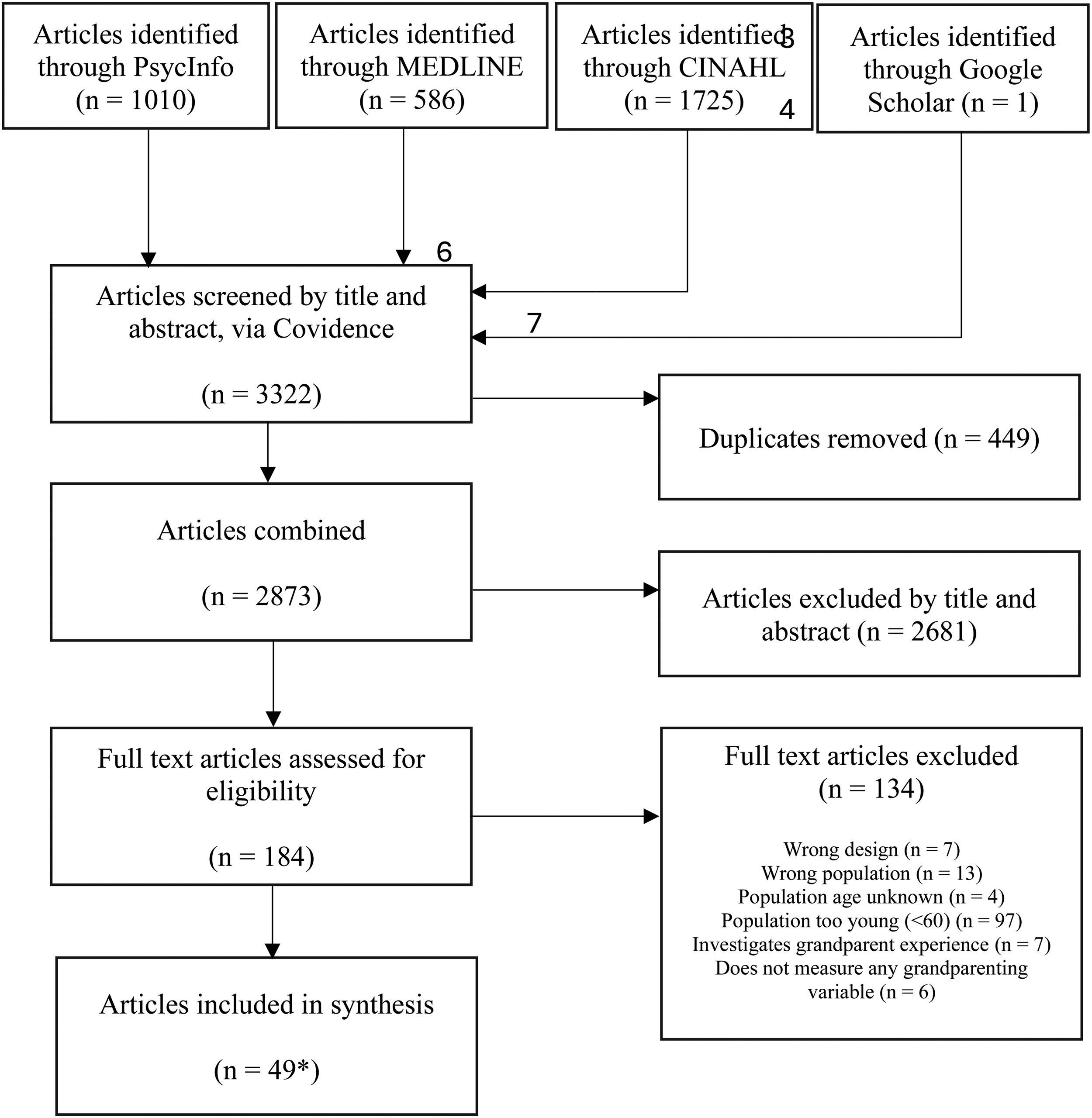
PRISMA Flow Chart.
Articles Used in the Review.
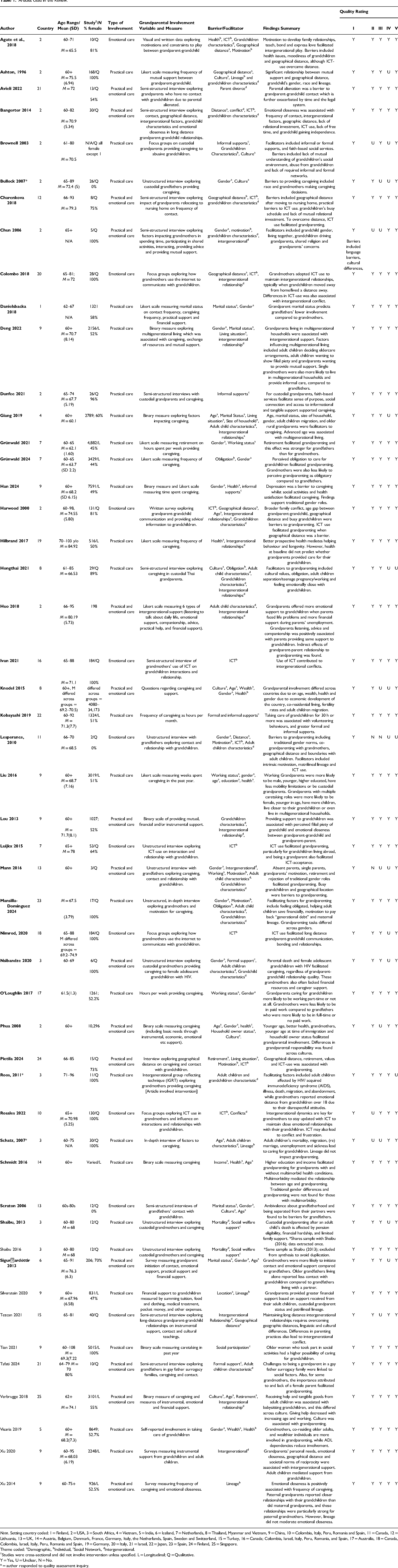
Note. Setting country coded: 1 = Finland, 2 = USA, 3 = South Africa, 4 = Vietnam, 5 = India, 6 = Iceland, 7 = Netherlands, 8 = Thailand, Myanmar and Vietnam, 9 = China, 10 = Colombia, Italy, Peru, Romania and Spain, 11 = Canada, 12 = Lithuania, 13 = UK, 14 = Austria, Belgium, Denmark, France, Germany, Italy, the Netherlands, Spain, Sweden and Switzerland, 15 = Turkey, 16 = Canada; Colombia, Israel, Italy, Peru, Romania, and Spain, 17 = Australia, 18 = Canada, Colombia, Israel, Italy, Peru, Romania and Spain, 19 = Germany, 20 = Italy, 21 = Israel, 22 = Japan, 23 = Spain, 24 = Finland, 25 = Singapore.
Theme coded: aDemographic, bIndividual, cSocial Network, dIntergenerational.
Studies were cross-sectional and did not involve intervention unless specified. L = Longitudinal; Q = Qualitative.
Y = Yes, U = Unclear, N = No.
* = author responded to quality assessment inquiry.
Study Characteristics
Included studies were conducted across Oceania (e.g., Australia), South Africa (e.g., Botswana, South Africa, Eswatini), East Asia (e.g., China, Hong Kong, Japan, Singapore, Thailand), South Asia (e.g., India), Middle East (e.g., Turkey, Israel), Europe (e.g., Finland, Germany, Iceland, Italy, Lithuania, Netherlands, UK) and North America (e.g., USA, Canada). One study was conducted across a range of European countries, one study was conducted across a range of South-East Asian countries (Myanmar, Thailand and Vietnam) and three studies were conducted across a range of European and South American countries. Methodologies varied among studies: 25 studies collected qualitative data, 23 studies involved quantitative data, using cross-sectional and longitudinal designs, and one study involved a combination of both quantitative and qualitative data. Measures of grandparenting outcomes differed across the studies: 13 studies involved analysis of longitudinal data whilst 36 articles were cross-sectional studies.
All studies used varied recruitment methods; two studies used participants from census-based data, 15 used stratified multistage sampling, five used stratified random sampling, three studies used convenience sampling, three used snowball sampling, eight studies used purposive sampling, two studies recruited participants online, nine studies recruited participants through the community (e.g., universities, senior centres, clinics), one study combined snowball, convenience, and purposive sampling, and another used online convenience and snowball sampling. Of the 49 included studies, 24 examined practical care, 10 emotional care, and 15 both.
Quality Assessment
Quality of studies differed, with 61% (n = 30) rated adequately on all CASP-defined quality categories. All studies addressed a clear aim, and most studies used appropriate samples and clearly outlined the recruitment process. Potential measurement bias was mixed due to unclear methodology. Potential researcher bias was identified due to subjectivity of unstructured interviews in some qualitative studies, or analysis of group variance with clearly varied sample sizes. Acknowledgement of potential confounds were also mixed due to absent or poorly considered limitations. However, most studies identified limitations with cross-sectional studies and small sample sizes, and appropriately controlled demographic factors when not part of the study aim. Most studies also appropriately analysed and interpreted the results. All authors with unclear samples, methods and conclusions were contacted for further information, with three authors responding to inform the quality assessment. No studies included in the systematic review involved randomised control trials. Finally, approximately 69% of studies (n = 34) were published within the last decade (2015–2025).
Barriers and Facilitators
All barriers and facilitators were collated into appropriate subthemes and grouped under one theme. Identified barriers and facilitators to grandparenting aligned within four overarching themes: Demographic, Individual, Social and Intergenerational Factors. Overarching themes were then collapsed into subthemes.
Demographic Factors
Grandparental demographic factors were well controlled across studies and also identified as barriers or facilitators to grandparenting.
Gender. 12 studies identified grandmothers as more likely to be involved with their grandchildren compared to grandfathers (Danielsbacka & Tanskanen, 2018; Knodel & Nguyen, 2015; Nsibandze et al., 2020; O'Loughlin et al., 2017; Phua & Kaufman, 2008; Visaria & Dommaraju, 2019). Grandmothers frequently initiated contact and offered emotional support (Chun & Lee, 2006; Scraton & Holland, 2006; Sigurđardóttir & Júlíusdóttir, 2013) which was associated with greater self-reported emotional closeness between grandmother-grandchild (Xu et al., 2014). This gender difference was more pronounced in Thai grandparents compared to Myanmar and Vietnamese grandparents (Knodel & Nguyen, 2015). Households with a woman over 60 years old were also more likely to care for fostered or orphaned grandchildren compared to households without a woman over 60 (Schatz, 2007). However, gender differences in caregiving were not significant for grandparents with multimorbid health conditions (Schmidt et al., 2016). Single grandmothers were also more likely to reside in multigenerational households and provide informal caregiving and mutual support compared to grandfathers (Deng et al., 2022). Conversely, grandfathers who were motivated to reject traditional gender norms facilitated grandparenting (Mann et al., 2016).
Differences in type of involvement were also observed. Grandfathers were more likely to be employed (Liu & Lou, 2016) or participate in leisure, play, transportation and entertainment-based activities with their grandchildren (Mansilla-Dominguez et al., 2024). Conversely, grandmothers were more likely to hold multiple caregiving roles such as providing informal help and assume primary responsibility of care for grandchildren (Mansilla-Dominguez et al., 2024) and parents/parents-in-law (Liu & Lou, 2016).
Four studies identified barriers to grandfather involvement. In the USA, Black, Latino and White grandfathers reported grandmothers made caregiving decisions independently (Bullock & Thomas, 2007). Similarly, Sikh, Black and White grandfathers in the UK reported involvement with their grandchildren was ‘often dominated by partners and wives’, leading them to feel ‘ambivalent’ about their role which they considered an ‘obligation’ (Scraton & Holland, 2006). Despite their motivation to build meaningful relationships with their grandchildren, traditional social norms for men to be emotionally distant and social stigma around ‘older men-younger female’ relationships were barriers to grandparental involvement in studies conducted in Canada and the UK (Lesperance, 2010; Scraton & Holland, 2006).
Marital Status. Grandfathers who were married/living with a partner were more likely to provide grandparenting compared to single/un-partnered grandfathers (Danielsbacka & Tanskanen, 2018; Scraton & Holland, 2006; Sigurđardóttir & Júlíusdóttir, 2013). For grandfathers in a Finnish study, married grandfathers invested the most practical and financial help, followed by divorced grandfathers, re-married grandfathers and lastly widowed grandfathers (Danielsbacka & Tanskanen, 2018).
Conversely, findings for grandmothers were mixed, with two studies identifying no significant relationship (Scraton & Holland, 2006; Sigurđardóttir & Júlíusdóttir, 2013). Giang et al. (2019) also found no significant relationship between marital status and grandparental involvement in Vietnamese grandparents, except for widowed grandmothers who were more likely to be involved in caregiving compared to grandfathers. On the other hand, for Finnish grandmothers, remarriage was associated with reduced caretaking, whilst divorce was associated with reduced financial support to grandchildren compared to married grandmothers (Danielsbacka & Tanskanen, 2018).
Ethnicity, Culture and Religion. In a study of Asian American grandparents living in a multigenerational household, Phua and Kaufman (2008) found Asian Indian grandparents were the least likely to be responsible for their grandchildren compared to Filipino, Chinese, Japanese, Korean and Vietnamese grandparents. Filipino grandparents were also less likely to possess caregiving responsibilities than Chinese, Korean and Vietnamese grandparents. Additionally, grandparents who immigrated to the USA at age 65 or older were less likely to care for their grandchildren compared to USA-born grandparents. For grandparents living in Singapore, Verbrugge and Ang (2018) found Chinese grandparents were more likely to babysit their grandchildren compared to Malaysian and Indian/Other grandparents. In a study of custodial grandparents in the USA, Bullock and Thomas (2007) found Black and Latino custodial grandfathers felt more powerless and experienced more emotional abuse (e.g., disrespect from grandchildren under age 18) compared to White grandfathers, who were more concerned about conflicts with their adult children over grandchild custodial arrangements. Black and Latino grandfathers also reported a cultural responsibility to prioritise family over self-care, which was less commonly expressed by White grandfathers.
Language barriers and difference in cultural values between grandparents and grandchildren were also identified as barriers to grandparental involvement among Lithuanian grandparents (Charenkova & Gevorgianiene, 2018), Korean grandmothers (Chun & Lee, 2006) and across Canadian, Colombian, Israeli, Italian, Peruvian, Romanian and Spanish grandparents (Ivan & Nimrod, 2021). Conversely, among Thai grandparents, cultural values such as filial responsibility and piety, as well as Buddhist beliefs of parental duty and altruism were identified as facilitators to involvement (Hongthai & Jongudomkarn, 2021).
Age. Five studies found younger grandparents (60–79 years old) were more involved with their grandchildren, with the likelihood of involvement declining with older age (Giang et al., 2019; Knodel & Nguyen, 2015; Phua & Kaufman, 2008; Schmidt et al., 2016; Verbrugge & Ang, 2018). Similarly, Liu and Lou (2016) found younger grandparents often balanced multiple roles including work, informal help, and caregiving for their grandchildren and parents/parents-in-law compared to older grandparents, who were more likely to take on the role of caregiving to their spouse with a disability. However, this effect was less pronounced for older grandparents with multimorbid health conditions compared to older grandparents without multimorbidity (Schmidt et al., 2016). Greater age gaps between grandparent and grandchild was also linked to a reduced sense of intimacy within the grandparent-grandchild relationship (Harwood & Lin, 2000). In particular, grandparents reported difficulties in understanding the contemporary social environment of their grandchildren (Brownell et al., 2003).
Working Status. Employment and retirement status were associated with grandparental involvement across seven studies. Grandparents who were retired (Pietila & Ojala, 2024; Verbrugge & Ang, 2018), working a post-retirement job or working part-time were more likely to be caring for their grandchildren (O'Loughlin et al., 2017) and this effect was stronger for grandfathers than grandmothers (Grünwald et al., 2021; Mann et al., 2016). Additionally, working grandparents were more likely to be grandfathers, be highly educated and have less mobility issues in both Chinese populations (Liu & Lou, 2016) and Australian populations (O'Loughlin et al., 2017).
Education. Higher education was identified as a facilitator to grandparental involvement in studies across 10 European countries (Schmidt et al., 2016) and China (Xu et al., 2014).
Geographical Distance. Nine studies identified increased geographical distance between grandparent-grandchild as a barrier to grandparenting (Agate et al., 2018; Charenkova & Gevorgianiene, 2018; Lesperance, 2010; Mann et al., 2016; Pietila & Ojala, 2024), impacting mutual intergenerational support (Ashton, 1996; Xu & Chi, 2020), hindering perceived emotional closeness (Bangerter & Waldron, 2014; Harwood & Lin, 2000), and communication (Harwood & Lin, 2000). Similarly, grandparents living closer to their adult children (Liu & Lou, 2016) were more likely to provide informal help and care to their grandchildren. However, one study of Finnish rural grandparents reported that increased geographic distance did not necessarily equate to emotional distance (Pietila & Ojala, 2024).
Living Arrangements. Living in a multigenerational household was a facilitator to involvement in three studies. Grandparents living in multigenerational households, particularly those without a partner, were more likely to be involved in grandparenting compared to grandparents not living with their adult children (Visaria & Dommaraju, 2019). Similarly, grandparents living with their grandchildren were more likely to provide informal help, care, interact and provide advice to their grandchildren (Chun & Lee, 2006). Multiple factors contributed to grandparents residing in multigenerational households including gender, marital status, grandparents wanting to provide mutual support, adult children wanting to demonstrate filial piety towards grandparents, and adult children actively deciding their eldercare arrangements (Deng et al., 2022). However, one study found no significant effect between living in a multigenerational household and mutual support between grandmothers and their adult grandchildren (Ashton, 1996).
Grandparents living in a bigger house were also more likely to care for their grandchildren compared to grandparents with smaller houses (Giang et al., 2019). Similarly, immigrant household owners in the USA were significantly more likely to care for grandchildren than non-household owners, with a stronger effect in Korean grandparents compared to Japanese and Chinese grandparents (Phua & Kaufman, 2008).
Urban vs Rural Residence. East Asian grandparents in rural areas spent more time caring for grandchildren than their urban counterparts (Giang et al., 2019; Knodel & Nguyen, 2015). This trend was particularly evident amongst grandmothers aged 60–69, who were more likely to be living in a multigenerational household (Giang et al., 2019).
Wealth. Higher income of grandparents were associated with greater financial support (Silverstein & Zhang, 2020) and higher engagement in caregiving (Visaria & Dommaraju, 2019), but only in grandparents without multimorbid conditions (Schmidt et al., 2016). In a longitudinal Chinese study, custodial grandparents were found to spend more money on their grandchildren compared to other types of grandparents (Silverstein & Zhang, 2020). Similarly, in an American study, Black and Latino grandfathers reported more difficulty meeting basic family needs due to economic vulnerability, compared to White grandfathers (Bullock & Thomas, 2007).
On the other hand, two different studies conducted in Vietnam and the USA, found no significant relationship between financial status and grandparental involvement (Giang et al., 2019; Phua & Kaufman, 2008). Knodel and Nguyen (2015) found the relationship between wealth and grandchild care to be inconsistent across countries; higher wealth was associated with higher caretaking in Myanmar but lower caretaking in Thailand, whilst lower wealth was associated with higher caretaking in Vietnam.
Individual Factors
Individual characteristics of grandparents were also found to be associated with grandparenting.
Motivation. Intrinsic motivation, personal values, and desire to maintain family bonds were key drivers of grandparental involvement. Grandfathers were intrinsically motivated by a desire to be seen as ‘reliable’, ‘dependable’, ‘noble’, and ‘heroic’ (Mann et al., 2016), remembered ‘affectionately’, and to guide their grandchildren's future choices (Lesperance, 2010). Motivation to develop emotional closeness (Tezcan, 2021), educate their grandchildren, ‘pay back’ generational debt (Mansilla-Dominguez et al., 2024), ensure grandchildren were healthy and safe (Chun & Lee, 2006), in addition to realising their own mortality (Agate et al., 2018) facilitated grandparenting. Turkish grandparents were also motivated to maintain contact with their grandchildren to encourage them to return to Turkey, and/or to monitor events and conflicts with their adult children (Tezcan, 2021).
Conversely, for Finnish rural grandparents, values associated with retirement such as autonomy, freedom and leisure, conflicted with grandparenting, especially when geographical distance between grandparent and grandchild was moderate (Pietila & Ojala, 2024).
Obligation. Perceived obligated to care for grandchildren facilitated grandparenting in three studies of Thai grandparents (Hongthai & Jongudomkarn, 2021), Dutch grandmothers (Grünwald et al., 2024) and Spanish grandmothers (Mansilla-Dominguez et al., 2024). Dutch grandmothers were also less likely to perceive grandparenting as obligatory compared to grandfathers (Grünwald et al., 2024).
Health and Wellbeing. Six studies identified grandparents in good health and without disabilities were more likely to care for their grandchildren (Giang et al., 2019; Knodel & Nguyen, 2015; Phua & Kaufman, 2008; Schmidt et al., 2016). Good health was also associated with increased financial support towards grandchildren (Silverstein & Zhang, 2020).
Conversely, Visaria and Dommaraju (Visaria & Dommaraju, 2019) identified that whilst poor health did not impact grandparenting involvement, activities of daily living dependencies significantly reduced involvement. Similarly, Hilbrand, Coall (Hilbrand et al., 2017) identified health at baseline did not predict grandparenting, however, did moderate the effect of grandparenting on longevity. Depression was also negatively associated with intergenerational care (Han et al., 2024).
Information Communication Technology (ICT). ICT use facilitated grandparenting in nine studies, especially when involvement was impacted by geographical distance (Agate et al., 2018; Charenkova & Gevorgianiene, 2018; Colombo et al., 2018; Lesperance, 2010; Luijkx et al., 2015; Nimrod, 2020; Pietila & Ojala, 2024; Rosales & Blanche-T, 2022). Barriers to accessing ICT included hearing loss, lack of knowledge and skills to use technology and inconvenient call times (Charenkova & Gevorgianiene, 2018) whilst facilitators to accepting the use of ICT included enthusiasm and help from grandchildren (Luijkx et al., 2015).
Social Factors
Social factors were identified as formal and informal supports in 11 studies. Participation in social activities (e.g., volunteering, religious groups, and leisure activities) was associated with greater likelihood of caregiving (Han et al., 2024; Kobayashi et al., 2019; Schmidt et al., 2016; Tian et al., 2021). Engaging in faith-based activities also facilitated grandparent‒grandchild interactions (Chun & Lee, 2006), facilitated access to custodial grandparenting information, and provided access to both tangible support (Dunfee et al., 2021) and emotional support (Brownell et al., 2003) which facilitated grandparenting. For custodial grandmothers who lacked support from extended family, government support and social welfare also facilitated caregiving (Shaibu, 2013).
Several barriers were also identified. While having grandchildren in foster care facilitated involvement, limited resources, lack of training for trauma-informed care, and transparency in the child welfare system hindered caregiving in custodial grandparents. (Brownell et al., 2003). Similarly, lack of financial resources, poverty and managing healthcare needs of their grandchildren impacted grandmothers caring for granddaughters with HIV (Nsibandze et al., 2020). Public perception and the legal system also trivialised grandparental involvement (Avieli & Levy, 2022; Brownell et al., 2003; Tsfati & Segal-Engelchin, 2024) which may hinder the extent that grandparents can fulfil responsibilities. The cultural demographics of formal and informal supports were also found to impact grandparenting, with 10 out of the 11 studies exploring grandparents from minority backgrounds.
Intergenerational Factors
Intergenerational and familial factors impacted grandparenting and emerged under three subthemes exploring characteristics relating to parents of grandchildren (‘parents’), grandchildren and intergenerational relationships.
Parents of Grandchildren Characteristics. Eleven studies identified characteristics relating to parents of grandchildren significantly impacted grandparenting. Whilst parental alienation (Avieli & Levy, 2022) was a barrier to grandparental involvement, absent parents of grandchildren due to divorce, working long hours, being perpetrators of abuse (Bangerter & Waldron, 2014; Mann et al., 2016; Mansilla-Dominguez et al., 2024), migration (Giang et al., 2019) and grandchildren born out of wedlock (Hongthai & Jongudomkarn, 2021; Mann et al., 2016) facilitated grandparental involvement. Similarly, in South Africa, mortality among parents of grandchildren from HIV/AIDS, migration, sickness, remarriage and unemployment also facilitated grandparenting (Nsibandze et al., 2020; Roos, 2011; Schatz, 2007; Shaibu, 2013). For some Israeli grandmothers of gay adult children, the importance attributed to and lack of a female parent also facilitated grandparenting (Tsfati & Segal-Engelchin, 2024). Grandparents also offered greater emotional support when parents of grandchildren faced difficulties, and greater financial support during their unemployment (Huo et al., 2018). The pattern in the findings suggests that parents’ limited capacity or hardship was a key facilitator of grandparental involvement, often out of necessity rather than choice.
Grandchildren Characteristics. Ten studies identified grandchildren characteristics impacted grandparental involvement. Grandchildren's busy schedules (Bangerter & Waldron, 2014; Charenkova & Gevorgianiene, 2018; Harwood & Lin, 2000), being older in age (Bangerter & Waldron, 2014; Roos, 2011), ‘moodiness’ (Agate et al., 2018) or perceived lack of relational investment in the relationship (Charenkova & Gevorgianiene, 2018) were barriers to grandparenting. Grandchildren experiencing substance abuse and mental health issues were also found to impact caregiving in custodial grandparents, increasing the complexity and demands of the caregiving role (Brownell et al., 2003).
Conversely, adolescent granddaughters with HIV facilitated involvement (Nsibandze et al., 2020). Notably, for South African grandmothers, caring for adolescent granddaughters with HIV fostered caregiving and emotional support, regardless of the quality of the grandparent-grandchild relationship (Nsibandze et al., 2020). Additionally, grandchildren driving their grandparents facilitated grandparental-grandchild interactions and mutual support (Chun & Lee, 2006).
Two studies found grandparents were biased towards providing care and support towards grandchildren based on their gender. For example, Chun and Lee (2006) found that Korean grandmothers reported sharing more activities with their granddaughter, leading to increased contact and frequency of involvement compared to with grandsons. Granddaughters in the USA were also more likely to provide and receive support from grandmothers compared to grandsons (Ashton, 1996).
Family Lineage. Grandparental perception of lineage also impacted grandparental involvement however, the relationship differed across countries. A study conducted in China identified paternal grandparents, and especially paternal grandmothers, self-reported higher emotional closeness with their grandchildren compared to maternal grandparents, with emotional closeness positively associated with frequency of caregiving (Xu et al., 2014), suggesting that relational quality may be an outcome of involvement. However, the same study found that lineage did not moderate the association between emotional closeness to adult children and grandparent-grandchild quality. Chinese grandparents also provided greater financial support to paternal grandchildren and grandsons who were born to first-born sons, compared to daughters and granddaughters (Silverstein & Zhang, 2020). From these findings, paternal lineage may function as an important facilitator for Chinese grandparents.
Conversely, three studies in the USA, Canada and Spain found mutual support was greater between grandparents and grandchildren from the adult-daughter's side (Mansilla-Dominguez et al., 2024) compared to adult sons, although this was associated with grandchild gender (Ashton, 1996; Lesperance, 2010). Additionally, for Israeli grandmothers with surrogate grandchildren from gay adult children, biological relatedness did not affect grandparenting (Tsfati & Segal-Engelchin, 2024). Lineage also did not impact physical and financial caregiving for South African grandmothers (Schatz, 2007).
Intergenerational Relationships. Positive relationships between parents and grandparents were a significant facilitator to quality of the grandchild-grandparent relationship (Lou et al., 2013; Xu et al., 2014) and providing support to grandchildren (Lou et al., 2013). Additionally, support from adult children facilitated grandparental involvement for urban but not rural grandfathers (Giang et al., 2019), and amount of support provided by parents to grandparents corresponded with support provided from grandchildren (Xu & Chi, 2020). Notably, while a study of Chinese grandparents found no direct effects of grandparent-parent relationships on grandparenting, they found that positive grandparent-grandchild relationships facilitated emotional closeness to grandchildren which was associated with greater emotional support and companionship (Huo et al., 2018). Similarly, grandparents self-reported emotional closeness to grandchildren facilitated grandparenting in three other studies of Thai (Hongthai & Jongudomkarn, 2021) and Chinese grandparents (Lou et al., 2013; Xu et al., 2014). When Chinese grandparents who perceived their grandchildren to be filial, emotionally close and mutually supportive this also facilitated involvement (Lou et al., 2013).
Regarding financial support amongst intergenerational relationships, financial and material support from parents facilitated caregiving among Singaporean grandparents (Verbrugge & Ang, 2018), and grandparents seeking to help their adult children save money also facilitated grandparenting among Thai (Hongthai & Jongudomkarn, 2021) and Spanish (Ivan & Nimrod, 2021) grandmothers. Conversely, whilst lack of financial support from parents may force grandparents to work, this did not limit caregiving in a study of Thai grandparents (Hongthai & Jongudomkarn, 2021).
Barriers to grandparenting included conflict between parents and grandparents (Bangerter & Waldron, 2014; Harwood & Lin, 2000), with conflicts stemming from disagreements with ICT use (Ivan & Nimrod, 2021) and child-rearing practices (Tezcan, 2021). Conflicts between grandchild-grandparents also impacted grandparenting and arose due to differences in ICT use (Colombo et al., 2018; Ivan & Nimrod, 2021), disagreements regarding familial roles and boundaries (Chun & Lee, 2006) and custodial grandparents taking on the disciplining role (Bangerter & Waldron, 2014). For grandparents residing in a nursing home, grandparent-grandchild relationships initiated by the parents tended to be more fragile, episodic, and less frequent than those initiated by grandparent or grandchildren themselves (Charenkova & Gevorgianiene, 2018). Receiving housework help from parents also reduced involvement among Singaporean grandparents (Verbrugge & Ang, 2018).
Discussion
Considering the contribution of grandparenting to healthy ageing, families, and society, understanding barriers and facilitators to grandparenting is critical. To our knowledge, this is the first systematic review to identify all known factors impacting grandparental involvement across thematic domains. Consistent with prior research, gender norms shape grandparental involvement, with grandmothers more frequently engaged than grandfathers across different cultures and contexts. Although grandfathers’ involvement may increase after retirement (Grünwald et al., 2021; Liu & Lou, 2016; O'Loughlin et al., 2017), social stigma and perceptions of lower caregiving competence appear to remain barriers (Lesperance, 2010; Scraton & Holland, 2006), contributing to emotional distress and discouragement of grandparenting. Addressing intrinsic motivation may help grandparents renegotiate traditional gender norms in later life (Lesperance, 2010; Mann et al., 2016), although further research is required to determine whether intrinsic motivation mitigates against well-established barriers to grandparenting such as older age (>79 years old) or geographical distance.
Grandparental marital status and household composition also appeared to shape grandparental involvement, with widowed and remarried grandparents demonstrating varying levels of engagement depending on their gender and cultural context. The weak relationship between marital status and grandparenting in collectivist cultures may result from the prevalence of multigenerational households which naturally facilitate grandparental involvement. By contrast, cultural values emphasising independent living, retirement, and the nuclear family may limit opportunities for grandparents to provide caregiving or to maintain ongoing intergenerational connection in individualist cultures (Pietila & Ojala, 2024), especially for widowed or divorced grandparents (Danielsbacka & Tanskanen, 2018).
Within collectivist cultures, grandparental involvement may differ due to cultural and socioeconomic differences. Factors such as higher education, professional occupations, and intermarriage may contribute to selective delegation of caregiving roles. Additionally, grandparents who immigrated after age 65 were less likely to take on grandparental responsibilities, indicating later-life migration as a barrier to involvement possibly due to limited social networks, language barriers, and poorer health, all of which may restrict their ability to engage with grandchildren.
In line with existing reviews (Danielsbacka et al., 2022; Shorey & Ng, 2022), we also found that older age and increased geological distance were barriers to grandparenting. Older grandparents, such as those aged 79 years and over, may experience greater physical limitations, poorer health and chronic conditions (McMurdo, 2000) which may impact their ability to actively partake in caretaking activities with their grandchildren (Baxter, 2022). Compared to younger grandparents, older grandparents were also more likely to care for an ageing or disabled spouse, limiting resources available for grandparental involvement. A greater age gap between grandparents and grandchildren may further compound intergenerational tensions, as grandparents may be less familiar with the contemporary social environment their grandchildren navigate, potentially affecting both the quality of grandparental involvement and intergenerational relationships.
Geographical proximity from grandchildren was the most common barrier to grandparenting in seven studies. This finding aligns with existing studies showing that the closer the distance between grandparent and grandchildren, the more frequent the contact (Ashton, 1996; Baxter, 2022; Hodgson, 1992; Uhlenberg & Hammill, 1998). However, despite geographical distance as a barrier to frequency of contact, Pietila & Ojala (2024), identified that grandparent-grandchild relationships can remain strong or even improve in emotional closeness despite distance (Harwood & Lin, 2000). This may be because distant grandparents (a) have fewer but more meaningful and intentional contact and (b) experience less role conflict and guilt as a result of greater autonomy in their lives, all of which sustains positive grandparent–grandchild relationships.
The intersection of wealth, health, location, cultural expectations, economic development, and access to resources or services emerged as barriers or facilitators of grandparental involvement. Whilst wealth and good health generally facilitated caregiving, the high rates of caregiving observed among socioeconomically disadvantaged and/or rural grandparents – despite greater health and financial vulnerabilities – points to a paradox: those with fewest resources are often among the most involved, suggesting that for many grandparents, caregiving is driven by necessity rather than choice. This pattern is not captured within the Intergenerational Solidarity Theory (Bengtson & Roberts, 1991), which assumes inherent motivation for intergenerational involvement, nor by the Social Ecological Model (Stokols, 1992) or Contextual Developmental Theory (Lerner, 2018), which emphasises dynamic person-context interactions overtime rather than why grandparents do or do not engage in a role or specific behaviour (i.e., grandparenting). In contrast, the Choice versus Constraint model (Deci & Ryan, 1987) more directly accommodates variations in involvement as the model posits grandparents may assume caregiving out of necessity due to cultural expectations, limited formal services, multigenerational living, or familial circumstances such as divorce, migration, unemployment, illness, or mortality – a pattern frequently observed among South African custodial grandparents. Given the variable influence of socioeconomic and cultural factors across contexts, future cross-cultural comparative studies and within-country analyses may need to clarify how socioeconomic and cultural factors mediate grandparental involvement and its implications for grandparents’ mental wellbeing.
For both custodial and non-custodial grandparents, social participation and government assistance enhanced caregiving capacity and support. However, caregiving quality and grandparent–grandchild relationships were often undermined by limited financial resources, poor child welfare coordination, lack of trauma-informed training, and inadequate recognition from legal and welfare systems, particularly for minority grandparents and those in formal kinship or guardianship arrangements. These findings highlight that grandparental involvement is not always voluntary, with systemic resource gaps and family circumstances imposing hidden burdens on older adults. Improving grandparents’ access to social services, affordable childcare, financial assistance and community-based programs is particularly needed for rural-dwelling, low-income, custodial and/or health-compromised grandparents. In collectivist cultures, where caregiving expectations persist regardless of financial capacity (Phua & Kaufman, 2008), interventions may need to balance cultural sensitivity with the need to prevent unnecessary burden. Initiatives could also incorporate training programs, especially for grandparents caring for grandchildren with unique needs (Brownell et al., 2003), such as the Triple P Program which has provided beneficial effects for both grandparents and grandchildren (Kirby & Sanders, 2014).
Intergenerational dynamics shaped grandparenting experiences, with parent–child relationships profoundly influencing grandparent–grandchild bonds. Consistent with the Intergenerational Solidarity Theory (Bengtson & Roberts, 1991), family cohesion or conflict – particularly disagreement over child-rearing practices – emerged as a key determinant of grandparental involvement. These tensions were heightened by pressure on grandparents to adopt ICT. While ICT facilitated grandparental involvement across geographical distance and consistent with broader findings on ICT and social participation among older adults (Townsend et al., 2021), the use of ICT was also a source of intergenerational conflict and tension due to frustrations associated with the technological skill and use gap between grandparents and grandchildren (Ivan & Nimrod, 2021).
Finally, individual characteristics such as lineage and relatedness also shaped grandparenting patterns. In collectivist cultures, paternal lineage facilitated greater investment, particularly grandsons from the paternal side whilst some individualist cultures emphasised maternal lineage, consistent with the matrilineal advantage theory and hypothesis of preferential investment (Laham et al., 2005). Interventions may be needed to promote inclusive grandparental involvement across all grandchildren, regardless of lineage and genetic relatedness.
Theoretical Implications
Taken together, the current findings support and extend existing theoretical frameworks of grandparenting. No single theoretical framework fully captured the barriers and facilitators identified in this review, suggesting that an integrated approach – one that acknowledges not only structural influences, but also the relational, developmental and cultural dimensions simultaneously – is needed to comprehensively understand how grandparenting is enacted and experienced. Our findings also identified that intergenerational disagreements over child-rearing practices and the increasing role of information communication technology often become a source of intergenerational conflict, further complicating the caregiving dynamic. This suggests that future theoretical frameworks may need to integrate relational and intergenerational dynamics to better account for the negotiation of roles within families, such as through the Intergenerational Solidarity Theory (Bengtson & Roberts, 1991). Furthermore, trauma-informed and justice-oriented frameworks are crucial for understanding the systemic inequities that disproportionately affect minority and economically disadvantaged grandparents, particularly those involved in custodial care or caring for grandchildren with complex needs (Bullock & Thomas, 2007). These frameworks address the institutional barriers and socioeconomic challenges that perpetuate the caregiving burden for these grandparents, emphasising the need for policies that are both culturally sensitive and equitable. Integrating ecological models with more targeted theoretical frameworks offers a more nuanced and multifaceted perspective of grandparenting. Such an approach would not only identify the factors that shape grandparental involvement, but also clarify the processes through which they operate across diverse social, cultural, and familial contexts, which can in turn strengthen the evidence base for both intervention design and policy development.
Clinical Implications
While our review did not directly evaluate clinical interventions, the identified barriers and facilitators suggests several clinical implications to support grandparents in their roles. Firstly, grandparents who take on higher grandparental involvement compared to grandparents with moderate involvement may benefit from identifying strategies to mitigate the effects of caregiver burden, including referrals to support services. Early, family-wide or individual counselling may be needed to align caregiving expectations, address conflicts around parenting practices and technology use, and equip grandparents with communication and conflict resolution skills, alongside policies supporting ICT training for older adults, to foster stronger intergenerational relationships. Secondly, in light of the gender differences regarding the impact of grandparenting on grandparent life satisfaction, perceived health, and perceived meaningfulness of grandparental involvement, families may consider the importance of equal grandparenting within a culturally sensitivity framework, and foster grandfather participation in family discussions and caretaking activities. Our review also highlights the need for specialised interventions for grandparents, such as support groups or respite care services, to alleviate caregiver burden and promote well-being.
Additionally, our review identified that intrinsic motivation is a facilitator for grandparental involvement. While not all grandparents wish to be involved with their grandchildren, ambivalence towards the grandparenting role may warrant further exploration in a clinical context rather than simple acknowledgement. Such ambivalence may reflect modifiable barriers – including anxiety, depression, or communication difficulties with the parents – rather than a fixed preference for non-involvement. In such cases, exploring the reasons behind a grandparent's reluctance or disengagement may help identify and address modifiable barriers.
Limitations
There are several limitations to this review to be considered. The exclusion of multidisciplinary databases such as Scopus or Web of Science, and/or relevant studies due to unclear titles or abstracts, non-English studies, or for age-related reasons, may have limited the capture of research from related fields which may potentially reduce the breadth of evidence examined. The review also mainly included cross-sectional and qualitative studies, limiting the ability to establish causal relationships about grandparental involvement. Aside from a few studies which specified the distinct types of grandparental involvement, there was also considerable variability in grandparenting measures which lacked nuanced information about different grandparenting responsibilities (e.g., financial, practical or emotional involvement). Future research should aim to standardise measures of grandparental involvement to allow for more precise and comparable analyses. As a standardised measure currently does not exist, developing a questionnaire to assess facets of grandparenting such as frequency of contact, support provided, and emotional closeness, may be a potential avenue for future research. Future research should also consider synthesising and informing existing theoretical frameworks.
Conclusions
This systematic review examined barriers and facilitators to grandparenting in older adults. Our findings highlight that grandparental involvement is not solely a product of personal choice but shaped by the intersection of demographic, individual, social, and intergenerational factors. Whilst motivation, strong intergenerational relationships and technological use facilitated engagement, structural constraints such as economic hardship, intergenerational factors, and systemic gaps in support frequently compel grandparents into caregiving roles under challenging conditions. These findings underscore the importance of designing culturally and contextually responsive interventions to support grandparents who wish to be involved with their grandchildren and their families. In addition to informing practice and policy, these results extend current theoretical frameworks by underscoring the need for more dynamic, interactional models that account for both structural constraints and relational processes. Moving forward, a nuanced understanding of grandparenting – attuned to voluntary versus constrained caregiving, as well as triangulated family systems and broader sociocultural dynamics – is essential for promoting healthy ageing and strengthening intergenerational ties. While grandparents vary in their preferences for involvement, exploring the reasons behind a grandparent's reluctance or disengagement may help identify and address modifiable barriers to grandparental involvement.
Footnotes
Funding
The authors declared the following potential conflicts of interest with respect to the research, authorship, and/or publication of this article: This research did not receive any specific grant from funding agencies in the public, commercial, or not-for-profit sectors. The content of this manuscript has not been published, posted, or presented previously and is not under consideration elsewhere. This systematic review was preregistered on PROSPERO ( ). The data are available from the first author, TC, upon reasonable request.
Declaration of Conflicting Interests
The authors declared no potential conflicts of interest with respect to the research, authorship, and/or publication of this article.