







Abstract
Filial discrepancy, the incongruence between older adults’ filial expectations and filial support received, has become increasingly pronounced amid demographic, cultural, economic, and intergenerational transitions in rural China, presenting psychological challenges for older adults. This study examines its effects on life satisfaction and the mediating role of filial evaluation. Using data from the eighth wave (2021) of the Longitudinal Study of Older Adults in Anhui (N = 1,459), China, this study conducted OLS regressions and mediation analysis. Emotional filial piety is the most fulfilled, while instrumental filial piety shows the largest discrepancy. Both emotional and financial filial discrepancy negatively impact life satisfaction, with filial evaluation serving as a mediator. However, instrumental filial discrepancy does not significantly influence life satisfaction. The study underscores the enduring importance of family in old-age support while highlighting the need for policies that compensate for the weakening of instrumental filial piety through enhanced social support amid rapid social change.
Introduction
China is undergoing a rapid increase in the relative and absolute number of older adults, with the largest number of older adults in the world. By the end of 2025, the number of people aged 60 in China had reached 323 million, accounting for 23.0 percent of the total population (National Bureau of Statistics, 2026). Coupled with population ageing, there has been a rise in urbanization, often leading to increased internal mobility, as younger individuals move from rural to urban areas for work (Guo et al., 2009; Liu et al., 2020). This geographic mobility has affected relationships between younger and older generations, in particular, expectations (i.e., filial piety) and availability (due to proximity) of informal social support (Cheung & Kwan, 2009). This intergenerational shift poses unique and profound challenges for older adults in rural China. Due to a pronounced rural–urban divide in the national social welfare system–characterized by significantly lower pension coverage and a weaker formal care infrastructure–rural older adults remain overwhelmingly reliant on informal family support (Cai et al., 2012).
At the core of this informal support system is filial piety, a foundational pillar of traditional Chinese culture that emphasizes children's moral obligations to respect, care for, and support their aging parents (Ho, 1994; Zhang et al., 2023). The form of filial piety within Confucian culture requires offspring providing sufficient emotional, financial, and physical support to older parents (Wang et al., 2010). However, this multidimensional support system is currently facing unprecedented challenges in the context of rural China. The rapid compression of ageing and declining birthrate, coupled with the economic transitions of modernization and the cultural transitions toward individualization, have drastically altered the emotional, financial, and instrumental dynamics between generations. Given that filial piety comprises two aspects–a value or expectation concept and a behavioral practice–a lack of synchronization between the two can result in discrepancies. While traditional values shape older parents’ subjective expectations of filial piety, the objective reality of their children's out-migration often results in a shortfall in the actual support provided. This incongruence gives rise to filial discrepancy, defined as the discrepancy between parents’ subjective filial expectations and the objective support they actually receive in intergenerational interactions (Cheng & Chan, 2006). As family structures evolve, filial discrepancy is becoming increasingly prevalent, diverse, and multifaceted across emotional, financial, and instrumental domains. Examining filial discrepancy through these three specific traits is essential for accurately capturing the nuanced realities of older adults in rural China.
A growing number of theories aimed at understanding life satisfaction have pointed to the importance of the discrepancy between subjective perceptions and objective circumstances (Carstensen, 1992). Specifically, the multiple discrepancies theory (MDT) posits that the discrepancy between what individuals desire and what they possess is a significant factor influencing life satisfaction (Michalos, 1985). This discrepancy perspective may be especially relevant in interpersonal and family contexts in later life, where well-being is closely tied to whether important relational expectations are fulfilled. Consistent with this view, the social relationship expectations framework highlights the role of unmet social expectations in shaping well-being in later life (Akhter-Khan et al., 2023). Considering ongoing societal changes, especially the physical separation of family members due to work-related mobility, these complementary frameworks highlight how filial discrepancy can significantly affect life satisfaction among older adults in rural China.
The role of discrepancy in quality-of-life indicators such as life satisfaction has not been fully examined. In Chinese culture, children are typically viewed as primary supporters of their older parents (Zheng & Li, 2022). Intergenerational support has been shown to improve psychological well-being among older parents (Chen & Silverstein, 2000) and, more specifically, reduce depression (Cong & Silverstein, 2008). Recipients of support often use normative expectations to evaluate the adequacy of support they receive (Lee et al., 1994), which is consistent with the notion that expectations of support may be relevant to an older person's quality of life. Recent studies have illuminated the complex nonlinear relationship between filial support and filial expectations, emphasizing the significance of filial discrepancy on depression in a U.S. population of Chinese people (Dong et al., 2017), and on life satisfaction and loneliness (Li et al., 2024). However, research focusing on the effects of filial discrepancy on life satisfaction–a global subjective measure–among older adults in rural China has not been conducted. This issue is particularly salient given recent mobility patterns among family members that physically separate the generations.
To address the identified research gaps, this study draws on MDT and situates it within the context of filial piety to empirically examine the association between filial discrepancy and life satisfaction among older adults in rural China. Specifically, this study addresses two primary research questions:
What are the patterns and dimensional characteristics (emotional, financial, and instrumental) of filial discrepancy experienced by older adults in rural China? How does filial discrepancy affect the life satisfaction of older adults in rural China, and what are the potential underlying mechanisms driving this relationship?
Literature Review
Life satisfaction in later life is shaped by multiple social, economic, health, and cultural factors (Jagodzinski, 2010). In contemporary China, rapid modernization has reshaped the social contexts of aging, making community support, digital literacy, changing living arrangements, and migration-related family separation increasingly important for older adults’ well-being (Guo et al., 2026; Li et al., 2025; Liu et al., 2019; Xia et al., 2024). Nevertheless, social support remains one of the most important determinants of life satisfaction among older adults in Asia (Khodabakhsh, 2022), particularly in rural China, despite the growing importance of these broader social and family changes that affect older adults’ well-being (Huang & Fu, 2021; Li et al., 2015; Shen & Yeatts, 2013). Existing research consistently shows that filial support from adult children is associated with higher life satisfaction and lower depressive symptoms among older adults (Cong & Siverstein, 2008; Sun et al., 2019). However, growing evidence suggests that the psychological implications of filial piety depend not only on the amount of support received but also on whether received-support aligns with older adults’ expectations. Studies have shown that discrepancy between expected and received filial piety are associated with poorer psychological well-being, particularly among those who report high filial expectations but insufficient support (Dong et al., 2014, 2017). Moreover, those with a strong belief in filial piety may be more susceptible to depression when they experience maltreatment (Sun et al., 2019). These findings collectively suggest that the discrepancy between expected and received filial piety may be the critical factor influencing the levels of life satisfaction of older adults.
The significance of filial discrepancy may be especially pronounced in rural China because older adults are situated within the intersection of livelihood vulnerability, structural transformation, and enduring filial norms. From a livelihood perspective, older adults in rural China are particularly vulnerable and reliant on their families. China's rural areas are characterized by a segmented welfare system compared to urban regions. Rural older adults face greater challenges due to poor access to pensions, affordable healthcare systems, social welfare programs, and educational opportunities, as well as limited social benefits compared to their urban counterparts (Li et al., 2015). Filial piety is closely associated with intergenerational support, which encompasses emotional, financial, and instrumental assistance (Guo et al., 2017). When these support dimensions fall short of the expectations (i.e., discrepancy exists), older adults may experience a decline in life satisfaction. From a structural perspective, large-scale rural-to-urban migration has reshaped intergenerational family arrangements in rural China, increasing the prevalence of left-behind older adults and skipped-generation households while weakening traditional co-residence and daily intergenerational support (Silverstein et al., 2006; Guo et al., 2009). Older adults are increasingly expected to undertake grandchild caregiving despite limited support resources (Chen et al., 2011; Yang et al., 2025), while family resources and obligations have shifted downward toward younger generations, reflecting the rise of “descending familism” and more child-centered family arrangements (Qiu et al., 2022; Yan, 2016). These structural transformations not only reduce the availability of direct support from adult children but may also widen the gap between older adults’ filial expectations and the support they actually receive. From a cultural perspective, filial piety remains deeply embedded in the cultural norms and moral expectations of rural older adults. In contrast to the Western perspective, which often adopts a demand-driven state-supported view of family obligations (Gans & Silverstein, 2006), rural China is shaped by a culture-driven perspective rooted in Confucianism. This perspective emphasizes the expectation that children should provide sufficient support to their parents, independent of the parents’ needs (Wang et al., 2010). Consequently, the psychological effects of filial support are shaped not only by the amount of support received but also by whether such support fulfills culturally embedded expectations. When emotional, financial, and instrumental filial support fails to meet the filial expectations of older persons, their life satisfaction may be negatively affected.
Despite some foundational studies on filial discrepancy, research remains limited. Pioneering studies have focused on the filial discrepancy of Chinese older adults in Chicago, Hong Kong and urban mainland China (Cheng & Chan, 2006; Li et al., 2024; Sun & Yan, 2023). These studies confirm that filial discrepancy significantly influences various indicators of psychological well-being among older adults, supporting the notion that it plays a crucial role in linking subjective experiences with objective realities. However, the existing studies are insufficient in three aspects. First, evidence focusing on vulnerable rural older adults in mainland China remains limited. Only a very small number of articles have focused on mainland Chinese older adults (Sun & Yan, 2023), yet their conclusions may not be fully applicable to rural older adults, who are more structurally vulnerable, more dependent on family-based support, and more strongly influenced by traditional filial norms. Second, existing studies have not sufficiently distinguished among filial expectation, filial support, filial discrepancy, and filial evaluation. Filial discrepancy refers to the inconsistency between expected and received filial support, reflecting the mismatch between personal expectations and received support from children. In contrast, filial evaluation refers to older parents’ overall assessment of the degree of filiality demonstrated by their children (Yang & Wen, 2021). These constructs represent conceptually distinct stages of the intergenerational support process and should be differentiated both conceptually and operationally. Third, limited attention has been paid to the psychological appraisal processes linking filial discrepancy to well-being outcomes. Existing research has primarily focused on the direct association between filial discrepancy and psychological well-being while largely overlooking how older adults cognitively and emotionally interpret intergenerational support experiences. Drawing on cognitive appraisal theory (Ellsworth & Scherer, 2003), filial evaluation may represent a subsequent evaluative response shaped by discrepancy between expected and received support. In filial piety research, the perceived quality of intergenerational relationships is the direct factor in the psychological well-being of Chinese older parents, since the effects of intergenerational support are largely transmitted through evaluations of support (Chen & Silverstein, 2000). Therefore, it is necessary to distinguish filial discrepancy from filial evaluation within a multidimensional filial piety framework and to examine the mediating role of filial evaluation in the relationship between filial discrepancy and life satisfaction among rural older adults in China.
The MDT, originating from social psychology and refined through a Multidimensional Approach that integrates Comparison Theories and Discrepancy Theories, provides a comprehensive framework for understanding how filial discrepancy may influence the life satisfaction of older adults (Michalos, 1985). This theory posits that life satisfaction is influenced by various perceived discrepancies, including those between what the current self has and what others have, what was best in the past, what is expected to have at this time, what is expected to have in 5 years, what one desires, what one should have, what one needs, and what one wants (Michalos, 1986). MDT has been widely used both in applications to assess quality of life and well-being and in exploring the influences on subjective well-being, laying the groundwork for research on the impact of discrepancy on life satisfaction among older adults (Liang et al., 2021; Li et al., 2022). Within the context of filial piety, filial discrepancy specifically refers to the incongruence between the expectations of older adults and the support that they receive in relation to those expectations.
The field of MDT is enhanced in two key ways in our theoretical framework. First, regarding the measurement of discrepancy, MDT employs subjective measures of differences, which may measure multiple dimensions of the same phenomenon. Specifically, the use of self-reported discrepancies across various dimensions may lead to issues of autocorrelation, in which measures are correlated due to the method of data collection rather than representing distinct constructs. Consequently, recent research has redefined MDT to focus on the discrepancies between subjective and objective perspectives, operationalizing discrepancies as indirect indicators of the gap between respondents’ values and actual performance to address this issue (Jacob & Brinkerhoff, 1997).
We therefore define filial discrepancy as the difference between self-reported subjective expectations of filial piety and objectively received support. Second, the intrinsic relationship between subjective and objective discrepancies regarding life satisfaction needs further elucidation. MDT posits that perceptions of discrepancies between desired and received outcomes mediate the influence of other discrepancies on life satisfaction (Michalos, 1985). Psychological studies indicate that perception acts as an intermediary between stimulus and response. For example, the stimulus-organism-response model suggests that external stimuli influence the final behavioral or psychological response through an individual's psychological and emotional state (Jacoby, 2002). Cognitive appraisal theory emphasizes that individuals first perform cognitive evaluations when facing environmental changes, followed by corresponding emotional reactions (Ellsworth & Scherer, 2003). Therefore, we hypothesize that filial evaluation mediates the relationship between filial discrepancy and life satisfaction, conceptualizing filial evaluation as a key variable in this dynamic.
In exploring the dimensions of filial piety related to familial support, previous research has typically categorized filial piety into two dimensions–reciprocal and authoritarian–or, in a more detailed manner, into six domains including care, respect, greetings, happiness, obedience, and financial support (Dong et al., 2014; Gallois et al., 1997). Building on the above classification, we propose a three-domain classification of filial piety, encompassing emotional, financial, and instrumental aspects. These domains are supported by both extensive research on intergenerational support and Chinese legislation (Chen & Silverstein, 2000; Chou, 2011; Guo et al., 2017). It posits that the provision of support in these three domains has a significant impact on the life satisfaction of older parents, particularly in instances where it fails to align with their expectations of filial piety. In this study, we posit that an examination of filial discrepancy from these three domains is more closely aligned with the contemporary context of family relationships in China and is more easily translated into practical knowledge and implementation. Emotional discrepancy refers to the discrepancy between expected and received affective care and communication; financial discrepancy entails the shortfall in expected monetary or material assistance; and instrumental discrepancy denotes unmet expectations regarding practical daily life assistance or physical care.
Figure 1 depicts our revised model in which the incongruence between the domains of filial expectation and support impacts older adults’ life satisfaction, with filial perception potentially mediating this relationship. Based on this framework, we test the effects of filial discrepancy on life satisfaction and its underlying mechanisms through the following hypotheses:
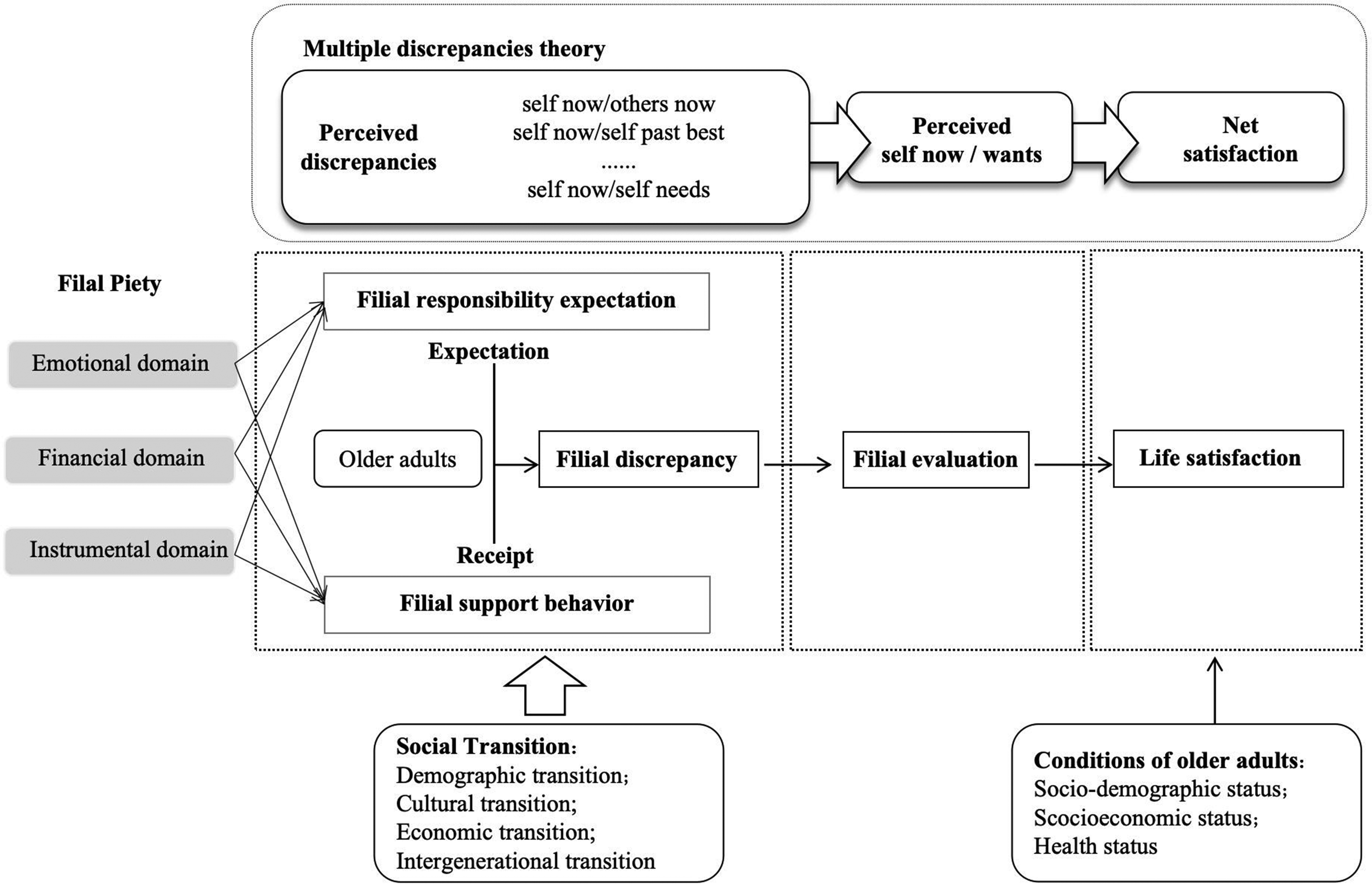
The theoretical framework of filial discrepancy and life satisfaction of older adults.
Hypothesis 1: Emotional discrepancy negatively affects the life satisfaction of older adults in rural China, both directly through its psychological effects and indirectly through its impact on perceived filial piety.
Hypothesis 2: Financial discrepancy negatively influences life satisfaction, with perceived filial piety mediating this relationship.
Hypothesis 3: Instrumental discrepancy reduces life satisfaction directly and indirectly by lowering perceived filial piety, with the most pronounced negative effects.
Method
Sample
This study utilized data from a Longitudinal Study of Older Adults in Anhui Province, China. Conducted in 2001, 2003, 2006, 2012, 2015, 2018, and 2021. The study targeted individuals aged 60 and older in rural Anhui, employing stratified multistage sampling at the township and village levels. Participants reported socio-demographic, health, economic details, and interactions with their children. The baseline survey in 2001 included 1,800 participants, yielding 1,714 valid responses (95.3% response rate). Since measures of filial piety expectations were first introduced in the most recent wave of the survey in 2021, this study employs cross-sectional data from the eighth wave for analysis. Respondents without adult children were excluded because filial discrepancy could not be meaningfully assessed for this group. After sample restriction, the analytical sample included 1,491 rural older adults. Missing data in the OLS regression analyses were handled using listwise deletion. In the final analytical sample, 1,459 observations were retained, indicating that 32 cases (2.15%) were excluded because of missing values on key variables. To examine the potential risk of systematic bias, logistic regression analyses were conducted to predict exclusion status. Results showed that most socio-demographic and socioeconomic characteristics were not significantly associated with missingness. Only age was significantly associated with a higher likelihood of exclusion (OR = 1.07, p < .05). Given the relatively low proportion of missing data, the likelihood of substantial bias appears limited.
Variables
The primary dependent variable was life satisfaction, assessed through eight items. This measure was adapted from the Satisfaction with Life Scale (Diener et al., 1985) and follows the survey framework commonly used in studies of older adults in China (Silverstein et al., 2006). The eight items were as follows: (1) “Do you feel you have a better life than most people?” (2) “Are you satisfied with your life?” (3) “Do you feel what you are doing are interesting?” (4) “Are those years the best in your life?” (5) “Are you willing to change your past life if it is possible?” (6) “Do you feel most things you do are tedious?” (7) “Do you feel you have been old, and life is tiring?” (8) “Do you feel most of your life meets your expectation?”. Responses were coded using a binary format (coded as 1 = yes, 0 = no). Previous studies using similar survey designs among older adults in Asia have suggested that simplified binary response formats may be more appropriate for older respondents, particularly those with relatively low educational attainment in rural settings (Hermalin, 2002). Items (5), (6), and (7) were reverse-coded, and the scores for all items were summed to obtain a life satisfaction score, ranging from 0 to 8, with higher scores indicating greater life satisfaction among older adults. This specific eight-item binary adaptation has been extensively validated and widely adopted as a reliable measure in recent gerontological research among older Chinese adults (Cheng & Wang, 2025; Qiu et al., 2023). The internal consistency reliability of the measure, as indicated by Cronbach's alpha, was 0.75 in this study.
The independent variable of interest was filial discrepancy, operationalized as the difference between the standardized expectation score and the standardized received-support score within each domain. Chinese legislation recognizes that children have emotional, financial, and instrumental responsibilities toward their older parents (Chou, 2011). These three domains encapsulate the intergenerational obligations of children in contemporary families, and if they do not meet older adults’ expectations, they may negatively impact life satisfaction. Thus, the analysis of filial discrepancy was conducted across these three aspects: emotional, financial, and instrumental.
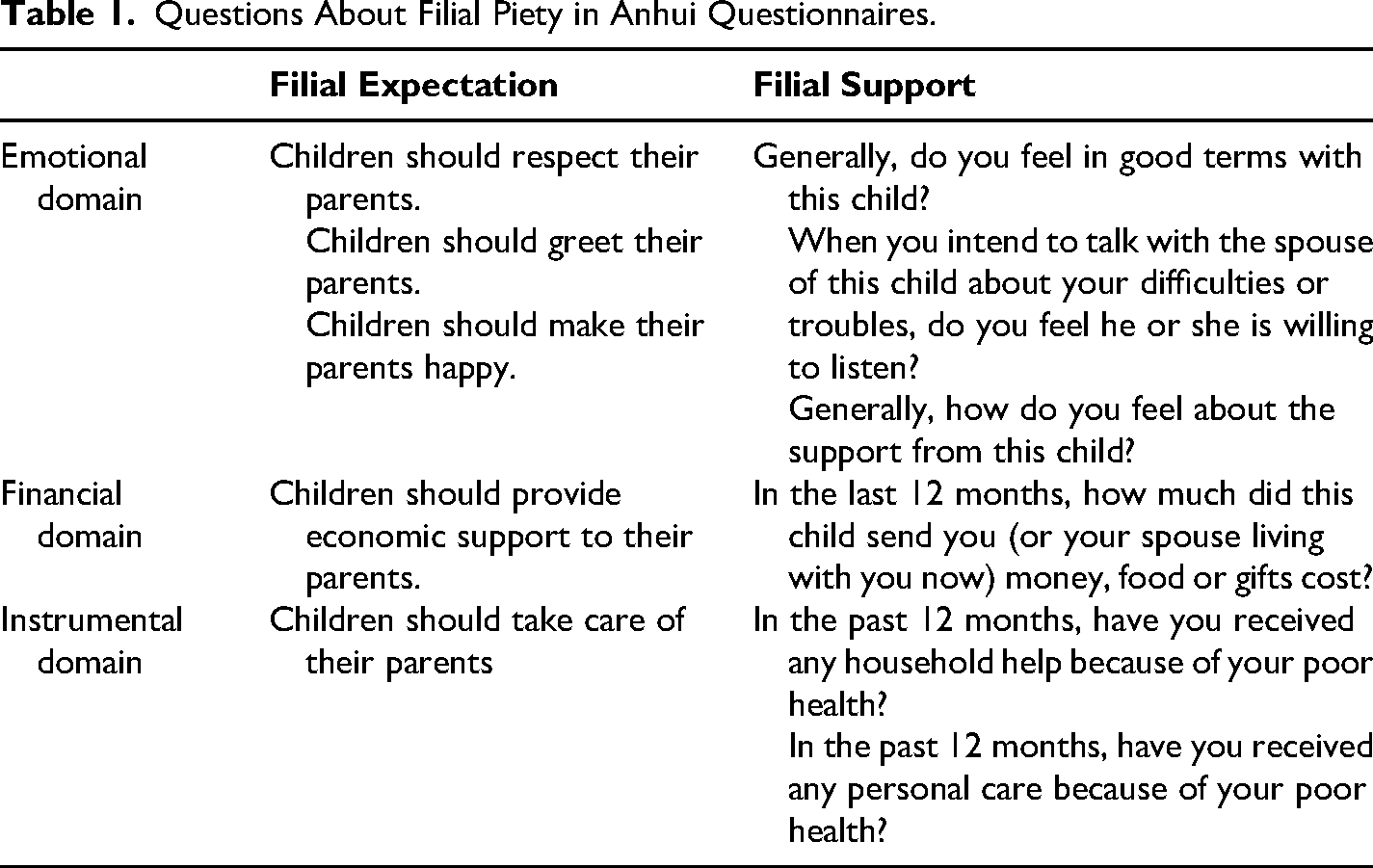
Filial support was measured using a previously developed and tested framework that includes emotional, financial, and instrumental domains (Guo et al., 2017). Filial expectation was assessed using items adapted from Gallois et al. (Gallois et al., 1997). Emotional filial expectation was measured using the items “Children should respect their parents,” “Children should greet their parents,” and “Children should make their parents happy.” The measure demonstrated strong internal consistency, with a Cronbach's alpha of 0.89 in this study. Financial expectation was measured by “Children should give financial support to parents,” while instrumental expectations was assessed through “Children should take care of parents.” The subjective filial expectations and objective filial support in these three aspects were matched to calculate emotional, financial, and instrumental discrepancies (see Table 1). For families with multiple children, the average values were used.
Questions About Filial Piety in Anhui Questionnaires.
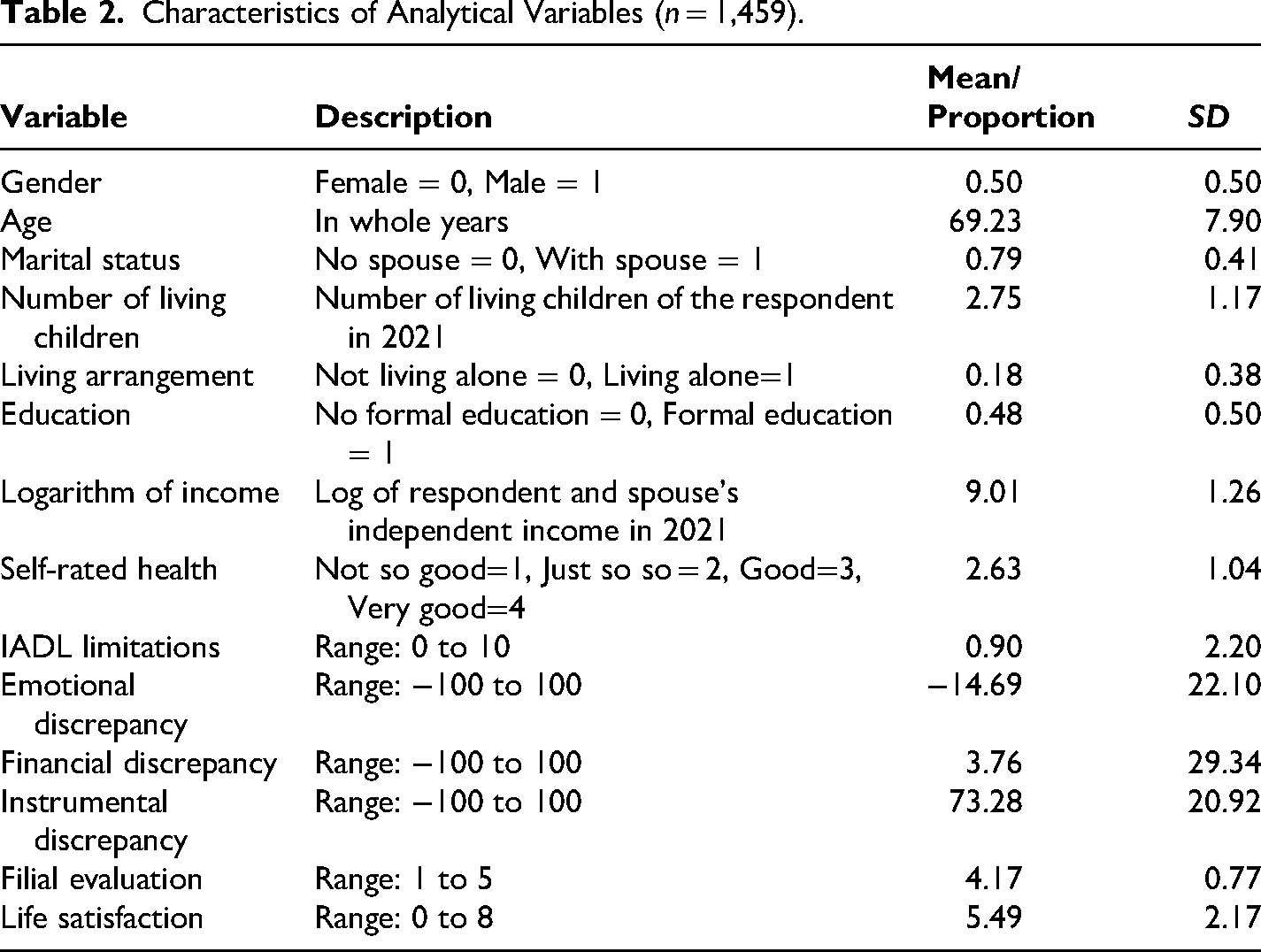
The mediating variable was filial evaluation, measured using a single assessment item: “How filial is this child to you?” Response options ranged from 1 (“very little”) to 5 (“very much”) (Zhang et al., 2024). It was calculated using the average values when there were multiple children. Control variables included socio-demographic, socioeconomic, and health characteristics of older adults, such as gender, age, educational attainment, number of children, marital status, living arrangements, income status, self-rated health, and IADL limitations. Self-rated health ranged from 1 (“poor”) to 4 (“very good”), with higher scores indicating better perceived health. IADL limitations ranged from 0 to 10, with higher scores indicating greater functional limitations. The definitions and descriptive statistics of the control variables for rural older adults are shown in Table 2.
Characteristics of Analytical Variables (n = 1,459).
Data Analysis
OLS regression models were estimated using cross-sectional data to examine the associations between filial discrepancy and life satisfaction. A stepwise modeling strategy was adopted to assess the robustness of the estimated associations and to examine how different groups of covariates affected the coefficients. Model 1 included the key independent variables to assess their direct associations with life satisfaction. Socio-demographic variables (gender, age, marital status, number of living children and living arrangement) were added to Model 2. Socioeconomic variables (education and logarithm of income) were added to Model 3. Variables related to health (self-rated health and IADL limitations) were added to Model 4. To ensure comparability across models, the estimation sample was fixed using the complete-case sample from the fully adjusted model (N = 1,459). Diagnostic analyses indicated no serious multicollinearity among predictors, with all variance inflation factors below conventional thresholds. Tests further suggested the presence of heteroskedasticity; therefore, robust standard errors were applied in all OLS regression models. Residual and influence diagnostics did not indicate substantial violations of linearity assumptions or undue influence from individual observations.
To examine mediation, path analysis within the structural equation modeling (SEM) framework was employed to estimate the direct, indirect, and total effects of filial discrepancy on life satisfaction through filial evaluation. Because all focal constructs were operationalized as observed composite variables rather than latent constructs, the SEM analysis was specified as an observed-variable path model. The same covariates included in the fully adjusted OLS model were simultaneously included in both the mediator and outcome equations. To obtain robust estimates of indirect effects without relying on normality assumptions, bootstrap estimation with 1,000 replications was performed. Bootstrap standard errors and 95% confidence intervals (CIs) were reported for all mediation pathways (Shrout & Bolger, 2002).
Results
Table 2 presents the filial discrepancy and life satisfaction status of older adults in rural China. The mean life satisfaction score for older adults was 5.49, reflecting a generally high level of life satisfaction. The mean discrepancies for the three aspects of filial piety–emotional, financial, and instrumental–were 14.69, 3.76, and 73.28, respectively, indicating significant differences in their distributions. Therefore, kernel density plots were used to further analyze the probability density distribution of these three domains of filial discrepancy (see Figure 2). The kernel density curve for emotional discrepancy is centered in the negative region. For most older adults, emotional support from children tends to exceed their expectations. In contrast, the kernel density curve for instrumental discrepancy is centered in the positive region, suggesting that instrumental support is generally lower than expected levels. For financial discrepancy, the kernel density curve is centered in zero, indicating a relatively close match between expected and received financial support. Overall, this shows that emotional filial support is generally better than expected, financial support is comparatively well-matched to expectations, whereas instrumental support shows the largest shortfall relative to older adults’ expectations.
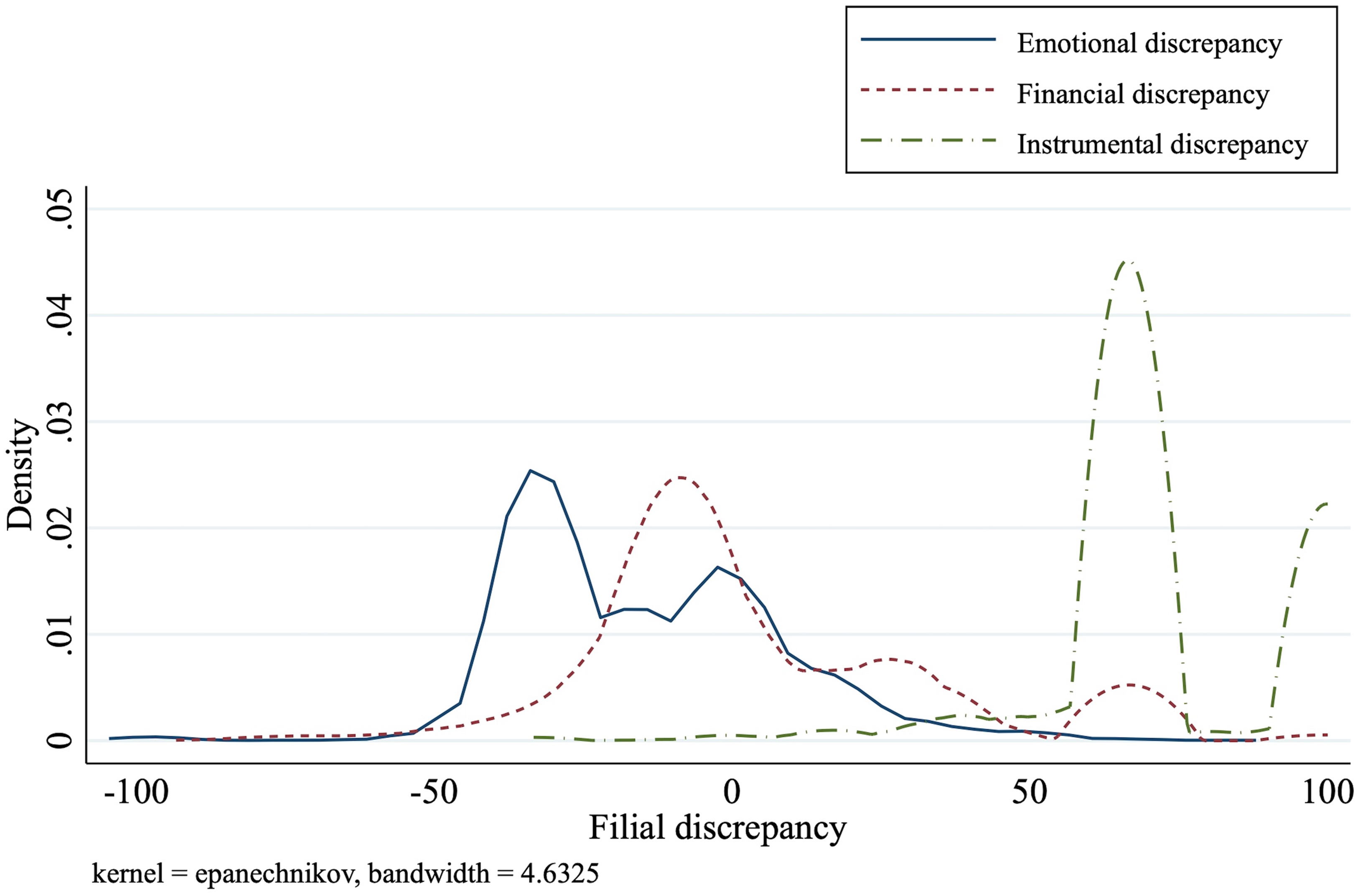
Kernel density distribution of three domains of filial discrepancy.
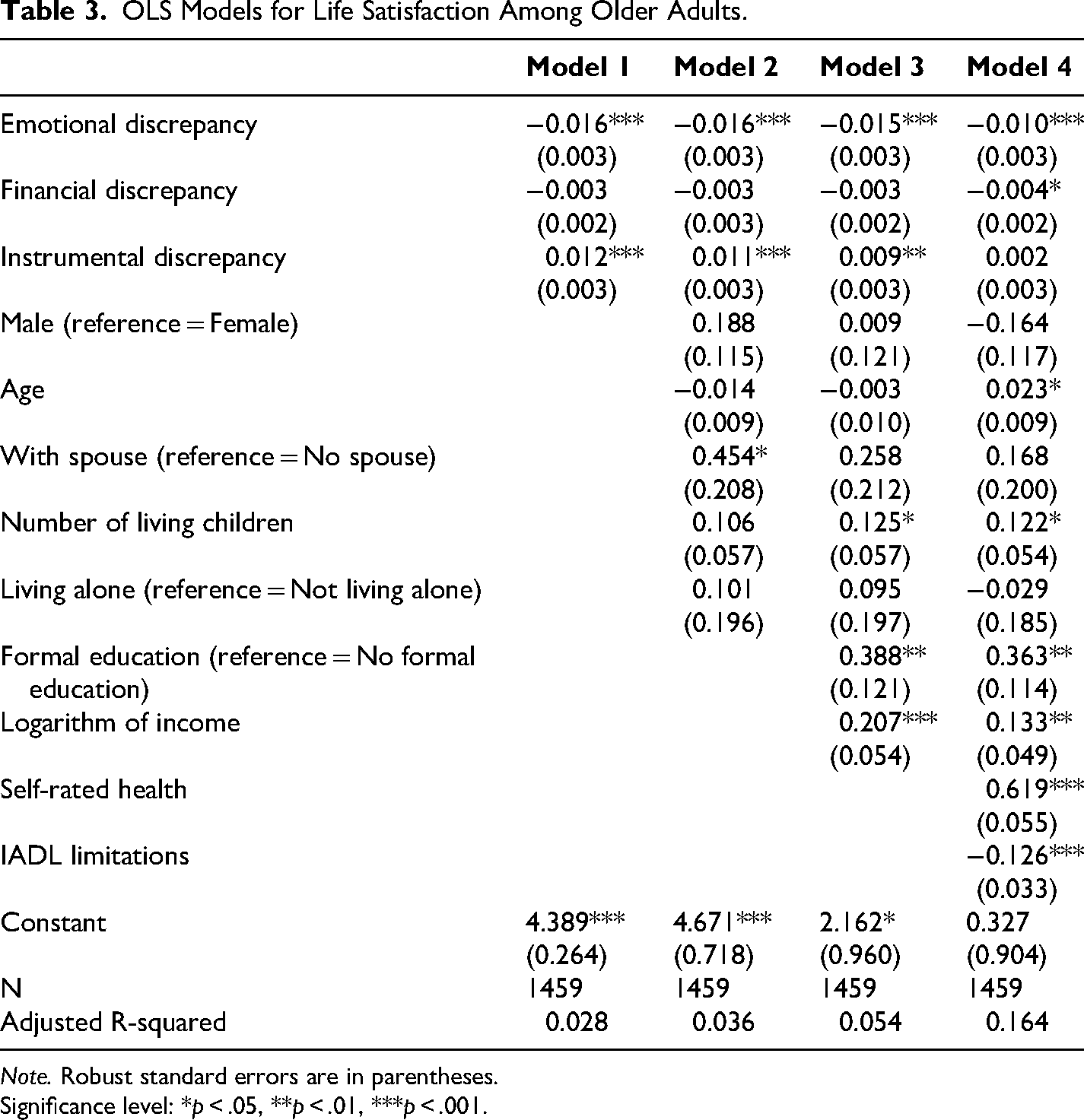
Table 3 presents the OLS regression results. In the baseline model without controls, emotional discrepancy was negatively associated with life satisfaction (Β = −0.016, p < .001), while instrumental discrepancy showed a significant positive association (Β = 0.012, p < .001). Financial discrepancy was not statistically significant. After socio-demographic and socioeconomic variables were progressively added, the coefficient for instrumental discrepancy gradually attenuated. Following adjustment for health-related variables in Model 4, instrumental discrepancy was no longer statistically significant (Β = 0.002, p > .05). In contrast, emotional discrepancy remained significantly negatively associated with life satisfaction across all models. In the fully adjusted model (Model 4), emotional discrepancy (Β = −0.010, p < .001) and financial discrepancy (Β = −0.004, p < .05) were both significantly negatively associated with life satisfaction.
OLS Models for Life Satisfaction Among Older Adults.
Note. Robust standard errors are in parentheses.
Significance level: *p < .05, **p < .01, ***p < .001.
Among the control variables, age (Β = 0.023, p < .05), education (Β = 0.363, p < .01), number of living children (Β = 0.122, p < .05), and logarithm of income (Β = 0.133, p < .01) were positively associated with life satisfaction. Self-rated health showed a strong positive association (Β = 0.619, p < .001), while IADL limitations were negatively associated with life satisfaction (Β = −0.127, p < .001).
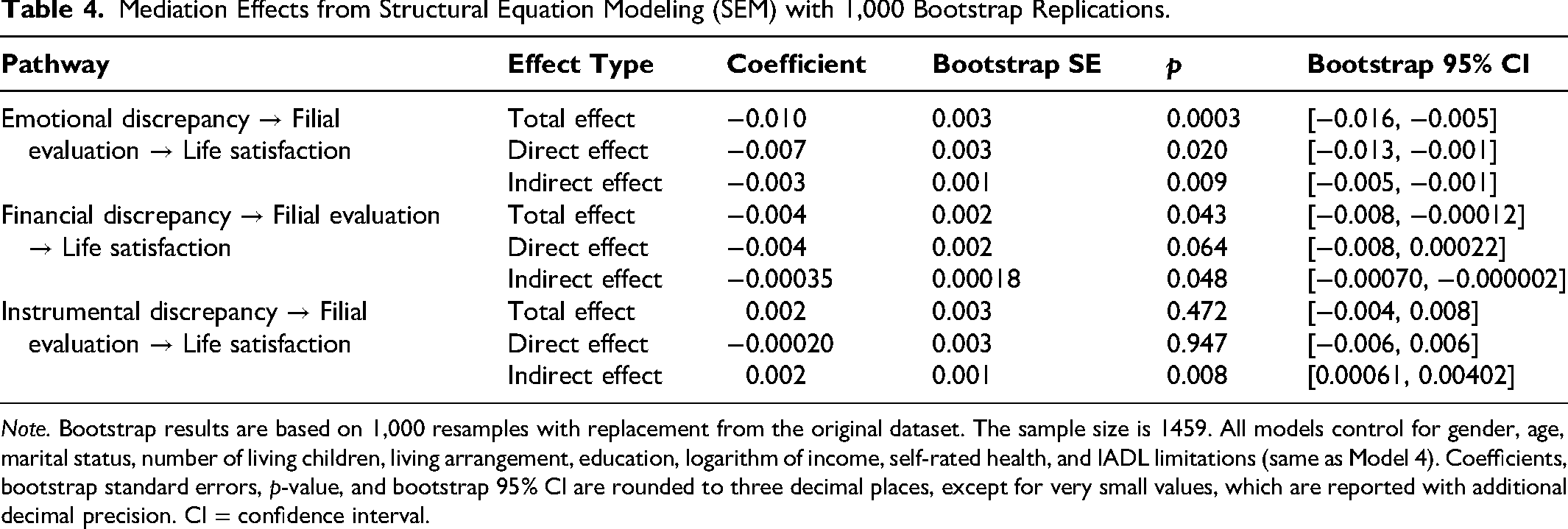
Table 4 presents the SEM mediation analysis results based on bootstrap estimation with 1,000 replications. The estimated mediation pathways are illustrated in Figure 3. Emotional discrepancy was negatively associated with filial evaluation (Β = −0.015, 95% CI [−0.017, −0.013]), while financial discrepancy also showed a significant negative association with filial evaluation (Β = −0.002, 95% CI [−0.003, −0.00031]). In contrast, instrumental discrepancy was positively associated with filial evaluation (Β = 0.011, 95% CI [0.009, 0.013]). Filial evaluation was positively associated with life satisfaction (Β = 0.205, 95% CI [0.054, 0.357]).
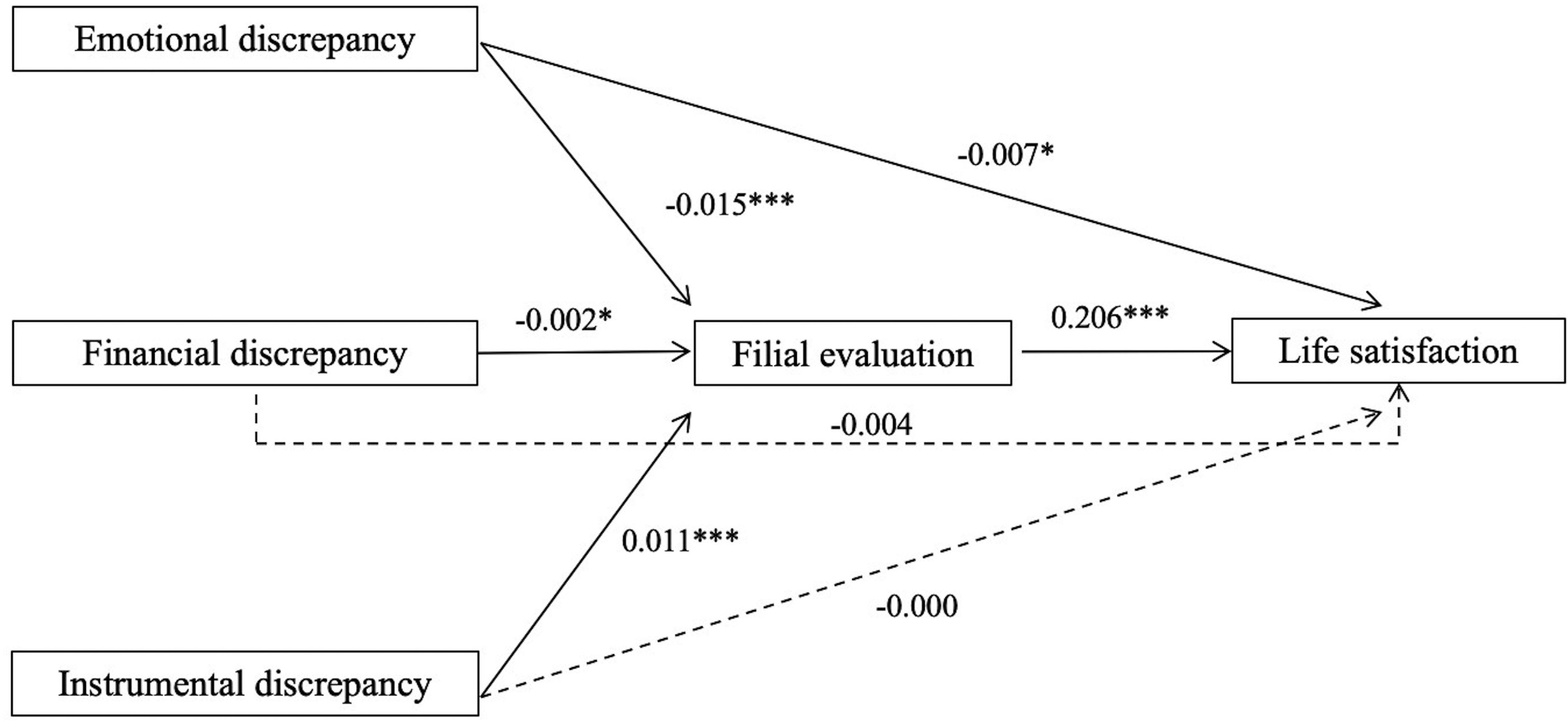
Structural equation model of the associations between filial discrepancy and life satisfaction mediated by filial evaluation.
Mediation Effects from Structural Equation Modeling (SEM) with 1,000 Bootstrap Replications.
Note. Bootstrap results are based on 1,000 resamples with replacement from the original dataset. The sample size is 1459. All models control for gender, age, marital status, number of living children, living arrangement, education, logarithm of income, self-rated health, and IADL limitations (same as Model 4). Coefficients, bootstrap standard errors, p-value, and bootstrap 95% CI are rounded to three decimal places, except for very small values, which are reported with additional decimal precision. CI = confidence interval.
For emotional discrepancy, both the direct effect (Β = −0.007, 95% CI [−0.013, −0.001]) and the indirect effect through filial evaluation (Β = −0.003, 95% CI [−0.005, −0.001]) were statistically significant, while the total effect remained significantly negative (Β = −0.010, 95% CI [−0.016, −0.005]). These findings indicate that filial evaluation partially mediated the association between emotional discrepancy and life satisfaction. Hypothesis 1 was supported. For financial discrepancy, the indirect effect through filial evaluation was statistically significant (Β = −0.00035, 95% CI [−0.00070, −0.000002]), whereas the direct effect became nonsignificant after including the mediator (Β = −0.004, 95% CI [−0.008, 0.0002]). The total effect remained significantly negative (Β = −0.004, 95% CI [−0.008, −0.0001]). This pattern suggests that the association between financial discrepancy and life satisfaction primarily operated through filial evaluation. Hypothesis 2 was supported.
However, for instrumental discrepancy, the indirect effect through filial evaluation was significantly positive (Β = 0.002, 95% CI [0.0006, 0.004]), whereas both the direct effect (Β = −0.0002, 95% CI [−0.006, 0.006]) and the total effect (Β = 0.002, 95% CI [−0.004, 0.008]) were statistically nonsignificant. As illustrated in Figure 3, the indirect effect of instrumental discrepancy on life satisfaction was significant and opposite in direction to the direct effect, suggesting an inconsistent mediation. Therefore, Hypothesis 3 was not supported.
Discussion
This study is the first of its kind to examine filial discrepancy and its psychological impact among Chinese older adults living in rural environments. Specifically, this study contributes in three ways. First, it extends research beyond overseas and urban contexts to a structurally vulnerable Chinese rural population that remains highly dependent on family support. Second, it conceptually distinguishes filial discrepancy from filial evaluation, demonstrating that they represent distinct stages–mismatch and appraisal–in the intergenerational process. Third, the findings highlight the importance of psychological appraisal processes, showing that emotional and financial discrepancies influence life satisfaction both directly and indirectly through filial evaluation. It posits that, compared to traditional Confucian filial piety, the distribution and impact of contemporary filial discrepancies have undergone a synchronized transformation, with spiritual mechanisms playing a more critical role than functional improvements in shaping their effects.
The distribution of filial piety discrepancy reflects a shifting and evolving pattern in intergenerational support, where emotional support increasingly aligns with parental expectations, while instrumental support is falling short due to structural and socioeconomic constraints. Rooted in Confucianism, filial piety was historically reinforced through institutional and familial arrangements, including Han dynasty policies emphasizing intergenerational resource exchange (Wing, 1995). Traditionally, filial piety emphasized children's provision of financial security and instrumental support, as encapsulated in the proverb ‘Raising children is protective against older age and frailty’ (Lan, 2002). However, our findings indicate a changing landscape: while emotional filial piety is relatively stable, older parents’ expectations for instrumental filial piety are frequently unmet. This trend is particularly pronounced in rural China, where rising out-migration of young adults for work has limited their capacity to provide direct caregiving (Guo et al., 2009). At the same time, technological advancements, such as mobile phones and social media, have facilitated frequent communication, enabling younger generations to sustain emotional bonds with parents despite geographical separation (Li & Zhou, 2021). These findings align with existing research that pointed to a transition in filial piety from a primarily instrumental orientation to one that prioritized emotional connections (Cheng & Chan, 2006; Ren et al., 2022).
The close relationship between emotional discrepancy and life satisfaction among rural Chinese older adults is consistent with the findings of previous studies that emphasize the affective aspect of filial piety (Han & Cheung, 2025). We provide specific insights into the large impact of emotional discrepancy on life satisfaction and the mechanism of its influence. Emotional discrepancy negatively affects the life satisfaction of older adults, with the filial evaluation acting as a partial mediator. This suggests that emotional discrepancy influences life satisfaction not only through direct emotional connections but also by lowering older adults’ evaluation of their children's filial piety. In terms of direct psychological effects, emotional neglect leads to loneliness and helplessness (Dong et al., 2008). This is especially pronounced among rural older adults, given that their social networks are limited, such that they are more dependent on their families to fulfill their emotional needs (Johnson, 1996). Thus, the psyche of rural older adults is more sensitive to the emotional discrepancy of their children. Regarding perceptions of filial piety, the emotional discrepancy also indirectly affects life satisfaction through the cultural concept of filial piety, which affects the evaluation of intergenerational relationships. Emotional and spiritual caring is highly recognized by older adults and embedded in their cultural heritage (Wang et al., 2010). From this stance, the fulfillment of emotional expectations is a cultural symbolic fulfillment and does not require children to necessarily make a high intensity of symbols and companionship. For example, research demonstrates that rural older parents often place great value on symbolic recognition and respect, such as greetings during traditional festivals or symbolic activities (Kay, 2012). Consequently, emotional discrepancy can lead to a sense of relative deprivation in response to feelings of disappointment regarding their children's behavior.
We additionally find that financial discrepancy also affects satisfaction through the cultural spiritual path of perceived filial piety. The results show that financial discrepancy influences older adults’ life satisfaction mainly through their perceptions of their children's filial piety, rather than through the direct benefits of objective material improvements. With economic development, older adults in rural China have basic security, which may be the reason why the direct effect of financial discrepancy on life satisfaction is not statistically significant. With the implementation of the policy and the development of social security levels, the economic level of older adults in rural China has improved, both in terms of receiving full agricultural income and reaping national medical benefits (Li et al., 2015). While the improvement of the material background has made the livelihood of rural older adults less dependent on financial transfers from their children, the cultural connotation of filial piety in terms of financial support from their children has always been important. In the context of implicit emotional expressions in China, financial support plays a crucial role in conveying emotions between parents and children (Ren et al., 2022). Confucian traditions place strong emphasis on financial contributions as a key indicator of filial devotion, especially in rural areas where the intergenerational transfer of resources is deeply ingrained (Wing, 1995). Financial discrepancy erodes their intergenerational connection to their children, diminishing their perception of being valued and respected. The financial discrepancy may lead to disappointment in children and thus affect the life satisfaction of older adults, rather than affecting the material well-being of older adults.
Counterintuitively, the relationship between instrumental discrepancy and life satisfaction appears complex and less direct compared to emotional and financial discrepancies. First, the direct effect of instrumental discrepancy was highly sensitive to model specification. Its initially positive association with life satisfaction diminished after controlling for health conditions, suggesting that this relationship may be confounded by older adults’ functional status rather than reflecting a stable behavioral mechanism. Poorer health and functional limitations simultaneously increase the need for instrumental care and are strongly associated with lower life satisfaction among older adults (Ando et al., 2022; Bramhankar et al., 2023). Second, apart from health confounders, instrumental discrepancy does not significantly affect life satisfaction because the indirect pathway through filial evaluation buffered the direct association. Empirical research suggests that the correlation between instrumental support and life satisfaction is weaker than for other types of filial piety (Cheng & Chan, 2006). Older adults tend to adjust their evaluations of filial piety based on external constraints, such as geographic distance or competing responsibilities of children (Zhang et al., 2024). Rural older adults may rationalize the lack of instrumental support by acknowledging their children's financial contributions or recognizing their children's absence due to out-migration. While this psychological rationalization is plausible, the mediation results suggested a counterintuitive statistical association: instrumental discrepancy was positively associated with filial evaluation. One possible interpretation is that older adults may evaluate instrumental support not only based on the quantity of care received, but also within the broader context of family relationships and caregiving circumstances. Existing studies have suggested that the strong filial obligation of adult children may damage their mental health as caregivers (Pan et al., 2023). This may be particularly relevant in the Chinese cultural context, where older adults are often highly sensitive to relational qualities underlying caregiving interactions (Huang & Fiocco, 2020). However, because the present study did not directly examine the subjective quality of care, future research is needed to further clarify the mechanisms underlying this association.
Furthermore, this study reveals that the distribution of filial discrepancy and its impact on older adults are closely interconnected, evolving in tandem. While instrumental filial piety often falls short of expectations, its diminished influence suggests that functional discrepancy is no longer the primary determinant of life satisfaction for older adults. In contrast, emotional filial piety consistently exceeds expected levels and exerts the most significant effect on life satisfaction. Financial discrepancy, while traditionally associated with material support, also appears to affect life satisfaction primarily through perceptions of filial behavior rather than direct financial improvements. This alignment not only underscores the critical role of emotional filial piety but also reflects a broader shift in the contemporary influence of filial piety, whereby it primarily impacts older adults’ life satisfaction through cultural and psychological pathways. Meanwhile, the distribution and influence of filial discrepancy reveal a striking parallel: the areas in which filial expectations are more fully realized, such as emotional discrepancy, correspond to the most substantial impacts, showcasing the adaptive capacity of older adults in rural China. This synchronicity between practice and influence suggests an adaptive capacity among rural older adults to balance expectations with evolving family dynamics, indicating the potential for contemporary filial piety to adapt and remain relevant amid ongoing societal changes in rural China. Our study confirms the cultural disruption that has been studied in terms of the notion of filial piety between older parents and their children (i.e., while the older generation fulfills its obligations of support and pays for housing and childcare for its adult children), these adult children do not necessarily have the time or commitment to take care of their ageing parents (Qiu et al., 2022). However, from the older person's perspective, we found that this difference in expectations and care support did not affect the older person's life satisfaction. Older adults showed good adjustment at the subjective psychological level.
This study highlights the complexity and mechanisms behind the impact of filial discrepancy and offers several policy recommendations for supporting rural older adults. It suggests that support policies should respond to the essential nature of filial piety by emphasizing the significance of spiritual ties in intergenerational relationships. Meanwhile, there remains a pressing need for care policies that address the evolving dynamics of caregiving, particularly as the provision of care and assistance for older adults within families becomes less strictly governed by the traditional concept of filial piety. A systematic approach is recommended to not only increase the life satisfaction of older adults but also preserve their overall quality of life. This includes fostering emotional communication within families to enhance intergenerational harmony and strengthen familial bonds. Simultaneously, it is essential to establish a multi-tiered care system outside the family to respond to the care needs of older adults.
There are several limitations to this study that should be acknowledged. First, the cross-sectional nature of the data limits our ability to make definitive causal inferences. Although the original dataset used in this study is longitudinal, measures of filial expectation were only introduced in the most recent wave. Consequently, the observed counterintuitive masking effect must be interpreted with caution. Future longitudinal or qualitative research is urgently needed to untangle the exact causal pathways, such as caregiving motivations, perceived voluntariness, and intergenerational stress. Second, because of the structurally embedded and multifactorial nature of life satisfaction, the explanatory power of filial discrepancy is relatively weak compared to structural and psychosocial factors. As the stepwise regression models suggest, while filial discrepancy plays a role, its effects may be overshadowed by more direct socioeconomic and health determinants.
Third, there are certain measurement considerations inherent to large-scale rural surveys. To minimize respondent burden, the key mediator, filial evaluation, was assessed using a single item (“How filial is this child to you?”). Additionally, the filial discrepancy index (calculated via Z-scores) should be interpreted strictly as a relative gap within the cohort rather than an absolute difference. While practical, future studies would benefit from validated multi-item scales to better capture its multidimensionality. Furthermore, we utilized a subjective global measure of well-being–an adapted life satisfaction scale. Additional studies need to examine other outcome indicators, such as psychological well-being, happiness, and depression.
Fourth, regarding external validity, the findings are based on older adults in rural China, where Confucian cultural values, including filial piety, remain deeply rooted. While the findings provide valuable insights into similar cultural contexts, they may not be directly applicable to regions with different cultural frameworks, such as Western or non-Confucian societies. Future research should address these limitations to gain a more comprehensive understanding of differences in filial piety and its implications for ageing populations.
Footnotes

Ethics Standards
This study was approved by the Xi’an Jiaotong University Academic Research Committee. All participants were fully informed about the study’s purpose and methods. Before conducting the survey, explained the purpose and procedures of the research to all interviewees, and ensured that all interviewees have informed consent to this research. All methods were performed in accordance with the relevant guidelines and regulations.
Author Contributions
YC devised the study, analyzed the data, and drafted the initial manuscript. AW supervised the study and provided valuable feedback and critical insights on the manuscript. BM and JG conducted a thorough review of the manuscript and proposed several revisions. SL contributed to the project conceptualization, the collection of longitudinal data, and the revision of the manuscript.
Funding
This work was funded by the National Social Science Found of China (Grant number 25ARK003).
Declaration of Conflicting Interests
The authors declared no potential conflicts of interest with respect to the research, authorship, and/or publication of this article.
Data Availability Statement
The datasets used in this study will not be made publicly available due to the fact that the data involves personal information, but are available from the corresponding author on reasonable request.