






Abstract
Objective
To summarize and compare the literature on social support and its effect on psychological well-being among older adults in low- and middle-income countries of the Asian region.
Design
A Systematic review. The review was registered in the International Prospective Register of Systematic Reviews with identification number XXXXXXXXXX.
Data Sources
Retrieved data from PubMed, CINAHL (EBSCO), PsycINFO, Scopus, and Cochrane Centre Register of Controlled Trials databases. The literature review was conducted from 2018 to 2024.
Review Methods
The review complies with the Joanna Briggs Institute methodology and follows the Preferred Reporting Items for Systematic Review and Meta-Analysis guidelines.
Results
Initially, 4,615 records were identified using the predefined search strategy. Out of 95 articles selected for full-text screening, 27 met the inclusion criteria. This review identified family and friends as the primary source of social support, enhancing their overall well-being. The higher levels of social support, whether emotional, informational, companionship, or tangible, improve older adults’ psychological well-being and quality of life, including reduced depression, anxiety, and loneliness.
Conclusions
The emotional and mental health of older adults can be diminished significantly due to the lack of adequate social support, leading to a cascade of adverse outcomes. This challenge is especially prevalent in low- and middle-income countries (LMICs), where older adults often struggle to access formal healthcare, social services, and a structured community support system. Promoting robust social networks is crucial for older adults’ well-being and sustainable aging strategies in low-resource settings.
Introduction
The aging population is a global concern as increased life expectancies lead to a rapidly growing older demographic. Worldwide, there were 703 million aging population aged 65 years and over in 2019. By 2050, the world's population aged 60 years and over is estimated to double to 1.5 million (United Nations, 2019). Initially, population aging was most evident in high-income countries, more recently, the most significant shifts have been in low and middle-income countries (LMICs). Two-thirds of the world's population over 60 years will be living in LMICs by 2050 (World Health Organization [WHO], 2024). In LMICs, the increasing aging population presents challenges such as insufficient social security, poor healthcare access, and negative stereotypes (Rawal, 2022). With this rapid growth of the older population, promoting health and well-being is essential for aging.
In the last decades, aging well has been conceptualized using different contemporary frameworks like healthy aging, productive aging, positive aging, successful aging, active aging, or competent aging (Belachew et al., 2024; Buys & Miller, 2012; Foster & Walker, 2015). The WHO (2020) defines healthy aging as “the process of developing and maintaining the functional capacity of older adults that enables well-being in older age.” The transformation of social structures, changes in household composition, and living arrangements focus on the importance of social support and social networks (Zanjari et al., 2022). Social support is the care, dedication, concern, and aid offered in relationships along with individuals’ perceptions and beliefs about the assistance they experience during social interactions (Zhang et al., 2022). It serves as an external support system through emotional, substantive, and informative support (Liu et al., 2022), reducing the impact of life stress and social isolation, promoting positive emotional experiences, positive coping mechanisms, and enhancing quality of life (Harandi et al., 2017; Liu et al., 2022; Roohafza et al., 2014).
Old age is one of the most crucial stages of human life as many older adults are unable to live independently, requiring comprehensive and constant care that results in limited social interactions, amplifies families’ obligations, and causes high expenditures (Kinsella & Phillips, 2005). Social support becomes vital for older adults, as they face increased risks of chronic illnesses, physical limitations, loss of income, loss of loved ones, or emotional disturbances such as anxiety and depression (Hatfield et al., 2013; Nemeroff et al., 2010). Previous studies have shown that increased levels of social support enhance the quality of life, improving both the physical and mental health (Kong et al., 2021) and life satisfaction (Dumitrache et al., 2018) of older adults.
Earlier studies examining the relationship between social support and mental health were mostly confined to Western communities with little focus on non-Western settings until recent years (Tajvar et al., 2013). Cultural, societal, and environmental distinctions make it challenging to apply research findings from Western countries to other parts of the world. In Asian countries, the absence of social and family support may lead to more severe mental health consequences compared to Western societies, where autonomy is highly prioritized than interdependence (Eyetsemitan, 2002; Lim & Kua, 2011). Consequently, a comprehensive review is needed to summarize evidence on the association between social support, exploring how and in what context it influences the psychological well-being of older adults. Therefore, this study aims to systematically review existing studies on psychological well-being in older adults in LMICs of Asia and reviewing available evidence to explore which type of social support, such as emotional, informational, substantial, financial support, and social participation, is most effective.
Aims
The aim of this systematic review was to describe the different types of social support and psychological well-being among older adults, and to explain how social support helps in improving psychological health as well as the quality of life of older adults.
Methods
This systematic review was prepared in accordance with the Joanna Briggs Institute's guidelines and has been reported following the Preferred Reporting Items for Systematic Reviews and Meta-Analyses (PRISMA) guidelines (Moher et al., 2015). The review protocol was registered and made available in the International Prospective Register for Systematic Review (PROSPERO) with the registration number XXXXXXXXXX. The Joanna Briggs Institute (JBI) Critical Appraisal Checklist for Analytical Cross-Sectional Studies (JBI, 2020) was used to assess the methodological quality of the articles.
Search Strategy
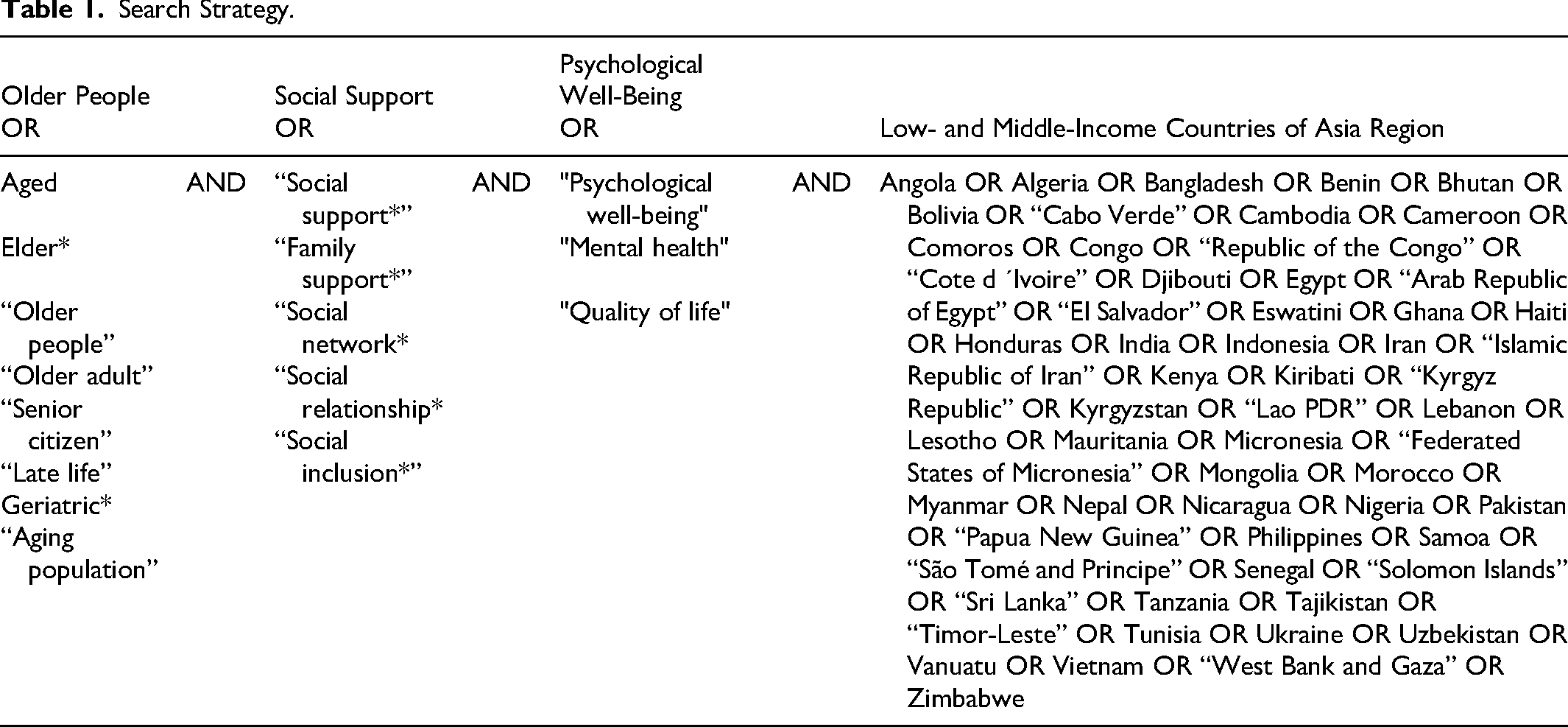
The search strategy was developed with the help of an information specialist, focusing on the primary keywords aged, “social support,” “psychological well-being,” and low- and middle-income countries of the Asian region (Table 1). References in the studies that met inclusion criteria were manually reviewed and underwent the same screening and selection process.
Search Strategy.
Inclusion/Exclusion Criteria
Original peer-reviewed research articles published in English were included if they met the following inclusion criteria: (a) Cross-sectional studies conducted in LMICs of Asian region (Hamadeh et al., 2022) and included participants aged 60 and above; (b) Social support as an intervention in the form of emotional support (empathy, concern, love, trust, acceptance, intimacy, encouragement, or caring), informational support (advice, guidance, suggestions, or useful information), companionship (participation and engagement in social activities), and tangible support (financial assistance, material goods and assistance during daily activities); and (c) Reported on psychological factors like stress, anxiety, depression, loneliness, self-esteem, quality of life, life satisfaction, and mental health status. All other methods besides cross-sectional studies were excluded. In addition, discussion papers, case studies, letters to the editors, non-scientific research articles, and review articles were not included.
Selection Process
The study selection process followed the PRISMA guidelines. A comprehensive literature search was done across five databases, including PubMed, Scopus, CIHAHL, PsycINFO, and Cochrane Central Register of Controlled Trials), covering publications from 2018 to 2024. All the records were imported into Zotero reference management software. A total of 4,615 studies were retrieved and organized by using Covidence software. Two reviewers independently searched the literature from databases, screened the title and abstracts, then read the full texts of relevant studies for eligibility and made an overall judgment of quality. Any discrepancies between the reviewers were resolved through discussion until a consensus was reached. Cohen's kappa coefficient for full-text screening was calculated, that is (k = 0.85), which indicated substantial agreement between the two raters. Figure 1 illustrates the study selection process, including the number of records identified, screened, assessed for eligibility, and included in the final review.
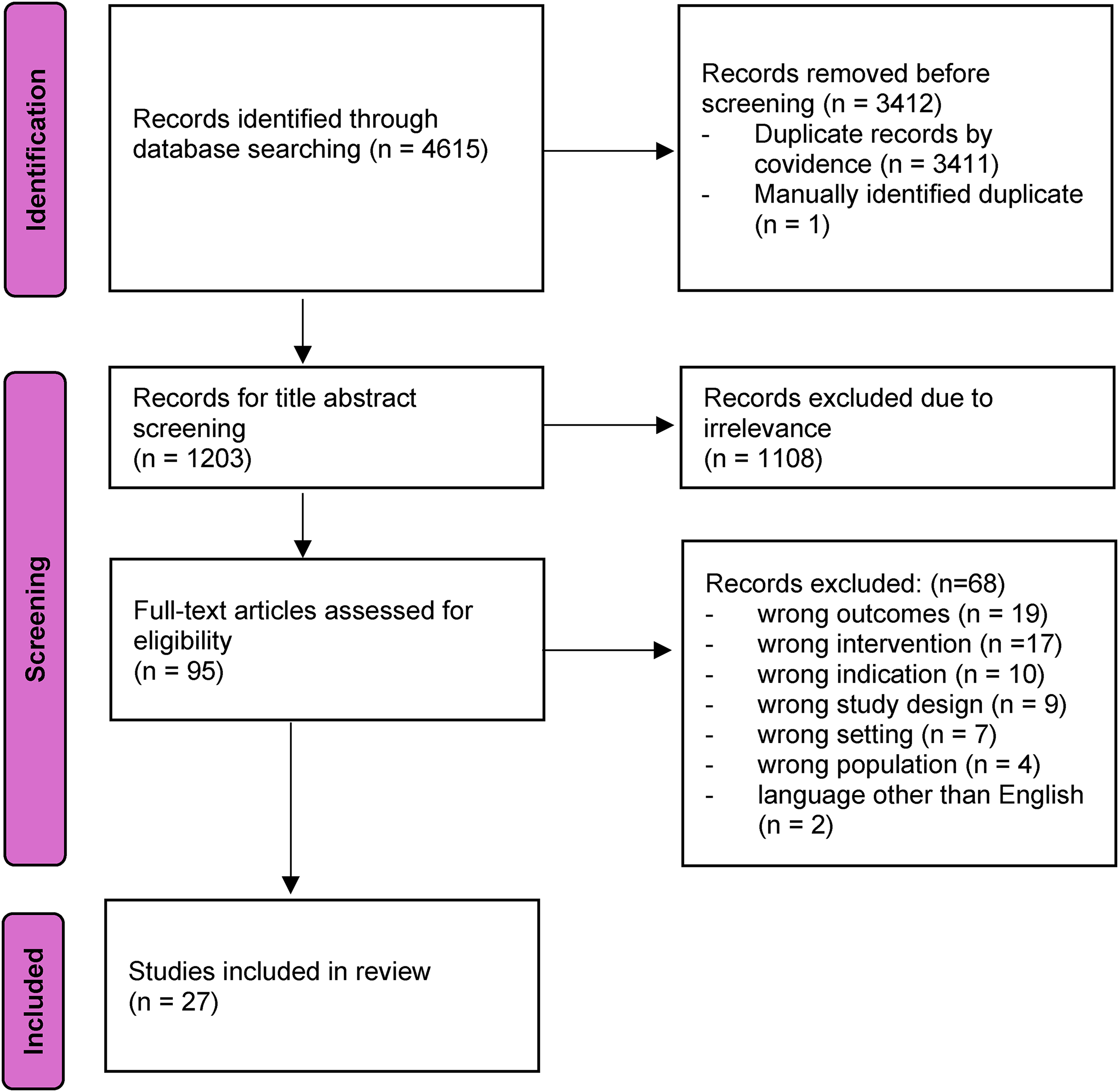
Flow chart of the study selection process.
Quality Assessment
Table 2 outlines the assessment of the risk of bias within the studies included. The articles were assessed for methodological quality by two researchers using the JBI’s Critical Appraisal Checklist for Analytical Cross-Sectional Studies. The authors had a consensus and decided to exclude the articles that scored less than 50% because of a low methodological quality score. Based on this evaluation, all the studies met the methodological quality, with total scores ranging from 5 to 7, and no articles were excluded.
Quality Assessment of Studies Based on the Joanna Briggs Institute (JBI) Critical Appraisal Checklist.
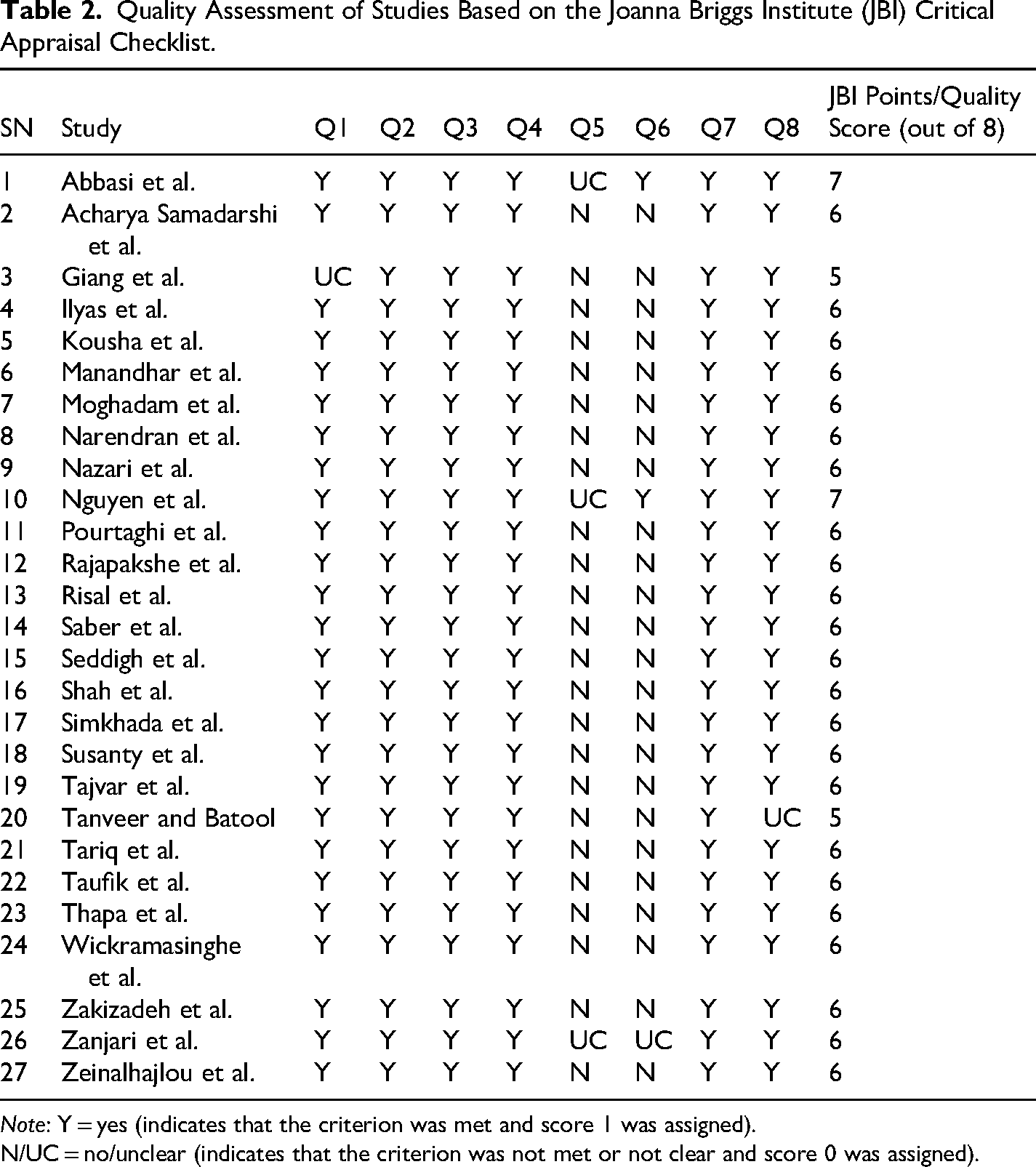
Note: Y = yes (indicates that the criterion was met and score 1 was assigned).
N/UC = no/unclear (indicates that the criterion was not met or not clear and score 0 was assigned).
Data Extraction and Synthesis
Narrative synthesis was adopted to analyze the full text of the articles. The analysis was conducted following the framework outlined by Rodgers et al. (2009), which consists of four key steps. First, a theoretical understanding of the relationship between social support and psychological well-being was developed through multiple readings of the selected articles. Next, a preliminary synthesis was conducted by systematically extracting key information such as study characteristics, sampling methods, sample size, measurement tools, data collection, and analysis methods using a predefined extraction form (Table 3). Then, the extracted contents (prevalence rates, psychological health outcomes, quality of life, and different dimensions of social support) were coded, categorized, and grouped into broader thematic headings. Finally, the main results were synthesized into a narrative format that interprets patterns and highlights notable insights and differences (Table 4).
The Sociodemographic Characteristics of the Included Studies.
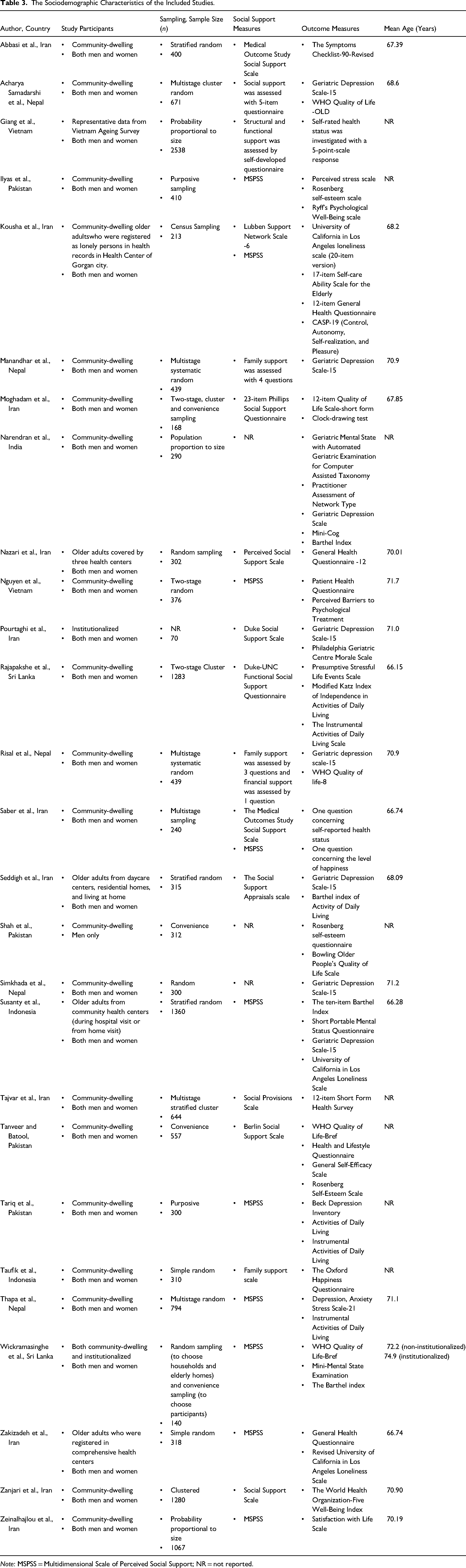
Note: MSPSS = Multidimensional Scale of Perceived Social Support; NR = not reported.
The Findings of the Studies Included.

Note: NR = not reported; ANOVA = analysis of variance; PLS-SEM = partial least square-structural equation model; QoL = quality of life.
Results
Characteristics of Included Studies
Twenty-seven cross-sectional studies were included in the review. Eleven studies are from Southwest Asia: Iran (n = 11) (Abbasi et al., 2022; Kousha et al., 2022; Moghadam et al., 2020; Nazari et al., 2021; Pourtaghi et al., 2019; Saber et al., 2021; Seddigh et al., 2020; Tajvar et al., 2022; Zakizadeh et al., 2022; Zanjari et al., 2022; Zeinalhajlou et al., 2020); 12 studies are from South Asia: Nepal (n = 5) (Acharya Samadarshi et al., 2022; Manandhar et al., 2019; Risal et al., 2020; Simkhada et al., 2018; Thapa et al., 2020), Pakistan (n = 4) (Ilyas et al., 2020; Shah et al., 2021; Tanveer & Batool, 2019; Tariq et al., 2020), Sri Lanka (n = 2) (Rajapakshe et al., 2019; Wickramasinghe et al., 2022), and India (n = 1) (Narendran et al., 2023); and 4 are from Southeast Asia: Indonesia (n = 2) (Susanty et al., 2022; Taufik et al., 2021) and Vietnam (n = 2) (Giang et al., 2020; Nguyen Hang Nguyet et al., 2021). Most studies investigated the role of social support in enhancing psychological well-being (n = 23). In addition, mental health problems (n = 15) with a specific focus on depression (n = 8), and quality of life (n = 7) among older adults were the focus of exploration.
Out of 27 studies, 10 used the Multidimensional Scale of Perceived Social Support (MSPSS), while others used the Social Provision Scale, Duke Social Support and Stress Scale (DUSOCS), Duke-UNC Functional Social Support Questionnaire, Lubben Support Network Scale, Social Support Appraisals Scale, Medical Outcome Study Social Support Survey (MOS-SS) and Berlin Social Support Scale. Psychological well-being was assessed using Geriatric Depression Scale (GDS) (n = 8), Rosenberg Self-Esteem Scale (n = 3), and Depression, Anxiety, Stress Scale (DASS) (n = 1). Quality of life and health status were evaluated using the World Health Organization Quality of Life (WHOQOL) (n = 5), General Health Questionnaire (GHQ) (n = 3), and Patient Health Questionnaire (PHQ) (n = 1) (Table 3).
The total sample size of all 27 studies was 15,536. Sample size varied greatly between 70 and 2,538 in the included studies, with the mean age between 66.15 and 74.9 years. Most studies (n = 19) had less than 500 participants, with the smallest sample size of 70 (Pourtaghi et al., 2019). The largest sample size was 2538 (Giang et al., 2020), followed by 1,360 (Susanty et al., 2022), and 1283 (Rajapakshe et al., 2019). Other sample sizes varied between 557 and 1,280 participants. Except for one study that investigated only men (Shah et al., 2021), the rest of the studies included both males and females, in which the proportion of women ranged from 28% (Tariq et al., 2020) to 91.1% (Kousha et al., 2022). The study participants of most of the studies (n = 21) were residing in communities, participants registered in healthcare facilities (n = 3), mixed samples from daycare centers, residential nursing homes, and living at home (n = 2), and representative data from aging survey (n = 1).
Social Support
Social support is broadly recognized as a key factor examined in most studies, significantly associated with many demographic and health-related factors. Numerous studies inspected social support into two distinct aspects: perceived (Ilyas et al., 2020; Saber et al., 2021; Seddigh et al., 2020; Tajvar et al., 2022; Tariq et al., 2020) and received (Saber et al., 2021) support. Meanwhile, one study explored it by distinguishing between structural and functional support (Giang et al., 2020). In studies from South and Southwest Asia, both received and perceived social support are essential, with family (Ilyas et al., 2020) and friends (Saber et al., 2021) being the primary sources of support. According to Saber et al. (2021), informational support was found to rank highest, and kindness was the lowest for received support, and less than half of the older adults reported neither good nor bad levels of happiness.
Gender differences were evident in the studies on how social support affected health outcomes in the Southwestern region. Women had higher perceived social support needs than men (Tajvar et al., 2022). However, Saber et al. (2021) found that men reported higher social support, while women were more likely to express their needs and receive emotional support from their social circles. Studies from Southeast Asia revealed that poor self-rated health in women was attributed to inadequate support from their children and no physical support for activities of daily living. For men, it was linked to a lack of social participation and dissatisfaction with community respect (Giang et al., 2020).
Psychological Well-Being
A.
Mental health problems in older adults are of growing concern, especially in low and middle-income countries where research studies are scarce. These mental health issues greatly affect psychological well-being with a high occurrence of mental health disorders like somatization, depression, anxiety, and stress in both South (Thapa et al., 2020) and Southwest Asia (Abbasi et al., 2022). Men exhibited better mental health than women in Southwest Asia (Zakizadeh et al., 2022). Self-esteem and self-efficacy showed a positive correlation with social support that underscores the importance of both in enhancing psychological well-being (Tanveer & Batool, 2019).
B.
Geriatric depression is highly prevalent in South and Southwest Asia, with a markedly high rate of depressive symptoms in Nepal (60.6%) (Simkhada et al., 2018) and Iran (60.5%) (Abbasi et al., 2022) compared to the Southeast Asian region, Vietnam (26.1%) (Nguyen Hang Nguyet et al., 2021). Most of these cases were mild depression (Rajapakshe et al., 2019; Simkhada et al., 2018). Women were more likely to experience depression than men (Manandhar et al., 2019; Nguyen Hang Nguyet et al., 2021; Rajapakshe et al., 2019; Simkhada et al., 2018; Tariq et al., 2020). Depression is common in the 60 to 64 age group (Rajapakshe et al., 2019) following the age group of 70 years and above (Nguyen Hang Nguyet et al., 2021; Tariq et al., 2020). In Southwest Asia, the older adults in nursing homes experienced the highest levels of depression in comparison with those attending day care centers (Seddigh et al., 2020). Higher depression levels were strongly correlated with lower morale (Pourtaghi et al., 2019).
C.
The prevalence of loneliness among community-dwelling older adults is high, and older women are more likely to feel lonely than men in Southeast Asia (Susanty et al., 2022). Meanwhile, in Southwest Asia, most experienced moderate loneliness (Kousha et al., 2022) and expressed dissatisfaction with their lives (Zeinalhajlou et al., 2020). Additionally, Susanty et al. (2022) further explored that loneliness exacerbates depressive symptoms, further underscoring the importance of social support for the older population. A study from Southeast Asia revealed that older adults who live alone or lack social participation have poorer self-rated health (SRH) and are at greater risk of psychological distress (Giang et al., 2020).
D.
In Southwest Asia, there is a strong connection between happiness and self-rated health in older adults, with emotional well-being and social connections interacting in complex ways (Saber et al., 2021). Likewise, in South Asia, older adults who feel included in family decision-making, receive financial and physical support, and spend time with family members were less likely to have depressive symptoms (Simkhada et al., 2018). Family support, engagement in religious and community activities positively influenced happiness among older adults in Southeast Asia (Taufik et al., 2021).
Relationship Between Social Support and Psychological Well-Being
In most of the studies, social support is identified as a critical protective factor against psychological disorders and depression among older adults. In South Asia, family and spousal support enhanced spirituality leading to increased self-esteem and ego integrity, both improving psychological well-being (Ilyas et al., 2020). Older adults who reported not being given enough time by their families and perceived a lack of respect were more likely to suffer from depression (Manandhar et al., 2019). Engagement in social activities and maintaining social connections were mitigating factors against depression (Nguyen Hang Nguyet et al., 2021; Thapa et al., 2020). Receiving social support and allowance were effective in reducing depression, anxiety, and stress (Thapa et al., 2020).
A study conducted in Southeast Asia depicted that increased social support also had a great influence on happiness (Taufik et al., 2021). Similarly, Nguyen Hang Nguyet et al. (2021) states that lower perceived social support is strongly linked to a greater incidence of depression. In Southwestern Asia, higher levels of social support are significantly associated with lower scores of psychological disorders (Abbasi et al., 2022), while strong social participation was protective against poor mental health (Tajvar et al., 2022). Emotional support and satisfaction with received support were the predictors of mental health (Nazari et al., 2021). Moreover, greater social support reduced loneliness, which was associated with better mental health outcomes (Kousha et al., 2022; Zakizadeh et al., 2022). In contrast, Pourtaghi et al. (2019) reported no statistically significant correlation between depression and social support, focusing on the complexity of these relationships.
Relationship Between Social Support and Quality of Life
Studies from South and Southwest Asia depicted that there is a positive relationship between social support and quality of life among older adults; as social support increases, the quality of life improves (Acharya Samadarshi et al., 2022; Moghadam et al., 2020; Tanveer & Batool, 2019). Also, social support improved morale (Pourtaghi et al., 2019), and adequate family support, including positive relationships and perceived respect, was strongly associated with a higher quality of life in the older population (Risal et al., 2020). Older adults living apart from their families particularly gain from broader social networks, including friends and community social groups, which were more effective than family support in reducing loneliness and enhancing mental health (Zakizadeh et al., 2022). Social integration and support from both family and friends were significant predictors of self-esteem (Shah et al., 2021). Furthermore, higher perceived social support had a beneficial effect, contributing to increased life satisfaction (Zeinalhajlou et al., 2020) among older adults. Gender-based differences in the perception and effect of social support were also observed. Saber et al. (2021) and Tajvar et al. (2022) identified older women reporting lower levels of support, which negatively impact their quality of life. A study from South Asia revealed that non-institutionalized older adults had higher quality of life scores than institutionalized (Wickramasinghe et al., 2022).
Discussion
The review provides a comprehensive overview of mental health issues, social support, and quality of life of older adults in low- and middle-income countries of the Asian region. These results highlight the key aspects of psychological well-being and underline the relationship between social support and mental health outcomes of the older population.
Social support is a complex multifaceted concept lacking standardized measurement, making comparisons across studies vague and difficult. From the measurement, social support is primarily distinguished into two categories: perceived and received social support. Poor social support is associated with depression (Mulat et al., 2021). It plays a pivotal role in achieving higher life satisfaction (Bramhankar et al., 2023) and is related to various demographic and health aspects. Older adults who reported a need for more support had poorer health at nearly twice the rate compared to those who were satisfied with the support they received (White et al., 2009).
Most of the studies addressed depression as a major mental health issue in older adults. Compared to other countries like Thailand (Charoensakulchai et al., 2019), China (Lin et al., 2020), and Egypt (El-Gilany et al., 2018), Nepal (Simkhada et al., 2018), and Iran (Abbasi et al., 2022) have a higher prevalence of depression. This review found older women to be more prone to mental health issues than men, particularly depression, which aligns with the results of a national survey in the USA (Cheung & Mui, 2023) and a longitudinal aging study in India (Paul et al., 2023). This disparity in depression rate may be due to biological factors and women's greater household responsibilities and economic dependence, particularly in lower-income settings. Among older adults with depression, mild depression was the most prevalent form (Amha et al., 2020), which is consistent with the findings of this study.
Our review results revealed that older women experienced feelings of loneliness more frequently than men (Susanty et al., 2022), and this finding corresponds with the study conducted in Germany (Boehlen et al., 2023). However, after adjusting the confounding variables, the likelihood of loneliness was higher in men than women (Kim & Lee, 2022). In the present study, many older adults reported dissatisfaction with their lives, whereas a study conducted in the USA found that older adults were more satisfied as they age (Cho & Cheon, 2023). This difference between high-income and low- and middle-income countries may be attributed to varying cultural perceptions of aging, economic stability, access to healthcare, and social support mechanisms. The findings suggest a strong link between older adults’ happiness and their self-rated health. This result agrees with the previous study that has identified self-rated health as a crucial determinant of overall happiness (Mohammadi et al., 2022).
Analysis revealed gender differences showing that older women experience lower levels of support, which negatively affects their quality of life. The increased social support improves the quality of life and promotes a stronger sense of self-worth among older adults (Chen et al., 2014; LaRocca & Scogin, 2015; Şahin et al., 2019), aligning with the findings of this study.
The current review identified social support, family engagement, social participation, and community involvement as important protective factors that reduce depression, loneliness, and psychological distress while improving happiness and overall psychological well-being among older adults. The findings are consistent with the findings of Giebel et al. (2022) and Das et al. (2025) which focused that community-based psychosocial interventions, social participation, family involvement, and supportive social networks play a pivotal role in reducing depression, loneliness, and psychological distress while enhancing psychological well-being, life satisfaction, and quality of life among older adults in LMICs. Strong social support, frequent interactions, and closer family ties reduce depressive symptoms in older adults who rely more on family support. Unlike Western countries, older Asians depend more on their families due to cultural expectations. Thus, elder care in LMICs of Asian regions should be family focused.
This review enables healthcare professionals, administrations, and stakeholders to prioritize policies and resources that expand social support in healthcare facilities and focus on geriatric psychosocial care. This study can guide future researchers by identifying gaps in social support systems for older adults in LMICs and promoting culturally sensitive interventions to improve their mental health outcomes.
Limitation
This review has several limitations. Firstly, it focuses on cross-sectional studies, which only provide data from a single point in time, making it challenging to establish causal relationships between social support and psychological well-being. Additionally, the included studies exhibit significant heterogeneity in their methods of measuring social support and psychological well-being, complicating comparisons, and compromising the validity of the overall conclusions. Furthermore, the review is limited to studies conducted in Asia, reducing the generalizability of the findings to other regions.
Conclusion
The psychological well-being of older adults is a significant concern in LMICs. Depression, anxiety, stress, and loneliness are prevalent among this population, with older women showing worse mental health outcomes than men. Countries like Nepal and Iran have a high incidence of geriatric depression.
Self-esteem and self-efficacy are closely tied to psychological well-being, emphasizing the need for a comprehensive support system. Meeting the psychological needs of older adults in LMICs necessitates a comprehensive approach that prioritizes social support, recognizes gender differences, and incorporates cultural values in elderly care practices. Older adults often face unique challenges such as social isolation and health-related issues, highlighting the need to create a strong network of support that provides emotional and practical assistance, thereby promoting resilience and overall well-being. By fostering supportive environments and reinforcing family networks, we can improve the psychological well-being and quality of life of the older adults in LMICs of the Asian region.
Footnotes
Acknowledgments
The authors gratefully acknowledge the support provided by the information specialist at the University of Eastern Finland.

Ethics Approval Statement
This systematic review was conducted following PRISMA guidelines and registered in PROSPERO (Identification No: CRD42022334415).
Informed Consent Statement
As this is a systematic review, patient consent was not required as no new patient data were collected.
Funding
The authors disclosed receipt of the following financial support for the research, authorship, and/or publication of this article: This work was supported by the EDUFI Fellowship (grant number TM-22-11772).
Declaration of Conflicting Interests
The authors declared no potential conflicts of interest with respect to the research, authorship, and/or publication of this article.
Data Availability Statement
As a systematic review, this review does not involve new data collection. The data supporting the review are available in the cited references.