







Abstract
This analysis explores student outcomes related to taking developmental English (i.e., reading and/or writing) and math classes in three community colleges in three different states, using institutional data from 7,898 students who began college in the fall of 2009 (Cohort 1) or fall 2010 (Cohort 2). We examine the outcome trajectories of students at each college, considering their enrollment in developmental courses in their first term at college as well as other variables. Several factors helped students persist into the second term of college, and a subset of these was also significantly related to continued persistence, graduation, and higher overall grade point average (GPA). Older students, White/non-Hispanic students, and occupational students were more likely to graduate. These groups, and women, also had higher cumulative GPAs. Math ability at the time of college entrance was a powerful predictor of student success. The utility of reading placement as a predictor, and the utility of developmental English, reading, and writing (DERW) classes as an intervention, were both limited to retention into the second term and/or second year. Financial aid and tutoring were much more clearly related to student success than was developmental coursework.
Keywords
Introduction
Community colleges play a critical role in providing access to affordable postsecondary education and a degree or certificate that can provide a path to a career or further education. However, only about one third of students who enroll in community colleges complete a credential (Bailey & Alfonso, 2005). One reason for this low completion rate is that a large proportion of students entering community colleges lacks adequate academic preparation for college-level coursework. A study using data from the National Education Longitudinal Study of 1988 (NELS:88) found that 58% of entering community college students required remediation in at least one subject (Attewell, Lavin, Domina, & Levey, 2006). Similarly, Bailey (2009) noted that 59% of students who attended Achieving the Dream community colleges were referred to developmental coursework.
Many factors have been hypothesized as important for student retention or persistence, although few have been the subject of rigorous study (Hirschy, Bremer, & Castellano, 2011). Several input and environmental variables of theoretical relevance to retention have been identified in models of postsecondary retention offered by Bean and Eaton (2000); Bean and Metzner (1985); Braxton and Hirschy (2005); Nora, Barlow, and Crisp (2005); Reason (2009); Swail, Redd, and Perna (2003); and Tinto (1975, 1993). Many of these variables are student background characteristics, such as academic preparation, or status variables, such as age or ethnicity (Hirschy et al., 2011). Data for a subset of the variables noted by these theoreticians were collected as part of a study entitled Relative Impact of Interventions to Improve Achievement and Retention in Postsecondary Occupational Programs (National Research Center for Career and Technical Education, 2012). The data for the present analysis were drawn from the Relative Impact study.
The purpose of this analysis is to explore student outcomes related to taking developmental English, reading, or writing (DERW) and developmental math (DM) classes in three community colleges in three different states, using institutional data from 7,898 students who began college in the fall of 2009 (Cohort 1) or the fall of 2010 (Cohort 2). We examine the outcome trajectories of students at each college, considering their enrollment in developmental courses in their first term at college as well as other variables such as age, gender, ethnicity, financial aid, occupational versus nonoccupational major, tutoring, and placement scores. Specifically, we explore the following research questions:
How do outcomes such as retention, completion, and cumulative grade point average (GPA) vary among students taking developmental and nondevelopmental courses? Do these effects remain after accounting for placement scores and participation in programs and services such as tutoring and financial aid?
To what extent is enrollment in developmental courses in the first term related to student success in subsequent college-level courses in the same disciplines?
According to the National Center for Education Statistics ([NCES] n.d.a), 98% of public 2-year colleges offered DERW and/or DM courses in 2000. In that same year, 42% of first year students in community colleges took at least one developmental course (Parsad & Lewis, 2003). Although students may be advised to take developmental courses based on placement test results, institutions do not always require that students so advised actually do so (Perin, 2004). Developmental courses are usually semester- or quarter-long courses, although colleges are experimenting with accelerated developmental courses of shorter duration or remediation focused on specific deficits identified in competency assessments (Liebowitz & Taylor, 2004).
Review of the Literature
Recent literature examining developmental course-taking and the outcomes of developmental students takes several forms: analyses of data from all postsecondary students in a given state; studies of single outcomes and single institutions; and multi-institution, multistate analyses. Some general findings emerge in common across these studies, but there are often notable exceptions. For example, students who require the most remediation usually have the worst outcomes—but not in a study by Boatman and Long (2010), in which students in the lowest levels of developmental writing had better outcomes than their peers in higher levels. As another example, developmental coursework is meant to prepare students for success in college-level coursework, but two studies found similar outcomes for students referred to developmental coursework who did not subsequently enroll in developmental courses and students referred to developmental education who did enroll in developmental courses (Calcagno & Long, 2008; Roksa, Jenkins, Jaggars, Zeidenberg, & Cho, 2009). Together, the studies reviewed below question the rationales behind and expected effects of developmental education.
Multi-Institution, Multistate Analysis
Bailey, Jeong, and Cho (2010) analyzed data from Achieving the Dream colleges (250,000 students from 57 colleges in 7 states) and found that 30% of students referred to developmental reading never enrolled in a developmental reading course. Of all students referred to any developmental reading, 46% progressed to being able to take a college-level English course, but students referred to lower levels of developmental reading were less likely to complete their prescribed developmental sequence than those who placed into higher-level developmental courses. Among students who completed the last course in the developmental reading sequence to which they were assigned, 72% subsequently enrolled in the gatekeeper English course and of those, 75% passed the course.
Bailey et al. (2010) noted that because Achieving the Dream colleges typically serve higher proportions of African American and Hispanic students, have larger overall enrollments, and make lower-than-average instructional expenditures, they are not representative of all community colleges. Bailey and his colleagues sought to compensate for this by comparing their sample to data from the Integrated Postsecondary Education Data System (IPEDS) data and from the NELS:88 data set.
Multi-Institution, Single-State Analyses
Long and colleagues (Bettinger & Long, 2009; Boatman & Long, 2010; Calcagno & Long, 2008) conducted a series of statewide analyses of institutional data, examining many of our outcomes of interest. The main strength of these studies is that they utilize data for all students within a particular state. But this is also a weakness, in that state higher education systems can have idiosyncratic policies that can limit the generalizability of findings of such studies.
Calcagno and Long (2008), using a regression discontinuity design, examined the impact of DM and developmental reading on outcomes for nearly 100,000 students who entered one of Florida’s 28 community colleges from 1997 through 2000 and who sought at least an associate’s degree. They were interested in students whose placement test scores were near the cutoff for needing developmental education. For these students, taking developmental reading did not make them more likely to pass a subsequent gatekeeper English course, nor did it improve their odds of completing a degree. While those taking developmental reading completed more total credits over a 6-year period, they completed fewer credits that counted toward a degree. In math, taking developmental courses increased student persistence from the first year of college to the second for students on the margin of placement in remediation. Overall, short-term persistence was improved by taking developmental courses, but longer-term outcomes were either unaffected or negatively impacted. This study did not explore whether students further from the cutoff were helped by taking developmental courses.
Using a regression-discontinuity design, Boatman and Long (2010) examined the relationship between developmental placement and outcomes for the nearly 200,000 students who entered public colleges in Tennessee in the fall of 2000. Similarly to Calcagno and Long (2008), they found poorer degree completion and credit accrual outcomes for students who took developmental courses but who were close to the placement test cutoff for needing any remediation. Specifically, these students were less likely to complete a degree within 6 years of enrollment, and they completed fewer college credits in their first 3 years than similar students who were not placed in developmental courses. For students requiring more remediation, outcomes varied by discipline. Students placed in lower levels of DM did not benefit from enrollment in developmental courses, but students placed in lower levels of developmental writing seemed to benefit from remediation: “Students in the lowest levels of remedial [i.e., developmental] writing persisted through college and attained a degree at higher rates than their peers in the next highest level course” (p. 4).
Using data on 28,000 students who entered public colleges in Ohio in the fall of 1998, Bettinger and Long (2009) investigated whether students who take developmental courses are more or less likely to persist when compared to similar students whose colleges do not require them to take these courses. Their methodology relied on the fact that the 2- and 4-year public colleges in Ohio do not all use the same placement test cutoffs. Therefore, the same kinds of students either were referred to developmental coursework or not, or they were referred to different levels of developmental coursework, depending on the college they attended. Here, developmental education (both math and English) had positive effects on retention, with the strongest effects found for students closest to the margin of needing developmental coursework.
Single-State Analysis of One Main Outcome of Interest
Roksa et al. (2009) examined the records of over 24,000 first-time community college students in Virginia, as part of a study meant to help Virginia colleges increase the proportion of underprepared students taking and passing gatekeeper math and English courses. This study also examined outcomes by student course of study: completion of a “career-and-technical” program or intent to transfer. The study followed students for 4 years from their initial enrollment in the summer or fall of 2004.
Roksa et al. (2009) found a 65% overall pass rate for developmental English courses and a 48% overall pass rate for DM, although there was substantial variation across specific courses. Notably, while the proportion of students taking and passing gatekeeper English and math courses varied widely across colleges, “students who were recommended to take a developmental course but did not do so had similar rates of taking and passing gatekeeper English and math [courses] as students who were recommended and did take a developmental course in the subject” (p. 25). Once Roksa et al. (2009) controlled for individual characteristics and college attended, reading and writing placement test scores did not predict whether students passed gatekeeper English. Finally, less than 50% of students in the cohort completed gatekeeper English, while just over 25% completed gatekeeper math, but among the students who attempted gatekeeper courses, about 75% passed them. A limitation of this study was one that is common to studies of developmental education: “there were substantial differences among colleges in their reporting of placement recommendations, as well as in the proportion of their students recommended to take developmental courses” (p. 2).
Single-Institution Analysis
Fike and Fike (2008) examined first-time students entering one college over a period of 4 academic years—9,200 students altogether. Using regression models, they examined what they called predictors of retention, including some not included in any of the other studies reviewed here or in the current analysis: online courses, parents’ education, number of credits enrolled in and dropped during the first fall semester, and participation in the federal TRIO Student Support Services program. They also included two variables examined in the current study: developmental education and financial aid. They looked at retention into the next term and the next academic year.
Fike and Fike (2008) found that developmental education and financial aid both contribute to students’ persistence, with some notable exceptions as well as mixed findings for DERW courses. The strongest predictor of retention was passing a developmental reading course. Passing DM was an indicator of both fall-to-fall and fall-to-spring retention, and not taking DM lowered the odds of retention, even compared to taking but not passing DM. Passing developmental writing was a predictor of fall-to-fall retention, but not a statistically significant predictor of fall-to-spring retention. Receiving financial aid was a predictor of retention for both timeframes.
A major limitation of this study is its single-site design; it is impossible to know whether the effects of developmental education on retention had to do with how developmental education was delivered at that particular college or whether those effects are more generalizable. Also, this study did not account for placement test scores, and it is possible that those who did not take developmental courses already possessed adequate academic skills for college-level work. Finally, because this study only followed students as far as their second fall of enrollment, effects on longer-term student retention are unknown.
The current study uses data from multiple states, although only one institution from each participating state is included. This allows for a deeper look at data that might not be available across an entire state or across many institutions (e.g., data on student receipt of financial aid, which were available from all sites, and data on the use of college tutoring services, which were available from two sites). The current study thus offers somewhat greater generalizability than a single-site study and greater depth than large-scale studies.
Method
Design and Procedure
The research protocol was approved by institutional review boards (IRBs) at the University of Minnesota and the University of Louisville. None of the community college sites had their own IRBs; administrators at the colleges reviewed the protocols and accepted the university-level IRB reviews as sufficient. Education records were acquired in accordance with guidelines in the Family Educational Rights and Privacy Act. Data management specialists at each college provided data at the end of each term, beginning with the fall of 2009 and ending in the fall of 2011.
Participants
The data described here are part of a larger study of student retention. Specifically, the current analyses use data from three of the four community colleges participating in a study entitled, Relative Impact of Interventions to Improve Achievement and Retention in Postsecondary Occupational Programs (National Research Center for Career and Technical Education, 2012). Funded by the U.S. Department of Education’s Office of Vocational and Adult Education, this longitudinal correlational study employs institutional student-level data from four U.S. public community colleges that use interventions aimed at improving student retention and completion. The fourth site was not included in the current analyses due to incomplete data.
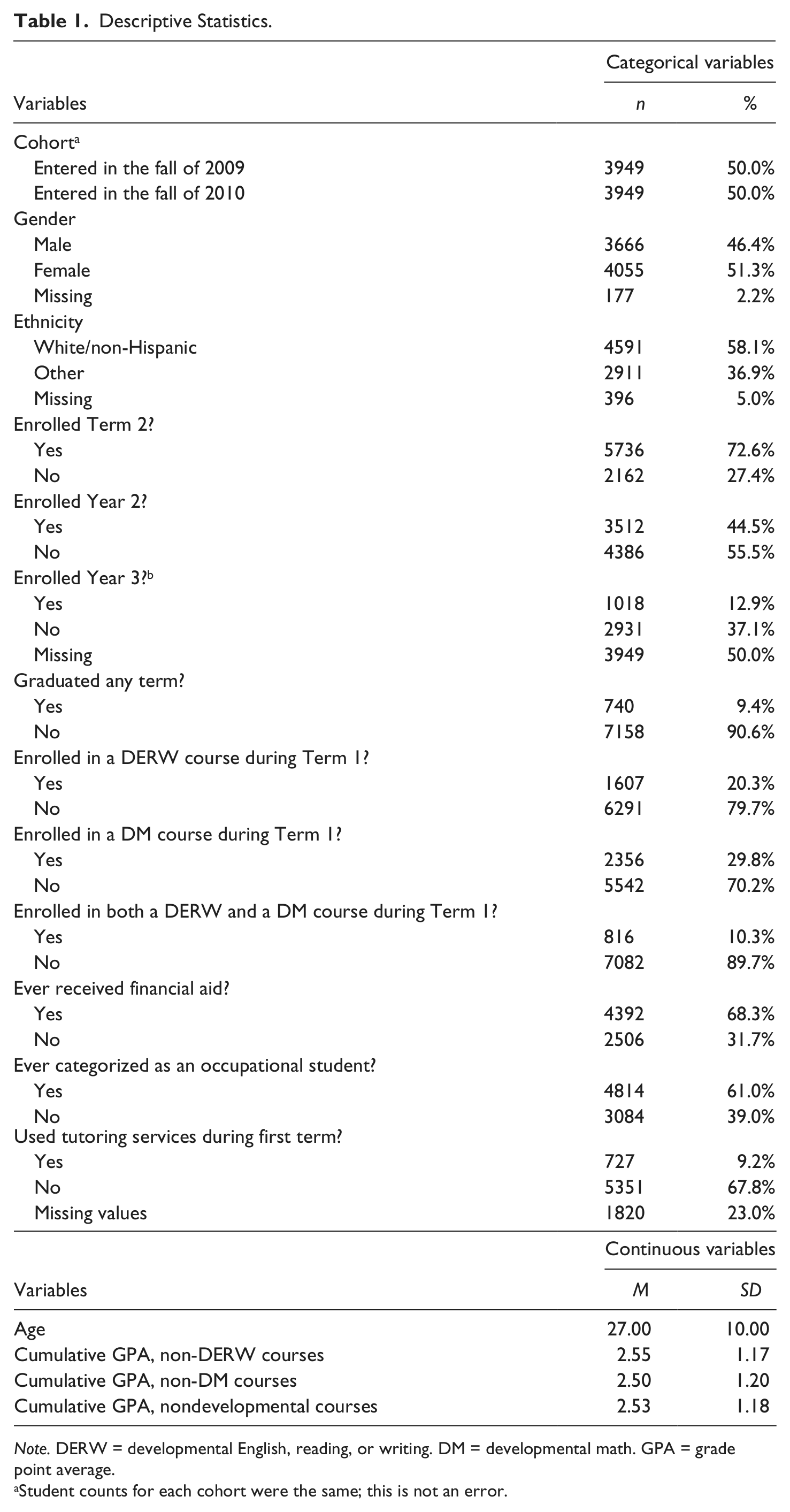
Site selection for the Relative Impact study was guided by a process of focal sampling (Anastas, 1999), in which participating community colleges were selected “not to approximate representativeness but because they are atypical in some way that specially equips them to be useful as study informants.” (p. 288). The sites sought were atypical in that they had detailed student-level data on student participation in services and programs such as tutoring and financial aid. Each site was recommended either by a recognized expert in sub-baccalaureate education or by a state-level administrator of a public 2-year college system, based on their understanding of the sites’ data systems and their perception of the sites’ implementation of well-run retention programs. Descriptive information about the sites (combined) is in Table 1.
Two cohorts of students are included in the study: students who entered one of these three colleges in the fall of 2009 (Cohort 1) or in the fall of 2010 (Cohort 2). To be included, students needed to be enrolled in one or more courses (developmental, English-as-a-second-language [ESL], or college-level courses) in their first term of enrollment. Also included were students whose program included one or more initial courses taken during the summer of 2009 or the summer of 2010, respectively. Excluded from the analysis were students who at the time of enrollment specifically declared a noncompletion, nontransfer intent for taking courses (e.g., students who enrolled with the goal of “personal enrichment”).
Descriptive Statistics.
Note. DERW = developmental English, reading, or writing. DM = developmental math. GPA = grade point average.
Student counts for each cohort were the same; this is not an error.
Instrumentation and Data Preparation
An initial analysis identified which variables were related to retention when controlling for other variables. Four status or background variables—age, gender, ethnicity, and placement test scores—were clearly related to retention. Nonstatus variables related to retention included developmental course-taking, having an occupational major, receiving financial aid, and receiving tutoring. Therefore, the researchers determined that it would be important to take these variables into account when looking at how students are affected by taking developmental courses. In addition, the presumed purpose of developmental coursework is to allow the student to succeed in college-level courses in the same or related subject areas. However, because some researchers (e.g., Boatman & Long, 2010; Calcagno & Long, 2008) have questioned the value of developmental coursework, we wished to examine this relationship more closely.
Data provided by the three sites included educational records of equivalent content but differing coding schemes across colleges.
Enrollment in Developmental Courses
Each college provided course enrollment records and a list of developmental courses. Three dummy-coded variables were computed at each college, one for enrollment in DM courses in the first term; one for enrollment in DERW courses in the first term; and one for enrollment in both DERW and DM courses in the first term. We combined English, reading, and writing into one DERW variable because each site offered a different subset of developmental courses in these three areas, with reading the only common denominator among all three sites. In the current study, analyses were based on enrollment in, not completion of, developmental courses.
Retention
Three retention outcomes were computed: immediate retention (enrollment into the second term), 1-year retention (enrollment into the second fall), and 2-year retention (enrollment into the third fall; Cohort 1 only).
Grade Point Average
GPA data were provided by each college. The colleges use different algorithms to calculate GPAs (e.g., one site grants 4 grade points for an A-; another grants 3.7). Also, sites differ in whether or not they include certain courses in GPA calculations (e.g., courses taken on a pass–fail basis). Despite these cross-site discrepancies, we used the GPAs provided by the sites because these are the GPAs the colleges themselves use to monitor student progress. We made no assumptions that GPAs across sites were the same or should be; we included the colleges as dummy covariates to account for this.
Three permutations of GPA were computed. First, an overall cumulative GPA for nondevelopmental courses was computed, combining academic performance across all enrolled terms. Next, a GPA was computed for academic performance in two disciplines: in nondevelopmental college-level English, reading, and writing courses; and in nondevelopmental college-level math courses.
Graduation
Students were considered to have graduated if they completed an associate’s degree or a certificate. Because there was just 1 year of data for Cohort 2, few students in the study had graduated by the beginning of Year 3 of the study.
Type of Institution
Dummy variables indicating the three different colleges were used as covariates in the analyses to account for variation in outcomes due to institutional uniqueness, such as the method used for computing GPAs.
Demographics
Age was age at the time of enrollment. Records on ethnicity provided a number of categories that were reduced to either White/non-Hispanic or other, due to low numbers of students from individual minority populations. Sex was limited to male or female.
Occupational Status
Occupational status refers to whether students had selected a program in a career-and-technical education field. These are programs that aim to make students employable immediately after completion; credits may or may not transfer to a baccalaureate program. Nonoccupational students, often called transfer students, are those whose aim is to complete coursework that will count toward a bachelor’s degree. The college records provided either occupational status or registration intent codes that were used to compute a dummy variable indicating whether a student had been defined as an occupational student at any time during his or her enrollment.
Financial Aid
Educational records contained a wide array of information about financial aid. The information was reduced to a dummy variable indicating whether or not a student had received financial aid, either grants or loans, at any time throughout his or her enrollment.
Tutoring
A dummy variable was created to indicate a student’s use of tutoring services (yes or no) during the first term of enrollment.
Placement Tests
The educational records contained placement testing data from the Asset, Accuplacer, or Compass exam brands. Hughes and Scott-Clayton (2010) reviewed the Accuplacer and Compass exams, noting that while their user manuals provided adequate information on validity and reliability, neither vendor recommended using the exams as the only placement tool. Nevertheless, the colleges in this study did not regularly use other measures for placement, though they did exempt students from the placement exam itself in some circumstances (e.g., transferring in with a high GPA).
Because the three brands of placement test measure similar college-readiness content (e.g., reading comprehension, sentence structure), and because there is no reason to believe that the ability of the students taking these tests would systematically differ across the three tests, standardized scores were created for each student on the test he or she took. That is, each student received a standardized score for reading, writing, and math, regardless of which test was taken. Where students took a higher or lower level math placement test, scores were adjusted for the difficulty of the test. These adjustments were based on the mean differences on the test scores among those students who took more than one level of placement test. (Sample size was sufficient to ascertain a rough test equivalent.) Note that these tests are only approximate guides to a student’s ability, valid only at the time that the test was taken, and that the equivalences are approximate. Even so, these scores provide a rough indication of a student’s abilities in English, writing, and math at the time of entering college.
Results
Data Analyses
To determine how specified student outcomes vary among students taking developmental and nondevelopmental courses, and the extent to which enrolling in developmental courses in the first term is related to student success in subsequent college-level courses in the same discipline, two series of analyses were conducted. In the first series, regression and logistic regressions were run to examine the impact of enrolling in DERW courses and DM courses on several outcomes: retention at the three different time points, completion (cumulative graduation by the beginning of the third year), and cumulative GPA for all nondevelopmental courses. Placement test scores, age, ethnicity, gender, financial aid, occupational status, and tutoring were entered as independent variables. Analyses also included the dummy variables for institutions as additional covariates.
For the second series of analyses, regression was used to examine the impact of taking DERW courses and DM courses in the first term on two academic performance outcomes: cumulative GPA in (a) nondevelopmental college-level ERW courses and (b) nondevelopmental college-level math courses. The same covariates as above were included.
Descriptive Statistics for Predictors, Covariates, and Outcomes
Table 1 shows descriptive statistics for students across the three sites. Regarding the main predictor in the analyses, the developmental courses taken by students in their first term, a majority of students (60.2%) took no developmental courses in their first term, 10.0% took DERW courses only, 19.5% took DM courses only, and 10.3% took both DERW and DM courses. A total of 1,607 students enrolled in one or more DERW courses in their first term, while 2,356 were enrolled in one or more DM courses. Enrollment is defined as being registered in the class as of each college’s established date for determining enrollment, typically about two weeks after the start of classes.
Retention into the immediate second term was 72.6%, but dropped to 44.5% by the fall of the second year. Retention into the fall of the third year was 25.8% for Cohort 1 (the only cohort for which third year retention data were available).The mean overall cumulative GPA earned by students in nondevelopmental courses was 2.53 (SD = 1.18). This standard deviation may appear abnormally large at first glance, but it reflects the wide-ranging GPAs often found in the community college context.
Regression of Predictors and Covariates on Retention
Immediate Retention Into the Second Term
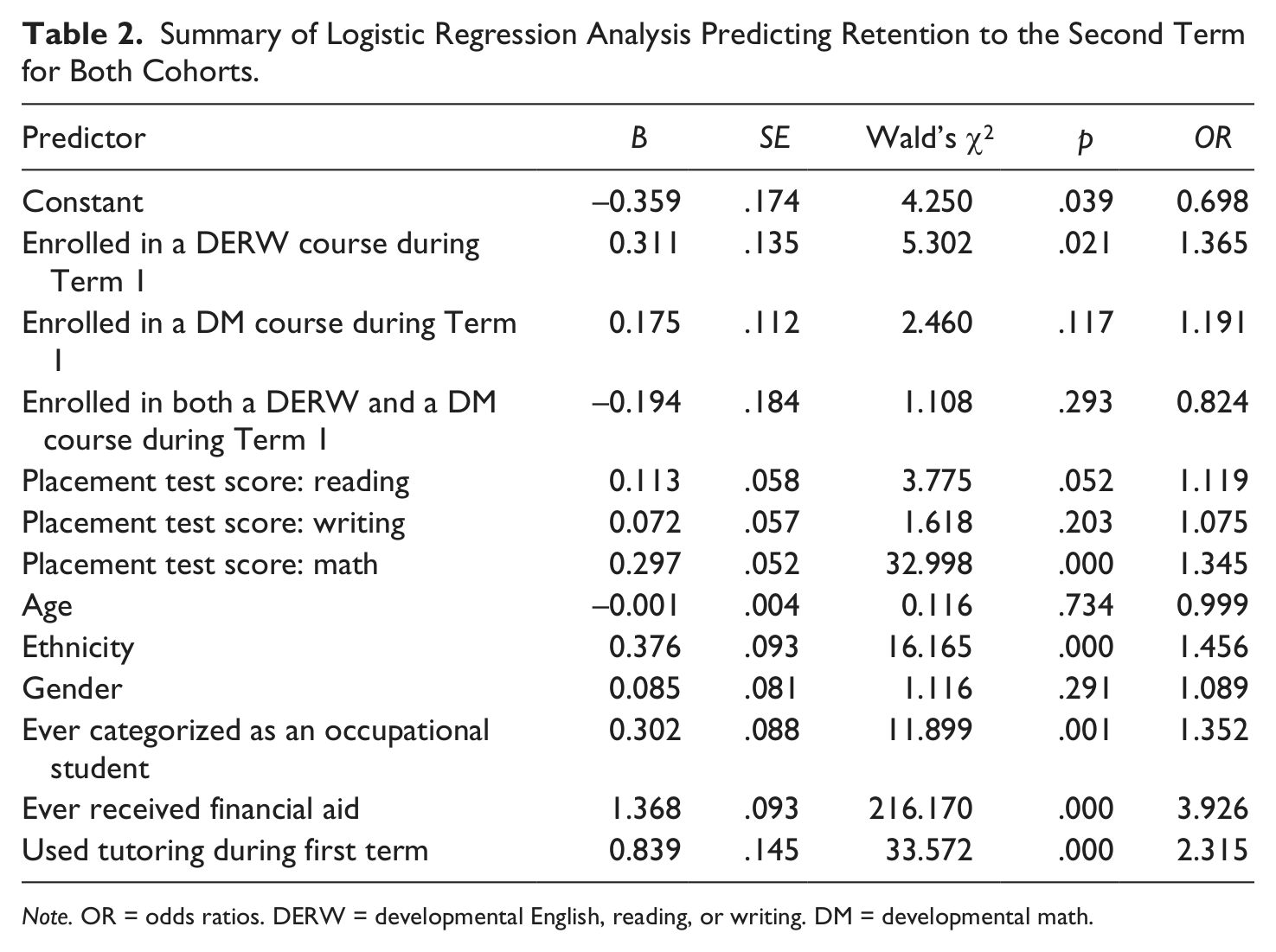
The results of the logistic regression for the outcome of immediate retention into the second term are included in Table 2. Students who enrolled in one or more DERW courses in the first term were more likely to persist into the next term (p = .021) than students who did not enroll in one or more DERW courses in the first term, after controlling for their ability as indicated by placement test scores. Students with higher math placement scores were also more likely to be retained (p < .001), consistent with previous studies. Reading ability was borderline significant (p = .052),while writing ability was not related to retention into the second or subsequent years.
Summary of Logistic Regression Analysis Predicting Retention to the Second Term for Both Cohorts.
Note. OR = odds ratios. DERW = developmental English, reading, or writing. DM = developmental math.
Demographically, White/non-Hispanic students were more likely than students in other ethnic categories to be retained into the second term (p < .001). Older students and women were neither more nor less likely to reenroll the next term. Students who received financial aid at any time (p < .001), who declared an occupational major at any time (p = .001), or who opted to receive tutoring during their first term (p < .001) were all more likely to reenroll into the second term.
Retention Into the Second Year
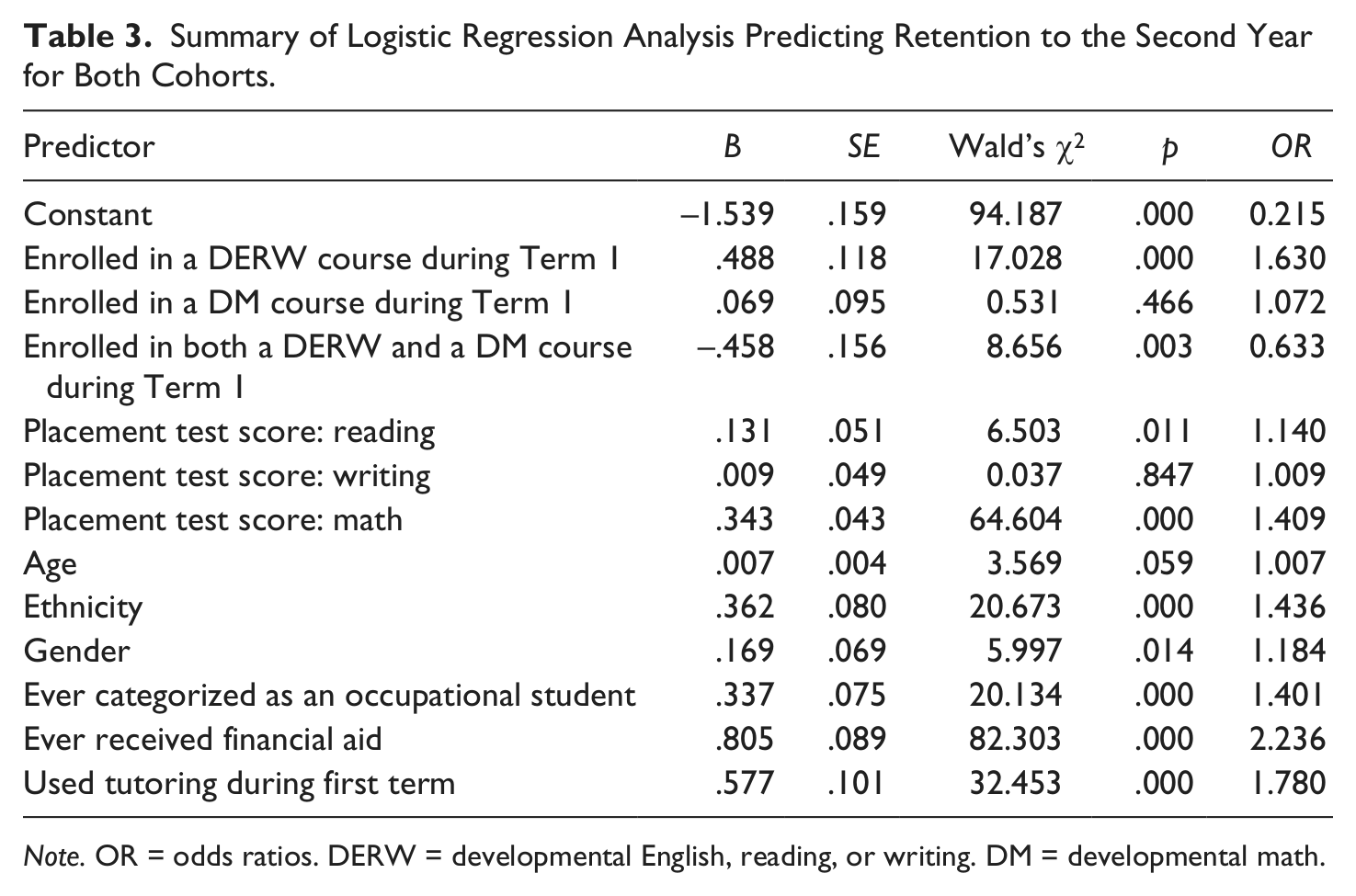
The result of the logistic regression for the outcome of retention into the second year is presented in Table 3. Students who enrolled in one or more DERW courses in the first term (p < .001) were more likely to persist into the next year than students who did not enroll in one or more DERW courses in the first term, after controlling for their ability as indicated by placement test scores. This effect is identical to that observed for immediate retention. However, this effect was completely negated 1 if students took both DERW and DM courses. In addition, and not surprisingly, students with stronger math (p < .001) or reading ability as measured by placement tests (p = .011) were also more likely to persist.
Summary of Logistic Regression Analysis Predicting Retention to the Second Year for Both Cohorts.
Note. OR = odds ratios. DERW = developmental English, reading, or writing. DM = developmental math.
Demographically, White/non-Hispanic students were still more likely to persist (p < .001), and at this point women were also (p = .014). Again, students who received financial aid at any time (p < .001), who were classified as occupational students at any time (p < .001), or who opted to receive tutoring during their first term (p < .001) were all more likely to be retained into the 2nd year.
Retention Into the Third Year
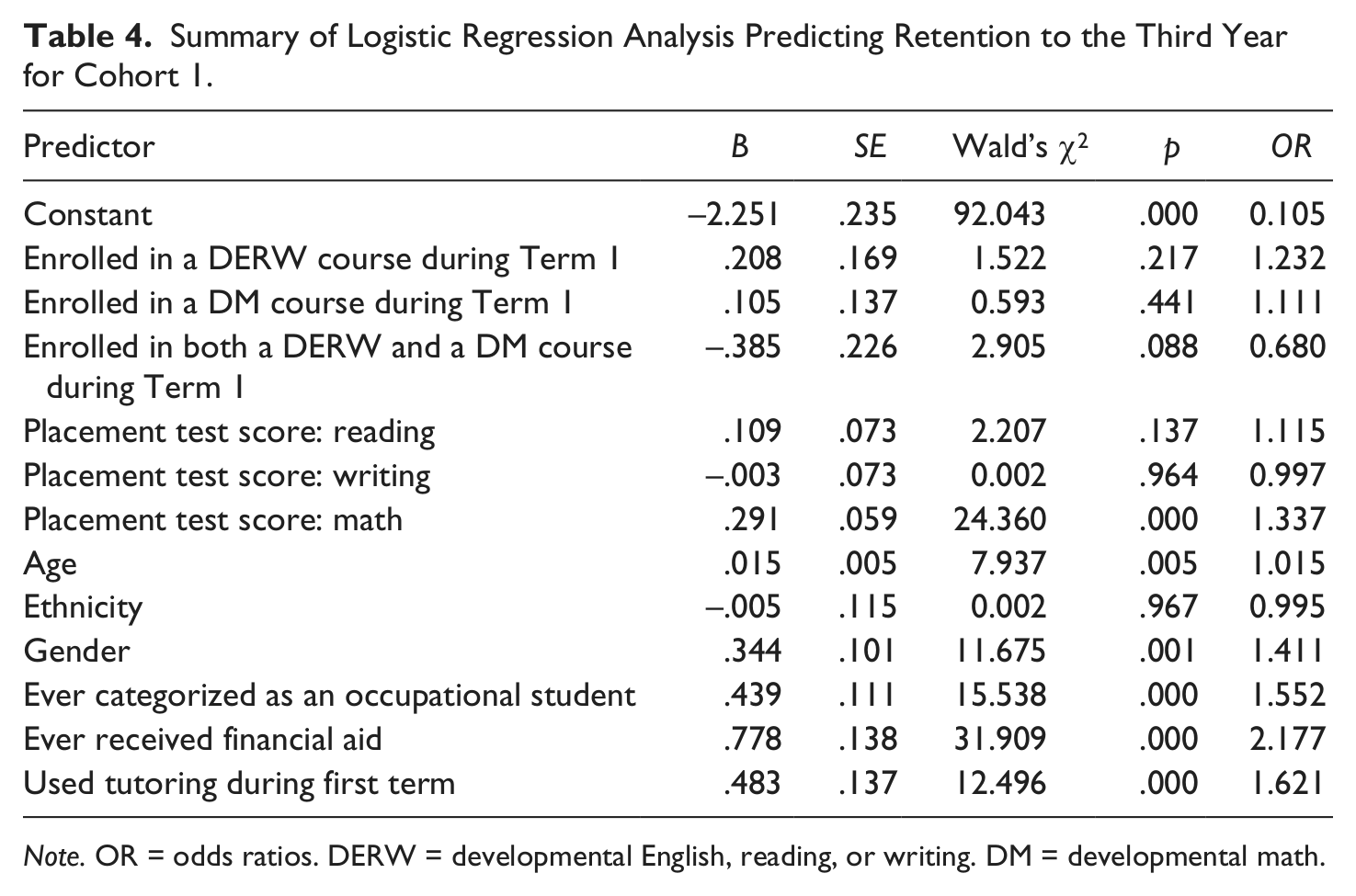
The result of the logistic regression for the outcome of retention into the third year is included in Table 4. By the third year of enrollment, students who had enrolled in one or more DERW courses in the first term were no more likely to have persisted than students who had not (i.e., that effect had dissipated; p = .217). In addition, students who entered with higher math placement scores were more likely to persist (p < .001), but the advantages of higher initial reading placement scores had dissipated.
Summary of Logistic Regression Analysis Predicting Retention to the Third Year for Cohort 1.
Note. OR = odds ratios. DERW = developmental English, reading, or writing. DM = developmental math.
Demographically, women (p = .001) and older students (p = .005) were more likely to persist into the third year. Students who received financial aid at any time (p < .001), who were classified as occupational students at any time (p < .001), or who opted to use tutoring services during their first term (p = .001) were all more likely to reenroll into the third year. Except for age, these results echo those observed at earlier retention milestones.
Regression of Predictors and Covariates on Cumulative GPA
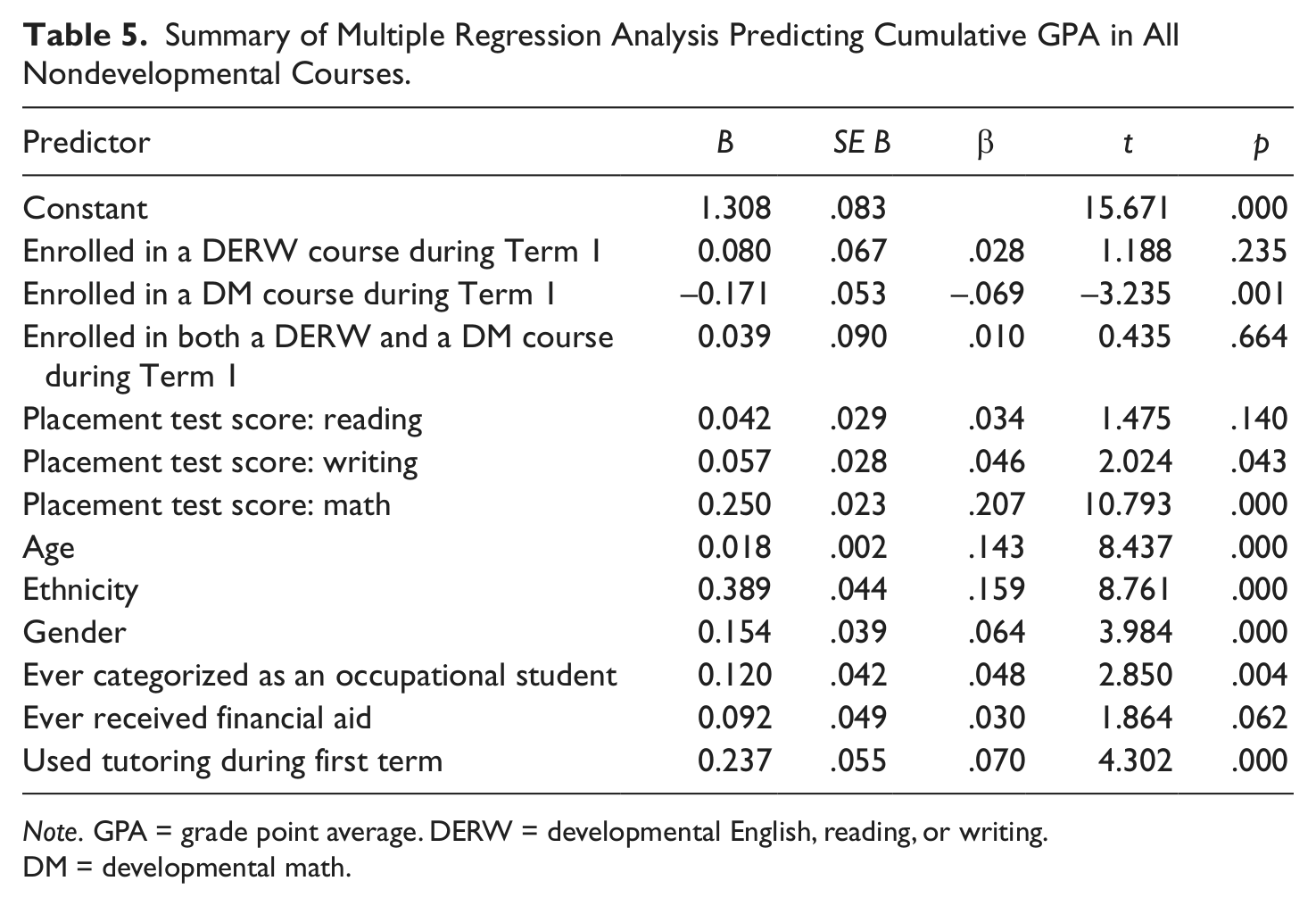
The results of the multiple regression for the outcome of cumulative GPA for all nondevelopmental courses are presented in Table 5. Again, putting all the variables of interest into the regression, including dummy variables for the individual colleges, and adjusting for students’ ability as measured by their placement test scores, we found that first-term enrollment in one or more DERW courses had no relationship to students’ GPAs, while enrollment in one or more DM courses had a significant negative relationship to GPAs (p = .001). We also found that students with higher writing and math placement scores also had higher GPAs.
Summary of Multiple Regression Analysis Predicting Cumulative GPA in All Nondevelopmental Courses.
Note. GPA = grade point average. DERW = developmental English, reading, or writing. DM = developmental math.
Demographically, older students (p < .001), White/non-Hispanic students (p < .001), women (p < .001), occupational students (p = .004), and students who used tutoring in the first term (p < .001) all had higher cumulative GPAs.
Regression of Predictors and Covariates on Graduation
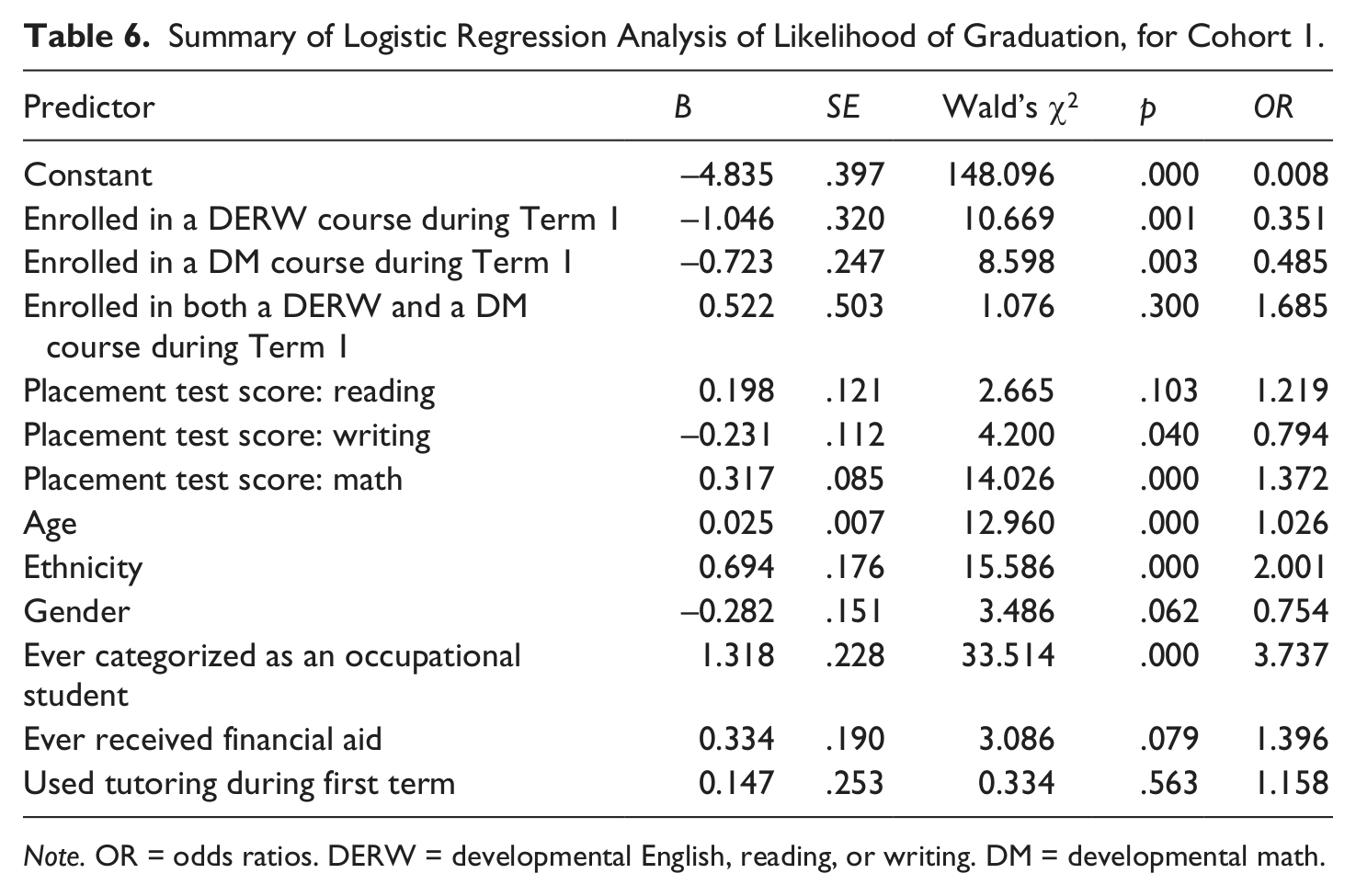
The result of the logistic regression for the outcome of graduation is presented in Table 6. Regressions predicting the outcome of graduation were only run for Cohort 1. By the end of the fall of 2011, more than 2 academic years after beginning college, 12.6% of students who entered college in 2009 had completed a degree or a certificate. At this point 74.2% of the remaining students had withdrawn, dropped out, or stopped out, while 25.8% were still enrolled.
Summary of Logistic Regression Analysis of Likelihood of Graduation, for Cohort 1.
Note. OR = odds ratios. DERW = developmental English, reading, or writing. DM = developmental math.
Taking either DERW (p = .001) or DM classes (p = .003) in the first term decreased a student’s likelihood of completion within this 2-year timeframe. This is unsurprising, because students do not receive degree credit for developmental courses.
When student characteristics are taken into account, stronger writing (p = .040) and math ability (p < .001), as measured by placement tests, are predictors of completion. Reading ability is not. Students who were older were more likely to be retained (p < .001) and to complete, as were those who were White/non-Hispanic (p < .001). Students who were in occupational programs (p < .001) were also more likely to have positive completion outcomes. While women outnumbered men in enrollment, the sex of a student did not predict completion outcomes.
Regression of Predictors and Covariates on Cumulative GPA in College-Level English, Reading, Writing (ERW), and Math Courses
Nondevelopmental ERW Courses Only
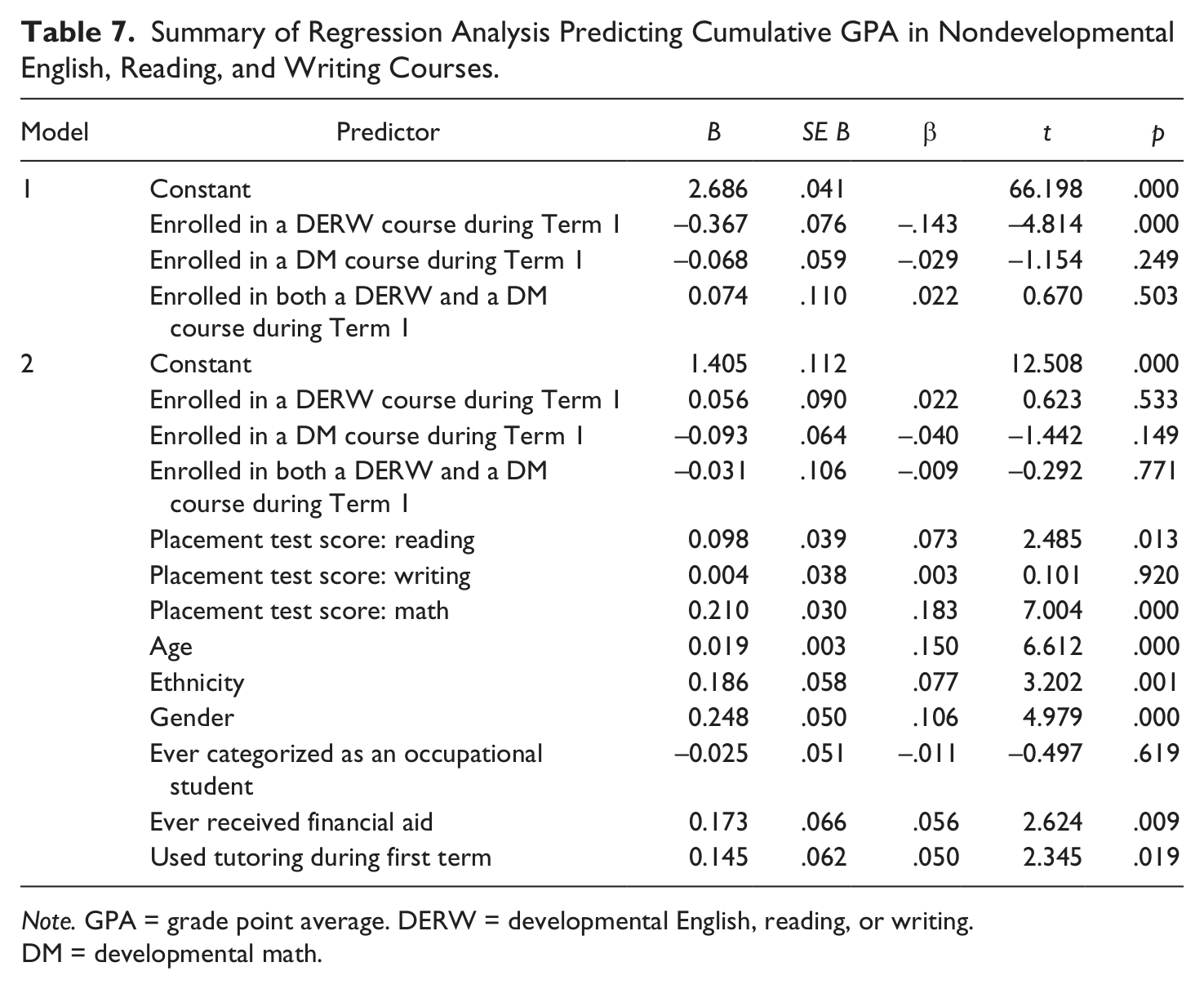
The second series of analyses used multiple regressions in blocks to explore the relationship between taking developmental courses and performance in nondevelopmental courses, beginning with ERW GPA (see Table 7). Note that less than half the sample (n = 3,108) had cumulative GPA data for nondevelopmental ERW courses.
Summary of Regression Analysis Predicting Cumulative GPA in Nondevelopmental English, Reading, and Writing Courses.
Note. GPA = grade point average. DERW = developmental English, reading, or writing. DM = developmental math.
Looking only at the effects of developmental classes, taking one or more DERW courses in the first term is negatively associated with subsequent GPAs in nondevelopmental ERW courses (p < .001). However, controlling for ability (placement scores) and the remaining covariates, this effect of DERW classes disappears (p = .533). Not surprisingly, stronger reading ability on the placement tests yields higher GPAs in nondevelopmental ERW courses (p = .013). More surprisingly, so does stronger math ability (p < .001). Writing placement scores showed no relationship to the outcomes being measured.
Demographically, older students (p < .001), White/non-Hispanic students (p = .001), and women (p < .001) had higher GPAs in nondevelopmental ERW courses. Students who ever received financial aid (p = .009) and students who received tutoring in the first term (p = .019) also had higher GPAs. Occupational students did neither better nor worse.
Nondevelopmental Math Courses Only
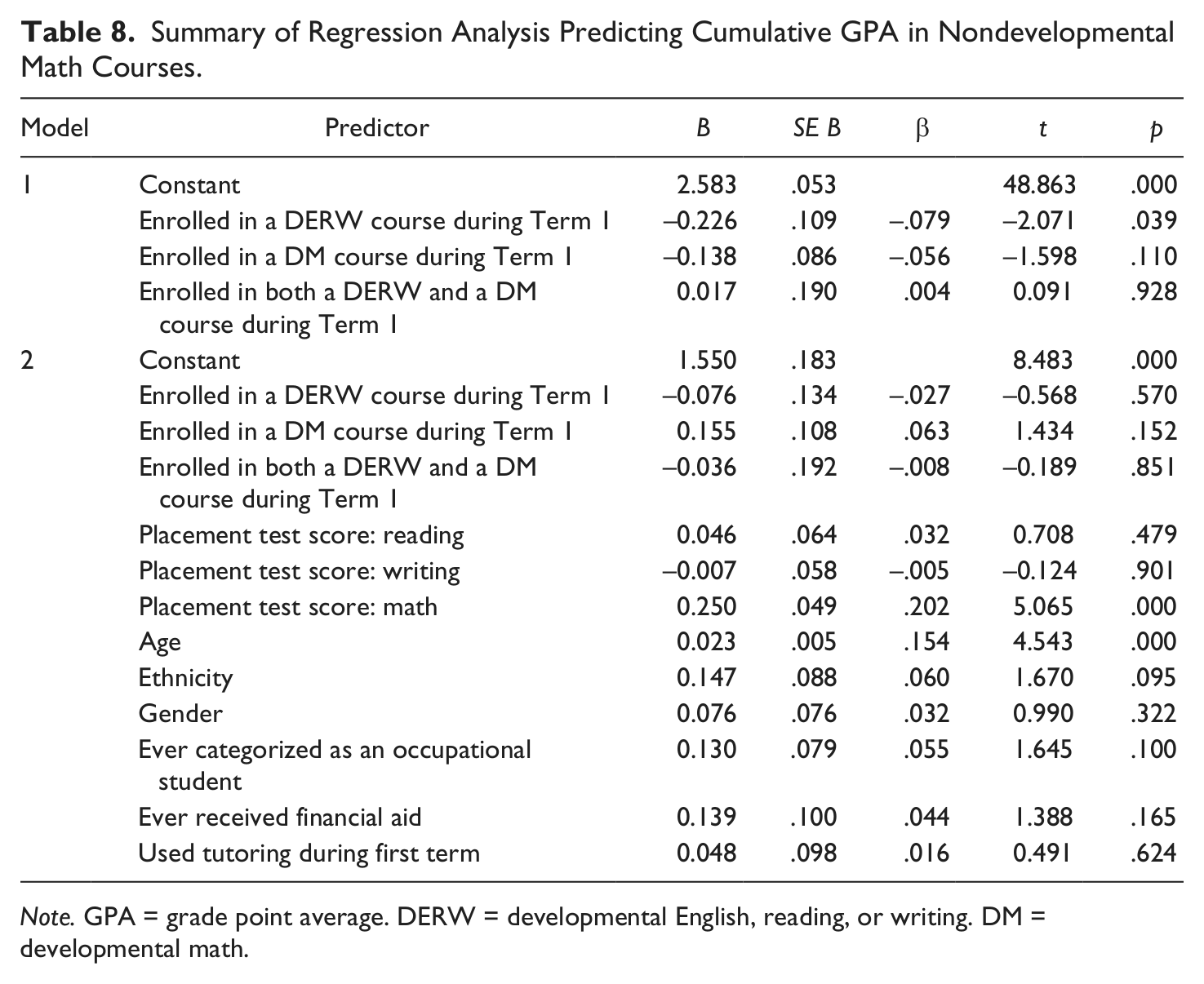
A second multiple regression in blocks explored the prediction of cumulative GPAs in nondevelopmental math courses (see Table 8). Note that even fewer students had cumulative GPA data for nondevelopmental math courses (n = 1,601). Looking only at the effects of developmental classes, taking one or more DERW courses in the first term is negatively associated with subsequent math-related GPAs in nondevelopmental courses (p = .039). Interestingly, taking one or more DM courses in the first term does not have a significant effect. Controlling for everything, both types of developmental classes no longer matter. Again, not surprisingly, students with stronger math ability coming into college earned higher math-related grades (p < .001). Older students also earned higher math-related grades (p < .001), but ethnicity, sex, financial aid, tutoring, and occupational status had no effect.
Summary of Regression Analysis Predicting Cumulative GPA in Nondevelopmental Math Courses.
Note. GPA = grade point average. DERW = developmental English, reading, or writing. DM = developmental math.
Discussion
Several factors helped students persist into the second term of college, and several of these also were significantly related to continued persistence and higher overall GPA. Enrolling in DERW courses during the first term of college predicted retention into the second term and second year but not the third year; the available data do not suggest an explanation for this finding. Considering demographic variables, older students, White/non-Hispanic students, and occupational students were also more likely to graduate within the timeframe of this study. These groups, and women, also had higher cumulative GPAs for all nondevelopmental courses. Interestingly, the higher GPAs of older students, White/non-Hispanic students, and women were accompanied by higher GPAs in nondevelopmental ERW courses but not in nondevelopmental math, suggesting that some of the higher grades were more likely earned in college-level ERW classes.
The higher graduation rate of occupational students may in part be attributable to the fact that some occupational programs can be completed in less than 2 years; this analysis did not examine program duration as a variable. Notably, the higher graduation rate for occupational students found in this analysis stands in contrast to data from the Beginning Postsecondary Students Longitudinal Study, which showed a higher persistence and graduation rate for academic (transfer) students (58%) than for career/technical students (56%; NCES, n.d.b).
When examining placement scores, it became clear that math ability at the time of college entrance was a powerful predictor of student success. While it should not be surprising that students with higher prior math ability do better in college (consistent with Attewell et al., 2006), the lack of a similar effect for prior reading or writing skills is of interest. The breadth of measures on which higher math ability students did better is notable: math placement scores predicted better retention at all time periods, higher cumulative GPA for all nondevelopmental courses, and higher probability of graduation. Higher math placement scores also predicted better performance in nondevelopmental math classes. Surprisingly, they also predicted higher GPA in nondevelopmental ERW courses (i.e., those for college credit); notably, writing placement scores did not. Students with higher writing placement scores showed only one benefit—a higher cumulative GPA for all nondevelopmental courses. It is perhaps to be expected that grades were helped by better prior writing skills, but these students were no more likely to be retained or to complete their programs than other students.
Analyses were conducted adjusting for ability. We chose to adjust for initial ability in order to see the impact of developmental course-taking and other variables of interest on changes in outcomes, holding all other variables constant. Using this regression approach, participation in DERW classes in the first term contributed to next-term and second-year retention. However, participating in DM classes in the first term had no such effect, negated the positive effect of taking DERW classes if both were taken in the first term, and was negatively associated with both cumulative GPA and graduation. Because we controlled for initial ability as well as all other variables, this is notable. Other researchers have found that enrollment in developmental coursework varies in usefulness based on student characteristics (e.g., Boatman & Long, 2010) and these findings do not refute those. We did not have sufficient sample size to examine only students near placement cutoffs or to consider students needing the most remediation as a separate group.
Financial aid has previously been found to contribute to college retention and graduation (Kennamer, Katsinas, & Schumaker, 2010-2011; Prince & Jenkins, 2005), and this finding was partially supported. Students who received financial aid, defined as receiving a loan or grant, were more likely to have positive trajectories of retention as well as higher cumulative GPA for nondevelopmental ERW classes. The present analysis also found this true (with some exceptions) of older students, White/non-Hispanic students, women, and students with occupational majors. These findings may reflect the impact of other unmeasured but correlated variables and risk factors such as parents’ level of education and clarity of goals for attending college.
Participating in tutoring services during the first term in college was quite useful to students throughout their college careers. Those who chose to use their college’s tutoring service during their first term in college had better retention into the second term, second year, and third year, and had higher cumulative GPAs and higher GPAs in nondevelopmental ERW courses specifically. As with other analyses, this study adjusted for ability and other covariates, so the finding seems to support the value of tutoring services, a topic little-studied in prior research. However, the data do not permit determination of whether the apparent benefits of tutoring are due to the tutoring itself, to the interpersonal connection created by the tutoring relationship, or to the individual characteristics of students who choose to utilize these services.
In sum, we found math placement testing a useful predictor, but DM classes unhelpful, when looking at this population as a whole. The utility of reading placement test scores and enrollment in DERW classes as predictors of student outcomes were both limited to early retention (i.e., into the second year). Neither DERW nor DM classes helped students’ GPA in nondevelopmental classes in the same disciplines. Financial aid and tutoring were much more clearly related to student success than developmental coursework.
Footnotes
Declaration of Conflicting Interests
The authors declared no potential conflicts of interest with respect to the research, authorship, and/or publication of this article.
Funding
The authors disclosed receipt of the following financial support for the research, authorship, and/or publication of this article: The research reported in this article was supported by the National Research Center for Career and Technical Education, Office of Vocational and Adult Education, U.S. Department of Education, PR/Award (No. VO51A070003).