






Abstract
Keywords
Student transfer is no longer a peripheral behavior within the academy, it is becoming a norm. Around one third, 35%, of first-time students will transfer at least once in a 6-year period (Simone, 2014). Nearly one fourth, 22.7%, of students who begin at a 2-year institution will transfer to a 4-year institution (Skomsvold, Radford, & Berkner, 2011). Of these students, 62% will earn a bachelor’s degree within 6 years of transferring (Shapiro et al., 2013). Despite established pipelines and higher-than-average graduation rates, the quality of education received by transfer students particularly in terms of student engagement goes understudied (Bahr, Toth, Thirolf, & Massé, 2013).
Research has shown that compared with nontransfer or native students, transfer students at 4-year institutions may have lower levels of engagement and participation in high-impact practices (HIPs) like living learning communities and study abroad (Ishitani & McKitrick, 2010; McCormick, Sarraf, BrckaLorenz, & Haywood, 2009). The Association of American Colleges & Universities (AAC&U) has endorsed institutions fostering HIPs because these educational opportunities have been associated with higher grade point averages (GPAs) and increased persistence rates (Kuh, 2008). Furthermore, these practices have been linked to enhanced levels of student engagement (Brownell & Swaner, 2010; Kilgo, Sheets, & Pascarella, 2014; Kuh, 2008) and may mediate the likelihood that students participate in these educational opportunities. The purpose of this article is to measure the relationship between transfer student status, student engagement, and participation in HIPs. Student engagement themes associated with HIPs and academic integration were included in the model of the current study, so that significant mediating effects of these forms of engagement could indicate areas where institutions can improve in an effort to increase transfer student participation in HIPs.
HIPs
Every summer, the AAC&U hosts a week-long institute on teaching institutional stakeholders about the values of HIPs; this organization is leading the charge in these important practices that enhance the likelihood of student success. In the 2008 AAC&U report, the author George Kuh defines and describes these practices by listing 10 educational practices that contain the components and outcomes associated with HIPs: participating in first-year seminars, living in a learning community, conducting undergraduate research with a faculty member, sharing a common intellectual experiences (e.g., a core curriculum), engaging in service-learning, having an internship, enrolling in writing-intensive courses, participating in diversity or global learning, studying abroad, and completing a senior capstone experience. In this cornerstone report, Kuh argues that HIPs are similar in that they all involve interaction with faculty and peers, feature high expectations and extensive feedback, involve students having exchanges with others different from themselves along diverse topics, and require extensive amounts of time and effort to complete. The analysis conducted within this report links the following three outcomes with these HIP experiences: increases in GPA, heightened likelihood of retention, and higher levels of engagement (particularly in the areas of collaborative learning, student–faculty interaction, and supportive campus environment). Although there are common themes shared among HIPs, it is not surprising that each HIP may also have unique advantages (see Brownell & Swaner, 2010). HIPs offer academic program opportunities to bridge skills and knowledge gained throughout a student’s collegiate experience and create a seamless unifying experience where students can apply what they have learned as a result of attending college (Wawrzynski & Baldwin, 2014).
Understanding the relationships between transfer status, student engagement, and HIP participation may provide insight on how to increase the participation of transfer students in HIPs. The question guiding this research is as follows: accounting for student sex, race, and first-generation status, is there a significant direct or indirect relationship between transfer status, student engagement, and HIP participation?
Conceptual Framework
The body of literature guiding this study includes research contributing to the concept of student engagement, defined by Kuh (2003) as “the time and energy students devote to educationally sound activities inside and outside of the classroom, and the policies and practices that institutions use to induce students to take part in these activities” (p. 24). Antecedents of this concept can be found in the research that has related positive student outcomes with student effort (Pace, 1980) and student involvement (Astin, 1984). Important to this article are the ways in which students can be engaged, as defined by Chickering and Gamson (1987), which includes the behaviors of collaborating with peers and interacting with faculty. Tinto (1993) further contributed to this concept by identifying the institutional role, and some would argue responsibility, in fostering student engagement. In the case of the current study, student engagement was measured through three tiers associated with HIP participation: collaborating with peers, interacting with faculty, and support by the institution (Kuh, Donnell, & Reed, 2013).
Most of the literature on student engagement focuses on native students. Other than a few focused studies, most research on student engagement, at best, includes transfer status as a personal background covariate in a model (Bahr et al., 2013). Using the results from these studies to describe transfer student engagement can be misleading. Transfer students’ behaviors can differ from native students’ behaviors. For example, in his study of the drop-off in GPA during a transfer student’s first semester at a 4-year institution, also known as “transfer shock,” Ishitani (2008, p. 403) measured the attrition patterns of transfer students and found that, compared with native students, this group exhibited different departure rates. Although the concept of transfer shock is often applied to examinations of academic performance like changes in GPA, this idea can also be applied when measuring aspects of quality of experience, such as student engagement (Hills, 1965).
The few studies on transfer student engagement have demonstrated that these students seek similar types of engagement compared with native students, but in different ways. For example, transfer students may value student–faculty interaction; however, they may be more likely to engage with faculty through official channels (i.e., classroom discussions, emailed questions, visited office hours) instead of out of classroom experiences, which is where most HIPs take place (Lester, Leonard, & Mathias, 2013). Other research has shown that engagement activities like interaction with faculty and peer collaboration lead to greater levels of academic support and professional goal setting (Bahr et al., 2012; Reyes, 2011). Some studies, like the current one, have used data from the National Survey of Student Engagement (NSSE) to explore the engagement of transfer students and compare their behavior with native students. Basic findings, like transfer students are more likely to work off campus or less likely to participate in social and co-curricular activities, are helpful in understanding transfer student engagement (NSSE, 2008, 2011). Ishitani and McKitrick (2010) found that transfer students were less likely to participate in activities associated with the engagement constructs of academic challenge, student–faculty interaction, and collaborative learning. It should be noted that in a similar study, McCormick et al. (2009) found little difference between transfer and native student engagement associated with student–faculty interaction (also little difference in quality of relationships and satisfaction). However, these researchers did find that transfer students were much less likely to participate in HIPs. Using a logistic regression, McCormick et al. (2009) calculated that in the greatest disparity, native students had 89% greater odds of studying abroad; whereas in the smallest disparity, these students still had 33% greater odds of completing a culminating senior experience than transfers. In a qualitative study of 12 students who had transferred to a 4-year institution, Townsend and Wilson (2009) found that the opportunity to conduct research with faculty (a HIP included in the current study) was an important experience in increasing student persistence. Other than the previously cited work, there have been few studies that measure the participation in multiple HIPs among transfer students (Bahr et al., 2013).
This review of the literature informing the current study’s conceptual framework provides evidence regarding how the concept of student engagement needs to be updated when describing the experience of community college students transferring to 4-year institutions. First, the concept of transfer shock may or may not contribute to student participation in HIPs, providing an explanation for the results of this research. Second, previous research on the disparate perceptions on engagement between transfer and native students suggests that transfer students may not conceptualize HIPs in the same way as native students. Third, there are clear barriers to participation in HIPs for transfer students; therefore, understanding how overall engagement mediates participation is helpful for educators interested in supporting the successful transition of these students between community college environments and 4-year institutions.
Method
Data
Data were collected from the 2014 administration of the NSSE and included 22,994 senior student responses. The NSSE is an assessment of student behavior in areas of prominent practices in undergraduate student learning; the survey is used internationally by hundreds of institutions each year. Incorporated in the current study are three survey components: personal background, student engagement, and HIP participation. The latent variables for engagement were derived from the NSSE (2014a) Engagement Indicators (see NSSE, 2014a, for Engagement Indicator description).
This study is focused on vertical transfer (i.e., students transferring from 2-year to 4-year institutions; Townsend, 1999). Based on self-reports collected in the survey, a transfer student was defined as a student who (a) did not begin his or her postsecondary career at the institution at which he or she completed the survey, and (b) at one time attended a community college, junior college, or vocational or technical school. This is not a study on student swirl (i.e., transferring back and forth between 4-year and 2-year institutions; McCormick, 2003); therefore, students who attended another 4-year college or university were removed.
Measurement Description
For the independent variables, the model incorporated seven dichotomous background characteristics: transfer status (0 = nontransfer; 1 = transfer), sex (0 = female; 1 = male), first-generation status (i.e., neither parent/guardian holds a bachelor’s degree) (0 = non-first-generation; 1 = first-generation). Within the model, there were four variables based on race or ethnicity: Black (0 = non-Black or African American; 1 = Black or African American), Latino (0 = non-Hispanic or Latino; 1 = Hispanic or Latino), Asian (0 = non-Asian, Native Hawaiian, or Other Pacific Islander; 1 = Asian, Native Hawaiian, or Other Pacific Islander), and multiracial (0 = monoracial; 1= more than one race selected); white students served as the reference group. Respondents were able to check all that apply, so students who identified as monoracial were coded into their corresponding identity, whereas students who identified as more than one race or ethnicity were coded into a dichotomous value indicating multiracial. For the dependent variables associated with engagement, students were asked how often they participated in behaviors associated with the indicators of collaborative learning and student–faculty interaction (1 = never; 2 = sometimes; 3 = often; 4 = very often) and to what degree their institution emphasized aspects of a supportive environment (1 = very little, 2 = some, 3 = quite a bit, 4 = very much). The dependent variables associated with HIP participation were dichotomous (0 = not done; 1 = done or in progress).
Sample
The demographics of the sample are as follows: 41% transfer, 36% male, 68% white, 7% Black, 8% Latino, 6% Asian, 4% multiracial, and 45% first-generation (see Table 1). Study abroad was the least popular HIP (18% of the sample participation), whereas participating in service-learning was much higher (65% of the sample participated in this HIP). Student engagement associated with the indicators of collaborative learning and student–faculty interaction averaged between “sometimes” and “often,” whereas most of the components of supportive environment occurred “some” and “quite a bit.” Transfer status was most strongly correlated with participating in an internship (R = –.22) and studying abroad (R = –.21) (see Table 2 for correlations between all variables in the model). A little more than a third, 36%, of the students attended a private institution, with 35% enrolling in doctoral universities and 47% in master’s colleges and universities.
Descriptive Statistics for Model Variables.
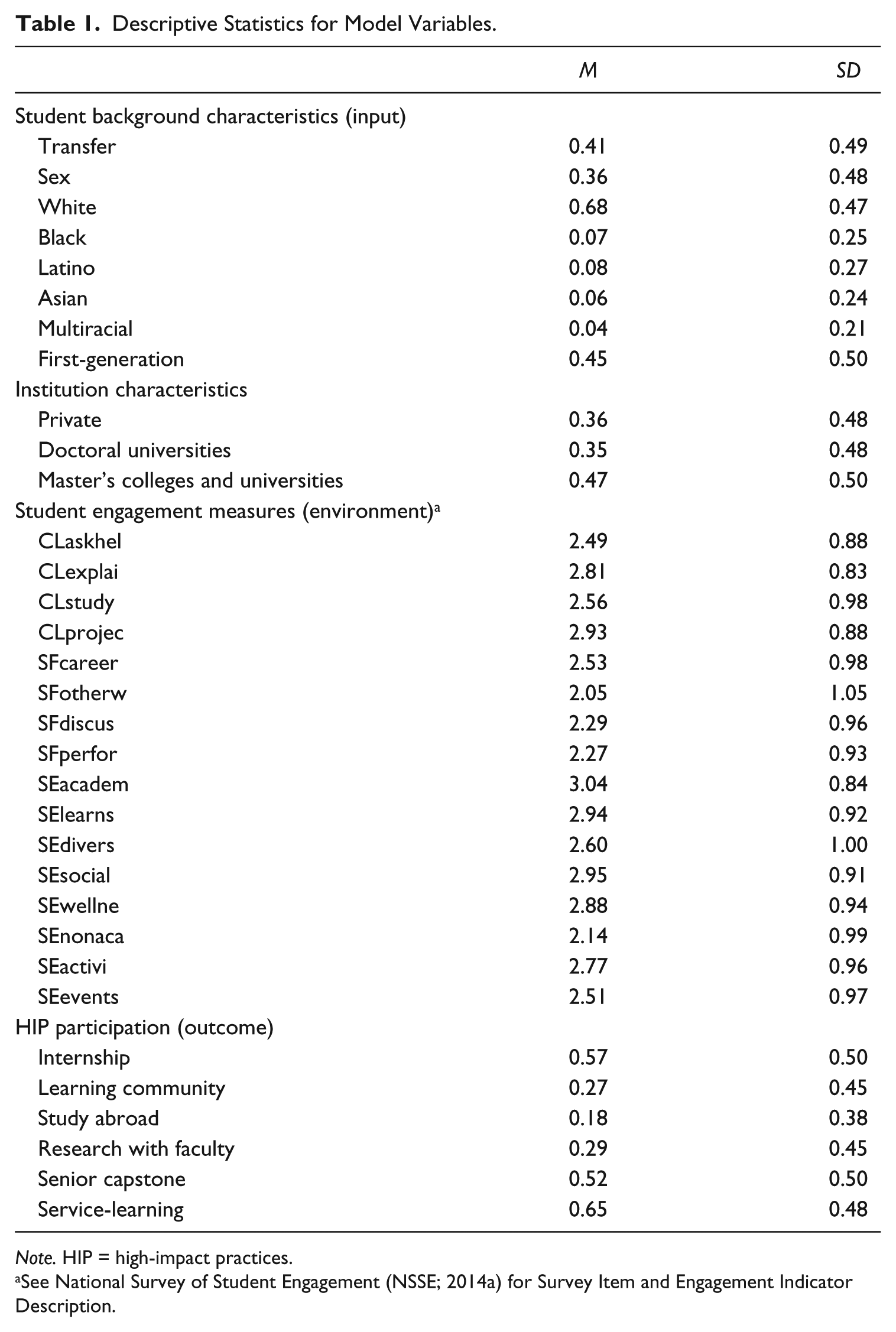
Note. HIP = high-impact practices.
See National Survey of Student Engagement (NSSE; 2014a) for Survey Item and Engagement Indicator Description.
Covariance Matrix for Model Variables.
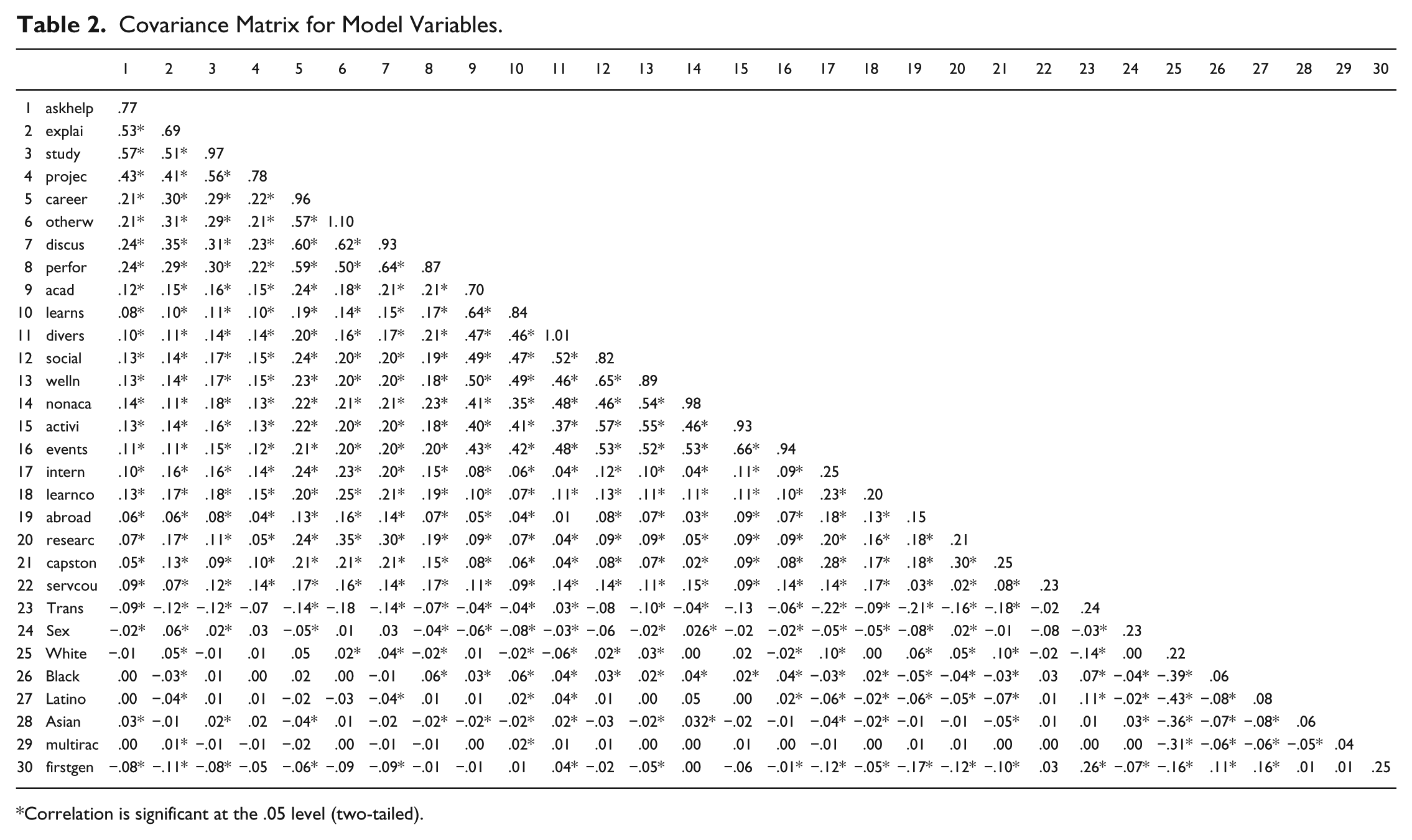
Correlation is significant at the .05 level (two-tailed).
Model Description
Employed in this study was a general latent variable model (see Figure 1). Also within the model, there is a multiple indicators multiple cause (MIMIC) component, where the personal background indicators were included as covariates to measure the association of aspects (e.g., being a transfer student) and each of the latent variables (γ11-γ14). This model includes three endogenous latent variables for student engagement: collaborative learning (η1), student–faculty interaction (η2), and supportive environment (η3) comprised of multiple indicators (see NSSE, 2014a, for a description of each indicator).
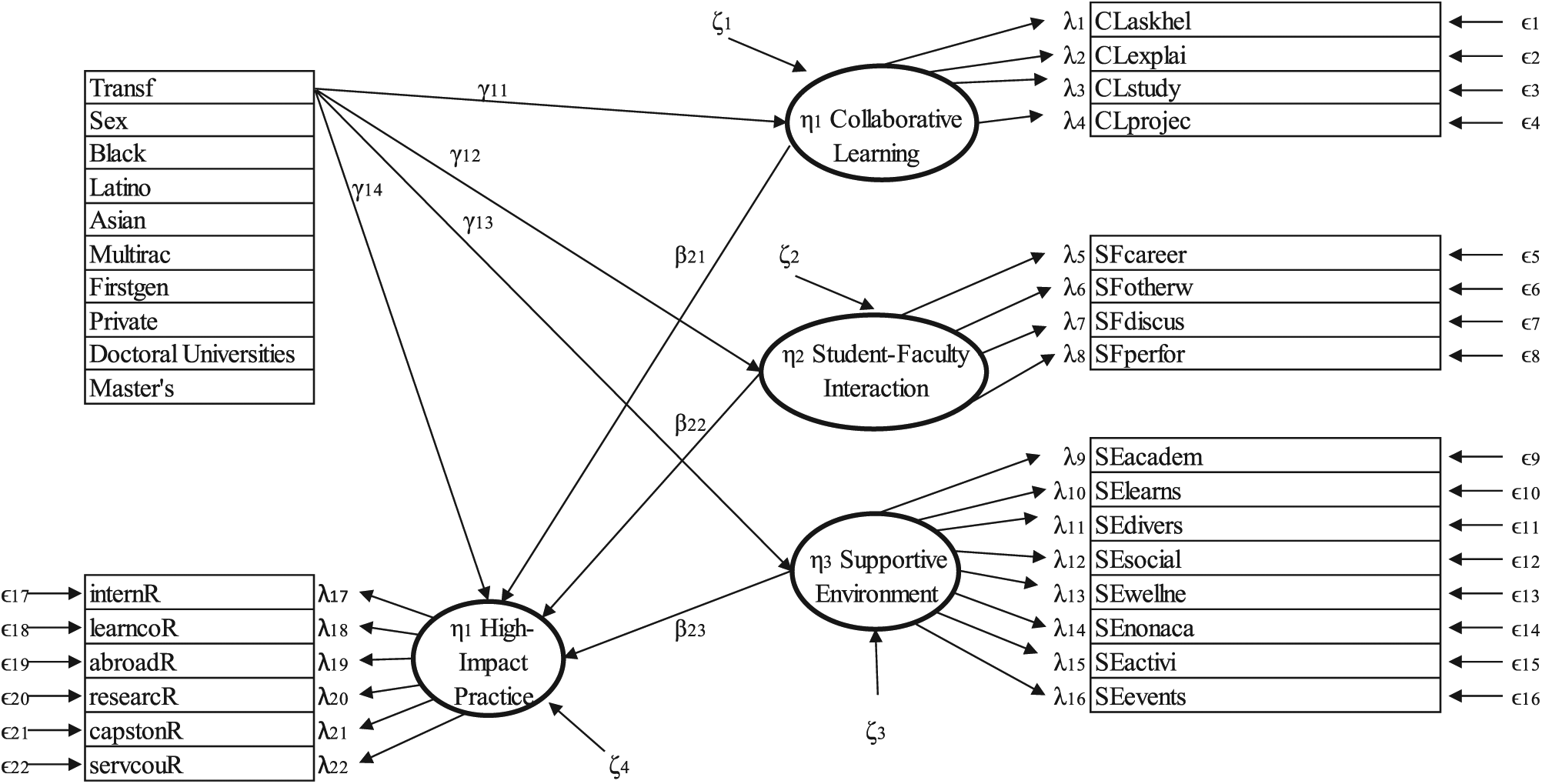
Path model representation.
The last endogenous latent variable in the model is HIP Participation (η1) which is comprised of the six HIP activities: living in a learning community, participating in undergraduate research with a faculty member, engaging in service-learning, having an internship, completing a senior capstone experience, and studying abroad. Each of the three endogenous engagement latent variables has a direct relationship (β21-β23) with the endogenous latent variable HIP Participation (η1). The relationships between each of the latent variables are one way and do not have a feedback loop; therefore, the relationships between all endogenous latent variables in this model are recursive. This will be important for model identification.
Model Building and Evaluation Process
As mentioned previously, the current study employed a general latent variable model with a MIMIC component. The dependent indicators used in the model were labeled categorical because they were either dichotomous variables or non-numeric survey responses. At first, the first-level latent variables, collaborative learning (η1), student–faculty interaction (η2), and supportive environment (η3), were constructed, and then the HIP Participation latent variable (η1) was built and regressed onto the three engagement variables; the variance of this latent variable was fixed to zero. Afterward, the indicators of personal background were regressed onto each of the four latent variables.
Next, the model fit was evaluated using the chi-square test of model fit, the comparative fit index (CFI), Tucker–Lewis index (TLI), and the root mean square error of approximation (RMSEA). At first, the fit was inadequate; therefore, the weighted least squares means and variance (WLSMV), which is the appropriate estimator when the model includes categorical data, was used to construct model indices (Brown, 2014). These indices were helpful in identifying which errors could be correlated to improve model fit. Restricting correlation of errors to items within the same latent variable is a theoretically practical approach (Bollen, 1989). The resulting model has 15 pairs of errors correlated within the latent variables of student engagement: collaborative learning (2), student–faculty interaction (2), and supportive environment (11); the improved model had a good fit: χ2 = 391,315.556, p < .05; CFI = 0.959; TLI = 0.950; and RMSEA = 0.046. A significant χ2 indicates poor fit but is susceptible to large sample sizes; all other measures of fit suggested good model fit (Hu & Bentler, 1999). After the model fit was improved, Mplus functionality was used to calculate the indirect effects. The final model is well fitting and can account for the direct and indirect associations between transfer status and HIP Participation.
Model Identification
As this is a general latent variable model, the two-step rule was used to measure model identification; also, as there is a MIMIC component to the model, the rule of MIMIC identification was employed (Bollen, 1989). In the first step of the two-step rule, the measurement model, which includes the personal background indicators and the four latent variables (without their corresponding indicators), was examined. The measurement model satisfied the t rule, in which the number of free elements (35) must be fewer than half the number of indicators (8) plus the number of latent variables (4) multiplied by the number of indicators and the number of latent variables plus 1. While necessary, this was not a sufficient measure of identification. In the measurement model, the indicators were not unifactorial; therefore, the three-indicator rule did not apply. The two-indicator rule applied and provided sufficient conditions for model identification in that there were more than two indicators per latent variable in the measurement model. In the second step of the two-step rule, the paths between the four latent variables were considered. As all the relationships in this model were recursive (there is no feedback loop), the recursive rule provided a sufficient definition for the model. The total model was identified.
The rule of MIMIC identification is easy to follow. First, one needs to count the number of indicators applied to the latent variables (p) to be greater than or equal to two and the number of latent variables (q) to be greater than or equal to one; if these parameters are met, the model meets a sufficient condition for identification. In this model, each latent variable had at least four indicators; this condition was met. Meeting the conditions for the two-step rule and the MIMIC model established that this model was identified. Model identification is crucial to any structural equation model, because it establishes that the researcher has enough known values.
Key Parameters
The research question guiding this study is, “Is there a significant direct or indirect relationship between transfer status, student engagement, and HIP participation?” To answer the question, not only does the direct association between transfer status and HIP participation need to be measured (γ14) but also the indirect paths through collaborative learning (γ11 × β21), student–faculty interaction (γ12 × β22), and supportive environment (γ13 × β23). In effect, this model used the three endogenous latent variables representing aspects of student engagement, to act as mediating variables between transfer status and HIP participation.
To measure the role of these student engagement concepts, one needs to compare the strength of association between transfer status and HIP participation without mediating variables (total effect) which is equal to the direct effect between transfer status and HIP participation (γ14) plus the indirect effect of transfer status being mediated between student engagement theme: collaborative learning (γ11 × β21), student–faculty interaction (γ12 × β22), and supportive environment (γ13 × β23; Little, Card, Bovaird, Preacher, & Crandall, 2007).
To successfully measure the strength of mediation, a study needs to meet the conditions of this technique and have outcomes that align with the theory of this approach. Mediation requires a significant relationship between the indicator (transfer status) and the outcome (HIP participation), a significant relationship between the indicator and mediator (student engagement), and a significant relationship between the mediator and the outcome. Should the value of the direct effect be different then the total effect, then the model achieves partial mediation. If that difference results in a change in sign (positive vs. negative value) of the direct effect, then the model is an example of inconsistent mediation. Finally, if the model results in a nonsignificant relationship between the mediator and outcome, then there is no mediation.
Results
In these selected results, the standardized parameter estimates between the personal background characteristics and the latent variables were examined as a means to compare the direct effect of transfer status on these various themes of engagement (see Table 3). For each of the four latent variables, transfer status presented a large, negative, and significant parameter estimate. The absolute value of transfer status was (sometimes by far) the largest estimate in each latent variable. The largest parameter estimate was the association between transfer status and HIP participation (R2 = –.403), whereas the smallest estimate for transfer status was found in its association with supportive environment (R2 = –.106). The variable transfer is dichotomous (0 = nontransfer; 1 = transfer); therefore, these negative values indicate that, everything else being equal, transfer students are less likely to participate in HIPs and are less likely to engage in the activities associated with student engagement.
Unstandardized Parameter Estimates Between Personal Background and Latent Variables.
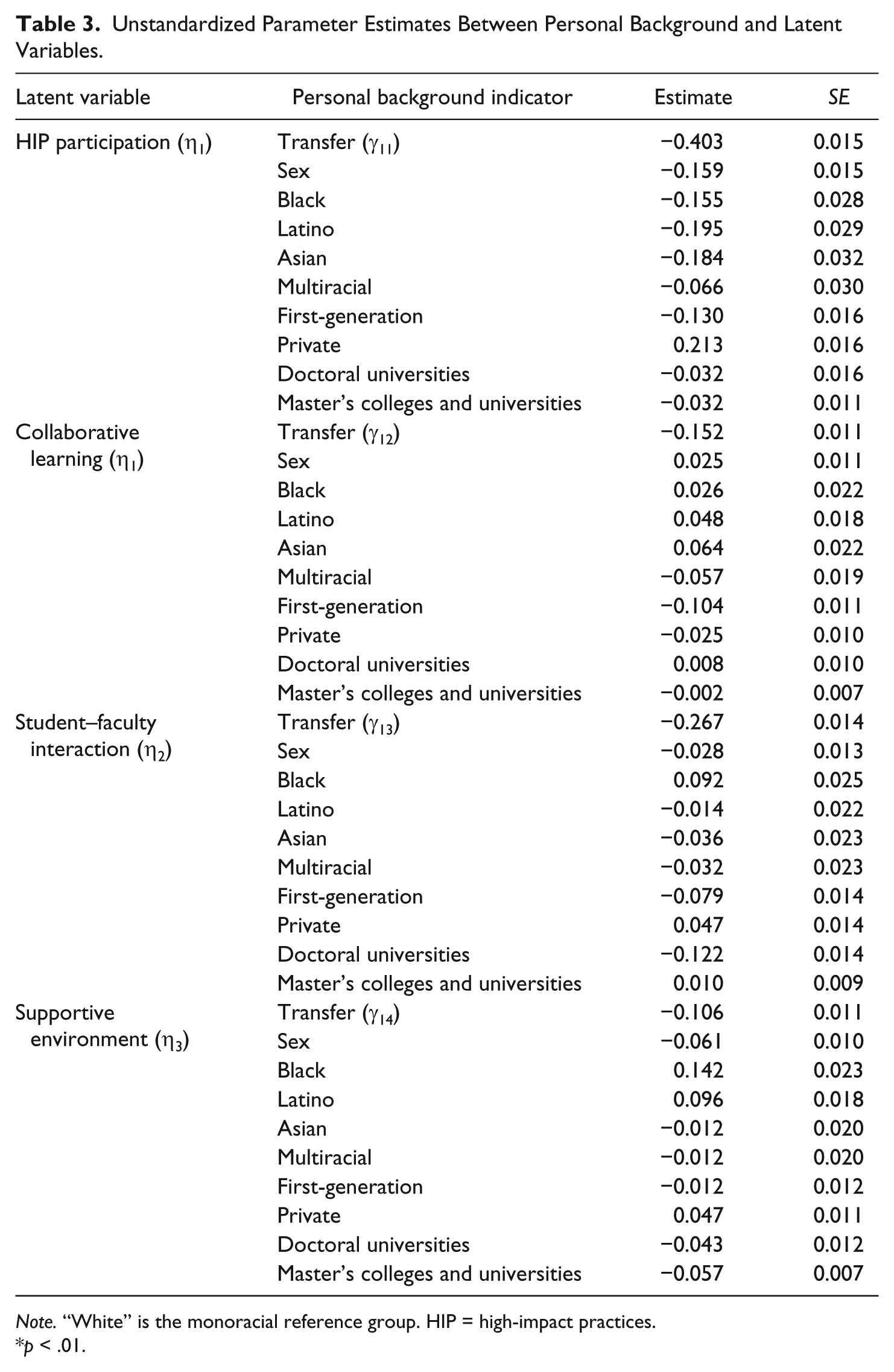
Note. “White” is the monoracial reference group. HIP = high-impact practices.
p < .01.
Student sex was a significant indicator when associated with two latent variables (not collaborative learning nor student–faculty interaction), but it was much smaller in size than transfer status and inconstant in sign (i.e., the parameter was negative for all of the latent variables except collaborative learning). Each monoracial identity was added to the model along with students who identified as multiracial, with White monoracial severing as the reference group. These parameters were inconsistently significant and often negative. The parameters for first-generation status were most like transfer status, although estimates were smaller in size; this aspect of identity consistently had a negative and significant association with all four of the latent variables. Institutional effects related to Carnegie classification, such as student racial and ethnic identity, had an inconsistently significant and often negative relationships with the latent variables of this study, when compared with students attending baccalaureate and private colleges.
Mediation Results
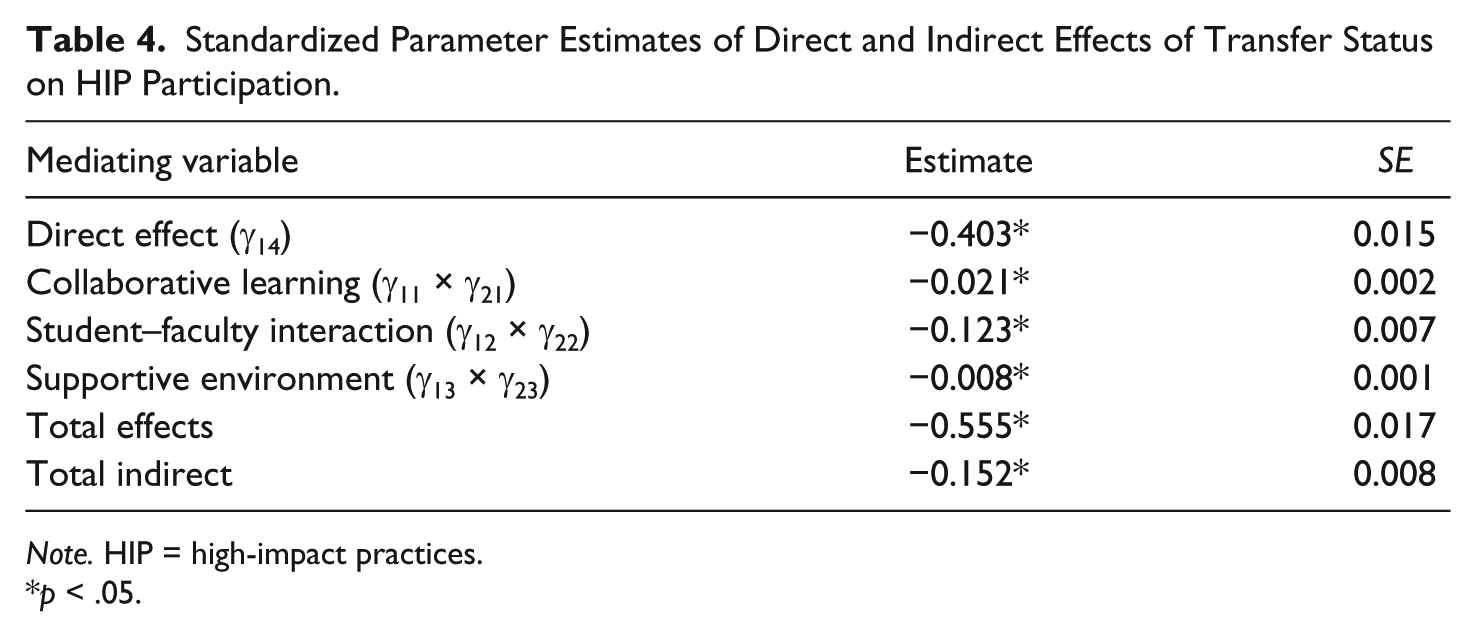
The information in Table 4 provides evidence that the first two criteria of measuring mediation are met; there is a significant relationship between the indicator and outcome (γ11) and between the indicator and mediators (γ12-γ14). Although not featured in the table, the third criteria is also met, as there are significant relationships between the mediators and the outcome. The associations between HIP practice and collaborative learning (R2 = .136), student–faculty interaction (R2 = .459), and supportive environment (R2 = .079) are all statistically significant (p < .01).
Standardized Parameter Estimates of Direct and Indirect Effects of Transfer Status on HIP Participation.
Note. HIP = high-impact practices.
p < .05.
Table 4 also reveals, despite the presence of significance in each mediation path, the estimate sizes are inconsistent. The standardized parameter estimate for the direct effect (R2 = –.403) between transfer status and HIP participation (γ14) is smaller than (but also negative) the total effect (R2 = –.555), indicating a partial mediation on behalf of the student engagement latent variables in the model. The parameter estimate for the indirect effect of student–faculty interaction (γ12 × β22) is moderate and negative (R2 = –.123) and constitutes a fifth of the total effects. Meanwhile, the parameter estimates for the indirect effects with collaborative learning (γ11 × β21) and supportive environment (γ11 × β21) as the mediating variables were also negative, but trivial in size (R2 = –.025).
Limitations
One limitation of this study is that although students identify where they have transferred from, they do not indicate how recently they transferred or how long they attended their previous institution. This limitation in the data treats a student who transferred after a single semester the same as one who transferred after years of experience at a community college. Because of this limitation of secondary data analysis, the multitude of experiences reflected by the time of transfer was not measured and could not be included in the current study. Also, although the student engagement themes in the study are theoretically integrated into HIPs, the items on the NSSE do not ask students about these themes in relation to HIP experience; therefore, engagement behaviors are not strictly limited to HIP involvement. This is a study of general student engagement and the relationship with HIP participation and transfer status. Finally, although NSSE (2014b) provided a representative sample of the undergraduate population attending 4-year institutions, participation is decided by institutions and may lead to some selection bias. Despite these concerns, the findings of this study provide insight into the experience of transfer student participation in HIPs.
Discussion
The purpose of the current study was to understand if different types of student engagement may serve as significant mediators for HIP participation among transfer students. The total direct effect, measuring the association between transfer status and HIP participation, was significant, negative, and large (R2 = –.555). The total indirect effect, which accounts for the sum of the associations between transfer status and each of the three student engagement latent variables multiplied by the estimate of the association between each of the three student engagement latent variables and HIP participation, was less than a third in magnitude compared with the direct effect, but was also negative and significant (–.152). These findings allow for the rejection of the null hypothesis and acceptance of both alternative hypotheses.
The negative association between transfer student status and HIP participation indicates that institutions can do more to get transfer students involved. Furthermore, the relatively small indirect effect of collaborative learning and supportive environment imply that providing resources in these areas may not lead to increased participation. However, the role of student–faculty interaction in mediating between transfer status and HIP participation indicates that faculty can play a substantial role in supporting the HIP participation of transfer students.
Interpreting Findings for Community College Students and Educators
The finding that transfers are significantly less likely to participate in HIPs compared with native students can be interpreted using literature found in this study’s conceptual framework. First, it may be the case that students who are acclimating to a 4-year institution may be experiencing transfer shock. Registering for classes, transferring credits, and establishing good academic standing may consume most of the time these students can designate toward college; therefore, HIPs which require time, social capital, and planning may not appear to be feasible investments. Second, it may be the case that transfer students perceive HIPs, and the value of these experiences, differently than traditional students. In a study measuring transfer student perceptions of engagement, Lester et al. (2013) found that transfer students often valued academic engagement inside the classroom, compared with outside the classroom where most HIPs are situated. Third, barriers in policy and support may exist on campus for transfer student participation in HIPs. For example, Ishitani and McKitrick (2010) suspected that transfers may not be able to join academic groups, like living learning communities, because these opportunities are offered to first-year native students. This HIP has limited application for transfer students because not all students attend residential institutions and, of the ones that do, their institution may not have a culture of living on campus beyond the first year (excluding most transfers). However, barriers like these can be found in other HIPs. For example, undergraduate research which has been shown to relate to persistence among transfer students (Townsend & Wilson, 2009) may require students to begin early in their collegiate careers and to be available outside of class, reducing the ability for transfer students to participate. Unfortunately, the current study is limited by the data available which provides measurements on transfer participation and engagement related to participation (the NSSE does not provide information on why students do not participate in HIPs); however, all of these points would benefit from explicit inquiry to measure the shock, perceptions, and barriers of transfer students when encountering HIPs.
The difference between transfer and native student participation in HIPs is concerning for educators who work to support student transfer. Part of the disconnect may be in what types of experiences are considered a HIP in a community college setting as opposed to a 4-year institution. For example, when reviewing the literature established by the Center for Community College Student Engagement (CCCSE) and the NSSE, two projects that lead the conversation on this topic, there is a discrepancy in what educational experiences are considered HIPs. The CCCSE (2013) has identified 13 HIPs, most of which are related to aspects of academic success (e.g., tutoring, registering, and attendance); meanwhile, the NSSE (2007) focused on six extracurricular experiences that complement student learning (e.g., internship, study abroad, service-learning). Further research is needed on the ways this disconnect in concept affects transfer student perceptions of HIPs. The lower participation rate in HIPs and the difference in contextual definition provide cause for a larger conversation about the ways the concept of HIPs can be supportive for transfer students. In another article, Saenz et al. (2011) pointed out, “Students in today’s community colleges have more heterogeneous backgrounds than their counterparts in 4-year institutions” (p. 254) prompting their development of new typologies to describe the engagement of community college students. It may be the case that HIPs in the 4-year context, which were originally identified through research on mostly nontransfer students, may be inadequate, unappealing, or inaccessible for transfer students. It also might be the case that educators who work at community colleges and those who work at 4-year institutions could do more to complement the experience at both types of institutions for their shared students. Are community college educators and advisors empowering their students with ambitions to transfer to take advantage of the HIPs offered at 4-year institutions? Are 4-year educators working to lower barriers and communicate the value of HIPs to transfer students? Are there experiences that are crucial for transfer students in a 4-year environment that are overlooked by educators and scholars of HIPs? For community colleges and 4-year institutions situated in adjacent areas, there may be an opportunity to collaborate along transfer pipelines to create shared HIPs in the areas of service-learning and internships. There is more work to be done on understanding the ways HIPs, as presently constituted in a 4-year context, do and do not work for transfer students.
The Role of Student–Faculty Interaction
The results from the mediation component of the current study indicate that student–faculty interaction has some role in the participation and lack of participation in HIP experiences for transfer students. Research has shown that transfer students struggle with engagement on campus; in an effort to improve the experience of transfer students, researchers have recommended increasing faculty presence in institutional and departmental policy development regarding transfer students (Miller, 2013). These faculty advocates or transfer champions work when “representing equity perspectives and the transfer student point-of-view in administrative and curricular decision making” (Dowd et al., 2006, p. 10). Transfer champions ensure that the implementation of educational programs are accessible and equitable for transfer students, while also serving as a personal point of contact and support for these students (Dowd, 2011). When working with students, educators who are motivated to advocate for transfers must provide academic and social guidance as these students navigate the cultural divide between 2- and 4-year institutions (Pak, Bensimon, Malcom, Marquez, & Park, 2006). In the case of HIPs, advocates for transfer students also need to be connected to these activities.
Increasing HIP participation among transfer student can include strategic recruiting of faculty members for these experiences who share cultural attitudes that are more considerate of the transfer student experience. Recruiting faculty members to oversee HIPs may seem easy; for example, some faculty members have opportunities for undergraduate students to join them in research. Other campus experiences such as orientation seminar courses, student mentor programs, and living learning communities are all vehicles that can serve to connect transfer students with faculty members (Flaga, 2006). Transfer students may not be aware of how to take advantage of faculty members, who may have different availability than the faculty at the community college they attended (Grites, 2013). Even though faculty members may not be experts in designing orientation programs or establishing living learning communities, their involvement presents opportunities for transfer students to gain valuable mentorship by learning expectations regarding engagement (Jackson, Starobin, & Laanan, 2013). Therefore, faculty can play an important role on campus either when working to design transfer friendly policies that inform HIP implementation or by working with transfer students to convey the importance of these educational opportunities.
Recommendations for Future Research
Research in this area can expand on the types of students and themes of engagement in this analysis, while also learning why transfers are less likely to participate in HIPs. Researchers could examine similar relationships between student engagement and HIP participation among lateral transfers (students who transferred from and to 4-year institutions). Also, it may be worthwhile to measure the relationships between transfer status, HIP participation, and student engagement themes not associated with academic integration, but nevertheless associated with HIPs, like discussions with diverse others. Finally, researchers can continue to exercise qualitative approaches to measure the barriers to transfer student engagement. Although transfer students may have out-of-class responsibilities and circumstances different than native students, educators who believe in the value of HIPs need to work with these students to dismantle the barriers preventing participation.
Conclusion
The significant and nontrivial mediation of student–faculty interaction on HIP participation for transfer students is an important aspect of academic integration for these students. Although transfer students may value engagement in different ways than native students, not participating in HIPs may deprive them of the benefits associated with these opportunities and ultimately lower the level of quality of their education. Educators on college campus need to be creative and collaborative in their efforts to involve faculty in supporting transfer student participation in HIPs because their support of these students matters.
Footnotes
Declaration of Conflicting Interests
The authors declared no potential conflicts of interest with respect to the research, authorship, and/or publication of this article.
Funding
The authors received no financial support for the research, authorship, and/or publication of this article.