







Abstract
Introduction
Community colleges have become the focus of increased attention from policymakers in recent years (Bailey et al., 2015). Since community colleges sit in the space between high school and 4-year institutions, they serve a plurality of student types from current high school students through dual enrollment programs, future and current 4-year students through general education courses, and adults with or without past postsecondary experience through workforce training and continuing education (Cohen & Brawer, 2008). With such diverse offerings, community colleges have emerged as central players in the pursuit of the many postsecondary completion goals established by the states, federal government, and foundations (Torres & Brown, 2017). Increasing the number or percentage of the population—either nationally or in a particular state—with a postsecondary credential is one of the main arguments made in defense of economic policy and growth. The jobs of the future will almost universally require some form of a postsecondary credential, and if the nation is to remain economically competitive, it needs to have a supply of workers with postsecondary credentials to fill these positions (Carnevale & Rose, 2015). Given that community colleges enroll approximately 35% of all undergraduates (Hussar et al., 2020) and that approximately 46% of students who earn a 4-year degree enrolled at a community college at one point (National Student Clearinghouse Research Center, 2015), community colleges are well-positioned to help achieve degree attainment goals and educate a great number of students.
The current higher education landscape increasingly incentivizes matriculation at a community college for two related reasons. First, the cost of higher education, especially at a 4-year institution, continues to increase at a rate greater than both inflation and workers’ earnings, resulting in a scenario where enrollment in a 4-year institution is relatively more expensive (Ma et al., 2020). Second, and relatedly, there is a proliferation of “free community college” (FCC) programs: as of fall 2021, over 348 programs have been launched in 47 states (College Promise, 2021). The emerging research indicates that students have displayed a willingness to respond to the FCC incentive. Preliminary results from Tennessee’s first in the nation FCC program indicate that reducing the price students pay is associated with increased enrollment in community and technical colleges and decreased enrollment in public, baccalaureate-granting institutions (Bell, 2021).
For bachelor’s degree-seeking students, however, the financial incentives for community college enrollment may solve only one part of the problem. In the rapidly changing community college landscape, effective policies integrating community colleges more substantially within the postsecondary education landscape—specifically, strengthening the pipeline between 2- and 4-year institutions—have not always kept pace with students’ actions. Students who begin at a community college with the intent to transfer routinely face multiple difficulties, including transferring their credits to a 4-year institution, receiving student advising tailored to the transfer experience, navigating disparate institutional cultures and faculty, and accessing increased financial support for their baccalaureate education (Bailey, 2008; Labov, 2012).
Given the previous literature documenting a “community college penalty” on bachelor’s degree attainment (Doyle, 2009; Long & Kurlaender, 2009; Monaghan & Attewell, 2015; Schudde & Brown, 2019) and the proliferation of FCC programs, there is a need to update the literature. Working with a national dataset that includes detailed information on both students’ stated intentions and administrative data on their enrollment, attainment, and financial aid, we reexamined the following question: Compared to matriculating at a 4-year institution, what is the effect of beginning at a community college on bachelor’s degree attainment within 6 years? We then ran additional models as checks to ensure our results were robust to both a changing sample and outcome.
Previous Literature
To frame our study and guide the selection of variables to include in our analysis, we examined prior literature on the effect of beginning at a community college as well as college access and success frameworks. Prior studies that include all students who began at a community college with an intent to earn a bachelor’s degree consistently find a penalty related to bachelor’s degree completion for those who begin postsecondary education at a community college (Doyle, 2009; Long & Kurlaender, 2009; Monaghan & Attewell, 2015; Schudde & Brown, 2019). Using longitudinal data from Ohio students starting college in 1998, Long and Kurlaender (2009) estimate a reduction in the likelihood of bachelor’s degree completion within 4-, 6-, and 9-year time frames. Employing propensity score analysis, they estimate that initial community college attendees are 19.5 percentage points less likely to complete a bachelor’s degree within 6 years; this estimate is reduced to a 9.8 percentage point penalty with the application of an instrumental variables approach. Doyle (2009), also using propensity score analysis combined with a Cox proportional hazards model on a national sample of first-time college students in 1995 to 1996, likewise reported reports a penalty for those who began at a community college. His model estimates a reduction in the hazard rate of bachelor’s degree completion of 0.68 of the baseline value. Using propensity score analysis on a national sample of students who first began postsecondary education in the 2004 to 2005 academic year, Monaghan and Attewell (2015) report a 6-year bachelor’s degree attainment gap of approximately 17 percentage points.
Findings in a recent meta-analysis by Schudde and Brown (2019, p. 16) conclude that, compared to students who begin at a 4-year college, those who begin at a community college “decrease the probability of earning a baccalaureate by 23 percentage points.” Interestingly, Schudde and Brown (2019) also find that the negative influence of beginning at a community college increases in more recent studies, concluding that “the majority of our best-evidence studies use data from the new millennium, and those effects appear stronger than those from earlier decades” (p. 17). Although the authors hypothesize potential explanations, their current study was not designed to provide an explanation for this finding. These results point to the need for an update.
Sample Inclusion
All previous studies in this area rightfully note the importance of methodological decisions in this analysis. A central issue is who should be included in the counterfactual. Previous studies fall into two categories. One group of studies (Doyle, 2009; Long & Kurlaender, 2009; Monaghan & Attewell, 2015; Schudde & Brown, 2019) includes all students who began at a community college with the intent to earn a bachelor’s degree and compares them to all students who began in a degree program at a 4-year institution. The other group of studies includes only those community college students who successfully transferred to a 4-year institution and compares those students to rising juniors who began at a 4-year institution (Dietrich & Lichtenberger, 2015; Melguizo & Dowd, 2009; Melguizo et al., 2011). Each of these studies find no penalty on bachelor’s degree completion among students who successfully transferred from a community college to a 4-year institution. The theory behind these comparisons is to examine the success of those students who succeed in reaching a certain point in their postsecondary education, enrollment of junior status at a 4-year institution, whether through transfer from a community college or persistence at a 4-year institution. Although these studies address important questions, they are different from the question we asked. For example, if an author is interested in examining effects such as credit loss during transfer (see Giani, 2019) or engagement of community college transfer students (see Ishitani & McKitrick, 2010) on bachelor’s degree attainment, it could be appropriate to limit the sample to those who successfully transferred.
Our study seeks to evaluate the overall proposition that starting at a community college is as effective in seeking a bachelor’s degree as starting at a 4-year institution. Thus, limiting the sample to those who successfully transferred understates the potentially negative impact of starting at a community college by ignoring the community college students who initially intended to earn a bachelor’s degree but never transferred. It also does not account for students who started at a 4-year institution and dropped out. As outlined in the sample section below, we included all students who began at a community college and intended to earn a bachelor’s degree in our main sample, and all matriculating students at a 4-year institution were included in the control group. Our decision to structure the two groups in this fashion aligns with the decision making of study inclusion in Schudde and Brown’s (2019) meta-analysis. Please note that as part of our sensitivity checks, we ran models that included different sample scenarios and outcomes to address concerns around the sample selection.
Conceptual Model
To guide the selection of variables to include in our analysis, we relied on the college access framework described by Perna (2006) and extended as a student success framework by Perna and Thomas (2006). This multilayered framework incorporates elements from both economic and sociological-cultural approaches to suggest that various contexts converge to inform a student’s college choice and that, similarly, information from those contexts is associated with student success in college. The combination of economic and sociological perspectives acknowledges that individuals make decisions not solely as rationalizing actors, but within given contexts. The four layers included in the model, from specific to general, are habitus; school and community; higher education; and social, economic, and policy factors. The nested nature of the framework indicates that a student’s choice about and success in college is the result of the interplay of factors from the personal to the societal levels (Perna & Thomas, 2006).
The comprehensive nature of this interdisciplinary framework allows for applicability across various scenarios as well as “examination of student success from different perspectives and units of analysis” (Perna & Thomas, 2006, p. 10). Previous researchers have heeded this advice and applied the Perna and Thomas (2006) model to study student success outcomes in diverse settings and from different units of analysis. For example, McKinney and Novak (2015) use this model to analyze the timing of FAFSA filing and its effect on student persistence. Blankenberger et al. (2017) apply it to a study of the educational outcomes of the 2003 Illinois high school graduating class, incorporating both personal and high school characteristics.
The first layer of the model theorizes that individual and familial characteristics influence college success (Perna, 2006). Included in this layer are a student’s demographic characteristics as well as measures of a student’s demand for higher education, the supply of resources to fund college attendance, and the expected costs and benefits associated with college. Taken together, these form a student’s habitus or “an individual’s internalized system of thoughts, beliefs, and perceptions that are acquired from the immediate environment. . .and that subconsciously define what is a ‘reasonable’ action” (Perna & Thomas, 2006, p. 113). We accounted for layer one in our model by selecting variables relating to student demographics, postsecondary aspirations, and financial resources.
Layer two of the model incorporates the school and community context experienced by a student. As McDonough (1997) also demonstrates, it is not only an individual’s traits and circumstances that serve to shape decisions; the organization (high school) that an individual experiences also has an influence. The high school a student attends exerts an influence on that student’s college going, especially for those who enroll immediately after high school graduation (Hill, 2008). The high school context layer outlined in Perna and Thomas’ (2006) model incorporates these influences. Our model accounted for layer two by including variables on high school type and community urbanization, as well as more indirect contextual variables such as whether the students enrolled in honors courses, college-level math, and courses for college credit, which we considered as evidence that these options existed within the high school. We also limited our sample to students who graduated from a public or private high school in the United States, to allow a certain level of homogeneity in high school experiences.
In addition to the input characteristics a student brings to college, the specific postsecondary institution a student attends impacts student success (Bailey & Xu, 2012; Kelchan & Harris, 2012) and is captured in layer three. Especially pertinent to this study is previous research on the sector in which a student begins higher education. After employing various methodologies to address the selection effect (i.e., propensity score analysis, instrumental variables), the extant literature consistently indicates that for students who intend to earn a bachelor’s degree, starting at a community college is statistically associated with a lower chance of earning a bachelor’s degree (Brand et al., 2014; Doyle, 2009; Leigh & Gill, 2003; Long & Kurlaender, 2009; Reynolds, 2012; Rouse, 1995; Smith & Stange, 2016). With regards to variable selection, our model included several variables related to postsecondary success, including levels and modes of instruction, access to multiple types of student services and advising, and faculty support.
Note that layer four of the model—social, economic, and policy context—is largely not applicable in guiding variable selection in our current investigation. Since our study used a national dataset, there was no variation in the political or economic conditions in which students’ postsecondary education decisions were made.
Methodology
Data Source and Sample Creation
Our analysis utilized student-level data from the Beginning Postsecondary Students Longitudinal Study (BPS: 12/17), a nationally representative study of first-time students who began postsecondary education in the 2011 to 2012 academic year (Bryan et al., 2019). The population of BPS: 12/17 is well-suited to our study as it includes a sample of students enrolled in a diverse set of institutions and follows them for 6 years, including any subsequent enrollment in different institutions. Further, it offers rich covariates—from both surveys and administrative data—that can be included in the models.
The sample for our study was based on previous research and focused on traditional-aged students who matriculated in college immediately after high school. Specifically, we limited the analytic sample to dependent students who took the SAT or ACT and graduated with a regular diploma from a United States public or private high school in 2011. 1 Sample members initially enrolled full-time in fall 2011 in either a public 2-year college or a public or private not-for-profit 4-year institution. Given issues of comparability (Monaghan & Attewell, 2015), we excluded individuals who initially enrolled in a “very selective” 4-year institution. For those students who initially enrolled in a public 2-year institution, we limited the sample to those who initially enrolled in a transfer degree program (either an AA or AS), reported that they expected to continue to a bachelor’s degree program within 5 years, and reported that they expected to earn a minimum of a bachelor’s degree. Due to their unique experiences, we excluded the 110 students who began in an AA or AS program at a 4-year institution. Approximately half of these students (n = 60) were located in Florida, which permits community colleges—often referred to as colleges or state colleges—to offer 4-year degrees in certain degree areas such as education. 2 After implementing these restrictions, our initial sample totaled 4,620 students. 3
Propensity Score Analysis
As previous authors have noted (Doyle, 2009; Long & Kurlaender, 2009; Monaghan & Attewell, 2015; Schudde & Brown, 2019), there is an inherent selection issue when attempting to answer the question of whether where one starts postsecondary education influences completion. We needed to statistically control for the fact that different students start college in different sectors. We employed Propensity Score Analysis (PSA), which is the most rigorous and appropriate method to answer our question given the nature of our data. PSA allowed us to reduce the bias in non-experimental estimates by modeling the selection process into different beginning postsecondary sectors (Shadish et al., 2002). To address selection bias using PSA, we employed four steps prior to estimating the full results: (1) created the propensity score, (2) checked for common support, (3) weighted the sample using inverse probability weighting (IPW), and (4) checked for balance.
Create the propensity score
First, as recommended in the literature (Rosenbaum & Rubin, 1983), we used 19 characteristics measured prior to treatment (college entry) to estimate each student’s propensity score using a logistic regression with the outcome defined as enrollment in a community college or not. Those 19 characteristics can be found in the “Before College” section of Table 1 and are contained in layers one and two of Perna’s (2006) conceptual model. The propensity score is a “single number that indicates the extent to which one person is similar to another along a collection of observed characteristics” (Agodini & Dynarski, 2004, p. 180). The following equation was used to model the relationship between our predictors and enrollment, from which we generated each student’s propensity score:
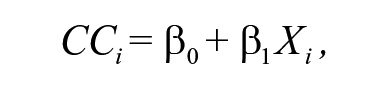
where CCi was an individual’s propensity to be assigned to the community college (a number between 0 and 1), β0 was the intercept, Xi was a vector of covariates, and β1 was a parameter estimate. Each student in the sample had a predicted propensity score of pi,
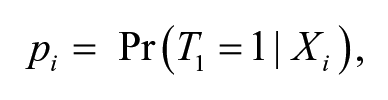
where pi was each student’s propensity to begin higher education at a community college after controlling for the other relevant covariates, Xi.
Descriptive Results of the Sample.

Source. National Center for Educational Statistics (2019). Beginning postsecondary students longitudinal study: 12/17.
Note. Observations are rounded due to nearest 10.
p < .05. **p < .01. ***p < .001.
Check for common support
We used the propensity score to check for a region of common support in two ways, both detailed and recommended by Caliendo and Kopeinig (2008). First, we visually inspected the propensity score distribution to ensure there was overlap. 4 Second, we utilized the “minima and maxima criterion” (p. 45). This method omits all students whose propensity score is smaller than the minimum and larger than the maximum in the opposite group. Implementing the upper and lower bound restrictions omitted 10 students from the 4-year group and 20 students from the community college group, resulting in our final analytic sample of 4,590 students.
Table 1, panels 1 and 2 provide an overview of the unweighted sample characteristics pre-matching and post-matching. Given the small number of cases dropped, the results of the pre- and post-matching unweighted samples were almost identical.
Weighting the sample
To address the potential of selection bias based on the characteristics of the sample, we used a weighting approach based on propensity scores rather than a strict matching method. Using a matching technique, especially a 1:1 match, has the unintended effect of discarding data by removing control group members who do not exactly match to a treatment group member (Austin, 2011). Further, since we sought to understand the effect of the treatment condition on those who are treated, we used an inverse propensity weighting formula to estimate the average effect of treatment on the treated (ATT; Guo & Fraser, 2014). For students who began at a 4-year institution (the control group), weight = p/(1 − p), where p was the propensity score for each individual; for students who began at a community college (the treated group), weight = 1. We applied the inverse propensity weights to the final sample and models to correct for selection bias in the analytical sample.
Check for balance
To determine if the sample was properly balanced, as recommended by Rubin (2001), we compared the mean values of the background variables between the control and treated groups with and without applying the inverse propensity weights. After the application of the propensity score, there were no significant differences in the variables used to construct the propensity score, as shown in the “Before College” section of Table 1. The standardized mean difference between the propensity scores in the treatment and control groups was d = 0.66, which is within the acceptable range of 1SD as recommended by Rubin (2001). The ratio of the variances of the two groups (.76) fell within Rubin’s recommended range of 0 and 2. We also calculated a standardized bias for each variable, which is a measure of the difference between the two groups. Prior to weighting, the average absolute standardized bias was 6.47%. After applying the inverse propensity weights, the average absolute standardized bias dropped to 0.04%, indicating that balance was considerably improved over the unweighted sample and is approaching 0. 5 Given the results of these assumption checks, we felt confident proceeding with the described method.
Results
Descriptive
Table 1, panel 3 (post-matching weighted) displays the weighted summary statistics for our sample of 4,590 students: 3,620 who started at a 4-year institution and 970 who started at a community college. In addition to the three panels, Table 1 is divided into three horizontal sections. The top section, Before College, displays descriptive statistics for the 19 variables used in both the propensity score generation and the outcome models. The second section, During College, presents descriptive statistics for the 14 additional variables that were included in the outcome models. The bottom section, Outcomes, displays descriptive statistics for the outcomes of interest.
The sample characteristics were shaped by our decision to limit inclusion to traditional-aged students who enrolled in postsecondary education immediately after high school. After the weighting process, there were no significant differences in the Before College background characteristics between those who began at a community college and at a 4-year institution. Overall, our weighted sample had a mean age of just over 18, a majority were female, and just over half reported their race as White, with approximately 21% reporting Hispanic and 12% Black. Reported income distribution had slightly above a quarter reporting that they were in a low, low middle, or high middle quartile. Given that our sample did not include students who initially enrolled at a “very selective” 4-year institution, the lower percentage reporting being in the high-income quartile was not surprising. The large majority—almost 90%—filed a FAFSA and had an average EFC of approximately $8,900.
Related to their high school experiences, about 95% of the sample graduated from a public school. Academically, a range of high school GPAs were reported, with 40% reporting a GPA between 3 and 3.4. The combined average SAT score was 936 and ACT score was 20. Almost half of the sample reported taking an honors class and over half reported taking a college course while still in high school. Half of the sample reported taking precalculus or higher as their highest-level high school math course. Two-thirds of the sample reported being “very confident” in their academic ability and half reported that the highest degree they intended to earn was a masters or doctoral degree.
Differences emerged in students’ “During College” experiences in the 2011 to 2012 academic year. Students who began in the community college reported a higher GPA in their first year of college. Students who began in a 4-year institution were more likely to major in STEM fields such as math, computer science, and engineering, which have been shown to have lower GPA distributions when compared to non-STEM fields (Shaw et al., 2012). Community college students were more likely to report having taken a remedial course—approximately 37% and 25% of community college and 4-year students, respectively—which is consistent with prior research in this area (Chen et al., 2020). Students who began at a community college were less likely to report using services offered by their institution, including financial aid, advising, academic support, and career services. Previous research demonstrates the benefit of students using institutional services (Fike & Fike, 2008); as such, increasing use of institutional services are possible levers for improving community college students’ outcomes. A higher percentage of community college students worked in their first year and a lower percentage received financial help from their parents to pay for college-related expenses.
As show in the “Outcomes” section of Table 1, panel 1, approximately 33% of students (unweighted) who began at a public 2-year college earned a bachelor’s degree within 6 years. For those comparable students who began at a 4-year institution, the percentage was approximately 73%, a naïve difference of about 40 percentage points. When using the weighted data (Table 1, panel 3), the difference lessened to approximately 29 percentage points, with approximately 33% of students who began at a community college and 62% of those who began at a 4-year institution earning a bachelor’s degree within 6 years. Although the descriptive data conveyed a compelling story, it was unclear whether the observed differences in baccalaureate degree attainment were due to where a student began higher education or the effects of preexisting covariates.
To help answer that question, we examined 6-year baccalaureate degree completion using a logistic regression. We opted for logistic regression given the dichotomous nature of our outcome: earned a bachelor’s degree or not. Our equation was as follows: GRAD i = α1i + β1CCi + β2Xi + ε1i, where GRAD was whether a student earned a bachelor’s degree or not, α i was the intercept, CC was a dummy variable equal to 1 if a student initially started in a community college, β1 was the estimate associated with beginning at the community college, Xi was a vector of background controls, and ε i was the error term. All variables included in the “Before College” and “During College” sections of Table 1 were included in the outcome regression we report below.
Matched and Weighted
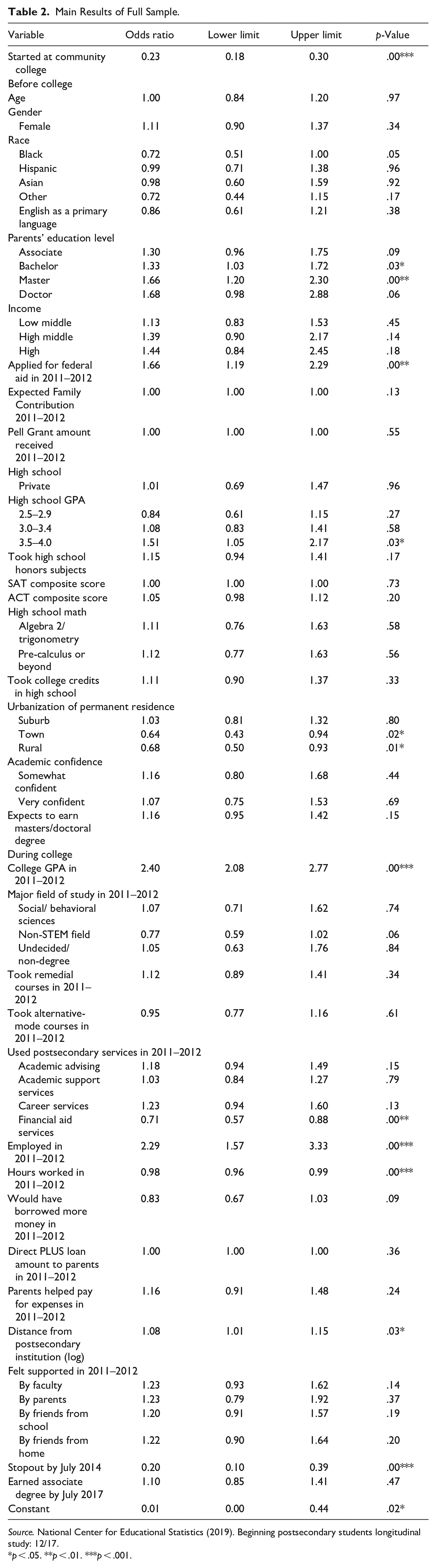
Similar to the descriptive data, the estimates suggested that compared with those students who began at a 4-year institution, students who began at a community college were significantly less likely to earn a bachelor’s degree within 6 years. As shown in Table 2, the full results of the logistic regression model, with the inverse propensity weights applied, estimated that initial community college attendance significantly lowered the odds of completing a bachelor’s degree within 6 years by approximately 77% (p < .001), all else equal. All variables from the construction of the propensity score were included as controls in the regression, as recommended in the literature (Ho et al., 2007), as well as all “During College” variables. To allow for comparisons to previous studies, we also report linear coefficients for this model: All things being equal, a student who began at the community college was approximately 27 percentage points (p < .001) less likely to earn a bachelor’s degree within 6 years when compared to a similar student who began at a 4-year institution.
Main Results of Full Sample.
Source. National Center for Educational Statistics (2019). Beginning postsecondary students longitudinal study: 12/17.
p < .05. **p < .01. ***p < .001.
Still Enrolled in June 2017
One of the critiques of prior research identifying a community college penalty centers around the time that students have to complete the degree (Schudde & Brown, 2019). Whereas many studies allow students 6 years to earn a bachelor’s degree (150% of the standard time to complete a bachelor’s degree), Long and Kurlaender (2009) were able to follow students in Ohio over 9 years. They found that after 4, 6, and 9 years, 15.3%, 43.7%, and 49.7%, respectively, of those who started at a public 2-year institution earned a bachelor’s degree. Although the largest increase took place between the 4- and 6-year time spans, there was a notable increase in degree attainment from 6 to 9 years after matriculation.
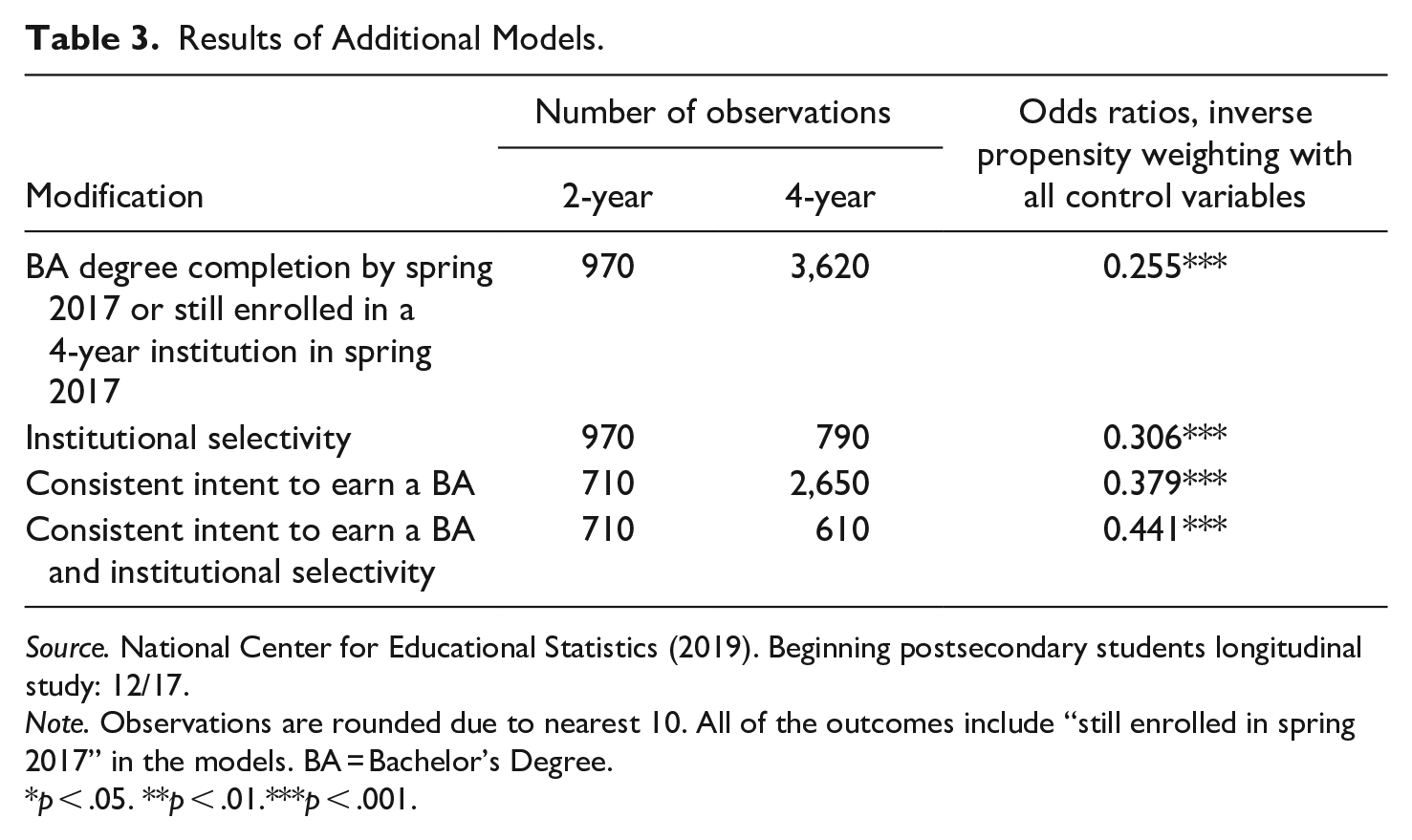
As pointed out in our limitations section, we only had 6 years of data available to us. However, we could include students who are still enrolled in a 4-year institution in the spring of the sixth year in the outcome measure. We purposefully did not include those students who were enrolled in a community college in the spring of the sixth year, as we did not feel that outcome was conducive to earning a bachelor’s degree in a timely fashion. 6 When we included students still enrolled in a 4-year institution in the spring of the sixth year as a successful outcome, the difference in bachelor’s degree attainment between the 4-year and community college starters did lessen slightly; however, the results did not significantly change and still indicated that students who start at the community college were significantly less likely to earn a bachelor’s degree or be enrolled in a 4-year institution in the spring of the sixth year (specifically, lowering the odds of bachelor’s degree attainment by approximately 75%) as evidenced by the first row in Table 3.
Results of Additional Models.
Source. National Center for Educational Statistics (2019). Beginning postsecondary students longitudinal study: 12/17.
Note. Observations are rounded due to nearest 10. All of the outcomes include “still enrolled in spring 2017” in the models. BA = Bachelor’s Degree.
p < .05. **p < .01.***p < .001.
Sensitivity Checks
Drawing on the previous literature as a guide, we modeled different scenarios by adjusting our sample selection in order to validate our results and determine if they are sensitive to various scenarios. Note that all results presented for the models described below included “still enrolled in a 4-year institution in spring 2017” as a successful outcome.
Institutional selectivity
In the previous literature, Monaghan and Attewell (2015) argued that the correct comparison group to students who start at a community college includes only students who began in a “minimally selective” or “open enrollment” 4-year institution. Limiting our sample to these two institutional selectivity categories eliminated the students who began at a “moderately selective” 4-year institution (n = 2,830). This restriction reduced our total sample considerably to 1,760 students, 970 who began at a community college and 790 who began at a 4-year. As shown in row 2 of Table 3, the exclusion of those 4-year students who began at a “moderately selective” institution did not alter the results. The odds of completing a bachelor’s degree or being still enrolled in a 4-year institution for students who began at a community college were lowered by approximately 70%.
Consistent intent to earn a bachelor’s degree
As detailed above, to be included in our main sample, students who began at a public 2-year institution had to indicate the intent to continue into a bachelor’s degree program within 5 years. However, students’ intentions are not constant and may change as they progress through education and gain new information and experiences (Morgan, 2005; Park et al., 2015). As a result, we ran a model that included the further restriction: students who either reported in year 3 (2014) that they still planned to continue to a bachelor’s degree program within 2 years or had experienced success with the transfer process (operationalized by successfully having transferred to a 4-year institution or already earned a bachelor’s degree) by 2014. We refer to this sample as those students with consistent bachelor’s degree intentions.
Limiting the sample to those with consistent bachelor’s degree intentions removed 260 students from the sample of community college starters, now at 710. As discussed in the sample section, there is debate about who should be included in the sample: all of those who started at a community college or only those who successfully transferred to a 4-year institution. Of those students with consistent bachelor’s degree intentions, 26.7% transferred to a 4-year institution or earned a bachelor’s degree within 3 years. We viewed these students with consistent bachelor’s degree intentions as a proxy for those students who were fully committed to their desire to earn a bachelor’s degree, as this subsample allowed for students on the margins to shift their educational aspirations and not bias the results. Including this restricted sample of those students with consistent bachelor’s degree intentions did not alter the results, as evidenced by row 3 of Table 3. The odds of completing a bachelor’s degree or still enrolled in a 4-year institution for students who began at a community college were lowered by 62%.
Further, when we combined this subsample of community college students with consistent bachelor’s degree intentions and compared them to only those who began at a “minimally selective” or “open enrollment” 4-year institution, the results did not change a great deal, as shown in row 4 of Table 3. The odds of completing a bachelor’s degree or being enrolled in a 4-year institution in spring of the sixth year for students who began at a community college were lowered by 56%.
Limitations
Like all studies, ours has its limitations. First, BPS: 12/17 follows students for six academic years, so we modeled a 6-year degree completion window. Although 6 years is standard for baccalaureate degree completion, previous research in this area has noted that results might differ if students were given additional time to complete (Schudde & Brown, 2019). Although we could not model degree completion for a time period longer than 6 years, we did run models that accounted for students who were still enrolled in a 4-year institution in the spring of the sixth year with no significant changes to the results. In addition to time, our sample focused on traditional-aged students who had recently completed a high school diploma. As a result, our results are not applicable to students who took more than 1 year off between high school and college or who returned to college after stopping out. BPS: 12/17 combines multiple sources, including an interview, to produce derived variables. As a result, some of the variables in our models (e.g., high school GPA, took remedial course(s), etc.) rely on self-reported data, which may contain errors.
We could not provide true causal estimates of the effect of beginning at a community college as that is only possible through random assignment. As with all nonexperimental studies using administrative data, we were limited by the data. Consequently, there is the potential for unobserved variables to affect the results. The “during college” variables were restricted to the first year of college, thus limiting our ability to capture students’ experiences during and after the transfer process. As a result, we were unable to address critical questions surrounding the mechanisms by which beginning at a community college affected student outcomes.
Discussion and Implications
Community colleges provide a myriad of services to a diverse population of students with varied educational aspirations. Chief among these services is allowing students to earn up to the first 2 years of a 4-year degree often both closer to home and for a lower cost when compared to a 4-year institution (Cohen & Brawer, 2008). Given the many functions of community colleges, previous research has lauded them for expanding postsecondary access (Cohen & Brawer, 2008) and warming up students’ educational aspirations (Rosenbaum et al., 2006). On the other hand, community colleges have also been accused of “cooling out” (Clark, 1960) and “diverting” (Brint & Karabel, 1989) students to lower educational attainment and less desirable employment opportunities.
Our update to the literature, though not focusing the specific mechanism(s) involved, did affirm previous research finding a bachelor’s degree penalty for those who begin at a community college when compared to those who begin at a 4-year institution. The focused sample of our study (recent high school graduates who intended to earn at least a bachelor’s degree) and the consistency among the many models we ran as checks gave us confidence in our results. Our main finding also aligns with Schudde and Brown’s (2019, p.16) meta-analysis result that students who began at a community college experienced a “decrease in the probability of earning a baccalaureate by 23 percentage points.” Schudde and Brown (2019) also noted that the negative effect of starting at a community college appears to be increasing in more recent time periods. Although our main finding of a 27-percentage point reduction in the probability of earning a bachelor’s degree within 6 years was higher than their overall 23-percentage point reduction, our estimate was lower than some of the other more recent studies included in their analysis (Goodman et al., 2017; Xu et al., 2016).
Our results, using the most up-to-date national data, support the findings from previous studies, but they take on added significance given the current policy discussions related to FCC, Promise programs, and student debt. FCC programs have proliferated in the last decade (College Promise, 2021) and are now included as talking points in the national debate surrounding student success and debt. Many students and their families who struggle to pay for postsecondary enrollment may be incentivized to matriculate in a community college as opposed to a more expensive 4-year institution, especially if tuition and fees are covered by grant funds. As our and previous research (Doyle, 2009; Leigh & Gill, 2003; Long & Kurlaender, 2009; Monaghan & Attewell, 2015; Rouse, 1995) indicate, this decision may ultimately have negative consequences on bachelor’s degree attainment for those students. Aggregated to the state level, states could hinder progress toward bachelor’s degree attainment levels through the implementation of FCC programs (Avery et al., 2019).
Recommendations for Practice
Note that we are not arguing against students beginning at the community college or against the implementation of FCC programs. We believe that the ongoing and promising work related to improving community college outcomes needs to be integrated. Given that the community college students in our sample reported utilizing institutional services such as academic support and academic advising services at a lower rate when compared to students who began at a 4-year institution, proactively connecting students with these services has the potential to improve outcomes. Further, redesigning developmental education and community college programs such as guided pathways and the successful CUNY ASAP program (Scrivener et al., 2015) can aid community college students in their journeys toward a bachelor’s degree. As designers of FCC programs argue, free tuition and fees are not enough. Rather, a web of support—both financial and academic—needs to be implemented to allow students the best chance at success (Jones & Berger, 2018).
Of the students in our main sample who began in a community college and intended to earn a bachelor’s degree, 43% earned an associate’s degree and 65% attended a 4-year institution at some point during the 6-year time frame of the study. These descriptive findings imply that almost half of the students earned a degree that has value in the labor market and nearly two-thirds of the community college starters overcame the hurdle of transferring and enrolled in a baccalaureate-granting institution. Thus, when there are discussions around the “community college penalty,” it should be noted that the majority of these students enroll in a 4-year institution within 6 years. As a result, discussions on improving the bachelor’s degree completion rate among community college starters need to include personnel from 4-year institutions as well, as has been noted by previous researchers who investigate vertical transfer (Wang, 2017).
Recommendations for Future Research
Our study does not attempt to address why the community college penalty exists. Continuing to investigate potential mechanisms using both qualitative and quantitative data is important. Given the fast-changing landscape of college financing due to the implementation of FCC and Promise programs and the ways those programs could alter enrollment patterns (Gándara & Li, 2020), we encourage future research on the effect of beginning at a community college under different contexts. Capitalizing on the diversity of local or state programs to further investigate their effects on degree attainment should be considered when a program is implemented, so we encourage the collection of detailed intentions data for all students who begin at a community college. An added benefit of using more detailed and localized data could be revelations related to smaller successful programs—or program components—that have the potential to be scaled.
As we noted above, studies that include only successful transfers to a 4-year institution (Dietrich & Lichtenberger, 2015; Melguizo & Dowd, 2009; Melguizo et al., 2011) have not identified a community college penalty. Using more detailed and localized data could allow for the disaggregation and analysis of the “steps” needed for community college students to successfully earn a bachelor’s degree. Pinpointing with more clarity where students and institutions are falling short can allow for targeted actions to increase student success.
Conclusions
Community colleges are continually being asked to do more for a greater number of students and with fewer resources than 4-year institutions receive. One study estimated that community colleges would require an additional $78 billion dollars just to obtain funding parity with public 4-year institutions (Yuen, 2020). In addition to supporting increased funding for community colleges and their students, we also advocate for community colleges to reflect upon not only our results, but the success of all their students, as they continue to move forward. The literature documenting a bachelor’s degree penalty for those who begin at a community college has shown consistent negative effects for decades. Interrogating the potential mechanisms of this situation is paramount if community colleges are to flourish and serve students effectively moving forward, especially if FCC programs attract a greater number of students with the stated intention of earning a bachelor’s degree.
Footnotes
Declaration of Conflicting Interests
The author(s) declared no potential conflicts of interest with respect to the research, authorship, and/or publication of this article.
Funding
The author(s) received no financial support for the research, authorship, and/or publication of this article.
