







Abstract
Computing degrees represent a critical tool for upward mobility, as computing graduates can expect to earn more than those across other fields (Bureau of Labor Statistics & U.S. Department of Labor, 2016). Given the financial opportunity associated with computing degrees, it is more important than ever that we attend to gender and other disparities in access to computing degree pathways. Unfortunately, access to these lucrative degrees remains inequitable, as evidenced by the fact that women made up just over 20% of computing baccalaureates in 2020 (DuBow et al., 2021). While women in computing have received increasing attention within research, studies tend to center women who enter 4-year computing programs directly from high school (Blaney, 2020). Yet, we know that community colleges serve as a key access point for women interested in STEM, particularly for women from low-income backgrounds and many Black, Latina, and Indigenous women (Bahr, 2013; LaSota & Zumeta, 2016). Therefore, excluding community college women from studies of women’s participation in computing ensures that this body of literature will never be representative of all women interested in computing degrees.
We focus our inquiry specifically on transfer-intending computing students at community colleges. Transfer continues to be a primary function of community colleges (Taylor & Jain, 2017), and researchers have consistently documented the critical role community college transfer plays in diversifying STEM fields (Bahr et al., 2017; Blaney, 2020; Wang, 2021). Emerging research has considered community college transfer students in computing upon arrival at 4-year institutions (e.g., Blaney, 2020). Yet, very little is known about community college women’s participation in computing 1 prior to transfer. We address this gap in the literature by applying Wang’s (2017) STEM transfer model to explore gender and women’s participation among transfer-intending computing students at community colleges.
Objectives
This paper presents two exploratory studies, both of which rely on data from the Center for Community College Student Engagement (CCCSE). Study One examines trends in women’s representation among transfer-intending computing students, providing new insight into broader computing contexts and the changing role community college transfer plays in broadening women’s participation in computing. Study Two provides a more nuanced look into the experiences of transfer-intending computing students, with consideration of gender and the intersection of gender and race/ethnicity. Collectively, we identify implications for how 2- and 4-year colleges can better support all computing students and utilize community college transfer pathways to broaden computing participation. Below, we review relevant literature that contextualizes both studies before presenting the methods and findings for each study separately.
Literature Review
While scholarship on transfer-intending women’s experiences in computing is sparse, research has explored the role of community colleges and transfer pathways in increasing access to higher education, including some research that considers STEM. At the same time, a large body of literature considers women’s participation in computing majors at 4-year universities. Below, we review relevant literature on community college transfer pathways, followed by a discussion of the experiences of women in computing.
How Community Colleges Increase Higher Education Access
Community college students represented 31% of all undergraduates in the United States in fall of 2020 (National Center for Education Statistics [NCES], 2022), and community colleges play a particularly important role in increasing higher education access for women, low-income students, first-generation college students, and students from Black, Latinx, and Indigenous groups. The American Association of Community Colleges (AACC, 2022) reports that 60% of community college students are women, 33% receive Pell grants, and 62% are working to pay for college. Further, over 60% of community college students identify as first-generation to college, compared to approximately 47% of students at public 4-year institutions (RTI International, 2019). Relative to 4-year institutions, community colleges are also more racially and ethnically diverse (Allen & Wolniak, 2019). More specifically, 27% of community college students are Latinx, 12% are Black, and 7% are Asian or Pacific Islander 2 (AACC, 2022). Collectively, these statistics point to the critical role community colleges play in diversifying higher education. 3
Transfer to 4-year universities represents one of the primary functions of community colleges. However, while approximately 80% of community college students enter postsecondary education with the intent to transfer to a 4-year institution, transfer rates remain both low and inequitable (Shapiro et al., 2018). Community college students who are first-generation to college are especially underrepresented among successful transfer students (LaSota & Zumeta, 2016). These inequities in transfer attainment can be, at least partially, explained by larger contextual factors. For example, enrolling in school part-time (LaSota & Zumeta, 2016; Shapiro et al., 2018; Wang, 2012), working full-time (LaSota & Zumeta, 2016), and being a single parent (Wang, 2012) are negatively associated with successful transfer. Approximately 80% of single parents are women (U.S. Census Bureau, 2021) and students from low-income backgrounds may be more likely to work full-time and attend school part-time (Kezar et al., 2015), meaning that these groups are disproportionately impacted by these broader contexts.
Particularly relevant to our study, some research examines the unique challenges for students pursuing transfer pathways in STEM more specifically. Among STEM students, the likelihood of earning a bachelor’s degree is significantly reduced among those who enter at the community college level, compared to students who directly enter 4-year universities (Wang, 2015). Lower rates of successful transfer in STEM (relative to other fields) may be due, in part, to inadequate advising, which can lead to academic challenges and delays in graduation (Elliott & Lakin, 2020). Indeed, poor advising has been linked to delays in the transfer process for community college students in STEM disciplines (Lukszo & Hayes, 2020; Schudde et al., 2020). These challenges may be exacerbated for women (Blaney, 2021; Wang, 2016) and students from Black, Latinx, Indigenous, and multi-racial groups (Wang, 2013). Further, women in STEM may be less inclined to use STEM-specific transfer services due to barriers brought about by the male-dominated climate in these areas (Espinosa, 2011). Thus, it is critical that future research consider transfer success for women in male-dominated STEM fields, like computing.
Gender Inequity and Broadening Participation in Computing
Whereas some STEM fields have made great strides in advancing women’s representation (e.g., biological sciences), other STEM fields—including computing, engineering, physics, and others—have made considerably less progress, requiring researchers to disaggregate STEM disciplines within studies of gender and women’s participation. While women earn approximately 40% of STEM bachelor’s degrees (NCES, 2019a), they represent less than a quarter of baccalaureates in computer and information sciences (DuBow et al., 2021). 4 Separately, students from Black, Latinx, and Indigenous groups are underrepresented in computing, collectively representing about 20% of baccalaureates (NCES, 2019a). Black and Latina women each make up just 2% of computing baccalaureates, while Indigenous women represent fewer than 1% (National Center for Science and Engineering Statistics [NCSES], 2021). It is also important to recognize the unique historical context of computing. While women represented over 40% of computing students in the 1980s, their representation declined steadily through the early aughts (Sax et al., 2017).
As a result of growing gender inequities in computing programs, a wealth of literature has considered mechanisms to broaden women’s participation in the field. Much of this literature has utilized a social cognitive career framing (see Lent et al., 1994) to consider the factors that lead women to pursue and be retained in computer science (e.g., George et al., 2022; Lapan & Smith, 2022; Sax et al., 2017). Unfortunately, sexist environments and a hostile culture may lead women to feel like they do not belong (Cheryan et al., 2009) and ultimately leave computing (Stout & Blaney, 2017). Other studies emphasize a need for future research to contend with the intersection of gender and race/ethnicity in studies of women’s participation in computing (Rodriguez & Lehman, 2018), suggesting that the lack of progress in diversifying the field is partially due to a failure to utilize intersectional approaches.
Since women are more likely than men to begin their academic pursuits at a community college rather than at a 4-year institution (NCES, 2019b), community college transfer pathways represent an ideal opportunity to increase women’s participation in computing. However, women remain particularly underrepresented among computing students who successfully transfer into CS majors at 4-year institutions (Blaney, 2020). Further, existing research on women’s success in computing has failed to consider transfer students and is often not generalizable to students who started their degree at a community college (e.g., Blaney, 2022; Blaney & Barrett, 2021). Studies that have considered gender and transfer pathways in computing demonstrate that women’s intent to transfer is uniquely related to peer interactions and expected success in computing (Denner et al., 2014). Importantly, although peer interactions and support may play an important role for women, those women following transfer pathways do not always have access to peer support and may disproportionately encounter transfer stigma (Blaney, 2020; Denner et al., 2014).
To understand the experiences of transfer-intending women in computing, it may also be helpful to consider prior scholarship from engineering education which explores community college transfer pathways. As a field, engineering often faces similar challenges around the representation of women within a historically (and contemporarily) white, masculine, and competitive context (e.g., Secules, 2019). Pawley (2017, 2019) has articulated the historical infrastructure of engineering that preserves power primarily for white men, despite recent efforts to increase diversity and equity. Further exacerbating these inequities, engineering upward transfer students may encounter complicated and conflicting transfer information (Reeping & Knight, 2021) and institutions often fail to demonstrate to potential students how community college majors and credits interface with their 4-year institutional partners (Rosenberg, 2016). Other times, engineering programs ignore transfer pathways when conducting large-scale curricular reforms (Reeping et al., 2020), similar to trends in computing where upward transfer students have been ignored within studies of broadening computing participation (see Blaney, 2020). As is the case in computing, there has been an emerging interest in examining transfer pathways in engineering (e.g., Knaphus-Soran et al., 2020). Recent research shows that women pursuing community college engineering pathways benefit from activities such as career exploration, mentorship, and field-specific advising (e.g., Rodriguez et al., 2021). Collectively, these studies of transfer pathways and community colleges within the engineering education literature provide an important backdrop for the present work, particularly in light of the limited research on community college transfer specifically in the context of computing.
While studies have begun to explore women’s transfer pathways in computing and related fields, little is known about women’s experiences of support prior to transferring in computing. This paper addresses this gap in the literature by bridging studies of STEM community college students and transfer pathways with research on gender equity and women’s participation in computing. To that end, we apply Wang’s (2017) STEM Upward Transfer Model to specifically consider transfer aspirants in computing, as we discuss below.
Conceptual Framework
We adapted Wang’s (2017) STEM Upward Transfer Model, which identifies background characteristics, contextual factors, experiences, and other mechanisms informing community college transfer pathways. The framework is informed by STEM learning literature and draws heavily from social cognitive career theory (SCCT; Lent et al., 1994, 2000), which explains an individual’s academic and career decision-making and development. As such, Wang’s was the first comprehensive model to define STEM transfer as a distinctive outcome and focus on learning and motivational beliefs within STEM (Wang, 2017). The model acknowledges the complexity of factors which intertwine to shape student interests, pursuits, and pathways. Within our adapted version of the model, we highlight three major elements: person inputs, proximal and distal contextual factors, and transfer momentum via STEM learning and engagement.
Person inputs include students’ identities, prior academic experiences, and beliefs. Proximal and distal factors comprise the contextual influences that shape the transfer process (e.g., family characteristics, institutional policies, financial support, working experiences). STEM learning and engagement—which contribute to transfer momentum—refer to experiences within the community college setting (e.g., time spent studying, use of advising and transfer services, involvement in student groups). Collectively, person inputs, contextual factors, and learning and engagement experiences contribute to students’ successful transfer (Wang, 2017).
Prior applications of Wang’s (2017) model to computing contexts document family and financial characteristics that uniquely shape upward transfer computing students’ success after they arrive at 4-year campuses (e.g., Blaney & Barrett, 2021). Notably, prior research applying Wang’s (2017) model to computing reveals that community college transfer students are more racially diverse than students who began their degree at 4-year institutions, further highlighting the importance of considering transfer as it intersects with gender and race/ethnicity (see Blaney, 2020). We apply this model, focusing specifically on community college computing students with transfer intentions, as little is known about these students prior to transfer.
Figure 1 summarizes the conceptual framework that guides this paper. Because Wang’s (2017) model emphasizes the importance of considering proximal and distal contextual factors that shape transfer pathways in STEM, we began with Study One, which provides a picture of transfer-intending women’s representation in computing over time. By examining these trends, we provide insight into the larger community college computing context. Study Two uses more recent data to explore gender differences in students’ exposure to documented and theorized predictors of transfer success. Specifically, we center variables capturing relevant contextual factors (e.g., family characteristics, financial variables), community college learning (e.g., use of advising services, time spent preparing for class), and campus engagement (e.g., time spent in student groups). Given the documented importance of considering the intersection of gender and race/ethnicity in studies of women’s computing participation (see Rodriguez & Lehman, 2018), we center women in our analysis and consider variation by race and ethnicity. In the sections that follow, we introduce the objectives, methods, and findings for each study separately.
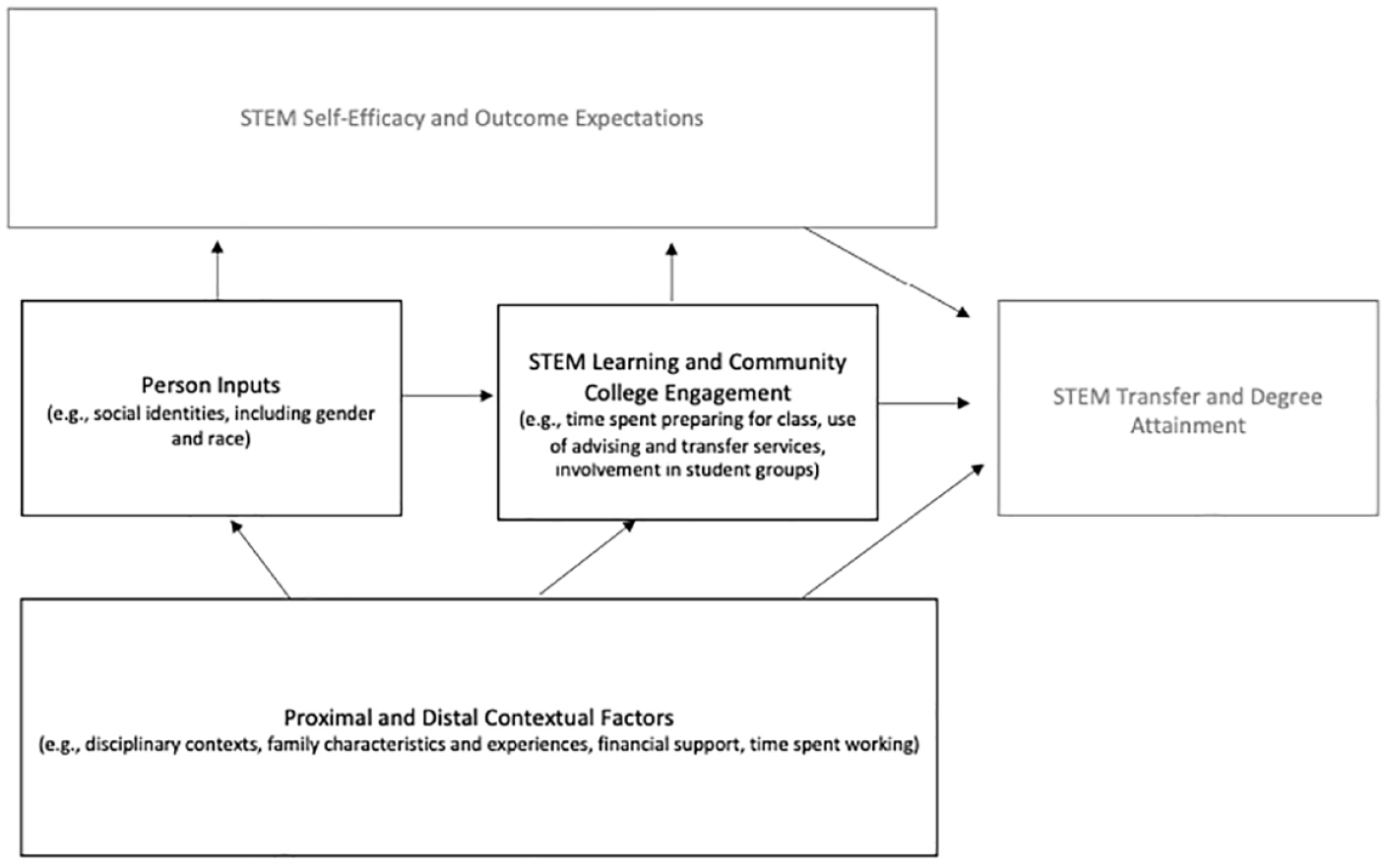
Conceptual framework adapted from Wang’s (2017) STEM upward transfer model.
Study One: Women’s Representation Among Computing Transfer Aspirants Over Time
While scholars have recognized the importance of community college transfer as a mechanism for diversifying STEM, the importance of transfer pathways for broadening women’s participation in computing has received little attention until very recently (e.g., Blaney, 2020). As such, little is known about transfer-intending computing students and women’s participation within this group. We address this gap in the literature by exploring the gender composition of transfer-intending community college computing students across the United States between 2011 and 2019. The following question guided this study: How has the gender composition of transfer-intending community college computing students changed over time?
Study One Sampling Procedures
We utilized existing data from the Center for Community College Student Engagement (CCCSE), which represents the largest national survey of community college student experiences. Our dataset was restricted to students who indicated a major in “Computer and Information Sciences” and an intention to transfer to a 4-year institution to complete their degree. “Computer and Information Sciences” is an aggregated group of majors that includes computer science, information technology, and other computing-related degree programs. 5 Because we sought to explore how the composition of transfer-intending computing students changed over time, we included data from students who completed the CCCSE surveys between 2011 and 2019. Importantly, institutional participation in the CCCSE varied each year, meaning that emergent changes in student characteristics could be confounded with changes in institutional participation over time. To account for this limitation, the CCCSE follows a process of creating 3-year cohorts to ensure that, across every 3-year period, the research team is recruiting a representative institutional sample. Therefore, instead of examining change between each year, we examined change between each 3-year cohort. To further ensure that we are drawing fair comparisons across time, we restricted the sample to include only students who came from colleges that were represented in each 3-year cohort (i.e., we removed students from institutions that did not consistently participate in the survey over time). This yielded a sample of N = 28,886 transfer-intending computing students across 416 community colleges.
Study One Measures and Analytical Procedures
Students self-reported various person input variables, including their gender and race/ethnicity, on the survey. Because gender and race questions on the CCCSE instrument changed slightly across survey administrations, we primarily rely on a dichotomous gender variable and an aggregated four-level variable identifying Women of Color, Men of Color, white women, and white men. For the purpose of creating this variable, Women and Men of Color included students who selected one or more of the following identities: American Indian or Alaska Native; Asian, Asian American, or Pacific Islander 6 ; Native Hawaiian; Black or African American; Hispanic or Latino; or “Other.” Next, we computed a variable that identified when students completed the survey. To reduce the number of comparisons and account for variation in institutional survey participation from year to year, we created an ordinal variable that identified three groups of students who completed the survey in: (a) 2011 to 2013; (b) 2014 to 2016; (c) 2017 to 2019. In other words, we categorized students into three different 3-year cohort groups.
To examine change in the gender composition of students over time, we used crosstabs to determine the proportion of women and men in the sample within each cohort. Chi-square tests were used to determine if the representation of each group changed significantly over time; in instances where change was significant, z-tests with the Bonferroni correction were used to assess specific changes between cohorts. To provide further insight into trends of women’s participation, we replicated these analyses, using a four-level variable identifying Women of Color, white women, Men of Color, and white men.
Study One Findings and Discussion
As shown in Table 1, the gender composition of transfer aspirants in computing did not significantly change between 2011 to 2013 and 2014 to 2016. However, women’s representation decreased between the 2014 to 2016 and the 2017 to 2019 cohorts (z = 4.46, p < .001), such that women went from representing 17.3% to only 14.9%. Conversely, men’s representation among transfer aspirants increased during that time (z = 12.84, p < .001). Additional analyses (also shown in Table 1) reveal that the observed increase in men’s representation was due to increases among Men of Color, whose representation increased from 2011–2013 to 2014–2016 (z = 8.40, p < .001) and from 2014–2016 to 2017–2019 (z = 3.94, p < .001). Ultimately, Men of Color went from representing 31.5% of transfer aspirants in the 2011–2013 cohort to 39.9% of the 2017–2019 cohort. White men’s representation decreased modestly between 2011 to 2013 and 2014 to 2016 (z = 6.28, p < .001) but did not otherwise change. White women’s representation declined between 2011 to 2013 and 2014 to 2016 (z = 4.68; p < .001) and between 2014 to 2016 and 2017 to 2019 (z = 4.69; p < .001). The representation of Women of Color did not change over time, hovering between just 8% and 9%.
Gender Composition, by Cohort (N = 28,886).
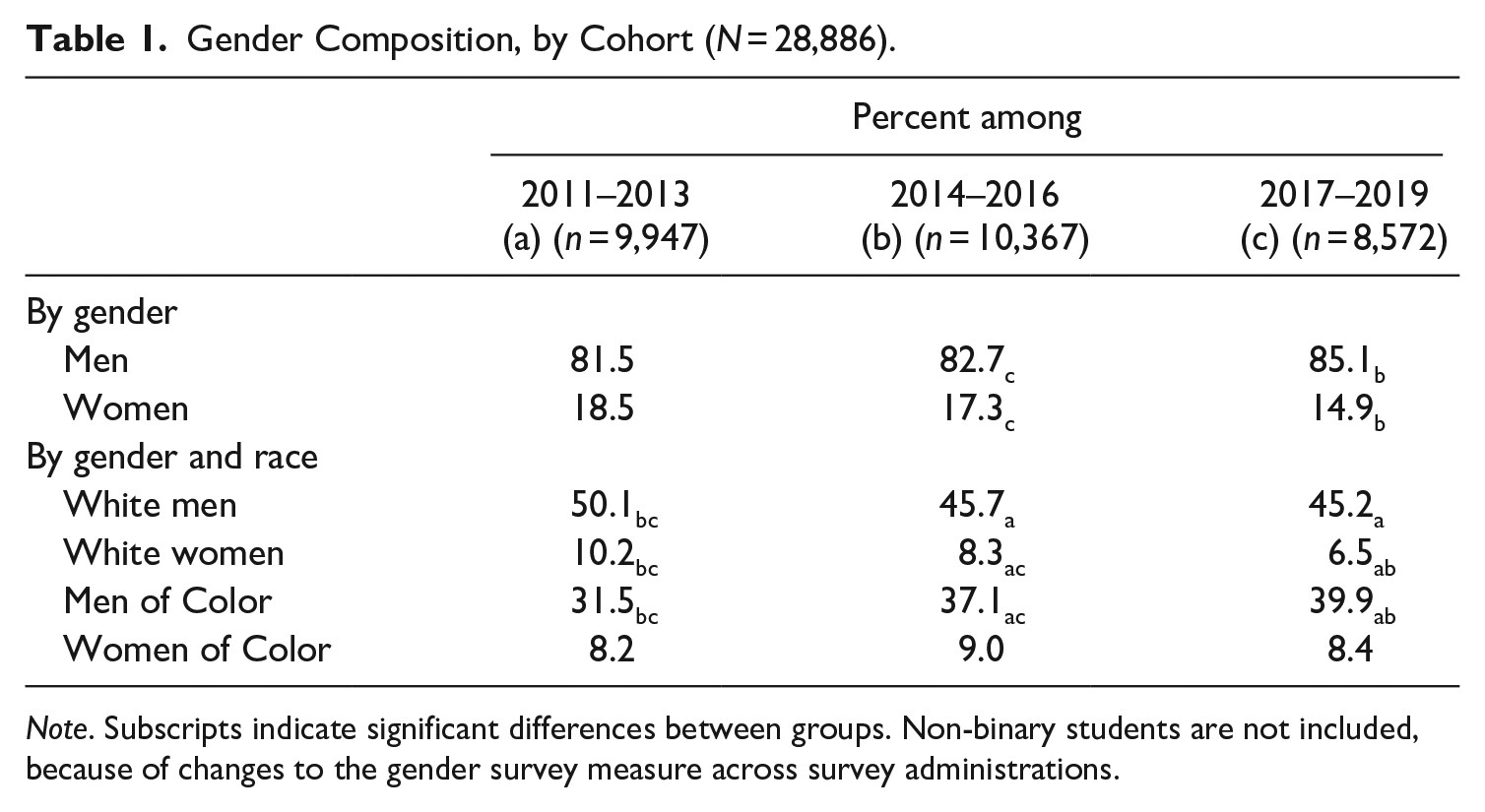
Note. Subscripts indicate significant differences between groups. Non-binary students are not included, because of changes to the gender survey measure across survey administrations.
Longer-term trends in women’s representation in computing provide important context for interpreting our findings. Women represented over 40% of computer science majors in the early 1980s, but their participation continually declined between the mid-80s and the early aughts, when women’s representation reached an all-time low of fewer than 15% of computer science majors (Sax et al., 2017). Our study considers the gender composition of transfer-intending computing students between 2011 and 2019, which represents a time when women’s representation within 4-year computing programs was increasing modestly (i.e., women represented 18% of bachelor’s degree earners in computing in 2010 to 2011, compared to 22% in 2019 to 2020; DuBow et al., 2021). Other trends show that, among associate’s degree earners in computing, women’s representation remained fairly stable over this same period (e.g., women represented 22% of associate’s degrees in computing in 2011 to 2012 and 21% in 2019 to 2020; DuBow et al., 2021). Despite women’s increasing or stable representation among associate’s and bachelor’s degree earners in computing, we document declines in women’s representation among transfer aspirants over this period. More research is needed to explain these findings. As one next step to advance this research, Study Two provides a look into the characteristics and experiences of transfer-intending women in computing.
Study Two: A Closer Look at Transfer Aspirants in Computing
Study Two provides a more nuanced look into transfer-intending computing student experiences in recent years. Guided by our adaptation of Wang’s (2017) STEM Upward Transfer Model, we focus our inquiry on contextual factors and community college experiences (e.g., learning and campus engagement), which may contribute to academic momentum and successful transfer. We address the model’s person inputs by centering women’s experiences, while considering variation by race and ethnicity. The following questions guided Study Two:
What is the gender and racial/ethnic composition of transfer-intending computing students from recent years?
How do transfer-intending computing students report their contextual and college experiences? How might these reported experiences differ by gender?
Among women, how might contextual and college experiences differ by race and ethnicity?
Study Two Sampling Procedures
We utilized cross-sectional CCCSE data from students surveyed in 2017, 2018, or 2019, restricting our sample to students who indicated a major in “Computer and Information Sciences” and an intention to transfer to a 4-year institution. This yielded an analytic sample of N = 9,161 transfer aspirants in computing. Sample characteristics are described as part of Research Question One. Students were clustered across 554 colleges, with the mean number of respondents per college being 16.54. Because students were nested within colleges, we examined intraclass correlations [ICCs] and design effects to determine how much variance in our sample could be explained by the clustered data structure. ICCs and design effects were low (.004 ≤ ICCs ≤ .054; design effects < 2), allowing us to ignore the clustering (Muthén & Satorra, 1995).
Study Two Measures and Analytical Procedures
Students self-reported their gender and race/ethnicity on the survey. Due to cell size constraints, we primarily relied on a dichotomous gender variable (0 = Man; 1 = Woman), but we conducted ancillary analyses to explore the experiences of the students who indicated a non-binary or other gender. We included a race/ethnicity variable, in which students were categorized into one of the following groups: Asian; Black; Indigenous; Latina/o/x; white; other; two or more groups. To minimize the number of comparisons, some analyses by race/ethnicity exclude students who selected “other” or indicated two or more groups. Additional variables were selected to capture contextual factors and college experiences (see Table A1 in the supplemental online material). Variables capturing contextual factors focused on family experiences (e.g., parental status, time spent on family duties), financial supports (e.g., how students financed their education), and other key contexts (e.g., time spent working, commuting). College experience variables encompassed learning experiences (e.g., time spent preparing for class; use of transfer advising services), and campus engagement (e.g., time spent in student groups).
To examine RQ1, we ran frequency distributions by gender, as well as crosstabs by gender and race/ethnicity. To explore RQ2, we evaluated frequency distributions and means, before running a series of chi-square tests and independent samples t-tests to explore how student characteristics and experiences differed by gender. These analyses relied on a binary measure of gender, given that the number of non-binary students in the sample (n = 60) was much smaller than the number of women (n = 1,373) and men (n = 7,536). 7 To more comprehensively address RQ2, we conducted ancillary analyses to examine differences for non-binary students, relative to other groups; only significant effects from these analyses are reported in text. To examine RQ3, we restricted our sample to women, using crosstabs/ANOVAs to examine differences by race/ethnicity.
Study Two Findings and Discussion
Overall, Study Two findings reflected the interplay of person inputs, contextual factors, and community college experiences, as conceptualized in Wang’s (2017) STEM Upward Transfer Model. In particular, an examination of these elements disaggregated by the model’s person inputs of gender and race/ethnicity provide a more nuanced look into women’s underrepresentation among transfer aspirants in computing. Other findings point to gender differences in how women, particularly Women of Color, spend their time on and off campus.
Research Question One
RQ1 asked about the gender and racial/ethnic composition of transfer-intending computing students between 2017 and 2019. Consistent with Study One findings, we found that 15.0% of transfer-intending computing students were women, 82.3% were men, and 0.7% reported another gender identity. 8 Among women, 39.9% were white, 16.3% were Asian, 14.0% were Latina, and 13.0% were Black. Table 2 shows a more detailed look into the composition of the sample, including the racial/ethnic breakdown of transfer-intending men. Most notably, women in our sample were more racially and ethnically diverse than men (e.g., half of men in our sample were white, compared with 39.9% of women).
Gender and Racial/Ethnic Breakdown (N = 9,161).
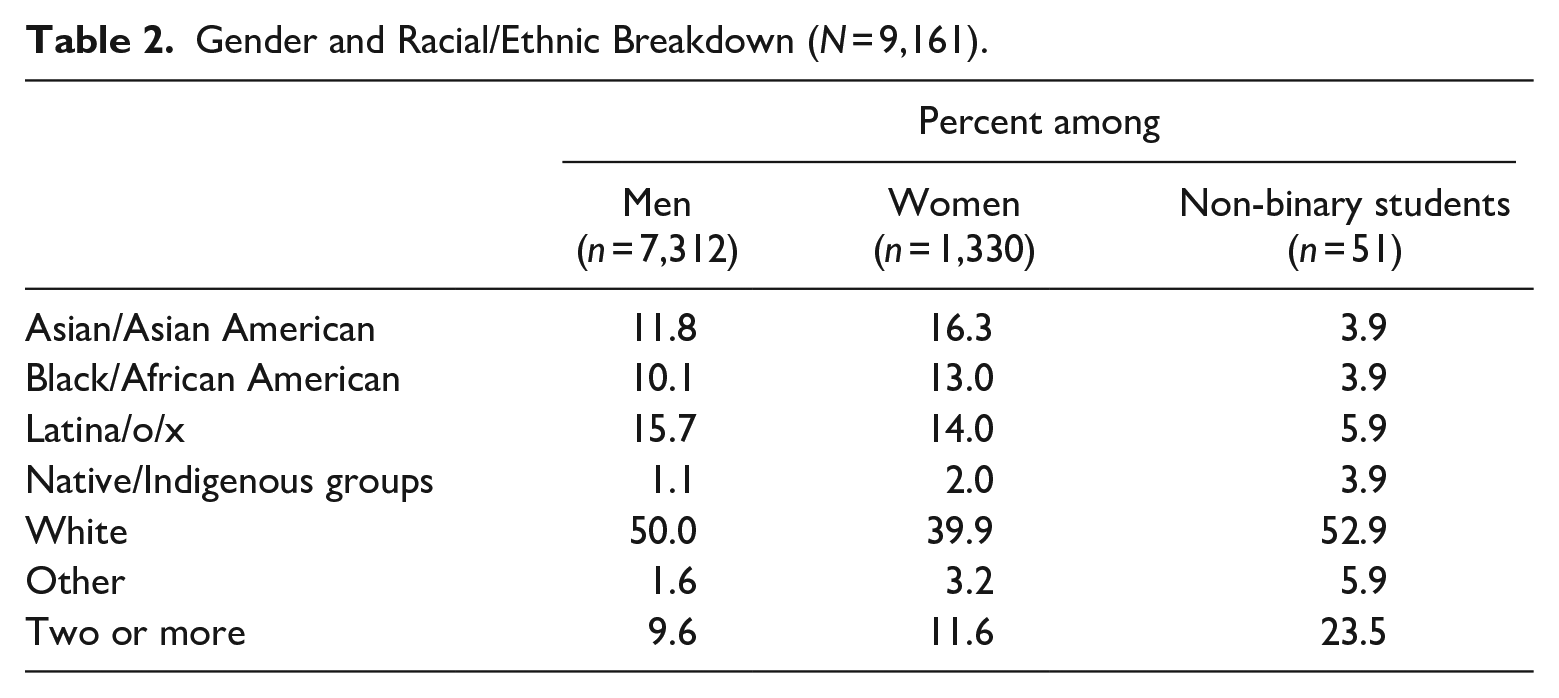
Overall, while women’s underrepresentation in computing is already well documented, the severity of their underrepresentation in our study is surprising. This point may be even more important for Women of Color in computing, as they represent a significant population within the community college sector. As one key point of comparison, Blaney (2020) found that women represented 27% of computing majors who entered 4-year institutions directly from high school. Considering that women are generally more likely than men to begin their academic journeys at the community college (NCES, 2019b), we might expect that women would represent upwards of 27% of our sample of transfer-intending community college students in computing (i.e., we would expect that women’s representation in our sample would be greater than their representation among computing students at 4-year institutions). Yet, women were just 15% of our sample. In other words, our findings about women in computing contradict more general trends showing that women are more likely to begin their degrees at community colleges.
Research Question Two
RQ2 focused on how STEM learning, community college engagement, and contextual factors might differ by gender. As illustrated in Table 3, relative to men, women more frequently reported being married and being parents. The way students financed their education differed, with women being more reliant than men on scholarships, grants, and loans, while men were more frequently reliant on their own income, family, and/or military benefits. No differences emerged in how much time students spent working for pay (see Table 4). Relative to men, women more frequently used advising services and placed greater value on these services. Overall, women reported spending more time than men on almost every activity that we examined in our study, pointing to the unique and competing demands that transfer-intending women in computing must balance. These findings are consistent with qualitative inquiry documenting how life experiences inform STEM women’s experiences at community colleges (see Wickersham & Wang, 2016) and are consistent with our conceptual framework, which emphasizes the importance of understanding the larger contextual factors that inform transfer success, extending this prior literature to a computing context. Our findings also add to larger conversations on financial aid patterns (Park & Scott-Clayton, 2018) and build on prior research which draws attention to financial stress experienced by college women (Tran & Smith, 2017). Our findings advance prior research on the gendered experiences of community college STEM students (e.g., Wang et al., 2017) and point to larger issues of oppression that women, particularly Women of Color, cannot simply overcome through advising.
Gender Differences in Contextual Experiences (N = 9,161).
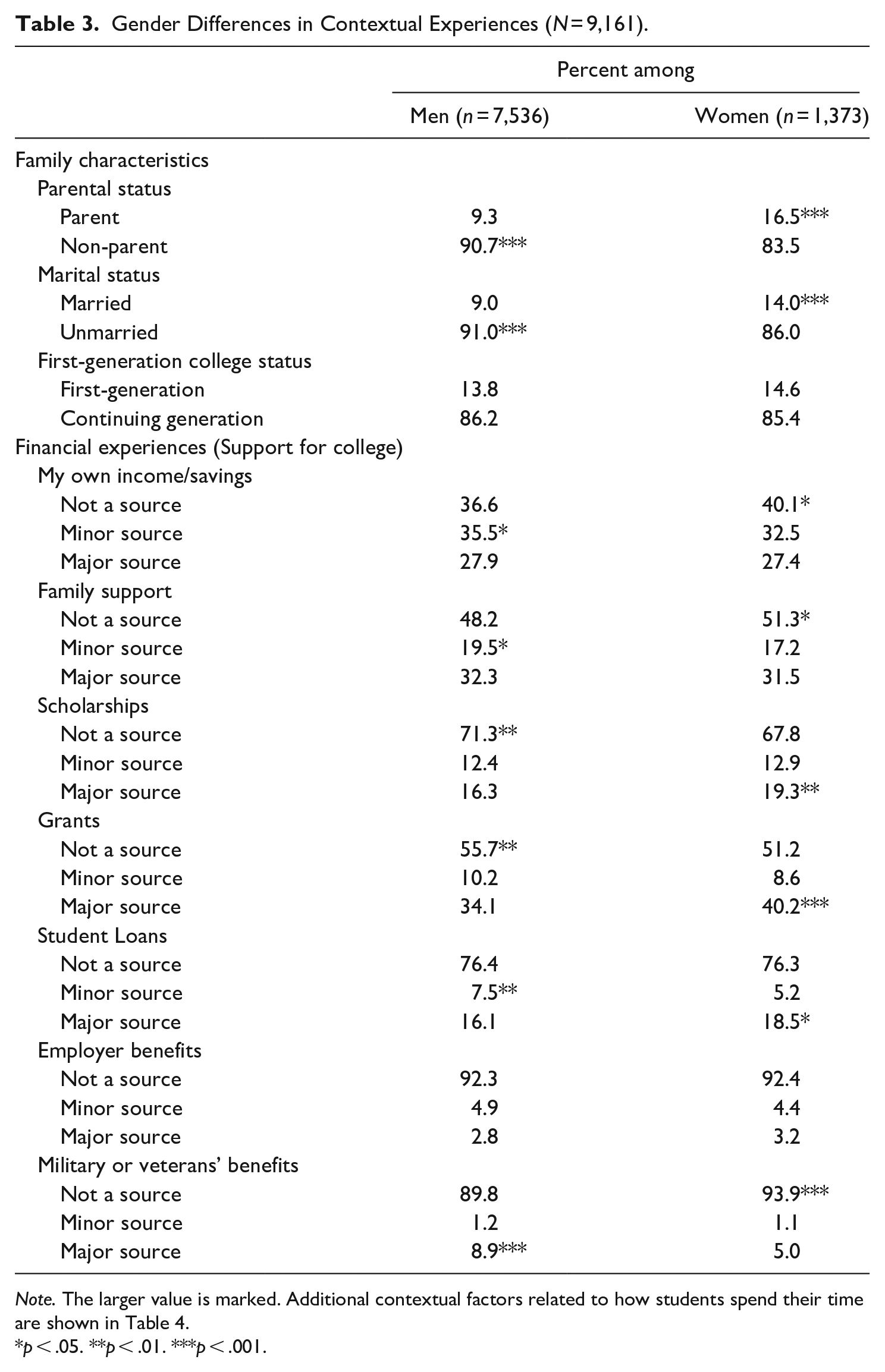
Note. The larger value is marked. Additional contextual factors related to how students spend their time are shown in Table 4.
p < .05. **p < .01. ***p < .001.
Gender Differences in How Students Spend their Time and Engage on Campus (N = 9,161).
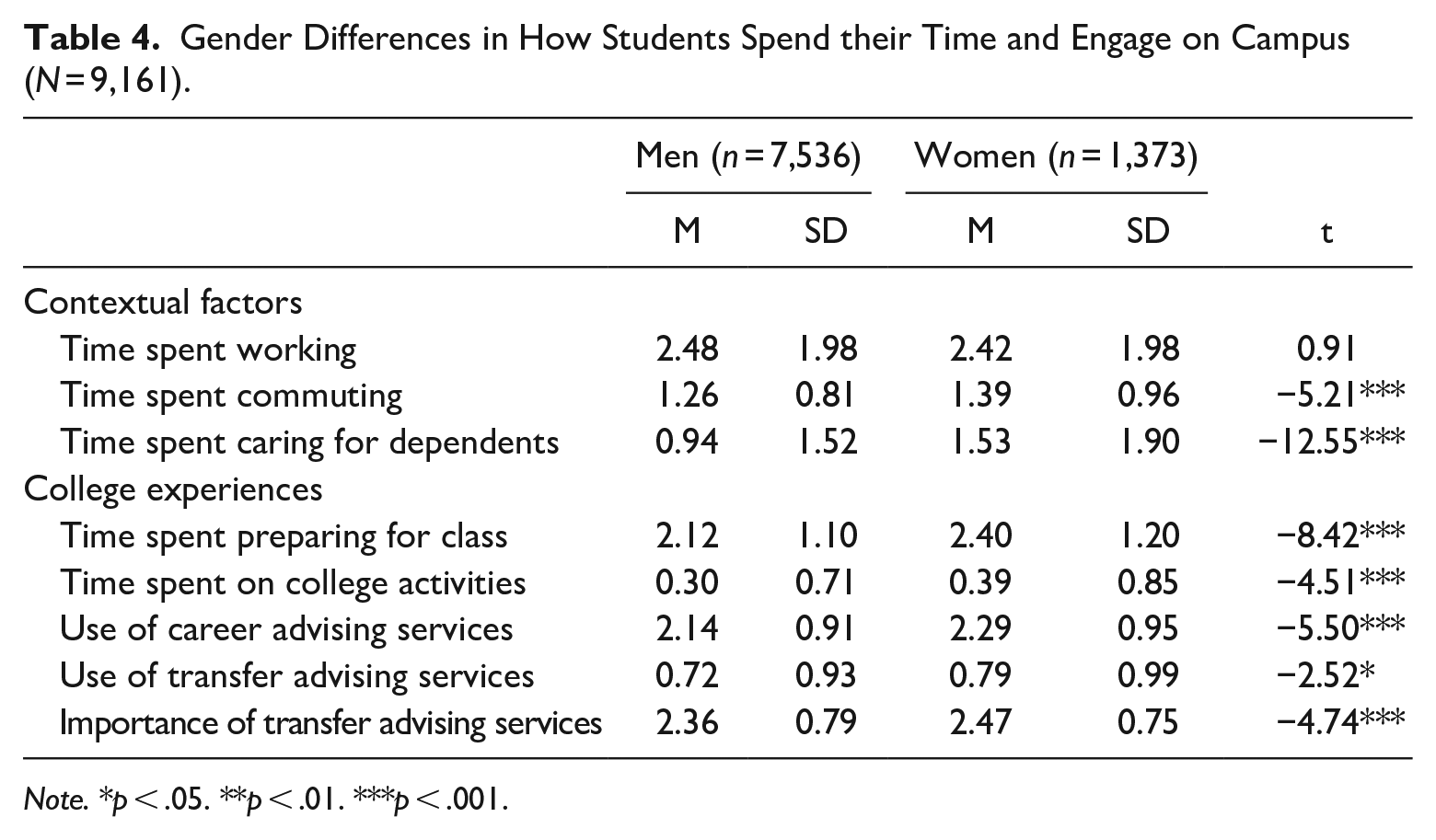
Note. p < .05. **p < .01. ***p < .001.
To further investigate RQ2, which asks about gender differences in student experiences, we conducted ancillary analyses, using the three-level gender variable to capture non-binary student experiences. Specifically, we ran additional crosstabs and z-tests to examine differences on categorical variables (see Table A2) and Kruskal-Wallis tests to assess mean differences, which accounted for inequality of variance between groups (see Table A3). We found that, relative to men, non-binary students were more frequently parents (z = 2.38; p = .017). Relative to both women and men, non-binary students more frequently reported major reliance on employer benefits (2.19 ≤ z ≤ 2.62; 0.009 ≤ p ≤ .029) and public assistance (2.61 ≤ z ≤ 2.93; .003 ≤ p ≤ .009). Non-binary students also reported more frequent major reliance on scholarships, relative to men (z = 2.79; p = .005). Non-binary students reported significantly more time commuting to campus, relative to both women and men; finally, they reported spending more time in student groups than men and less time preparing for class than women (see Table A3). These findings contribute knowledge regarding non-binary community college STEM students’ experiences, which is critical to addressing gender inequities in computing and understanding the intersection between gender and computing experiences.
Research Question Three
RQ3 findings provide further insight into STEM learning, community college, and contextual experiences by examining variation by race/ethnicity among only self-identified women in the sample of transfer aspirants in computing. Table 5 summarizes these results as they relate to the categorical variables of interest, while Table 6 summarizes the results for ordinal/continuous variables. Because of the complexity of these group comparisons, we report select results in text and focus on general patterns, as opposed to reporting all significant results (see Tables 5 and 6 for significance testing).
Contextual Experiences Among Women, By Race/Ethnicity (n = 1,373).
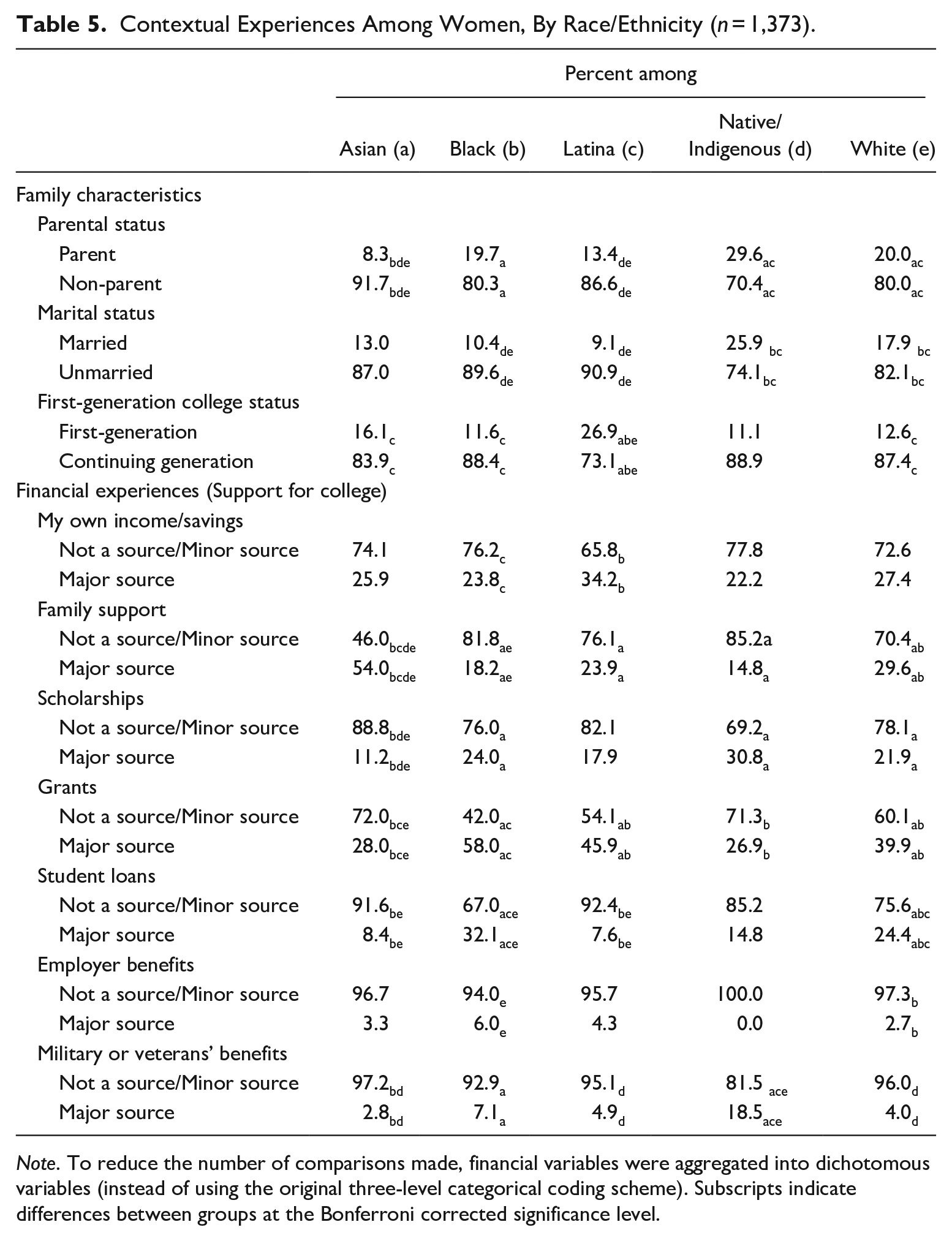
Note. To reduce the number of comparisons made, financial variables were aggregated into dichotomous variables (instead of using the original three-level categorical coding scheme). Subscripts indicate differences between groups at the Bonferroni corrected significance level.
Additional Contextual Factors and College Experiences Among Women, By Race/Ethnicity (n = 1,373).
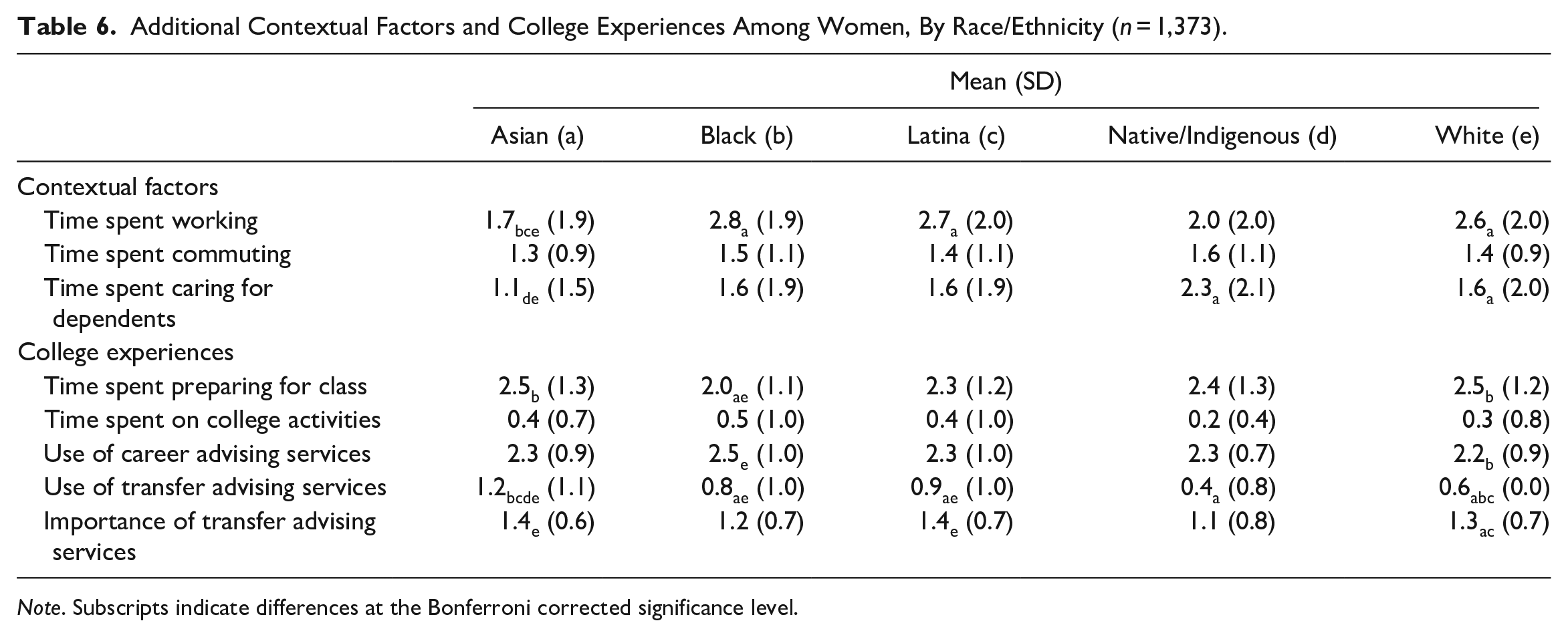
Note. Subscripts indicate differences at the Bonferroni corrected significance level.
Variation in Family Characteristics
As shown in Table 5, among women transfer aspirants in our sample, Latina students were more frequently first-generation to college (relative to other groups) and were less frequently parents and/or married, relative to white and Indigenous women. In contrast, Indigenous women were most frequently married and parents. The majority (84%) of Asian women in our sample reported having college-educated parents and were not parents or married themselves. Overall, we document significant variation in family characteristics among transfer aspiring women in computing by race and ethnicity, which provide important nuance for the other results discussed above.
Differences in How Students Finance their Computing Degrees
We document similar patterns capturing how women financed their college education. Black women transfer aspirants more frequently reported major reliance on student loans, relative to women from other groups (see Table 5), which is consistent with recent research on racial disparities in student loan debt (see Mustaffa & Dawson, 2021). Latina students frequently reported reliance on grants and their own income and infrequently reported major reliance on student loans, especially in relation to Black women in the sample who reported the greatest reliance on loans. Compared to all other groups, Asian women most frequently reported major reliance on family support to pay for college. Just under 40% of white women reported major reliance on family support to pay for college—significantly lower than Asian women and significantly higher than Black women. Similarly, a quarter of white women reported major reliance on loans, significantly more than Asian and Latina women, but significantly fewer than Black women. Taken together, these findings highlight disparities in how women transfer aspirants accumulate debt to pursue their computing degrees.
Also notable, while only 5% of women (in the aggregate) reported major reliance on military/veteran’s benefits to pay for college—significantly lower than the 9% of men who reported this—nearly 20% of women from Indigenous groups reported reliance on military/veterans benefits to pay for college. Thus, documented gender differences capturing the experiences of women in the aggregate may not apply to Indigenous women. Again, these findings complicate our RQ2 results and emphasize the need for greater consideration of race and ethnicity within studies of women in computing.
Differential Use of Student Services
Other variation emerged among women transfer aspirants in relation to how they utilized student services. For example, Black women reported using career advising more frequently than white women, while Latina students reported more frequent use of transfer advising relative to white women. Relative to all other women, Asian women reported the greatest utilization of transfer advising. Collectively, these findings provide important guidance for practitioners and policy makers, documenting the unique importance of transfer advising services for many Women of Color, who may also frequently be first-generation college students (e.g., Latina students in our sample more frequently reported being first-generation to college). Future research might also explore why and how students access transfer advising services. It is possible that Asian, Black, and Latina women in our study may have disproportionately used advising services due to the sexism and racism that they encounter, leading them to overprepare (see Smith & Gayles, 2018).
In contrast with other Women of Color in our sample, women from Indigenous groups reported the lowest utilization of transfer advising (though not all differences were significant). We posited that this finding may be explained by regional differences in where students attend community college. Thus, to further interpret these findings, we compared the proportion of students from rural community colleges by race and ethnicity. 9 These analyses revealed that 55.1% of Indigenous students came from rural community colleges, relative to 18.5% of Asian students, 38.2% of Black students, and 32.1% of Latinx students (3.37 ≤ z ≤ 8.73; p < .001); no significant differences emerged between white and Indigenous students. These findings point to opportunities to support students from rural community colleges—who may disproportionately be Indigenous students—by expanding access to student services in rural communities.
Limitations and Suggestions for Future Research
Before further interpreting our results, it is important to recognize some limitations of our inquiry. Most significantly, we relied on existing cross-sectional survey data to examine gender and women’s participation among transfer-intending computing students at community colleges. Future research might include longitudinal data by surveying students over time or merging other data sources to track students as they matriculate through programs at community colleges and universities. It is also possible that our results may be constrained by non-response bias and variation in institutional participation in the survey, which we mitigated by limiting our dataset to include only students from institutions that consistently participated in the CCCSE. Trends analyses were further constrained by changing survey instruments, which limited our ability to examine gender in a non-binary way or explore disaggregated racial/ethnic groups over time. Also related to our ability to detect emerging trends, our data was collected prior to the COVID-19 pandemic; some evidence suggests that women’s representation at community colleges declined during the pandemic, which should be explored in future research.
More broadly, a guiding premise of our paper is that it is critical that we work to remove barriers at every point in the transfer pathway. In particular, there is a need for concurrent efforts to (1) get more women into computing and (2) retain and support women who have already decided to pursue computing degree pathways. Within our study, we focus specifically on the experiences of women who have already chosen to pursue computing. Other studies might also consider the factors that lead women to pursue computing at the community college in the first place and further disaggregate students pursuing various computing-related degree programs (e.g., computer science vs. information technology, etc.). Future research should also use qualitative and mixed methods to provide a more nuanced look into the experiences of transfer-intending women in community college computing programs. In particular, qualitative research could allow for greater understanding of how women in computing make meaning of their educational experiences and illuminate the decision-making processes and concerns that they have over time.
Implications
Collectively, our findings provide insight into community college transfer pathways as a mechanism for broadening participation in computing, while highlighting inequities that characterize students’ experiences on these pathways. Our conceptual framework (see Wang, 2017) emphasizes the importance of understanding larger disciplinary trends, contextual factors (e.g., family and work experiences), and college experiences, which collectively inform STEM students’ transfer momentum and success. To that end, Study One findings provide new insight into the larger disciplinary context for transfer students in computing. While women’s representation in computing has modestly increased in recent years (see Dubow et al., 2021), we document declines in women’s representation among transfer-intending computing students at community colleges. Study Two findings provide further insight into women’s underrepresentation and experiences. Most notably, we found that, relative to men in our sample, women report greater demands on their time and greater reliance on student loans to finance their education. These unique challenges for women are further complicated for Black, Latina, and Indigenous women in our sample, as we discuss below.
Future Studies Should Center Community Colleges and Use Intersectional Frameworks
Emerging scholarship emphasizes the importance of centering community colleges within studies of equity in computing, highlighting how community college transfer women uniquely experience computing relative to women who begin their degrees at 4-year institutions (e.g., Blaney et al., 2022). Our findings complement this recent scholarship, as we similarly document unique patterns for women following transfer pathways to their computing degree. Specifically, while women’s representation in computing has generally been increasing in recent years, their representation among transfer-intending computing students has been decreasing. Thus, our findings further document how studies of women in computing at 4-year institutions do not necessarily generalize to all women pursuing computing degrees.
While some work has begun to center community colleges to understand women’s participation in computing, more intersectional work is needed, including research using qualitative and mixed methods to provide more insight into transfer-intending women’s lived experiences as they navigate pathways toward computing degrees. In particular, centering Black, Indigenous, and Latina women’s experiences will be important. In several instances, we found that the characteristics and experiences of Indigenous women differed from those of other students, suggesting that research on the experiences of women in computing, aggregated across race/ethnicity, fails to represent all students. This highlights a need for more studies targeted at understanding the unique experiences of Indigenous women in computing, recognizing our other finding that Indigenous women may disproportionately attend rural community colleges.
Exploring Why Women’s Representation Has Declined Among Transfer Aspirants
More broadly, it will be important for future research to further explore community college transfer students’ experiences in computing to understand the broader contexts and experiences that may explain why we saw declines in women’s participation in computing transfer pathways over time. For now, we can only speculate about the factors underlying this pattern. It may be that women are increasingly being recruited directly to 4-year institutions, as computing departments at 4-year institutions face pressure to increase women’s representation. We posit that some women may feel encouraged, either explicitly (e.g., by teachers, parents, etc.) or implicitly (e.g., via social stigma surrounding community colleges) to maximize opportunities and perceived prestige by forgoing community college pathways and instead beginning their computing journeys at 4-year universities.
While we could not specifically examine this in our study, changes to program offerings (e.g., dual credit and micro-credential programs) may also contribute to women’s declining representation among transfer-aspiring computing students at community colleges, something that should be investigated in future research. More specifically, dual credit programs offer high school students opportunities to earn college credits, potentially reducing or negating the perceived benefits of attending a community college prior to a 4-year university (e.g., saving money by taking low-cost courses that will contribute to a 4-year degree). Some research suggests that white women tend to enroll in dual credit high school courses more frequently than men and Women of Color (e.g., Taylor, 2015; Young et al., 2013), which could potentially contribute to our finding regarding white women’s declining representation among transfer-intending computing students. Similarly, micro-credential programs can represent an expedited and low-cost pathway for acquiring the requisite skills necessary to work in a given field, which may be appealing to students with financial and time constraints, something to further explore in future studies. Given that women in our study reported unique demands on their time and finances (e.g., greater reliance on loans), it is possible that a micro-credential pathway may seem like a reasonable option for women with computing interests. Moreover, it could be that these programs provide an opportunity for women to circumvent prolonged sexist environments within computer science, which may appeal to women who are otherwise navigating long and frequently hostile transfer pathways. All of these potential explanations for our results point to future areas for research.
The Need for Targeted Financial Aid Policies
Our findings may point to implications for policy regarding financial aid to meet all students’ needs. Relative to men, women in our sample reported greater reliance on student loans to pay for college. Further, Black women reported the greatest reliance on loans, pointing to a need to consider student loan debt intersectionally in the context of transfer students’ experiences. Increasing the availability of scholarships targeted for Black women in computing could represent one pathway towards reducing the burden of student loan debt for these students. Our research suggests that policymakers should recognize how financial aid policies that disregard underlying disparities in intergenerational wealth and access to education perpetuate inequity by creating barriers to upward mobility. Based on prior research, all-inclusive financial aid interventions have been shown to be less effective than those targeting specific groups with the highest need (Bloome et al., 2018). Financial aid policies which directly account for our findings are needed to close the gap. In addition to directly increasing financial aid, this may take the form of providing students with greater access to housing and meal plans and implementing unambiguous financial aid distribution procedures before, during, and after transfer. While more research is needed to examine the impact of such interventions, our findings suggest that such support could potentially mitigate gender disparities in the demands students face on their time (e.g., women’s greater time spent commuting).
Funding Existing and New Support Services at Community Colleges
Our findings reveal how cuts to community college advising services could have inequitable and detrimental impacts on students who are the most underrepresented among transfer-intending computing students. Prior research has highlighted the importance of advising services for transfer-aspiring students (e.g., Elliott & Lakin, 2020). Reductions in funding for transfer advising would inequitably disadvantage many Women of Color, given our finding that women—particularly Asian, Black, and Latina women—more frequently utilized these services.
In addition to continuing existing programs, our findings point to a need to improve accessibility of services, especially for Indigenous women who disproportionately come from rural community colleges. Given that Indigenous women are particularly underrepresented in STEM (Miles et al., 2022), these findings provide important guidance for how community colleges might adjust their services to support these students. Specifically, revising transfer advising to be more accessible to this group may go a long way in supporting Indigenous women seeking degrees by way of community college. For ideas on how to improve accessibility, institutions can look to recent studies of Indigenous student experiences (e.g., Tachine & Cabrera, 2021) and examples from Tribal Colleges and other MSIs. To further guide future practice, research should explore why Indigenous women in our sample less frequently utilized transfer advising and other student services relative to other transfer aspiring women in computing.
What 4-Year Universities Can Learn from Community Colleges
Our research points to opportunities for 4-year universities to learn from community colleges to expand the services most frequently utilized by transfer women. Recent scholarship has demonstrated that financial aid policies and advising services at receiving institutions frequently fall short of supporting transfer students who face distinct challenges compared to students who begin college at 4-year universities (Elliott & Lakin, 2020). To develop these services, 4-year institutions need to have an understanding of who is entering their computing majors, recognizing that women may be especially underrepresented among transfer students in computing (Blaney, 2020) and face unique demands on their time, per our findings. To this end, community colleges and 4-year universities must work together to communicate pertinent information about transfer students’ characteristics, experiences, and needs. This recommendation builds on prior research, documenting how community colleges have made significant progress in fostering equitable STEM environments for women and can serve as a model for 4-year institutions. As a related point, our findings highlight the need to understand computing students intersectionally, which may require partnerships with offices of multi-cultural affairs or other groups to build capacity.
Supporting Women in the Short-term and Deconstructing Patriarchy in the Long-term
Our inquiry provides new insight into the numerous demands that community college women must balance in their pursuit of computing degrees, as women in our study spent more time than men caring for family, commuting, studying, and engaged in campus activities. Further, Indigenous women in our study were most frequently parents and may therefore face additional demands on their time relative to other women. Therefore, childcare services and other family friendly policies may be critical to addressing the stark underrepresentation of Indigenous women and declining representation of women in general. The immediate benefits of family friendly policies are two-fold: not only might they help to offset the demands faced by many community college women, but they may also contribute to cultivating an inclusive environment in which women feel supported. Addressing these gaps in support may be integral to increasing the representation of women in computing at 4-year universities as well, given that intent to transfer is, in part, a function of contextual factors and experiences during students’ community college tenure (Wang, 2017).
While colleges can provide support to women balancing multiple demands on their time, it is important to consider the larger patriarchal structures that may lead to inequities in how students spend their time. Although the representation of women in the workforce has increased substantially over the last few decades, the persistence of traditional gender roles is evident, as women disproportionately assume a greater share of domestic responsibilities relative to men (see Kamp Dush et al., 2018; Van Bavel et al., 2018). This has implications for women’s economic opportunities, given that women are more likely than men to decrease their time spent working and increase time spent on domestic tasks when household responsibilities reach a tipping point (Clawson & Gerstel, 2014). Postsecondary institutions are poised to disrupt these patriarchal gender norms by educating all students on these issues. This may take form as general education curricula that include gender studies courses, instruction that is more conscious of gender inequities in all courses, counseling services that are promoted for students struggling with issues related to gender roles in and out of the classroom, and so forth. Future research should explore these and other specific interventions aimed at deconstructing gender inequities and patriarchy, which continue to characterize college student experiences in computing and other STEM fields. To that end, researchers tackling this work should engage with feminist approaches (Ahmed, 2016) and other power-conscious frameworks, like intersectionality (Collins, 2019; Crenshaw, 1991) to interrogate our findings within larger systems of oppression.
Conclusion
While gender and women’s experiences in computing have received significant research attention, community college women are too often excluded from this research, despite the important role community colleges play in facilitating higher education access. To address this gap in the literature, this paper provides new insight into trends in women’s participation among transfer-intending computing students at community colleges (Study One) and the unique experiences that may inform successful transfer among this group (Study Two). While our findings show that women are especially underrepresented among transfer-intending computing students, we identify transfer-tending women as an important and diverse group to support in their computing degree pursuits. We highlight implications for how institutions might better support these students as they navigate community college pathways to computing degrees.
Supplemental Material
sj-docx-1-crw-10.1177_00915521231218236 – Supplemental material for Transfer-Intending Women in Computing: An Exploratory Analysis of Trends, Characteristics, and Experiences Shaping Women’s Computing Participation
Supplemental material, sj-docx-1-crw-10.1177_00915521231218236 for Transfer-Intending Women in Computing: An Exploratory Analysis of Trends, Characteristics, and Experiences Shaping Women’s Computing Participation by Jennifer M. Blaney, Sarah L. Rodriguez and Amanda R. Stevens in Community College Review
Footnotes
Acknowledgements
Data used with permission from the Center for Community College Student Engagement. Community College Survey of Student Engagement (2011–2019). The University of Texas at Austin.
Author’s Note
Amanda R. Stevens is now affiliated to Tarleton State University, Stephenville, USA.
Declaration of Conflicting Interests
The author(s) declared no potential conflicts of interest with respect to the research, authorship, and/or publication of this article.
Funding
The author(s) received no financial support for the research, authorship, and/or publication of this article.

Supplemental Material
Supplemental material for this article is available online.
Notes
Author Biographies
References
Supplementary Material
Please find the following supplemental material available below.
For Open Access articles published under a Creative Commons License, all supplemental material carries the same license as the article it is associated with.
For non-Open Access articles published, all supplemental material carries a non-exclusive license, and permission requests for re-use of supplemental material or any part of supplemental material shall be sent directly to the copyright owner as specified in the copyright notice associated with the article.
