






Abstract
Teachers are the key human resources in the community colleges of Nepal. They are responsible for implementing educational plans and policies, and enhancing educational quality through effective instruction (Gaihre et al., 2022). In Nepal, there are no systematic provisions for teacher preparation in higher education. An individual with a master’s degree in the specialized subject area can apply for vacant teaching positions, and management committee of the respective college is authorized to appoint the required number of teachers in accordance with the by-laws of the individual college. Since community colleges have the sole responsibility of generating funds for their operation, teachers have a vital role in enhancing the quality of education provided by such institutions (Dangara, 2016; Gaihre et al., 2022). Teachers who are highly motivated can contribute to their organization by improving the quality-of-service delivery and facilitating the achievement of its goals and results (Ofojebe & Ezugoh, 2010). Like any other human resource, teachers also have individual motives based on the needs, desires, and expectations that drive their behavior toward work performance (Shikalepo, 2020). Among all motivational factors, fair treatment is one of the most critical factors for employee motivation. Thus, institutions, including community colleges, can appreciate or reward each employee’s contribution to achieving organizational goals.
Teacher motivation is a central construct for human resource management and the achievement of teaching and learning objectives in educational institutions, including community colleges (Adiele & Abrahm, 2013; Ofojebe & Ezugoh, 2010). Thus, community colleges can enhance their effectiveness by improving their teachers’ motivation toward their profession. Therefore, this interpretive phenomenological study aims to investigate the essence of teacher motivation in community colleges in Nepal by analyzing and interpreting teachers’ experiences in relation to the challenges they have faced in sustaining strong motivation, as well as their expectations for reinvigorating their enthusiasm, excitement, and sense of happiness and satisfaction to contribute toward the growth and development of their profession.
Community Colleges in Nepalese Context
It is worth noting that Nepal’s higher education system comprises various types of institutions, including community colleges, constituent and private colleges, technical schools, and vocational training centers. Constituent colleges rely entirely on their affiliated universities for decision-making regarding the curriculum, academic calendar, and examination systems. These colleges receive substantial financial support from the university to operate (Gaihre et al., 2022). Private colleges, on the other hand, offer similar undergraduate and graduate courses as constituent colleges but operate as for-profit entities, with student fees being their primary source of funding. While private colleges enjoy complete administrative independence, they do not receive any financial support from the university or government. Technical schools in Nepal typically offer vocational courses for students in Grades 8 to 12, with a focus on preparing them for employment opportunities. These institutions are affiliated with the Ministry of Education, along with the Council of Technical Education and Vocational Training (CTEVT), which provides technical education and vocational training to students with the goal of improving their employability and creating a skilled workforce (Bhandari, 2023).
Unlike these institutions, community colleges, which are also referred to as “community campuses” in Nepal, are established and managed through the active participation and contributions of local communities. Interestingly, the term “campuses” refers to higher education institutions in written language, while “colleges” is the preferred term in spoken language. Mandal (2016) states that community colleges in Nepal are the higher education institutions that are affiliated with existing universities in Nepal. They are autonomous in making administrative decisions of their operation but depend on curriculum, academic calendar, and examination systems as set by their affiliating universities. UGC has promoted Quality Assurance and Accreditation [QAA] certified community colleges to run autonomous academic programs under approval from affiliating universities for bachelors and masters level programs. According to Bista and Gaulee (2018), community colleges in Nepal receive minimal financial support from the University Grants Commission (UGC) and primarily operate through locally generated resources such as student fees and voluntary donations. These non-profit institutions provide higher education opportunities for individuals residing in diverse geographical locations of the country (Gaihre, 2018). Community colleges in Nepal offer educational facilities that are comparable to those found at universities for both undergraduate and graduate level students, and they are affordable to the general public as well. The University Grants Commission (UGC, 2021) reports that out of the 466,828 students enrolled in higher education in Nepal, 28.5% are enrolled in community colleges. This indicates that a significant number of teachers are pursuing careers in community colleges.
Community Colleges in the Western Context
The concept of community colleges was developed to help impoverished people learn skills that would help them find work and adjust to their communities. Community colleges in the United States of America are often seen as providing the last chance for individuals to improve their lives and provide a better standard of living for themselves and their families (Valeau & Raby, 2018). Upon completion of specified courses, graduates from such community colleges students often seek either to enroll in universities to further their education or to enter the workforce (Hartenstine, 2013). Similarly, community colleges in Canada play a key role in developing mid-level skills required for various types of industries (Asian Development Bank, 2015). These colleges provide professional, vocational, and academic courses to high school graduates who were previously denied admission to traditional universities due to factors such as age, entry qualifications, or other economic and domestic issues (Raby, 2009). As such, Skolnik (2020) argues that community colleges in Canada are considered an alternative form of postsecondary education offered to students who prefer a more hands-on type of learning than is typically found in universities and are the main providers of vocational education and training.
Global counterparts of community colleges are autonomous institutions that offer degrees of varying durations, including the option of credit transfer to universities, as well as credit and noncredit courses (Frohardt, 2019). Community colleges around the globe share similar characteristics that set them apart from universities, including their location in rural and urban areas to serve underprivileged populations, a curriculum that supports local industry and economy, and a focus on granting certificates, diplomas, and degrees in vocational, career-oriented, and academic disciplines. These institutions aim to support vertical social mobility and offer educational opportunities to non-traditional and underserved student populations based on age, gender, ethnicity, and socioeconomic background.
However, community colleges may lack prestige compared to selective universities, and their graduates may face a similar lack of prestige in the job market (Raby & Valeau, 2018). Literature indicates that community colleges in the USA, UK, Australia, Canada, South Africa, Vietnam, Germany, Korea, and Taiwan focus on vocational, technical, and occupational education, all of which offer a practical emphasis. However, institutions in this sector increasingly offer a practical-oriented curriculum combined with a liberal arts or theoretical emphasis, while in the Netherlands they emphasize middle professions such as teaching, local employment, or both (Brown, 2018; Jephcote, 2018; Kruger & Wolhuter, 2018; Marklein & Tinh, 2018; Tang et al., 2018; Witt, 2018). While community colleges in Nepal dominate the discourse on access to tertiary education, they largely ignore technical and vocational education, as Raby et al. (2022) have observed in many countries around the globe.
Community Colleges in Nepal Compared to Those in Global Contexts
Community colleges in Nepal have distinct characteristics that differentiate them from community colleges in Western contexts. These colleges are typically referred to as branch campuses or satellite colleges of larger universities such as Tribhuvan University and Kathmandu University (Bista & Gaulee, 2018). Unlike community colleges in Western contexts, community colleges in Nepal offer bachelor’s and master’s degree programs based on the curriculum, student enrollment procedures, student evaluation, and grading systems prescribed by their affiliating universities (Gaihre et al., 2022). Nepalese vocational and technical colleges, on the other hand, are known as “diploma colleges or technical institutions” that prepare students for semi-skilled or skilled jobs. Due to the absence of an accreditation system, community colleges in Nepal cannot independently award degrees to their graduates and are therefore compelled to offer 4 year bachelor’s and 2 year master’s degree programs instead of fundamental programs or courses such as 2 year associate degrees or diplomas, as offered by their global counterparts (Bista & Gaulee, 2018).
However, community colleges in Nepal share similarities with those in America or Canada in two main aspects. Firstly, most of these colleges are established in diverse locations, often outside the major cities of Nepal, and aim to provide higher education access to lower and middle-class youth (Bista & Gaulee, 2018). Secondly, community stakeholders are primarily responsible for managing the financial and physical resources required to operate these institutions (Gaihre, 2018). Recently, Nepal’s education landscape has seen a positive step toward adopting common practices used by community college counterparts around the world, as Tribhuwan University has delegated authority in curriculum formation and student evaluation for local need-based autonomous academic programs at the bachelor’s and master’s levels to community colleges with QAA certification from the University Grants Commission.
It is worth noting that community colleges in Nepal have some unique characteristics compared to those in Western contexts. For example, they provide access to higher education for people residing in different geographies, and the academic degree they confer holds the same prestige as those awarded by universities (Mandal, 2016). However, community colleges in Nepal seem similar to those in Hong Kong in terms of providing access to higher education for the masses (Tang et al., 2018). Nevertheless, community colleges in Hong Kong are primarily focused on lifelong education, which is not necessarily the case in Nepal.
Research Context
Numerous studies have been conducted on employee motivation, many with a specific emphasis on teachers in the workplace. As Gaihre (2018) has noted, the degree of motivation exhibited by teachers in community colleges is closely tied to the quality of educational services they provide. This is supported by extensive research which has shown that teachers are the most crucial human resource in delivering quality education to students in such colleges, often surpassing other individuals in students’ lives outside of their families (Chetty et al., 2014; Jackson, 2018; Kraft, 2019). In addition to the aforementioned studies, a majority of the research conducted on community colleges has been centered on student enrollment and academic achievement (Pretlow et al., 2022), strategies to enhance academic performance (Moss & Kelcey, 2022), students’ evaluation and selection of online resources (Nguyen et al., 2022), the role of community colleges in rural development (Harmon et al., 2022), financial requirements (Koh et al., 2022), and their impact on academic performance. However, the study of teacher motivation in unexplored contexts would offer valuable insights for scholars, practitioners, and community college leaders. Despite being a crucial factor, there is limited research on teacher motivation in higher education in Nepal, particularly in community colleges. In the aforementioned context, this study aims to explore the essence of teachers’ experiences with work motivation in community colleges in Nepal, taking reference to the equity theory of Adams (1963). Specifically, the study seeks to answer the following research questions: (i) What is the essence of teachers’ experience on work motivation in community colleges in Nepal? (ii) What are teachers’ expectations from community colleges to keep them motivated at work?
Theoretical Framework: Motivation Theory
Community colleges are under pressure to prioritize student satisfaction and provide quality education, as they heavily rely on the financial resources generated from student fees. According to Sinclair (2008), teacher motivation is a crucial factor that attracts individuals to the teaching profession, sustains their involvement, and inspires them to remain in the profession. Teachers have varying needs, interests, and expectations from the institutions they are affiliated with, including external factors such as fair working conditions, job security, well-defined institutional policies and management practices, a positive working environment, and good human relations (OECD, 2019). Additionally, internal factors such as interest in the teaching profession, immaterial aims, success (Börü, 2018) and external factors such as opportunities for professional growth and advancement, reward and recognition, and autonomy in instructional methods are essential for motivating teachers. Among the various motivational theories, Adams (1963) equity theory is highly relevant in interpreting the experiences and expectations of teachers in community colleges to sustain their work motivation.
Stacy Adams’s Equity Theory of Motivation
Adams (1963) equity theory posits that individuals seek a fair distribution of inputs and outputs in their work, such that the benefits they receive from their job appear equitable in comparison to the contributions they make. They also desire that others receive comparable compensation for comparable degrees of commitment. Thus, this theory is highly applicable in understanding the essence of teacher motivation in community colleges. Equity in a work situation is gauged by the balance between an employee’s job contributions, such as efforts or skills, and the benefits they receive, including pay and promotion. This assessment also involves comparing the benefits one receives with those awarded to others for similar contributions (Chiekezie et al., 2009). The equity theory of motivation explains the relationship between an employee’s perception of fair treatment by their employer and their motivation to carry out their duties and responsibilities. In an organization, employees work according to their qualifications, abilities, and skills, and their work is also influenced by psychological factors (Ibrahim et al., 2021). One such psychological factor is the employees’ expectation of favorable treatment and lack of prejudice from the organization (Khadka, 2009).
While comparing themselves to others, individuals make judgments about the fairness of their rewards and benefits relative to their inputs, and to those of others who perform similar tasks. If individuals perceive that they are not being treated equitably, they may experience a sense of injustice, which can negatively affect their motivation and job satisfaction. This can lead to reduced effort, decreased job performance, and even employee turnover. On the other hand, if individuals feel that they are being treated fairly, they are more likely to be motivated to perform at their best, which can lead to increased productivity, job satisfaction, and employee retention (Armstrong, 2009). The equity theory of motivation suggests that individuals compare the inputs they contribute to their work with the outputs they receive, and compare this ratio to the inputs and outputs of others in similar positions. If they perceive this ratio to be equitable, they will be motivated to work harder, and vice versa. This theory also highlights the importance of procedural equity, which involves fairness in the processes and procedures used by organizations to distribute rewards and opportunities. This can include things like transparent and consistent performance evaluations, promotion processes, and other HR policies. When individuals perceive that the processes used to distribute rewards are fair, they are more likely to feel motivated and committed to their work. On the other hand, if they perceive that the processes are unfair or biased, they may feel demotivated or even resentful (Manzoor et al., 2021). Overall, the equity theory of motivation emphasizes the importance of creating a work environment that is perceived as fair and equitable by employees in order to promote motivation, engagement, and retention. Figure 1 presents an overview of the domain utilized in equity theory, where teachers’ perception of fairness in their workplace is influenced by their ability to achieve balance between the input and output. In this context, fairness is evaluated by comparing their input-output ratio with that of their colleagues in similar positions within their own institution, as well as with their peer group in other organizations.
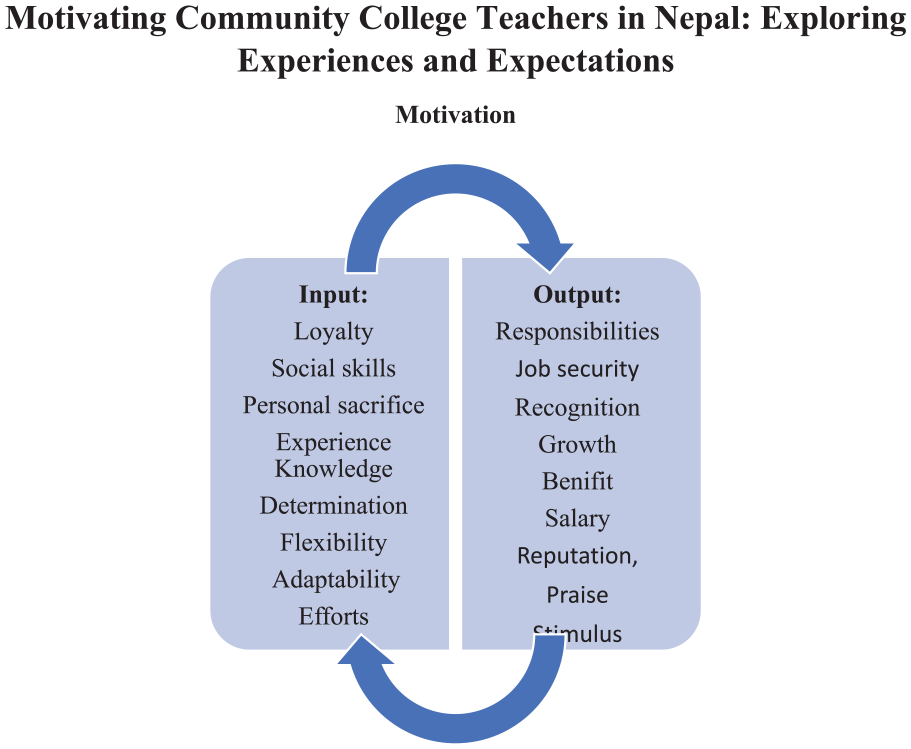
Stacy Adams’s equity theory of motivation.
Methods
The research design utilized in this study is grounded in interpretive phenomenology. This methodological approach primarily involves the analysis of text data with a focus on uncovering its meanings or interpretations (Allen, 2017; Silverman, 1998), and provides an in-depth description of the subjective experiences of the individuals being studied (Neubauer et al., 2019; Patton, 2002). This design allows for a thorough exploration of deeper issues and enables the presentation of an understanding of the issues based on the experiences described by the participants during in-depth interviews, presented in the form of a description of the meanings that the participants give to their experiences (Creswell, 2007). As such, Hammersley (2013) emphasizes that the main objective of phenomenological research is to analyze and interpret our present experiences, since this design asserts that knowledge of the phenomenon under study is solely based on the experiences of the individuals involved.
The primary aim of this phenomenological study is to gain a better understanding of essence of teacher motivation in community colleges of Nepal. This will be achieved through the description and interpretation of the experiences of participating teachers. Teacher motivation is a psychological phenomenon that is influenced by how individual teachers perceive certain aspects of the community colleges in which they work. Therefore, it is necessary to examine the experiences of teachers who work in community colleges to fully understand their motivation. Giorgi and Giorgi (2003) have stated that interpretive phenomenological research focuses on experiences and meanings “in order to capture, as closely as possible, how the phenomenon is experienced within the context in which the experience takes place” (p. 27). As a result, the interpretive phenomenological design is the best approach to analyzing the lived experiences of community college teachers and interpreting the meaning of these experiences as understood by the teachers themselves, both individually and as a group.
Participant Demography
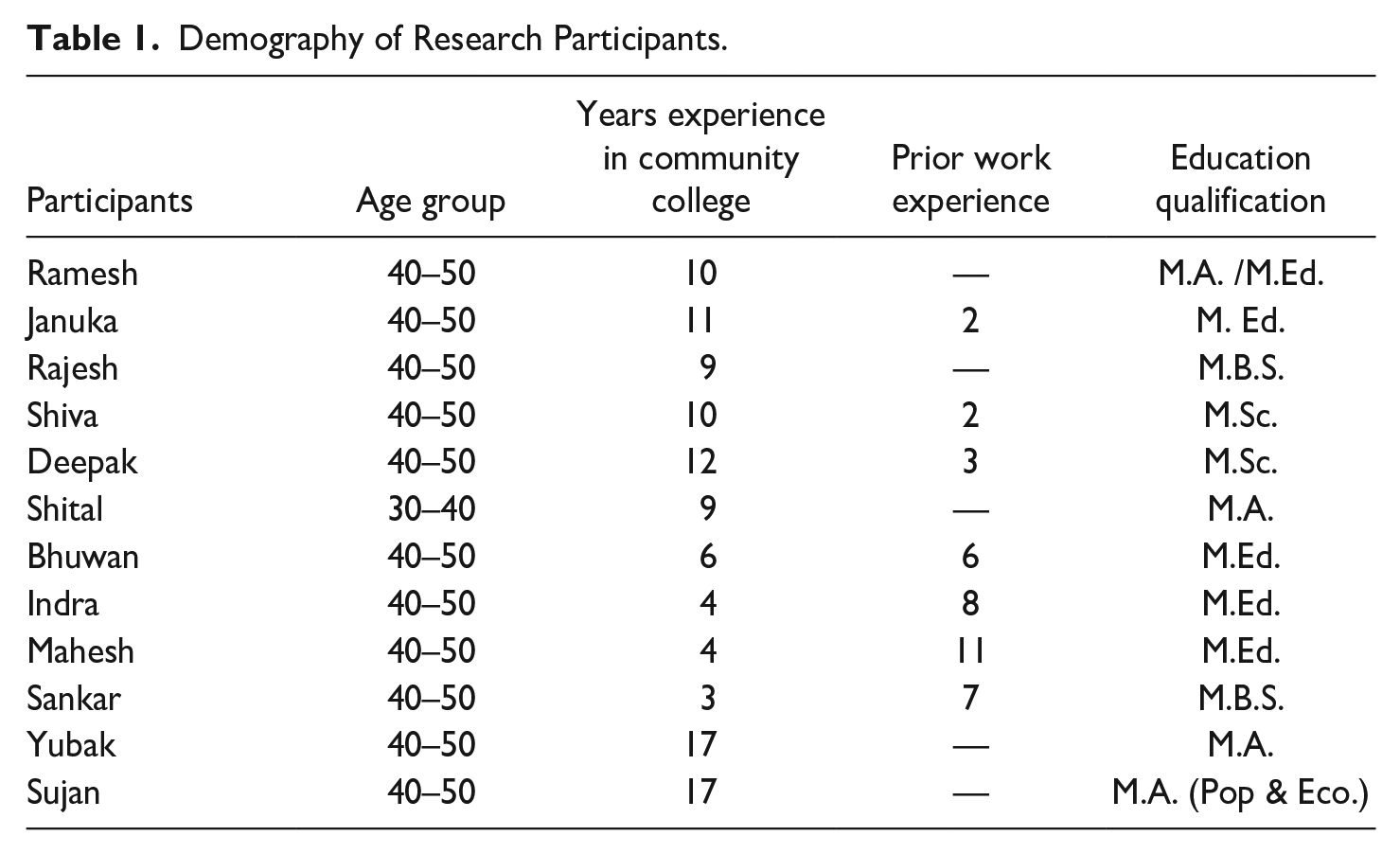
We chose to conduct our study in one of the 77 districts in the Gandaki province of Nepal. To select our study location, we purposively chose four community colleges out of the 15 in the district. As noted by Taherdoost (2016), this sampling method allowed us to easily access a suitable sample for our research. We selected these particular campuses because they offer both bachelors and master’s degrees and are likely to have a high number of teachers pursuing long-term careers in teaching. Our research participants consisted of 12 teachers who were intentionally chosen to collect relevant data that would address our research questions. Three teachers from each of the four selected community colleges were full-time employees who relied solely on the community colleges for their teaching profession. The purposive technique was used to select authentic sources who could provide information that could not be obtained from alternative sources (Taherdoost, 2016). Each participating teacher was assigned a pseudonym to protect their identity and ensure the confidentiality of the data and information shared during the interview. The participating teachers came from various social, cultural, and gender backgrounds and had diverse educational qualifications and work experiences. The further details of the participants are presented in the Table 1 below.
Demography of Research Participants.
Data Collection and Interpretation Procedure
The data required for this study were gathered through semi-structured interviews. One-on-one interviews were conducted in a conducive setting with participating teachers, following their written consent to take part in the study. Participants’ responses during the interviews were audio recorded with informed consent and transcribed later for ease of analysis. The interviews, which ranged from 60 to 90 min in duration, examined participants’ environments, their pathways toward becoming community college teachers, and their experiences as community college teachers within the community and in colleges (for instance, their start date as a teacher on campus). The first interview also included questions about participants’ demographic characteristics and experiences.
The second phase of the interview focused solely on participants’ motivational level, performance, perception of fair treatment in colleges, expectations, salary benefits, job security, recognition, growth, and development (such as how institutional policies, salary benefits, and job security sustain motivation among teachers in their college). In addition to the interviews, a researcher’s journal was also maintained, documenting the situation of the interviews and the participants’ reactions while responding to the questions raised during interview sessions. The researcher’s journal aided in analyzing the non-verbal messages that were crucial in gaining a deeper understanding of participants’ experiences and perceptions regarding teacher motivation in their respective colleges. We followed the phenomenological data analysis stages outlined by Pietkiewicz and Smith (2014). Firstly, we transcribed all the interviews verbatim, utilizing journal notes to keep track of the original opinions. We then read through the transcript’s multiple times, organized each teacher’s interviews and artifacts, and transferred notes into emergent themes. Through this process, we identified “relationships and clustering themes followed by the presentation of themes with thick descriptions of experiences of teacher motivation in community colleges and perceptions toward equity in teacher provisions” (p. 13). Additionally, we incorporated “the participants’ account of his or her experience” in their own words and “interpretive commentary of the researcher” (p. 13) to further refine the emergent themes.
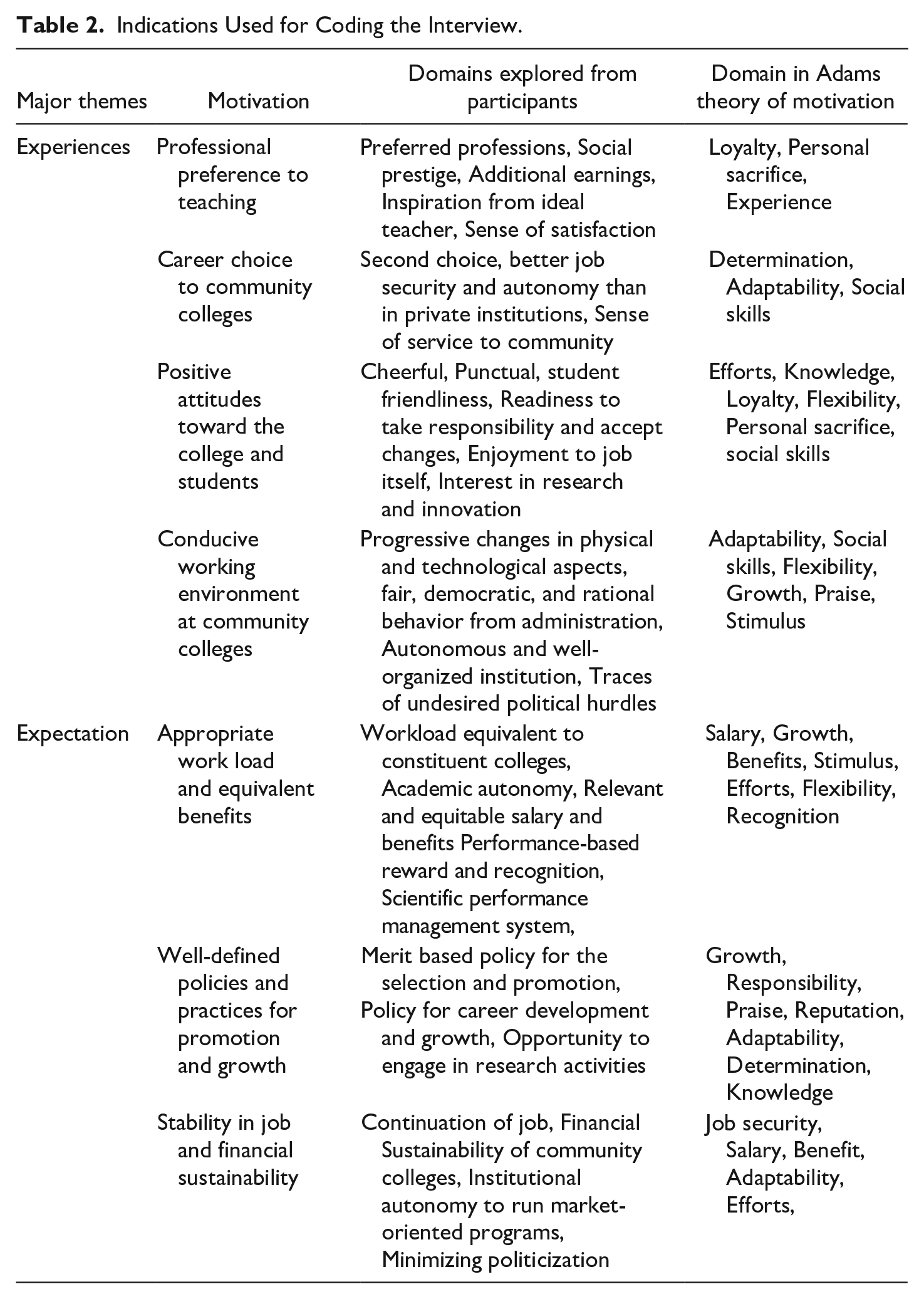
Furthermore, while interpreting the themes that emerged from the analysis of the participants’ interview responses, we considered the equity theory propounded by Stacy Adams. We regularly compared concepts during this process, both across work motivation and experience, to minimize overlapping and generate conclusive results. The summary of the indications used for coding the interview are displayed in Table 2.
Indications Used for Coding the Interview.
Findings
The participants’ experiences of work motivation in community colleges were appreciated by explicitly highlighting their experiences and expectations. The findings of this study are presented under two major themes: (a) teachers’ experiences of work motivation, and (b) teachers’ expectations for work motivation in community colleges in Nepal.
Teachers’ Experience of Work Motivation in the Community Colleges
The analysis and interpretation of interview transcripts yielded several key findings related to participants’ experiences. The major sub-themes that emerged from the data include professional preference, motivation for pursuing a career in community college education, positive attitudes toward students and the institution, and the favorable working environment provided by community colleges. These results suggest that individuals who work in community college settings are intrinsically motivated by their passion for teaching and the supportive atmosphere in which they work. Furthermore, these findings highlight the importance of creating a positive and conducive workplace environment for educators, which can ultimately benefit the students and the institution as a whole.
Professional Preference to Teaching
When describing their experience of work motivation in community colleges, 10 out of the 12 participants expressed teaching as one of their most preferred professions, with many having started their teaching career during their college years. For instance, Rajesh began his career in teaching while pursuing his bachelor’s degree in an institutional school in the city of Pokhara. These findings suggest that many individuals who work in community colleges are motivated by a passion for teaching and may have pursued this career path from an early age. He said: Although my educational background was in management, a discipline related to banking and the managerial field, I found the teaching profession to be highly intriguing and relatively stress-free. Therefore, after completing my master’s degree, I decided to pursue a career in teaching at a community college, rather than seeking employment in the managerial field. This choice allowed me to explore my passion for education and provided a welcoming and supportive work environment that fostered personal and professional growth. Through my experience as a teacher, I have come to appreciate the profound impact that educators can have on their students, and I feel fulfilled knowing that I am making a positive difference in their lives.
The transparent and noble nature of the teaching profession, as well as its close relationship with social service and the potential for good earnings and social prestige, were identified as the major reasons behind the participants’ motivation and preference for pursuing a career in teaching. These factors, combined with the intrinsic satisfaction of positively impacting students’ lives, create a highly motivating and fulfilling work environment for educators. The participants’ experiences highlight the importance of recognizing the inherent value of the teaching profession and supporting and incentivizing individuals who choose to pursue careers in education. Deepak had dreamed of becoming a teacher from his school age.
My passion for teaching was ignited by the wisdom and humility demonstrated by one of my school teachers. Despite my mother’s financial difficulties, this teacher allowed me to attend his tuition classes free of charge, inspiring me to pursue a career in education. Teaching has since become a source of great joy and pride for me, as I find immense satisfaction in sharing knowledge and helping students grow. Standing in front of a classroom full of eager learners fills me with a sense of fulfillment, and I am grateful for the opportunity to positively impact the lives of others.
In addition to the transparent and noble nature of the teaching profession, many participants were motivated by the opportunity to earn additional income through tuition classes in their off-hours. For instance, Shiva was drawn to the profession because he had already begun earning a significant amount from tutoring college students prior to formally joining the teaching profession. This financial incentive, combined with his passion for teaching, reinforced his decision to pursue a career in education. Similarly, Shital was inspired by her mother’s experience as a teacher, observing the social prestige and recognition her mother received in the local community. Witnessing the value and impact of the teaching profession firsthand further motivated Shital to pursue a career in education. These experiences illustrate how multiple factors, including financial incentives and social recognition, can contribute to individuals’ motivation and preference for teaching as a profession. She said: Growing up, my parents worked in different professions, with my father in the civil service and my mother in education. While my father held a higher post and earned a larger income than my mother, my mother was still highly respected in the community as “Shuva madam,” and I, as her daughter, was recognized and loved in the society. This experience demonstrated to me the immense value and impact of the teaching profession, even in comparison to other professions with higher status or income. My mother’s work as an educator allowed her to make a positive impact on the lives of countless students, earning the respect and admiration of the local community. This inspired me to consider a career in education, recognizing the profound impact that teachers can have on individuals and society as a whole.
Career Choice to Community Colleges
None of the participants in our study deliberately chose community colleges as their preferred career destination. For instance, Mahesh initially aspired to work at one of the constituent colleges of the university and taught at one such college for more than a decade. However, he failed to secure a full-time faculty position at his desired institution, which prompted him to consider a career in community colleges. Similarly, Januka encountered a similar situation to Mahesh, which motivated her to pursue a career in a community college. Despite community colleges not being their primary choice, both Mahesh and Januka experienced job satisfaction in their teaching careers at community colleges and made significant contributions to the education of their students. Jamuna said: One of the reasons that led me to choose a career in community colleges was the more attractive salary and benefits package offered to full-time teachers compared to their counterparts at part time teachers of constituent colleges. After careful consideration of my options, I decided to pursue a full-time teaching position at a community college. This decision allowed me to enjoy the financial stability and security that come with a full-time teaching position while also allowing me to pursue my passion for education. I have found my work as a full-time teacher at a community college to be both fulfilling and rewarding, allowing me to make a positive impact on the lives of my students while also providing me with the financial stability that I need to support myself and my family.
Sujan had a similar experience to many of the other participants in our study. He grew up with aspirations of pursuing a career in civil service, but he found himself unable to dedicate the necessary time and effort to prepare for Public Service Commission examinations due to his need to maintain his daily expenses by attending an institutional school. Despite this setback, Sujan remained determined to find a fulfilling and rewarding career that would allow him to make a positive impact on society. After careful consideration of his options, he decided to pursue a career in community colleges, which he found to be a perfect fit for his skills and interests. Sujan has found his work as a teacher at a community college to be both challenging and rewarding, allowing him to make a positive impact on the lives of his students while also providing him with the financial stability that he needs to support himself and his family. He stated: Seventeen years ago, upon completing my master’s degree in population studies, I embarked on a teaching career in a community college. From the very start, I found great joy in this profession and have never looked back. Despite considering other career paths over the years, I have always felt drawn to the classroom and the opportunity to make a positive impact on my students’ lives. As I reflect on my time as a teacher, I feel a deep sense of satisfaction and fulfillment knowing that I have helped to shape the minds of countless individuals over the years. The teaching profession has truly become my calling, and I am grateful for the opportunity to continue to pursue my passion in the community college setting.
The majority of the study participants acknowledged the comparatively lower job security offered in community colleges compared to constituent colleges. However, they perceived the job security in community colleges to be more favorable than that of private institutions. As Shital Said: Despite acknowledging the relatively lower job security offered by community colleges compared to constituent colleges, I opted to pursue a career in the former as an alternative to my initial preference. I am content with my decision as I enjoy greater job autonomy and academic freedom in community colleges, which is often lacking in the private sector. Overall, I am satisfied with my career in community colleges, despite the comparatively lower job security.
Yubak did not receive a salary and benefits that were commensurate with his counterparts in comparable government-funded institutions in community colleges. Despite this, he has worked in this community college for 17 years and values the team spirit and shared responsibility among the teaching and non-teaching staff, which he regards as the hallmark of the institution. He further added: Teaching students from lower and middle-class families of remote villages who are hardworking and honest despite their poor academic backgrounds gives me a sense of ownership and a feeling of service to the community. Such emotions have played a vital role in my sustained professional career in this community college, as they provide me with immense satisfaction.
Positive Attitude Towards the College and Students
The participants in this study exhibited a positive attitude toward the community college and their students. They demonstrated their enthusiasm through cheerful facial expressions, punctuality, optimal utilization of teaching hours, a student-friendly demeanor, willingness to accept responsibility and embrace change, a love for teaching, an interest in research and innovations, and a commitment to their profession. According to Mahesh, a motivated teacher is one who performs the assigned duties voluntarily and effectively without compulsion from the administration. The majority of the participants believed that motivation also depends on the personal attitude of an individual teacher. Regarding this Ramesh said: Motivated teachers foster positive relationships with their students and exhibit a positive attitude towards them and the institution. They are guided by the belief that the success of the college and students is their own success. They are proactive and take initiatives without waiting for directives from the administration to introduce innovations in their teaching methods.
Deepak shared a similar view, stating that a teacher who merely goes through the motions and fails to optimize classroom instruction time cannot be considered motivated. In contrast, Bhuwan believed that a motivated teacher is one who devotes optimal time and effort to facilitate student learning, even in the face of a poor payment system in community colleges. Similarly, according to Yubak, a motivated teacher is one who is willing to dedicate additional time to students, takes accountability for their responsibilities, and derives personal enjoyment from the teaching profession itself.
All of the participants agreed on the positive impact of teacher motivation on student achievement. Januka articulated this view succinctly, stating that when teachers are motivated in their work, it influences students’ participation in learning activities. Deepak further added: While I do not have quantitative data to support this claim, I am confident that highly motivated teachers give their best to their students. Although various factors may influence individual students’ learning achievement, a high degree of correlation exists between student achievement and teacher motivation.
Conducive Working Environment at Community Colleges
All of the participants shared the common belief that a good working environment is essential for sustaining teacher motivation in community colleges. Deepak noted the progressive changes in the working environment at his college. He recalls using chalk on blackboards in the past, but several years ago, all the chalkboards were replaced with marker boards. Nowadays, he has access to a multimedia projector in some classes, which enables him to elaborate on the long derivations of his mathematical lessons using PowerPoints. He further remarks, “Although there is still room for improvement, having a well-equipped library, cafeteria, well-furnished department room, unlimited internet access, and a seminar hall make me proud to be a teacher at this college.” Bhuwan also expressed his satisfaction with the working environment of the community college and said: The favorable working conditions are the primary reason for the prolonged service of most teachers, including myself, in this college. The small-sized college structure, with an autonomous executive body, and relatively fewer numbers of students and teachers, are the main reasons behind the proper management of the working environment.
Yubak, like many other participants, expressed a preference for the working environment of community colleges over private institutions and was optimistic about the future prospects offered by these institutions. Yubak also highlighted the potential benefits of organizing community colleges under a unified community university framework, which could further enhance their quality and effectiveness.
Similarly, Shiva observed that the administrative practices at community colleges were more supportive and respectful toward faculty, leading to a more harmonious working environment. He further told: He is able to carry out his duties without fear of interference from administrative heads as long as he works honestly and responsibly in their college. Administrative heads are appointed from among the teachers for a certain tenure, and therefore should not be feared. As nonprofit organizations, community colleges are structured such that every individual holds an equal responsibility for their role within the institution.
The participant teachers in this study were found to have a positive attitude toward performance-based reward and recognition from their colleges. Of the 12 participants, nine believed that being recognized for additional achievements in their job performance serves as a motivating factor for teachers to continue delivering similar or better results on campus. One participant, Ramesh, expressed the sentiment: Even verbal recognition from the campus administration during staff meetings or other special occasions can make a teacher feel proud and develop a sense of institutional satisfaction.
Shiva had the experience of being awarded as the best-performing teacher on campus a few years ago, and expressed his pride in his profession upon seeing the trophy in his house, which motivated him to continue performing at a high level in the future. Deepak acknowledged the importance of reward and recognition as a vital component of teacher motivation, but also highlighted the potential negative impacts of such activities when they lack a scientific performance management system and are awarded to the wrong individuals. Yubak shared Deepak’s concerns and advocated for fairness in all aspects of reward and recognition from college administration. Additionally, participant teachers expected the University Grants Commission (UGC) to play a parental role in recognizing the positions of lecturer, reader, and professor assigned to individual teachers working in the community, in accordance with established and standardized rules for such colleges.
Teachers’ Expectation of Work Motivation in the Community Colleges
The analysis and interpretation of the interview transcripts revealed that participants’ responses clustered around several major sub-themes regarding their views on employment conditions. These sub-themes include the need for an appropriate workload and equivalent benefits, the existence of well-defined policies and practices for promotion and professional growth, and the importance of job stability and financial sustainability.
Appropriate Work Load and Equivalent Benefits as Per Constituent Campuses
The participants in this study expressed a desire for an appropriate workload that is equivalent to that of other constituent campuses of the universities. Additionally, all of the participants identified an appropriate workload and the opportunity for professional growth and development as necessary conditions for sustaining teacher motivation in community colleges. Ramesh wished for a teacher-friendly environment in the college; he further added: The workload of full-time teachers in community colleges was found to be higher than that of constituent colleges of existing universities in Nepal. For instance, lecturers at Tribhuvan University typically teach only 9 credit hours per year, whereas community colleges have the autonomy to decide the workload for their teachers. Due to financial considerations, teachers in community colleges may be assigned to teach more than 15 credit-hour courses per year. However, it is important for teachers to have some degree of academic autonomy in order to effectively carry out teaching and learning activities.
While salary and benefits are significant factors in determining teacher motivation in community colleges, the majority of participants in this study (nine out of 12) expected equal salaries and benefits for comparable positions at their colleges when compared to teachers working on university constituent campuses. Only three participants did not express this expectation. Incentives from the college were the primary factors determining teacher motivation for Ramesh, as per the findings of this study. He emphasized: The incentives provided to teachers should be sufficient to meet the financial needs of their families. While permanent teachers on the constituent campuses of universities receive insurance, retirement funds, and even pensions for those appointed before 2010, community colleges have only recently started offering retirement schemes for teachers. Such benefits should be at least as good as those offered at other constituent campuses to ensure that teachers are motivated to perform well in the classroom. Otherwise, they may consider other options, leading to a decline in motivation.
Januka expressed her belief in the importance of salary and benefits in teacher motivation, especially in community colleges where part-time teachers receive better compensation than constituent colleges. She had made the switch from teaching in the constituent colleges to the community college due to the better pay and benefits. Similarly, Shiva also shared this belief in the importance of salary and benefits in teacher motivation, stating that fair and sufficient compensation is necessary for the financial sustainability of teachers and their families, which, in turn, contributes to their motivation to perform well in the classroom. Shiva emphasized the importance of salary and benefits in the motivation of teachers. He further added: The primary objective of working in any profession is to earn a livelihood, and thus, it is crucial that the salary and benefits are comparable and equitable to those offered by similar organizations. Providing slightly better compensation than other institutions could help improve teachers’ motivation and job satisfaction.
Deepak also argued that teachers are the professionals who are preparing other professionals, so their salary structure and other benefits must be different and better than that of other professionals of similar qualifications and status. Shital had observed that most of her colleagues apply for university teacher positions whenever there was a vacancy announcement. She predicted that they were motivated to start their career in the constituent colleges of the universities due to the influence of better salary and benefits there. Bhuwan compared the status of teachers in the community colleges with the teachers in the constituent colleges under the same university and advocated for equity in all respects. He said, “Teachers in the community colleges should not have inferiority feelings for being deprived of the salary or benefits that are available in other institutions of similar nature.”
It seemed that the issue of salary and benefits is a crucial aspect of teacher motivation in community colleges, and there is a consensus among participants that these factors should be equitable and relevant to similar organizations. Deepak argued that the salary and benefits should be enough to support the teachers and their families, and that the benefits provided by the college should be at least as good as those provided by the constituent colleges of the universities. Shital also stressed the importance of professional status and recognition, and argued that teachers who are preparing other professionals should be given different and better salary structures and benefits than other professionals with similar qualifications and status. Finally, Bhuwan advocated for equity in all respects and argued that teachers in community colleges should not feel inferior to those in constituent colleges or other institutions.
Well-Defined Policies and Practices for Promotion and Professional Growth
Shital also believed that well-defined policies and practices create a sense of security and stability among teachers, leading to higher motivation. She said, “When teachers are aware of the policies and procedures for their evaluation, promotion, and professional development, they are motivated to work toward their goals and objectives. This helps them to be more confident and satisfied with their work.” Similarly, Bhuwan emphasized the importance of institutional policies in ensuring fairness and transparency in the decision-making process, which ultimately motivates teachers to perform better. “If the policies are well-defined and implemented, teachers will have a clear understanding of their roles and responsibilities. This creates a sense of belongingness and satisfaction among them, which ultimately results in higher motivation and productivity,” he said. The opinion of Rajesh supported the views of Januka. Rajesh’s views highlight: The importance of transparent and merit-based policies in the selection and assignment of responsibilities in community colleges. Such policies can help build the morale and motivation of teachers, especially at the beginning of their careers. Community colleges have the flexibility to set their own policies for day-to-day administration, unlike constituent colleges that are governed by their affiliating universities’ policies. However, the selection process for both full-time and part-time jobs is not always transparent, which can affect teacher motivation.
It seemed like Shiva believed that well-defined institutional policies and practices play a crucial role in determining teacher motivation in community colleges. He believed that the policies and practices should be transparent, fair, and equitable in all aspects of human resource management. Shankar emphasized the importance of career development opportunities, such as promotion and professional growth, for sustaining motivation among teachers. Additionally, participants suggested that community colleges should implement policies that are comparable to those of constituent colleges of universities to ensure equity and to attract and retain qualified teachers.
According to the study’s participants, the behavior of administrators plays a crucial role in motivating teachers. Specifically, the participants emphasized the importance of administrative behavior that is fair, democratic, and rational. Sujan, in particular, believes that in the absence of such fairness in the behavior of college administrators, teachers may become frustrated and develop a negative attitude toward the college. Regarding this, Indra said: If administrative leaders, such as college chiefs, finance heads, or other personnel in administrative positions, work impartially in accordance with the approved rules and regulations set by the college management committee, it can create a positive and favorable working environment for all teachers and non-teaching staff who value fairness and do not engage in unnecessary power struggles or seek unfair benefits from the administration.
Deepak strongly believed that fairness in administration is a crucial factor in determining teacher motivation. He had experienced the frustration that can arise when there is a mismatch between the words and actions of an administrator. One of his college chiefs had asked him to terminate his job affiliation with another college in exchange for a permanent appointment at his current college. Deepak accepted the offer, hoping to receive additional classes, but was ultimately disappointed when he was only given the minimum load. This experience left him so frustrated that he had even considered leaving the teaching profession to start a poultry business, but he was able to continue his career at the same college thanks to the fair and rational behavior of the administration later on. This example notwithstanding, teachers expressed concerns about the impact of political pressure on college management. Rajesh, in particular, found the idea of a “community” college to be challenging, as he believed that community stakeholders’ political interests were exerting undue influence on the college’s operations. He further added: Private institutions have the freedom to make decisions that are in their best interests, but community campuses operate differently. They have a campus management committee, which is typically formed through consensus or elections from the body of senators. The members of the committee come from different political and social interest groups, and they often try to influence the college’s decisions based on their group interests. This can lead to conflicts, making the decision-making process on campus time-consuming and tedious.
Job Stability and Financial Sustainability
All of the participants in this study were in agreement that job stability has a positive impact on teacher motivation. They expressed their satisfaction and confidence in having a stable career at their respective colleges. Shiva emphasized the importance of job stability for professionals, stating that individuals with unstable job statuses cannot perform their assigned work with full responsibility and accountability. He believed that in a society with poor provisions for social security, job stability is crucial for ensuring stress-free work and a sense of security. Shiva shared his frustration as follows: I am uncertain about the continuation of my job at the college due to the decrease in student enrollment in my subject area. As the main source of income for the college comes from the fees collected from students, this decline in enrollment is a concern. In many cases, permanent teachers from one constituent campus may be transferred to another if there aren’t enough students pursuing the relevant subject on that campus. However, this option is not available to community college teachers. It is understandable that this situation is causing me concern and uncertainty about the future of my job at this college.
Deepak’s comment highlights the importance of job security in motivating teachers. He suggests that if there is no job security, teachers may pretend to do their job while secretly looking for better opportunities elsewhere. Therefore, job security is a crucial component in maintaining teacher motivation.
In addition, some participants in the study expressed concerns about the discontinuation of their careers at their respective colleges. This is particularly relevant in community colleges, where there is a policy of excluding a subject from the regular program if fewer than 10 students choose it as an elective. This policy may threaten the job security of teachers who specialize in these subjects, which could negatively impact their motivation and job performance. Regarding this Sujan Added: The lack of job security in community colleges can pose a challenge for teachers. The uncertainty that comes with not knowing whether our previously assigned workload will continue each year, as it depends on the number of students enrolled in our area of specialization. In cases where the number of students decreases, the permanent teacher may be demoted to temporary or part-time faculty, and there is even a possibility of losing their job. This situation highlights the importance of job security for teachers, as uncertainty about the continuation of their job can negatively impact their motivation and performance.
In this regard, Ramesh expressed that: I used to have tension about future uncertainty until I was promoted to the permanent position. As the University Grants Commission (UGC) requires community colleges to have at least 60% full-time faculty for quality accreditation and assurance, I, along with other faculty members, received this opportunity at our college. Now I feel secure in my career and do not think of other alternatives, as I am fully assured that if I can fulfill the responsibilities assigned to me by the college, such as satisfying my students in the classroom, I will not be terminated from my job without a genuine cause.
Some participants pointed out another challenge facing community colleges; the lack of autonomy in running academic programs. Bhuwan expressed frustration over the reluctance of universities to allow community colleges to offer new, market-oriented programs despite having the necessary human and physical resources. As a result, community colleges are forced to rely on meager funding generated from the minimum number of students enrolled in traditional subject disciplines, making it difficult to meet the evolving demands of the job market.
In addition to the aforementioned challenges, the participating teachers also expressed concern about the declining social and economic status of those in the teaching profession. Shankar, in particular, was dissatisfied with the societal trend of revering those who accumulate wealth through unethical means, which he felt was influenced by consumerism. He believed that policy measures should be put in place to uplift the morale of teaching professionals. He further added: Although teachers may not earn as much income as successful business people, they still have the potential to make significant contributions to society and the nation through their moral values and wisdom. The government should recognize the expertise of university-level teachers by involving them in research related to social phenomena. This would provide them with an opportunity to earn additional income while also gaining recognition in society.
Participants acknowledged the vital role of community members in the functioning of community colleges. However, they expressed their dissatisfaction with the involvement of politics in the management of these colleges and stressed the need to minimize politicization. Shiva highlighted how political power play in the selection, placement, and promotion of teaching and administrative staff had negatively impacted the academic environment in community colleges. It is crucial to avoid such practices in public institutions to ensure a fair and merit-based selection process.
Discussion
The findings of this study are consistent with Adams’ equity theory (1963), which suggests that a fair balance between input and output is necessary to address disparities and motivate employees within organizations. The input and output factors examined in this study include self-sacrifice, commitment, salary, benefits, growth, and recognition. The results of the study suggest that community college teachers in Nepal perceive a significant imbalance between their input and output, which affects their motivation levels. The teachers in this study reported high levels of commitment and self-sacrifice, often going beyond their job requirements to provide support to their students. However, they felt that their efforts were not recognized or rewarded appropriately, particularly in terms of salary and benefits. Many teachers also reported limited opportunities for growth and advancement, which further contributed to feelings of dissatisfaction and demotivation. These findings have important implications for community college administrators and policymakers in Nepal, who must recognize the importance of fair and equitable treatment of teachers in motivating and retaining them. Policies and practices that address disparities in salary, benefits, and opportunities for growth and recognition should be implemented to ensure that teachers are adequately compensated for their efforts and feel valued within their organization. Additionally, efforts should be made to provide teachers with professional development opportunities that allow them to grow and advance in their careers. In a nutshell, this study provides important insights into the motivational challenges faced by community college teachers in Nepal. The findings underscore the importance of equity in the workplace and the need for policies and practices that ensure fair treatment and compensation for teachers. By addressing these challenges, policymakers and administrators can support educators in their important work of educating students and promoting positive change in the teaching and learning process.
The participants in this study shared their experiences of work motivation in community colleges, which were grouped into major themes including professional preference, career choice, positive attitudes toward the college and students, and a conducive working environment. Almost all participants had chosen teaching as their desired profession from the start of their higher education, and they cited inspiration from teachers, good earnings with social prestige, and the opportunity to provide an essential social service as the main reasons for their involvement and continued dedication to this profession. This preference for the teaching profession indicates motivation, as defined by Sinclair (2008) as “attraction, retention, and concentration” of an individual toward starting and sustaining a teaching career (p. 30). Another salient finding is that, out of the two aspects of teacher motivation (i.e., the motivation to teach and the motivation to remain in the profession), at least one dimension was present among the participants, namely the motivation to remain in the profession.
The participants in this study were motivated to pursue their teaching careers due to their heartfelt acceptance of this profession, and their efforts were focused on achieving a balance between input and output, as suggested by Adams’ equity theory (1963). These findings are similar to those of Praver and Oga-Baldwin (2008), who considered intrinsic motivation (which is closely associated with input) as a significant factor in making career decisions for preservice teachers. Overall, the study highlights the importance of intrinsic motivation in sustaining the teaching profession, and the need for community colleges to provide a supportive working environment and fair compensation to help retain motivated teachers. By recognizing the key motivators of community college teachers and addressing their needs, community college administrators and policymakers can ensure a more positive and productive work environment for teachers and students alike.
Not all 12 participants in this study had chosen a career specifically in community colleges. While most of the participants had originally aspired to join the constituent colleges of existing universities, they started their careers in community colleges due to the lack of such opportunities. However, it seemed that they adjusted to community colleges when they were unable to secure jobs in the constituent colleges. This was evident from the response of one participant teacher, Mahesh, who stated, “The constituent colleges of the university were my first career choice,” but opted for a career in community colleges as a second choice, observing a relatively better working environment and job security in such colleges than those of private institutions. This finding aligns with the findings of Nawaz and Yasin (2015), who identified aspects of the working environment such as the democratic style of leadership, goodwill of the company, opportunities for growth for employees, friendly behavior of managers with employees, and fair compensation as major factors that motivate employees in their jobs. The study highlights the importance of a supportive and conducive working environment in community colleges to retain motivated teachers, even if they did not initially choose community colleges as their first career option. By providing a positive and growth-oriented work environment, community colleges can help retain and motivate teachers, thereby improving the quality of education and student outcomes.
The findings of this study suggest that although community college teachers may have a better working environment than their counterparts in private institutions, they still perceive inequality that can lead to reduced productivity and potential. The participants in this study had high expectations for radical transformation in the face of weak financial sustainability and a poor payment system in Nepali community colleges. For example, one participant, Shiva, expressed concerns about the decreasing number of students and fees collected as the primary source of their salaries, which made him less confident about continuing to work in his college. The issue of political influence in college management was also raised by the participant teachers.
These findings are consistent with Ololube (2004), VSO (2005), and Bennel and Akyeampong (2007), who also identified issues such as pay and benefits, job security, and politicization in the teaching profession. In addition, the lack of autonomy for community colleges to develop their own courses of study according to market needs and sustainability was a unique finding in this study. Autonomy in community colleges can enable them to design courses that meet local needs, promote research culture in needed fields, promote middle-level skills for students’ employability, and contribute to economic growth in local areas.
These expectations of community college teachers are more in line with the output aspect of Adams’ (date) equity theory of motivation, which emphasizes the importance of fair compensation and benefits for employees. In this case, the teachers’ expectations are focused on the outputs they receive, such as autonomy, opportunities for growth, and sustainability, in exchange for their inputs, such as hard work and dedication. Therefore, addressing the concerns raised by community college teachers in this study can help to improve their motivation and ultimately lead to improved performance and productivity in these institutions.
The participants in this study expressed their expectations regarding workload, benefits, and opportunities for professional growth and development, which were all deemed crucial for their motivation as teachers. These findings are consistent with the results of prior research conducted by Rasheed et al. (2010) and Yusoff et al. (2013), which indicated that high workload and the provision of hygiene and motivational factors are essential for maintaining teachers’ motivation and satisfaction. In particular, salary and benefits were identified as key factors that influence teachers’ motivation. Prior research conducted by Nawaz and Yasin (2015), Kızıltepe (2008), Chiekezie et al. (2009), and Khadka (2009) also highlighted the importance of salary and benefits as key determinants of teachers’ motivation. The study participants expected to receive competitive and equitable salaries and benefits that were comparable to those of teachers in constituent colleges of universities, as opposed to community colleges. This expectation aligns with Adams (1963) equity theory, which posits that employees in organizations desire to receive fair rewards for the inputs that they contribute to their jobs. Additionally, some participants wished for even better salary and benefits for teaching professionals, recognizing their significant contributions to the development of other professionals. Overall, these findings underscore the importance of addressing teachers’ expectations regarding workload, benefits, and opportunities for professional growth and development in efforts to enhance their motivation and satisfaction.
Another significant aspect of motivation for the participants in this study was the perceived fairness in administration. They expected to be treated fairly by their administrators, and any perceived unfairness resulted in frustration and negative attitudes toward their profession and colleges. This expectation aligns with Adams’ equity theory (1963) and the research of Nawaz and Yasin (2015), which highlights the importance of democratic leadership, friendly behavior of managers, and fair wage agreements for motivating employees in their jobs. The participants in this study emphasized the importance of treating teachers with respect and establishing trust as factors that can create positive attitudes and outcomes for both teachers and community colleges. They believed that performance-based rewards and recognition of additional contributions can energize teachers and improve classroom instruction, which is consistent with the findings of Gatsinzi et al. (2013) The participants also expected the UGC to establish standard criteria for assigning equivalent recognition to career statuses, such as lecturer, reader, or professor, to community college teachers from their respective colleges. This recognition would allow them to feel proud of their career status and enjoy a dignified professional life, as per the equity theory of Adams (1963).
In summary, this study highlights the importance of treating teachers with respect, providing equitable pay and benefits, establishing fair administration, and recognizing their contributions to the profession and the college. These factors can significantly impact teachers’ motivation, attitudes, and overall satisfaction, leading to positive outcomes for both teachers and community colleges. In this study, participants expressed a strong desire for clear policies and practices regarding teacher selection, promotion, and professional growth in community colleges. This is consistent with the findings of the OECD (2019), which emphasizes the importance of well-defined institutional policies and practices for motivating teachers. Unfortunately, few teachers in this study reported having opportunities for professional growth, with many feelings deprived of such opportunities. However, all participants appreciated the efforts of the University Grants Commission (UGC) in supporting professional growth. Participants expressed a desire for promotions to higher positions, paid study leave, and equal access to research and professional development activities, similar to their counterparts in other constituent colleges of the affiliating university.
This finding aligns with the equity theory of Adams (1963), which suggests that people are motivated to perform when they feel they are being treated equitably. Only teachers from one out of the four sampled colleges reported having such facilities in their colleges, with some of their colleagues enjoying paid study leave for M.Phil. and Ph.D. degrees. Participants from other colleges remained optimistic and had positive responses to the efforts of UGC in this regard. Bhuwan noted that “opportunities for professional growth and development in community colleges are gradually being provided to teachers, and it has had a positive impact in sustaining motivation in teachers.” This finding is consistent with the responses of Nawaz and Yasin (2015) and Khadka (2009) regarding the role of professional growth and development in teacher motivation. Similarly, Nyankundi (2012) identified professional training as a key element in teacher motivation.
The concept of community colleges in the Western context is different from that in this study. In the Western context, community colleges are known for their autonomy in designing and delivering programs according to the needs of the local community, with a focus on workforce development and career-oriented education (Raby & Valeau, 2013). However, in this study, participants highlighted the financial sustainability and job security issues in community colleges in the context of a developing country. Participants also expressed concerns about the lack of full autonomy in running market-oriented and emerging programs, which would generate additional income for the colleges. This finding aligns with the research of Dodson (2023), who emphasizes that the financial sustainability of community colleges is a significant concern due to the lack of autonomy in program design and delivery. The study participants believed that job security and financial sustainability were critical factors in motivating teachers in community colleges. The equity theory of Adams (1963) also supports this finding, as it assumes that employees are motivated to perform when they perceive that their efforts are equitably rewarded by the organization. Thus, the participants in this study perceived job security and financial sustainability as crucial factors in motivating teachers in community colleges. The lack of full autonomy in program design and delivery and concerns about declining enrollments in traditional subject areas were the main challenges faced by community colleges in ensuring financial sustainability.
Conclusion
In line with Adams’ equity theory (1963), this study highlights that teachers in community colleges seek equitable outputs that correspond to their inputs in terms of responsibilities and rewards, similar to those offered in constituent colleges of affiliating universities. Therefore, we recommend that policymakers of higher education and concerned authorities of community colleges restructure payment systems and opportunities for growth and development for teachers. This will make community colleges more attractive as a first-choice career option for teachers, without any hesitation. Furthermore, we emphasize that universities, the UGC, and the government need to review and develop new funding policies for community colleges. As these institutions are nonprofit organizations that provide quality education at a low cost to a large number of underprivileged students from different locations.
Recognizing teachers as the key human resource responsible for delivering quality educational services in community colleges, we call on management committees and administrations to take the lead in achieving a balance between inputs and outputs to fulfill teacher expectations. This includes equitable salaries and benefits, a favorable working environment with appropriate workloads, opportunities for professional growth and development, fairness in all respects from the administration, respect and job autonomy, a well-defined career structure with recognition, job security, and academic autonomy to enhance teacher motivation in the classroom. This study highlights the current state of community college teachers’ motivation and urges concerned authorities of higher education, not only in Nepal but globally, to internalize the importance of adopting policies and practices that insist on equitable treatment for teachers in all respects. However, this study has limitations, as it only focuses on 12 community college teachers. Further research should assess the motivation of teachers in both community and government-owned colleges in Nepal to discover the differences in perceptions between the two categories of teachers.
Footnotes
Declaration of Conflicting Interests
The author(s) declared no potential conflicts of interest with respect to the research, authorship, and/or publication of this article.
Funding
The author(s) received no financial support for the research, authorship, and/or publication of this article.
