






Abstract
Objective/Research Question:
This study explores how trauma exposure impacts academic performance among community college students, specifically examining whether mental health wellbeing and resilience mediate this relationship. The study was guided by the following research question: How do mental health wellbeing and resilience mediate the relationship between trauma and academic outcomes?
Methods:
Using a cross-sectional survey design, we collected data from 674 students across four community colleges. The survey measured Adverse Childhood Experiences (ACEs), College Trauma Exposure (CTE), mental health wellbeing, resilience, and self-reported GPA. Two serial mediation models were tested using hierarchical regression and Sobel tests.
Results:
Both ACEs and CTEs predicted lower GPA through indirect pathways. In the ACE model, the relationship with GPA was fully mediated by mental health and resilience. In contrast, the CTE model showed both direct and indirect effects on GPA. Additionally, ACEs significantly predicted CTEs, supporting a developmental cascade. Across models, mental health was a strong predictor of resilience, emphasizing that resilience is not a static trait but a developmental process influenced by psychological wellbeing.
Conclusions/Contributions:
Findings underscore the need for trauma-informed practices in community colleges, shifting to institutional responsibility for supporting mental health and fostering resilience. This study contributes a novel mediation model to the literature and calls for systemic strategies that recognize resilience as an outcome of supportive, psychologically safe educational environments. Future research should use longitudinal methods and explore moderating effects of identity and institutional context.
Introduction
It is estimated that most U.S. citizens will experience some level of trauma exposure before the age of 18 (CDC, 2024). It follows that students in postsecondary education carry some level of trauma with them as they complete their college journey. Yet, much of the research on trauma-informed practice in education has focused on K–12 contexts. Only relatively recently have scholars begun paying serious attention to how trauma, as a specific phenomenon, shapes the experiences of college students, especially those attending under-resourced institutions like community colleges. Despite this emerging focus, empirical investigations into how trauma affects academic outcomes in community colleges remain limited. Existing studies highlight concerning trends. For example, Mortaloni et al. (2023) found that nearly 94% of surveyed community college students reported having experienced at least one traumatic experience prior to their enrollment. Additionally, the rates of trauma exposure are particularly elevated among students from racially minoritized and socioeconomically disadvantaged backgrounds (Boyraz et al., 2013; Brogden & Gregory, 2019). Within community college contexts, students with histories of childhood trauma have reported increased symptoms of depression and anxiety (Brogden & Gregory, 2019), which directly influence their ability to engage in academic tasks (BlackDeer et al., 2023; Karr & White, 2024). Because community colleges are often the last public promise of a path toward upward social mobility, failing to understand how trauma impacts academic outcomes risks reinforcing the very inequities these institutions were built to address (Lynch & Little, 2025; Mortaloni et al., 2023).
Although there has been a growing recognition of trauma’s prevalence in community college populations, current research offers limited guidance for institutional response. In particular, prior scholarship has yet to examine the mechanisms by which trauma impacts academic performance in community college settings. To date, no studies have modeled how mental health wellbeing and resilience interact to mediate this relationship in community college populations. To fill this gap, we tested a serial mediation model grounded in theory and prior research on trauma exposure, mental wellbeing, resilience, and academic outcomes. Specifically, this study is guided by the following question: How do mental health wellbeing and resilience mediate the relationship between trauma exposure and academic performance among community college students? In exploring this question, we aim to inform evidence-based practices that can help community colleges fulfill their mission of expanding educational opportunity for all students.
Literature Review and Theoretical Framework
Community college students face high rates of trauma exposure, which may cause significant psychological distress, yet research has only recently begun to explore how these experiences shape academic outcomes. While prior studies have examined the independent effects of trauma exposure (Hallett et al., 2018; Tietjen, 2022; Voth Scrag & Edmond, 2018), mental health (Katz & Davison, 2014; Lipson et al., 2021), and resilience (Beals et al., 2021; Brogden & Gregory, 2019; Sandoval-Lucero et al., 2023) on student success , few have investigated the pathways through which trauma influences academic performance. In the section below, we explore the extant literature on trauma exposure, mental health wellbeing, and resilience within postsecondary education contexts to identify how these psychosocial processes may operate to impact academic outcomes among community college students. These insights were to develop and theoretically ground the phenomena analyzed within this study, i.e., pathways among trauma exposure, mental health, resilience, and academic success in community college students.
Trauma Exposure and Psychological Distress in College Students
Although the definition of trauma remains in debate (May & Wisco, 2016), for the purposes of this study, trauma refers to experiences that overwhelm an individual’s ability to psychologically cope, resulting in lasting emotional, cognitive, or physiological distress (SAMHSA, 2024). Often referred to in the literature as adverse childhood experiences (ACEs; Felitti et al., 1998), common sources include childhood abuse or neglect, community or interpersonal violence, family instability, and significant loss (Becker-Blease, 2017; Isobel et al., 2021). Many students enter postsecondary education having already endured multiple forms of trauma, while others encounter new traumatic experiences during their college journey (Lynch & Glass, 2018; Silverman & Click, 2010). In addition to prior trauma, these students often juggle complex personal responsibilities, alongside their academic work, compounding their psychological burden (Brogden & Gregory, 2019).
Developmental cascade theory offers a useful framework for understanding how trauma exposure may undermine student success over time. In nature, a cascade evokes pictures of uncontrolled and overflowing debris, often from some disturbance in the environment (e.g., an avalanche, flash flooding, etc.). Similarly, developmental cascades refer to the cumulative, compounding effects that emerge when disruptions in one developmental domain, such as emotional regulation or psychological wellbeing, spill over into other areas, intensifying across life stages (Masten & Cicchetti, 2010). In the context of postsecondary education, ACEs may create circumstances that put students at future risk. For instance, students who grow up in environments marked by abuse, neglect, or household dysfunction often arrive on campus with adaptive coping strategies that may be considered problematic in adulthood, such as emotional numbing, hypervigilance, people-pleasing, avoidance of conflict, or difficulty trusting others (Pfluger et al., 2021; Tanasugarn, 2023), limited access to protective relationships (Morris & Hays-Grudo, 2023), and heightened psychological vulnerability (McLaughlin & Lambert, 2017). These circumstances increase students’ likelihood of experiencing new adversity in college, what we coin as college trauma exposure (CTE), such as abuse, basic needs insecurity, substance abuse, etc. Together, ACEs and CTEs represent a cascade of trauma that contributes to sustained psychological distress, which can ultimately erode academic focus, self-efficacy, and resilience. Applying this framework underscores that trauma is not a singular event or static risk factor, but a dynamic and unfolding process that shapes how students engage with and persist through postsecondary education.
Mental Health in Higher Education
Beyond the context of traumatic stress, mental health concerns have steadily increased among college students over the past decade, with nearly two-thirds reporting significant symptoms of poor mental health in recent years (American Council on Education, 2024; Eisenberg et al., 2020). Depression, anxiety, and other diagnoses are among the most common conditions (Hotez et al., 2024; McKendrick-Calder et al., 2021; Pascoe et al., 2020). While COVID-19 accelerated this trend, student mental health needs were steadily increasing well before the pandemic (Hotez et al., 2024). Despite growing demand, many students, especially those from marginalized backgrounds, remain underserved due to stigma, cost, and limited access to care (Singh et al., 2024; Tomar et al., 2024). Still, the literature has consistently demonstrated how mental health challenges can disrupt students’ ability to meet the cognitive, emotional, and behavioral demands of college. Symptoms such as depression and anxiety are associated with difficulties concentrating, low motivation, impaired decision making, and class absences (McNaughton-Cassil et al., 2021; Pascoe et al., 2020). These disruptions undermine key academic behaviors like studying, completing assignments, and engaging with peers or instructors. Among community college students, who often face additional stressors such as caregiving, employment, and financial insecurity, these challenges may be even more pronounced (Mortaloni et al., 2023). Importantly, mental health difficulties may not only exert a direct effect on academic performance; they may also limit students’ ability to adapt to stress, recover from setbacks, and maintain academic engagement over time. In trauma-informed models of college student support, resilience is often framed as the primary mechanism through which students navigate chronic stressors while pursuing their education, particularly when institutional support is lacking (Beals et al., 2021; Brogden & Gregory, 2019; Song et al., 2024). However, institutional leaders frequently mischaracterize resilience as an individual trait which students must develop rather than recognizing it as an institutional responsibility to foster supportive environments.
Resilience as a Psychological Process in Higher Education
Resilience encompasses an individual’s ability to regulate emotion, persist through setbacks, and draw on coping strategies to maintain functioning during stress (Southwick et al., 2014). In higher education, resilience is increasingly understood not as a fixed trait but as a continually changing outcome for adaptation in the face of adversity (Smith et al., 2008; Watt et al., 2022). For college students, especially those with trauma histories, this ability is often shaped by their psychological wellbeing and social support networks (Qu et al, 2016; Song et al., 2024). Mental health challenges such as depression or anxiety can diminish students’ motivation, cognitive bandwidth, and sense of agency, all of which are foundational to resilient behavior (Windle et al., 2018). In this way, resilience may not emerge unless students first have the internal psychological resources to manage emotional distress. Recent models of student development reflect this relationship, positioning mental health as a prerequisite for resilience, particularly in the context of trauma exposure (Fang et al., 2024; Watt et al., 2022).
While several studies have demonstrated a positive association between resilience and academic outcomes (e.g., McNaughton-Cassil et al., 2021; Watt et al., 2022), none have examined resilience as a mediator that explains how trauma translates into academic performance. The present study addresses this gap by testing a model in which trauma exposure undermines mental health, which in turn erodes students’ capacity for resilience. This diminished resilience may then contribute to lower academic performance, particularly for community college students navigating cascading adversity.
Impact of Trauma on Academic Success in Community Colleges
With respect to the impact of trauma on education, most of the literature has focused on K-12 education. Bohannon (2019) emphasized the importance of looking beyond this age group and focusing on college student’s ability to succeed academically. This study highlighted the need for more research in this area as well as identifying some ways trauma impacts college students such as through work avoidance, learned helplessness, and lack of self-efficacy (Bohannon, 2019). Further research can help shed light on the impact trauma has on college students.
With there being a deficit in the literature surrounding the impact of trauma on college students at four-year universities, there is also a scarcity of literature on the impact of trauma on community college students. It’s important to consider the community college population when addressing the impact trauma has on college-aged students and their ability to succeed academically. There is limited research done exploring the impact of trauma on academic success in community colleges. The research that currently exists highlights the need to focus on this specific population. As noted in the introduction, Mortaloni et al. (2023) posted that up to 94% of community college students experience at least one traumatic event prior to starting college. Given the ubiquity of traumatic experiences among community college students, this phenomenon is even more important to understand and draw attention to.
Community college students who report ACEs are more likely to experience elevated symptoms of poor mental health, a pattern that is particularly salient in this sector given that community colleges disproportionately serve students living in poverty (Brogden & Gregory, 2019). These intersecting vulnerabilities underscore the importance of trauma-informed approaches when supporting community college populations. As Brogden and Gregory (2019) demonstrate, resilience, when intentionally cultivated through trauma-informed educational practices, can serve as a protective factor that positively influences academic success among these students.
In the current literature, there is a push for community colleges to implement trauma-informed procedures to help bolster student success (Brogden & Gregory, 2019; Mortaloni et al., 2023). Mortaloni et al. (2023) explored the perspectives of different faculty, staff, and administrators on integrating a trauma-informed approach to their institution (2023), finding that they felt such approaches were a necessary addition that needed to be ingrained into their mission statement and integrated in all aspects of learning and the institution. They also went on to argue that community colleges should foster accountability structures that normalize trauma-informed practice and reduce institutional tolerance for employee resistance to change. The findings in Mortaloni et al. echo those from Brogden and Gregory (2019), emphasizing that staff and faculty can help nurture resilience in students by being trauma-informed and making an effort to support the students experiencing trauma (Brogden & Gregory, 2019).
A consistent theme in the literature is that faculty and staff at educational institutions, both community colleges and four-year universities need to help cultivate a support system for students who have experienced trauma (Bohannon, 2019; McNaughton-Cassil et al., 2021; Walters et al., 2024; Watt et al., 2022; Windle et al., 2018). It is clear that trauma has the potential to impact students’ ability to perform to their best ability academically (Bohannon, 2019). To help mitigate the harmful effects of trauma on education and support student success, faculty and staff members should be working to help connect the students to social support. However, the specific social supports remain nebulous in the literature and need to be further explored for more specifications.
Methods
This study utilized a cross-sectional survey design to examine the relationships between trauma exposure, mental health wellbeing, resilience, and academic performance among community college students. A quantitative approach was selected to allow for the testing of hypothesized mediation pathways using established statistical procedures. Given the complexity of the proposed model, particularly the indirect effects between trauma and academic outcomes, a survey methodology provided an efficient and scalable way to gather data from a large, regionally diverse sample. Additionally, a cross-sectional survey allowed for the timely collection of data on these interrelated variables and enabled the use of regression-based mediation analysis to test theoretically grounded relationships. This study was reviewed and deemed exempt by the Appalachian State University Institutional Review Board.
Recruitment and Sample Description
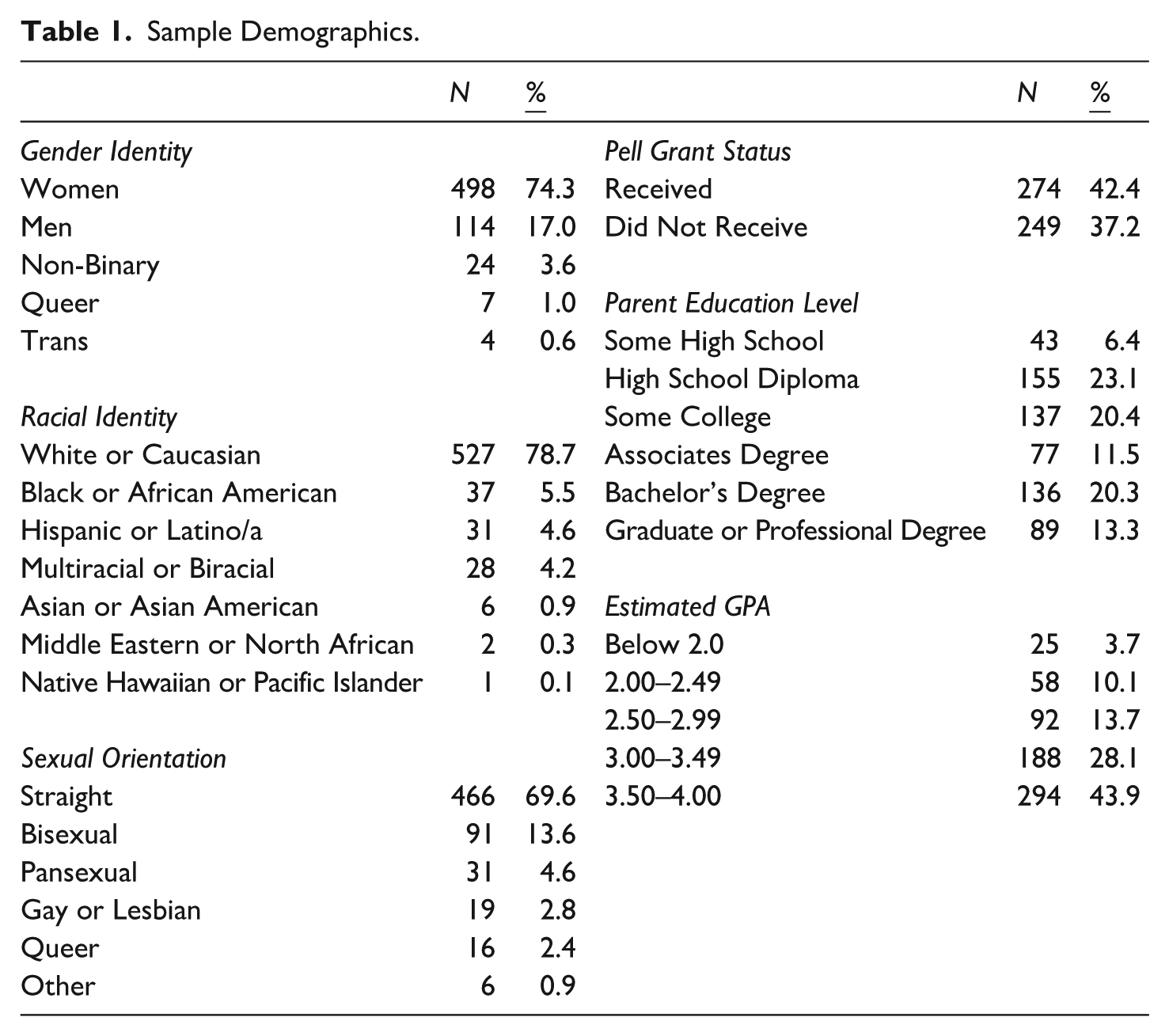
Participants were recruited through purposive sampling across four community colleges located in the eastern, mid, and western regions of North Carolina. Institutional partners, including chief academic officers and senior student affairs officers, assisted in obtaining email lists for eligible participants (i.e., full-time students at least 18 years old). Of the 9,437 email invitations sent, 674 were returned, yielding a 4% margin of error at a 95% confidence level. The sample was primarily composed of students who identified as white, heterosexual, women, first-generation college students, and Pell Grant recipients. The average age of participants was 23 years. See Table 1 for a more detailed description of participant demographics.
Sample Demographics.
Data Collection
Data were collected via an electronic survey distributed through an email invitation sent directly to students. The survey consisted of 36 items spanning the constructs described below, in addition to demographic questions. Participants completed the survey voluntarily and anonymously.
Measures
Adverse Childhood Experiences (ACES)
Participants completed the standard yes/no 10-item ACE questionnaire (Felitti et al., 1998) measuring childhood exposure to abuse, neglect, and household dysfunction. Higher scores indicate greater exposure to early life adversity. The scale demonstrated strong internal reliability within the sample, using Cronbach’s alpha (α = .76).
College Trauma Exposure (CTE)
The CTE instrument consisted of 13 dichotomous (yes/no) items assessing exposure to potentially traumatic events or circumstances occurring during students’ enrollment. Higher scores reflect greater cumulative exposure to college-based trauma. Although the instrument is not yet normed at a national level, multiple indicators support its contextual validity within the present sample. Items were grounded in established literature on trauma exposure in postsecondary populations (Lynch & Glass, 2018; Silverman & Glick, 2010), and internal reliability met acceptable thresholds for exploratory research (α = .72). Expected associations with theoretically related constructs, including adverse childhood experiences, mental health wellbeing, resilience, and academic performance, further support construct validity. Together, these findings suggest the scale adequately captures variation in college-related trauma exposure while underscoring the need for future psychometric validation across diverse institutional contexts.
Short Warwick-Edinburgh Mental Wellbeing Scale (SWEMWBS)
Mental health wellbeing was assessed using the SWEMWBS, a validated instrument which captures emotional, psychological, and social aspects of mental wellbeing (Stewart-Brown et al., 2009). The measure used a 5-point scale (1 = None of the time, 2 = Rarely, 3 = Some of the time, 4 = Often, and 5 = All of the time). The scale demonstrated strong internal reliability within the sample (α = .86).
Resilience
Resilience was measured using the validated Brief Resilience Scale (Smith et al. 2008), consisting of 6 Likert scale items (1 = Strongly Disagree, 5 = Strongly Agree). The scale demonstrated strong internal reliability within the sample (α = .85).
Grade Point Average (GPA)
Despite the multidimensional nature of student success (Millea, 2018; Petty, 2014; York et al., 2019), most empirical studies rely on GPA as a primary indicator of academic success due to its ease of access, comparability, and institutional relevance (McNaughton-Cassil et al., 2021). To that end, students self-reported their cumulative GPA choosing between five options (Below 2.0; 2.0–2.49; 2.5–2.9; 3.0–3.49; 3.5–4.0), which served as the academic outcome variable.
Data Analysis
To answer our research question, a serial mediation model (Lemardelet & Caron, 2022) was tested using a series of hierarchical linear regression analyses in SPSS version 29. For the regression model, demographic covariates (race, gender identity, age, Pell status, parental education, and sexual orientation) were entered in the first block, followed by ACE/CTE score in the second block to examine the unique contribution of childhood adversity and college trauma exposure.
Sobel tests were used to evaluate indirect effects based on regression coefficients and standard errors. This approach is consistent with traditional mediation frameworks (Baron & Kenny, 1986) and remains appropriate for large-sample applications where bootstrapping is unavailable (Hayes & Rockwood, 2017). The model hypothesized that the effect of ACEs on GPA would be mediated first by mental health wellbeing (SWEMWBS), and then by resilience. The same mediation path was hypothesized for College Trauma Exposure (CTE). See Figure 1 for a visual representation of variable paths. Missing data were addressed using pairwise deletion.
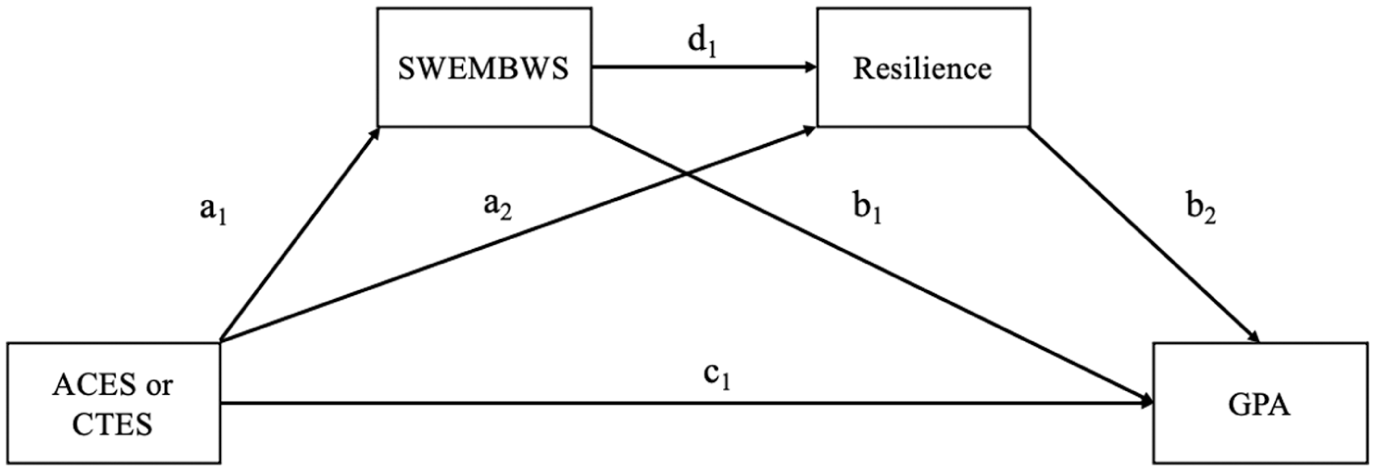
Hypothesized serial mediation model.
A series of Sobel tests was conducted to estimate indirect effects and to examine the significance of the hypothesized mediation pathways. For both models (Model 1: ACES and Model 2: CTE), two primary indirect paths were tested: (1) trauma exposure to mental health wellbeing (SWEMWBS) to GPA, and (2) trauma exposure to mental health wellbeing to resilience to GPA. These tests were used to evaluate whether the relationship between trauma and academic performance was significantly carried through the proposed mediators. In addition to these full-chain pathways, partial mediation chains were tested to assess specific segments of the model. This included the SWEMWBS to resilience to GPA pathway and the ACES/CTE to SWEMWBS to resilience sequence. Because PROCESS and AMOS were not available, indirect effects were calculated using the Sobel test within the constraints of SPSS regression outputs. While this approach does not provide bootstrapped confidence intervals, it offers a reasonable approximation of mediation effects given the study’s analytic constraints.
Limitations
The results of the present study should be interpreted within the context of the study’s limitations. First, while mediation pathways were tested using sequential linear regressions and Sobel tests, the absence of PROCESS or structural equation modeling tools limited the ability to evaluate the full indirect serial pathway (i.e., ACES/CTES to Mental Health to Resilience to GPA) within a single model. The Sobel test, although useful for detecting basic indirect effects, assumes a normal distribution of the indirect effect and is not robust to violations of this assumption. A bootstrapped or latent-variable approach would provide narrower confidence intervals and stronger inferences regarding mediation.
Additionally, this study relied on self-report measures for all variables, including GPA. This reliance introduces the possibility of response biases and subjective inaccuracies, particularly for sensitive constructs such as mental health and trauma. Although the instruments utilized are widely used and validated, future research should incorporate institutional data (e.g., registrar-reported GPA) and multi-method assessments of trauma and well-being where possible. Furthermore, GPA was collected using ordinal data, but the variable was treated as continuous in the analyses based on the assumption of approximately equal intervals between categories. This approach is consistent with practices in survey research (Norman, 2010; Sullivan & Artino, 2013), though it introduces limitations in terms of precision and interpretability.
Finally, the cross-sectional nature of the study restricts the ability to infer causality or temporal ordering among the variables. Although the hypothesized model is grounded in theoretical and developmental logic, longitudinal data would better support conclusions about the directionality of effects and the developmental sequencing of mental health, resilience, and academic outcomes.
Results
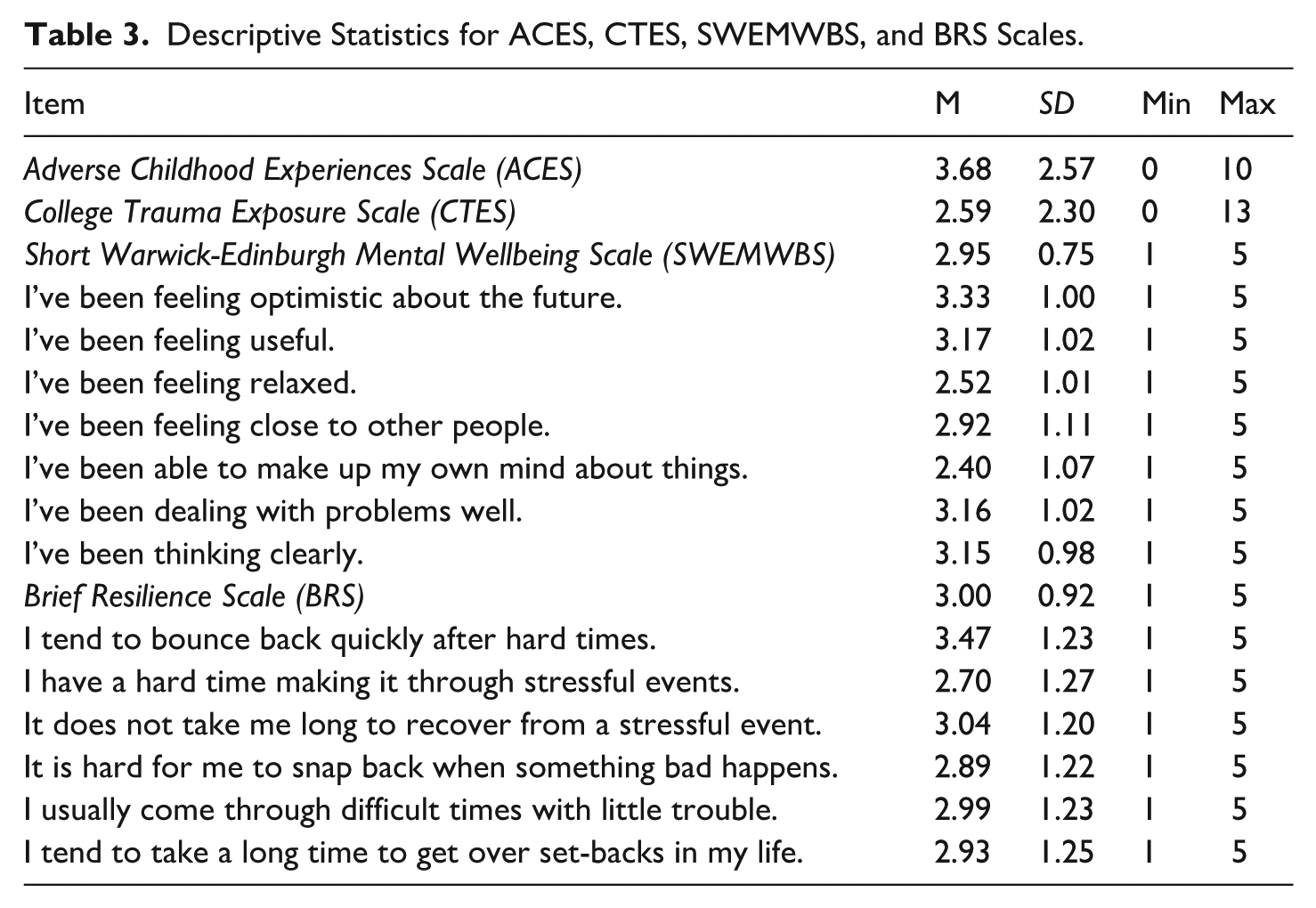
Prior to testing the mediation models, descriptive statistics were examined to characterize trauma exposure and psychosocial functioning within the sample. Frequencies for individual Adverse Childhood Experience (ACE) and College Trauma Exposure (CTE) items are presented in Table 2, highlighting the prevalence and types of trauma reported by participants. Overall scale-level descriptive statistics for ACEs, CTEs, mental health wellbeing (SWEMWBS), and resilience (BRS) are reported in Table 3. Together, these descriptive results provide important contextual grounding for the subsequent mediation analyses by illustrating the distribution, central tendencies, and variability of key study variables.
ACE & CTE Frequencies Responding “Yes.”
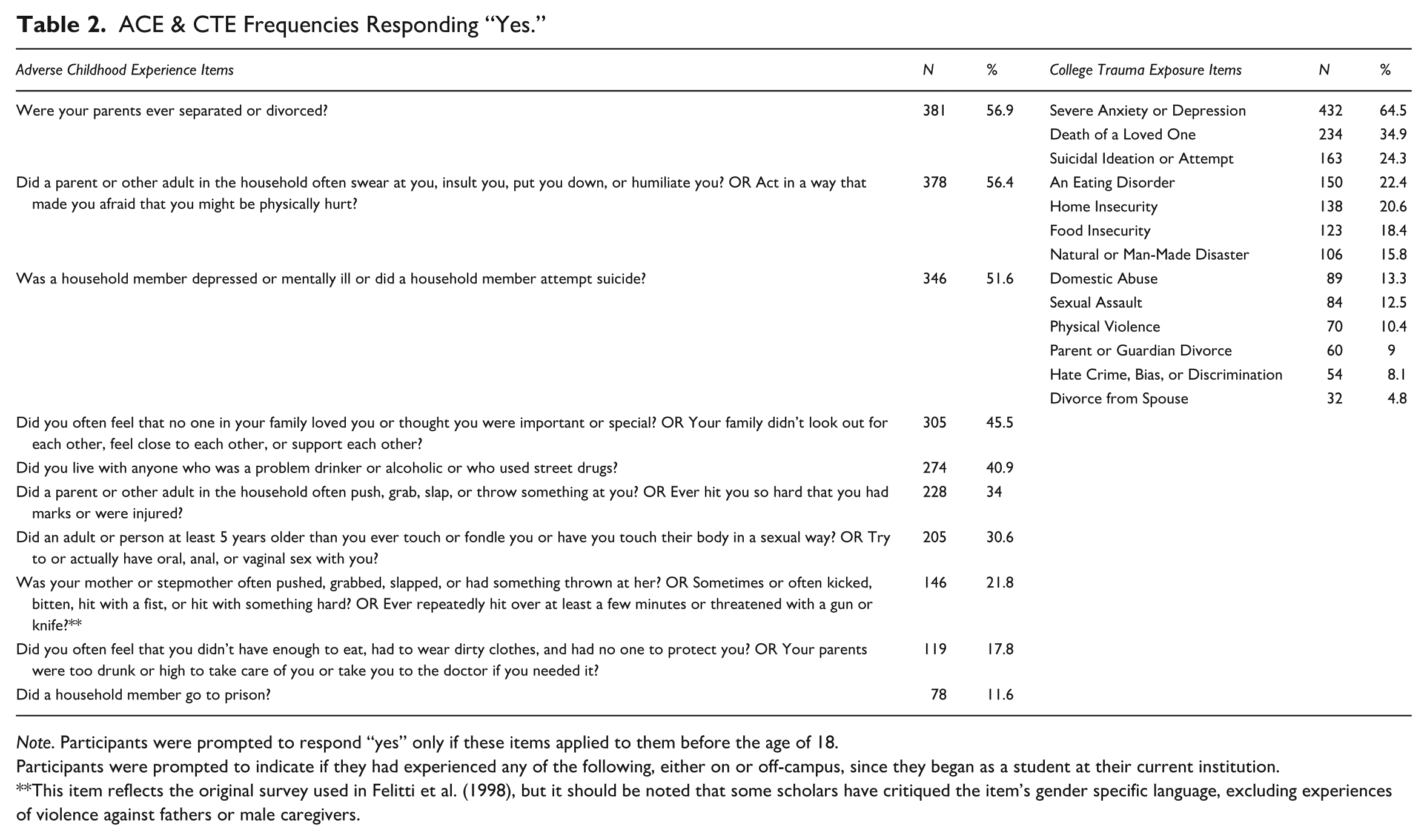
Note. Participants were prompted to respond “yes” only if these items applied to them before the age of 18.
Participants were prompted to indicate if they had experienced any of the following, either on or off-campus, since they began as a student at their current institution.
This item reflects the original survey used in Felitti et al. (1998), but it should be noted that some scholars have critiqued the item’s gender specific language, excluding experiences of violence against fathers or male caregivers.
Descriptive Statistics for ACES, CTES, SWEMWBS, and BRS Scales.
Mediation Analysis Results
To examine the pathways by which trauma influences academic performance, two serial mediation models were tested using a series of regression analyses in SPSS. In both models, mental health wellbeing (SWEMWBS) and resilience were examined as mediators between trauma exposure and GPA. The first model used Adverse Childhood Experiences (ACEs) as the trauma predictor, and the second model used college Trauma Exposure (CTEs). A second analysis examined whether ACEs predicted the likelihood of experiencing CTEs.
Model 1: ACEs Predicting GPA via Mental Health and Resilience
Higher ACE scores significantly predicted lower mental health wellbeing (β = –0.067, SD = 0.014, p < .001). Mental health wellbeing, in turn, significantly predicted both resilience (β = 0.533, SD = 0.048, p < .001) and GPA (β = 0.254, SD = 0.067, p < .001). Resilience also significantly predicted GPA (β = 0.248, SD = 0.061, p < .001). The direct path from ACEs to GPA was not statistically significant (β = –0.020, SD = 0.022, p = .347), nor was the direct path from ACEs to resilience (β = –0.026, SD = 0.017, p = .135), indicating a fully mediated relationship.
Sobel tests confirmed statistically significant indirect effects through SWEMWBS (z = –2.972, p = .003), as well as through the full chain SWEMWBS to Resilience (z = –4.395, p < .001), and from SWEMWBS to Resilience to GPA (z = 3.818, p < .001). The total indirect effect was small (β = –0.010), but statistically significant. See Figure 2 for a visual representation of this model.
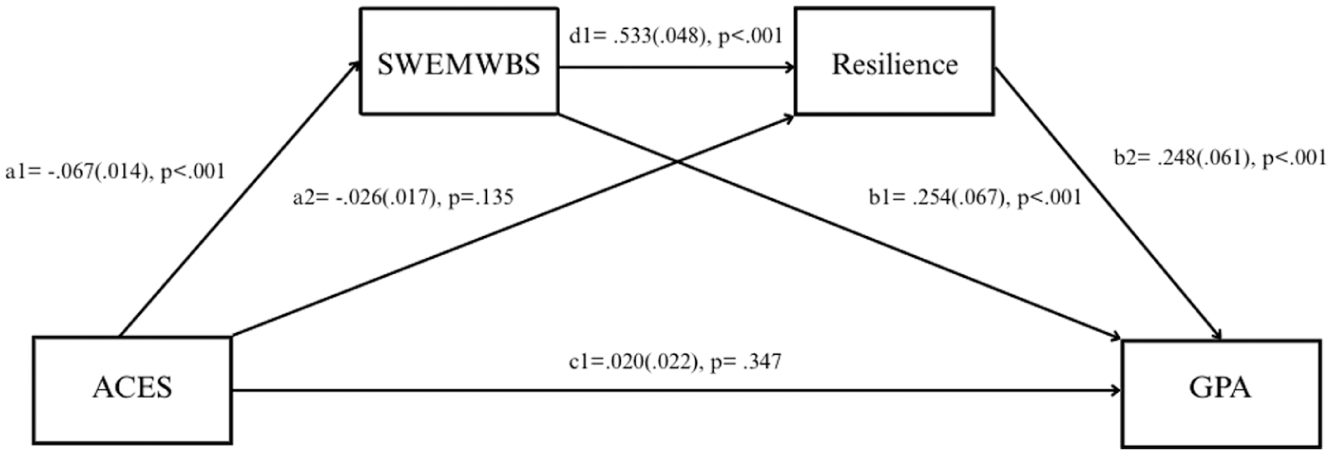
Serial mediation model of the effects of adverse childhood experiences on GPA through mental health wellbeing and resilience.
Model 2: CTEs Predicting GPA via Mental Health and Resilience
In Model 2, college trauma exposure (CTE) significantly predicted both lower mental health wellbeing (β = –0.098, SD = 0.015, p < .001) and lower resilience (β = –0.101, SD = 0.018, p < .001). As in the previous model, SWEMWBS significantly predicted resilience (β = 0.533, SD = 0.048, p < .001), and both SWEMWBS and resilience predicted GPA (β = 0.254, p < .001; β = 0.248, p < .001). Unlike the ACEs model, CTEs had a significant direct effect on GPA (β = –0.076, SD = 0.023, p < .001), in addition to indirect effects.
Sobel tests supported significant indirect effects from CTEs through SWEMWBS (z = –3.289, p < .001), through resilience (z = –3.292, p < .001), and through both mediators sequentially (z = –5.631, p < .001 for SWEMWBS to Resilience and z = 3.818, p < .001 for Resilience to GPA). The total indirect effect was modest (β = –0.13) but still indicated a more substantial mediation pathway compared to the ACE model. See Figure 3 for a visual representation of this model.
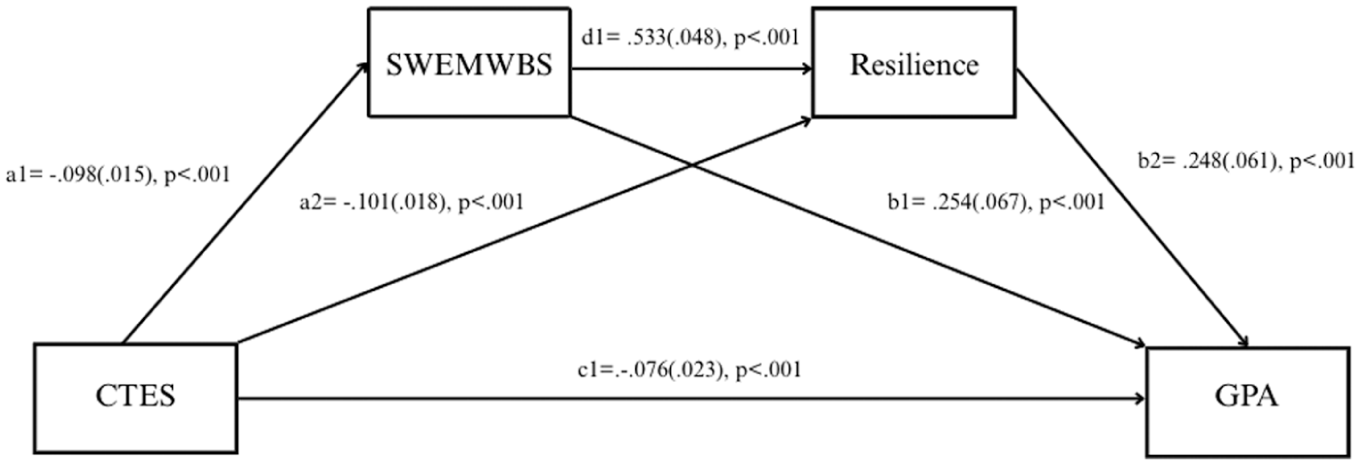
Serial mediation model of the effects of college trauma exposure on GPA through mental health wellbeing and resilience.
ACES Predicting CTEs
Finally, in the hierarchical regression analysis, ACEs significantly predicted college trauma exposure (β = 0.327, SD = 0.038, p < .001), with the model accounting for 30.7% of the variance (R² = .307). This suggests a strong link between early-life trauma and later trauma exposure in the college environment.
Discussion
This study sought to examine the mechanisms by which resilience and mental health shape academic outcomes for community college students with trauma exposure, addressing calls in the literature for more pathway-focused analyses rather than isolated variable comparisons (Brogden & Gregory, 2019; Mortaloni et al., 2023; Watt et al., 2022). Prior research has established strong independent associations between trauma exposure, psychological distress, resilience, and academic performance (BlackDeer et al., 2023; Hallett et al., 2018; McNaughton-Cassil et al., 2021), yet few studies have empirically modeled how these processes interact within community college contexts. By testing serial mediation models grounded in developmental cascade theory (Masten & Cicchetti, 2010), this study extends existing scholarship by clarifying how trauma-related academic risk unfolds through interconnected psychosocial pathways.
In the Adverse Childhood Experiences (ACE) model, early trauma did not directly affect GPA or resilience. Instead, its influence operated indirectly, first through reduced mental health wellbeing, which then supported the development of resilience. This pattern aligns with developmental theories that position early adversity as a long-term risk factor that compromises psychological wellbeing and resilience, leading to downstream effects on academic outcomes (Larson et al., 2017; McLaughlin & Sheridan, 2016; Roseby & Gascoigne, 2021).
Conversely, the college trauma exposure (CTE) model revealed a more urgent and layered negative impact on academic performance, consistent with prior research documenting the acute academic and psychological disruptions associated with trauma experienced during college enrollment (Lynch & Glass, 2018; Silverman & Glick, 2010; Walters et al., 2024). CTEs significantly predicted GPA both directly and indirectly through their effects on mental health wellbeing and resilience, suggesting that recent trauma operates through both immediate performance disruption and longer-term psychosocial pathways. The total indirect effect was substantially larger than that observed in the ACE model, reinforcing scholarship indicating that proximal stressors and crises are more likely to interfere with students’ day-to-day academic functioning (McNaughton-Cassil et al., 2021; Pascoe et al., 2020). These findings underscore the disruptive nature of trauma occurring during college and highlight the importance of attending to students’ current lived experiences. Unlike early adversity, which often exerts more distal developmental effects, college-based trauma unfolds alongside coursework demands and institutional expectations, amplifying its salience and impact. As prior studies have demonstrated, trauma-related psychological distress can impair concentration, motivation, and engagement, limiting access to support networks and disrupting coping strategies at precisely the moment students are expected to perform, integrate, and persist (BlackDeer et al., 2023; Pascoe et al., 2020).
Additionally, a supplemental analysis demonstrated that ACEs significantly predicted CTEs, suggesting a developmental cascade (Masten & Cicchetti, 2010) in which early trauma increases vulnerability to subsequent trauma during college. This trajectory may reflect diminished coping capacity, increased risk of revictimization, or structural disadvantages that persist into postsecondary education. For example, a student who experienced chronic neglect and emotional abuse in childhood may enter college with heightened anxiety, limited trust in authority figures, and underdeveloped self-advocacy skills. While used as survival mechanisms in childhood, such dispositions could make it more difficult to navigate interpersonal conflict, access mental health services, avoid academic assistance, or seek help after experiencing a sexual assault or significant loss, thus compounding the psychological toll and academic disruption. Given this, the impact of ACEs on academic success may remain hidden until activated or exacerbated by more recent experiences of trauma.
Perhaps most importantly, these findings position mental health wellbeing as a foundation for resilience rather than treating resilience as an innate or purely individual trait, aligning with contemporary conceptualizations of resilience as a dynamic, developmental process shaped by psychological and environmental conditions (Smith et al., 2008; Southwick et al., 2014; Watt et al., 2022). Students reporting higher mental health wellbeing were more likely to self-report resilience, which in turn supported their academic performance, reinforcing prior research demonstrating that emotional regulation, psychological stability, and perceived agency are prerequisites for adaptive coping and persistence (Fang et al., 2024; Windle et al., 2018). This reframes resilience not as a prerequisite for success, but as an outcome that emerges through supportive contexts, challenging dominant higher education narratives that emphasize individual grit and self-reliance as primary drivers of achievement (Schreiner, 2017; Yeager & Dweck, 2020). Rather than placing the burden of adaptation solely on students, colleges and universities must recognize their role in shaping institutional environments that enable resilience to develop through care, access to mental health resources, relational support, and psychologically safe learning conditions.
Taken together, our findings suggest that trauma does not impair academic performance directly. Instead, its effects are mediated through modifiable, psychosocial pathways that can be shaped by campus environments, policies, and practices. To that end, community college leaders have a responsibility to disrupt the long-term academic consequences of trauma by prioritizing student mental health and fostering conditions that support resilience. Below, we explore the specific ways in which the findings of this study can be utilized in practice, as well as the ways they may serve as a basis for future research.
Implications for Practice
Our findings serve as an important foundation for community college policy and practice First, campus leaders must prioritize strategies that promote mental health wellbeing as a foundation for student success, alongside more traditional metrics such as GPA. Our findings challenge the assumption that students need to be more resilient, showing that resilience is more likely to emerge when institutions create ecosystems of care, psychological safety, and belonging. Peer mentoring programs, culturally responsive services, and proactive advising models can foster this kind of developmental environment. Other examples may include expanding access to low-cost or embedded counseling services; integrating mental health literacy into orientation, advising, and classroom practices; training faculty and staff in trauma-informed pedagogy and student support; and implementing flexible academic and attendance policies that acknowledge the impact of psychological distress.
Furthermore, institutions should prioritize cross-functional collaboration among student affairs, academic affairs, and institutional research to address trauma in a more coordinated and proactive manner. Rather than treating trauma as a siloed concern, colleges can integrate trauma-related insights into existing student support structures. For example, advising intake forms or student success surveys might include brief, sensitive items such as “Have recent life events made it difficult to focus on school?” or “Do you feel emotionally safe and supported on campus?” These types of questions can help flag students who may be navigating trauma-related distress, without requiring disclosure of specific events. When included in early-alert systems or advising dashboards, such responses can prompt outreach from trained staff who can connect students with campus resources like counseling, emergency aid, or academic flexibility policies. Beyond data collection, embedding trauma-informed practices into core areas such as academic advising, new student orientation, faculty development, and crisis response training can help foster a more responsive and equitable institutional culture. These efforts must be context-sensitive, resource-informed, and developed in partnership with the communities they aim to support, ensuring that trauma-informed strategies are not merely procedural, but meaningfully embedded into the ethos of the institution.
Finally, institutional narratives often frame student success as a matter of personal willpower, persistence, or perseverance, inadvertently placing the burden of adaptation on students who may already be navigating significant adversity. Although well-intentioned, such messages can become harmful, particularly when they are used to rationalize rigid policies, overlook structural inequities, or dismiss the psychological costs of trauma among struggling students. Our findings call community college leaders to examine and reframe such messages across campus units from advising language and marketing materials to professional development and policy design. For example, instead of praising students for “pushing through” hardship without help, institutional messaging could celebrate students who access support services, advocate for flexibility, or take breaks to preserve their mental health.
Theoretical Implications and Future Research
In addition to the practical contributions of this study, our findings also contribute to evolving theoretical conversations about how trauma shapes college student development by offering a model that positions mental health wellbeing as a precursor to resilience, rather than treating resilience as a fixed trait or internal coping resource. Contemporary, yet often problematic, frameworks in higher education often emphasize individual attributes such as grit (Schreiner, 2017), self-efficacy (Talsma et al., 2019), or growth mindset (Yeager & Swekc, 2020) as drivers of academic success. However, the present findings suggest that these qualities, often associated with resilience, may be deeply contingent on students’ psychological wellbeing, which itself is shaped by trauma histories and institutional environments.
Our findings also contribute to theoretical understandings of risk and protective factors in higher education (Masten & Cicchetti, 2010; McLaughlin & Lambert, 2017). While trauma is often conceptualized as a risk factor for academic disengagement (Brogden & Gregory, 2019; Mortaloni et al., 2023), this study offers a more nuanced perspective in which trauma impacts academic performance indirectly through mental health and resilience. It suggests the need for expanded theory-building that integrates trauma-informed perspectives with models of academic persistence (Watt et al., 2022; York et al., 2019), identity development (Patton et al., 2016; Roseby & Gascoigne, 2021; Thomas, 2022), and student wellbeing (McNaughton-Cassil et al., 2021; Southwick et al., 2014).
To expand on these theoretical contributions, future research should prioritize longitudinal designs capable of establishing temporal ordering and causality among trauma, mental health, resilience, and academic outcomes. In addition, future studies should explore potential moderators of these pathways, such as race, gender identity, LGBTQ+ status, socioeconomic background, and institutional type. Students from historically marginalized groups may experience both heightened trauma exposure and limited access to mental health resources, potentially altering the relationships observed in this model. Understanding how these dynamics operate across diverse contexts is critical for building inclusive theories of student development.
Finally, future research and theory should continue to interrogate the institutional responsibility for mitigating the impacts of trauma, particularly those occurring while students are enrolled in college. Such studies should investigate the role of policy, pedagogy, and campus culture in supporting or hindering students’ psychological wellbeing and academic success. More specifically, research should explore how policies related to academic flexibility, emergency aid, leave of absence, and disciplinary procedures affect students who experience trauma during their enrollment. Additionally, attention must be paid to how pedagogical practices, such as faculty responsiveness, course design, and assessment strategies, can be either retraumatizing or restorative. Given the unique mission and demographics of community colleges, including higher proportions of first-generation, parenting, and minoritized students, future work should also investigate how trauma-informed campus cultures can be cultivated across instructional, advising, and student support services. Theoretical models that center institutional accountability, such as organizational trauma theory (Vivian & Horman, 2015), ecological systems theory (Bronfenbrenner, 1979), or trauma-informed education frameworks can help reorient our understanding of resilience as not solely an individual trait but a function of how environments are structured to support or constrain recovery.
Conclusion
This study provides empirical evidence that both early and recent trauma shape academic outcomes among community college students, not through direct effects, but through the interconnected mechanisms of mental health wellbeing and resilience. Although cumulative adversity was associated with poorer academic performance indirectly, by diminishing mental health and, subsequently, resilience. Taken together, our findings reinforce the importance of campus environments that prioritize psychological wellbeing, reduce opportunities for retraumatization, and foster the development of resilience through support and care. Rather than expecting students to be resilient in the face of adversity, institutions must recognize that resilience is built, not presumed, and that mental health is its foundation. For community colleges in particular, where trauma prevalence is high and support resources may be stretched thin, these findings underscore the need for systemic, proactive, and trauma-informed approaches to student success. Future research should continue to map these pathways over time and explore how targeted interventions can interrupt trauma’s impact and promote equitable outcomes. As community colleges continue to enroll the students most impacted by structural and interpersonal trauma, institutional responses must evolve. Supporting academic success means more than offering tutoring or advising, it means addressing the mental health conditions that shape whether students can show up, stay engaged, and persist.
Footnotes

Funding
The authors received no financial support for the research, authorship and/or publication of this article.
Declaration of Conflicting Interests
The authors declared no potential conflicts of interest with respect to the research, authorship, and/or publication of this article.