







Abstract
Teamwork pedagogies are used for teaching and learning in sociology, addressing general education goals, and developing students’ professional skills. Nevertheless, problems arise in group work that negatively affect learning, engagement, treatment of others, and team satisfaction. An intervention was added to an Introduction to Sociology course with an established teamwork pedagogy to improve these outcomes. We compared the results of student surveys before and after the intervention, finding improvement in students’ satisfaction with teamwork and students’ perceptions of their teammates. There were large, statistically significant improvements in interactional fairness. Students’ perceptions of learning improved, although the gains were not statistically significant. We theorize that the intervention improved the psychological safety climate for students, resulting in attitudes and dispositions that benefited social interactions in their teams. Our study demonstrates that faculty can encourage productive behavior in student teams with carefully crafted interventions.
Group work has been central to the authors’ teaching for years. Yet students continued to report problems with their team experience. Often students said they would “grin and bear” required teamwork, and they did so only to satisfy course requirements. Students identified problems with free riders, social loafers, and “controlling types” (Maiden and Perry 2011; Pieterse and Thompson 2010). Students indicated they did not like group work, and research supports this view (Bulanda and Frye 2020; Pfaff and Huddleston 2003). Student remarks also revealed that they did not see the benefits of teamwork in their coursework (Pedersen 2010). Moreover, research suggested that teamwork experiences in introductory classes could impact students’ teamwork experience in subsequent coursework (Tucker and Abbasi 2016). The authors sought to improve teamwork in their classes, and they wished to foster more robust engagement, positive behavior, and better outcomes for their students.
In Introduction to Sociology, we improved the team pedagogy already in a course. At the beginning of our study, best practices were utilized in the course, including small groups of three, faculty-assigned teams, and student-constructed contracts (Bacon, Stewart, and Silver 1999; Rienties, Alcott, and Jindal-Snape 2014; Wheelan 2009). Midway in the study, additional best practices were incorporated, which we refer to as “team development interventions” (TDIs; Lacerenza et al. 2018). Our study analyzed student survey responses before and after the TDIs, demonstrating significant improvement in students’ perceptions of teamwork. Specifically, students’ perceptions of the capability and skills of other group members improved, and students reported more responsive, courteous, and respectful interpersonal interactions. Students also reported greater satisfaction with their teammates. We could not conclude that students’ perceived learning increased, however. In sum, we find that faculty can encourage more productive teamwork with carefully crafted interventions.
Why Teams in Introduction to Sociology?
There are several reasons for using teams in Introduction to Sociology. Here we identify two. The first reason is academic. Teamwork can be used for general education goals in introductory classes. It can strengthen students’ communication skills and critical thinking, for instance. In introductory sociology classes, teamwork can encourage students to work together to apply sociological concepts rather than merely memorizing concepts for a test. The second reason is more practical. Teamwork allows students to experience negotiating team roles in preparation for professional work. Working positively in teams, “where students can practice collaboration skills and communication processes they will employ in the workplace,” is considered a necessary professional skill (Kline, Frash, and Stahura 2004:35). Being competent in teamwork also may be salient for employment in contingent work (Zalewski 2019).
Persistent Problems in Student Teams
While many student groups have worked amicably and equitably in Introduction to Sociology, persistent problems were reported by students. Counterproductive behavior remained a significant issue and included reports of free riding, social loafing, and diligent isolates in groups (Maiden and Perry 2011; Pieterse and Thompson 2010). The authors were motivated to resolve these problems, and they sought solutions to foster more productive behavior.
Research on free riding and social loafing in student teams is most prevalent. Free riders and social loafers fail to contribute their fair share but benefit from the work of others (Aggarwal and O’Brien 2008; Maiden and Perry 2011). The problem student has reduced learning opportunities. For other students in the group, their chances to negotiate roles and develop teamwork competencies also are reduced. Another counterproductive behavior is exhibited by diligent isolates. Acting as a “lone wolf,” they take over decision-making, goal setting, and group leadership on behalf of the group (Barr, Dixon, and Gassenheimer 2005). They perceive others as incapable and dismiss others’ ideas (Pfaff and Huddleston 2003). Pieterse and Thompson (2010:356–57) find that the diligent isolate discourages participation and denies others learning opportunities. Problems in team dynamics can arise from faculty inaction or indifference. For instance, some argue that faculty need to attend to teamwork social processes and work to cultivate the student dispositions (Hansen 2006; Riebe, Girardi, and Whitsed 2016). This suggests that interventions may be necessary—such as faculty support—during student group work. Faculty can promote effective group relationships and teamwork processes, resulting in more positive student outcomes (Riebe et al. 2016).
Evidence-Based Pedagogies for Improving Teamwork
An instructor’s choices impact whether students “have a great team experience or a miserable one” (Bacon et al. 1999:467). Incorporating interventions (TDIs) into teamwork can discourage counterproductive behavior, improve students’ perceptions, bolster student engagement, and increase team satisfaction. Lacerenza et al. (2018:518) define TDIs as “a systematic activity aimed at improving requisite team competencies, processes, and overall effectiveness.” Examples of TDIs include discussing teamwork problems and incorporating team training, team-building exercises, and team debriefs (Lacerenza et al. 2018; Mumford 2010).
TDIs can affect social dynamics in student teamwork. By discussing social processes and providing support when social dynamics are less than optimum, faculty can encourage interactional fairness—respect, courtesy, and communication—in student teams (Mumford 2010; Priesemuth, Arnaud, and Schminke 2013). Interactional fairness fosters team psychological safety, which Edmondson (1999:354) defines “as a shared belief that the team is safe for interpersonal risk taking.” This condition is essential because for group learning to occur, members need to have “confidence that the team will not embarrass, reject, or punish someone for speaking up” (Edmondson 1999:354).
TDIs can help establish a team climate of psychological safety among student members. Psychological safety discourages the perception and attitudes that other group members are inferior. It provides an essential condition that underlies more effective team learning and performance (Edmondson 1999; Lacerenza et al. 2018). Collaboration can be more effective with carefully crafted interventions because attitudes and dispositions improve. Our study includes students’ perceptions of interactional fairness and team satisfaction before and after an intervention.
The Intervention Study
In Introduction to Sociology, permanent teams of students worked together during the semester to complete a sequence of five projects. We designed a study to compare students’ perceptions of teamwork before and after an intervention (Mertler 2021). The study’s design is diagrammed in Figure 1 and discussed in subsequent paragraphs.
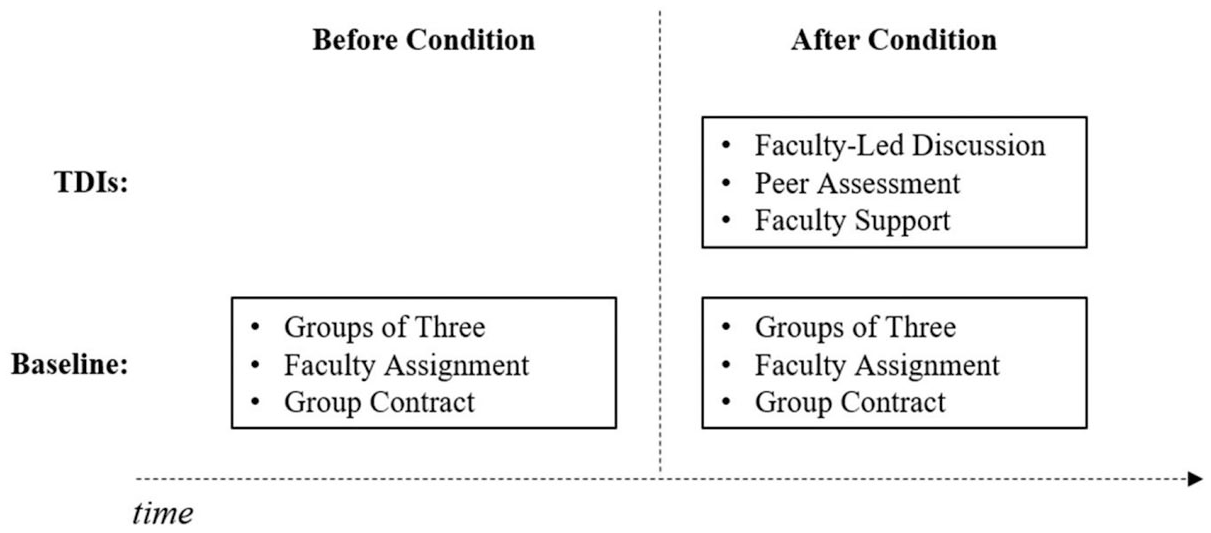
Design of the intervention study.
Before Condition
From Spring 2017 to Spring 2018 (three semesters, eight class sections), student teams were implemented by creating groups of three students, faculty assignment into student groups, and a group-generated team contract. This represented the before condition in our study. As such, the before condition was a baseline to which we can compare the impact of subsequent pedagogy changes, in our case, the interventions (TDIs). The baseline permitted us to make a comparative evaluation, and this study design allowed us to craft testable research questions (MacKenzie 2013:143–45).
Groups of three students
Groups in Introduction to Sociology comprised three students. Using smaller groups is more manageable based on the authors’ experience instituting them in their pedagogy. Using smaller groups is supported in research on group size in project teams. Smaller groups help to reduce counterproductive behavior in teams, such as free riding and social loafing (Aggarwal and O’Brien 2008). Smaller groups also encourage more productive behavior. Wheelan (2009:247) finds that three to four members are “more productive and more developmentally advanced” than larger groups.
Faculty assignment of groups
The literature supports faculty assignment of students into teams and doing so early in the semester (Bonanno, Jones, and English 1998). First, students seem to prefer instructor-assigned teams over student-selected teams because it eliminates the stress of choosing one’s teammates (Rusticus and Justus 2019). Faculty-assigned teams are more likely to increase group stability and positive team outcomes (Hansen 2006). Students develop equally strong group relationships even when faculty randomly assign teams (Rienties et al. 2014). The first author assigned students into teams of three the second week of the semester in a straightforward process. The author grouped the first three students in the course roster together and continued down the 48-student class list until 16 teams of three were formed in each section.
A group contract
Shortly after groups were assigned, students were asked to meet with their group and develop a team contract. Students were provided an example group contract and given instructions on the task. This included ideas on what is beneficial to address in the contract, such as expectations for roles, communication responsiveness, and distribution of work. Students were encouraged to identify steps to take when expectations were violated by one or more members, including when to involve faculty. A class period was set aside for the team contract.
After Condition
From Fall 2018 to Fall 2019 (three semesters, six class sections), the faculty provided additional support to student groups on the series of five teamwork projects in Introduction to Sociology. This represented the after condition in our study. There were three interventions TDIs added in the second half of the research period. One TDI was a faculty-led, class discussion of teamwork, including common problems in student group work and strategies to mitigate them. A second TDI required each student to submit a peer assessment after each of five projects. The third TDI was responsive, proactive faculty support if group issues arose.
Faculty-led class discussion of persistent problems in teamwork
Faculty-led discussion was designed as a brief team training session, and the faculty conveyed that they were there to support student groups as needed (Lacerenza et al. 2018). The discussion—lasting 25 to 30 minutes—covered three major areas. It started with goals, benefits, and information for team projects. Class discussion also encouraged students to recount experiences with teamwork, and faculty identified profiles of problematic behavior and strategies for mitigating them. Finally, the first group project—a team contract—began.
Faculty first emphasized the goals of the team projects (Bulanda and Frye 2020; Maiden and Perry 2011). They included learning the sociological perspective by applying central concepts, analyzing patterns of inequality, and investigating social problems. Projects were used to gain experience and learn about working collaboratively and effectively in teams. The faculty reviewed the team contract and the peer assessment form, the time parameters for projects throughout the whole semester, and related resources in the learning management system.
Second, to elicit student feedback about common problems in teamwork and fair contributions to group work, the faculty asked students about their prior experiences working in student teams. Responses were written on the board. They always included the problem of free riders and often had the problems of procrastinators and controlling students. Faculty also introduced Lerner’s (1995) profiles, which is a behavioral typology of problematic teammates: “Nola No-Can Meet,” “Always-Right Artie,” and “Quiet Quentin.” Using the Lerner profiles and student responses about common problems, the faculty requested that students brainstorm strategies for effectively dealing with different issues and behaviors they could face in group work. In sum, the faculty emphasized their supportive role in helping each group remedy teamwork problems throughout the semester.
Finally, for the remainder of the class, students were reseated into their assigned groups to complete their team contracts. Students were instructed to introduce themselves and learn about each other. The groups were asked to discuss expectations for group participation and team member responsiveness. Finally, the team was tasked with creating a written team contract that defined mutually agreed-on norms for team conduct and the consequences of nonparticipation.
Peer assessment
The faculty required each student to complete and submit a peer evaluation after each project. Multiple peer assessments throughout a semester, rather than just one summative assessment at the end, can reduce problematic behavior in student teams (Aggarwal and O’Brien 2008). In addition, students view peer evaluations as a way to mitigate social loafing and encourage personal accountability (Stein, Colyer, and Manning 2016). Cheng and Warren (2000) recommend using peer evaluations to monitor group processes and intervene when needed. Students were provided a peer assessment form that describes the benefits of the evaluation and instructions for completing it and lists potential factors to use in evaluating group members. The form provided space for students to score individual contributions of all team members. A section asked students to comment on unusually high or low scores given to individual team members.
Responsive, proactive faculty support
Faculty intervened with individual students when problematic behavior was reported in peer assessments or emails during the semester. The faculty’s follow-up was with the student reporting the behavior. The conversation centered on asking the student for details on behavior among students in the group. Faculty offered advice to the student on the next steps, emphasizing the faculty’s role to support student learning and success. If the student agreed, the faculty met with the group to reinforce the collaborative nature of teamwork and the expectations of fairness and equity in teamwork. More often than not, the student chose to see if egregious teamwork behavior would improve. They would inform faculty of members’ participation (or lack thereof) in future peer assessments, and if needed, faculty would work from there to remediate the problem.
Research Hypotheses
We hypothesize that the intervention will improve students’ perceptions of their teammates, class interaction, interactional fairness, team satisfaction, and perceived learning.
Students’ perception of team members
Productive interactions are premised on team members viewing others as possessing knowledge, skills, and abilities (KSAs). KSAs are associated with the interpersonal requirements of teamwork (Stevens and Campion 1994). When team members are perceived as competent and indispensable to a team’s process, social loafing and related behavioral issues should lessen (Price, Harrison, and Gavin 2006).
Hypothesis 1: The intervention will positively impact students’ perceptions of their teammate’s KSAs.
Students’ perception of interaction
Three types of interaction are essential for learning: students’ interaction with faculty, other students, and course content (Johnson and Johnson 1985; Moore 1989). Students frequently indicate they want more individualized interaction with their faculty (Gaytan 2015). Functional student groups work together and promote positive interdependence (Tomcho and Foels 2012). Active learning encourages students to engage with course content (Auman 2011).
Hypothesis 2: The intervention will positively impact students’ perceptions of interaction with faculty, other students, and course content.
Students’ perception of interactional fairness
The team climate is essential in promoting students to work together and achieve shared goals. Interactional fairness reflects students’ perceptions of treatment by other group members. It indicates the degree to which team members treat each other with dignity, respect, and kindness (Karatepe 2006; Mumford 2010). Interactional fairness is essential for productive contributions, and it may ameliorate counterproductive behaviors (Priesemuth et al. 2013). Some consider improvement in the team climate to indicate the success of an intervention (Lacerenza et al. 2018).
Hypothesis 3: The intervention will positively impact students’ perceptions of interactional fairness.
Students’ satisfaction with the team
The interventions are designed to encourage students to work with each other constructively, resulting in reduced counterproductive behavior and improved attitudes toward teamwork. Satisfaction with one’s team is an affective response to group member interdependence (Van der Vegt, Emans, and Van de Vliert 2001). Members of task-interdependent teams have higher levels of team satisfaction than members of groups with lower levels (Van der Vegt et al. 2001). Students also dislike teamwork when counterproductive behavior exists, such as free riding (Pfaff and Huddleston 2003).
Hypothesis 4: The intervention will positively impact students’ satisfaction with their teams.
Students’ perception of own learning
We assessed whether students perceived improved learning after the intervention. Actual learning and perceived learning are distinct (Deslauriers et al. 2019). For instance, Monson (2017, 2019) provides evidence that group projects improved actual learning, as measured by graded assignments. On the other hand, Huggins and Stamatel (2015) showed more limited learning improvements in active classrooms when measured by student perceptions. Because we already had instituted three best practices before the intervention, we did not expect a change in students’ perception of learning.
Hypothesis 5: The intervention will not impact students’ perceived learning on general education outcomes.
Methods
We collected data from undergraduate students enrolled in an introductory sociology class taught in person by the first author. The Institutional Review Board approved the protocol every year that data were collected. Beginning with Spring 2017, data were collected in fall and spring semesters. We intended to collect data in 2020, but our research was halted when classes pivoted online due to the pandemic.
Introduction to Sociology is a general education course with 48 students in each section at the university, a regional state institution of 17,000 students. For students enrolled in the class during our study, their major programs were in health sciences (24 percent), sciences and math (24 percent), business and public management (20 percent), undeclared (15 percent), arts and humanities (9 percent), and music (4 percent). Every course section enrolled more women (67 percent) than men and more lower-level students (74 percent) than juniors and seniors. Although race and ethnicity were not recorded for the class sections, the university reported that the student body was 75 percent white, 11 percent black, 6 percent Hispanic, and 3 percent Asian. The authors believe the classes were reflective of the university-wide distribution.
The before and after conditions were demarcated by an intervention in Fall 2018. There were 372 students enrolled in the course before the intervention and 283 students enrolled after it, and we administered the same survey in both conditions. Data were collected via an electronic, anonymized survey by the second author at the end of the semester. Completing the survey was optional and voluntary, personally identifiable information was not collected, and data were maintained independently of course records. After removing incomplete surveys, there were 473 respondents: 265 students before the intervention and 208 students after it, for a response rate of 71 percent and 73 percent, respectively.
Measures
Questions were adapted from the literature, and most items were borrowed from established scales. When presented to respondents, items were randomized within a question to reduce order bias.
Students’ perception of team members’ KSAs
To measure students’ perception of their team members, five items measuring perceptions of KSAs were adapted from Ohland et al. (2012). A 6-point agreement scale (strongly agree to strongly disagree with no midpoint) was used.
Students’ perception of interaction
Items measuring students’ perceptions of interaction with faculty, other students, and the course content, compared to other classes, were adapted from Johnson and Johnson (1985, 2009) and Moore (1989). A 6-point agreement scale was used to measure students’ interaction with their faculty, other students, and course content.
Students’ perception of interactional fairness
To measure students’ perceptions of treatment by group members, items reflecting interactional fairness adapted from Karatepe (2006) and Mumford (2010) using a 5-point scale (extremely to not at all) were used.
Students’ satisfaction with the team
Three items with a 6-point agreement scale measured students’ overall satisfaction with their teams. Items were adapted from Van der Vegt et al. (2001).
Students’ perception of own learning
This question was adapted from a national survey (Trustees of Indiana University 2022) and used a 6-point scale. Four items measured the degree to which students perceived learning on general education outcomes due to teamwork.
Analysis
For the analysis, responses were coded 1 if students marked one of the top two response categories (e.g., strongly agree or agree) or 0 if they marked one of the other response categories. The percentage of students in the top two response categories was tabulated before and after the intervention in the usual manner—by summing the top two responses and dividing by the number of students answering the question.
To assess whether the intervention made a difference, we conducted a one-tailed test for a hypothesized increase. Otherwise, we conducted a two-tailed test. A z-test was conducted because sample sizes were relatively large and a difference between two percentages was assessed. Had a difference in means been assessed, a t-test would be appropriate.
Table 1 shows that students’ perceptions of their teammates improved due to the intervention (Hypothesis 1). Without exception, all survey items increased after the intervention; however, only two were statistically significant. More students reported that their teams “were capable of performing the project” in the after condition (+6.6 percent, z = 1.78, p < .05). More students also reported that their team members “had the skills necessary” to complete the work in the after condition (+7.7 percent, z = 2.13, p < .05).
Students’ Perception of Team Members’ KSAs (Top 2 Responses).
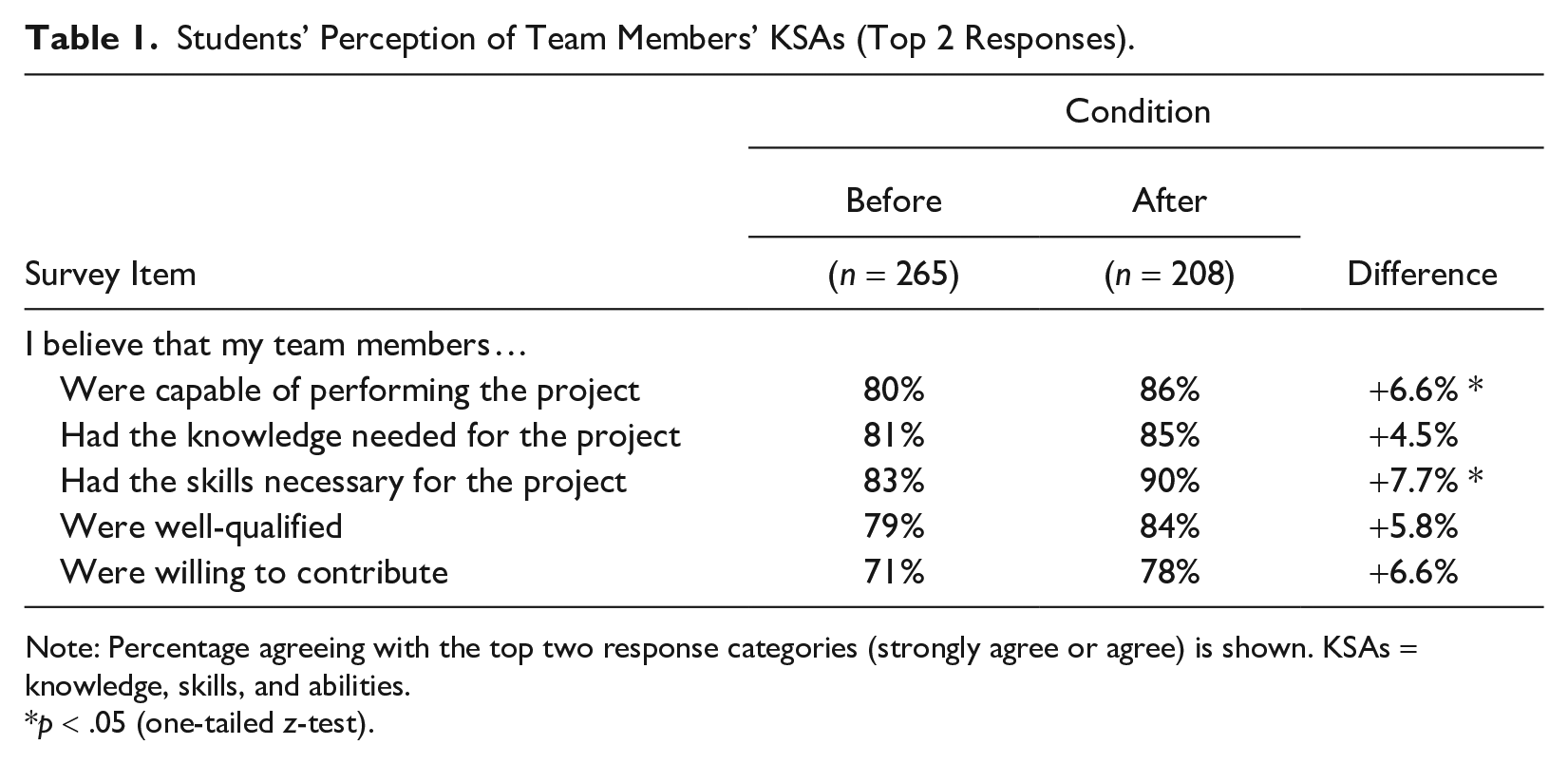
Note: Percentage agreeing with the top two response categories (strongly agree or agree) is shown. KSAs = knowledge, skills, and abilities.
p < .05 (one-tailed z-test).
Table 2 shows that students’ perception of interaction with their classmates improved due to the intervention (Hypothesis 2). Compared to the before condition, more students reported that the intervention allowed them to “get to know my classmates” (+12.6 percent, z = 3.04, p < .01) and “interact with my classmates” (+13.1 percent, z = 3.24, p < .001). There were no statistically significant increases in students’ perceptions of student-faculty interaction or students’ perceptions of student-content interaction. Therefore, this finding represented a statistically significant increase in perceptions of student-student interaction.
Students’ Perception of Interaction (Top 2 Responses).
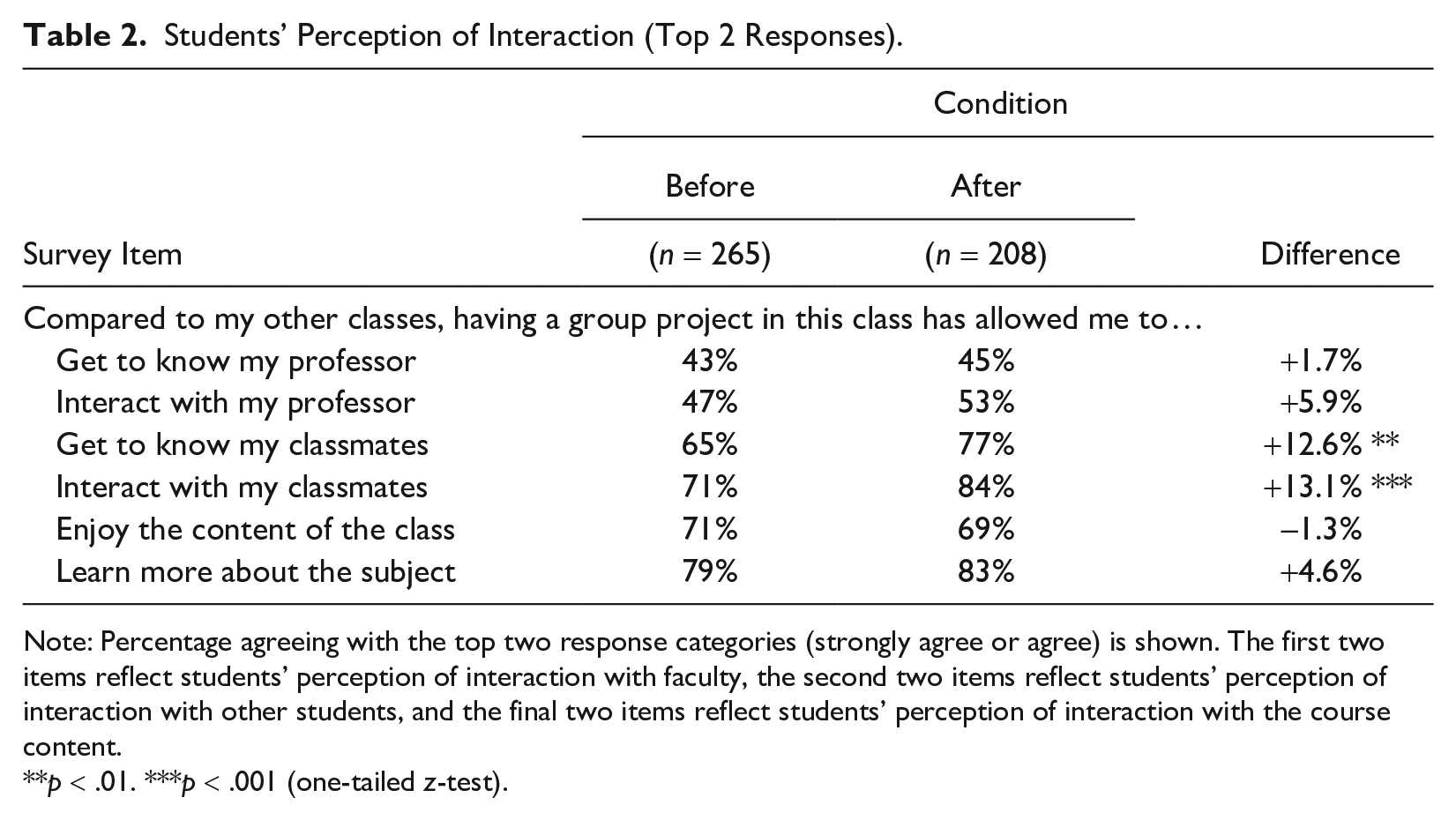
Note: Percentage agreeing with the top two response categories (strongly agree or agree) is shown. The first two items reflect students’ perception of interaction with faculty, the second two items reflect students’ perception of interaction with other students, and the final two items reflect students’ perception of interaction with the course content.
p < .01. ***p < .001 (one-tailed z-test).
Table 3 provides evidence that students’ perceptions of interactional fairness increased due to the intervention (Hypothesis 3). Without exception, all items increased, and the difference before and after the intervention was statistically significant. More students self-reported that their group members were courteous (+31.6 percent, z = 6.74, p < .001), showed concern (+24.5 percent, z = 4.88, p < .001), treated them respectfully (+28.4 percent, z = 6.31, p < .001), refrained from improper remarks (+30.8 percent, z = 6.82, p < .001), and communicated with them (+33.0 percent, z = 6.93, p < .001).
Students’ Perception of Interactional Fairness (Top 2 Responses).
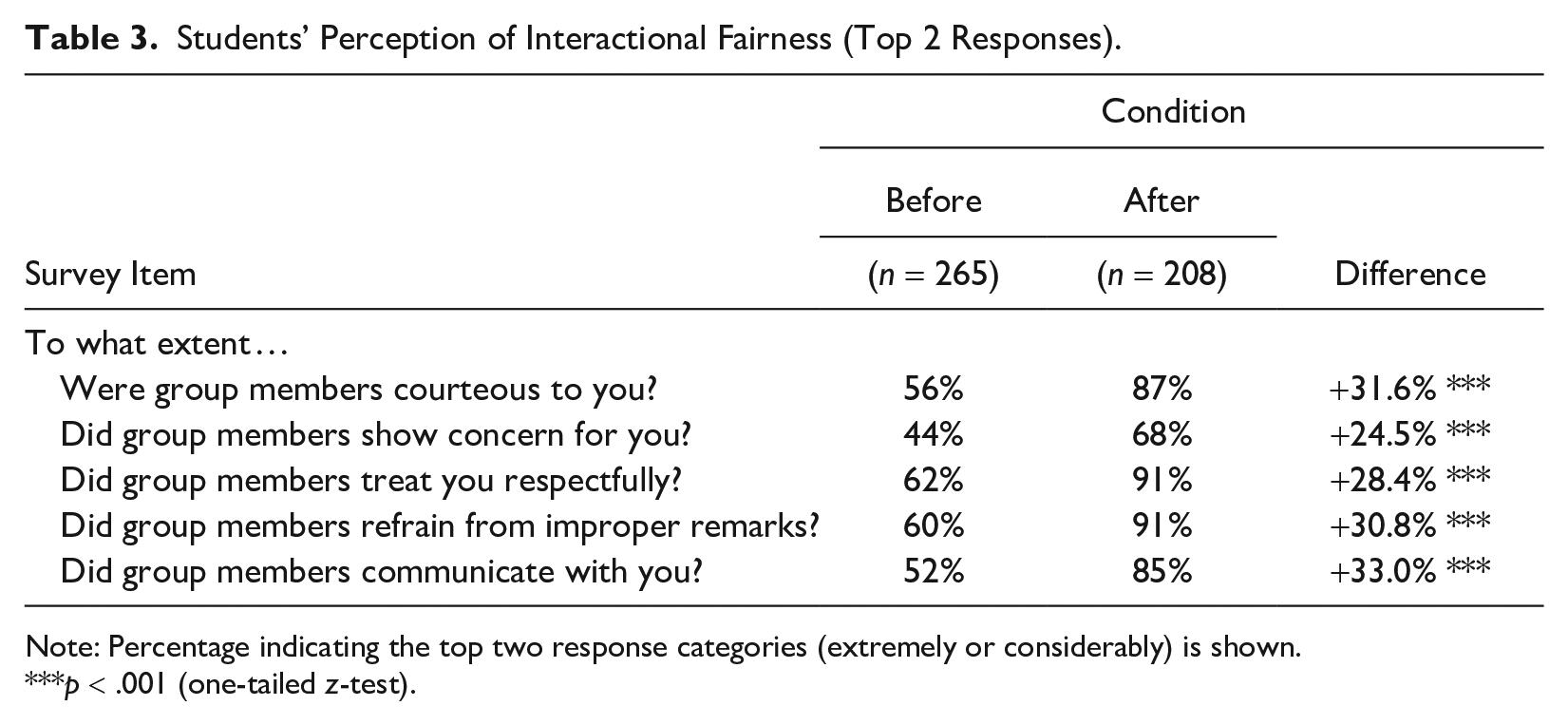
Note: Percentage indicating the top two response categories (extremely or considerably) is shown.
p < .001 (one-tailed z-test).
The net differences in Table 3 range from 24.5 percent of students to 33 percent of students, indicating that at least one of every three students (33 percent) perceived an increase in interactional fairness after the intervention. To better assess the impact on interactional fairness, we summed each item’s top two responses. Then, we compared the distribution before and after the intervention (Figure 2). Before the intervention, 29.9 percent of the students did not answer a single item in Table 3 positively; this dropped to 4.5 percent after the intervention. Before the intervention, 33 percent of students answered all items positively; this increased to 62.9 percent after the intervention.
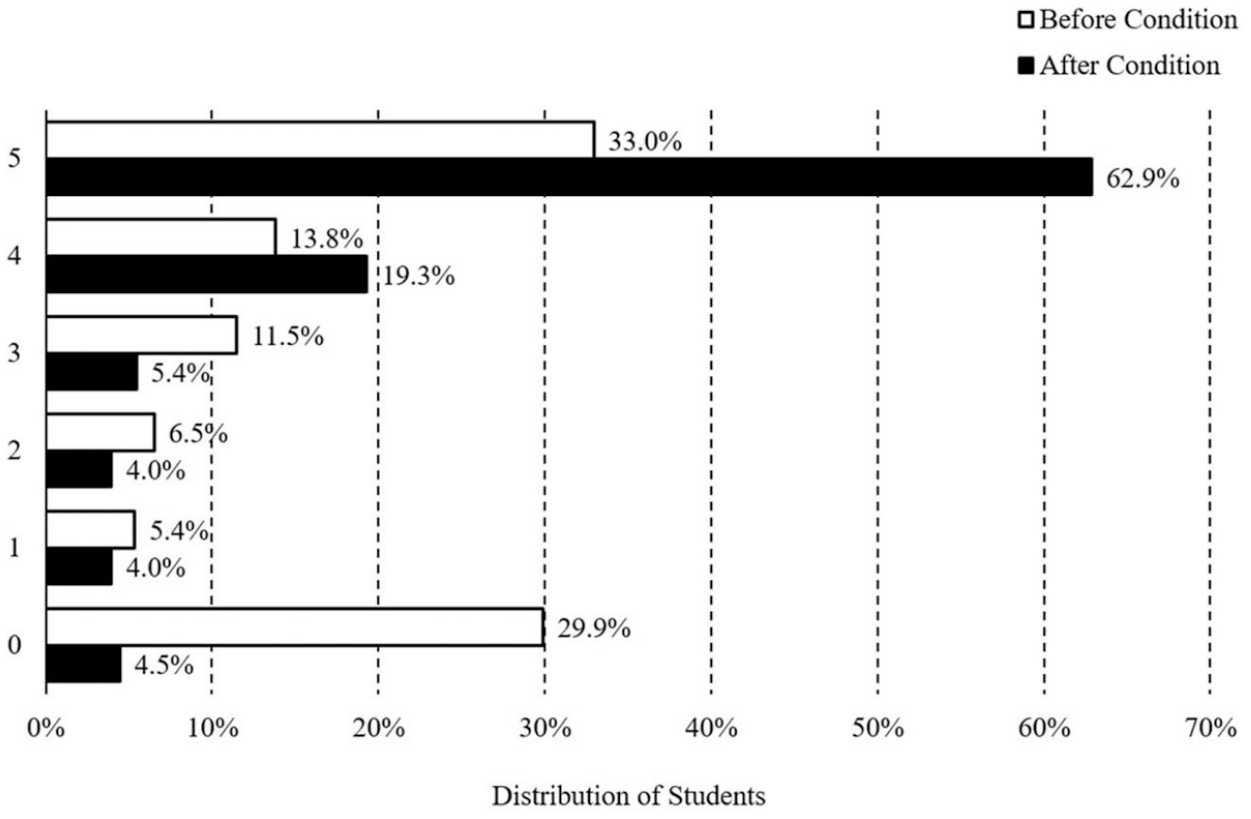
Positive responses to interactional fairness items.
Table 4 shows that students’ satisfaction with their teams improved due to the intervention (Hypothesis 4). More students self-reported that they were satisfied with working in their team (+11.5 percent, z = 2.96, p < .01) and that they were satisfied with their teammates (+7.5 percent, z = 1.95, p < .05). A third item was positive but not statistically significant.
Students’ Satisfaction with the Team (Top 2 Responses).
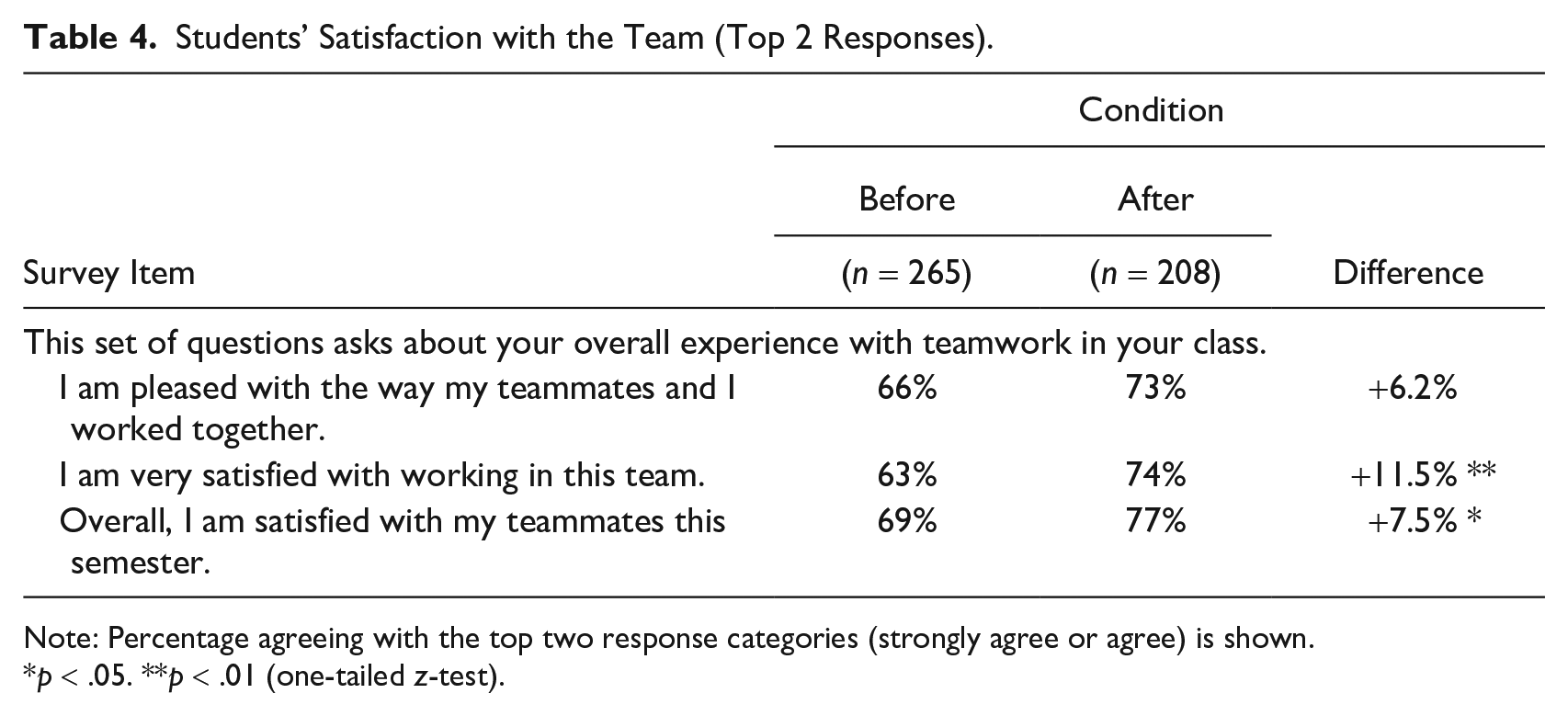
Note: Percentage agreeing with the top two response categories (strongly agree or agree) is shown.
p < .05. **p < .01 (one-tailed z-test).
Table 5 suggests that students’ perception of their learning on general education goals increased due to the intervention. However, none of the four items were statistically significant (p > .05). Therefore, there was support for Hypothesis 5 because there was no statistically significant increase in perceived learning. There were no learning gains when measured by students’ perceptions.
Students’ Perception of Own Learning (Top 2 Responses).
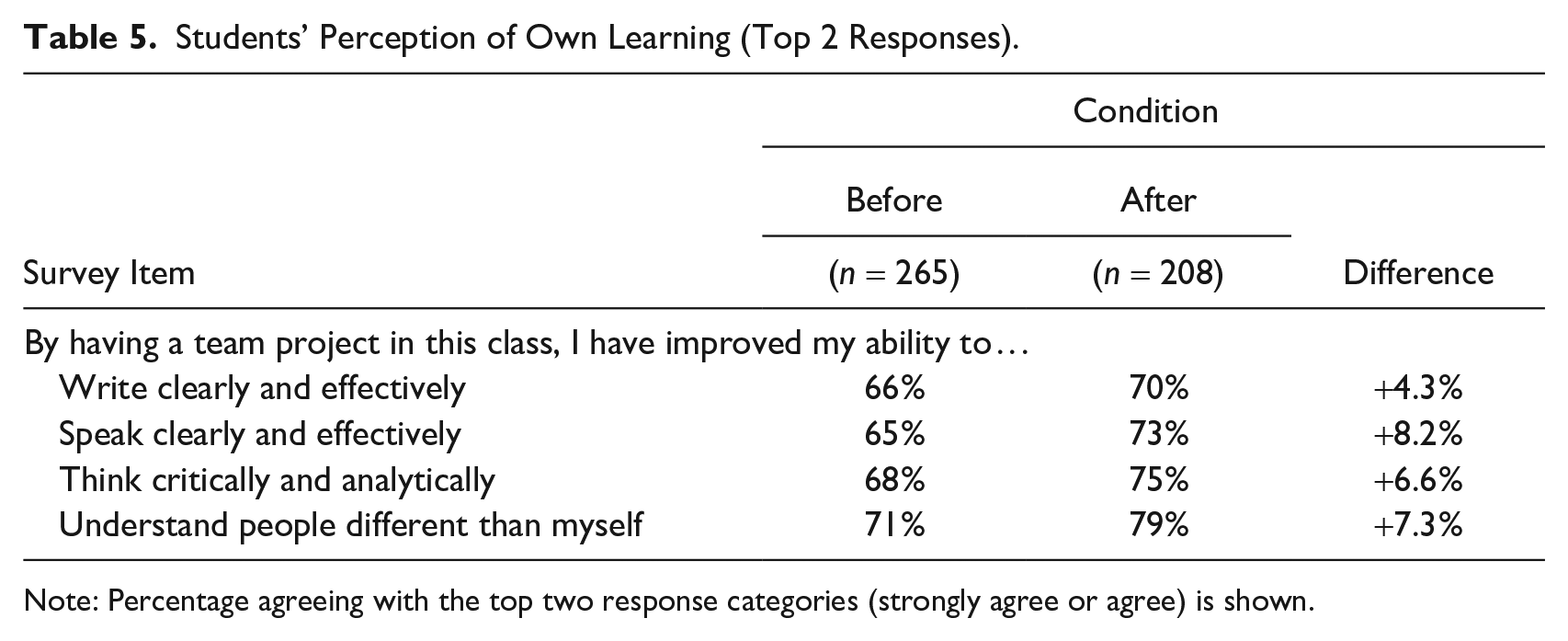
Note: Percentage agreeing with the top two response categories (strongly agree or agree) is shown.
Discussion
The results suggest that interventions (TDIs) helped create a psychologically safe climate for teamwork, which improved students’ dispositions and attitudes. Students reported more courteous and respectful interactions. They reported improved perceptions of teammates as capable and skilled, and students’ overall satisfaction with their teams increased, too. Positive experiences in team-based learning can have implications for students as they approach and engage with others during the semester, throughout their academic careers, and in civil society, perhaps.
Our results suggest that the intervention could impact a large number of students. The improvement in perceptions of interactional fairness in student groups after the intervention represented the largest effects in the study. Specifically, Figure 2 showed a 30-point increase in students reporting all interactional fairness items positively in the after condition. In addition, there was a 25-point decrease in students reporting no positive interactional fairness items after the intervention. In total, this represented 55 of 100 students, on average, experiencing a quantifiable, positive impact resulting from the intervention. This result is relevant for sociology programs.
Interventions—such as the TDIs in introductory sociology—could indirectly affect a university’s sociology program by better preparing majors for teamwork in more challenging, advanced courses. Specifically, in sociological research methods courses, negative team experiences correlate with lower team grades and lower individual grades (Monson 2019). If teamwork is part of a sociology program’s learning goals, positive experiences in early coursework might improve students’ attitudes towards teamwork and ultimately improve their grades in more advanced coursework (see, e.g., Tucker and Abbasi 2015, 2016).
We expected the intervention to improve students’ perceptions of engagement with their professor, classmates, and course content. The results suggest that students perceived increased engagement with their classmates but not with their professor or course content. This is a strong result. Specifically, if the interventions promoted teamwork, students should report improvement in interacting with other students: Our finding suggests that the interventions encouraged students to interact with each other, just as intended. On the other hand, if all items in Table 2 were significant, it might suggest the interventions were indiscriminate and did not distinguish student-student interaction from other forms of interaction in the classroom.
General education learning outcomes were positively related to the intervention but were not statistically significant. Likewise, this result can be viewed as strong because it suggests the interventions were not indiscriminate. Instead, the intervention targeted student-student interaction and interactional fairness above all else. Moreover, students might perceive their learning to be lower in active learning courses when compared to lecture courses. Yet when students are assessed objectively, students in active learning classrooms often perform better, regardless of their perceptions (Deslauiers et al. 2019). Likely, actual interaction with course content and actual learning on general education goals increased due to the intervention even though students did not perceive it. Our results help make sense of seemingly contradictory empirical evidence in active learning classrooms. Lecturing less and substituting activity does not harm learning (Linneman 2019), which implies the benefits of active learning need not be measured solely by learning gains.
The results support the conclusion that the teamwork experience improved because more students perceived their teammates as having knowledge, skills, and abilities after the intervention. Faculty-led team discussion and ongoing faculty support likely encouraged students to persist in their projects and work more collaboratively. Student satisfaction items also increased. Improvement in student satisfaction bodes well for students’ future teamwork. Ultimately, students’ experiences with teamwork can impact their learning in later courses that also use team projects (Thompson, Teba, and Braglia 2021).
Limitations
The literature supports using each intervention in our study, yet most intervention studies manipulate one variable at a time. As conscientious teachers, we used the literature and leveraged the interventions we believed would most improve students’ experience (Bacon et al. 1999; Mertler 2021). We started with a few best practices and improved teamwork with additional best practices. As a result, we cannot disentangle the main effects of individual interventions because three interventions are in the after condition. We do not believe this makes our contribution any less valuable, however. We surmise that the initial faculty-led discussion coupled with faculty support throughout the semester worked together to impact interactional fairness positively. Together, these two interventions likely encouraged student investment in the team projects from the beginning of the semester. Anecdotally, student communication and peer assessments support this view. Proactive, supportive faculty was critical for establishing a psychological safety net for student teamwork (Edmondson 1999; Riebe et al. 2016).
Implementing new teaching methods takes time, and group projects require additional oversight and faculty time. In Introduction to Sociology, teamwork best practices added approximately 8 hours of faculty work for each course section, specifically 1.5 hours before the intervention and 6.5 hours after it. Yet the additional workload was offset by time savings in other areas. For instance, class time was used for working on projects, and in-class activities substituted for traditional lecture. Time spent on grading was reduced because group assignments replaced individual ones.
Conclusion
Our study demonstrates that faculty can encourage productive behavior in student teams with carefully crafted interventions. Research emphasizes the necessity of the psychological safety net and team climate for effective team processes. The results build on existing evidence of the importance of improving students’ perceptions and treatment of others by incorporating teamwork interventions. We believe the interventions strengthened the psychological safety net in student groups. Although the interventions improved students’ perceptions, we cannot conclude whether free riding and social loafing remained in student teams. This is because we took a different approach as educators. Rather than attempting to mitigate counterproductive behaviors in student teams, we chose to support and encourage productive behavior with carefully crafted interventions.
Footnotes
Acknowledgements
We thank the reviewers for their valuable comments and feedback. We also benefited from discussions at Eastern Sociological Society, Pennsylvania Sociological Society, and Marketing Education Association meetings.
Editor’s Note
Reviewers for this manuscript were, in alphabetical order, Emily Cabaniss, Greggor Mattson, and Rachel Stein.
