







Abstract
Informed by arts-based, embodied pedagogies, this article highlights the ways in which body mapping methodology was used in a graduate-level arts-based research class in sociology. This course focused on applying various arts-based research approaches to teaching and learning, with an emphasis on how the arts in education can be used for individual and collective healing, specifically after the global trauma of the COVID-19 pandemic. This article illuminates the artwork, voices, and experiences of the instructor and graduate students as we share the purpose, process, and products of a body mapping workshop. We detail the artistic process, what the body maps represent, and the ways in which the arts-based assignment served as a form of individual and collective healing. Concluding thoughts discuss the strengths, limitations, and possibilities of using body mapping methodology for teaching and learning about ourselves and others.
Introduction
Embodied pedagogy highlights the relationship between mind and body as a viable source of knowledge creation and meaning-making. Whereas traditional perspectives create a dichotomy between mind and body—highlighting the mind as the primary site of learning and subjugating the body as an accessory to that site—embodied perspectives posit that the combination of mindful action and thoughtful reflection is necessary to fully engage in the learning process (Dewey 1960; Freire 2007; Lipson Lawrence 2012; Nguyen and Larson 2015; Perry and Medina 2011). The dual processes are thought to occur simultaneously, conversely informing the other through sensory experience and new levels of awareness. In this way, knowledge creation is not solely centered on action but also through the meaning-making that comes from reflecting on those actions.
By acknowledging the body as a keeper of knowledge, people can better situate their experiences culturally, spatially, and in relation to other bodies (Lipson Lawrence 2012; Mathew et al. 2008; Wilcox 2009). Embodied pedagogy brings one’s corporeality to the forefront, allowing for the critical assessment of socially influenced meanings we attach to our bodies and that of others. Studies have demonstrated that as a result of engaging in these practices, participants leave with a heightened sense of self-awareness and are better able to navigate social experiences with empathy and sharedness (Lipson Lawrence 2012; Nguyen and Larson 2015). Embodied pedagogy can include artistic expression, physical movements, and social experiences. Re-presenting knowledge through an embodied outlet allows one to reorganize knowledge that could not be adequately expressed verbally; these practices are better equipped to illustrate subjective experiences via expressive mediums in ways that words cannot. In recognizing the body’s ability to internalize experiences and commit them to memory, embodied practices facilitate the processing of more profound trauma. Participants are challenged to reflect on the body as a site of inquiry to dig deeper into the root of current and past experiences.
Body Mapping Methodology
Originating from the discipline of anthropology and commonly used in the social sciences, body mapping is an arts-based approach that involves tracing life-size human body images. Solomon (2007) defines body mapping as a way of telling stories and creating visual images about oneself and one’s life, including one’s body and environment. Its intent is to help individuals better understand themselves and their bodies, environments, communities, and cultures. Body mapping combines visual arts and therapeutic practice to guide participants in artful communication about their embodied life experiences in safe and supportive spaces. The process incorporates drawings of the body to symbolize narratives about oneself connected to specific embodied experiences and memories. Through the creation of life-size human body images/drawings, people’s identities and experiences are represented within their social contexts.
Body mapping was first developed in 1985 by anthropologist MacCormack in a study about fertility and the body in rural Jamaica. McCormack implemented body mapping methodology to learn how women understand their reproductive systems and internal biologies, shedding new light on indigenous systems of biomedical knowledge and health practices (Orchard 2017). In 1990, Cornwall used body mapping to generate conversations about sexuality, reproductive health, and anatomy with women in southern Zimbabwe, who found the activity a safe and cathartic way to share their knowledge and raise questions about these sensitive topics (Cornwall, 1990). A decade later, South African artist Jane Solomon adapted clinical psychologist Jonathan Morgan’s project into the Memory Box Project, a program created by Morgan at the University of Cape Town to help South African women with HIV/AIDS record their lives as family keepsakes (Devine 2008); this was later used in an art therapy approach whereby women with HIV/AIDS use imagery and words to narrate their life journeys.
Body maps have the ability to represent people’s identity, perspective, and experiences within their social, historical, and cultural contexts. Furthermore, body maps can also highlight the intersections of identities that we embody, such as the overlap between gender, race, class, age, and so forth (Skop 2016). Skop (2016) also proposes the ability of body mapping to empower marginalized groups by highlighting emotions connected to our experiences. In this way, body mapping can facilitate healing while revitalizing and redefining our relationship and connection to our bodies, our land, and one another.
Introducing our Graduate Arts-Based Research Course
Years of political divisions and turmoil, a summer of uprisings and protests, and the racial, social, and economic inequalities in the United States were all exacerbated by the COVID-19 pandemic. In this graduate arts-based research course in sociology, my (instructor) focus was grounded on how the arts and artmaking in academia can inform individual and collective healing. This course was designed to provide graduate students with a strong foundation in the philosophical underpinnings, diverse approaches, and creative methodologies associated with arts-based research. Unlike traditional quantitative and qualitative methodological approaches, the value of arts-based research lies in its ability to evoke an experience, celebrate nuance, validate a feeling, promote reflexivity, and generate empathy and compassion rather than adhere to established research concepts of generalizability, replicability, and “truth.” Ambiguity, complexity, polyphony, and polysemy—the welcoming of multiple voices, meanings, and perspectives—lie at the heart of arts-based research methods (Eaves 2014). Arts-based research encourages the expression of multiple truths; through the interactions of these truths, new individual and collective meanings are made, prompting the need to raise further questions. Moreover, arts-based research methods problematize the relationship between knowledge and power in our society, exposing knowledge as socially constructed, creating diverse modes and mediums that strive to amplify the voices of marginalized populations, our understanding of cultural issues, and our efforts toward social justice (Leavy 2009).
Written from a collaborative approach, we (instructor and graduate students) discuss our position as authors, artists, creators, and facilitators of the body maps. 1 I (instructor) am committed to creating a safe space for students as artists, to safely use creativity and engage in vulnerability in order to challenge colonizing approaches to education through honoring the lived and embodied experiences of students who are the experts in their lives. As an artist and arts-based researcher/educator/scholar, I (instructor) was very excited to teach this course in person after two years of lockdown and subsequent online teaching throughout the pandemic. This course dove deeply into questions of positionality and the sensory, visual, embodied, experiential, and more theatrical dimensions of arts-based inquiry. We (graduate students) engaged with various artistic genres (painting, drawing, collage-making, theater/improv, zine-making, healing circles, and body mapping) in relationship to inquiry as an act of creativity, resistance, exploration, and hope. Specifically, we focused on the ways in which arts-based methods intersect with indigenous/decolonizing approaches to research to harmonize the heart, mind, body, and spirit. Key to this intersection was our focus on interconnectedness—our relationship to ourselves, one another, our environment, and our earth—while using the arts as a form of social justice. This course provided us with the opportunity to examine exemplars of arts-based methods in the work of others and to engage in creative activities ourselves to explore the conceptual and auto-ethnographic aspects of our research interests.
Contextualizing the Students and University Setting
Our academic institution, California State University (CSU) Northridge, is a public university located within the northwest San Fernando Valley in California. Relative to other schools within the CSU system, our institution hosts the third largest undergraduate student body, at over 35,000 students. The university also holds the title of a Hispanic-Serving Institution (HSI) meaning that over 25 percent of those enrolled in a full-time, undergraduate degree program identify as Hispanic or Latino; this campus currently serves over 50 percent Hispanic-identifying undergraduate and 25 percent Hispanic graduate students. Additionally, approximately two-thirds of our students are Pell Grant recipients, which demonstrates that students typically enrolled at our institution display exceptional financial need.
A total of 13 sociology graduate students were enrolled in our graduate Arts-Based Research course and are listed coauthors of this article. Two of us identify as cisgender men, 1 identifies as nonbinary and 10 of us identify as cisgender women. Six of us identify as Latinx, 3 identify as Black, 1 identifies as Middle Eastern, 1 identifies as white, and 2 identify as mixed race (half white, half Latinx). Our ages range from 22 to 46 years old, with the majority of us in late 20s and early 30s. The instructor of the course (Moshoula) identifies as a woman of color and as an arts-based researcher with over 15 years of research experience incorporating the arts with various marginalized communities on the West Coast of the United States in therapeutic, pedagogical, and research settings.
Applying Body Mapping in the Classroom
On the day of the body mapping workshop, I (instructor) invited two licensed clinical social workers to facilitate a dialogue on how trauma is stored in the body. As a sociology professor who also holds a master’s of social work degree, I felt it useful to contextualize this activity within the realm of mental health and healing because it connects our mind, body, and spirit. We spent the first hour of class discussing how trauma is stored as somatic memory and expressed in various ways, such as tension, aches, pain, swelling, and other physical symptoms (van der Kolk 2015). As students, we had the opportunity to learn about trauma and engage in discussion with the facilitators. I (instructor) also presented on the origin and purpose of body mapping methodology. After the lecture and discussion, we (students) were encouraged to decide what position we wanted to take for the tracing of our life-size body outline onto white butcher paper. Then, we selected a partner that we felt safe around to trace the outline of our body. We were invited to use various objects and art supplies—pencils, pens, crayons, acrylic paints, paint brushes, magazine cutouts, construction paper, glitter, glue, tape, erasers, scissors, and so on—to decorate and design the inside of their body map while reflecting on the connection of our minds, bodies, feelings, thoughts, experiences, natural environment, and social interactions.
In the context of this course, body mapping was used as a way for us (graduate students) to tell stories and create visual images about ourselves, our life, our body, and our environment. We were invited to reflect on emotional difficulties we had encountered, physical scars or marks on our bodies, and the impact of life’s stress on our internal and external bodies and organs. The intent was also to use the outline of our body to locate where we experienced trauma in order to better understand ourselves, our bodies, environments, communities, cultures, and the ways in which they are interconnected and intertwined. After, we used artistic materials, images, symbols, lines, shapes, colors, images, and words to represent the sense of an emotion or sensation within the body (Figures 1 to 5 depict our body mapping process). Finally, we shared the meaning behind our body maps and wrote a one-page story to explain our representations. We were encouraged to reveal or express as much or as little as we felt comfortable sharing. After class, we were invited to reflect on meanings and thoughts behind our body maps by documenting our process in a reflexive journal. Our body maps and reflexive journals were included as a part of our final portfolio submission. The reflexive journals were initially only read by the instructor, and as students, we chose to share what specific parts of our reflexive journal we wanted to highlight in order to express the meanings behind our body maps. The power of our in-class sharing led to an organic discussion of moving this class project to a collective publication. This was not discussed in the syllabus or determined prior to the class starting. It was the power of this arts-based activity that inspired us to coauthor an article based on our experiences of engaging in this activity. We all discussed what coauthorship would look like, the pros and cons of engaging in this endeavor, and each one of us had the option of opting out of this without any repercussion or impact on our final grade in the course. This organic process was emergent as we (instructor and students) collectively saw our generativity flourish and our body maps and journals become excellent pieces of data. After we collectively decided to move forward with writing this article, our shared enthusiasm and commitment fueled our drive to coauthor this article the semester after the course had ended. 2
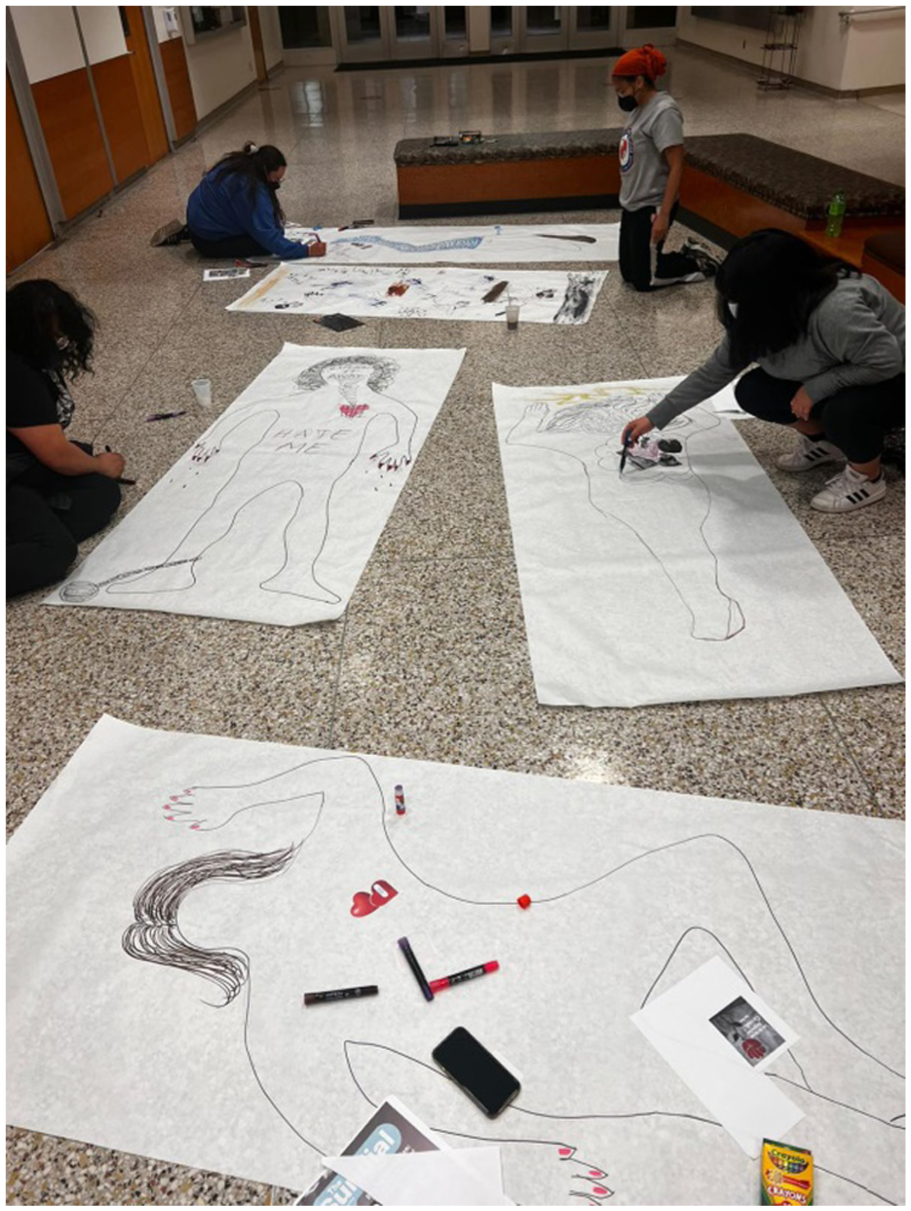
Body mapping workshop.
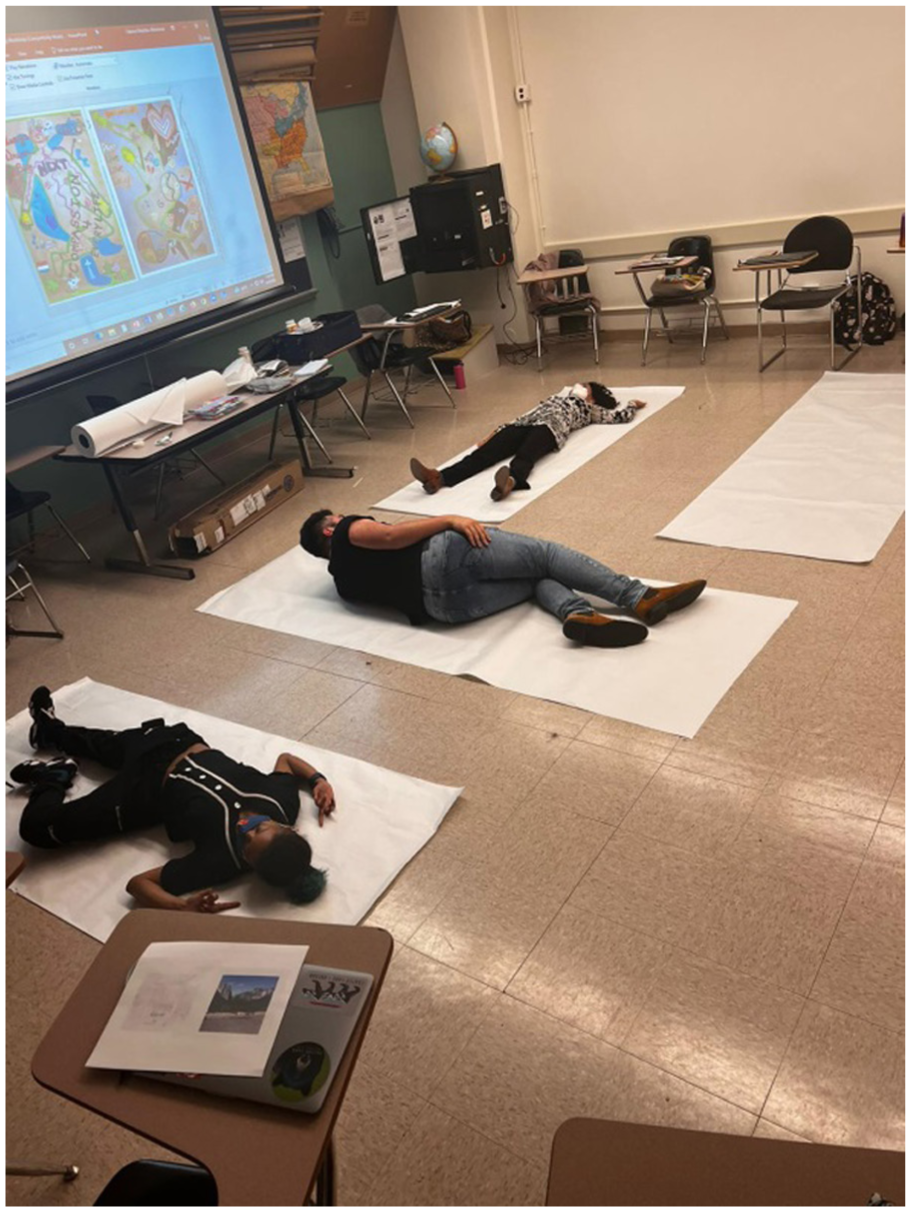
Body mapping workshop.
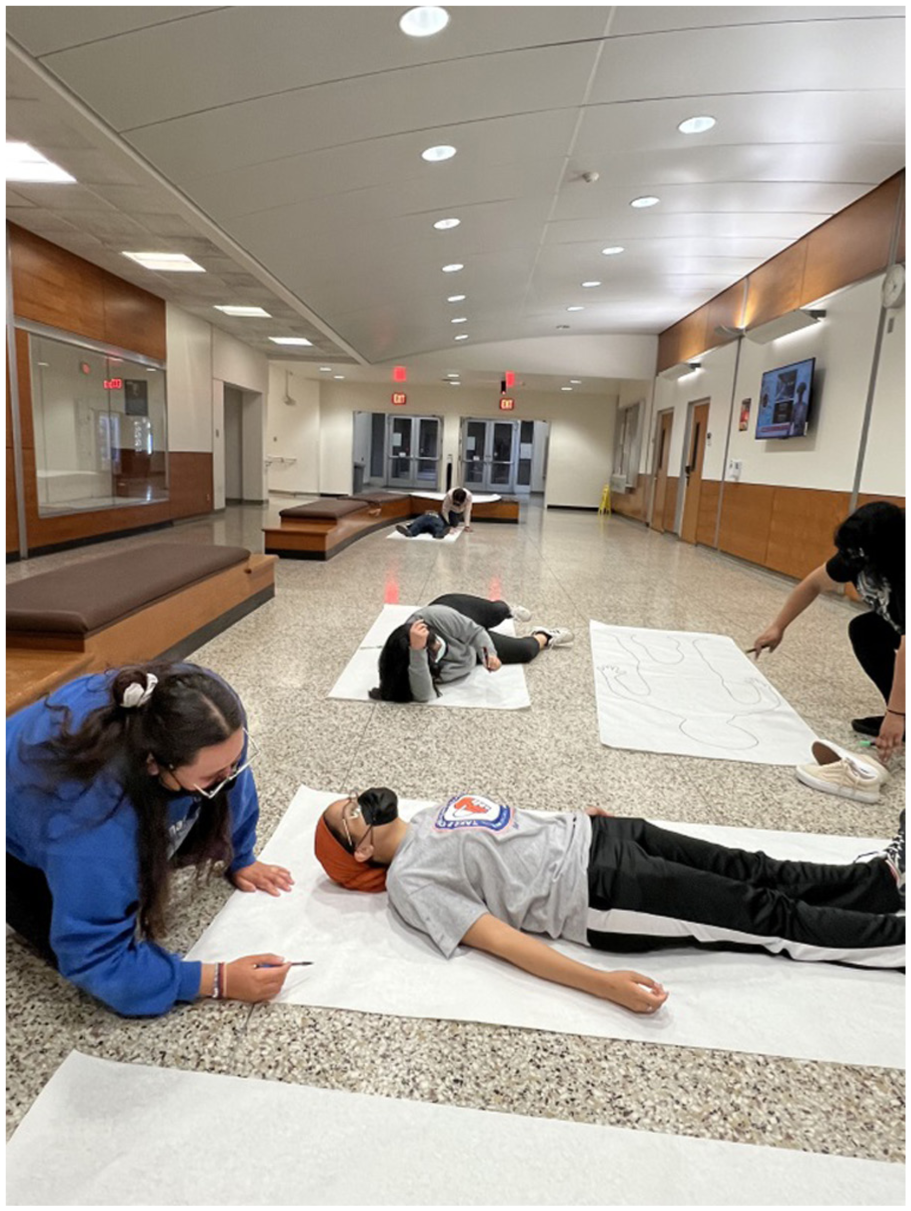
Body mapping workshop.
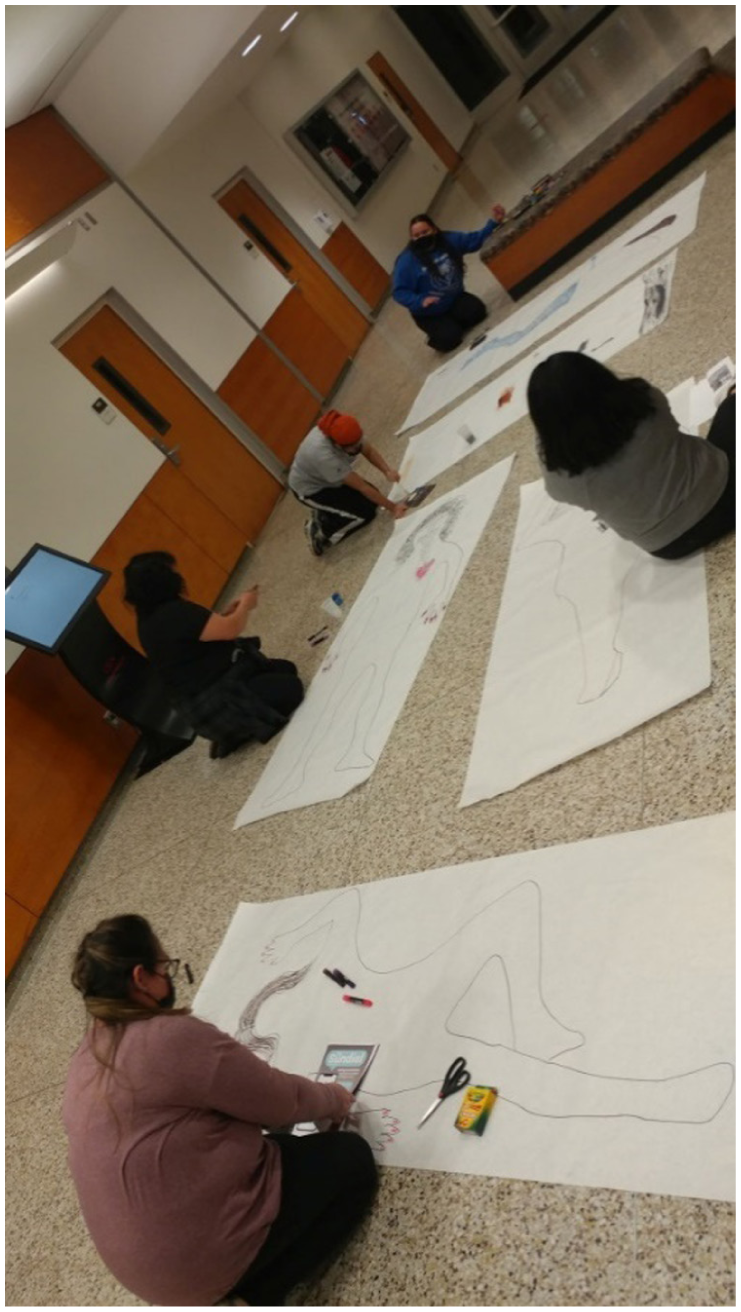
Body mapping workshop.
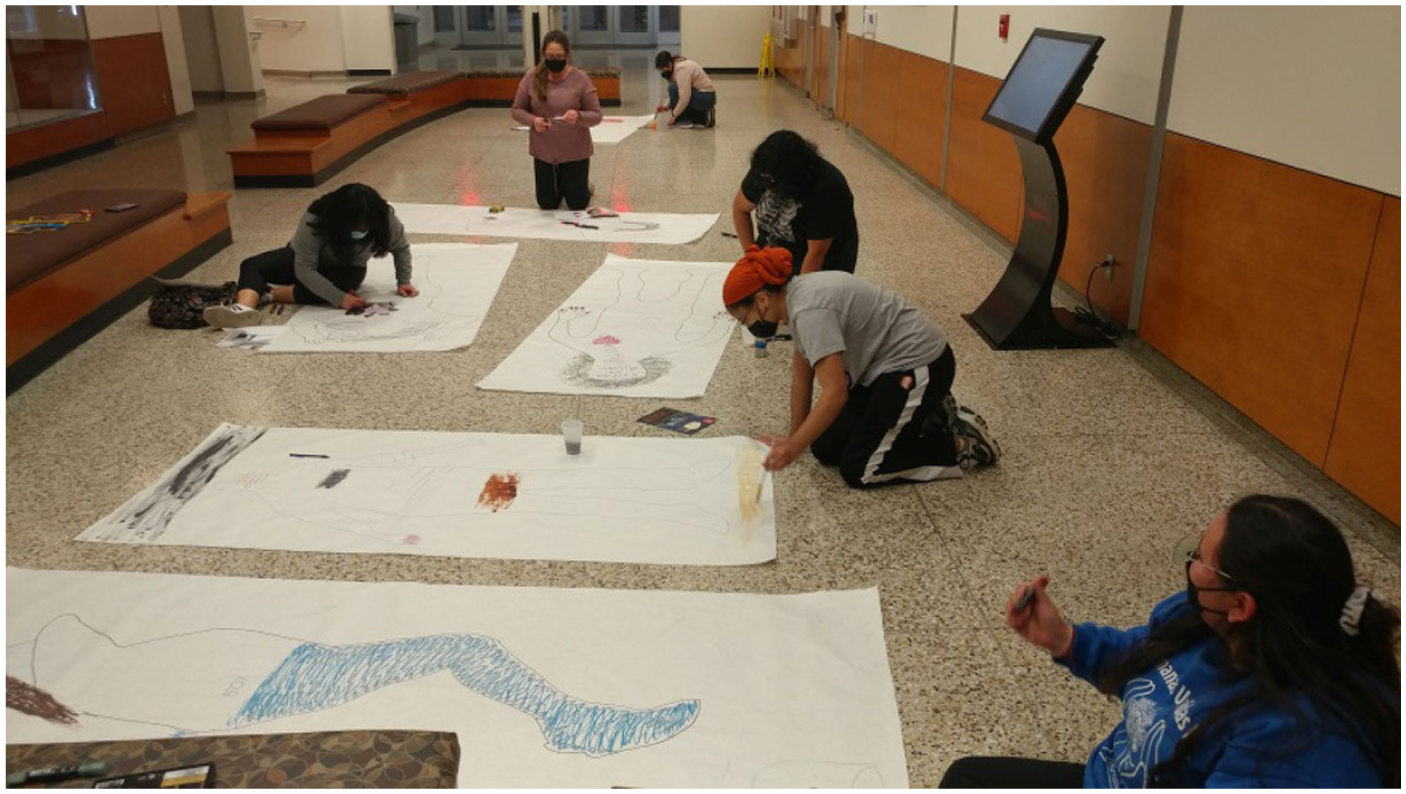
Body mapping workshop.
Analysis Process of the Body Maps and Reflexive Journals
The body maps and corresponding reflexive journals were analyzed using thematic coding and analysis. Thematic coding and analysis are descriptive strategies that search for patterns of experience within a qualitative data set to capture the overarching storyline that unites them (Ayres 2008). The thematic coding process began with a familiarization of the data by two of the authors of this article (the instructor and one of the graduate students). This process entailed reading through the pages of reflexive journals that explained the meaning behind each one of our body maps. Then, a list was made of specific ideas that stood out and were interesting about the reflexive journals and corresponding body maps. From the list of unstructured ideas, we moved to the development of themes, where important words and quotes were documented within sections of the reflexive journals and labels were attached as they related to a theme or issue in the reflexive journals (Nowell et al. 2017). We collectively compared findings and searched for patterns of experience within each reflexive journal and corresponding body map. Finally, we identified overarching and unifying themes among all the reflexive journals and across all of the body maps. Because it was a small group of us who participated in the body mapping process, when reviewing the reflexive journals, if at least two of us did not talk about a specific idea, we did not include it as a theme. All of the themes that emerged were shared and discussed among the rest of us for member checking and to ensure that the themes were accurately representative of our collective experiences.
Presenting the Themes From the Body Maps
Eight major themes emerged from the analysis of our graduate student body maps. Although these themes were distinct, at times, they overlapped particularly as they related to experiences of trauma. The subheadings in the following highlight the diverse themes and the ways in which we talked about the meaning and symbolism behind our body maps.
Trauma Stored in the Body
Many of us used the body map as both a literal and figurative representation of trauma stored in the body from histories of abuse. For some of us, our body map served as way to explicate both physical and emotional pain points. While some of us opted to describe the relation between our art and our prior experiences, others chose to extend our maps and include our coping strategies and personal acts of resistance to combat the negative feelings associated with our stories. The following examples demonstrate these interpretations:
Angie shared her body map (Figure 6) and shared: I wanted to encompass the areas of my body where someone has unwantedly touched me. I used flowers to indicate a path of the places and pieces of my body that someone took as theirs. I used real rose petals, sage, poppies, and leaves from my garden to represent my trauma’s organic and authentic path throughout my life. When I was in 3rd grade, a boy would sit on the right side of me. Every day he sat next to me; he would grab my thigh. The flowers on my body map start at my thigh. The next place the flowers go through is where my statutory rape occurred. As the flowers continued upward, they went over my breast area and shoulders, and those were the areas when a 50-year-old man had his arm around my left shoulder and grabbed me from behind; I was 10. The concept of the “body” is crucial to sexual abuse victims, and I want to protect it more now.
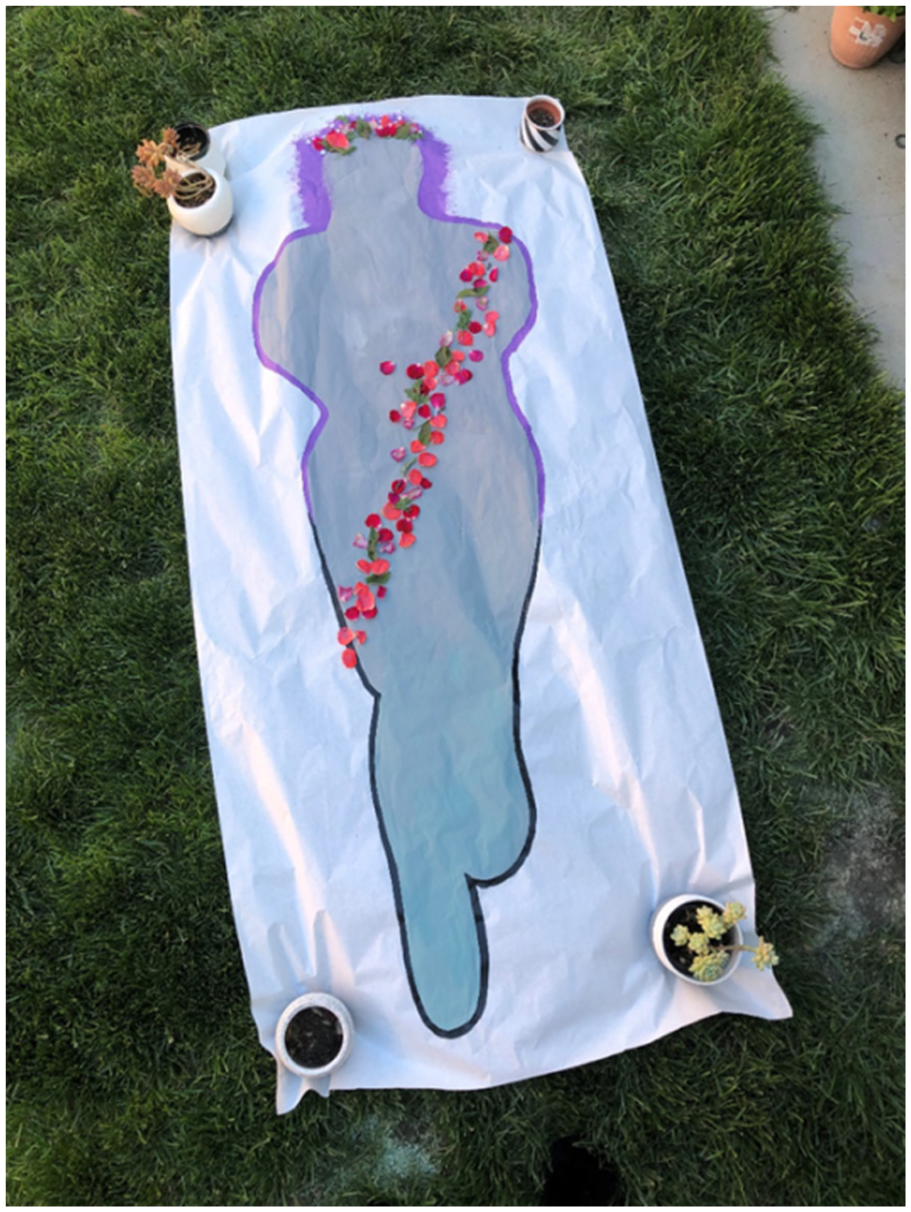
Angie’s body map.
Similarly, Maria shared her experience of sexual abuse through her body map (Figure 7) and shared: I included a quote stating “don’t touch this” under where my female genitalia are because I have been penetrated and hurt by people who did not ask for my consent to do such a thing. I have struggled to trust men for many years because of all the physical abuse done to my body without my permission.
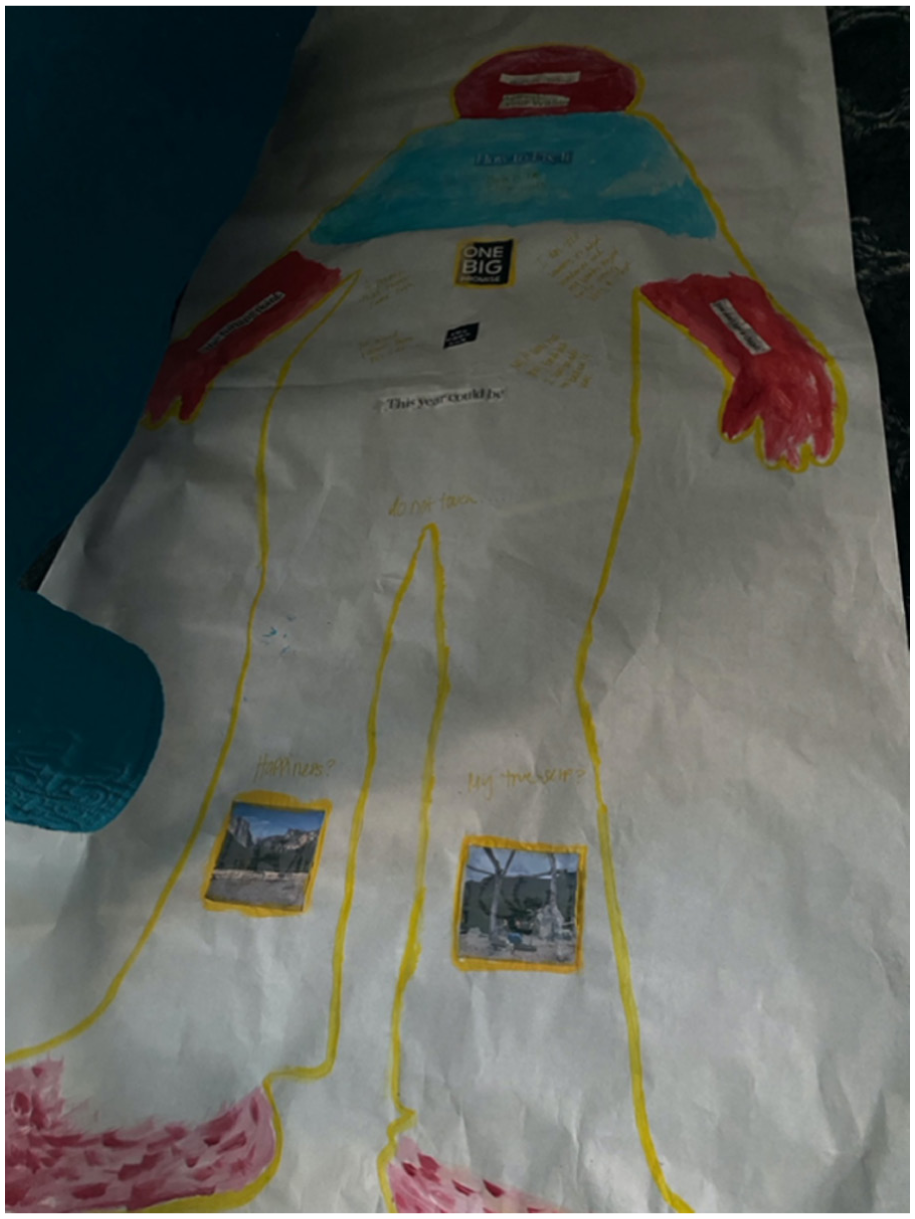
Maria’s body map.
For Brian, trauma looked like the verbal abuse he endured while in a romantic relationship. He shared: The traumas that I had suppressed re-surfaced as the project went on, demonstrated by the various abusive words/phrases written down in cursive inside my body outline. Those derisive words meant to demean me, came from a past romantic partner. Also included on my body map were worries and feelings of guilt associated with abandoning my two children for nearly a year in that abusive relationship. I have been mending my relationship with my children since leaving that abusive partner and returning to being an active father in their lives.
For some of us, the process of creating a body map served to help us identify and work through our trauma. For example, Gabriela shared: I decided to use my body map to represent my trauma and how I have dealt with my trauma. To begin, I started with drawing a heart enclosed in barbed wire on my body outline, and then drawing what looks like a tornado extending from my heart to my brain; my brain then has “explain it away” written on it. This represents how I have guarded my heart from any further pain or grief. Whatever emotions, trauma, or pain my heart does carry, I find logical ways to explain it away. . . .
Similarly, Maytal created her body map and explained: I wanted to share certain areas of the body that I store trauma and so I made symbols on the three main areas in my body that I feel often need tending to and balancing whether it be the sun near my belly that is confidence or the heart that needs to show myself some love.
Body mapping enabled us to engage with sites of injury and trauma. As students, we were grateful to have the opportunity to locate our trauma on the bodies through creativity, bringing to light the need to tend to our traumas.
Mental Health Issues
Many of us shared our struggles with mental health issues and mapped them out on our diagrams of our bodies. Although mental health is centered around psychological and emotional well-being, physical manifestations and outcomes are common; we shared how mental health issues were connected to physical pain and health issues that we had experienced in our lives. In the following excerpts and images, we note the particular emphasis on symbolism to express thoughts and feelings associated with this issue. Diana found an opportunity to share her mental health struggles as she described what her body map represented. She said: My thought bubble says self-love, patience, hope, goals, family, alone, lost, scared, failure. I deal with anxiety, insomnia, and painful heartburn. I wanted to include a picture of my meds because even though I feel trapped by them, they are what keep my body running and allow me to live an almost normal life. I started to appreciate the good days and learn from the bad days, so I added a picture of my healing heart. I also incorporated bloody fingertips to represent my nail biting, something that I have always done since I was a child when I would feel anxious, overwhelmed, depressed, and scared. I have noticed that as an adult, my nail biting has gotten worse. This is because I used to struggle with self-harm as a teenager/young adult and when I stopped, I resorted to biting my nails since it is not seen as “concerning.” While this is a bad habit that I have worked so hard (and failed) to break, it has been the one consistent thing in my life that I turn to when dealing with emotional issues.
Similarly, Lauren expressed: My body map was created to locate different types of trauma and self-inflicted trauma that I have experienced physically, psychologically, and sexually by hands. I chose not to trace the pencil outline of my body with a thicker paint or marker. I realize that this makes my body outline look as though it was not there, a possible reflection of how I wish that I could disappear. For the hand with the dots in and around it, this represents how I had learned to abuse medication to find solitude, salience, and deep sleep when I was (and still am) struggling to find effective coping skills. On my arm and body, I painted some lines that reflected my past engagements with self-harm practices, as I was negatively coping with the transition from childhood to adulthood.
Maria described how she suffered from depression and anxiety and decorated her body map to represent how she navigated these struggles. She expressed: I painted my head, feet, and hands red to symbolize all the areas where I have felt the most pain due to the stress that trauma has passed on to me. I mainly feel the most pain in my head and arms because I constantly must deal with problems at home and in academia. My brain gets foggy more often because I have taken on many responsibilities. I tend to spread myself thin all the time. I always try to please everyone when I know I cannot do that. I get up every morning, and I already have a list of things that I need to complete. This has helped in some ways to keep me organized, but in other ways, it has made me feel very overwhelmed. I also suffer from depression and anxiety, and I think that if I am active and get things done, I will be okay.
For Jazmine (Figure 8), her mental health challenges manifested during the pandemic. She shared: I wanted to show how the pandemic has affected me. I had a feeling of uncertainty. I never knew what would happen next; if my loved ones would stay safe, if I would ever feel any normalcy in my life again. There was a constant fear gnawing at the back of my head. The days passed, and I never knew what to do with myself. There was so much time in the day to do anything, yet I could not find the motivation to do anything. Time just passed by. All we would hear on the news was how things were getting worse and how we did not know when or how this pandemic would end. I decided to go with laying down the profile on my body map because if I was doing something at the beginning of the pandemic, it was sleeping. It was an escape from reality, where I did not have to think about my present or future. Sleeping was where I could escape. I was not only physically tired but emotionally and mentally drained. I was exhausted from the dread of what was to come next, drained from having to change the plans I had made before the pandemic and seeing the stress around me.
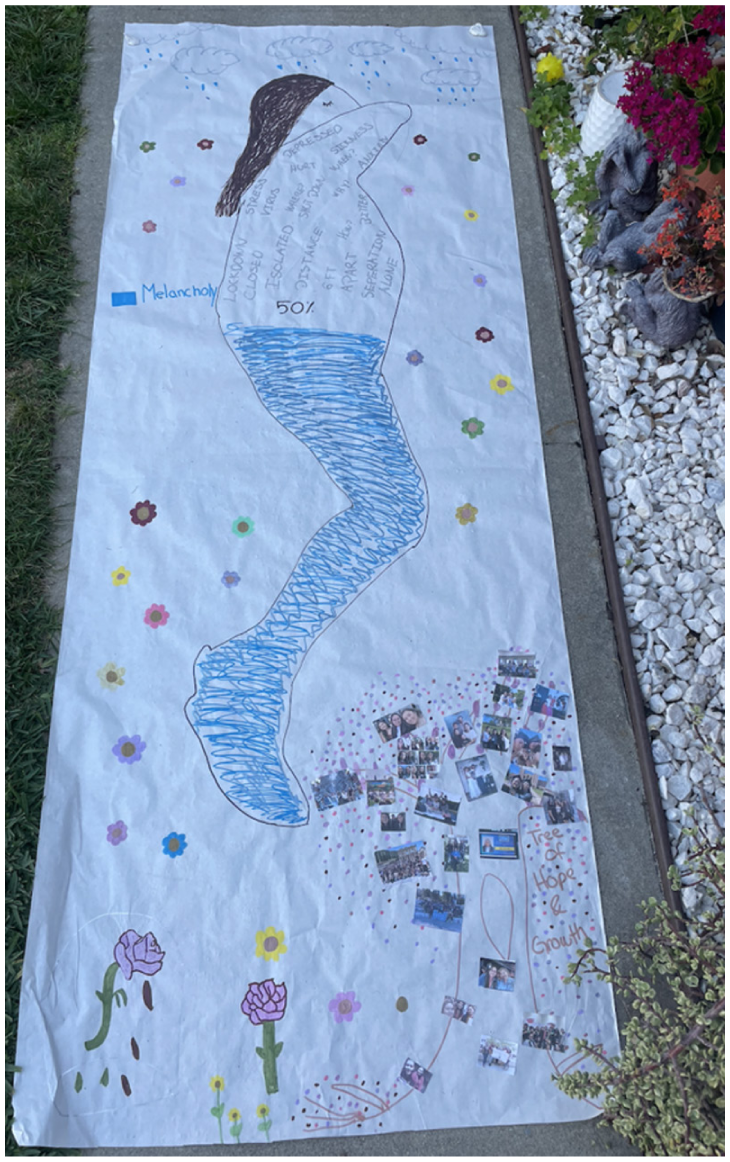
Jazmine’s body map.
Physical Pain and Health Issues
While many of the mental health challenges were represented via symbolism, a common theme was locating the specific areas on the body where we had experienced physical pain. Maytal used various colors to connect her pain to areas of her body and shared: The emotions that arose were fear, as I felt scared that my health issues, like continued kidney stones, have to do with storing trauma in my body and in certain organs that attempt at processing that energy and trauma. I do not know if my kidneys are impacted by my past, but I do know that the kidneys are a part of the sacral chakra, the orange chakra that is located at the pelvis. This bright orange chakra helps me with self-love, self-understanding, and self-growth through self-awareness.
Brian created a body map (Figure 9) and expressed: Images of my heart and veins represent a fear of dying of heart disease early in life, as my father and grandfather did. Visually on my left leg, there is a disruption to the blood flow that looks like an explosion. That symbolizes a blood clot I had in my leg several years back; the same leg I broke when I was eight years old. Those two injuries and my family’s heart issues are constant reminders of my mortality and my body’s vulnerability, despite any affinity I project of being machine-like and not easily broken.
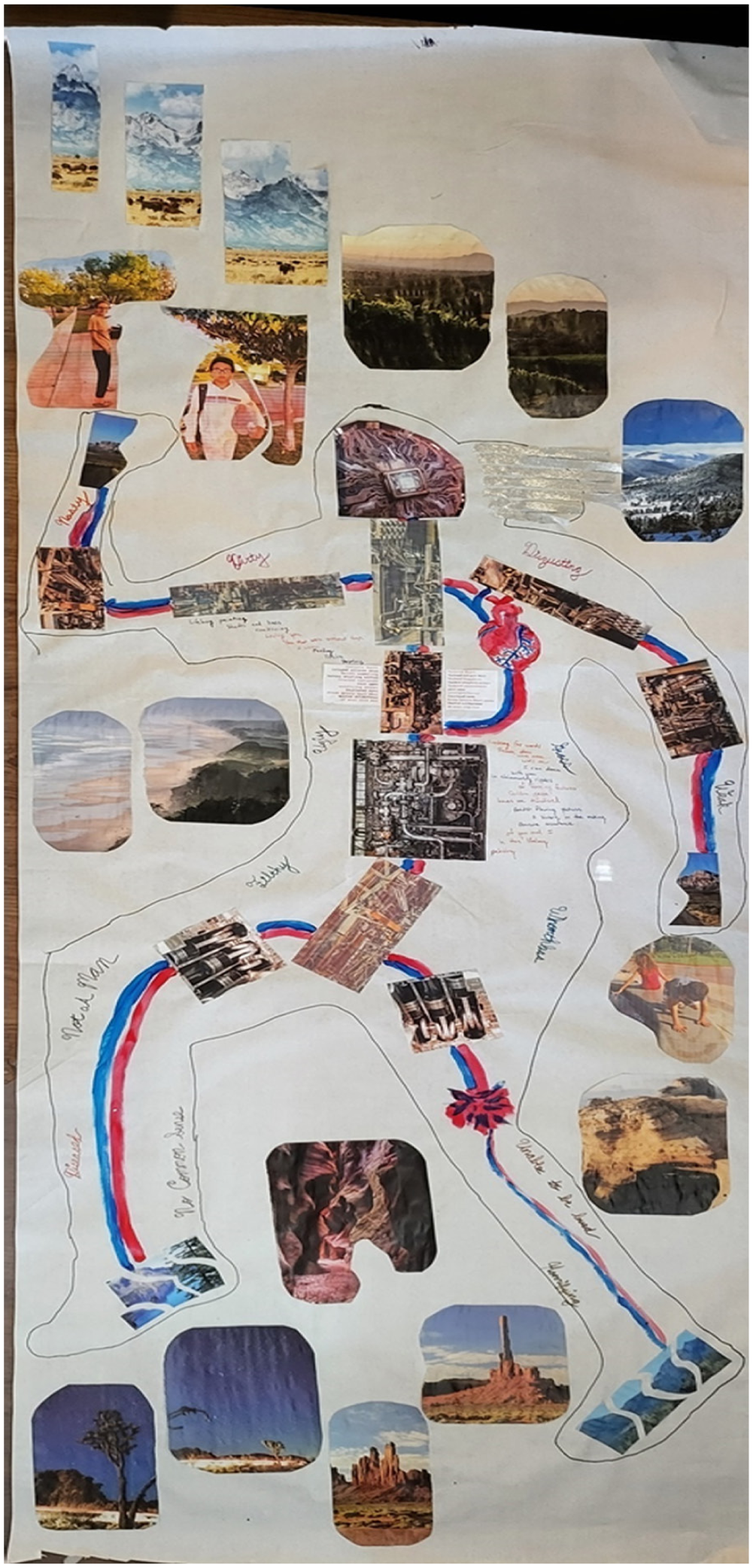
Brian’s body map.
Similarly, Diana shared the following about her body map (Figure 10): My body map focuses on my health struggles because sometimes I feel like a stranger and prisoner in my body. My body map depicts how living with Lupus has changed my body and quality of life. I included a Lupus Awareness ribbon on my stomach because I have Systemic Lupus Erythematosus (SLE), which attacks all internal organs, and the butterfly on top of the ribbon is a symbol used to unify the lupus community. The purple areas are where I have constant and daily pain, headaches, wrist and hand inflammation, joints, feet and lower back pain. Occasionally, I deal with brain fog, therefore I added an “out of order” sign on my forehead.
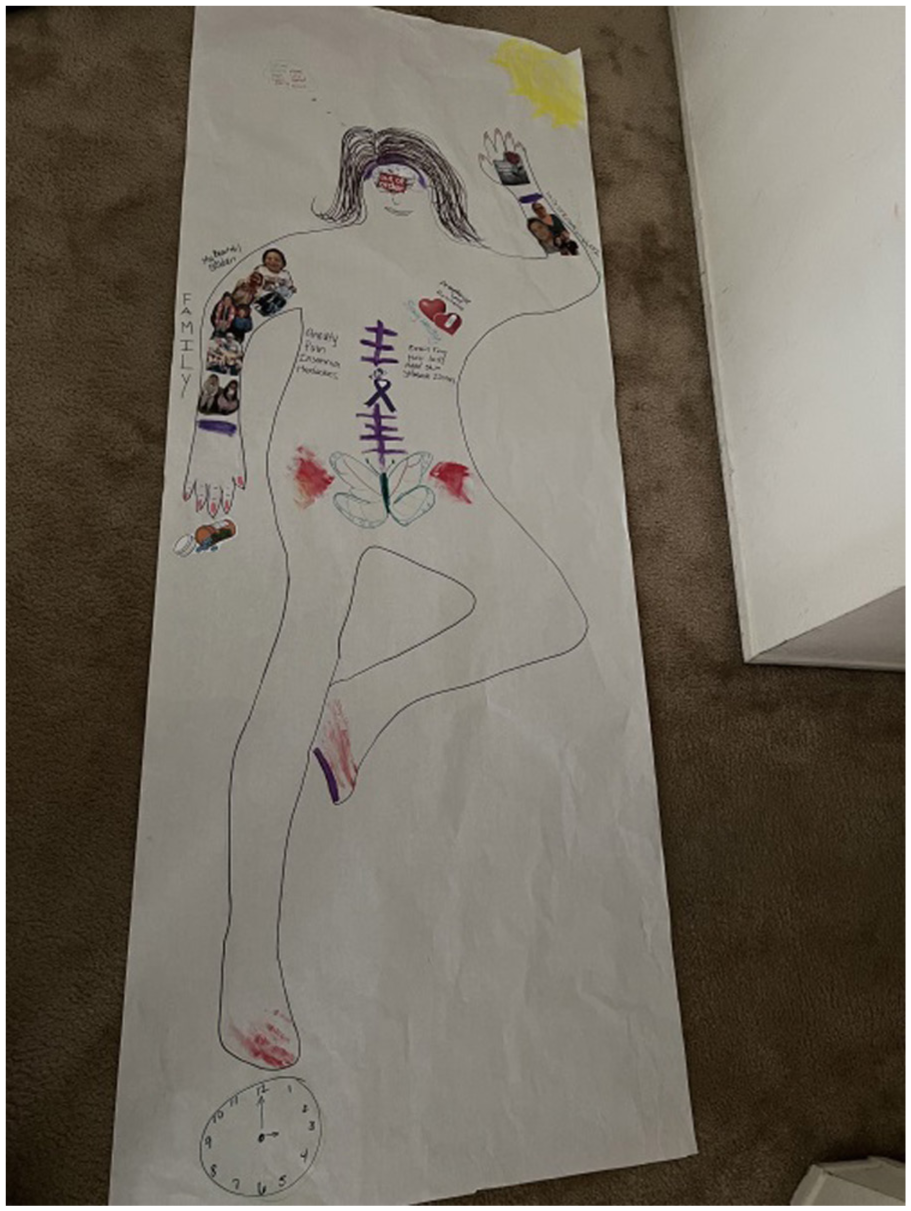
Diana’s body map.
Maria added that she also struggled with her physical health connected to her working in domestic labor, which she indicated on her body map. She said: I also help my mom with domestic work, which has slowly affected my physical health because I can feel pain all over my body. There are no words to describe how painful it is.
These body maps served those of us who sought witnesses and the space for testimony. For many of us, identifying the actual location of our pain on our body maps created the opportunity to take action to address our pain.
Body Image Discontent
There were a few of us who shared our discomfort and dissatisfaction with our bodies. Gabby, whose research explored the impacts of fat-based oppression, created her body map (Figure 11) and stated: On my stomach area, I wrote “LOVE ME” and “HATE ME” above each other to represent the struggles I face with self-love and self-acceptance. I feel like I’m always caught in this inner battle of hating my body and wanting to change every part of it or loving my body in all that it is. This also represents the struggles I have faced with my family who, even though I have no doubt that they love me, have been the loudest voices against my body.
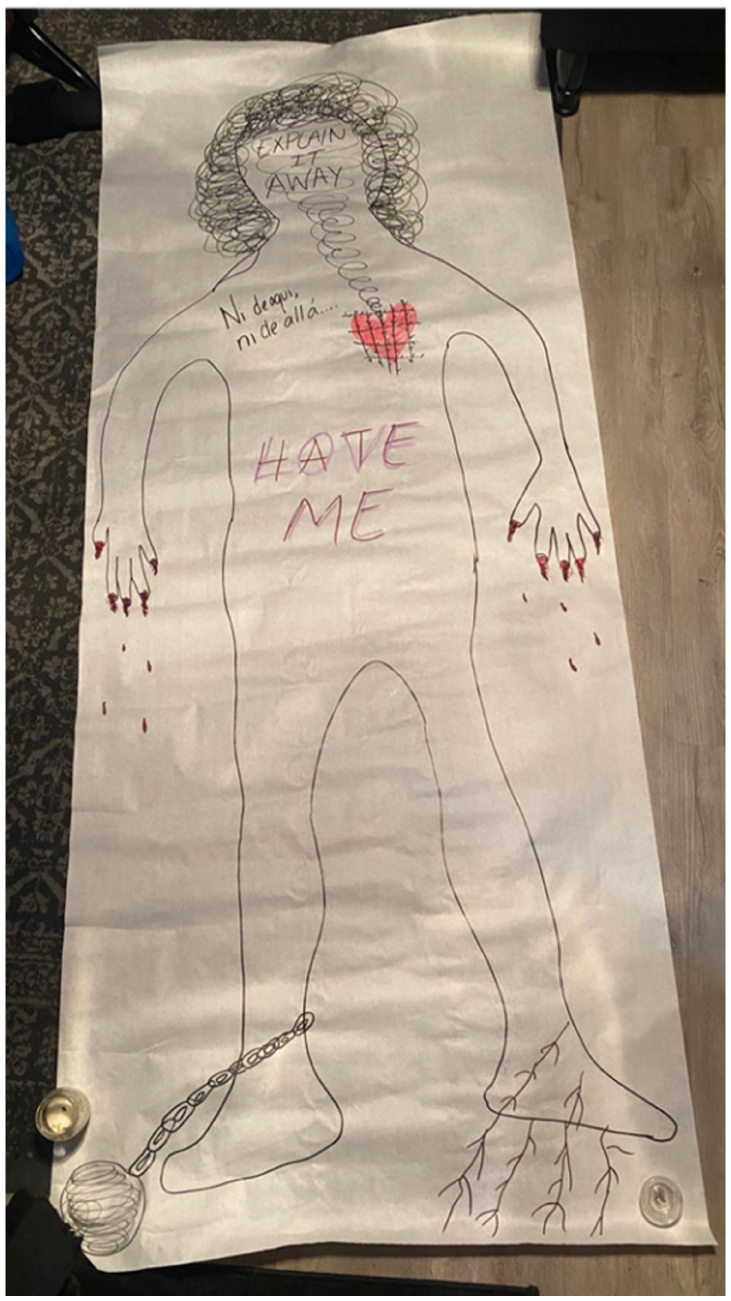
Gabby’s body map.
Similarly, Angie shared her struggles when she said, “The outline shape of my body does not reflect my hands. When I naturally stand, I ensure my hands cover the pieces of my body that I do not like.” When discussing her body map, Maytal connected her body images challenges with larger macro issues. She expressed, “I, like many other women in capitalistic western societies, experience challenges with self-esteem and body image.” For Diana, her body map was decorated with a butterfly to represent her dissatisfaction with her body due to her inability to become pregnant. She shared, “I added a butterfly to represent my reproductive system because I suffered from many years of infertility. I felt like a failure. My body was betraying me again; having a baby was something that my body should naturally want to do.”
Cultural Identity Struggles
For some of us, our body maps represented our complex feelings around our cultural identity. For example, Gabby shared: I wrote the phrase “Ni de aqui, di de alla” on my shoulders, representing the struggles I have faced regarding my first-generation Mexican American identity. This phrase translates to “neither from here, nor there” which is something I have felt my entire life. I have always felt too “othered” to be fully accepted by American’s [sic] while at the same time feeling too “othered” to be Mexican, leaving me with two identities that I could never fully connect to.
As a bicultural Latina, she struggled to navigate her two worlds. Similar sentiments were shared by Maria, who expressed: In the middle of my body map, I wrote “the perfect son” because I have been reminded that I will never be the ideal daughter my parents hoped for all my life. That is because my parents envisioned a different life path for me. At the same time, I am choosing this path that I am taking for myself. I am constantly reminded by my parents and other family members that I am not the perfect daughter because I am choosing not to get married and have children and refuse to conform to the traditional Mexican housewife rules.
For Lauren, her body map (Figure 12) represented the pain she associated with her family.
Strangely, hands hold a strange place in my life because even though they have been used to cause me immense harm, I use my hands to communicate in American Sign Language (ASL) which I hold on to deeply, as it is the language and part of the culture of my grandparents. In a way, this duality that I have reflected on reminds me that hands are, and always will be, a vessel for what we seek to manifest from what exists in our minds and hearts. I originally created the body map to highlight the shift I experienced in life where I had a lot of hope as a child but have no hope as an adult.
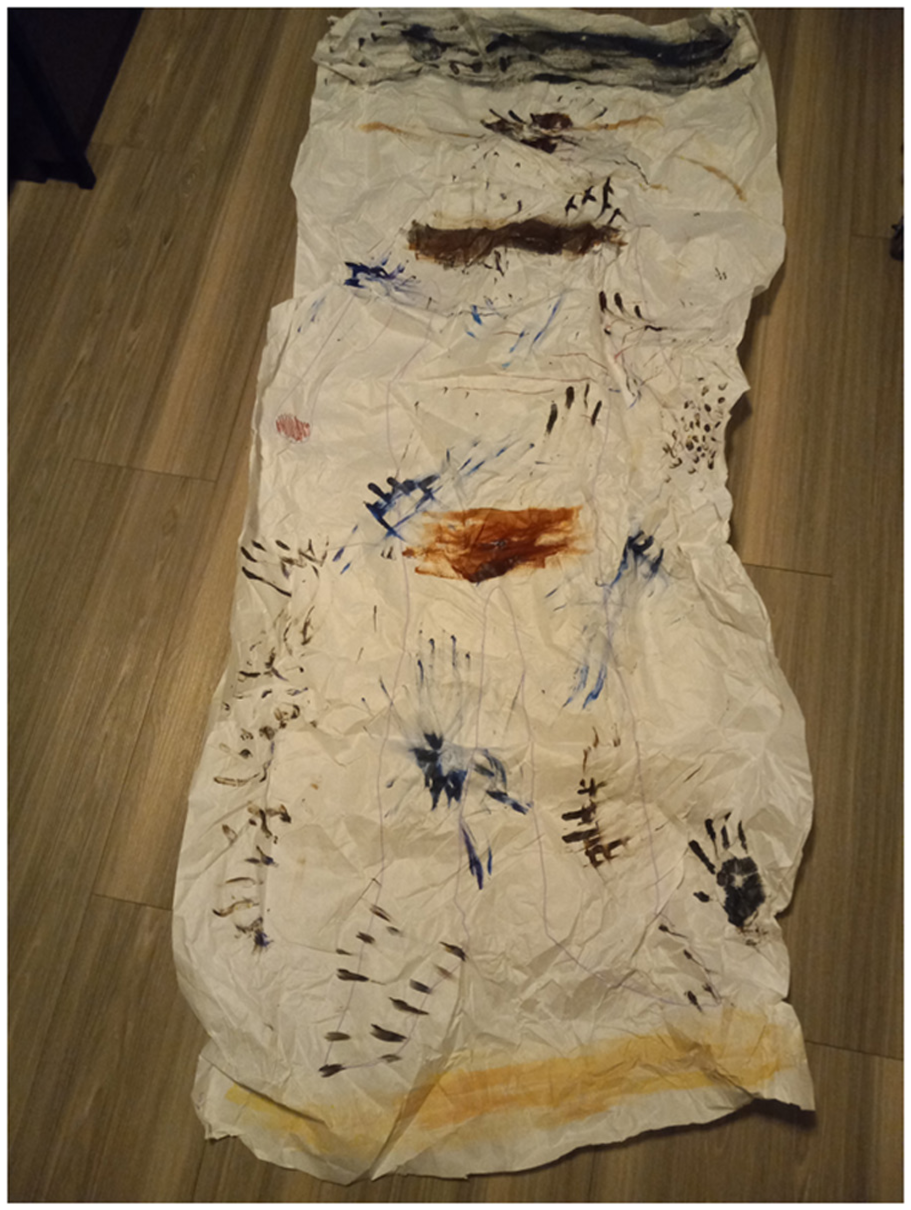
Lauren’s body map.
She went on to explain: After class I crumpled it up and stepped all over it to reflect how I felt as though my family from both sides are trying to crumple me up and throw me away because I am not of value to them. It feels strange to know that my existence in this world was made by the choice of others, but I am forced to navigate their conflicted feelings about how I did not become what they hoped for. At its core, a lot of my trauma is navigating the reality that I am not loved by a family that I wish loved me. At times it only adds to my burden of not feeling joy around the idea of being alive. Because of what I experienced and have been forced to move through, I lack a desire to take care of myself and heal (again because I am operating on survival mode). However, in the middle of trauma, my art is more reflective of my unfiltered emotions, general feelings of despair, and the lack of consideration of how others feel about my thoughts.
Body mapping allowed us to make meaning of our experiences and process our emotions. Through our body maps, we shared their feelings of rejection by our families and the ways in which we navigated our collective pain of not being accepted for who we are.
Representations of Self
The body maps created an opportunity for us to represent ourselves, our thoughts, our personalities, our gender identity, and other salient identities connected to our interests and how we see ourselves. KinG-Sing created her body map (Figure 13) with symbols and shared: I like to hide away in my head . . . that is represented by the squiggles and doodles I put inside my head on the body map, that specifically represent when I like to retreat mentally and just be with myself . . . I just stay in my head thinking about trivial things and tuning others out . . . I’m also a person with many walls, shown by the outlines around the body, because I think the people around me are placed in different walls. Those I barely know would be placed on the one furthest out, and the closer I believe they are, the more walls they bypass, until I decide they’ve earned a place in my heart. Ultimately, what I wanted to convey through my body map is that I’m a guarded person who prefers things calm, but that doesn’t mean that I don’t care.
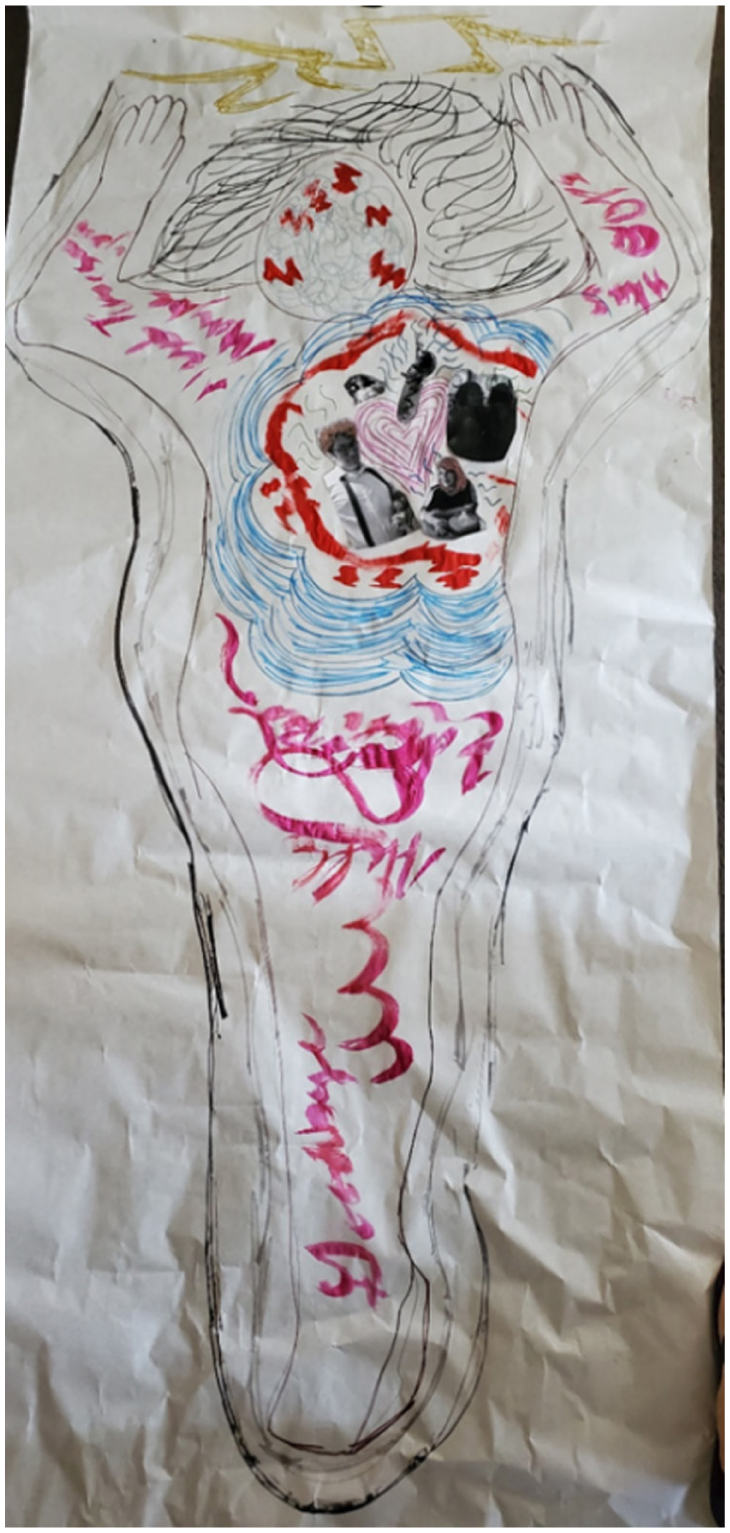
King-Sing’s body map.
Similarly, Maytal also chose to represent herself on her body map (Figure 14). She expressed: This is a motion I do with my body when I want to let go and open up my heart to release whatever tension or feelings I am experiencing. I, then, requested my partner take a dark blue marker and trace me once more, but in the fetal position with my head crouched down and my hands pressed together as though I am in a praying or pleading position. I chose these two positions because I wanted to depict different versions of myself, the colorful version being my energy flow and what is expressed to the outside world, and the fetal position to represent my inner world and the intense rumination that takes place within me. I created my body map with the idea that I always have energy flowing through me and that energy is always shifting depending on what I am thinking, doing, or engaging with. I started to think about auras and chakras which is where a lot of my association with color and energy comes from.
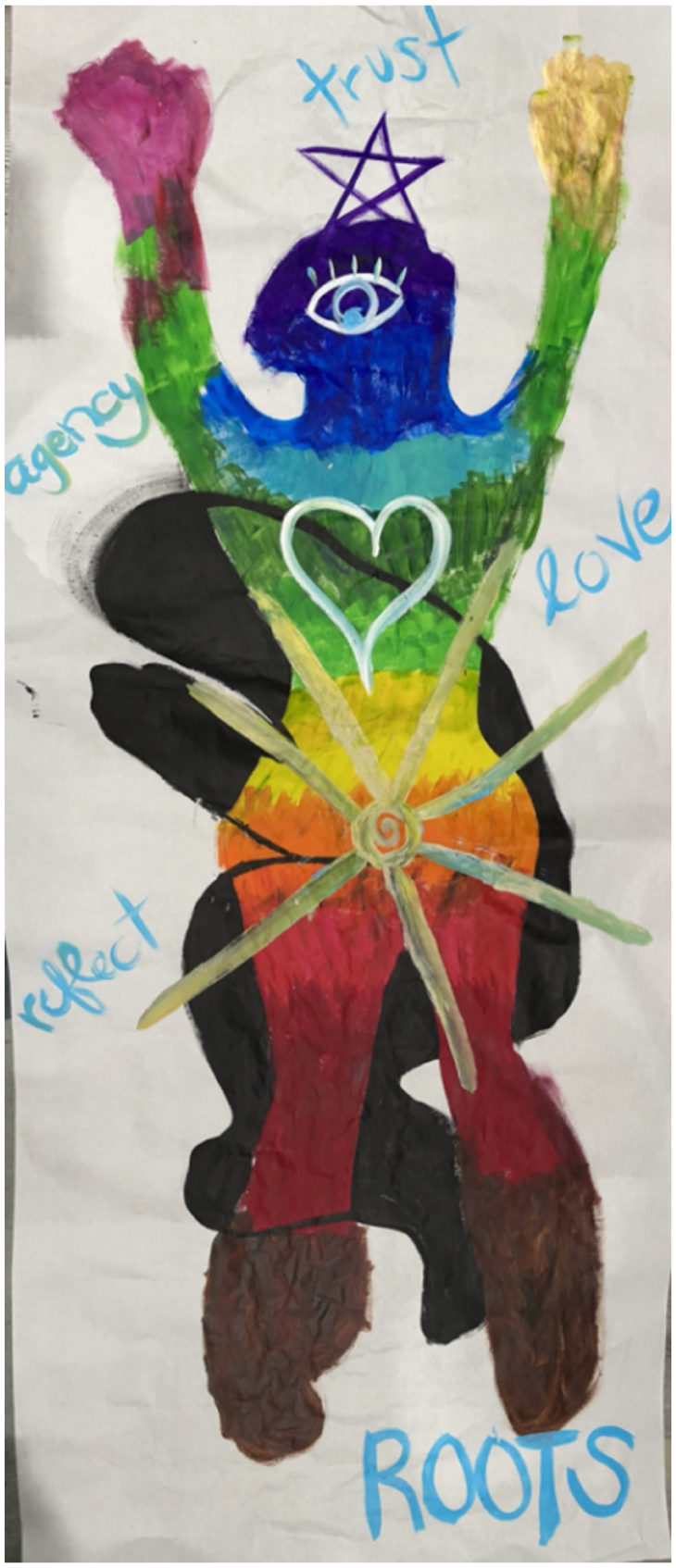
Maytal’s body map.
Using the power of symbols, Maytal engaged in an asset-based approach to self-awareness and empowerment in order to focus on her individual strengths. After completing his body map, Chris shared, “We self-reflect in which our bodies act almost like a journal. We construct ideas about who we are and then jot down those thoughts and eventually try to make sense of who we are as researchers.”
For some of us, our body map expressed our gender identity. Brian described his masculinity through the symbolism on his body map when he stated: Artistically, my body map centers on the images of machinery, wiring, and electronic gear since it is a reoccurring theme of how I often feel internally. This machine-like interior, a strength when it can push me to overcome endless and tiresome tasks, has the detrimental effect of separating me from my emotions and connections with people.
Similarly, Angie described her femininity that was symbolized on her body map when she said, “I tried to emulate my hair by having just purple fluff from the top of my head, and I used rhinestone jewels and more flowers to give the body map a headdress.” We had the opportunity to increase meaning and personal connectedness with ourselves, leading to building positive self-awareness and representation.
Experiences of Oppression
The body maps also served as sites to document experiences of social and institutional oppression. Specifically, the experiences of racism and sexism arose as themes observed on the body maps. Cydnea’s body map (Figure 15) detailed the experiences of institutional racism they experienced as a Black person. They shared: For my body map, my partner drew me twice. I wanted to make one side so colorful and the other side black and white. I wanted to demonstrate how I have been exploited and how I have felt raped by the educational system. The educational system took away my innocence since I was 6 years old, and I had to make myself inferior to stay afloat within the educational system. I painted my face black to demonstrate Blackface. I know that this word has a negative connation, but I did this on my body map to remind me that I never want to conform to any institution, nor do I want to erase my roots to conform to white ideologies. I am flipping off the systems in my body map but at the same time I am still suppressed by the system.
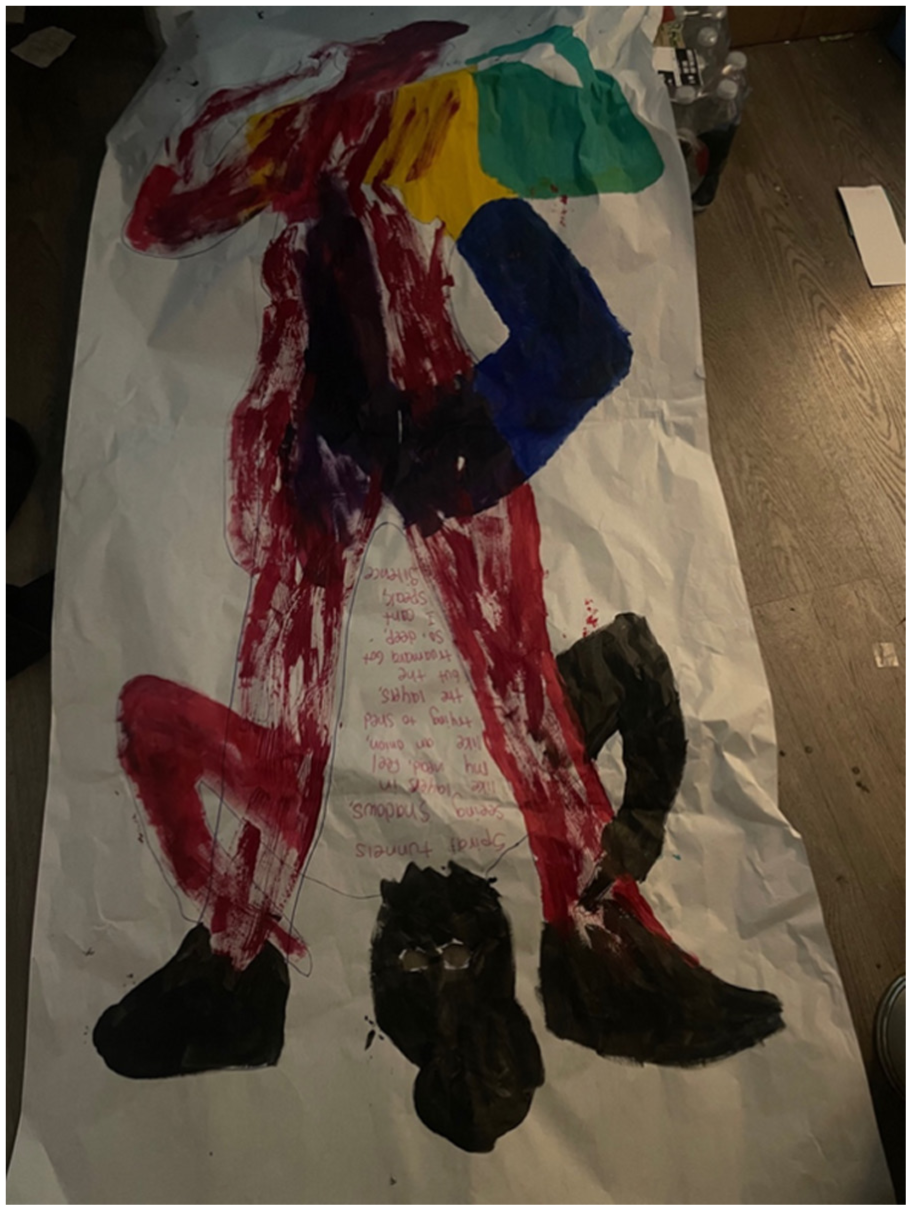
Cydnea’s body map.
Cydnea expressed how they waited to move beyond a single representation of their body as they described how their body represented multiple guises to survive and thrive within oppressive institutions that were anti-black. Similar experiences of anti-blackness in an educational setting echoed by Marissa, who experienced oppression as a Black woman. She shared the symbolism behind her body map (Figure 16) and her artmaking process: I used paint, band aids, fake flowers, pipe cleaners, and fake grass. At the beginning of each semester, I print out each of my syllabi; for this project; I cut them up and turned them into the background . . . I did not include my head because it is not something I let a lot of people into. The pose I chose was my arms across my torso but ended up portraying it as me holding some flowers; my feet are unfinished to represent that I cannot keep running away from my problems. I chose flowers to represent growth, but they are shades of red, orange, and yellow to represent anger; the anger in this case is because I am gentle with others that may be suffering and going through hard times, but I am hard on myself. I do not afford myself the same grace and am hard on myself when I am struggling. The band aids overall symbolize that I am still trying to hold it together. The semi-colon on my hip represents the tattoo I have on my wrist; the meaning behind semi-colons is basically that your story is not over and that you did not go through with suicide when you once (or more than once) may have wanted to. It serves as a reminder to myself to keep pushing forward.
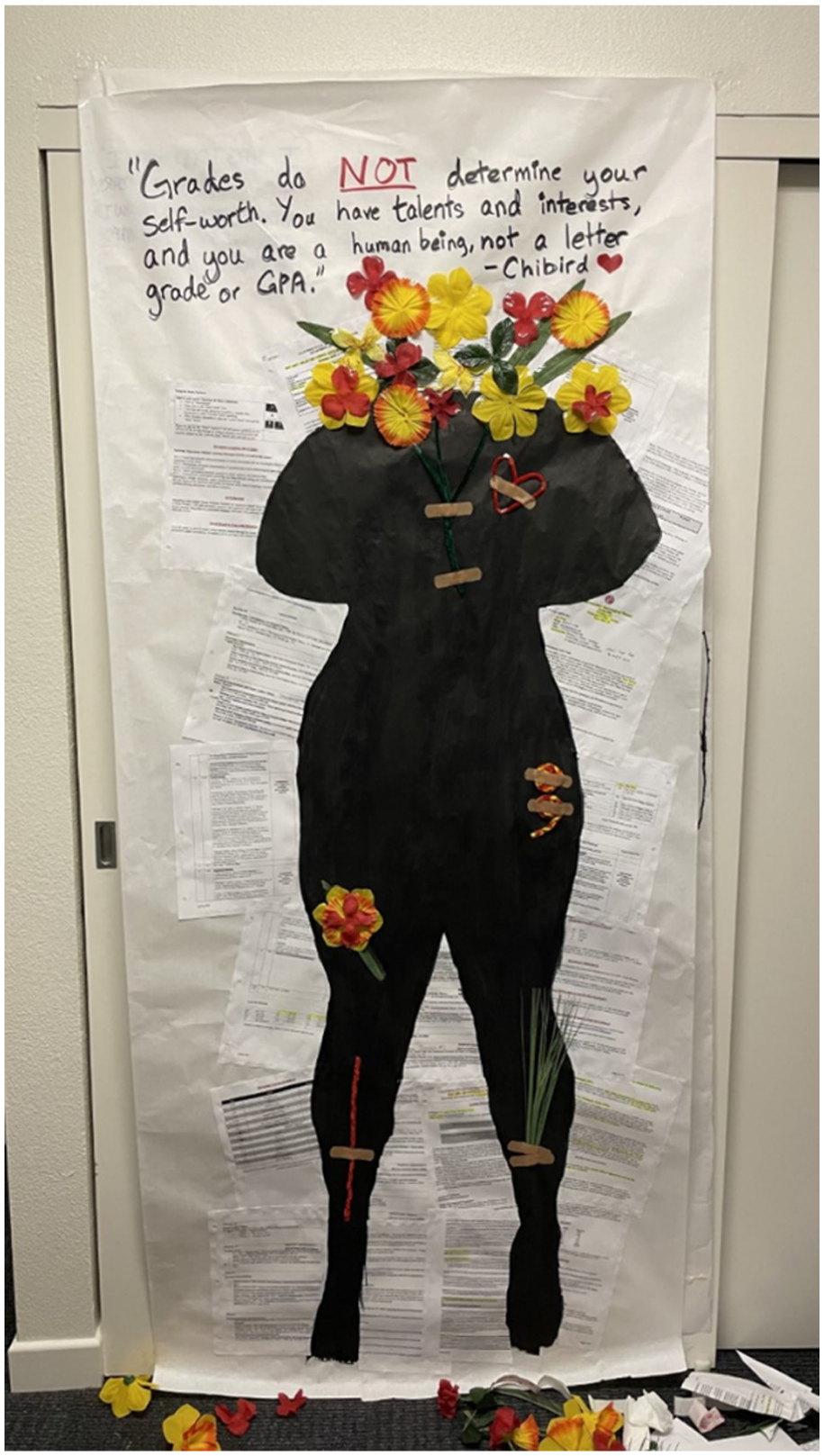
Marissa’s body map.
On her body map, Angie expressed the social oppression of sexism and stated: Women are the portion of humanity that holds life within them, and they are treated like someone else owns that life. Women’s voices and choices have been removed. Women are more likely to be sexually abused, victims of domestic abuse, and treated less than optimal for health care services. We are considered selfish or dramatic if we are in pain or if we attempt to heal from our past traumas. . . . We are more in tune with the universe and the rotations of the earth than a man would ever know.
We used symbolism on our body maps to represent our experiences of oppression based on our intersecting identities.
Spirituality and Healing
While the body maps served to document painful experiences, they were also a site to represent the ways in which we were healing from those experiences. Chris created a body map (Figure 17) and stated: I focused on my two fists as the main areas of my healing and trauma. My raised fist represents how I am healing, by being good to others and by practicing spirituality. The fist that is lowered is where my trauma still lies. The downwards fist is dark, and I painted it in a way to represent my pain. The images on the lowered fist symbolized misery, defensive walls, and selfishness. Spirituality has always been a significant aspect of healing for me. I decided to paint healing energy in my body and energy that represented trauma.
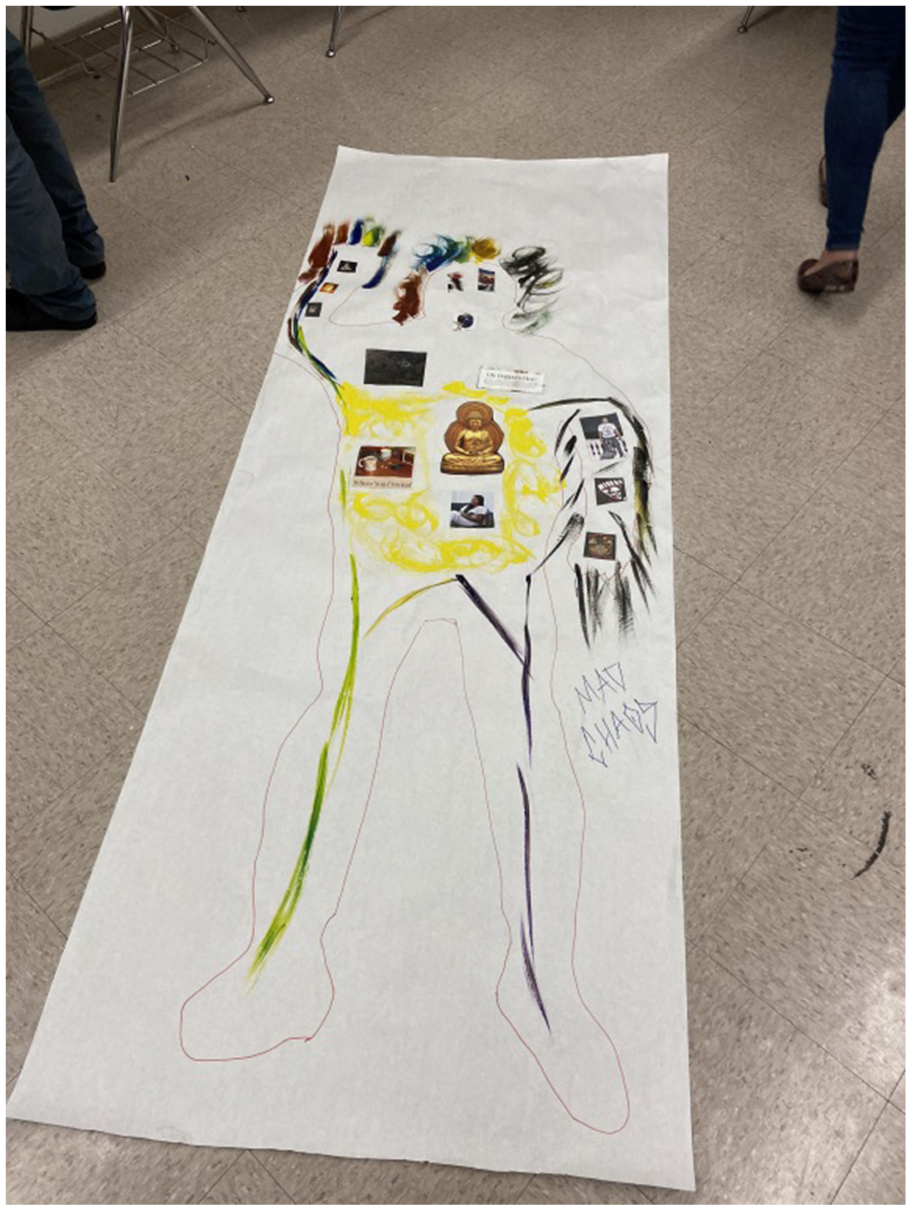
Chris’s body map.
Similarly, Diana shared, “The sun represents hope, faith, acceptance, happiness and life. My body map still has a lot of open space as my healing is still in progress.” Maytal also depicted healing on her body map and said: This bright orange chakra helps me with self-love, self-understanding, and self-growth through self-awareness. The sacral chakra is believed to be associated with sex organs, kidneys, and also connected with the element of water. I absolutely love to be submerged in water as it feels extremely healing for me, and I also must drink a lot of water to remain healthy in my body and mind.
Maria explained how she placed images of nature on the feet of her body map.
In between both of my feet, I placed two pictures of national parks I enjoy visiting. I put them in between my feet because my feet have allowed me to walk to those places and shown me what joy looks like. My feet feel light whenever I take time for myself, which I have started to do more often nowadays. I realize that I need to do what is best for me at this point in my life. I need to stop carrying everyone else’s problems on my shoulders. I must take my life into my own hands, which is one way I can finally start to heal from all the trauma I have endured. My feet have kept me going this far and there is no plan to stop anytime soon. If my feet allow me to walk, I will continue wherever life takes me.
The body maps were an opportunity for us to reflect on the ways in which we cope and heal from painful life experiences.
Discussion
The exploration of arts-based, embodied pedagogies within our classroom contributes to an ongoing conversation, drawing from established literature on the integration of mind and body in knowledge creation (Dewey 1960; Freire 2007; Lipson Lawrence 2012; Nguyen and Larson 2015; Perry and Medina 2011). Through our process of utilizing the body mapping methodology, we extend this dialogue by investigating how we, as graduate students, engage with our lived experiences through artistic and embodied expression. Our findings resonate with Dewey’s (1960) philosophy, emphasizing the inseparable connection between mindful action and thoughtful reflection. Body mapping helped us identify and express our emotions and acceptance of who we are as individuals, what we have experienced in life, and ways to engage in praxis for individual and collective change (Lys et al. 2018). By incorporating the body mapping methodology, our pedagogical approach broadens the understanding of embodiment, revealing how action and reflection coalesce, mutually informing one another. The resulting body maps, serving as visual narratives, provide a medium for us to immerse ourselves in the multifaceted process of knowledge creation, allowing us to embody and reflect on our experiences within larger social, cultural, and institutional settings.
Aligning with Skop’s (2016) propositions, our exploration of body maps reveals the methodology’s ability to represent intersecting identities. When knowledge is situated in knowers’ (participants/students) specific bodies, the attention to the specificity of bodily experience highlights the ways in which social categories of difference (along the lines of race, class, gender, sexuality, size, age, and ability status) intersect to create experiences of privilege and oppression as inscribed on the body (Fields et al. 2021). Themes such as body image, cultural identity conflicts, and experiences of oppression depicted in the body maps underscore the potential for body mapping to empower marginalized groups by highlighting the emotions connected to their experiences. As participants experience, inhabit, and visually represent social stratification, power dynamics, and social and structural inequalities, seemingly abstract concepts such as “trauma,” “oppression,” and “healing” are rendered visible (Fields et al. 2021). Body maps serve to center the sensory and sensual experiences and consequences of individual and systemic violence, trauma, and transformation, bringing to the forefront the intersections of identities.
Gentsch and Kuehn (2022) highlight how there is a knowledge gap on how we store and retrieve bodily experiences that we perceived in the past and how this influences our everyday life. Conceptually, body memory is defined as the sum of all past bodily experiences that are stored in memory and influence behavior (Gentsch and Kuehn 2022). This entails tactile, motor, painful, and traumatic experiences as well as accompanying emotions. Body memories therefore comprise physical experiences of the past that can be explicit but also implicit. When implicit, they are not easily accessible to conscious reflection, and it may be difficult to verbalize our bodily experiences in day-to-day living or even during important life events. Engagement in body mapping offers the conduit for accessing these stored emotions. Thus, making meaning of our traumas through participation in body mapping allows us to move through the trauma that may be stored in our bodies.
Sociological literature on embodiment highlights the concept of scaffolding, whereby people use basic dimensions of their sensorimotor experience of the physical world (e.g., temperature, distance, and time) to develop higher-order concepts (i.e., love is a journey; O’Connor 2016). Taking these concepts and turning them into physical properties can be done by mapping them into embodied knowledge. This facilitates a greater breadth of awareness and thinking in the experiential physical environment (Gibbs 2005; Williams, Huang, and Bargh 2009). Taking something that is intellectually familiar and making it visible or tangible brings it closer to the bodily experience in the physical environment. O’Connor (2016) asserts that when confronted with an abstract phenomenon, individuals can make it relatable by reconstituting it into objects, symbols, or representations of concepts that ignite sensorimotor access. Gillespie and Zittoun (2013) argue that meaning is made in motion, as bodies and minds move between different physical and social contexts. In this manner, our pedagogical approach of implementing body mapping contributes to the ongoing discourse on the empowering potential of body mapping within diverse sociocultural contexts.
The emergent themes from the body maps highlight the power of embodied pedagogy for transformation and liberation (Lipson Lawrence 2012; Mathew et al. 2008; Wilcox 2009). The representations of trauma, struggles with mental health, and the intricate interplay between physical and psychological experiences aligns with the notion that the body serves as a repository of knowledge. Body mapping methodology, as an arts-based approach, allows us, as participants, to explore the embodied dimensions of our experiences, revealing narratives that words alone might struggle to convey. Furthermore, our pedagogical approach builds on previous insights into embodied practices (Lipson Lawrence 2012; Nguyen and Larson 2015) by showcasing how body maps serve as powerful tools for processing profound trauma. As participants, we were challenged to reflect on our bodies as sites of inquiry. This process moved beyond traditional cognitive approaches and facilitated a deeper exploration of the roots of current and past experiences. In this way, our pedagogical approach aligns with the understanding that embodied practices enable a more profound processing of traumatic experiences, which can lead to critical self-awareness and internal change.
Through the integration of arts-based, embodied pedagogies, particularly exemplified by the body mapping methodology, our pedagogical approach highlights the transformative potential for sociological education. Embodied pedagogies that incorporate creativity welcome complexity, ambivalence, messiness, subjectivity, and multiple interpretations. They capture one moment in time, highlighting the interplay between the representations of our multiple embodied selves and their multifaceted and fluid contexts of our lives. Embodied pedagogies allow us to focus on both product and process. The body maps, serving as visual representations of sociological themes, align with existing literature on the efficacy of embodied practices in fostering self-awareness and empathy (Lipson Lawrence 2012; Nguyen and Larson 2015). Our arts-based pedagogical approach advocates for a broader integration of such approaches in sociological pedagogy, emphasizing the importance of creating spaces that encourage holistic engagement and a deeper understanding of the intersections of individual and societal structures.
Limitations, Strengths, and Possibilities
The integration of embodied pedagogies, particularly the use of body mapping, in our classroom presented both challenges and valuable insights. This innovative approach required active engagement from both instructors and students, challenging traditional methods of knowledge construction and prompting us to represent unique facets of our identity, beliefs, and traumas in a novel light. However, the process demanded a level of vulnerability that not all of us students were comfortable with in a shared space. Two of us hesitated to create our body maps in the presence of others, citing discomfort with the intimate nature of the activity. One of us even chose to complete the exercise independently at home, highlighting the diverse reactions to this pedagogical method.
While individual engagement was preferred by some of us, others in the classroom actively engaged in the process and enjoyed the community aspect. Solomon’s (2007) recommendation of group body mapping emphasized the potential benefits of mutual support, trust building, inspiration, and ritual as part of a reparative process. The transformation of individual experiences into socially shared narratives, with the potential for therapeutic outcomes and instigating social change, underscores the communal nature of this pedagogical tool. However, its effectiveness relies heavily on the development of meaningful relationships among students and the instructor over the course of the semester. Engaging in the arts as a group over the course of the semester allowed for vulnerability, openness, and authenticity to emerge, creating the space for building trusting relationships with one another. As an arts-based research class, we engaged in other arts-based assignments throughout the semester and had the opportunity to know one another on a deeper level through our artmaking, reflecting, and sharing. Throughout this process of artmaking during the semester, we debriefed each creative activity, and the instructor built periodic check-ins with the graduate students as a care-based approach in the classroom and beyond.
A significant limitation surfaced in the form of time constraints. The limited time allocated for creating and collectively processing body maps restricted the depth of reflection on the mind-body connection, emotions, thoughts, and social interactions. Despite these challenges, the exercise played a crucial role for us addressing experiences of violence and trauma. It became a medium for us to identify, process, and navigate stored trauma, emphasizing the importance of self-care and professional support in such instances. It is important to note that the role of the educator extends beyond providing a safe space; it necessitates curriculum flexibility to sensitively navigate the emotional aspects of these experiences (Fields et al. 2021; Lipson Lawrence 2012). Incorporating multiple body mapping workshops throughout the semester could enhance communal processing, offering a more comprehensive understanding compared to relying solely on written descriptions.
Body maps, as reflections of lives and identities, unravel layered symbolic and textual meanings, fostering awareness of the mind-body-spirit connection. This arts-based approach facilitates the sharing of personal histories, discussions on specific issues, and transmission of cultural and intergenerational family knowledge. The physical outline of the body serves as a storytelling starting point, allowing students to explore intersecting identities and experiences of individual and systemic oppression. In our class, body mapping empowered us students to present ourselves from a perspective of empowerment, fostering self-love and acceptance; embodied pedagogy transformed traditional, passive learning into a form of active learning facilitating new ways to engage in self-reflection (Nguyen and Larson 2015). Within the context of our focus on individual and collective healing, body mapping provided a powerful means to discuss the pandemic’s impact on our lives and the diverse ways it has affected us mentally and physically.
Looking ahead, the potential for further exploration and refinement of these pedagogical approaches is evident. Future iterations could benefit from extended time frames, allowing for deeper engagement and understanding among students. Additionally, ongoing professional development for instructors would enhance the effectiveness of implementing such innovative techniques. The exploration of digital platforms and tools could also open avenues for broader participation and collaboration, overcoming spatial and temporal constraints. Despite the challenges and limitations, our pedagogical approach contributes to the evolving landscape of embodied pedagogies, signaling the potential for transformative learning experiences within sociological education. Future explorations of implementing body mapping in the classroom can focus on using this approach to explore sociological topics related to identity categories (race, ethnicity, social class, gender sexuality, etc.), family dynamics, impact of social media, and other topics that address the intersections of micro and macro issues. The use of arts-based approaches, such as body mapping, contributes to decolonizing education through praxis. Images, in the form of body maps, are powerful tools that can raise awareness of a social justice issue and even encourage people to engage in action for personal and social change (Holm, Sahlstrom, and Zilliacus 2018). Body mapping can also be used as a research methodology outside of the classroom to capture the experiences of individuals, groups, and communities.
Conclusion
In conclusion, our arts-based pedagogical approach builds on established theories of embodied pedagogy, extending the discourse into the sociological domain through the innovative use of the body mapping methodology. The exploration of themes and insights from the body maps aligns with existing literature while offering unique perspectives on the intersectionality of individuals’ experiences within broader societal contexts. By embracing arts-based, embodied pedagogies, educators can enhance sociological learning environments, fostering empathy, self-awareness, and a deeper understanding of societal structures. As our arts-based pedagogical approach becomes a part of the evolving narrative on innovative pedagogical practices within sociology, it underscores the transformative potential of embodied approaches in cultivating socially conscious scholars.
Footnotes
Acknowledgements
We want to thank clinical social workers Arutyun Ambartsumyan and Vaness Myrie for helping to facilitate the body mapping workshop.

Funding
The authors disclosed receipt of the following financial support for the research, authorship, and/or publication of this article: Supplies for the arts-based workshops were possible through the California State University Northridge Community Engagement Grant.
Declaration of Conflicting Interests
The authors declared no potential conflicts of interest with respect to the research, authorship, and/or publication of this article.