







Abstract
Examining individuals’ TV and Internet involvement following the 2008 Sichuan earthquake, this study demonstrates that involvement with disaster media renders positive and negative effects on viewers. Although TV involvement increases perceived stress, TV and Internet involvement predict perceived gains of social-relational resources (e.g., companionship and intimacy with friends and family) and social trust. Media involvement, in general, is also positively related to individuals’ willingness to help people in the affected areas, though this link was mediated by individuals’ perceived social-relational resource gain and social trust. This suggests that individuals’ willingness to help disaster victims is partly shaped by their relatively proximal and personal responses to the disaster coverage.
Keywords
Experiencing natural or human disasters can deeply affect people’s lives. Disaster victims can endure acute and chronic mental problems, such as depression and posttraumatic stress disorder (PTSD; Fullerton & Ursano, 1997; Weissman, Kushner, Marcus, & Davis, 2003). Yet in the aftermath of large-scale disasters, even people who are not directly involved in the disaster can share in the traumatic experience via media coverage. Once a major disaster strikes, media interrupt regular programming and start broadcasting “disaster marathons” (Liebes, 1998, p. 71). Television and online media sources transmit images and stories of disasters, highlighting victims’ emotional reactions of shock and despair (Blondheim & Liebes, 2002; Walters, Wilkins, & Walters, 1989). Audiences exposed to images of vulnerable and suffering others can, as a consequence, evidence negative emotional and behavioral reactions to the traumatic events (Cardenas, Williams, Wilson, Fanouraki, & Singh, 2003; Hoffner & Haefner, 1993; Snyder & Park, 2002).
Media coverage of disasters, however, involves not just stories of sorrow and misfortune but also stories of survivorship and courage (Walters et al., 1989; Worawongs, Wang, & Sims, 2007). Media, moreover, can facilitate positive behaviors by audience members. Media coverage can promote rescue and recovery efforts by soliciting charitable actions from audience members. Media can also increase public awareness and provide guidelines for how people can assist in their local communities (Brown & Minty, 2006; Oosterhof, Heuvelman, & Peters, 2009). More broadly, media has the capacity to enhance public discourses of compassion, which can potentially influence individuals’ willingness to help others affected by the disaster (Kim, Ball-Rokeach, Cohen, & Jung, 2002).
It appears, then, that media involvement in the aftermath of disasters can have both negative and positive consequences for audiences. Despite the plausibility of positive media effects, empirical tests of positive effects following disasters have been relatively rare. The present study, therefore, examines both positive and negative consequences of media involvement following a large-scale natural disaster, namely, the May 2008 earthquake that struck China’s Sichuan province. This study tests how audience members’ media involvement in the weeks following the May 12, 2008, earthquake predicts stress, social trust, perceptions of personal relationships (i.e., social-relational resource gain), and willingness to help others. We propose that individuals’ willingness to help victims is mediated by their perceived stress, social trust, and perceptions of their own personal relationships. In addition to media involvement research, we frame our hypotheses using multiple theoretical perspectives, including terror management theory (Greenberg, Solomon, & Pyszczynski, 1997) and conservation of resources theory (Hobfoll, 1988).
Literature Review and Rationale
The Sichuan earthquake of 2008, which was of a 7.9 magnitude, was immensely destructive. The earthquake reportedly killed approximately 70,000 people, injured 300,000 others, and left millions more without homes; economic losses were estimated to exceed 1 billion dollars (Baidu Encyclopedia, 2010; New York Times, 2009). Different from other crises affecting China, such as the SARS epidemic or the Tonghai Earthquake of 1970, the media coverage of the Sichuan earthquake was nearly instantaneous, making the earthquake an immediate national crisis for China (Yang, 2009). Thus, in close temporal proximity to the disaster, audiences throughout China (and much of the world, for that matter) could share in the traumatic moments captured by the media. Against this backdrop, it seems appropriate to examine the potential positive and negative consequences of not just mere media exposure to the earthquake, which was likely ubiquitous, but the degree of audience members’ media involvement.
Research examining media use and disasters mostly focuses on media as a main information channel. Studies report that crisis coverage affects people’s perception and awareness of the crisis (Ball-Rokeach & Defleur, 1976; Boyles et al., 2004; Lowrey, 2004). Because threatening events, such as natural disasters, raise uncertainty, people turn to media to make sense of the situation and overcome ambiguity (Greenberg, Hofschire, & Lachlan, 2002; Mileti & Darlington, 1997). Media following crises also serve important functions for the provision of information to viewers. For this reason, scholars have taken a risk management approach in their work. This line of research examines the dissemination of vital information to the public to limit potential panic or hazards (Mileti & Beck, 1975; Reynolds & Seeger, 2005). Media messages can inform the public about necessary actions needed to reduce harm with the goal of increasing audience efficacy (Reynolds & Seeger, 2005).
Researchers have also taken great interest in examining potential negative psychological and behavioral consequences stemming from individuals’ exposure to disasters and war. Studies demonstrate that mediated experience of traumatic events can invoke negative emotional reactions, such as anger, grief, and loss (Boyle et al., 2004; Cantor, Wilson, & Hoffner, 1986; Popper, Stickgold, Keeley, & Christman, 2007; Riffe & Stovall, 1989). A study examining the period following the Oklahoma City bombing, for example, found that residents of the affected areas showed high levels of stress and PTSD symptoms (Smith, Christiansen, Vincent, & Hann, 1999). More recently, Lau and his colleagues found that coverage of the 2004 tsunami was related to distress among the residents of Hong Kong (Lau, Lau, Kim, & Tsui, 2006). Focusing on the days immediately following the September 11 attacks, Schuster et al. (2001) reported that close to half of their nationally representative sample experienced what the authors termed “substantial” stress symptoms; some 90% of the sample reported at least a small amount of one stress symptom.
Despite the available evidence suggesting that media coverage of disasters is potentially consequential to viewer perception and well-being, media scholars have argued that focusing on mere media exposure alone is inadequate to capture these effects. Scholars working from a uses and gratifications perspective, in particular, contend that researchers should evaluate audience members’ media involvement, which estimates how actively viewers engage in media coverage (Levy & Windahl, 1985; Perse & Rubin, 1989). According to Levy and Windahl, media involvement represents “the degree to which the individual interacts psychologically with a medium or its messages” (p. 112). Perse and Rubin conceptualized media involvement as “cognitive, affective, and behavioral participation during and because of exposure” (p. 247).
Generally speaking, a media involvement approach emphasizes that the “locus of involvement is within the individual rather than within messages or stimuli” (Sun, Rubin, & Haridakis, 2008, p. 410). Supporting the utility of this approach, much research documents how cognitive and emotional media involvement influences individuals’ reaction to media messages (e.g., Lorch, 1994; Perse, 1990). Higher levels of cognitive and emotional involvement with various types of media equates to higher levels of interest and salience among audience members (Chaffee & Roser, 1986; Putrevu & Lord, 1994). Chaffee and Roser, for instance, found stronger correlations between knowledge, attitude, and behaviors when audience members exhibited higher levels of cognitive involvement with a health intervention. Further indicating the importance of audience activity, Rubin (1993) argued that greater audience involvement leads to more instrumental or utilitarian media use by audience members.
Examining media coverage following the September 11 attacks, Step, Finucane, and Horvath (2002) tested the relationship between emotional involvement and psychological and behavioral consequences. Step et al. found that people reported a need for interpersonal connection as a consequence of their emotional media involvement. Based on the importance of media involvement as a precursor of media effects, as well as past research demonstrating an association between media exposure and perceived stress, we propose the following hypothesis.
Hypothesis 1: There is a positive relationship between individuals’ media involvement with earthquake coverage and their perceived stress.
Although the majority of research on media coverage of disasters has considered negative effects on audience members, a few studies have examined positive consequences. Indicative of the potential positive consequences of disaster media involvement, studies have reported that people perceive, and actually experience, increased social support following major disasters. Lau, Yang, Tsu, Pang, and Wing (2006) found that people in Hong Kong reported higher levels of social and family support after the SARS epidemic. Compared with the pre-SARS period, respondents reported that they shared feelings more frequently and felt greater care for family members’ feelings. Lau et al. speculated that the improved relational experiences many individuals reported following the SARS scare reflect the ways in which the media covered the event, as the media frequently depicted “a more coherent and harmonious atmosphere in Hong Kong” (p. 121).
To help explain why individuals can perceive increased social and relational resources following tragic events and periods of loss, one can turn to the conservation of resources (COR) theory, which provides a theoretical explanation for resource loss and gain following stressful events (Hobfoll, 1988; Hobfoll & Lerman, 1989). According to COR theory, traumatic events are stressful because they threaten the loss of valuable resources, which can be tangible or intangible in nature (e.g., shelter, self-esteem, love; Hobfoll & Lilly, 1993). COR theory posits that during stressful circumstances, such as natural disasters, people also could perceive resource gains. Resource gains are needed to offset resource loss. Some scholars have referred to such gains in the face of stress as “traumatic growth,” though the nature and effects of traumatic growth remain rather unclear (see Hobfoll, Tracy, & Galea, 2006). People, in general, strive to protect and gain available resources in order to bolster resilience and facilitate coping responses (Sumer, Karanci, Berument, & Gunes, 2005). As Hobfoll (1998) stated, “People enact gain cycles in the wake of loss, in part to offset current resource loss, but also because they become more aware of future losses and look to prevent them” (p. 69). In sum, COR posits that during stressful periods, it is possible for individuals to experience both loss and gain of resources simultaneously.
Terror management theory (TMT) provides an additional theoretical explanation for why individuals turn to their close relationship partners following media involvement with natural disaster coverage. According to TMT, when people are exposed to events that heighten the salience of their mortality, it can activate a self-preservation motivation (Greenberg, Pyszczynski, & Solomon, 1986; Greenberg et al., 1997). People often react to this enhanced self-preservation motivation by showing higher compliance with cultural values and enhanced in-group favoritism (Navarrete, Kurzban, Fessler, & Kirkpatrick, 2004). Adherence to such norms and values comforts people in part by addressing social support and attachment needs (Hart, Shaver, & Goldenberg, 2003; Navarrete et al., 2004). In their expansion of TMT, Mikulincer, Florian, and Hirschberger (2003) described the dual role that close relationships serve in reducing mortality salience. First, relational partners help to reduce individuals’ anxiety and facilitate their positive emotion. Second, significant others enhance individuals’ sense of “symbolic immortality” (p. 25), such that they can help individuals feel that their social identity will continue beyond their death. Mikulincer et al. contended that though both short- and long-term ties can be beneficial, it is long-term relationships that are often best able to “provide a sense of continuity and lastingness” and “can be used as symbolic shields against existential threats” (p. 25). Thus, following disasters, even those indirectly experienced, people’s fundamental needs for self-preservation become salient, which likely heightens the import placed on the physical and symbolic resources provided by personal relationships.
Taken together, COR and TMT suggest why experiencing traumatic events could motivate people to place greater value on their social and relational resources, such as intimacy with a romantic partner, support from family members, and companionship with friends. Considering the content of disaster coverage, it seems plausible that media reports prime individuals’ mortality salience. This would be especially true when audiences are highly involved in media coverage. This speculation provides the basis for our second hypothesis.
Hypothesis 2: There is a positive relationship between individuals’ media involvement with earthquake coverage and their perceived gain in social and relational resources.
We are also interested in exploring if positive consequences of media involvement extend beyond individuals’ perception of their personal relationships, to their perceptions of generalized others. We, therefore, investigate whether media involvement relates to social trust and willingness to help victims of the disaster.
Although he questioned the lastingness of the increased social capital witnessed after national crises, Putnam (2002) noted that the experience of September 11 reshaped Americans’ attitudes toward each other and their “shared fate”, at least temporarily (p. 20). Researchers studying public responses to disasters have often observed increased helping behavior in affected areas (Barton, 1969; Giel, 1990). The increased helping culminates in what are sometimes referred to as “altruistic” or “therapeutic” communities, which are characterized by high levels of “communal fellowship, cooperation, altruism and solidarity” (Kaniasty & Norris, 1995, p. 450).
Most research on altruistic communities concerns communities primarily composed of victims in affected areas. Yet collective actions and solidified attitudes could also be observed in non-victim populations. Following September 11, media highlighted civic-minded behavior. Media reports indicated, for example, how people engaged in prosocial actions, such as donating blood and greeting strangers on the streets (McMahon, 2001, cited in Kim, Ball-Rokeach, Cohen, & Jung, 2002; Schneider & Foot, 2004). Some scholars, such as Schuster et al. (2001), consider efforts to help others in this manner to be a type of coping response. Specifically analyzing these types of responses following September 11, Schuster et al. found that 36% of their sample donated blood, contributed financially, or performed volunteer work.
As discussed earlier, TMT suggests that when mortality becomes salient, people tend to abide by their own cultural views and enhance in-group favoritism. Feeling like part of a group is indeed an essential mechanism in the self-preservation drive (Greenberg, et al., 1986, 1997; Navarrete et al., 2004). It thus seems reasonable to predict a positive relationship between media involvement with earthquake coverage and social trust.
Hypothesis 3: There is a positive relationship between individuals’ media involvement with earthquake coverage and their degree of social trust.
Researchers have also been interested in identifying factors that motivate people to take civic actions in crisis situations (Greenberg et al., 2002; Putnam, 2002). Because media’s solidifying function escalates in times of crisis (Dennis et al., 1991; MeLeod, Eveland, & Signorielli, 1994), media coverage has the potential to rally public opinion toward common causes. This can increase the public’s willingness to engage in prosocial behaviors, such as charity giving and volunteerism. Brown and Minty (2006) found that media coverage of the 2004 tsunami had a dramatic impact on donations to relief agencies. Kim, Jung, Cohen, and Ball-Rokeach (2004) found that living in a rich communication environment promoted civic-minded actions after a crisis (for similar results, see Cohen, Ball-Rokeach, Jung, & Kim, 2002; Kim et al., 2002; Step et al., 2002).
The existing literature typically focuses on the potential for direct effects of media use, exposure, and connectedness on civic actions (e.g., volunteerism and charity donations). Such direct effects assume that people’s willingness to help following disasters stems from active solicitation by media representatives. We offer an alternative approach. We propose a model (see Figure 1) wherein the relationship between media involvement and willingness to help disaster victims is mediated by individuals’ more proximal and personal responses to the disaster, principally perceived social-relational resource gain, stress, and social trust.
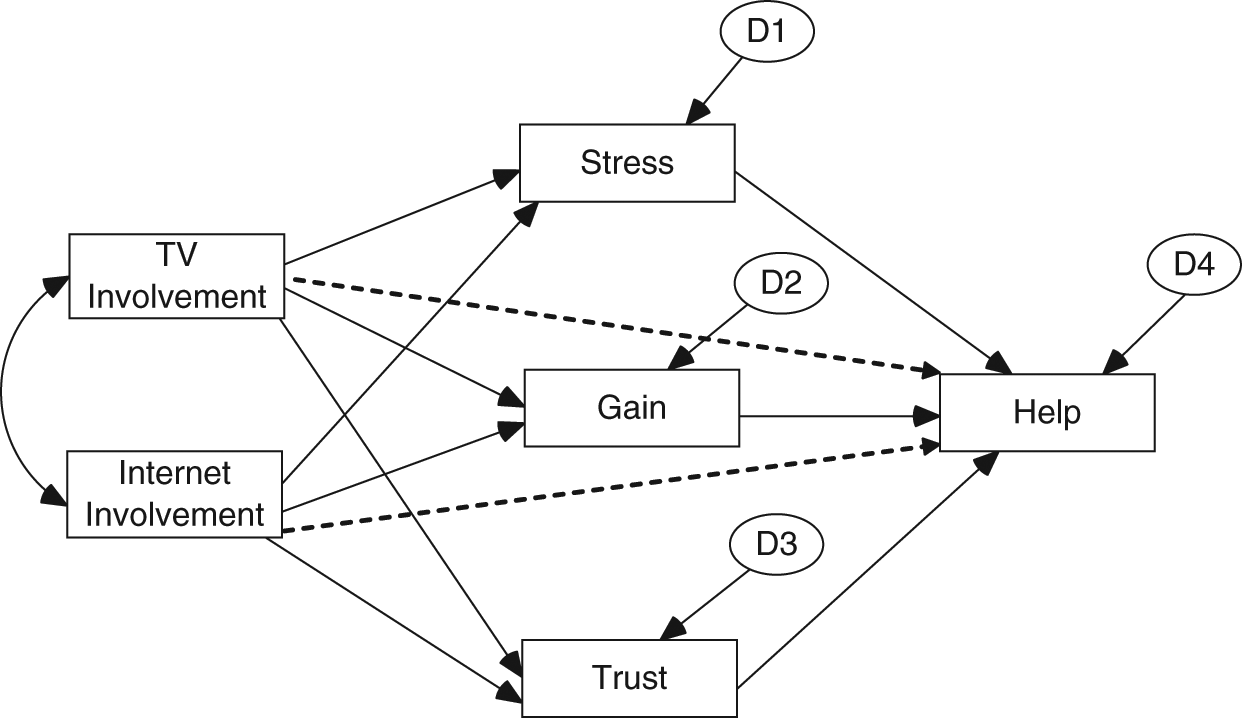
Hypothesized model of media involvement
In general, willingness to help following disasters is an important but understudied concept (Lowe & Fothergill, 2003). This variable can also be approached from multiple perspectives, so it is important to clarify our conceptualization. Some research done in this area examines helping behavior under the umbrella term “social convergence,” which is defined as “the arrival of people to physical geographical sites in the aftermath of disaster” (Hughes, Palen, Sutton, Liu, & Vieweg, 2008). Drawing upon the work of Fritz and Mathewson (1957) and Kendra and Wachtendorf (2003), Hughes et al. described seven different forms of convergence following crises, of which the categories of helping and supporting are the most applicable to our study. Although help and support behaviors in the past were performed mainly by other survivors of disasters or people in close proximity to disaster sites, Hughes et al. noted that media technologies, especially the Internet, are allowing people to help in diverse ways. Thus, consistent with our conceptualization of willingness to help, helping behaviors can be enacted from afar, by individuals who experience the disaster via media coverage.
Several strands of social scientific research coalesce to provide the rationale for our proposed mediation model. Our general argument is that media involvement’s effects on willingness to help are filtered through individuals’ personal responses (i.e., stress, resource gain, trust), which activate precursory processes to altruistic action. These key processes involve the distress/empathy dual-response (Batson, Fultz, & Schoenrade, 1987), the attachment behavioral system (Mikulincer & Shaver, 2001), and social capital (Coleman, 1990; Putnam, 1995).
First, it stands to reason that if media involvement with disaster coverage heightens stress, then individuals will be driven to reduce it. If it was the case, though, that distress was sole emotion promulgated by disaster media, it would be unlikely that we would observe widespread helping behavior by viewers. Indeed, as Batson and colleagues (Batson, Duncan, Ackerman, Buckley, & Birch, 1981; Batson et al., 1987) have shown, distress responses promote an “egoistic motivation” to avoid the stress-inducing stimuli; this motivation runs counter to altruistic behavior. However, as Batson et al. (1987) noted, when individuals see innocent people as victims, which is often the case in natural disaster media coverage, “it seems likely that distress and empathy will be closely intertwined” (p. 29). And when empathy is activated, increased altruistic behavior toward victims typically follows. Overall, then, when disaster media heightens aversive stress responses, those stress responses are likely mixed with empathic concerns, making helping behaviors likely to occur.
Turning to social-relational resource gain, we believe its mediation of the relationship between media involvement and willingness to help is best explained in light of research linking the attachment behavioral system to altruism (Mikulincer & Shaver, 2001). Mikulincer and Shaver reported on their extensive research program that demonstrates the conditions under which individuals will act compassionately. A primary finding, which has been replicated in experimental and observational studies, is that individuals are inclined to act altruistically when their personal sense of attachment to loved ones is primed. For example, in a study where respondents read vignettes about a victim’s experience of loss, the respondents who experienced the highest levels of empathy and compassion for the victim were those whose own attachment needs were salient (Mikulincer et al., 2001). Mikulincer and Shaver have concluded that “the state of the attachment system affects the operation of the caregiving system” (p. 37). Such a conclusion explains why individuals’ perceptions of their own social-relational resources should mediate the effects of media involvement on helping. That is, media involvement with a disaster can lead viewers to contemplate their own personal relationships, which in addition to making viewers’ own attachment security salient, heightens their inclination to help victims.
Finally, to explain why social trust should serve as a mediator, we draw upon the social capital literature (Coleman, 1990; Putnam, 1995, 1996). Social capital is defined as “features of social life—networks, norms and trust” that facilitate cooperative behaviors (Putnam, 1996, p. 34). As noted earlier, highly involved viewers of disaster media should evidence increased social trust. This sense of trust is likely linked to individuals’ more general sense of social capital, in which case it makes sense that they would be willing to assist disaster victims.
Indeed, cooperative behaviors are at least partly couched in the norm of reciprocity, which is closely related to the concepts of social trust and social capital (Coleman, 1990; Fukuyama, 1995). When viewers observe innocent victims of natural disasters, it reminds them that misfortune can befall people like themselves. By helping victims, individuals not only act out their sense of social capital but also affirm that they could one day get the same help should they need it. Helping disaster victims, however, is not without costs (e.g., time, money). Yet people should be willing to engage in seemingly costly behaviors following crises when they recognize that others’ well-being is not separated from their own. As Uphoff (2000) argues, people’s behaviors are not solely driven by self-interest or altruism. Instead, people “generally . . . combine the two . . . since self-interest and altruism can coexist in people’s minds and motivations” (p. 230). Thus, when media involvement heightens social trust (and social capital, more generally), a primary behavioral manifestation of that boost in trust is altruistic helping behavior. Overall, the mediation model predicts the following:
Hypothesis 4: The relationship between individuals’ media involvement with earthquake coverage and their willingness to help others affected by the earthquake is mediated by their perceived social trust, stress, and gain in social-relational resources.
Method
Sample
Data collection began in mid-July 2008 and ended near the end of August 2008, which was about two months after the Sichuan earthquake occurred. Upon the approval from IRB, one of the researchers started to recruit students to volunteer for this study. A convenience sample was adopted because of the time-sensitive nature of the data and budgetary constraints. A total of 550 college students enrolled in a major university in Eastern China participated in this study, which involved completing a self-administered paper-and-pencil survey. The participants were awarded a small amount of extra course credit.
About 510 questionnaires were completed and returned. Fifteen respondents reported knowing someone who died or was injured in the earthquake. Because the purpose of this study was to examine the influence of media involvement with a natural disaster, whereby effects of the disaster were indirect, the 15 participants who knew victims of the earthquake were excluded from the analyses. Questionnaires encompassing a large amount of missing data were also excluded from analysis. Data plotting also showed some severe outliers on key variables, and listwise deletion was utilized to remove them. Ultimately, 471 questionnaires were subjected to final data analysis. Among the sample, 42.4% of the participants reported that they knew someone from the earthquake-affected area. The average age of the sample was 21.4 years (SD = 3.03) and 28.3% of the participants were men. The median yearly household income was 30,000-40,000 RMB, equivalent to about US$4,500-US$6,000.
Measures
A questionnaire was developed first in English and then translated into Chinese by one of the authors, who is bilingual in English and Chinese, and a native Chinese speaker. Another one of the authors (who is also bilingual in English and Chinese) closely examined the translations for inaccuracies or inconsistencies. After the two authors negotiated the translations, two individuals unaffiliated with the study and of approximately the same age as the eventual participants were asked to review the questionnaire. Based on these evaluations, the authors made final decisions on the translations.
Media involvement
During and after the earthquake, TV and the Internet became the primary channels for information pertaining to the disaster (China Journalism Review, May 24, 2008; Xinhua News Agency, May 29, 2008). The respondents in the current study reported that they spent, on average, about 1 hr and 15 min per day watching earthquake coverage on the TV and about 1 hr per day reading earthquake-related stories online. The time that our respondents spent watching TV and using the Internet for content related to the earthquake was much higher than it was for other media, including radio and print newspaper. Hence, we decided to focus on TV and Internet media involvement.
A modified version of Perse’s (1998) cognitive involvement scale was used to assess TV and the Internet involvement. In the original scale, the statements in the measure referred to “the TV news program.” For the purpose of this study, Perse’s measure was adapted to reflect involvement with “earthquake-related stories” on TV and the Internet in the 4 weeks immediately following the earthquake. Each measure contained 5 items, and responses were on a 5-point Likert-type scale (1 = strongly disagree to 5 = strongly agree). The TV version of the measure contained statements, such as “While I am watching the earthquake-related stories on TV, I think about the messages over and over again,” and “While I am watching the earthquake-related stories on TV, I think about the messages and what should be done.” Two composite variables were created by summing the TV (M = 3.65, SD = .73, α = .84) and Internet (M = 3.59, SD = .73, α = .83) items.
Perceived stress
Cohen and Williamson’s (1988) 10-item index was used to tap the level of stress that the participants experienced after the earthquake. On a 5-point scale (1 = never to 5 = very often), participants indicated, for example, how often they felt “unable to control the important things in their life” and how often they had “been angered because of things that were outside of their control” (see Table 1 for the full measure, as well as the item means and standard deviations). The 10 stress items were summed, with higher scores indicating higher stress (M = 2.91, SD = .47). The measure was found to be adequately reliable (α = .74), and confirmatory factor analysis (CFA) showed the 10 items loaded on one factor satisfactorily: χ2(19) = 64.265, GFI = .957, CFI = .896, IFI = .898, SRMR = .040, RMSEA = .080.
Descriptive Statistics of Perceived Stress Items
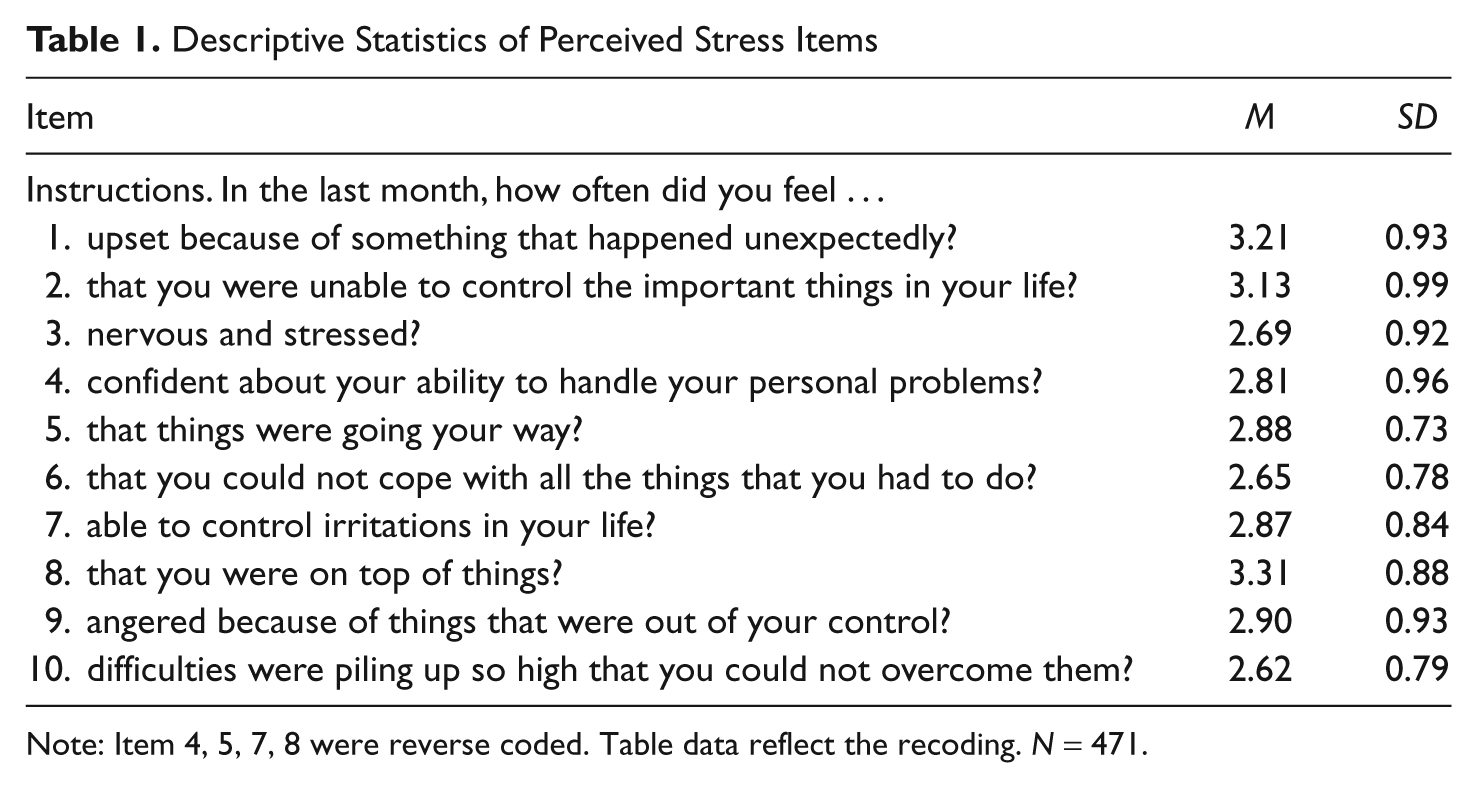
Note: Item 4, 5, 7, 8 were reverse coded. Table data reflect the recoding. N = 471.
Gain of social–relational resources
Ten items (see Table 2) that focus on individuals’ perceptions of their social and personal relationships were selected from Hobfoll’s (1998) list of COR resources and the COR-Evaluation (COR-E) measure (Hofoll & Lilly, 1993). The COR-E can be used to assess both losses and gains, but given our interest in positive media effects, we focused on perceived gains in this study. On a 3-point scale, respondents reported if they perceived gains in the various social-relational resources after the earthquake (0 = no increase, 1 = increase a little bit, and 2 = increase a lot). We adopted this 3-point scale from Hobfoll et al. (2006). Responses to the 10 items were averaged to build a composite measure for the gain of social-relational resources (M = .56, SD = .53, α = .87). CFA supported a one-factor solution for the 10 items: χ2(34) = 94.596, GFI = .949, CFI = .962, IFI = .963, SRMR = .025, RMSEA = .069.
Descriptive Statistics of Social-Relational Resource Gain Items
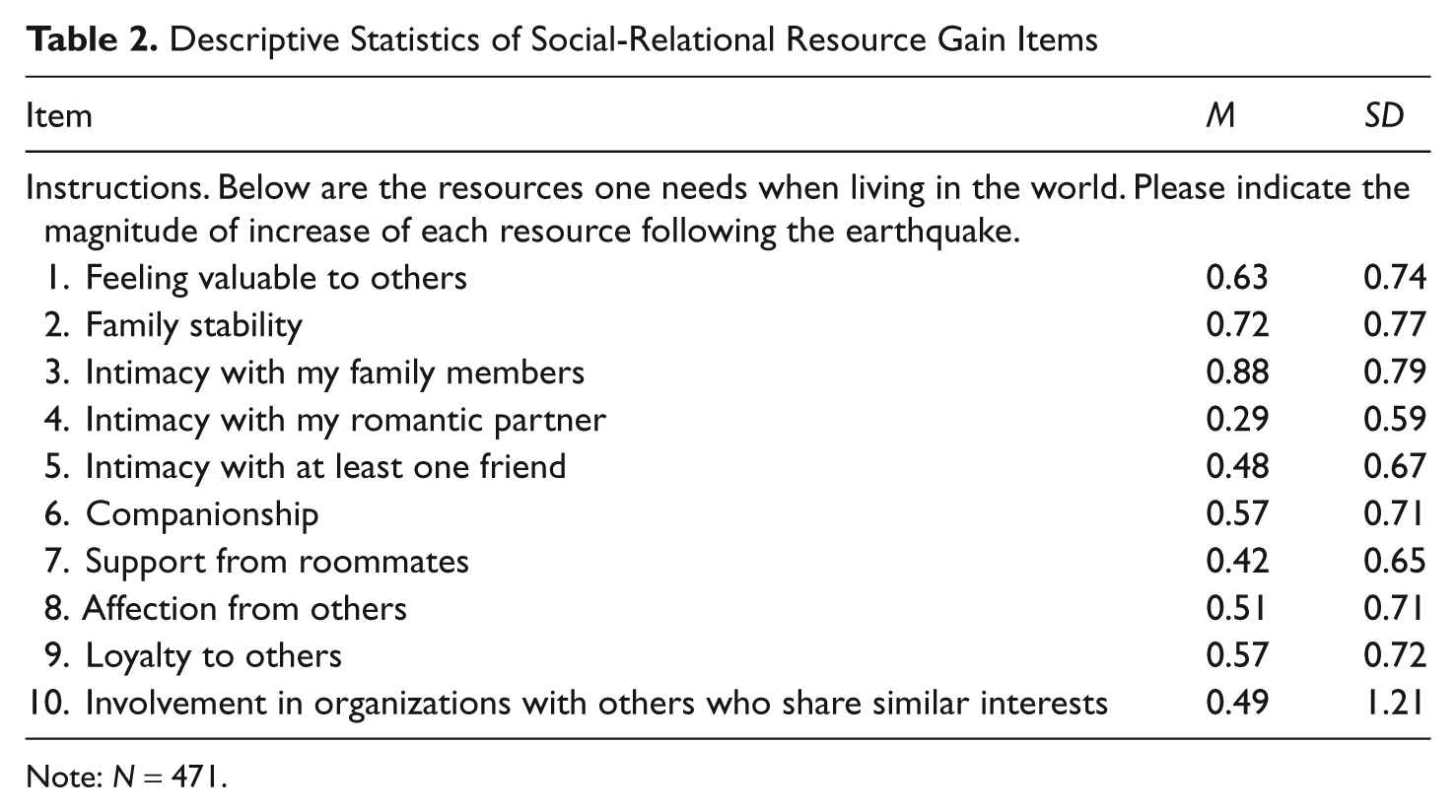
Note: N = 471.
Social trust
An index of social trust was built based on three questions. On a 7-point Likert-type scale (1 = strongly disagree to 7 = strongly agree), participants were asked to answer how much they agree or disagree with each of the following statements: “Generally speaking, most people can be trusted,” “Most people are honest,” and “Most people try to help each other.” These three questions are commonly used to assess social trust and have been employed in large-scale surveys, including National Election Surveys. The answers were averaged to build a composite index of social trust (M = 5.09, SD = 1.12, α = .81).
Willingness to help others
On a 7-point Likert-type scale (1 = strongly disagree to 7 = strongly agree), respondents were asked to express how much they agree or disagree with each of the following two statements: “I am willing to donate money to help people in areas where the earthquake occurred,” and “I am willing to participate in volunteer work to help people in areas where earthquake occurred.” The answers to two questions were averaged to build an addictive measure of willingness to help (M = 5.76, SD = 1.17; r = .43, p < .001).
Results
Pearson correlations were conducted to examine the first three hypotheses. As Table 3 shows, hypothesis 1 was partially supported: stress was significantly and positively related to TV involvement (r = .22, p < .001), but not Internet involvement. Hypothesis 2 was fully supported: social-relational resource gain was significantly and positively related to TV involvement (r = .30, p < .001) and Internet involvement (r = .29, p < .001). Hypothesis 3 was also fully supported: Trust was significantly and positively related to TV involvement (r = .12, p < .001) and Internet involvement (r = .17, p < .001). In light of Cohen’s (1988) effect size criterion, correlations of .10, .30, and .50 indicate small, medium, and large effects, respectively. Thus, the significant correlations just reported are, for the most part, small.
Correlation Matrix of SEM Variables
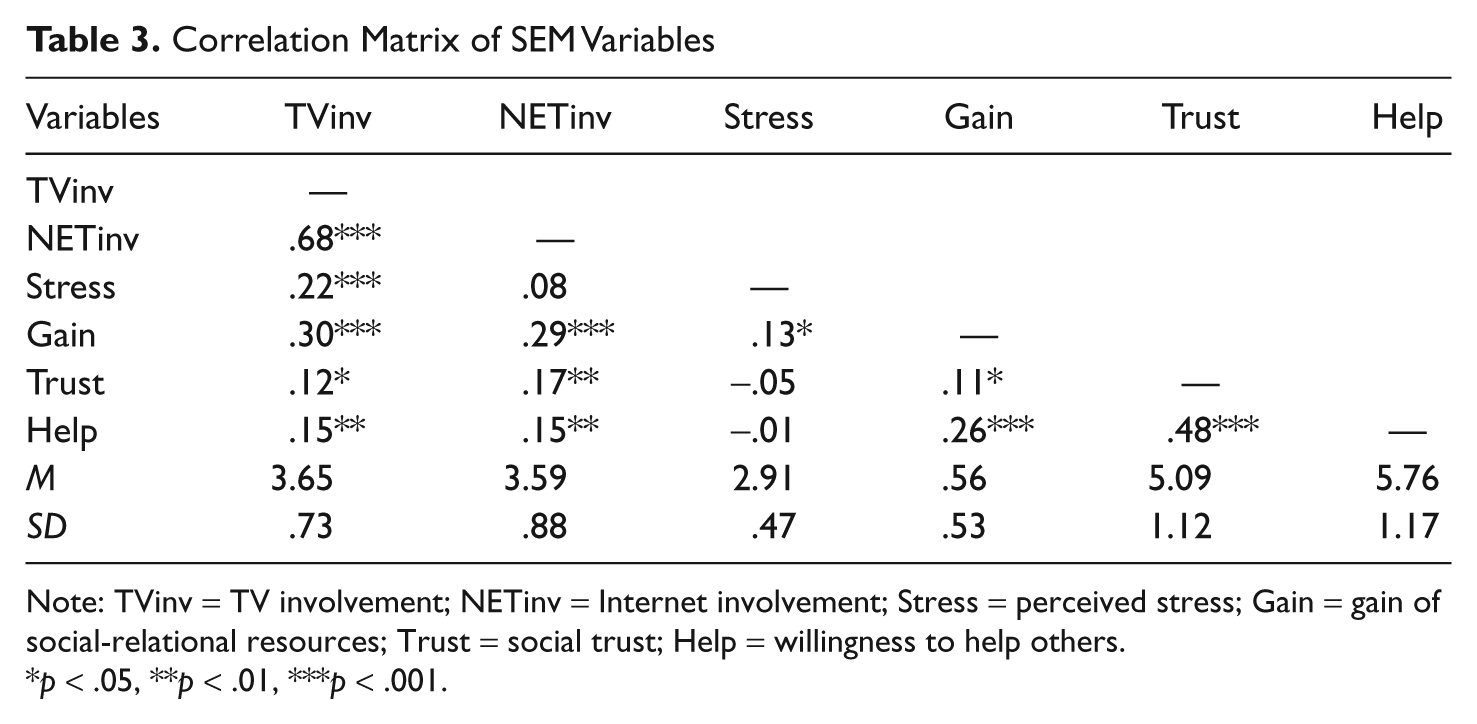
Note: TVinv = TV involvement; NETinv = Internet involvement; Stress = perceived stress; Gain = gain of social-relational resources; Trust = social trust; Help = willingness to help others.
p < .05, **p < .01, ***p < .001.
Structural equation modeling (SEM) was conducted to examine the fourth hypothesis, which posited a mediating relationship between media involvement, stress, resource gain, trust, and willingness to help others. The baseline and hypothesized models illustrate the proposed relationships among variables (see Figure 1). AMOS version 5.0 was used for structural modeling analysis with maximum likelihood estimation. As noted earlier, all of the scales used in the present study are unidimensional. Thus, we decided to parcel items and model composite scores. Item parceling, particularly under conditions of lengthy instruments, is advantageous, as it increases model parsimony and reduces chances of correlated error terms (Little, Cunningham, Shahar, & Widaman, 2002).
Over recent decades, there has been a large body of research and debate on the cutoff criteria of fit indices for assessing model fit (Hu & Bentler, 1999; Kline, 2005; Loehlin, 1998). The following fit indices are often reported in published research: χ2 values, comparative fit index (CFI), the standardized root mean square residual (SRMR), the root mean square error of approximation (RMSEA), the goodness of fit index (GFI), and the incremental index of fit (IFI). Researchers often advise using a combination of fit indices to evaluate model fit. Because χ2 is sensitive to sample size, χ2/df is typically recommended, and the ideal cutoff is 3. Kline (2005) recommended the following cutoff criteria for good model fit: SRMR < .10, CFI > .90, GFI > .90, IFI > .90, RMSEA < .08. Hu and Bentler (1999) suggested that a strict rule with SRMR < .08 and RMSEA < .06 would result in a lower type II error rate of model rejection. In this study, we adopted more rigorous cutoff criteria of model fit, as demonstrated in Table 4.
Structural Model Fit
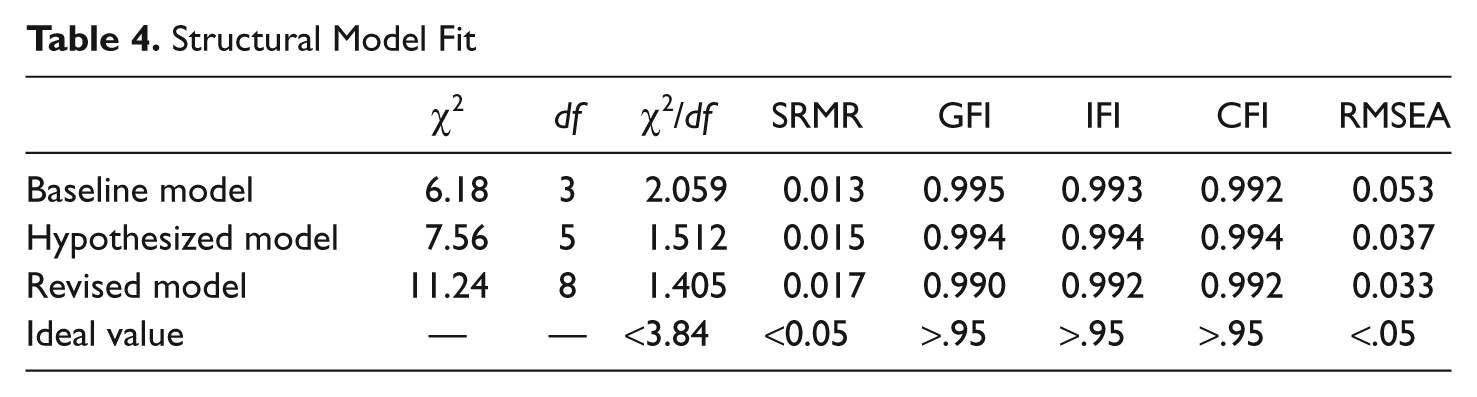
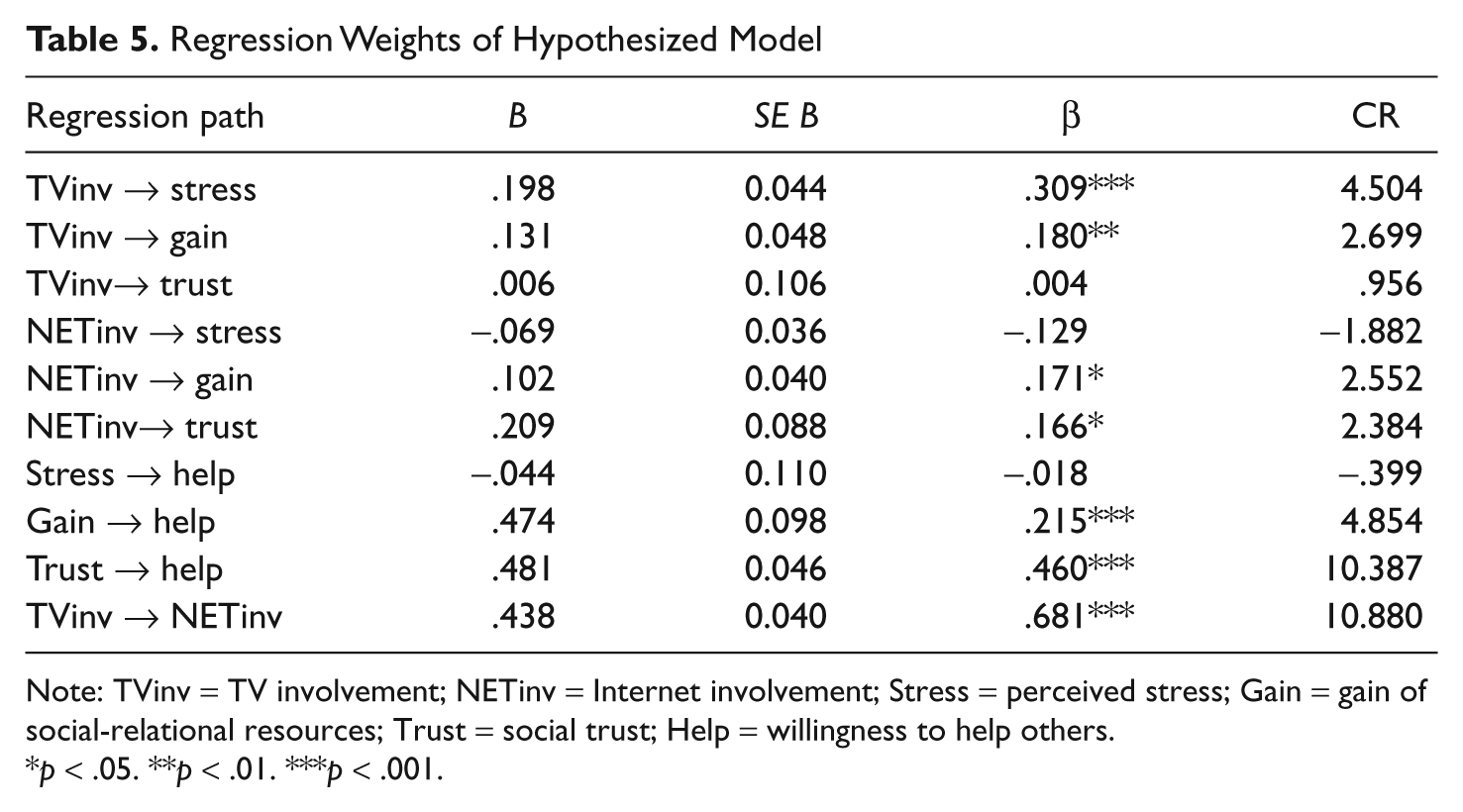
Testing for mediation entails comparing a range of nested models. First, with the direct path from media involvement to willingness to help, the baseline model fit the data well. Nonetheless, neither TV involvement nor Internet involvement had a statistically significant influence on willingness to help. So, with those two direct paths removed, the second step tested the hypothesized model, which fit the data satisfactorily. A χ2 difference test did not show a statistically significant difference between the baseline and hypothesized models. Based on Baron and Kenny’s (1986) conceptualization of mediation, the fourth hypothesis was supported. Table 5 presents parameter estimates of the hypothesized conceptual model. The most prominent regression path was from trust to help (β = .46, p < .001), followed by TV involvement to stress (β = .31, p < .001) and gain to help (β = .22, p < .001).
Regression Weights of Hypothesized Model
Note: TVinv = TV involvement; NETinv = Internet involvement; Stress = perceived stress; Gain = gain of social-relational resources; Trust = social trust; Help = willingness to help others.
p < .05. **p < .01. ***p < .001.
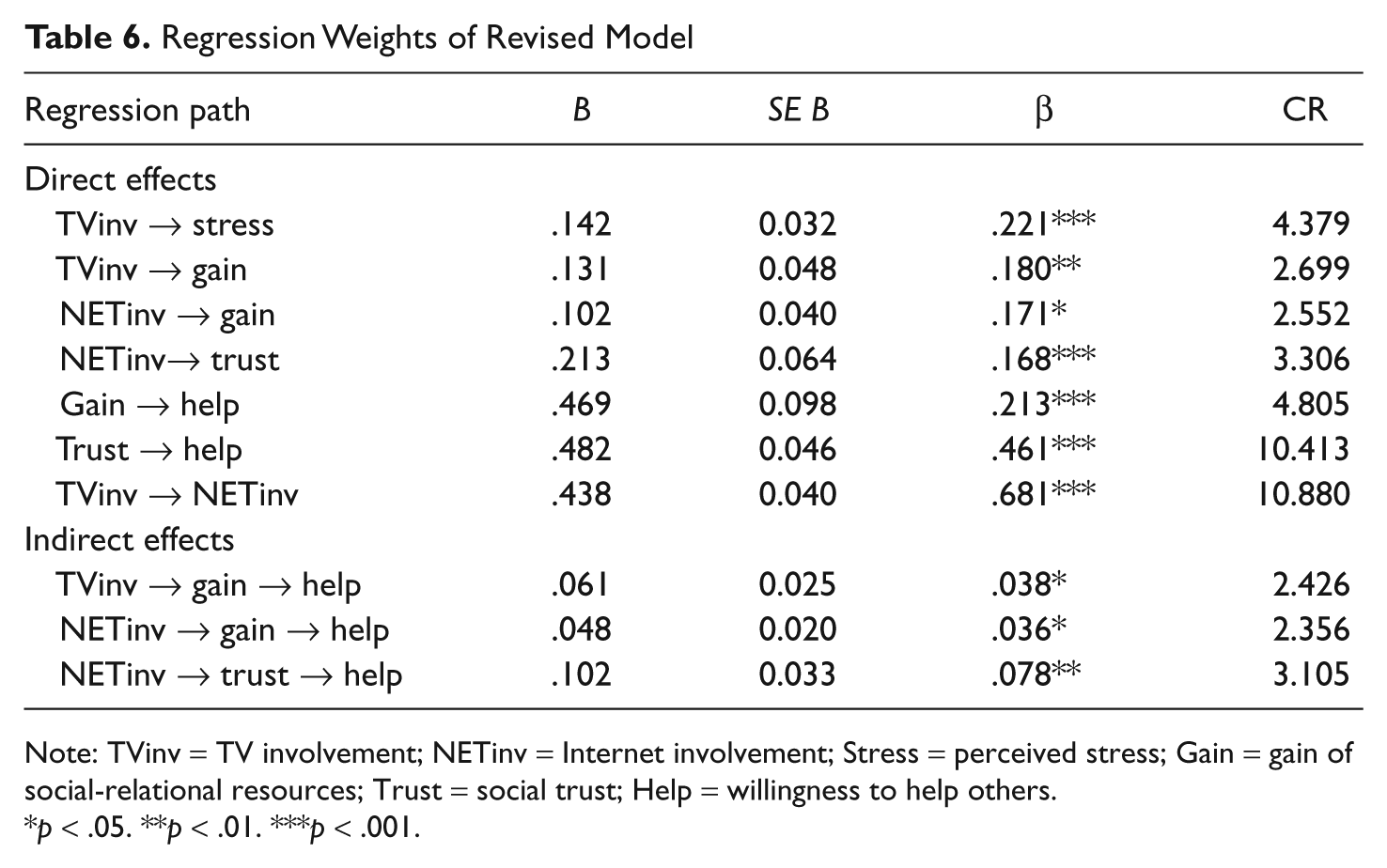
By examining parameter estimates and modification indices, the hypothesized model was revised to increase parsimony (see Figure 2). A chi-square difference test did not show a statistically significant difference between the two nested models (Δχ2 = 3.68, Δdf = 3; p > .05). Hence, the revised model was favored to the hypothesized model. Table 6 presents parameter estimates of the revised model. Among the parameters, TV involvement was strongly associated with Internet involvement. Social trust had a strong positive effect on willingness to help others (β = .46, p < .001). On the whole, the parameter estimates of the revised model did not vary greatly from those of the hypothesized one.
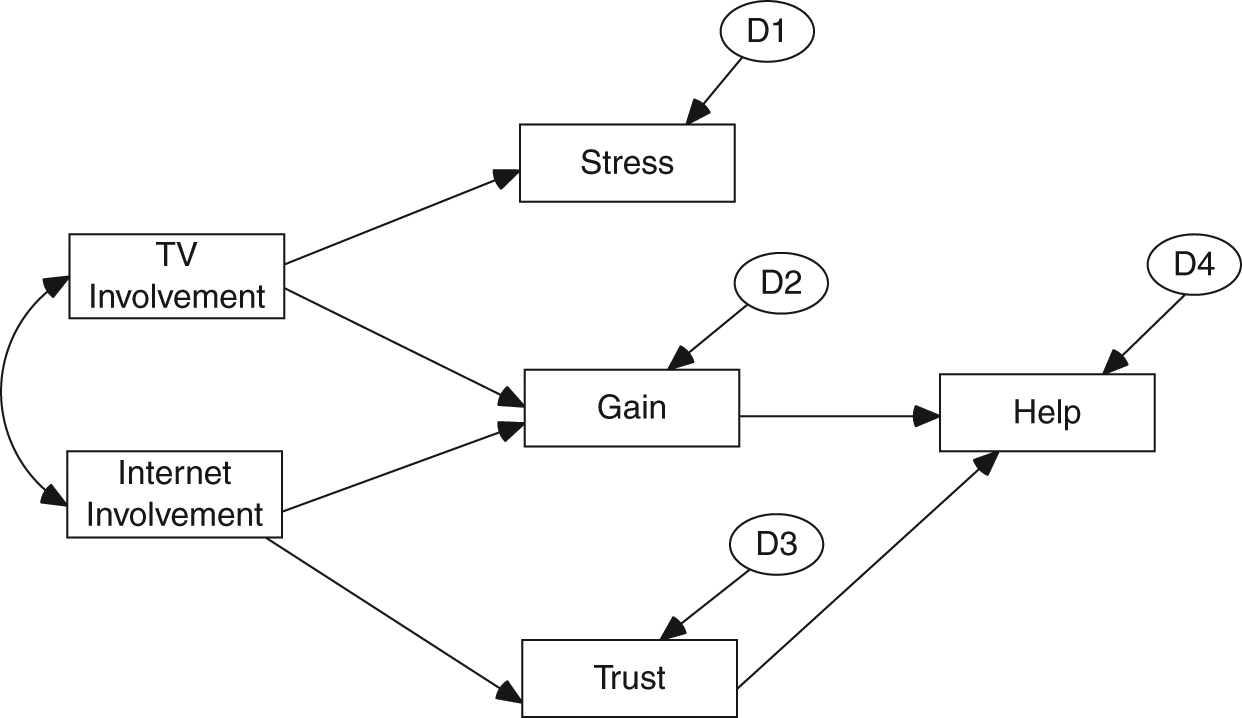
Revised model of media involvement
Regression Weights of Revised Model
Note: TVinv = TV involvement; NETinv = Internet involvement; Stress = perceived stress; Gain = gain of social-relational resources; Trust = social trust; Help = willingness to help others.
p < .05. **p < .01. ***p < .001.
To better understand the mediation process, we conducted mediation effect analysis with M plus 5.0 (Muthen & Muthen, 2007). Magnitudes of indirect effects were assessed and compared to each other with bootstrapping 5000 times (Preacher & Hayes, 2008). Results showed all indirect effects were statistically significant (see Table 6). The strongest indirect effect derives from the path Internet involvement → trust → help (β = .078, p < .01), followed by the path TV involvement → gain → help (β = .038, p < .05), and Internet involvement → gain → help (β = .036, p < .05). Nonetheless, pairwise comparisons did not demonstrate statistically significant differences between the three indirect effects (TV involvement → gain → help vs. Internet involvement → gain → help, Δb = 0.013, SE = 0.036, CR = 0.370, p > .05; TV involvement → gain → help vs. Internet involvement → trust → help, Δb = −0.041, SE = 0.042, CR = −0.974, p > .05; Internet involvement → gain → help vs. Internet involvement → trust → help, Δb = −0.055, SE = 0.038, CR = −1.42, p > .05).
Summary of Results
Taken together, this study’s results provide evidence for positive and negative consequences of media involvement with disaster coverage. In terms of direct positive effects, Internet involvement was positively related to gain of perceived social-relational resources and social trust. TV involvement also positively predicted gain of social-relational resources, but TV involvement was not significantly associated with social trust. In terms of direct negative effects, people who were actively involved in earthquake stories on TV (but not on the Internet) perceived greater stress than those who were less involved. Regarding the proposed mediation model, media involvement demonstrated indirect links with the willingness to help others through gain of social-relational resources (significant for TV and Internet involvement) and social trust (significant for Internet involvement only).
Discussion
Given the intense media coverage of large-scale natural disasters, it is worthwhile to question the effects such coverage has on individuals. Focusing on individuals’ media involvement with TV and Internet coverage of the Sichuan earthquake of 2008, the present study found evidence for both negative and positive effects. Although active processing of the earthquake stories on TV was directly related to perceived stress, TV and Internet involvement were also directly related to individuals’ perceived social-relational resource gain and social trust. TV and Internet involvement, furthermore, were indirectly related to individuals’ willingness to help earthquake victims. Mediation tests indicated that social-relational resource gain and social trust were significant mediating variables in the link between Internet involvement and willingness to help. Social-relational-resource gain was the sole significant mediator between TV involvement and willingness to help.
Our results not only support the idea that media involvement with disaster coverage can have both negative and positive consequences but also raise the possibility that media coverage plays a role in the development of diffuse altruistic communities composed of actively engaged audience members. When individuals actively process media coverage of disasters, their inclination to help victims appears to be filtered through their personal responses to the events. This filtering process includes individuals’ consideration of personal relationship resources (e.g., intimacy, affection, companionship) and their more global degree of trust in others. In efforts to explain this mediation model, we invoke literature pertaining to the attachment behavioral system and social capital. Consider that natural disaster coverage often reports on calamity befalling innocent victims. As individuals consume such reports, their inclination to assist victims (e.g., in the form donations) could hinge partially on the degree to which their media involvement enhances the salience of their own mortality (Mikulincer et al., 2003), attachments to loved ones (Mikulincer & Shaver, 2001), and/or sense of, trust of, and responsibility to, members of their community (Putnam, 1995). This proposed mediated pathway offers an alternative to the perspective that media directly influence individuals’ altruistic behavior following disasters primarily through direct solicitation.
Not all of our proposed mediated paths were significant, however. Unlike social-relational resource gain and social trust, stress was not a significant mediating variable. Initially, we hypothesized that stress would function as a mediator because, in the context of disaster media viewership, stress can co-occur with empathy. Helping others would then serve as a means by which individuals address these emotional responses (Batson et al., 1987). That stress was not a significant mediating variable might indicate that stress and empathy did not co-occur, in which case the nonsignificant result would make sense. Indeed, based on Batson et al.’s line of research, when personal distress is the primary response (and empathy is absent), self-interested behavior directed at avoiding the aversive stimuli is more likely than altruistic helping behavior. Future studies examining the proposed mediation model should include empathy to test our speculation and better understand the effects of media involvement on emotional responses and helping behavior.
This study’s results concerning stress also highlight the differing media effects found for TV and Internet involvement. Although both TV and Internet involvement positively predicted gain of social-relational resources, only TV involvement positively influenced stress. Moreover, only Internet involvement predicted social trust. The heightened selectivity afforded to users of the Internet, relative to TV, might explain these different effects for TV and Internet involvement. Internet users can be said to have more control when choosing the media content they consume. When using the Internet, individuals might choose to avoid stories that could increase their stress level. Concomitantly, the greater interactive features and diversity of content provided by the Internet, ranging from news sites to blogs to message boards, might enhance any positive effects of involvement (i.e., social-relational resource gain and enhanced social trust), as users have greater control over their experiences. In this way, our results support previous findings regarding positive effects of Internet use during crises (Cohen et al., 2002; Kim et al., 2002, 2004).
When interpreting the findings for TV and Internet involvement, the unique media system in China should also be taken into consideration. During the first month after the earthquake, across all TV channels, coverage of the earthquake was pervasive and commonly involved emotionally evocative images and music. The Department of Propaganda, in fact, ordered all media to focus on covering the earthquake and evoking people’s concern for victims. Soon after the earthquake occurred, one of the authors of the current study telephone-interviewed a couple of Chinese TV viewers. One interviewee said the following:
I cannot keep watching that kind of sad programming and listening to the sad music for such a long time. On the TV, only coverage of the earthquake is available to us. We do not have options in terms of what to watch. The bombarding of such information is making me feel low. I need some fresh air too.
Overall, then, the consistent themes and emotional tone characterizing TV coverage, combined with the Internet’s affordance of greater selectivity, interactivity, and diversity of content might help explain why TV, but not Internet, involvement predicted stress, and why Internet, but not TV, involvement predicted trust. These explanations, of course, are highly speculative and must be subjected to empirical analysis to determine their veracity. In particular, future research should probe the specific media attributes that explain why involvement with the Internet produced somewhat different effects than did involvement with the more traditional medium of TV.
In the interest of future research, it is also important to recognize the limitations of this study. Several limitations stem from the nature of the dataset. Perhaps the most significant limitation is our use of a convenience sample of college students. The drawback of our reliance on a convenience sample of this sort is that it greatly constrains our ability to generalize the findings. Considering the digital divide that exists in China, any conclusion regarding Internet involvement also requires extra caution. The cross-sectional nature of the data is a further limitation, particularly because claims of causality are not possible. In addition, although we found some support that media involvement influences the willingness to help, it is unclear whether or not this willingness translates to actual helping behavior.
It is also important to consider how media coverage of disasters shifts over time. Not surprisingly, coverage of disasters wanes over time, and that was certainly the case for the Sichuan earthquake. 1 What declining media attention means for the strength of effects of media involvement on outcome variables is not clear. It might make sense, though, to assume that the effects of media involvement would weaken in a manner that parallels the declining media focus on a crisis. Researchers could cast light on this issue by closely tracking fluctuations of media coverage, while also capturing audience members’ responses to the different rates and forms of coverage.
Different types of disasters and viewers can also be investigated in future research. Media, for instance, might report disasters that happened in foreign countries differently from the domestic disasters. Speaking to this, Worawongs et al. (2007) found differences in the ways in which the U.S. media reported on Hurricane Katrina and the 2004 tsunami in Asia. Understanding how these differences shape viewer perceptions and behaviors is a viable research direction. We also suggest researchers examine how media involvement with disaster coverage is influenced by viewers’ exposure to multiple disasters. In the past year, several devastating natural disasters have transpired, including earthquakes in Haiti and Chile, landslides in China, and major flooding in Pakistan. If, and to what degree, exposure to multiple disasters affects individuals’ media involvement and responses to crises are issues worthy of scrutiny.
Additionally, although TMT and COR theories provided theoretical explanations for why and how mediated experience of a disaster could be associated with trust and gain in relational resources, it is important to note that our study did not directly test the fundamental mechanisms of TMT and COR theories. For instance, we did not specifically test whether or not mortality salience was induced by media involvement with earthquake coverage. We also did not measure other relevant variables, such as the geographical proximity of participants’ hometowns to the earthquake site, which could be linked mortality salience. Consider that individuals whose homes were near the disaster area, relative to those whose homes were distant, may have been more likely to vicariously experience and empathize with the plights of the victims.
It is lamentable that large-scale natural disasters around the globe will, often without warning, continue to take people’s lives and destroy their livelihoods. Media outlets will, therefore, continue to be confronted with the task of covering these events and their devastation (often in “marathon” fashion; Blondeim & Liebes, 2002; Liebes, 1998), just as media audiences will be increasingly able through multiple technologies to experience such tragedies. If we are to take any solace in the sorrow associated with disasters, it might be that disasters can seemingly provide people the opportunity to reconsider and reevaluate their personal values, relationships, and trust of others. Whether or not such reevaluation produces long-term benefits for individuals and communities, of course, remains unclear (e.g., Hobfoll et al., 2006). Nonetheless, this study, though containing some significant limitations, speaks to the ways in which individuals, through their media involvement, can experience negative and positive consequences following the dire events of a natural disaster.