







Abstract
Dyadic data were used to examine associations between attachment, relational satisfaction, and perceptions of conflict style in adult child–parent relationships. Several actor effects emerged; secure attachment was associated with more collaborating and compromising, dismissive attachment was associated with less collaborating and more indirect fighting and avoiding, and preoccupied attachment was associated with more competitive and indirect fighting. There were also partner effects. Individuals were more likely to report using collaborating and compromising if their partner (parent or child) was secure, and more likely to report indirect fighting if their partner was dismissive. Four actor by partner interactions surfaced. Preoccupied individuals reported more collaborating when their partners were secure and less compromising when their partners were dismissive. Dismissive individuals reported less yielding if their partner was preoccupied. Secure individuals reported less competitive fighting if their partner was fearful. The data also demonstrated that for actor effects, the collaborating style mediated a positive association between secure attachment and relational satisfaction. For partner effects, there were direct associations between a parent’s attachment security and a child’s relational satisfaction as well as between one’s partner’s reported use of collaborating and one’s own relational satisfaction. These and other findings are discussed in terms of their implications for work on attachment and conflict.
Managing conflict constructively is a key ingredient in the recipe for satisfying parent–child relationships throughout the life span. Yet researchers have noted that most research on parent–child conflict has focused on toddlers or young adolescents rather than adults (Canary, Cupach, & Messman, 1995) and on how conflict is associated with relational satisfaction for children rather than parents (Shantz & Hartup, 1992; for an exception, see Caughlin & Malis, 2004). To better understand perceptions of conflict patterns in adult parent–child relationships, the present study uses a dyadic analysis that is grounded in principles from attachment theory.
This approach extends research on conflict and attachment in three ways. First, this study examines both actor effects (i.e., how one’s own attachment style is associated with perceptions of one’s own conflict behavior) and partner effects (i.e., how one’s partner’s attachment style is associated with perceptions of one’s own conflict behavior). Although people are theorized to be influenced both by their own and their partner’s attachment style (Bartholomew, 1993; Bradford, Feeney, & Campbell 2002; Le Poire et al., 1997), Trees (2006) lamented that processes of mutual influence within dyadic negotiations of attachment are not well understood. Examining partner effects also allows researchers to avoid common method bias as partner effects represent how one partner’s reports are associated with the other partner’s reports. Second, the present study expands past knowledge on conflict in parent–child relationships by investigating six conflict styles that vary in how (un)cooperative and (in)direct they are. Other studies have been limited to examining three, four, or five styles that do not fully or clearly represent the dimensions of cooperation/competitiveness and directness/indirectness that characterize conflict behavior. Finally, this study adds to attachment theory literature by determining whether perceptions of conflict behavior mediate the association between attachment and relational satisfaction in parent–child relationships.
Attachment Theory
Attachment theory was originally developed to explain children’s behavior when separated from their mothers (Bowlby 1973, 1980). Ainsworth, Blehar, Waters, and Wall (1978) applied the theory to elucidate how children develop secure or insecure attachment relationships with caregivers. They identified three attachment styles—secure, avoidant, and anxious/ambivalent—with each style representing an organized pattern of behavior that develops as a result of interaction with a caregiver (Feeney & Noller, 1996). Secure children usually have available, responsive caregivers, react positively to their caregivers, and are sociable with others. Avoidant children typically have hostile, rejecting, or overstimulating caregivers, and detach from others. Finally, anxious-ambivalent children typically receive inconsistent or intrusive care, leading them to express distress and anger-ambivalence toward their caregivers (Ainsworth et al., 1978, Feeney & Noller, 1996).
Attachment also shapes adult relationships. Hazan and Shaver (1987) found that the three attachment styles identified in children are also present in adult romantic relationships. Later, Bartholomew (1990; Bartholomew & Horowitz, 1991) suggested that there are four adult attachment styles based on combinations of models of self and others (see Figure 1). Positive models of self are related to self-esteem and confidence, whereas negative models of self are related to anxiety. Individuals with positive models of others trust people and have approach orientations toward relationships; those with negative models of others are distrusting and have avoidant orientations.
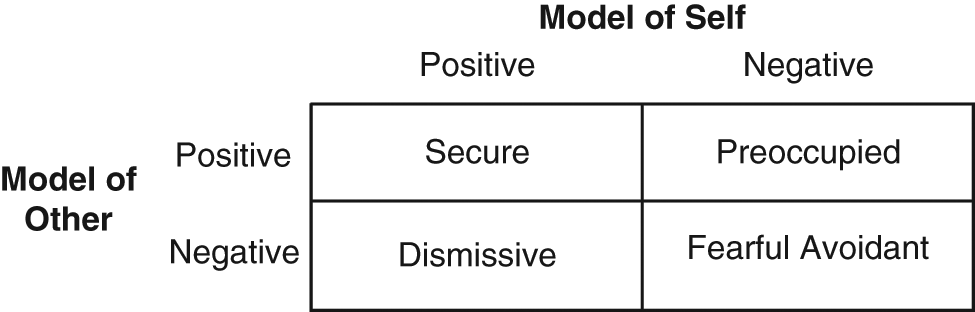
Model of adult attachment styles
Individuals high in secure attachment are comfortable with relationships and being close to others, and they generally have high levels of self-esteem. Those high in dismissive attachment generally feel self-sufficient and avoid being disappointed by others by “maintaining a sense of independence and invulnerability” as well as emotional distance (Bartholomew & Horowitz, 1991, p. 227). Preoccupied attachment is associated with having a low sense of self-worth, striving “for self-acceptance by gaining the acceptance of valued others,” and desiring excessive intimacy (Bartholomew & Horowitz, 1991, p. 227). Finally, fearful attachment is characterized by the perception that avoiding close involvement helps protect oneself from hurt and rejection. Although some scholars use anxiety and avoidance to represent the dimensions that underlie these attachment styles, these two dimensions alone “do not capture the unique features that characterize” each of the styles described above (Guerrero, 2008, p. 304). For example, a mother might be comfortable having a close relationship with her adult son, but she might also worry that getting too close could invade his privacy and push him away. Therefore, it is important to conceptualize attachment styles in terms of levels of security, dismissiveness, preoccupation, and fearfulness, rather than as categories.
Individuals high in attachment security have romantic relationships that are more enduring (Feeney & Noller, 1990; Hazan & Shaver, 1987), intimate (Bartholomew & Horowitz, 1991), and satisfying (Feeney, 1999; Kobak & Hazan, 1991) than do individuals with nonsecure styles. Previous research has also found significant correlations between relationship satisfaction and one’s partner’s attachment style. In fact, Rholes, Simpson, Tran, Martin, and Friedman (2007) noted that one of the most consistent findings in attachment research is that individuals with anxiously attached partners report less relational satisfaction. Similarly, Guerrero, Farinelli, and McEwan (2009) found that people reported the most relational satisfaction in their romantic relationships when their partner reported high levels of attachment security and low levels of dismissiveness and preoccupation. The present study seeks to extend these findings to adult parent–child relationships:
Hypothesis 1: Individuals report more relational satisfaction when they and their family member (parent or child) is high in (a) secure attachment and low in (b) dismissive, (c) fearful, and (d) preoccupied attachment.
Conflict Management
The way individuals report managing conflict is also associated with relational satisfaction (Sillars, Canary, & Tafoya, 2004). Expanding scholarly understanding of conflict behavior in the adult parent–child relationship is important for at least two reasons. First, the quality of family relationships, and in particular, parent–child relationships, can affect a child’s later relationships outside of the family (Koerner & Fitzpatrick, 2006; Sillars et al., 2004). Second, conflict behaviors are largely learned within the family (Blum-Kulka & Snow, 2002; Fitzpatrick & Caughlin, 2002). Families socialize children to gravitate toward particular conflict styles (Koerner & Fitzpatrick, 1997; Noller, 1995), with children eventually progressing from having their behavior regulated by their parents to managing their behavior themselves (Burleson, Delia, & Applegate, 1995).
Conflict Styles and Relational Satisfaction
In their review of family and marital conflict, Sillars et al. (2004) suggested that conflict behaviors vary along two continua: degree of cooperation versus competition and directness versus indirectness. Cooperative conflict behaviors incorporate the goals of both partners and generally exhibit more agreeableness than competitive conflict behaviors, which are used more in concern for the self and one’s own goals. Direct conflict behaviors are active and engaging, whereas indirect conflict behaviors generally involve avoidance of the conflict issue (Sillars et al., 2004).
These two dimensions underlie various conflict typologies that include either four (e.g., Klein & Johnson, 1997; Sillars et al., 2004), or five (e.g., Blake & Mouton, 1964; Rahim, 1983, 1990) styles. Within these different typologies, strategies that are direct and cooperative are conceptualized similarly and given labels such as integrative communication, collaborating, and problem solving. Similarly, there is little difference between strategies identified as direct and uncooperative (e.g., distributive communication, competing, dominating, or direct fighting) or those labeled indirect and cooperative (e.g., obliging, accommodating, or yielding) across the various typologies. There are differences, however, in the way scholars have defined other indirect conflict styles. Some researchers consider “avoiding” to be an uncooperative and indirect strategy (e.g., Blake & Mouton, 1964; Rahim, 1983, 1990), whereas others consider avoiding to be a neutral strategy that can have positive or negative consequences for relationships (Roloff & Ifert, 2000). Scholars have used terms such as avoidance (Sillars, 1980), inaction (Klein & Johnson, 1997), and nonconfrontation (Putman & Wilson, 1982) to describe indirect conflict strategies that range from neutral to uncooperative, and Sillars et al. (2004) used the term indirect fighting to describe conflict behaviors that were indirect yet destructive. These subtle inconsistencies in how avoiding styles have been conceptualized led Guerrero, Andersen, and Afifi (2007) to identify six conflict management styles: compromising, collaborating, competitive fighting, indirect fighting, avoiding, and yielding (see Figure 2).
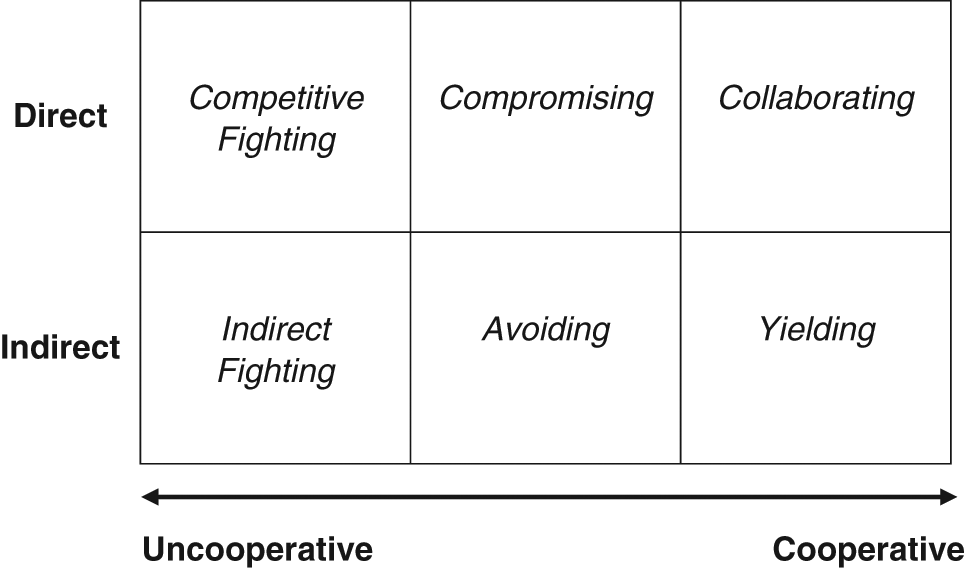
Interpersonal conflict styles (from Guerrero et al., 2007)
Of these six styles, compromising and collaborating have shown the most consistent positive associations with relational satisfaction (Sillars et al., 2004). Compromising involves each person giving something up so that both partners can achieve some of their goals. As compromising is moderately cooperative, it is generally perceived as moderately effective (Gross & Guerrero, 2000). Although neither partner gets everything she or he wants, a compromise can be an efficient and reasonable solution to a conflict (Hocker & Wilmot, 1998), especially when collaborating is not an option. The collaborating conflict style, which has also been called integrating (Rahim, 1983) and problem solving (Klein & Johnson, 1997), includes expressing feelings, making supportive remarks, and engaging in and eliciting disclosure (Sillars et al., 2004). Collaborating differs from compromising because it involves attempts at creative problem solving that allow partners to meet most or all of their goals without having to give something up (Hocker & Wilmot, 1998). The collaborating style is perceived to be especially appropriate and effective (Canary & Spitzberg, 1990; Gross & Guerrero, 2000) and to promote a positive family environment (Koerner & Fitzpatrick, 2006). Indeed, a diary study of conflict between adolescents and parents showed that people reported more relationship satisfaction on days when they had engaged in constructive rather than destructive conflict communication (Van Doom, Branje, Hox, & Meeus, 2009). Importantly, both compromising and collaborating require the cooperation of both parties. Thus, there should be both actor and partner effects for compromising and collaborating on relational satisfaction, such that
Hypothesis 2: Actor and partner reports of (a) collaborating and (b) compromising are positively associated with relational satisfaction in parent–child relationships.
The two most uncooperative styles, competitive and indirect fighting, tend to be inversely associated with relational satisfaction (Gottman & Levenson, 2000; Sillars et al., 2004). Competitive fighting, which is also called direct fighting (Sillars et al., 2004), dominating (Rahim, 1983) or contentious conflict (Klein & Johnson, 1997), includes behaviors like criticism, hostile questions, threats, sarcasm, and name calling. Although competitive fighting may be appropriate when compliance is particularly important (Hocker & Wilmot, 1998), it is usually associated with poor relational outcomes (Canary & Spitzberg, 1990; Gross & Guerrero, 2000). Indeed, mothers report feeling more frustration and less intimacy with adolescent children who engage in high levels of aggressive conflict and low levels of compromise (Cicognani & Zani, 2010). Competitive fighting also tends to lead to negative spirals of behaviors; when one partner engages in competitive fighting, the other partner’s natural tendency is usually to retaliate (Guerrero et al., 2007).
Indirect fighting, which includes passive aggressive behaviors such as rolling one’s eyes, ignoring one’s partner, and giving dirty looks, may be particularly destructive to relationships because of the hostility exhibited by such behaviors (Sillars et al., 2004) and the tendency for such behaviors to trigger spirals of negative conflict behavior (Guerrero & La Valley, 2006). Gottman’s (1994) seminal work on marital conflict suggests that these types of behaviors are particularly damaging because they prompt defensiveness and withdrawal, leaving problems unresolved. Similarly, Caughlin and Malis (2004) found that adolescent–parent relationships that are characterized by the demand–withdrawal pattern (i.e., one partner uses aggressive communication, the other partner uses avoidant communication) are less satisfying (Caughlin & Malis, 2004). Thus, it is reasonable to predict the following hypothesis:
Hypothesis 3: Actor and partner reports of (a) competitive fighting and (b) indirect fighting are negatively associated with relational satisfaction in parent–child relationships.
The associations between relational satisfaction and the other two conflict behaviors—avoiding and yielding—are less clear. Avoiding involves behaviors such as changing the subject, making irrelevant comments, and being evasive (Hocker & Wilmot, 1998). Sometimes avoiding results in a lose–lose situation, in which nothing is accomplished and the partner using the avoiding style is evaluated as ineffective and inappropriate (Canary & Spitzberg, 1990; Gross & Guerrero, 2000). Other times, avoiding is evaluated positively, especially if the problem is not important or cannot be resolved (Roloff & Ifert, 2000). Thus, the avoiding style is not inherently cooperative or uncooperative. In parent–child relationships, avoiding may not always be a viable strategy since family members are intertwined into a social network where certain issues may surface repeatedly. Yet parents and children do avoid certain topics with each other as a way to protect or even enhance relational closeness (Guerrero & Afifi, 1995).
The yielding style is perceived as more uniformly cooperative. This style is often used when people privilege their partner’s needs over their own. Although yielding is generally perceived as ineffective in task-oriented contexts (Gross & Guerrero, 2000), in relational contexts it can be an effective style that promotes harmony, especially when the issue is more important for one partner than the other. This is likely the case for parents who make sacrifices and give in to their children because they put their child’s goals and needs ahead of their own. However, as Hocker and Wilmot (1998) pointed out, people give up power when they yield, which makes it harder to achieve their goals. For young adult children, yielding could be perceived as a strategy that undermines not only their current goals but also their long-term goal of maintaining independence from their parent.
In sum, these two conflict behaviors could function positively or negatively in adult parent–child relationships. On the one hand, using these types of strategies may leave problems unmanaged and perhaps even lead to and reinforce power imbalances in the parent–child relationship. However, family members who avoid talking about certain contentious topics or give in at the appropriate time may promote harmony within the parent–child relationship. Thus, a research question is posed as follows:
Research Question 1: Are actor or partner reports of (a) avoiding and (b) yielding significantly associated with relational satisfaction in parent–child relationships?
Attachment and Perceptions of Conflict Behavior
Across a variety of relationship types, secure attachment is related to direct, cooperative forms of conflict management such as collaboration and compromise (Bippus & Rollin, 2003; Corcoran & Mallinckrodt, 2000; Leveridge, Stoltenberg, & Beesley, 2005; Simpson, Rholes, & Phillips, 1996). Secure individuals are less likely to use avoiding (Creasey, Kershaw, & Boston, 1999) and, in martial relationships, to report fewer arguments and less verbal aggressiveness (Kobak & Hazan, 1991; Wampler, Shi, Nelson, & Kimball, 2003). Similar patterns have been found for parent–child relationships. Ducharme, Doyle, and Markiewicz (2002) found that adolescents who were securely attached to both parents were most likely to engage in negotiation and compromising. O’Connell-Corcoran and Mallinckrodt (2000) noted that dismissive and fearful individuals were least likely to use compromising or collaborating. In sum then, the literature suggests that secure individuals engage in more cooperative conflict behavior.
Having a secure partner should also promote compromise and collaboration. As noted previously, the successful implementation of both of these strategies requires cooperation between partners. Secure partners are likely to facilitate and be receptive to cooperative modes of conflict management, in part because they are self-confident and tend to approach rather than avoid relationship issues. Insecure partners, in contrast, are likely to avoid or be anxious about conflict, leading to less cooperation. Thus, reciprocal patterns of cooperative conflict should be most likely when both parents and children have secure attachments, such that
Hypothesis 4: Perceptions that one uses collaborating and compromising are positively associated with one’s own and one’s partner’s level of (a) secure attachment, and negatively associated with one’s own and one’s partner’s levels of (b) preoccupied, (c) dismissive, and (d) fearful attachment.
Individuals characterized by preoccupied attachment experience hyperactivation of the attachment system during conflict, in part because they fear abandonment and in part because they want approval from others. Ironically, this hyperactivation can prompt preoccupied individuals to engage in overly controlling and sometime desperate strategies to try to preserve their relationships. Indeed, individuals with preoccupied or anxious attachment styles engage in the most whining, nagging, and aggressive behavior (Creasey et al., 1999; O’Connell-Corcoran & Mallinckrodt, 2000; Simpson et al., 1996) as well as relatively high levels of dominating (Corcoran & Mallinckrodt, 2000), hostile (Simpson et al., 1996), and demanding (Feeney, 2006) behavior during conflict. They also express anger in both aggressive and passive aggressive ways (Guerrero et al., 2009).
Having an anxious partner may also prompt these types of uncooperative responses as there is a natural tendency for people to reciprocate negative behavior. People may also be frustrated when dealing with an anxious or avoidant family member. For example, a child may not want to cooperate with a parent who is preoccupied and overbearing, perhaps as a way to assert independence. People may be more patient with fearful family members but eventually get frustrated with their lack of engagement, especially if they are insecure themselves. Similarly, research on demand–withdraw conflict patterns (Christensen & Heavey, 1990) suggests that people sometimes become more demanding when a partner is avoidant, as both fearful and dismissive individuals are. Thus, although it is unclear whether dismissive and fearful individuals should report engaging in uncooperative conflict strategies (given that they may prefer to avoid confrontation), it seems likely that having a partner who is dismissive could prompt frustration and uncooperative responses to conflict. In line with this thinking, the following hypothesis and research question are posed:
Hypothesis 5: Perceptions that one uses competitive and indirect fighting are (a) negatively associated with one’s own and one’s partner’s level of secure attachment, (b) positively associated with one’s own and one’s partner’s levels of preoccupied attachment, and (c) positively associated with one’s partner’s level of dismissive attachment.
Research Question 2: Are perceptions that one uses competitive and indirect fighting associated with (a) one’s own levels of dismissive and/or fearful attachment, and (b) one’s partner’s level of fearful attachment?
Individuals characterized by attachment avoidance (due to their negative models of others and hesitancy to trust others) have been shown to engage in the most indirect and defensive behavior during conflict. For example, individuals with dismissive and fearful attachment withdraw from conflict and are emotionally inexpressive (Creasey et al., 1999; Guerrero et al., 2009; Leveridge et al., 2005). Some research also suggests that preoccupied individuals use avoidance (e.g., Tucker & Anders, 1998), although this finding is less consistent. Findings are even less consistent for yielding (a.k.a. obliging), although Pistole (1989) found that preoccupied individuals may be more likely to yield as a way of pleasing their romantic partner. Whether such an association holds true in parent–child relationships is yet unknown. It is also unclear how one’s partner’s attachment style might be associated with the avoiding or yielding attachment styles. On one hand, having a partner who is dismissive or fearful could produce a reciprocity effect, leading to more avoidance by both partners. On the other hand, the demand–withdraw pattern (Christensen & Heavey, 1990) suggests that some people rebel against avoidance. Thus, having a partner with an avoidant attachment style may lead one to be more proactive or demanding during conflict interactions. To test these possibilities, the following are posed:
Hypothesis 6: Perceptions that one uses avoiding and yielding are positively associated with one’s own levels of dismissive and fearful attachment.
Research Question 3: Are perceptions that one uses avoiding and yielding associated with (a) one’s own levels of secure and/or preoccupied attachment, and (b) one’s partner’s levels of secure, preoccupied, dismissive, or fearful attachment?
Although there is a substantial body of literature linking conflict behavior and attachment styles, little research has examined these connections dyadically to determine how both partners’ attachment styles work together to predict perceptions of conflict behavior. In addition to testing the actor and partner effects hypothesized above, the present study investigates (a) differences based on role (parent vs. child), (b) possible interactions between role and attachment style, and (c) possible interactions between actor and partner attachment styles. Some studies suggest that, compared with parents, adolescent children tend to engage in especially high levels of uncooperative conflict (e.g., Cicognani & Zani, 2010), yet is unclear whether this difference holds once children reach young adulthood. Role may also interact with attachment so that some associations emerge for one family member (parent or child) but not the other, or associations may be positive for one family member but negative for the other. For instance, the inherent power structure in parent–child relationships could translate to different associations between attachment and yielding for parents versus children. Preoccupied parents could yield as a way to keep the relationship close, whereas preoccupied children could use less yielding as a way to assert power and test the boundaries of the relationship. Actor and partner attachment styles may also interact, as the literature on demand–withdraw patterns of conflict suggests. For example, preoccupied individuals may be most likely to be demanding if their family member is dismissive and withdraws from conflict situations. To test these possibilities, the following are advanced:
Research Question 4: Do parents and their young adult children differ in their levels of (a) relational satisfaction, (b) attachment, or (c) conflict style?
Research Question 5: Does role interact with attachment style to predict (a) relational satisfaction or (b) any of the conflict management styles?
Research Question 6: Do actor and partner attachment styles interact to predict (a) relational satisfaction or (b) any of the conflict management styles?
Finally, although the research presented thus far delineates some of the connections between attachment, relational satisfaction, and conflict, the process by which these variables work together has yet to be explicated. Some attachment theorists have proposed that communication is the means by which secure individuals foster satisfying relationships (Feeney, Noller, & Roberts, 2000; Guerrero, 2008). Empirical evidence supporting this proposition is emerging. Feeney (2006), for instance, found that the association between parental attachment and a child’s loneliness was mediated by parental conflict behavior. Other research has shown that conflict behavior (Feeney, 1994), self-disclosure (Keelan, Dion, & Dion, 1998), and emotional communication (Guerrero et al., 2009) mediate the association between attachment and relational quality in romantic relationships. Thus, it seems likely that perceptions of conflict behavior could mediate some of the associations between attachment and relational satisfaction in adult parent–child relationships, as predicted next:
Hypothesis 7: Perceptions of conflict behavior mediate the associations between attachment and relationship satisfaction.
Method
Procedure
Undergraduate students enrolled in communication courses at a large southwestern university were invited to participate in an online survey about parent–child communication. Students received extra credit for their participation and for sending a letter recruiting a parent. Parent participants were entered into a drawing for one of 20 gift certificates. Approximately, half of the students were asked to recruit their father if possible. Initially, 697 questionnaires were submitted. The first page of these questionnaires asked participants to report the last four digits of the parent’s phone number and the last four digits of the adult child’s cell phone number (or home phone number if the child did not have a cell phone). Usable questionnaires were then matched using this eight-digit code, with 253 parent–child dyads (approximately 73%) retained for analysis.
Participants
Adult child participants consisted of 91 sons and 162 daughters (36% and 64%, respectively). Parent participants consisted of 54 fathers and 196 mothers (21% and 77%, respectively; 3 parents did not report sex). Of the 253 dyads, 52% were mother–daughter relationships (n = 131; 125 biological, 5 adoptive, 1 step), 26% were mother–son relationships (n = 67; 63 biological, 3 adoptive, 1 step), 11% were father–daughter relationships (n = 29; 27 biological, 2 step), 9% were father–son relationships (n = 24; all biological), and 1% (n = 2) were unidentified. (Total percentages do not sum to 100 due to rounding.) The students ranged in age from 18 to 54 years (M = 21.65, SD = 3.36). A majority (93.3%) of the students reported being single/never married (n = 236). Parents ranged in age from 38 to 78 years (M = 51.36, SD = 6.07). Most (80.6%) parents were married (n = 204); with 43 divorced and six widowed. Students and parents reported the following ethnicities, respectively: 81.8% and 80.2% White; 12.6% and 10.3% Hispanic; 5.1% and 4.3% Asian/Pacific Islander; 3.6% and 2.4% Black/African American; 0.4% and 0.8% Native American; and 3.6% and 4.3% Other. (Ethnicity percentages sum to more than 100% because participants could check all descriptions that applied.)
Measures
Attachment
Attachment styles were assessed by means of four continuous measures (1 = strongly disagree, 7 = strongly agree) used by Guerrero et al. (2009; see also Feeney, Noller, & Hanrahan, 1994; Guerrero, 1996). These measures assess each participant’s perceptions of her or his own attachment style in terms of the four dimensions identified by Bartholomew (1990). The measurement models for each of these dimensions were tested for goodness of fit using confirmatory factor analyses. Secure attachment was measured using seven items (e.g., “I am confident that other people will like me,” CFI = .97). Dismissive attachment was measured using five items that reflect the extent to which people view relationships as secondary (e.g., “Achieving personal goals is more important to me than maintaining good relationships,” CFI = .95). Preoccupied attachment was measured with six items that capture the extent to which people depend on others and worry about their relationships (e.g., “I worry that others do not care about me as much as I care about them,” CFI = .94). Finally, fearful attachment was measured using five items (e.g., “I avoid becoming too involved with people because relationships can be painful,” CFI = .99).
The multidimensional structure of the attachment items was also assessed via confirmatory factor analysis. First, because of the large number of items, parcels were created to represent three indicators per scale (Bandalos, 2002). Initially, the model included secure attachment. However, as might be expected, secure attachment operated differently than the other variables and the model improved significantly when it was removed. The final model (see Figure 3), which included all three forms of insecure attachment, as well as latent variables representing avoidant and anxious attachment, was a good fit, χ2(24) = 78.96, χ2/df = 3.29, CFI = .961, RSMEA = .058 (range = .036 to .088). For all four attachment style measures, means, standard deviations, and interitem reliabilities are reported in Table 1. Although the reliability for the Dismissiveness scale was lower than desired for parents, the scale was retained because dismissiveness has been shown to have associations with communication in other studies. It is also important to note that although some of the insecure styles were moderately correlated with each other, the styles were also empirically distinct, with fearful attachment related to anxiety and avoidance, preoccupied attached related to anxiety only, and dismissive attachment related to avoidance only, as Bartholomew (1990) theorized.
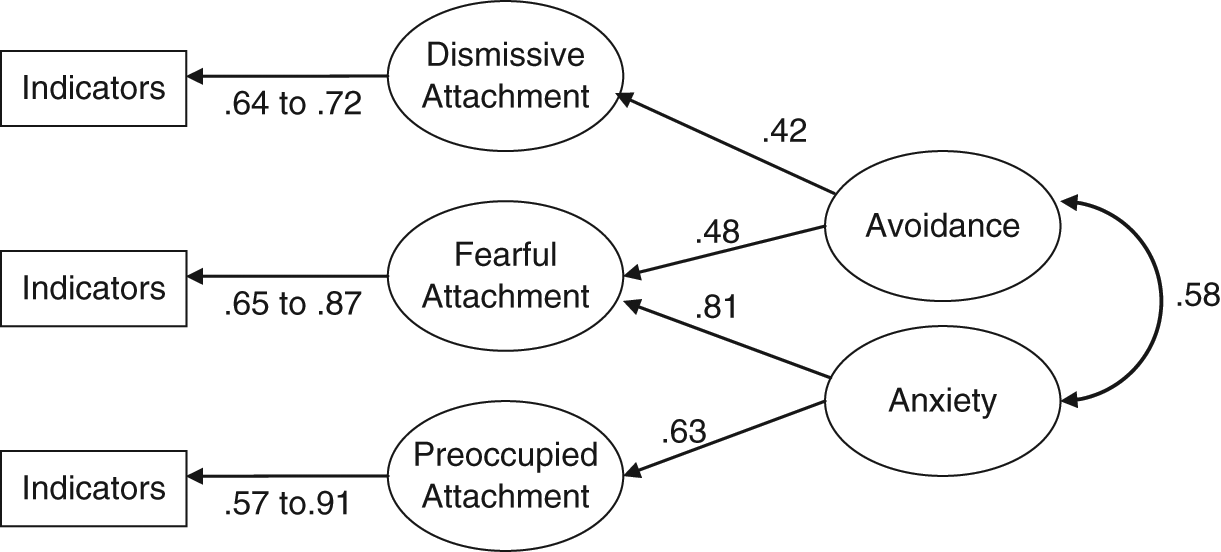
Measurement model for insecure attachment styles
Means, Standard Deviations, Reliabilities, Correlations, and Paired t Tests for All Measures
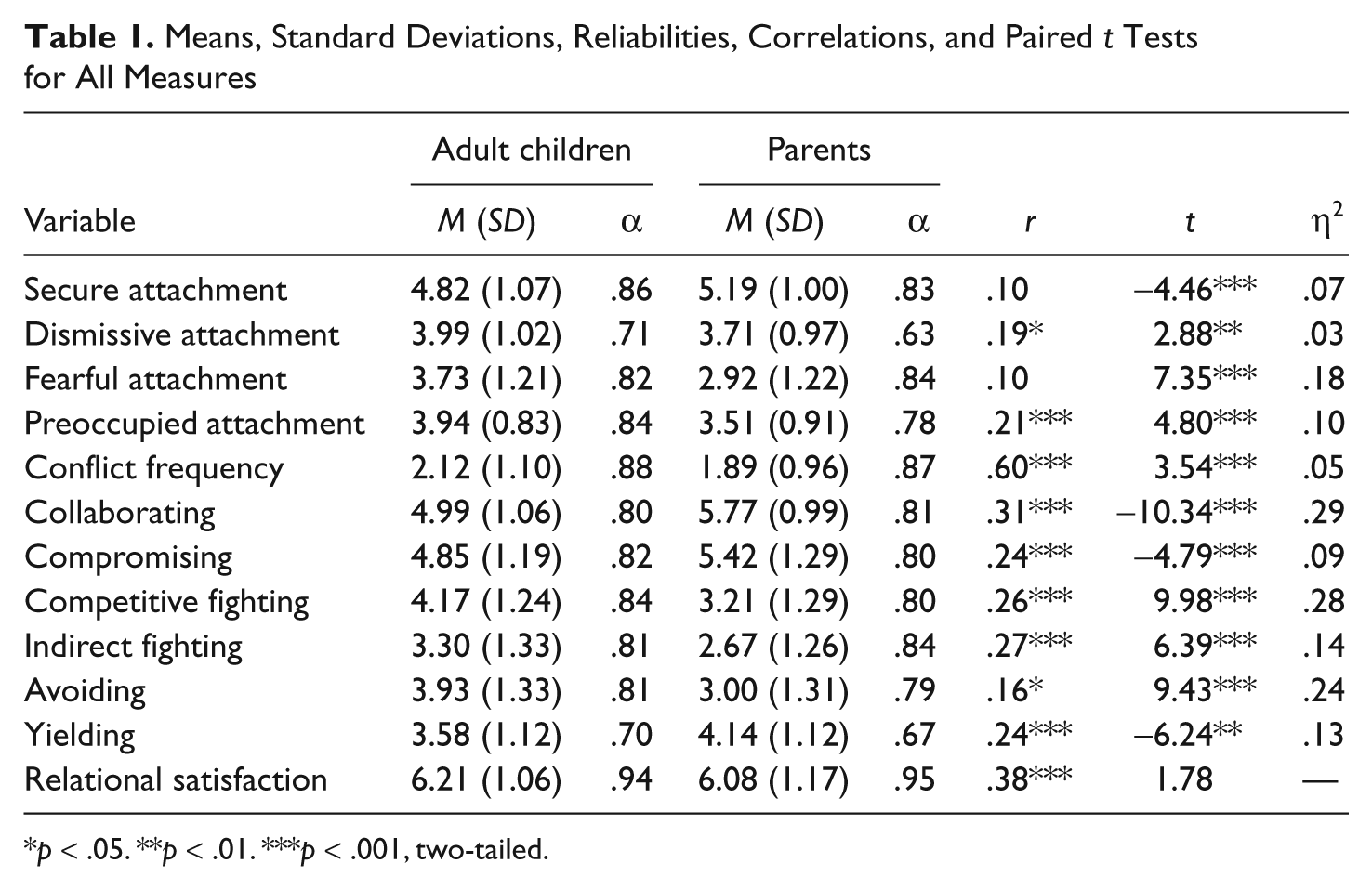
p < .05. **p < .01. ***p < .001, two-tailed.
Conflict frequency
Conflict frequency was measured as a control variable using a subscale of Braiker and Kelley’s (1979) Relationship Questionnaire, which was adapted for the parent–child relationship. The scale consists of five items (e.g., “I argue with my parent” and “I feel angry or resentful toward my parent”) measured on a 7-point Likert-type scale (1 = never to 7 = very often).
Conflict styles
Conflict styles were measured using the six style conflict management typology developed by Guerrero et al. (2007). Items were reworded to focus on how participants handle conflicts over significant issues within the parent–child relationship. Both parents and adult children reported only on perceptions of their own conflict management styles. The measure is a 30-item scale (five items per subscale; 1 = strongly disagree and 7 = strongly agree), reflecting the following six subscales: competitive fighting (e.g., “Sometimes I criticize my parent/child to show that he or she is wrong”); compromising (e.g., “I try to meet my parent/child halfway”); collaborating (e.g., “I attempt to work with my parent/child to find a creative solution we both like”); avoiding (e.g., “I avoid talking with my parent/child about issues of disagreement”); yielding (e.g., “If the issue is important to my parent/child, I usually give in”); and indirect fighting (e.g., “I am likely to give my parent/child partner cold or dirty looks as a way of expressing disagreement”).
As this scale has not been used previously, a principal components analysis with orthogonal (varimax) rotation was conducted to determine how the items grouped into components. Criteria for loading on a component were .50 or greater on the primary loading, with secondary loadings at least .20 less than primary loading. Items that did not meet these criteria were dropped from the analysis, which was then rerun. The final six-component solution accounted for 65.51% of the variance. The first component (eigenvalue = 3.23, variance = 14.06%) included the five items from the Collaborating subscale, with primary loadings ranging from .62 to .84. The second component included the five items from the Competitive Fighting subscale (eigenvalue = 3.12, variance = 13.55%, loadings = .55 to .81). The third and fourth components were each comprised of four items from the Avoiding (eigenvalue = 2.62, variance = 11.39%, loadings = .57 to .82) and Indirect Fighting (eigenvalue = 2.50, variance = 10.84%, loadings = .66 to .75) subscales, respectively. The last two components were composed of two items from the Compromising subscale (eigenvalue = 1.88, variance = 8.17%, loadings = .83 to .84) and three items from the Yielding subscale (eigenvalue = 1.72, variance = 7.49%, loadings = .60 to .75). Means, standard deviations, reliabilities, and paired t tests relevant to these six conflict measures are presented in Table 1. Table 2 shows the correlations between six conflict styles for both parents and adult children.
Correlations Among Conflict Management Behaviors for Parents and (Adult Children)
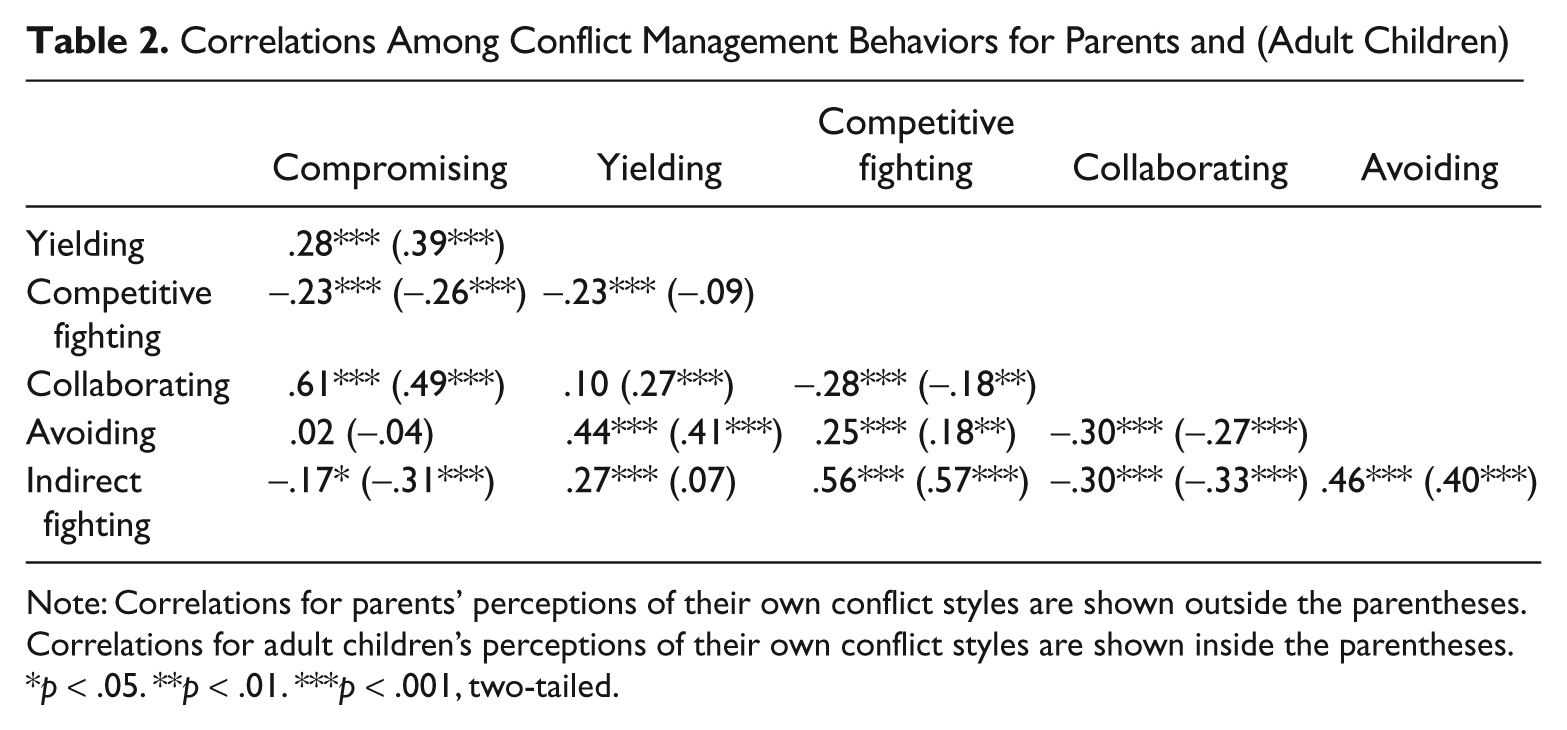
Note: Correlations for parents’ perceptions of their own conflict styles are shown outside the parentheses. Correlations for adult children’s perceptions of their own conflict styles are shown inside the parentheses.
p < .05. **p < .01. ***p < .001, two-tailed.
Relational satisfaction
Satisfaction with the parent–child relationship was originally measured using six items (1 = strongly disagree, 7 = strongly agree) modified from Hendrick’s (1988) Relationship Assessment Scale (e.g., “In general, I’m satisfied with my relationship with my parent” and “My relationship with my parent is good compared to most.” Confirmatory factor analysis revealed that four of these items (including the two examples given) best represented relational satisfaction in parent–child relationships (CFI = 1.0; see Table 1 for means and reliabilities).
Results
For dyadic data in which members are distinguishable from each other, Kenny, Kashy, and Cook (2006) recommended using Pearson correlations, as well as partial correlations that control for the influence of other independent variables, to assess the levels of nonindependence. As shown in Table 1, parents’ and adult children’s scores on most of the attachment and conflict measures were significantly correlated. Scores for secure attachment, partial r = .19, p < .01, also became significant when actor and partner reports of conflict style and frequency of conflict were controlled; and the avoiding conflict style, partial r = .21, p < .01, become significant when actor and partner reports of attachment and frequency of conflict were controlled.
Due to the nonindependence present in the data and because the effects of both an individual’s own attachments and the attachments of his or her partner were of interest, most of the hypotheses and research questions were analyzed using the actor-partner interdependence model (APIM; Kashy & Kenny, 2000; Kenny, 1996). APIMs were estimated with multilevel modeling (MLM) analysis using restricted maximum likelihood estimation in SPSS. Due to the nature of MLM, multivariate tests are not possible, meaning a separate model must be run for each dependent variable. Each APIM included the following independent variables: family role (parent vs. adult child); actor attachments (for both parents and adult children, the associations their own attachments have with their self-reported behavior); and partner attachments (for both parents and adult children, the associations their partners’ attachments have with their own self-reported behavior). Prior to conducting the main analyses, we screened for 2-way interactions between (a) family role and actors’ attachments (to look for significant differences in association patterns for parents and adult children) and (b) actor and partner attachments. Interactions that were significant in these initial analyses were entered into the appropriate models and then, if still significant, interpreted by comparing the simple slopes for either parents versus children (for the role by attachment interactions) or a high versus low attachment group (for the actor by partner attachment interactions). APIMs for conflict management also included measures of actors’ and partners’ reports of conflict frequency as control variables. For all family role effects or family role interaction effects, adult children served as the reference group. Based on Kenny et al.’s (2006) recommendation, all predictor variables were centered for MLM analyses. As a large number of variables were included in these models, only statistically significant effects are reported to facilitate interpretation of the data.
Role Differences in Attachment
In addition to testing for the effect of role (parent vs. child) in the APIMs described next, paired t tests were conducted to see if parents and children differ on the four attachment styles, as addressed in Research Question 4a. These tests showed that parents reported relatively higher levels of secure attachment, t = -4.46, p < .001, η2 = .07; whereas adult children reported relatively higher levels of preoccupied, t = 4.80, p < .001, η2 = .10, dismissive, t = 2.88, p < .01, η2 = .03, and fearful, t = 7.35, p < .001, η2 = .18, attachment (see Table 1 for means).
Attachment and Relational Satisfaction
An APIM tested Hypothesis 1, which predicted that actor and partner security would be positively associated with satisfaction, whereas actor and partner insecure attachments would be negatively associated with satisfaction. The analysis revealed a significant actor effect, F(1, 472) = 19.27, β = .22, t = 4.39, p = .001, as well as a significant partner effect, F(1, 479) = 10.91, β = .17, t = 2.31, p < .05, for security. No effects emerged for dismissive, preoccupied, or fearful attachment. Thus, Hypothesis 1 was only partially supported. (The effect for role was also nonsignificant, as were any relevant 2-way interactions.)
Conflict Styles and Relational Satisfaction
An APIM simultaneously tested Hypotheses 2 and 3, and Research Question 1, which focused on how conflict styles are associated with relational satisfaction. This model produced several significant effects. First, conflict frequency was negatively associated with relational satisfaction, F(1, 405) = 76.73, β = -.44, t = -8.73, p < .001. Second, Hypothesis 2, which predicted positive associations between actor/partner reports of collaborating and compromising with satisfaction, was partially supported in that people reported higher levels of relational satisfaction when they perceived themselves to use the collaborating style, F(1, 419) = 24.73, β = .29, t = 4.97, p < .001, and when their partner (parent or child) perceived themselves to use the collaborating style, F(1, 435) = 7.78, β = .14, t = 2.28, p < .05. Third, although the main effects predicted in Hypothesis 3 (i.e., that actor/partner reports of competitive and indirect fighting are negatively associated with satisfaction) did not emerge, two significant interactions were obtained: an actor yielding by partner collaborating interaction, F(1, 405) = 14.37, β = .17, t = 3.88, p < .001; and an actor avoiding by partner competitive fighting interaction, F(1, 441) = 4.38, β = .11, t = 2.29, p < .05. These interactions suggest that (a) people who report using the yielding style score higher in relational satisfaction if their partner reports using the collaborating style and (b) people who report using the avoiding style score lower in relational satisfaction if their partner reports using the competitive fighting style.
Conflict Styles and Attachment
Six multilevel analyses were conducted to test all of the hypotheses and research questions examining associations between attachment and conflict styles, with each conflict behavior serving as a separate dependent variable. Table 3 summarizes the significant effects obtained in these APIMs.
Summary of APIM Analyses Predicting Conflict Styles From Attachment
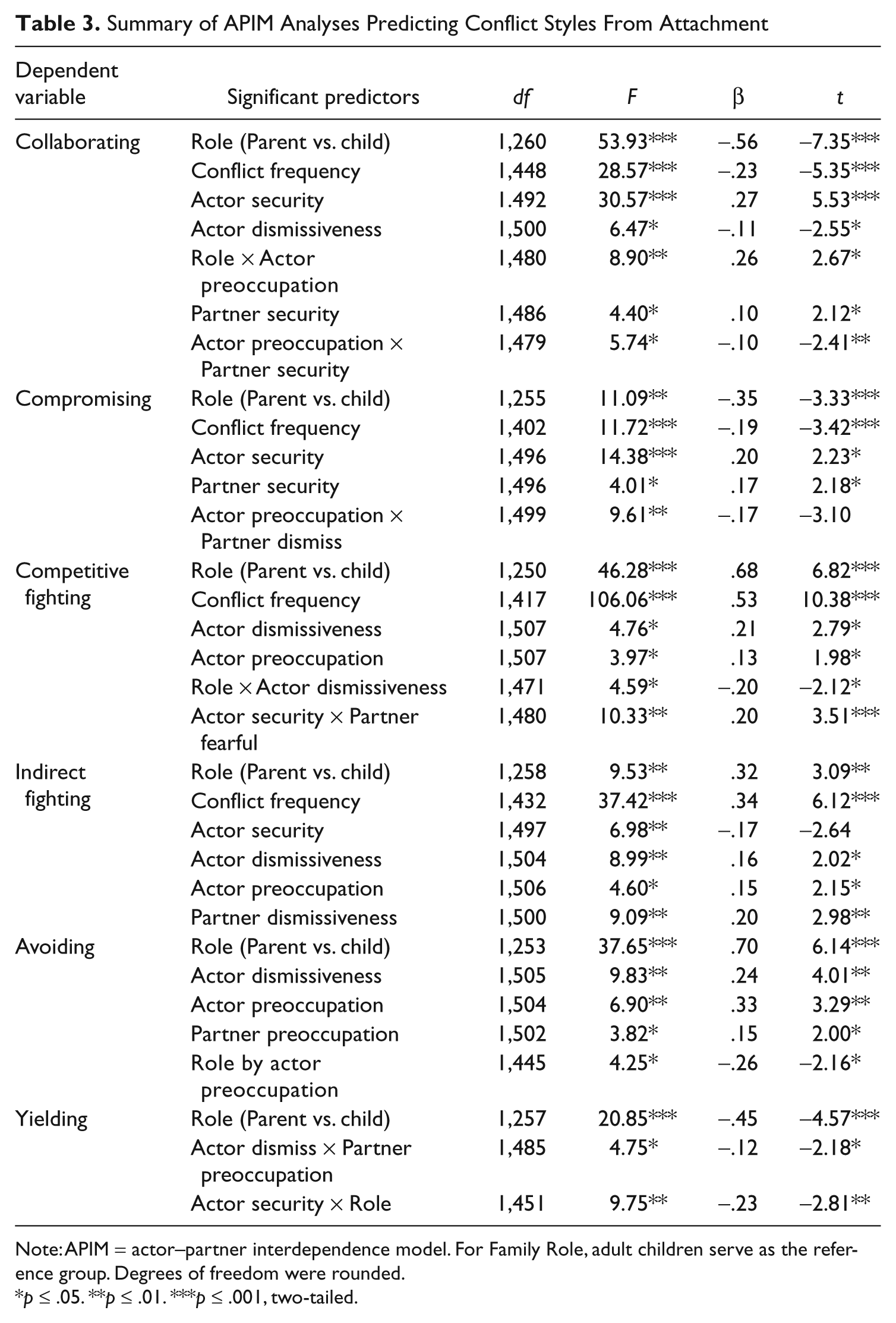
Note: APIM = actor–partner interdependence model. For Family Role, adult children serve as the reference group. Degrees of freedom were rounded.
p ≤ .05. **p ≤ .01. ***p ≤ .001, two-tailed.
Collaborating and compromising
The APIMs for collaborating and compromising were relevant to Hypothesis 4, which predicted that collaborating and compromising are positively associated with actor/partner secure attachment and negatively associated with actor/partner insecure attachment, as well as some of the research questions. For collaborating, two actor effects consistent with Hypothesis 4 emerged; specifically, people reported using more collaborating when they were high in secure attachment and low in dismissive attachment. There was also a partner effect for secure attachment, with people reporting more collaborating when their family member (parent or child) scored high on security. Two significant interactions emerged. First, relevant to Research Question 5b, role interacted with actor preoccupation such that parents who scored high in preoccupation were less likely to report collaborating, whereas adult children who scored high in preoccupation were more likely to report collaborating. Second, relevant to Research Question 6b, there was a significant interaction between actor preoccupation and partner security, such that people who were high in preoccupied attachment reported using more collaborating if their partner (parent or child) was secure. Finally, this APIM also demonstrated that parents report using more collaborating than their adult children (see Table 1 for means) and that individuals report using less collaborating if they perceive there to be a high frequency of conflict in their parent–child relationship.
The same effects for role and conflict frequency emerged in the APIM for compromising, with parents reporting more compromise than adult children (see Table 1 for means) and people reporting less compromising if they also reported frequent conflict. Consistent with Hypothesis 4, both actor and partner security were related to reporting more compromising. There was also a significant interaction between actor preoccupation and partner dismissiveness (relevant to Research Question 6b), with people high in preoccupied attachment reporting less compromising when their partner was dismissive.
Competitive fighting and indirect fighting
Hypothesis 5 and Research Question 2 addressed associations between attachment and the two most uncooperative conflict styles—competitive and indirect fighting. Hypothesis 5 predicted that competitive fighting and indirect fighting are negatively associated with actor/partner secure attachment, positively associated with actor/partner preoccupied attachment and positively associated with partner dismissive attachment. Research Question 2 probed the associations of these two conflict styles with actor dismissive attachment and actor/partner fearful attachment. For competitive fighting, two actor effects emerged, with participants high in dismissive and/or preoccupied attachment more likely to report using competitive fighting, as predicted in Hypothesis 5. However, there was also a family role by dismissiveness interaction for competitive fighting, which suggests that dismissive attachment was only associated with more competitive fighting for parents. There was also a significant interaction between actor security and partner fearfulness, such that individuals high in security reported using less competitive fighting with family members (parents or children) who scored high on fearful attachment. The APIM also demonstrated that adult children report using more competitive fighting than their parents (see Table 1 for means) and that frequency of conflict is associated with higher levels of reported competitive fighting.
For indirect fighting, two actor effects and one partner effect consistent with Hypothesis 5 emerged. Participants high in security reported using less indirect fighting, whereas participants high in preoccupation reported using more indirect fighting. Participants whose partners (parent or child) were high in dismissiveness were also more likely to report using indirect fighting. In response to Research Question 2, one actor effect emerged: participants high in dismissiveness reported using more indirect fighting with family members (parent or child). The APIM also demonstrated that adult children report using more indirect fighting than their parents (see Table 1 for means) and that individuals reported using more indirect fighting when they perceived there to be a higher frequency of conflict in their relationship.
Avoiding and yielding
Hypothesis 6 and Research Question 3 examined the associations between attachment and two of the indirect styles—avoiding and yielding. In particular, Hypothesis 6 predicted that avoiding and yielding are positively associated with actor dismissive and fearful attachments, whereas Research Question 3 probed the associations of the two conflict styles with actor security and preoccupation and all four partner attachments. For avoiding, a significant actor effect for dismissiveness provided partial support for Hypothesis 6, with dismissive individuals reporting relatively high levels of the avoiding style. In response to Research Question 3, an actor effect emerged for preoccupation in that preoccupied attachment was positively associated with avoiding for both parents and children. In addition, one partner effect emerged. Individual’s whose partners (parent or child) were high in preoccupation reported using more avoiding behavior to manage conflict. There was also a main effect for role, with adult children reporting more avoiding than parents. The APIM for yielding revealed three significant effects. First, there were significant differences based on role, with adult children reporting significantly less yielding than their parents (see Table 1 for means). Second, there was a significant actor dismissiveness by partner preoccupation interaction, which suggests that people are less likely to yield if they are high in dismissive attachment and their partner is high in preoccupied attachment. Third, there was a significant interaction between family role and secure attachment; parents, but not adult children, reported using more yielding if they were more secure.
Conflict Behavior as a Mediating Variable
Hypothesis 7 predicted that conflict behaviors would mediate the association between attachment and relational satisfaction. Based on Baron and Kenny’s (1986) criteria, only one conflict variable—collaborating—qualified as a potential mediator because it was significantly associated with both secure attachment and relational satisfaction in the multilevel models reported previously. To provide a parsimonious account of how actor and partner effects function within such a meditation model, structural equation modeling (SEM) was used to test this hypothesis. Multiple indices were used to evaluate fit. Specifically, the χ2, χ2/df, Comparative Fit Index (CFI), and Root Mean Square Error of Approximation (RMSEA) are reported for each model. A nonsignificant chi-square indicates a good fit as does a χ2/df of 3.00 or less (Carmines & McIver, 1981). In general, a CFI above .98 is considered evidence of an excellent fit, between .95 and .98 a very good fit, and between .90 and .94 an acceptable or adequate fit (Hu & Bentler, 1999). RMSEA cut-offs are .06 or less for an excellent fit (Hu & Bentler, 1999) and .07 to .10 for an adequate fit (Browne & Cudek, 1993).
To test for mediation using SEM, Holmbeck (1997) recommended the following procedures. First, the fit between the independent variable (in this case, secure attachment) and the dependent variable (in this case, relational satisfaction) must be adequate. Second, the fit for the model containing the independent, mediating, and dependent variables must be adequate. Third, the paths between the mediating and dependent variables, as well as the independent and mediating variables, must be significant in the predicted directions. Fourth, the impact of the independent variable on the dependent variable must be significantly less after controlling for the mediating variable. Fifth, an unconstrained model that includes both direct and mediated effects should be tested and compared with a model with the direct effects constrained to zero. If the unconstrained model does not differ significantly from the constrained model, there is evidence for significant mediation.
For actor effects, the model testing the direct pathways from attachment security to relational satisfaction for parents and adult children was an excellent fit (see Figure 4), χ2(2) = 2.81, p = .25, χ2/df = 1.40, CFI = .985, RSMEA = .031 (range = <.001-.062). Error terms were allowed to correlate in this and all other models given the dyadic nature of the data. Next, a model that included both direct and mediated paths from security to satisfaction was created (see Figure 5). This model was also a very good fit, χ2(6) = 12.71, p = .06, χ2/df = 2.03, CFI = .972, RSMEA = .044 (range = <.001-.080), with both paths between the mediating variable (collaborating) and the dependent variable (satisfaction) significant at p < .001. Similarly, the paths between the independent variable (attachment security) and the dependent variable were both significant (p < .001). The direct paths between attachment security and relational satisfaction decreased (compared with the model shown in Figure 4) and were no longer significant, thereby satisfying Holmbeck’s fourth condition. Finally, the constrained model, χ2(8) = 13.70, p = .09, χ2/df = 1.72, CFI = .974, RSMEA = .037 (range = <.001-.060), did not differ significantly from the unconstrained model, indicating that actor reports of the collaborating style mediate the association between an actor’s attachment security and relational satisfaction for both parents and adult children.
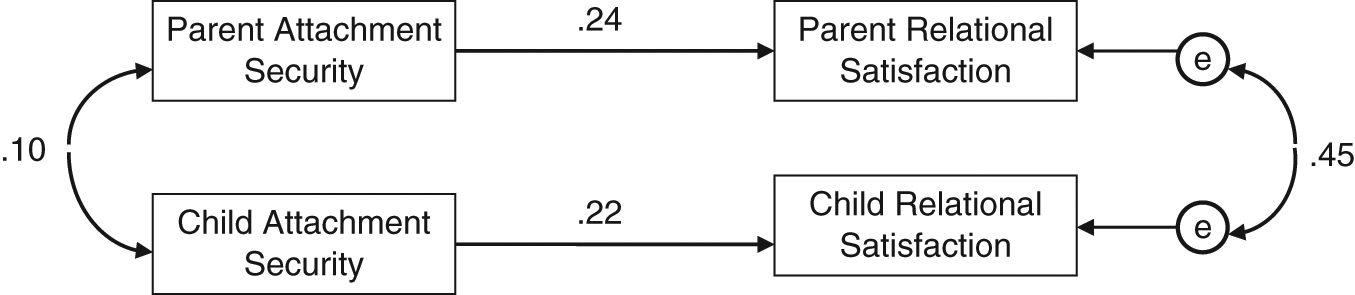
Paths between the independent and dependent variable
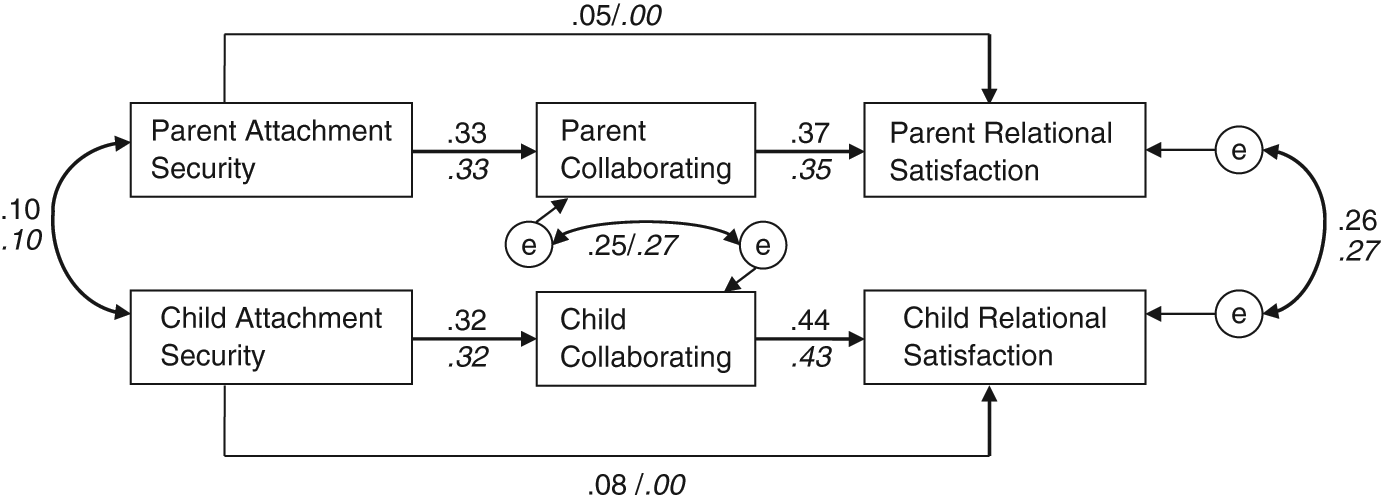
Model for actor effects
For partner effects, all of Holmbeck’s conditions were not satisfied, with the data suggesting that partner reports of collaborating and attachment security only had direct effects on relational satisfaction. To obtain a complete picture of how attachment security and perceptions of the collaborating style work together to predict relational satisfaction for parents and their adult children, a final SEM was tested that included the mediated associations found for actor effects along with the direct associations found for partner effects. Although the initial model fit the data well, the path from child security to parent relational satisfaction was nonsignificant so it was deleted from the model. The final model (see Figure 6) was an excellent fit, χ2(5) = 7.33, p = .20, χ2/df = 1.47, CFI = .99, RSMEA = .030 (range = <.001-.073), with all paths (except the correlation between parent and child security) significant at p < .001.
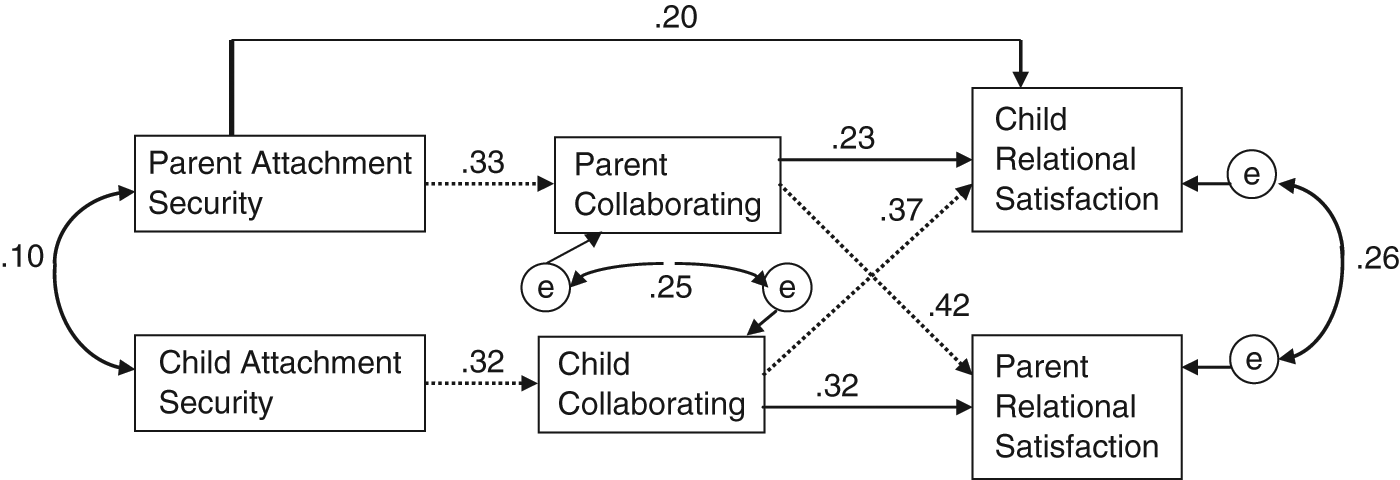
Model with actor and partner effects
Discussion
Previous research has demonstrated significant associations between attachment and conflict behavior (e.g., Bippus & Rollin, 2003; Corcoran & Mallinckrodt, 2000; Pistole, 1989); however, this body of research has focused primarily on romantic relationships, and to some extent, friendships. This study sought to expand this literature by focusing on self-reported attachment-related behaviors in the adult parent–child relationship. In addition, one of the unique features of the present study was the use of dyadic data from parent–adult child relationships. The dyadic nature of this study made it possible to look for associations between partners’ attachment styles and individuals’ perceptions of their own behavior as well as for ways that parents and children differ.
Attachment
Although previous research on attachment theory has examined the effects of one’s own or one’s partner’s attachment style on relational quality indicators and interpersonal behaviors, little research has focused on whether there are systematic within-dyad differences in perceptions of attachment. In the present study, parents and their adult children differed significantly on all four attachment dimensions. Both parents and adult children reported higher levels of security compared with the other three attachment styles; however, parents reported more security than their children. Conversely, adult children reported more dismissive, preoccupied, and fearful attachment than their parents. One explanation for these differences between parents and children is that there is a relationship experience effect, such that parents are likely to have developed higher levels of security because they have more experience with close relationships. Around 80% of the parents who participated in the study reported being married, whereas more than 90% of the adult children reported being single/never married. Parents also have been on both sides of the parent–child relationship, which is one of the closest types of relationships people have. If attachment styles are modified by experiences within significant relationships (Feeney & Noller, 1996), parents may have had more positive relationship experiences compared with adult children, making them more secure and less preoccupied, dismissive, or fearful.
Being secure and having a secure partner were positively associated with relationship satisfaction for both parents and adult children. This finding is consistent with the wider attachment literature (e.g., Bartholomew & Horowitz, 1991; Feeney & Noller, 1990). What was surprising, however, was the lack of significant associations between the insecure attachment styles and relationship satisfaction, especially since Rholes et al. (2007) asserted that one of the most consistent findings in the attachment literature is that individuals are less relationally satisfied when their partners have attachment-related anxiety. This finding may not extend to the parent–child relationship because people are more tolerant of one another’s insecurities in family relationships. Alternatively, the lack of findings could be an artifact of the relatively high levels of satisfaction reported by participants in this study. In addition, participants reported higher levels of security than any of the insecure attachment styles. College students and their parents, who self-selected to participate in this study may be more satisfied with and more secure in their relationships than a more general population. Thus, future research should explore the attachment–satisfaction connection for parents and children across diverse samples.
Perceptions of Conflict Behavior
Some interesting findings emerged for parents’ and adult children’s perceptions of conflict behavior. First, parents’ and children’s reports of compromising, collaborating, competitive fighting, and indirect fighting were positively correlated, which is consistent with the notion that conflict behaviors are often reciprocal (Burggraf & Sillars, 1987; Reese-Weber & Bertle-Haring, 1998). Second, parents reported using more compromising, collaborating, and yielding whereas adult children reported using more, competitive fighting, avoiding, and indirect fighting. These findings could reflect a maturity effect, with parents better able to control negative emotions during conflict and focus on ways to solve problems.
It is also worth noting that parents and adult children were more likely to report using competitive fighting and indirect fighting and less likely to report using collaborating and compromising, when conflict was perceived as frequent. Although Sillars et al. (2004) noted that conflict responses are a more important influence on relational outcomes than the occurrence of conflict, the two issues appears linked in parent–child relationships; frequent conflict is related to perceptions of more destructive and less constructive conflict behavior. The causal nature of the relationships between conflict frequency and the way conflict is managed has yet to be disentangled. It may be that individuals who engage in more negative conflict behaviors, like competitive and indirect fighting, fail to manage their conflict effectively and, therefore, have more conflict. However, it is also possible that high levels of conflict infuse the relationship with negativity, making it more difficult for partners to engage in cooperative forms of conflict management behavior.
Secure Attachment and Perceptions of Conflict Behavior
As expected, actor and partner reports of attachment security were positively correlated with the reported use of compromising and collaborating. This actor effect is consistent with research showing that secure individuals engage in more constructive, problem-solving modes of dealing with conflict (Creasey et al., 1999; Pistole, 1989; Simpson et al., 1996). It also makes sense that parents and adult children report engaging in more collaborating and compromising when their partner is secure. As Bartholomew (1993) suggested, attachment styles are reinforcing; thus, the cooperative conflict skills exhibited by secure individuals may prompt use of similar tactics by their partners.
In addition, secure parents reported using more yielding, and secure parents and children reported using less competitive fighting when their partner scored high on fearful attachment. Secure parents may be more likely to report yielding because they trust their children and therefore feel more comfortable letting them have their way. Yielding may also function as a way for secure parents to validate their adult child’s independence by granting them decision-making power. Secure children, in contrast, may be less likely to yield to their parents because they wish to assert their autonomy. In terms of the interaction between actor security and partner fearfulness, individuals who are secure may be sensitive enough to refrain from competitive fighting with fearful partners (parents or child) as a way to protect their already fragile models of self and others.
Dismissive Attachment and Perceptions of Conflict Behavior
Dismissive attachment produced effects that were generally consistent with the attachment literature. Because of their general desire to avoid closeness and connection, dismissive individuals withdraw from conflict (Creasey et al., 1999; Leveridge et al., 2005) and engage in less cooperative behavior (Corcoran & Mallinckrodt, 2000). In the present study, dismissive parents and adult children did, in fact, report using less compromising, less collaborating, and more indirect fighting. Indirect fighting may provide dismissive individuals with a way to show negative affect (and perhaps irritation at being involved in a conflict) without having to confront issues directly. Importantly, indirect fighting embodies both a lack of cooperation and a lack of directness, which corresponds to the model of others that dismissive individuals have. Dismissive individuals also reported using less yielding when their partner (parent or child) was preoccupied. This finding makes sense when considering how highly dismissive individuals value their independence. They may react to an overly involved preoccupied partner by refusing to give in to her or his demands.
Unique patterns emerged for parents and adult children in regard to dismissive attachment and two of the conflict behaviors—avoiding and competitive fighting. Dismissive children reported more avoiding, a finding which is consistent with their desire to maintain independence from others (Bartholomew & Horowitz, 1991). Avoiding, however, does not necessarily entail a lack of cooperation; it can be used when an individual “agrees to disagree” or wants to prevent conflict escalation. Perhaps children use the more neutral strategy of avoiding as a way to shut down conflict without being disrespectful or uncooperative. In some cases, avoiding may also help adult children assert their independence, especially when the conflict issue is something that adult children believe they can handle on their own. For parents, dismissiveness was positively associated with competitive fighting. Because of their relatively powerful position in the relationship, dismissive parents may have fewer reservations about dominating or criticizing their adult children (Sillars et al., 2004). Dismissive individuals have positive models of themselves and negative models of others, so they may also believe that they know better than their children and therefore be likely to push their views on them.
Preoccupied Attachment and Perceptions of Conflict Behavior
The findings for preoccupied attachment were the most inconsistent with existing attachment research, which, ironically, is consistent with the finding that preoccupied attachment tends to be associated with the most variable patterns of communication across studies. Research has shown preoccupied attachment to be associated with prosocial forms of communication (Guerrero, 1996), antisocial or avoidant forms of communication (e.g., Tucker & Anders, 1998), or a mixed pattern of positive and negative communication (e.g., Guerrero et al., 2009). Preoccupied individuals may engage in inconsistent communication because they experience high levels of relational anxiety while also desiring to be especially close to their partners. This leads preoccupied individuals to engage in approach-oriented behaviors that sometimes cross the line between friendliness and pushiness. In fact, the general consensus is that preoccupied individuals tend to become aggressive and demanding, rather than cooperative, when they are in high anxiety situations (see Corcoran & Mallinckrodt, 2000; Creasey et al., 1999; Feeney et al., 1994; Guerrero, 2008), although one study did suggest that preoccupied individuals engage in more yielding (Pistole, 1989). In the present study, preoccupied parents and adult children reported using more avoiding. Preoccupied parents also reported using less collaborating, whereas preoccupied children reported using more collaborating.
The context of the parent–child relationship may help explain these associations. Parent–child relationships are involuntary relationships that are relatively stable and resistant to dissolution. In such relationships, even individuals with preoccupied attachments might be relatively confident that the relationship will continue to exist. Therefore, avoiding may be seen as an appropriate conflict strategy because it allows the preoccupied partner to evade tension-producing conflict issues.
In terms of the different associations between preoccupied attachment and the collaborating style for parents versus children, a power-based explanation may again be helpful. Although all of the children in this study were adults, most were still relatively young and many were receiving financial assistance from their parents for college, which gives them relatively less power in the relationship (Schoeni & Ross, 2005). For this reason, adult children who are high in preoccupation might curb their initial impulse to engage in demanding or aggressive behavior and instead attempt to use the more cooperative strategies with parents. Importantly, and somewhat paradoxically, collaborating may also afford preoccupied children an opportunity to display some power in the relationship because this strategy allows them to contribute to the problem-solving process. Making such contributions is likely part of the transition process children make in developing more symmetrical or peer-like relationships with their parents (Doherty & Feeney, 2004). Collaborating may also reflect preoccupied children’s approach-orientation toward people and relationships.
The finding that preoccupied parents report using less collaborating may also be related to the power structure within the parent–adult child relationship. A common finding in the attachment literature is that preoccupied individuals want to feel in control of their relationships (Bartholomew, 1993), which helps explain why they sometimes use demanding, aggressive behaviors rather than more cooperative behaviors. Collaborating gives both conflict partners the power to make decisions; parents who are high in preoccupied attachment may worry that relinquishing control and decision-making power to their child could diminish their position in the relationship. Parents who are highly preoccupied may also worry that giving up control could lead their children to become (at least in their view) too independent from them. These parents may want to preserve a relationship where the child relies on them rather than transitioning into a relationship where the parent and adult child learn to rely on each other.
This study produced two other novel findings for preoccupied attachment. Specifically, preoccupied individuals were (a) more likely to report using the collaborating style when their partner reported being secure and (b) less likely to report using the compromising style when their partner reported being dismissive. These interaction effects may help explain some of the inconsistency found in past research in regard to preoccupied attachment and conflict styles. The way preoccupied individuals act in conflict situations may be dependent not only on their own attachment style but also on their partner’s style. Having a secure partner may reinforce the part of the preoccupied style that focuses on maintaining close relationships through cooperation, whereas having a dismissive partner may reinforce the part of the preoccupied style that focuses on trying to hold onto a relationship through less cooperative means.
Conflict Behavior and Relational Satisfaction
As predicted, people reported more relational satisfaction when they and their partner (parent or child) reported using the collaborating style. This finding is consistent with the extant conflict literature (see Gottman & Levenson, 2000; Sillars et al., 2004). Using the yielding style was also associated with relational satisfaction but only when people perceived their partner (parent or child) to use the collaborating style. This is potentially important. Yielding entails giving in and perhaps giving up some of one’s power, but people may be more willing to do this in the context of a satisfying relationship with a partner who uses the collaborating style.
While these findings make sense, it was surprising that competitive and indirect fighting were not significantly and inversely associated with relationship satisfaction. As Laursen (1993) noted, the parent–child relationship may be able to sustain a certain amount of negative conflict and still stay satisfying. The current sample of parents and adult children reported relatively high levels of relationship satisfaction and cooperative conflict, as evidenced by their high means on collaborating and compromising relative to the other conflict styles. Thus, their relationships may be satisfying enough to counterbalance small levels of negativity. However, the present study’s data suggest that one situation may be perceived as particularly negative. Specifically, individuals who reported using the avoiding style reported being less satisfied with their parent–child relationship if their partner reported using competitive fighting. This finding may reflect a demand–withdrawal cycle, with the person in the withdrawing position especially likely to report relatively low levels of relational satisfaction.
The present study also extends past research by clarifying how collaborating and secure attachment work separately and in concert to predict relational satisfaction. For actor reports, the present study showed that collaborating mediates the association between secure attachment and relational satisfaction. In other words, the connection between one’s attachment security and relational satisfaction can be explained, at least in part, by perceptions that one uses the collaborating style. Guerrero (2008) argued that communication can act as a mediator between attachment and relational outcomes such as satisfaction, trust, and stability. This study provides evidence that supports this position and furthers the argument that communication is one means by which secure individuals foster more satisfying relationships (Feeney et al., 2000; Guerrero, 2008), as has previous research has on conflict (Feeney, 1994) and emotional communication (Guerrero et al., 2009).
Interestingly, the associations between attachment, collaborating, and relational satisfaction produced a different pattern for partner effects than actor effects. Rather than being mediated by the collaborating style, a parent’s secure attachment style was directly and positively associated with the child’s level of relational satisfaction. This finding may reflect the ongoing importance of security in parent–child relationships, even for adult children, who are likely to be most satisfied with parents who continually provide them with sufficient levels of care and security. Given that adult children do not typically provide caregiving to their parents until later in life (if ever), security may be a less important ingredient in the recipe for relationship satisfaction for children than for parents.
Limitations
Although this study uncovered several unique findings related to attachment and perceptions of conflict behavior in parent–child relationships, there are several limitations. First, the dismissiveness and yielding measures had low reliability. Although studies of romantic partners have reported good reliability for the dismissiveness measure (see Guerrero et al., 2009), this scale has not fared as well when used in the context of the parent–child relationship (see Farinelli & Guerrero, 2011), suggesting that further modifications are in order. Despite their low reliability, these scales produced several significant findings in the present study, which suggests that they could generate even stronger findings if they are refined in the future.
Generalizability is another issue. Even though half the participants were told to recruit their father if possible, 78% of the students recruited their mothers. Most of the participants also reported high levels of relational satisfaction and low levels of conflict frequency. Thus, the current study’s findings are most generalizable to satisfying relationships between mothers and their young adult children who are attending college. Finally, the data are also constrained by the decision to measure people’s global attachment styles (i.e., how people generally feel about themselves and others) rather than relationship-type (i.e., how people generally feel about friends, romantic partners, or family members) or relationship-specific (i.e., how a person feels about a particular partner) attachment styles. Had this study operationalized attachment in terms of relationship-type or relationship-specific attachment, different findings may have emerged.
Conclusion
This study provides evidence that attachment is associated with perceptions of conflict behavior in adult parent–child relationships. In addition, the mediating effect for the collaborating style on actor reports of attachment security and relational satisfaction provides support for an emerging body of literature that highlights communication as a means by which attachment is connected to relational outcomes. Perhaps most importantly, this study explored these dynamics from a dyadic perspective rather than from the perspective of either the parent or the adult child. Such a perspective allowed several partner effects and novel interactions to surface, which showed that the associations between attachment and conflict sometimes change as a function of the partner’s attachment style or whether the actor is a parent or an adult child. These findings highlight the dyadic nature of parent–child relationships while furthering scholarly understanding of attachment, relational satisfaction, and perceptions of conflict behavior.
Footnotes
This study is part of the first author’s PhD dissertation, which was directed by the second author. An earlier version of this article was presented at the Eastern Communication Association conference in April 2010 at Baltimore, Maryland.
The authors declared no potential conflicts of interest with respect to the authorship and/or publication of this article.
The first author received a research grant through the Graduate and Professional Student Association, funded by the Office of the Vice President of Research and Academic Affairs at Arizona State University, in support of this project.