







Abstract
Although social comparison theory has long dominated communication research, no studies have applied its corollary premise, temporal comparison theory. An experiment examined how listening to nostalgic music influenced college students’ engagement in two types of temporal comparisons: downward (i.e., musings about how their lives have improved over time) and upward (i.e., musings about how their lives have worsened over time). Results indicated that listening to nostalgic music increased both types of comparisons, but the relative prevalence of each type varied by participants’ reported level of homesickness. Among participants low in homesickness, nostalgic music triggered more downward (relative to upward) temporal comparisons, which enhanced their subjective well-being. Conversely, participants high in homesickness reported equivalent levels of both types of comparisons, and they exhibited no changes in well-being. These findings highlight the value of integrating temporal comparison theory into communication research.
The notion that people compare themselves to similar others to assess their own abilities and successes has long suffused the literature in psychology (Festinger, 1954). The parallel notion that people make such comparisons against their own prior abilities and successes in the past has also percolated this research, albeit for less time (Albert, 1977) and with less vigor (Wilson & Ross, 2000). While the former premise—social comparison theory—has stimulated myriad communication studies regarding the positive and negative effects of comparing one’s self to idealistic images in media (Myers & Crowther, 2009), the latter premise—temporal comparison theory—has languished as a framework for understanding media use and effects. Despite such neglect, this theory holds promise for igniting novel research regarding the implications of engaging with familiar media content from one’s past. It is the aim of the current study to galvanize the integration of this theory into the field of communication by using it as a framework for understanding how exposure to nostalgic media influences subjective well-being.
The Tenets of Temporal Comparison Theory
Social comparison theory is guided by the core premise that all humans are innately driven to evaluate the quality of their own abilities and opinions, which motivates comparisons between themselves and other people (Festinger, 1954). Temporal comparison theory is guided by a complementary premise: All humans are innately driven to maintain a sense of an enduring, coherent, and integrated self-identity over time, which motivates comparisons between their present and past selves (Albert, 1977). For every proposition offered by social comparison theory, temporal comparison theory offers a corollary. For example, Festinger (1954) hypothesized that people resort to comparing their abilities and opinions with those of other people when objective nonsocial evidence is otherwise unavailable to make those evaluations. Echoing this claim, Albert (1977) hypothesized that people resort to comparing their present self-description with their past self-descriptions when external evidence (e.g., an old friend commenting on how you have not changed despite the passage of time) is otherwise unavailable to provide an enduring sense of self-identity. Both processes are guided by the same underlying needs (e.g., to regulate subjective well-being), but they differ in the focus of their musings (i.e., interpersonal vs. intrapersonal comparisons).
In a series of studies, Wilson and Ross (2000) examined the relative frequency of either type of comparison and the circumstances under which they occurred. People reported engaging in both social and temporal comparisons at roughly equivalent rates in everyday life. However, they were more likely to engage in social comparisons when seeking to accurately evaluate themselves, and they were more likely to engage in temporal comparisons when seeking to boost their egos. Presumably, this pattern of results reflects the fact that temporal comparisons are inherently less threatening to one’s self-concept than social comparisons. Indeed, there often exists little objective evidence to deny the (potentially illusory) belief that one has grown and changed for the better over time, whereas it is generally a simple task to locate examples of other people who are smarter, wealthier, or happier. As a result, temporal comparisons are typically more flattering than social comparisons and, thus, more useful for restoring positive self-regard (see also Ross & Wilson, 2002; Wilson & Ross, 2001).
A wealth of communication research has examined how depictions of both real people and fictional characters in media can serve as standards for social comparisons in daily life (Osborne, 2016). Most of this research has assessed the adverse effects that occur when people make upward social comparisons (i.e., considering their personal inadequacies relative to the strengths of others) with idealized images of people in media (Bessenoff, 2006; Hendrickse, Arpan, Clayton, & Ridgway, 2017; Myers & Crowther, 2009). However, related work has also found that instructing people to make more downward social comparisons when viewing this material (i.e., considering their personal strengths relative to the inadequacies of others) can enhance well-being (Lew, Mann, Myers, Taylor, & Bower, 2007). For example, Clayton, Ridgway, and Hendrickse (2017) found that women’s body satisfaction increased after they viewed images of plus-sized models, whereas their body satisfaction decreased after they viewed images of average- and thin-sized models.
To date, no studies have applied temporal comparison theory to research questions in communication. However, communication scholars have recently called for research that more explicitly incorporates temporal dimensions (Stanyer & Mihelj, 2016), and media psychologists have taken interest in examining the effects of exposure to media content that generates memories of one’s past (Wulf & Rieger, 2017; Wulf, Rieger, & Schmitt, 2018). Temporal comparison theory seems an opportune candidate to guide empirical inquiry of this nature.
Applying Temporal Comparison Theory to Media Psychology
Media effects research generally coheres around two main issues: concerns regarding content and concerns regarding exposure. Content research typically examines the effects of viewing arguably problematic depictions in media (e.g., those that are violent, stereotypical, unrealistic, etc.), while exposure research typically examines how these effects operate under different circumstances over time (e.g., solitary vs. social viewing, initial vs. repeated exposure, etc.). Often, however, this research seems to miss an arguably important and integral aspect of these experiences: the personal memories that people associate with the shows, songs, video games, and movies they consume. Indeed, a single media stimulus can sometimes function as more than the sum of its content and the circumstances of its consumption. Instead, it might also serve as a memento of one’s past, allowing one to revisit and re-experience moments from his or her own history that might have been long forgotten.
Communication scholars have started to address this gap in the literature by uniting media effects research with psychological research on nostalgia (i.e., feelings of wistful affection for the past; Sedikides et al., 2016). Although these studies have adopted the methods (i.e., exposing participants to familiar media from their past) and measures (i.e., scales assessing the experience of nostalgic thoughts and emotions) used in seminal research on nostalgia (Barrett et al., 2010; Natterer, 2014; Wildschut, Sedikides, Arndt, & Routledge, 2006), integration of relevant theory remains sparse. Instead, this work is loosely united by its overarching focus on the ways in which media exposure triggers memories of the self in the past (Bonus, Peebles, Mares, & Sarmiento, 2018). While this is a valuable advancement in the literature, broader theoretical frameworks are necessary to formulate more nuanced predictions about the nature and effects of engaging with nostalgic media.
Temporal comparison theory offers such a framework. Specifically, it moves beyond sole focus on memory recollection by considering instead how people actively engage with (and make meaning of) their memories after recall. That is, they might perform one of two types of temporal comparison: downward (i.e., thinking about how they have grown or how their life has improved over time) or upward (i.e., thinking about how they have regressed or how their life has deteriorated over time). Although qualitative research on nostalgia has hinted that this type of self-scrutiny occurs when people experience nostalgic reverie, the notion of temporal comparisons has not penetrated this work. Instead, nostalgic thought patterns have been traditionally categorized in one of two ways: those that follow a “redemption sequence” (i.e., thinking about the obstacles and challenges one has surmounted in the past, and how those tribulations contribute to personal growth over time) or those that follow a “contamination sequence” (i.e., thinking about people, places, or things that one has lost over time, and the negative implications of those losses for personal growth; Wildschut et al., 2006). Given conceptual overlap between temporal comparisons and nostalgic thought patterns, unification of these ideas is warranted.
One benefit of this unification is that it more clearly specifies the psychological processes that characterize nostalgic media experiences. By the same token, it also offers a rather parsimonious explanation for patterns of conditional effects that have been documented in research examining the relationship between nostalgic reverie and subjective well-being. Specifically, Bonus et al. (2018) found that engaging with nostalgic media predicted increases in well-being, but only for participants high in social anxiety. Relatedly, Iyer and Jetten (2011) found that nostalgic reverie enhanced well-being among undergraduate students high in identity continuity (i.e., those who felt connected to their pasts), whereas it diminished well-being among students low in identity continuity (i.e., those who felt disconnected from their pasts). Contextualizing these results in the language of temporal comparison theory, it seems likely that exposure to nostalgic media reminds some people how their lives have changed in positive ways over time (i.e., by triggering more downward temporal comparisons), whereas it reminds others how their lives have changed in unsatisfying ways over time (i.e., by triggering more upward temporal comparisons). Although these divergent responses would be expected to have opposing influences on subjective well-being, this possibility remains untested.
The Current Study
The current study examined whether temporal comparisons occur in response to exposure to nostalgic media and whether those comparisons mediate the impact of that exposure on well-being. Specifically, undergraduate students were randomly assigned to listen to popular music from either their early adolescence (i.e., the nostalgic condition) or from the present day (i.e., the non-nostalgic condition). Undergraduates were the focus of this study for two reasons. First, prior research has found that the experience of nostalgia increases in prevalence during adolescence, peaks during emerging adulthood, and slowly declines across the adult lifespan (Batcho, 1995). Second, honing in on one age group enabled for greater precision in selecting media that should trigger the types of nostalgic reverie of interest.
Predicting Temporal Comparisons
Previous research has demonstrated that listening to music from one’s early adolescence can trigger both autobiographical memories and nostalgic emotion (Barrett et al., 2010; Krumhansl & Zupnick, 2013; Schubert, 2016). Relatedly, qualitative research examining the features of nostalgic reverie have shown that these memories can follow either redemption narratives or contamination narratives (Wildschut et al., 2006). Given conceptual overlap between these types of memory narratives and the type of comparisons conceptualized in temporal comparison theory (Ross & Wilson, 2002; Wilson & Ross, 2000, 2001), the following was predicted:
It is an open question how participants’ tendency to engage in both downward and upward temporal comparisons might vary across individuals. As previously mentioned, prior research hints that nostalgic reverie is experienced differently depending on one’s orientation toward the past (i.e., Iyer & Jetten, 2011). A promising individual difference variable relevant to the population of interest in the current study is homesickness, which is defined as a sentimental longing to return to the past during periods of separation from close family and friends (Stroebe, van Vilet, Hewstone, & Willis, 2002). Indeed, removing oneself from a familiar environment (e.g., one’s home town) eliminates many of the available reminders that could otherwise serve to provide an enduring sense of self through time, which might then result in temporal comparisons as a way to compensate. In fact, prior research has shown that homesickness is a relatively common experience among undergraduates who leave home for college (impacting anywhere from 50% to 80% of students), and it is associated with a variety of negative life outcomes, such as grief and depression (Stroebe et al., 2002). It seemed possible that exposure to nostalgic media might serve as an explicit reminder for homesick individuals of the people and places that they yearn to re-experience. Such reminders might, in turn, trigger more negative types of temporal comparisons than they would among less homesick individuals. It was predicted that,
Predicting Subjective Well-Being
Psychologists have often examined the relationship between nostalgic reverie and subjective well-being (e.g., Sedikides et al., 2016), and media psychologists have recently called for more research on the mechanisms through which media use influences well-being (de Leeuw & Buijzen, 2016). Consistent with this work, the current study included a commonly used indicator of subjective well-being: life satisfaction (Pavot & Diener, 1993). Although life satisfaction is sometimes considered a stable trait (Pavot & Diener, 1993), many studies have demonstrated that it is subject to state-like fluctuations in response to one’s current mood (Yardley & Rice, 1991) or in response to exposure to experimental interventions (e.g., Lox, McCauley, & Tucker, 1995).
As previously noted, research grounded in temporal comparison theory suggests that engaging in downward temporal comparisons has positive implications for well-being, while engaging in upward temporal comparisons has negative implications for it (Wilson & Ross, 2000). Although studies have shown significant associations between exposure to nostalgic media and life satisfaction (Bonus et al., 2018), the psychological mechanisms that underlie these relationships remain underspecified, and they have not been assessed experimentally. Building on the previous hypotheses, the following was predicted:
Method
Participants
Power analyses (using G*Power) indicated that a sample size of 80 was required to detect medium effect sizes, within-between interactions in a repeated-measures analysis of variance (ANOVA) with two experimental conditions; α = .05, power = .95. As a result, participants were 94 undergraduates at a large Midwestern university (age M = 20.09, SD = 1.68). Given that the music used in the current study was expected to trigger nostalgic reactions among participants in their early 20s, one 37-year-old participant was excluded from analyses. The remaining participants ranged in age from 18 to 25 (69.90% female). The majority of respondents were Caucasian (79.60%), while the remainder of the sample was composed of participants who were Asian (12.90%), African American (8.60%), or Hispanic/Latino (5.40%). Participants could select more than one racial category.
Design and Materials
Popular music was chosen as the focal media stimulus because a wealth of prior research has used popular music to study the nature of autobiographical memories throughout the lifespan (Janata, Tomic, & Rakowski, 2007; Krumhansl & Zupnick, 2013). In addition, scholars have identified a well-documented “reminiscence bump” (i.e., a spike in recalled memories) that occurs among emerging adults when they listen to music that was released during their early adolescence (i.e., 13-14 years old; Schubert, 2016). Given the idiosyncratic nature of nostalgic experiences, previous studies that have used music to trigger autobiographical memories have exposed participants to a sequence of relatively brief musical excerpts (e.g., thirty 15-second clips, Barrett et al., 2010; see also Krumhansl & Zupnick, 2013). The underlying intent of this strategy is to expose participants to at least one (or more) songs with which they associate meaningful personal memories.
Consistent with this previous research, participants in the current study were assigned to one of two experimental conditions. Those assigned to the nostalgic condition (n = 45) listened to 30-second excerpts of 12 songs from the year 2010, when they would have been approximately 13 years old (assuming an average participant age of 20). Conversely, participants in the non-nostalgic condition (n = 48) listened to 30-second excerpts of 12 songs from the year 2017 (the time of data collection). This focus on popular music released during two different (though relatively close) time periods also ensured relative consistency in other general features of that content (i.e., appeal, genre, length, etc.). The 24 songs used in this study were obtained by selecting the top 12 songs from the Billboard Top 100 charts for each year of music included in this study. Each clip was derived by recording the first 30 seconds of the song’s preview available in the iTunes store. In all cases, this preview contained a portion of the song’s chorus.
Procedure
Participants were invited to answer questions about their media preferences and experiences in college in exchange for extra credit in their communication classes. Alternative assignments were available as a way to obtain extra credit for students who did not wish to participate.
After providing informed consent, participants answered brief questions about their experiences in college (i.e., homesickness). They were then randomly assigned to either the nostalgic or non-nostalgic condition. Each participant rated 12 songs from their assigned year (in random order) on a variety of dimensions. Each song was rated one at a time. After completing this listening task, participants answered a final set of questions that assessed their overall well-being and demographic information. In exchange for participating, participants received a half point of extra credit in their desired communication class. Participation lasted 15 to 20 minutes.
Measures
Participants answered all questions using a 7-point scale (1 = strongly disagree, 7 = strongly agree).
Homesickness
Five items were adapted from the Utrecht Homesickness Scale (Stroebe et al., 2002). The original scale contained 20 items. These items can either be averaged together or separated into five subscales that each assess a different component of homesickness: missing family, loneliness, missing friends, adjustment difficulties, and ruminations about home. In an effort to keep the current questionnaire brief, a subset of these items was selected. Because the current hypotheses regarded the general experience of homesickness (rather than experiences from specific subscales), one item from each subscale was used. Participants were asked to report the extent to which each statement applied to them over the previous 4 weeks. Items included, “I missed my family from back home,” “I felt left out,” “I missed my friends from back home,” “I had some difficulties adjusting to life at college,” and “I thought about how my life was better before starting college.” Responses were averaged across all five items (M = 4.09, SD =1.17, α = .69; range = 1.60-7.00).
Nostalgia
After listening to each 30-second music clip, participants reported how nostalgic the song made them feel (i.e., “This song makes me feel nostalgic”). Their responses were averaged across all 12 songs (M = 3.92, SD =1.68, α = .95; range = 1.08-7.00).
Temporal comparisons
Because no measures of temporal comparison were available from prior research, attempts were made to adapt existing measures of social comparison. However, social comparison studies generally have not differentiated between upward and downward comparisons. Instead, researchers have generally randomized participants to read instructions meant to induce particular types of comparisons (e.g., Lew et al., 2007), measured participants’ tendency to make comparisons without reference to a specific direction (e.g., Clayton et al., 2017; Knobloch-Westerick, 2015; Tiggemann & McGill, 2004), or asked about participants’ general tendency to engage in social comparisons in daily life rather than in response to a particular stimulus (e.g., Kleemans, Daalmans, Carbaat, & Anschutz, 2018).
Given these limitations, two items were generated for the current study that were reflective of the two types of temporal comparisons of interest: downward (i.e., “This song reminds me of how much better my life has become over time”) and upward (i.e., “This song reminds me of how much better my life used to be in the past”). Participants responded to both items after listening to each 30-second music clip, and their responses were averaged across all 12 songs for a measure of downward temporal comparisons (M = 2.98, SD = 1.40, α = .94; range = 1.00-7.00) and upward temporal comparisons (M = 2.70, SD = 1.34, α = .94; range = 1.00-7.00).
Life satisfaction
After completing the entire listening task, participants responded to the five-item Satisfaction With Life Scale (Diener, Emmons, Larsen, & Griffin, 1985). They were asked to respond for each item based on how they felt in that exact moment. Items included, “In most ways my life is close to ideal,” and “I am satisfied with my life” (M = 4.34, SD = 1.26, α = .83; range = 1.00-7.00).
Demographics
Participants’ age was assessed by asking participants how old they were in years. Participants’ gender was assessed by having them select the gender with which they most identified (i.e., male or female). Participants’ race was assessed by having them select the race/ethnicity that best described them (i.e., White, African American, Asian, or Hispanic/Latino/a).
Results
The dataset and syntax used for analyses is available at https://osf.io/324ed/. Bivariate correlations are reported in Table 1. Results indicated that downward and upward temporal correlations were significantly correlated.
Bivariate Correlations Between All Variables.
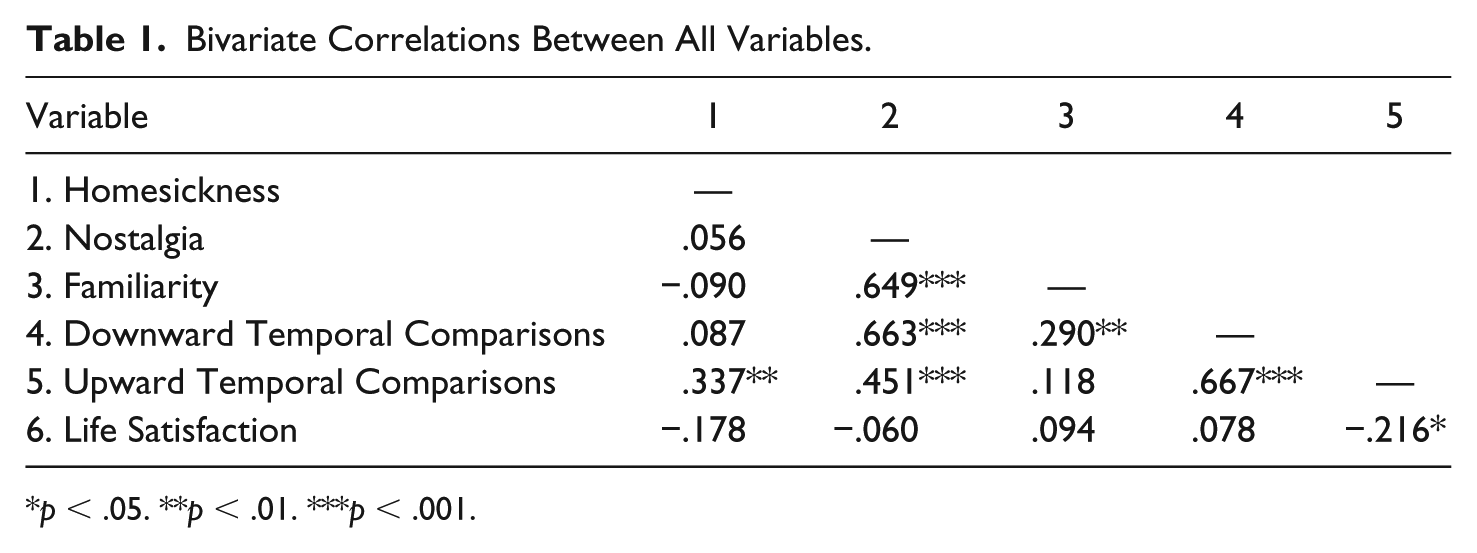
p < .05. **p < .01. ***p < .001.
Induction Check
Consistent with expectations, independent samples t tests indicated that participants in the nostalgic condition reported more nostalgia (M = 5.00, SD = 1.41) than participants in the non-nostalgic condition (M = 2.92, SD = 1.24), t(91) = −7.58, p < .001, d = 1.57. 1
Effects of Condition and Homesickness
H1 stated that listening to nostalgic music would increase participants’ engagement in temporal comparisons, while H2 stated that these effects would be moderated by homesickness. These hypotheses were simultaneously tested using repeated-measures ANOVA. Condition (non-nostalgic vs. nostalgic) and homesickness (dichotomized as low vs. high using a midpoint split) were between-subjects factors, while comparison type (downward vs. upward temporal comparisons) was a within-subjects factor.
Consistent with H1, there was a significant main effect of condition, F(1,89) = 8.27, p < .01, partial-η2 = .09, such that participants in the nostalgic condition reported more temporal comparisons (M = 3.22, SE = .18) than participants in the non-nostalgic condition (M = 2.51, SE = .17). In addition, there was a significant main effect of comparison type, F(1,89) = 4.23, p < .05, partial-η2 = .05, and a significant interaction between comparison type and homesickness, F(1,89) = 5.16, p < .05, partial-η2 = .06. Overall, participants reported more downward temporal comparisons (M = 2.98, SE = .14) than upward temporal comparisons (M = 2.75, SE = .14), but their tendency to do so varied by level of homesickness. Specifically, only participants low in homesickness reported more downward (M = 2.89, SE = .18) than upward (M = 2.41, SE = .18) temporal comparisons, whereas participants high in homesickness reported equivalent levels of both types of comparisons (downward M = 3.07, SE = .21; upward M = 3.09, SE = .21).
With regard to H2, there was also a significant three-way interaction between comparison type, condition, and homesickness, F(1,89) = 3.85, p = .05, partial-η2 = .04 (see Figures 1 and 2).
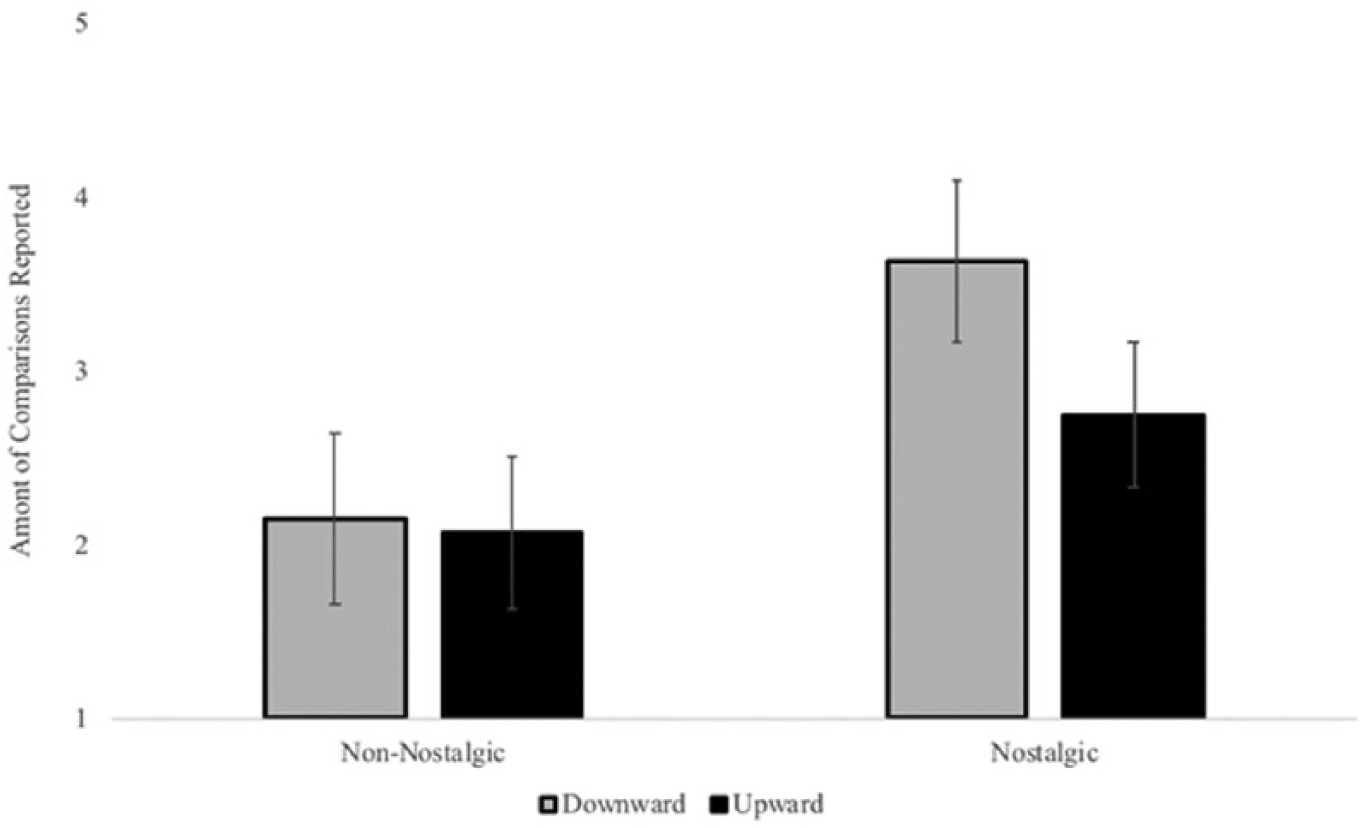
Three-way interaction among condition, homesickness, and comparison type: Temporal comparisons among participants reporting low levels of homesickness.
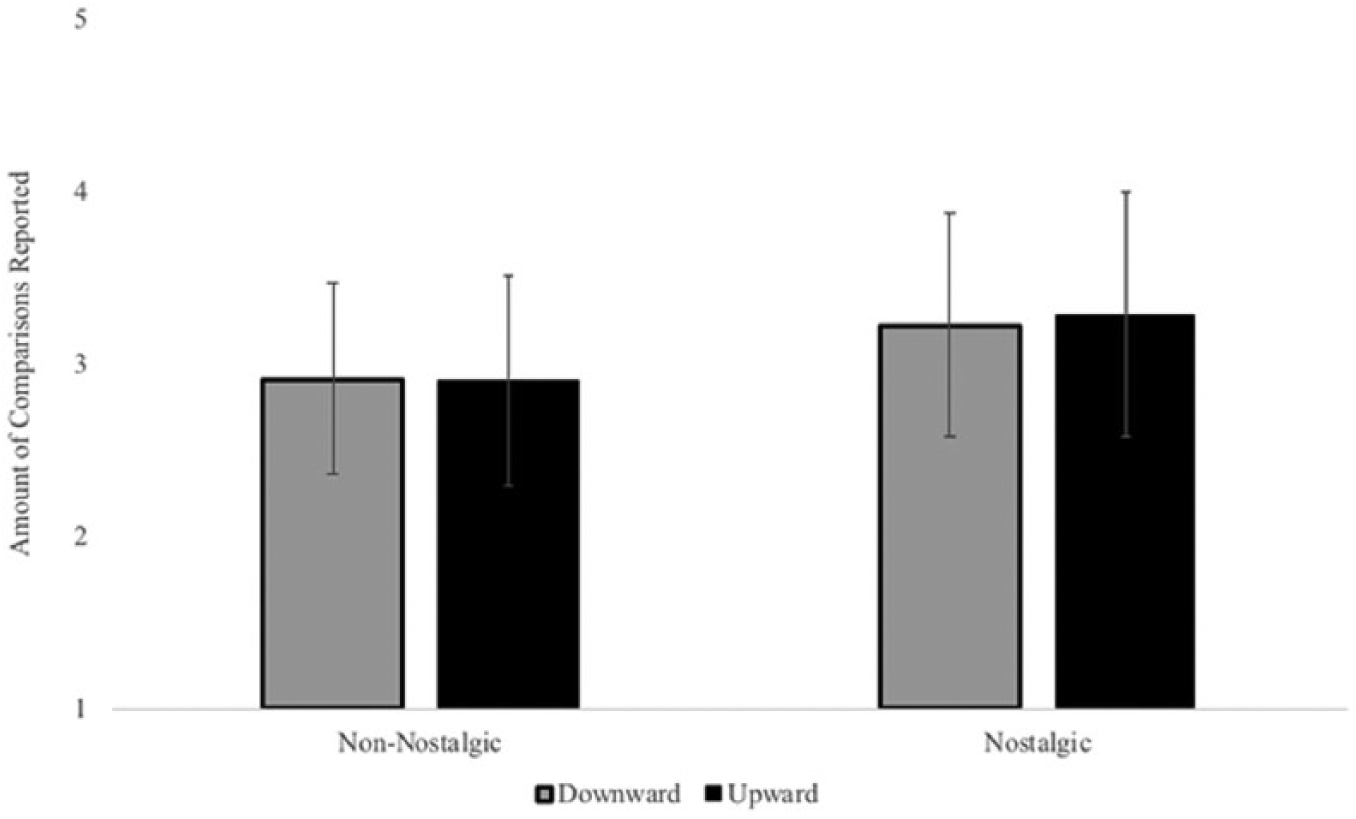
Three-way interaction among condition, homesickness, and comparison type: Temporal comparisons among participants reporting high levels of homesickness.
In partial support of H2, nostalgic music increased temporal comparisons among participants low (but not high) in homesickness, and this effect was more pronounced for downward (rather than upward) temporal comparisons. In other words, the interaction between comparison type and condition was significant only among participants low in homesickness, F(1,51) = 6.08, p < .05, partial-η2 = .11. Among these participants, those in the nostalgic condition reported significantly more downward temporal comparisons than upward temporal comparisons, p < .001, partial-η2 = .23, whereas those in the non-nostalgic condition reported equivalent amounts of both types of comparisons (and significantly fewer comparisons overall; see Figure 1). Conversely, the interaction between comparison type and condition was not significant among participants high in homesickness, F(1,38) = .07, p = .80, partial-η2 = .00. These participants reported equivalent amounts of downward and upward temporal comparisons across both conditions (see Figure 2).
Mediation Analysis
H3 stated that the listening to nostalgic music would indirectly influence well-being via temporal comparisons. Specifically, it was predicted that experiencing more downward (relative to upward) temporal comparisons would enhance well-being, whereas experiencing more upward (relative to downward) temporal comparisons would diminish well-being.
To address this hypothesis, a new variable was created by subtracting each participant’s reported level of upward temporal comparisons from their reported level of downward temporal comparisons. Positive numbers on this variable meant that participants reported more downward (relative to upward) temporal comparisons, whereas negative numbers meant that participants reported more upward (relative to downward) temporal comparisons (M = 0.28, SD = 1.12; range = −2.42-5.33).
H3 was then tested using Hayes’ (2018) Process macro v3.0, which assesses mediation using an ordinary least-squares regression approach. In models that incorporate only observed (rather than latent) variables, Process provides statistically identical results to those derived from alternative methods (e.g., structural equation modeling), and it can provide less biased estimates of path coefficients for studies with small sample sizes (for a more detailed discussion of these issues, see Hayes, 2018, pp. 527-530). Specifically, Process Model 4 (10,000 bootstrap simulations) was used. Condition (non-nostalgic vs. nostalgic) was the predictor, participants’ temporal comparison difference score was the mediator, and life satisfaction was the outcome.
Consistent with H3, results indicated a significant indirect effect of condition on life satisfaction via temporal comparisons, indirect effect = .21, SE = .10, 95% confidence interval (CI) [.02, .42], p < .05 (see Figures 3 and 4). Participants in the nostalgic (vs. non-nostalgic) condition reported more downward (relative to upward) temporal comparisons, which enhanced their life satisfaction.
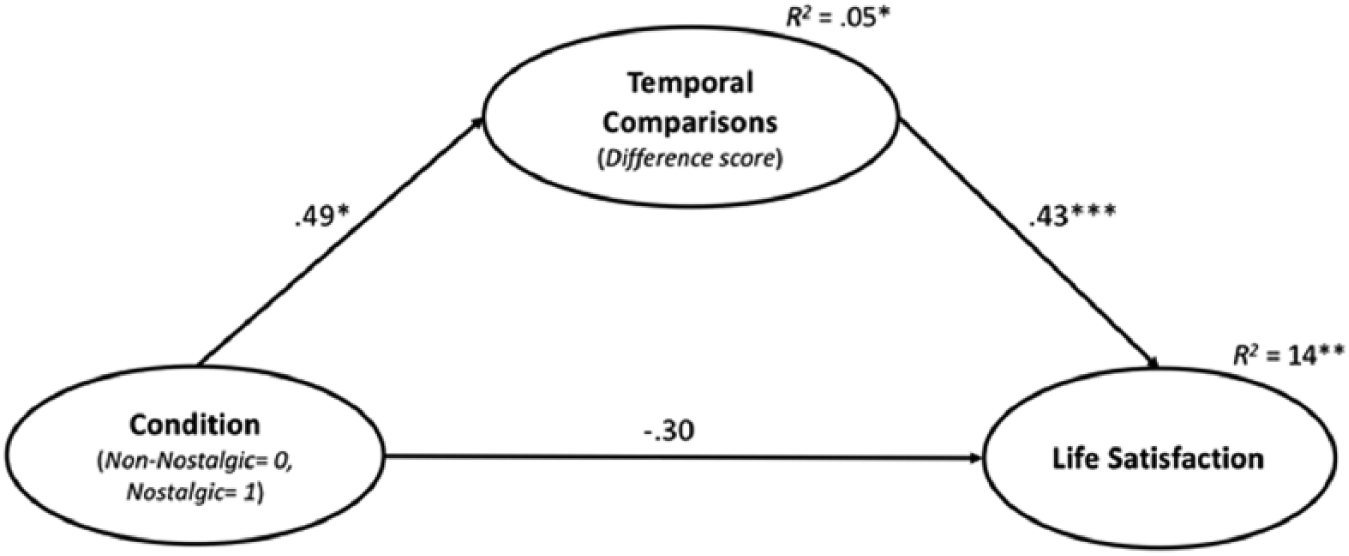
Mediation analyses: Simple mediation model predicting life satisfaction (Process Model 4).
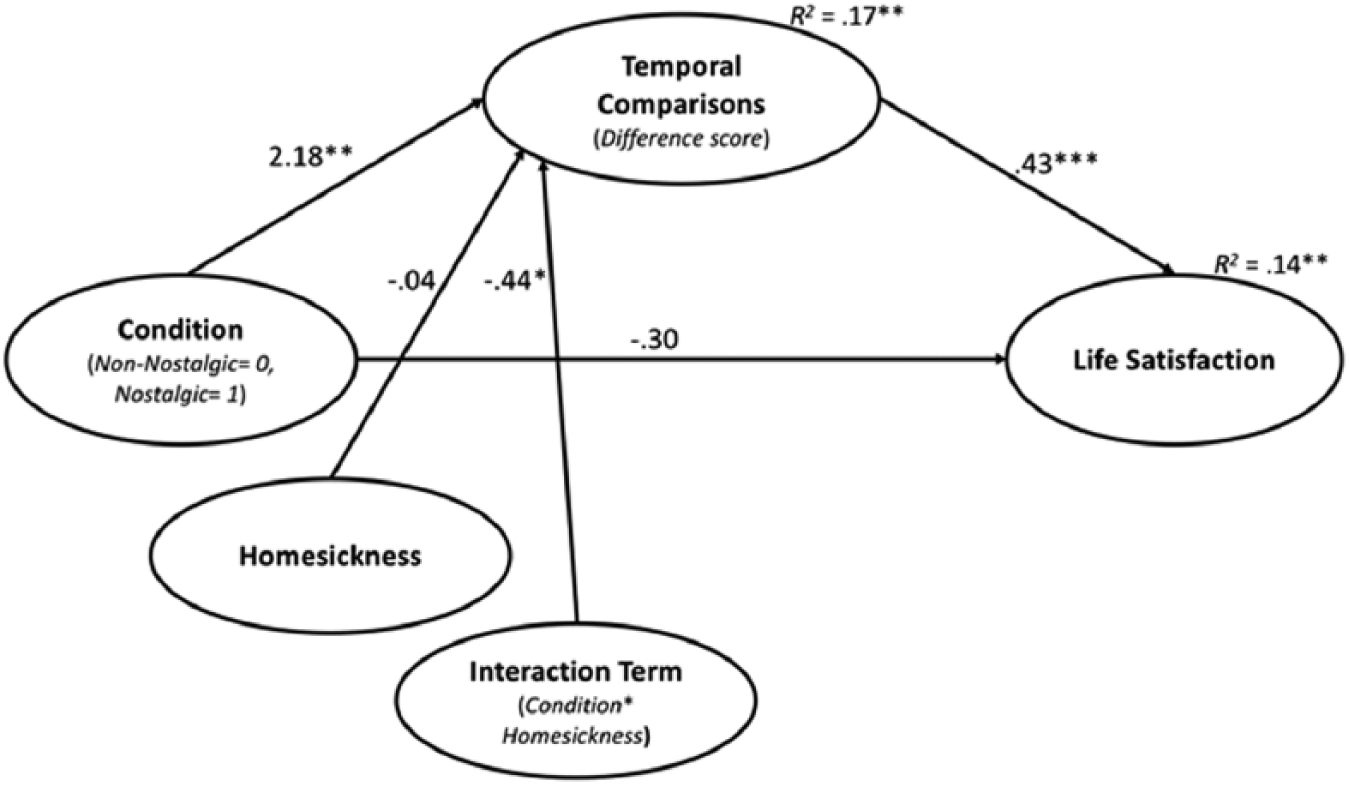
Mediation analyses: Moderated mediation model predicting life satisfaction (Process Model 7).
Because the previous analyses indicated that homesickness moderated the effects of condition on temporal comparisons, a follow-up analysis examined whether this indirect effect was also conditional on homesickness. This post hoc test was assessed using Process Model 7 (10,000 bootstrap simulations), which allows for one moderator acting on the pathway connecting the predictor variable with the mediator. The previous analysis was conducted again with homesickness entered as the moderator.
Results indicated that the index of moderated mediation was significant (index = −.19, SE = .10, 95% CI [−.39, −.01], p < .05; see Figure 4). Johnson-Neyman’s analyses indicated that the indirect effect of condition on life satisfaction was significant only among participants who reported low levels of homesickness (i.e., below 3.97 on a 7-point scale; 50.54% of participants). There was no effect of condition on life satisfaction among participants who reported levels of homesickness higher than this value.
Discussion
The novelty of the current study was threefold: It was the first to use temporal comparison theory to conceptualize temporal comparisons as a response to media use, it was the first to contextualize these comparisons within the study of media-induced nostalgia, and it was the first to examine these comparisons as mediators of the effects of music listening on subjective well-being.
Results indicated that listening to nostalgic (rather than non-nostalgic) music triggered temporal comparisons in college students who reported low levels of homesickness, and this effect was more pronounced for downward (rather than upward) temporal comparisons. In turn, this boost in downward comparisons was associated with higher reported life satisfaction for these participants. Taken together, this pattern of results suggests that nostalgic music enhanced the tendency for college students low in homesickness to engage in self-enhancing forms of temporal comparison, which had positive implications for their subjective well-being.
The results for participants high in homesickness were less favorable. Overall, these individuals reported more upward temporal comparisons than individuals low in homesickness, and they reported equivalent levels of upward and downward temporal comparisons regardless of the type of music they heard. Because the relative composition of their temporal comparisons did not shift in response to nostalgic music, there were also no associated shifts in their self-reported life satisfaction. These findings inform prior research that has documented a detrimental relationship between the experience of nostalgia and the well-being of college students undergoing crises of identity (e.g., Iyer & Jetten, 2011). Indeed, these results suggest that these negative effects do not necessarily result from increased rumination on painful comparisons between the past and present. Instead, it appears individuals high in homesickness were already more likely than individuals low in homesickness to report the types of upward temporal comparisons associated with diminished well-being, and they were unaffected by exposure to nostalgic music that otherwise benefited individuals low in homesickness.
This pattern of findings underscores one important characteristic of the current data: Downward and upward temporal comparisons were significantly (and strongly) correlated. Indeed, it was not that participants high in homesickness were incapable of engaging in downward temporal comparisons; instead, they simply engaged in upward temporal comparisons at similar rates, and they experienced no shifts in the relative frequency of either type of comparison in response to nostalgic music. These findings suggest that participants high in homesickness were simply more likely than participants low in homesickness to reflect on the past (regardless of media exposure), and that they presumably engaged in both types of comparisons simultaneously about different aspects of their lives (e.g., perhaps yearning to reunite with old family and friends, but feeling happy about new professional successes). Conversely, participants low in homesickness were unlikely to engage in temporal comparisons naturally, and although nostalgic music increased their engagement in both types of comparisons, they experienced downward comparisons more frequently than upward comparisons.
Of course, the measures used to assess temporal comparisons relied on using the same single item after exposure to each stimulus in this study (e.g., “This song made me feel nostalgic”). This feature of the study limits the extent to which the current data can speak to the exact characteristics of these comparisons. Although appropriate variation in responses was achieved by using 12 stimuli in each condition, operationalizing these variables in this way necessarily obscured the nuance inherent to each category of experiences that these questions were intended to represent. Indeed, two songs might produce roughly equivalent amounts of upward temporal comparison in the same individual, but the quality and characteristics of those comparisons might differ considerably depending on the memories that are activated by each song. Future research should increase participants’ exposure time and probe the nature of their thoughts in more nuanced ways. For example, participants could be asked to write down the thoughts and feelings they have while listening to nostalgic music, and these open-ended responses could be coded for the presence of temporal comparisons and the dimensions on which people make those comparisons (i.e., changes in personality, popularity, success, happiness, intelligence, etc.). This more nuanced analysis would better illuminate the nature of temporal comparisons and could be used to inform the design of scales for use in future research.
This study is also limited by the fact that it examined only one population (college students) and only one type of media (popular music). As described in the literature review, these selections were purposeful insomuch that they allowed for more precision in experimental design and measurement. Future research should broaden its scope to include more age groups and more types of media. Although research on autobiographical memories associated with popular music suggests that music-induced nostalgia is experienced in relatively similar ways across different age groups, theories on aging (e.g., socioemotional selectivity theory; Carstensen, 1995) would predict that interest in engaging with such content might change as people get older (e.g., Mares, Bartsch, & Bonus, 2016). It is also possible that the tendency for people to engage in upward or downward social comparisons in response to nostalgic media might shift across the lifespan as well. Moreover, other types of media (e.g., television shows, movies) might generate autobiographical memories that are less salient, vivid, or meaningful than those generated by music, and thus could result in fewer nostalgic responses or greater variations in the relative prevalence of upward and downward temporal comparisons.
Despite these limitations, these findings indicate that nostalgic music can trigger temporal comparisons among certain individuals and that temporal comparison theory holds value as a framework for understanding them. Given this utility, it seems prudent to consider ways in which the theory can be further integrated into existing communication research. In the same way that social comparison theory has been adopted into other more complex communication frameworks, temporal comparison theory could fulfill a similar role. Of perhaps most immediate relevance to communication scholars is the potential value of incorporating temporal comparison theory into the Selective Exposure Self- and Affect-Management (SESAM) Model (Knobloch-Westerick, 2015), which describes the processes by which people select media messages to manage and regulate their self-concept over time—most commonly by ways of social comparison. The model has been used to describe why (for example) people choose to read beauty magazines, and how those selections shape their perceptions of themselves as romantic partners (Knobloch-Westerwick, Robinson, Willis, & Luong, 2016). Already, this model has demonstrated broad applicability in understanding how media messages function to maintain one’s self-concept in areas of race, politics, health, science, and more (e.g., Knobloch-Westerick, 2015; Knobloch-Westerwick & Meng, 2011).
While the SESAM Model already explicitly postulates some temporal dimensions (i.e., engaging in aspirational social comparisons as a way to regulate one’s image of his or her future self; Knobloch-Westerwick et al., 2016), the ways in which media exposure can serve to recall past selves that serve as standards for temporal comparison has not been specified. Yet this notion is entirely compatible with the core tenets of the model. Contextualized within SESAM, temporal comparison theory could help drive predictions about the circumstances in which people actively seek out media from their pasts for purposes of self-regulation and identity formation. Indeed, future research might examine the features of media content that activate different self-concepts (e.g., as a romantic partner, a student, an athlete, etc.), trigger memories of portraying those self-concepts in the past (e.g., past relationships, academic successes, athletic achievements, etc.), and motivate temporal comparisons in ways that regulate one’s sense of self in the present. Consistent with the findings of the current project, researchers might consider experimentally inducing feelings of homesickness in study participants and examining how this experience shapes preferences for (and responses to) different types of media.
Such an integration would also allow for the study of more complex interactions between both social and temporal comparisons. For example, recent reboots of old television shows and movies often feature the same characters from earlier versions of that content, only they are often older (i.e., aged from childhood to adulthood, or exiting middle age into older adulthood; for example, Fuller House, Star Wars: The Force Awakens) and in a different stage of life (i.e., parenting children or reeling from divorce; for example, Girl Meets World, Will & Grace). Engaging with this content might simultaneously trigger memories of the self in the past (e.g., as a carefree child enjoying those shows with friends on Friday nights) and comparisons about how the self has changed relative to those characters (e.g., aging more or less gracefully or achieving more or less success in life). It seems plausible that these “temporal social comparisons” would have important implications for self-concept and subjective well-being that have not been captured by existing theory.
In sum, the current study provides some clarity to extant questions about the nature and effects of media-induced nostalgia, while also illuminating a number of worthwhile directions for future research. Continued integration of temporal comparison theory into existing models of communication processes promises to offer new perspectives on the previously underspecified implications of re-experiencing familiar media from one’s past.
Footnotes
Declaration of Conflicting Interests
The author declared no potential conflicts of interest with respect to the research, authorship, and/or publication of this article.
Funding
The author received no financial support for the research, authorship, and/or publication of this article.