







Abstract
Scholars have studied developmental factors relevant to adult sex offenders. These factors, however, have not been of interest so far in the area of adolescent sexual offenders. Given the paucity of research in this area, this study examines developmental factors that may be relevant in understanding why some offenders become persistent throughout the course of adolescence. The sample consisted of male adolescents convicted of a sexual offense against a child. Compared to nonrepeat sexual offenders (n = 80), repeat sexual offenders (n = 27) were characterized by a history of sexual abuse victimization and inappropriate sexual behaviors. However, offenders who had a history of sexual abuse but who did not exhibit inappropriate sexual behaviors were more likely to be classified as repeat sex offenders.
Keywords
Research and treatment of sexual offending, both for adults and adolescents, have generally been informed by clinical psychology and psychiatry (Smallbone, 2006). The key assumption of these approaches is that sexual offending stems from sexual deviance within the individual (Simon, 2000). In contrast, the investigation and prevention of crime more generally has been dominated by criminological approaches whereby sexual crimes have not been distinguished from other criminal behavior. Developmental and life course criminology has been particularly informative in identifying risk and protective factors for offending (Farrington & West, 1993; Hawkins et al., 1998); the potential importance of the timing of childhood, adolescent, and adult experiences (Sampson & Laub, 1993; Thornberry & Krohn, 2005); and the significance of family, peer, school, and neighborhood environments (Farrington, 2005; Laub & Sampson, 2003; Sampson & Laub, 1993).
Because of the tendency for sexual offending to be examined within a clinical framework, much of the key findings and assertions from developmental criminology and life course theory have not been explored in relation to adolescent sexual offending. That is, whether adolescent sexual offenders experience similar or unique developmental risk factors as other juvenile offenders has not been sufficiently examined. The current study begins to address this deficit by examining the developmental experiences of adolescent sexual offenders and, in particular, those adolescents who have committed more than one sexual offense.
It is generally assumed that sexual offenders, including juvenile sexual offenders, will commit further sexual offenses in the absence of appropriate intervention (Smallbone, 2006). These assumptions exist within the psychological literature, in sentencing and correctional practices, and in preventative detention laws (Simon, 2000). Yet this assumption is not borne out in recidivism studies of adolescent sexual offenders. Rather, adolescents who have committed a sexual offense are more likely to commit another nonsexual offense than a sexual offense (Carpentier, Leclerc, & Proulx, 2011; Hagan, King, & Patros, 1994; Rubenstein, Yeager, Goldstein, & Lewis, 1993; Waite et al., 2005). This is consistent with research on adult sex offenders whereby versatility in offending is more likely to characterize their criminal histories than is evidence of specialization (Simon, 2000; Smallbone & Wortley, 2004), although some degree of specialization appears to exist among a smaller number of sexual offenders, especially child sex offenders (Lussier, Proulx, & LeBlanc, 2005; Meithe, Olsen, & Mitchell, 2006).
It has also been widely established that at least some form of delinquent behavior is common in the adolescent years and that only a small percentage of these individuals proceeds to persistent offending (Farrington & West, 1993; Moffitt, 1993). It is therefore not only possible but probable that adolescents who have committed a sexual offense are not a distinct group of individuals with different developmental experiences from those of other adolescent offenders. Instead, it is more likely that this larger group of adolescent sexual offenders contains within it a smaller group of individuals who are at risk of persistent sexual offending (Smallbone, 2006). If this is the case, it is important to consider whether unique developmental experiences characterize the life course of adolescents who have repeatedly committed sexual offenses compared to those adolescents who have committed a single sexual offense. By applying a developmental approach to examining adolescent sexual offenders, it is possible to explore the extent to which risk factors for general delinquency and/or sexual deviancy distinguish repeat sexual offenders from adolescent sexual offenders with a single sexual offense.
Risk Factors for General and Sexual Delinquency
Risk factors for general delinquency and crime have been identified across a number of prospective longitudinal studies. Risk factors within the individual include, but are not limited to, insecure attachment (Developmental Crime Prevention Consortium, 1999), poor social skills (Developmental Crime Prevention Consortium, 1999), poor concentration and restlessness (Farrington, 1994; Farrington & West, 1993), and impulsivity (Farrington, Loeber, & van Kamman, 1990). Family-based risk factors include parental substance abuse (Developmental Crime Prevention Consortium, 1999), parental criminality (Farrington, 2000; Farrington, Barnes, & Lambert, 1996), a teenage mother (Farrington, 2000; Farrington & West, 1993), marital discord (McCord, 1979; West & Farrington, 1973), family violence, neglect, and abuse (Ireland, Smith, & Thornberry, 2002; Smith & Thornberry, 1995; Stewart, Livingston, & Dennison, 2008), inappropriate parenting (Farrington, 2002), lack of parental supervision and monitoring (Farrington, 2002), harsh or inconsistent discipline (Loeber, 1990; Patterson, 1986), and a lack of parental support or involvement (West & Farrington, 1973; Thornberry, Lizotte, Krohn, Smith, & Porter, 2003).
School-related factors include academic failure (Maguin & Loeber, 1996), school dropout (Farrington, 1989), truancy (Farrington, 1989), poor attachment to school, and inadequate behavior management (Developmental Crime Prevention Consortium, 1999). Neighborhood and community risk factors include socioeconomic disadvantage (Farnworth, Thornberry, Krohn, & Lizotte, 1994; Weatherburn & Lind, 2001), neighborhood violence and crime (Developmental Crime Prevention Consortium, 1999), and cultural norms regarding aggression and violence (Developmental Crime Prevention Consortium, 1999). The interaction and accumulation of risk factors, as well as their timing in the life course, are critical in understanding their impact on crime and delinquency. The extent to which these risk factors for delinquency and crime are reflective of adolescent sexual offenders in the first instance, and repeat adolescent sexual offending in the second instance, has not been adequately examined.
Persistence in sexual offending has been examined in recidivism studies of adolescent sexual offenders. Risk factors associated with sexual recidivism are, not surprisingly, heterogeneous (Worling & Långström, 2006). Risk factors for which there is empirical support include deviant sexual interests, prior criminal sanctions for a sexual offense (including charges or convictions), sexual offending against more than one victim, sexual offending against a stranger, social isolation (including inadequate intimate peer relationships and limited social contacts), and uncompleted offense-specific treatment (Worling & Långström, 2006). Some additional risk factors among adolescents, supported by single published studies, are having a problematic relationship with parents and holding attitudes supportive of sexual offending. Other factors that have been linked to sexual recidivism, though, are yet to be empirically supported. They include, but are not limited to, a high-stress family environment, interpersonal aggression, and negative peer associations (Worling & Långström, 2006).
Although a history of childhood sexual and/or physical victimization has been identified more frequently in sexual offenders compared to nonsexual offenders (e.g., Fagan & Wexler, 1988; Hastings, Anderson, & Hemphill, 1997; Hunter & Figueredo, 2000; Seto & Lalumière, 2010), and links have been established between childhood sexual victimization and sexual preferences for children in adulthood (Freund & Kuban, 1994; Freund, Watson, & Dickey, 1990), the adolescent’s own sexual victimization has been identified as an unlikely risk factor for sexual reoffending (Worling & Långström, 2006). However, Lussier, Beauregard, Proulx, and Nicole (2005) have suggested that the behavioral responses of a child following sexual abuse may increase the likelihood of the development of deviant sexual interests. The authors demonstrated direct and indirect links between sexual victimization during childhood and deviant sexual interests in adulthood, some of which were mediated by psychosocial deficits and/or sexualization in adolescence (Lussier, Beauregard, et al., 2005). Therefore, although sexual victimization in childhood is not a necessary precursor for later sexual offending or sexual reoffending, it is emerging as a factor that may influence developmental pathways into sexual offending for some individuals (Lussier, Beauregard, et al., 2005). For example, Hunter and Figueredo (2000) found that early sexual victimization and more frequent sexual abuse were predictive of adolescent sexual offending. They argued that the timing and frequency of sexual abuse affected the individual’s psychosocial and psychosexual development. Furthermore, in a meta-analysis of 59 independent studies comparing male adolescent sexual offenders and male adolescent nonsexual offenders on a range of individual, family, and antisocial variables, Seto and Lalumière (2010) found that the largest group differences existed for atypical sexual interests followed by sexual abuse history. However, the meta-analysis did not examine repeat sexual offending.
It is clear that most risk factors empirically associated with adolescent sexual recidivism relate to risk factors within the individual rather than in the broader social ecology of the individual. This is potentially attributable to a failure to examine risk factors associated with adolescent offending more generally rather than sexual offending more specifically. Social isolation and poor social skills are two of the few risk factors common to both general adolescent criminality and adolescent sexual reoffending, although poor adolescent–parent relationships is a general risk factor also identified as an important risk factor for sexual recidivism.
One of the few studies to examine the developmental psychosocial factors associated with juvenile sexual offending used data from the Pittsburgh Youth Study to compare violent sexual offenders and violent nonsexual offenders on a range of child, family, peer, and neighborhood factors (van Wijk et al., 2005). Of the 66 variables measured, the groups differed significantly on only two factors: The violent sexual offenders had more problems with housing and were older at the screening (van Wijk et al., 2005). However, the study was limited by the small number of violent juvenile sexual offenders (n = 39) compared to violent nonsexual juvenile offenders (n = 430). Furthermore, the criteria for violent offending may have excluded many sexual offenders against children from the sample.
Rajlic and Gretton (2010) examined risk of sexual recidivism in two groups of adolescent sexual offenders, those who had committed sexual offenses only and those who had committed both sexual and nonsexual offenses. Using the Juvenile Sexual Offender Assessment Protocol-II (J-SOAP-II) (Prentky & Righthand, 2003) and the Estimate of Risk of Adolescent Sexual Offense Recidivism (ERASOR) (Worling & Curwen, 2000; 2001), the authors found that combined total scores predicted sexual recidivism in the sexual offense–only group but not in the group who committed both nonsexual and sexual offenses. However, this latter group obtained higher scores on the scales related to deviant sexual behavior and interests as well as general antisociality. Rajlic and Gretton suggested that further examination of antisociality in sexual offenders might illuminate different typologies of these offenders. Meanwhile, Carpentier and colleagues (2011) have recently found that early deviant sexual arousal is associated with an earlier onset of sexual aggression prior to 12 years of age. Sexual offenders who had also committed nonsexual offenses had higher rates of conduct disorder, antisocial traits, school problems, substance use, and delinquent peers than sexual offense–only adolescents. Therefore, for some sexual offenders, their sexual offenses may be part of their more general antisocial tendencies.
In this study, we take a broader criminological approach than most studies on adolescent sex offenders and sexual recidivism to date. We seek to identify which developmental factors may help explain why some adolescent child sexual offenders become repeat sexual offenders. Our sample consists of adolescent male sexual offenders and was divided into two groups: repeat and nonrepeat sexual offenders. Note that the lack of empirical research examining developmental factors relevant to repeat sexual offending, and the size of the sample used in this research, renders this study exploratory. Given both the general developmental criminology literature and the sexual deviance literature, particular variables were selected to account for individual risk factors (victimization experiences and aggressiveness and other problematic behaviors), family-based risk factors (vulnerable family environment), and school-based risk factors (behavioral problems in school).
Method
Participants
This study uses data from a larger research project on male adolescent sex offenders in which psychological and criminological data were collected and examined (Leclerc, Beauregard, & Proulx, 2008). The sample consisted of 111 male adolescents who committed at least one official sexual offense against a child who was younger than 12 years old and who was at least 3 years younger than the offenders. The mean age of the participants was 14.6 (range = 12 to 17 years, SD = 1.40). The classification of offenders resulted in 27 participants identified as repeat sexual offenders and 80 participants identified as nonrepeat sexual offenders. Four participants were not classified because of missing data. The mean age of nonrepeat and repeat sex offenders was not significantly different (M = 14.71, SD = 1.43; M = 14.44, SD = 1.25, respectively), t(105) = .87, p = .39. At the time of the study, each participant was involved in a treatment program for adolescent sex offenders in the province of Quebec, Canada. They were approached by a member of the research team and agreed to take part in this study and completed psychometric questionnaires. In addition, participants also granted access to their archival files (i.e., summary report of social services, presentencing report, police report, victim statements, etc.).
Procedure
This study draws only on information retrieved from the participants’ clinical files (data collected from psychometric questionnaires were not used in this study). The second author went to eight treatment program institutions and reviewed the archival clinical files of every participant. Psychiatric reports produced during the initial assessment of the participant, as well as all reports already on file (summary report of social services, presentencing report, police report, victim statements, etc.), were examined. Information on more than 500 variables was captured using a coding scheme initially developed for another research project on recidivism in adolescent sexual offending (Carpentier, Proulx, & Lussier, 2005). Information was collected on developmental variables and the details of the offense(s) for which participants were undergoing treatment. Before taking part in this study, participants were told that their participation was voluntary and that they were free to withdraw at any time for any reason without negative consequences. Participants were also assured complete anonymity and were asked to sign a consent form advising them that the information gathered would be used for research purposes only.
Measures
For the purpose of this study, a range of developmental factors of adolescent child sexual offenders is considered. Fourteen dichotomous variables (0 = absence, 1 = presence) covering five dimensions (vulnerable family environment, victimization experiences, behavioral problems in school, aggressiveness, and other problematic behaviors) relevant to the study of developmental factors in sexual offending were examined.
In relation to the vulnerable family environment, two dichotomous variables were used: parental sexual victimization (i.e., whether any of the adolescents’ parents were sexually abused during childhood) and behavioral problems (i.e., whether any of the adolescents’ parents had committed acts of delinquency and/or had alcohol or drug abuse problems). Victimization experiences were examined by using four dichotomous variables, that is, inadequate parenting, psychological violence, physical violence, and sexual abuse victimization. Inadequate parenting specifically refers to parents’ behaviors toward the adolescent, such as lack of vigilance (carelessness or neglectfulness), lack of supervision or protection, and positive attitude of the parents toward delinquency. Psychological violence refers to denigration and other negative experiences, including those whereby the adolescent may have been threatened by his parents.
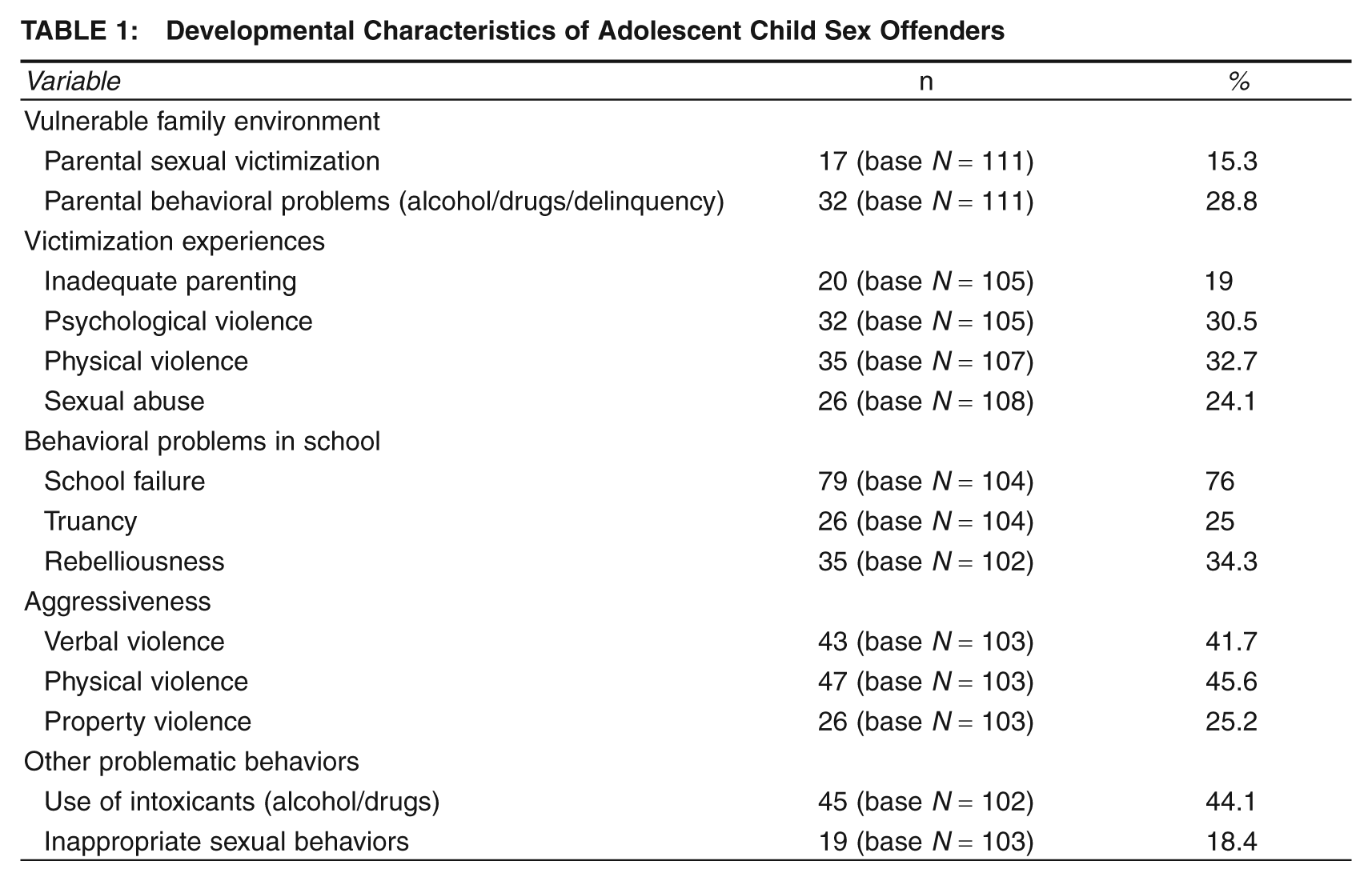
Behavioral problems in school were measured by three dichotomous variables, namely, school failure (i.e., repeating a grade at least once), truancy (i.e., not attending school at least once without a legitimate reason), and rebelliousness (i.e., being insubordinate and/or aggressive with classmates and authority figures at school at least once). Three dichotomous variables accounted for aggressiveness, that is, verbal (e.g., threatening to harm a peer), physical (e.g., hitting a peer), and property violence (e.g., throwing objects on the wall). These variables refer to adolescents’ propensity to be violent. Last, the presence of other problematic behaviors was also measured by two dichotomous variables, that is, the use of intoxicants (alcohol or drugs) and the presence of inappropriate sexual behaviors (i.e., exhibitionism, voyeurism, obscene phone calls, compulsive masturbation, using deviant pornography, and/or using erotic hotlines). Descriptive statistics are presented in Table 1.
Developmental Characteristics of Adolescent Child Sex Offenders
Analytic Strategy
This study comprises three sections. In the first part, the sample was divided into two groups according to the number of victims sexually abused as reported in clinical files. Both official and nonofficial sexual offenses were considered when determining these groups. Note, however, that details of the incident (who, where, when, and how) had to be recorded for a nonofficial offense to be considered an actual offense in this study. Offenders who had sexually abused more than one victim were labeled as repeat sexual offenders, and those who did not do so were labeled as nonrepeat offenders. These two groups were compared on a range of developmental characteristics included in this study.
In the second part, we turned the spotlight on sexual abuse victimization. Specifically, because of the importance of sexual abuse victimization as a developmental factor for repeat offenders in the first analysis, this variable was then crossed with offender types to create four subgroups of offenders: (a) nonrepeat sex offenders, (b) sexually victimized nonrepeat sex offenders, (c) repeat offenders, and (d) sexually victimized repeat offenders. The objective of this operation was to (a) examine whether specific developmental factors could characterize repeat offenders who were sexually abused during childhood and (b) distinguish this group from other subgroups of offenders. Because of sample size and cell size constraints, only three factors were examined. These were inappropriate sexual behaviors, inadequate parenting, and parental behavioral problems. These variables were chosen because of the significant results already obtained for inappropriate sexual behaviors and because of the emerging importance of the family environment and parental practices as identified in both the general criminological and sexual offending literature.
The third part examined whether these developmental factors, which were found to be relevant in distinguishing repeat and nonrepeat offenders (i.e., sexual abuse victimization, inappropriate sexual behaviors, and inadequate parenting), would interact in some way.
Results
Data were analyzed using SPSS for Windows, Version 16. As reported in Table 2, nonrepeat and repeat sexual offenders were compared on a range of developmental characteristics. Repeat sexual offenders were found to have been sexually abused during childhood significantly more often than were nonrepeat sexual offenders. Repeat sexual offenders were also found to exhibit inappropriate sexual behaviors significantly more often than nonrepeat sexual offenders. There were no other significant findings.
Developmental Characteristics by Type of Offenders (in percentages)
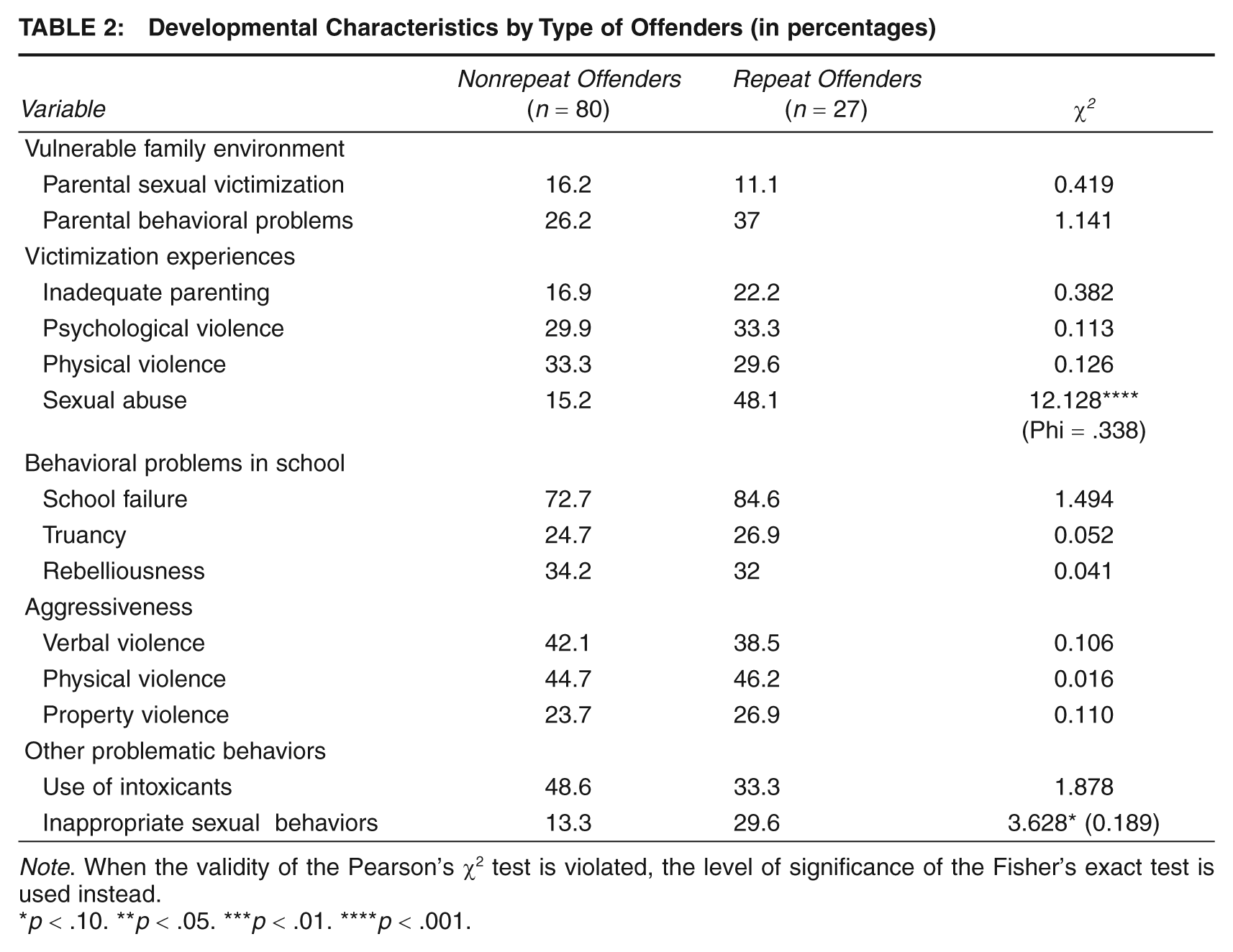
Note. When the validity of the Pearson’s χ2 test is violated, the level of significance of the Fisher’s exact test is used instead.
p < .10. **p < .05. ***p < .01. ****p < .001.
Additional chi-square analyses were conducted to identify developmental factors that could characterize repeat offenders who were sexually abused during childhood. For this purpose, sexual abuse victimization was crossed with offender types to create four subgroups of offenders (i.e., nonrepeat sex offenders, sexually victimized nonrepeat sex offenders, repeat sex offenders, and sexually victimized repeat sex offenders), as shown in Table 3. Fisher’s exact tests are reported, as the assumption regarding expected cell counts was violated for each analysis. A Bonferroni correction was employed, resulting in an alpha of .017. Two of the three variables permit us to distinguish the subgroups of offenders. First, repeat offenders who were not sexually abused during childhood were more likely to have adopted inappropriate sexual behaviors than other subgroups. Very few nonrepeat sex offenders who were not sexually abused themselves during childhood adopted such behaviors. Second, sexually victimized nonrepeat sexual offenders were significantly more likely to have suffered from inadequate parenting during childhood than the other subgroups. Parental behavioral problems did not differ significantly among the four subgroups after applying Bonferroni correction (i.e., with an alpha of .017). However, the family environment of sexually victimized nonrepeat sexual offenders was more likely (but not significantly so) to be characterized by the presence of parents who had behavioral problems.
Developmental Characteristics by Subgroup of Offender (in percentages)
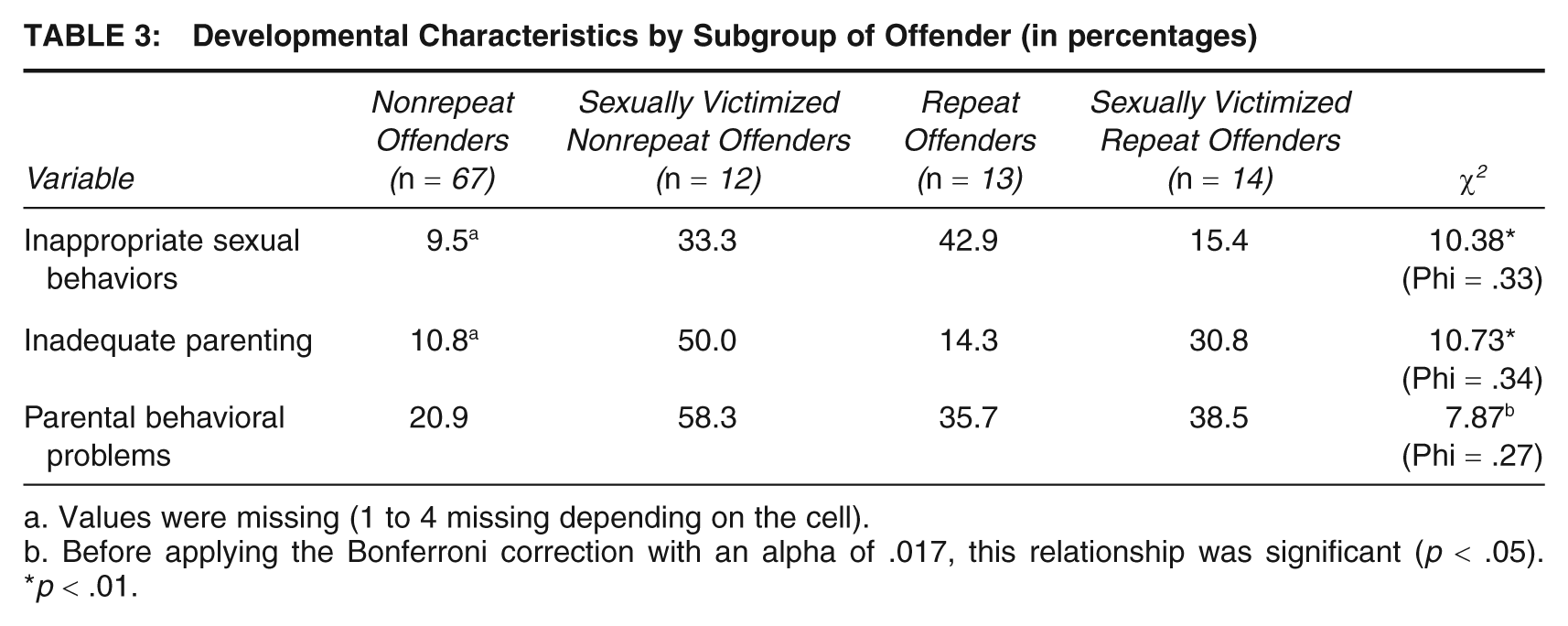
Values were missing (1 to 4 missing depending on the cell).
Before applying the Bonferroni correction with an alpha of .017, this relationship was significant (p < .05).
p < .01.
Sexual abuse, the presence of inappropriate sexual behaviors, and inadequate parenting were then examined further in relation to repeat versus nonrepeat sexual offending. Table 4 presents the relationship between these developmental factors and the type of offenders (e.g., nonrepeat, repeat). A chi-square analysis could be conducted between the conditions only when there was an absence of inappropriate sexual behaviors. Because of small cell sizes, the assumption regarding expected frequencies was violated when there was a presence of inappropriate sexual behaviors. The analysis revealed that in the absence of both inappropriate sexual behaviors and inadequate parenting, participants who reported childhood sexual abuse were more likely to be repeat rather than nonrepeat sexual offenders, whereas the reverse was true in the absence of a history of childhood sexual abuse. The same relationship between childhood sexual abuse and repeat offending was not apparent when there was an absence of inappropriate sexual behaviors but a presence of inadequate parenting. Rather, the presence of inadequate parenting seemed to be associated with nonrepeat sexual offending, although as noted, the cell sizes were very small.
Sexual Abuse Victimization by Inappropriate Sexual Behavior
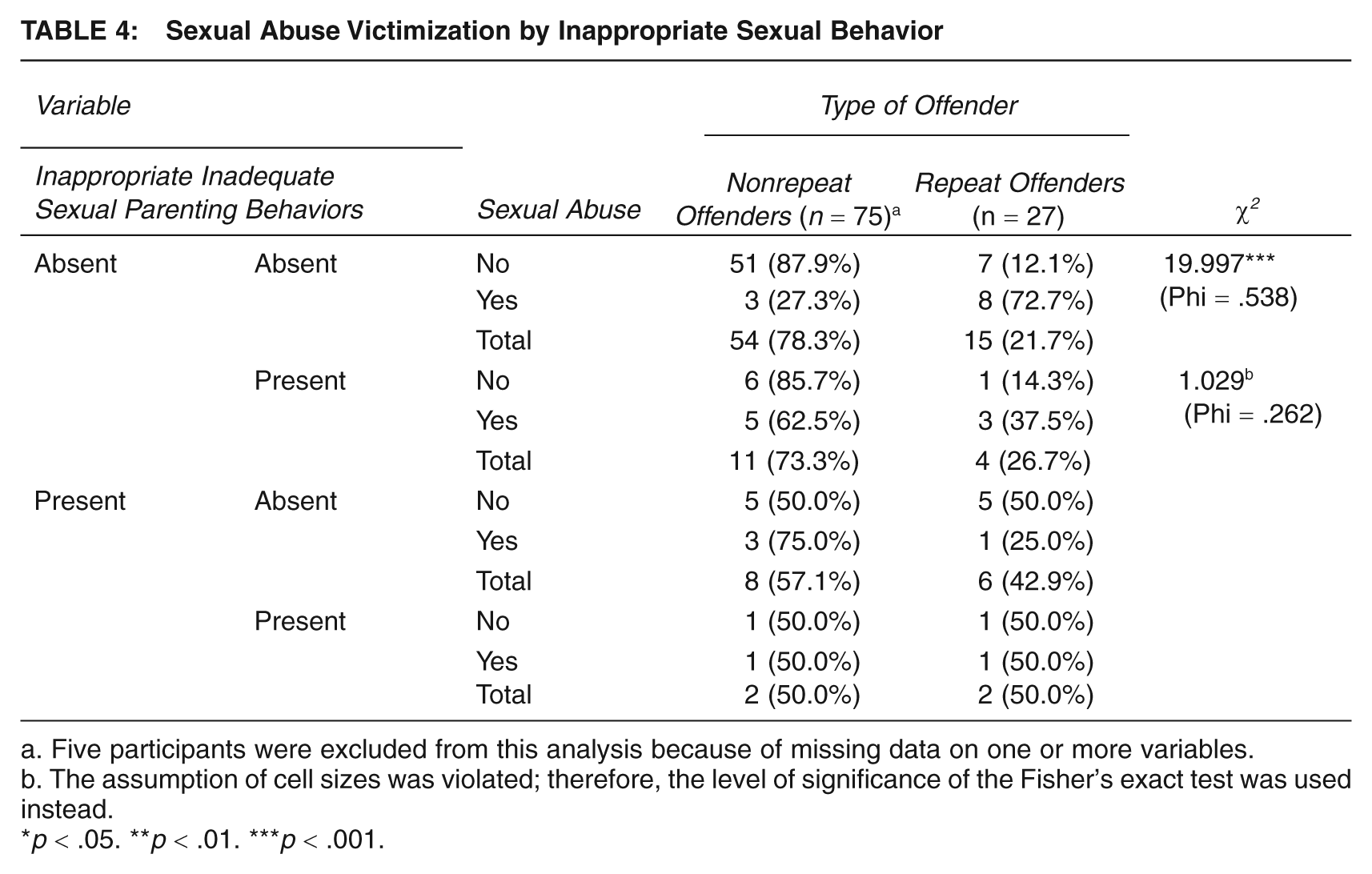
Five participants were excluded from this analysis because of missing data on one or more variables.
The assumption of cell sizes was violated; therefore, the level of significance of the Fisher’s exact test was used instead.
p < .05. **p < .01. ***p < .001.
Discussion
This study aimed to examine the extent to which risk factors for delinquency and juvenile offending are reflective of adolescent sexual offenders generally and repeat adolescent sexual offending more specifically. We sought to identify which developmental factors may help explain why some adolescent sexual offenders become repeat sexual offenders. Although a nonsexual offending comparison group was not available, there was evidence of a range of general developmental risk factors present in the lives of the participants. For instance, more than a quarter of participants were exposed to parents’ behavioral problems, psychological violence, and/or physical violence; experienced school failure, truancy, and/or rebelliousness at school; and/or engaged in violence (verbal, physical, property), the use of intoxicants, and/or inappropriate sexual behaviors. These findings demonstrate the importance of expanding juvenile sex offender research to examine a wider range of developmental risk factors for delinquency.
Three key findings emerged in relation to repeat sexual offending. First, repeat sexual offenders differed from nonrepeat sexual offenders on only two developmental characteristics. Repeat sexual offenders were more likely to have been sexually abused in childhood and to engage in inappropriate sexual behaviors compared to individuals who had committed a single sexual offense. At first, this may seem like a somewhat surprising finding since Worling and Långström (2006) identified sexual victimization as an unlikely risk factor for adolescent sexual reoffending. On the other hand, when looking at other evidence, this finding is not inconsistent with the presence of a high-risk environment for sexual abuse where additional family members have often committed sexually abusive acts themselves (Barbaree & Langton, 2006). The finding in relation to inappropriate sexual behaviors is consistent with deviant sexual interests being identified as a risk factor for sexual recidivism (Worling & Långström, 2006) and is a factor that should be given a more prominent role in theories of sexual offending (Seto & Lalumière, 2010). However, in this study, inappropriate sexual behavior is not synonymous with sexual deviancy, although the concepts do overlap.
Second, repeat sexual offenders who had been sexually abused did not report more inappropriate sexual behaviors, inadequate parenting, or parental behavioral problems than the other three groups. In fact, inappropriate sexual behaviors were most prevalent in the repeat sexual offending group who had not experienced childhood sexual abuse. Although almost a third of participants in the repeat sexual offender–sexual abuse group experienced inadequate parenting, the prevalence was higher for the nonrepeat–sexual abuse group, with half of the participants in this group experiencing inadequate parenting. A similar pattern was evident for the presence of parental behavioral problems. Therefore, family-based risk factors were more common in the nonrepeat–sexual abuse group. For those in this group, it is possible that their sexual offense was part of a broader array of antisocial behaviors, although in the absence of a comparison group of nonsexual offenders, and without knowing the nonsexual offending histories of the participants in our sample, we are unable to do more than speculate here.
Third, participants were most likely to be repeat sexual offenders if they were victims of childhood sexual abuse but only when there were no indicators of inadequate parenting or inappropriate sexual behaviors. This is somewhat inconsistent with the notion put forward by Lussier, Beauregard, et al. (2005), that one could presume that sexual abuse and inappropriate sexual behavior would be more likely to co-occur in repeat sexual offenders. One possible explanation for this finding is that deviancy, such as sexual preference for children, sexual coercion, and sexual violence in adulthood, as measured by Lussier, Beauregard, et al. is not commensurate with the inappropriate sexual behaviors recorded in our adolescent sample. Rather, we measured the presence of one or more behaviors, such as exhibitionism, obscene phone calls, compulsive masturbation, and/or using erotic hotlines. In relation to the failure of inadequate parenting to coexist with sexual abuse and repeat sexual offending, our measure related to a lack of vigilance of the parents, a lack of supervision or protection, and the parents’ having a positive attitude toward delinquency. These parenting deficits may not necessarily connect a child’s sexual abuse history to repeat sexual offending in adolescence. Barbaree and Langton (2006) have suggested that the family environments most likely to produce adolescent sexually abusive behavior are characterized by instability, poor emotional bonds between the parent and child, early exposure to sexual material and behavior, a high-risk environment for sexual abuse or sexual exploitation, and poor resources to cope with disclosure of sexual abuse. It should be noted, however, that inadequate parenting as used in this study may overlap with instability and poor emotional bonds as described by Barbaree and Langton.
There is empirical support for the notion that sexual offenders who have been sexually abused are more likely to report insecure paternal attachment and that insecure childhood attachment in sexual offenders may contribute to their sexually abusive behaviors through a process of conditioning (Smallbone & McCabe, 2003). As the current study did not contain measures for childhood attachment, we are unable to explore this potential developmental pathway. Given the importance of a history of childhood sexual abuse for repeat sexual offending, relative to the other measures included in this study, future research should examine these developmental factors in more depth. However, of importance to note is that almost as many (only one fewer) repeat sexual offenders did not report a history of sexual abuse, inappropriate sexual behaviors, or inadequate parenting. Therefore, it is equally important that research examines alternative developmental pathways for these offenders using a larger sample than the current study to allow for important differences to emerge.
Limitations and Future Research
There are a number of limitations associated with the research. First, the sample comprised only adolescent sexual offenders, meaning that developmental risk factors could be examined only in relation to sexual offending and were not compared to nonsexual offending and nonoffending samples. Therefore, the extent to which factors such as sexual abuse in childhood and inappropriate sexual behaviors are unique to sexual offending cannot be determined. Nevertheless, the point of this study was to examine potential development factors that are associated with repeat sexual offending specifically, and the data permitted relevant conclusions to be drawn.
Second, the average age of the sample was 14 years, indicating that participants were still young and may yet commit other sexual and nonsexual offenses during adolescence and/or adulthood. Therefore, the repeat sexual offending group should not be considered to be encompassing the complete adolescent period. Some participants from the nonrepeat group may well move into the repeat group by the conclusion of their adolescence. However, a strength of this study was that the two samples did not differ significantly in relation to age. Both groups had the same opportunity, in terms of time, to sexually offend and reoffend. Therefore, we can be confident in our groupings of the participants.
Unfortunately, very limited information was available regarding the nonsexual offending history of participants, and this was a third limitation of the research. Future research should explore developmental risk factors in relation to both general and sexual offending as well as repeat offending (general and sexual). This would help detect whether there are developmental risk factors unique to repeat sexual offending compared to adolescents for whom a sexual offense is only one offense among a larger repertoire of other criminal offenses. Finally, many of the developmental measures used were obtained retrospectively. Future research should examine potential developmental risk and protective factors in a prospective longitudinal design so that both the effect of the type and the timing of the risk factor can be examined.
Conclusions
In this study, a considerable range of developmental factors was considered to examine why some offenders become persistent during the course of adolescence (i.e., vulnerable family environment, victimization experiences, behavioral problems at school, aggressiveness, and other problematic behaviors). A problem encountered when interpreting findings is that definitions and measures used in the field are somewhat vague and/or overlap with others, which render comparisons of findings between studies rather difficult. For instance, we used a measure of inadequate parenting comprising different problems (i.e., a lack of vigilance of the parents, a lack of supervision or protection, and a positive attitude of the parents toward delinquency). In their review of risk factors, Barbaree and Langton (2006) refer to single-parent family and poverty when reporting instability as a potential factor. Then when reporting emotional bonds, they refer to parent-child conflict and inadequate parental monitoring. Because of this lack of consistency between studies, it becomes difficult for researchers to clearly identify which risk factors are most important in the development of delinquency or which factors permit to distinguish between different subgroups of offenders. In this regard, even though we do not pretend to do this in this study, and it was not the purpose here, there is a clear need for more precise definitions and measures that would perhaps set the line in the field of juvenile sex offending.
Surprisingly, this study is one of the few that investigate developmental factors in juvenile sex offending from a broader criminological approach. Among the range of developmental factors included in this study, childhood sexual abuse was most strongly associated with repeat sexual offending but only in certain conditions. It was also clear that repeat sexual offending emerged in the absence of childhood sexual abuse almost as frequently. Inappropriate sexual behaviors and inadequate parenting were also connected to repeat sexual offending but separately rather than in conjunction with each other. Given these findings and the paucity of research in this area, it is clear that further research is warranted to explore potential pathways between sexual abuse and repeat sexual offending as well as alternate developmental pathways for sexual reoffending. The possibility that single sexual offending may be underscored by more general developmental risk factors for antisocial behavior and delinquency should also be explored. Such research would have important theoretical, treatment, and prevention implications.