







Abstract
This study involved a comparison of the influences on inmate misconduct among female and male inmates. Data were collected from over 5,500 inmates housed in 46 facilities in Ohio and Kentucky (570 women and 5,059 men), and the relative effects of these inmates’ background characteristics and confinement experiences were examined for sex-specific samples. The magnitudes of effects were then compared across the two groups. Findings revealed that background characteristics (e.g., age) and confinement experiences (e.g., involvement in education/vocational program) influence women’s and men’s odds of misconduct. Equality of coefficient tests revealed only three differences in the magnitude of these effects across the analyses of the sex-specific samples, suggesting there are far more similarities than differences in the predictors of misconduct among men versus women.
Keywords
The rules of conduct in a prison are designed to prohibit behaviors that have an adverse effect on institutional safety and order (DiIulio, 1987; Gendreau, Goggin, & Law, 1997; Kruttschnitt & Gartner, 2005; Van Voorhis, 1994). The priority placed on institutional safety and order by prison administrators has generated a number of studies of the causes and correlates of inmate rule violations or “misconducts” (for reviews of this literature, see Bottoms, 1999; Gendreau et al., 1997; Schenk & Fremouw, 2012). Most of these studies, however, have been conducted on male samples, raising the question whether the findings from these studies or their practical applications (e.g., for assessment tools) are generalizable to female inmates (Pollock, 2002; Kruttschnitt & Gartner, 2003; Wright, Salisbury, & Van Voorhis, 2007).
The increases in the number of women incarcerated in state and federal prisons over the past 20 years (Beck & Harrison, 2001; Guerino, Harrison, & Sabol, 2011) require consideration of the influences on prison misconduct among women, and whether these influences differ from those among men. Yet, evidence concerning the predictors of misconduct among female inmates is limited (e.g., Houser, Belenko, & Brennan, 2012; Kruttschnitt & Gartner, 2005; Steiner & Wooldredge, 2009a; Wright et al., 2007), and even fewer studies have compared the predictors of misconduct among female inmates with those for males (e.g., Gover, Perez, & Jennings, 2008; Harer & Langan, 2001; McCorkle, 1995). Thus, it remains unclear whether the factors that influence misconduct among women are different from those of men (Wright, Van Voorhis, Salisbury, & Bauman, 2012). Such information is important for determining whether the methods typically used for reducing the problem among male inmates (such as particular classification and supervision strategies) can be equally effective for female inmates.
Processes Underlying Sex-Based Differences in the Predictors of Misconduct
Inmate misconduct is considered an indicator of maladjustment (DiIulio, 1987; Gendreau et al., 1997; Toch, Adams, & Grant, 1989; Van Voorhis, 1994), and scholars have discussed the differences between the adjustment patterns of male and female inmates (Bloom, Owen, & Covington, 2003; Giallombardo, 1966; Van Voorhis, Wright, Salisbury, & Bauman, 2010; Ward & Kassebaum, 1965; Wright et al., 2007). Some of these observations have been rooted in the position that women have different pathways into the justice system compared with men (e.g., Brennan, Breitenbach, Dieterich, Salisbury, & Van Voorhis, 2012; Reisig, Holtfreter, & Morash, 2006; Salisbury & Van Voorhis, 2009), and these differences reflect variations in the backgrounds of female and male inmates that could shape how these two populations perceive, experience, and behave in prison. Researchers have also observed differences in the incarceration experiences of female and male inmates (e.g., Giallombardo, 1966; Kruttschnitt & Gartner, 2003; Owen, 1998; Ward & Kassebaum, 1965). If the needs, prison routines, and activities of female inmates differ from those of male inmates, then these differences may also coincide with sex-based variation in the predictors of misconduct.
Backgrounds of Female Versus Male Inmates
Criminological theories of offending have primarily been developed and tested on male samples and subsequently applied to women (Brennan et al., 2012). However, ethnographic studies of female offenders have uncovered that while female offending may be influenced by some of the same factors as male offending (e.g., self-control), some of the factors that explain offending among males do not predict female offending (Steffensmeier & Allan, 1996). Women also have unique pathways to crime that are characterized by different influences on offending relative to those of men (Brennan et al., 2012; Daly, 1992; Salisbury & Van Voorhis, 2009). For instance, Daly (1992) identified five pathways of female offending. The “street women” pathway involves women who flee abusive and violent situations, enter street life and turn to prostitution, drugs, or theft as a means of survival. The “drug connected” pathway includes women involved in extensive use, manufacturing, and distribution of drugs, frequently in concert with their intimate partners or other family members. The “harmed and harming” pathway includes women who experienced extreme neglect, physical, and/or sexual abuse as children. These women also experienced problems in school and during adolescence (e.g., delinquency, mental illness), ultimately manifesting in chronic offending during adulthood. The “battered women” pathway includes women who were abused by intimate partners, which contributes to justice system involvement that would have otherwise been unlikely. Finally, the “other” pathway often includes women who were economically motivated, but not as a result of abuse, prior violence, or drug use. Women in this group may offend out of need, but some of these women also offend simply for greed or economic gain (Daly, 1992). Additional ethnographic studies have also described women’s pathways to the justice system that are characterized by abuse, victimization, economic marginalization, dysfunctional intimate relationships, difficulty providing for their children, substance use, and mental illness (e.g., Covington, 2000; Owen, 1998; Richie, 2001), and a handful of quantitative studies of female offenders have provided some empirical support for these perspectives (e.g., Brennan et al., 2012; Reisig et al., 2006; Salisbury & Van Voorhis, 2009; Steiner & Wooldredge, 2009a; Van Voorhis et al., 2010).
A theme emerging from this line of research is that women travel different paths into the justice system (and consequently prison) compared with men. Female offenders’ pathways to prison often involve a history of abuse and victimization, dysfunctional relationships, mental illness, and substance use, while male offenders’ might follow more traditional paths such as associating with antisocial peers and having little involvement in conventional pursuits (Wright et al., 2012). If there are differences between men’s and women’s paths to imprisonment that contribute to differences in the backgrounds of female inmates compared with male inmates, then these differences may coincide with sex-based differences in the predictors and the odds of institutional misconduct. Specifically, researchers have argued that the sources of offending among women are (a) not typically seen among men; (b) typically seen in men, but with greater frequency among women; or (c) seen in equal frequency among men and women, but with different effects for women (Van Voorhis et al., 2010; Wright et al., 2012).
We do not examine all of the potential differences in the background characteristics of female and male inmates in this study. Based on the perspectives discussed above, however, we speculate that some of the factors examined here may be more relevant for one sex versus the other, while other factors may not be conditioned by an inmate’s sex. For instance, inmates’ relationship status, particularly with spouses and children, might be more relevant for impacting women’s odds of misconduct compared with men’s. There is evidence to suggest that maintaining relationships with spouses and children are more salient needs among women relative to men (Heilbrun et al., 2008; Mumola, 2000; Wright, Dehart, Koons-Witt, & Crittenden, 2013), and thus the presence of these relationships may be a stronger inhibitor to misconduct among female inmates compared with male inmates, if only because maintaining the relationships (e.g., through visitation, early release for good behavior) functions as an incentive for women to comply with the rules (Houser et al., 2012; Steiner & Wooldredge, 2009a). On the other hand, separation from spouses and children may generate more stress and anxiety (possibly contributing to misconduct) among female inmates compared with male inmates in light of the importance women place on their role as caretakers (Loper, Carlson, Levitt, & Scheffel, 2009; Wright et al., 2012).
A history of drug use could also be more relevant for women versus men. Among women, drug use might indicate problems adapting to or coping with depression, stress, anxiety, or traumatic experiences (Covington, 2000; Daly, 1992; Houser et al., 2012; Van Voorhis et al., 2010; Wright et al., 2012), while men might be more likely to use drugs for the sole purpose of getting high (Bloom et al., 2003; McClellan, Farabee, & Crouch, 1997). Thus, a history of substance use may be related to misconduct odds among men and women (compare Steiner & Wooldredge, 2009a with Steiner & Wooldredge, 2009b), but the effect may be more pronounced among women.
Background factors tapping individuals’ commitment to conventional pursuits such as education or employment may be stronger predictors of misconduct among men relative to women. If women more frequently adopt the caretaker role, then employment may be less likely to proxy their commitment to convention. Women also come to prison with a higher level of education than men (Harer & Langan, 2001), and so education may be less of “need” for women. Studies of female inmates have revealed weak or null relationships between level of education or prearrest employment and misconduct (e.g., Houser et al., 2012; Steiner & Wooldredge, 2009a), while studies of male inmates have found education and employment to be associated with lower odds of misconduct (e.g., Huebner, 2003; Morris, Longmire, Buffington-Vollum, & Vollum, 2010; Steiner & Wooldredge, 2008; Toch et al., 1989; Wooldredge, Griffin, & Pratt, 2001), although Harer and Langan (2001) found education to be associated with misconduct odds among both sexes.
Inmates’ histories of criminal behavior and gang involvement might also be more predictive of misconduct among men compared with women. Women’s roles in crime are often qualitatively different from men’s (e.g., women often aid and abet versus commit violent crimes), such that female inmates may be less likely to engage in deviance on their own (Alarid, Marquart, Burton, Cullen, & Cuvelier, 1996; Daly, 1992; Wright et al., 2012; Wright et al., 2013). Female offenders often become involved in offending as a result of their intimate relationships (Daly, 1992), while male offenders are typically influenced by antisocial peers (e.g., gangs). Female offenders also have shorter criminal histories compared with men, which may contribute to women posing less of a risk to institutional security compared with males (Farr, 2000; Harer & Langan, 2001; Van Voorhis et al., 2010; Wright et al., 2012).
In contrast to the hypothesized gender-specific factors discussed above, inmates’ age and race may be gender neutral. Younger inmates might be more likely to commit misconduct because these inmates are less likely to be involved in conventional relationships with friends and/or romantic partners, and are less likely to participate in more conformist activities (such as education or work) (Steiner & Wooldredge, 2009a; Wooldredge et al., 2001). Minority inmates may be more likely to perpetrate misconduct (particularly violent misconduct) because, compared with White inmates, minority inmates are more frequently drawn from disadvantaged communities where feelings of resentment and hostility toward legal authority are pervasive among residents (Harer & Steffensmeier, 1996; Sampson & Bartusch, 1998). There is ample evidence of inverse age and positive race effects from studies of male and female inmates (e.g., Griffin & Hepburn, 2006; Houser et al., 2012; Kruttschnitt & Gartner, 2005; Lahm, 2008; McCorkle, 1995; Sorensen & Cunningham, 2010; Sorensen & Davis, 2011; Steiner & Wooldredge, 2009a; Steiner & Wooldredge, 2009b; Wooldredge et al., 2001; but see Ireland, 1999).
Incarceration Experiences of Females Versus Males
Inmates do not experience incarceration equally (Toch, 1977), and this may be true of female versus male prisoners. Ethnographic studies of prisons for women have revealed prison environments and adaptation patterns among female inmates that are different from those observed in studies of prisons for men (e.g., compare Giallombardo, 1966; Owen, 1998, Ward & Kassebaum, 1965; Carroll, 1974; Sykes, 1958; Irwin, 2005). Female prisoners are considered less dangerous than men, and so prisons for women are often less restrictive, sterile, and authoritarian compared with prisons for men. Female inmates tend to do their time by prioritizing their needs for relationships, comfort, and control (Kruttschnitt & Gartner, 2003), while male inmates often seek status, safety, and a means to pass the time (Irwin, 2005). Owing to mass incarceration during the 1980s and 1990s, however, prisons have become more bureaucratic which has contributed to the management of female inmates according to actuarial assessment and gender-neutral policies that are also applied to men (Kruttschnitt & Gartner, 2005).
Researchers have found that variation in inmates’ institutional routines contributes to how they adapt to and experience prison (Kruttschnitt & Gartner, 2005 Wooldredge, 1998; Wooldredge, 1999). Given the differences in how men and women serve time, we expect that sex-based differences in the incarceration experiences of inmates might be linked to differences in the predictors of misconduct among female versus male inmates. For instance, participation in the typical prison activities might be more important for men relative to women. Activities such as education/vocational programs, work assignments, and recreation activities have historically been designed to meet the needs of male inmates (Bloom et al., 2003). We discussed how female inmates are less likely to have deficits in education compared with male inmates, and male inmates might place greater weight on employment (perhaps even at a prison job) than women (see also Harer & Langan, 2001; Steiner & Wooldredge, 2009a). Thus, participation in facility work assignments or programs designed to aid in securing employment upon release might be more important for meeting the needs of men as opposed to women. Participation in such activities, then, may be more likely to provide structure and control over male inmates’ behaviors because these activities function as a greater incentive for compliance among men (for a discussion of the relevance of remunerative controls in prisons, see Colvin, 1992).
In contrast, visitation may be more important for female inmates compared with males, given the importance women place on maintaining relationships. Considering the discussion above concerning the greater relevance of relationships for women compared with men (see also Kruttschnitt & Gartner, 2003; Van Voorhis et al., 2010; Wright et al., 2012; Wright et al., 2013), it stands to reason that women may have more to lose than men if their visitation privileges are inhibited (such as would result from placement in segregation).
Finally, the amount of time inmates have served may be more relevant for women than men. The length of time a male inmate has served could proxy their level of adaptation to the prison environment, such that male inmates who have served more time have had more opportunity to adjust to the confinement experience (Toch et al., 1989). In contrast, studies of female inmates have found that women who have served more time in prison have greater difficulty adjusting to prison compared with women who have served less time (e.g., MacKenzie, Robinson, & Campbell, 1989; Gover et al., 2008). It could be that serving more time contributes to more adjustment problems among women compared with men because serving more time would be associated with longer periods of separation from family and loved ones (e.g., children). As discussed above, women place greater importance on maintaining family relationships compared with men (Wright et al., 2012). In support of these ideas, Gover et al. (2008) found that time served was a stronger predictor of misconduct among women compared with men.
Present Study
This study involves an examination of the influences on prison misconduct among state inmates housed in Ohio and Kentucky. The relative effects of predictor variables tapping inmates’ background characteristics and confinement experiences were compared across sex-specific samples of inmates. Based on the discussion above, we expect some of the factors examined here to influence men’s and women’s odds of misconduct similarly (e.g., age), while other factors might be more relevant for one sex versus the other (marital status, visitation).
Method
The data for the study were collected as part of a larger project designed to examine the disciplinary process in Ohio and Kentucky prisons. The project involved surveying inmates who had served at least 6 months in the 43 state prisons in Ohio and Kentucky and the 3 private prisons in Ohio. 1 Official data on these inmates were also collected from administrative records maintained by the Ohio Department of Rehabilitation and Correction (ODRC) and Kentucky Department of Corrections (KDOC). Inmates who had served less than 6 months were excluded because the survey inquired about inmates’ experiences, routines, and behaviors in prison. At the time of the study, 5 of the 46 facilities housed women.
Participants
Based on the goals of the larger project and practical constraints dictated by the ODRC and the KDOC, the sample sizes differed in each state. We targeted either 130 or 260 inmates from each facility in Ohio and between 100 and 200 inmates from each facility in Kentucky. For reasons discussed above, the sampling frame for each of the prisons included all inmates housed in a facility who had served at least 6 months. The larger project also included a longitudinal element (11 Ohio facilities only) and so only inmates who had at least 6 months remaining to serve at the time of survey were included in the sampling frames of these facilities (≈ 85% of the inmates in these facilities had ≥ 6 months remaining). The decision to restrict the samples in these 11 facilities to only inmates with ≥ 6 months of their sentence remaining to serve was made to reduce the effects of attrition in the longitudinal portion of the larger project. The sampling frames were stratified by whether inmates had previously been imprisoned to capture the experiences of first-time inmates and those who had previously served time, and equal numbers of inmates were randomly selected from each stratum. 2 These procedures resulted in a total sample size of 7,294 inmates within the 46 facilities. However, some inmates were not available on the day of the survey, reducing the sample to 6,997 inmates. 3 To adjust for differences in the odds of selecting inmates across strata and between-facility differences in inmate population size, sample weights were created that reflected the inverse of each inmate’s odds of selection. These weights were normalized and applied to the analyses.
Administration of the surveys in most of the facilities involved surveying general population inmates in designated areas such as the gymnasium, visiting area, or chapel, and then surveying inmates in segregation or protective custody in their cells. Confidentiality of the inmates’ responses was enhanced by having inmates complete the surveys outside the direct view of security staff and away from surveillance cameras. After describing the study, one of the researchers gave each inmate a survey and a voluntary consent form. Each survey was subsequently collected by one of the researchers. 4 Inmates were not compensated for their participation in the study. These procedures resulted in 5,800 completed surveys, but missing data on some of the surveys reduced the sample to 5,629 inmates (an 80% participation rate). For this study, sex-specific samples of 5,059 men and 570 women were created (an 80% participation rate among men and an 87% participation rate among women). Within-state comparisons between the weighted samples and the respective populations of inmates who had served at least 6 months revealed no significant differences with respect to age, race, committing offense type, prior incarceration, sentence length, or time served.
Measures
All of the measures included in the study are described in Table 1. The outcome measures included the prevalence and incidence of violent and nonviolent offenses each inmate was found guilty of during the 6 months prior to the survey date. 5 The prevalence and incidence of each type of misconduct were examined because some predictors may be more relevant for understanding whether an inmate engaged in misconduct while others may be stronger predictors of the frequency of misconduct (see Blumstein, Cohen, & Nagin, 1978 for a related discussion of the analysis of recidivism). Violent offenses included infractions such as threatening, causing physical harm, or attempting to cause physical harm to an inmate or staff member. Nonviolent offenses included all other offenses except drug offenses. Drug offenses were excluded from the nonviolent offense category because there is a preference in the literature to treat drug offenses separately (e.g., Harer & Steffensmeier, 1996). We considered examining drug offenses separately, but too few inmates were written up for these offenses during the study period to generate reliable estimates. The outcome measures used here were derived from official data stored in computer databases at the ODRC and KDOC.
Descriptions of the Male and Female Inmate Samples (Weighted)
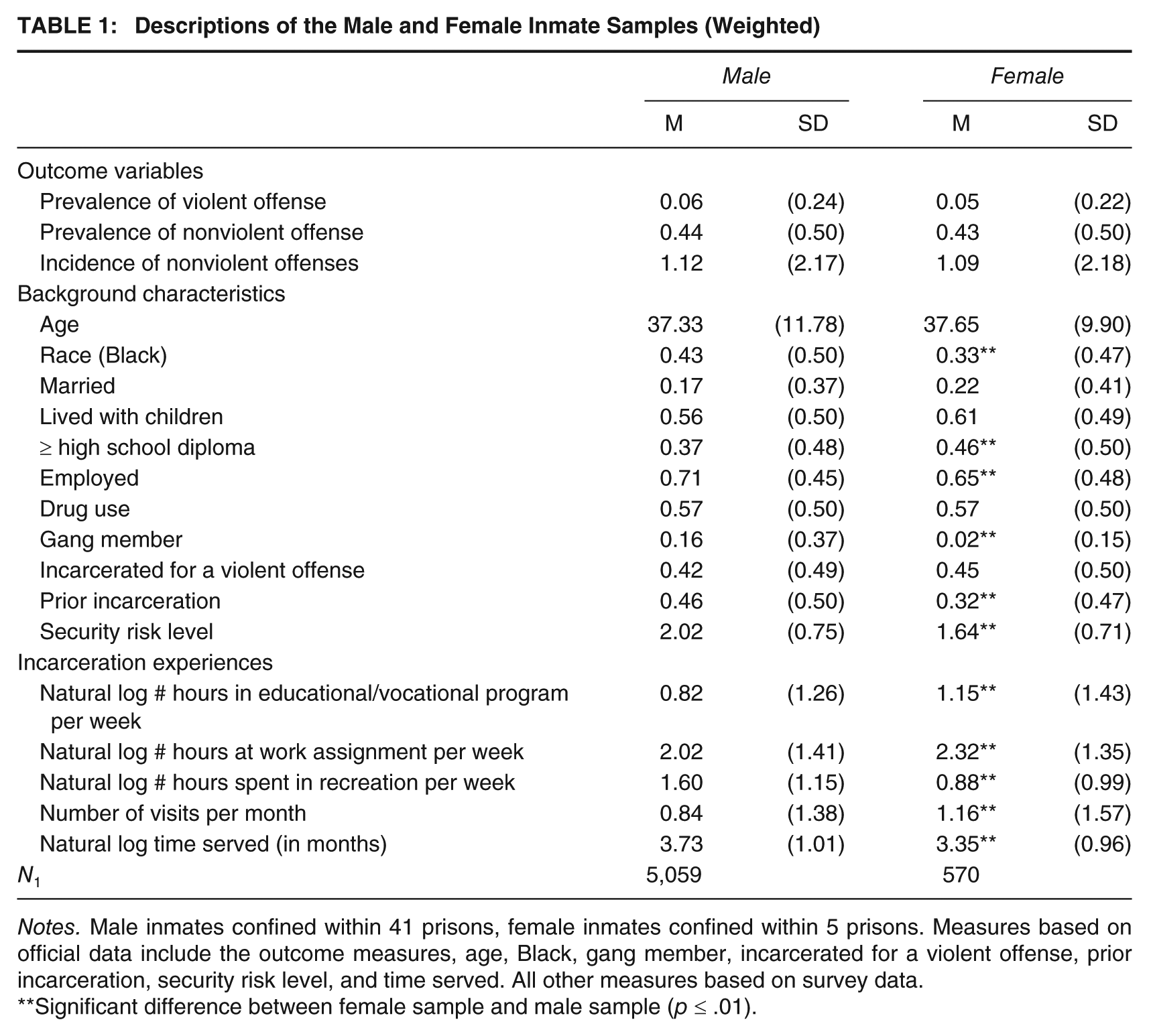
Notes. Male inmates confined within 41 prisons, female inmates confined within 5 prisons. Measures based on official data include the outcome measures, age, Black, gang member, incarcerated for a violent offense, prior incarceration, security risk level, and time served. All other measures based on survey data.
Significant difference between female sample and male sample (p ≤ .01).
The predictor variables include measures of inmates’ background characteristics and incarceration experiences. The measures of inmates’ background characteristics included in the analyses were age, race (Black), married, lived with children, ≥ high school diploma, employed in a noncriminal occupation, drug use, incarcerated for a violent offense, prior incarceration, and security risk level. Measures of inmates’ incarceration experiences included the average number of hours inmates spent in an educational/vocational program, a facility work assignment, or recreation per week, in addition to the average number of visits each inmate received per month, and the inmates’ amount of time served. Age, race (Black), gang membership, incarcerated for violent offense, prior incarceration, security risk level, and time served were created using data obtained from official records, while the other measures were based on inmates’ responses to survey questions. Drug use reflects whether inmates reported having used drugs in the month before their arrest. Security risk is an official classification score (minimum, medium, close/maximum) based on the interval in which an inmate fell on an additive scale comprised of various criminal and institutional history items (e.g., prior juvenile convictions, security level during last imprisonment). 6 The measures of the number of hours in an educational/vocational program, work assignment, and recreation per week were capped at 40 hours and the natural log was taken to reduce the skew in these distributions. For the same reason, the natural log of time served was also examined. Other measures were examined for inclusion in the final models but were ultimately excluded due to either limited variation in the distributions of the scales among women (e.g., Hispanic ethnicity) or collinearity with other stronger effects on misconduct (e.g., sentence length).
Statistical Analysis
The analyses presented here were derived from data with a hierarchical data structure (inmates nested within prisons), and so multi-level modeling techniques were used to adjust for correlated error among inmates housed within the same facility and to control for unmeasured facility-level differences that could affect rates of misconduct across facilities (possibly due to differences in classification procedures, management practices, etc.). The prevalence measures of misconduct were examined with hierarchical Bernoulli regression, while the incidence measures were examined with hierarchical Poisson regression with the correction for over-dispersion available in HLM 7.0 (see Table 1 for the mean and standard deviation of the incidence measure). Only results for the incidence measure for nonviolent offenses are presented here because too few inmates were written up for more than one violent offense during the study period, and so findings for the prevalence and incidence of violent misconduct were virtually identical. Although multi-level data sets were created to adjust for problems resulting from the hierarchical data structure, it is important to note that our models are technically single-level models because they only include measures at the inmate-level of analysis. We considered an examination of facility-level effects, but the results of the unconditional models discussed below in conjunction with the availability of only five facilities for women did not encourage such an analysis. 7
The analyses proceeded in several stages. First, unconditional models were estimated to derive estimates of variance in each outcome existing at each level of analysis, and to determine whether the between-facility estimates were significant. These models revealed nonsignificant between-facility variance in the prevalence of violent offenses and the incidence of nonviolent offenses among female inmates (most likely due to the limited number of facilities for women examined). By contrast, we did find significant between-facility variance in the prevalence of nonviolent offenses among women, and significant between-facility variance in all three types of misconduct among male inmates. Since the purpose of the study was to compare the predictors of misconduct among women versus men, however, we proceeded by only estimating identical, single-level models.
Sex-specific models with fixed effects were estimated. We initially explored random coefficient models, but none of the Level 1 slopes varied significantly across prisons for women, most likely due to the small number of these prisons examined. In contrast, the random coefficient models for male inmates revealed several significantly varying effects. However, the magnitude of the coefficients for the significantly varying effects were very similar to the magnitude of the fixed effects coefficients, and so we present the fixed effects for all Level 1 predictors to facilitate direct comparisons of the sex-specific models. The Level 1 intercepts were kept as random, however, to parse out the error variance in the outcomes that was attributable to between-facility differences.
All of the measures were group mean-centered to remove between-facility variation in inmate characteristics that might have corresponded with differences in levels of misconduct across facilities. The advantage of this strategy is that it offers more conservative tests of Level 1 effects by reducing the odds of finding spurious Level 1 effects due to unmeasured facility effects that might also be related to compositional differences in inmate populations across facilities. Finally, the last step of the analysis involved comparing the magnitudes of the coefficient estimates for each predictor across the sex-specific models using the equality of coefficients test developed by Clogg, Petkova, and Haritou (1995). Brame, Paternoster, Mazerolle, and Piquero (1998) applied this test to compare maximum likelihood coefficients. 8
Findings
Table 1 shows that there were no significant differences in the prevalence of violent misconduct as well as the prevalence and incidence of nonviolent misconduct perpetrated by men versus women. As discussed above, too few inmates (females = 0.5%, males = 0.7%) were written up for more than one violent offense during the study period to facilitate a meaningful analysis of the incidence of violent misconduct. Regarding background characteristics, the two samples were similar in terms of age, and also equally likely to be married, have lived with children, used drugs, and have been incarcerated for a violent offense. The two samples differed on all other background characteristics and also in their incarceration experiences. Compared with men, women were more likely to be White, more educated, and unemployed prior to incarceration. Women were also less likely to be involved with gangs and had less-substantial criminal histories (prior incarceration, security risk level) than men. Relative to men, women spent more time in education/vocational programs and at their prison work assignments, but fewer hours in recreation. Women also received more visits than men. On average, female inmates served less time than their male counterparts.
Turning to the multivariate findings, the results of the analysis of the prevalence of violent misconduct are contained in Table 2. The results of the prevalence and incidence of nonviolent misconduct are displayed in Tables 3 and 4, respectively.
Sex-Specific Effects on the Prevalence of Violent Offenses
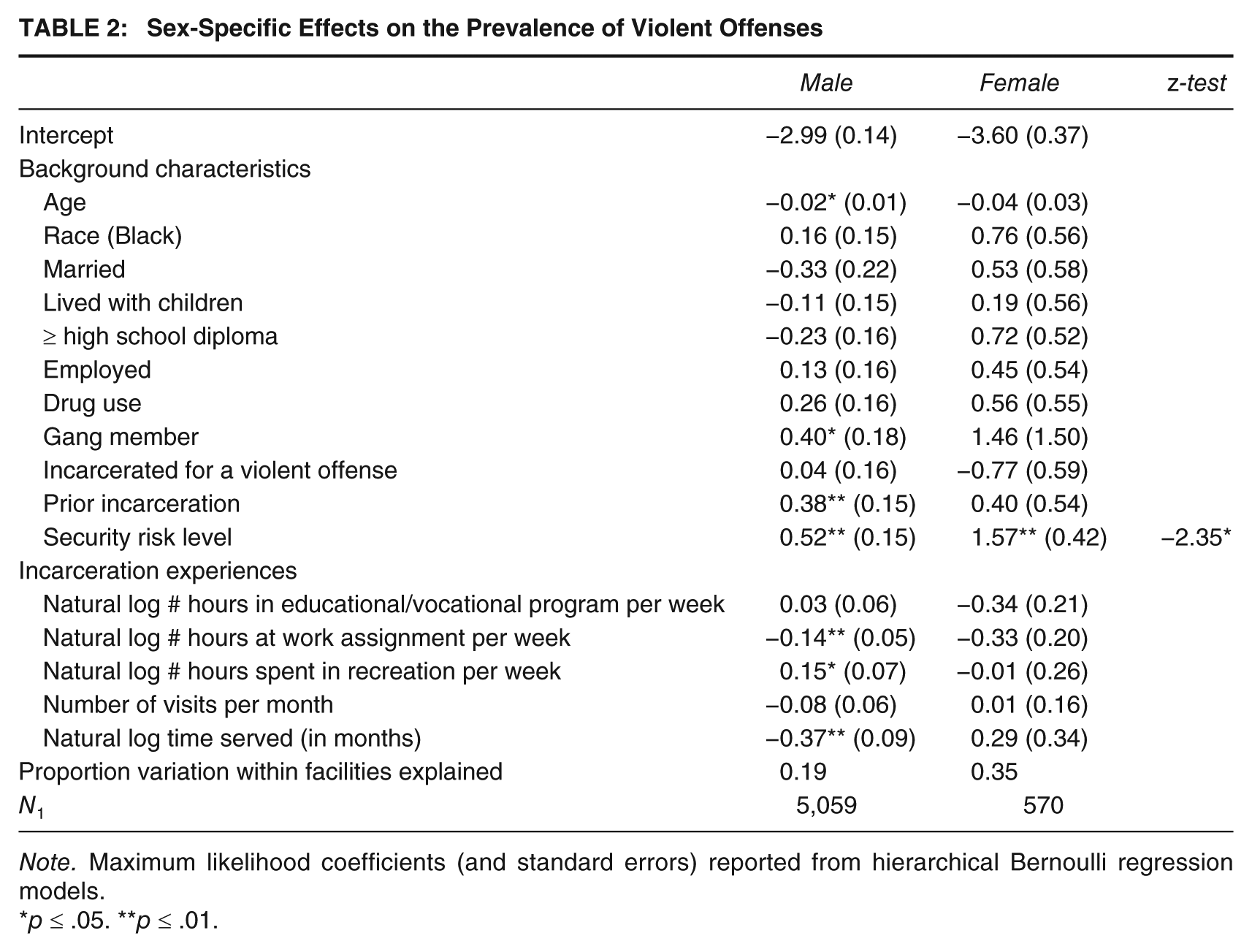
Note. Maximum likelihood coefficients (and standard errors) reported from hierarchical Bernoulli regression models.
p ≤ .05. **p ≤ .01.
Sex-Specific Effects on the Prevalence of Nonviolent Offenses
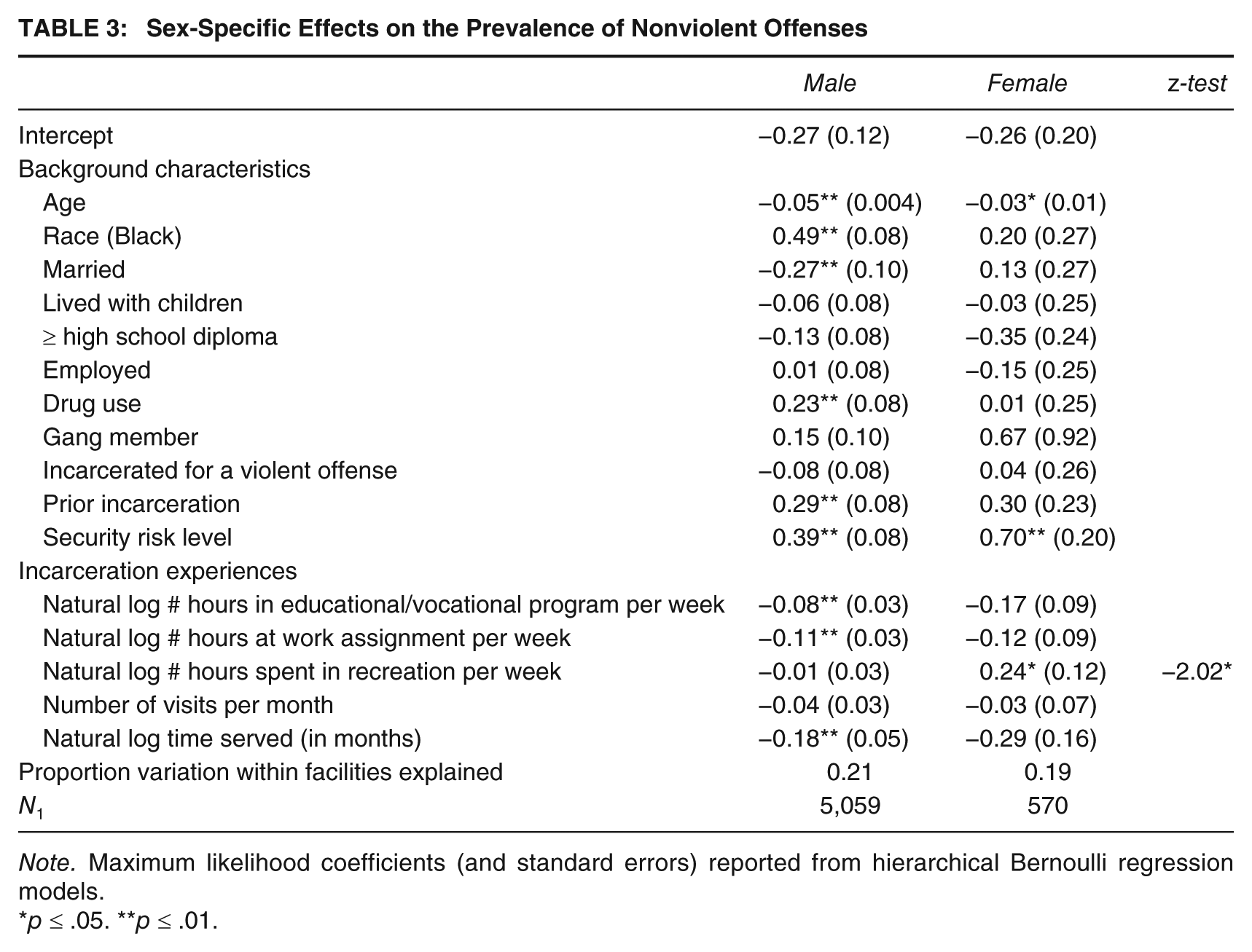
Note. Maximum likelihood coefficients (and standard errors) reported from hierarchical Bernoulli regression models.
p ≤ .05. **p ≤ .01.
Sex-Specific Effects on the Incidence of Nonviolent Offenses
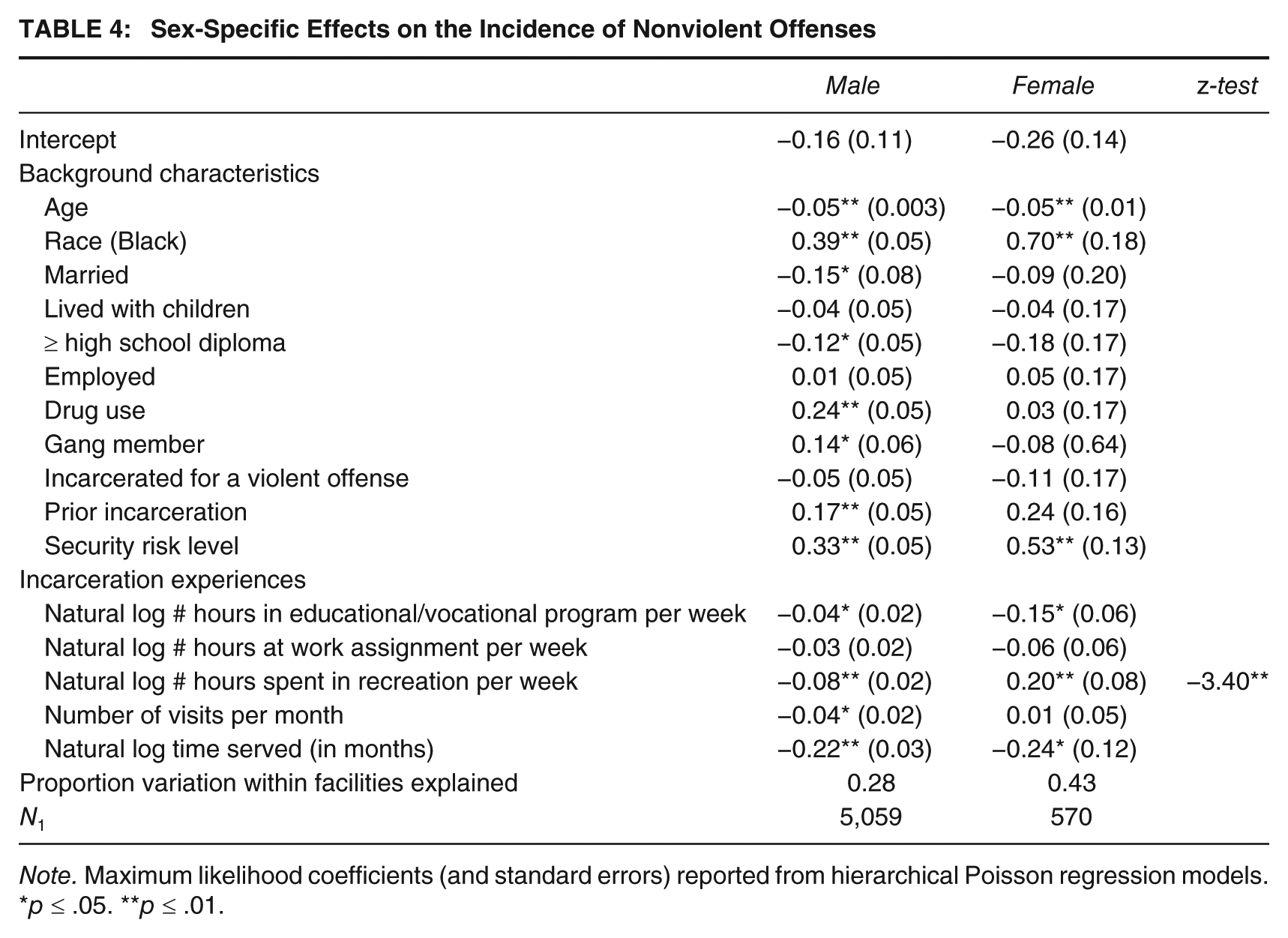
Note. Maximum likelihood coefficients (and standard errors) reported from hierarchical Poisson regression models.
p ≤ .05. **p ≤ .01.
Violent Offenses
Table 2 shows that security risk level was the only background characteristic associated with female inmates’ odds of perpetrating a violent offense; women classified as a higher security risk also had higher odds of committing a violent offense. Male inmates who were younger, previously incarcerated, or classified higher risk were more likely to perpetrate violent misconduct. Although there were some differences in the significance and direction of the effects of the background characteristics, only the effect of security risk level differed between sexes; this positive effect was greater among females versus males.
Regarding incarceration experiences, male inmates who spent more time at a facility work assignment, less time in recreation, and had served less time also had lower odds of violent misconduct. None of the incarceration experiences were associated with women’s odds of violent misconduct. There were no differences in the magnitude of these effects across the analyses of the sex-specific samples. The greater number of significant effects for men is most likely attributable to the larger sample of men compared with the sample of women. Despite the nonsignificance of most of the predictor variables in the analysis of female violent misconduct, the effect of security risk level was not only stronger than the comparable effect among men, but security risk level also explained 35% of the variation in violent misconduct among women (based on the pseudo R2 value), compared with the significant predictor variables in the model of male violent misconduct, which accounted for less (19%) of the variation. 9
Nonviolent Offenses
Table 3 shows that female inmates who were younger or higher risk were more likely to commit a nonviolent misconduct offense. Male inmates who were younger, Black, unmarried, used drugs, or had a more extensive criminal history (prior incarceration, security risk level) had higher odds of nonviolent misconduct. None of the other background characteristics impacted the prevalence of nonviolent misconduct offenses among men or women. Further, there were no differences in the magnitude of the effects of the background characteristics among female inmates compared with males.
The only incarceration experience that impacted female inmates’ odds of committing nonviolent misconduct was time spent in recreation; women who spent more hours in recreation were more likely to commit this type of misconduct. The effect of recreation was not significant among men and this difference in the magnitude of the effect of recreation among female inmates versus male inmates was significant. Men who spent more time in education/vocational programs, a facility work assignment, or had served more time were less likely to commit a nonviolent offense. Visitation had no effect on the prevalence of nonviolent misconduct among men. Aside from the effect of time spent in recreation, the differences in the magnitudes of the effects of incarceration experiences across the male and female samples were not significantly different. The model of nonviolent offenses did a comparable job of predicting the prevalence of nonviolent offenses for men and women (pseudo R2 = .19 for women; pseudo R2 = .21 for men).
The analysis of the incidence of nonviolent offenses (Table 4) revealed that women who were younger, Black, or classified higher risk committed more nonviolent offenses. Men who were younger, Black, unmarried, had less than a high school education, used drugs, were gang members, or had a more extensive criminal history (prior incarceration, security risk level) committed more nonviolent infractions. None of the other background characteristics affected the incidence of nonviolent misconduct offenses among female or male inmates. Further, no sex-based differences in the magnitude of the effects of the background characteristics were observed.
The incarceration experiences that affected the number of nonviolent misconducts committed by female inmates included the number of hours spent in education/vocational programs, recreation, and time served. Women who spent more time in education/vocational programs committed less nonviolent misconducts, while female inmates who spent more time in recreation committed more nonviolent misconducts. Women who had served more time committed a lower number of nonviolent misconducts. Men who spent more time in education/vocational programs, recreation, had received more visits, or served more time committed fewer nonviolent offenses. Despite some differences in the statistical significance of effects, only the effect of recreation differed significantly among female inmates compared with male inmates. The model was more predictive of the incidence of nonviolent misconduct among women compared with men (pseudo R2 = .43 for women; pseudo R2 = .28 for men).
Compared with the analysis of the prevalence of nonviolent offenses, the analysis of the incidence of nonviolent offenses revealed a few differences. For women, these differences included the significant positive effect of race and the significant inverse effects of hours spent in education/vocational programs and time served. Among men, differences included the significant inverse effects of education, hours spent in recreation, and visits, along with the nonsignificant effect of hours spent at a work assignment. Similar to the analysis of the prevalence of nonviolent misconduct, however, only the magnitude of the effect of hours spent in recreation differed significantly between the sexes.
Discussion and Conclusion
Over the past 30 years, the number of women incarcerated in state and federal prisons increased at a rate much higher than that of men (Beck & Harrison, 2001; Guerino et al., 2011). This unprecedented growth in women’s imprisonment has drawn increased attention to female inmates (e.g., Heilbrun et al., 2008; Kruttschnitt & Gartner, 2003; Wright et al., 2012). Drawing from theoretical perspectives on women’s pathways to the justice system (e.g., Daly, 1992) and ethnographic studies of prison for women (e.g., Giallombardo, 1966; Kruttschnitt & Gartner, 2003), scholars have argued that female and male prisoners differ in their background characteristics and institutional routines, and that these differences contribute to divergent institutional risks and needs among women compared with men (Bloom et al., 2003; Van Voorhis et al., 2010; Wright et al., 2012). These scholars have also argued that the differences between men and women should inform the development of gender-specific assessment tools, programming, supervision strategies, and so forth (Bloom et al., 2003; Farr, 2000; Van Voorhis et al., 2010; Wright et al., 2012). Despite the institutive appeal of these observations, however, there has been little evidence to suggest there are differences (or similarities) in the factors that predict institutional misconduct among women versus men (Heilbrun et al., 2008; Wright et al., 2012). That is, few studies have examined the influences on women’s odds of misconduct, and only a handful of studies have examined sex-based differences in the predictors of misconduct (Gover et al., 2008; Harer & Langan, 2001; Jiang & Winfree, 2006; McCorkle, 1995).
We compared the magnitude of the effects of inmates’ background characteristics and incarceration experiences on violent and nonviolent misconduct across sex-specific samples of inmates confined in Ohio and Kentucky prisons. Across the predictors of misconduct examined here, we observed very few differences in influences on misconduct among women versus men; only three differences in the magnitude of effects were observed (out of 48 tests). We did find evidence that these men and women differed in many of the background factors that they brought to prison, as well as in their institutional experiences. Even after controlling for these sex-based differences in background characteristics and incarceration experiences, however, we observed no differences between these men’s and women’s odds of perpetrating violent or nonviolent misconduct. Taken together, our findings suggest that there are differences in the background factors and institutional experiences of male and female inmates (see also Heilbrun et al., 2008; Van Voorhis et al., 2010), but these differences do not coincide with sex-based differences in the odds of institutional misconduct, nor are these factors more relevant for influencing the odds of misconduct among women compared with men (with only a couple of exceptions).
The findings from this study are generally consistent with those derived from other studies that have compared the predictors of misconduct among male and female inmates. Most of the extant studies have observed sex differences in preincarceration characteristics and inmate experiences during confinement, as were found here (e.g., Gover et al., 2008; Harer & Langan, 2001; Jiang & Winfree, 2006; McCorkle, 1995). Some of these studies have also uncovered a number of sex group differences in the statistical significance of these effects on the odds of misconduct (Craddock, 1996; Gover et al., 2008; Ireland, 1999; McCorkle, 1995). Studies that have compared differences in the magnitude of these effects between women and men, however, have revealed very few differences in the strength of these effects on misconduct (Gover et al., 2008; Harer & Langan, 2001). Such comparisons are important for determining whether differences in statistical significance across samples of men and women constitute real differences rather than differences that are attributable to sampling error.
In their study of inmates housed in the Federal Bureau of Prisons, Harer and Langan (2001) reported only two differences in the magnitude of effects between women and men (stronger effects for women of pre-commitment status and a history of violence). Gover et al. (2008) observed only two differences in the strength of effects in their study of inmates housed in prisons in a southeastern state (prior incarceration had a stronger effect on misconduct odds among men, while length of stay was a stronger predictor of misconduct among women). Considering these findings along with those from this study, then, there do not appear to be consistent differences in the sources of misconduct among women versus men, although additional studies are certainly needed to substantiate these findings. Future studies might also investigate scholars’ claims pertaining to the sex-specific relevance of other potentially “gender responsive” factors such as a history of abuse, mental illness, self-efficacy, and self-esteem (Van Voorhis et al., 2010; Wright et al., 2012). The limitations of our data prohibited us from including such measures here and it may very well be that these factors are more relevant for women than men. Recall that the perspectives on women’s pathways to the justice system discussed earlier underscore the relevance of a history of abuse, trauma, and mental illness among female offenders, and a few quantitative studies have found support for these perspectives among female-specific samples (e.g., Salisbury & Van Voorhis, 2009; Steiner & Wooldredge, 2009a; Van Voorhis et al., 2010). Given that we were unable to include measures of these factors in this study, our findings should not be considered evidence that refutes the pathways perspectives. To be sure, most of the background characteristics examined in this study reflect concepts that are typically examined in studies of inmate misconduct, most of which have been conducted with male samples. An examination of the sex-specific applicability of the pathways perspective would require that measures of a history of abuse, trauma, mental illness, and so forth be assessed among female and male inmates, and the magnitude of the relative effects of these measures be compared.
In addition to the inability to include measures potentially depicting aspects of women’s pathways to the justice system, some additional limitations to this study are worth mentioning. First, the outcome variables were based on official measures of misconduct. Official measures of misconduct have been found to underestimate the total volume of deviance within institutions (Hewitt, Poole, & Regoli, 1984), and may also be subject to systematic bias resulting from discretionary reporting or recording on the part of staff (Light, 1990). Particularly relevant for this study could be differences in how officers treat female inmates compared with male inmates. Some ethnographic studies have uncovered that female inmates are “officially” charged with prison misconducts at higher rates than male inmates (Bloom et al., 2003), and these potential differences in officers’ use of their discretion could account for the similar odds of violent and nonviolent offenses among the men and women studied here. On the other hand, in another study involving these data, we compared the predictors of self-reported assaults, drug, and property offenses to the predictors of comparable measures of officially detected misconducts. We found that, regardless of the type of data examined, male and female inmates had similar odds of committing an assault and male inmates were more likely to commit a drug offense. We observed no differences in rates of self-reported property offenses between men and women, but men had higher rates of officially detected property offenses, suggesting that officers may have been more likely to officially charge male inmates with property offenses compared with female inmates (Steiner & Wooldredge, in press). Regardless of whether this was the case, our findings do suggest that officers in Ohio and Kentucky do not use their discretion to charge women at higher rates than men (see also Daggett & Camp, 2009; Van Voorhis, 1994). For this study, we used the official measures of misconduct because we were able to consider a broader range of items for the offense groups, which increased the base rates of these offenses and provided for more stable coefficient estimates.
Second, the goals of the larger project required that the outcome measures be restricted to the past 6 months (i.e., measures of aspects of inmates’ confinement experiences were based on the inmates’ recent activities). Although we have no reason to suspect that an inmates’ sex is related to the period of their incarceration when they commit misconduct, we also are unable to test for this possibility. Third, the limited number of facilities for females prohibited the examination of facility-effects. Researchers have observed that facility characteristics are relevant for explaining variation in rates of misconduct across facilities for men and facilities for women (e.g. Jiang & Winfree, 2006; Lahm, 2008; Morris & Worrall, in press; Steiner & Wooldredge, 2008; Steiner & Wooldredge, 2009a). Although the analytical techniques used here controlled for the effects of between-facility differences, permitting greater confidence to be placed in the inmate-level findings, future studies may go one step further and examine whether there are differences in the effects of facility-level factors across prisons for women versus those for men. Potentially relevant sex-specific predictor variables might include measures of facility characteristics such as crowding, use of disciplinary housing, and program availability. Finally, our study was limited to inmates and prisons from two states. Researchers may wish to investigate sex-based differences in misconduct with data collected in other jurisdictions. Particularly relevant could be states with greater diversity in race and ethnic composition compared with the primarily Black–White populations examined in this study.
In addition to the findings pertaining to the differences in the predictors of women’s and men’s misconduct discussed above, we also observed significant main effects on misconduct that are consistent with much of the existing research on inmate misconduct. Given the similarities in the magnitude of effects among women versus men, readers may want to place greater faith in the findings derived from the analysis of the male sample due to the much larger sample size examined. The background factors of age and criminal history (prior incarceration, security risk level) were predictive of violent and nonviolent misconduct. The institutional factor of time served was also inversely related to both types of misconduct. These findings are congruent with those from other studies of inmate deviance (Griffin & Hepburn, 2006; Harer & Langan, 2001; Houser et al., 2012; Kruttschnitt & Gartner, 2005; Lahm, 2008; McCorkle, 1995; Sorensen & Cunningham, 2010; Sorensen & Davis, 2011; Steiner & Wooldredge, 2009a; Steiner & Wooldredge, 2009b; Toch et al., 1989; Wooldredge et al., 2001). Other background factors such as race, marital status, education, and prearrest employment were more relevant for improving prediction of nonviolent misconduct compared with violent misconduct. Unfortunately, this assortment of findings only further muddies the picture regarding the relative importance of race and involvement in conventional pursuits before incarceration for explaining inmates’ odds of misconduct (see also Houser et al., 2012; Kruttschnitt & Gartner, 2005; Lahm, 2008; Steiner & Wooldredge, 2009a; Steiner & Wooldredge, 2009b; Toch et al., 1989; Wooldredge et al., 2001).
Findings more unique to this study included the relevance of institutional routines. Participation in programs and work assignments was associated with lower odds of misconduct, while the effects of involvement in recreation were mixed (positive effects on the prevalence of violent misconduct among men, but inverse effects on the incidence of nonviolent misconduct among men). The relevance of participation in these activities, however, suggests that related measures should be considered in future studies of the subject. From a more practical standpoint, these findings suggest that involving inmates in structured activities might offer them an incentive to comply with facility rules or, from a more cynical standpoint, simply increase supervision and control over their behaviors (see also Colvin, 1992). Either way, correctional administrators might consider trying to involve more inmates in supervised activities that structure their routines.
Altogether, the findings from this study have several additional implications for correctional practice and sex-specific theories of inmate behavior. First, our findings suggest that there are a number of differences in the backgrounds and institutional routines of male and female inmates. However, these differences do not appear to coincide with differences in the predictors of misconduct (see also Harer & Langan, 2001). Before suggesting that the applicability of sex-specific theories such as the pathways perspective (Daly, 1992) be refuted, however, it is important to remember that our study was limited to some of the more traditional measures of inmates’ background characteristics, and many of these measures have been identified as relevant based on studies of male inmates. Although our findings suggest these factors predict equally well for men and women, perspectives on women’s pathways to the justice system suggest that there are additional factors (e.g., history of abuse) that may be relevant for women. It is imperative that future studies investigate whether these perspectives can be supported and whether they only apply to women (see also Wright et al., 2012). For the time being, however, our findings do suggest that some of the traditional predictors of male inmate misconduct (e.g., criminal history) do predict female inmate misconduct. Correctional administrators would be wise to include these factors in gender neutral and gender responsive risk assessment instruments (see also Van Voorhis et al., 2010). Second, our findings revealed a higher level of involvement in facility programming (e.g., education/vocational programs) among women compared with men, but less involvement in recreation. We also found that involvement in recreation was related to higher odds of nonviolent misconduct among women, but lower odds of nonviolent misconduct among men (incidence only). Taken together, these findings might suggest that women have a greater need for involvement in programming that is related to self-improvement (e.g., education), while men simply need to be involved in activities that pass the time (e.g., recreation). Although further research would be needed to support this claim, our findings allude to some differences in programming needs among male and female inmates. Correctional administrators may want to consider experimenting with different programming options in prison for women compared with those offered in prisons for men.
All told, the findings from this study offer some new insights regarding the influences on misconduct among men and women. Although we found more similarities than differences in the predictors of misconduct among these two populations, the findings should be useful for informing future research on the subject, not to mention practical methods designed to reduce the prevalence and incidence of misconduct (e.g., assessment tools and supervision strategies). Our findings and the limitations of this study also point to several avenues for future research such as the examination of other potential sex-specific factors (e.g., history of abuse). It is only through continued study of the relevance of the differences between men and women that we can get a better handle on whether these differences should inform correctional practice.
Footnotes
Acknowledgements
The authors also wish to thank Guy Harris, along with Brian Martin and Gayle Bickle with the Ohio Department of Rehabilitation and Correction, and Ruth Edwards and Tammy Morgan with the Kentucky Department of Corrections for their assistance with the collection of the data for this study.
Authors’ Note:
This study was supported, in part, by grants from the National Institute of Justice (Award #2007-IJ-CX-0010) and the National Science Foundation (Award #SES-07155515). The opinions, findings, and conclusions expressed in this presentation are those of the authors and do not necessarily reflect those of the Department of Justice or the National Science Foundation.