







Abstract
A long line of research has revealed that neuropsychological and familial factors are associated with crime and delinquency. Although some studies have also examined the relevance of neuropsychological–familial interplay in the prediction of adolescent misconduct, scholars have yet to explore whether this interplay is generalizable across groups stratified by race and socioeconomic status (SES). The current study employs data drawn from the Early Childhood Longitudinal Study, Kindergarten Class of 1998-1999 (ECLS-K) to examine whether race and SES condition the interactive effects of neuropsychological deficits and adverse parenting on adolescent misconduct (N = 7,155). The results reveal that interactions between neuropsychological deficits and adverse parenting during childhood are especially predictive of adolescent misconduct among relatively privileged subsets of the sample (i.e., White, high SES). Limitations are noted, and future avenues for research are discussed.
Along line of multidisciplinary research has detected significant overlap between an individual’s neuropsychological and behavioral profiles (Brownlie et al., 2004; Matthys, Vanderschuren, Schutter, & Lochman, 2012; Olvera, Semrud-Clikeman, Pliszka, & O’Donnell, 2005; see Morgan & Lilienfeld, 2000, for a review). Comparatively, criminologists have only recently begun to more fully explore the association between neuropsychological functioning and various antisocial traits (Jackson & Beaver, 2013) and behaviors (Ratchford & Beaver, 2009), including crime and delinquency (Bellair & McNulty, 2010; Bellair, McNulty, & Piquero, 2016). The increased attention given to this relationship is due in large part to the theorizing of Moffitt (1993), who proposed that neuropsychological deficits during early childhood, coupled with a criminogenic familial context, underpin a persistent offending trajectory. To date, the vast majority of studies examining Moffitt’s hypothesis have been supportive, indicating that persistent antisocial behavior is influenced by both neuropsychological (Moffitt & Caspi, 2001; Piquero, 2001) and familial (Tremblay et al., 2004; Turner, Hartman, & Bishop, 2007) factors.
In addition to this body of work, some scholars have also tested Moffitt’s contention that the influence of “early individual differences” in neuropsychological functioning on antisocial behavior is “exacerbated by interactions with the [home] environment” (Moffitt, 1993, p. 682; see Moffitt, 1990; Raine, Brennan, Mednick, & Mednick, 1996). These studies examine the role of “problem child-problem parent interactions [in] the emergence of antisocial behavior” (Moffitt, 1993, p. 682). More broadly, several studies across disciplines have examined the ways in which behavioral trajectories are shaped by the interplay between individual traits and the familial environment (Ge et al., 1996; Kochanska & Kim, 2013; Loeber, 1990; Rhee & Waldman, 2002), including studies examining gene–environment interactions (Raine, 2002; see Reiss & Leve, 2007, for an example).
Despite this body of research, studies exploring interactions between neuropsychological deficits and adverse familial context often assume unilateral applicability of Moffitt’s claim across different subsets of the population (see Moffitt, 1990; Raine et al., 1996). More specifically, these studies do not consider the possibility that subsets of the population who are more likely to be exposed to a greater number and a wider variety of criminogenic risk factors (e.g., low socioeconomic status [SES], non-Whites) may be more or less susceptible to the interactive effects of neuropsychological deficits and adverse family environments on subsequent antisocial behavior. Research has suggested that various forms of social disadvantage can “play an important role in determining family processes” and their relative impact on behavioral outcomes (Lee, McClernon, Kollins, Prybol, & Fuemmeler, 2013; Patterson, 2002, p. 29; Strom, Strom, & Beckert, 2008). One possibility is that the influence of neuropsychological–familial interplay may be camouflaged by the criminogenic effects of social disadvantage (i.e., the social-push hypothesis), which would imply differential applicability of Moffitt’s theory across distinct subsets of the population (see Raine, 2002). Ultimately, the current study aims to extend prior research by exploring the interactive effects of neuropsychological deficits and adverse parenting during childhood on subsequent misbehaviors across groups distinguished by race and SES.
The Link Between Neuropsychological Deficits, Adverse Familial Contexts, and Offending Behaviors
In her seminal work, Moffitt (1993) proposed that there are two groups of offenders: adolescence-limited and life-course-persistent offenders. She also argues that the offending of these groups is distinct in its pattern and etiology. Adolescence-limited offending is theorized to be largely a function of peer influence and the “maturity gap,” wherein adolescents are stuck in “a time warp between biological age and social age” (Moffitt, 1993, p. 687). In the case of life-course-persistent offenders, however, Moffitt (1993) argued that antisocial behaviors begin at an earlier age and are explained by the joint, interactive influence of neuropsychological deficits and familial risk factors.
In general, Moffitt’s theory has received a notable amount of support (for a review, see Jennings & Reingle, 2012), despite some researchers questioning whether the theory’s definition of persistence is too narrow (Gunnison, 2015; Odgers et al., 2008). Still, studies to date have largely demonstrated that neuropsychological deficits play an important role in future criminal behavior and related forms of misconduct (Brownlie et al., 2004; McGloin & Pratt, 2003; Olvera et al., 2005; Piquero & White, 2003; for a recent meta-analysis, see Ogilvie, Stewart, Chan, & Shum, 2011). Findings from studies have also suggested that conduct problems tend to accumulate as a result of these deficits, which diminish reward/punishment sensitivity (Matthys et al., 2012) and the ability to successfully navigate social life (Brownlie et al., 2004). Despite these results, most of the criminological tests of the association between neuropsychological deficits and antisocial/criminal behaviors use cross-sectional research designs (Cauffman, Steinberg, & Piquero, 2005; Donnellan, Ge, & Wenk, 2000) and/or employ adolescent measures of neuropsychological functioning as predictors of subsequent offending (Barratt, Stanford, Kent, & Alan, 1997; Beaver, DeLisi, Vaughn, & Wright, 2010). For example, Cauffman et al. (2005) compared the neuropsychological profiles of a sample of incarcerated youth with a sample of high school youth. The results revealed that the incarcerated youth exhibited poorer performance on tasks that activated cognitive functions mediated by the prefrontal cortex (Cauffman et al., 2005). In addition, Donnellan et al. (2000) examined a sample of juvenile delinquents with arrest records and found that the effect of cognitive performance across 12 different tests predicted persistent offending among White and Hispanic youth.
Recently, Bellair et al. (2016) improved upon much of the prior research by employing a longitudinal design but were unable to examine neuropsychological functioning during childhood. The results revealed that verbal ability during adolescence was significantly predictive of a persistent offending trajectory across a 14-year time span (see also Donnellan et al., 2000). Similarly, a recent study by Johnson, Kemp, Heard, Lennings, and Hickie (2015) revealed that deficits in verbal learning and memory during adolescence were predictive of subsequent violent behavior, as well as an earlier onset of conduct problems. Despite these findings, very few studies have explored the impact of neuropsychological deficits during early childhood on antisocial behavior at subsequent life stages (Jackson & Beaver, 2013; McGloin & Pratt, 2003; Moffitt & Caspi, 2001). The studies that do examine childhood neuropsychological functioning, however, suggest that it has important implications for the development of antisocial traits and behaviors. For instance, Jackson and Beaver (2013) found that neuropsychological deficits during early childhood predict subsequent levels of self-control across the childhood years, which in turn predict conduct problems during adolescence. Additional research has found that cognitive ability at age 7 is a robust predictor of the likelihood of onset, the timing of onset, and the persistence of delinquency through age 18 (McGloin & Pratt, 2003; see also Piquero, 2001). McGloin and Pratt (2003), for instance, found that an early onset of offending (i.e., prior to age 14) was robustly predicted by cognitive ability, in that children with poorer language, mathematical, reading, and spelling skills were at increased risk of an early onset of offending.
Some studies have also examined the person–environment interplay that Moffitt (1993) proposed, which suggests that children with neuropsychological risk may be more vulnerable to noxious or criminogenic environments, particularly those found in the familial context (Moffitt, 1990; Raine et al., 1996). For instance, a study of a New Zealand cohort of children detected a significant interaction between an adverse family context and poor neuropsychological functioning in the prediction of aggressive behavior (Moffitt, 1990). Similarly, Raine and colleagues (1996) found that children with early neuromotor deficits and unstable family environments engaged in more than twice the violence, theft, and total crime, relative to those with only one of the risk factors. These results are supportive of Moffitt’s claims, as they suggest that it is the interaction of neurocognitive and familial risk that heightens the likelihood of a delinquent trajectory. A number of researchers have also found that various individual traits (e.g., genes, temperament) interact with the family environment to predict misconduct (Kochanska & Kim, 2013; Kochanska, Kim, Boldt, & Yoon, 2013; Waller et al., 2015), which is also consistent with Moffitt’s theorizing. For instance, a recent study by Kochanska and Kim (2013) revealed that the influence of childhood temperament on subsequent behavioral problems is exacerbated when maternal responsiveness is low, yet attenuated when maternal responsiveness is high.
In sum, the literature generally indicates that neuropsychological deficits play an important role in subsequent offending and misconduct. To date, research findings also tend to support Moffitt’s assertions concerning person–environment interactions. Even so, it is not entirely clear how persistent these effects are over time (although see Bellair et al., 2016; Jackson & Beaver, 2013) and whether childhood neuropsychological deficits are particularly predictive of persistent offending, as Moffitt (1993) hypothesized.
The Generalizability of Moffitt’s Hypothesis
Some research has explored whether the direct influence of neuropsychological deficits on antisocial outcomes differs between White and non-White participants. A recent study by Bellair and colleagues (2016) revealed that neuropsychological deficiencies appear to place both White and non-White participants at greater risk of a persistent offending trajectory. Similarly, distinct analyses of White (Moffitt & Caspi, 2001) and non-White (Piquero, 2001; Piquero & White, 2003) samples seem to suggest little moderation of the effect by race. Despite this fairly consistent pattern, other factors that are often correlated with race (e.g., neighborhood disadvantage; see Chauhan, Reppucci, Burnette, & Reiner, 2010) appear to moderate the link between neuropsychological deficits and conduct problems. For example, Bellair and McNulty (2010) found that the link between neurocognitive factors and subsequent violence was most pronounced in nondisadvantaged contexts. This finding is consistent with Raine’s (2002) social-push argument, which suggests that biological risk factors become most relevant to antisocial outcomes in socially advantageous contexts and become muted in socially disadvantageous contexts. Raine argues that when children are exposed to particularly adverse environments, any biological contribution to antisocial behavior is likely to be camouflaged (or significantly weakened) by the environmental risks. Alternatively, when social risks are lacking, or the noise of negative social influences is muted, then the biological contribution is expected to become more salient (see Raine, 2002). Despite Bellair and McNulty’s study, research exploring the extent to which neuropsychological risk predicts offending among distinct groups characterized by differing levels of social risk remains very sparse.
An important and related question, which has not yet been addressed in the literature, is whether neuropsychological deficits and adverse family environments interact to predict misconduct uniformly across different segments of the population. There is reason to believe that the broader context of social disadvantage might alter the influence of Moffitt’s proposed interaction (i.e., Neuropsychological × Familial Risk) on subsequent misbehaviors. For instance, Patterson’s (2002) theory of coercive family processes proposes that reciprocal, negative interactions between parents and children can reinforce a problematic behavioral trajectory (see also Wells & Rankin, 1988, for a discussion of parenting and delinquency). Importantly, Patterson highlights the significance of the broader conditions that characterize parent–child interactions, including (a) the temperament of the infant (which is partially a function of neurocognitive factors; see Beaver, DeLisi, Vaughn, Wright, & Boutwell, 2008; Vaske, Newsome, & Boisvert, 2013) and (b) demographic factors, including SES (Patterson, 2002). He argues specifically that “changes in the context [of parent-child interactions] may alter [such] interactions, and in doing so alter child outcomes” (Patterson, 2002, p. 42). He ultimately posits that parenting beliefs and practices are shaped by the broader context in which parenting occurs, suggesting that parenting in disadvantageous contexts can increase the risk of perceived failure (e.g., parental anger/rejection, negative attribution about child), which, in turn, can increase the probability of deviant child outcomes (Patterson, 2002; see also Hay, Fortson, Hollist, Altheimer, & Schaible, 2006).
In accordance with Patterson’s theory, it may be that adverse parenting is especially likely to exacerbate the influence of neuropsychological deficits on subsequent misconduct among families who typically experience a greater degree of social and contextual disadvantage (e.g., low SES, non-Whites). Nevertheless, Raine’s social-push hypothesis suggests that the influence of biosocial factors becomes more salient in socially advantageous contexts. From a social-push perspective, adverse parenting would likely play a larger role in conditioning the link between neuropsychological deficits and subsequent antisocial behavior among relatively privileged subsets of the population (Raine, 2002; see Ray, Thornton, Frick, Steinberg, & Cauffman, 2016, for recent support of the social-push hypothesis). Ultimately, the direction of such three-way interaction effects remains unknown, as it has not yet been explored in the literature.
The Current Study
Although a number of studies have tested Moffitt’s postulations concerning the role of neuropsychological deficits and adverse family environments in predicting offending, this body of literature currently suffers from two key limitations. First, a relatively small number of studies use data that measure neuropsychological deficits during early childhood (except see Jackson & Beaver, 2013; Moffitt & Caspi, 2001). Using early childhood measures of neuropsychological deficits is important, as doing so (a) effectively establishes the antecedence of neuropsychological deficits to offending and (b) more accurately reflects Moffitt’s arguments concerning the relevance of neuropsychological problems during the earliest stages of life for subsequent offending. Second, scholars have not yet examined whether the interactive influence of neuropsychological deficits and adverse family environments varies for different subsets of the population. For instance, it is possible that the joint influence of adverse parenting and neuropsychological deficits may be less relevant to the offending behaviors of groups who are at greater risk of exposure to additional criminogenic risk factors (e.g., low SES, non-Whites; see Bellair & McNulty, 2010). In light of these limitations, the present study seeks to address these voids in the literature by exploring the interaction between neuropsychological deficits and adverse parenting in the prediction of adolescent misconduct, and whether this interaction is differentially predictive of misconduct by race and SES.
Method
Data
Data were derived from the Early Childhood Longitudinal Study, Kindergarten Class of 1998-1999 (ECLS-K). 1 The ECLS-K contains a large, nationally representative sample of approximately 21,000 children in the United States. The data were collected primarily to assess the educational achievements and experiences of children, including their methods of learning. ECLS-K also collected data concerning the child’s neuropsychological capacity, social skills, and behavior from a variety of sources, including parents, teachers, and school administrators. Seven waves of data have been collected to date, with the first wave of data collection commencing in the fall of the 1998-1999 school year, when participants were in kindergarten. The second, third, and fourth waves of data collection occurred at 6-month intervals, with the fourth wave of data collection occurring during the spring of 2000. The fifth wave of data was collected during the fall of the third-grade school year, the sixth wave of data was collected during the fall of the fifth-grade school year, and the seventh wave of data was collected during the fall of the eighth-grade school year. Thus, the study followed children from the age of 5 to the age of approximately 13 to 14 years.
Importantly, data were collected using a number of different methods, including surveys, interviews, and direct assessment. For example, at Wave 1, the fine and gross motor skills of the focal children were assessed. Parents were also interviewed and asked a number of questions concerning the child’s traits and life experiences. Teachers completed surveys containing questions about their didactic approach and classroom, as well as specific questions about each study participant in their class. School administrators also reported on school policies as well as broad indicators of the quality and safety of the school setting. Finally, starting in the third grade, the focal children themselves also responded to self-description questionnaires that asked them about their thoughts and feelings.
Sample
In the current study, the final sample size was 7,155 across all models. The average age of participants at the first wave of data collection was 5.71 or nearly 6 years of age. The sample has slightly more males than females (51% male). Moreover, while the majority of the sample is White, approximately 37% of the children are non-White, providing adequate statistical power for subsequent three-way interactions by race (see Table 1 for additional sample characteristics).
Descriptive Statistics
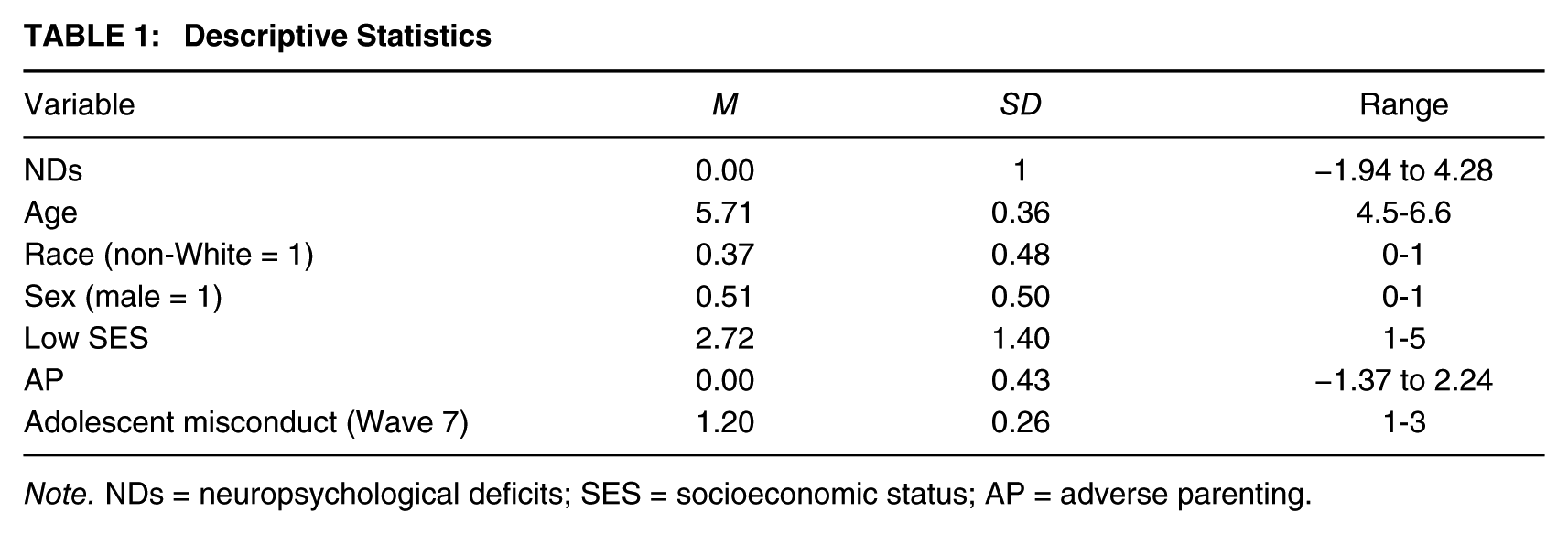
Note. NDs = neuropsychological deficits; SES = socioeconomic status; AP = adverse parenting.
Measures
Adolescent Misconduct
The outcome variable of interest in the current study is adolescent misconduct. At Wave 7, when participants were 13 or 14 years of age, parents were asked six questions regarding their child’s tendency to engage in various acts of misconduct. To be precise, parents were asked to report on whether their child had a penchant for fighting, stealing, cheating, lashing out, and engaging in otherwise inconsiderate behaviors. Response options ranged from 1 (not true) to 3 (certainly true). Each of the items was coded so that higher scores were reflective of a greater inclination toward that particular act of misconduct. In line with prior research (Jackson & Beaver, 2013), we summed the items together to construct a scale of adolescent misconduct (α = .67). Factor analysis revealed that the items loaded onto one factor. In particular, the results of the factor analysis yielded only one factor with an eigenvalue over 1 (1.61), indicating that only one factor should be extracted from the set of items.
Neuropsychological Deficits
In her work, Moffitt (1993) argued that both language and motor deficits can act as proxies for impaired brain functioning. Subsequently, several studies have employed both language difficulties (Ratchford & Beaver, 2009; Stattin & Klackenberg-Larsson, 1993) and motor deficits (Beaver, Wright, & DeLisi, 2007; Moffitt, Lynam, & Silva, 1994; Raine et al., 1996) as proxies for neuropsychological deficits. In the current study, we follow the lead of prior research using the ECLS-K (Jackson & Beaver, 2013) by including indicators of both fine and gross motor deficits in our measure of neuropsychological deficits. At the first wave of data collection, when children were in kindergarten, motor skills were assessed using the Early Screening Inventory–Revised (ESI-R; Meisels, Marsden, Wiske, & Henderson, 1997). The assessment, which has been found to be a reliable and valid indicator of motor skills, taps both fine motor skills and gross motor skills (Meisels, Henderson, Liaw, Browning, & Ten Have, 1993).
Fine motor abilities were measured by asking children to draw five simple figures, to draw a person, and to build a gate. Possible scores on the tasks ranged from 0 to 2, with higher scores indicating a greater degree of fine motor skills. The gross motor abilities of focal children were measured by asking children to balance, walk backward, hop, and skip. Again, possible scores range from 0 to 2, with higher scores being indicative of greater gross motor ability. Ultimately, the fine and gross motor indices were reverse coded so that higher scores indicated relatively low fine and gross motor ability (or motor deficits). The fine and gross motor deficit measures were then summed together to create a generalized measure of neuropsychological deficits (see Jackson & Beaver, 2013). 2
Adverse Parenting
Three dimensions of parenting were tapped to assess each child’s level of exposure to adverse parenting: low parental involvement, low parental affection, and parental withdrawal. At the first wave of data collection, parents were asked eight questions concerning the amount of time they spent engaging in various educational, prosocial, and/or recreational activities with their child. Specifically, parents were asked how many times during the typical week they read to their child, sing songs with their child, play games with their child, help their child with projects, help their child with chores, tell stories to their child, teach their child about nature, help their child build things, and play sports with their child. Response options to the questions included 1 (not at all), 2 (once or twice), 3 (3-6 times), and 4 (everyday). Scores for the items were coded so that higher scores are indicative of a lower degree of parental involvement and engagement.
In addition to the eight items tapping parental involvement, four questions pertaining to the degree to which affection characterized the parent–child relationship were asked of parents. During the second wave of data collection, parents were asked about the extent to which they felt liked by their child, enjoyed warm interactions with their child, showed love toward their child, and expressed their affection for their child. Response options ranged from 1 (completely true) to 4 (not at all true). Thus, higher scores on these items were indicative of lower levels of affection shared between the parent and the child. Finally, parents were asked nine questions at Wave 2 to assess their feelings of emotional withdrawal from their role as a parent. To illustrate, parents were asked whether they felt that parenthood was more work than pleasure, whether they felt that parenthood was more difficult than they expected, whether they felt trapped in their role as a parent, whether they felt angry to be a parent, whether they felt too busy to be a parent, and whether they felt that they were giving up too much of their life to meet the child’s needs. Again, response options ranged from 1 (completely true) to 4 (not at all true). Items were reverse coded so that higher scores were indicative of a greater degree of parental withdrawal.
Ultimately, the items from each of these dimensions of adverse parenting (i.e., 21 in total) were summed together into a composite index of adverse parenting (α = .78).
Demographic Variables
All of the models include a continuous measure of age to account for any confounding in the relationship between neuropsychological deficits, adverse family environments, and misconduct due to age differences between participants. Each model also includes a dichotomous race variable in which Whites were assigned a value of 0, and the remaining participants were assigned a value of 1. Biological sex was also included as a covariate in each analysis. On this variable, males were assigned a value of 1, whereas females were assigned a value of 0. Finally, a measure of SES was included in the current analysis. At the first wave of data collection, ECLS-K researchers obtained data on a number of educational and occupational details pertaining to the household. A composite measure of SES was provided in the data at Wave 1. Specifically, a standardized, SES composite score comprised of items tapping parental education, employment, occupational prestige, and income was constructed and subsequently divided into quintiles, with the lowest quintile being assigned a value of 1 and the highest quintile being assigned a value of 5. For the purposes of the current study, the quintiles were reverse coded so that higher scores on the measure reflect lower levels of SES (for additional details, see Banks, Berlin, Rybak, Kamody, & Cohen, 2016; Tourangeau, Nord, Lê, Sorongon, & Najarian, 2009).
Analysis
We employ hierarchical regression (ordinary least squares) in the present analysis to first examine the independent effects of neuropsychological deficits and adverse parenting on misconduct, and then to examine the interactive effects between neuropsychological deficits and adverse parenting. For all interactive analyses, components of the interaction terms were standardized prior to creating multiplicative interaction terms to reduce the potential for collinearity (see Jaccard, Wan, & Turrisi, 1990). Subsequently, we extended the two-way interaction model to explore three-way interactions between neuropsychological deficits, adverse parenting, and race. These three-way interactions are examined using the following formula (see Mears, Ploeger, & Warr, 1998, for an example):

where M = adolescent misconduct (predicted), N = neuropsychological deficits, A = adverse parenting, and R = the race of the participant (White or non-White). This modeling strategy allows for the influence of neuropsychological deficits to vary by both adverse parenting context and race. More importantly, it enables us to examine whether the impact of the interaction between neuropsychological deficits and adverse parenting on misconduct differs by race.
Next, three-way interactions between neuropsychological deficits, adverse parenting, and low SES are also examined using a similar formula:

where M = adolescent misconduct (predicted), N = neuropsychological deficits, A = adverse parenting, and S = the SES of the participant (with lower SES individuals receiving higher scores). Again, the equation permits an examination of whether low SES conditions the effect of the two-way interaction between neuropsychological deficits and adverse parenting on misconduct. Finally, due to the frequent statistical overlap in race and SES variables, ancillary analyses are conducted in which race groups are stratified by SES to determine whether any three-way interactions are limited to individuals with particular race–SES combinations. 3
Results
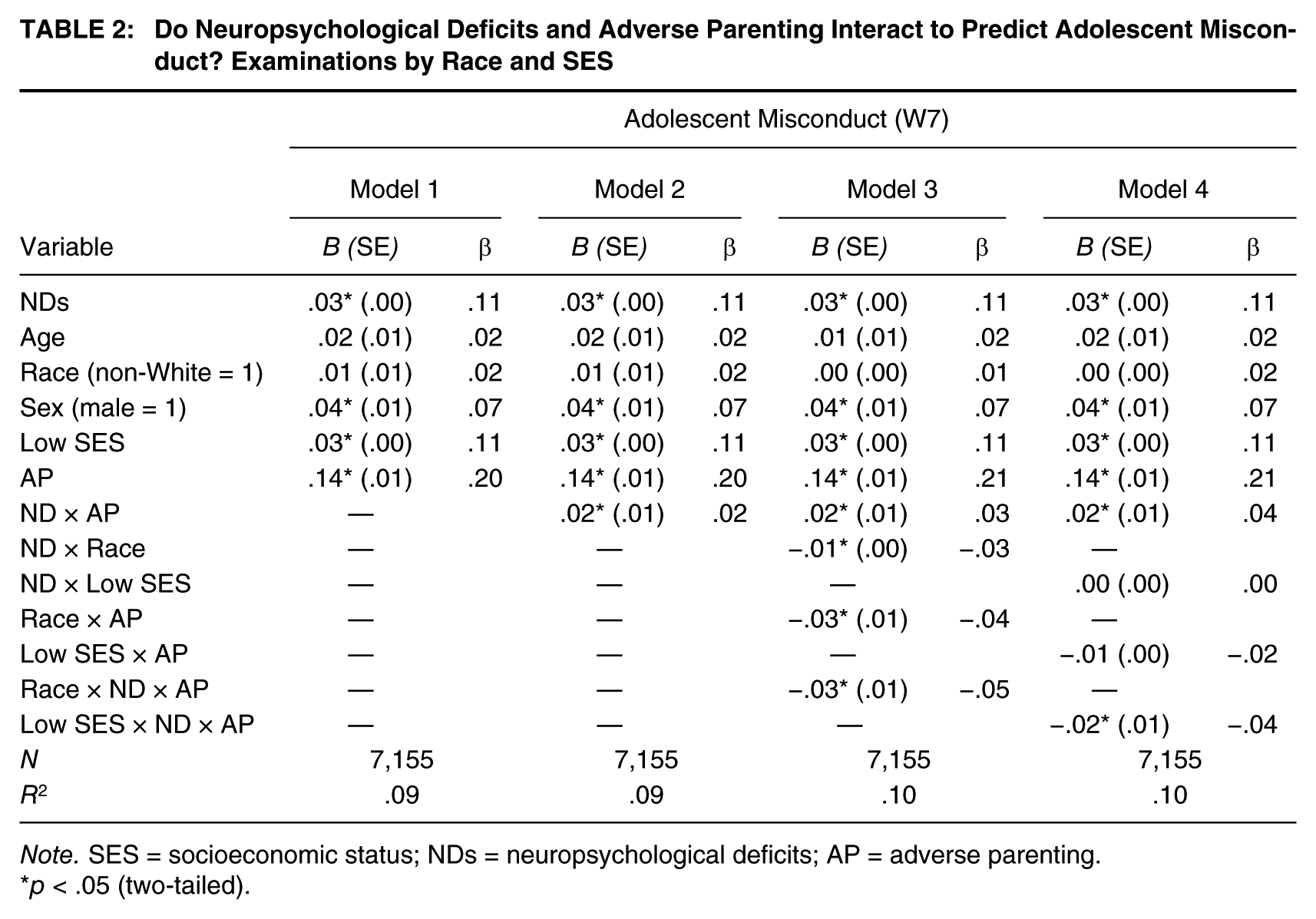
Table 2 displays a series of models that examine the direct and interactive effects of neuropsychological deficits and adverse parenting on misconduct across the full sample. Model 1 of Table 2 reveals that both neuropsychological deficits and adverse parenting have significant, direct effects on misconduct approximately 8 years later, with the composite adverse parenting measure having a larger standardized effect. Model 2 examines the interaction between adverse parenting and neuropsychological deficits in the prediction of adolescent misconduct. The results suggest that adverse parenting significantly conditions the influence of neuropsychological deficits on adolescent misconduct (see Figure 1). 4 To illustrate, the influence of neuropsychological deficits on adolescent misconduct is predicted to increase by approximately 70% when moving from low adverse parenting to high adverse parenting. Even so, higher scores on the neuropsychological deficits measure corresponded to an increase in the level of adolescent misconduct across all levels of adverse parenting.
Do Neuropsychological Deficits and Adverse Parenting Interact to Predict Adolescent Misconduct? Examinations by Race and SES
Note. SES = socioeconomic status; NDs = neuropsychological deficits; AP = adverse parenting.
p < .05 (two-tailed).
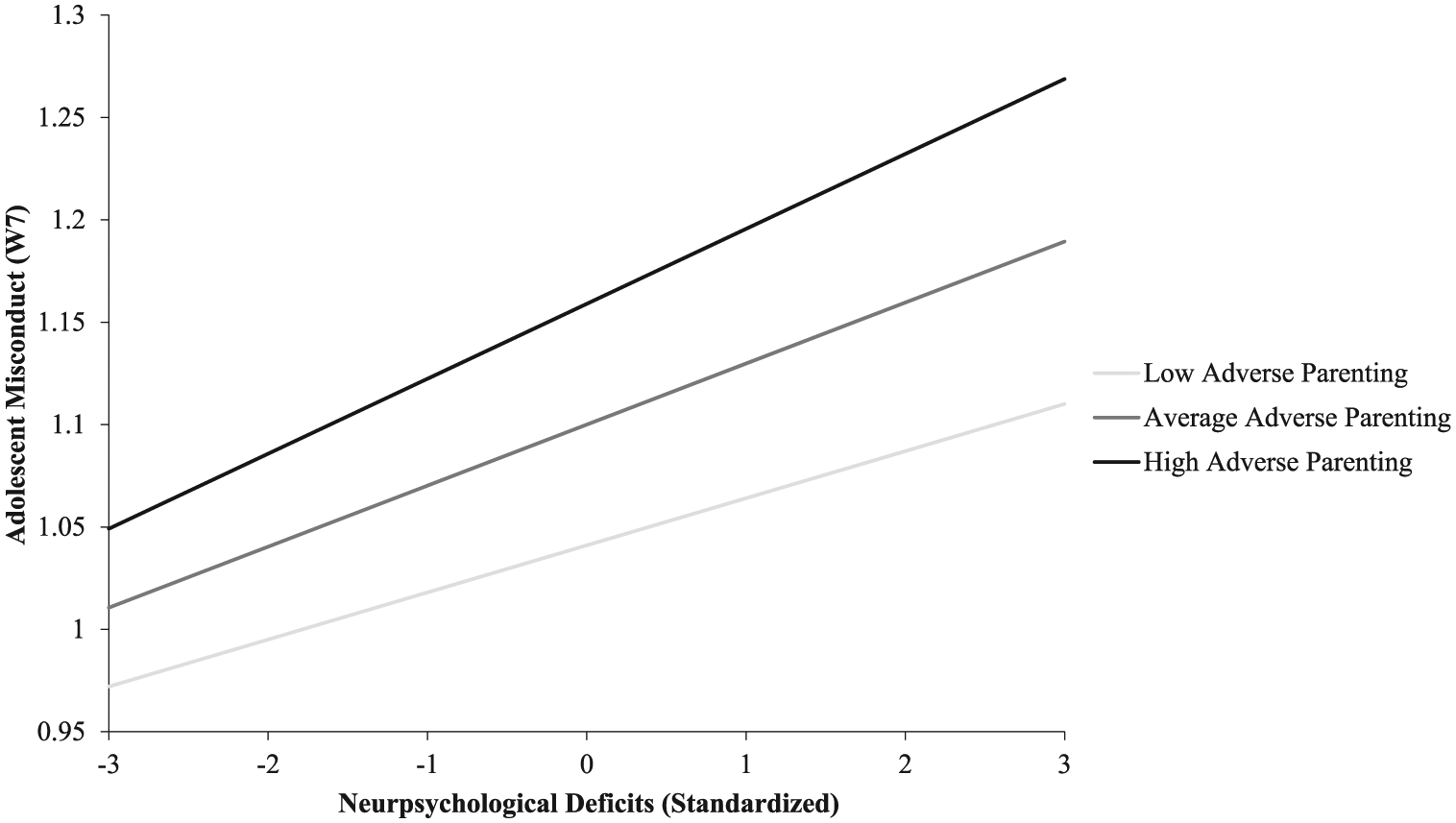
The Effect of Neuropsychological Deficits on Adolescent Misconduct by Level of Adverse Parenting
Subsequently, we extended our hierarchical regression analysis to examine three-way interactions among neuropsychological deficits, adverse parenting, and race. The purpose of these analyses is to explore whether support for Moffitt’s hypothesis might be more or less applicable to certain racial groups. The results of the analysis addressing this possibility are presented in Model 3 of Table 2. The findings reveal a significant, negative three-way interaction between neuropsychological deficits, adverse parenting, and race, suggesting that the interaction between neuropsychological deficits and adverse parenting has a stronger effect among Whites than non-Whites. The results of this model are depicted in Figure 2. The figure reveals that, in the case of White participants, the influence of neuropsychological deficits on misconduct is more pronounced under conditions of adverse parenting, which is consistent with Moffitt’s theory. In contrast, the influence of neuropsychological deficits on misconduct is somewhat less pronounced under conditions of adverse parenting for non-White participants. The clear implication of these findings is that adverse parenting only exacerbates the effects of neuropsychological deficits on adolescent misconduct among Whites, despite the general tendency for neuropsychological deficits to have a direct, positive effect on misconduct across racial groups.
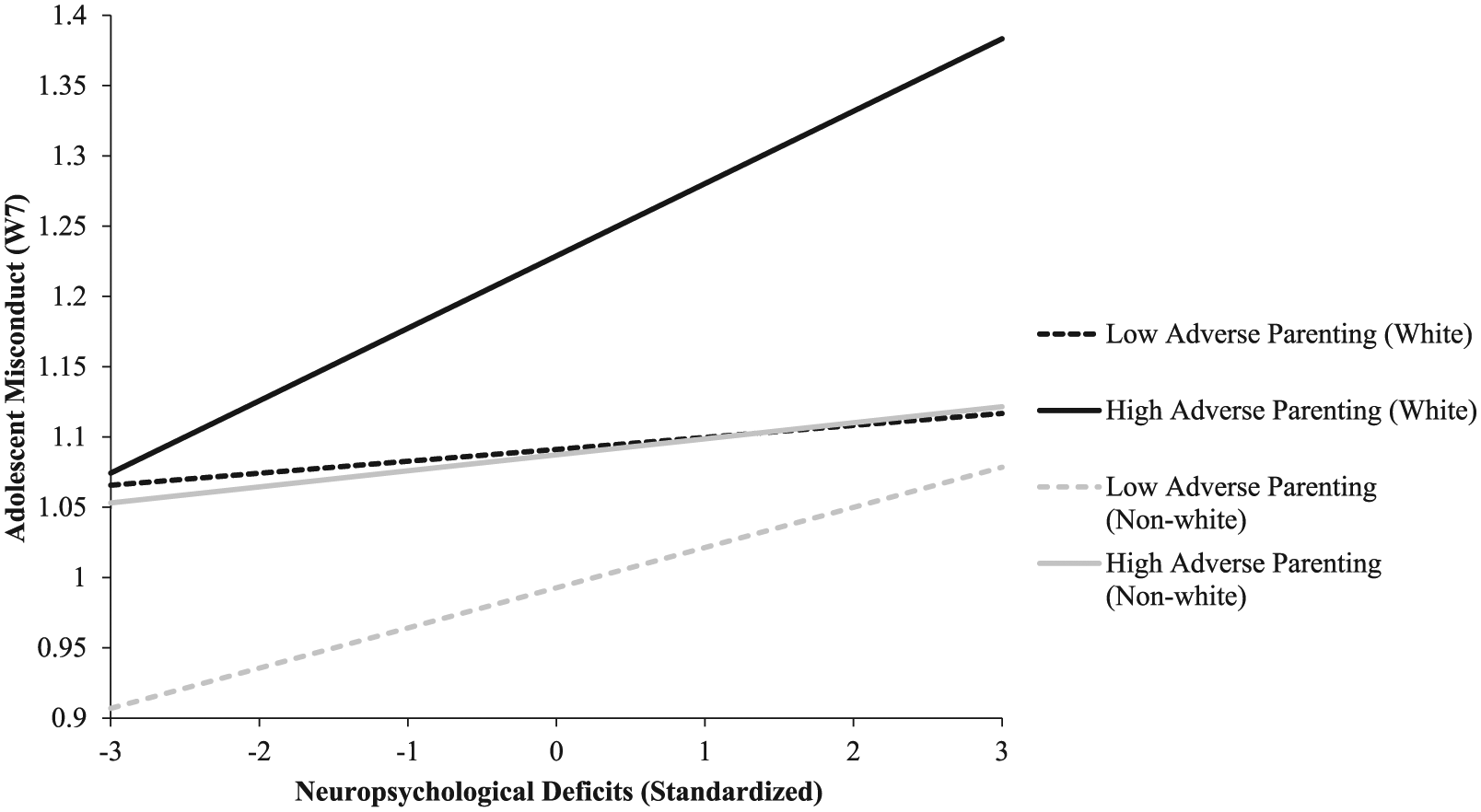
The Interactive Effects of Neuropsychological Deficits and Adverse Parenting on Adolescent Misconduct by Race Group
Model 4 of Table 2 examines the possibility that low SES might also moderate the interactive effect of neuropsychological deficits and adverse parenting on adolescent misconduct, considering the statistical overlap between race and SES. In short, if race is merely acting as a proxy for low SES, then the three-way interactions between neuropsychological deficits, adverse parenting measures, and race may need to be revisited and reinterpreted. Interestingly, the findings presented in Model 4 of Table 2 are consistent with the results depicted in Model 3 of Table 2. The results suggest that the misconduct of high-SES participants is more susceptible to the interactive influence of neuropsychological deficits and adverse parenting. 5 An exacerbating effect of adverse parenting on the link between neuropsychological deficits and adolescent misconduct does not emerge, however, in the case of low-SES individuals. The findings depicted in Model 4 of Table 2 are illustrated in Figure 3. In the case of low-SES individuals, there was virtually no difference in the influence of neuropsychological deficits on adolescent misconduct across levels of adverse parenting. In the cases of high-SES individuals, however, the impact of neuropsychological deficits on adolescent misconduct was significantly heightened in the presence of adverse parenting (see Figure 3).
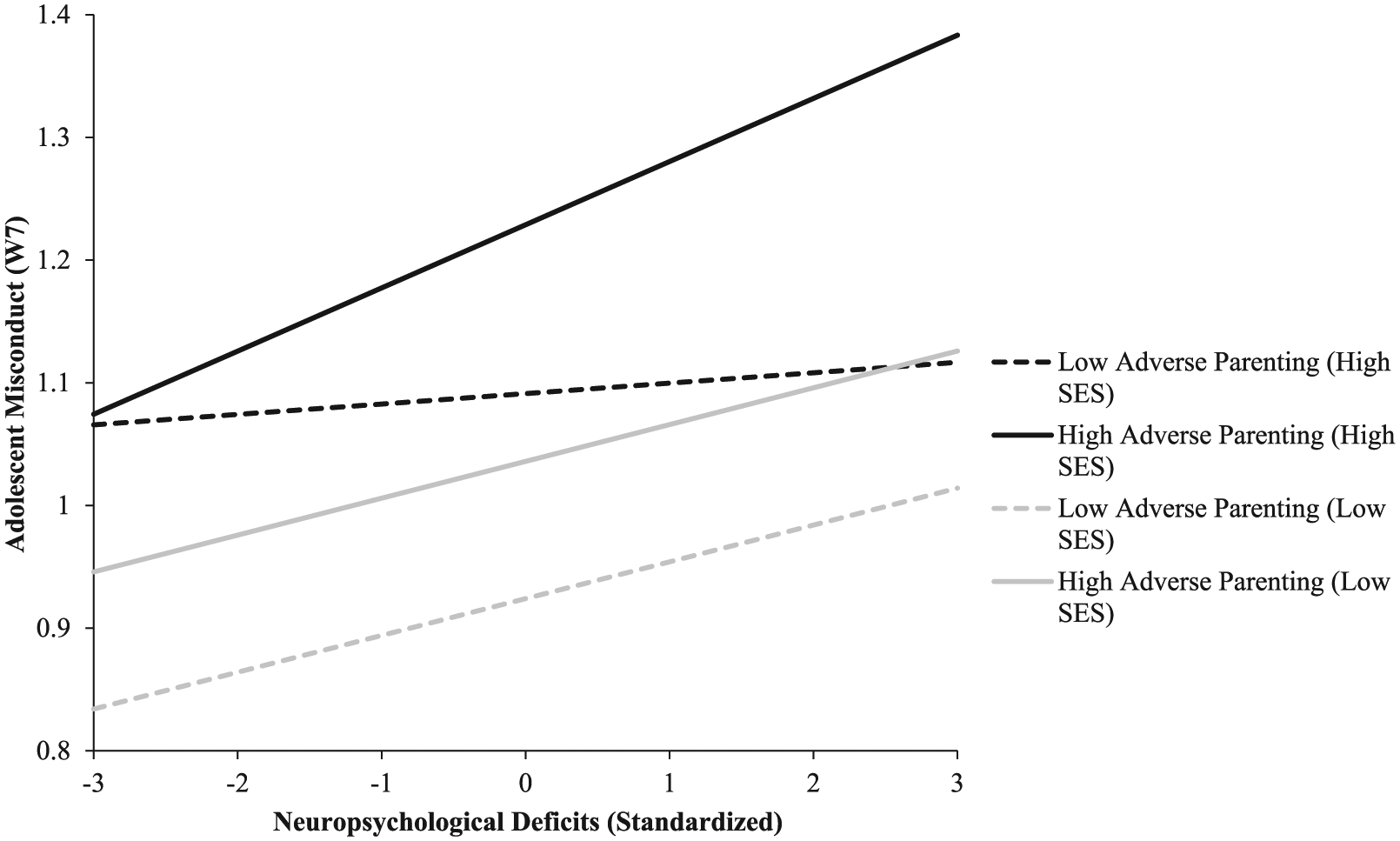
The Interactive Effects of Neuropsychological Deficits and Adverse Parenting on Adolescent Misconduct by SES Group
Ancillary analyses were also conducted to examine whether the pattern of results detected in the current study is limited to a specific demographic subgroup simultaneously defined by both race and SES (see Figure 4). The general pattern of results suggests that differences in SES among Whites do relatively little to alter the positive effects of the interaction between neuropsychological deficits and adverse parenting on misconduct (i.e., the slopes are very similar across Whites stratified by SES who have been exposed to adverse parenting). However, differences in SES among non-Whites do appear to alter the influence of neuropsychological deficits on misconduct under conditions of adverse parenting. Although the effect of neuropsychological deficits on adolescent misconduct is generally attenuated among non-Whites exposed to adverse parenting (relative to Whites), this is especially the case for non-Whites of low SES. To illustrate, the influence of neuropsychological deficits under conditions of adverse parenting among Whites of any SES is nearly 4 times as large as the influence of neuropsychological deficits under conditions of adverse parenting among low-SES non-Whites. In contrast, this effect among Whites is only 1.4 times as large as the effect among high-SES non-Whites. The results ultimately suggest that Moffitt’s postulation about the interactive influence of neuropsychological deficits and adverse family contexts on subsequent offending behaviors may be less applicable to non-Whites of low SES, despite its clear relevance for the misconduct of Whites of any SES.
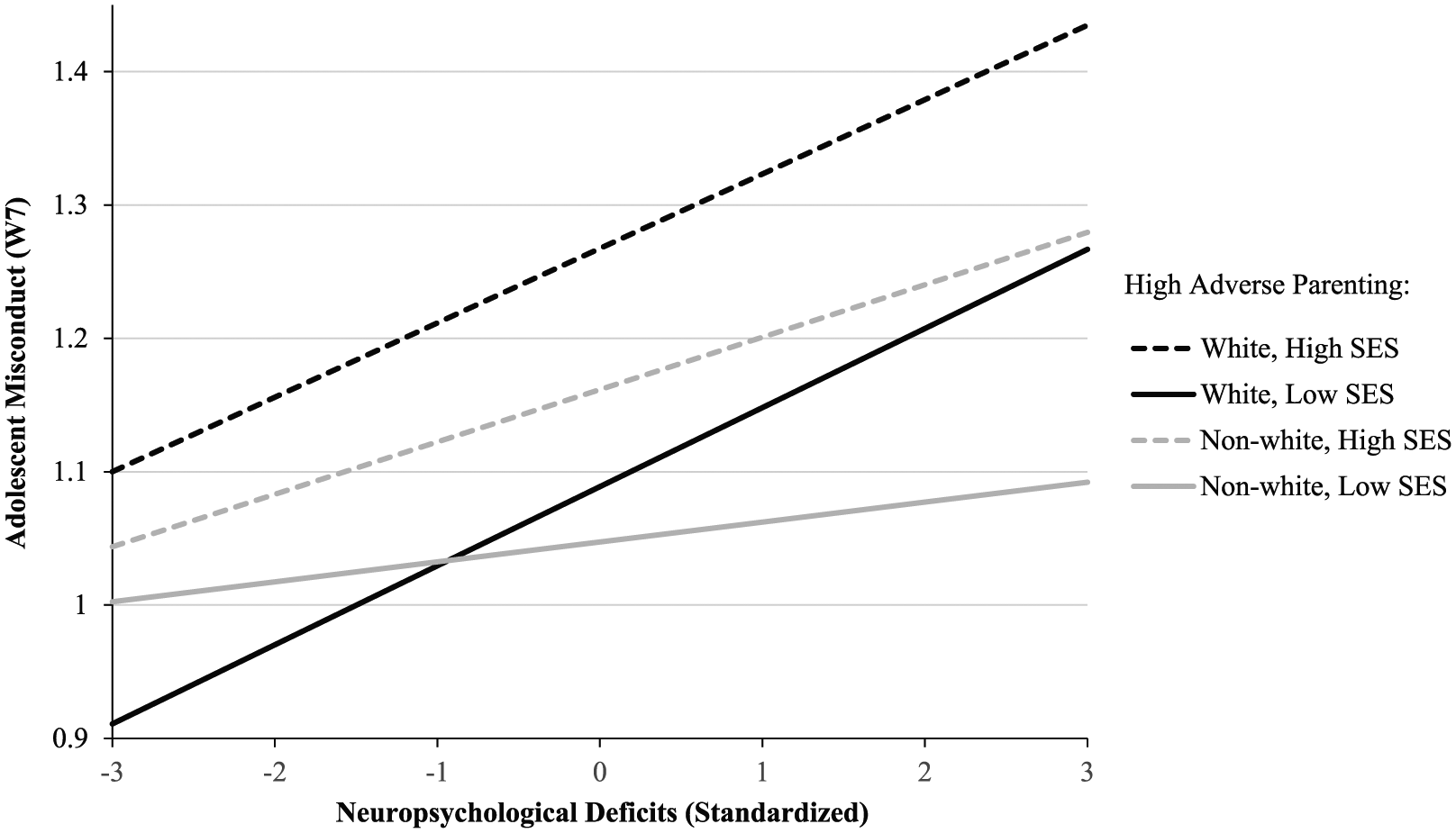
The Influence of Neuropsychological Deficits on Adolescent Misconduct Among Racial Groups Stratified by SES When Adverse Parenting Is 1 SD Above the Mean
Discussion and Conclusion
Moffitt’s (1993) contention that neuropsychological deficits play an important role in the development of persistent antisocial behavior has been given a substantial amount of empirical attention over the last two decades (Bellair et al., 2016; Cauffman et al., 2005; McGloin & Pratt, 2003; Moffitt & Caspi, 2001; Piquero, 2001). Even so, the literature varies in its inclusion of measures of early childhood traits and processes, which are germane to Moffitt’s theorizing. Furthermore, interactions between neuropsychological deficits and adverse family environments on subsequent offending behaviors are typically assumed to be equally applicable across individuals with varying degrees of social advantage. Such an assumption may not be warranted, as research has indicated that (a) the context in which parenting occurs has important implications for parent–child interactions (Lee et al., 2013; Patterson, 2002; Strom et al., 2008) and (b) biological components of risk (e.g., neuropsychological deficits) may not emerge as significant predictors of antisocial outcomes for individuals who experience significant social disadvantage, implying that Moffitt’s arguments may not hold across all segments of the population (see Raine, 2002). This study seeks to build upon the prior literature by exploring whether race and SES moderate the interactive influence of neuropsychological deficits and adverse parenting practices on adolescent misconduct.
Employing data from the ECLS-K, the current study yielded four key findings. First, we found that adverse parenting significantly exacerbated the influence of neuropsychological deficits on adolescent misconduct. Second, we found evidence of three-way interactions between neuropsychological deficits, adverse parenting, and race. To be precise, adverse parenting was especially likely to exacerbate the influence of neuropsychological deficits on adolescent misconduct for White participants. The results imply that Moffitt’s predictions may be especially relevant to the misbehaviors of White adolescents. Third, we found a similar pattern of results when participants were distinguished by their SES. Specifically, adverse parenting enhanced the effect of neuropsychological deficits on subsequent misconduct for participants with higher SES. When participants with low SES were examined, however, the adverse parenting measure did not exacerbate the effect of neuropsychological deficits on subsequent misbehaviors. Finally, ancillary analyses revealed that the interaction between neuropsychological risk and adverse parenting was less relevant to the misconduct of low-SES non-Whites specifically. In contrast, Moffitt’s hypothesis was generally supported among both high-SES and low-SES White participants.
In sum, the pattern of results suggests that the misconduct of non-White, low-SES adolescents is less adversely affected by interactions between neuropsychological and familial risk during early childhood. Conversely, neuropsychological deficits appear to be particularly predictive of misconduct for White adolescents who experience adverse parenting during their childhoods (regardless of their SES). The results are generally consistent with the theorizing of Raine (2002), who argued that when an individual “lacks social factors that predispose him/her to antisocial behavior, then biological factors may be more likely to explain antisocial behavior” (p. 314). In other words, when the “noise” of social disadvantage is minimal or absent, links between biology and antisocial outcomes become more salient. In the present study, the relevance of biosocial interplay during an early stage of the life course had relatively little bearing on the misconduct of low-SES non-Whites, who, as a group, are more likely to be exposed to contexts characterized by disadvantage (Rodriguez, 2013; Zimmerman & Messner, 2013). It appears, then, that as demographic risk factors accumulate, Moffitt’s postulations concerning the interplay between neuropsychological deficits and adverse family contexts become less relevant to offending behaviors. Conversely, the misconduct of individuals who are less likely to accumulate social disadvantage (as a function of their race and/or SES) is more likely to be influenced by such biosocial processes.
This study is the first to consider whether Moffitt’s hypothesis concerning neuropsychological–familial interactions is applicable across racial and socioeconomic groups. Even so, the present study is not without its limitations. First, the ECLS-K data only follow participants until the eighth grade or approximately 13 to 14 years of age. Although we were able to get a sense for the adolescents’ penchant for delinquency, the data provide no means of definitively recreating Moffitt’s typology of adolescence-limited and life-course-persistent offenders. As a result, the data cannot reveal whether, for example, violence among non-White or low-SES adults is less strongly influenced by the proposed biosocial interactions during childhood. Even so, early-onset offending is typically operationalized as offending prior to the age of 14 (see McGloin & Pratt, 2003), and our measure of misconduct was obtained when most children were age 13. Furthermore, the present study improves upon much of the prior literature in key respects, as it employs neurological assessments of young children and several measures of the familial context during early childhood, both of which are vital components of Moffitt’s theory.
Second, we only examined two dimensions of neurological functioning at age 5: fine and gross motor skills. It would have been preferable to have a wider array of neuropsychological tests at an even younger age, considering Moffitt’s (1993) emphasis on “neuropsychological variation and the difficult infant” (p. 681). Despite this limitation, research has revealed significant correlations between childhood motor skills and other neuropsychological functions (see Paradiso, Andreasen, O’Leary, Arndt, & Robinson, 1997), including poor attention/concentration (Pitcher, Piek, & Hay, 2003). Finally, although we found differing support for Moffitt’s arguments across social groups, we were unable to examine disadvantage in the social context more broadly. Future research employing comprehensive indicators of social disadvantage should seek to replicate and expound upon the findings of the current study.
The key implication of these findings is that certain components of Moffitt’s theory may not be uniformly applicable across socioeconomic and racial groups. In particular, the intersection between race and SES appears to be an important consideration when testing Moffitt’s claims. In terms of policy, the results seem to suggest that efforts to prevent neuropsychological deficits from escalating into misconduct should not only target the immediate familial context but also consider broader indicators of social disadvantage (or privilege) that might influence the effectiveness of familial interventions. Moving forward, scholars may want to explore ways in which other biosocial processes during infancy and childhood (e.g., perinatal risk factors, nutritional factors) might have unique influences on misconduct across social groups. In doing so, a more complete and complex picture of the origins of antisocial behavior will gradually emerge.
Footnotes
Acknowledgements
The authors would like to thank the editor and the anonymous reviewers for their comments and suggestions.