







Abstract
Research highlights risk factors across systems, from person to community, for understanding antisocial behavior. However, limited research used person-centered analyses to investigate how individual, familial, neighborhood, and structural risk factors cluster and relate to antisocial behavior. We applied latent profile analysis to questionnaires and Census-derived data (N = 478; Northeast sample). A five-profile solution fit best (1: Low Risk; 2: Elevated Personality Risk; 3: Elevated Family and Structural Risk; 4: Elevated Personality, Family, and Neighborhood Risk; 5: Elevated Neighborhood and Structural Risk). We compared profiles across questionnaire-based, interview-based, and criminal record outcomes. The Elevated Personality, Family, and Neighborhood Risk profile had the strongest relationship to risky behavior and an antisocial personality disorder diagnosis. The Elevated Neighborhood and Structural Risk profile showed the strongest relationship to number of crimes. These results elucidate patterns of co-occurring risk within-people, across systems, and reveal important commonalities and dissociations among forms of antisocial behavior.
Keywords
Antisocial behavior has grave societal and individual costs, including those related to marginalization, incarceration, health, psychopathology, and mortality. In part because of the personal, economic, and social toll of antisocial behavior, extensive attention has been paid to elucidating risk factors associated with antisocial behavior. For example, individual characteristics and contextual factors, including family and neighborhood experiences, have received much support as conferring risk associated with antisocial behavior (Farrington, 2000; Loeber et al., 1998). For instance, cumulative risk research consistently has shown that the presence of a single risk factor is a weaker predictor of antisocial behavior than the accumulation of multiple risk factors (Deater-Deckard et al., 1998; Sampson & Laub, 1997; Trentacosta et al., 2013). Furthermore, a transactional perspective suggests that antisocial behavior is not solely related to an accumulation of factors across individual and contextual levels, but rather, to interactions between individual characteristics and context (Bronfenbrenner, 1979; Bronfenbrenner & Morris, 2006; Sameroff, 2009). In line with a focus on the interactions between individual and contextual risk factors, this study examined the relationship between combinations of individual characteristics (psychopathic and externalizing traits) and contextual factors (familial abuse/neglect, exposure to neighborhood violence, and structural disadvantage) and different measures of antisocial behavior (from risky behavior to criminal charges) and related psychopathology.
There is a rich literature on risk factors related to antisocial behavior (Finkelhor et al., 2015; Moffitt, 1993; Piquero et al., 2005; Sampson & Laub, 1997). In addition, there is a long history of documenting that the accumulation of multiple risks relates to a higher frequency and more severe antisocial behavior. For example, in the 1970 British Cohort Study, the combination of factors such as single parenthood, large family size, and children’s poor visual-motor skills early in childhood related to later conduct problems and criminal convictions (Murray et al., 2010). In a more recent study, using Add Health data, the combination of educational risk, low IQ, not breastfeeding, lower birth weight, low self-control, maternal tobacco use, depressive symptoms, low self-esteem, drug and alcohol use, receipt of Medicare, victimization, low social support, delinquent peers, time spent with peers, low maternal attachment, maternal disengagement, parental permissiveness, low socioeconomic status (SES), and absent biological father related to criminal behavior across the life course (TenEyck et al., 2023). Even though examining individual and contextual risk as additive factors related to antisocial behavior is informative, it is important to consider a more complex interplay of individual characteristics and multiple contextual factors.
The focus on cumulative risk is consistent with the tenets of Bronfenbrenner’s (1979) ecological systems theory. In this theory, the individual is embedded within microsystems, such as family and peers. These microsystems are nested within the mesosystem, which captures the interrelations between two or more microsystems. Extend to more distal influences, the exosystem places emphasis on experiences with neighbors, access to services, and familial/community economics. Importantly, systems interact to influence behavior by exacerbating or attenuating the effects of one system on the other. For example, neighborhood dangerousness appears to be a moderator of the relation between individual characteristics (daring) and antisocial behavior (Trentacosta et al., 2009). Similarly, parenting behaviors are an important moderator of the relation between neighborhood quality and antisocial conduct (Supplee et al., 2007). Thus, ecological systems theory emphasizes the need to examine interactions of risk factors across systems to better understand who is at risk for certain behaviors and what factors contribute to this risk (Bronfenbrenner, 1979; Bronfenbrenner & Morris, 2006; Sameroff, 2009).
However, efforts to examine interactions across systems in research on antisocial behavior have largely taken a variable-centered approach (Estrada et al., 2020; Gard et al., 2022). Specifically, researchers typically use regression with interaction terms to examine how the combination of variables relates to antisocial behavior. Regression works well when there are one or two variables; however, this form of analysis is not practical when dealing with a large number of variables. For example, if a researcher has five variables, they would need 10 interaction terms just to estimate the two-way interactions. Many studies are not powered enough to explore more than two-way interactions or more than one two-way interaction (Howard & Hoffman, 2018). And, variable-centered approaches estimate interactions across the sample, whereas the ecological system theory emphasizes the intersection of factors across different systems within individuals. As a result, variable-centered approaches tend not to sufficiently reflect the tenets of ecological systems theory.
To address these limitations, person-centered approaches can be used to identify how different patterns of risk factors co-occur, uniquely characterize individuals or subpopulations of individuals, and relate these patterns to outcomes. This methodological approach allows for a more holistic understanding of the individual and the interplay of influences across levels contributing to antisocial behavior. Although relatively less common than variable-centered approaches, some studies using person-centered approaches highlight how variability across multiple systems confer differential risk for antisocial behavior (Burnside et al., 2018; Conley et al., 2023; Estrada et al., 2023; Lanza et al., 2010; Maneiro et al., 2019; Van Heel et al., 2019). As one example, high levels of both neighborhood violence exposure and caregiver maltreatment strongly (i.e., large effect size) relate to delinquency, risky, and antisocial behaviors, but having high levels of neighborhood violence exposure and only slightly elevated levels of maltreatment showed a large effect size for criminal behavior (Estrada et al., 2023). In another example, Lanza and colleagues (2010) found that profiles consisting of neighborhood and maltreatment factors varied considerably across urban African American, urban White, and rural White children, again demonstrating the importance of estimating within-person interactions across systems. However, to date, no research has explored risk factors across individual, family, neighborhood, and broader community levels of analysis using a person-centered approach. Thus, there is an empirical gap in quantifying how factors across the person to the exosystem are represented within individuals and how different combinations of factors relate to antisocial behavior.
The goal of this study is to identify which combinations of risk factors, across multiple systems, correlate with engagement in antisocial behavior and psychopathology related to antisocial tendencies. We used latent profile analysis (LPA) to apply a data-driven clustering approach utilizing questionnaires and Census-derived data to identify subgroups of individuals with distinct patterns of risk factors. At the individual level, we used measures of psychopathy (characterized by callous-unemotional traits, glibness, superficial charm, impulsivity, and antisociality) and externalizing (characterized by low self-control and high negative affect) personality traits, based on meta-analytic findings that link these personality traits to increased antisocial behavior across the lifespan (Bresin, 2019). To estimate familial microsystem influences, we used a child maltreatment measure to reflect the strong association established by numerous studies between harsh, coercive, or inconsistent parenting and the increased likelihood of violent, aggressive, and criminal behavior (Fitton et al., 2020; Malvaso et al., 2016). To estimate neighborhood microsystem influences, we included a measure of participants’ exposure to neighborhood violence, a factor identified as one of the most robust predictors of antisocial behaviors (Estrada et al., 2023). Finally, to estimate exosystem influences, we used the Area Deprivation Index as a measure of structural deprivation. We, then, examined associations between the extracted latent profiles with general and specific forms of antisocial behavior and psychopathology commonly related to antisocial behavior (i.e., Antisocial Personality Disorder, Borderline Personality Disorder, Substance Use Disorder) or are overrepresented in individuals who engage in antisocial behavior (i.e., Post-Traumatic Stress Disorder) (Baskin-Sommers et al., 2022; Haller & Chassin, 2013).
We hypothesized that (H1) a latent profile characterized by elevated values across most risk factors and a latent profile characterized by reduced values across levels of analysis would emerge. However, a major advantage of the data-driven clustering approach is to extract latent profiles associated with more subtle variations and combinations within and across levels of analysis. Furthermore, based on previous research, we expected (H2) that the profiles associated with elevations across most risk factors would relate most strongly to antisocial behavior (Deater-Deckard et al., 1998; Sampson & Laub, 1997). Finally, previous work suggests that individual factors may be more predictive of engagement in antisocial behavior than other factors (Lahey & Waldman, 2003; Sher & Trull, 1994). Therefore, we hypothesized (H3) profiles with elevated individual factors (i.e., psychopathy and externalizing traits) to be most predictive of engaging in antisocial behavior. We did not have specific predictions about potential unique associations among distinct profiles and antisocial behavior and psychopathology.
Method
Participants
Adults were recruited from 2014 to 2023 (with a pause during COVID, 2020–2022). To recruit a diverse sample, especially from communities where risk factors for antisocial behavior cluster together, we posted internet advertisements (i.e., Craigslist) and flyers across the County (on poles, in stores, libraries, churches, social service centers, at hospitals) calling for individuals who engage in risk-taking behavior (e.g., crime, substance use, gambling) (see Supplement for sample flyers). Potential participants called into our recruitment line and completed a screener. Individuals were excluded at the phone screen stage if they reported being diagnosed with a psychotic disorder or had a history of certain medical problems (e.g., seizures) that may impact their comprehension and completion of materials. If the individual passed the phone screen stage, they came into the lab for a 3-hour assessment. The assessment included IQ and reading measures; participants were excluded if they performed below the fourth-grade level on a standardized measure of reading (Wilkinson, 1993) or had an IQ of <80 (Zachary et al., 1985) to minimize potential issues understanding the materials. Excluded participants did not differ from included participants in terms of age, sex, race/ethnicity, or education, all p > .13. Each participant provided written informed consent (Yale University Human Subjects Committee). Participants earned monetary compensation for their completion of the study. Tables 1 and 2 and Figure 1 provide summaries of participant characteristics.
Demographics for Entire Sample (N = 478)
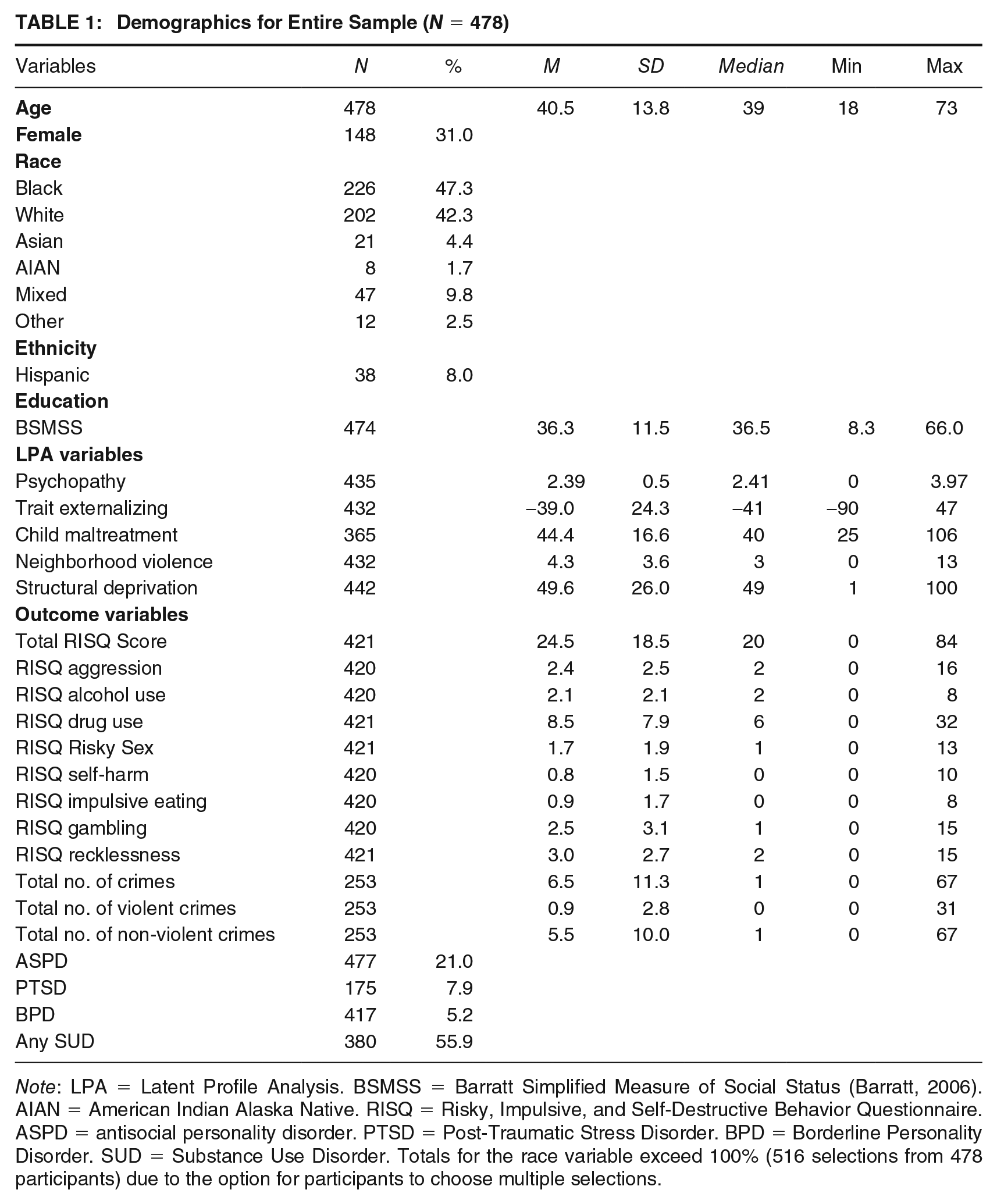
Note: LPA = Latent Profile Analysis. BSMSS = Barratt Simplified Measure of Social Status (Barratt, 2006). AIAN = American Indian Alaska Native. RISQ = Risky, Impulsive, and Self-Destructive Behavior Questionnaire. ASPD = antisocial personality disorder. PTSD = Post-Traumatic Stress Disorder. BPD = Borderline Personality Disorder. SUD = Substance Use Disorder. Totals for the race variable exceed 100% (516 selections from 478 participants) due to the option for participants to choose multiple selections.
Demographics for 5-Profile Solution From Latent Profile Analysis
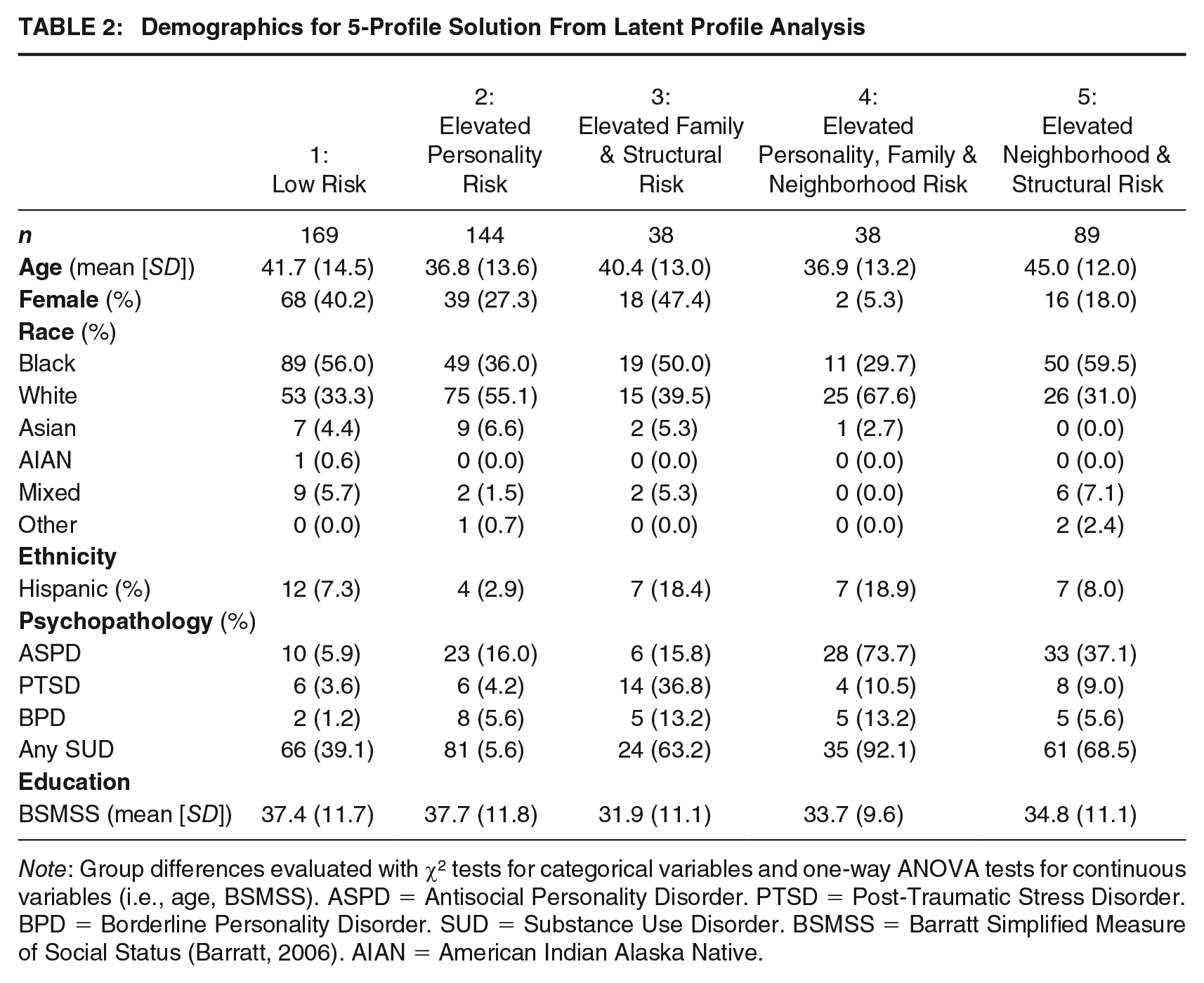
Note: Group differences evaluated with χ2 tests for categorical variables and one-way ANOVA tests for continuous variables (i.e., age, BSMSS). ASPD = Antisocial Personality Disorder. PTSD = Post-Traumatic Stress Disorder. BPD = Borderline Personality Disorder. SUD = Substance Use Disorder. BSMSS = Barratt Simplified Measure of Social Status (Barratt, 2006). AIAN = American Indian Alaska Native.
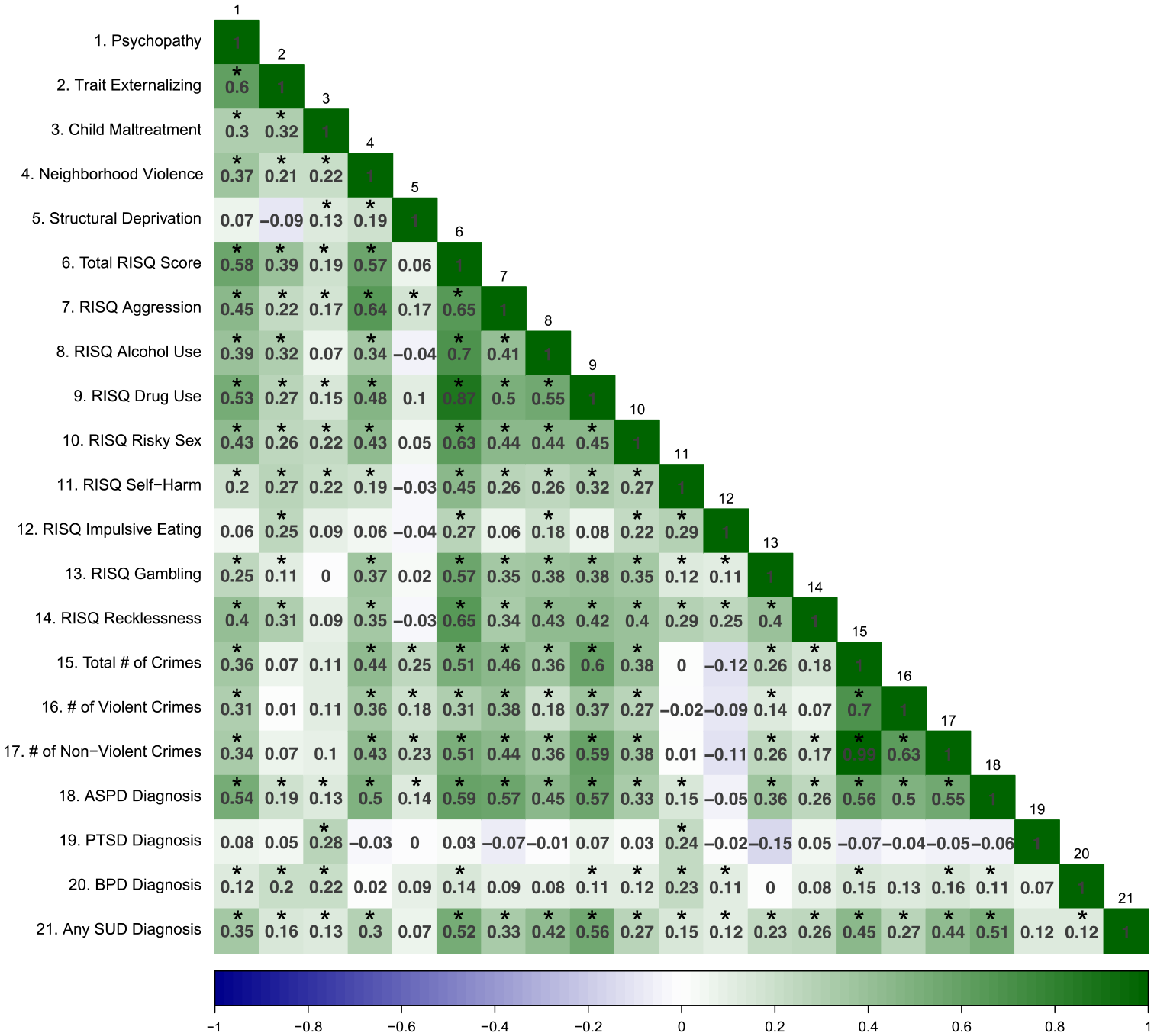
Heatmap Showing Spearman Correlations for Entire Sample (N = 478)
Measures
Latent Profile Analysis Measures
Personality Trait Measures
The Self-Report Psychopathy Scale is a 64-item questionnaire designed to evaluate psychopathic traits, including callousness, shallow affect, and lifestyle characteristics (Paulhus et al., 2009). Participants use a 5-point Likert-type scale ranging from “Disagree Strongly” to “Agree Strongly” to rate their agreement with each statement. The total score is the sum of the items, with higher scores indicating a higher degree of psychopathic traits. For the present sample, Cronbach’s alpha was 0.83.
The Multidimensional Personality Questionnaire-Brief is a 155-item questionnaire designed to evaluate personality traits (Patrick et al., 2002). Specifically, the trait externalizing score was obtained by subtracting the higher-order factors of constraint from negative emotionality (Krueger et al., 2007). Higher scores represent higher levels of negative emotionality and lower levels of constraint. For the present sample, Cronbach’s alpha was 0.75.
Microsystem Family Measure
The 28-item Childhood Trauma Questionnaire—Short Form (Bernstein et al., 2003) is a retrospective measure of maltreatment experiences before the age of 18. Each item is rated on a 5-point Likert-type scale, with response options ranging from “Never True” to “Very Often True.” Higher scores indicate a greater severity of childhood trauma. For the present sample, Cronbach’s alpha was 0.85.
Microsystem Neighborhood Measure
The 13-item Exposure to Violence questionnaire (Selner-O’Hagan et al., 1998) measures direct and indirect lifetime experiences of violence in people’s community. Respondents were instructed to indicate “Yes” or “No” for each item on the scale. The instructions asked participants to respond to the items based on experiences they had “in their communities outside their home.” A total score was calculated using a sum of all 13 items. For the present sample, Cronbach’s alpha was 0.86.
Exosystem Structural Measure
The Area Deprivation Index assesses the level of deprivation within a neighborhood by utilizing census block group data. The Area Deprivation Index reflects a composite score derived through principal components analysis of 17 distinct measures obtained from Census data pertaining to poverty, education, housing equality, and living conditions that were gathered over a period of 5 years (Kind & Buckingham, 2018). To determine participants’ Area Deprivation Index, during an interview we asked participants to provide their current home address. We converted the residential addresses to codes using the Neighborhood Atlas website (University of Wisconsin School of Medicine and Public Health, 2020). The ADI scores were then transformed into national percentile rankings that ranged from 1 to 100, with higher scores indicating greater structural deprivation.
Antisocial Behavior Outcome Measures
Risky Behavior
Participants completed the Risky and Impulsive Self-Destructive Behavior Questionnaire, a 38-item questionnaire that assesses behaviors including aggression, substance use, gambling, risky sex, impulsive eating, self-harm, and reckless behavior (RISQ; Sadeh & Baskin-Sommers, 2017). For each behavior, participants were asked “How many times total have you done this in your life?” to assess lifetime engagement. Higher scores indicate greater lifetime engagement in each behavior. For the present sample, Cronbach’s alpha for the total score was 0.92 and for each of the subscales ranged from 0.74 to 0.92.
Crime Records
Participants were asked in an interview about their criminal behavior as an adult including the type of crime and number of counts for each crime. Crimes were coded as violent (e.g., assault, robbery) or non-violent (e.g., theft, drug possession). Crimes were confirmed by searching databases from the Connecticut Department of Correction which records charges for individuals aged 18 or above. In cases where participants reported committing an adult crime that was not present in the database, we included their self-report in the count, acknowledging the possibility that individuals may commit crimes without being charged. The total number of violent and non-violent crimes committed as an adult was summed to generate a total crime count score.
Psychopathology
The Structured Clinical Interview for Diagnostic and Statistical Manual of Mental Disorders (5th ed.; DSM-5; American Psychiatric Association, 2013) (First et al., 2015) was used to assess Antisocial Personality Disorder (ASPD), Borderline Personality Disorder (BPD), Post-Traumatic Stress Disorder (PTSD), and any Substance Use Disorder (SUD) diagnosis. For 20% of the interviews, dual ratings were provided to assess reliability. The interrater reliability was 0.91.
Analytic Approach
First, LPA was performed using Mplus version 8.9 to identify profiles that represent factors across individual, family, neighborhood, and structural levels (Muthén & Muthén, 2017). All variables were z-scored prior to submission to the LPA. Full Information Maximum Likelihood was utilized to handle missing data. We evaluated the goodness of fit using the Bayesian information criterion, entropy, and bootstrapped likelihood ratio tests to determine the number of profiles. A significant p value from the likelihood ratio tests indicated that a model with k profiles had a better fit than a model with k–1 profiles. We compared these criteria across six latent profile models and also considered the interpretability of each model (Nylund et al., 2007). Profiles containing less than 5% of the sample were rejected (Nylund et al., 2007). The profile with the highest conditional probability of membership was used to assign participants to a specific profile.
Next, regression analyses (negative binomial and logistic regression depending on outcome type) were conducted in R (version 4.2.2) to examine the associations between profiles and risky behavior, crime, and psychopathology. Missing data in the regression analyses were handled using listwise deletion. Regression analyses were performed on 16 outcome variables. Bonferroni correction was applied by adjusting the significance threshold to α = .003. The profile with the lowest level of risk across all factors served as the reference group. Finally, we employed the Games-Howell post hoc test for pairwise comparisons between profiles since this method can accommodate unequal sample sizes and variances. Post hoc comparisons were only conducted on profiles that had a minimum of six observations per outcome (Games & Howell, 1976).
Results
Latent Profile Analysis
Model fit for solutions with 2 to 6 latent profiles were evaluated (Table 3). According to the bootstrapped likelihood ratio tests, models with 2, 3, 4, 5, and 6 profiles exhibited a better fit as compared to the models with one fewer profile. The six-profile solution was rejected because one of the profiles contained less than 5% of the sample (i.e., 2 participants). The 5-profile solution was chosen because it had a lower BIC value (6074.66) than the models with 2, 3, and 4 profiles. In addition, the five-profile solution exhibited better discrimination among the profiles compared to the models with 3 and 4 profiles as indicated by its higher entropy value (0.71).
Model Fit for Latent Profile Analysis
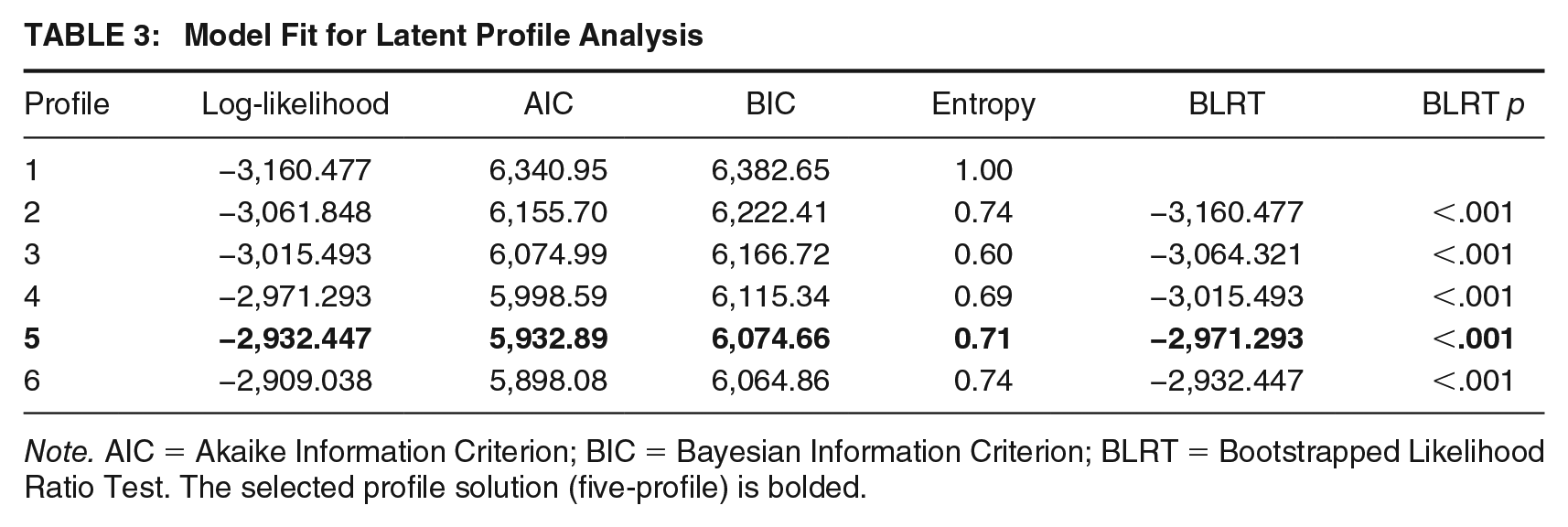
Note. AIC = Akaike Information Criterion; BIC = Bayesian Information Criterion; BLRT = Bootstrapped Likelihood Ratio Test. The selected profile solution (five-profile) is bolded.
The five-profile solution (Figure 2) identified a Low Risk profile (n = 169; 35.4% of the sample) which showed below average levels of psychopathy, trait externalizing, child maltreatment, neighborhood violence, and structural deprivation. A second profile identified as the Elevated Personality Risk profile (n = 144; 30.1% of the sample) showed elevations above average on psychopathy and trait externalizing, and average levels of child maltreatment, neighborhood violence, and structural deprivation. A third profile identified as the Elevated Family & Structural Risk profile (n = 38; 7.9% of the sample) showed elevations above average in experiences of childhood maltreatment and structural deprivation, but average levels of psychopathy, trait externalizing, and neighborhood violence. The fourth profile identified as the Elevated Personality, Family, & Neighborhood Risk profile (n = 38; 7.9% of the sample) showed elevations above average in psychopathy, trait externalizing, childhood maltreatment, and neighborhood violence, but average levels of structural deprivation. Finally, the fifth profile identified as the Elevated Neighborhood & Structural Risk profile (n = 89; 18.6% of the sample) showed elevated exposure to neighborhood violence and structural deprivation, but average levels of psychopathy, trait externalizing, and child maltreatment. Figure 2 and Supplemental Table S1 (available in the online version of this article) display the means and 95% confidence intervals of each factor for the five profiles.

Five-Profile Solution of Latent Profile Analysis
Associations With Antisocial Behavior
Results from the regression analyses and post hoc pairwise comparisons are detailed in Figures 3 to 5 (see also Supplemental Table S2, available in the online version of this article).
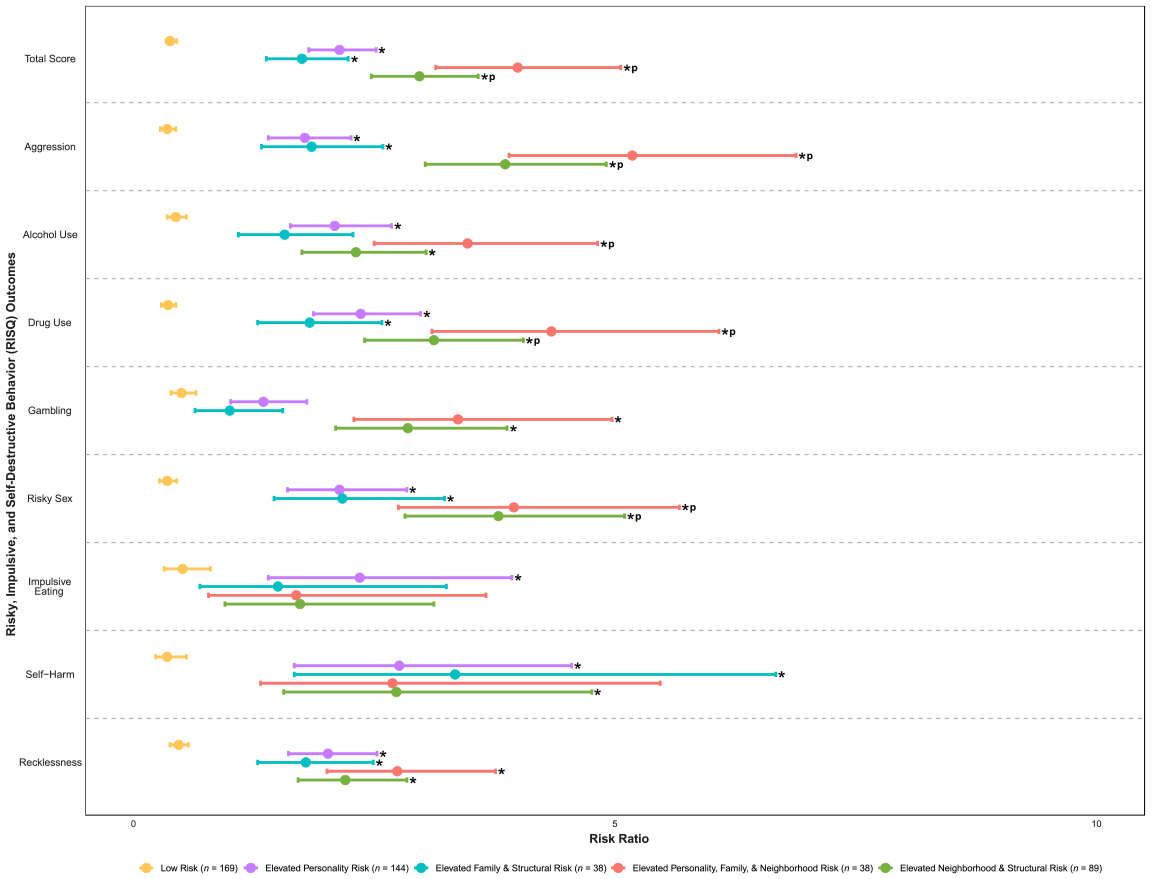
Plot of Risk Ratios for RISQ Outcomes as a Function of Each Latent Profile
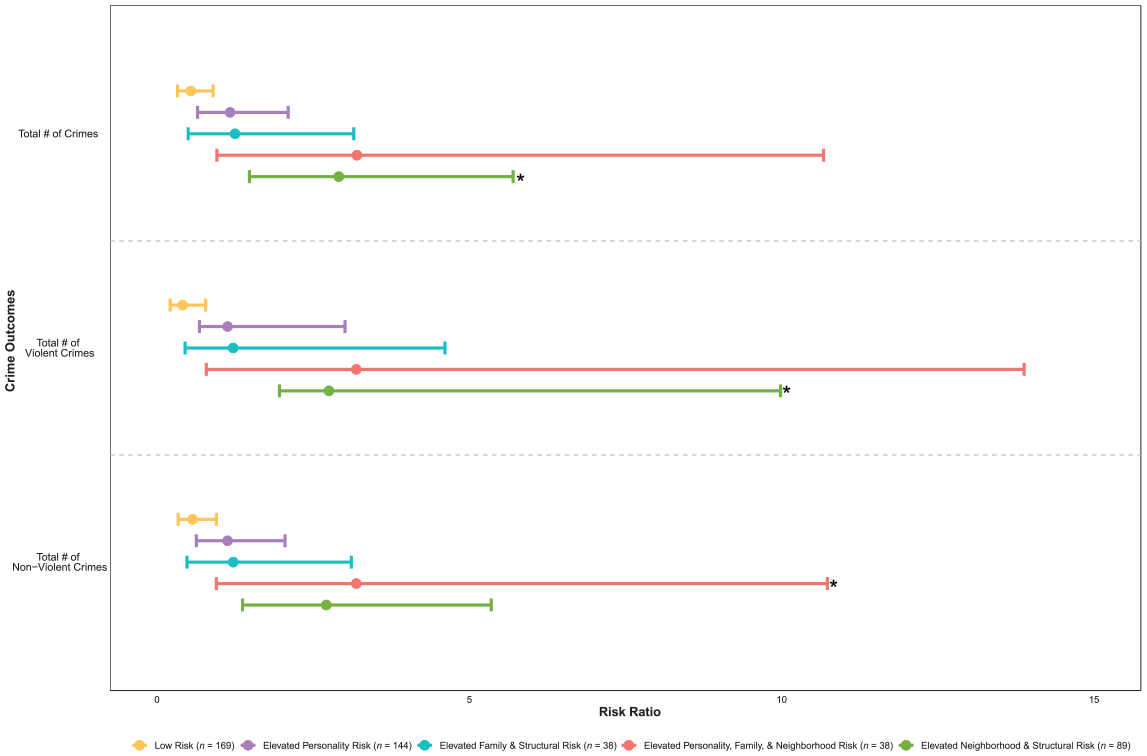
Plot of Risk Ratios for Crime Outcomes as a Function of Each Latent Profile
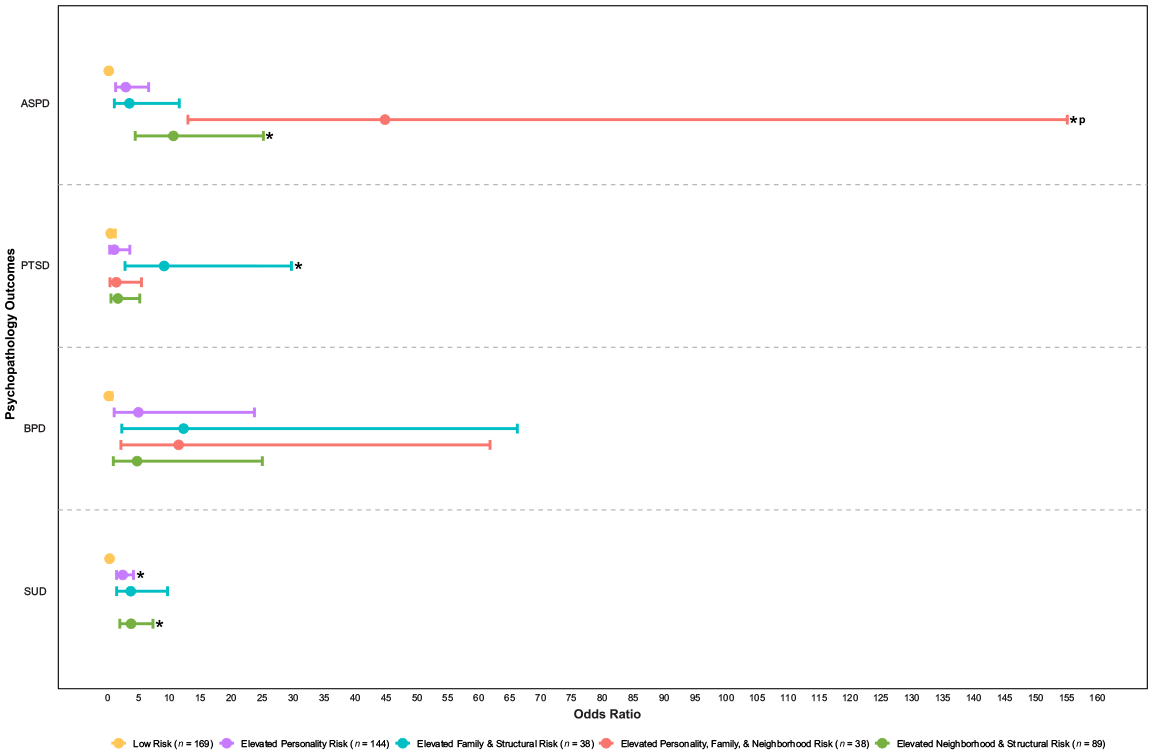
Plot of Odds Ratios for Psychopathology Diagnoses as a Function of Each Latent Profile
Risky Behavior
We first examined associations between the profiles and the total RISQ score. In comparison to the Low Risk profile, all four profiles with elevations above average in some risk factors showed a significant difference in their total RISQ score for risky, impulsive, and self-destructive behaviors (χ² = 378.0, Pseudo R2 = .05; Low Risk: OR = 0.38, Elevated Personality Risk: OR = 2.14, Elevated Family & Structural Risk: OR = 1.75, Elevated Personality, Family, & Neighborhood Risk: OR = 3.99, Elevated Neighborhood & Structural Risk: OR = 2.97). Post hoc analyses indicated that the Personality, Family, & Neighborhood Risk and the Neighborhood & Structural Risk profile were significantly different than the Personality Risk and the Family & Structural Risk profiles, as well as from each other.
Next, we examined subscales of the RISQ measure. In comparison to the Low Risk profile, all four elevated profiles showed a significant difference in lifetime aggression (χ² = 447.8, Pseudo R2 = .09; Low Risk: OR = 0.35, Elevated Personality Risk: OR = 1.78, Elevated Family & Structural Risk: OR = 1.85, Elevated Personality, Family, & Neighborhood Risk: OR = 5.18, Elevated Neighborhood & Structural Risk: OR = 3.86), drug use (χ² = 360.2, Pseudo R2 = .04; Low Risk: OR = 0.36, Elevated Personality Risk: OR = 2.36, Elevated Family & Structural Risk: OR = 1.83, Elevated Personality, Family, & Neighborhood Risk: OR = 4.34, Elevated Neighborhood & Structural Risk: OR = 3.12), and risky sex behavior (χ² = 444.8, Pseudo R2 = .06; Low Risk: OR = 0.35, Elevated Personality Risk: OR = 2.14, Elevated Family & Structural Risk: OR = 2.17, Elevated Personality, Family, & Neighborhood Risk: OR = 3.95, Elevated Neighborhood & Structural Risk: OR = 3.79). Post hoc analyses indicated that the Elevated Personality, Family, & Neighborhood Risk and the Elevated Neighborhood & Structural Risk profile were significantly different than the Elevated Personality Risk and the Elevated Family & Structural Risk profiles in lifetime aggression and risky sex. The Elevated Personality, Family, & Neighborhood Risk profile also was significantly different than the Elevated Neighborhood & Structural Risk profile and the Elevated Personality Risk profile in lifetime alcohol and drug use. In comparison to the Low Risk profile, all four elevated profiles showed a significant difference in lifetime reckless behavior. Post hoc analyses indicated no significant difference among the four elevated profiles. In comparison to the Low Risk profile, the Elevated Personality Risk, the Elevated Family & Structural Risk, and the Elevated Neighborhood & Structural Risk profiles were significantly different in lifetime self-harm (χ² = 419.60, Pseudo R2 = .02; Low Risk: OR = 0.35, Elevated Personality Risk: OR = 2.76, Elevated Family & Structural Risk: OR = 3.34, Elevated Neighborhood & Structural Risk: OR = 2.73). Post hoc analyses indicated no significant difference between the three elevated profiles. In comparison to the Low Risk profile, the Elevated Personality Risk profile was significantly different in impulsive eating (χ² = 419.60, Pseudo R2 = .02; Low Risk: OR = 0.51, Elevated Personality Risk: OR = 2.35).
Crime Records
In comparison to the Low Risk profile, the Elevated Neighborhood & Structural Risk profile was significantly different in total number of crimes (χ² = 265.7, Pseudo R2 = .01; Low Risk: OR = 0.54, Elevated Neighborhood & Structural Risk: OR = 2.91) and in number of violent crimes (χ² = 269.0, Pseudo R2 = .03; Low Risk: OR = 0.41, Elevated Neighborhood & Structural Risk: OR = 4.42). There were no significant associations between any of the profiles and number of nonviolent crimes.
Psychopathology
In comparison to the Low Risk profile, the Elevated Personality, Family, & Neighborhood Risk profile and the Elevated Neighborhood & Structural Risk profile were significantly related to having an ASPD diagnosis (χ² = 377.0, Pseudo R2 = .13; Low Risk: OR = 0.15, Elevated Personality, Family, & Neighborhood Risk: OR = 44.8, Elevated Neighborhood & Structural Risk: OR = 10.6). Post hoc analyses indicated that these elevated profiles were significantly different from each other. The Family & Structural Risk profile was significantly associated with having a PTSD diagnosis compared to the Low Risk profile (χ² = 137.0, Pseudo R2 = .07; Low Risk: OR = 0.47, Elevated Family & Structural Risk: OR = 9.10). The Elevated Personality Risk profile and the Elevated Neighborhood & Structural Risk profile were significantly associated with having any SUD diagnosis compared to the Low Risk profile but did not differ from each other (χ² = 113.0, Pseudo R2 = .02; Low Risk: OR = 0.28, Elevated Personality Risk: OR = 2.41, Elevated Neighborhood & Structural Risk: OR = 3.76). None of the profiles were related to having a BPD diagnosis.
Discussion
Bronfenbrenner’s ecological systems theory emphasizes the need to examine interactions of risk factors across systems to better understand who is at risk for certain behaviors and what factors contribute to this risk. Supporting this theory, an extensive literature documents risk factors across levels—from the individual to community—that correlate with antisocial behavior and related psychopathology. However, research has been limited in estimating how factors across the person to the community are represented within individuals and how different combinations of factors correlate with antisociality. Using LPA, this study identified five combinations of risk factors that reflected common and unique associations with antisocial tendencies including risky behavior, crime records, and related psychopathology.
We identified five profiles characterized by differences across individual, family, neighborhood, and structural factors. As hypothesized (H1), there was a profile characterized by below-average levels across risk factors (i.e., the Low Risk profile) and a profile characterized by elevated values across multiple factors (i.e., the Elevated Personality, Family, & Neighborhood Risk profile). In addition, consistent with work showing both psychopathy and trait externalizing are associated with disinhibition (Brennan et al., 2017), an Elevated Personality Risk profile emerged containing elevated values of psychopathy and trait externalizing. An Elevated Family & Structural Risk profile also was identified, reflecting extensive research demonstrating the co-occurrence between child maltreatment and structural deprivation (Austin et al., 2020; Hunter & Flores, 2021). Finally, an Elevated Neighborhood & Structural Risk profile was discovered, which supports previous research highlighting exosystem-level factors, such as structural deprivation, often coexist with microsystem levels of neighborhood violence (Bailey et al., 2017; Burrell et al., 2021; Krieger et al., 2017). Together, these profiles highlight that distinct combinations of risk factors characterize the lived experience of different subsets of individuals.
The profiles also showed interesting associations with general and specific forms of antisocial tendencies, including risky behavior, crime records, and related psychopathology. Consistent with previous research (Chan et al., 2022; Estrada et al., 2023) and as hypothesized (H2), elevation across multiple risk factors had moderate-to-large (OR: 2.74–44.8) associations with various forms of antisocial behavior. Specifically, the Elevated Personality, Family, & Neighborhood Risk profile was most frequently associated with antisocial behavior including aggression, substance use, gambling, risky sex, and recklessness, as well as having an ASPD diagnosis. This is not surprising, given the cumulative risk literature and that each factor in the profile analysis was selected based on previous literature for its positive correlation with antisocial behavior. However, documenting this pattern further highlights the importance of multisystemic interventions that are designed to address multiple factors related to antisocial behavior across levels (e.g., individual, family, neighborhood). For example, combining individual interventions targeting cognitive schemas and interpersonal effectiveness; family interventions addressing parenting psychoeducation and stress management; and neighborhood interventions improving safety can target multiple factors across systems and increase the possibility of effective and lasting change. Of note, though, this represents only one risk profile associated with antisocial behavior. Findings highlight that other combinations of factors across systems also are important for understanding who is engaging in antisocial behavior.
In contrast to previous work suggesting individual factors may be more predictive of antisocial behavior (H3) (Lahey & Waldman, 2003; Sher & Trull, 1994), the Elevated Neighborhood & Structural Risk profile showed moderate-to-large associations (OR: 2.20–10.6) with antisocial behavior; including aggression, gambling, risky sex, recklessness, and self-harm, increased number of crimes (in particular, number of violent crimes), as well as, having any SUD diagnoses. The associations between exposure to neighborhood violence and structural deprivation and antisocial behavior are consistent with research suggesting that for some individuals experiences of heightened stress and financial hardship limit access to resources and support, and thus, increase reliance on antisocial behavior, for example, using illicit substances, as a potential coping mechanism (Boardman et al., 2001). Furthermore, research has shown that structurally deprived areas with higher crime rates often lack access to affordable healthy food and have a higher concentration of liquor stores (Moore & Diez Roux, 2006). It is possible that these experiences ultimately result in adverse physical and mental health outcomes, potentially driving people toward using violence as a means of survival in the absence of other resources (Deza et al., 2022). Ultimately, the findings related to the Elevated Neighborhood & Structural Risk profile are in line with other work demonstrating the importance of moving away from a narrow focus on only individual behavior to gain a deeper understanding of the mechanisms linking neighborhood and structural disadvantage and antisocial behavior (Piquero et al., 2005). In fact, to focus largely on individual behavior without addressing micro- and exo-system factors works to uphold structural racism within the legal system and limits researchers’ abilities to meaningfully address the pervasive nature of systemic disadvantage (Rucker & Richeson, 2021). Thus, for some individuals, their antisocial behavior is mostly related to where they live, not who they are (Sampson & Laub, 1997), providing different targets for intervention.
Beyond comparing differences across profiles, we would be remiss if we did not comment on the relative levels of risk factors within profiles and their associations with antisocial behavior and psychopathology. In looking across the profiles, a subset of profiles showed above-average elevations on several similar factors. For example, the Elevated Personality Risk profile and the Elevated Personality, Family, & Neighborhood Risk profile both were characterized by above-average elevations on psychopathy and trait externalizing; however, the relative levels of psychopathy and trait externalizing were higher in the Elevated Personality, Family, & Neighborhood Risk profile. Similarly, the Elevated Family & Structural Risk and the Elevated Personality, Family, & Neighborhood Risk profiles showed elevations in child maltreatment, but the relative level in the Elevated Family & Structural Risk profile was the highest. Therefore, in terms of profile composition, it is important to avoid equating shared labels (e.g., “Personality” or “Family”) as some profiles had higher levels of individual or family risk factors than others.
More importantly, these differences in relative level of risk factors were meaningful in terms of the strength of association with antisocial behavior and related psychopathology. In most of the comparisons, the Elevated Personality, Family, & Neighborhood Risk profile with the highest level of personality variables showed the strongest (i.e., moderate-to-large effect sizes) association with various outcomes (see Supplemental Table S2 and Figures 3–5). By contrast, despite the Elevated Family & Structural Risk profile having the highest level of child maltreatment, this profile was only more associated with self-harm and having a PTSD diagnosis compared to the other profiles with common variables. In most instances, though, having elevations in violence exposure (Elevated Personality, Family, & Neighborhood Risk; Elevated Neighborhood & Structural Risk) or elevations in more risk factors (Elevated Personality, Family, & Neighborhood Risk) related to a higher magnitude of antisocial behavior and related psychopathology. Therefore, engagement in types of antisocial behavior may vary depending on the relative elevation in risk factors. And, “more” does not always mean worse outcomes, rather what risk factor an individual is higher on might relate to specific behaviors and the combination of risk factors within an individual are informative for estimating behavior.
Before concluding, it is important to note several limitations. First, this study examined cross-sectional correlations between risk factors and antisocial behavior. Therefore, whether these factors presented temporal risk or were co-occurring experiences with antisocial behavior is unclear. However, pathological personality traits are thought to develop in early life (Soto & Tackett, 2015). Moreover, achieving upward mobility and breaking out of the cycle of poverty is especially difficult for those from low-income, Black, and Latinx communities (Chetty & Hendren, 2018). As an example, in a small subsample of participants from this study with childhood structural deprivation scores (n = 84; reflecting structural deprivation scores of the longest place of residence prior to the age of 12), childhood and current structural deprivation scores were moderately correlated (r = 0.5) suggesting limited upward mobility within our sample. Second, the variables in the LPA were measured on different timescales (i.e., personality measured across the lifespan through trait-like questions; childhood maltreatment relied on retrospective reporting of events prior to age 18; neighborhood violence was lifetime exposure, and Area Deprivation Index was measured at the time of participation based on the available Census data). It is possible that the reason the Elevated Personality, Family, & Neighborhood Risk profile did not include above-average structural risk, despite previous work suggesting that neighborhood violence and structural deprivation are associated (Krieger et al., 2017), is that current structural deprivation scores may or may not align with experiences of deprivation at the time of those past family and neighborhood experiences. Finally, the factors included in the LPA are not the only relevant domains for antisocial behavior identified in the literature. For example, we relied on the ADI given that all participants came from the same County but having a more geographically diverse sample might allow for inclusions of other exosystem structural factors (e.g., poverty rate, unemployment rate, home ownership/renter ratio, redlining, teen birthrate, access to services, green space, incarceration rate, income inequality). As another example, previous work highlights the important role of school and peers for the development and maintenance of antisocial behavior (Sijtsema & Lindenberg, 2018). Future work should consider expanding upon these factors and domains with a larger battery and sample.
In conclusion, findings from this study support ecological systems accounts of antisocial behavior and provide empirical evidence for the importance of taking an intersectional approach to considering engagement in antisocial behavior and related psychopathology. These findings underscore the need for researchers to assess risk across multiple systems. Focusing on one risk factor may limit our understanding of this complex behavior. In addition, clinicians should develop conceptualizations of an individual’s behavior based on the combinations of risk factors that are influential for that person. Focusing on one risk factor during conceptualization may limit the scope of treatment options. Ultimately, a comprehensive, multisystemic, approach to assessing and addressing the various risks associated with antisocial behavior may improve the effectiveness of prevention and intervention efforts designed to curb these damaging behaviors.
Supplemental Material
sj-docx-1-cjb-10.1177_00938548241246146 – Supplemental material for Person-Centered Combinations of Individual, Familial, Neighborhood, and Structural Risk Factors Differentially Relate to Antisocial Behavior and Psychopathology
Supplemental material, sj-docx-1-cjb-10.1177_00938548241246146 for Person-Centered Combinations of Individual, Familial, Neighborhood, and Structural Risk Factors Differentially Relate to Antisocial Behavior and Psychopathology by Jordyn R. Ricard, Luke W. Hyde and Arielle Baskin-Sommers in Criminal Justice and Behavior
Footnotes
Authors’ note:
This research was supported by the National Science Foundation and the Harry Frank Guggenheim Foundation. The authors declare no potential conflicts of interest regarding the research, authorship, and/or publication of this manuscript.

Supplemental Material
References
Supplementary Material
Please find the following supplemental material available below.
For Open Access articles published under a Creative Commons License, all supplemental material carries the same license as the article it is associated with.
For non-Open Access articles published, all supplemental material carries a non-exclusive license, and permission requests for re-use of supplemental material or any part of supplemental material shall be sent directly to the copyright owner as specified in the copyright notice associated with the article.
