






Abstract
The concept of the courtroom workgroup highlights the collaboration among judges, prosecutors, and defense attorneys in the criminal justice system. Traditionally, this workgroup excludes probation officers, presenting a significant gap in information for sentencing and probation condition-setting processes. Our study explores probation officers’ perspectives on their roles within the courtroom workgroup, emphasizing their importance in sentencing and rehabilitation. Using qualitative data analysis from 85 probation staff and the novel application of causal loop diagrams, we reveal how improved communication and integration of probation expertise may foster better collaboration among court actors. Effective communication, respect for probation expertise, and positive relationships foster better collaboration and more balanced and informed decisions. Conversely, poor communication, lack of respect, high turnover rates, and hierarchical power structures hinder dialogue and collaboration. Addressing these issues could lead to more informed decisions, ultimately advancing justice and fairness within the court system.
Keywords
The concept of the courtroom workgroup, introduced by Eisenstein and Jacob (1977), highlights the collaborative yet hierarchical relationships between judges, prosecutors, and defense attorneys. This framework emphasizes how these actors work together to balance administrative efficiency with the pursuit of justice (Blumberg, 1967; Mays, 2012; Neubauer, 1979). Central to their work is plea bargaining, consolidating conviction and sentencing processes, and highlighting tensions as prosecutors seek harsher penalties while defense attorneys advocate for leniency (Bibas, 2004; Crespo, 2018; Devers, 2011). However, traditional literature has largely overlooked the role of probation officers (Blumberg, 1967; Eisenstein & Jacob, 1977; Metcalfe, 2016), despite their significant contributions at various stages of the criminal justice process including sentencing and supervision decisions.
Probation officers may contribute to pretrial, sentencing, and post-sentencing stages, performing critical functions such as conducting risk assessments using evidence-based tools such as the Risk-Need-Responsivity (RNR) model. This includes preparing pre-sentence reports (PSRs) (Macdonald & Baroody-Hart, 1999) and monitoring compliance with court-ordered conditions (Labrecque et al., 2022; Taxman et al., 2020). The responsibilities of the probation officers also may directly inform judicial sentencing decisions by providing a detailed understanding of defendants’ backgrounds, including the risk of reoffending and the need to address to mitigate future criminal behavior (Taxman et al., 2020). The tasks also offer valuable feedback for modifying probation conditions or addressing noncompliance (Lovins et al., 2018). Yet, probation officer input is often underutilized, particularly in the sentencing process and condition-setting, where collaboration between court actors shapes outcomes (Taxman, 2008).
To understand probation officers’ perspectives and interactions within the courtroom workgroup, this article employs a causal loop diagram (CLD) methodology, a complex systems thinking tool that visualizes and analyzes the interdependencies and feedback mechanisms within dynamic systems. CLD has been utilized in diverse fields such as urban resilience (Kuznecova & Romagnoli, 2014), public health policy (Littlejohns et al., 2018), and environmental management (Fitria et al., 2023). This study applies the method to qualitative data from interviews with probation officers in an eastern U.S. state to examine their relationships with courtroom actors and their roles in sentencing and condition settings.
The gap identified in the literature—that probation officers are frequently excluded from key decision-making processes—forms the foundation of this study’s objectives. Specifically, this research seeks to explore from the perspectives of probation officers how inclusion into courtroom workgroups can enhance sentencing and probation condition-setting decisions. While plea bargaining remains a central focus of courtroom dynamics, this study emphasizes the post-plea decision-making process, where probation officers’ insights can contribute to rehabilitative and individualized sentencing outcomes (Mays, 2012; Petersilia, 1997; Taxman, 2008). By incorporating probation officers’ insights into these processes, the study highlights a more holistic approach to courtroom collaboration.
Literature Review
Dynamics and Challenges of Courtroom Workgroups
American courts function as intricate social environments where judges, prosecutors, and defense attorneys work together on civil and criminal cases (Blumberg, 1967; Burstein, 1980; Neubauer, 1979; Skolnick, 1967). This collaboration forms a “courtroom workgroup,” a concept introduced by Eisenstein and Jacob (1977) to describe the network of regular actors in the trial or pretrial proceedings. Shaped by authority, shared goals, and professional hierarchies, these workgroups operate through informal yet structured dynamics that influence case outcomes (Eisenstein & Jacob, 1977; Mays, 2012). Each actor represents their respective organizations—prosecutors from the local District Attorney’s (DA) office, public defenders from the public defender’s office, and judges from the judicial system—creating a multilayered interplay between organizational objectives and courtroom processes (Metcalfe, 2016).
To balance the goals of efficiency and justice, courtroom workgroups rely on both formal rules, such as sentencing guidelines, and informal norms, such as resolving cases through plea bargains (Albonetti, 1999; Kutateladze et al., 2016). These norms, while ensuring expediency, often prioritize efficiency over individualized justice, with plea bargains being a dominant mechanism for resolving cases (Bjerk, 2005). However, informal practices sometimes diverge from formal rules, highlighting the gap between “law on the books” and “law in action” (Lipsky, 1980). These adaptations are shaped by resource constraints, competing interests, and localized practices passed from one workgroup member to another (Feeley, 1979). As a result, court actors maintain close, stable, and continuing ties with their respective organizations and the broader courtroom community, prioritizing internal relationships over external ties (Thompson, 1967).
Personal traits, familiarity, professional characteristics, and organizational pressures shape workgroup dynamics. Shared demographics and educational backgrounds can foster rapport and trust within courtroom workgroups (Eisenstein et al., 1988; Haynes et al., 2010), while diversity in personal traits may introduce new perspectives but occasionally challenge cooperation (Farrell & Ward, 2011; King et al., 2010). Familiarity among members plays a critical role, as established relationships help develop norms and expectations that facilitate negotiation and reduce the adversarial nature of proceedings (Eisenstein & Jacob, 1977; Kramer & Ulmer, 2002; Metcalfe, 2016; Ulmer, 1995).
Professional traits, such as experience and reputation, also influence workgroup dynamics, with experienced attorneys and judges often wielding more decision-making power, due to their expertise and the trust they earn from colleagues (Feeley, 1979; Matheny, 1980; Olson et al., 2001). Conversely, less experienced attorneys may disrupt established norms by overcharging or avoiding plea deals, straining relationships and court schedules (Eisenstein & Jacob, 1977; Skolnick, 1967). Members of the workgroup must balance organizations’ goals, such as prosecutors seeking convictions and public defenders protecting civil liberties, with the broader court demands and under pressures of limited resources and public scrutiny (Gebo et al., 2006; Wright & Levine, 2018). Stability within the workgroup further strengthens collaboration, as regular interaction fosters shared expectations and efficient decision-making, while high turnover erodes trust and cohesion (Eisenstein & Jacob, 1977; Feeley, 1979; Metcalfe, 2016; Ulmer, 2019).
The Role of Probation Officers in the Courtroom Workgroup
While the traditional courtroom workgroup concept excluded probation officers (Blumberg, 1967; Eisenstein & Jacob, 1977; Metcalfe, 2016), the probation officer role has expanded significantly in recent years. Probation officers represent a critical resource in the workgroup, bridging the gap between courtroom decisions and rehabilitative outcomes, and offering insights that align sentencing conditions with the individual needs of defendants (Labrecque & Smith, 2017; Lovins et al., 2018; Mackey et al., 2022).
Probation officers operate across multiple stages of the judicial process, making their inclusion critical for achieving fairer outcomes. During the pretrial stage, they may conduct risk assessments to inform decisions about bail and release conditions (Macdonald & Baroody-Hart, 1999; Taxman, 2008; Walsh, 1985). At sentencing, officers’ insights may help develop individualized probation conditions tailored to defendants’ risks and rehabilitative needs (Mays, 2012). Post-sentencing, officers oversee compliance, connect defendants to rehabilitative programs, and offer feedback to adapt conditions as needed (Lovins et al., 2018; Taxman, 2008).
In addition, recent developments in rehabilitative and restorative justice further underscore probation officers’ value in shaping sentencing and probation conditions. Probation officers, through PSRs and evidence-based tools like the RNR model, offer valuable insights into defendants’ backgrounds, risks, and needs (Andrews & Bonta, 2010; Macdonald & Baroody-Hart, 1999). These tools help identify criminogenic factors, ensuring that sentencing decisions are both proportionate and rehabilitative (Mays, 2012).
Furthermore, probation officers facilitate rehabilitative interventions (Taxman, 2008; Taxman et al., 2020) and provide enforcement and support by connecting offenders to community-based programs and monitoring adherence to court-ordered conditions (Lovins et al., 2018; Taxman et al., 2020). This broader scope of responsibilities highlights their potential to not only enrich sentencing decisions and facilitate individualized approaches to justice but also enhance collaboration among workgroup members.
The Missing Link
The traditional courtroom workgroup model (Blumberg, 1967; Eisenstein & Jacob, 1977) excludes probation officers, as non-attorneys, even though officers’ contributions could address gaps in decision-making regarding tailoring conditions to the person under supervision. Integrating probation officers into the workgroup has the potential to enhance fairness by promoting more equitable and individualized sentencing decisions through the use of evidence-based practices and risk-need assessment tools like PSRs and the RNR model (Andrews & Bonta, 2010). PSRs, though valuable, are limited by inconsistent availability, static content, and the lack of opportunities for probation officers to clarify or expand on their findings in light of new information (Macdonald & Baroody-Hart, 1999).
This study examines probation officers’ perspectives on their collaboration with courtroom workgroups, analyzing how these relationships influence courtroom dynamics, sentencing decisions, and probation conditions. It highlights the challenges probation officers face in contributing to judicial decision-making and examines opportunities to better integrate their expertise into the process. Using CLD methodology, the study employs a novel approach to map interdependencies, identify challenges, and propose mechanisms for strengthening the role of probation officers within judicial proceedings.
Method
Researcher Description
This study reflects a deliberate effort to examine the role of probation officers in courtroom workgroups and judicial decision-making, informed by the research team’s interdisciplinary expertise in criminal justice and policy. Recognizing the underrepresentation of probation officers in courtroom dynamics literature, we prioritized their perspectives to explore their unique contributions and challenges. Data were coded by a PhD student interviewer with qualitative experience and two PhD/MA-level students who did not conduct interviews, helping to reduce bias and bring an external lens to the analysis (Maxwell, 2005).
Sample
This study collected qualitative data from probation officers working in 22 courts across an eastern U.S. state to gain a preliminary understanding of the conditions of probation supervision. The state’s probation service is a centralized, statewide system whose probation service leadership facilitated access to probation offices by identifying 22 potential sites (12 misdemeanor courts and 10 felony courts 1 ) for the interview team (one university professor, two PhD students, and three former probation officers/technical support providers) to visit. The sites were selected to ensure representation from both misdemeanor and superior courts across all five administrative regions in the state. The state’s central office identified sites they considered approachable and collaborated with the study team to ensure statewide coverage. While the specific criteria used by the central office were not documented, the convenience sample was guided by factors such as perceived willingness to participate, operational capacity, and historical involvement with similar initiatives.
The sample was purposive in its inclusion of all administrative regions and convenience-based in that sites within regions were selected based on the consent of the Chief Probation Officer and the availability of staff for interviews. The probation service leadership introduced the study to Chief Probation Officers via email before data collection began, after which they were not involved in the process to preserve anonymity. In 2022, the 13 selected misdemeanor courts employed an average of 21 staff members (compared with the statewide average of 14), supervising an average of 832 individuals per court (statewide average: 531), with an average caseload size of 40 individuals (statewide average: 39). Similarly, the selected superior courts employed an average of 14 staff (statewide average: 11), supervising 239 individuals per court (statewide average: 178), with an average caseload size of 18 individuals (statewide average: 15). These comparisons highlight higher staffing and total cases per court in the selected sites without substantially altering individual caseload sizes.
Materials and Procedures
A semi-structured interview protocol, developed by the interview team over several months in consultation with the state’s probation service leadership, guided the interviews. The protocol (see Supplemental File) focused on questions addressing condition-setting, violations and revocations, appropriate versus inappropriate conditions, challenges within these areas, and training needs. While the interview guide helped to structure conversations, the interview team employed a semi-structured interviewing style, allowing for probing and tangential questions as needed (Fontana & Frey, 2003; Kvale, 1996). Despite the original interview guide not explicitly including questions about probation officers’ relationships with other court actors, every participant discussed these interactions in response to other questions in the guide, highlighting the salience and consistency of this theme across interviews and forming the foundation of this study.
The interview team, divided into groups of two to three researchers/practitioners, visited 22 sites between June and August 2023 to conduct in-person interviews. A preliminary round of three interviews was conducted in June 2023 to refine the interview protocol and identify potential themes. Three teams of two interviewers conducted site visits throughout August 2023. They conducted 72 interviews (64% Misdemeanor Court; 36% Superior Court) with a total of 94 interviewees (57% Misdemeanor Court; 43% Superior Court).
A total of 22 probation offices—12 Misdemeanor courts and 10 Superior courts—were visited across the state (see Table 1 for interview and demographic details). Participants included a total of 85 probation staff available and willing to be interviewed face-to-face during the allotted time at each site (typically 2–3 hr total). Interviewees ranged from Chief Probation Officers to junior-level Associate Probation Officers. The interviewees also included one Specialty Court Coordinator, with the roles of eight participants unknown, but they were not included or considered as probation officers in the sample. The interview team spoke with 23.92% of the 393 staff across the 22 courts, with response rates ranging from 7.14% to 80%, sufficient to establish a baseline understanding of probation staff perceptions of key court processes, relationships, and challenges.
Interview Information and Interviewee Demographics
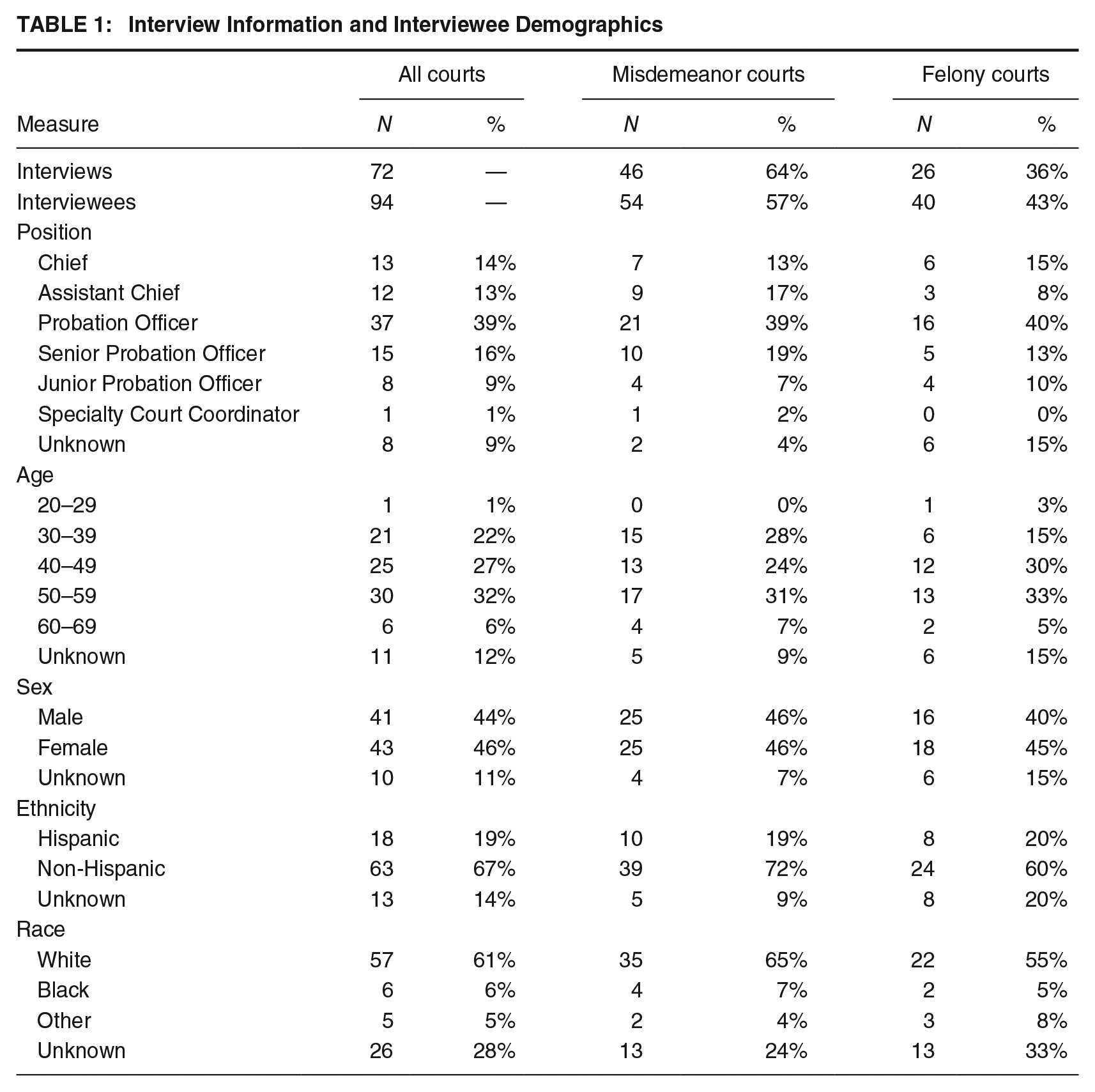
Most interviews (86%) involved a single participant, with some including multiple participants (up to six). The same interview guide was for both single-participant and focus group–style settings with multiple staff members. Remote interviews accounted for 19% of the total for staff who wished to participate but were unavailable when the interview team visited. Participants received a 1-hr training credit, which counts toward meeting a required number of credits probation staff must obtain each year. All research activities were approved by the Institutional Review Board, and informed consent was obtained from each participant before the interview.
Demographic information (race/ethnicity, sex, age) was collected voluntarily at the end of interviews to ensure accuracy and participant comfort. Interviews lasted 11 to 76 min, averaging 38 min. All but one interview was recorded, with typed notes taken for the exception. Audio recordings were professionally transcribed. Transcripts were analyzed using Atlas.ti software. The analysis began with primary-cycle coding to identify major themes from the interview guide, followed by secondary and tertiary coding phases to refine subcodes and synthesize a narrative of the data.
Data Analysis
Data were analyzed using ATLAS.ti Version 24 for Windows (ATLAS.ti Scientific Software Development GmbH, 2024). The analysis began with primary cycle 2 coding of all interviews (Tracy, 2013). Deductive codes were applied to categorize major themes from the interview guide, such as probation’s voice in supervision processes, challenges faced, and perceptions of conditions (see Supplemental File). During initial read-throughs, inductive themes also emerged, such as probation officers’ relationships with various court actors. These inductive themes were incorporated into the final primary-cycle code list, which contained 28 codes applied between 13 and 235 times. Demographic codes categorizing race/ethnicity, gender, and age were also applied based on interviewee responses.
In the secondary-cycle coding phase, the team refined the primary-cycle codes into more detailed subcodes to “fracture” the data (Strauss & Corbin, 1998). Inductive subcodes were created based on topics mentioned by interviewees. To ensure consistency, two coders independently coded transcripts and met to resolve discrepancies through discussion (Tracy, 2013). This process was applied to 18 interviews (25%) to verify and finalize the secondary-cycle code list. The remaining 54 interviews were then coded independently using the agreed-upon list, which contained 446 subcodes applied between one and 91 times. Finally, the team conducted tertiary-level coding to “reassemble” the fractured data into a coherent narrative (Strauss & Corbin, 1998; Tracy, 2013). This involved thematic synthesis of the secondary-level codes, categorizing them into distinct domains. Each domain was described in an analytic memo.
Causal Loop Diagram
In addition to qualitative coding, the study utilized CLDs, a complex adaptive systems method, to visualize feedback mechanisms and dynamics within the courtroom workgroup (Kim, 1994; Sterman, 2000). The diagrams were produced using Kumu (2024) software package. The process involved the extraction and categorization of key dynamics described in interviews (e.g., communication barriers and hierarchical dynamics). After this, relationships between court actors were mapped as reinforcing or balancing feedback loops. Using causal mapping tools, arrows were drawn to represent these relationships, with signs indicating the nature of each influence. The diagrams were reviewed and refined by team members to ensure accuracy and consistency with the qualitative data.
Results
The findings reflect probation officers’ perspectives, offering insights into their experiences and beliefs about their role within courtroom workgroups. They emphasize that the relationships and interactions between probation officers and courtroom actors—judges, defense attorneys, and prosecutors—play a critical role in the effectiveness of probation conditions and possibly judicial outcomes. The CLDs illustrate the dynamics of these relationships from participants’ perceptions, highlighting both reinforcing (positive) and balancing (negative) feedback loops.
Probation officers and staff in these interviews advocate for greater inclusion at all stages of the judicial process. This study captures their professional perspectives and reports on these perspectives. However, this is not direct evidence of causal relationships. Probation staff believe their insights can help align judicial decisions with evidence-based practices, such as the RNR model, which is used in this agency, potentially improving a better alignment of conditions with the risk and needs of the person under supervision.
Probation Officers’ Views on Relationship With the General Court
Communication, respect, and collaboration among court actors, including probation officers, are perceived as vital for effective judicial functioning. Probation officers believe that their inclusion in dialogue ensures all perspectives are considered, potentially resulting in more balanced and informed decisions (Chrislip, 2002). According to probation officers, positive relationships foster collaboration, while poor communication and lack of respect undermine collaboration.
From the CLD, positive feedback loops (blue arrows) show that positive relationships between probation officers and other courtroom workgroup promote dialogue and collaboration (Figure 1). This positive relationship, in turn, encourages conference events and training workshops for all court actors for better collaboration. Conversely, negative feedback loops (red arrows) highlight poor communication and lack of respect for probation officers’ roles, resulting in strained court–probation relationships.
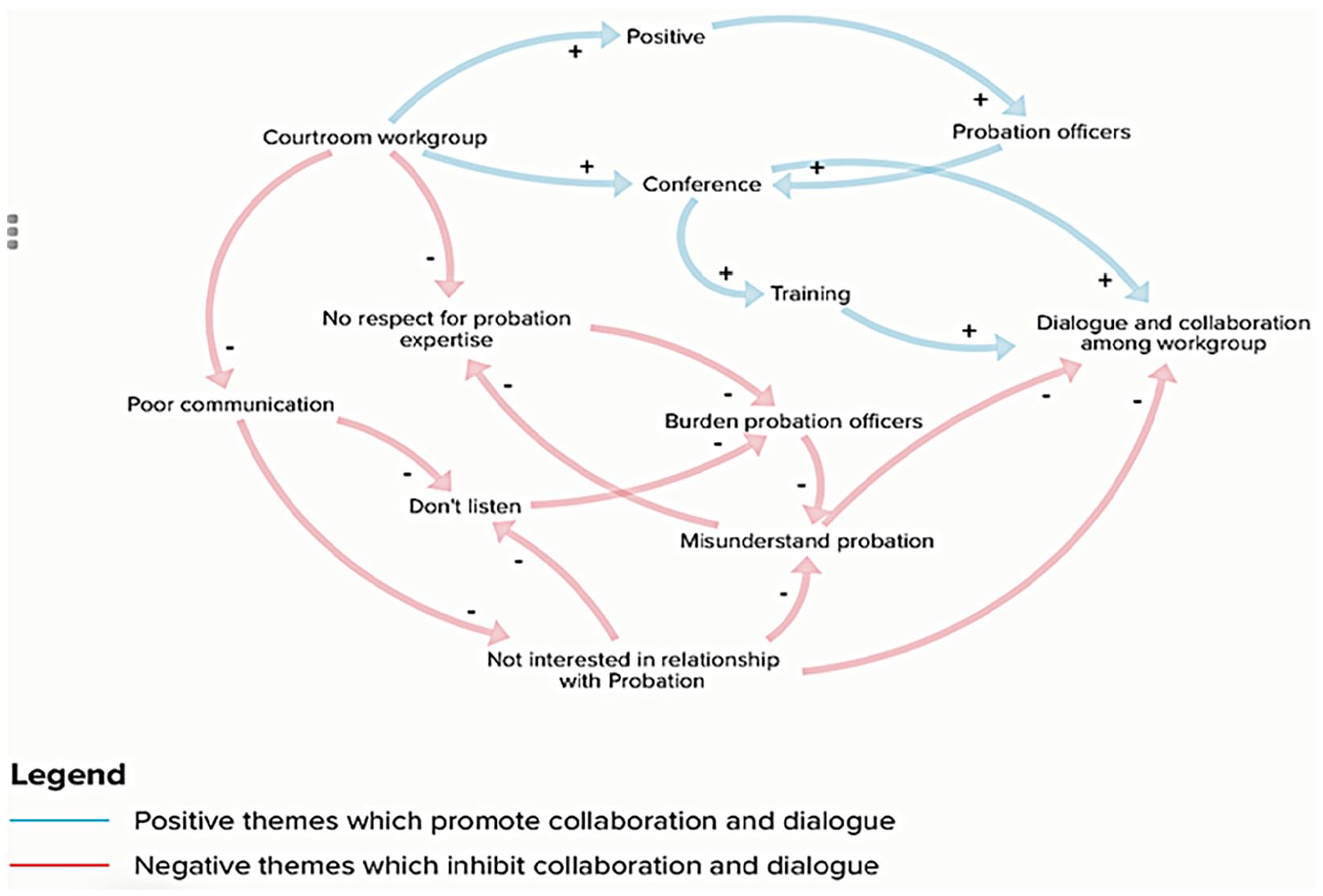
CLD Showing Dialogue and Collaboration Between Probation Officers and the General Court
Some probation officers described positive relationships with other court personnel. One noted, “I think we have good relationships with the people in the other departments in our court building” (B7-2 3 ). Regular meetings and training sessions were noted as particularly beneficial: “What we’ve seen in the past was the judges weren’t really informed and I think we have a meeting every week that really works well” (A1-1).
However, many probation officers expressed concerns about exclusion. One stated, We are the last to know anything. We get passed over many things, many decisions that are happening that—oh, by the way, we’re doing this. We wouldn’t have agreed to that. Why didn’t you tell us about—well, we didn’t think it was a big deal. (B8-4)
Another remarked, “Everybody has their lane . . . by the time the conditions get to us, it’s like, Why? Did anybody think about this or that or this?” (A6-2). This lack of solicited input further undermines their role. An officer noted, “They don’t care what we say. They don’t request our input” (A13-3). Another noted that judges rarely deviate from recommendations by the DA’s office and attorneys. Others emphasized the need for respect for their expertise, with one stating, “Respecting our supervision expertise . . . is something that not just the judge, but the clerks department, the prosecutors, and the defense attorneys lose sight of our professional ability to supervise certain things” (A7-1).
Misunderstandings about probation responsibilities also burden probation officers. For instance, attorneys sometimes assure clients about supervision conditions without explaining its full scope, leading to additional burdens for probation officers: “Sometimes we get attorneys and they tell their clients oh, don’t worry, you’re on probation . . . ORAS assessment, home visits, DNA submission, and employment and address verification aren’t being discussed” (B3-3).
Probation Officers’ Views on Relationship With Defense Attorneys
The relationship between probation officers and defense attorneys is complex, marked by both collaboration and challenges. In cases where defense attorneys seek probation officers’ input in difficult cases, informed decisions and balanced outcomes are achieved. However, differing objectives and limited understanding create challenges.
The CLD illustrates these dynamics (Figure 2). Positive feedback loops (blue arrows) show that when defense attorneys seek input, collaboration improves, benefiting defendants through an appropriate condition-setting process. As one officer described sidebar discussions with defense attorneys and prosecutors as beneficial for tailoring probation conditions: “We take a look at the report—police report, we look at what they’ve completed already thus far. Then we get them where they need to be before getting them to agree to a dispositional case” (A3-2).
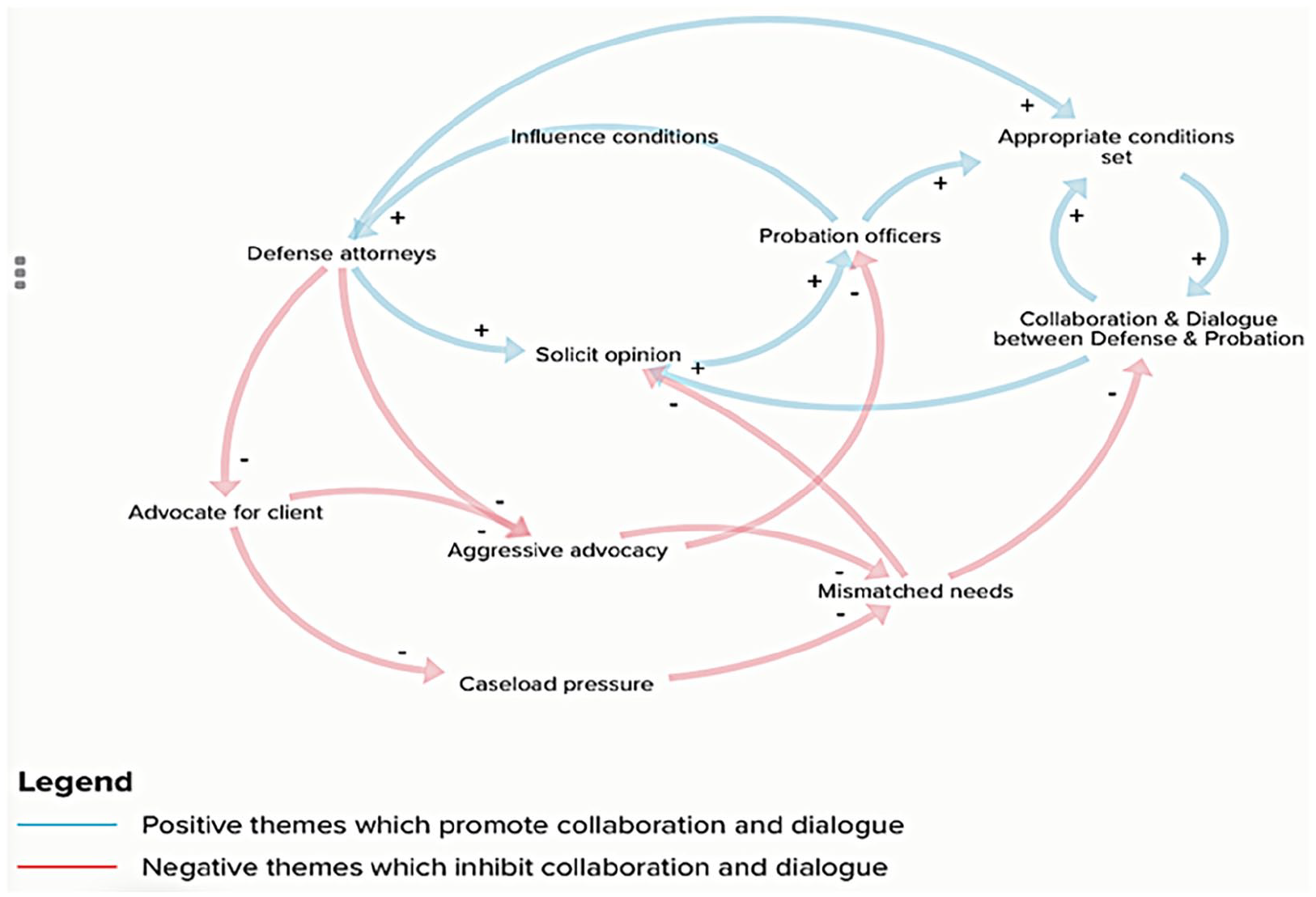
CLD Showing Dialogue and Collaboration Between Probation Officers and Defense Attorneys
However, negative feedback loops (red arrows) highlight that prioritizing leniency over practicality, without consulting probation officers, leads to unrealistic conditions and friction. An officer commented, The defense attorneys are the defense attorneys because they’re gonna advocate for their client no matter what they’re doing so whatever practice or protocol we come up with, they’re not gonna necessarily be on board with it unless it’s 100 percent in line with what they want for their client. (B2-1)
Another noted, “A lotta times, the attorney just wants to get the person outta jail. That’s all they want. They wanna get outta jail. They hinder them with so many conditions that now it just falls on us” (A9-1). This aggressive advocacy underscores the need for an integrated approach and mutual respect to ensure effective probation conditions.
This lack of input from probation officers creates inefficiency and hinders collaboration. One officer stated, “Sometimes the attorney doesn’t wanna work with what our recommendation is but realistically that probably the best avenue for him to go down because we know but they don’t ask us” (B10-1). This challenge highlights the need for a more integrated approach valuing probation officers’ expertise for better outcomes.
Probation Officers’ Views on Relationship With Prosecutors (DAs)
Positive relationships with prosecutors could potentially facilitate fairness and informed decision-making. Many probation officers emphasized that effective communication with prosecutors improves the quality of probation conditions. However, challenges persist, particularly due to high turnover in DAs’ offices, which disrupts collaboration.
The CLD highlights this dynamic (Figure 3). Positive feedback loops (blue arrows) indicate that prosecutors who seek probation officers’ input and respect their expertise can tailor conditions that benefit defendants, promoting collaboration. Negative loops (red arrows) show how power, high turnover, and insufficient input from probation officers burden them and undermine collaboration.
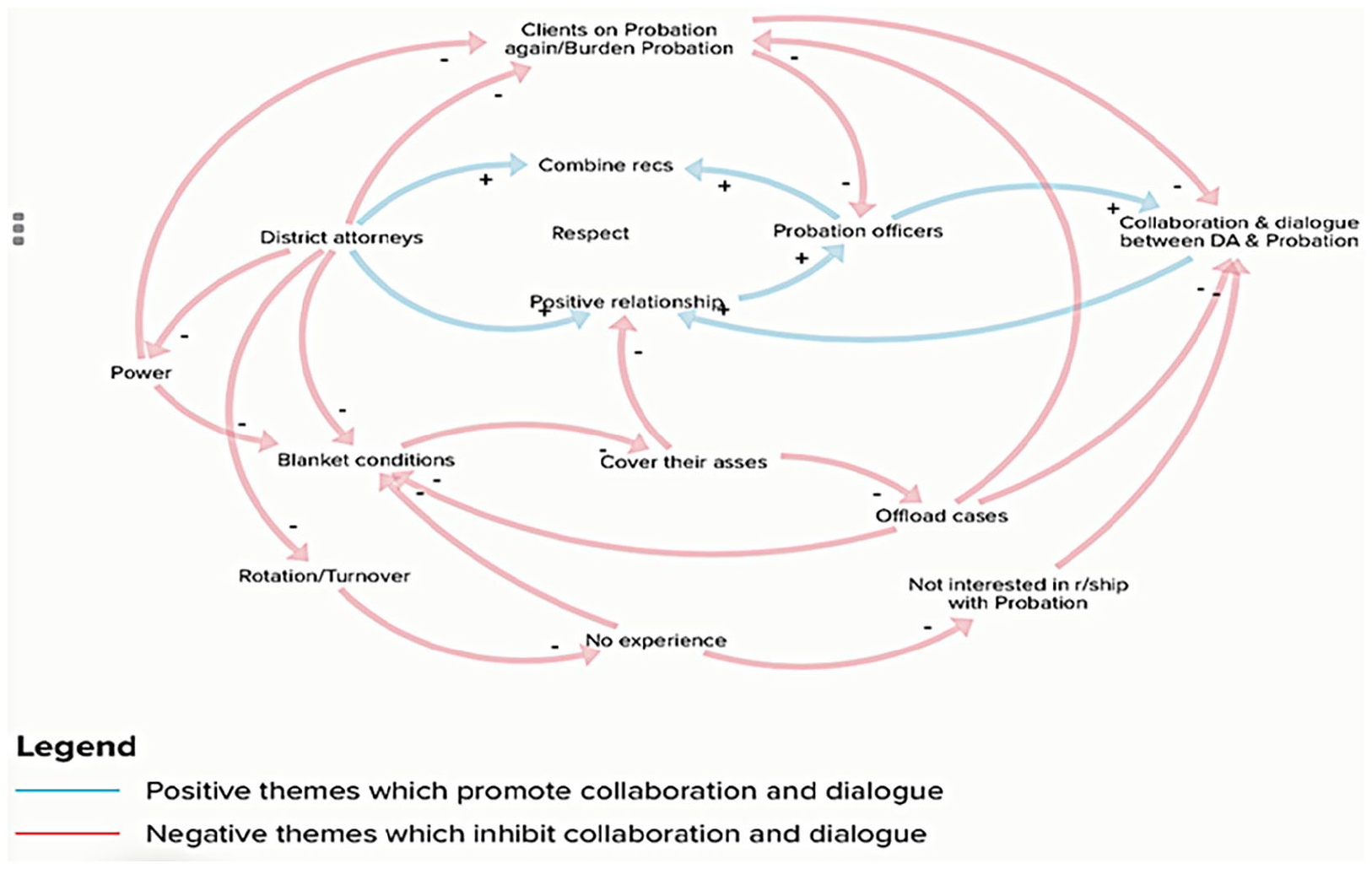
CLD Showing Dialogue and Collaboration Between Probation Officers and District Attorneys
A significant number of probation officers reported having positive relationships with the DA’s office. For instance, assistant district attorneys (ADAs) sometimes seek probation officers’ input on conditions. One interviewee noted, “We have a good relationship with the district attorney’s office. We don’t usually see the district attorney with the green sheet 4 ” (A2-3). Another officer commented: “ADAs have come to me like, ‘What’s your thought process on if I do these conditions?’ . . . we were able to discuss . . .” (A5-1).
Yet, significant challenges persist. DAs wield significant power, often seeking input from defense attorneys and overshadowing probation officers’ input in decision-making processes: “I think the DA’s office pretty much runs this building and they have for a while now” (A6-7). Moreover, DAs often prioritize clearing cases over individualized considerations due to their substantial influence, leading to unenforceable or generic conditions. One officer noted, “I honestly think that the majority of the pleas . . . are taken because a case is breaking down and the DAs get what they can get . . . They’re not thinkin’ about conditions. They’re not even thinkin’ about any individual” (B2-1). This practice reflects a broader focus on efficiency over fairness, disregarding the nuances of each case. An officer commented, The breakdown is that the DAs do a blanket on the pleas . . . by the time it gets up to the judge . . . it’s so fast that sometimes you don’t catch or you can say, “Is a person by any chance happen to be in treatment right now?” It would be good where they’re supposed to. (A8-2)
Some conditions mean that clients often are not probation material, which implies that clients who are unlikely to successfully comply with probation terms based on their past behavior and circumstances are still subjected to probationary measures. One officer noted, A big barrier here is the district attorney’s office . . . them not looking for our input and them just disposing of cases . . . Then the judge is not challenging it because it’s agreed with the defense attorney . . . This person is not a probation candidate. Did you look at their record? Please talk to us about it or about appropriate conditions. (A9-1)
Another officer commented, Every time they’ve been on probation, they’ve been found in violation and committed. What I wanna know is why is this time different? Why can’t we just guilty file somebody or why do they all have to be on the supervision? Some people just not appropriated . . . It just seems like we’ve widened the net a lot in the last couple years to really reign people in. (A6-7)
Probation Officers’ Views on Relationship With Judges
The relationship between probation officers and judges is shaped by authority, limited input, and the potential for mutual respect. While some officers reported positive interactions, many expressed concerns about power imbalances and limited opportunities to provide input.
From the CLD (Figure 4), the reinforcing loop (blue arrows) shows how respect for probation officers’ insights through listening to their recommendations leads to better collaboration, whereas red arrows (balancing loop) show how collaboration is undermined by judges’ authority, other judicial or personal pressures, limited probation officers’ inputs, and limited information.
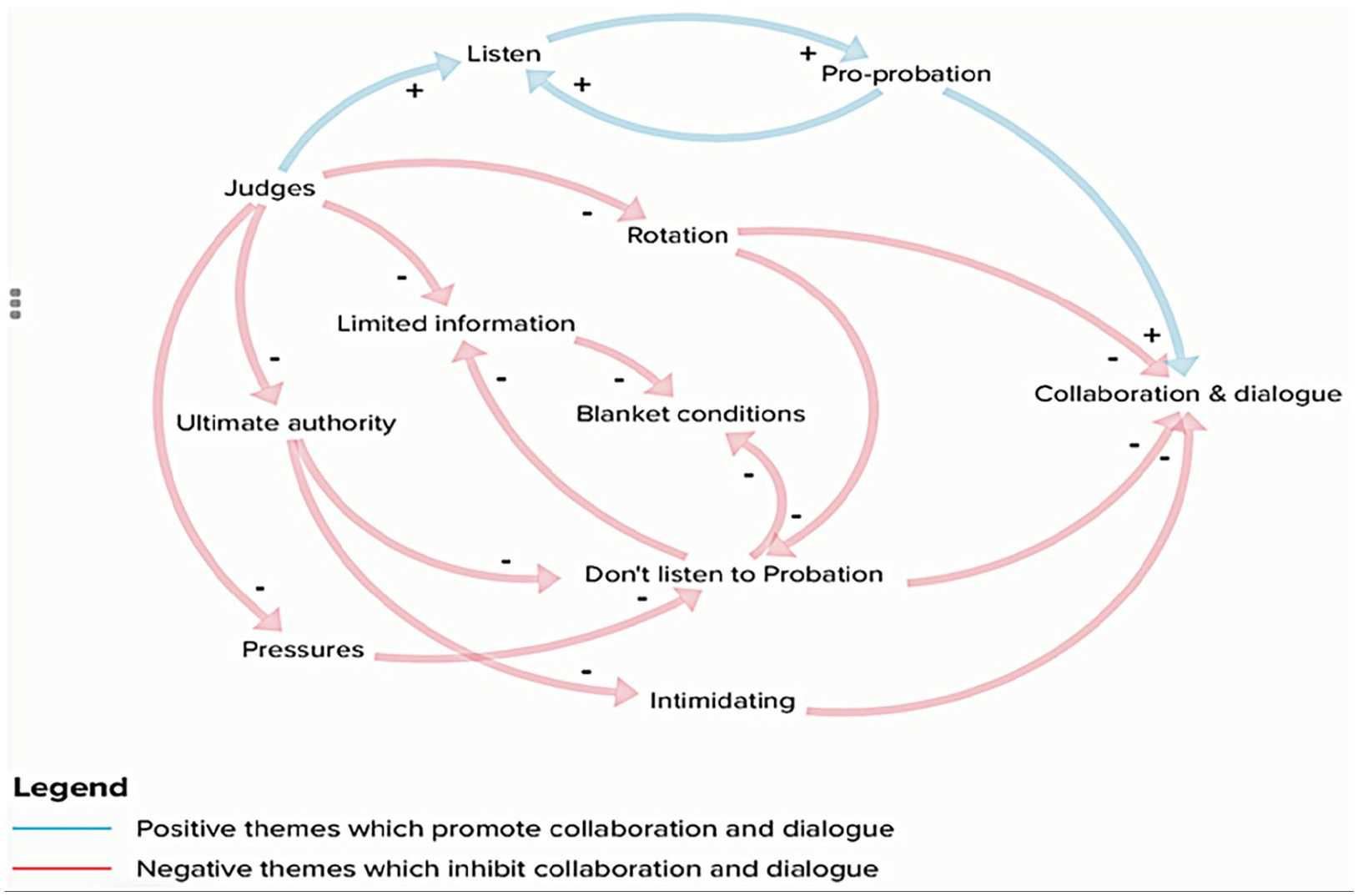
CLD Showing Dialogue and Collaboration Between Probation Officers and Judges
Some probation officers noted that regular interactions with judges foster mutual respect. One stated, “With our regular judges, I think there’s definitely a mutual respect. They hear us and we hear them” (A9-1). Another stated, When they stipulate to a violation, the judge wants to know our recommendation. Then, they ask what the defense attorney’s asking for. All the violations I’ve been here, the judge always wants to hear what we have to say. They’re very respectful of asking what we want. . . Recommendations, they do take it serious. They do respect our opinion. (A11-2)
Many probation officers noted that logistical improvements could ease their workload, but judges’ ultimate authority remains a central issue. As one noted, “Yes. I think that the unions have done a lot to try to push back on the condition of release cases, but at the end of the day, judges don’t like to be told what to do” (A11-1). Power dynamics can also discourage probation officers from voicing opinions: “You gotta be careful . . . you can’t just say what you really wanna say” (A10-2). Another officer expressed concern about career repercussions: “When you’re coming up the chain of command, you don’t wanna upset a judge. That judge is gonna be part of the promotional process” (A13-1).
The lack of input from probation officers exacerbates the issue of probationer misalignment. One noted, “You’re making recommendations that go out the window, that probationer comes back, and you’re right back where you started” (A7-4). Another added, Very rarely are we asked for our input in disposition, in this courthouse. I can only think of a handful of times that I’ve been asked, not at surrender, violation hearings . . . Regarding disposition, that’s between the DA and the defense attorney, for the most part. Very rarely do they ask us. (A11-2)
Judges often make decisions based on incomplete information. One officer observed, “I think they’re goin’ by the DA’s recommendation, the client’s attorney’s recommendation” (B8-2). Incomplete information often results in judges imposing blanket conditions on clients, overwhelming clients and setting them up for failure. One officer noted, “You get a judge that will overload conditions . . . That’s just gonna overwhelm the person and set the person up to fail” (A9-1). High rotation rates among judges highlight the instability and lack of continuity in the judicial process, which can undermine the effectiveness of probation recommendations: “Sometimes we have visiting judges that don’t know that we have this process or don’t care that we have this process” (A9-1).
Discussion
Although this study reports on the relationship between court actors and the supervision of individuals on probation post-plea, the findings underscore the importance of integrating probation officers across all stages of the criminal justice process—pretrial, sentencing, and post-sentencing (Devers, 2011; Taxman, 2008). During the pretrial stage, probation officers can provide critical input on risk assessments and bail or release conditions (Mackey et al., 2022; Taxman, 2008). At sentencing, their knowledge of defendants’ backgrounds, risks, and needs can inform realistic and individualized probation conditions (Andrews & Bonta, 2010; Taxman et al., 2006). Post-sentencing, their expertise in supervision and monitoring ensures the effective implementation and adjustment of probation terms (Petersilia, 1997; Taxman, 2008).
Marginal Input of Probation Officers in the Court’s Decision-Making Process
Eisenstein and Jacobs’ (1977) work on the courtroom workgroup overlooked the role of probation officers in courtroom processes, a gap that persists in later studies. The characteristics of judges, prosecutors, and defense attorneys shape institutional rules and norms that diminish probation officers’ roles. Their exclusion from key decision-making processes like plea bargaining limits the court’s understanding of a probationer’s history and needs, potentially leading to less informed sentencing decisions that fail to address risk and need factors. Probation officers’ significant input in revocation hearings highlights their value for judicial decisions impacting the probationer’s future (Macdonald & Baroody-Hart, 1999).
While probation officers contribute sentencing recommendations through presentencing reports, prosecutors often bypass these reports as pleas and sentences are frequently settled before referral (Macdonald & Baroody-Hart, 1999). Factors such as plea-bargaining, determinant sentencing laws, and increased workload have reduced probation officers’ influence. Hagan et al. (1979) noted that efficiency drives have expanded the DA’s role, decreasing probation officers’ direct impact on court decisions and leading to less individualized justice (Macdonald & Baroody-Hart, 1999).
Advantages of Probation Officers in the Courtroom Workgroup System
Probation officers possess extensive knowledge of their clients through ongoing interactions and supervision, including prior performance and risk-need assessments (Andrews & Bonta, 2010; Labrecque et al., 2022; Taxman, 2008). First, their knowledge of the client is unparalleled among courtroom actors. Their detailed understanding comes from regular check-ins, home visits, and supervision activities, providing insights into living conditions, employment status, social networks, and compliance (Taxman, 2008; Taxman et al., 2020). Second, their historical perspective on behavior and compliance helps identify patterns and recommend adjustments to supervision plans (Lutze, 2014; Paparozzi & Gendreau, 2005). Finally, probation officers also act as advocates, mentors, and motivators, bridging the gap between probationers and support systems and encouraging positive change (Lovins et al., 2018; Menger et al., 2019).
Variation in Relationships With Other Courtroom Workgroup
Probation officers’ views on their relationships with judges, prosecutors, and defense attorneys are influenced by the impact on probation conditions and sentencing, institutional norms, and interaction quality (Hagan et al., 1979; Macdonald & Baroody-Hart, 1999; Metcalfe, 2016). They value judges who prioritize rehabilitation and consider their recommendations, aligning sentencing with probationers’ needs (Macdonald & Baroody-Hart, 1999). Conversely, judges who ignore their insights or favor punitive measures may strain relations. Relationships with prosecutors can be positive when they value probation assessments and collaborate on rehabilitative sentencing (Alarid & Montemayor, 2010; Macdonald & Baroody-Hart, 1999) but can become adversarial if prosecutors focus solely on convictions without considering probation recommendations (Hagan et al., 1979; Macdonald & Baroody-Hart, 1999). Interactions with defense attorneys vary; collaboration with those advocating for appropriate conditions fosters positive relationships, while challenges arise when defense attorneys focus solely on minimizing punishment (Alarid & Montemayor, 2010; Burke, 2007; Devers, 2011).
Recommendations: Key Leverage Points for Enhancing the Role of Probation Officers
To improve judicial outcomes, probation officers must be more integrated into decision-making processes. First, formal mechanisms, such as mandated consultations, multidisciplinary panels, and pretrial assessment reports, can institutionalize probation officers’ contributions to bail, sentencing, and supervision decisions, ensuring that resource allocation aligns with intended outcomes without overburdening the system (Walsh, 1985). Second, structured sentencing hearings supported by evidence-based tools like the RNR model (Andrews & Bonta, 2010; Warren, 2007) and clear communication about probation realities can ensure tailored, practical, and rehabilitative outcomes (Petersilia, 1997).
Furthermore, training initiatives are essential for fostering collaboration within courtroom workgroups by educating judges, prosecutors, and defense attorneys on the roles and contributions of probation officers (see Labrecque et al., 2022, for a review of training on probation officer effectiveness). Extending training to the court actors can enhance communication, minimize misunderstandings, align probation conditions with realistic expectations, and support evidence-based practices to address individual needs effectively (see Warren, 2007, for a discussion of assisting the judiciary in understanding RNR). Finally, regular monitoring and evaluation are crucial for assessing the impact of probation officer involvement on sentencing decisions and supervision outcomes (Abt Associates, 2019). By implementing ethical guidelines, prioritizing cases suited for community supervision, and identifying areas for refinement, courts can promote equity, efficiency, and rehabilitative success while reducing systemic inequities (Latimer et al., 2005).
Limitations
This study has several limitations that must be acknowledged. It is limited to one state and one court system, which may affect generalizability to jurisdictions with different organizational structures and legal cultures. Furthermore, the involvement of the state’s central office in site selection may have introduced selection bias, and focusing solely on probation officers (Table 1) excludes experiences and perspectives from other court actors. The use of CLDs does not in any way discern true causation. Instead, it simply illustrates participants’ perceptions of collaboration and dialogue among court actors. In addition, the study reflects data from a specific period, potentially missing recent developments. Future research should include diverse locations, larger sample sizes, a broader range of court actors for a more comprehensive understanding, and empirically examine how the inclusion of probation officers influences outcomes like recidivism, probation success, and system efficiency.
Conclusion
Conversely, while the exclusion of probation officers may result in impractical or overly punitive conditions, their involvement in the courtroom workgroup may potentially advance justice and fairness. Probation officers bring specialized knowledge and expertise in assessing the needs of probationers and tailoring conditions accordingly. By actively participating in decision-making processes, probation officers ensure that probation conditions are realistic, supportive, and conducive to potential rehabilitation. Their input fosters a more holistic approach to justice, one that not only addresses punitive measures but could also emphasizes the rehabilitation and reintegration of individuals into society. Thus, formalizing the inclusion of probation within the courtroom workgroup is essential for upholding the principles of justice and fairness within the legal system.
Supplemental Material
sj-docx-1-cjb-10.1177_00938548251350122 – Supplemental material for Tackling the Issue of Limited Dialogue and Strengthening Collaboration Among Court Actors for Improving the Condition-Setting Process
Supplemental material, sj-docx-1-cjb-10.1177_00938548251350122 for Tackling the Issue of Limited Dialogue and Strengthening Collaboration Among Court Actors for Improving the Condition-Setting Process by Loveline C. Phillips, Benjamin J. Mackey and Faye S. Taxman in Criminal Justice and Behavior
Footnotes
Authors’ Note:
We have no known conflicts of interest to disclose. Arnold Ventures funded this work. All opinions are those of the researchers and not the funding organization.

Notes
References
Supplementary Material
Please find the following supplemental material available below.
For Open Access articles published under a Creative Commons License, all supplemental material carries the same license as the article it is associated with.
For non-Open Access articles published, all supplemental material carries a non-exclusive license, and permission requests for re-use of supplemental material or any part of supplemental material shall be sent directly to the copyright owner as specified in the copyright notice associated with the article.
