






Abstract
Procedural justice theory has a lengthy history of application in criminological research. Over time, the theory has been applied to police stops, arrests, court procedures, and other aspects of the criminal legal system. However, much of the extant research examines procedural justice generally among minoritized groups and fails to utilize intersectional approaches focusing on race and gender. The current study addresses this limitation by using qualitative data from 336 system-involved women in Michigan to explore White and Black women’s perceptions of procedural justice. The findings revealed that Black women have somewhat more nuanced and unsatisfactory perceptions of procedural justice, but White women’s perceptions were not overwhelmingly positive either. In addition, women in both groups felt that judges were more procedurally just than the police. Both theoretical and practical implications are presented.
Women are the fastest-growing incarcerated population, and racial disparities are pronounced throughout the criminal legal system for both men and women (Sawyer & Wagner, 2025). However, Black women are often ignored in conversations around racial disparities, despite experiencing similar mistreatment (Ritchie, 2017), and left out of criminological research (Potter, 2015). For example, there is a plethora of procedural justice research using racially/ethnically minoritized samples, but few studies use intersectional approaches to examine the impact of race and gender on procedural justice perceptions. There is also a lack of approaches comparing how women across racial groups perceive procedural justice, as well as research focused on judicial procedural justice. The current study addresses these limitations by comparing and contrasting Black and White system-involved women’s perceptions of procedural justice and answering two research questions:
Review of the Literature
Intersectionality
Scholars have consistently called for more intersectional research (Potter, 2015). Crenshaw (1989) conceptualized intersectionality as “the location of women of color both within overlapping systems of subordination and at the margins of feminism and antiracism” (Crenshaw, 1991, p. 1265), but its definition has since broadened to “the concept or conceptualization that each person has an assortment of coalesced socially constructed identities that are ordered into an inequitable social stratum” (Potter, 2015, p. 13). Thus, intersectional scholars examine how people are multiply situated within social strata and simultaneously privileged and marginalized; they may also use intersectionality as a methodological tool to examine data through individual-and system-level lenses (Esposito & Evans-Winters, 2021).
In criminology, the use of intersectionality is increasing, which allows for a more rigorous interpretation of multiply marginalized groups’ overrepresentation and experiences in the criminal legal system (Potter, 2015). Yet, there are still improvements to be made in intersectional criminological scholarship. For instance, many intersectional studies only acknowledge identity characteristics at the descriptive level and focus on individual failures rather than structural disadvantages (Dernberger, 2017). There is also a limited scholarship focused on the intersections of race and gender, preventing the development of more complete theoretical arguments of how power, inequality, and social structures shape people’s experiences (Dernberger, 2017). The use of intersectional approaches in procedural justice research is also limited, leading to scholars calling for more research centering race and women (Jackson et al., 2023; Tatar et al., 2012).
Procedural Justice Theory
Procedural justice theory was initially defined as the perceived fairness of a legal process and the methods used to reach a decision. Initially focused on court proceedings, Thibaut and Walker (1975) found that disputants valued the perceived fairness of court processes over the outcomes of those processes. And they identified two specific phases in which control was distributed between disputants and a third party: the process phase (i.e., presentation of evidence) and the outcome phase (i.e., verdict). Disputants preferred having control over the process phase because they wanted to present their evidence, and when provided with this opportunity, they viewed the overall procedures as fair (Thibaut & Walker, 1975). Adding to the idea of process control, Leventhal (1980) identified six specific procedural components: (1) representativeness, (2) consistency of procedures, (3) lack of bias, (4) accuracy, (5) correctability, and (6) ethicality. Each of the six components represents a criterion people use to form procedural justice judgments, but discussions of how procedural justice perceptions or evaluative criteria differ among subgroups were limited and viewed as “one-size-fits-all” (Leventhal, 1980; Thibaut & Walker, 1975).
Lind and Tyler (1988) developed the Group Value Model (GVM) of procedural justice, which asserts that when authorities’ actions are procedurally just, people’s sense of group membership is affirmed, and authorities are viewed more positively. It also includes four additional procedural components: standing, trust, voice, and neutrality (Tyler & Huo, 2002). Standing (or respect) involves an authority figure’s respect for an individual’s rights and dignity and their ability to behave politely (Tyler & Lind, 1992). Trust involves people’s ability to trust that the authorities will behave fairly, and voice involves having the opportunity to tell one’s side of the story (Tyler & Huo, 2002). Neutrality concerns the absence of bias and the presence of honest, fact-based decision-making. The emphasis on neutrality is particularly important because it shows that people want authorities to refrain from biased behavior and desire to be a part of the group they represent (Tyler & Lind, 1992).
In sum, procedural justice is evaluated based on several components, and an individual’s perceptions of procedural justice have important implications for their views of legitimacy (i.e., belief that an authority or institution should be obeyed and deferred to), substantive justice (i.e., favorability or fairness of the outcome of legal proceedings), and future compliance and cooperation (Baker et al., 2021; Tyler & Huo, 2002; Walters & Bolger, 2019). Moreover, its relational aspect provides a strong basis for using intersectional approaches in procedural justice research. If the belief is that certain people are marginalized due to their identity (Potter, 2015), one could argue that they also experience unfair treatment from authority figures.
Policing, Race, Gender, and Procedural Justice
Much of the existing procedural justice research focuses on the procedural justice model of policing (Donner et al., 2015) and reveals that the general public and system-involved people hold mixed views of the police. For example, Baker and colleagues (2014) assessed 811 incarcerated women’s (57% White, 32% Black, 5% Hispanic, 6% other/multiracial) perceptions of procedural justice during interactions with the police and courts. The women who believed the police were honest and allowed them to share their side of the story had more positive procedural justice perceptions, with perceived honesty being the most influential factor (Baker et al., 2014). Subsequent research using a sample of system-involved women substantiated these findings, as the women perceived police interactions as fairer when the police followed proper protocol and treated them respectfully (Cobbina & Morash, 2015). Thus, the women who felt positively may have also felt they were part of the group the police serve (Lind & Tyler, 1988). Positive police perceptions may also have spillover effects on perceptions of legitimacy and compliance with the law. Case in point, a study using data from 141 violent crime-involved people (85% Black, 92% male) found that although they had overwhelmingly negative views of the police, participants with more procedurally just views also had positive perceptions of the law’s legitimacy and a decreased likelihood of carrying a gun (Papachristos et al., 2012).
Regarding race and gender, Black people have a strained relationship with the police because of overpolicing and racial discrimination (Hinton & Cook, 2021), and women are increasingly vulnerable to disparate policing because of the war on drugs, criminalization of poverty, and broken windows policing (Ritchie, 2017). Consequently, procedural injustice has become a part of many Black people’s identities, leading to stark racial/ethnic divides in attitudes toward the police (Metcalfe & Baker, 2022). Compared to their White counterparts, Black people were more likely to say the police used too harsh tactics and were too quick to use lethal force, less courteous, more racially biased, and not competent at enforcing the law, protecting citizens from crime, or responding quickly to calls for help (Ekins, 2016). These negative perceptions of the police are found among men and women, with one study using data from 253 racially/ethnically minoritized gang members (54.1% Black, 26.8% Latino, 53.0% female, 47.0% male), finding that both groups viewed the police as procedurally unjust, disrespectful, and untrustworthy. Both groups also felt the police’s decision-making was biased based on their race, gender, neighborhood context, and the way they dressed (Novich, 2016). Accordingly, these attitudes undermine trust in the police and make it difficult for Black people to determine if they should rely on the police for safety and support (Desmond et al., 2016).
The Courts, Race, Gender, and Procedural Justice
Court-focused procedural justice research demonstrates similar findings to police-focused studies. For example, Cobbina and Morash (2015) analyzed qualitative data from 92 women on parole (42% White, 36% Black) and found that 73% of the women felt the judges treated them fairly, resulting in positive substantive justice perceptions, but women who experienced procedural injustice had negative substantive justice perceptions. Baker and colleagues’ (2014) study supported these claims and found that incarcerated women value having their voices heard and the judge’s honesty. They also found that perceptions of police treatment are sometimes used as a proxy for treatment in court settings, meaning a negative experience with the police may spillover to other criminal legal system actors. Metcalfe and Baker (2022) used survey data from 1,604 incarcerated people (White: 55.2%, Black: 37.3%, 66.3% women) to explore this phenomenon and found that Black participants perceived the police as less procedurally just, leading to more negative perceptions of the courts as well.
Metcalfe and Baker (2022) also argue that Black people are more attuned to disadvantage, racism, and harsher social control in the criminal legal system, which is supported by prior research. For example, Tyler’s (2001) found that Black respondents’ (n = 215) perceptions of procedural justice were more likely than White (n = 1,284) and Hispanic (n = 203) respondents to be influenced by court actors’ neutrality. Another study focused on 94 incarcerated girls’ and women’s (38.3% Hispanic, 21.3% Black) perceptions of court procedural justice revealed that Black participants with longer incarceration histories viewed their court experiences as more procedurally unjust than their White counterparts. The authors suggested that Black women’s lengthier incarceration may have increased their awareness of racial disparities in court settings, contributing to their negative perceptions (Tatar et al., 2012).
Finally, shared racial or ethnic identity with authority figures is one factor that enhances procedural justice perceptions (Baker et al., 2015). Thus, minoritized people’s perceptions of procedural justice may hinge on the race or ethnicity of legal authorities. For instance, Atkin-Plunk and colleagues (2019) examined quantitative data from 132 problem-solving court clients (42% White, 43% Black) and discovered that Black clients reported lower perceptions of procedural justice. Given that nearly all judges in the sampled court were White (one was Hispanic), greater judicial racial representation might have improved Black clients’ perceptions.
Corrections, Race, Gender, and Procedural Justice
Existing scholarship has examined procedural justice in corrections settings, albeit to a lesser extent and finds that incarcerated people’s perceptions of procedural justice affect their views of prison staff and their willingness to cooperate (Alward et al., 2021). The impact of procedurally unjust behavior extends to post-release offending as well. For example, one study found that incarcerated people who were treated respectfully and fairly by correctional staff were less likely to be reconvicted in the 18-month post-release period (Beijersbergen et al., 2016), but experiencing procedurally unjust treatment can increase incarcerated people’s criminal propensity (Liu et al., 2020).
The intersectional scholarship in this area is also limited, but a recent qualitative study of 28 system-involved youth’s (85.7% Black, 67.8% male) perceptions presents interesting findings (Enujioke et al., 2023). The youth felt that the staff usually behaved consistently but believed non-Black youth were favored over Black youth and treated less harsh (e.g., less time in isolation and less violations for perceived bad behavior). Still, both racial groups felt disrespected by correctional staff, viewed them as untrustworthy, and felt that their voices were not heard (Enujioke et al., 2023). This study reiterates respect’s, trust’s, and voice’s importance, and Black people’s continued focus on neutrality underscores the need for unbiased behavior in the criminal legal system to achieve procedural justice.
The Current Study
The extant research has several limitations that the current study will address. First, intersectional approaches are lacking, despite scholars highlighting the need for procedural justice research centering race and women (Jackson et al., 2023; Tatar et al., 2012). The dearth of intersectional approaches prevents the development of new theoretical insights into how procedural justice may be provided along racialized and gendered lines and limits the understanding of intra-group differences (Potter, 2015). Second, procedural justice research primarily focuses on the police, with judges receiving less attention, especially in studies using Black samples. The lack of research on judicial procedural justice is problematic because the police represent one aspect of the criminal legal system. Therefore, scholars miss the opportunity to examine how procedural justice perceptions may change or spill over to judges. Finally, system-involved people’s experiences are underrepresented in procedural justice research, preventing scholars from understanding “. . .the extent or lack thereof that procedural justice is afforded to all citizens, regardless of race, class, gender, neighborhood context and criminal involvement” (Novich, 2016, p. 7).
The current study addresses these limitations in three ways. First, an intersectional framework and analytic approach guide the research questions and data analysis. Specific attention is paid to intra- and inter-group differences by examining how, if at all, Black system-involved women’s intersectional identities make their perceptions of procedural justice qualitatively different from White women’s perceptions. Second, both research questions focus on procedural justice, but the second question examines how, if at all, women’s perceptions of the police and judges differ. The research questions are (1) RQ1: How do Black and White women’s perceptions of procedural justice align and differ? and (2) RQ2: How do the women’s experiences with police officers and judges align and differ? Third, all women in the sample are on community supervision, addressing the need for more research centering system-involved people.
Method
Participants
The current study uses an intersectional approach to answer two research questions: (1) RQ1: How do Black and White women’s perceptions of procedural justice align and differ? and (2) RQ2: How do the women’s experiences with police officers and judges align and differ? The data used is secondary qualitative data from the Women Improving Probation and Parole project (WIPP), a Michigan-based longitudinal study (2011–2017) that followed 402 women on community supervision. The project received IRB approval from the Michigan State University IRB on March 16, 2009 (IRB #09-134). Participants completed six interviews, divided into two sets of three-wave studies. The initial three waves (T1, T2, and T3) focused on the women’s relationships with their supervising agents. The follow-up study (T4, T5, and T6) focused on the women’s identity development over their life course. The study’s overarching goals were to (1) understand the unique characteristics of women on supervision, (2) understand how the women are affected by supervision, their needs and characteristics, and their supervising agents, (3) understand how supervision can help women with different personalities, needs, and strengths, and (4) prepare and train officers and women to make supervision successful.
During T1, interviewees were asked: (1) Can you tell me about the offense(s) that led to your current conviction, (2) What actually happened? What events led up to your arrest?, (3) Did you commit this offense with another person?, (4) Was there a victim?, (5) Were you treated fairly by the criminal justice officials?, (6) How did the police treat you? How did the judge treat you?, (7) Do you think your sentence was fair?, and (8) How do you feel about this now, looking back on it? These questions were used to explore women’s self-reported accounts of the circumstances that led to the conviction(s) for which they were under supervision at the time of the study. The author of the current study chose to analyze these eight questions because they evoke information about procedural justice. The full interview instrument was more comprehensive and included questions about the women’s current needs, neighborhood, social network, health, experiences of abuse, substance use and treatment, communication with their supervising agent, motherhood, and self-efficacy and self-perceptions.
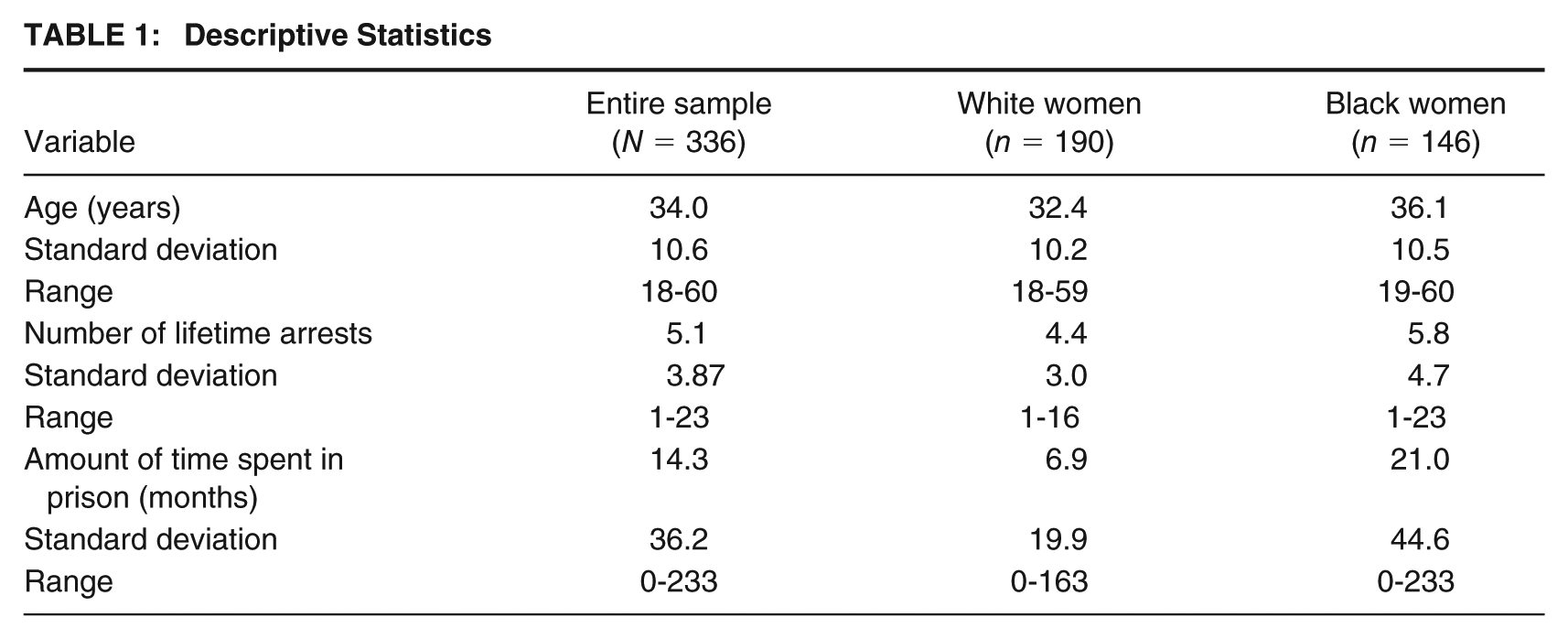
In total, 402 women participated in the original study, but the present analysis only includes the 336 women who identified as non-Hispanic Black, Black Biracial, or White. The decision to exclude other racially/ethnically minoritized women was due to insufficient sample sizes for Hispanic/Latine (n = 23) and Asian (n = 2) women. This does limit the study’s transferability to other women of color and should be addressed in future research. The final sample for the current study includes 190 non-Hispanic White women and 146 non-Hispanic Black or Black Biracial women. The descriptives in Table 1 show that, on average, Black women were older, had slightly more lifetime arrests, and spent about 14 more months in prison than White women. Also, a slightly higher percentage of White women (78.3%) than Black women (71.4%) were on probation. A marginally higher percentage of Black women (26.5%) than White women (21.2%) were on parole, and three Black women and one White woman were on probation and parole.
Descriptive Statistics
Sampling and Data Collection Methods
Eligible supervising agents were randomly sampled and recruited; then, the women in their caseloads were sampled for the study. Sampling was specific to women because the research was conducted with the Michigan Department of Corrections (MDOC) following their recent implementation of women-specific caseloads and gender-responsive supervision training. The project’s principal investigator (PI) reviewed agents’ caseload lists and helped the agents identify clients that (1) identified as a woman, (2) were convicted of at least one felony, (3) had a history of substance use, (4) had been supervised for about 3 months at the time of recruitment, and (5) were going to be under supervision for a minimum of 6 more months. The PI also instructed the agents not to exclude any eligible women who might be difficult to interview (e.g., because they were uncooperative) to avoid biasing the sample, as the researchers wanted to accurately capture the experiences of all women under supervision.
Seventy-three of the 77 agents recruited consented to participation, and three contact methods were used to recruit the women on their caseloads. First, with consent, some agents provided the research team with the women’s names and contact information, and the research team recruited them. Second, some agents gave their clients the research team’s contact information and had them reach out to the team directly. Finally, the research team conducted onsite recruitment and interviews at reporting centers. In total, 402 women were recruited and completed interviews, but the current study only uses data from 336 women. All interviews were one-on-one, semi-structured and conducted in private areas. For T1, the women received a $30 incentive. In the subsequent interviews, they received $50, $75, $40, $75, and $40, respectively. If the women consented, the interviews were audio-recorded and transcribed verbatim for data analysis. If they did not consent, summaries of their responses were typed during the interview. Only seven interviews (2.1%) used in this study were summarized rather than audio-recorded.
Several ethical safeguards were implemented as well. First, all team members received IRB Human Subjects Research training and training on interviewing and building rapport and trust with vulnerable populations. Second, all participants were assigned “Case ID” numbers, which were kept with their interview data and transcripts. Third, all personally identifiable information was removed from the transcripts, and all participants were given pseudonyms, which are used in the presentation of the results. Finally, a Certificate of Confidentiality was obtained from the National Institute of Health. The certificate protects the women’s data from being subpoenaed and was an important part of the research because the interviews contained sensitive information about women’s substance abuse and criminal behavior.
Analytic Strategy
The current study uses an intersectional analytical approach. Intersectionality as an analytical tool operates under the assumption that the perspectives of multiply marginalized individuals offer unique insights into the world (Esposito & Evans-Winters, 2021). For the current study, a structural intersectionality approach is most relevant because it focuses on how sociostructural elements and institutions disadvantage certain groups (Crenshaw, 1991) and is done by examining how Black system-involved women’s location at the margins of race and gender makes their procedural justice perceptions qualitatively different from White women’s perceptions.
The author conducted a deductive thematic analysis and developed the codes from seven components of procedural justice theory: consistency, accuracy, neutrality, correctability, voice, respect, and legitimacy (Leventhal, 1980; Tyler, 1988, 1989; see Online Only Supplementary Material (available in the online version of this article) for codebook). After creating the codes, the author and another coder used NVivo to code 10 interviews and identify themes. The coders continued to develop the themes by creating, reviewing, and refining child codes related to the overarching deductive themes identified in the data. After the 10 interviews were coded, the coders randomly selected and coded 10% of the remaining data (n = 44) separately to establish inter-rater reliability. NVivo’s Coding Comparison Query resulted in a k of .88, indicating almost perfect agreement between the coders (Landis & Koch, 1977). The remaining 348 interviews were coded independently by the author.
After all transcripts were coded, the women’s racial identities were added to NVivo as case classifications (i.e., descriptive attributes), enabling a comparative analysis of the themes. NVivo’s Matrix Query feature was used to generate crosstabs of the identified themes by racial group (see Figure 1, for example). Running these queries allowed the author to assess if there were patterns in which themes were present in Black and White women’s narratives. The queries were the first step in the intersectional analysis and allowed the author to assess differences in theme frequency across racial groups. The second step occurs in the presentation and discussion of the results, which is where the intersectional complexity of participants’ identities is accounted for.

Example NVivo Crosstab
Reflexivity Statement
Drawing on Collins’ (1986) concept of the “outsider-within,” the author integrates her experiences as a Black woman scholar and Black American woman to illustrate the simultaneous realities of privilege and marginalization that shape her worldview and scholarship. The author understands how Black people contextualize their experiences within the United States and the criminal legal system, but also acknowledges the limits of her perspective as someone without firsthand system involvement. She uses her privilege as a scholar to amplify system-involved people’s voices and employs critical frameworks and methodologies that center their lived experience and interrogate the role of power, privilege, and inequality. Recognizing that all research is inherently biased, the author attempts to mitigate bias in the current study by developing the codebook with another coder, assessing inter-rater reliability, grounding her conclusions in the data and prior literature, and noting areas requiring further investigation.
Results
Women’s General Procedural Justice Perceptions
The first research question asked, “How do Black and White women’s perceptions of procedural justice align and differ?” and focused on consistency, accuracy, correctability, and legitimacy.
Consistency
Few women in the entire sample discussed feelings about consistency (i.e., the consistent application of rules and laws across people and time), making the data for this theme less robust. Both Black (13.0%, n = 19) and White women (21.6%, n = 41) mostly felt that the criminal legal system was inconsistent. For instance, Lana (White woman) said, “I struggle with a lack of respect for the police. I have seen them doing what any other person would have been arrested and put in jail for—the double standard.” By this, Lana means that she has seen the police get away with behaviors that citizens would be punished for. Consequently, she felt there is inconsistency in how the rules governing criminal conduct and punishment are applied.
Black women shared specific examples of inconsistencies in their cases, demonstrating how it personally affected them. Case in point, Lavinia (Black woman) was frustrated about receiving the same sentence for marijuana possession that a man with more severe drug offenses received, believing her sentence should have been more lenient. She stated, “The judge let a man get probation for having blow and heroin. I’m on probation for four bags of weed. The same thing he on.” Both Lana’s and Livinia’s quotes highlight that the inconsistencies in the criminal legal system exist not only between system-involved people and those in power (e.g., the police) but also among system-involved people. Thus, the women’s narratives point to a general sentiment that the criminal legal system is fairly inconsistent, particularly in determining who must follow the rules and who receives what punishment.
Accuracy
Black (31.5%, n = 46) and White (28.9%, n = 55) women mostly felt as though criminal legal system actors’ decisions were not accurately guided (i.e., based on credible information and informed opinions), and no nuanced differences emerged in their narratives. For example, Sugar discussed an interaction with the police where she felt they did not take her personal situation into account in how they dealt with her. She said, “They didn’t care that I was an addict or that I needed help. They’re just doing their job.” Freya was also “pissed off” with her judge’s decision-making because she was “free all this time, and now, you guys want to put a tether on me.” Similarly, Laura felt her sentence was a “waste of taxpayer money” because she would never break the law again and wanted the judge to consider her desire to cooperate in her sentencing. Together, it is clear that participants valued accurate decision-making and wanted criminal legal system actors to consider relevant personal factors in their decision-making. Without these considerations, the women felt decisions were uninformed and inaccurate, which negatively impacted their perceptions of procedural and substantive justice.
Correctability
Only a few Black (6.8%, n = 10) and White (5.8%, n = 11) women felt they could correct inaccuracies at any stage of the criminal legal process, and qualitative differences did emerge. Interestingly, Black women described experiences correcting inaccuracies only with judges and the challenges to doing so, but White women corrected inaccuracies with judges and the police. Rhonda (Black woman) explained, “When I got sentenced, I kept telling them that my [sentencing] guidelines were incorrect, and they told me they were correct. I had to go to prison, hire an attorney, and pay $5,000 to get it corrected.” Likewise, Margo (Black woman) commented, “She [the victim] tried to say that I stole everything, but the judge made her bring receipts. That’s why I didn’t pay restitution.”
White women’s statements not only highlight their ability to correct inaccuracies with the police and judges but also their privilege in being perceived as innocent. For example, Pamela (White woman) recalled, “They [the police] took me in and said, ‘Why are you taking the fall for your boyfriend’s checks? If you testify against him, we’ll drop all charges.’ I wouldn’t do it because I wrote the checks.” By this, Pamela meant the police initially thought her boyfriend was responsible for the crime and not her, which was the inaccurate information she corrected by admitting guilt. Charlotte (White woman) disclosed an analogous experience involving race and admitting guilt, “I was driving, and the man I was driving with was Black. They [the police] tried to blame him. [They said to him] ‘Did you move her? We know you were driving.’ He had nothing to do with it.” Charlotte was not the only participant to describe an experience like this. Brandi (White woman) admitted, “A friend of mine wrote personal checks, and he asked me to do it [cash the checks] ’cause I was a White girl that has a better chance [of getting away].”
Together, Pamela, Charlotte, and Brandi’s stories show how White women are often perceived as innocent and innocuous, unlike Black women (Dirks et al., 2015). Consequently, White people are provided with a “benefit of the doubt” privilege during interactions with the police, causing them to have to correct inaccuracies about their innocence. Furthermore, Brandi’s story is also illustrative of the fact that crime-involved women may receive preferential treatment and less harsh sentencing in comparison to their male counterparts (Spohn & Brennan, 2013).
Legitimacy
The women rarely discussed legitimacy in their narratives, leading to less robust findings. When it was mentioned, they felt the criminal legal system lacked legitimacy and did not view it as an institution to be deferred to, obeyed, or revered. In fact, only two White women (1.1%) and zero Black women viewed the system as legitimate, and 20 White (10.5%) and eight Black (5.5%) women expressed that they did not view the system as legitimate, as a result of negative experiences. For example, Shalonda remarked, “I tried to be honest because I thought it would save me. It worked against me. That’s sad that you can be honest and have it work against you in the system.” Tova focused on her experience with the police and exclaimed, “I called the police. They didn’t do nothing after he [abusive boyfriend] took the car and bust the windows. So, I’m like, ‘Okay, I’m not calling the police because apparently, they’re not going to do nothing.’” Tova’s experience is not uncommon, as research shows that women may struggle to receive help from the police when dealing with abuse (Ritchie, 2017), lowering the likelihood of future victimization reporting (Stanek et al., 2023). This is the exact conclusion Tova reaches because she no longer sees the police as a legitimate institution focused on helping victims.
Women’s Experiences With Judges and the Police
The second research question asks, “How do the women’s experiences with police officers and judges align and differ?” and focuses on neutrality (bias), accuracy, voice, and respect.
Neutrality (Bias)
Bias was reported for judges and police officers, but bias from the police was mentioned more than bias from judges for both groups. Concerning judges, White women (12.1%, n = 23) felt the biased treatment was caused by their or a family member’s past interactions with the judge presiding over their case. For example, Melanie (White woman) said, “I think he was harsh on me because he’s sent away a lot of my family members,” and Kalin shared, “He don’t like my husband or me. He sent my husband to prison.” Black women (7.5%, n = 11) felt that the biased treatment from judges presiding over their cases stemmed from prior encounters with the same judge. Sally (Black woman) explained,
My original judge was the prosecutor on my first charge. He couldn’t sentence me because it’s a conflict of interest. So, he passed me on to his brother. Before, they told me I only had to complete rehab. Well, they didn’t even go off what they said; they just sent me to prison. It wasn’t fair because they ain’t give me no chance. They were already mad at me.
Together, it is clear that women in both groups believe prior personal or vicarious experiences with judges may influence how the judges treat them in future cases, and these adverse experiences negatively affected the women’s perceptions of judicial procedural justice.
Regarding the police, White women (15.3%, n = 29) described similar experiences with individual-level bias because of previous encounters with certain officers. Madison (White woman) asserted, “I have had other contact with my arresting officer, and I think he’s arrogant. He is more interested in power and prestige than in helping people.” Black women (13.7%, n = 20) spoke about police bias at a broader level, contrasting their discussions of judicial bias. Patricia (Black woman) explained, “Everybody knows how police are in Grand Rapids. They pretty much harass you. I don’t have anything good to say. I wasn’t treated fairly.” Angel (Black woman) held akin sentiments and divulged, “He [co-defendant] was telling the truth to the police, but they still hit me with the crime and locked me up. Everybody says, ‘That’s Oakland County. That’s what happens out there.’” In sum, Black women’s descriptions of police bias as a broader experience could be attributed to their prior knowledge of how the police treat Black people, but White women’s perceptions may be solely influenced by their personal interactions.
Accuracy
The women viewed judges more positively than police in regard to accurate decision-making, with 53 Black (36.3%) and 93 White (48.9%) women believing they were accurately sentenced. In addition, some White women felt that judges gave them multiple chances and helped them avoid harsher sanctions. For example, Sami (White woman) said, “The prosecutor wanted to put me in prison for a year, and the judge was like, ‘No.’ He just gave me three months.” This serves as another example of White women’s ability to avoid harsher sentencing, which may occur because they are perceived as less culpable (Dirks et al., 2015; Spohn & Brennan, 2013). Despite over a quarter of Black women believing they were accurately sentenced, judicial accuracy presented itself differently in their narratives. Black women felt that judges enacted judicial paternalism and gave them reality checks in hopes of encouraging legal compliance. Exemplifying this, Anneliese (Black woman) proclaimed,
When I went before the judge, she made me feel bad and gave me a reality check. She said, “You look a mess. It’s embarrassing to see you pregnant and in a courtroom. What type of example would you be for your kid?” She hit a nerve, but it’s a 14-year felony. I didn’t get any time. I do feel like it was fair.
Alice (Black woman) had a similar encounter with her judge and stated, “He [the judge] was very stern, reminded me of a father figure. He kind of says things to straighten you out.” From these quotes, it appears that the reality checks Black women received were stern but perceived as fair and accurate, given the situation. Thus, women in both groups felt they experienced some procedural justice, even though Black women were treated less sympathetically.
Positive perceptions of the police’s accuracy occurred when they were “doing their job” and acting in a situationally appropriate manner. A slightly higher percentage of Black women (14.4%, n = 21) than White women (7.4%, n = 14) held positive feelings about the police’s accuracy, but no nuances emerged in their narratives. When the police’s decisions and conduct were viewed as inaccurate, White (31.6%, n = 60) and Black (26.0%, n = 38) women felt it was because the officers lied or behaved incorrectly. For example, Nadja uttered, “I was guilty, but he did not follow the procedure. He did not turn on his camera or do the sobriety test properly,” and Toni explained, “Some detectives showed up and said, ‘You got to make a statement.’ It sounded like we were going to get into trouble. He conned us into making statements to screw us.” From these quotes, it is clear that while the women can acknowledge their guilt, they still expect the police to follow their code of conduct and be truthful. Without these elements, the police risk being seen as illegitimate.
Black women also mentioned two additional factors contributing to the police’s inaccurate decisions: prejudice and the superhumanization of Black people. Discussing prejudice, Mary said, “I wasn’t treated fairly. I’m a stud [i.e., masculine-presenting woman]. So, he like, ‘Oh, you think you a man? You ain’t supposed to talk back!’ then took me to jail,” while Annette confided,
They’re [the police] very prejudiced. They had to get the job done, but they could’ve went about it a different way. One of the police officers hit me in the back of my head with a gun. They stun-gunned him [co-defendant] and beat him up. We was Black in a White neighborhood. So, they thinking maybe we are armed or got guns. They had the whole house surrounded. It was on the front page of the newspaper. They assassinated my character.
Jaleah mentioned her experience with the “superhuman” stereotype and shared, “The police thought I’m superwoman and deranged, and that I tased and cut him [the victim]. I didn’t even know he called the police. [All] I heard was, ‘Southfield Police!’” The “superhuman” stereotype is a dehumanizing trope that is applied to Black people and defined as:
the representation of others as possessing mental and physical qualities that are supernatural (transcending the laws of nature), extrasensory (transcending the bounds of normal human perception), and magical (influencing or manipulating the natural world through symbolic or ritualistic means; Waytz et al., 2015, p. 352).
In Jaleah’s case, the police’s assumption that she overpowered the victim is indicative of the supernatural physical qualities superhuman bias (Waytz et al., 2015) and may explain why they ignored her side of the story and made inaccurate decisions. Using this stereotype against her also reinforces the belief that Black people are criminals who deserve harsh treatment (Goff et al., 2008).
Voice
Both groups experienced similar difficulties in having their voices heard by judges and the police. For judges, 30 White (15.7%) and 13 Black (8.9%) women felt they ignored their side of the story. For example, Solange said, “I didn’t get to tell my story. I’m trying to give y’all the person’s information, and y’all not listening. He just talked over me and said ‘0–14 years.’ I broke down crying,” and Kavia stated, “The two friends I was involved with wrote that I should not be in trouble and that I was telling the truth. The judge ignored that, and I don’t think I was judged fairly.” These narratives reiterate that participants wanted input in their cases, and without it, their procedural justice perceptions were negatively impacted, which could also result in emotionally traumatizing experiences. When the judges allowed the women to share their stories, Black (12.3%, n = 18) and White women (14.7%, n = 28) believed this contributed to lessening their sanctions. Nolyn remarked, “I had a fair, good, decent judge. He actually took the time to understand what’s going on before he would just throw a sentence out there,” and Joan reported, “I explained to the judge, ‘I got kids. I can’t go to jail for 365 days.’ So, he gives me 90 days tether and 2 years on probation. I’m like, ‘Okay, as long as I’m not in jail.’”
As for the police, Black (16.4%, n = 24) and White (14.7%, n = 28) women felt they could not share their voices with the police because they ignored their stories and accused them of lying in some instances. For example, a police officer accused Avery, a White woman, of drunk driving and would not accept that her medical condition caused her to fail the sobriety test. Avery ranted, “I’m diabetic. If I haven’t had insulin, it’ll read as being drunk even though I haven’t drank. I fought the charge ’cause they took blood, and it was below the level of what it should be legally.” Black women encountered similar experiences, and Solange said, “I was trying to tell them that they [the people who committed the crime] brought me here. The police thought I was lying, kept telling me to shut the hell up, and didn’t even read me my rights.” The detrimental impact of ignoring their voices is clear in the women’s narratives, and their narratives underscore how not having this ability can lead to women ending up entangled in the criminal legal system for crimes they may not have committed.
Finally, only 12 women reported that they felt the police listened to their story, and all of these women were White, meaning zero Black women reported this same experience. This finding indicates that Black women may not have had the opportunity to or did not feel as though they could share their voice with the police. This may be due to their double marginalized status, the systemic silencing of Black people, and the strained relationship between the Black community and the police (Hinton & Cook, 2021; Scott et al., 2023).
Respect
Both groups viewed judges as more respectful than the police, with almost equal proportions of Black (47.2%, n = 69) and White (50%, n = 95) women reporting that judges treated them respectfully. The women especially appreciated it when judges fully explained court procedures and did not treat them like criminals. Case in point, Tyra stated, “The judge was very nice. He didn’t look at me like a criminal. He just looked at me like, ‘You made a mistake. You’re still young. You have time to correct it.’” When the women felt judges treated them disrespectfully (21.1% (n = 40) White women and 15.8% (n = 23) Black women), this was often caused by the judge being demeaning or rude. For example, Loren said, “The judge was a jerk, but they all are ’cause they look at you like. . .I mean it doesn’t matter what your story is, [in their eyes], you’re a crack head, and that’s [just] what it is.” Lindsay made a similar comment: “[The judge was] pretty rough because I had a prior conviction 22 years ago, and since I had another felony, that was room for him to be rude and obnoxious.” Maria spoke in more detail,
He started out being incredibly abusive. I was really glad that I had brought someone with me because he was insinuating that with my work hours that I was a bad mother, was possibly neglecting my children, and maybe CPS should be called. At that time, one of my friends said, “Excuse me, her daughter is on the honor roll. Her son is a football player, and any time she hasn’t been able to provide transportation, she has friends like me and co-workers that will provide transportation and make sure her children are taken care of.”
Maria’s quote demonstrates how difficult it is for system-involved mothers to demonstrate their “fitness” for motherhood (Garcia-Hallett, 2019). In addition, all of the women’s quotes reiterate the importance of quality treatment from judges, because without it, judges risk worsening perceptions of procedural justice, institutional legitimacy, and people’s desire to comply.
Both White (42.1%, n = 80) and Black women (32.9%, n = 48) experienced disrespect from the police, and one of the most commonly mentioned forms of disrespect was a violation of or ignoring personal rights. Discussing this, Shelby said, “I wasn’t read my rights, which my mom was mad at me for not telling her that beforehand, because everything could have been way different.” In addition, Black women mentioned that the police ignored their rights and took their property. Ariana (Black woman) explained, “They stole the ring my boyfriend bought me. It was in my property when they had me, and when I got out, they said they didn’t have it, no record of it, or nothing.” Lekie (Black woman) shared a similar experience, “The police officers took $40 from my friend and $100 from me. They also took our phones and pocketed it in front of our faces.” Ignoring the women’s rights and stealing their property were clear indicators of disrespect that worsened the women’s views of the police and left them feeling powerless.
For some White (20%, n = 38) and Black (13.7%, n = 20) women, disrespectful police interactions involved verbal or physical assault. In particular, White women mentioned more verbal assaults, usually consisting of name-calling and, in the case of one woman, threats of sexual assault. Black women mentioned more physical assaults, but there were a few White women who also experienced physical assault. This is shown in Bethany’s (White woman) interview when she said, “They dumped me out of my wheelchair and pulled my top open, showing my breasts. I had a humongous bruise on my leg.” Bethany’s experience is intersectional because her gender and disability impacted how the police treated her; specifically, she experienced sexual misconduct and ableism (National Sexual Violence Resource Center [NSVRC], n.d.; Smith, n.d.):
A couple of Black women also alluded to the physical violence they experienced being sexual in nature. Joan explained, He’s [the officer] tellin’ me “I know you got drugs. Give ’em to me.” I stuffed them in my tight pants and couldn’t get them. He pulled my pants out and reached down in there his-self. We’re in court, and he lies [that he didn’t do that].
Jaleah’s story was similar, and she proclaimed, “I had on a jersey and nothing underneath. They [the male officer] raised my jersey, and I’m sure they knew I didn’t have pants on! There was a woman officer. I didn’t understand why the man searched me.” Though not described in most narratives, these three women’s stories are not uncommon when looking at broader instances of police violence against women, with the extant research finding that women are more vulnerable to police sexual violence (Ritchie, 2017).
Finally, Rosa (Black woman) shared a jarring experience, “They pulled guns out on me. This big guy threw me on the ground and got my face in the dirt. I couldn’t breathe.” As previously mentioned (see p. 21), Annette (Black woman) also had guns pulled on her and linked her experience to being “Black in White space” (Anderson, 2022), showcasing her awareness of the prejudice Black people may encounter during police interactions (Hinton & Cook, 2021). In fact, when Black women were treated respectfully by the police, they sometimes explicitly linked this to not experiencing prejudice. For example, Irene (Black woman) said, “I’ve seen some situations where the prejudices and the judicial system as a whole can frown on people, but overall, I’d say they treated me decent,” and Suzanne (Black woman), shared, “I don’t think they [the police] did anything extra as a result of my race.” Thus, it appears that Black women may be more acutely aware of their susceptibility to prejudice and disrespectful treatment by the police, which is why the absence of prejudice leaves them feeling more positive.
Discussion
The current study examined system-involved Black and White women’s perceptions of procedural justice and interactions with the police and judges. The findings revealed that neither group had overwhelmingly positive perceptions of procedural justice. In some cases, the women’s substantive justice and legitimacy views were also negatively impacted, but those findings are preliminary due to limited data. Nevertheless, Black women’s perceptions of substantive justice and legitimacy were especially impacted by their inability to correct inaccuracies in their cases, and Black women’s difficulty with correctability could be due to the fact that Black people experience racial-criminal stigma and are seen as more culpable (Dirks et al., 2015; Fader et al., 2024).
Both groups viewed judges as more procedurally just than the police, and Black women’s encounters with the police were more nuanced, with them viewing policing through a broader lens and discussing more physically harmful treatment. Some Black women also experienced prejudice and superhumanization, demonstrating their awareness of bias in policing and societal stereotypes (Goff et al., 2008; Hinton & Cook, 2021). Also, zero Black women felt they could share their voice with the police. This could be another consequence of the racial-criminal stigma they face, the systemic silencing of Black people, and the strained dynamic between Black people and the police (Fader et al., 2024; Hinton & Cook, 2021; Scott et al., 2023). Moreover, the relational aspects of policing are impacted by society’s cultural norms, which tend to exemplify and reiterate anti-Black racism. Consequently, this cultural racism can lead to more stress among Black people and more negative perceptions of police procedural justice (Quinn et al., 2020), which was evidenced in the current study’s results.
In addition, although both Black and White women encountered police mistreatment, it remains unclear whether they defined police mistreatment similarly, but prior research finds that Black people tend to see the police as biased and anticipate unequal treatment by the police (McManus et al., 2018). Thus, Black women may have been inclined to view an interaction as positive if there were no indications of racial bias or physical harm. A few Black participants said as much in their interviews, indicating that Black women’s normative expectations are to simply survive police interactions and avoid racial or physical harm. Black people are also expected to give respect to the police without reciprocity, if they want to survive. Yet, while Black people focus on “making it through” police interactions, White people expect to receive respect during their interactions and do not need to give respect to survive (Henson & Blount-Hill, 2025). This disparity in expectations underscores the importance of conducting intersectional procedural justice research, as it reveals intra-group nuances that may not be unearthed otherwise. Future researchers should continue to explore this disparity in expectations.
Study Implications
The current study has theoretical and practical implications. First, theoretically, the study addresses the need to center race, gender, and system-involved people in procedural justice research (Jackson et al., 2023; Novich, 2016; Tatar et al., 2012), and the focus on the police and judges reiterates the importance of focusing on multiple system actors (Metcalfe & Baker, 2022). Second, the study’s use of intersectionality contributes to the intersectional criminological research and provides new theoretical insights. The author paid specific attention to structural intersectionality (Crenshaw, 1991) and how Black system-involved women’s multiply marginalized identities resulted in qualitatively nuanced procedural justice perceptions. The decision to use this analytic approach and framing aligns with the goal of shifting from a focus on individual bias to systemic issues in the criminal legal system. Case in point, Black women’s narratives exposed the existence of broader systemic issues and institutionalized oppression in addition to the other instances of procedural injustice experienced by both groups. In particular, some Black women experienced judicial paternalism, barriers to correcting inaccuracies, and difficulties sharing their side of the story, while some White women were explicit about how their race privileged them in certain situations. Taken together, these findings are indicative of a system rooted in procedural injustice that reproduces inequality along racialized, gendered, and criminalized lines. The findings also offer potential explanations as to why the sentencing disparities evidenced in the broader criminological literature exist (Spohn & Brennan, 2013).
Practically, the study’s findings reveal the importance of addressing police and judicial procedural injustice as well as the structural and systemic issues (e.g., sentencing disparities) embedded in the system. One potential way to incorporate procedurally just practices is through training programs focused on ensuring that criminal legal system actors are conscious of their behavior and its impact on system legitimacy, compliance, and cooperation. There is some existing, albeit nonconclusive, evidence supporting the implementation of procedural justice trainings (see Jannetta et al., 2021), but transformative justice strategies should also be considered, as training alone is insufficient for addressing systemic and structural issues.
Specifically, practitioners may find utility in community-based policing alternatives, which are shown to enhance neighborhood cohesion (Quinn et al., 2020). For example, a recent study found that around 19% of police calls (N = 15.6 million calls from nine U.S. cities) could be diverted to civilian crisis response teams (Vera Institute of Justice, 2022), and after using a community responder model to divert local 911 calls to civilians for 5 days, the Brownsville Safety Alliance’s trial run resulted in civilians stopping shoplifting, robberies, acts of physical violence, and persuading people to turn in illegal firearms. It also improved residents’ sense of safety and lessened their anxiety about overpolicing (Cramer, 2023). For courts, the Beyond Criminal Courts website (https://beyondcourts.org/en) offers a plethora of resources.
Strengths, Limitations, and Future Research
The current study has strengths and limitations. Beginning with limitations, the study only included system-involved Black and White women in Michigan. The exclusion of Hispanic/Latine and Asian women limits the study’s transferability because although all minoritized communities experience discrimination and bias, they are distinct for each group. Thus, it is ill-advised to assume that the experiences of one minoritized group (i.e., Black women) are the same as those of another minoritized group. Future research can address this limitation by including multiple states and a more diverse sample. Attempts should be made to oversample Hispanic/Latine and Asian women, in particular, which can be done in partnership with organizations focused on these populations (e.g., Asian Prisoner Support Committee). The study’s intersectional approach can be further developed by examining perceptions across more groups and based on other factors, such as age, sexual orientation, and socioeconomic status.
Second, participants were not asked about the specific components of procedural justice but rather about general sentiments regarding treatment and fairness. They were also not directly asked whether their identities impacted their experiences. Those statements emerged organically. This is a limitation, but it can also be seen as a strength of the study because the results still demonstrate the organic salience of race and gender in the women’s perceptions. Thus, the women’s natural perceptions of the criminal legal system were racialized and gendered, and they did not need prompting to consider these aspects of their identity. Similarly, the women were not asked about their perceptions of their supervising agent, and this area of research remains understudied. Future research can address these limitations by including theoretically targeted questions, identity-based questions, and questions about interactions with supervising agents.
Finally, some participants did not answer the interview questions used in the current study’s analysis, and even when they did, their narratives did not always reflect the themes. Others did not consent to audio recording, which required interviewers to type summaries of their responses. As a result, the thematic depth and accuracy of some transcripts were negatively affected, and it is plausible that the findings could change if additional data was available. Most notably, the findings concerning legitimacy, consistency, and Black women’s different perceptions of police bias, voice, and violence need further substantiation in future research. As a final note, however, it is important to acknowledge that only seven transcripts (2.1%) were summarized rather than transcribed verbatim, as most women consented to audio recording. Thus, potential data loss is minimal.
The current study’s strengths are fourfold. First, the study’s sample size (n = 336) is large for qualitative research, improving the credibility of the results. Moreover, the original research team built rapport with the participants, strengthening the quality of the data, and the breadth and depth of the data allowed the author to provide context and palpability with the presented quotes. The findings also include the most and least commonly mentioned themes and nuances in the data, demonstrating the heterogeneity of the findings. Finally, the inter-rater reliability score indicated near-perfect agreement between the two coders, further enhancing the credibility of the data analysis and findings.
Conclusion
The current study introduced new developments in system-involved women’s perceptions of procedural justice and highlighted Black system-involved women’s unique experiences. Based on the findings, it is clear that the criminal legal system and its actors need to improve procedural justice practices at all points of system contact. Specific attention should be paid to addressing manifestations of institutionalized oppression and harmful discretionary practices. Researchers should also continue examining the procedural justice perceptions of system-involved people through an intersectional lens. Doing so may improve perceptions of procedural and substantive justice, legitimacy, and cooperation and compliance while also advancing equity for multiply marginalized populations.
Supplemental Material
sj-docx-1-cjb-10.1177_00938548261445859 – Supplemental material for A Qualitative Exploration of Black and White Women’s Perceptions of Procedural Justice
Supplemental material, sj-docx-1-cjb-10.1177_00938548261445859 for A Qualitative Exploration of Black and White Women’s Perceptions of Procedural Justice by Kaelyn Sanders in Criminal Justice and Behavior
Footnotes
Authors’ Note:
The authors declared no potential conflicts of interest with respect to the research, authorship, and/or publication of this article. The authors disclosed receipt of the following financial support for the research, authorship, and/or publication of this article: Data used for this paper were collected with the support of the National Science Foundation under Grant No. 1126162 and Grant No. 1430372 and of a Strategic Partnership Grant from the Michigan State University Foundation. Correspondence concerning this article should be addressed to Kaelyn Sanders, School of Criminology and Criminal Justice, Arizona State University, 411 North Central Avenue, Phoenix, AZ 85004; e-mail:

References
Supplementary Material
Please find the following supplemental material available below.
For Open Access articles published under a Creative Commons License, all supplemental material carries the same license as the article it is associated with.
For non-Open Access articles published, all supplemental material carries a non-exclusive license, and permission requests for re-use of supplemental material or any part of supplemental material shall be sent directly to the copyright owner as specified in the copyright notice associated with the article.
