






Abstract
One of the great changes in the field of heritage studies is the abandonment of the idea of heritage as linked to the inert and monumental past and as a category established only by the state with the support of private patronage in its protection. Citizen empowerment with regard to its establishment, protection, and reinterpretation, with a strong territorial and grassroots component, has transformed it into a field of sociocultural dispute over space and memory in the present. Heritage is a social construction in the dialectic of power. Heritage movements organized in two historic neighborhoods in Santiago are resisting and transforming a capitalist model of urban planning that affects their culture, tradition, and collective memory—their ways of living and identity. Their contributions to an emerging political dispute over heritage add new meanings to a field in need of them.
Uno de los grandes cambios en el campo de los estudios del patrimonio es el abandono de la noción de patrimonio como algo vinculado al pasado inerte y monumental y como una categoría establecida sólo por el estado con el apoyo del mecenazgo privado para su protección. El fortalecimiento de la participación ciudadana con relación a su establecimiento, protección y reinterpretación, con un fuerte componente territorial y de base, lo ha transformado en un campo de conflicto sociocultural sobre el espacio y la memoria en el presente. El patrimonio es una construcción social en la dialéctica del poder. Los movimientos organizados que luchan por el patrimonio en dos barrios históricos de Santiago están resistiendo y transformando un modelo capitalista de planificación urbana que afecta su cultura, su tradición y su memoria colectiva– en otras palabras, sus formas de convivir y su identidad. Su participación en este emergente conflicto político sobre el patrimonio le añade nuevos significados a un campo que los necesita.
This article’s main objective is to explain the principal causes and motives of the emergence of urban social movements that have innovatively incorporated heritage resources into their struggle for territory. These types of citizen associations represent a change from the Latin American political tradition of the twentieth century, including the urban movements in Santiago described by Castells (2004a). They also differ from the social and political organizations that confronted the military dictatorship of Augusto Pinochet in Chile. Heritage movements represent a resignification of the social and political struggles of that era, being bound up in that history but having objectives and demands that are clearly sociocultural. One could speak of postdictatorial politics articulated from culture and territory rather than political parties, maintaining the objective of social transformation.
In Latin America, debate over heritage has become part of the public arena in Mexico City (Portal, 2003; Safa, 2001), Quito (Kingman, 2008), Buenos Aires (Girola, Laborde, and Yacovino, 2011; Lacarrieu et al., 2011), and Valparaiso (Aravena et al., 2006; Rojas, 2006; Rojas and Bustos, 2015), among other places. The winds of cultural change, from the symbolic and political field, are strong and are a central theme for social actors whose efforts have an impact on public policies. To understand what heritage movements are and what they mean in Chile’s new sociopolitical scenario, I have adopted a qualitative approach giving prominence, through in-depth interviews, to the voices of sociocultural actors. The focus is on two neighborhoods of Santiago, Yungay and Matta, and the exploration of the role of heritage as a pivot for the new social movements that have emerged with the withdrawal of the state from matters of cultural development and the protection of heritage against globalization and neoliberalism (Salazar, 2006). The movements in question, while not Santiago’s largest, are influencing the imaginary and material construction of the city. Adopting Kingman’s (2008) approach, this research examines the issue as a social process, specifically as a social construction of what heritage is (Rosas Mantecón, 1998) rather than an urbanist or historiographic issue.
According to Cohen (2011), the symbolic world has always been in dialectic interaction with political realities. Thus, while market planning seeks substantial economic returns in the name of progress, citizen awareness has begun to emerge regarding the defense of a lifestyle, on a human level. In this context, as George Yúdice (2002) has pointed out, many urban movements have identified heritage as a cultural resource for defending their neighborhoods from the threat of urban progress, which often fails to recognize their history or the right of citizens to their city. These movements, emerging from the streets, are becoming part of transformation of urban cultural life in response to the chaos introduced by globalized capital (Harvey, 2013). The people of historic neighborhoods in Santiago that have strong popular memories have organized against the modernizing or gentrifying plans of the state or private interests because, as Martín-Barbero (2004) says, popular culture is basically a practice of resistance. Their main objective is to protect their territory and avoid being evicted from it as a consequence of the changes being proposed. They thus reaffirm the legitimacy of their presence, arguing that any change must proceed from the updating of their own cultural practices. These urban social movements do not aim to paralyze urban life, nor do they reject newcomers to the neighborhood; rather, they are attempting to model a new city that is resistant to capital’s frenetic proposals (Harvey, 2013) and inviting all their neighbors to share this cultural project.
These stakeholders and their struggles are observed in this article from the perspective of political anthropology. Anthropologists are distinguished from political scientists and philosophers by conducting empirical research together with the communities they observe through a comparative and inductive method, focusing their analysis on the stakeholders’ practices and discourse (B. Pérez, 2011). This social science has also freed itself from the requirement of seeking answers to scientific questions in faraway places and leaving issues of the city to sociologists, geographers, and historiographers (García Canclini, 2005). Anthropologists have established themselves in urban space, and one of their concerns is the classic tension between tradition and modernity.
The neoliberal politics that the neighborhoods are resisting is concurrent with the establishment of the subsidiary state in Chile during the dictatorship and a shift in focus from urban planning to the market, in which the use of land is determined by its profitability. Increasing urbanization is a response to the fluctuations of the land market (Daher, 1991). New constructive technologies associated with subsidies for housing create an urban polymorphism one of whose components is high-rises in areas surrounding the center. The city center again becomes a site of contest in which coalitions of diverse interests produce the fragmented city characteristic of the second modernity (Carrión, 2005). The possibility of maximizing profit in this way becomes an incentive that brings together real estate companies and local governments to promote urban renewal on a large scale. It involves the establishment of a pro-business policy that promotes public-private alliances and speculative practices with regard to urban land (López-Morales, Gasic, and Meza, 2012). This context generates contradictions between business interests and local collectives attempting to preserve their ways of living in neighborhood environments that they consider theirs. The practices and narratives of these actors are the means by which we seek to understand the motivations and strategies deployed, which, under the banner of heritage, articulate a social or, more precisely, sociocultural movement (Garretón, 2002).
The Construction of a New Heritage
Many specialists consider that the establishment of the modern state had its beginnings in the development of a national heritage that served as a cohesive factor for the emerging Western nations (Ballart, 2002). Since that moment, when we think about and discuss heritage policy, we generally mean the role of the state or of influential private actors in the protection of valuable national resources. However, the emergence of policies from below—from the citizenry itself—is increasingly evident. Miller and Yúdice (2004) point to this possibility of citizens’ counterattacking the prevailing cultural politics. Heritage obviously does not escape this new citizen agenda.
This new social environment, heightened by critical theories (García Canclini, 1995; Prats, 2004; Rosas, 1998) of the classic notion of the past and cultural assets and by the social movements’ own action, has caused heritage to lose its sacred aura. This conception, bathed in the prestigious patina of time and accompanied by a noble social obsolescence, has been losing force in the face of citizen empowerment that socially constructs heritage out of its identity and territory. We are witnessing the disarticulation of the commonly accepted idea that heritage goods—works of art and their artists, architecture and historical figures, articulators of the foundation of national culture—are the principal paradigms of nation-states’ identity. Heritage (stripped of its monumental meaning) is being reconfigured as a field of power or a political arena (Swartz, Turner, and Tuden, 1966), and it is in this context of symbolic and material disputes between communities and state and/or business powers that the logic of heritage begins to dissolve the idea of cultural assets that are shared by all, given that in reality people with power or cultural capital have chosen them in the name of others (García Canclini, 1995). Therefore, an important part of the deconstruction of the traditional idea of heritage is precisely the strengthening of particular identities, mainly cultural identity based on territory.
Identities, Territories, and Disputes
From an anthropological perspective, identity incorporates three fundamental elements: otherness, territory, and the symbolic element. “The delimitation of a group is given not by the existence of objective factors supporting difference but because it comes to consider certain features symbolically relevant for exercising such differentiation” (Nivón, 1989: 34). Identities, as Benedetto (2006) points out, are a collective symbolic and material construction; they are constituted on different interrelated planes that correspond to distinct social groups and their locations in a specific macro and micro social-cultural-political-economic and territorial structure.
If identity is a collective phenomenon that requires communities or associations for its sustenance, it is quite possible that they may form a social movement. According to Tilly (2010), in the eighteenth century such movements were constituted on a largely local basis, and this characteristic persists to this day. Moreover, as Castells (2004b) points out, we are witnessing a transition from identity strategies of resistance to domination to projects that seek the transformation of the whole social structure. These identities are configured when social actors, drawing on the cultural materials at their disposal, construct movements that redefine their position in society. The heritage associations studied here reflect consistent signals of pointing in both directions, at the same time configuring a new actor in the political urban scenario, neither worker nor citizen but cultural actor (Kuper, 2001: 270).
Manuel Antonio Garretón (2002) points out that we are witnessing the disappearance of the classical paradigm of relations between state and society, giving rise to movements and/or social stakeholders that are less political-economic than sociocultural or intersubjective (dealing with problems of daily life, social recognition, social identities), redefining the model of modernity and, with it, social movements themselves. Others have called these movements cultural-social, tracing their origin to the state’s inadequacy and lack of comprehension of the private in the face of the new problems emerging from the local (Calderón, 2009). Here the social is grounded in the cultural and calls for a fresh approach to the distribution and meaning of power, arising from communities activated around the environment and ethnic or minority rights. Added to these is the heritage activism being deployed in many cities and neighborhoods of Latin America, with its cultural and social claims to a modernity that never arrives or ends in destruction.
To understand these sociocultural conflicts, it is important to consider Edward Soja’s (1993) idea of the spatialization of the conjuncture. Heritage activists are cultural actors who activate their fabric of meanings and actions in terms of a territorial identity, waving as their battle flag the culture represented by their customs, traditions, and a symbolic world rooted in a constructed space that they defend with innovative political strategies, what the geographer Carlos Porto-Gonçalves (2001) calls the territorialized dimension of politics.
This approach forces us to consider the importance that territoriality has acquired for heritage movements. In the first place, territory is a social product (Benedetto, 2006) that can be represented as a field of relations in which power plays a leading role. This means thinking of territory from a political as well as a geographic perspective, and this is what heritage movements do, appealing not only to the protection of their immediate environment but to the development of a new way of thinking about urban life. This conviction seems to be rooted in territorialities and identities, which is why it is important to briefly introduce the neighborhoods that harbor two very important heritage movements in Santiago.
When the process of independence began at the beginning of the nineteenth century, Chile experienced a phase of economic growth, causing urban expansion in Santiago, which between 1810 and 1900 tripled its populated area and between 1813 and 1875 doubled its population of 60,000 to 130,000 (Espinoza, 1988). These urban changes were reflected first in the western sector (Figure 1). Barrio Yungay was founded on April 5, 1839, and, because of its privileged location, experienced great wealth and became very attractive to the city’s new inhabitants. In 1841 the Treasury acquired land to establish the Quinta Normal de Agricultura (for the greenhouse cultivation of exotic plants), and this was an important stimulus for the urbanization of the sector. “It became a new neighborhood mainly inhabited by middle- and upper-middle-class families, intellectuals and professionals who worked at the Quinta Normal. It ended up being Santiago’s upper class’s preferred residential area; they began to move there in the decade of 1860s” (de Ramón, 2000: 142).
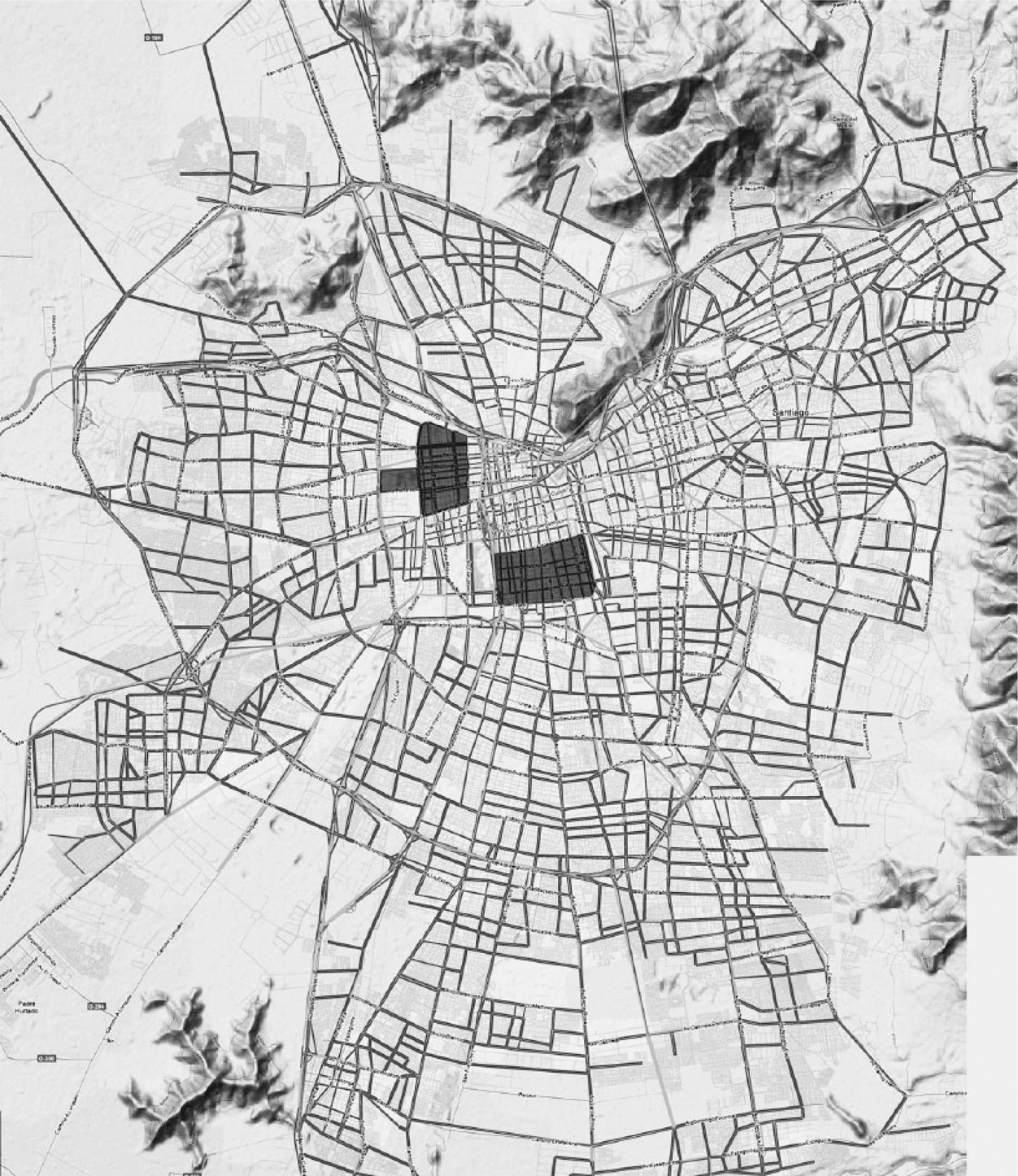
Western Santiago, showing the locations of Barrio Yungay (left) and Barrio Matta (right).
The economic crisis of the 1930s had serious consequences for the Chilean economy, hitting hard the main sources of income—the nitrate and copper industries—and causing high rates of unemployment (de Ramón, 2000). The consequence of this was a massive exodus to Santiago, which drove the oligarch families of Barrio Yungay to the residential areas of the capital’s eastern sector. The buildings inspired by European architecture that until then had been the trademark of the area gave way to functional construction adapted to the new needs of a rapidly increasing migrant population. The glittering mansions of the past were subdivided to offer rooms to the many families seeking housing (Figure 2).
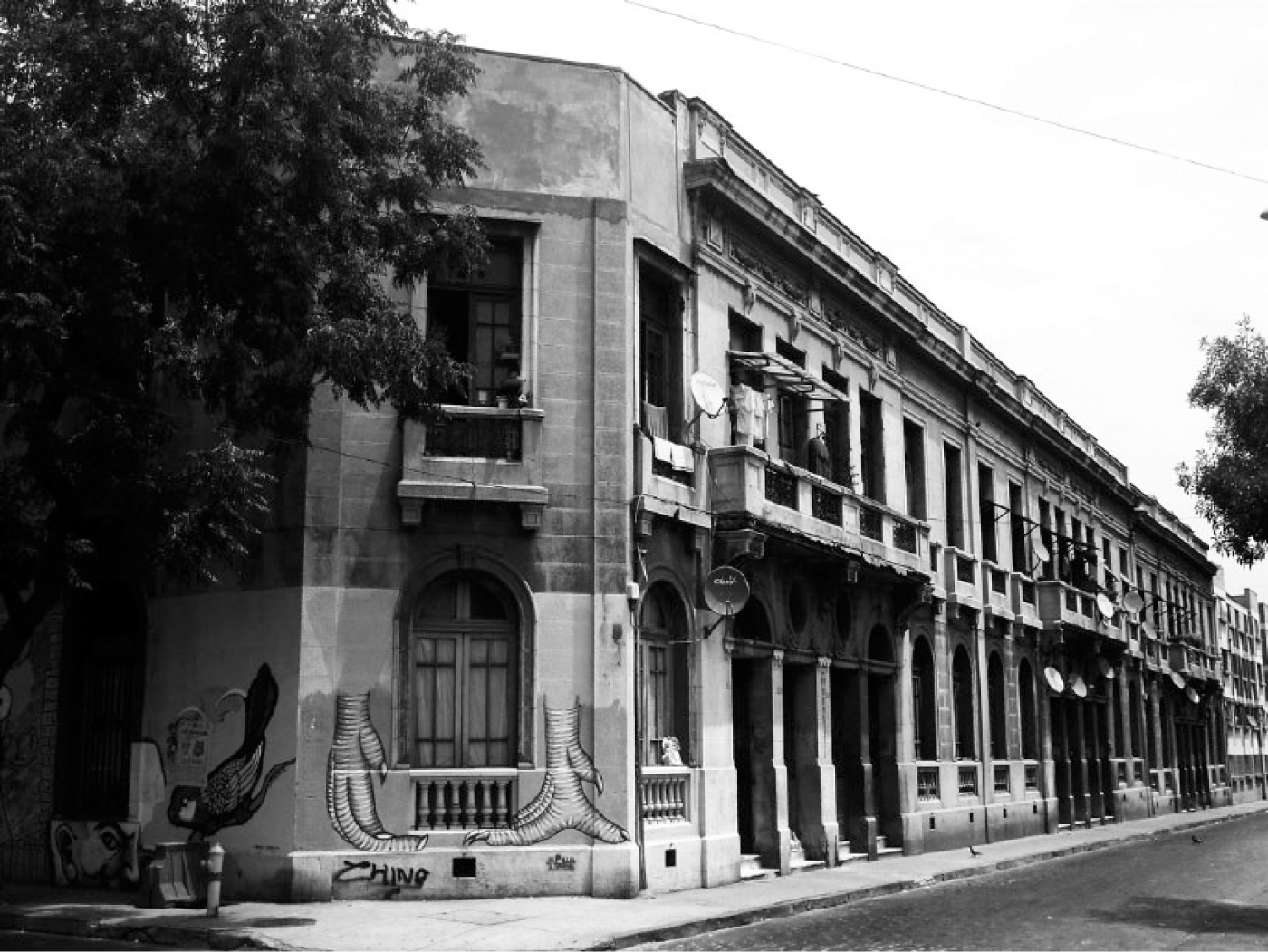
Traditional architecture of Barrio Yungay, now working-class housing.
Efforts aimed at western Santiago’s improvement developed as the population of the urban periphery increased (Hidalgo, 2005). Corporación del Mejoramiento Urbano (Urban Improvement Corporation—CORMU), established in 1965, undertook the renewal of Mapocho Bulnes in the sector. In 1987, the Treasury declared western Santiago a renewal zone, but it was in the 1990s that the municipality’s efforts at repopulation began to bear fruit. According to the 2012 census, by 2002 the population of the neighborhood was 13,474, principally adults. This situation stimulated the interest of the real estate market in constructing apartment buildings that, in the absence of regulations, made large areas denser at the expense of properties of historical value. Neighbors responded in 1994 by establishing the Barrio Yungay Committee for Progress, among the objectives of which were the improvement of the neighborhood’s quality of life, the reclamation of buildings in disrepair, the reconstruction of the history of the area, and the reappropriation of the neighborhood. This eventually led to the founding of the Association of Neighbors in Defense of Barrio Yungay in 2005. As a result, the neighborhood was recognized as a “traditional zone” 1 by the Council of National Monuments in 2009, emphasizing that the protection and recognition of the neighborhood would be promoted by and for its residents (Figure 3).
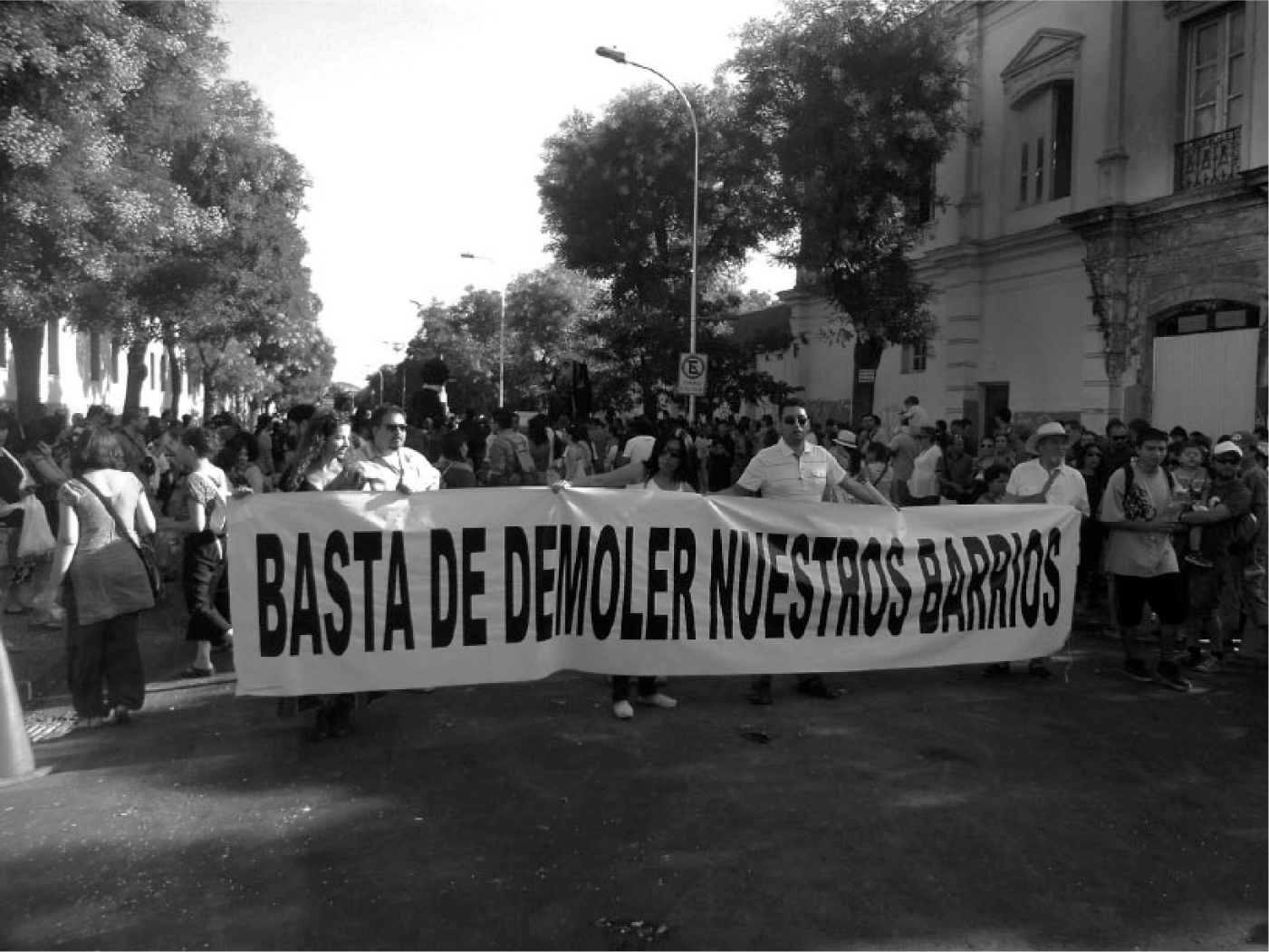
Mobilization for heritage in Barrio Yungay.
In contrast to Barrio Yungay, Barrio Matta originated from a predominantly working-class constituency. During most of the nineteenth century it was the border of the “creole” city, an economically booming remnant of the Spanish colonial city that was beginning to be hegemonized by its Hispanic but now republican and nationalist descendants (Romero, 1997). It was an area of the city that sheltered immigrants from the rural areas in search of a better life under extremely precarious living and hygienic conditions. The construction by the municipality of the public slaughterhouse in 1847 was the first urbanization of the sector. The city’s sanitary conditions improved, and this favored the construction of población Matadero. The estates that dominated the area began to be divided into lots, starting the development of what became known as Barrio Sur.
The other important milestone for Barrio Matta was the naming, by President Federico Errázuriz, of Benjamín Vicuña Mackenna to the mayorship of Santiago in 1872. A few months after he assumed office, his administration presented an urbanization plan that would transform the city. A great circular road was proposed to improve road connections, and according to Palacios (2010) it had the dual purpose of managing the urban advance that threatened the city’s functioning and acting as a kind of sanitary barrier with the planting of tall trees. According to the mayor, the construction of this work was a philanthropic duty, establishing rules of hygiene and property that separated what he called the “distinguished city” from the “barbarous city” (Vicuña Mackenna, 1873). The results of this urban plan, however, generated a significant degree of social segregation, and although the project was never completed it separated the “distinguished city” from its working-class suburbs. This forced the migration of those excluded from the central areas to illegal occupations beyond the circular road (Espinoza, 1988). Some urban specialists recognize some positive effects of Vicuña Mackenna’s plan in the medium term, among them the regular division of property, which helped change the physiognomy of the area in which the poblaciones (settlements created by working-class residents, often by land invasions) emerged, making for more orderly settlements (Romero, 1997).
By the twentieth century, the works developed by Vicuña Mackenna facilitated the settlement of a new población in the sector. In 1906 the first law regulating public housing was promulgated, and there followed initiatives promoted by the Catholic Church and philanthropic organizations such as the Leo XIII Society. By the 1930s the neighborhood was definitively incorporated into the city, acquiring a distinctive stamp for its style and architectural harmony and supporting services such as hospitals and a central tram. Furthermore, despite the exodus of a significant number of its residents, the working-class character of its economy, with multiple street markets such as Franklin, Persa, and Matadero, has given the neighborhood a characteristic flavor that has served as a basis for heritage recovery.
Given the revalorization of the central areas, with good infrastructure and connectivity, this historic area has recovered its appeal, having a population in 2002 of 51,217 residents, 43 percent adults and 19 percent young people. This has generated interest in real estate development. However, as in Barrio Yungay, the construction of numerous high-rise buildings has generated distress and opposition among the neighbors, given that the increase in population density means the loss of neighborhood life. As one leader said, “We met with this group of neighbors for the defense of Barrio Yungay, that’s why we imitate them a bit . . . and they told us what we had to do legally and pointed out that these buildings could also be designated here” (Patricia, interview, Santiago, July 6, 2012). The residents of Barrio Matta, led by heritage activists, have organized to protect much of their territory by presenting a petition for designation as a traditional zone to the Council of National Monuments (the official designation was achieved in 2016). This, following David Harvey’s (2008) analysis, is the way a struggle for the control of space and therefore a power struggle take place in these neighborhoods. A central aspect of this article is understanding heritage as a fact with political content. The “political” is understood as applying to “everything that is at once public, goal-oriented, and that involves a differential of power (in the sense of control) among the individuals of the group in question” (Swartz, Turner, and Tuden, 1966: 7). From this perspective, we can consider heritage movements political when they constitute a faction that dedicates its energy more to inducing conflict than to promoting agreement. This explains why, although not all actors in the territory concur with or subscribe to the actions of heritage activists, they are validated as democratic agents and catalysts of social processes of heritage conservation and social transformation. We can therefore understand heritage as not just a technical matter that is the responsibility of specialists but one the understanding of which is enriched and problematized by the idea of its being a social fact related to the hegemonies of power (Bonfil Batalla, 2010). The issue becomes part of the public agenda and of citizen concern, giving rise to organizations whose primary significance is the power struggle, creating imaginaries that conceive their own ways of inhabiting the city. Such imaginaries are based on territorial particularisms and problematized by class and popular cultural dimensions. The social construction of heritage is a dialectical process that contributes to identifying the content of urban processes.
An anthropological analysis of this dispute in terms of power avoids the reductionism of limiting the political to formal politics, as suggested by Roberto Varela (2005). From his point of view, the principal role of anthropology in the study of political phenomena consists in recovering its subjective dimension, and that is why this article focuses on the subjects and collectivities that carry out these actions.
Citizens’ Counterattack: The Voices of Heritage Leaders
As Salazar (2006) points out, what explains the emergence of heritage actors is the increasing neoliberal hegemony about heritage, both in the public and in the private sphere, and this is what justifies their organizing to resist and counterattack this process, transforming heritage into a field of forces. One of these organizations is Neighbors for the Defense of Barrio Yungay. Generated in response to a 1994 conflict over the deficient system of garbage collection, it provoked a consciousness that led it to rediscover the great value of its neighborhood not for its architectural monuments but for its unique history and, mainly, for its people. This fact marked a before-and-after in the heritage struggles of Santiago, since the sociocultural movement highlighted not the neighborhood’s physical surroundings but its diversity and social inclusion. However, this popular perspective on heritage clashed with the political authorities’ and the private consortiums’ idea of more sophisticated housing and commercial renewal, overlooking the obvious social change that they would involve.
The attribution of economic value to cultural heritage is the strategy that has been most favorably received by neoliberal governments. The ceding of cultural goods to the market— the preferential option of a subsidiary state—is translated into a gradual weakening due to lack of direction, regulation, management, and conservation (C. Pérez, 2013). Thus the state transfers its responsibilities to private foundations, subjecting the control of heritage to fluctuations in demand and to private interests in contradiction to the notion of public goods. At the same time, neoliberalization of the control of heritage tends to privilege its material dimensions—more suitable for commodification—over its intangible attributes (C. Pérez, 2013).
It was this situation that stimulated a group of neighbors fromYungay to organize around the defense of the neighborhood’s heritage, understood as social, popular, and diverse. They organized a school of arts and crafts in 2006 and have developed schools of cultural and heritage management, festivals, and strategic alliances with relevant actors in the neighborhood, including hospitals, libraries, museums, and schools, in addition to traditional commerce. One member of the organization explained (Rosario, interview, Santiago, December 12, 2012): We said, “We can’t be saying no to the regulatory plan, no to the plan of garbage collection, constantly rejecting it. What do we want for our neighborhood?” We organized our first assembly in October 2006, precisely to say, well, “Let’s move on from the constant rejection to say what we want, what we dream for our neighborhood.” So, from protest to proposal.
This conviction about the organizational and collective value of their decisions has continued to this day, recognizing in a ritual a symbolic function as a political act: “In those open assemblies—they are public—the last one was held here in the Santiago Library. Almost 200 persons participated, around May. You came, and things happened there. Things happen, people give their opinions, participate, and we aim for people to feel they are being heard” (Esteban, interview, Santiago, December 31, 2012). The assemblies were a centripetal force for the neighborhood’s social and cultural capital and generated awareness of its worth: “People understand more in depth or fully what it means to live in a neighborhood like this. . . . before, Barrio Yungay meant nothing, but now people understand that Barrio Yungay is something.”
The understanding that this symbolic world should be protected with political strategies, as Cohen (2011) points out, produced the formalization and strengthening of the neighborhood organization, leading it to prepare a petition for designation as a traditional zone that was presented in 2008 and approved in 2009. This was the first great victory of a working-class heritage movement and has inspired many other organizations in Santiago and the rest of country. According to Rosario, a leader of the movement (interview, Santiago, December 12, 2012), Having an effect on communal public policy . . . we did that when we achieved being declared a traditional zone in 2009. Then, in the last elections, the heritage and neighborhood issue was present in all the platforms, something that wasn’t true four years ago, and that is thanks to our organization. We managed to recruit other neighbors, from other neighborhoods in Santiago, and so it’s about the ability to empower. That for me is the main achievement of the organization: being a referent at the national level.”
At the same time, it was apparent to these leaders that, more than technical, the struggle for heritage was political, and therefore they decided to burst onto the political scene by running in various general elections and supporting candidates for municipal and parliamentary office. The same leader pointed to the political objective of the heritage movement: From social movements to communal power—because we believe that all this has to have a correlation, influencing the destiny of the neighborhoods and the municipality. By saying, “Let’s go to the civil society council. Let’s organize a neighbors’ council. Let’s argue in the municipal council. Let’s go with candidates, ultimately establish ourselves as a neighborhood force, a political force that has influence in the municipality.”
In another part of the city, on the southern border of the municipality of Santiago, a group of neighbors, inspired by heritage struggles such as that of the neighbors in Barrio Yungay, began to get interested in their heritage and organized as a heritage group in 2007 under the name of the Committee for the Culture, Defense, and Recovery of Barrio Matta Sur. The trigger for this neighborhood’s conflict was the plan for modernizing Santiago’s public transit in 2007, which involved the construction of a highway over the central median of an avenue that has historically displayed significant landscaping. One of its leaders described the founding moment of the movement as follows (Vladimir, interview, Santiago, September 14, 2013): The committee was formed because of something very circumstantial. In the period of Transantiago [the transit project], when the work of widening the streets began, we realized that they were ravaging the neighborhood, and, obviously, they hadn’t asked any resident. The government’s machine just came and razed it. And obviously, they were also going to destroy the central median, so we put up a hard fight against the government to save the median. At that time a structure emerged. We are neighbors who decided to organize, forming the Matta Sur committee.
This small political victory, impeding the construction of the central highway on Avenida Matta, inspired greater awareness, because the Barrio Matta heritage activists understood that this was only part of a bigger dispute. They saw that only united could they achieve their objective of preserving the neighborhood and its identity (Vladimir, interview, Santiago, September 14, 2013): In addition to participating in organizations such as the neighbors’ councils, we met with the authorities, proposed things. We worked, for example, on the issue of the regulatory plan that is being seen in this neighborhood. Now we make proposals, go to speak with the authorities, do a lot of things as our time allows.
The identity that they assume is based on continuing a rich popular and proletarian tradition and is a clear expression of their heritage objectives (Patricio, interview, Santiago, June 26, 2012): Enough of protecting the oligarchs’ heritage, the doors with arabesques or crowns! We also protect the ordinary doors of workers, which are also heritage and, particularly, forgotten heritage, heritage that is overlooked, less considered, and if it weren’t for these workers none of this country’s beautiful things would ever have been built.
Many of these leaders carry with them a subjective and intersubjective memory that they translate to contemporary reality. Many of them have experienced and remember social and political repression: “Because the great problem during the military government—call it dictatorship, as one should call it—was that the social fabric was disarticulated and . . . the tenant-farmer 2 mentality, which I call self-repression, flourished more than ever, so many things were lost” (Vladimir, interview, Santiago, September 14, 2013). These springs of memory, recontextualized, have led them to confront the hegemonic meanings of culture and territory and establish their own definitions: “The committee is a political entity. Let’s be clear: we are not stupid neighbors or neighbors who call ourselves apolitical. No, we are clearly political.” In a country that had experienced long years of military dictatorship and wanted to eliminate any relationship between the population and politics through a cultural project that intended to depoliticize society, this interpretation of the heritage movements in Santiago is surprising. “We are political, not party militants. There are people in our group who have strong political party loyalty, but that impedes this general view of the defense of the neighborhood, of heritage, educational, environment, etc.” (Patricia, interview, Santiago, July 6, 2012). An interesting distinction is found here between the political and the classical structures of politics. These organizations show great autonomy, acting independently of any political power. What we are seeing in these neighborhoods has all the characteristics of what Tilly (2010) calls a social movement—diversity, democracy, and the capacity for expressing popular demands.
The position of heritage movements is distinctive in that they are not dependent or proselytizing but aimed at political cultural transformation: “The committee will always have a political vision, and we have always shown this in our proposals to candidates, all the candidates” (Vladimir, interview, Santiago, September 14, 2013). This vision is not, however, limited to discourse. In Barrio Matta the heritage organization has achieved important milestones: acquiring the designation of traditional zone, receiving funding for a community museum, and changing the land-use plan so as to limit the construction of high-rises in a significant part of the neighborhood (Figure 4).
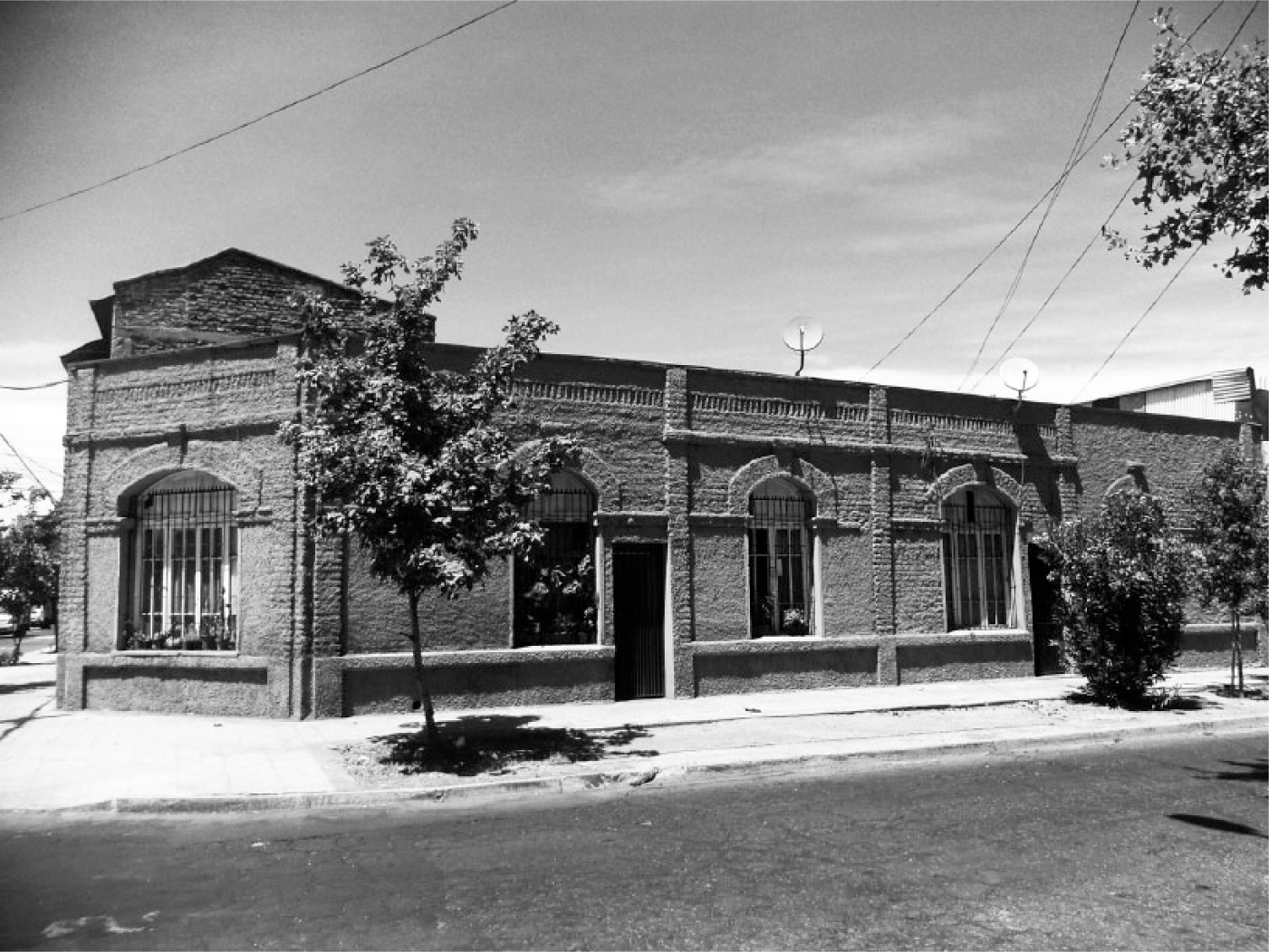
Working-class architecture of Barrio Matta.
Heritage Power and Its Actors
Heritage movements see their actions as falling within the symbolic field of power disputes over the way to live in a territory. The construction of the tangible and imaginary city (Márquez, 2007) has always been linked to power structures confronting a strong popular organization that in twentieth-century Latin America was primarily generated by the idea of the right to housing. Recognizing that this dramatic reality persists, these sociocultural movements advocate for the right to the city as a response to the neoliberal model (Harvey, 2013). “We are here because we want to change the vision of the neighborhood. We want to change policy. We want a new social contract. We want new laws. That is important to us. Almost all of us have an ideology, a political ideal imbedded in our organization” (Vladimir, interview, Santiago, September 14, 2013).
Clearly, this aspiration has begun to gain strength and notoriety in the public sphere, not only because of the achievements of the heritage organizations in Yungay, Matta, and other parts of the city but because the traditional political system is being forced to incorporate this cultural dimension into its field of action (Margarita, interview, Santiago, October 15, 2013): These last mayoral elections had many mayors or candidates who grabbed the issue of heritage and made it part of their project, put it in their plans and speeches. . . . The Matta Sur committee has . . . achieved bringing several issues of heritage to the fore that previously were not heard.
This is why the organizations do not hesitate to declare the movement’s political intentions (Rosario, interview, Santiago, December 12, 2012): We want the political class to understand that. That’s why we go to the municipal council and turn ourselves into a political force in the community of Santiago. We have the ability to mobilize, to manage, to articulate, and we are also an electoral force, because this is the only way to get them to see us as equals. Before they looked down on us and said, “Tell me your citizens’ agenda and I will represent you.” Well, we got tired of that. It didn’t work. We have technical ability and all the political capacity to represent ourselves.
This fact became evident on May 27, 2013, Heritage Day (an annual event since 1999 when the doors of heritage buildings are open to the public), when a survey sponsored by the Chilean Association of Patrimonial Neighborhoods and Zones and more than 120 other organizations was conducted in support of a law for the protection of heritage. The event was held in 10 of the country’s regions; 203 polling stations were established, with 200 volunteers, and 17,430 persons participated. Continuing with this strategy, in 2014, on the day before Heritage Day, 152 organizations led by the Yungay and Matta associations held a March for Heritage. The mobilization, composed of neighborhood associations, unions, workers, artists, academics, and even political authorities, was carried out in nine cities, with approximately 3,000 participating in Santiago. This mobilization succeeded in placing the issue on the public agenda.
Conclusion
Heritage is a dialectic field of power in which conflicts over space and territory (di Méo, 2008) counterpose neoliberal territorial planning and sociocultural resistance based on shared collective memory and a local identity with ideological and political components (Prats, 2004). As a result of this process, sociocultural and socio-spatial conflict takes innovative forms within the field of traditional political structure: it incorporates cultural demands into social ones. The conflict is between different ways of life and conceptions of the city, a symbolic system charged with meanings around tangible and intangible goods. The values are in no way innocuous but are openly in dispute, and in the case of the neighborhoods analyzed here they are configured around a model of the market and an alternative in which the quality of life replaces the calculation of profit. Values such as humanity, diversity, promotion of public space, cultural activation, democratization, and collective territorial decision making and strengthening of community life are opposed to the individualism of the hegemonic model.
This dispute is not confined to its immediate environment. Instead, the notion of territory goes beyond the physical dimensions of the neighborhoods. The imaginary that is constructed in relation to territoriality transcends the national understanding of the problem in that it assumes that the national character should embrace the diversity and plurality of its diverse territories. Therefore it cannot concede hegemony to certain social sectors that, in the name of unity and consensus, seek to determine the way of life of all citizens. For this reason, it does not seem coincidental that the field of power for establishing this symbolic and material confrontation is heritage, since it is here that the dominant sectors have historically established unifying symbols, material or immaterial. Hymns, heroes, epics, monuments, and colonial architecture serve the project of national unity hegemonized by those who hold economic and cultural power, subjecting the subaltern sector and the popular classes to a web of meanings that is often alien to their own practices and symbols.
This is why it is important that one of the first attempts to liberate heritage from those who hold it in their symbolic and material power occurred in the Plaza del Roto Chileno, in the heart of Barrio Yungay. The plaza is so named because it contains the historic symbol of the working-class subject—brave, naïve, good-humored—who achieved the status of myth in Chilean society after the conflict with the Peru-Bolivian Confederation (1836–1839) and who, once he puts down the rifle, picks up the shovel or the hammer (Gutiérrez, 2010). This is the character who still proudly walks the streets of Barrio Yungay or does chores at the Matadero or Mercado Persa in Barrio Matta. The process has spread rapidly, and the once-silenced voice has reached many other areas of the city and the nation (Cerro Cordillera, Almagro, San Eugenio, and many others) that are beginning to construct their own symbols and practices. It is a heritage that is not to be extracted from social life but, on the contrary, is a catalyst for social change, nurtured by a rich diversity of subjects and collective movements willing to face, symbolically and factually, those who have historically controlled it. Heritage movements are providing the conditions for reversing this cultural subordination.
This context imposes new challenges on heritage studies because it is necessary to start considering heritage as a process, something that is constantly being socially built rather than a fixed legacy. This means abandoning sacralized positions to plunge into the whirlpool that social processes represent, placing heritage in a field of hegemonic dispute in which its preservation is no longer up to the earlier specialists. There are new leading actors defining, protecting, and refreshing it, heritage movements that require rethinking heritage in contemporary terms, including the political.
Footnotes
Notes
Mauricio Rojas Alcayaga is an art historian and anthropologist specializing in cultural politics and heritage. He teaches in the Department of Anthropology of the Universidad Alberto Hurtado and in the Master’s in Cultural Administration program of the Universidad de Chile and is the lead researcher for the project “Active Memory: Sociocultural Study of Heritage Movements and Their Impact on the Urban Imaginary, Cases from Santiago, Chile” (CONICYT Project 791100032). He thanks Maria A. Carvajal and Valentina Vega for their important collaboration as assistants on the project and in the preparation of this article. Margot Olavarria is a translator living in New York City.
References
Supplementary Material
Please find the following supplemental material available below.
For Open Access articles published under a Creative Commons License, all supplemental material carries the same license as the article it is associated with.
For non-Open Access articles published, all supplemental material carries a non-exclusive license, and permission requests for re-use of supplemental material or any part of supplemental material shall be sent directly to the copyright owner as specified in the copyright notice associated with the article.
