






Abstract

Rodolfo Stavenhagen’s 1965 essay critical of seven theses about Latin America challenged the way social scientists thought about the region’s political economy and history. Serialized for a popular audience in the Mexico City daily El Día on June 25 and 26, 1965, it questioned the prevailing assumption among North American political economists and in Eurocentric thought that “modernization” through capitalist development could solve Latin America’s persistent backwardness and underdevelopment. It also reflected thinking among a younger generation of progressive intellectuals who questioned the thesis that backwardness in the region was a consequence of feudalism or semifeudalism, instead attributing it to the capitalist development of underdevelopment through the imperialist relationship between rich and poor nations in the world economy and to dependent relationships involving wealth and poverty between regions within Latin American countries.
According to the modernization perspective, the diffusion of capitalism would allow less-developed countries to overcome their poverty and marginalization within world markets; if they “joined” the world economy by lowering trade and investment barriers and invited in foreign corporations to stimulate consumption and transfer technology they would over time recapitulate the historical stages of industrialization in the developed countries and become developed themselves. The principal insight of dependency theorists was that Latin American countries were in fact not isolated from the world economy and not stuck at an earlier stage on the path to industrialization but fully integrated into world markets, their poverty since the colonial period being the result not of isolation but of their structural relationship to the richer countries that were their trading partners. The dependency perspective viewed Latin American countries as occupying a peripheral position, dependent in the world economy, in which their role was to provide raw materials to the advanced capitalist nations. In the colonial period this subordination was ordained by the rules governing their trade with the colonial powers. By the twentieth century, however, it was a result of unfavorable terms of trade: since the value of peripheral countries’ raw materials rose relatively slowly compared with that of the continually evolving manufactured goods of the industrialized central powers, they were left chronically short of the capital to industrialize and compete as manufacturers themselves, their populations being too poor to constitute a domestic market strong enough to induce industrialization internally. Locked into a subordinate position in the periphery, unless something changed they were condemned to bleed resources and capital to the developed countries of the center. 1
From his experience as an anthropologist in the indigenous communities of southeastern Mexico beginning in the early 1950s, Stavenhagen saw the analogy between the theory and policies of modernization on the national scale, and those of indigenismo, Mexico’s national indigenous policy, on the level of relations between regions within the country. Indigenismo saw indigenous regions as poorer than other parts of the country because indigenous people lived in closed, corporate communities—traditional, self-sufficient, and cut off from the national economy and progress. The solution that followed from this analysis, like those that followed from modernization theory in the case of nations, was that for development to occur the supposed isolation of indigenous communities had to be broken and their spaces opened to outside influences. In response, beginning in the early 1950s Mexico had made importamt investments in policies of “acculturation” to encourage indigenous people to adopt national patterns of consumption and induce them to enter the monetary economy. There were also major efforts to expand schools in indigenous regions to teach the national culture and gradually discourage the use of native languages.
By the early 1960s, however, it had become clear to many anthropologists and indigenistas who had worked in close contact with indigenous communities—among them Stavenhagen—that these policies were not working or were much too slow and indirect in alleviating the poverty and exclusion experienced by indigenous people. At the same time, many of these close observers had also come to realize that the communities in the supposedly isolated regions of Mexico were already participating fully in the national economy, depending for their subsistence on migratory work on plantations, construction, and road work, the production of artisan goods, and the sale of a large share of their agricultural production through intermediaries into the national market. 2 In other words, they were already part of the money economy and made substantial contributions to Mexico’s wealth, including foreign exchange. With the center-periphery model of dependency theory, Stavenhagen found a way to think about the relationship of indigenous regions to the rest of the country and of similar regions to countries throughout Latin America. Moreover, by extension the model could be applied not only to indigenous regions but to other poor rural areas in relation to their national centers. 3
In addition to extending the dependency model of economic structure to the level of regions within countries, Stavenhagen made two more innovations in the composition of “Seven Erroneous Theses.” The first was theoretical, the introduction of the class structure of Latin American countries into the argument. Conventional ideas about modernization had included recommendations about the ways specific social classes should be transformed to bring them into alignment with what were considered comparable classes in the developed countries of North America and Europe. Stavenhagen criticized the misunderstanding of social class and class structure represented by this imposition. The class structure of Latin America, in the world’s economic periphery, he argued, should be derived from its composition and roles in the specific conditions of the region. Assuming countries whose regions were already divided by dependency, he suggested how such a Latin American analysis of class might look. (This was a theme that he would refine in his 1969 book Las clases sociales en las sociedades agrarias, where he made a more explicit case for a Marxist analysis of class structure and conflict in the context of center-periphery divisions like those of Latin America.) The second innovation was rhetorical. Rather than present the shortcomings of modernization theory directly as an independent exposition of an entire alternative theory of development and underdevelopment, he criticized “theses” as fallacies. This allowed him to connect his critiques of development projects within Mexico, by analogy, to the growing debate between modernization and dependency internationally.
Initially he questioned the thesis that Latin American countries were “dual societies,” one “archaic, traditional, agrarian, and stagnant” with roots in colonialism and the other “modern, industrialized, dynamic, progressive, developing” and oriented toward change, the two reflecting a “duality between feudalism and capitalism.” Against this division, he argued for a focus on “internal colonialism.” This assertion challenged not only the traditional understanding of backwardness in Latin America but also the prevailing view, influential among orthodox intellectuals on the left, that backwardness was attributable to feudalism or semifeudalism. 4 The supposedly “backward,” isolated sectors of Latin American countries were subordinate but fully integrated parts of their nations’ socioeconomic structures just as their countries were of the world system; all along they had been producing the food, raw materials, and cheap labor that made possible the lives and economies of their countries’ more privileged, “central,” “modern” sectors. In return for this contribution they were paid a pittance and excluded, typically on racist grounds, from full citizenship. To defend themselves, he would write in 1969, they struggled to maintain the strong local communities, often culturally and linguistically distinctive, that provided them with some measure of mutual support and security. Ironically, perversely, these same self-defensive local structures and the distinctive local cultures they often contained were then used by outsiders to confirm their belief that the rural poor and indigenous truly were completely separate from the national project of the “progressive,” “modern” half of the dual society. 5
And so it went for each of the six mistaken theses that followed. Individually each called out a conventional belief about Latin America’s underdevelopment and lagging industrialization, and in each case Stavenhagen pointed out that the corresponding solutions depended on a misunderstanding of the center-periphery structure of Latin American societies and on false analogies with the roles and evolution of social classes in the central, industrialized powers. As he did with the first, dual-society thesis, for each of the other six Stavenhagen rapidly sketched structural and historial arguments to refute the mistaken view and substitute an analysis consistent with dependency theory.
Thesis 2 was that consumption of manufactured products should be promoted in peripheral regions to stimulate national industry, and to it Stavenhagen replied that, given income differentials, even if increased consumption were possible the concomitant replacement of local artisanal and household production would further impoverish the periphery while draining more resources to the center.
In response to thesis 3, that the existence of undeveloped, archaic regions was an obstacle to the development of national markets, he asked whether the proposed solution of raising incomes in the periphery through agrarian reform, increased mínimum wages in agriculture, and increased investment in the countryside, all of which would represent costs to the center, was likely anywhere in the region and answered no.
On thesis 4, that the new industrial and empresarial elite had an interest in breaking the power of the supposedly static landholding oligarchies (presumably recapitutating the succession of dominant classes in Europe and ending feudalism), he noted that in Latin America these two supposedly distinct classes were often the same families and that the roles of the two were more often complementary than antagonistic.
On thesis 5, that development in Latin America was the product of a nationalistic, progressive, entrepreneurial, and dynamic middle class and that policy should stimulate the growth of this class, he expressed doubts about what was meant by “middle class” in the Latin American context. If it was only the conglomeration of people with statistically similar incomes and included bureaucrats, teachers, small and medium-sized merchants, and artisans, he wondered whether common consumption patterns were enough to constitute a class identity. In any case, he observed, the middle-income group, rather than being nationalistic, entrepreneurial, and risk-taking, was more likely to identify with the conservative classes and seek security.
With regard to thesis 6, that national integration in Latin America was a product of mestizaje (racial mixing), he answered that biological and even cultural convergence did not change the positions of persons or groups in the center-periphery structure of Latin American societies. Indeed, on migrating to cities indigenous people assimilated rapidly into urban class structures without changing their biological identities. Rather, national integration would only come, he predicted, with the elimination of the subordination of an impoverished periphery and access to equal opportunity for all groups.
And finally, on thesis 7, the proposal by the left (not the modernizationists) that progress in Latin America would come about through an alliance of workers and peasants, he returned to the sharp division between the central, developed sectors of Latin American countries and the poor, exploited periphery and wondered about the amount of common interest or even contact between the urban workers and the peasant-workers of the countryside and whether under such conditions an alliance was possible (Stavenhagen, 1968: 28–32).
50 Years Later
From the perspective of 2017 it is still bracing to recall the impact of Stavenhagen’s essay and the arrival of the dependentistas in general on thinking about Latin America, including thinking about the region by a (then) younger generation of North Americans. Among those who took an active interest in dependency theory relatively early on was the group of young scholars who became the founding editors of Latin American Perspectives. For almost a year before LAP published its first issue in the spring of 1974, they had engaged in passionate discussions about what English-speakers did not know about current debates in Latin America and what without a new source of information they were unlikely to learn. It was during this period when they were discussing the founding of a new journal that the September 1973 coup in Chile occurred, and it eventually became the theme of the journal’s second issue. The first issue was about the debates over dependency theory, and one of the contributors—and, from that point on, as a founding participating editor—was Rodolfo Stavenhagen (1974). 6 When the current LAP editors learned that there was to be an international seminar commemorating the publication of “Seven Erroneous Theses” in Mexico City June 25–26, 2015 (50 years to the days from the two-day serialization of the essay in 1965), considering that the history of dependency theory and the debates about Latin America’s political economy were also their history, they determined to audit. Held at the Colegio de México, Stavenhagen’s academic home since the publication of “Seven Erroneous Theses,” the seminar presented 35 papers by scholars representing a wide variety of disciplines from 12 Latin American countries and Spain. The participants ranged from graduate students to senior professors, but that almost half of them were young professors may be representative of the continued vibrancy of Stavenhagen’s work. Within a few months the essays were made available online, along with summaries of the discussions following each panel and a video of the conversation on the final afternoon with Rodolfo Stavenhagen and Pablo González Casanova (Colegio de México, 2015). Meanwhile, Arturo Alvarado and Serena Chew Plascencia, organizers of the event in Mexico City, and LAP’s editors began reading through the essays and choosing a selection of them that represented the breadth of themes covered in the seminar. Eventually they had the 13 thematic articles in this issue, plus introductory essays by Alvarado and Chew and a response to all of the contributors by Stavenhagen.
The purpose of the seminar in Mexico City and of this issue was to commemorate Rodolfo Stavenhagen’s 1965 essay as a watershed in thinking about the problems of poverty, inequality, ethnicity, and class in Latin America, but it was also to measure how far we had come in 50 years from the descriptions and analyses of those early years of dependency theory. Much of the context is of course radically changed. In 1965 the cold war was at its height, and many in Latin America looked to the socialist bloc for alternative models of development and perhaps support; Cuba was widely admired, and there were guerrilla insurgencies in several countries of Central America and the Andes. The military regimes that in a few years would torment the Southern Cone had been foreshadowed by the military coup in Brazil in 1964. The size of the population of Latin America and the Caribbean (250 million in 1965, 630 million in 2015), the percentage that was urban vs. rural (86 million urban, 34 percent, in 1965 vs. 503 million, 80 percent, in 2015), and the per capita gross domestic product for the region (in constant 2010 dollars, US$4,000 in 1965, US$9,400 in 2015) (World Bank, 2017) indicate vast changes in economic activities, migration from the countryside to cities and between countries, and undoubtedly an increase in cultural and social integration.
In the light of all this, this issue will address which aspects of Stavenhagen’s exposition are still applicable today and ask, for those parts that are not, why not. Are there hard cases that either verify or falsify any of Stavenhagen’s responses to the seven mistaken theses? How certain are we of their validity in their own time?
The Articles in this Issue
Arturo Alvarado’s introduction contextualizes “Seven Erroneous Theses” in terms of the theoretical debates among Latin American scholars about development, regional integration, and national and regional autonomy during the two decades following the 1959 Cuban Revolution. Latin Americans, he recalls, were attempting to pull away from North American and European models and construct new, characteristically Latin American analyses of their societies that would respond to Latin American concerns. In the case of Stavenhagen’s center-periphery model he allows that 50 years later the division between the rural periphery and the urban center that was so important in the 1960s has blurred as rural society has declined in relative numbers and economic importance. Nevertheless, he maintains that in its time it played a major role in reorienting policy in Mexico away from treating indigenous and peasant communities as a problem in themselves and toward recognizing the structural, national roots of their poverty and exclusion. Finally, following from this last point, he argues that the structural political economic analysis and concern for models that can be applied to improve social conditions that Stavenhagen pioneered remain a signature of Latin American sociology.
Serena Chew Plascencia also writes of the context in which Stavenhagen’s essay was composed but focuses on the shifting relationship between social science and policy since the late 1950s. After sketching the theoretical roots of the self-interested modernization policies urged on Latin America by the United States at the beginning of this period, she looks at the relationship between Stavenhagen’s own critique of modernization theory and its origin in his commitment to the human and cultural rights of indigenous people. In the form of indigenismo, modernization “left peasants, indigenous groups, and women with the choice of assiimilating ‘to escape poverty’ or disappearing for being archaic and traditional structures.” Among the effects of analyses and advocacy of marginalized groups like Stavenhagen’s has been the growing recognition of the legitimacy and value of indigenous, feminist, and other unconventional, “nonhegemonic” epistemologies, empowering new alternative forms of organization and struugle.
In response to all the contributors to the collection, Rodolfo Stavenhagen recalls that in the mid-1960s institutions for social science research and teaching still barely existed in Latin America and the Caribbean. Today’s multinational graduate Facultad Latinoamericana de Ciencias Sociales had only been founded a few years earlier in Santiago, Chile, and there were only a handful of other United Nations and foundation research centers scattered around the region. Nevertheless, as Stavenhagen added in answering questions on the last day of the 2015 seminar, young as these institutions were, for the first time scholars from all over Latin America were beginning to meet and collaborate on their own ground as opposed to knowing each other only from graduate schools or academic congresses in Europe and North America. Essays like “Seven Erroneous Theses” or the Mexican Pablo González Casanova’s (1965b) work on “internal colonialism” emerged from a collective effort to construct Latin American models that captured the socioeconomic polarization and yet interdependence of poor rural regions and more developed urban centers in Latin America—to build social theory from Latin American interests and perspectives that would contribute to the social struggle for structural transformation. Writing now 50 years on, he recognizes that the rural, campesino half of the 1960s dyad has all but ceased to exist and thus the original formulation of “dependence” has to be reexamined and refined in light of today’s more complex relationships between subordinate people and the web of corporations and international banks that supersede the old bourgeoisie. He nevertheless concludes that growing inequality is now “considered a fundamental . . . problem” around the world and in Latin America sees hope in the attempt to understand the way subordination works through new research methodologies such as decolonial studies, studies of new social movements, and experiments like the autonomous communalism of Chiapas’s Zapatistas and the struggle to sustain “progressive” governments through electoral means as in Bolivia and elsewhere. Most of all, he argues, our effort to understand society has to be guided, as ever, by the “perennial revolutionary concern—What to do?”
The thematic articles are divided into two broad sections. The first, “Theoretical Approaches,” consists of five essays that take a critical look at the theoretical underpinnings and implications of “Seven Erroneous Theses” in the light of 50 years of continued social science research in Latin America. The second, “National Perspectives,” considers specific regional and national cases and the extent to which Stavenhagen’s alternatives to the seven mistaken theses continue to be valid or useful. The distinction between the sections is somewhat arbitrary because Stavenhagen’s own theory building was always tied closely to cases and in most of the essays there is also an interplay of cases and theory.
Theoretical Approaches
The first two articles in the theoretical section interrogate the method and epistemology of “Seven Erroneous Theses” not only in the light of the 50 years of history that have elapsed since 1965 or of continued development in the social sciences but in terms of the original assumptions and construction of the essay. Fernando Barrientos Del Monte’s article from the perspective of the sociology of science is perhaps the most fundamental critique of Stavenhagen’s essay in the collection. Barrientos argues that “Seven Erroneous Theses” was written as a brief for what he characterizes as one of two competing research programs. As such, it attempted to provide a “homogenizing interpretation” that would cover all Latin American countries but was forced to elide and extrapolate because of the lack of corresponding research from every country. Beyond the looseness of the data, Barrientos argues, present-day social science is based on “hypotheses and various modes of data collection and interpretation, allowing for the formulation and reformulation of new explanations” as conditions change. Stavenhagen’s essay was cast more in the model of the “‘holistic’ reading of social phenomena” of mid-twentieth-century Latin American social science—an essay justifying a paradigm rather than a scientific argument. A disadvantage of this approach was that it did not lead to the collection of the sort of quantitative data that would have made it easier to compare the current state of Latin American society and politics to past conditions and trace the process of change. At the same time, Barrientos recognizes that holistic essays like Stavenhagen’s provided “platforms for social organizations and movements” while more recent quantitative approaches, fragmented and narrow, offer little guidance for solving problems.
Elizabeth Cabalé Miranda and Gabriel Modesto Rodríguez Pérez de Agreda ask about the assumptions hidden in the categories used by Stavenhagen and other sociologists and anthropologists. Taking the identification of economic growth with social development as an example, they argue that treating the two as interchangeable demonstrates “a semantic transformation to create capital’s hegemonic power.” The problem is that the social facts of development are treated as objective reality, not matters of choice and subjectivity. Cabalé and Rodríguez suggest rethinking development in ways that treat individuals as subjects “capable of choosing and deciding how to live.”
Marshaling comparative economic data from throughout Latin America, Berenice Patricia Ramírez López pursues Stavenhagen’s rebuttal of the third mistaken thesis, that the existence of undeveloped, traditional rural areas was an obstacle to the formation of internal markets and the development of national, progressive capitalism. As Stavenhagen pointed out in 1965, given investors’ unwillingness to raise incomes in the periphery through agrarian reform, improving the mínimum wage, and investing in agriculture, it was unrealistic to suggest that national capitalism could be strengthened by relying on the impoverished countryside to consume more. Ramírez finds this still to be the case. National investors who looked abroad for safe places to deposit their money 50 years ago have in more recent times reoriented themselves to world markets and acted as commercial and financial intermediaries rather than investing in job creation. At the same time, levels of informality among workers have remained high, in 2015 reaching 58 percent of employed Mexicans, for example, or 71 percent of Bolivians. The economic polarization between the impoverished periphery and the more well-off center of the 1960s has been relocated to the peripheries of cities, and the investor class remains indifferent.
The last three articles of the section discuss the implications of “Seven Erroneous Theses” for insights into the meaning of ethnicity and class. Emanuel Rodríguez Domínguez, like Stavenhagen an anthropologist, reads “Seven Erroneous Theses” looking for the links between Stavenhagen’s theoretical work and his activism among indigenous people. In contrast to the national policy of indigenismo, which prescribed breaking down the barriers that supposedly isolated indigenous people (in the process undermining their cultures), Stavenhagen argued for what he called “action anthropology,” which would undertake projects in collaboration with indigenous groups. Jorgelina Loza pursues the implications of Stavenhagen’s combination of the center-periphery structure of interregional dependence with a close examination of social class structure in peripheral regions. She finds that at the top and in the middle of the class structure he sketches in “Seven Erroneous Theses,” the composition and comportment of the classes are not so different between the countryside and the city. At the base of the social structure in the periphery, however, Stavenhagen argued over the course of his career that ethnic identity had subsumed many of the characteristics of what in other circumstances would be class identities: indigenous people perform labor, but they are discriminated against and excluded as indigenous. The salience of ethnicity in distinguishing the subordinate population from the classes just above them presumably leads those on both sides to confuse class relations with ethnic relations.
Finally, Juan Sebastián Granada-Cardona considers the course since publication of “Seven Erroneous Theses” of the sixth mistaken thesis, that ethnic integration in Latin America would be achieved through a combined biological-cultural mestizaje, to which Stavenhagen responded that without ending internal colonialism the change in the biological nature of the people on the bottom made little difference. Working from Mexican and Colombian cases, however, Granada-Cardona documents profound changes in ethnic relations over the past 50 years and demonstrates that these have come neither from mestizaje nor from the end of internal colonialism but from the advocacy and political action of new indigenous organizations that now confront discrimination directly. In a final section he adds that Stavenhagen’s response to the sixth mistaken thesis in 1965 was far from his last word on the theme—that between 1965 and 2015 he continuously reevaluated the state of ethnic relations and suggested “lines of advance” that often anticipated what came next.
National Perspectives
The first two articles evaluating the current applicability of Stavenhagen’s critiques focus on projects of regional development in Mexico. María del Rosario Fátima Robles Robles takes as her example northern Mexico’s maquiladora export industry, specifically that of the border state of Sonora. According to the second mistaken thesis, fomenting industrialization in undeveloped regions was supposed to lead to their development. And yet, Robles notes, 30 years after the government invited assembly plants to locate along the border and 50 years after Stavenhagen warned that the second thesis was false, the maquiladora industry has not improved conditions for the vast majority of the border’s population or for the adjacent poor and indigenous regions that supply the maquiladoras with labor. What Mexico is selling to those who build factories in the maquiladora zone is in fact cheap labor, and wages have been suppressed to maintain that advantage. Robles finds that the maquiladora region also confirms several more of Stavenhagen’s critiques. In response to the thesis that Latin America countries are dual societies and that rich and poor regions are isolated from each other, she argues that over the past 30 years the poor regions of the interior that supply labor to the maquiladoras have maintained their steady supply of cheap labor in part because policies in the maquiladoras have kept them poor. To the claim that development would lead to the growth of a middle class, which would in turn supply entrepreneurs who would foment more development, she responds that there has been virtually no social mobility among those in the maquiladora region and that the region’s development has been driven not by the middle class but by foreign corporations and wealthy Mexicans attracted by cheap labor. With respect to the prospect of worker-peasant alliances, Robles argues that the speed-up and fragmentation of jobs in maquiladoras have prevented the development of working-class identity and that those from poorer regions who migrate in are no longer peasants. In short, she concludes that the maquiladora export industry confirms Stavenhagen’s 50-year-old prediction that applying modernization policies would not affect the structural relations between the metropolis and underdeveloped regions and would thus reproduce underdevelopment.
Carlos Alberto Jiménez-Bandala focuses on the history of economic development in the Papaloapan Basin of Oaxaca and finds that since the late nineteenth century, through a wide variety of development policies, the Papaloapan’s structural relationship to the national economy as a peripheral internal colony has persisted. Looking particularly at the region’s experience under neoliberalism since 1982, he finds that dependence has increased because state-subsidized industries that were opened under the preceding model of import-substitution industrialization—sugar mills, paper mills, food processing plants—were privatized or closed. This increased poverty by reducing employment and removing subsidies to small producers who supplied the plants with raw materials. As a result, small producers and ejidos now work for contractors who send their products out of the region for processing. The resulting increase in internal colonialism is just as Stavenhagen’s critiques of the first and second theses predicted. Jiménez-Bandala argues that to break this structural dependence, which has persisted through every development model, new models that promote local economic autonomy and allow local people to plan their own economic futures should be considered.
The contradictions between Bolivia’s ethnic and cultural “decolonization” under Evo Morales’s government, on the one hand, and the fact that political conflicts have now arisen between regionwide indigenous groups with different economic interests over how to define “indigenous development,” on the other, are Gabriela Canedo Vásquez’s theme. Since the ascent of Morales, an Aymara, to the presidency and the adoption of a national constitution that enshrines the equality of indigenous peoples and cultures, she notes, indigenous people now believe for the first time that Bolivia is “THEIR country: the Plurinational State of Bolivia.” In this sense the state now fulfills the appearance of decolonization, but, citing the Bolivian intellectual leader Silvia Rivera Cusicanqui, Canedo points to the danger of fetishizing the concepts of indigenous sovereignty and suma qamaña (“good living” in Bolivian Aymara), both of which are in the constitution. It is not enough to have the words while internal colonialism persists, now with indigenous people on both sides of the colonial divide. An example is the political and ideological conflict over building a road across a large reserve of communally held indigenous lands in northern Bolivia, land that fulfilled for its inhabitants the ideal of suma qamaña, to serve the transportation needs of indigenous colonists with private holdings who lived on the far side of the reserve and whose economic interests coincided with those of the government.
Writing from Brazil, Roberto Lima finds all of Stavenhagen’s mistaken theses apt for understanding the country’s current economics and politics. Most of all, however, he believes that “Stavenhagen’s ‘Seven Theses’ revealed the structure of the founding myth of the nation-state in Latin America,” which he identifies with the first thesis, internal colonialism. He argues that, particularly in the cases of Brazil, with its “Sertão”(backlands), and Mexico, with its “Mesoamerica” (which he identifies with indigenous territory), the “creation” of these “imagined regions” provided each country with a foundation myth about what had to be done—about which part of the geography and population of each had to be brought under control if the two countries were to consider themselves “developed.”
Adriana Chazarreta discusses the usefulness of “Seven Erroneous Theses” for understanding the Argentine case, which she presents as somewhat at odds with those of Mexico and the other countries of Latin America. For example, while recognizing that Argentina clearly has a powerful metropolitan center, she wonders whether the relationship of that center to interior regions like Jujuy (to take one of the least developed) can without considerable redefinition of terms be understood as “internal colonialism.” Is it valid to maintain that the national center exploits the inland regions, and if so does that exploitation affect all social classes equally? In order to adapt the internal colonialism model to Argentina, she proposes, we need to be much more specific about what we believe is occurring on several different levels or layers of exploitation: the exploitation that occurs when internal terms of trade deteriorate with respect to rural areas, that which results from sending payments for services, costs of finance, and taxes to the metropolitan center, and that which follows when rural areas are incorporated more closely into capitalist society and profits begin draining to the urban side of the dyad, impoverishing the rural. All of these factors in turn have to be balanced against the center’s investments in rural areas (and the suggestion is that this is greater in Argentina than in most other Latin American countries), the impact of industrialization at the center on the regions, and the linkages between the production of raw materials in Argentina’s rural regions and industrial development at the center. In short, Argentina is a complex case. Nevertheless, Chazarreta recognizes that Stavenhagen’s insight that the apparently autonomous parts of Latin American countries are fully integrated into natonal wholes is an important foundation for comparing processes in different countries.
Eduardo Torre Cantalapiedra asks about the relationship of mestizaje to national integration (the sixth mistaken thesis) in Mexico and Brazil. In particular, he examines the results of efforts to reduce gross differences in opportunity by race—for instance, affirmative action programs in higher education. The findings suggest that in Brazil rampant racism against blacks and mulattos led to the rise of strong civil rights organizations that demanded and received affirmative action programs. In Mexico, in contrast, study of physical appearances identified with racial difference led to a focus on gradations of skin color in the mestizo population, and while that in turn led to recognition of the severity of racism it did not lead to affirmative action programs, at least for mestizos, because the differences did not correspond to organized identity groups. The paper concludes that although current political approaches are different in the two countries, in neither has mestizaje led to equalization of opportunities and national integration.
Finally, Blanca Soledad Fernández brings the writings of six indigenous Ecuadorean intellectuals to bear on reevaluating Stavenhagen’s “Seven Erroneous Theses.” The intellectuals chosen came to prominence during the rise of Ecuador’s Confederación de Nacionalidades Indígenas del Ecuador, beginning in the 1970s. Fernández’s purpose is to examine two themes in their writing, “colonial continuity” and “historical continuity.” With respect to the first, she points out that in contrast to anticolonial movements in postwar Africa and Asia, the anticolonial indigenous movements of Latin America appeared in countries that were already independent and in which the concept of anticolonialism was a slippery one. Stavenhagen’s notion of “internal colonialism” thus became an important category for these indigenous intellectuals, suggesting as it did that the “colonial” period did not end for indigenous people with independence—that they were immediately subsumed by an internal colonialism that left them in the same dependent position. As for “historical continuity,” what they convey in their writing is the continuity of indigenous people since before the arrival of colonizers and their continued existence in the same territory with the nonindigenous. Fernández argues that decolonization as a possibility on the discursive level, encouraged by writing like “Seven Erroneous Theses,” is an important foundation for discussion.
As demonstrated by these articles, the issues addressed by Rodolfo Stavenhagen 50 years ago continue to face Latin Americans who struggle for social and economic justice and the researchers who seek to contribute to their efforts. This issue recognizes the importance of engaged scholarship and Stavenhagen’s groundbreaking role as one of its foremost figures. We are honored to have been able to accompany him from his participation in our first issue until his final reflections in this one.
In Memoriam: Rodolfo Stavenhagen Gruenbaum (1932–2016)
While this issue began as a celebration of the fiftieth anniversary of the publication of “Siete tesis equivocadas sobre América Latina” and of Rodolfo Stavenhagen’s contributions as a scholar and activist, halfway through its production it sadly became a posthumous one: Stavenhagen died on November 5, 2016. In response to the loss of one of Latin America’s most revered public intellectuals there was an outpouring of condolences and memorials to his professional contributions as an anthropologist and sociologist, social theorist, and founder of academic and human rights institutions and organizations. 7 A professor of anthropology and sociology at the Colegio de México, where he founded the Centro de Estudios Sociológicos in 1965, he was a prolific writer of scholarly books (some 40) and articles (more than 300). He was also the recipient of numerous honorary degrees, distinguished lectureships, and prizes, one of the last being the Kalman Silvert Award of the Latin American Studies Association in 2016. 8 Finally, he was a frequent commentator in newspapers, popular magazines, and broadcast media in defense of the rights and well-being of indigenous people. It was this defense of indigenous rights for which he was best known. The major initiatives in favor of indigenous people for which he was responsible are by themselves enough to fill a page. To mention only a few, he was organizer and director general of the Department of Popular Cultures in the Mexican Ministry of Education (1979–1983), organizer of the Academia Mexicana de Derechos Humanos (1983), chairman and rapporteur of the group that drafted Convention 169 on indigenous people of the International Labor Organization of the United Nations (1986), a member of the compliance committee to follow up the San Andrés Accords between the government and Chiapas’s Zapatistas (1996), and the first Special Rapporteur on the Rights of Indigenous People for the United Nations (2001–2008).
Rather than rehearse the milestones and distinctions of his public life, I would like to add my voice here to those of the many others who have noted his fundamental contributions to changing the way we think about indigenous people’s place in our common world and about their struggle for human and cultural rights. This was a struggle that he joined as a very young man in Mexico and that through his life he eventually carried well beyond Mexico. It was also a struggle in which his thinking helped shape many of us who came along after him.
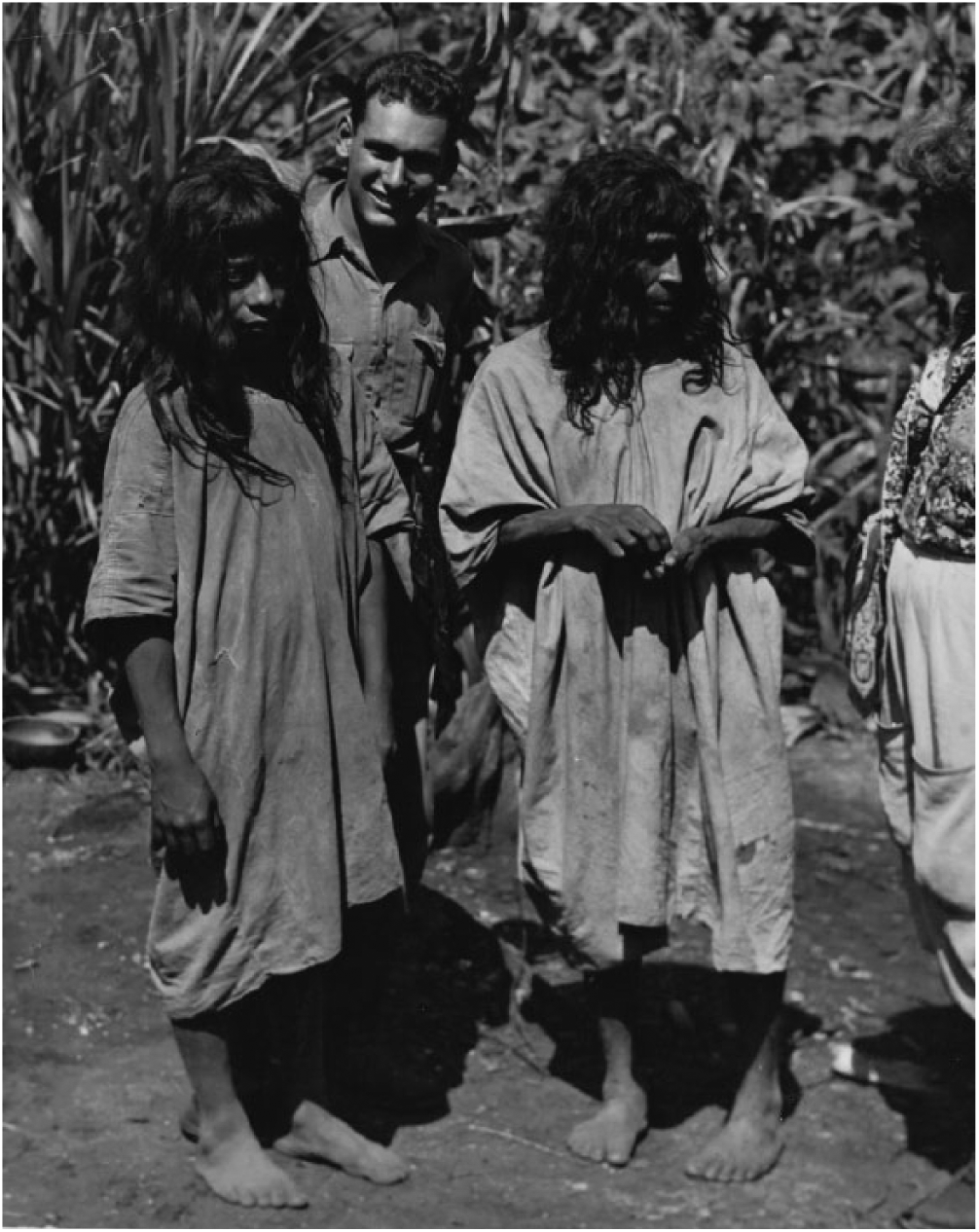
Rodolfo Stavenhagen was born in Germany in 1932. After his family escaped the Nazis in 1936, it made its way to Mexico in 1940. Years later he recalled that from the first his parents were fascinated by the classic civilizations of their new country and that, while he was also attracted to their study, most of all he had wanted to know about the contemporary indigenous people whose fellow citizen he had become. He made his first trip to the jungle and highlands of Chiapas while still a high school student and became determined to pursue a career in anthropology (Stavenhagen, 2015a; Stavenhagen and d’Avignon, 2012: 21–22). A year later, at 17, he made his way north to the University of Chicago to study for a bachelor’s degree in what was then the leading center for research into the native peoples of Mesoamerica in the United States. Degree in hand, in 1951 he returned to Mexico City to study for a professional degree in anthropology at the Escuela Nacional de Antropología e Historia (ENAH), in those days the professional school for students who aspired to work in Mexico’s indigenista programs. In conversations over several years my colleague in Chiapas and fellow LAP editor Mercedes Olivera had described to me how she came to know Stavenhagen, who was a year ahead of her at ENAH, and last spring she told me about it in more detail. In 1953 Stavenhagen had gone off to do a period of supervised fieldwork with the Instituto Nacional Indigenista (INI) in Chiapas and Oaxaca. In Oaxaca he had been assigned to the team charged with removing Mazatec people from their ancestral lands to make way for a massive dam project on the Papaloapan River; eventually some 60,000 were displaced (see Jiménez-Bandala in this issue). In interviews in recent years Stavenhagen himself has talked about the shock of this experience—of realizing that the core purpose of government indigenismo was not to serve indigenous people but to bend them to the development projects of the state (Stavenhagen and d’Avignon, 2012). What Mercedes Olivera remembers is that he was seared by witnessing the forcible removal of people from the only homes they had ever known and that when he returned to ENAH to continue his courses he gathered the students and recounted his disenchantment. In the succeeding months, with Stavenhagen as their leader, Olivera and a handful of other students formed a Marxist study group to talk about a way forward; she says that this was the beginning of her own commitment to critical anthropology (Olivera, 2012: 110; 2017). Stavenhagen meanwhile had decided that he could not be a government anthropologist—that he would instead be a researcher and try to understand more deeply indigenous people’s relationship to the nonindigenous and the state. As for practice, he would be open to whatever opportunities presented themselves to change things, either as a critic or practicing action anthropology, putting himself at the service of indigenous people to help with projects and struggles they chose.
After finishing a Master’s degree at ENAH in 1958, Stavenhagen began work on a doctorate in sociology at the Sorbonne. His 1965 dissertation soon became the 1969 classic Las clases sociales en las sociedades agrarias. Meanwhile, he had been teaching under Pablo González Casanova at Universidad Nacional Autónoma de México, and in 1965, drawing upon the argument of his dissertation, published “Siete tesis equivocadas sobre América Latina” in response to the national discussion of González Casanova’s Democracia en México (1965a), which had appeared earlier the same year. In an interview a few years ago, he said that precisely what many found so shocking about “Seven Erroneous Theses” was his argument that indigenous people were in fact already full participants in Mexican society (Stavenhagen and d’Avignon, 2012: 23): This really upset the official vision of indigenous communities as some kind of vestige of a dead past that should have disappeared. Not only should that past no longer exist but indigenous people themselves should no longer exist because in a modern and progressive country that was trying to build the future they were supposed to be integrated into a vision of the modern state in which there was no room for them. That was the official ideology when I was a student. Some of my teachers, on reading the article, rebuked me, saying “How can you possibly say this? This is ridiculous!”
The scientific vision of indigenous people that Stavenhagen continued to develop over the 50 years after 1965 was that of “Seven Erroneous Theses”: of people excluded socially and politically from their rights as citizens but people who all along had been producing the raw materials, food, and much of the physical labor on which the rest of Mexico lived. Through his publications, the activities of the human rights institutions he founded, and the indigenous organizations he advised and encouraged, he provided many of us with our first model of indigenous people as part of, not estranged from, the societies in which they are immersed. The implications of Stavenhagen’s view of the place of indigenous or other disenfranchised groups should be transformative for the makers of public policy and for the social scientists and economists who produce the theoretical background for that policy. As he argued, these groups should be entitled to equal rights, wages, education, access to justice, and representation within our common society, which in turn will require a restructuring of power. This central position is what makes him a revolutionary and what makes his work so threatening to those who might have something to lose.
Stavenhagen with Lacandones in Chiapas, Mexico, in the early 1950s (photo from his archive).
Footnotes
Notes
Jan Rus is a research professor at the Centro de Estudios Superiores de México y Centroamérica in San Cristóbal de Las Casas, Chiapas, Mexico, and a coordinating editor of Latin American Perspectives. The collective thanks him, along with Arturo Alvarado and Serena Chew Plascencia, for organizing this issue and Rosalind Bresnahan for coordinating the translation of the articles it contains.