







Abstract
A series of waterborne polyurethane (WPU) elastomers were synthesized from isophorone diisocyanate, polycaprolactone diol (PCL), 1,3-propanediol produced from a glucose fermentation process (Bio-PDO), 1,4-butanediol, and dimethylolbutanoic acid as a function of Bio-PDO/PCL composition. With the addition and increasing amount of Bio-PDO, particle size of dispersion, hardness, water swelling, initial modulus, and stress at break decreased, while contact angle with the water drop of the dispersion cast film increased. The PCL WPU showed a single-step thermal degradation at about 370°C, while those of Bio-PDO-containing WPUs showed two step degradations at about 350 and 400°C suggesting the soft segment–hard segment phase separation.
Introduction
Polyurethanes (PUs) are most versatile engineering materials that are synthesized by a simple polyaddition reaction of polyol, isocyanate, and chain extender. They find a variety of industrial applications including coatings, adhesives, sealants, elastomers, primer, sports goods, medical devices, and textile finish aside from the various foam products. 1–3 The worldwide annual production of PU in 2012 is over 14 million tons and ever increasing by about 5% annually.
Conventionally, PU is produced in solvent typically in acetone, dimethyl formamide, and methyl ethyl ketone. The solvent-borne PU (SPU) has great freedom in molecular design and advantages in processing. However, due to the safety and environmental considerations, SPU has steadily been replaced by waterborne PU (WPU) since late 1960s, and WPU is now legislated in many countries in many areas of applications including primers, adhesives, and coatings industries. 4–8
On the other hand, lack of degradability and growing land pollution have become serious with polymeric materials and led to concern about biodegradation. PU has been found to be susceptible to biodegradation by naturally occurring microorganisms. 9 Microbial degradation of PU depends on a number of facts including chain orientation, crystallinity, cross-linking density, and chemical groups present in the molecular chains. Among them the chemical groups determine the accessibility to degrading enzyme system. The microbial degradation of PU is mainly limited to polyester type presumably due to the hydrolysis of ester bonds by the esterase enzymes. 10
Recently, a new family of polyethers derived from 1,3-propanediol (PDO) have been available by DuPont (Wilmington, Delaware, USA). As PDO monomer is produced from a glucose fermentation process (Bio-PDO), the resulting polytrimethylene ether glycol (Cerenol) is 100% renewably sourced and can be used as a key ingredient of PU elastomers. 11,12 Since the Cerenol is based upon the renewable monomer, it provides the benefit of a reduced environmental footprints, 13–15 while it improves chip resistance without loss of other important properties such as adhesion or productivity. 16,17
We incorporated various amounts of Cerenol into the conventional WPUs based on polycaprolactone diol (PCL), isophorone diisocyanate (IPDI), 1,4-butanediol (1,4-BD), and dimethylolbutanoic acid (DMBA), and the effects were studied in terms of dispersion size, swelling behavior, thermal, mechanical, and surface properties of the cast films.
Experimental
Materials
PCL (number-average molecular weight (M n) = 2000g mol−1, Sigma Aldrich, St Louis, Missouri, USA), Cerenol polyol (M n = 2000 g mol−1, DuPont) were dried and degassed at 80°C under vacuum for 3 h prior to use. IPDI (Aldrich) was dried over 4 Å molecular sieve prior to use. 1,4-BD (Aldrich) was dried and degassed at 80°C under vacuum for 3 h. DMBA (Aldrich), 2-hydroxyethyl acrylate (HEA, Aldrich), triethylamine (TEA, Fluka), dibutyltindilaurate (Aldrich), and α,α′-dimethoxy-α-hydroxyacetophenone (Darocur 1173, Ciba Specialty Chemicals, Basel, Switzerland) were used as received.
Synthesis of WPU and UV cure
The formulation and preparation procedure are given in Table 1 and Figure 1, respectively. In the sample code, the three digits indicate the percentage of Cerenol. For example, C030 contains 30% Cerenol and 70% PCL. A 500-mL round-bottomed four-necked separable flask with a mechanical stirrer, thermometer, and condenser with drying tube and nitrogen (N2) inlet was used as reactor. The reaction was carried out in a constant temperature oil bath. DMBA, IPDI, PCL, and Cerenol were charged and reacted at 70°C to obtain NCO-terminated soft segments. A substantial amount of acetone was used to control the viscosity. Then, 1,4-BD and an excess amount of IPDI were added and extended on the soft segment termini to build up hard segments with isocyanate termini. This NCO-terminated prepolymer was then capped by HEA and cooled down to 50°C before the carboxylic acid groups were neutralized by TEA during the next 1 h. An aqueous dispersion was obtained by adding water (35°C) to the mixture with rapid agitation. Subsequently, a photoinitiator was added and stirred for the next 1 h. The mixture was cast onto a Teflon plate and partially dried for 2 days at 35°C before it was cured by an ultraviolet (UV) lamp. Finally, the UV cured film was dried for the next 5 days at 70°C to a constant weight.
Formulations to prepare WPU, solubility parameters, and contact angles of the films.a
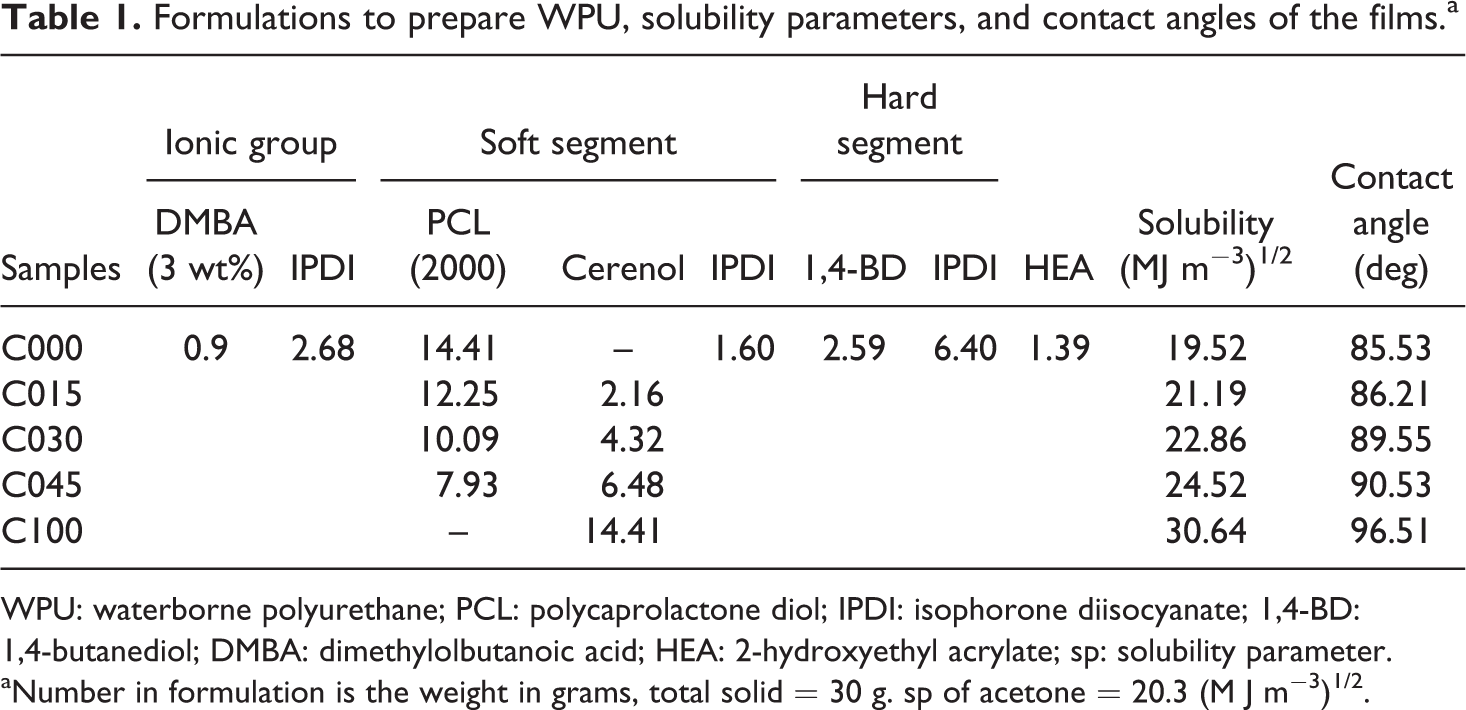
WPU: waterborne polyurethane; PCL: polycaprolactone diol; IPDI: isophorone diisocyanate; 1,4-BD: 1,4-butanediol; DMBA: dimethylolbutanoic acid; HEA: 2-hydroxyethyl acrylate; sp: solubility parameter.
aNumber in formulation is the weight in grams, total solid = 30 g. sp of acetone = 20.3 (M J m−3)1/2.
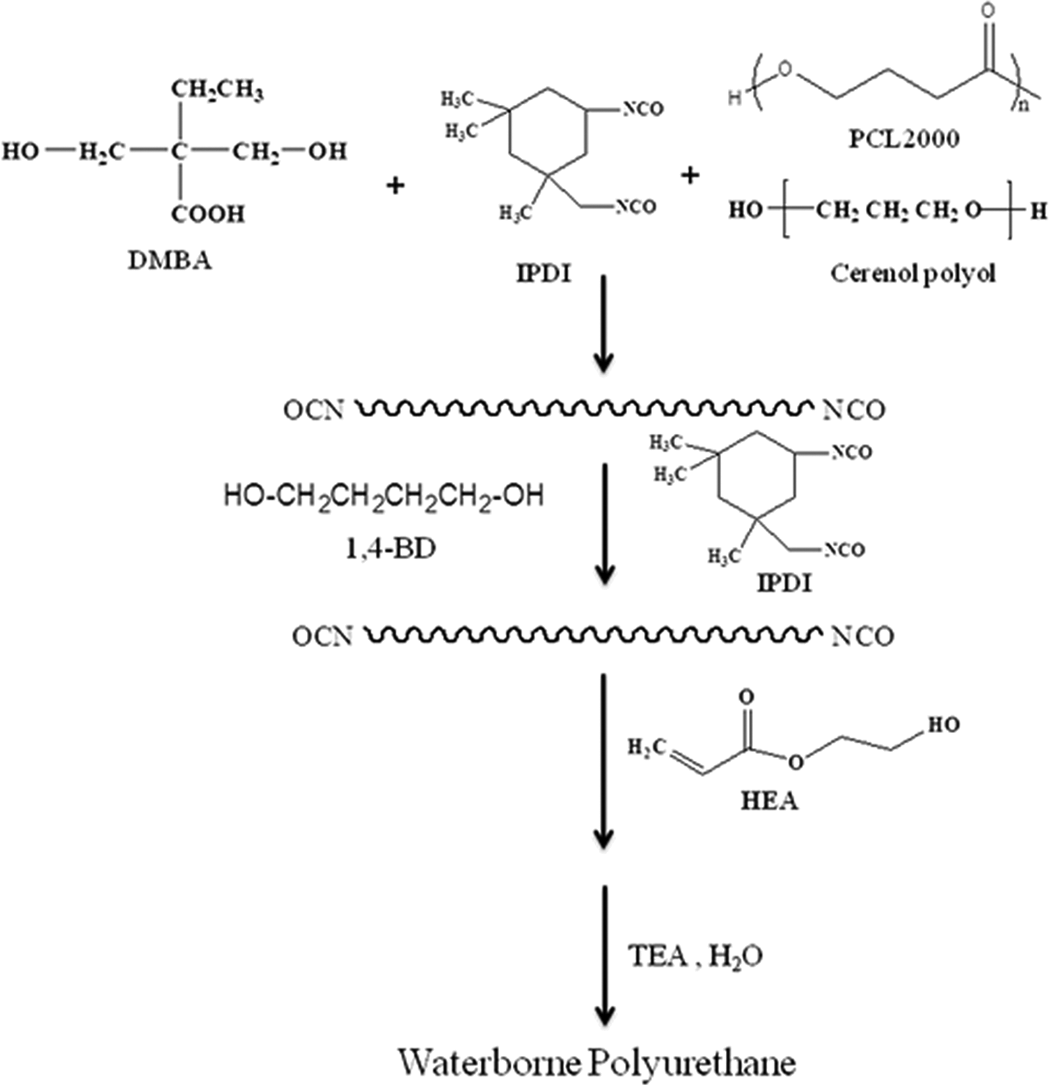
Synthetic route to prepare WPU films. WPU: waterborne polyurethane.
Characterizations
FTIR spectroscopy
Infra red (IR) spectra of the cast films on potassium bromide pellet were recorded on a Mattson Satellite Fourier Transform IR (FTIR) spectrometer.
Dispersion size
The number-average particle diameter of the WPU was measured by a light scattering method (N5 Submitron Particle Size Analyzer, Beckmann Coulter, Brea, California, USA), using a helium–neon laser with wavelength of 633 nm. The sample was first diluted in deionized water to 0.5%, followed by built-in ultrasonic wave treatment for 10 min to homogenize the dispersion.
Mechanical properties
Mechanical properties were measured with a universal testing machine (Lloyd Instruments, UK) at a crosshead speed of 500 mm min−1 using specimens prepared according to ASTM D-1822 standard.Tests were performed at room temperature, and at least five runs were measured to report the average.
Thermogravimetric analysis
For thermogravimetric analysis (TGA Q50; TA Instruments, New Castle, Delaware, USA), approximately 8–10 mg of sample was put in an alumina crucible and heated at 5°C min−1 under N2 atmosphere.
Contact angles
Contact angle of the dispersion cast film with deionized water drop was measured using a conventional contact angle goniometer (Theta lite100, KSV Instruments, Finland). The tests were conducted at room temperature, and at least five runs were made to report the average.
Hardness
Shore A hardness was measured using an indentation hardness tester according to ASTM D 2240–75 standard. Eight sheets with 1 mm thickness were stacked to about 8 mm thickness. The measurement was carried out by pressing the sample sheet on a type-A durometer at a load of 9.8 N.
Swelling test
The preweighed dried films (W
d) were immersed in 10 mL of deionized water at 20°C until the equilibrium swell was attained. Each film was then removed from the water bath, tapped with filter paper to remove surface water, and weighed as the wet weight (W
t). The swelling ratio was calculated using the following equation
Results and discussion
IR Spectra and HEA capping
The IR spectra of NCO-terminated PU prepolymer are given in Figure 2.
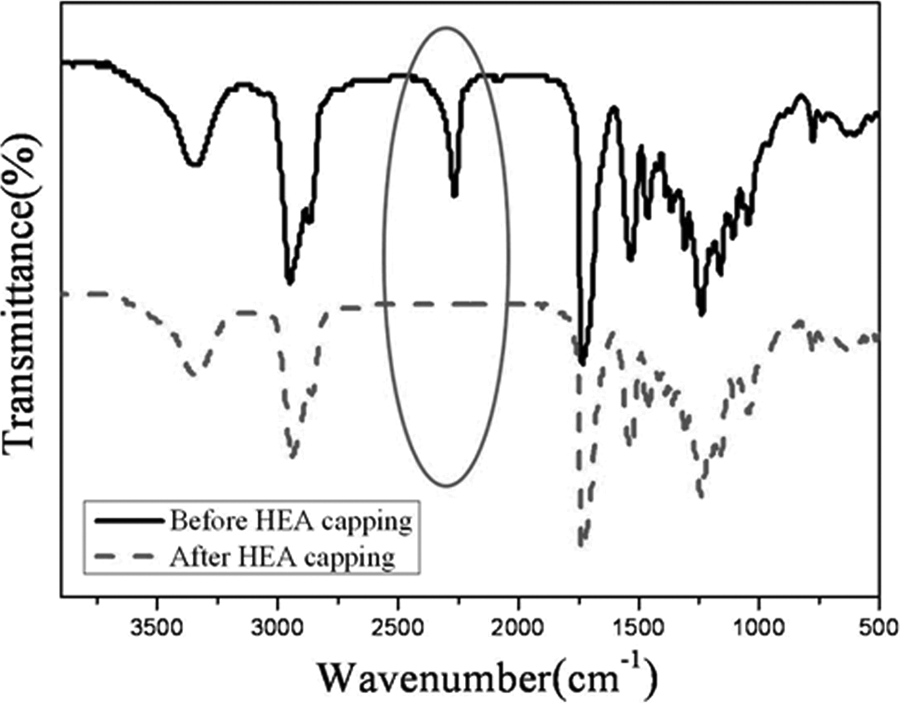
FTIR spectra of WPU films before and after HEA capping. FTIR: Fourier transform infrared; WPU: waterborne polyurethane; HEA: 2-hydroxyethyl acrylate.
It can be seen that the absorption peak at about 2270 cm−1 corresponding to the stretch vibration of NCO group has completely disappeared upon capping the prepolymer with HEA.
Particle size
Figure 3 shows that the particle size of the dispersion decreases as the content of Cerenol polyol increases. From the continuum mechanic point of view, the particle size of dispersion depends on the viscosity ratio of dispersed phase to the continuous phase as given using the following equation
18
Partical size of WPU films. WPU: waterborne polyurethane.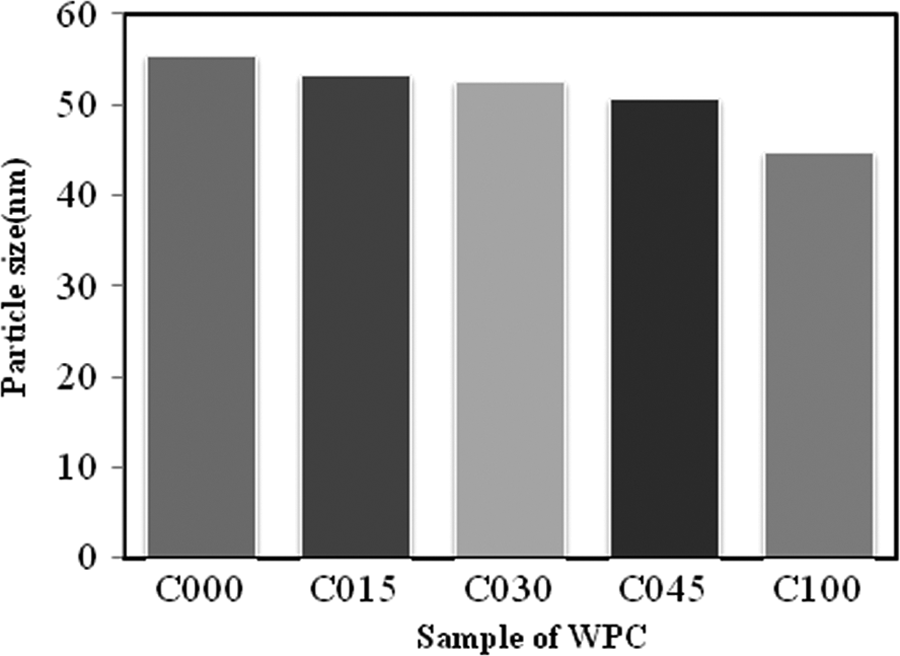
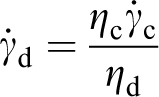
where η and
On the other hand, viscosity of prepolymer solution decreases with the decrease of polymer polarity. So, decrease of solution viscosity is expected with Cerenol since ether-type polyol is less polar than the PCL diol. In addition, great polymer–solvent miscibility provides the solution with great viscosity since polymers in good solvent are expanded. In this regard, solubility parameters (sp) of the solvent and PUs of various compositions are calculated according to the group contribution theory, 19 and the results are shown in Table 1, where the sp gap increases with Cerenol to decrease the viscosity. It may be concluded that the decrease of particle size with Cerenol incorporation is due both to the decreased hydrophilicity and decreased miscibility of PU with acetone.
Contact angle
Figure 4 shows that the static contact angle of the film with a water drop increases as the content of Cerenol increases due to the decreased hydrophilicity of the film. This implies that the film is hydrophobically modified to reduce the wettability of film surface.
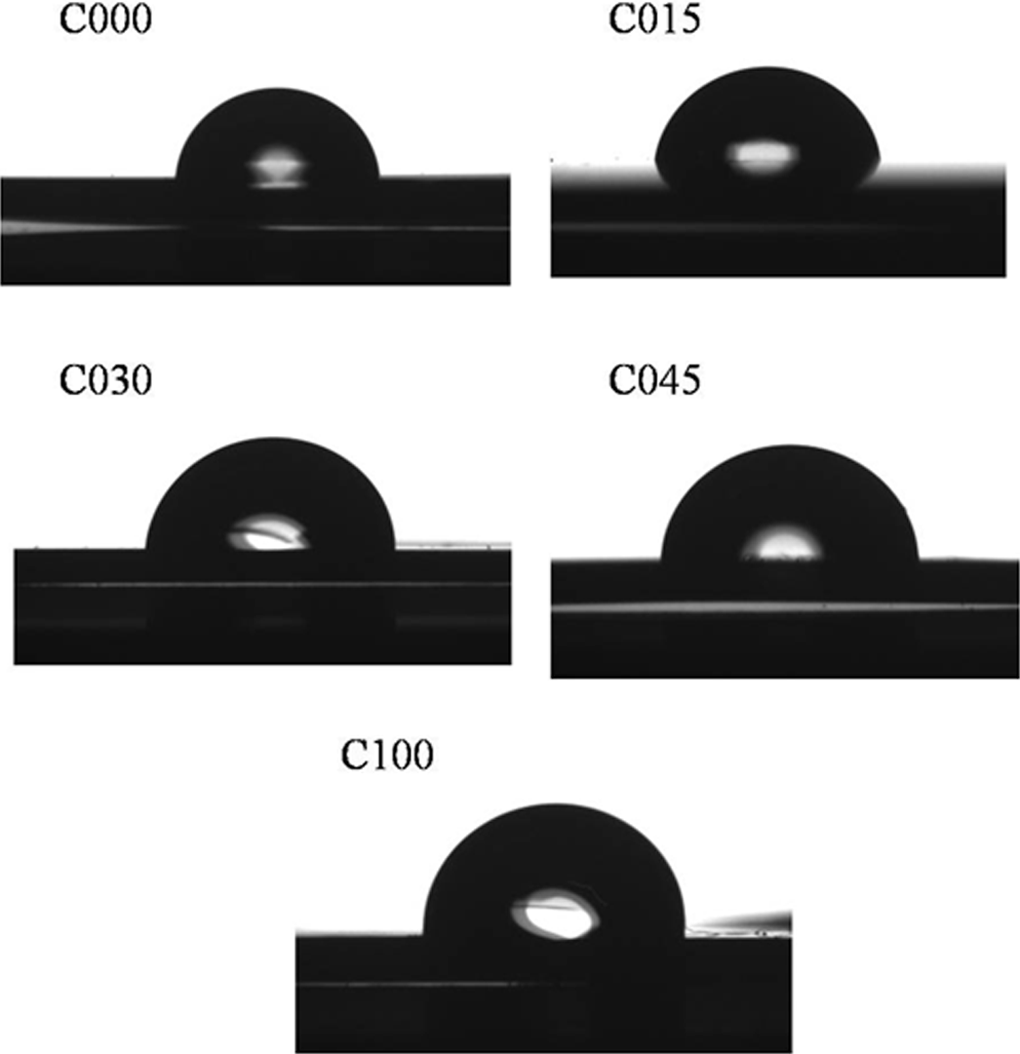
Static water contact angles of WPU films. WPU: waterborne polyurethane.
Water swelling
The swelling of the film in water is shown in Figure 5. The initial rate of absorption as well as the equilibrium water absorption decreases with the addition and increasing amount of Cerenol. This implies that the hydrophilicity of the film decreases with increasing Cerenal content as noted from the contact angle measurements.
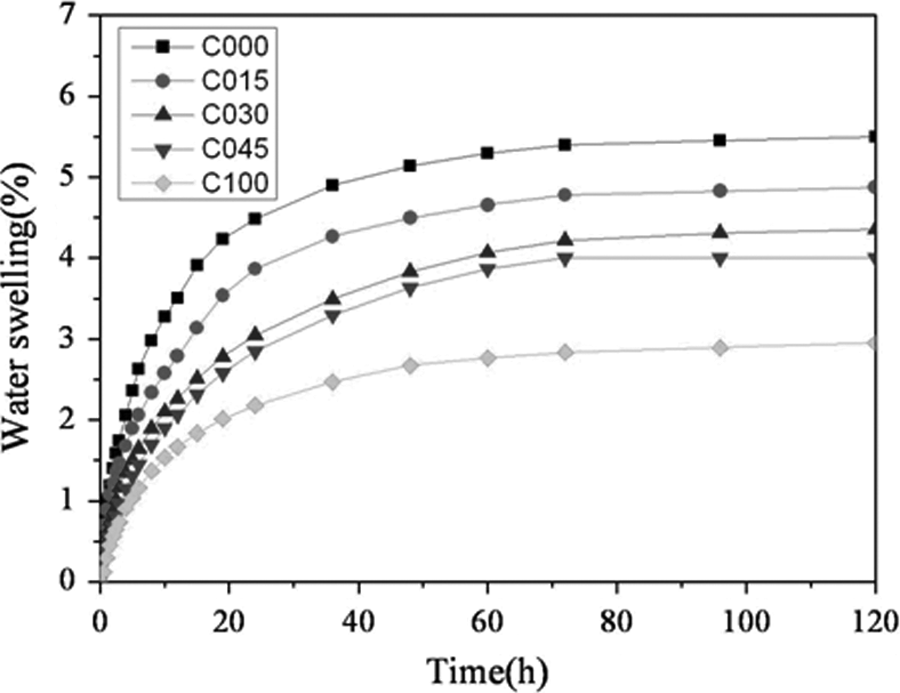
Swelling ratio of WPU films. WPU: waterborne polyurethane.
Hardness
Figure 6 shows that the hardness of the WPU films decreased with increasing amount of Cerenol content due to the less cohesive structure of Cerenol, which on the other hand is due to the weak intermolecular interactions of the ether-type polyol. Coating with the Cerenol polyol is expected to provide soft touch as compared to PCL.
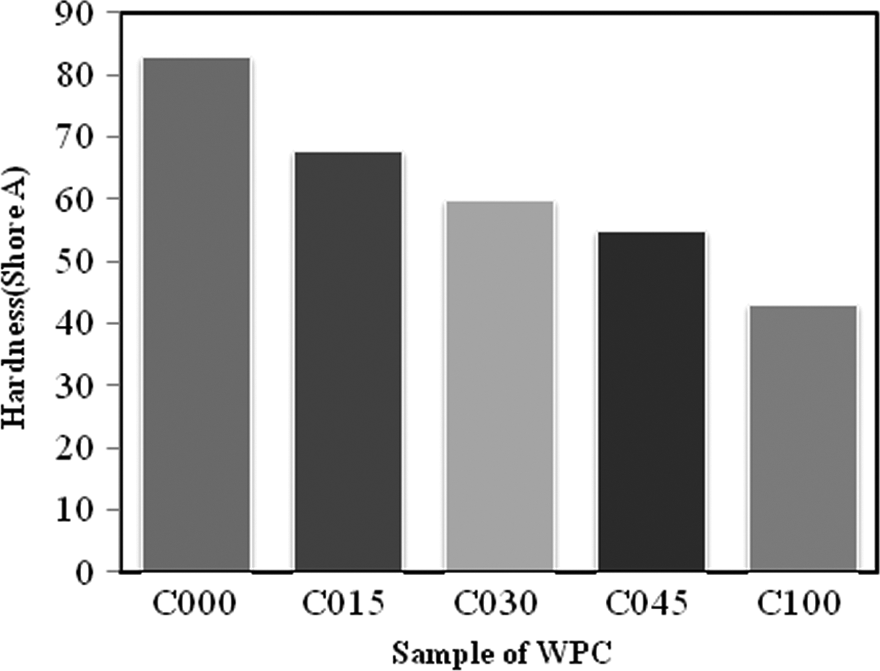
Hardness(Shore A) of WPU films. WPU: waterborne polyurethane.
Mechanical properties
The strain–stress behavior of the WPU films is shown in Figure 7. The behavior PCL WPU (C000) as a glassy polymer and Cerenol WPU (C100) as a rubbery polymer is due to the different chain rigidity at room temperature. With the addition and increasing amount of Cerenol, initial modulus, yield strength, and break strength decrease monotonically while maintaining the elongation at break essentially unchanged over 600%. Large and identical ductility of the various films indicate that the polymers are highly coiled due to the high chain flexibility, regardless of soft segment composition.
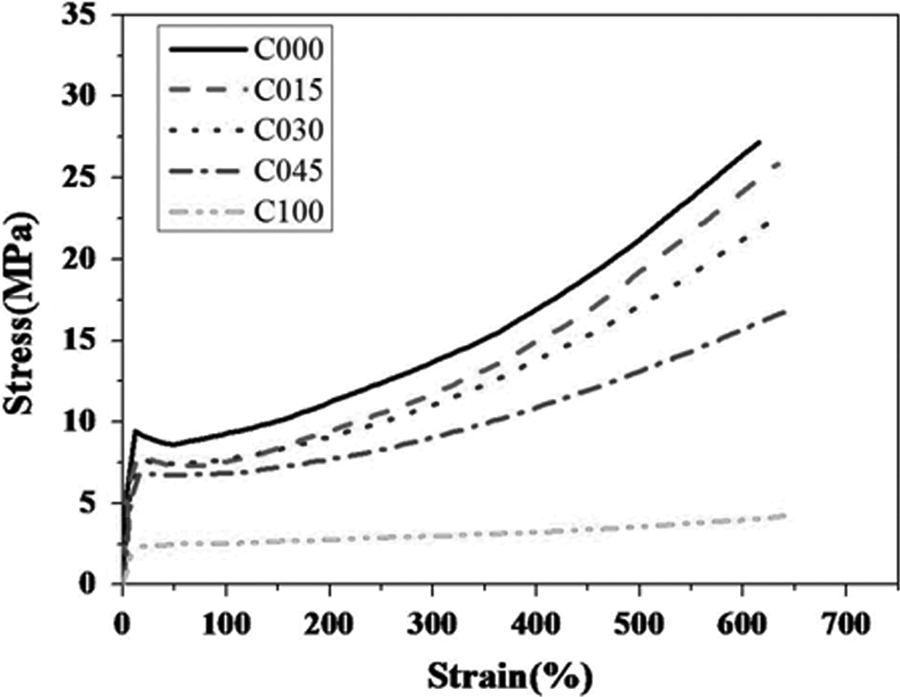
Strain–stress behaviors of the WPU films. WPU: waterborne polyurethane.
Thermal properties
Thermal stability of the WPU films is shown in Figure 8. The C000 showed a single-step thermal degradation at about 370°C while those containing Bio-BDO show two step degradations at about 350°C corresponding to hard segment decomposition and at 400°C corresponding to the soft segment decomposition. This implies that soft segment and hard segment are phase mixed for C000 while those of C015–C100 are phase separated. The phase mixing C000 is expected due to the hydrogen bonding between the lactone groups of PCL and urethane groups of hard segments. Such hydrogen bonding is weak with ether-type polyol, which augments phase separation.
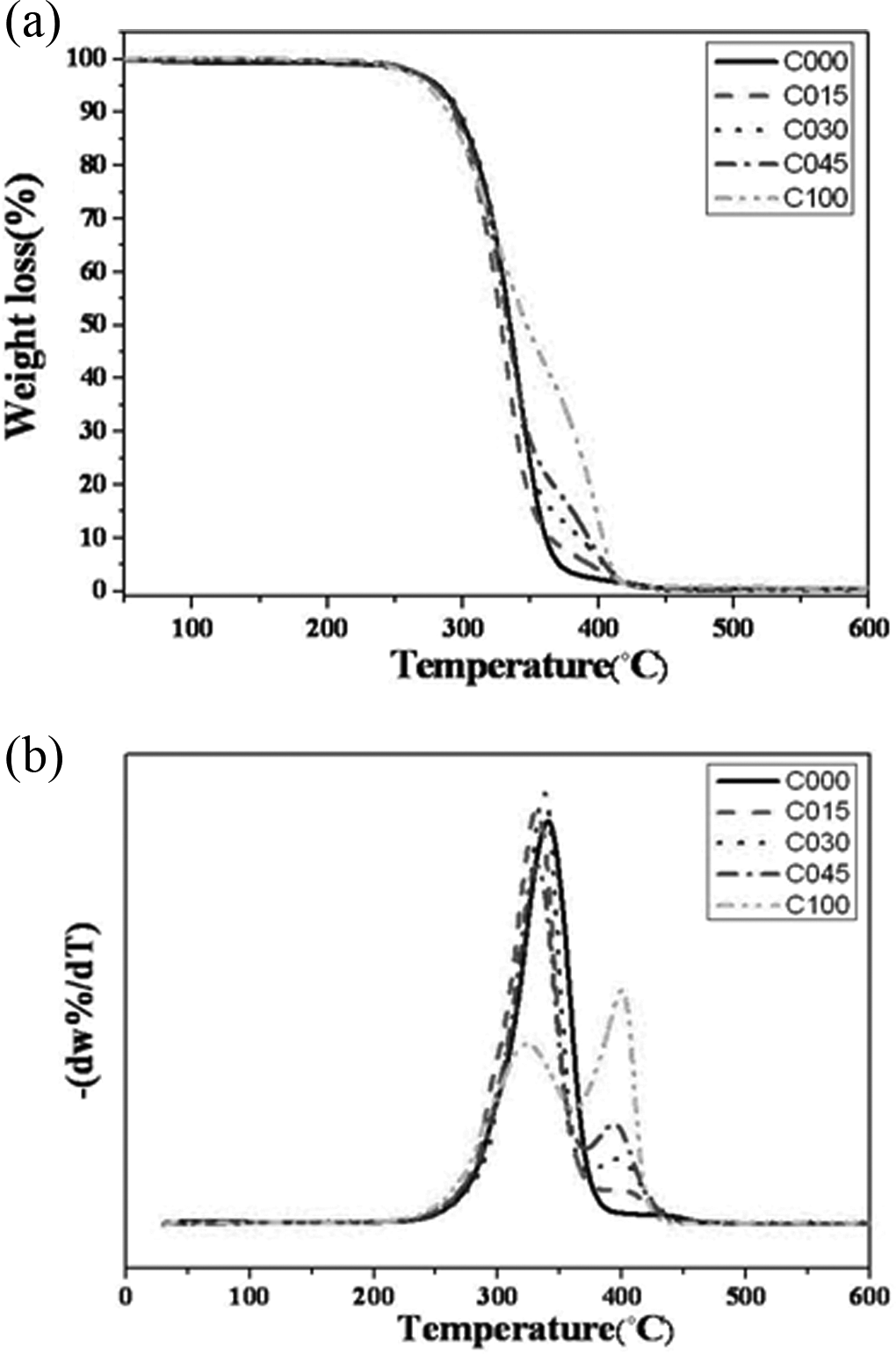
TG (a) DTG (b) curves of WPU films versus temperature. TG: thermogravimetric; DTG: derivative thermogravimetric; WPU: waterborne polyurethane.
Conclusions
A series of WPU were synthesized from IPDI, PCL, Bio-PDO, 1,4-BD, and DMBA as a function of Bio-PDO/PCL composition. With the addition and increasing amount of Bio-PDO, particle size of dispersion decreased due to the relatively small viscosity and hydrophilicity of the prepolymer solution. The decreased hydrophilicity provided the film with large contact angle with water and small water swelling. Due to the rubber-like property of Bio-PDO WPU, initial modulus and break stress of the film decreased with the addition of Bio-PDO. On the other hand, increased soft segment–hard segment phase separation is due to the poor intersegment interactions; Bio-PDO-containing WPUs thermally decomposed in two steps, while the PCL-based WPU showed one-step decomposition.
Footnotes
Declaration of Conflicting Interests
The author(s) declared no potential conflicts of interest with respect to the research, authorship, and/or publication of this article.
Funding
The author(s) disclosed receipt of the following financial support for the research, authorship, and/or publication of this article: The research has been supported by the BK21 PLUS Center for Advanced Chemical Technology at Pusan National University, Busan, Republic of Korea.