







Abstract
We describe the synergistic activities of binary vulcanizing accelerators in presence of magnesium oxide as cure activator in the vulcanization of natural rubber. Thiuram type tetramethyl thiuram disulfide (TMTD) and thiocarbamate type zinc dimethyl dithiocarbamate (ZDMC) accelerators in combination with dibenzothiazyl disulfide (MBTS) were investigated for the vulcanization of rubber. The cure, mechanical, and thermal properties of rubber vulcanizates were studied with magnesium oxide-based cure activator. Notable synergism in the delta torque, cross-link density, and mechanical properties was found when using binary accelerators with magnesium oxide. The zinc-containing thiocarbamate accelerator, ZDMC, showed better synergistic activity in presence of magnesium oxide than the non-zinc-based thiuram accelerator, TMTD. To find out the possibility of making a zinc-oxide-free natural rubber compound, a control compound was prepared with 5 phr of zinc oxide as a cure activator with the best evaluated binary accelerators system with magnesium oxide (3:6 millimolar ratio of ZDMC to MBTS). We also compared the curing and mechanical properties of carbon black-reinforced rubber with zinc oxide and magnesium oxide separately with this binary accelerators system. The results indicated that a completely zinc-oxide-free natural rubber compound was possible with comparable values in the mechanical properties, thermal properties and a higher rate of vulcanization.
Introduction
The rubber vulcanization was discovered by Charles Goodyear in 1839 by heating of rubber with sulphur. Nowadays the vulcanization process is much advanced with many ingredients to improve the useful properties of the end products.1–3 Among them activators are very important. Two types of activators are mainly used, metal oxides and fatty acids together.1–3
Zinc oxide and stearic acid together is the most useful cure activator. 1 Conventionally, 5 phr zinc oxide and 2 phr stearic acid is used for low heat build-up, better modulus and better abrasion resistance for tyre applications. 4 In every year zinc oxide is produced up to 10 5 tons and about 60% is consumed by rubber industry. 5 From the recent environmental carcinogenicity concern, zinc oxide is considered as environment pollutant and highly carcinogenic for aquatic organisms. 6 In a toxicological study by Poynton et al. 7 proved that both zinc oxide and Zn2+ are toxic but with different modes. Reed et al. 8 also found that zinc oxide is toxic for aquatic organisms. Release of zinc oxide by different leaching process increases the ecosystem exposure. It was reported in an investigation that the waste water from industrial effluent in Europe and America might contain high level of zinc oxide as a threat for aquatic species. 9
For the non-tyre based applications, the conventional amount (5 phr) zinc oxide can be reduced without serious detrimental effect on the mechanical properties.10–12 Various attempts were made to reduce the level of zinc oxide in the vulcanization of rubber.5,10,12 These include layered double hydroxide, 5 Zn2+ ions containing clay compounds,10,12 various zinc-complexes,13–16 nano-zinc oxide and zinc hydroxide,17–26 and several other metal oxides (e.g. MgO, CaO, CuO, CdO, BaO, PbO etc.). 27 Magnesium oxide is the most promising candidate among them.28–30 Magnesium oxide is approximately non-toxic. 31 Magnesium oxide improved the curing rate but the cross-link density achieved was insufficient for industrial applications might be due to without use of especial accelerators system.29–34
Nano magnesium oxide can be used as a cure activator to improve the mechanical properties of rubber vulcanizates with nano-level filler-polymer interactions.32,34 But there have still been some drawbacks from both production economy and from the level of toxicity owing to the high specific surface area of magnesium oxide. 35 Light weight amorphous magnesium oxide might be a better choice than micron size zinc oxide because it is cheap, nontoxic, and easily available from sea water.
During the last few decades, thiuram compounds with combination of thiazole group of accelerators are immensely important for the rubber industry to get efficiently cross-linked rubber.36–44 It is well known that binary vulcanizing accelerators responded mutual activity in presence of zinc oxide.44–46 The mutual activity is mainly due to the transformation of the zinc dithiocarbamate complex, which is produced in situ or added and converted into primary thiuram disulfide in the presence of a secondary thiazole class of accelerator.40,44 Due to the synergism in the cross-link density, strong improvements in the mechanical properties have been found for a binary accelerator system than individual single accelerator systems.40,44 Synergistic activities of all the binary accelerator systems were mostly evaluated in the presence of a zinc oxide-based cure activator.36,44 As far as we know, there is a lack of experimental studies on the synergism of binary cross-linking accelerators in the presence of other metal oxides, which may be an alternative to zinc oxide as a cure activator. Other metal oxides may have the capability to take part in mutual activity that may lead to a complete zinc-oxide-free or zinc-free rubber compound.
Based upon the accelerator (A) and sulfur (S), vulcanization systems 45 are mostly classified into three categories: efficient (EV), semi-efficient (SEV), and conventional (CV).The mechanistic aspects of the three different vulcanization systems can be found elsewhere.46–49 Efficient vulcanization is mostly used when excellent heat and aging resistance is of primary importance because it produces large numbers of mono and di-sufide linkages. 46 EV systems generally produce lower cross-link density with higher flexibility and are applied for better flexibility. Also, they can be very effective to study the synergistic activity of binary cross-linking accelerator systems because of the simplicity in the cross-linking reaction.40,42
This article describes the synergistic activity of binary accelerators tetra methyl thiuram disulfide (TMTD) and zinc dimethyl dithiocarbamate (ZDMC). They were combined with dibenzothiazyl disulfide (MBTS) and magnesium oxide-based cure activator in the vulcanization of natural rubber. The aims of this investigation have been divided into two parts. The first one is to study the mutual activity of binary cross-linking accelerators in presence of magnesium oxide as cure activator, and the second one is to study the possibility of a complete zinc-oxide-free natural rubber compound.
Experimental work
Materials
Natural rubber (NR), zinc oxide, stearic acid, sulfur, accelerator tetra methyl thiuram disulfide (TMTD), and carbon black (N330) were provided by Rubber Research Institute in Thailand. Lightweight amorphous magnesium oxide powder (AppliChem PanReac, Thailand), accelerator zinc dimethyl dithiocarbamate (ZDMC) and accelerator dibenzothiazyl disulfide (MBTS) (Tokyo Chemical Industry Co., Ltd., Japan), toluene (RCI Labscan, Thailand), and heavy grade paraffin oil (RCI Labscan, Thailand) were used without further purification.
Preparation of natural rubber (NR) vulcanizates
Rubber was first masticated for few minutes on an open two-roll mixing mill, and after that stearic acid and cure activator were added and mixed well. After that, curing additives (MBTS, TMTD, ZDMC and sulfur) were added to the rubber, and the mixing was completed with about 20 min. The mixing was done at room temperature.
For carbon black-filled vulcanizates, a master batch compound with rubber, N330 carbon black at 40 phr, and 4 phr paraffin oil was prepared in an internal mixer for 5 min with a rotor speed of 40 rpm at room temperature before following the mixing process above. Table 1 represents the mixing composition of various ingredients. We use an underscore between the accelerators’ abbreviations to represent a binary accelerator. Accelerator abbreviations with numbers followed by hyphens show the amount of the accelerator in millimole.
Mixed composition of various materials in per hundred gram of rubber (phr).
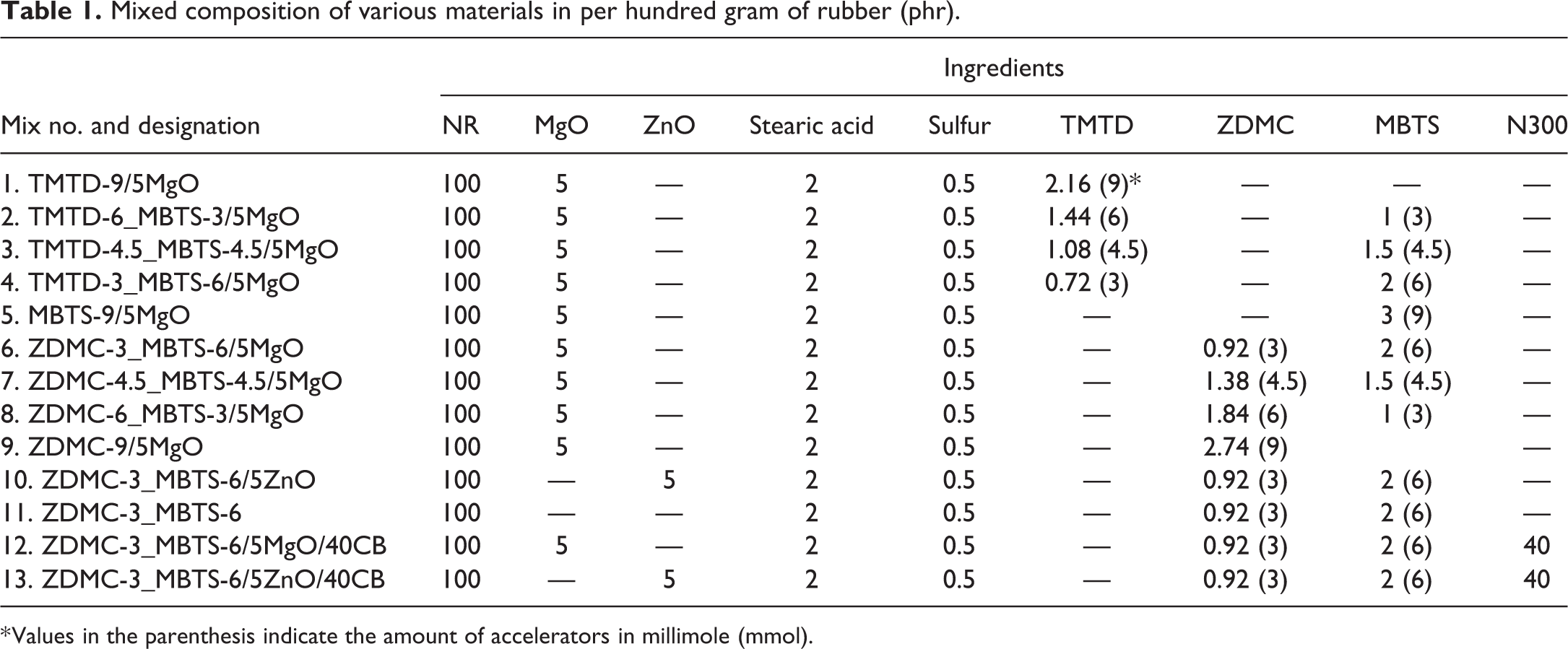
* Values in the parenthesis indicate the amount of accelerators in millimole (mmol).
Curing characteristics
The curing properties were obtained at 140°C by a moving die rheometer (rheo Tech MD+, Model no. A022 S) according to ASTM D5289-12. The data like scorch time (t2), optimum cure time (t90), highest torque (MH), lowest torque (ML), and torque difference (R∞) were obtained from the rheographs.
Mechanical properties
The compounded rubbers were sheeted out in a hot press-mould at their respective optimum cure time. The vulcanized sheets were kept for 24 h at room temperature before study the mechanical properties. From each sheet, four dumbbell-shaped test pieces were cut according to ISO 37 Type II, and the tensile mechanical properties were investigated by a tensile testing machine (UTM, LLOYD LR 100K, United Kingdom) with a load cell of 1 kN. Tensile mechanical properties like modulus at 100% strain (M100), modulus at 300% strain (M300), tensile strength (T.S.) and elongation at break (E.B.) were found from stress-strain curve. Shore A hardness was measured according to ASTM D 1415-56T.
Measurement of cross-link density
Cross-link density by chemical swelling method
The swelling experiment was done according to ASTM D 471-98e2. The chemical cross-link density of the vulcanized rubber was obtained by Flory-Rehner equation. 50
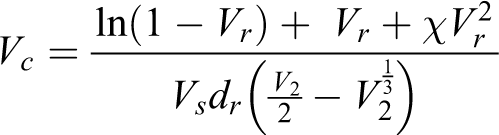
where Vc = chemical cross-link density, Vs = molar volume of the solvent, Vr = volume-fraction of the rubber in the swollen specimen, dr = density of the rubber, and χ = interaction parameter. The volume-fraction of rubber (Vr) was calculated from the equilibrium swelling data as:
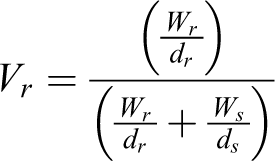
where Ws = weight-fraction of the solvent (toluene), ds = density of the solvent (0.87 g/cm3), Wr = weight-fraction of the rubber in the swollen specimen, and dr = density of the rubber. For the natural rubber-toluene system, χ = 0.3795 and Vs = 106.2 cm3/mol.
Cross-link density by physical method
The physical cross-link density of the rubber was obtained by Mooney-Rivlin equation on stress-strain relationship. 51
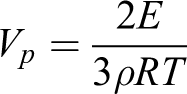
Vp = physical cross-link density, E = modulus at 100% strain (MPa), ρ = density of rubber (kg.m−3), T is the operating temperature = 298 K and R = universal gas constant (J.mole.−1K−1). The cross-link density data obtained by both chemical and physical methods have similar trends. However, it is believed that the measurement of cross-link density by the chemical swelling method is more accurate than that by the physical method because there are some kinds of physical interactions between the solid particles and the rubber molecules, which interrupt the actual cross-link density measurement. Hence, in this research, we describe the physical and chemical properties of rubber vulcanizates in terms of the cross-link density obtained by the chemical method.
Morphology and EDX spectra of NR vulcanizates
Tensile fractured surface of the vulcanized samples was investigated using a scanning electron microscope (SU3500). The fractured surface was coated by gold before performing scanning electron microscopy (SEM) and energy dispersive x-ray (EDX) spectroscopy.
Thermogravimetric analysis of gum-vulcanizates
In order to investigate the thermal properties of the rubber vulcanizates, thermo gravimetric analysis (TGA) were done. It was performed with a TGA machine (NETZSCH TG 209F3 TGA209F3A-0364-L) under flow of nitrogen gas at 35–800°C with rate of heating the alumina crucible at 10°C/min.
Results and discussion
Curing behavior gum-vulcanizates
Rheographs for various gum-vulcanizates are shown in Figure 1(a) and (b), and the curing characteristics data are provided in Table 2. It is clear that after reaching the lowest torque, it gradually increases, reaches a maximum value, and then is parallel or decreases with the vulcanization time. The decreasing torque after reaching to the highest torque is called reversion. This might be due to the degradation of thermally unstable polysulfide cross-links to cyclic sulfides. 52
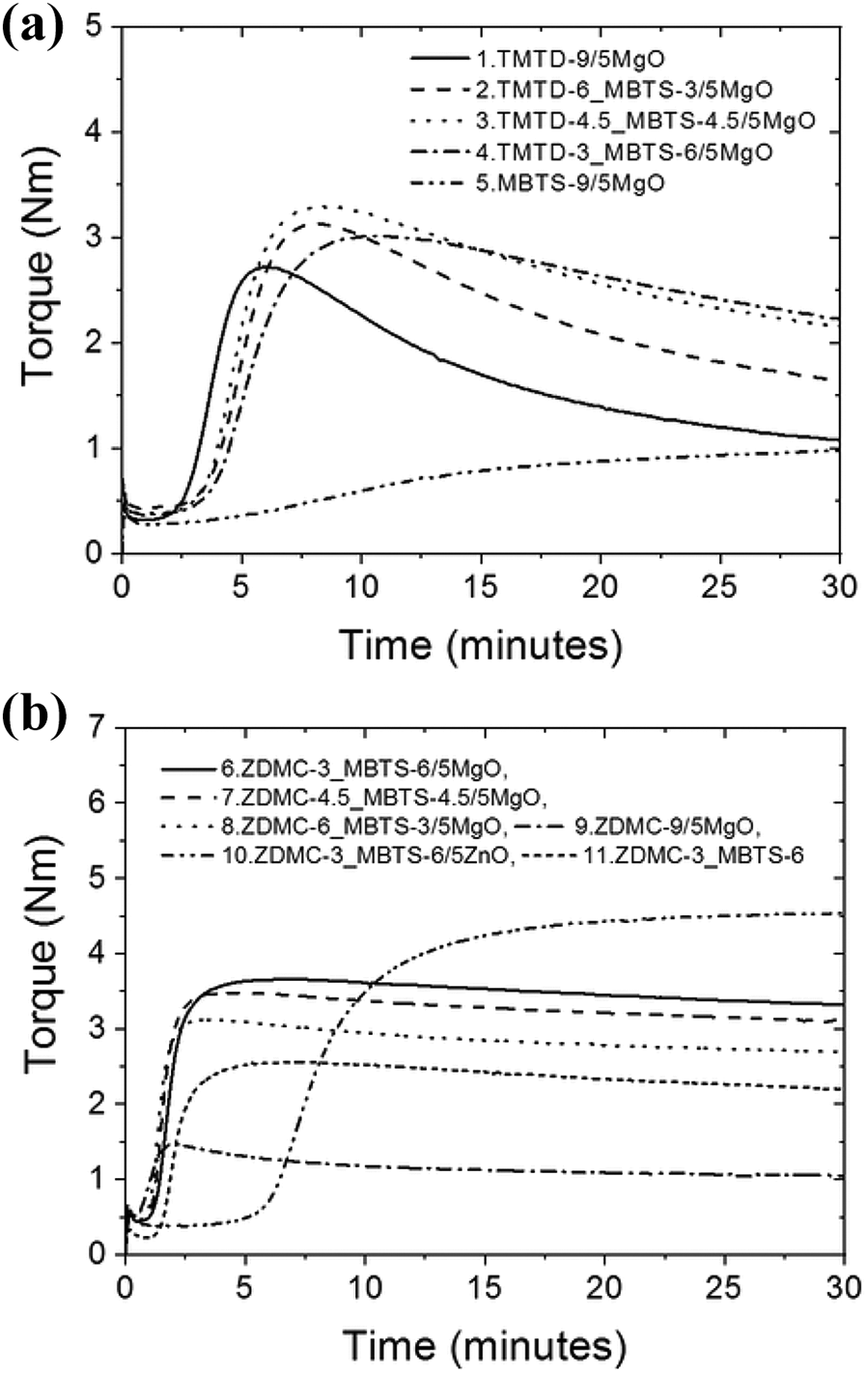
(a) Rheographs of TMTD_MBTS accelerated NR-gum vulcanizates cured at 140°C 20 × 16 mm (600 × 600 DPI). (b) Rheographs of ZDMC_MBTS accelerated NR-gum vulcanizates cured at 140°C 20 × 16 mm (600 × 600 DPI).
Curing characteristics at 140°C for gum-vulcanizates.
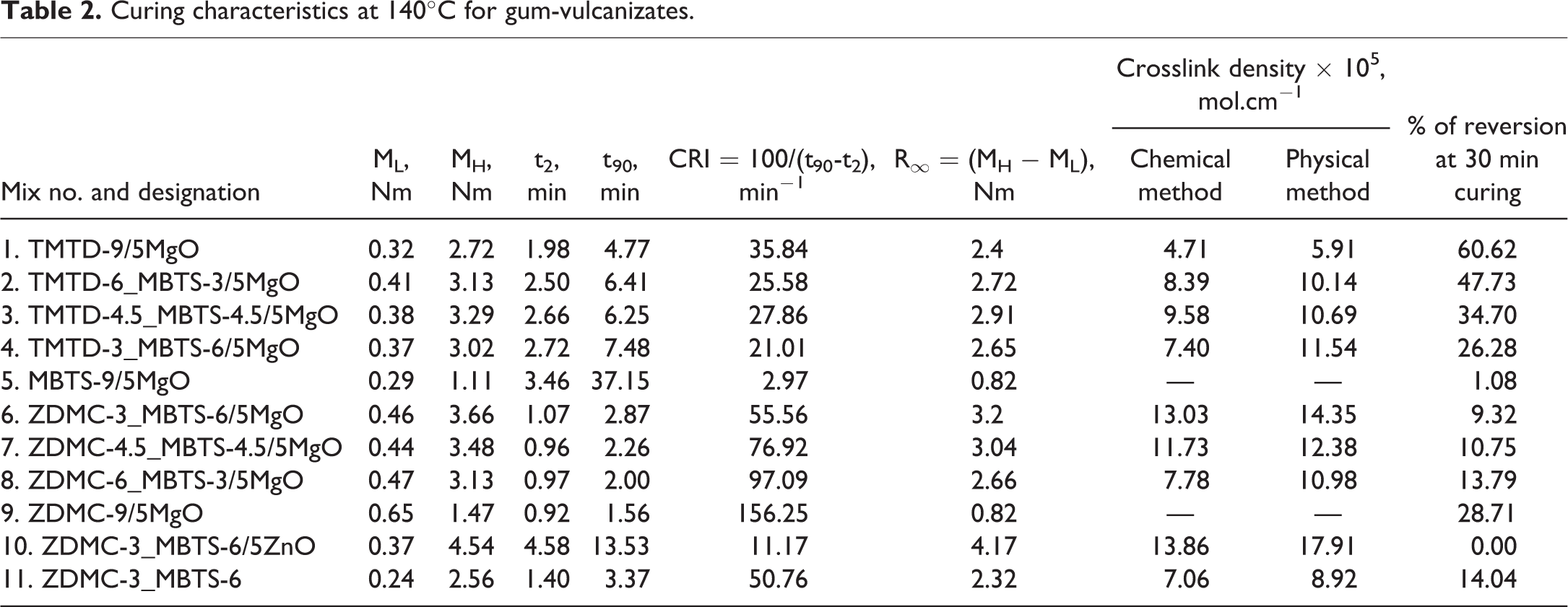
The percentages of reversion up to 30 min of vulcanization for different mixes are presented in Table 2. It is clear that the cured compound with 5 phr of zinc oxide (Mix 10) shows the highest reversion resistance with the lowest percentage of reversion compared to all other vulcanizates. It is found that vulcanizates containing ZDMC_MBTS binary accelerators (6–8) show better reversion resistance than vulcanizates containing TMTD_MBTS (Mix 2–4). Also, increasing the MBTS amounts in the binary accelerator systems enhances the reversion resistance (Table 2).
Magnesium oxide as a cure activator (Mix 6) shows better reversion resistance than no cure activator (Mix 11) in the vulcanizates. Magnesium oxide also helps to reduce the reversion, but its efficiency is not much as that of zinc oxide. Hence, precaution should be made for over-curing of the vulcanizate when magnesium oxide is used as a cure activator because of its faster cure activity.
From Table 2, it can be seen that lowest torque (ML) of all the gum-compounds (Mix 1–11) is not regular and varies from 0.29 to 0.65 Nm. However, binary combinations of ZDMC and MBTS (Mix 6–8) in the vulcanizates show slightly higher values compared to binary combinations of TMTD and MBTS (Mix 2–4). This may be due to faster cross-linking before reaching the lowest torque from the faster ZDMC_MBTS accelerator systems than the TMTD_MBTS systems in the presence of magnesium oxide. Highest value of ML is observed for the single ZDMC accelerated vulcanizate (Mix 9) among all the gum-vulcanizates, and this may be due to the fastest curing of that vulcanizate.
The highest torque (MH) and Δ torque (R∞) are proportional to the stiffness of the vulcanizate, and the stiffness depends mostly on the cross-link density. Thus, for simplicity, Δ torque was studied for gum vulcanization to realize the mutual activity of the binary accelerator systems. From Table 2 (Mix 1–9) and Figure 2, it is clear that both TMTD_MBTS and ZDMC_MBTS show positive synergism with respect to MH and R∞. The highest values of MH and R∞ are achieved for the ZDMC_MBTS accelerated vulcanizate at a molar ratio of 3:6 of ZDMC to MBTS when magnesium oxide is used as a cure activator (Mix 1–9). However, it shows a lower value compared to 5 phr of zinc oxide (Mix 10) with an identical accelerator combination.
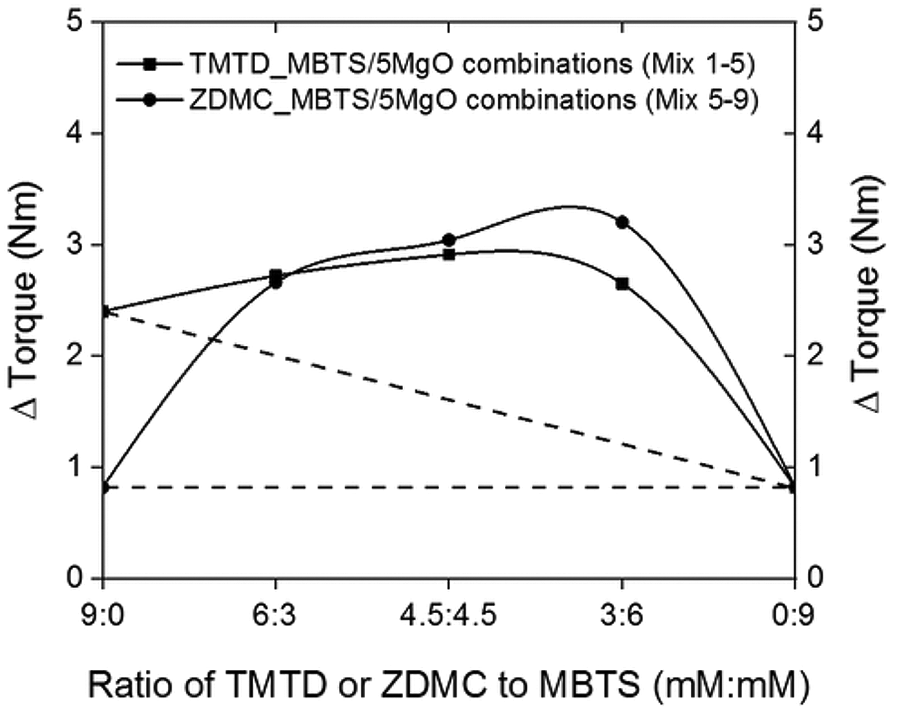
Synergistic effect on Δtorque for different NR-gum vulcanizates in presence of MgO 22 × 18 mm (600 × 600 DPI).
In Table 2, both TMTD_MBTS and ZDMC_MBTS accelerated systems show synergism in the value of cross-link density in the presence of magnesium oxide. Cross-link densities of the vulcanizates in the presence or in absence of magnesium oxide (Mix 6, Mix 11) indicate that magnesium oxide has a vital role in the synergism. Lower synergism in the value of cross-link density is found in the case of TMTD_MBTS than ZDMC_MBTS in the presence of magnesium oxide. ZDMC shows additional cross-linking in the presence of MBTS accelerator from the zinc ions already present in the accelerator. It shows better cross-linking values than TMTD_MBTS.
Although zinc ions coming from ZDMC are responsible for additional cross-links, a higher proportion of zinc-dithiocarbamate (ZDC) in the binary accelerator system reduces the cross-link density (Mix 6–8). This may be due to the breakage of polysulfide linkages and the formation of cyclic sulphides 53 in the presence of ZDC-based accelerators. It is also found that in the absence of a cure activator, the ZDMC_MBTS system (Mix 11) shows better cross-link density than vulcanizates containing a single accelerator in the presence of magnesium oxide, and this may be due to the presence of Zn2+ ions in the ZDMC accelerator. Adding 5 phr of magnesium oxide to this system (Mix 6) further improves the mutual activity, as is evident from the cross-link density values in Table 2. Magnesium oxide also plays an important role in the mutual activity of the binary accelerator systems toward the cross-link density, but it has lower efficiency in the total amount of cross-links than zinc oxide.
The cure activator activates the combined accelerators system to produce a large amount of cross-link precursors, which go to the final cross-links followed by an ionic and radical pathway.45,49 In the absence of cure activator, all the accelerator molecules do not go to the cross-linking reaction and naturally give a lower cross-linked value. Thus, the cure activator improves the efficiency of the cure accelerators. The mechanism of mutual activity of thiuram disulfide (TD) and zinc dithiocarbamate (ZDC) separately and in combination with thiazole-based accelerators is well established.40,41 The mutual activity of binary accelerators can be understood from the reaction schemes presented in Figure 3.
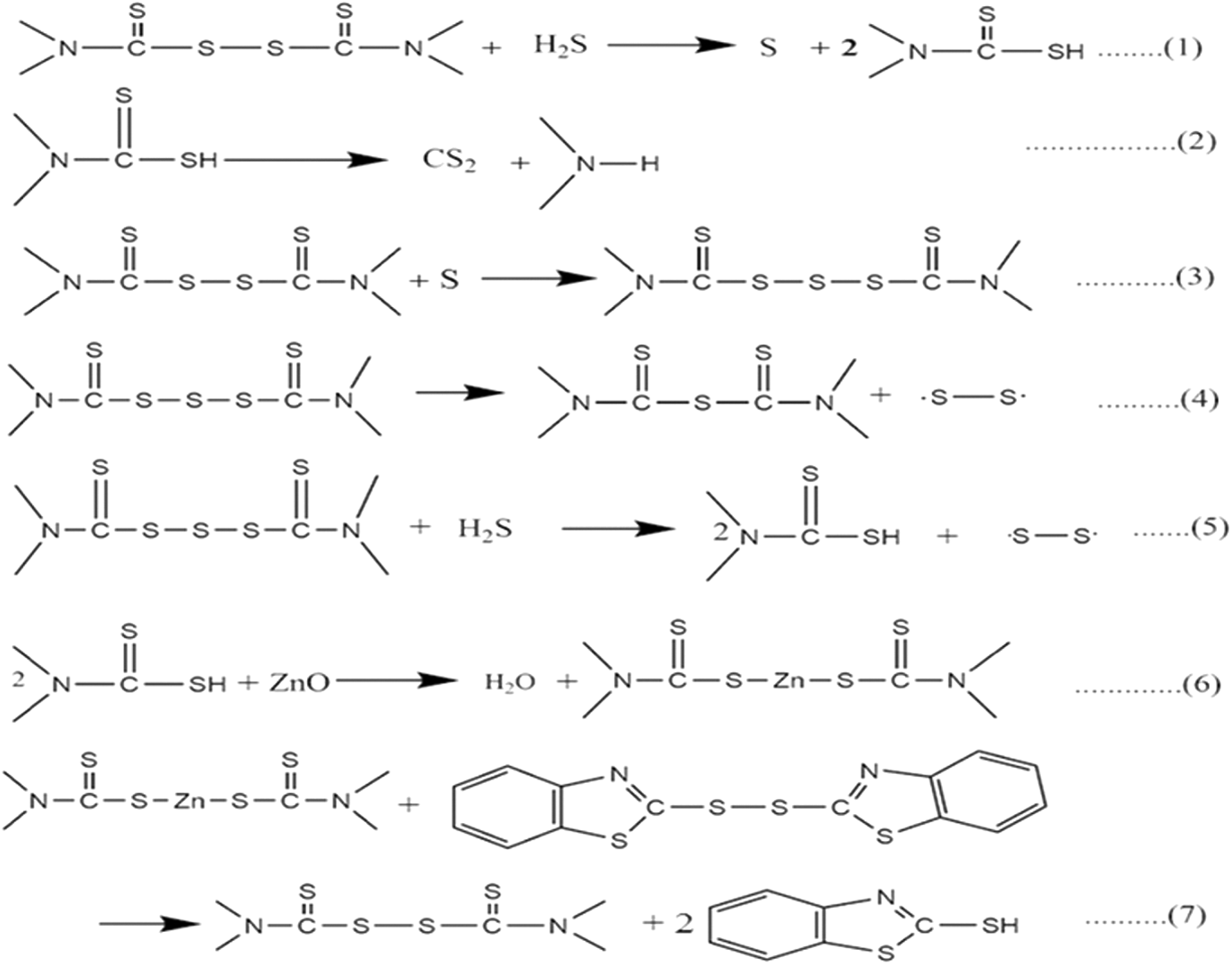
Mutual activity of TD_MBTS system during sulfur vulcanization of NR-gum in presence of ZnO 36 × 30mm (600 × 600 DPI).
Figure 3 shows the probable schemes (paths 1–7) of the conversion of zinc dithio carbamate (ZDC) with the influence of accelerator MBTS with H2S that is generated 43 during the vulcanization process. Paths 1, 3, 4, and 5 lead to the development of cross-linking of rubber chains, 41 while paths 6 and 7 designate the re-forming pathway for TMTD.40,41,44 Thiocarbamic acid destructs by path 2 while paths 6 and 7 produce thiuram disulfide from thiocarbamic acid in the presence of activator and MBTS, which is regarded for the synergism. 41
MgO could also reproduce TMTD in step 7 from the magnesium complex,28,30 which might be expected to form in step 6 by the interaction of thiocarbamic acid with magnesium oxide. We propose some possible chemical interactions based on the different steps in Figure 3, and they are presented in Figure 4. It is found that in the absence of any cure activators, Mix 11 shows better rheometric properties than magnesium oxide as a cure activator in the single-accelerator-containing systems (Mix 1, 5, and 9). This may be due to the synergism in the presence of ZDMC accelerator, where zinc ions present in ZDMC are responsible for synergism, followed by steps 6 and 7 in Figure 3.
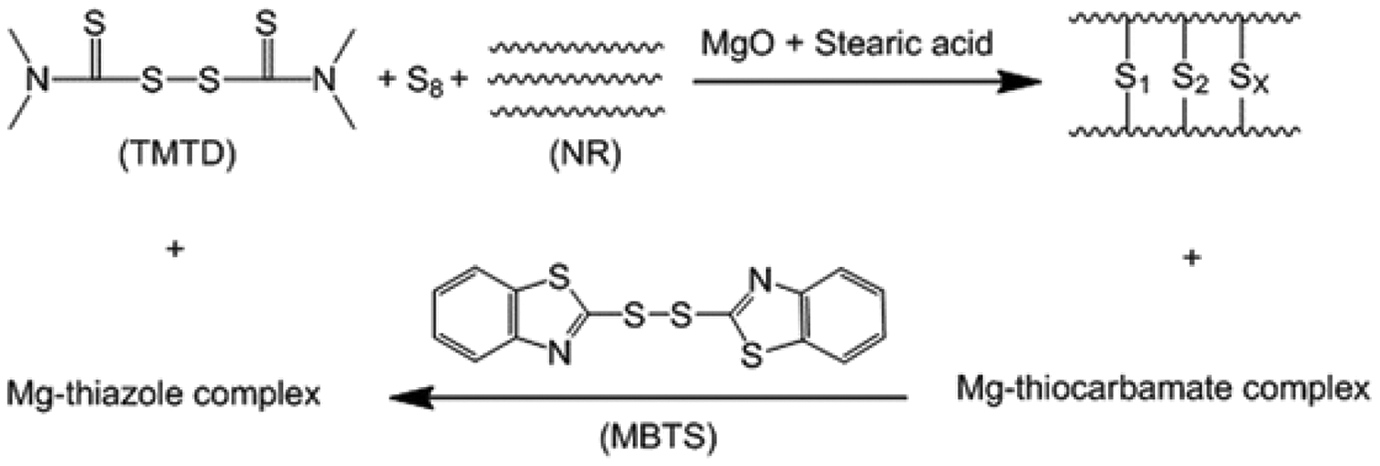
Proposed reaction scheme for mutual activity of TD_MBTS system in presence of MgO 23 × 8 mm (600 × 600 DPI).
It is to be noted that the TMTD_MBTS systems generate a lower amount of cross-links than ZDMC_MBTS accelerated systems (Table 2) in the presence of magnesium oxide. Possible explanation of this fact may be the stability of the thiocarbamate complex of magnesium and zinc ions. 28 The zinc complex has better stability than the magnesium complex. 28 That is why the presence of Zn2+ ions, whether it comes from zinc dithiocarbamate or added ZnO, always produces higher crosslink density than non-zinc-containing rubber compounds. However, we have higher cross-link density due to synergism for the binary TMTD_MBTS accelerated systems than single accelerated systems in the presence of magnesium oxide (Mix 1–5). This has positive impacts on the mechanical properties.
It is found that optimum cure time (t90) and scorch time (t2) are increased with the increase in the concentration of MBTS in the presence of magnesium oxide. This may be due to the delayed MBTS accelerator as MBTS is a comparatively slow cure accelerator than TMTD and ZDMC. It is observed that ZDMC as a single accelerator shows very fast cure activity compared to all single accelerator systems in the presence of magnesium oxide. It can be concluded that magnesium oxide decomposes the ZDMC in a faster way than TMTD and MBTS accelerators in the rubber medium. Hence, ZDMC_MBTS accelerators combinations (Mix 2–4) show lower t90 values than TMTD-MBTS accelerators combinations (Mix 6–8) in the presence of magnesium oxide. The accelerators are decomposed with a faster rate in presence of the magnesium oxide than when zinc oxide as a cure activator, which is evident from the values of cure rate index (CRI) and scorch time in Table 2. It is observed that all the binary accelerator systems in the presence of magnesium oxide (Mix 2–4, 6–8) show greater CRI values compared to zinc oxide (Mix 10). This is the main advantage in the curing efficiency in the presence of magnesium oxide over the conventionally used zinc oxide.
The formation of activator-accelerator complex54,55 is the crucial step of the vulcanization process. According to Guzmán et al., 28 magnesium oxide has the ability to form active sulfurating complexes more quickly than zinc oxide, but only small number goes to the final cross-links. Magnesium oxide greatly improves the cure rate index of TMTD_MBTS binary accelerator systems (Mix 2–4), but the cross-link density is quite low compared a conventional 5 phr zinc oxide containing compound (Mix 10).
It is found that the presence of zinc ions coming from ZDMC greatly improves the cross-link density to the ZDMC_MBTS binary accelerator system (Mix 6), and it is very near that of the conventional compound containing 5 phr of zinc oxide (Mix 10). This indicates that zinc ions coming from dispersed ZDMC accelerators are more effective than zinc ions coming from added zinc oxide. The results indicate that a completely zinc-oxide-free natural rubber compound can be possible with a small reduction in the torque and cross-link density values but a strong improvement in the cure rate compared to a vulcanizate with 5 phr of zinc oxide. Thus, magnesium oxide improves the cure rate index to a greater level but with lower contribution to the cross-link density of the rubber vulcanizates. A completely zinc-free rubber compound will be practically less possible due to an effective role of the zinc ion present in the accelerator. But we can improve the cross-link density in the zinc-free-rubber compound by using suitable non-zinc-containing binary accelerators than when using a single accelerator in the presence of magnesium oxide.
Mechanical properties gum-vulcanizates
The different stress-strain curves for the gum-vulcanizates are shown in Figure 5, and the tensile modulus data are provided in Table 3. Increase in the modulus values at different % of elongations are observed for all the binary accelerator systems compared to single accelerator compounds in the presence of magnesium oxide. This indicates positive synergism in the modulus values for the binary accelerators systems.
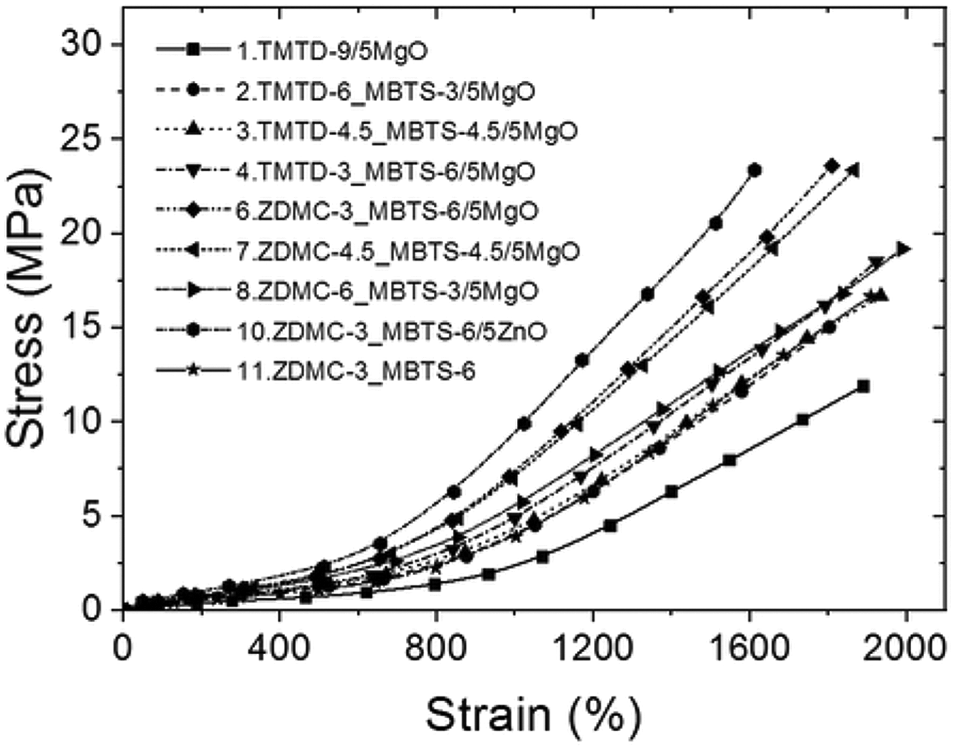
Stress-strain curves for different NR-gum vulcanizates 20 × 16 mm (600 × 600 DPI).
Mechanical properties of gum-vulcanizates.
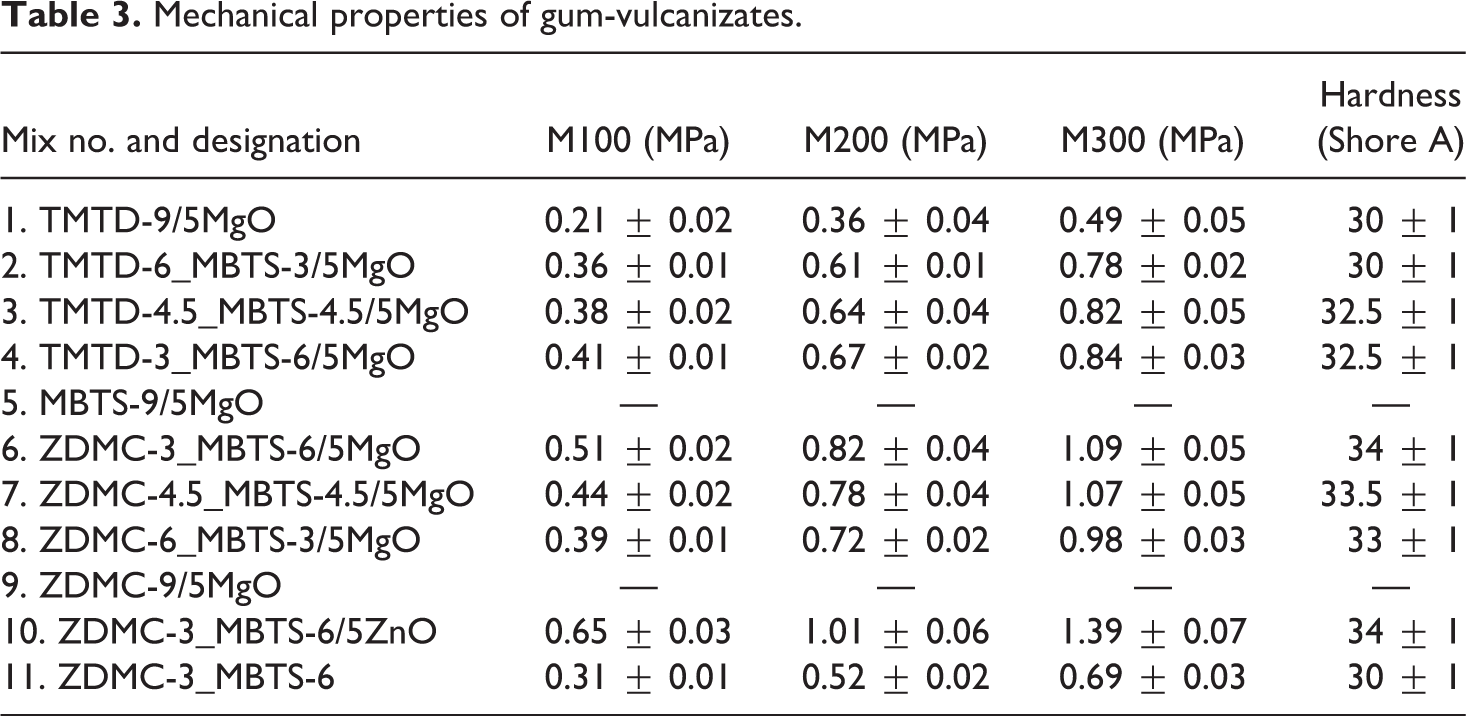
Strong synergism in the modulus values is observed for the ZDMC_MBTS binary accelerator system at a 3:6 ratio of ZDMC to MBTS (Mix 6) in the presence of magnesium oxide. The values are very near those of the conventional amount of zinc-oxide-based vulcanizate (Mix 10). The comparable values in the modulus are due to the comparable cross-link density between Mix 6 and Mix 10. All binary accelerators systems show synergism in the tensile strength in presence of magnesium oxide-based cure activator.
Slightly higher tensile strength is obtained for Mix 6, which contains magnesium oxide as a cure activator, than Mix 10, which contains zinc oxide as a cure activator at the same accelerators ratio (Figure 5). This indicates that only very small amount (3 mmol) of zinc along with 5 phr of magnesium oxide is sufficient to have better tensile strength than with the addition of 62 mmol of zinc, which comes from 5 phr of zinc oxide in the conventional vulcanizate. The extra 62 mmol of zinc from the conventional 5 phr of zinc oxide (Mix 10) adds slightly higher value to the modulus than the 5 phr of magnesium oxide containing vulcanizate (Mix 6) at the same accelerators composition. Complete zinc-oxide-free rubber compound is definitely possible with better tensile strength by using magnesium oxide as a cure activator with a suitable combination of cross-linking accelerators.
Strong synergistic effects on the modulus and tensile strength values are also obtained for TMTD_MBTS binary accelerated vulcanizates when magnesium oxide is used as a cure activator. This indicates that to for completely zinc-free natural rubber compounds, non-zinc-containing binary accelerators should be the better choice. We acquired a better tensile strength and modulus for the TMTD_MBTS binary accelerated system at a 3:6 ratio of TMTD to MBTS in the attendance of magnesium oxide-based activator over the single-accelerator-containing vulcanizates. However, these values are much lower than the zinc-containing binary accelerator systems’ values.
Synergistic effects on the hardness for all binary accelerator systems are observed (Table 3) when magnesium oxide is used as a cure activator. Maximum hardness is obtained for the ZDMC_MBTS binary accelerated system at a 3:6 ratio of ZDMC to MBTS in the presence of magnesium oxide, and it is comparable to the conventional zinc-oxide-cured rubber vulcanizate.
According to Boonkerd et al., 56 tensile properties of vulcanized rubber are related to the types and amount of sulfur cross-links. Generally, higher amounts of sulfur cross-links with lower sulfur ranks give better modulus values. Higher amounts of sulfur cross-links with higher sulfur ranks give better tensile strength. According to Guzmán et al., 28 when both zinc oxide and magnesium oxide are present as a cure activators in the vulcanizate, higher amounts of disulfide linkages are produced rather than mono-sulfide linkages with zinc oxide present as a single cure activator.
Similarly, it can be considered that zinc ions coming from the accelerator ZDMC and magnesium oxide produce a higher amount of disulfide cross-links than the addition of zinc oxide to the rubber vulcanizate. Now, the disulfide linkage has a greater impact to increase the tensile strength of the vulcanizate. 56 Also, the addition of zinc oxide creates a more heterogeneous distribution of the cure activator than the addition of magnesium oxide to the vulcanizates, as is evident from SEM studies in Figure 6. This ultimately leads to more heterogeneous cross-link distribution, 57 which may affect the tensile strength. EDX indicates the existence of both magnesium and zinc ions with a similar level to what was added to the vulcanizate (Figure 6).
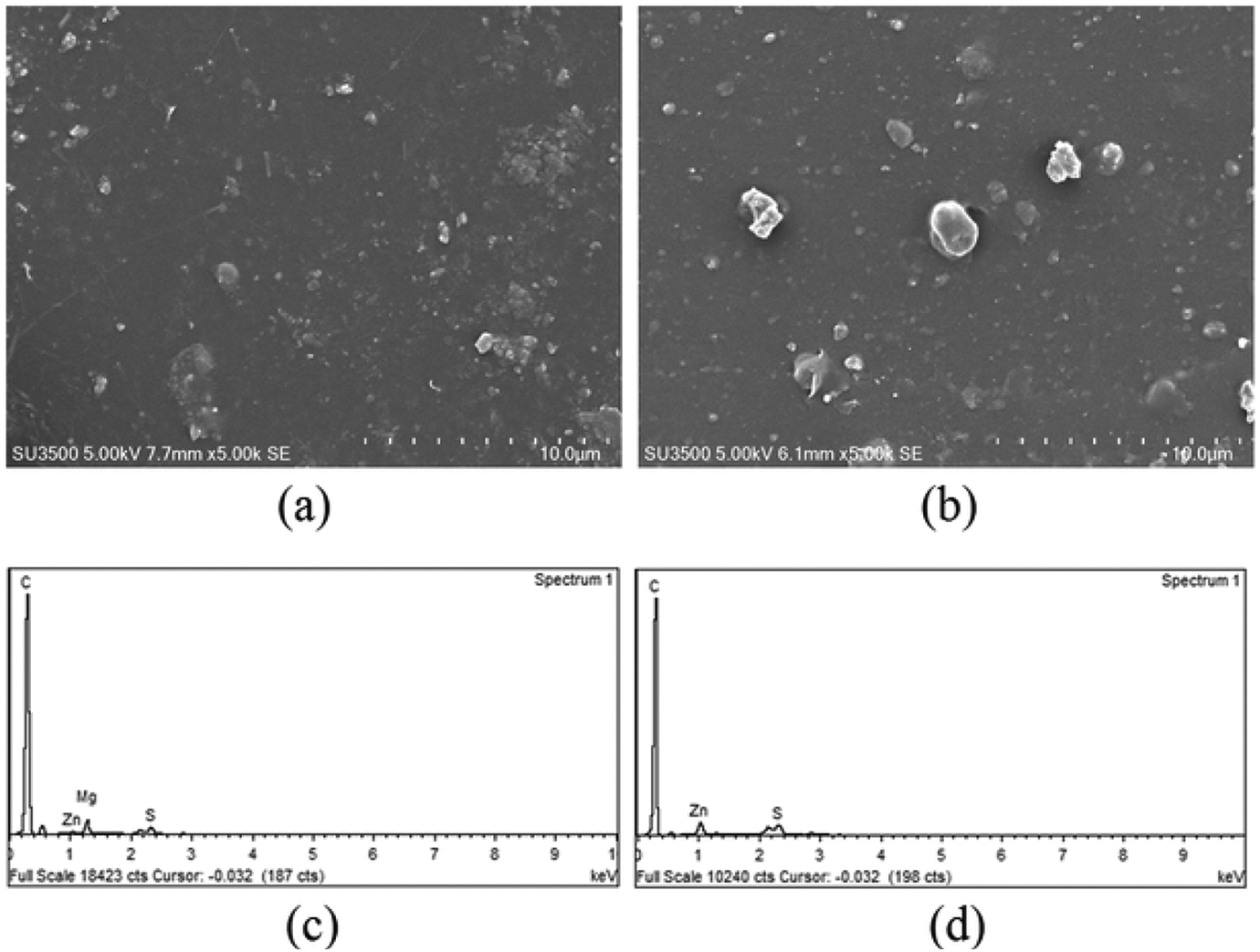
SEM images and EDX spectrums: (a) and (c) Mix 6, containing 5 phr MgO; (b) and (d) Mix 10, containing 5 phr ZnO.
Thermal properties of NR-gum vulcanizates
The main chemicals of thermal degradation of natural rubber are isoprene, p-menthene and dipentene. 58 It is observed that 5 phr of magnesium oxide in the vulcanizate (Mix 6) exhibits a slightly higher initial degradation temperature than the zinc oxide cured gum-vulcanizate (Mix 10), which is found from Figure 7(a) and presented in Table 4. The weight loss before the initial degradation temperature is mainly due to thermal decomposition of un-reacted cross-link precursors, partial breakage of rubber backbones, and the degradation of sulfur cross-links. 59
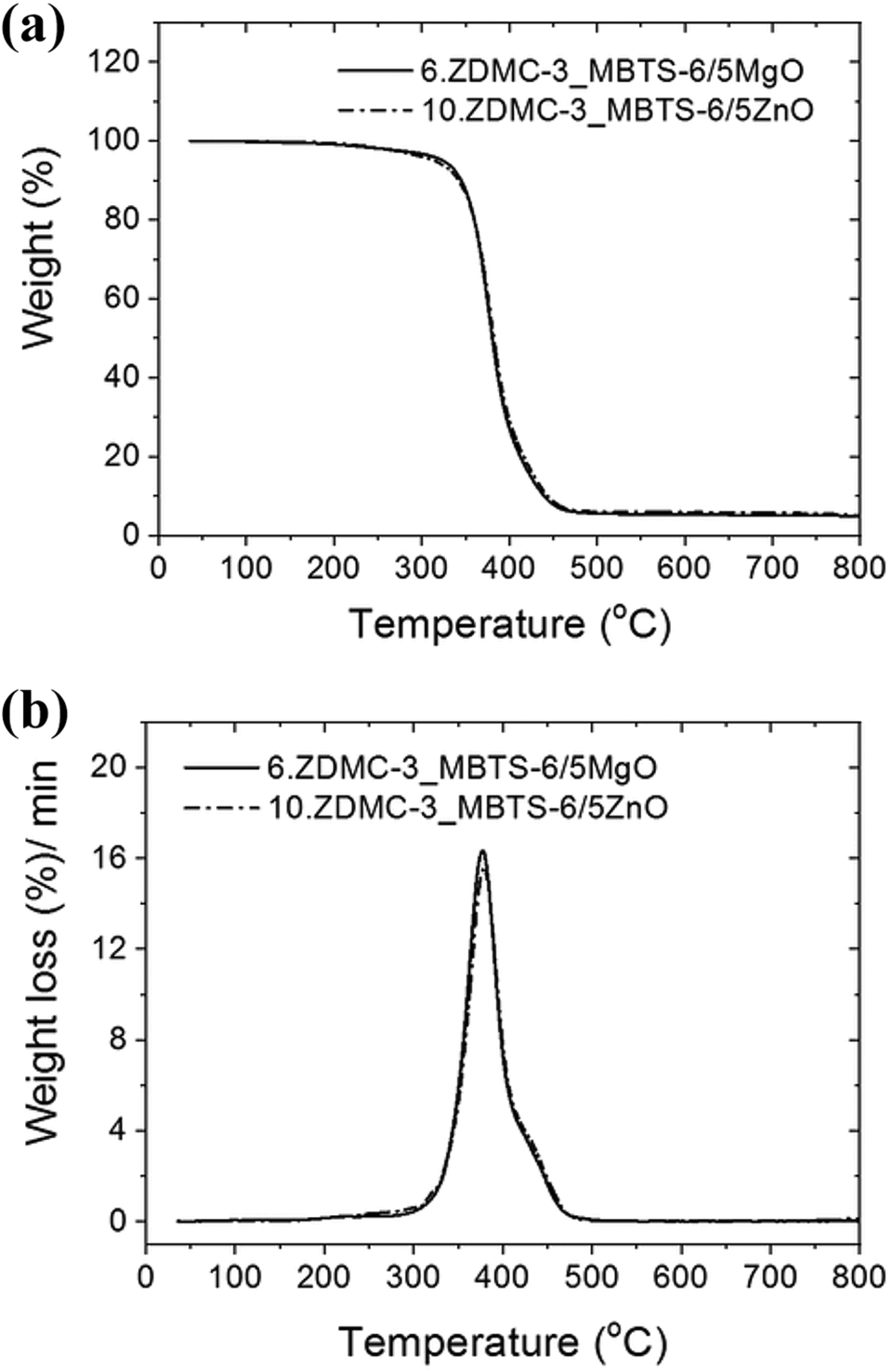
(a) TGA curves of NR-gum vulcanizates 21 × 16 mm (600 × 600 DPI). (b) DTG curves of NR-gum vulcanizates 21 × 16 mm (600 × 600 DPI).
Degradation temperature and % of weight loss of gum-vulcanizates.
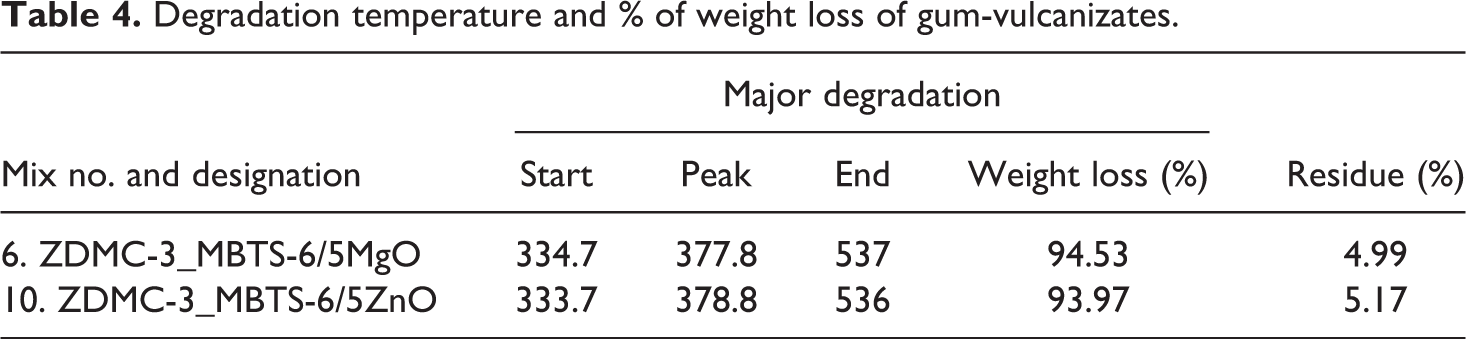
The enhancement in the initial degradation temperature for Mix 6 than Mix 10 may be due to greater heat absorption properties of magnesium oxide particles than zinc oxide particles in the vulcanizates. There is a physical barrier between the superficial zone and polymer due to higher heat absorption properties of magnesium oxide particles in the matrix. As a consequence, magnesium oxide particles delay the volatile products generated during decomposition from departing.60,61 However, at maximum degradation temperature (Figure 7(b)), magnesium oxide is responsible for slightly lower thermal stability than zinc oxide. This may be due to the destruction of the physical barrier at higher temperature and higher heat transfer of magnesium oxide to the rubber matrix than zinc oxide.
Slightly higher cross-link density may also be responsible for the major degradation peak at slightly higher temperature region for zinc oxide than magnesium oxide as a cure activator. Slightly higher ash content (Figure 7(a)) is obtained for Mix 10 than Mix 6, and this may be due to the presence of a higher amount of ZnS in the former than in the latter vulcanizate. ZnS mainly forms in the vulcanizate as a by-product followed by reaction with zinc ions and sulphur-containing compounds. 46 Overall, both magnesium oxide and zinc oxide provide similar thermal stability to the vulcanizates. This study suggests that a complete zinc-oxide-free natural rubber compound is possible without any negative impact on the thermal stability of the natural rubber vulcanizate.
Curing and mechanical properties of carbon black-reinforced rubber vulcanizates
Filled vulcanization has been done to further investigate the effectiveness of magnesium oxide over the zinc oxide. The curing and mechanical properties are provided in Table 5. It is found that magnesium oxide (Mix 12) provides a better cure rate and is approximately five times faster than zinc oxide (Mix 13). However, the mechanical properties like delta torque and modulus at 100% strain values are lower for magnesium oxide than zinc oxide may be due to lower cross-link density.
Curing and mechanical properties of 40 phr of carbon black (CB) reinforced filled vulcanizates.
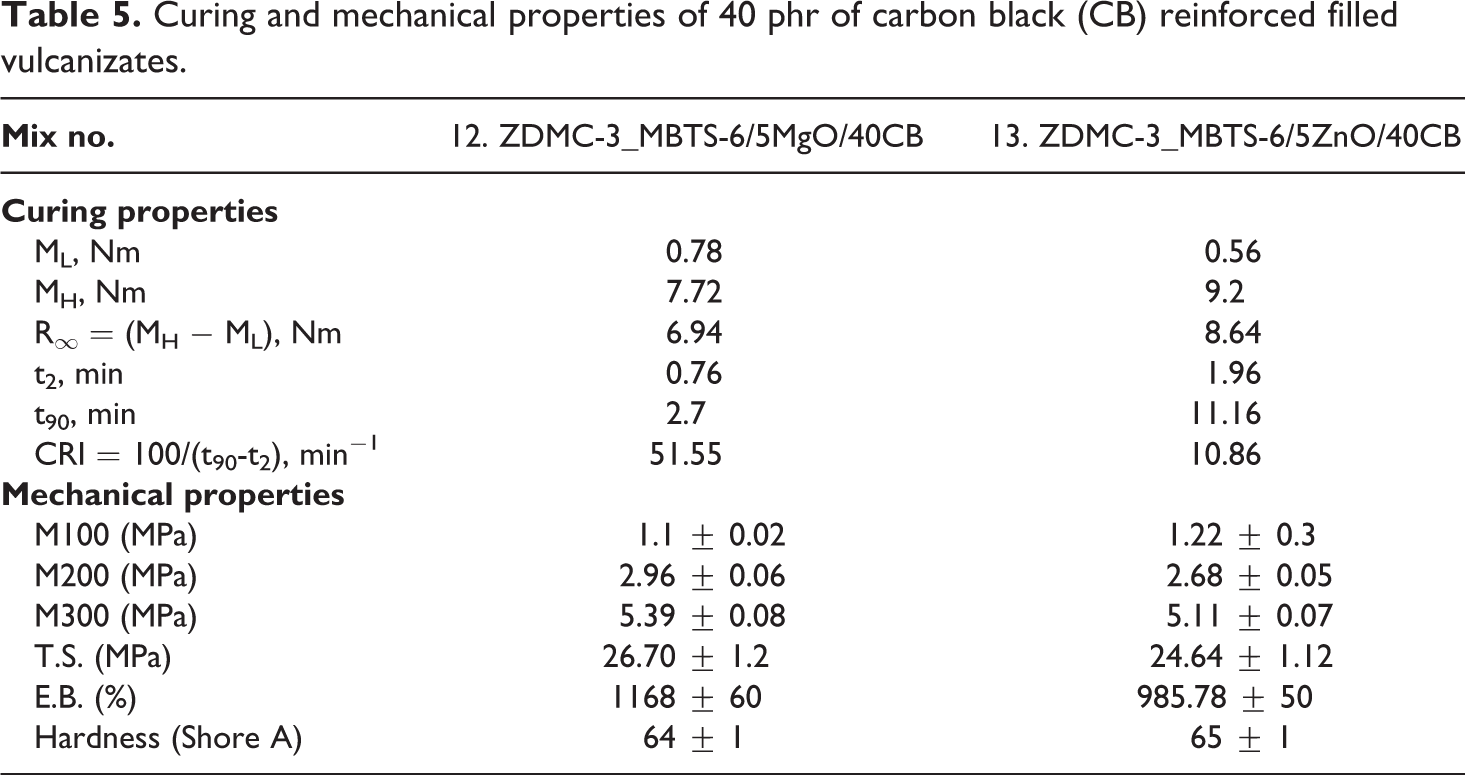
The mechanical properties between the two cure activator systems are quite similar to the filled and unfilled vulcanizations. This suggests that the crosslinking mechanism is similar for both filled and unfilled systems. However, due to greater amount of cross-links formation in the zinc oxide system, the modulus values at lower elongation are better than those of the magnesium oxide-based cure activator. Magnesium oxide results in a higher modulus at higher elongation which may be due to better wetting 62 of filler particles through better plasticizing of rubber by magnesium oxide and stearic acid.
Moreover, the elongation at break and tensile strength values are also higher for magnesium oxide. This might be due to higher reinforcing capabilities followed by better dispersion 63 of carbon black with lightweight amorphous magnesium oxide than with zinc oxide in the rubber vulcanization. These results signify that magnesium oxide as a cure activator can be effectively used for applications where the modulus can be controlled by the amount of reinforcing filler. Moreover, magnesium oxide can be used for very fast cross-linking reaction.
Conclusion
The present paper described the mutual activities of zinc and non-zinc-based cross-linking accelerators in the presence of magnesium oxide as a cure activator to find out an alternative cure activator other than environment pollutant zinc oxide in the vulcanization of natural rubber. Synergistic activities were observed for both non-zinc (i.e. TMTD) and zinc (i.e. ZDMC)-based accelerators in the presence of MBTS when magnesium oxide was used. A strong synergistic effect on the cross-link density and mechanical properties was found for the 3:6 ratio of ZDMC to MBTS in the presence of magnesium oxide.
The advantage of magnesium oxide over the zinc oxide lies in the faster cure rate, better tensile strength, and comparable thermal properties. Thus, a complete free of zinc oxide in the vulcanization can be possible by using magnesium oxide, which is more available and non-toxic. Improvements in the mechanical properties were found by using magnesium oxide, but they were considerably lower than those of a zinc-based binary accelerator system. Experimental results also revealed that complete zinc-oxide-free rubber vulcanization is possible without any significant reduction in the mechanical properties in the carbon-black-filled vulcanization. Moreover, the vulcanization in the presence of magnesium oxide is about five times faster than with zinc-oxide-based cure activator in the rubber vulcanization.
Footnotes
Authors’ note
Md Najib Alam and Vineet Kumar contributed equally to this work.
Declaration of conflicting interests
The author(s) declared no potential conflicts of interest with respect to the research, authorship, and/or publication of this article.
Funding
The author(s) disclosed receipt of the following financial support for the research, authorship, and/or publication of this article: This work was supported by the 2020 Yeungnam University Research Grant.
