







Abstract
Although petroleum-based polymers require a long process to decompose in nature, they still have a wide range of uses. However, due to many important reasons such as the environmental pollution problem caused by these polymers, there is an increasing interest in biodegradable polymers. Poly(lactic acid) (PLA) is a biopolymer with comparable performance to conventional polymers. However, due to its poor tribological, mechanical and thermal properties, the usage area of PLA cannot expand and its use is limited to short-term material applications. In this study, it was aimed to contribute to the expansion of the usage area of PLA by improving its poor properties. For this purpose, efficiency of graphene nanoplatelet (GnP) and/or Joncryl® addition to carbon fiber (CF) reinforced PLA matrix composites to improve the composite performance by means of improved interface interaction fiber and matrix was investigated. Within this scope, effects the separately and/or simultaneously addition of CF, GnP and Joncryl® to PLA on properties were investigated by tensile test, adhesive wear test, DSC, TGA and SEM analyses. All results revealed that the composite composition prepared by simultaneously addition of 10, 0.5 and 2 wt.% CF, GnP and Joncryl®, respectively, to pure PLA performed the best in all tests and analyses.
Keywords
Introduction
Today, synthetic (petroleum-based) polymers are widely used for several purposes such as aerospace, automotive, packaging applications. However, environmental pollution problems arise due to the fact that these synthetic polymers are not adequately degradable an any way. From this point of view, bio-based polymers emerging as an alternative to synthetic polymers due to their biodegradable properties. Bio-based polymers are also named as biodegradable or biopolymers and are derived from agricultural and renewable sources.1,2 Poly(lactic acid) (PLA) is a type of aliphatic polyester and it is one of the most prominent bio-based polymers with many desirable properties such as biodegradability, easy processability by conventional equipment, good rigidity and reasonable price.1,3,4 Additionally, the strength and modulus values of PLA are relatively high compared to other bio-based polymers. Besides, there are some disadvantages for PLA such as low impact strength, low heat deflection temperature etc. and these drawbacks limits its utility in high value applications such as durable engineering materials. Therefore, the properties of the pure PLA fall short of meeting the requirements of many engineering material applications.1,2,4 In order to eliminate the mentioned disadvantages of PLA by changing the structure and properties, several methods, such as reinforcement, blending, toughening etc., are applied.1–4 The reinforcement is the most promising way of overcoming these disadvantages, improving the properties and thereby broadening the field of applications of PLA. For this purpose, various materials include fibers and/or nanofillers are incorporated to the PLA and thus obtained improved different properties.1,3,4
In order to PLA to replace the fiber-reinforced synthetic polymers which are commonly used for engineering materials applications, it is important to strengthen it with various fiber types. Because, adding a low amount of fiber to the polymeric matrix is both an efficient and relatively cost-effective way to achieve high performance composites. Carbon fiber (CF) is an important reinforcing material that stands out among the other fiber types with its superior properties such as high specific modulus and strength, low density, high thermal and electrical conductivity. However, CF is chemically inert and has only a few polar groups on its surface due to the high temperature manufacturing processes such as carbonization and graphitization. Smoothness and lack of sufficient number of polar groups of its surface leads to weak interaction of it with matrix materials in the composites. For this reason, the commercially available CF is usually supplied as coated with a sizing material which suitable for the matrix material to be used. In addition, there are no branched chains and reactive functional groups in the molecular structure of PLA. Therefore, when CF reinforced PLA matrix composites are produced, voids are formed due to insufficient interaction between the composite components and these voids reduce the efficiency of load transfer from the matrix to the fiber. Since the mechanical properties of composites are significantly affected by the quality of the interface interaction between the matrix and the fiber. Therefore, it is very important to control the interface interaction between the PLA and the CF in order to obtain good mechanical properties in composites.5,6
The interface interaction between the polymeric matrix and the fiber can be improved by using some kinds of modification methods. The most widely used of these methods are fiber surface modification and polymeric matrix modification. 7 However, in recent years, a new method has emerged in which nanometre-scale reinforcements are incorporated into fiber reinforced polymer composites and new hierarchical composite materials are developed. 8
Graphene nanoplatelets (GnPs), composed of stacked two-dimensional graphene (Gn) sheets, are considered ideal nanometer scale reinforcements to be used in the fabrication of hierarchical composites due to their superior properties such as high specific surface area, good mechanical strength, high thermal and electrical conductivity. GnPs are small stacks of Gn sheets that combine the layered structure of clays with the superior mechanical and thermal properties of carbon nanotubes.4,8–11
Hierarchical composite fabrication by using GnP is a promising way to improve the interaction between matrix and fiber because with the addition of a small amount of GnP, target properties can be improved while other composite properties remain intact. However, the properties of hierarchical composites are often limited due to the weak interface interaction between GnP and the polymeric matrix and the tendency of GnPs to agglomerate caused by the strong van der Waals interactions between the GnP layers. As a result, the surface area of the agglomerated nanomaterials is reduced. Furthermore, agglomeration tendency prevents the uniform distribution of nanomaterials throughout the polymeric matrix, creates weak points and leads to deterioration of the properties of the final material. 12 Therefore, achieving good interface interaction between GnP and polymeric matrix and achieving uniform distribution of GnP within the polymeric matrix are challenging issues to achieve significant improvements in the final properties of the composite.4,10,13,14
On the other hand, although basal plane structures in GnP provide many desirable properties by being homogenously distributed in polymeric matrix, they also cause poor surface functionality and reduced interface interaction with the polymeric matrix. This is because most graphitic materials have very few chemical groups on their surface that can interact with the surrounding matrix material. Therefore, it is important to enhance the interface interaction of these nano-graphitic particulates with the surrounding matrix to achieve improved properties. 9
One of the most effective ways to improve the interface interaction between composite constituents is the surface modification of the reinforcement material by various chemical methods. However, the usage of this method includes the usage of organic toxic solvents and this is not an environmentally friendly way especially when using with a bio-based polymer like PLA. Instead of this method, matrix modification (reactive processing) method can be used by means of a coupling agent (or compatibilizer) material to improve the functionality of both polymeric matrix and reinforcement materials. The molecular structure of coupling agent used contains multifunctional groups that exhibit chemical affinity to both the polymer and the reinforcement materials used, and these functional groups form a kind of bridge between the matrix and the reinforcement materials. The side of the coupling agent molecule whose structure is compatible with the reinforcing material reacts with the reinforcement material surface, while the side of the molecule whose structure is compatible with the polymeric matrix reacts with the polymeric matrix, improving the interface interaction between the composite constituents. Besides, in this method, the interface interaction between the composite constituents takes place through in-situ reaction during the extrusion process. Therefore, this method does not have the environmental disadvantages of chemical surface treatment methods.5,6,15–18
Joncryl® is a commercially available, epoxy functionalized, multifunctional styrene acrylic oligomer and it can be used as coupling agent in composite materials. In the coupling reaction between Joncryl® and composite constituents involves epoxy ring-opening reaction of the Joncryl® and the formation of covalent bonds between hydroxyl groups on the side groups of PLA and surface of reinforcement materials. Consequently, it can be considered that Joncryl® can be an effective coupling agent for hierarchical composites with PLA matrix containing CF and GnP.5,6,19,20
Performed literature survey revealed that the reinforcement of polymers individually or hierarchically with carbon-based reinforcement materials is a widely referred method.1–4,8,11–13,16,21–24 Moreover, it has been determined that matrix modification7,15,18 and reinforcement surface modification5–7,10,25 methods are applied to achieve further improved the composite properties. However, the literature survey also revealed that until now there are no reported studies investigating the properties of CF reinforced PLA matrix composites in the simultaneously presence of GnP and epoxy functionalized coupling agent. In consequence, it was intended in this study to analyse how the mechanical, tribological and thermal properties of CF reinforced PLA matrix composites are affected by the simultaneous addition of GnP and epoxy functionalized coupling agent. Based on this purpose, mechanical, tribological, thermal and morphological properties of samples were studied by adhesive wear test, tensile test, differential scanning calorimetry (DSC) analysis, thermogravimetric analysis (TGA) and electron microscopy (SEM) analysis.
Materials and methods
The thermoplastic polyester PLA (IngeoTM 3260HP) was used as matrix material in this study and purchased from NatureWorks® LLC as pure resin in the pellet form. IngeoTM 3260HP is a low viscosity product, it is used for high flow injection molding applications. Its specific gravity is 1.24, melt flow rate is 65 g/10 min (at 210°C and 2.16 kg) and crystalline melting point is 165–180°C. The chopped CF, which has an average length of 6 mm, a diameter of 7 μm, surface coated with a sizing material compatible with polyesters, was kindly supplied from DowAksa (Yalova, Turkey). GnPs were supplied from Nanografi Nano Technology (Ankara, Turkey) and used as received. Supplied GnPs were the particles in platelet form and each particle consists of several Gn sheets with thickness of 3 nm, diameter of 1.5 μm, specific surface area of 800 m2/g and purity of 99.9%. Commercial styrene acrylic emulsion Joncryl® (ADR-4368) was used as coupling agent and provided by BASF. Its specific gravity is 1.08, molecular weight is 6800, glass transition temperature (Tg) is 54°C.
Processing
Compounding ratios and code names of composites.
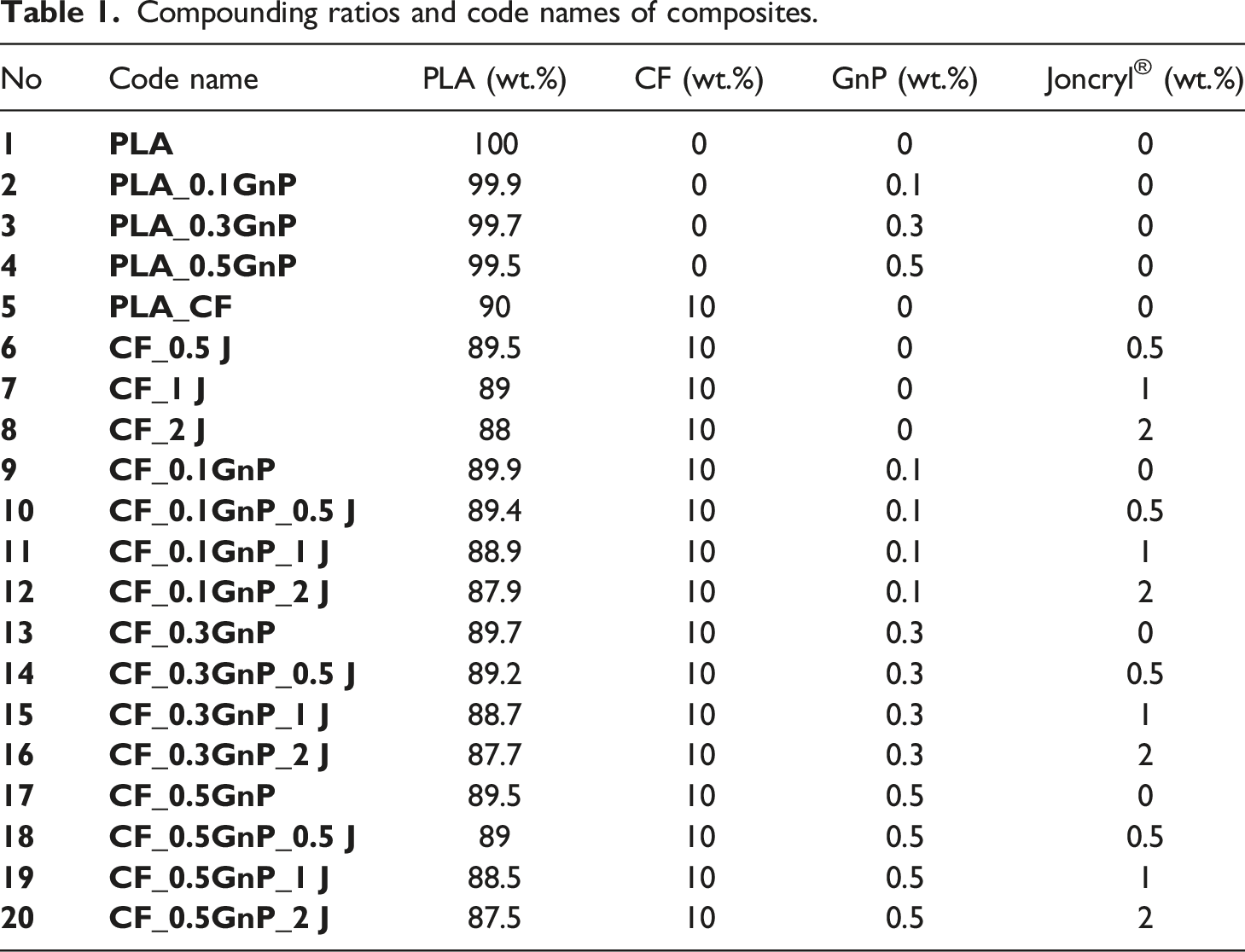
During the compounding process in order to ensure the good fluidity of the melt state composites, the process time was determined as 3 min., the barrel temperature was set to 200°C and the screw speed was kept constant at 100 r/min. The compounded composites were molded immediately after, by using a laboratory scale micro-injection molding machine (Xplore, Netherlands). A double cavity mold in the shape of a dog bone was used to fabricate tensile bars conforming to the ASTM-D 638 standard. During the molding process, the barrel temperature was set to 200°C, the mold temperature was kept constant at 25°C and injection pressure was 10 bars. As a result of the processing step, hierarchical composite samples were fabricated for the characterization of their physical and morphological properties.
Testing
Tensile tests were performed using a tensile tester (Instron, 4411 model), equipped with a 5 kN load cell, at a crosshead speed of 5 mm/min and at room temperature. The test specimens were dog bone shaped and at least five specimens of each composite composition were tested in order to measure the tensile strength values of composites.
Adhesive wear tests were carried out at room temperature by using a pin on-disc type adhesive wear tribometer (Nanovea) to analyse the coefficient of friction (COF) property of the composites. Throughout the time of adhesive wear test, COF between the 3 mm radius ceramic ball and test sample of each formulation of composites was measured and recorded. In all tests, test sample was positioned on a rotating disc, friction radius was set to 6 mm, contact load was kept constant at 15 N, sliding distance was limited as 25 m and speed of disc was determined as 100 r/min.
To understand the effect of CF, GnP and/or Joncryl® addition on the thermal properties of PLA composites such as glass transition temperature (Tg) (°C), cold crystallization temperature (Tc) (°C), melting temperature (Tm) (°C), cold crystallization enthalpy (ΔHc) (J/g) and melting enthalpy (ΔHm) (J/g), differential scanning calorimetry (DSC) analyses were performed by using a DSC instrument (TA Instruments-Q200). Thermal scans were performed from 25°C to 200°C at a scan rate of 5°C/min under nitrogen atmosphere. In addition to thermal transition temperatures and enthalpies, the relative degree of crystallinity (Xc)rel of composites were calculated from the DSC results by using the following equation:
To examine the effects of CF, GnP and/or Joncryl® addition on the thermal stability property of composites, thermogravimetric analyses (TGA) were carried out on a thermal analyser (TA Instruments-Q500). The heating rate was 20°C/min within the temperature range from ambient temperature to 500°C, under nitrogen atmosphere. The data of the weight loss (%) were recorded as a function of temperature.
SEM analyses were carried out by using a tabletop scanning electron microscope (JEOL-JCM 6000) to investigate the morphology of the samples. For SEM analysis, samples taken from the wear surfaces of composites after adhesive wear tests were used. Before the morphological examination, test samples were sputter coated with gold.
Results and discussion
Tensile test
To analyse the mechanical properties of only GnP, only CF and GnP/CF hybrid reinforced composites, tensile properties were investigated and results were given in Figure 1(a) and (b). Tensile strength values of composites (a) only GnP containing, (b) only CF reinforced and CF/GnP hybrid reinforced.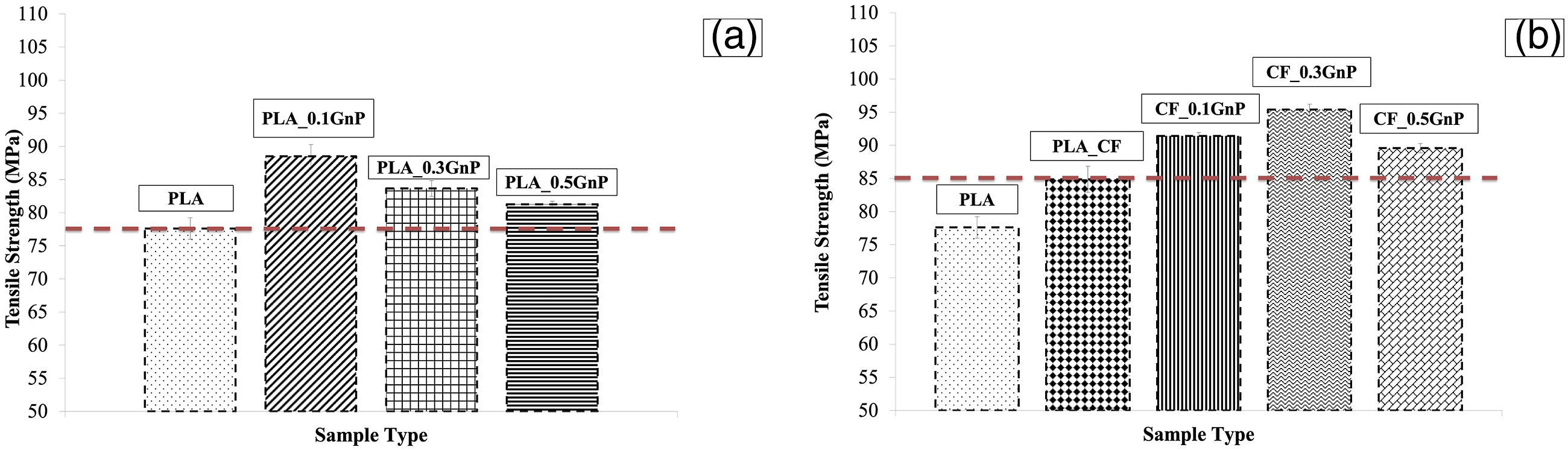
Figure 1(a) demonstrates the effect of only varying amounts of GnP addition on the tensile strength property of pure PLA. According to Figure 1(a), tensile strength value of pure PLA increased with the GnP addition and exhibited the highest value at 0.1 wt.% GnP amount. Further increasement of GnP amount (up to 0.3 and 0.5 wt.%) decreased the tensile strength. However, the tensile strength of these composites was still higher than that of pure PLA.
One of the purposes of GnP addition to the polymeric matrix is to improve mechanical properties such as tensile strength. This improvement is related to better stress transfer occurring at the interphase between the GnP and the polymeric matrix by means of higher aspect ratios and surface areas of the GNPs. However, the ultimate mechanical properties of nanofiller reinforced polymer matrix composites are usually affected by some factors such as amount of nanofiller, distribution of nanofiller in the polymeric matrix and the interface interaction between the nanofiller surface and the polymeric matrix. These factors are interrelated, such that, for an optimum amount of nanofiller, good interface interaction between nanofiller and polymeric matrix results in good distribution of nanofiller in the polymeric matrix. However, GnPs exhibit high tendency to agglomerate due to the weak Van der Waals interactions between their sheets. If they are added to polymeric matrix above the optimum amount which they should be added, Gn restacking starts, size of agglomerates increases, and these agglomerates form stress concentration regions that initiate the failure. Thus, the GnP reinforcement becomes less effective on the mechanical properties of the pure polymer. Consequently, to obtain an effective GnP reinforcement, it is important to determine the optimum amount of GnP.16,26
It is stated in the literature that GnPs can be arranged in four different types depending on the increasing amount of them in the polymeric matrix: (1) the nanoplatelets could be distributed far from each other, (2) only the ends of the nanoplatelets could be contacting, (3) there could be some parts of the nanoplatelets that overlap each other, (4) the nanoplatelets could be stacked as agglomerates. Among these arrangements, the ideal condition that makes the highest contribution to mechanical properties is the second one. As the GnP amount changes around the optimum value, the arrangement would change from the first one to the third one. When the GnP amount reaches a critical level and the distance between the two layers of GNP becomes so narrow that stacking begins due to the Van der Waals forces, the GnPs revert to the fourth state, that agglomerated form. As it can be understood, there is an optimum or critical level for the nanoplatelet loading which also effects the mechanical properties, and this level is called the mechanical percolation level in the literature. Below this optimum level, the exfoliated Gn layers can be well distributed in the polymeric matrix, and increasing amount of them results in an improvement in mechanical properties. However, when this optimum level is exceeded, the nanolayers start to agglomerate, and this weakens the reinforcement performance of GnP on the mechanical properties due to the decreasing surface area of GnP agglomerates.4,27,28
As can be seen from Figure 1(a), in this study, the mechanical percolation level is 0.1 wt.% for only GnP containing composites. GnP–GnP and GnP-PLA matrix interactions emerged as a result of the percolation network formed in the 0.1 wt.% GnP amount. At this amount, a fraction was formed in the material, which consists of GnPs whose basal planes are oriented along the tensile axis and formed a percolation network by contacting each other at their ends. When a tensile load was applied to the material, this load was absorbed by the covalent C-C bonds along the basal planes of the GnPs that consist of the fraction. Thus, an increase in tensile strength was observed. However, for the increasing amount of GnP (0.3 and 0.5 wt.%), the distance between platelets started to getting lower, they tended to stack together due to Van der Waals interactions, and reorientation of nanoplatelets to form percolated network became getting difficult. Thus, the increase in tensile strength of composite decreased even if it did not drop below that of pure PLA. 27
Figure 1(b) shows the effect of only CF and varying amounts of GnP/CF hybrid addition on the tensile strength value of pure PLA. As can be seen from Figure 1(b) that only CF addition increased the tensile strength value of pure PLA, as expected. However, the most remarkable result is that the tensile strength value of hybrid composites containing GnP/CF is higher than that of only CF reinforced composites. Due to the fact that the fiber types in the composites of CF/PLA and GnP/CF/PLA are the same kind, the reason why the significant increase in tensile strength value for GnP/CF hybrid reinforced composites is the presence of GnP in the composites.
Figure 1(b) also shows that the mechanical percolation level for GnP is 0.3 wt.% for GnP/CF hybrid reinforced composites. Although a significant increase in tensile strength was obtained at the amounts which are below (0.1 wt.%) and above (0.5 wt.%) this percolation level, the most significant increase was obtained at 0.3 wt.% amount of GnP. 27
As mentioned before, reasons for the weakness of reinforcing ability of platelet shaped nano fillers are the Van der Waals forces between the layers, difficulty in achieving a good distribution of these layers in the polymeric matrix, thus the restacking and the agglomeration of nanofillers. As a result, nanofillers that are agglomerated and whose surface area decreased, behave like defect points with high stress concentrations in the polymeric matrix and their reinforcement efficiency is reduced. 29 From this point of view, it can be said that while the percolation level is 0.1 wt.% in composites containing only GnP, the percolation level increases to 0.3 wt.% in composites containing GnP and CF, simultaneously. This case can be interpreted as the presence of CF in the structure contributes to the more exfoliation of nanoplatelets in the PLA matrix and there is need for further GnP addition to reach a percolation network in the material. Such that, during the arrangement of the GnPs in the composite fabrication process, the fibers prevent the transition the GnPs to the 3th or 4th state and thus contribute to the GnP distribution. Thus, by preventing the agglomeration of GnP, fibers also prevent the reduction of the reinforcement efficiency of GnP.
As explained above, a synergy was emerged as the hybrid addition of GnP and CF to PLA matrix, an increasement was obtained in the tensile strength and the reason of this synergy was interpreted as the dispersive effect of CF on the layers of GnP. In the literature, it is stated that this dispersive effect of CF on the layers of GnP causes another synergic effect which provides a further improvement in tensile strength. According to this phenomenon, the nanofillers could be locate at the interface between the matrix and the fiber during the composite preparation process, and could enhance the interface interaction by providing mechanical interlocking between the matrix and the fiber. The presence of nanofillers in this free-volume where between the matrix and fiber can enhance the stress transfer from the matrix to the fiber, thus, stress concentration at the interface between the matrix and the fiber is reduced. In addition, due to the high surface area of nanofillers, the area of the interface where they are located also increases and accordingly the load transfer capacity of the interface enhances. As a result of these factors, ultimate tensile strength property of material is improved.30,31 Consequently, it can be concluded that the GnPs have an improving effect on the tensile strength property not only by being oriented along the tensile axis, but also by locating at the interface between the matrix and the fiber, mediating more load transfer and enabling the fibers to carry more load.
When an amount of load is applied to a fiber reinforced polymeric matrix composite, the mission of the interface between the matrix and the fiber is to transfer some of the applied load from the polymeric matrix to the fiber as efficiently as possible. The measure of the quality of the interaction between the matrix and the fiber is the amount of the transferred load. Therefore, while a good interaction promotes a high amount of stress transfer, a weak interaction and high amount of free-volume or micro pores at the interface lead in low amount of stress transfer. Thus, the ultimate mechanical properties of composites are significantly affected by the quality of the fiber–matrix interface interaction.5,6 Despite the synergy between the GnP and the CF and the tensile strength-increasing effect of this synergy, the interface interaction between CF and PLA needs to further improvement for three main reasons: (1) to enable more homogeneous distribution of CF in PLA matrix and increase the interface area between them; (2) to provide being more GnPs located at the increased CF-PLA interface area; (3) to enable CFs, which are more homogeneously distributed in the PLA matrix, also perform their dispersive effect on the layers of GnP more actively, and the reinforcement efficiency of the more homogeneous distributed GnPs is further enhance. For these reasons, in order to improve the interface interaction between the CF and the PLA, an epoxy functionalized coupling agent Joncryl® was used in this study. The usage of Joncryl® has two main purposes. These are: (1) to react with both the hydroxyl (-OH) and carboxyl (-COOH) end groups of PLA by epoxy ring-opening reaction; (2) to react with the isocyanate (-OCN) groups of the polyurethane-based surface coating material of CF through itself -OH groups. 32 As a result, it is expected that Joncryl® acts as a bridge between the CF and the PLA with the bonds formed as a result of these reactions while it contributes to improve the interface interaction between composite components.
This promotive effect of Joncryl® can be evaluated through Figures 2(a)–(d). Figure 2(a) shows the tensile strength value of only CF reinforced composites for varying amounts of Joncryl®. Tensile strength values of (a) only CF reinforced and Joncryl®; (b) CF/0.1GnP hybrid reinforced and Joncryl®; (c) CF/0.3GnP hybrid reinforced and Joncryl®; (d) CF/0.5GnP hybrid reinforced and Joncryl® containing composites.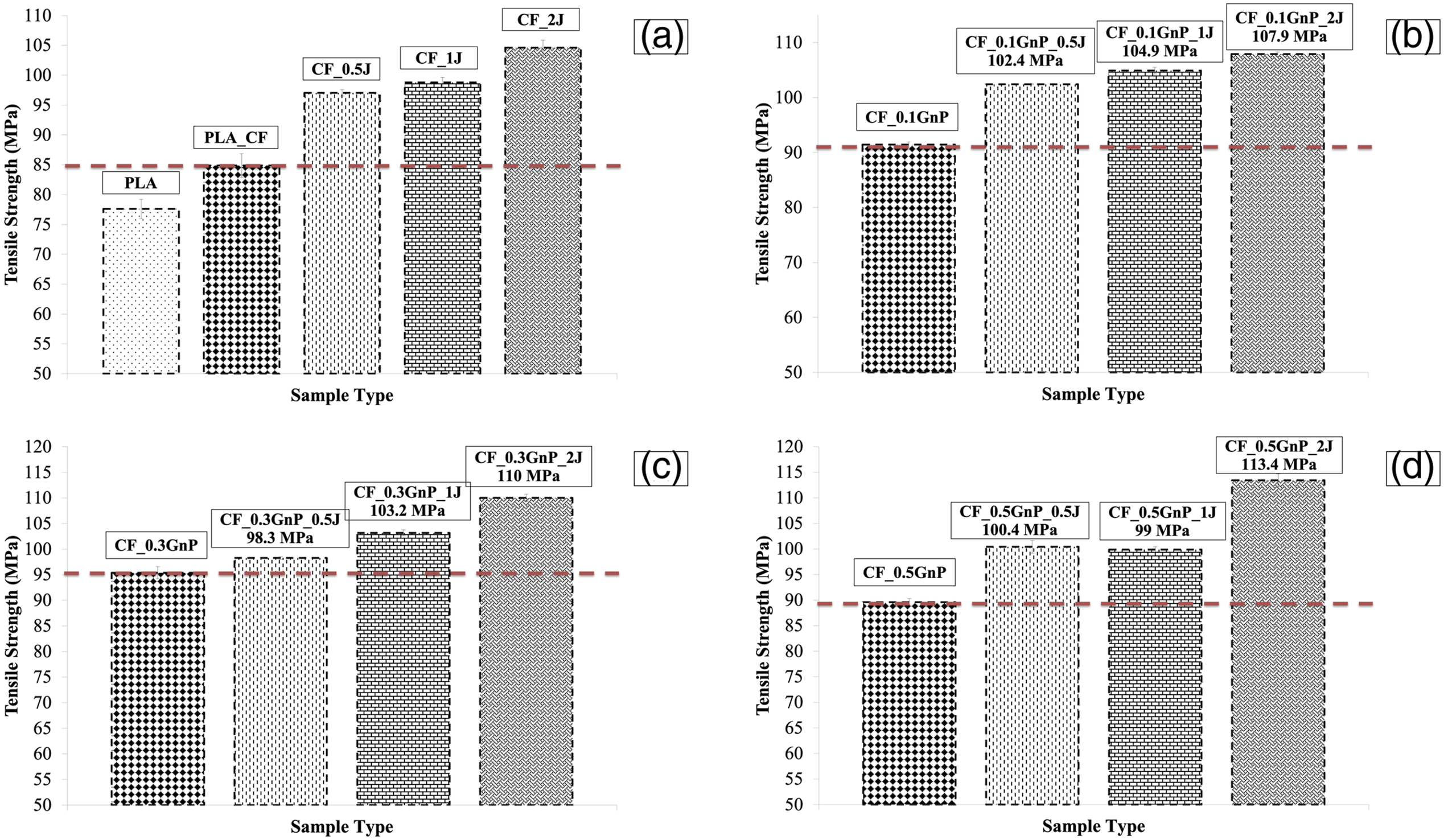
It can be seen from the Figure 2(a) that there was a significant increase in the tensile strength values of composites with both the addition of Joncryl® and the increasing amount of Joncryl®. Hence, it can be concluded that Joncryl® improved the interface interaction between the CF and the PLA through the above-mentioned reactions in accordance with its intended use, the interface area between the matrix and the fiber increased, so that higher amount of load was transferred from the matrix to the fibers. As a result, the tensile strength of the composite increased.5,6
As it was mentioned, with the enhancement of the interface interaction between the CF and the PLA in the hybrid reinforced composites, it was ensured that more homogeneous distribution of fibers in the matrix, more exfoliation of the GnP layers, and also increasement in the amount of GnP that located at the interface between the matrix and the fiber. In all cases, it is expected that there was a favourable effect of enhanced interface interaction between the CF and the PLA on the tensile strength of hybrid reinforced composites. In order to examine this favourable effect, varying amounts of Joncryl® was added to GnP/CF hybrid reinforced composites and the effect of Joncryl® addition on tensile strength was investigated.
It can be seen from Figure 2(b)–(d) that the tensile strength value of GnP/CF hybrid reinforced composites increased with both the addition of Joncryl® and the increasing amount of Joncryl® for all three amounts of GnP. However, while the mechanical percolation level for GnP in composites containing only GnP was 0.1 wt.%, it increased to 0.3 wt.% in GnP/CF hybrid reinforced composites and 0.5 wt.% in Joncryl® containing GnP/CF hybrid reinforced composites. The highest tensile strength value among all composite types was obtained in hybrid composites containing 0.5 wt.% GnP and 2 wt.% Joncryl®, simultaneously. As can be seen from these results, the effect of hybrid reinforcement on the ultimate tensile strength of the composites is noticeable. Besides, quality of the interface interaction between the matrix and the fiber also strengthens this effect. Consequently, it can be said that Joncryl® addition enabled more homogeneous distribution of CF in PLA matrix and increased the interface interaction and correspondingly area between them. Moreover, more GnPs located at the increased CF-PLA interface area, and more load was transferred from the PLA to the CF. Besides, more homogenously distributed CFs performed their dispersive effect on the layers of GnP more actively, thus, the reinforcement efficiency of the GnPs enhanced by means of Joncryl® addition.
Adhesive wear test
GnP consists of stacked two-dimensional layers of Gn which are interacted with the each other by weak Van der Waals bonds. When an external load is applied, interlayer sliding occurs in the multi-layered two-dimensional structure of GnP. Thus, GnP attains a superior lubricating property that causes less wear and it behaves as a solid lubricant.33,34 With the addition of GnP to a polymeric matrix, GnP will protect the polymeric matrix from wear to a certain extent. This is because the abrasive contacts with the polymer as well as the GnPs, and the contact area between the abrasive and the polymer decreases. The weak Van der Waals bonds between the GnP layers provide a lubricating effect due to the easy sliding between the layers, while the C-C covalent bonds along the basal plane of GnP provide a high in-plane strength, and ensuring the longevity of the lubricating effect of the GnP.
The improvement in the resistance of a material to adhesive wear can be defined by the reduction in the COF, due to the reduction in the COF is attributed to the lubricating effect of GNP. The graphs showing the changes in the COF as a function of the sliding distance for the PLA composites including only GnP were given below. Additionally, adhesive wear traces of samples were characterized by means of SEM analysis and SEM micrographs of samples were given below.
Figures 3 and 4 show the effect of varying amounts of GnP addition on the COF and adhesive wear morphology of pure PLA. COF curves of only GnP containing samples. SEM micrographs of the worn surfaces of only GnP containing samples.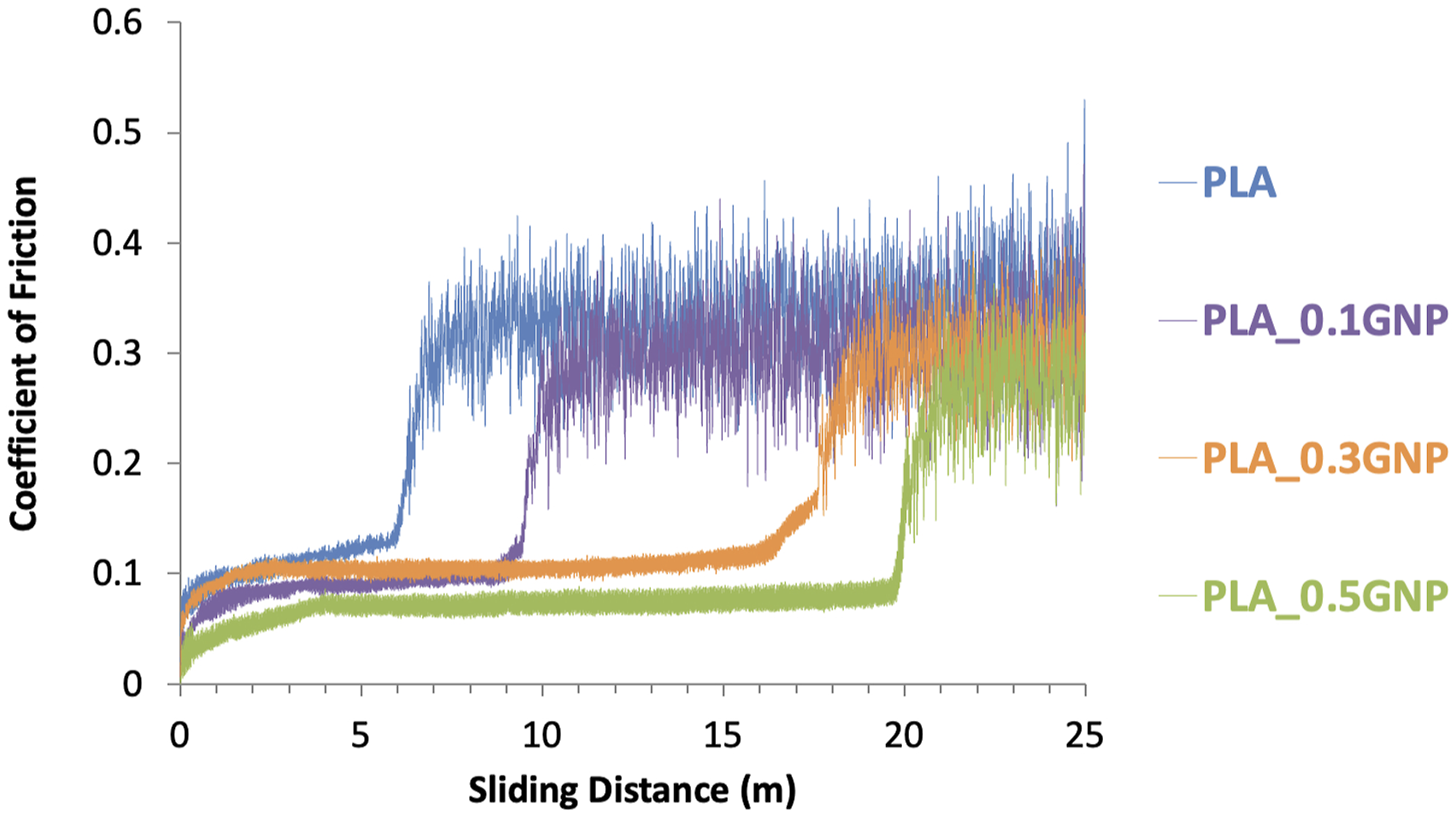

If Figure 3 is examined, it can be seen that there was a sudden increase in the curves of COF, immediately after the adhesive wear test starts. This case can be explained as at the beginning of the test, the ceramic ball tear off some material from the sample surface and the separated material creates an abrasive effect on the surface. As can be seen from Figure 3 that while the highest sudden increasement intension at the beginning of the test was observed for the curve of pure PLA, the lowest one was observed for that of 0.5 wt.% GnP containing composites. Besides, the linearity of the curve after this sudden increase in the COF curves is the result of the formation of a transfer film between the ceramic ball and the sample surface. 35
However, at a point where the linearity of the curve ended and a certain sliding distance was reached in each sample type, it is seen that there is a steep and sharp increase in the COF curves. Although the integrity of the material was preserved until this steep and sharp increase, after this point, the integrity of the material could not be maintained and a sharp decrease in the wear resistance occurred. Therefore, it can be concluded that how the earlier this point in COF curve occurs, the low the wear resistance of the material, while how the later it occurs, the high the wear resistance. 35 In this regard, we can say that both the addition of GnP to pure PLA and the increasing amount of GnP improve the adhesive wear resistance. Because, as can be seen from Figure 3, the sharp increase in pure PLA started at a sliding distance of about 5 m, whereas it started at about 10 m in composites containing 0.1 wt.% GNP. Moreover, it started at about 15 m in composites containing 0.3 wt.% GNP whereas it started at about 20 m in composites containing 0.5 wt.% GNP. The GnPs, which could be seen to be homogeneously distributed in the PLA matrix in Figure 4, is also indicative of this improvement in adhesive wear resistance.
If Figures 1(a) and 3 are compared it can be seen that the increasement effect of GnP addition on the tensile strength started to decrease when a percolation level was reached, but there was no decrease in its adhesive wear resistance at the same percolation level. For this reason, this percolation level was named as especially “mechanical” percolation level and it can be said that the effects of GnP addition on the tribological properties is different from that of on the tensile properties. Generally, there are three main effects of GnP addition to polymeric matrix on the tribological properties of composites. The first is to provide less wear of the matrix material due to the solid lubricating feature provided by the ability to interlayer sliding. The second is to prevent the crack propagation by bridging the cracks. The third is to increase the interface area between the matrix and the fiber by locating the interface between them.
33
The reason for the improvement in wear resistance seen in Figure 3 with the only GnP addition to pure PLA is the result of the first two of the three effects mentioned. However, the effects of varying amounts of GnP/CF hybrid addition to pure PLA on the COF and accordingly validity of the third effect has been evaluated by adhesive wear tests and results have been given in Figure 5. Additionally, SEM micrographs of these samples were given in Figure 6. COF curves of only CF and CF/GnP hybrid reinforced composites. SEM micrographs of the worn surfaces of only CF reinforced composites.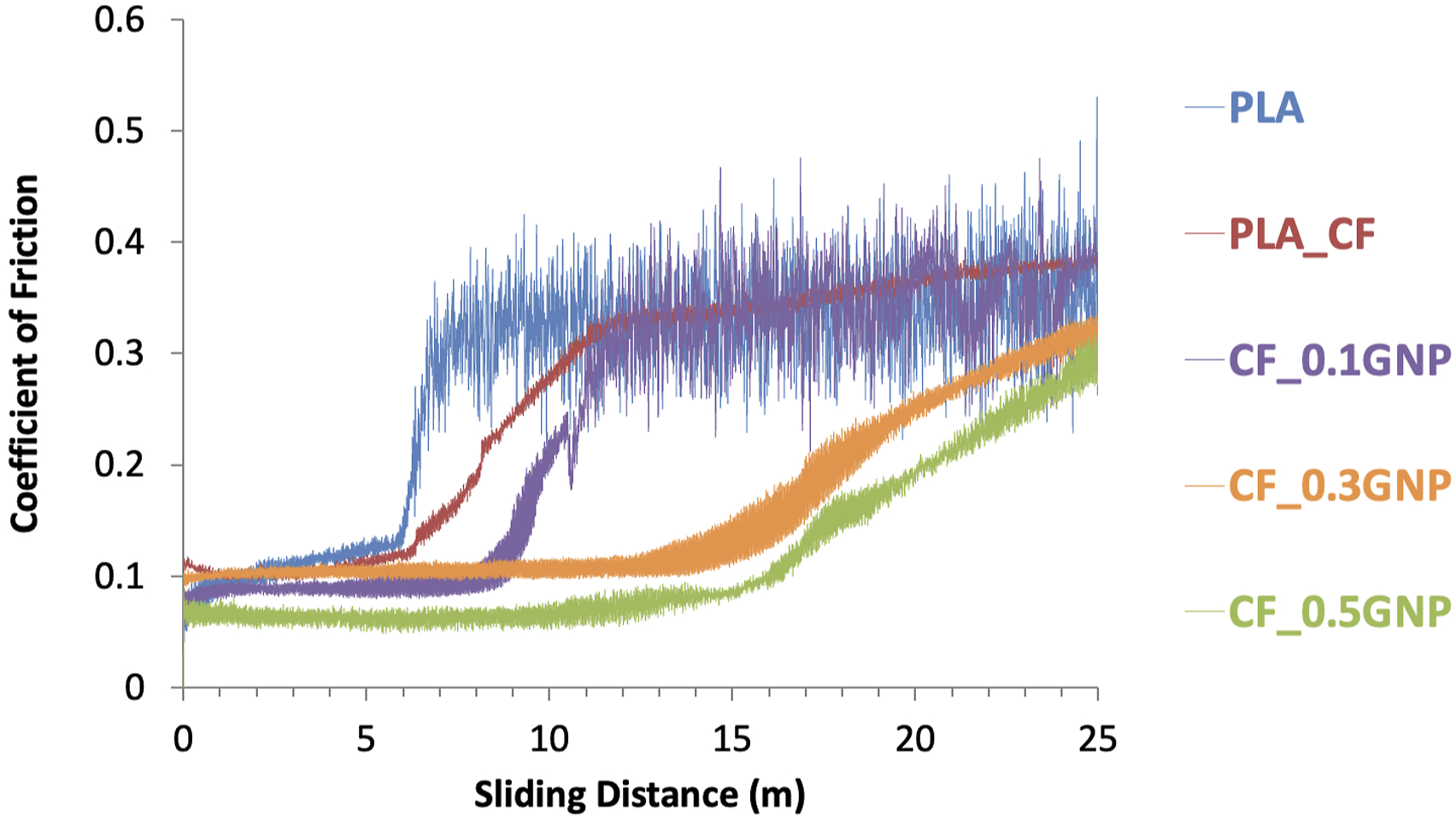
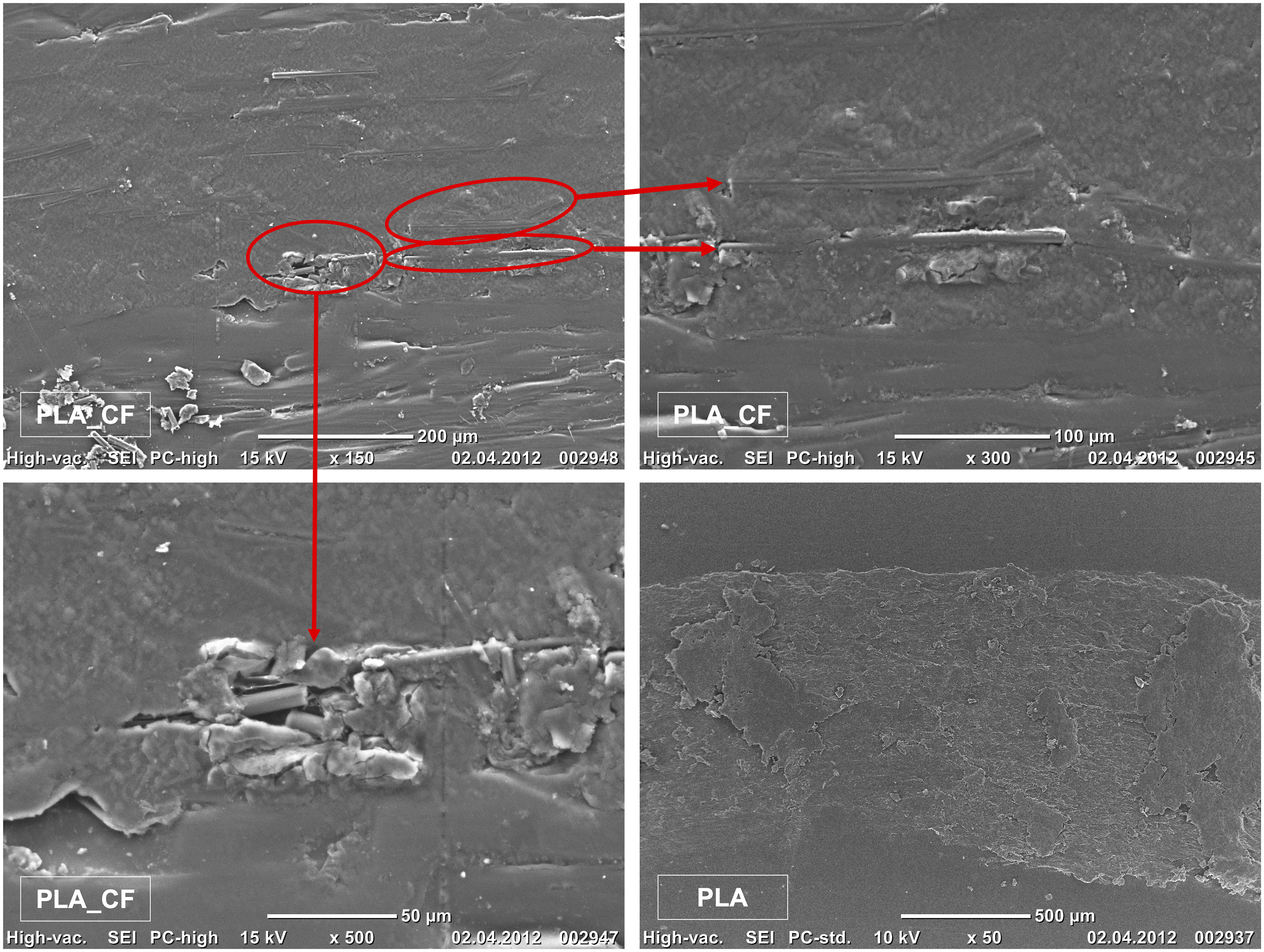
Figure 5 exhibits that the adhesive wear resistance of pure PLA improved with the addition of CF. Figure 6 demonstrates that with the addition of CF, the wear trace of pure PLA changed from smooth to rough. Furthermore, the oriented and broken CFs along the sliding direction are clearly visible from the Figure 6. These are expected results because it is known that the abrasive contacts with the polymer as well as the fibers and thus the contact area between the abrasive and the polymer decreases and finally fiber abrasion occurs. Eventually, fibers that are harder than the polymer protect the polymeric matrix from adhesive wear to a certain extent. Besides, Figure 5 shows that wear resistance of composites further improved with the GnP addition and increasing amount of GnP. In particular, it is seen that the lowest COF intensity was obtained for 0.5 wt.% GnP containing hybrid composites and the integrity of the matrix for this kind of sample was preserved up to a sliding distance of about 15 m. This is a result of both the dispersive effect of CF on the GnP layers, and the more homogeneously distributed GnPs located at the interface between the matrix and the fiber, increasing the interface area there and enabling the fibers to carry more load without being detached from the matrix. Because the GnPs, which are more homogeneously distributed in the matrix, perform the functions of lubricating and preventing crack propagation more effectively, and they also increase the load transfer from the matrix to the fiber by increasing the interface area there by positioning at the interface between the matrix and the fiber. All three cases mentioned, result in enhanced wear resistance. Thus, it can be said that the improvement the distribution of GnPs in the polymeric matrix and positioning more GnPs at the interface between the matrix and the fiber were all beneficial for reducing COF and improving the wear resistance property of hybrid reinforced composites.
However, although the synergy between GnP and CF and the positive effect of this synergy on adhesive wear resistance of composites, the interface interaction between the CF and the PLA needs to be further improvement. The reason for this requirement has been explained previously within the extent of the tensile strength property. However, the reason for this requirement has an explanation also within the extent of the adhesive wear resistance. According to this explanation, due to the insufficient interface interaction between the matrix and the fiber, fiber peeling-off takes place during the adhesive wear test of fiber reinforced polymeric matrix composites. In this process, fiber thinning, fiber breaking and fiber detaching occur, respectively. If there is a poor interface interaction between the matrix and the fiber, the fibers are easily detached from the matrix during the adhesive wear process, as can be seen from Figure 6. Thus, the polymeric matrix cannot be supported and protected by the fibers from the wear. The lack of support and protection of polymer by the fibers causes more polymer transfer from the composites. Besides, some of the detached fibers can act as three-body abrasives between the worn surface of material and adhesive ball, and this case results in increase of COF. However, if there is a good interface interaction between the matrix and the fiber, the fibers cannot be easily detached from the matrix. Instead, the steps of fiber wearing, fiber thinning and fiber breaking occur, respectively. 16 Therefore, it is necessary to further enhancement the interface interaction between the matrix and the fiber in order to prevent the fibers from easily detaching from the polymeric matrix. In this study, Joncryl® was used in order to enhance the interface interaction between the CF and the PLA and thus the interface area where the effective load transfer was realized, so that provide to CF can carry more load during wear process and protect the PLA matrix from the adhesive wear.
Figure 7 shows the effects of Joncryl® addition and increasing amount of Joncryl® on the COF of only CF containing composites. Figure 8 exhibits the SEM micrographs of 2 wt.% Joncryl® containing CF reinforced composites. COF curves of only CF reinforced and Joncryl® containing composites. SEM micrographs of the worn surfaces of only CF reinforced and Joncryl® containing composites.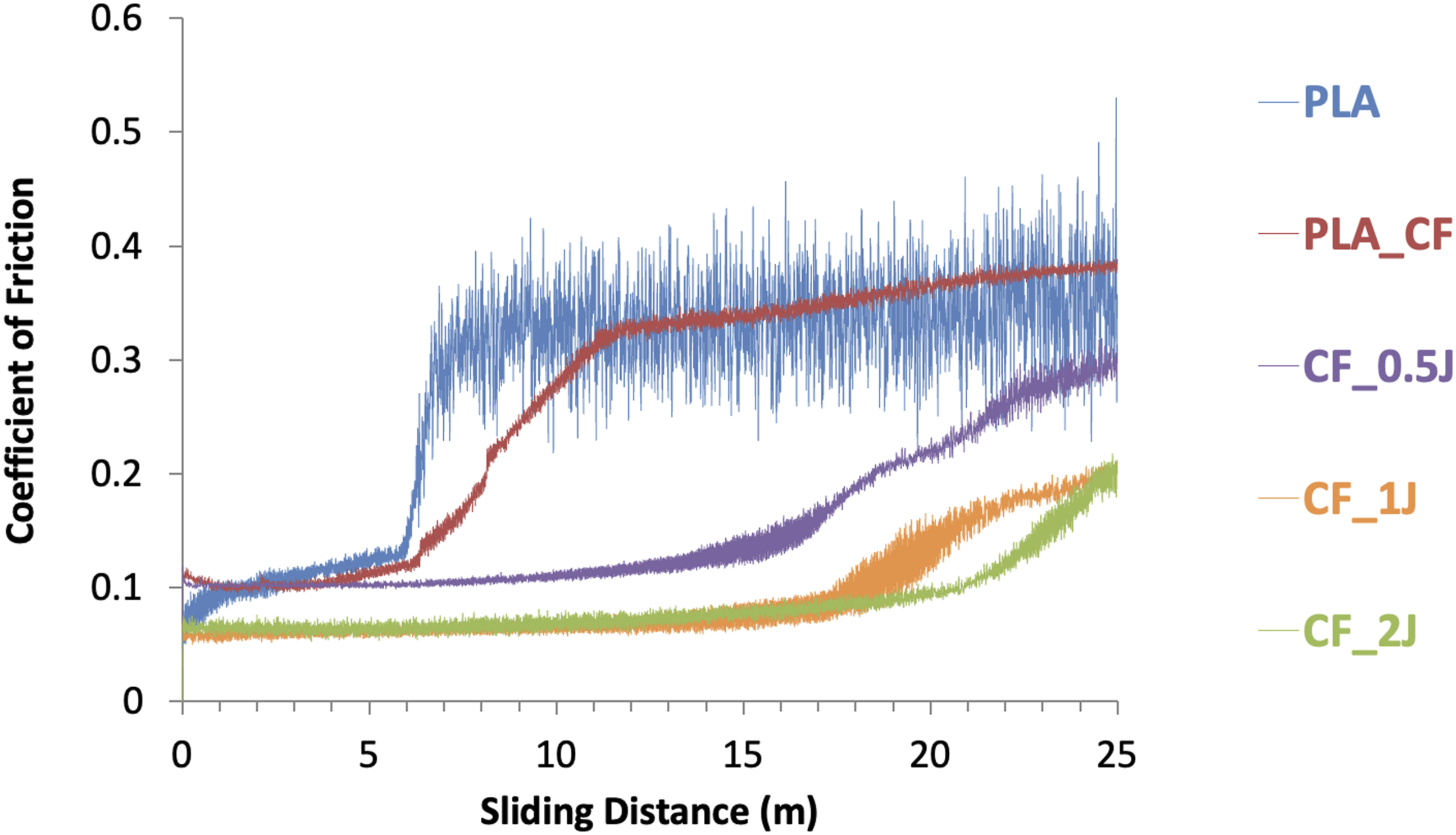
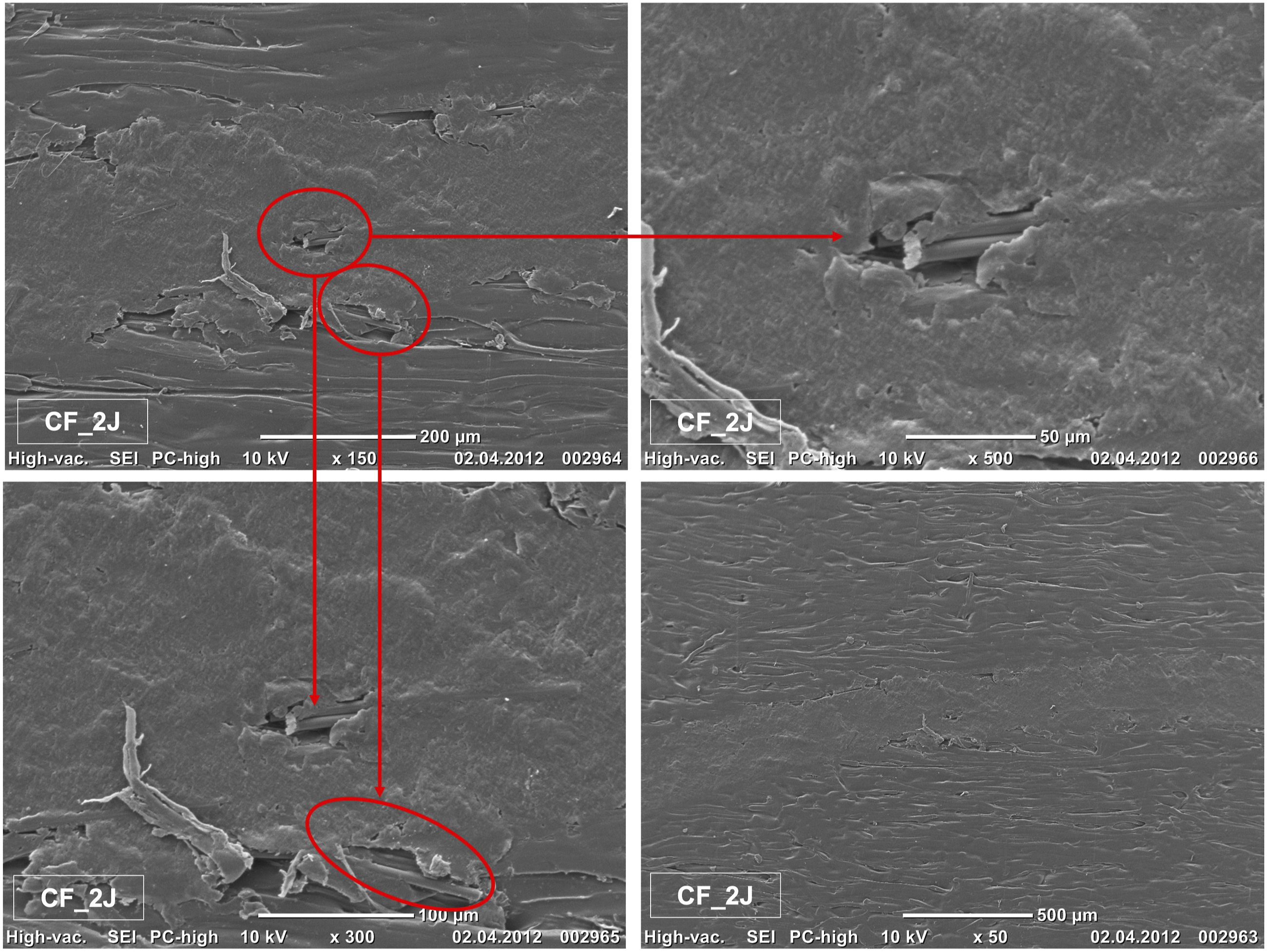
Figure 7 demonstrates that the wear resistance of only CF reinforced composites improved with the Joncryl® addition and the increasing amount of Joncryl®. In particular, the lowest COF intensity was obtained for 2 wt.% Joncryl® containing composites and the integrity of the matrix for these samples was preserved up to a sliding distance of about 20 m. The micrographs were given in Figure 8 coincide with this result. Such that, the fibers that remain within the matrix and ensure less wear of the polymer, instead of detaching from the matrix during adhesive wear are clearly seen in Figure 8. This behaviour of the fibers is the result of the improved interface interaction between the matrix and the fiber. Hence, it can be concluded that Joncryl® improved the interface interaction by means of the mentioned reactions and correspondingly increased the interface area between the CF and the PLA. Thus, instead of being easily detached from the matrix, the fibers first went through the stages of wearing, thinning and breaking, and finally they detached from the matrix. In this way, the fibers were able to continue to wear for a longer period of time during the adhesive wear process, thereby protecting the matrix from adhesive wear.
On the other hand, the effect of the use of Joncryl® on the adhesive wear resistance of GnP/CF hybrid reinforced composites could be considered from two perspectives. As mentioned above, the first is to enhance the interface interaction and correspondingly the interface area between the matrix and the fiber, and enabling more GnP positioning in the increased interface area; in addition, since the surface areas of the positioned GnPs are already high, the surface area at the interface will be increased even more. The second is to enhance the interface interaction between the matrix and the fiber, but this time by ensuring that the fibers are distributed more homogeneously in the matrix, at the same time enhance the dispersive effects of the CFs on the GnP layers even more. Thus, it is obtained to more homogeneously distributed GnP layers in the polymeric matrix and the GnP perform the functions of lubricating and preventing crack propagation more effectively. Driven by this vision, the effect of Joncryl® addition on adhesive wear resistance of GnP/CF hybrid reinforced composites was evaluated by means of adhesive wear tests and results were given in Figures 9–11. Moreover, SEM micrographs of 0.5 wt.% GnP and 2 wt.% Joncryl® containing CF reinforced composites were given in Figure 12. COF curves of CF/0.1GnP hybrid reinforced and Joncryl® containing composites. COF curves of CF/0.3GnP hybrid reinforced and Joncryl® containing composites. COF curves of CF/0.5GnP hybrid reinforced and Joncryl® containing composites. SEM micrographs of the worn surfaces of CF/0.5GnP hybrid reinforced and Joncryl® containing composites.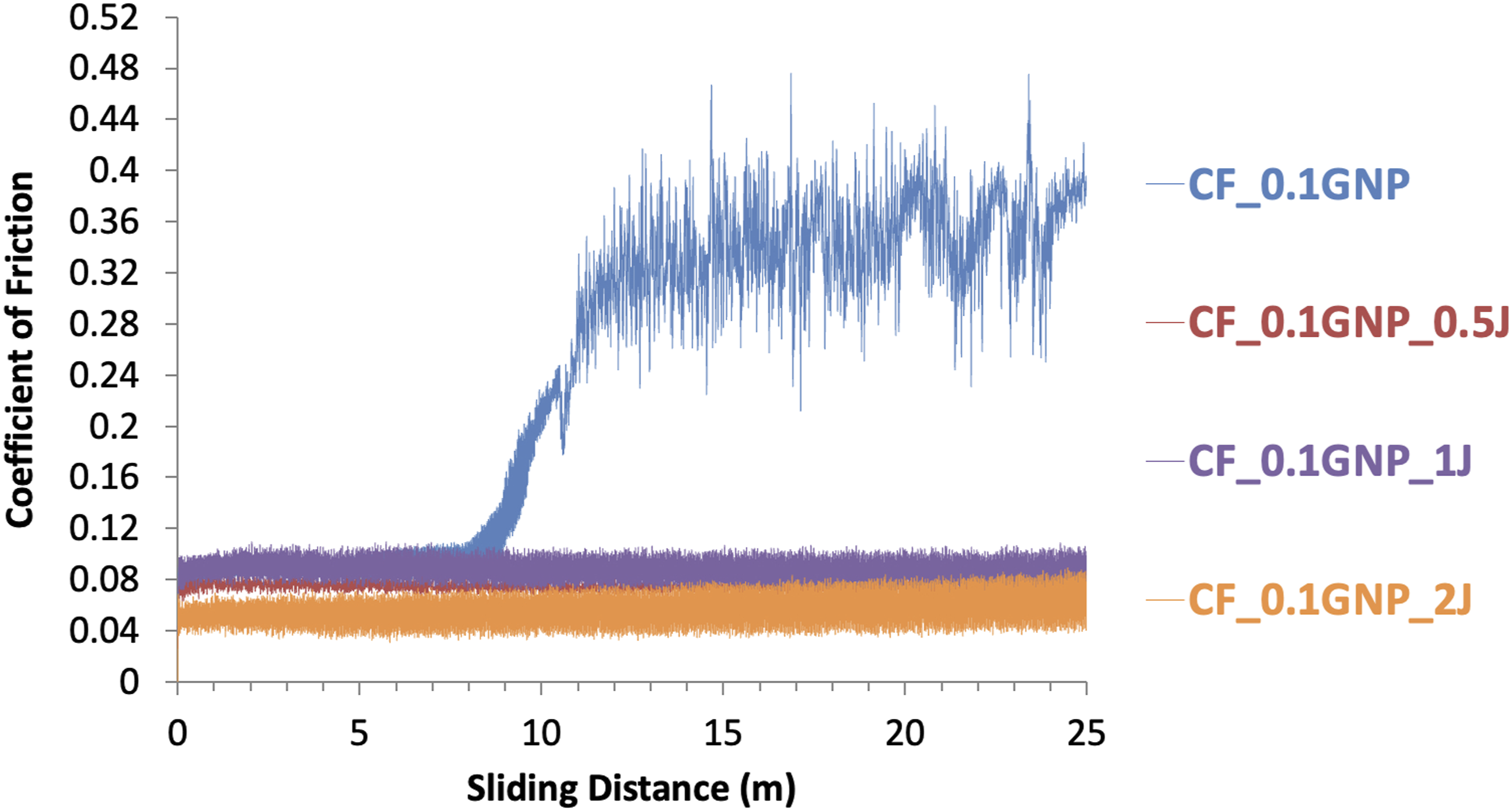
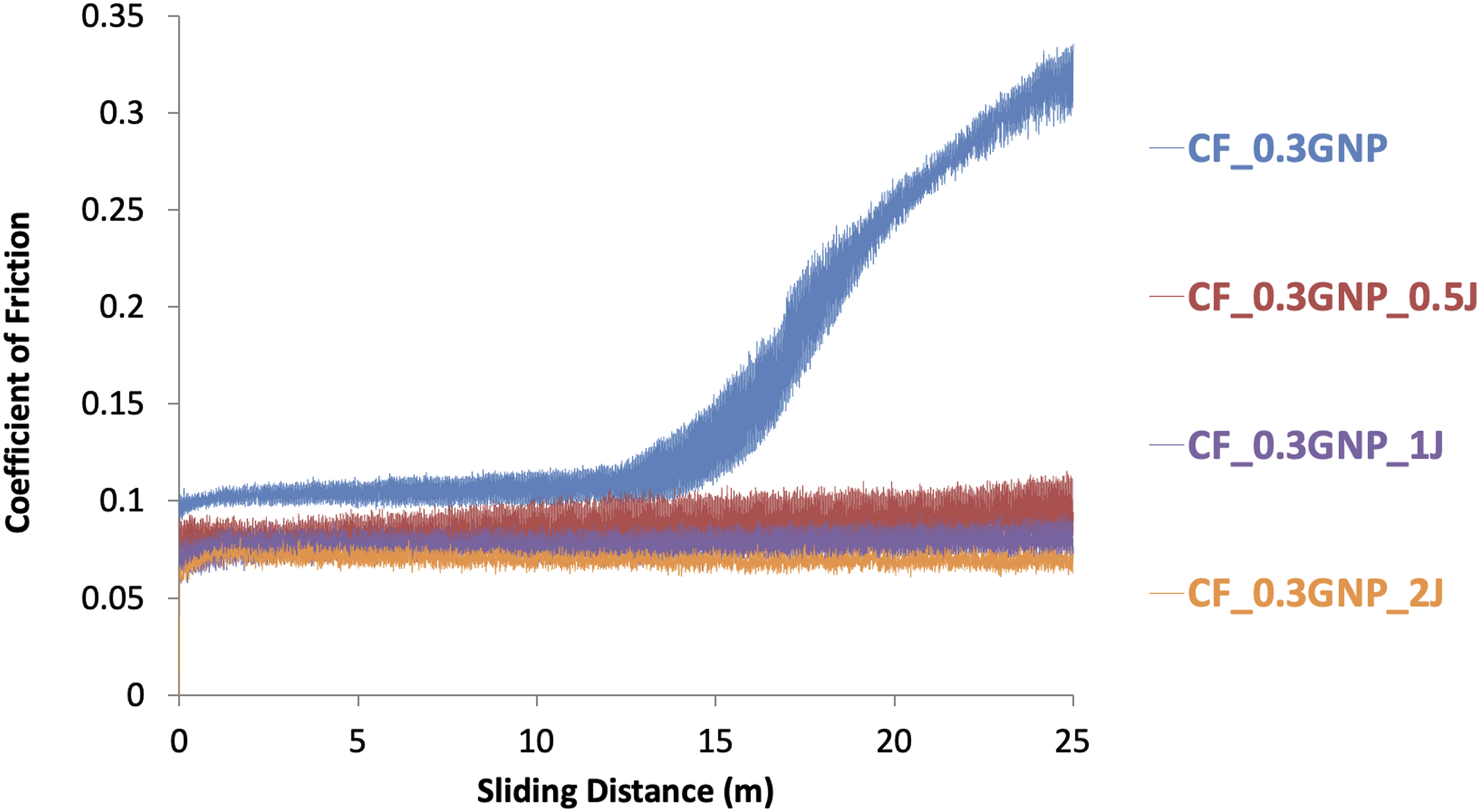
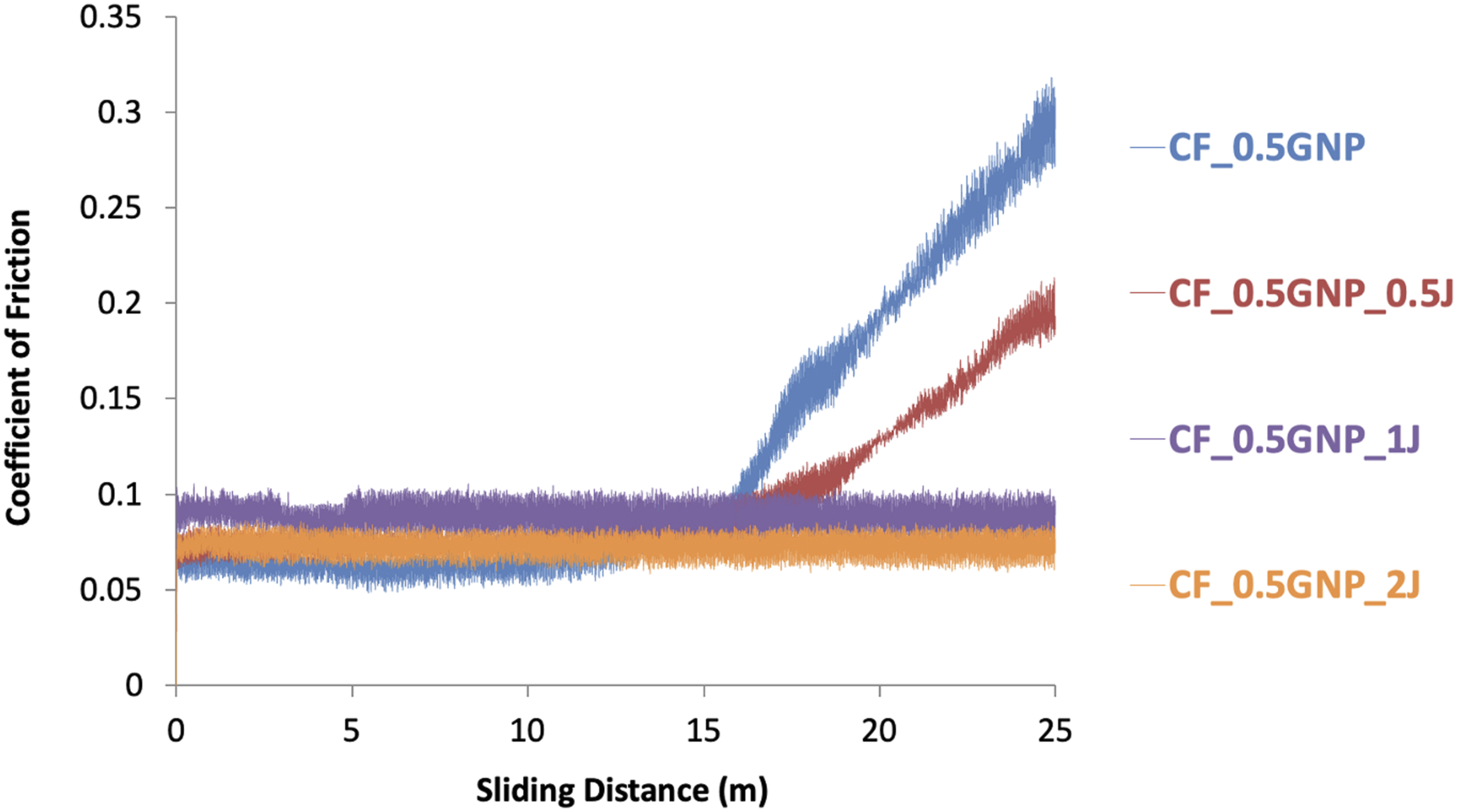
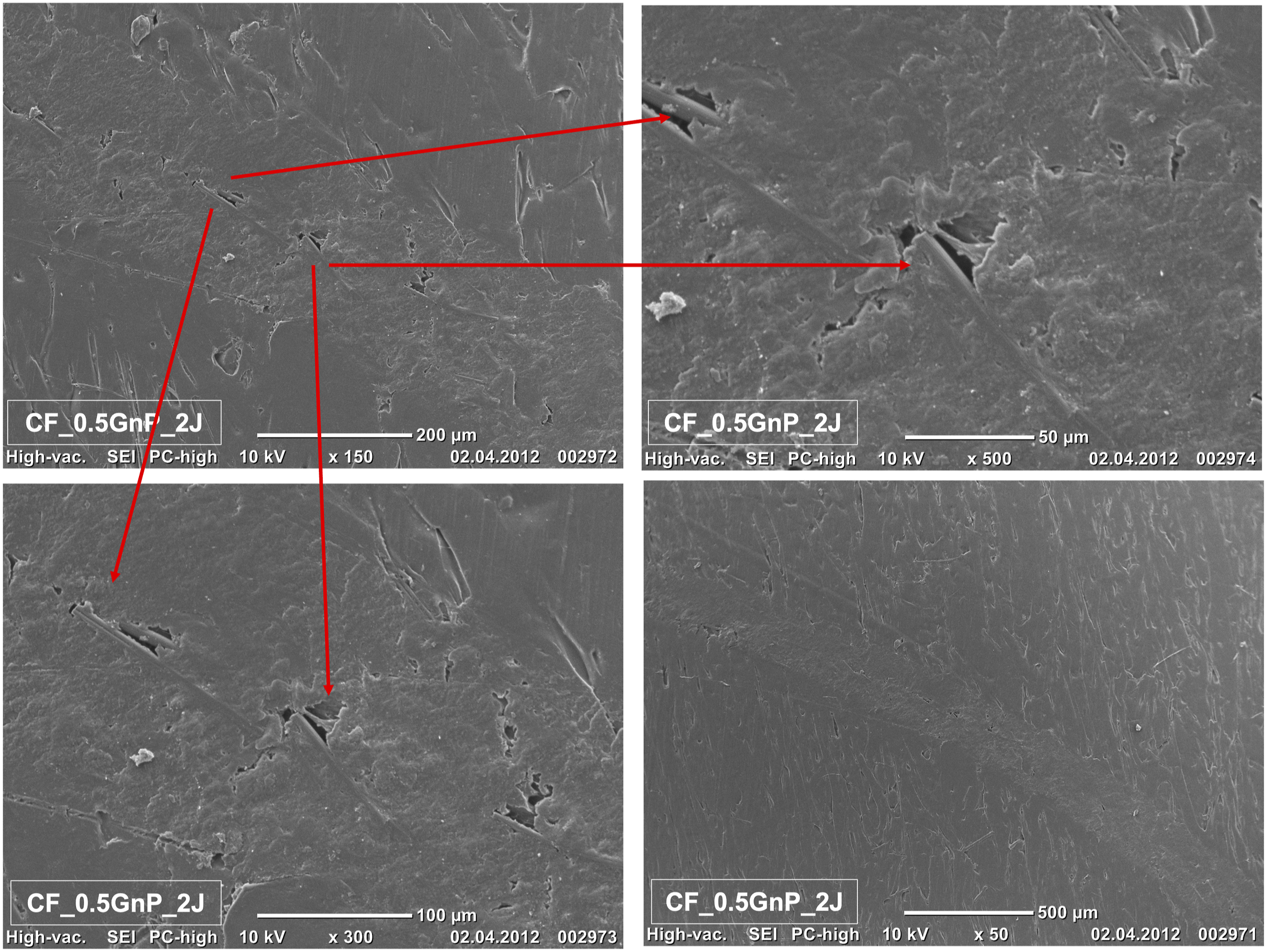
When Figures 9–11 are examined, it is seen that with the addition of Joncryl® to the GnP/CF hybrid reinforced composites, the steep and sharp increase in the COF curves of the composites disappeared in almost all sample types and the integrity of the materials was preserved until the end of the test. Although this result is valid for all three Joncryl® amounts, the lowest COF was obtained for composites containing 2 wt.% Joncryl®. It can be seen from the SEM micrographs were given in Figure 12 that the wear trace has almost disappeared with the addition of Joncryl® to the hybrid reinforced composites. Additionally, it is seen that the CFs were embedded in the polymeric matrix without detaching from the matrix. Besides, it can also be observed that there are distributed GnP stacks both on the fiber surfaces and in the polymer surrounding the fiber surfaces. These results support all the analysis results and prove the conclusion that the addition of Joncryl® to hybrid reinforced composites improves the composite performance through the above-mentioned mechanisms. In other words, the interface interaction between the CF and the PLA enhanced with the addition of Joncryl® to GnP/CF hybrid reinforced composites; and with the enhanced interface interaction the fibers carried more load for a longer time and the GnP fulfilled its solid lubrication and preventing crack propagation functions effectively.
Differential scanning calorimeter analysis
DSC analysis results of samples.
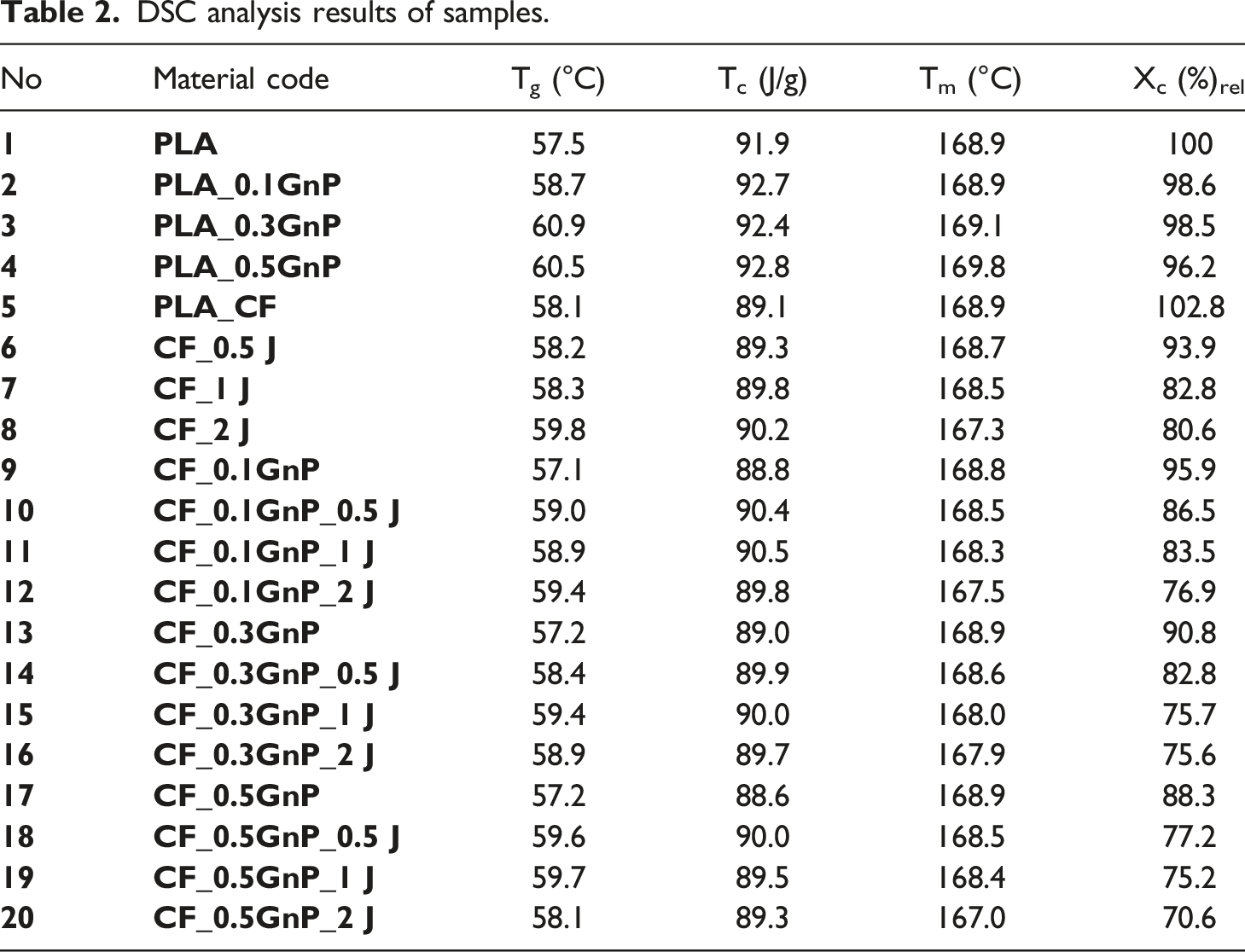
It can be seen from the Table 2 that Tg increased, Tc and Tm did not change significantly, while Xc decreased with the addition of GnP to pure PLA. In this regard, it can be said that in the composites containing only GnP, GnP prevented the mobility of the chains to a certain extent by getting between the chains, and also prevented the chains from getting closer to each other and forming crystal structures. 36 Thus, the relative degree of crystallinity of composites decreased when compared to that of pure PLA.
It is seen from the Table 2 that Tg, Tc and Tm did not change significantly with the addition of CF to pure PLA, but Xc increased. This can be interpreted as that CF acts as a nucleation agent in the PLA matrix and encourages PLA to crystallize, thereby increasing the relative degree of crystallinity of the matrix.
However, it is an important result that Tg slightly increased, while Xc decreased with the addition of Joncryl® to CF reinforced PLA matrix composites. This result can be interpreted as that the addition of the Joncryl® to the composites improved the interface interaction between the CF and the PLA matrix, so that the CFs were more homogeneously distributed in the PLA matrix. Therefore, it became difficult for the PLA chains to getting closer to each other for crystallization, and as a result, the relative degree of crystallinity of the PLA matrix decreased.
Table 2 exhibits that simultaneous addition of GnP and CF to PLA and increasing amount of the GnP did not have a significant effect on Tg, Tc and Tm, but it decreased the relative degree of crystallinity of the PLA. Hence, it can be concluded that the synergic effect between the CF and the GnP arises in hybrid reinforced composites, that is, carbon fibers contribute to the homogeneous distribution of GnPs in the PLA matrix. Because the decrease in the relative degree of crystallinity values of hybrid reinforced composites can be interpreted as the GnPs distributed homogeneously in the PLA matrix prevent the chains from getting closer to each other and forming crystal structures by getting between the PLA chains.
Table 2 also shows that with the addition of Joncryl® to the hybrid reinforced composites and the increasing amount of Joncryl®, Tg values increased, while relative degree of crystallinity values was greatly decreased. The decrease in the relative degree of crystallinity values is a result of the fact that the CFs were more homogeneously distributed in the PLA matrix due to the interface interaction between the matrix and the fiber, which was improved by the addition of Joncryl®. These homogeneously distributed fibers were also contributed to the homogeneous distribution of the GnPs in the PLA matrix. GnPs, which are more homogeneously distributed in the PLA matrix, get between the PLA chains, prevented the crystallization of the chains by getting closer to each other and reduced the relative crystallinity of the PLA matrix. In addition, both the enhanced interface interaction between the matrix and the fiber and more homogeneously distribution of CFs and GnPs in the PLA matrix due to this interaction reduced the mobility of PLA chains. As a result, the decrease in chain mobility caused an increase in Tg.
The results were given above show that the best interface interaction between the matrix and the fiber can be associated with the value of the lowest relative degree of crystallinity. If the relative degree of crystallinity values given in the Table 2 are examined it is seen that the lowest relative degree of crystallinity value was obtained in the hybrid reinforced composites which are simultaneously containing 0.5 wt.% GnP and 2 wt.% Joncryl®. This result also coincides with the mechanical and tribological analyses results. So much so that this sample type was the sample that exhibited the best results in both tensile and the adhesive wear tests.15,16
Thermogravimetric analysis
TGA analysis results of samples.
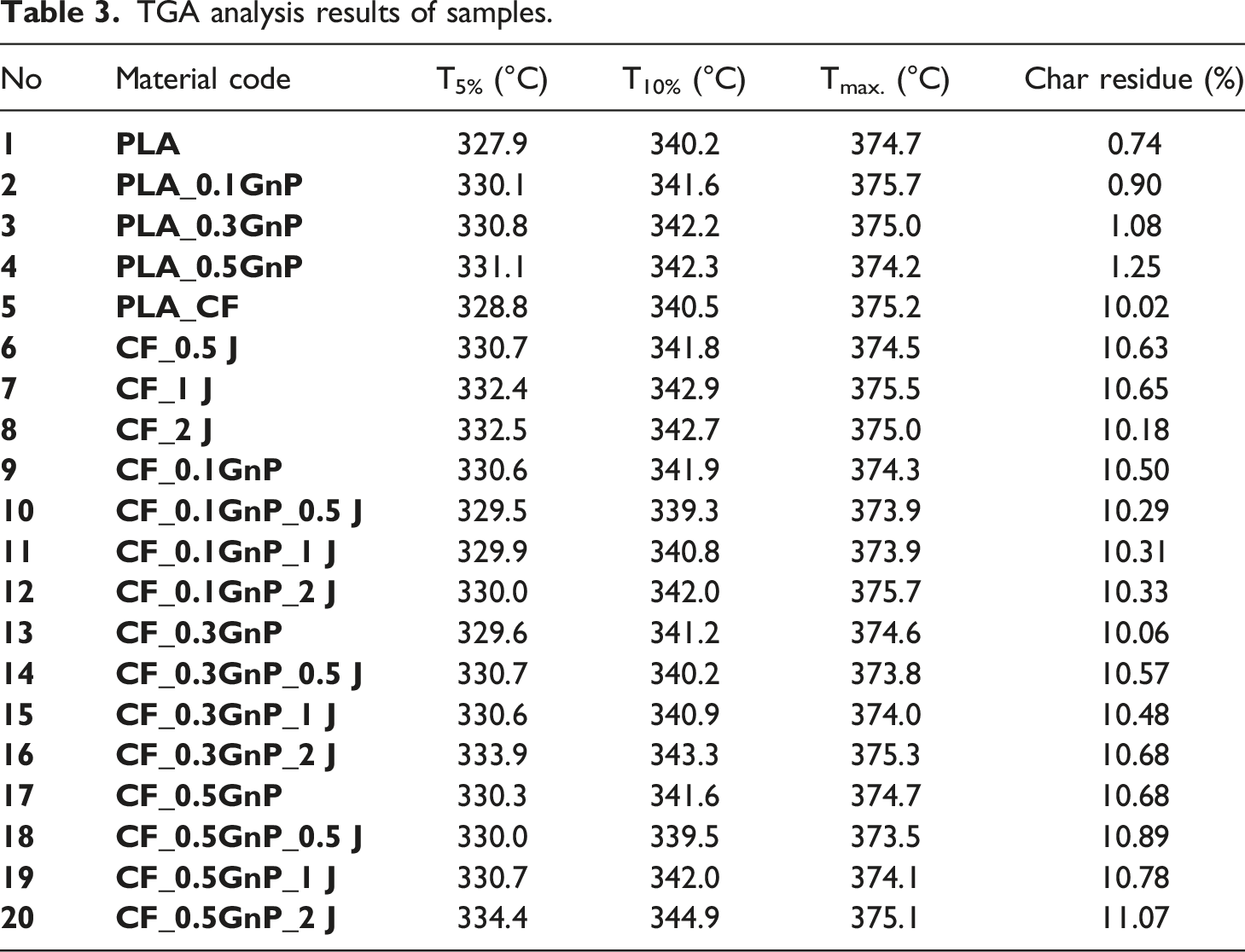
It can be seen from Table 3 that Tmax did not change significantly with the addition of GnP and/or CF to pure PLA while T5% and T10% temperatures of the samples increased. Besides, Table 3 shows that the addition of Joncryl® to only CF reinforced and GnP/CF hybrid reinforced composites increased the thermal stability of composites. Moreover, the char residue weight fractions at 450°C are all consistent with the quantity of reinforcements. From this, it can be concluded that the phenomenon of improvement effect of carbon-based reinforcement materials on the thermal stability of pure polymer is also applicable for PLA. Additionally, it can be said that the highest increasement in both of the initial decomposition temperatures were obtained for “CF_0.5GnP_2J” coded sample.
The improvement effect of the addition of GnP to PLA on thermal stability has been described in the literature by based on two reasons. The first reason is that the GnP reduces the chain mobility of polymer by getting between the polymer chains and also prevents the polymer chains from forming a crystal structure by getting closer to each other. This behaviour of the GnP improves the thermal stability of the polymer while increasing the initial decomposition temperature. 14 This description coincides also with the DSC results. So much so that as a result of DSC analysis, CF_0.5GnP_2J coded sample, which exhibits the lowest relative degree of crystallinity, was also the sample type which exhibits the highest increase in initial decomposition temperature.
The second reason is that the gas barrier effect created by the flat structure of GnP. So much so that the GnPs, which are homogeneously distributed in the polymer, form an entangled path within the structure, delaying the release of volatile decomposition gases released from the material during decomposition. This effect is called the gas barrier effect, and the more homogeneously distributed the GnPs are in the polymer, the longer the entangled path they form and the greater the gas barrier effect they create. As a result, the thermal stability of the material improves and initial decomposition temperature increases.33,37 This description coincides also with the tensile and the adhesive wear test results. Such that the homogeneous distribution of the GnPs in the polymer matrix which is an indicator of the effectiveness of the gas barrier effect has been explained also as the reason for the highest performance of the CF_0.5GnP_2J coded sample in the tensile and the adhesive wear tests. Therefore, it can be said that this homogeneous distribution of the GnPs not only improves the mechanical and the tribological performance, but also creates a gas barrier effect within the structure and improves the thermal stability while increasing the initial decomposition temperature.
Conclusions
In this study, first CF reinforced composites of PLA were fabricated and then it was aimed to improve the interface interaction between the CF and the PLA in order to improve the performance of these composites. For this purpose, CF, GnP and/or Joncryl® containing hybrid reinforced composites were fabricated and effects of hybrid addition on tribological, mechanical and thermal properties were investigated.
According to tensile test results it was found that tensile strength values of GnP/CF hybrid reinforced composites increased with both the addition and increasing amount of the Joncryl®. Accordingly, hybrid reinforced composites simultaneously containing 0.5 wt.% GnP and 2 wt.% Joncryl® exhibited the highest tensile strength value. This result was interpreted as the Joncryl® addition enabled more homogeneous distribution of the CFs in PLA matrix, thus increased the interface interaction and correspondingly interfacial area. While more GnPs positioning at the increased interface area between the CF and the PLA, more loads were transferred from the PLA to the CF. In addition, more homogeneously distributed CFs performed their dispersive effect more actively on the layers of GnP, thus, the reinforcement efficiency of the GnPs enhanced.
With respect to the adhesive wear test results, it was found that the wear resistance of GnP/CF hybrid reinforced composites improved with both the addition and the increasing amount of the Joncryl®. Accordingly, hybrid reinforced composites simultaneously containing 0.5 wt.% GnP and 2 wt.% Joncryl® exhibited the lowest COF intensity. This result was interpreted as the Joncryl® addition enhanced the interface interaction between the matrix and the fiber and thus the interface area, thereby enabling more GnP positioning in the increased interface area. Besides, enhanced interface interaction between the matrix and the fiber enhanced the dispersive effects of CFs on the GnP layers even more. Thus, it was obtained to more homogeneously distributed GnP layers in the polymeric matrix and GnP performed its functions such as lubricating and preventing crack propagation more effectively.
DSC analysis was applied to gain insight about the thermal transition temperatures and relative degree of crystallinity value of samples within the scope of the thermal properties. The best interface interaction between the matrix and the fiber and correspondingly the highest composite performance was associated with the value of the lowest relative degree of crystallinity. Accordingly, it was seen that the lowest relative degree of crystallinity value was obtained for the hybrid reinforced composites simultaneously containing 0.5 wt.% GnP and 2 wt.% Joncryl®.
Thermogravimetric analysis was applied to gain insight about the initial decomposition temperatures of samples. The improvement effect of GnP on the thermal stability of PLA was associated with the how higher the initial decomposition temperature is. Accordingly, it was found that the highest increasement in the initial decomposition temperatures was obtained for the hybrid reinforced composites simultaneously containing 0.5 wt.% GnP and 2 wt.% Joncryl®.
When all results are evaluated together, it was figured out that the expected synergistic effect emerged in the hybrid reinforced composites containing 0.5 wt.% GnP and 2 wt.% Joncryl® and the composite composition with improved mechanical, tribological and thermal properties was achieved in this sample type. As a result, it has been concluded that CF reinforced PLA matrix composites to be fabricated with this composition can be used in areas that require long-term durability and good performance.
Footnotes
Acknowledgements
The author special thanks to Seren Comez for her assistance during composite preparation process.
Declaration of conflicting interests
The author(s) declared no potential conflicts of interest with respect to the research, authorship, and/or publication of this article.
Funding
The author(s) received no financial support for the research, authorship, and/or publication of this article.
