







Abstract
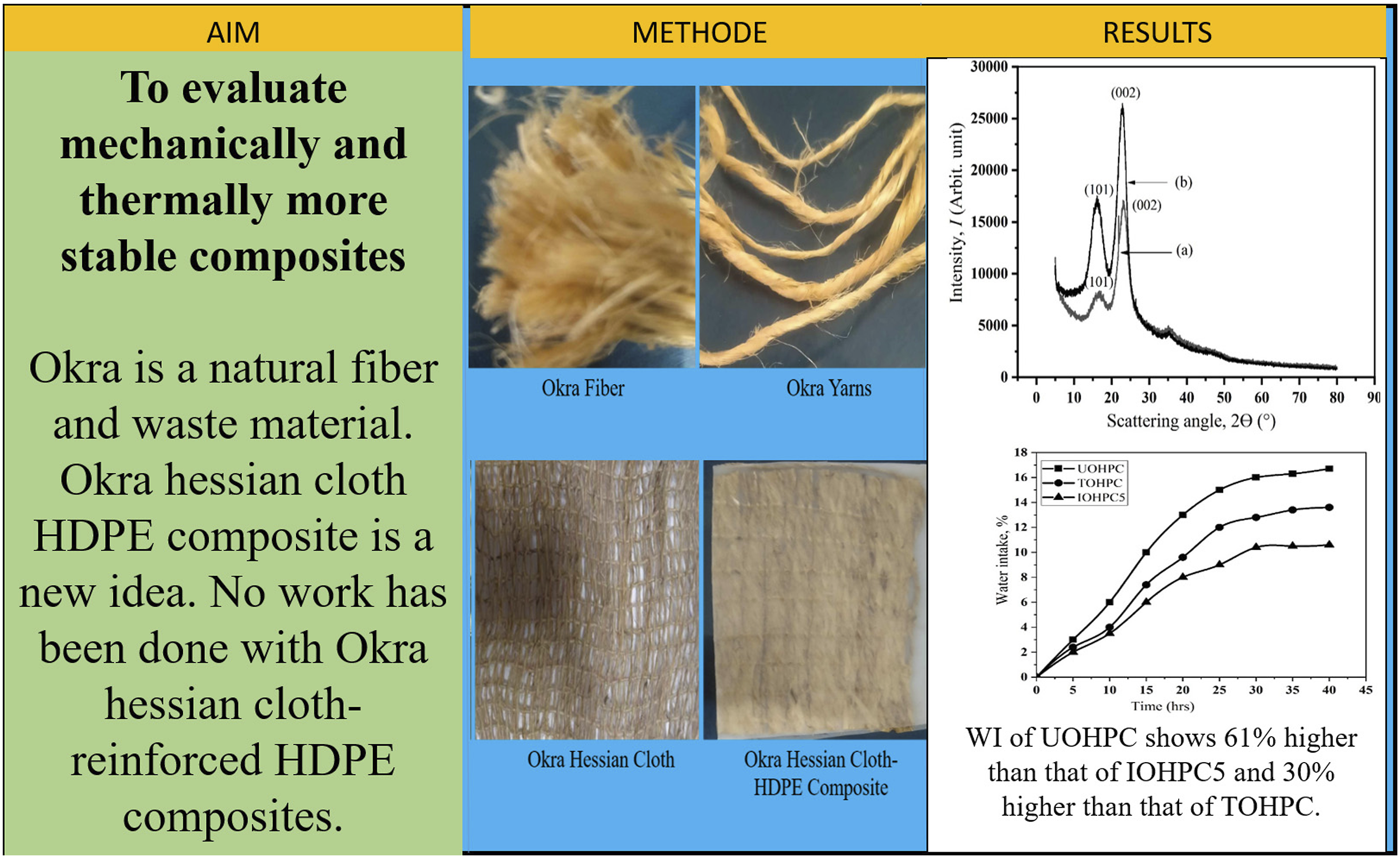
Okra hessian cloth-reinforced high-density polyethylene (HDPE) thermoplastic composites were prepared and characterized with both raw and alkali-treated fibers. The fiber contents were optimized for both the raw Okra thermoplastic composites and the alkali-treated Okra thermoplastic composites, and the optimum value of fiber content was 55 wt%. Samples that were alkali-treated and had 55 wt% fibers were subsequently exposed to gamma radiation at doses of 2.5, 5, and 7.5 kGy. Only the sample subjected to 5 kGy showed improved performance. Treated composites exhibited higher crystallinities than the untreated samples as observed by X-Ray diffraction analysis. The rupture surface micrographs of the composites exposed to 5 kGy gamma radiation revealed more compact than others. By using Fourier transform infrared spectroscopy analysis of composites, it was found that 5 kGy dose sample showed enhanced cross-linking between Okra fibers and HDPE matrix. The irradiated composite showed less water intake than the alkali-treated samples. Composites subjected to 5 kGy gamma rays showed improved tensile strength and Young’s modulus of values 66 MPa and 1925 MPa, respectively. Compared to raw and treated composites, the irradiated composites with a radiation dose of 5 kGy showed improved structural, mechanical, and thermal properties.
Introduction
In engineering applications, natural fiber-reinforced thermoplastic composites (TC) have attracted much attention due to their excellent mechanical strength and thermal stability. Scientists have already done widespread research on natural fiber-reinforced TC by changing the composition of composite materials.1,2
As a result, thermoplastics composites have emerged as a versatile and reliable alternative to conventional structural materials. 3 The design of thermoplastic is highly flexible. Its mechanical strength and dimensional stability are also high.4,5 Although synthetic fiber-based TCs have gained considerable popularity in the composites world due to their low cost, availability, light weight, durability, etc., they seriously harm the environment. Natural fiber-based thermoplastic composites are available as an eco-friendly and reusable alternative to synthetic fiber-based thermoplastic composites. Production of Okra plants in Bangladesh is 70,183 tons every year, so more than 70,183 tons of Okra wastes are generated. About 99% of them are thrown away, some are used as cooking ingredients. If a large amount of Okra fiber is utilized to develop a composite with a polymer matrix suitable for commercial purposes, it can significantly boost the economy of Bangladesh. 6
The Cellulose-based okra fiber is cultivated in Bangladesh, India, Nigeria, Mali, China, Cameroon, etc. The color of this fiber is excellent, like jute and mesta fibers. The mechanical strength of Okra fiber is higher than jute. 7 The Okra fiber is composed of 67.5% α-cellulose, 15.4% hemicellulose, 7.1% lignin, 3.4% pectin matter, 3.9% fatty and waxy matter, and 2.7% aqueous extract.6,7 It also contains β–carotene and xanthophyll. 8 It is well-known that all-natural fibers contain hydroxyl (-OH) groups in their structure. The poor wettability makes it difficult to achieve proper reinforcement and fiber-matrix adhesion. To improve the adhesion between fiber and matrix, it is necessary to enhance the surface structure and surface energy through physical and chemical treatments, as reported by various studies.9,10
Exposure to gamma-ray irradiation can lead to an improvement in the cross-linking between fiber and matrix. This is achieved by reducing the hydrophilicity of okra fiber in the composites.11,12 Several papers on fiber-reinforced composites prepared using gamma-ray irradiation have been published.13,14 Studies have reported exceptional enhancements in the mechanical properties of fiber-reinforced thermoplastic composites achieved through gamma-ray irradiation. Although there are a few papers published on the Okra fiber-reinforced polypropylene composite irradiated by gamma-ray, 15 Okra hessian cloth-related articles are still rare. To produce high-performance composites, we plan to fabricate Okra hessian cloth-HDPE composites and irradiate them with gamma rays. We also plan to examine various features of these composites in this study.
Experimental
Materials
High-density polyethylene (HDPE) granules (Guangzhou Zhongshan Trading Co., Ltd, China.) were purchased from the local market in Bangladesh, and used without any more purification. The density of HDPE was in the range between 0.93 and 0.97 g/cm3. The tensile strength of high-density polyethylene is about 30 MPa, 16 Sodium hydroxide (NaOH) was a product of Merck, Germany, and was purchased from the Bangladeshi local market to treat the fibres.
Plenty of Okra fibers were produced in Gopalpur, Tangail, Bangladesh. 15-20 green Okra plants were bunched together. After that, the bundles were submerged in water for 7–12 days.
17
The Okra fibers were carefully separated from the pulp and repeatedly rinsed with water to get rid of mud and sand. The fiber was cleaned, and then it was strung up in long bamboo strands and left in the sun for 3 days. Okra hessian textile was produced through weaving after these fibers were processed into yarn. The processes to make hessian cloth from Okra fibers were followed by plane weaving technique, as shown in Figure 1.
18
Okra hessian cloth, made from Okra fiber.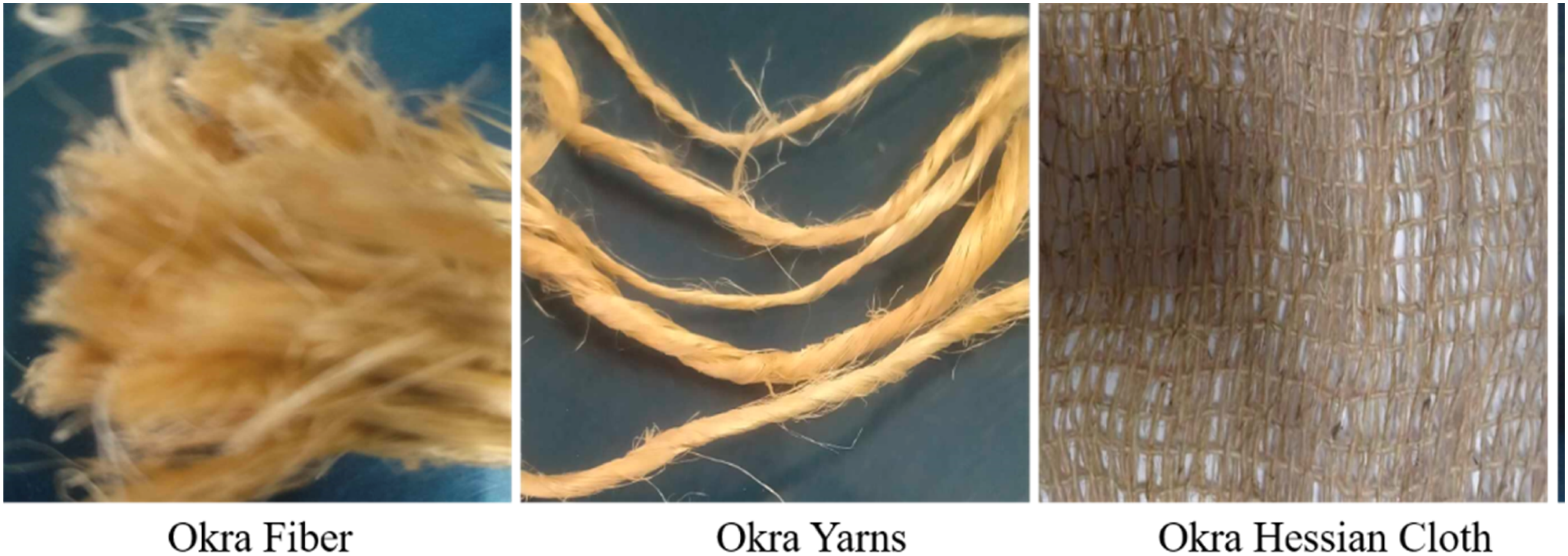
Methods
Okra hessian cloth modification
Untreated Okra hessian cloth was used as untreated Okra fiber (UOF). After that, for 1 h, the Okra hessian cloths were treated with 5, 10, and 15 wt% concentrations of alkali solution at temperatures of 60°C. The fibers were taken out from the solutions and then rinsed using water. After being treated, the hessian fabrics were exposed to sunlight for 3 days and then dried in an oven for 1.5 h at 70°C to remove the remaining moisture. The dried and treated Okra hessian cloths were then stored in an evacuated dissector until usage, which was used as a treated Okra fiber (TOF). Figure 2 depicts the weight loss of fiber decrease with alkali treatment.
14
HDPE sheets were prepared from HDPE granules by a hot press machine (Carver Laboratory Press, USA, Model 25180) under a pressure of 5 tons and a temperature of 190°C. Using 5 tons of pressure, a cold press machine (Carver Laboratory Press, USA, Model 3856) was also utilized under ambient conditions. The HDPE sheets, untreated Okra hessian cloth, and treated Okra hessian cloth were all cut to the same size to produce the desired material. A single layer of untreated Okra hessian cloth was placed between two pre-weighed layers of HDPE sheets. The layers were then sandwiched together between two steel plates and placed into the hot press machine for 7 min under a 5-ton pressure and at a temperature of 190°C. Thereafter, the hot sandwiched material was placed into another cold press machine to cool it to room temperature under a 5-ton pressure. Weight loss concerning the concentration of alkali.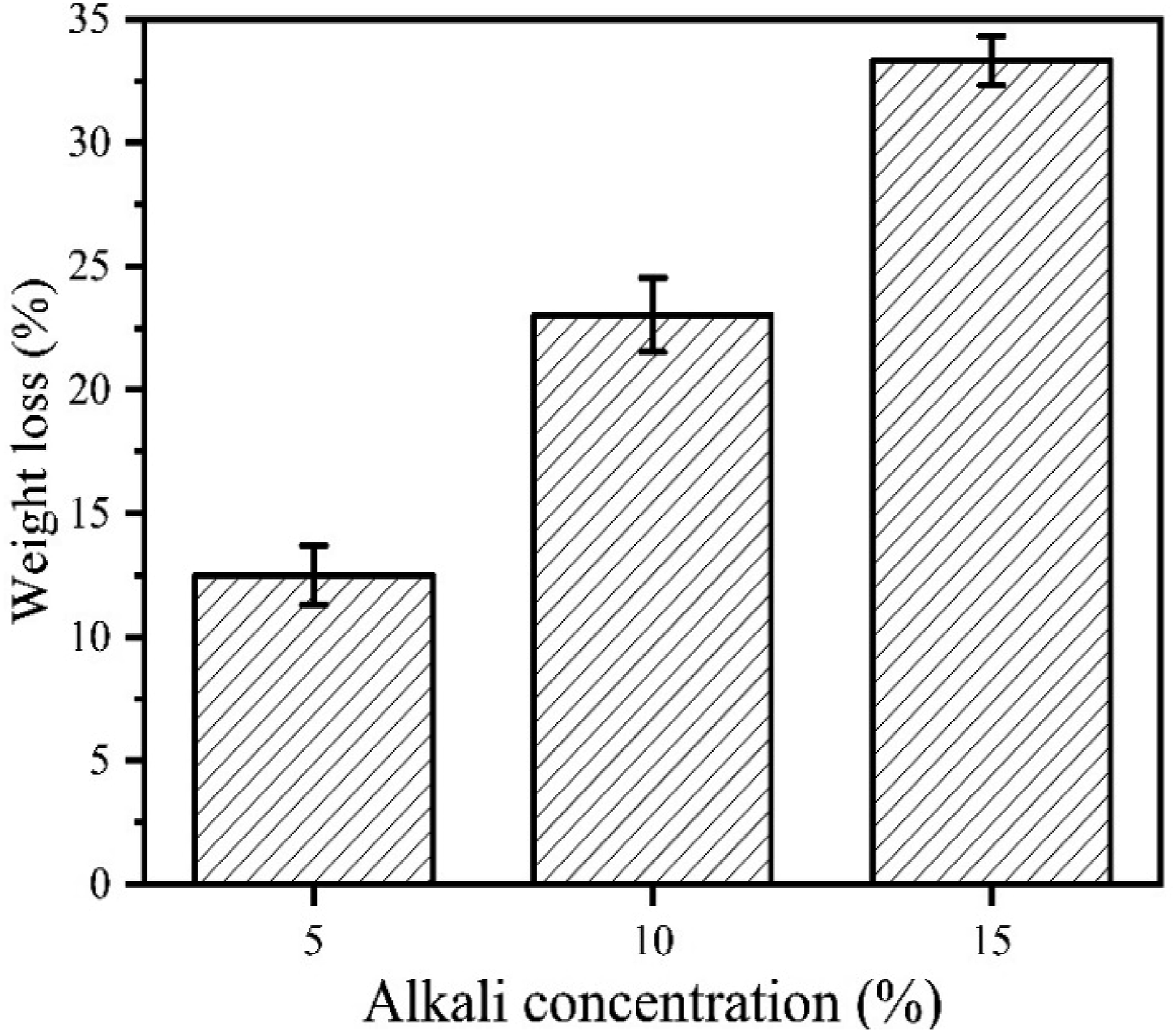
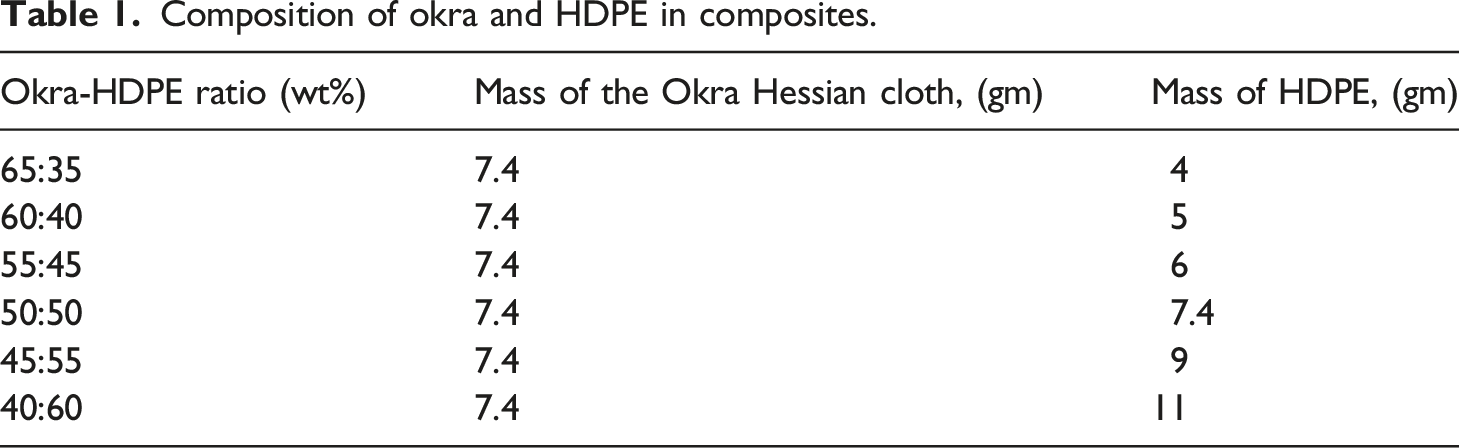
Composition of okra and HDPE in composites.
Characterization
X-ray diffraction
X-ray diffraction (XRD) of the samples were performed by a X-ray diffractometer (Panalytical Corporation, Almelo, Netherlands) using monochromatic CuKα radiation with a current of 40 mA and a voltage of 40 kV. The percentage of crystallinities and the crystallite size of HDPE, UOF, TOF, UOHPC, TOHPC, and IOHPC5 were assessed using Eqn (1).
19


The full width at half maximum (FWHM) line broadening is given in radians and θ represents Bragg’s angle in degrees. K = 0.89 is a constant and the wavelength, λ, is equal to 1.5418 Å.
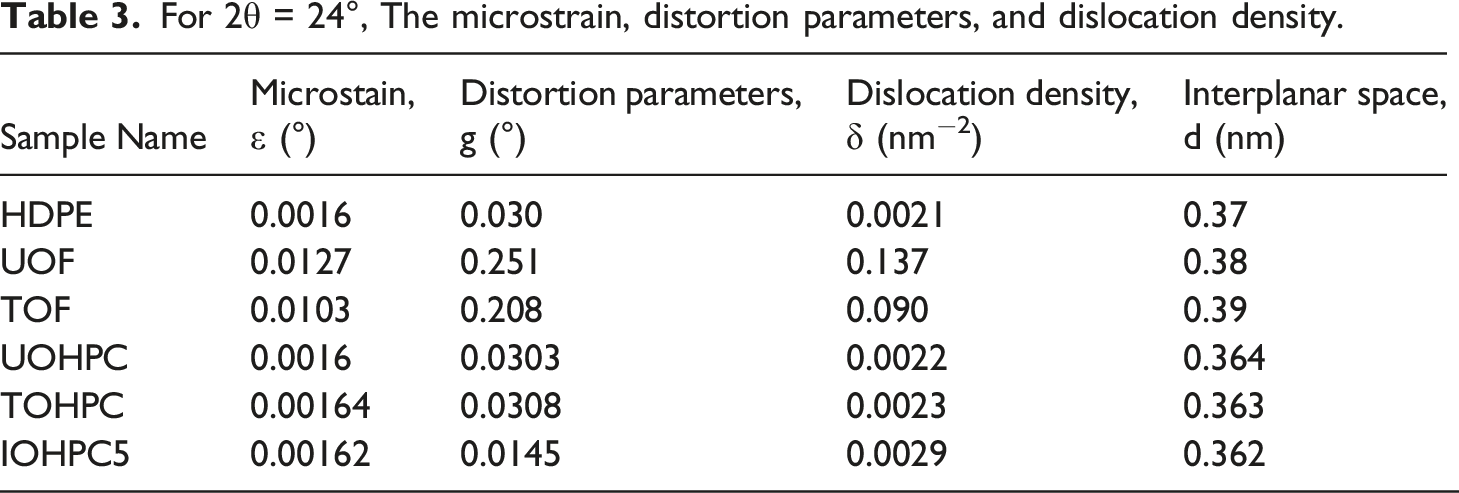
The aforementioned samples’ microstrain, distortion parameters, dislocation density, and interplanar spacing
20
were calculated using the following relations:



FESEM micrograph
A field emission scanning electron microscope (FESEM) at an accelerating voltage of 15 kV (SUPRA 55VP, Carl ZEISS, Oberkochen, Germany) was used to study the interfacial adhesion between the HDPE matrix and Okra fiber. Before this study, Okra fiber bundle, UOHPC, TOHPC, and IOHPC5 samples were precoated with a platinum layer (purity, 99.99%) to eliminate the electron charging by ion splitting. Samples were taken after measuring the tensile strength.
Fourier transformation infrared (FT‒IR) spectroscopy
FTIR spectra were collected using a Nicolet 6700 MAGNa‒IR spectrometer (Thermo Scientific, Germany) in the wavenumber range of 650 cm−1 to 4000 cm−1. The spectra were used to measure the functionality of HDPE, UOF, and TOF, as well as the interaction between the fiber and matrix in UOHPC, TOHPC, and IOHPC5.
Water intake (WI)
The UOHPC, TOHPC, and IOHPC5 samples were exposed to water bath at 30°C for up to 40 h at 5-h intervals. Before being submerged in water, the samples were dried at 50°C for 24 h; the dried weight was Wi. After each period, the samples were removed from the water, and their final weight (Wf) was measured.2,8
Mechanical properties test
A universal testing machine (UTM) model 1011, UK, was used to assess the tensile strength according to ASTMD638,4,12 the tensile strength (TS) and Young’s modulus (Y) of HDPE, UOHPC, TOHPC, and IOHPC5 were respectably measured with a crosshead speed of 10 mm/min and a gauge length of 30 mm. The impact strength (IS) of the fabricated composites was measured by the universal impact tester (HUNGTA INSTRUMENT CO. LTD., Taiwan) using a hammer mass of 2.63 kg, a lift angle of 150°, and a gravity distance of 30.68 mm. In compliance with ASTM D 6110-97,
4
we performed impact tests on un-notch mode composite specimens. The dimensions (length × width × thickness) of the impact test specimens were 64 mm × 12.7 mm × 3.2 mm. The impact strength of the samples was calculated using the following equation.
The mechanical strength of untreated composites with 40, 45, 50, 55, 60, and 65 wt% fiber contents were measured and the optimized fiber content was found to be 55 wt%. The mechanical strength of 5, 10 and 15 wt% alkali-treated composites were tested to determine the optimum concentration of alkali. The results are shown in Figure 3. 10 wt% alkali-treated composites demonstrated the higher mechanical strength as compared to 5 and 15 wt% alkali-treated composites. Tensile strength concerning the concentration of alkali.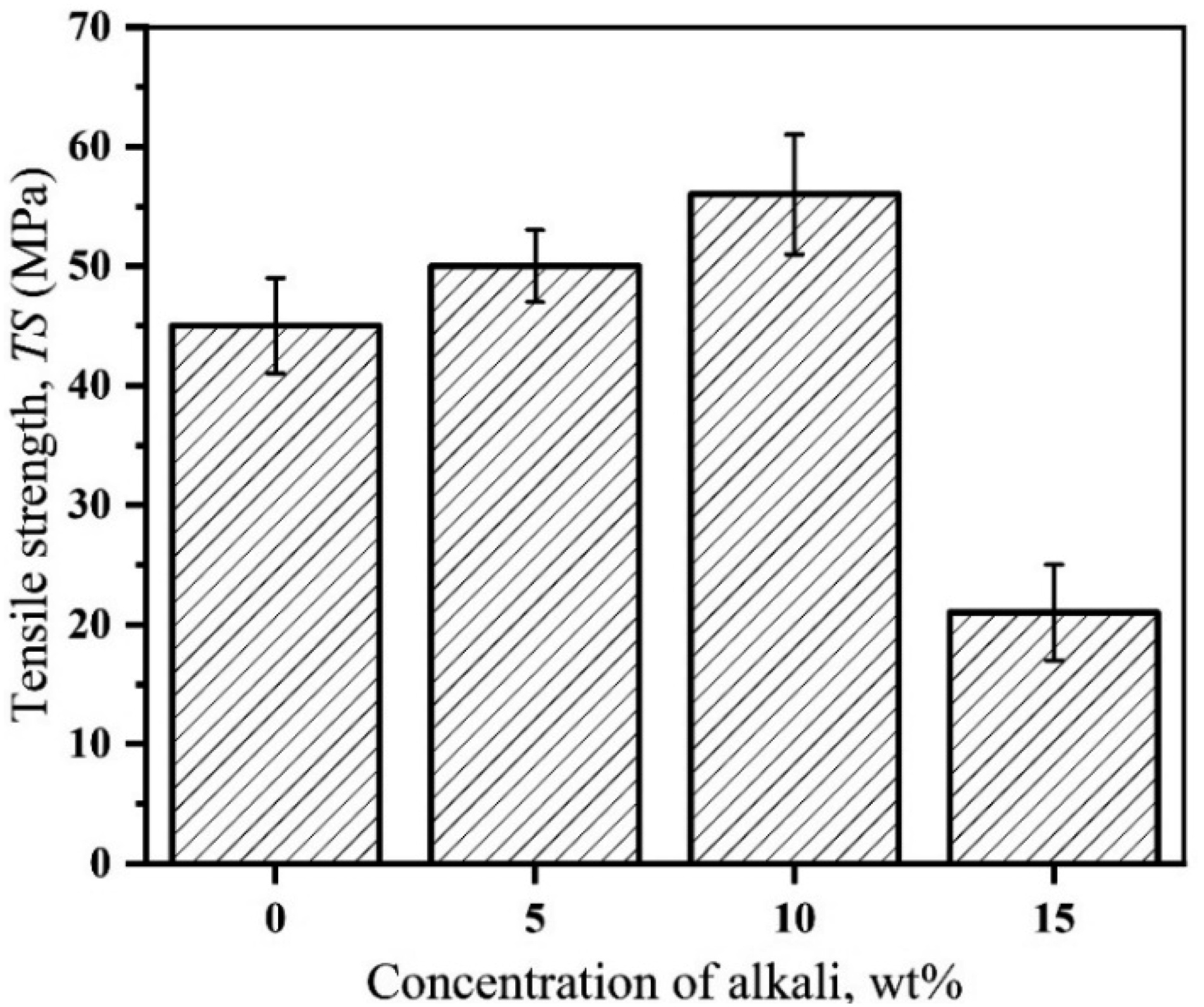
Differential scanning calorimetry
A TA/Q1000 system, differential scanning calorimetry (DSC) was used to identify and assess the thermal transition of the samples, including the glass transition temperature, melting temperature, and crystallization temperature. All test samples were dried at 90°C for 7 h before the measurements. The samples were heated at 27°C–600°C with a heating rate of 20°C/min. To monitor calorimetric characteristics in the nitrogen atmosphere before being used to monitor DSC.
Thermogravimetric analysis
To calculate the weight loss of the samples at various temperatures, thermogravimetric (TG) measurements were carried out by a TGA Q500 V6.4, Germany, in a platinum crucible under a nitrogen atmosphere at a heating rate of 20°C/min. The temperature was measured between 27 and 600°C, 21 and the flow rate of the gas was 60 mL/min.
Results and discussion
XRD analysis of the samples
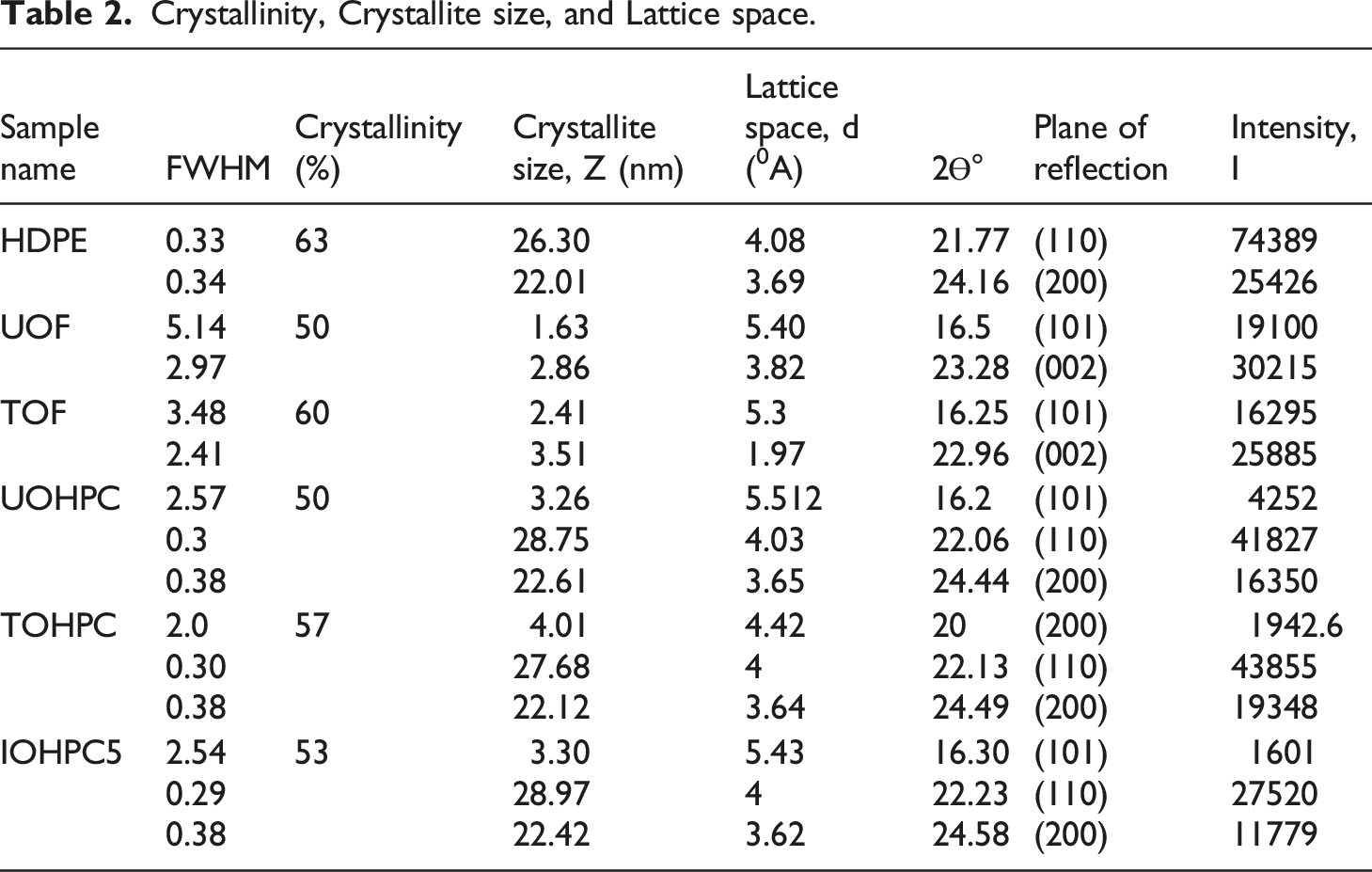
Figure 4 displays the UOF and TOF XRD patterns. The reflection planes (002) and (101), which are located at 2θ = 23.28 and 16.5°, respectively, are clearly visible in the XRD pattern of UOF. Following the alkali treatment of the fiber, the locations of 2θ for the same planes are at 22.96 and 16.25°. TOF has a crystallinity of 60%, which is 20% higher than the crystallinity of UOF. Additionally, it is seen that after alkali treatment, the strength of both the (002) and (101) reflection peaks increases. This is because of the removal of non-cellulosic amorphous components from the untreated fiber.21,22 XRD patterns of (a) UOF, (b) TOF.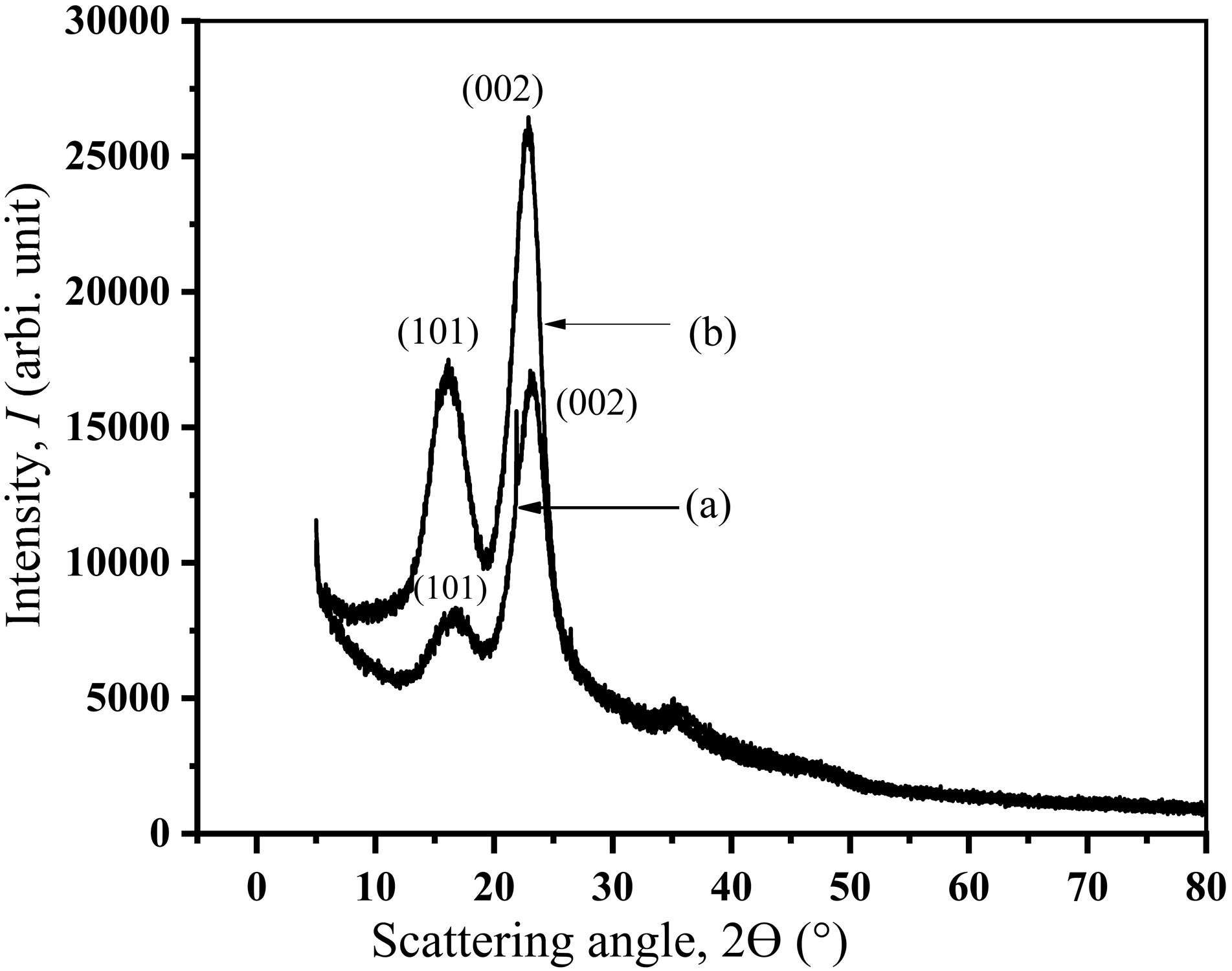
Crystallinity, Crystallite size, and Lattice space.
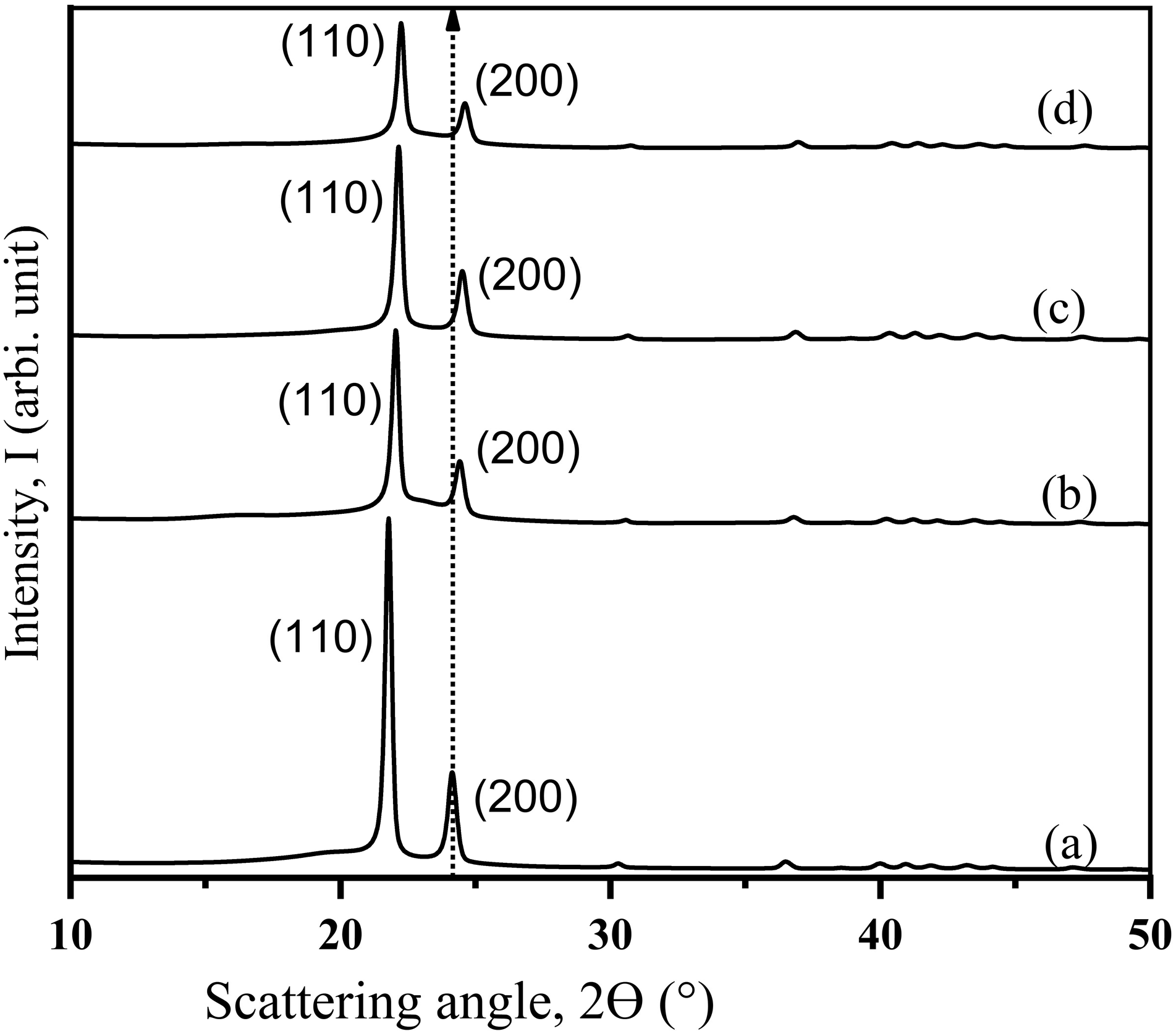
The XRD patterns of (a) HDPE, (b) UOHPC, (c) TOHPC, and (d) IOHPC5.
The positions of 2Ө in the UOHPC, TOHPC, and IOHPC5 are shifted to the right side than HDPE, indicating lattice contraction in the composite samples (Figure 5). On the other hand, the crystallinity of IOHPC5 is 14% less than TOHPC, which are shown in Table 2. Gamma-ray irradiation may have caused structural changes in sample IOHPC5 by breaking existing bonds and creating new ones, resulting in the formation of a network structure. 23
For 2θ = 24°, The microstrain, distortion parameters, and dislocation density.
Morphological test
The FESEM micrographs of a bundle of TOF and the micrographs of UOHPC, TOHPC, and IOHPC5 are taken from the ruptured surfaces after tensile strength tests and are shown in Figure 6. Due to alkali treatment, many more impurities were illuminated from the surface of the treated Okra fiber, and the fiber became rougher than untreated ones. Therefore, a better adhesion is observed between Okra fibers and the HDPE matrix in TOHPC samples. In the case of TOHPC, a noticeable fiber break is observed, and a smaller number of fibers are arbitrarily pulled out from the HDPE matrix in the composites. A large number of fibers are detached from the matrix in the case of UOHPC. In Figure 6(b) and (c), the matrix seems to stick to the fibers even after their detachment. Because of the gamma-ray irradiation, samples IOHPC5 show no pull-out of fibers from the matrix and moisture contents removed. It appears that there is a stronger adhesion between the fiber and HDPE in composites treated with alkali followed by gamma-ray irradiation, as evidenced by a reduction in noticeable fiber breakage and a smaller number of fibers being pulled out from the HDPE matrix.
25
The surface morphology of the IOHPC5 samples indicates an improved interaction between the Okra fiber and HDPE matrix, which is believed to result from cross-linking due to gamma-ray treatment.
26
These may be the reasons for the higher mechanical properties of irradiated composites than alkali-treated and untreated composites. Field effect scanning electron micrographs of (a) 10% alkali‒treated bundle of Okra fiber (b) UOHPC, (c) TOHPC, and (d) IOHPC5 fracture surface.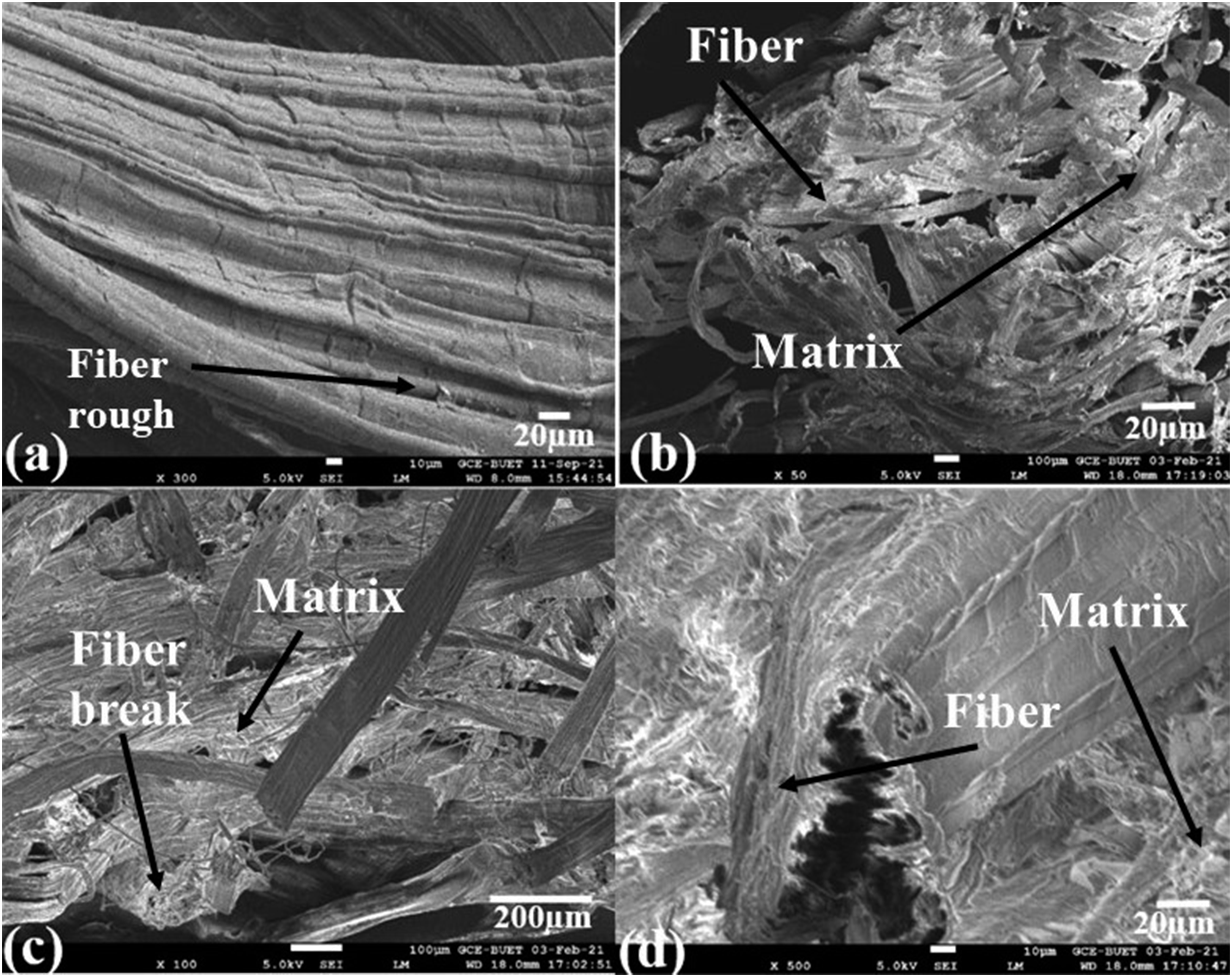
FTIR analysis
FTIR spectra of HDPE, UOF, TOF, UOHPC, TOHPC, and IOHPC5 are shown in Figure 7. HDPE shows a broad band at 2920 cm−1 and 2850 cm−1, which indicates the asymmetrical and symmetrical stretching vibration for the –CH2 group. A strong band at 2365 cm−1 is also observed due to the O = C = O stretching for the nitrile group. A high-pitched absorption band is observed at 1480 cm−1, which is attributed to the scissoring vibration of –CH2. The most important band is observed at 720 cm−1 and an additional band at 730 cm−1 is attributed to the rocking vibration of –CH2 and the crystallinity. These characteristics have been associated with the microstructures of crystalline and amorphous phases of HDPE in the literature.
26
UOF displays a well-defined absorption peak in the 3200-3600 cm−1 range, which is attributed to the stretching vibrations of hydrogen-bonded ‒OH groups. Another notable peak is observed at 1730 cm−1, which is related to the C = O stretching vibration of the carboxyl and ester groups present in hemicellulose. Additionally, UOF shows absorption peaks at 1500 cm−1, 1452 cm−1, 1370 cm−1, and 1030 cm−1, corresponding to the -CH2 deformation, CH3 asymmetric deformation, -CH symmetric deformation, and -CH stretching, respectively.
22
In the spectrum of TOF, all these peaks are perceptible with enhanced intensity. The band at 1438 cm−1 for –CH2 bending of cellulose remains almost unaffected after treatment. The results of TOF appear identical to UOF, previously reported.
27
FTIR of (a) HDPE, (b) UOF, (c) TOF, (d) UOHPC, (e) TOHPC, and (f) IOHPC5.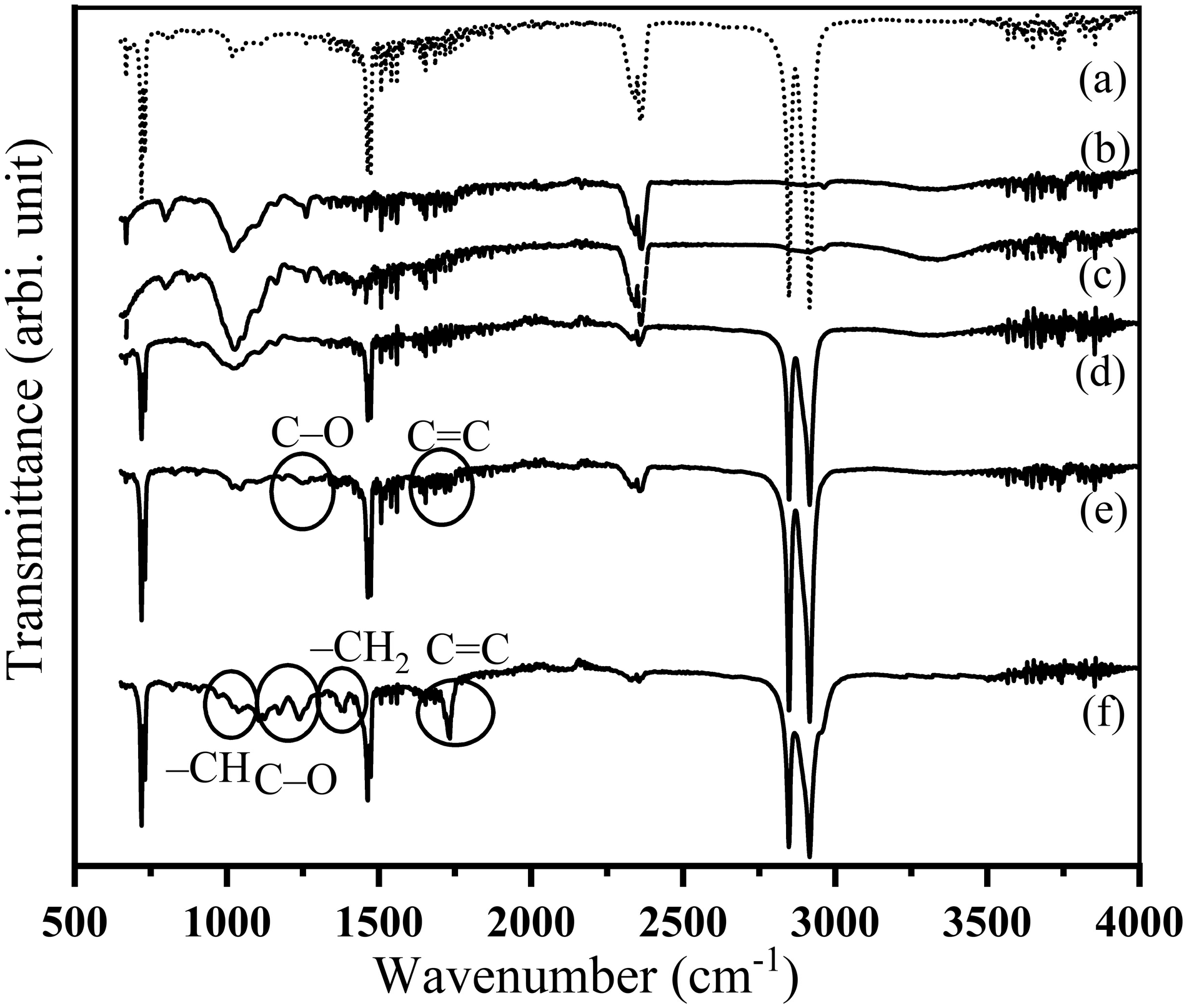
The FTIR spectra of UOHPC, TOHPC, and IOHPC5 show significant changes in the wavenumber ranges of 3200–3600 cm−1 and 1000–1800 cm−1, as indicated by the circular enclosures. All Okra fiber-reinforced composites exhibit the characteristic band of the C = C group in the 1600-1735 cm−1 region and C-O stretching in the 1000-1300 cm−1 region. This is due to the presence of alkali-treated fibers as reinforcement in the composites. Both UOHPC and TOHPC samples show similar spectra at 1034 cm−1, corresponding to C–O vibrations. 28 Due to the presence of aromatic rings of lignin, C = C stretching appears between 1375 and 1600 cm−1. The spectrum of IOHPC5 indicates a new and intense peak at 1639 cm−1, which corresponds to an un-conjugate stretching vibration of the C = O bonds in the carbonyl and acetyl groups in the xylene component of hemicellulose. 29 The IOHPC5 lacks hydrogen-bonded O-H stretching vibrations as a result of gamma radiation, and a highly powerful peak is also seen at the band 1735 cm−1 for C = O stretching from lignin and hemicellulose in the IOHPC5. Furthermore, the creation of this connection with HDPE molecules may be indicated by a rise in the intensity of the 1117 cm−1 band, which is connected to the antisymmetric stretching of C-O-C glycoside bonds. Changes in the amorphous cellulose’s C-O stretching intensity (at 910 cm−1) are also discernible. In addition, it was discovered that gamma-ray irradiation significantly alters the C-H stretching of cellulose at 1044 cm−1. As a result of gamma-ray irradiation, the strength of the peak in the band at 2360 cm−1 for group C-N of IOHPC5 samples is significantly reduced. 30 Ionizing radiation can cause the cross-linking of HDPE molecules with okra fibers. Okra fiber and HDPE molecules create fresh crosslinking linkages as they cross each other. These findings have a significant impact on how molecules rotate and vibrate. Lignin and hemicellulose are only partially separated from Okra fiber by alkali treatment. Therefore, the linkage and crosslinking between TOF and HDPE molecules in the TOHPC and IOHPC5 samples are confirmed from the FTIR spectra by gamma-ray irradiation. 31
Improved adhesion was observed between the treated Okra fiber molecule and HDPE in TOHPC compared to UOHPC due to the presence of C = O, C‒O, and ‒CH2 bonds. The irradiated IOHPC5 samples exhibited new absorption peaks in the 1000-1600 cm−1 region, corresponding to C = O, C-O, -CH2, and -CH bonds, indicating enhanced cross-linking.
Ionizing radiation process
Gamma-ray irradiation can create numerous free radicals in TOHPC samples through hydrogen (‒H) and hydroxyl (‒OH) abstraction. Figure 8(a)–(c) show the formation of free radicals resulting from the opening of the bond cycle or chain scission of Okra fiber cellulose monomeric units. On the other hand, when the HDPE is subjected to gamma-ray irradiation, it can lead to the formation of free radicals through the hydrogen abstraction process. This process occurs during the cleavage of the HDPE molecule, which is responsible for binding with other cellulose units or with HDPE molecules through a covalent bond, as shown in Figure 8(d). (a) Abstraction Hydrogen or hydroxyl groups from cellulose. (b) Free radical production on cellulose as a result of gamma radiation. (c) Chain scission on cellulose as a result of gamma radiation. (d) Free radical production in HDPE molecules. (e) Gamma-ray irradiation in the TOHPC results in the formation of C-C bonds. (f) Gamma-ray irradiation of the TOHPC results in the formation of a C-O bond.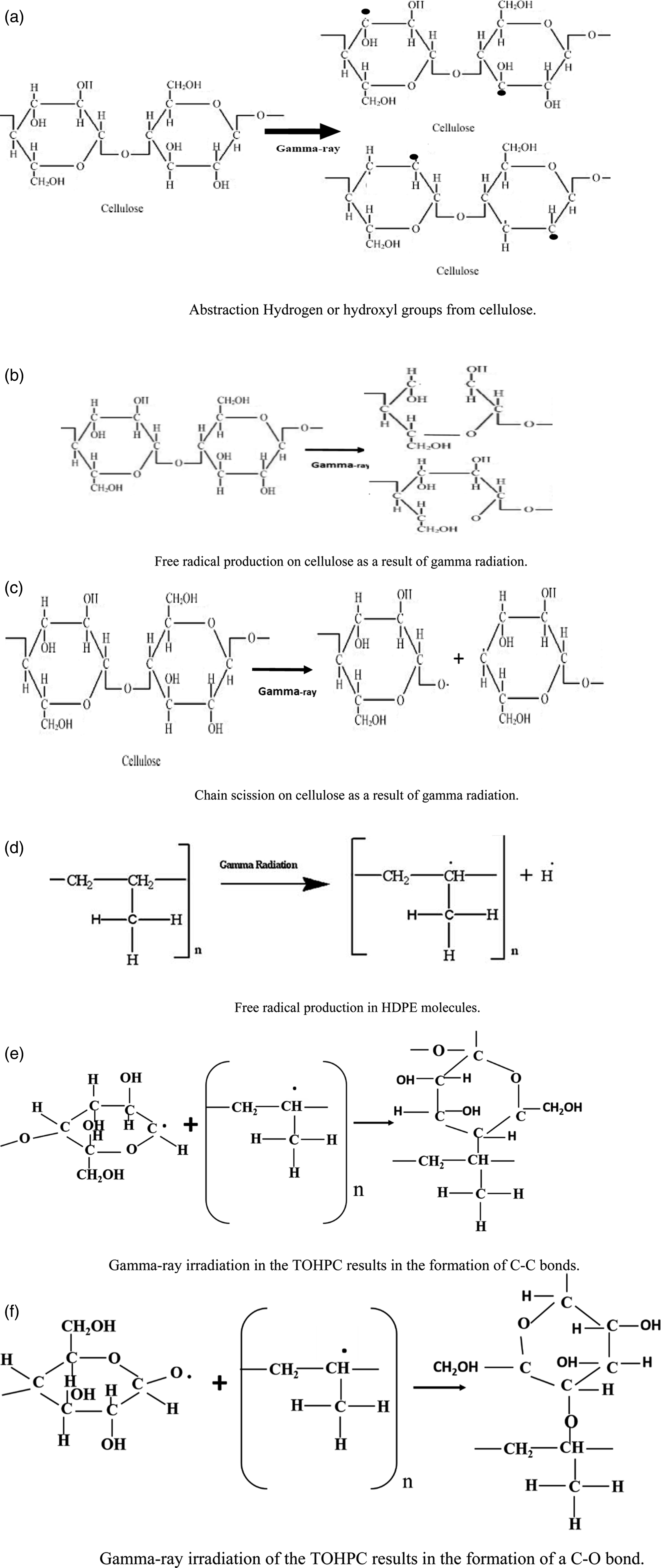
The gamma-ray irradiation of IOHPC5 cross-links fiber and HDPE molecules through C‒C, ‒CH, ‒CH2, and C‒O bonds, 8 as shown in Figure 8(e) and (f). Therefore, the gamma-ray exposed composite IOHPC becomes more stable than alkali-treated and untreated ones. In the FTIR spectrum analysis, the experimental results confirmed the proposed bonding between cellulose and HDPE.
Water intake
The water intake (WI) of the different composite samples was assessed using Eqn. (vii) and are presented in Figure 9. The WI values of the UOHPC, TOHPC, and IOHPC5 samples achieve the extreme value within 30 h, and then it’s found to nearly level off for IOHPC5 than UOHPC and TOHPC. The value of WI at a particular time is more for UOHPC than that for TOHPC and IOHPC5. For instance, at 40 h, the value of WI of UOHPC shows 61% more advanced than that of IOHPC5 and 30% greater than that of TOHPC. WI of UOHPC, TOHPC, and IOHPC5 as a function of time.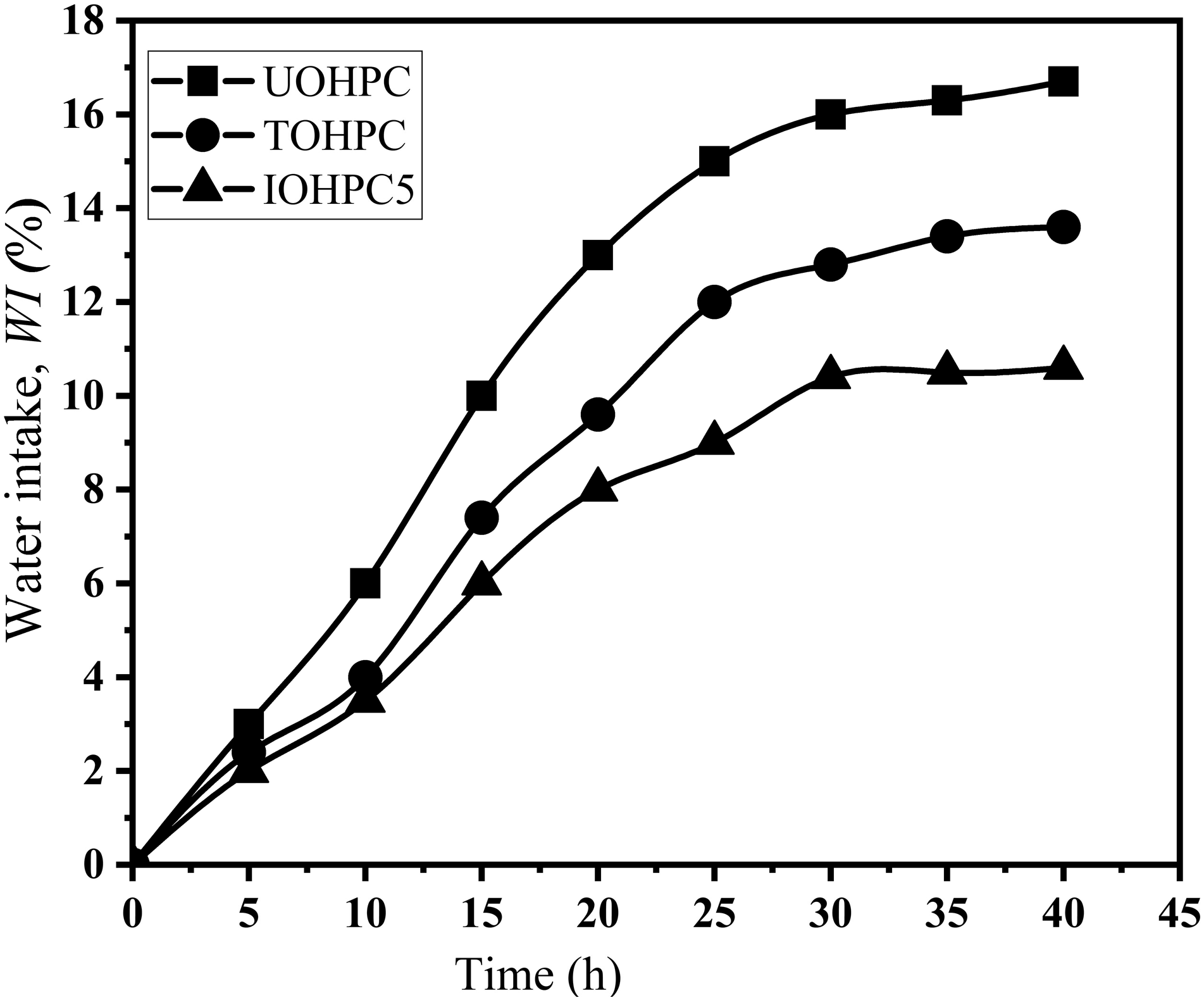
The developed WI of UOHPC compared to TOHPC is due to the increased hydrophilicity and less incompatibility of the UOF with the HDPE matrix. This result comes from some impurities (wax, lignin, hemicellulose, etc.) of the UOF. Also, imperfections at the polymer-fiber or fiber-fiber interface may trap water, creating more intermolecular space for UOHPC and causing higher WI.32,33
On the other hand, due to the irradiation of the sample TOHPC, the hydrophilic nature of its fabric is compact, and hence, the moisture retention decreases in IOHPC5. Thus, IOHPC5 shows less water intake properties than TOHPC and UOHPC.10,11
The sample of untreated composites shows about 16% WI properties, whereas the treated composite is about 13%, and irradiated composites show about 8%. Due to gamma-ray irradiation, enhanced cross-linking occurs between fiber and matrix. So, the irradiated sample shows less water intake properties than untreated and alkali-treated composites.
Mechanical properties
Figure 10 depicts the TS of UOHPC and TOHPC, which include 40-65w% fiber contents. The TS values of UOHPC and TOHPC increase from 40 to 55 wt%, then drop up to 65 wt % in terms of fiber content. The TS value of the UOHPC is 45 MPa at a 55-wt% fiber content and the TS value of TOHPC is 54.6 MPa at the same fiber content. As a result, the rise in TS after alkali treatment is around 24%, which is caused by the removal of waxy and gummy components from the untreated Okra fiber. The composites exhibit the highest tensile strength at 55 wt% fiber contents for both UOHPC and TOHPC due to the balanced fiber-matrix ratio, regular fiber distribution, and the proper wettability of the fibers with the matrix. In addition, the alkali treatment causes the fiber’s surface to become rough. The Okra fiber’s rough surface improves the van der Waals interaction between its molecules and the molecules of the HDPE matrix.
8
Variation of the TS of UOHPC and TOHPC as a function of fiber contents.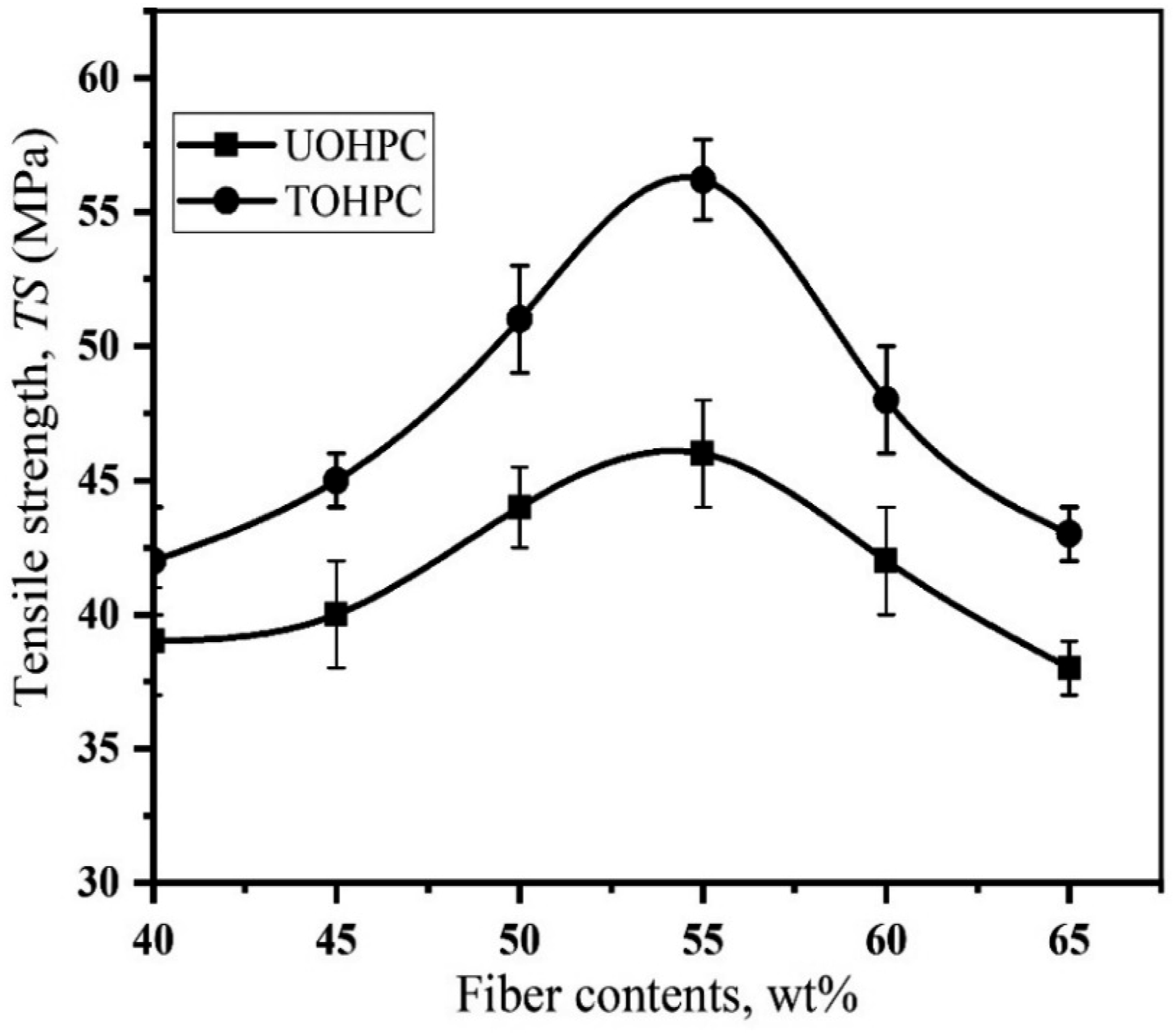
In Figure 11, which includes the samples HDPE, UOHPC, TOHPC, IOHPC2.5, IOHPC5, and IOHPC7.5, the variation of maximum TS for various samples with a fiber content of 55 wt% is depicted. The TS value of HDPE is 30 MPa. When the HDPE matrix and Okra fiber are combined, the maximum TS of UOHPC and TOHPC are 46 MPa and 56.2 MPa, respectively. After the irradiation of gamma rays in the TOHPCs, the TS value rises from 2.5 to 5 kGy dose and then falls between 5 and 7.5 kGy. For IOHPC5, the greatest TS value displayed is 66 MPa at 5 kGy dose, which is 10%, 20 %, 17 %, 44 %, and 120 %, higher than those of IOHPC2.5, IOHPC7.5, TOHPC, UOHPC, and HDPE respectively. The increase in the TS value of IOHPC5 may be attributed to the improved adhesion and cross-linking between Okra fibers and HDPE matrix molecules due to gamma-ray irradiation. The TS value decreases after 5 kGy radiation dose, which may be described due to the breaking of the long chain of HDPE or the breakdown of the cross-linking between the Okra fiber and HDPE matrix and the breaking of molecules of the components of Okra fibers due to the high dose. However, it is noticeable that the tensile strength of alkali-treated composites exhibits higher mechanical properties than untreated ones. At 55 wt% Okra fiber contents, demonstrating that due to alkali treatment of the fibers provides improved performance of the subsequent composites, gamma-ray irradiation significantly strengthens these properties.2,8 Tensile strength of the different types of composites at 55 wt% fiber contents.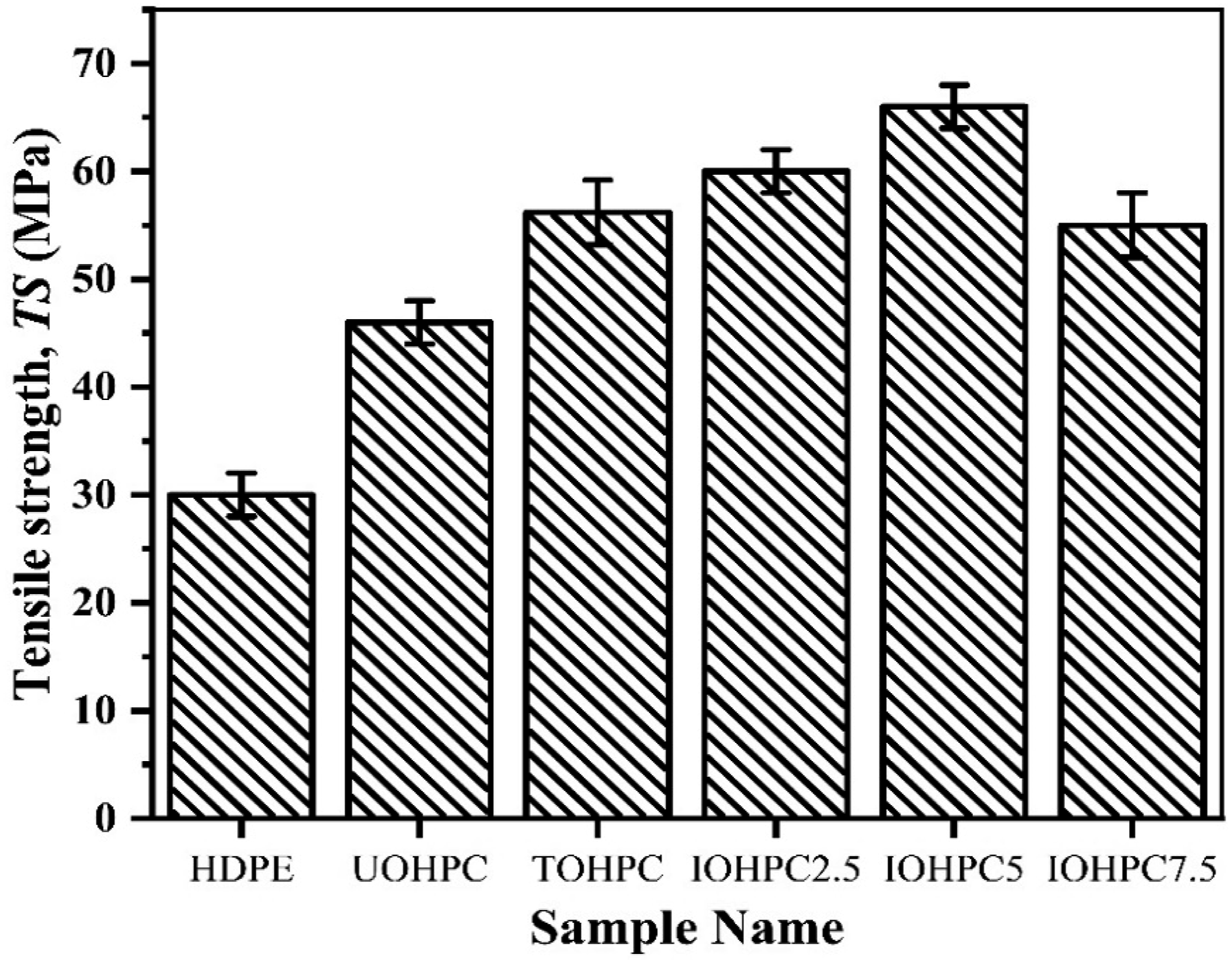
Figure 12 displays the Y values of UOHPC and TOHPC as a function of fiber contents. For both forms of composite, the Y value rises up to 55 wt% fiber contents and then decreases between 55 and 65 wt% fiber contents. The Y value of UOHPC is 1450 MPa, and the Y value of TOHPC is 1570 MPa at the optimal fiber contents, which shows that TOHPC has better fiber-matrix adhesion than UOHPC. Figure 13 displays the Y for HDPE, UOHPC, TOHPC, IOHPC2.5, IOHPC5, and IOHPC7.5 with 55 wt% Okra fiber contents. The maximum Y value of IOHPC5 is 1925 MPa, which is 75%, 32%, and 22% higher than the values for HDPE, UOHPC, and TOHPC, respectively. The cross-linking between the molecules of the fiber and matrix may be the cause of the increase in Y value at radiation doses up to 5 kGy. The Y value is seen to decrease at larger dosages beyond 5 kGy, which may be caused by the degradation of fiber and polymer molecules.
33
Irradiation of gamma-rai in the IOHPC5 sample produces polar groups of C = O and C-O, enhancing the Okra fiber’s compatibility with the matrix. As a consequence, the Y values may be improved. Young’s modulus of UOHPC and TOHPC5 as a function of fiber contents. Young’s modulus of HDPE, UOHPC, T'OHPC, IOHPC2.5, IOHPC5, and IOHPC7.5.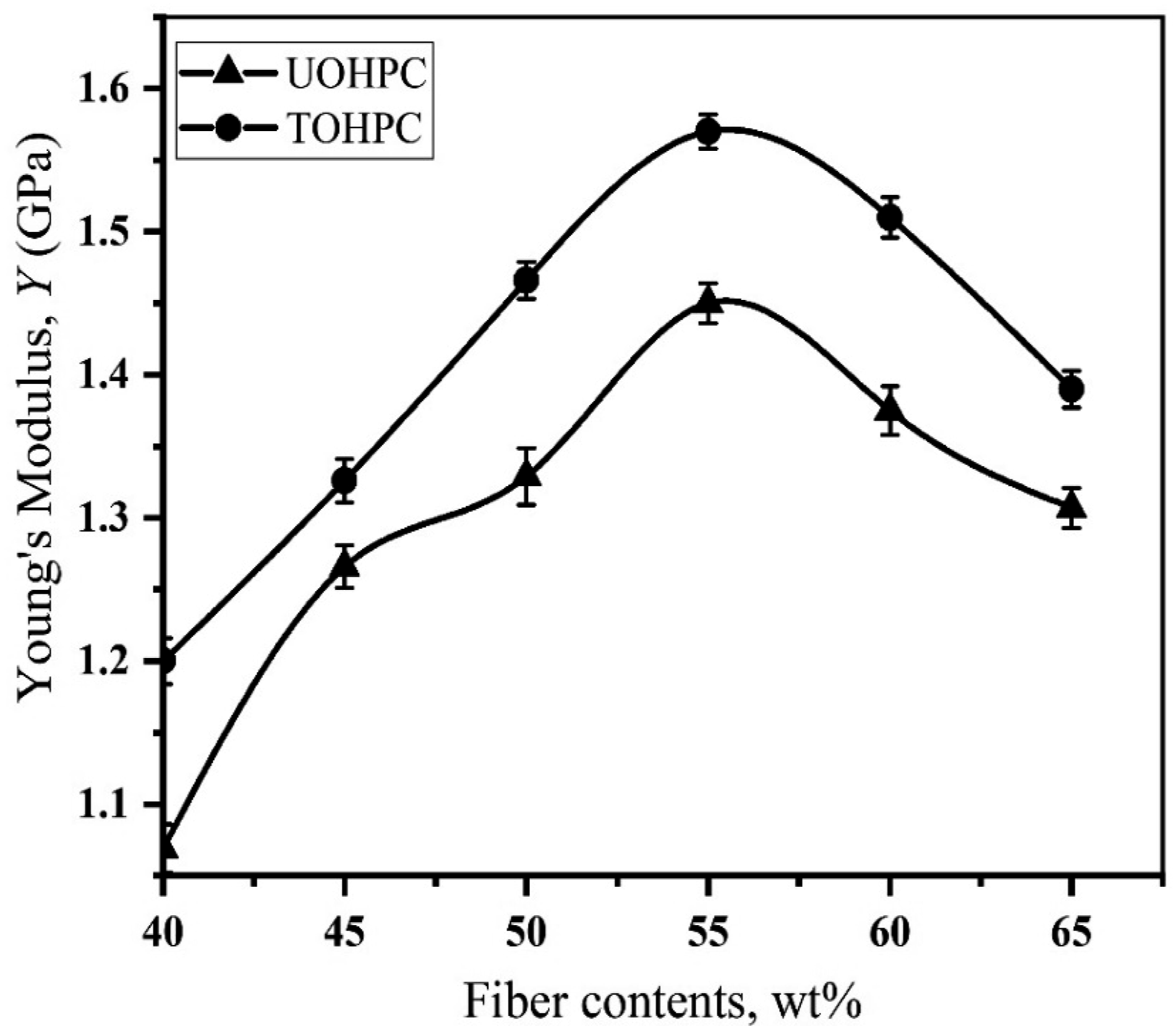
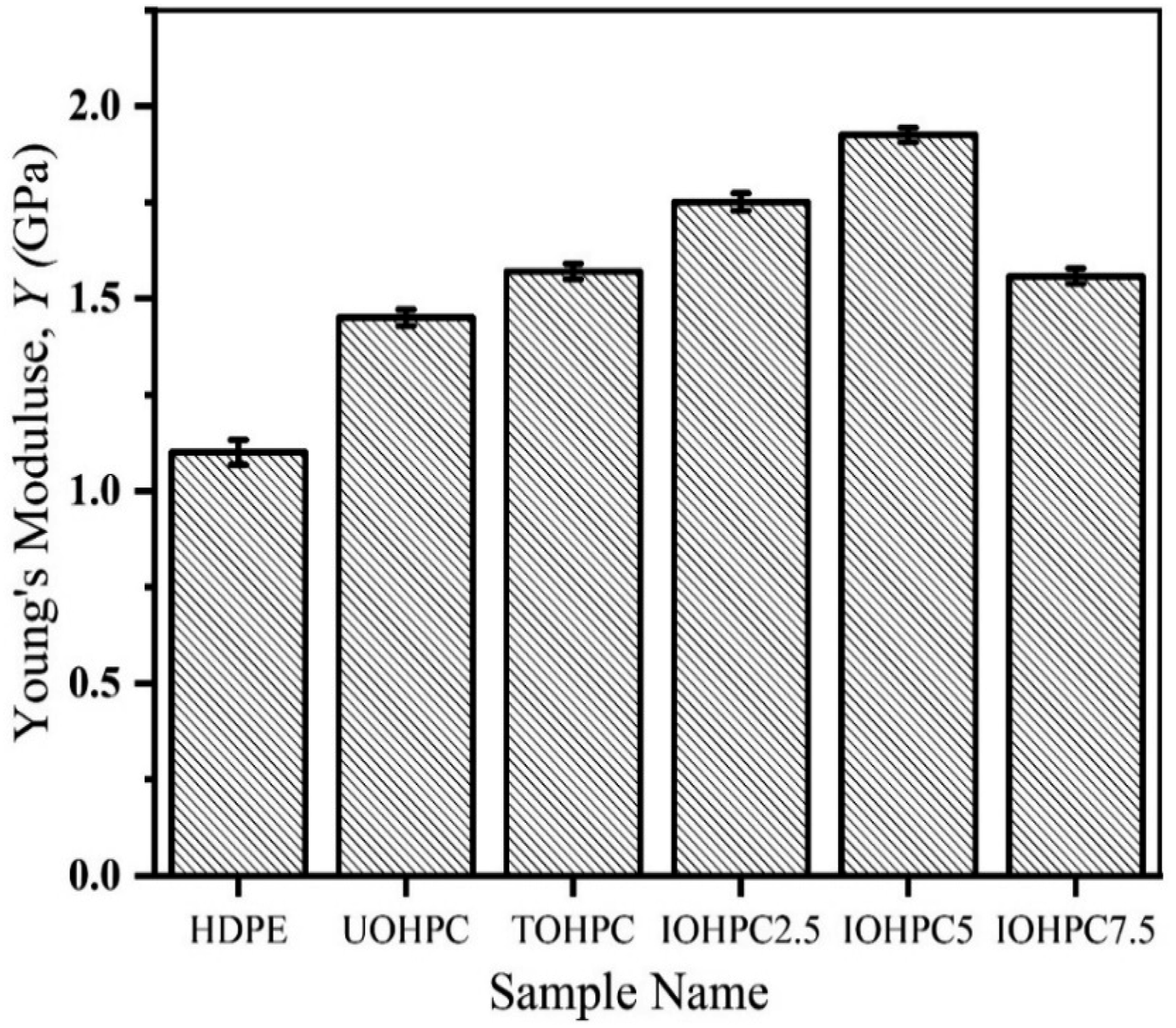
Figure 14 shows the variation of impact strength (IS) of the composites at different fiber contents. It is clear that the IS value increases with the fiber contents, becomes maximum at 55 wt% fiber content, and then decreases. This result is due to the increased wetting between fiber and HDPE matrix. On the other hand, TOHPC exhibits a higher IS than UOHPC. This fact is due to the improved interaction between fiber and matrix molecules.
33
Impact strength of UOHPC and TOHPC5 as a function of fiber contents.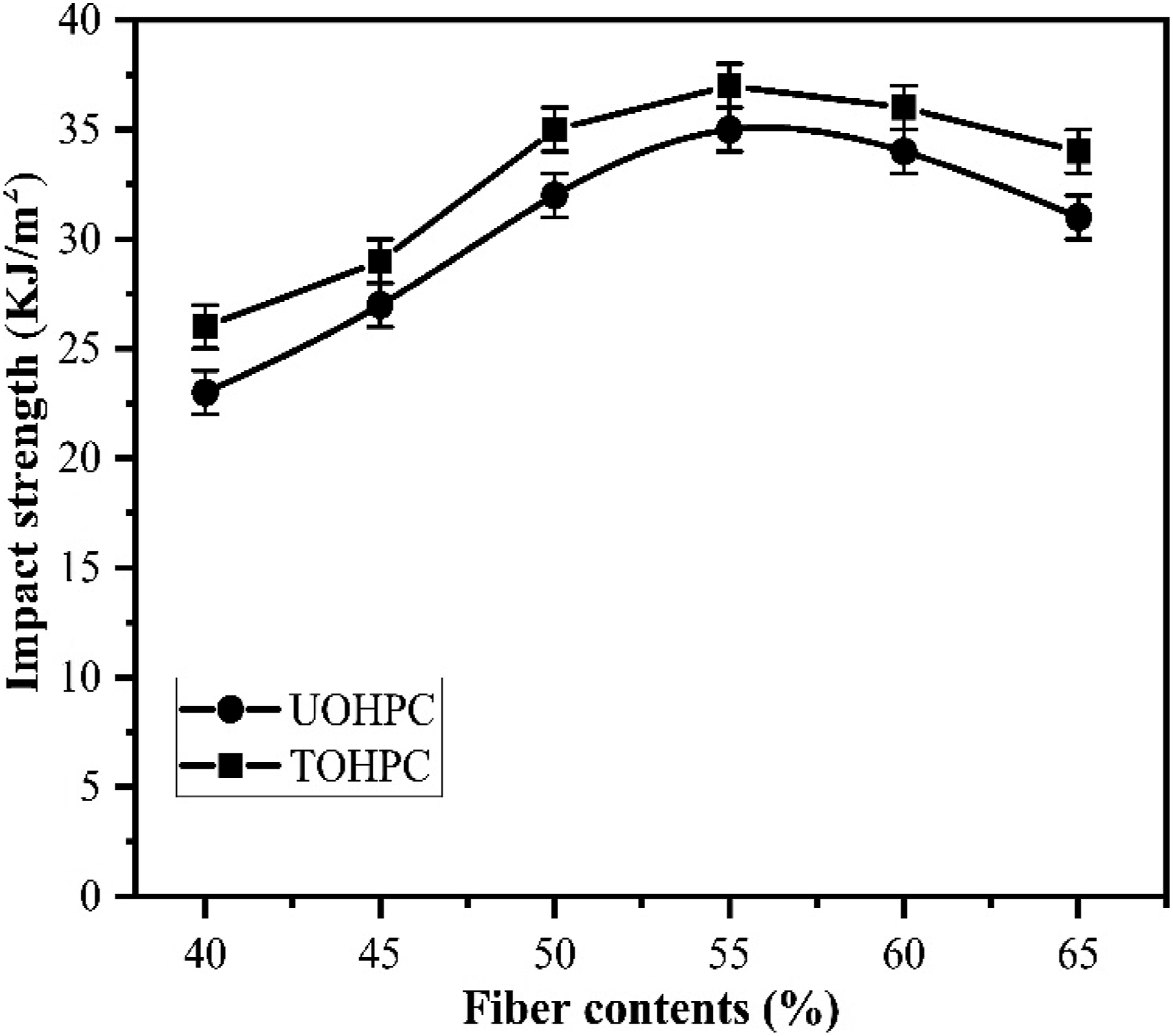
The IS of UOHPC, TOHPC, IOHPC2.5, IOHPC5, and IOHPC7.5 is shown in Figure 15. The IS of IOHPC5 is 26, 19, 10, and 5% greater than that of UOHPC, TOHPC, IOHPC2.5, and IOHPC7.5, respectively. This is due to the enhanced cross-linking between the Okra fiber and the HDPE matrix.
4
Impact strength of different samples at 55 wt% fiber contents.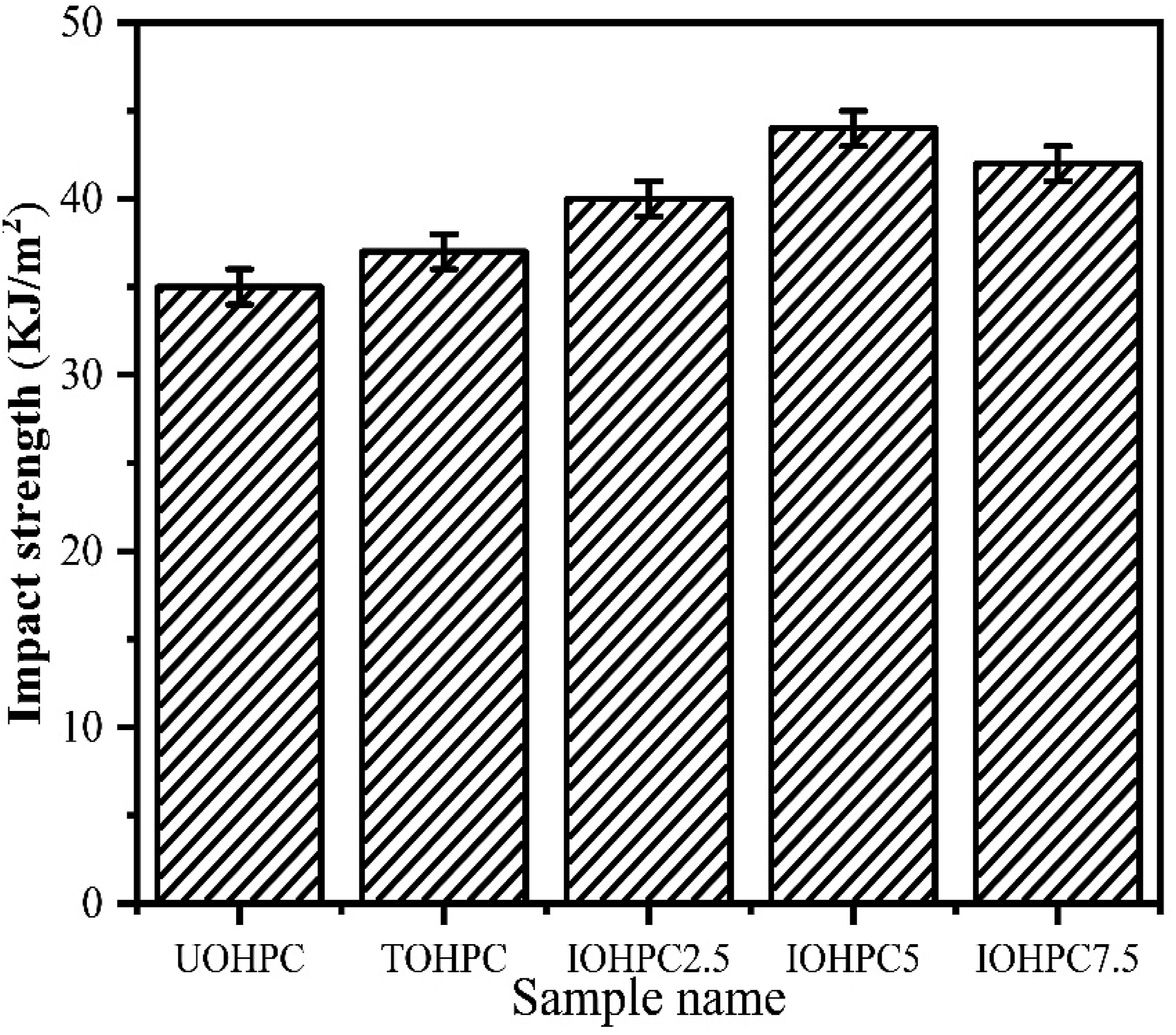
The tensile strength, Young’s modulus, and impact strength of the untreated and treated composites increase with the fiber contents up to 55 wt%, and after that, these decrease. At this fiber content, the fibers in the composites are wetted properly by the molten HDPE. So, the interaction between fiber and matrix is enhanced. After gamma-ray irradiation on the alkali-treated composites, enhanced cross-linking is observed by C-O, C-C –CH bonds as shown in the results of FTIR. Therefore, the irradiated composite shows improved mechanical properties than untreated and alkali-treated composites.
Thermal analysis
Differential scanning calorimetry
Figure 16 displays the DSC thermograms of HDPE, UOF, TOF, UOHPC, TOHPC, and IOHPC5. In the DSC of HDPE, there are two essential peaks visible. The first one is for melting at 130°C, and the second is for deterioration at 522°C. According to,
34
the fiber always contains moisture. Hence, UOF and TOF show a diffuse peak around 96°C and 107°C, which may be caused by the absorbed water beginning to emit from the fabric. IOHPC5 melts at a temperature of 147°C, while UOHPC and TOHPC melt at 136°C and 145°C, respectively. Figure 16 depicts the melting points of HDPE, UOHPC, TOHPC, and IOHPC5 by a dotted line 1. Table 4 displays the temperature at which various samples decompose. This outcome might be the result of HDPE’s crystalline structure fracturing and the Okra fiber and HDPE developing crosslinks as a result of exposure to gamma radiation.
35
DSC thermograms of (a) HDPE, (b) UOF, (c) TOF, (d) UOHPC, (e) TOHPC, and (f) IOHPC5. The decomposition temperature of HDPE, UOF, TOF, UOHPC, TOHPC, and IOHPC5.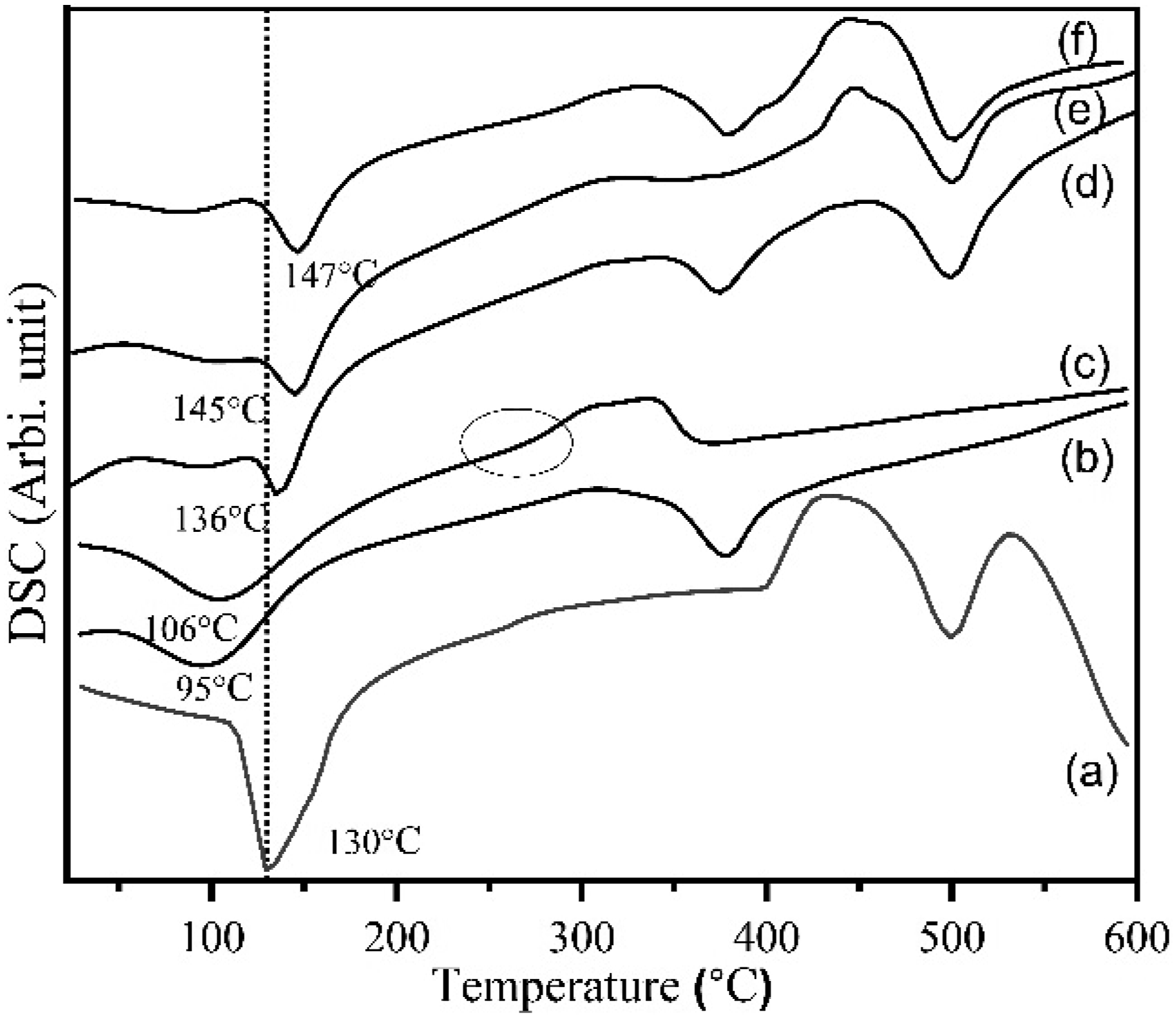
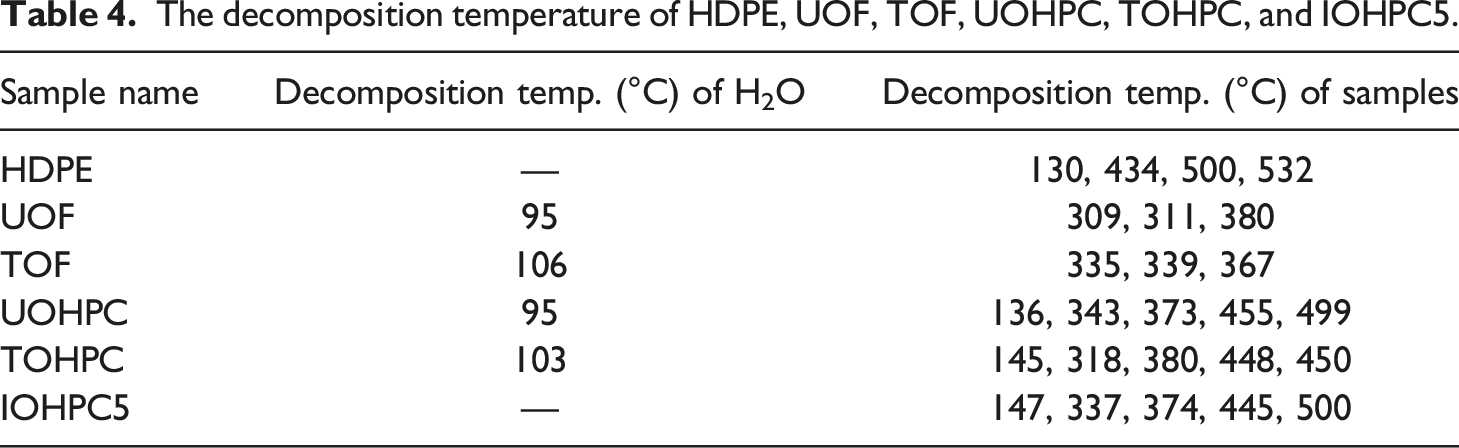
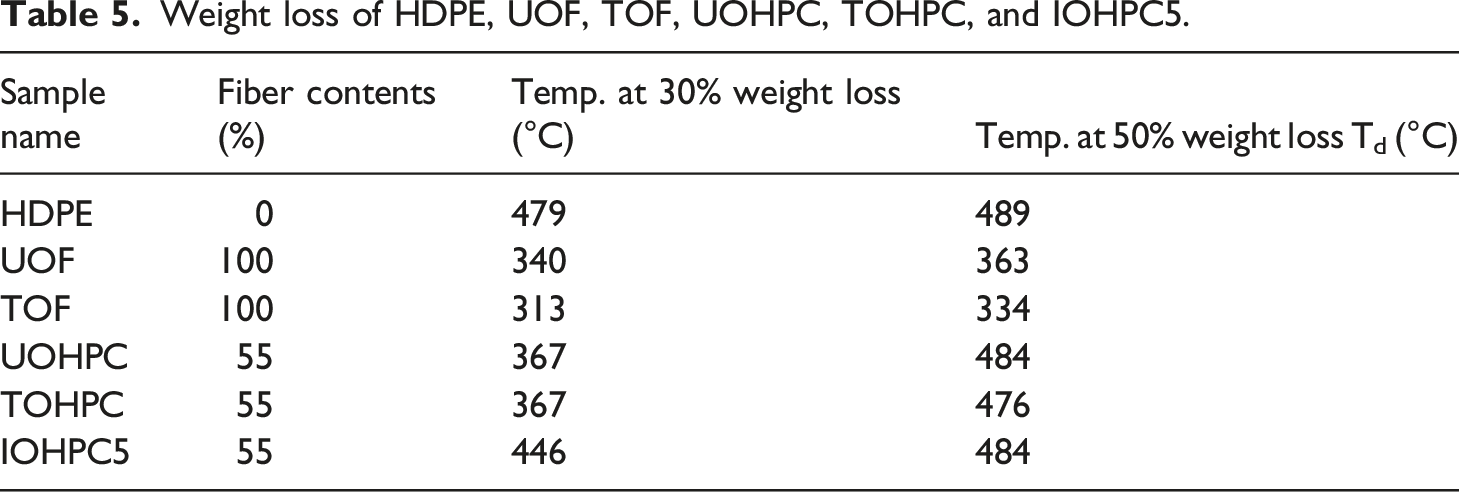
Figure 17 demonstrates the weight loss measurements with temperature for HDPE, UOF, TOF, UOHPC, TOHPC, and IOHPC5, respectively. 30% and 50% weight losses of the samples concerning temperatures are shown in Table 5. It may be ascribed to the decomposition of hemicellulose, α‒cellulose, and lignin at the middle stage of TGA.
36
UOHPC, TOHPC, and IOHPC5 all demonstrate a three-step degrading process, with the decomposition temperature at 50% weight loss of a sample being considered as the characteristic of structural degradation or instability.
36
TGA of HDPE, UOF, TOF, UOHPC, TOHPC, and IOHPC5. Weight loss of HDPE, UOF, TOF, UOHPC, TOHPC, and IOHPC5.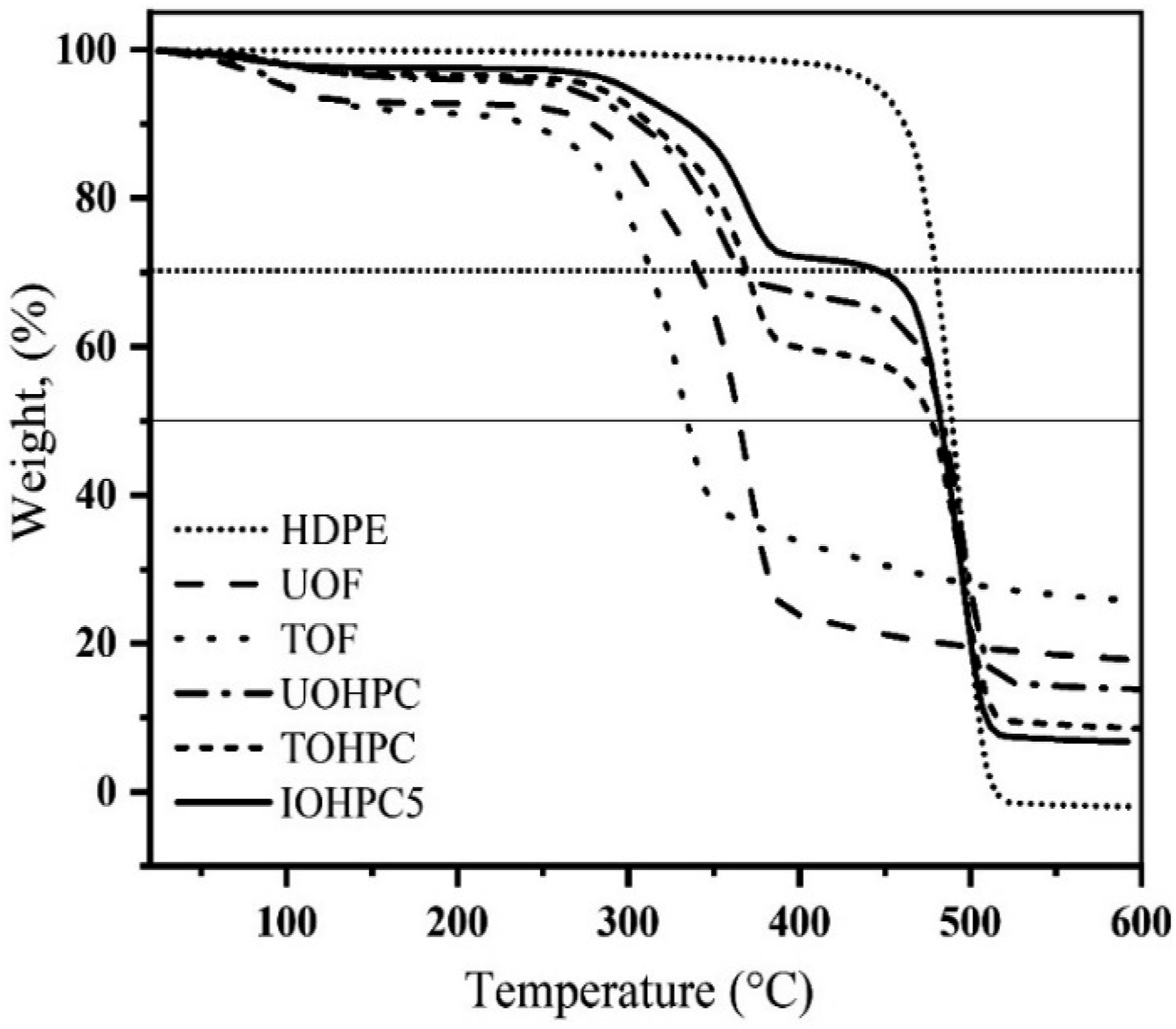
The temperature ranges of 266°C, which goes from 254°C to 520°C, is where HDPE thermally degrades. The dissociation of C–C chain bonds and H–abstraction may cause this deterioration. 37 Both UOF and TOF exhibit two stages of thermal degradation; the first stage occurs between 200 and 310°C, and the second stage is between 310 and 400°C. UOF degrades at 378°C, while TOF degrades at 367°C. The breakdown of hemicellulose from the fiber of okra may be the cause of a downward decline of 272°C. 38 As the breakdown temperature rose from UOHPC to TOHPC and IOHPC5, it suggests improved matrix-to-okra fiber adhesion as well as the creation of new chemical connections between Okra and HDPE molecules through alkali surface treatment and gamma-ray irradiation, respectively. The disintegration of hemicellulose may be shown by the degradation temperature for UOHPC, TOHPC, and IOHPC5 at close to 300°C. 38
The weight loss pattern of IOHPC5 differs from that of other composites, which may be because gamma-ray irradiation of the composites caused the creation of a new chemical link between the fibers and the matrix. According to some sources,37,38 lignin degrades at high temperatures of 330 °C–350 °C and hemicellulose at 300°C, which corresponds to the dissociation of C–O and C–C bonds.
The melting temperatures of the fabricated gamma-ray irradiated composites and alkali-treated composites increase by 7.4% and 9%, respectively, to that of untreated composites. The irradiated composites show 13% higher melting temperature than HDPE. So, it is clear that the irradiated composites are thermally more stable than others.
Conclusions
Okra hessian cloths were treated with 5, 10, and 15 wt% alkalies, and the optimum concentration of alkali, which shows better properties, is found to be 10 wt%. Then, untreated and optimum concentrations of alkali-treated Okra hessian cloth-reinforced thermoplastic composites were made. 10 wt% alkali treated and 55 wt% fiber contents samples were exposed to various doses of gamma radiation. The crystallinity of Okra fiber increases after alkali treatment. The crystallinity of TOHPC is 14 and 8% superior to that of untreated and irradiated composites. According to the FESEM, IOHPC5 shows enhanced fiber-matrix adhesion compared to UOHPC and TOHPC. From the FTIR analysis, the composite samples confirm the new formation of ‒CH, ‒C‒O‒C‒, and ‒C‒C‒ bonds, indicating that the IOHPC5 shows better cross-linking between fiber and matrix. The sample IOHPC5 absorbed less water than untreated and alkali-treated composites as a result of better cross-linking between Okra fiber and HDPE matrix by gamma-ray irradiation. The most effective reinforced composites contain only 55 wt% fiber content before and after alkali treatment. At this optimum fiber content, the maximum TS, Y, and IS values of IOHPC5 are 66 MPa, 1.925 GPa, and 44 KJm−2, respectively. Due to the higher melting temperature, irradiated composite samples IOHPC5 are thermally more stable than TOHPC and UOHPC. Textile and other industries could be encouraged by this work to make various commodity products. Textile mills can produce yarn at affordable prices by combining okra, cotton, and similar fiber products. The main applications for Okra hessian cloth-reinforced HDPE composites can be instrument panels, dashboards, door panels, and packaging.
Footnotes
Acknowledgements
The authors greatly acknowledge the Department of Physics, Bangladesh University of Engineering and Technology, to provide some financial support for sample testing and this research work. They are grateful to the Institute of Radiation and Polymer Technology, Atomic Energy Research Establishment, Savar, Dhaka, Bangladesh, for allowing facilities for this research.
Author contributions
Title: The Impact of Chemical Treatment and Gamma-Ray Irradiation on the Okra Hessian Cloth Reinforced HDPE Composites.
In order to complete this research work, each author contributes as follows.:
Author 1: Mohammed Hossan Shahid Shohrawardy, (i) Corresponding author, (ii) Imagined, (iii) Designed, (iv) Collected data and analysis data, (v) Performed the analysis, (vi) Wrote paper and Revised this manuscript. Author 2: Md. Forhad Mina, (i) Supervised the whole research work and Contributed data, (ii) Co-wrote the paper iii. helped to revise the manuscript.
Author 3: A.K.M. Moshiul Alam, (i) Supervised the whole research work, (iii) Reviewed the manuscript. Author 4: Ruhul Amin Khan, (i) Supervised the whole research work, (iii) Reviewed the manuscript.
If you have any questions about the manuscript, I will serve as the corresponding author. Thank you for your consideration.
Sincerely,
Mohammed Hossan Shahid Shohrawardy (
Ph.D. Student, Physics Department, BUET, Bangladesh. And Senior Lecturer in Physics, Doshaid A K College, Savar, Dhaka, Bangladesh.
Declaration of conflicting interests
The author(s) declared no potential conflicts of interest with respect to the research, authorship, and/or publication of this article.
Funding
The author(s) received no financial support for the research, authorship, and/or publication of this article.
