







Abstract
This study examines whether and how military service and confidence in the military are associated with social trust using data from the 1972 to 2024 General Social Survey. Drawing on institutional theory, the analysis specifies a conditional relationship in which the effect of confidence in the military varies by service length across cohorts and periods. The results indicate that race and education function as suppressors, revealing underlying negative associations between military service and social trust among short- and long-service veterans relative to nonveterans in volunteer-era cohorts in the 2010–2024 waves. Moreover, strong conditional effects emerge. Among these cohorts, reporting “hardly any” confidence is associated with markedly lower levels of social trust among short- and long-service veterans. In contrast, confidence in the military shows no significant association among nonveterans. Overall, the findings indicate that the relationship between institutional confidence and social trust is conditional on institutional experience across cohorts and periods.
Keywords
Introduction
A growing body of research examines the enduring effects of military service on a wide range of outcomes, including educational attainment (Mettler, 2005), labor market trajectories (Routon, 2014), civic engagement (Nesbit & Reingold, 2011), political attitudes (MacLean & Cassidy, 2025), and voter turnout (Teigen, 2006), comparing veterans with nonveterans and across cohorts. Yet despite this expanding literature on the long-term consequences of military service, the mechanisms linking military service, confidence in the military, and social trust—and the extent to which these relationships vary across cohorts and historical periods—remain poorly understood.
Social trust is defined as “an expectation that relevant others will behave according to certain norms that make their behavior dependable, predictable, or, as we say, trustworthy” (Wuthnow, 2004, p. 146). It “extends beyond one’s immediate circle of friends and family and underpins cooperation among individuals who are not personally known to each other” (Lenard & Miller, 2018, p. 58). Yamagishi and Yamagishi (1994) refer to this broader orientation as generalized trust, distinguishing it from particularized trust that is confined to family, friends, or close social groups. Institutional theory further emphasizes that social trust can be cultivated or eroded through institutional mechanisms and experiences (Newton, 2006; Rothstein & Stolle, 2003, 2008; Sønderskov & Dinesen, 2014, 2016) The significance of social trust for social, economic, and political life is well established (Uslaner, 2002).
Understanding how military service shapes social trust is increasingly important for both theoretical and practical reasons. For veterans and active-duty service members, social trust may be particularly salient, given its centrality to coordination, cohesion, and legitimacy within military institutions (Soeters et al., 2007) and its role in facilitating the transition to civilian life (Kopacz et al., 2018). Despite this significance, however, it remains unclear whether—and through which mechanisms—military service is associated with social trust.
Some veterans—particularly those who experience post-traumatic stress disorder or moral injury—may struggle with interpersonal trust (Litz et al., 2009). Yet a 2007 report from the Pew Research Center found that U.S. men with military experience were more likely than those without such service to report high levels of social trust (Pew Research Center, 2007). This pattern is striking given widespread concerns about the trust-eroding effects of combat exposure, psychological trauma, and other stressors associated with military service. At the same time, the Pew finding is purely descriptive, and the underlying relationship remains unclear: the higher levels of trust observed among veteran men may simply reflect their older age or other confounding characteristics. Despite the implications for reintegration and civilian adjustment, the link between military service and social trust has received relatively little sustained attention from scholars, policymakers, or practitioners.
The purpose of this study is to examine whether—and in what ways—military service affects social trust using repeated cross-sectional data from the 1972 to 2024 General Social Survey Cumulative File. To identify the mechanisms linking military service and social trust, the analytical models draw on institutional theory (Newton, 2006; Rothstein & Stolle, 2003, 2008; Sønderskov & Dinesen, 2014, 2016) In particular, the analysis introduces confidence in the military as a key determinant of social trust and evaluates how military service and confidence in the military jointly or conditionally shape social trust. By doing so, the study contributes to ongoing debates about whether and how institutional experiences influence social trust, revealing how the effects of military service and confidence in the military vary by length of service and across cohorts and periods.
Literature Review
Military Service and Social Trust
A significant gap remains in research that systematically examines the relationship between military service and social trust. The limited existing literature suggests that military service may exert a complex and potentially ambivalent influence on veterans’ social trust—strengthening it through institutional structures and practices that promote cohesion and predictability, while simultaneously eroding it through combat exposure, trauma, or other adverse service experiences.
Several studies suggest that particular features of military culture and experience can foster social trust. Unlike traditional or more coercive leadership styles, mission command relies on mutual trust, shared understanding, and disciplined initiative (Soeters et al., 2007; Vogelaar & Kramer, 2000). Routine training, reciprocal ties, and the shared experiences of military life cultivate strong interpersonal trust among service members (Hoffman, 2020; McCormick et al., 2019). Trust is also an inherent element of military culture, as building teams grounded in mutual trust among commanders, subordinates, and partners is essential for accomplishing the mission (Hillen, 1999, p. 45; Soeters et al., 2007, p. 244). In conditions of uncertainty and risk, role-based interactions further encourage service members to confer “swift trust” in “each individual’s competent and faithful performance of a critical role” within a complex, interdependent task when time is constrained (Meyerson et al., 1996, p. 190; see also Hyllengren et al., 2011).
Previous research suggests that sustained intergroup contact in military settings, particularly among members of different racial and ethnic outgroups, can promote social trust. According to the contact hypothesis formulated by Allport (1954), intergroup contact under certain conditions can reduce prejudice and increase tolerance, which in turn promotes interpersonal trust. Such interactions are most effective when participants share equal status, work toward common goals, engage in cooperative tasks, and are supported by institutional mechanisms (Allport, 1954, pp. 279, 281). Allport (1954, p. 277) illustrated this argument with evidence from the landmark study of the American soldier during World War II (Stouffer et al., 1949, p. 594; see also Putnam, 2007, p. 142). More recent evidence comes from a randomized field experiment in the Norwegian Army in which soldiers were assigned to rooms either with or without ethnic minority peers during the recruit period. Finseraas et al. (2019) found that close personal contact with minority peers increased out-group trust in subsequent trust games, providing robust support for the contact hypothesis.
Another way military service may contribute to social trust is through the relatively high levels of civic engagement among veterans, which can strengthen civic networks and, in turn, promote social trust. A long-standing scholarly debate concerns the origins of veterans’ heightened civic engagement. The central question is whether this pattern reflects an enduring effect of military service itself or an indirect consequence of policy feedback generated by GI Bill benefits. Mettler (2002, p. 357; 2005, p. 185) found that World War II White male veterans who used the GI Bill for education exhibited higher levels of civic participation. She argued that these benefits—such as access to higher education and vocational training—enhanced beneficiaries’ “civic capacity” by increasing income, expanding civic skills, and broadening social networks, while also strengthening their “civic predisposition” through a heightened sense of civic duty and a feeling of linked fate. However, Wilson and Ruger (2021) found that veterans—particularly those with combat experience—were more likely to participate in civic organizations, and did so with greater intensity, than their nonveteran male counterparts. Importantly, these effects remained significant even after controlling for education and other factors, suggesting an independent influence of military service on both civic capacity and civic disposition.
Although some studies suggest that military service can foster social trust among veterans, the overall relationship remains contested. Other research highlights aspects of military experience that can undermine social trust, pointing to the complex and sometimes contradictory influence of military service. First, previous studies show that exposure to war-related violence can erode social trust—particularly trust toward outgroups—among ex-combatants and victims (Cassar et al., 2013). Combat exposure is also closely linked to the severity of post-traumatic stress disorder, which in turn diminishes levels of social trust (Kopacz et al., 2018). Moreover, exposure to morally injurious events in war has enduring effects, further impairing the capacity for social trust among combat veterans (Litz et al., 2009; Shay, 2014).
The U.S. military has evolved into a relatively “color-blind institution,” formally committed to diversity and equal opportunity (Putnam, 2007, p. 143). It provides a key institutional setting for sustained, close interaction among individuals from diverse racial and ethnic backgrounds (Burk & Espinoza, 2012). Yet perceptions of discrimination vary among service members by race, education, prior interracial contact, and branch (Butler & Holmes, 1981), and minority service members are consistently more likely to report unfair treatment (Cancelmo et al., 2025). Such experiences of discrimination often extend beyond military service and can undermine social trust in civilian life (Burk & Espinoza, 2012, p. 415).
While trust is regarded as a “military virtue” (Hillen, 1999, p. 45) and military service often fosters strong in-group trust among veterans, deep military enculturation can limit veterans’ ability to build broader social networks and to navigate civilian life after transition (Cooper et al., 2018; Flack et al., 2021). The salience of a military identity—particularly the “warrior” self-image—may vary with experiences such as length of service and number of deployments (Flack et al., 2021), yet a strongly internalized military identity can hinder social involvement after transition (McCormack & Ell, 2017). Veterans’ social involvement is shaped in part by public attitudes toward their return, often mediated through social distance and prevailing stereotypes. At the same time, wartime service is often endowed with symbolic capital—honor, prestige, and public recognition—that can complicate or counterbalance these social dynamics (Kleykamp et al., 2018; MacLean & Kleykamp, 2014).
Military Service and Confidence in the Military
Public confidence in the military is consistently higher than confidence in other government institutions, although recent data show that confidence in the military has declined from its 2018 peak (Margulies & Blankshain, 2022). Previous research attributes these high levels of confidence to factors such as the military’s performance, professionalism, and persuasive capacity, as well as to public perceptions of external security threats (Cook & Gronke, 2005; Feaver, 2023; King & Karabell, 2003; Margulies & Blankshain, 2022). Beyond these institutional and contextual factors, personal connections to the military are also a key driver of confidence. Such ties shape how individuals evaluate the military’s performance and professionalism and amplify the influence of its messaging (Margulies & Blankshain, 2022, p. 257).
Several studies have found that having a personal connection to the military—whether through one’s own service or through family members who have served—is one of the most consistent factors positively associated with confidence in the military (Feaver, 2023; Gronke & Feaver, 2001). Active-duty service members, reservists, and veterans, in particular, tend to report higher confidence in the military than their nonveteran counterparts (Feaver, 2023; Gronke & Feaver, 2001). However, although military service is often assumed to enhance confidence in the military, empirical evidence on this relationship remains mixed and complex.
Previous research shows that individuals with military service tend to report higher confidence in the military than those without such experience (King & Karabell, 2003, pp. 9–10). However, multivariate analyses suggest that veteran status itself does not exert a significant independent effect on confidence in the military (King & Karabell, 2003, p. 11). Moreover, Vietnam-era veterans are significantly less likely than nonveterans to express confidence in the military (Burbach, 2017, p. 169; King & Karabell, 2003, pp. 11, 80; Schreiber, 1979). Using year-specific analyses of GSS data, Margulies and Blankshain (2022) similarly found no significant differences in confidence levels between veterans and nonveterans prior to 2010, with the exceptions of 1988 and 1993. At the same time, their results reveal that veterans with long-term military service—defined as more than 4 years—report higher confidence in the military than nonveterans, and that this gap has widened in recent years.
Findings from previous research on trends and patterns in confidence in the military suggest two important implications. First, although confidence in the military is generally high among both veterans and nonveterans, the magnitude of the difference between them varies across service lengths, cohorts, and survey periods. These patterns reflect the interplay of individual, institutional, and contextual factors that shape institutional confidence. Second, despite the high overall level of confidence in the military, research points to “deeper ideological and attitudinal divides” between the military and the public (Gronke & Feaver, 2001, p. 131), within the public itself (Burbach, 2019; Robinson, 2023), and even within the veteran population (MacLean & Cassidy, 2025; Margulies & Blankshain, 2022). In particular, expressions of confidence in the military may carry different meanings for individuals with direct experience in the institution and those without such experience.
Confidence in the Military and Social Trust
Little empirical research has examined the relationship between confidence in the military and social trust among veterans compared with nonveterans, despite a clear theoretical basis for expecting such a link. Institutional theory contends that social trust is “embedded in the structure and characteristics of political institutions” (Rothstein & Stolle, 2008, p. 441). It identifies mechanisms linking institutional confidence and social trust both directly—through individuals’ encounters with institutions and their assessments of fairness, effectiveness, and procedural quality (Rothstein & Stolle, 2003, 2008; Sønderskov & Dinesen, 2014, 2016)—and indirectly, through feedback processes that shape broader expectations of institutional performance and legitimacy (Newton, 1999).
A growing body of empirical research has examined the mechanisms linking broad institutional confidence and social trust, providing support for institutional theory. These studies suggest that certain structural features of institutions—such as legitimate authority, efficiency, and fairness—together with effective institutional functioning, enhance public confidence. In turn, higher institutional confidence reduces perceptions of opportunism and risk, strengthens feelings of safety and security, and ultimately fosters social trust (Freitag & Bühlmann, 2009; Lo Iacono, 2019; Rothstein & Stolle, 2003, 2008; Sønderskov & Dinesen, 2014, 2016) Trust in institutional leaders, when they are perceived as acting in the public interest, can also spill over into broader trust in others (Rothstein & Stolle, 2003, 2008) Moreover, individuals’ direct experiences with institutions—whether as clients or employees—shape both institutional confidence and social trust, particularly when those experiences involve fair, respectful treatment rather than discrimination or procedural injustice in interactions with institutional representatives (Rothstein & Stolle, 2003, 2008).
In addition, previous research suggests that the social trust cultivated within specific institutional settings may feed back into institutional confidence (Rothstein & Stolle, 2003, 2008). Higher levels of social trust encourage greater political participation (Bäck & Christensen, 2016), which can prompt political institutions to become more responsive and improve their performance, thereby strengthening public confidence. Although this reciprocal relationship between institutional confidence and social trust is theoretically plausible, empirical support for it remains limited (Sønderskov & Dinesen, 2016). These potential feedback mechanisms fall outside the scope of the present study.
Empirical studies on the relationship between confidence in institutions and social trust yield mixed and often complex findings. Newton and Zmerli (2011), however, distill this literature into three broad patterns: mutually reinforcing, null, and conditional relationships. Some early studies reported no significant or only weak associations between confidence in institutions and social trust (Bjørnskov, 2007), suggesting that these two forms of trust may originate from distinct and largely independent sources (Newton, 2006). More recent research, by contrast, increasingly highlights strong, mutually reinforcing, or context-dependent links between them (Kouvo, 2011; Robbins, 2012). Subsequent studies further show that this relationship depends on institutional context, including the quality of democracy, the effectiveness of governance, and the legitimacy of the legal order (Martinangeli et al., 2024; Newton and Zmerli, 2011).
Rothstein and Stolle (2008) demonstrate that the relationship between institutional confidence and social trust is contingent on several factors, including which government institutions are examined (e.g., representational vs. order institutions), how institutional confidence is measured, the data sources used, and the analytical strategies employed (e.g., individual-level vs. country-level models). Although numerous studies have explored this relationship in the general population, systematic research on how it operates among military veterans—particularly the links between military service, confidence in the military, and social trust—remains limited and yields mixed findings. For example, while the Pew Research Center (2019a) reported a positive association between confidence in the military and social trust, Brady and Kent (2022, pp. 55, 65n18) found no correlation between the two.
The Present Study
This study examines whether military service has an enduring effect on social trust and how the effect of confidence in the military on social trust varies by service length, as well as across cohorts and survey periods, using data from the 1972 to 2024 GSS. The theoretical framework is grounded in institutional theory on social trust (e.g., Newton & Zmerli, 2011; Rothstein & Stolle, 2003, 2008). Within this framework, direct institutional experiences shape confidence in institutions through perceptions of key structural characteristics and mechanisms—including institutional legitimacy, accountability, procedural fairness, and effectiveness—particularly when procedures are experienced as transparent, responsive, and fair. Individuals with different institutional experiences—shaped not only by structural characteristics (e.g., legitimate authority, formal rules) and procedures (e.g., accountability, procedural fairness), but also by the security environment and broader social and political contexts (e.g., military conflicts, political polarization)—may evaluate institutional performance and legitimacy differently, thereby generating variation in institutional confidence.
Crucially, the meaning of institutional confidence may differ depending on whether it is grounded in direct institutional experience. Among individuals with such experience, including veterans, confidence in the military is more likely to reflect evaluations of institutional performance, procedural fairness, and accountability. In contrast, among those without direct experience, confidence in the military is more likely to be symbolic—shaped by political narratives and partisan alignments and expressed through national identity or patriotism—rather than grounded in firsthand experience or evaluations of institutional performance (Burbach, 2017, 2019; Feaver, 2023). Even at the same level of confidence, its social significance may vary with the depth and extent of institutional experience. When institutional procedures are experienced as fair and outcomes as effective, confidence grounded in direct experience is reinforced and may extend to generalized trust. Conversely, perceived failures in accountability or procedural fairness may contribute to institutional disillusionment, undermining both confidence and the capacity for social trust (Higgins, 2025; Shay, 2014).
The analysis begins with the empirical observation that veterans, on average, report higher levels of social trust than nonveterans. An initial question is whether military service exerts a direct, independent influence on social trust above and beyond the effects of age, race, and other covariates. More specifically, the study considers whether the observed trust advantage among veterans reflects the enduring effects of military socialization, self-selection into service, or compositional differences between veterans—whose length of service varies considerably—and nonveterans.
A more central question concerns the mechanisms linking military service to social trust. Particularly relevant are institutional theories and empirical findings that highlight institutional confidence as an antecedent to generalized trust (Brehm & Rahn, 1997; Freitag & Bühlmann, 2009; Kouvo, 2011; Mewes et al., 2021; Rothstein & Stolle, 2003, 2008; Sønderskov & Dinesen, 2014, 2016) From an institutional perspective, confidence in the military expressed by former service members carries a different meaning from that expressed by nonveterans. For veterans, such confidence constitutes a form of “diffuse support” rooted in institutional experiences that “instill a deep sense of legitimacy” and “invoke symbols of the common interest,” reflecting identification with the institution itself (Easton, 1965, p. 277; see also Bove et al., 2024, p. 725). In contrast, expressions of confidence in the military among the nonveteran public may function more as symbolic support or “patriotism-lite” (Burbach, 2021, p. 154), as a socially desirable response (Feaver, 2023), or as an attitude shaped by partisan orientations (Burbach, 2019). Accordingly, given the close connection between military service and confidence in the military, this study assesses how the influence of confidence in the military on social trust varies by length of service.
The study further considers whether this conditional relationship depends on broader cohorts (draft era vs. volunteer era) and survey periods (1975–1994 vs. 2010–2024). Since the transition from conscription to voluntary enlistment in 1973, the demographic profile and service experiences of veterans have changed substantially, potentially altering the association between military service and social trust. In addition, because the data come from repeated cross-sectional surveys collected over more than 50 years—and because key variables are not available in every wave—careful attention must be paid to temporal variation in the measurement of core constructs, including confidence in the military and social trust. This study demonstrates that the relationships among military service, confidence in the military, and social trust vary across service-eligibility cohorts (draft-era vs. volunteer-era) and survey periods (1975–1994 vs. 2010–2024).
Overall, this investigation contributes to ongoing debates on the enduring effects of military service on social, economic, civic, and political outcomes (Chatagnier & Klingler, 2023; MacLean & Cassidy, 2025; Nteta & Tarsi, 2016). By linking veterans’ institutional confidence to levels of social trust, the study also advances broader theoretical discussions about the institutional foundations of social trust and the conditions under which institutional confidence translates into generalized trust.
Data and Methods
Data
Data for this study come from the 1972 to 2024 GSS (Davern et al., 2025). The GSS is a nationally representative survey of American adults aged 18 and older, conducted regularly since 1972. It offers several advantages for this study. Notably, it has asked consistent questions on social trust and confidence in government and the military across most waves, although since 1988 these and other core questions have been administered to subsamples through a split-ballot design. While other surveys—such as World Values Survey, European Values Study, and European Social Survey—include comparable measures of social trust and institutional confidence, the GSS is distinctive in also asking about veteran status and years of military service in many waves. In addition, it collects extensive background information on respondents, including sociodemographic characteristics such as age, race, marital status, educational attainment, and region.
Because the data include very few female veterans, particularly in draft-era cohorts, the analyses are restricted to men. Following common practice (MacLean & Cassidy, 2025; MacLean & Kleykamp, 2021; cf., Schreiber, 1979, p. 829), the analytic sample is limited to men aged 25 and older, by which point military service and formal schooling are typically completed, aligning veterans and nonveterans at comparable life-course stages. The sample is further restricted to cases with complete information on all study variables. All analyses were weighted using the GSS post-stratification weights (WTSSPS) to adjust for ballot and form assignment error, oversampling, sampling error, and non-response bias, thereby ensuring that the results more accurately reflect known population demographics (see Wells et al., 2024). Because sample sizes differ across survey years, weights are additionally normalized by dividing each weight by the mean weight for that year. This procedure ensures that, within each survey year, the weighted sample size matches the unweighted sample size.
Dependent Variable
Social trust is the dependent variable, measured using three core items (TRUST, HELPFUL, FAIR) in the GSS. Each item offers three response categories: negative (“can’t be too careful,” “looking out for themselves,” “take advantage”), conditional (“depends”), and positive (“can be trusted,” “try to be helpful,” “try to be fair”). These categories are coded as 0, 1, and 2, respectively. A composite index of social trust is then constructed by summing the responses, yielding values ranging from 0 to 6. Although debates remain over key issues in the measurement of social trust (Uslaner, 2015), such an index is widely used in previous research (e.g., Brehm & Rahn, 1997; Mewes et al., 2021). In the present study, Cronbach’s alpha ranges from .61 to .69 across the full sample and subsamples, indicating that the three items capture a common underlying construct with moderate internal consistency.
Independent and Moderating Variables
The key independent and moderating variable in this study is military service. In the GSS, respondents are first asked a filter question: “Have you ever been on active duty for military training or service for 2 consecutive months or more?” Those who answer “yes” are then asked: “What was your total time on active duty?” with response categories of less than 2 years, 2 to 4 years, and more than 4 years. Military service is categorized into four groups: 0 = nonveterans, 1 = less than 2 years of service, 2 = 2 to 4 years of service, and 3 = more than 4 years of service.
Another key independent variable is confidence in the military. Since 1973, the GSS has routinely assessed confidence in 13 political and social institutions, asking respondents how much confidence they have in “the people running” each institution on a three-point ordinal scale. The methodological literature has highlighted several measurement issues, including the ambiguity of the term confidence (T. W. Smith, 1981, pp. 169–171), the unspecified referent for “the people running” an institution (T. W. Smith, 1981, pp. 171–174), and the restricted variation captured by the three-category response format (Peterson, 1985). Despite these concerns, the items are widely used in research on institutional confidence, including studies of confidence in the military (e.g., Burbach, 2019; Margulies & Blankshain, 2022) and confidence in government (e.g., Brehm & Rahn, 1997; Mewes et al., 2021). In this study, confidence in the military is measured using the GSS item on “the people running the military” (CONARMY). Responses—“hardly any confidence at all,” “only some confidence,” and “a great deal of confidence”—are coded 0, 1, and 2, respectively, so that higher values indicate greater confidence.
Control Variables
Military experience, confidence in the military, and social trust may have changed across periods of war and peace—such as World War II, peacetime Cold War, and Vietnam War—and with changes in U.S. military policy, particularly with the transition from conscription to the All-Volunteer Force. To capture the effects of historical periods of war or peace, as well as shifts in military recruitment policy, respondents are grouped into nine military eligibility cohorts based on the year they turned 18, following the approach used in previous studies (MacLean & Cassidy, 2025; MacLean & Kleykamp, 2021): pre-World War II, World War II, post-World War II, Korean War, Peacetime Cold War, Vietnam War, early AVF, late AVF, and post-9/11. The first six cohorts correspond to the draft era, whereas the remaining three represent the volunteer era.
Confidence in political institutions is included as a control variable to assess whether confidence in the military has an independent effect on social trust, net of confidence in political institutions and other covariates. Following previous studies (e.g., Brehm & Rahn, 1997; Mewes et al., 2021), an index is constructed by summing responses to three GSS items measuring institutional confidence: the Executive Office of the President (CONFED), U.S. Congress (CONLEGIS), and the Supreme Court of the United States (CONJUDGE). Each item is measured on a three-point scale—“hardly any confidence,” “only some confidence,” and “a great deal of confidence”—coded 0, 1, and 2, respectively. The institutional confidence index is calculated by summing these values, yielding a scale ranging from 0 to 6.
The regression models further adjust for age, race, educational attainment, marital status, and region. In the volunteer era, sociodemographic variables are closely tied to individuals’ propensity to volunteer for military service. Although those with a high propensity to serve are more likely to enlist (Bachman et al., 2000; Woodruff et al., 2006), the armed forces ultimately determine which applicants are accepted (MacLean & Elder, 2007). Since the United States has relied on the All-Volunteer Force since 1973, this dual process of self-selection by individuals and institutional selection by the military complicates efforts to estimate the effects of military service on social trust and related outcomes (MacLean & Elder, 2007, pp. 176–178). The demographic factors are therefore included in models to account for compositional differences between veterans and nonveterans, as well as between draft-era and volunteer-era cohorts.
Age is included to capture life-course patterns in social trust—typically lower among younger adults and higher in mid to late adulthood—as documented in previous studies (Robinson & Jackson, 2001). Age is measured in years (25–89). Previous research has also shown that race is associated with social trust, with racial minorities reporting lower levels of trust (S. S. Smith, 2010). In this study, race is coded as a dichotomous variable (0 = White; 1 = non-White). In addition, prior research has identified regional differences in social trust, particularly in the historical context, with the American South exhibiting lower levels of trust (Patterson, 1999; Simpson, 2006). Region is therefore coded as a dichotomous variable (0 = non-southern regions; 1 = the South).
Previous research has found that marital status is associated with levels of social trust, with married individuals reporting higher trust than their never-married, divorced, separated, or widowed counterparts (Lindström, 2012). Marital status is coded as a dichotomous variable (0 = never married, divorced, separated, or widowed; 1 = married). Prior studies have also shown that higher educational attainment is generally associated with greater social trust, although this relationship may vary depending on institutional quality and sociopolitical stability at the macro level (Charron & Rothstein, 2016; Wu, 2021). At the time of discharge, service members often have fewer years of schooling than comparable civilians; however, post-service trajectories indicate that veterans who use benefits provided under the GI Bill subsequently attain higher levels of education (Teachman, 2005, 2007). Educational attainment is measured as the number of years of formal schooling completed (0–20).
Analytical Strategy
The number of U.S. veterans has declined steadily over time, and their sociodemographic composition has become increasingly diverse. Because military recruitment and selection shifted from conscription to voluntary enlistment in 1973 with the establishment of the All-Volunteer Force, the demographic and social characteristics of veterans differ markedly across cohorts. Due to limited sample sizes, the analysis distinguishes between two broad service-eligibility groups: the draft era (pre-World War II through the Vietnam War) and the volunteer era (early AVF through post-9/11). Data constraints also shape the analytical strategy. Because key variables—including social trust, military service, and institutional confidence—are unavailable in some years of the GSS (i.e., 1972–1974 and 1996–2008), survey years are grouped into two periods: 1975–1994 and 2010–2024. The analysis examines how the effects of military service and confidence in the military on social trust vary both between and within groups defined by service context (draft vs. volunteer eras) and survey period (1975–1994 vs. 2010–2024). Consistent model specifications and estimation procedures are applied to the full sample as well as to each subsample. Prior to estimating regression models, diagnostic tests were conducted to verify core assumptions, including checks for multicollinearity.
Results
Descriptive Results
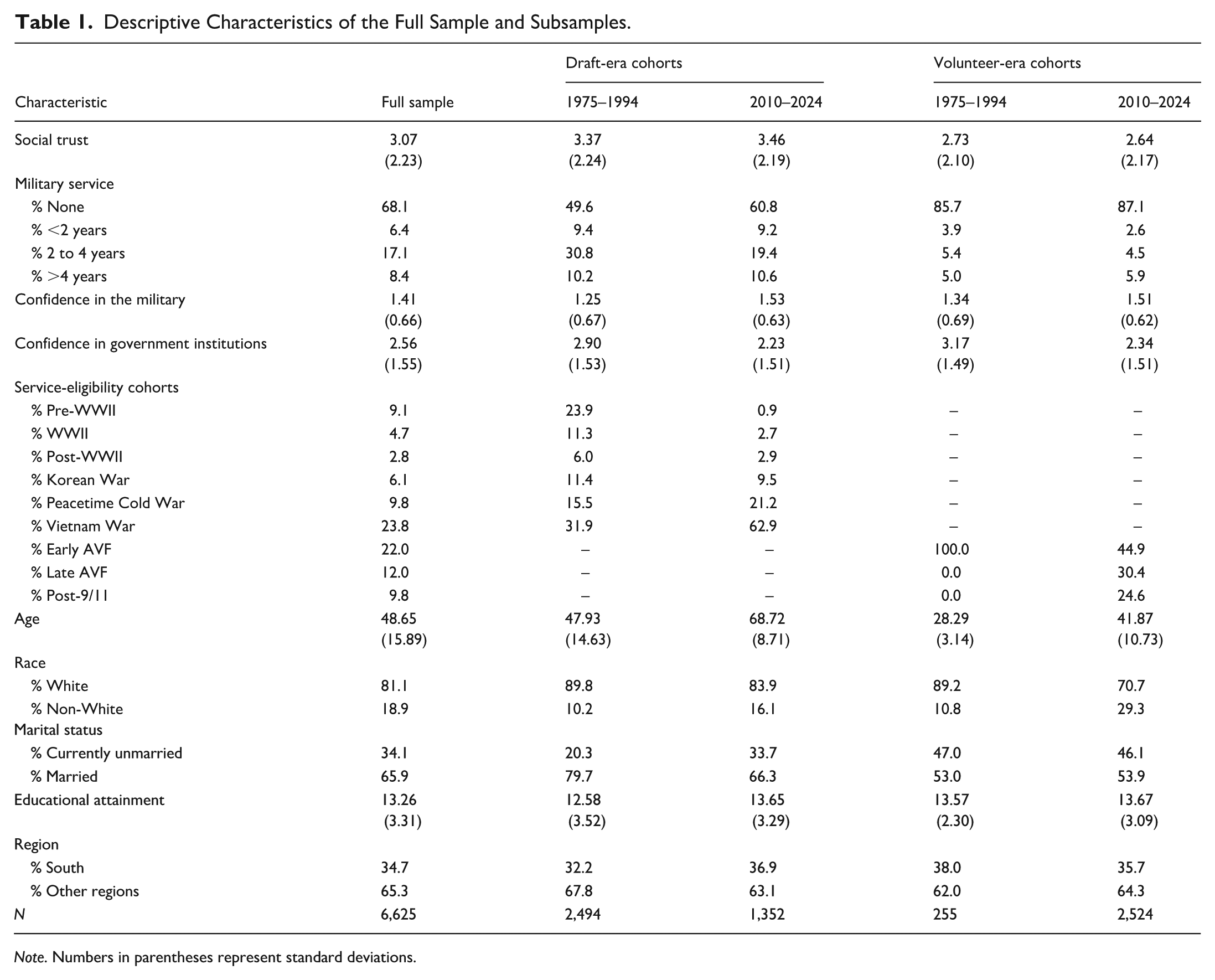
The main characteristics of the full sample and subsamples are presented in Table 1. Subsamples are divided by both service-eligibility cohorts (draft-era vs. volunteer-era) and survey waves (1975–1994 vs. 2010–2024). Overall, draft-era cohorts display higher levels of social trust than their volunteer-era counterparts. However, these apparent cohort differences are partly attributable to age composition, as members of volunteer-era cohorts are generally younger. Although previous research has documented a long-term decline in social trust in the United States that cannot be fully explained by cohort replacement (Mewes et al., 2021; Putnam, 2001), the present data show no significant decline in social trust within cohorts across survey waves—particularly among draft-era cohorts—suggesting the confounding influence of age. In contrast, confidence in the military is higher in the 2010–2024 period than in 1975–1994 among both draft-era and volunteer-era cohorts. Finally, compared with draft-era cohorts, volunteer-era cohorts tend to be younger, more racially diverse, and less likely to be married. These sociodemographic contrasts underscore the need for separate analyses across subgroups.
Descriptive Characteristics of the Full Sample and Subsamples.
Note. Numbers in parentheses represent standard deviations.
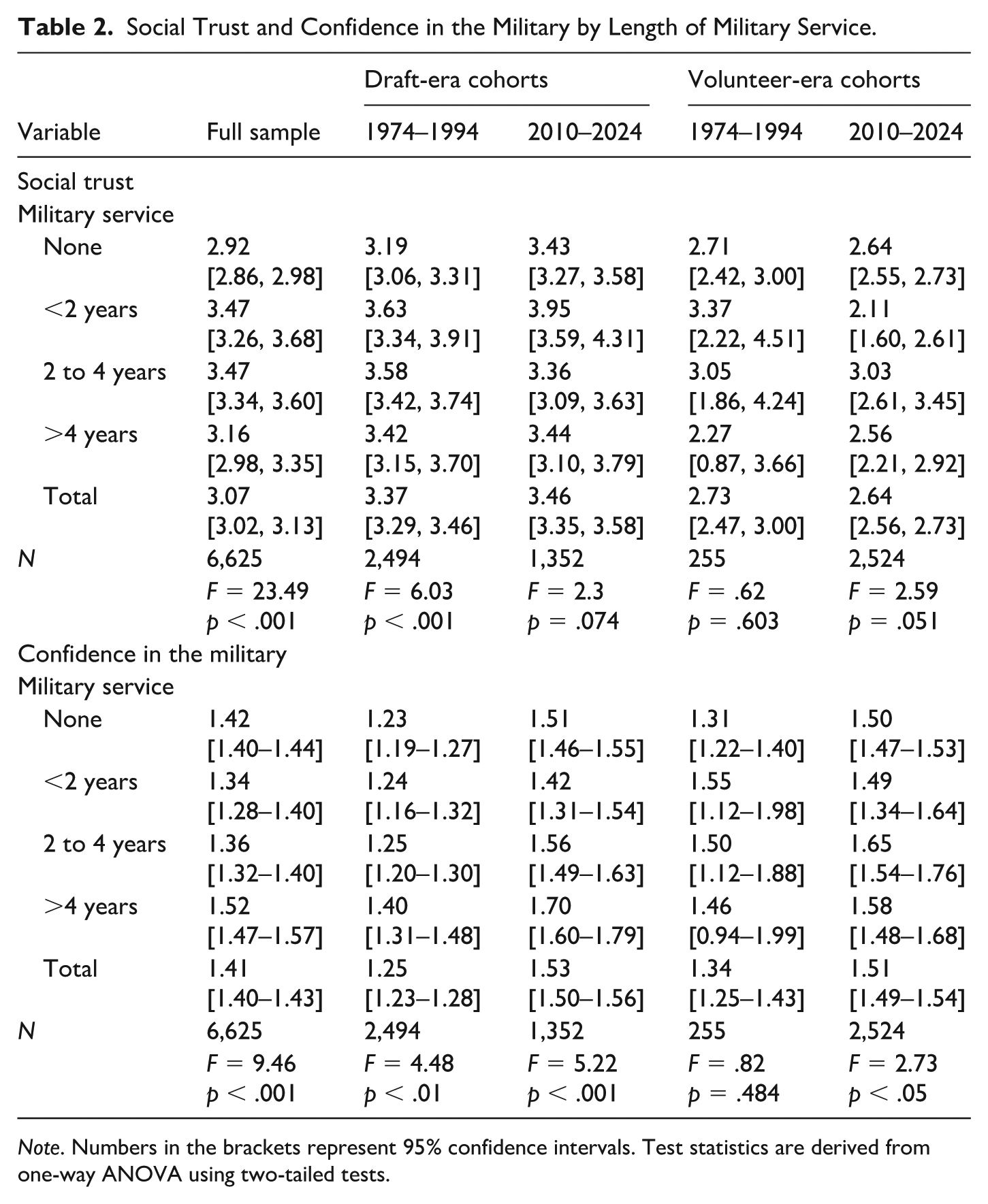
Table 2 presents the bivariate associations between military service and social trust. In the full sample, veterans with varying lengths of service display significantly higher levels of social trust than nonveterans. However, when the sample is divided by cohort and survey wave, the pattern becomes more nuanced. Among draft-era cohorts, veterans with less than 2 years and those with 2 to 4 years of service in the 1975–1994 waves report significantly higher levels of social trust than their nonveteran counterparts. In the 2010–2024 waves, draft-era veterans with less than 2 years of service continue to exhibit higher levels of social trust than comparable nonveterans. By contrast, among volunteer-era cohorts, no significant differences in social trust are observed between veterans—regardless of service length—and nonveterans. These results suggest that the relationship between military service and social trust varies across cohorts and survey periods, likely reflecting differences in age composition, service contexts, and other confounding factors.
Social Trust and Confidence in the Military by Length of Military Service.
Note. Numbers in the brackets represent 95% confidence intervals. Test statistics are derived from one-way ANOVA using two-tailed tests.
The bivariate associations between military service and confidence in the military are relatively straightforward, as shown in Table 2. Although prior research suggests that veterans typically express higher confidence in the military than nonveterans (T. W. Smith, 2012, p. 196), veteran status alone is not uniformly associated with greater confidence in the military. Only veterans who served more than 4 years consistently display higher confidence across cohorts and survey waves. Among volunteer-era veterans in the 2010–2024 waves, those with 2 to 4 years of service also report relatively higher confidence in the military than nonveterans.
Effects of Military Service and Confidence in the Military on Social Trust: Full-Sample Results
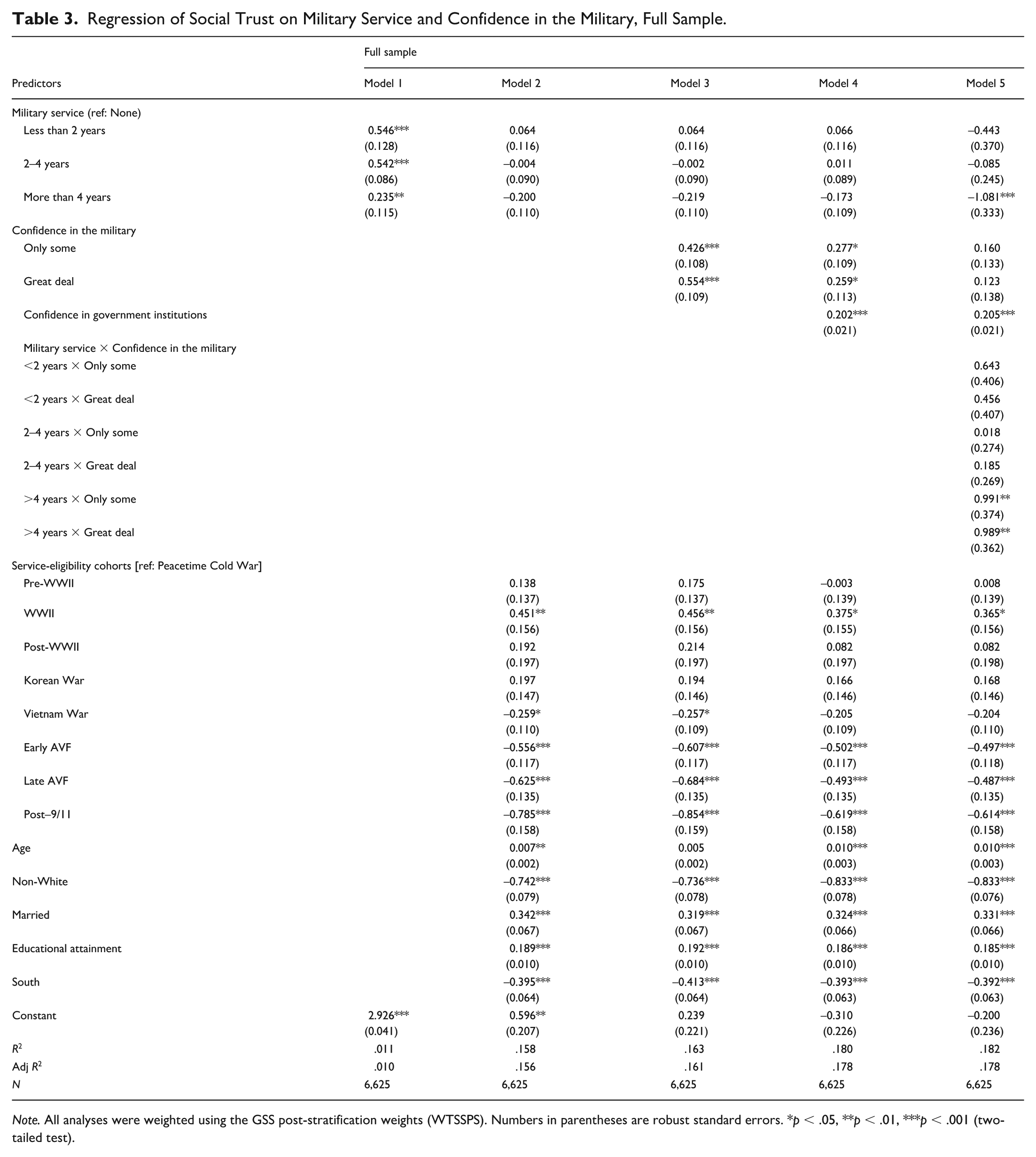
A series of nested regression models is estimated for the full sample and subsamples to examine the net and conditional effects of military service on social trust. Model 1 presents the bivariate relationship between military service and social trust. Model 2 adds controls for service-eligibility cohort, age, race, marital status, educational attainment, and region to assess whether military service exerts an independent effect on social trust net of these confounding factors. Model 3 introduces confidence in the military, and Model 4 further includes confidence in government institutions to test whether confidence in the military has an independent association with social trust beyond general institutional confidence. Finally, Model 5 incorporates interaction terms to evaluate whether the association between confidence in the military and social trust varies by length of military service.
Table 3 presents the results of the regression analyses for the full sample. Model 1 shows that, consistent with the descriptive patterns reported in Table 1, military service, regardless of years served, is associated with higher levels of social trust compared to no service. However, these relationships disappear once service-eligibility cohort and other covariates are included in Model 2, suggesting that the initial associations are largely attributable to compositional differences between veterans with different lengths of service and nonveterans, rather than to any direct effect of military service itself.
Regression of Social Trust on Military Service and Confidence in the Military, Full Sample.
Note. All analyses were weighted using the GSS post-stratification weights (WTSSPS). Numbers in parentheses are robust standard errors. *p < .05, **p < .01, ***p < .001 (two-tailed test).
In Model 3, both response categories for confidence in the military—“only some” and “a great deal”—are significantly associated with higher levels of social trust relative to the reference category, “hardly any.” These effects remain statistically significant after controlling for confidence in government institutions in Model 4, although their magnitudes are attenuated. This pattern suggests that confidence in the military has an independent association with social trust beyond general confidence in government institutions. Model 5 introduces interaction terms to assess whether the effect of confidence in the military varies by length of military service. Notable interaction effects emerge among veterans with more than 4 years of service who report “only some” or “a great deal” of confidence.
For ease of interpretation of the results from Model 5 in Table 3, Figure 1 displays the relationship between confidence in the military and predicted levels of social trust across four categories of military service: none, less than 2 years, 2 to 4 years, and more than 4 years. Among nonveterans, confidence in the military shows no significant association with social trust. Among veterans, however, the effect of confidence in the military varies by length of service. In particular, among those who served more than 4 years, reporting “hardly any” confidence in the military is strongly associated with lower levels of social trust, with predicted levels falling below those observed among nonveterans.
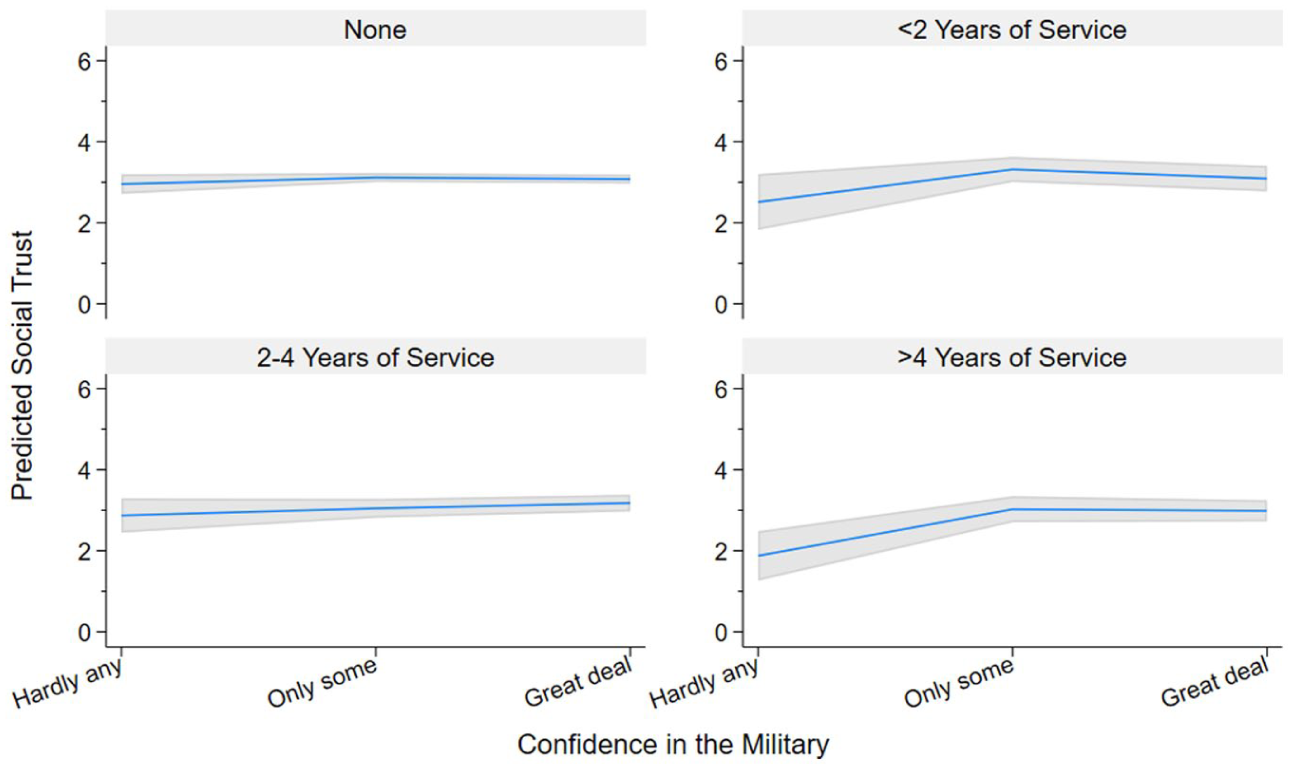
Predicted levels of social trust by confidence in the military and service length: Full sample.
Additional findings in Table 3 generally align with patterns reported in previous research. Social trust increases with both age and educational attainment. Levels of social trust are lower among non-White respondents and those residing in the South, but higher among individuals who are currently married, relative to their respective counterparts. Furthermore, social trust is lower among post-Vietnam War cohorts than among those who came of age during the peacetime Cold War era.
Effects of Military Service and Confidence in the Military on Social Trust: Group-Specific Results
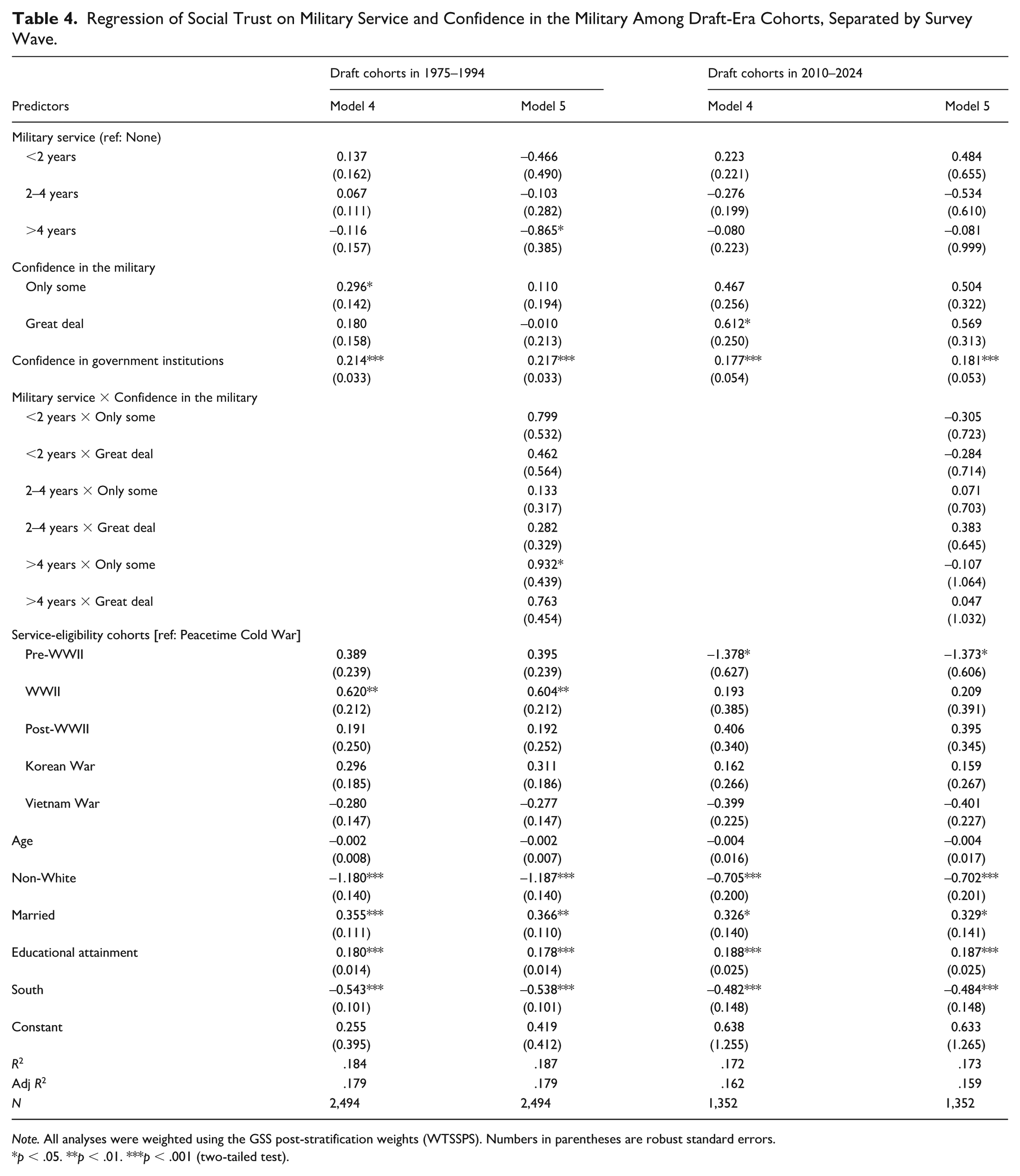
Table 4 presents regression results for the association between military service, confidence in the military, and social trust among draft-era cohorts, separated by the 1975–1994 and 2010–2024 survey waves. The same model specifications and estimation procedures used in the full-sample analyses are applied here, but only the results for Models 4 and 5 are reported to conserve space.
Regression of Social Trust on Military Service and Confidence in the Military Among Draft-Era Cohorts, Separated by Survey Wave.
Note. All analyses were weighted using the GSS post-stratification weights (WTSSPS). Numbers in parentheses are robust standard errors.
p < .05. **p < .01. ***p < .001 (two-tailed test).
Among draft-era cohorts observed in the 1975–1994 waves, veterans with less than 2 years or between 2 and 4 years of military service report significantly higher levels of social trust than nonveterans (see Table 2). These differences, however, disappear once the service-eligibility cohort and other covariates are included. Having “only some” or “a great deal” of confidence in the military is initially associated with significantly higher levels of social trust, but only the effect of having “only some” confidence remains significant after accounting for confidence in government institutions in Model 4. When interaction terms are introduced in Model 5, significantly higher levels of social trust emerge among veterans with more than 4 years of service who report “only some” confidence in the military.
Among draft-era cohorts observed in the 2010–2024 waves, individuals who served in the military for less than 2 years report higher levels of social trust than nonveterans (see Table 2). This bivariate difference, however, becomes nonsignificant once the service-eligibility cohort and other covariates are controlled. Individuals reporting “only some” or “a great deal” of confidence in the military show significantly higher levels of social trust, although only the association for those expressing “a great deal” of confidence remains significant after controlling for confidence in other government institutions in Model 4. In Model 5, the interaction terms between military service and confidence in the military are not statistically significant, suggesting that the effect of confidence in the military on social trust does not vary systematically by length of service.
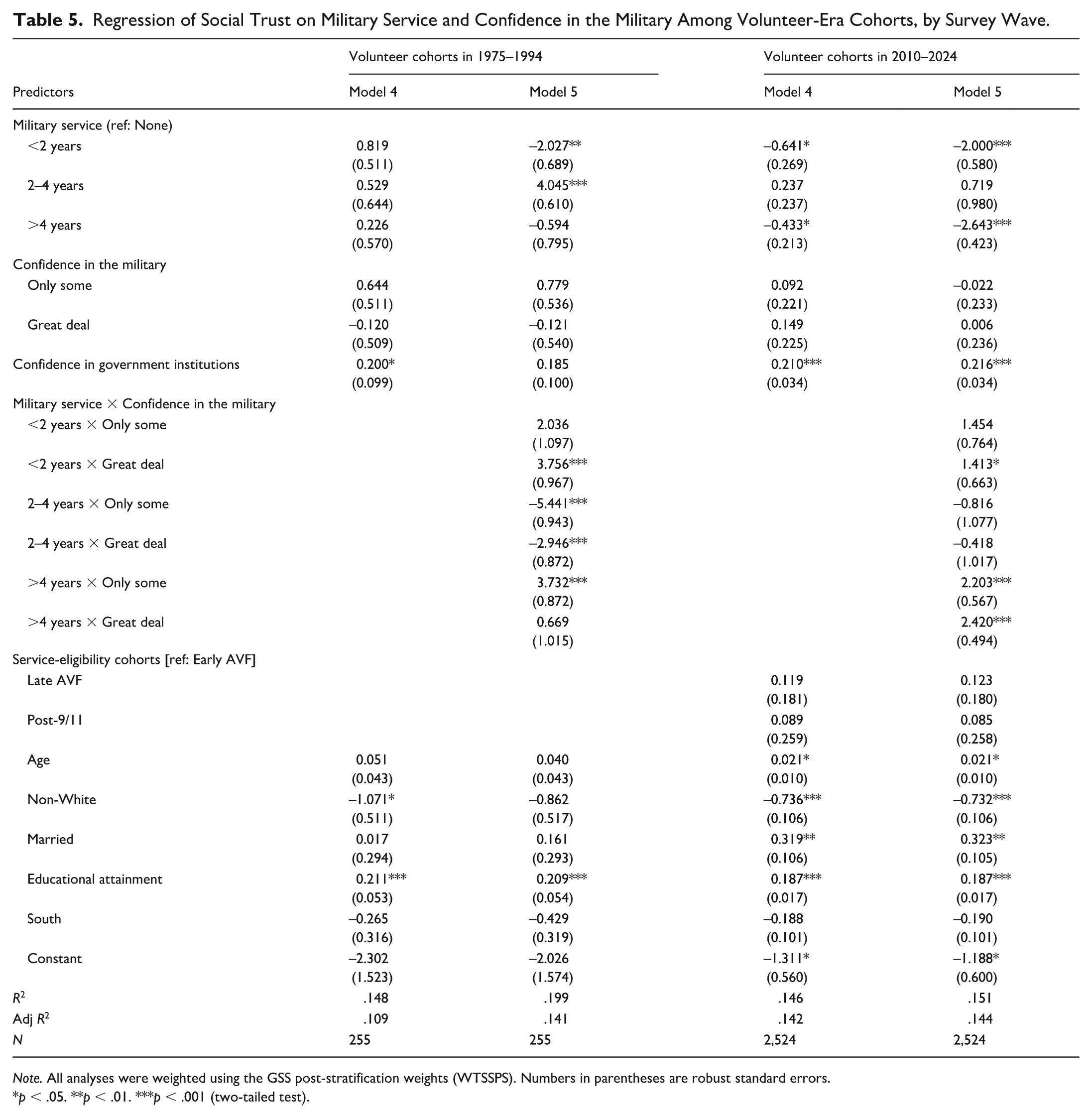
Table 5 presents regression results for the association between military service, confidence in the military, and social trust among volunteer-era cohorts, separated by the 1975–1994 and 2010–2024 survey waves. Following the format used for the draft-era cohorts in Table 4, only the results for Models 4 and 5 are reported to conserve space.
Regression of Social Trust on Military Service and Confidence in the Military Among Volunteer-Era Cohorts, by Survey Wave.
Note. All analyses were weighted using the GSS post-stratification weights (WTSSPS). Numbers in parentheses are robust standard errors.
p < .05. **p < .01. ***p < .001 (two-tailed test).
Volunteer-era cohorts in the 1975–1994 waves warrant close examination because of the interplay of cohort and period effects documented in the literature, although the small sample size (n = 255) limits the strength of inference. During the post-Vietnam era of the late 1970s and early 1980s, public confidence in the military declined sharply before rebounding in the mid-1980s and rising further after the 1991 Gulf War (Brady & Kent, 2022, p. 45; T. W. Smith & Son, 2013). These trends, however, varied across groups depending on their military service experiences (Margulies & Blankshain, 2022, p. 264). The decline was especially pronounced among younger and more highly educated nonveterans—groups that also tend to report relatively high levels of social trust. Many individuals in this cohort were skeptical of coercive or hierarchical institutions while maintaining strong interpersonal trust, reflecting broader generational shifts associated with the emergence of “post-materialist values” (Inglehart, 1997) and the rise of “critical citizens” (Norris, 1999).
Volunteer-era cohorts in the 1975–1994 waves are, on average, younger and more highly educated than their draft-era counterparts in the same period (Table 1). Given the post-Vietnam War context, this demographic group would typically be expected to hold more critical attitudes toward the military and government institutions while maintaining relatively high levels of interpersonal trust. However, contrary to this expectation, the regression results show no statistically significant association between confidence in the military and social trust, but a significant positive association between confidence in government institutions and social trust.
Of particular interest in this study are the relationships among military service, confidence in the military, and social trust among volunteer-era cohorts in the 2010–2024 waves. As shown in Table 2, the bivariate results reveal no significant differences in social trust between veterans—regardless of length of service—and nonveterans. However, after controlling for service-eligibility cohort and other covariates, veterans with less than 2 years of service and those with more than 4 years of service exhibit significantly lower levels of social trust than nonveterans.
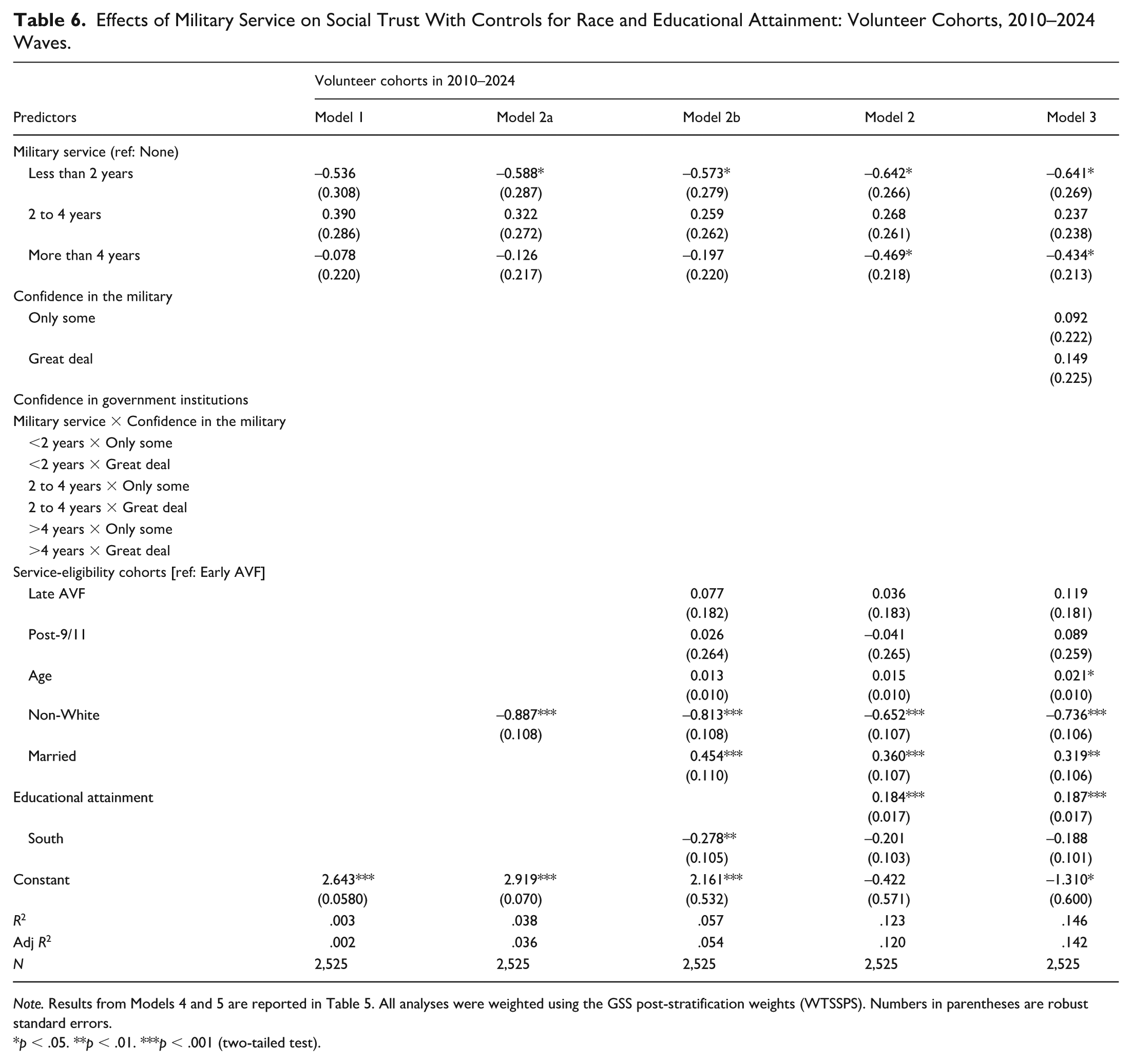
Supplementary analyses reported in Table 6 show that adding race alone to the baseline model (Model 2a) renders the effect of less than 2 years of service significantly negative. This pattern reflects the slightly higher proportion of racial minorities among short-service veterans (24.8%) compared with veterans overall (23.9%), coupled with the fact that racial minorities generally report lower levels of social trust. This negative association remains robust after controlling for service-eligibility cohort, age, marital status, and region.
Effects of Military Service on Social Trust With Controls for Race and Educational Attainment: Volunteer Cohorts, 2010–2024 Waves.
Note. Results from Models 4 and 5 are reported in Table 5. All analyses were weighted using the GSS post-stratification weights (WTSSPS). Numbers in parentheses are robust standard errors.
p < .05. **p < .01. ***p < .001 (two-tailed test).
When educational attainment is subsequently added (Model 2a vs. Model 2), the effect of more than 4 years of military service also becomes significantly negative. This shift occurs because educational attainment functions as a suppressor variable: long-service veterans in this subsample are, on average, more highly educated than nonveterans (M = 15.01, SD = 2.39 vs. M = 13.58, SD = 3.16), and higher education is positively associated with social trust. As a result, educational attainment suppresses—or masks—the negative direct association between extended military service and social trust in earlier models.
Among volunteer-era cohorts in the 2010–2024 waves, having “a great deal” of confidence in the military is initially associated with higher levels of social trust. However, this relationship becomes nonsignificant once confidence in government institutions is included in Model 4. Finally, Model 5, which incorporates interaction terms, indicates that the association between confidence in the military and social trust varies by length of military service, with particularly strong positive effects observed among long-service veterans who report “only some” or “a great deal” of confidence.
Heterogeneous Effects of Military Service and Confidence in the Military on Social Trust
Results presented in Tables 4 and 5 indicate that the relationships among military service, confidence in the military, and social trust vary both between and within groups defined by service context (draft vs. volunteer eras) and survey period (1975–1994 vs. 2010–2024). For comparative purposes, Figure 2 displays predicted levels of social trust by confidence in the military across lengths of military service for two groups based on the results from Model 5 in Tables 4 and 5: draft-era cohorts in the 1975–1994 waves and volunteer-era cohorts in the 2010–2024 waves.
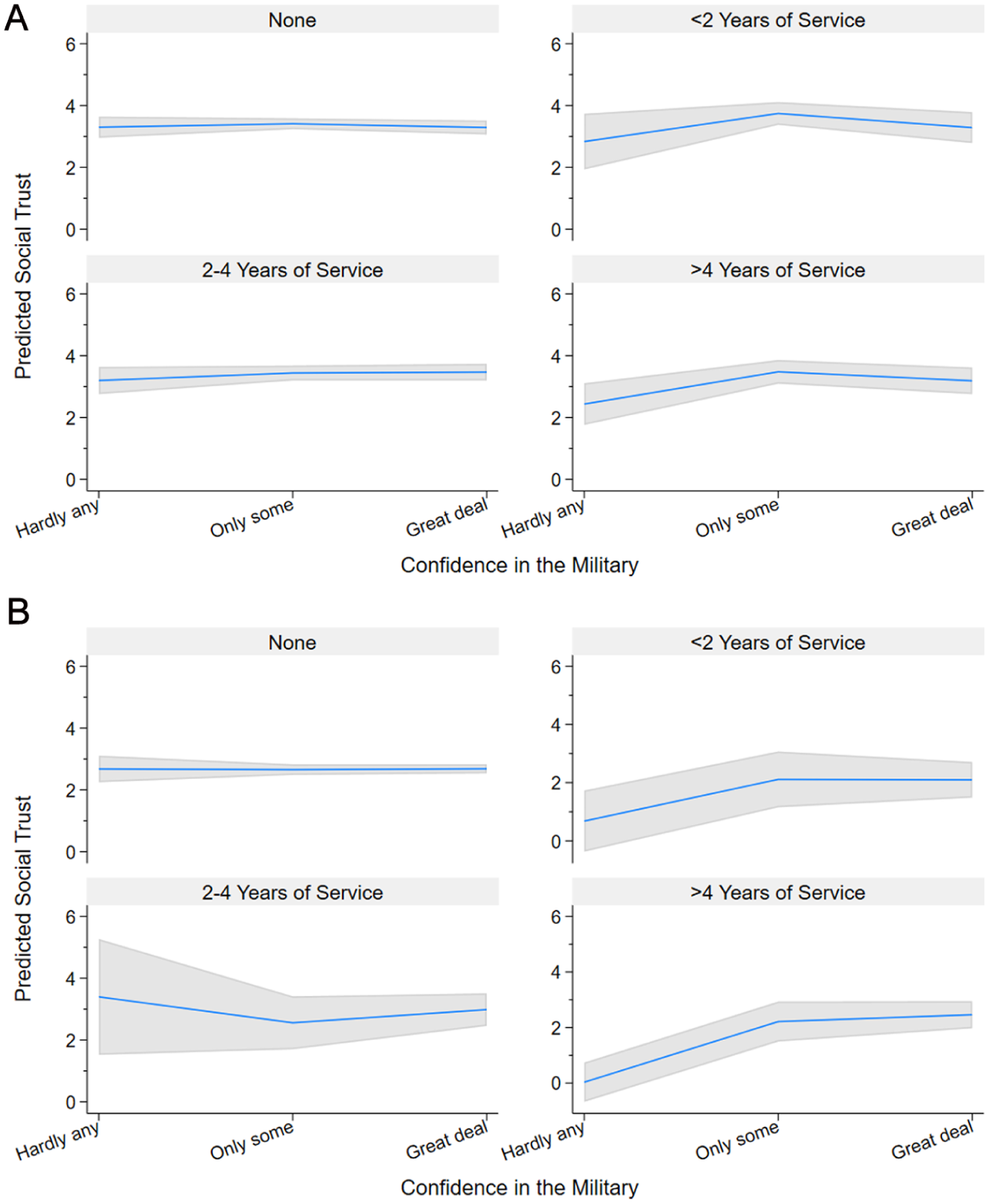
Predicted levels of social trust by confidence in the military and service length: Subsamples. (A) Draft-Era Cohorts in the 1975–1994 Waves. (B) Volunteer-Era Cohorts in the 2010–2024 Waves
Nonveterans in volunteer-era cohorts in the 2010–2024 waves report lower levels of social trust than draft-era nonveterans in the 1975–1994 waves. Among nonveterans in both draft-era and volunteer-era cohorts, confidence in the military shows no statistically significant association with social trust. For veterans, in contrast, differences in social trust across draft-era and volunteer-era cohorts are more nuanced, as they vary by both length of service and levels of confidence in the military. The conditional effect of confidence in the military is most pronounced among short-service and long-service veterans within the volunteer-era cohorts in the 2010–2024 waves.
Two additional patterns stand out. First, while veterans overall do not display uniformly lower social trust among volunteer-era cohorts, the decline is evident among short-service veterans, whose levels of social trust are lower in the 2010–2024 waves than among comparable draft-era veterans in the 1975–1994 waves. This decline is especially pronounced among those reporting “hardly any” confidence in the military. Second, within the volunteer-era cohorts in the 2010–2024 waves, long-service veterans who report “hardly any” confidence in the military exhibit lower levels of social trust than their counterparts, both across and within cohorts.
Robustness Checks
In this study, subsamples are divided by service-eligibility cohort (draft-era vs. volunteer-era) and survey wave (1975–1994 vs. 2010–2024) to account for cohort heterogeneity and period effects. Analyses conducted separately for the full draft-era and volunteer-era cohorts yield results consistent with the main findings (results available in the supplements). Specifically, the strength of the association between confidence in the military and social trust varies by length of military service. Among nonveterans, confidence in the military does not significantly predict social trust across cohorts. In contrast, among volunteer-era veterans, low confidence in the military significantly reduces social trust among both short-service and long-service veterans.
The relatively small sample size precludes more detailed cohort-specific analyses. One exception is the Vietnam War cohort, which represents approximately 24% of both the analytic sample and the veteran population (see Table 1 and Supplementary Table S1). Among this cohort, the analyses indicate that low confidence in the military significantly reduces social trust among long-service veterans (results available in the supplements).
In the main analyses, the analytic sample is restricted to respondents aged 25 and older, following common practice in prior research. However, some earlier studies on the enduring effects of military service have employed a lower age threshold of 22 years (Schreiber, 1979). Because the share of veterans in the population is substantially smaller in the volunteer era than in the draft era, results for the volunteer-era cohorts may be more sensitive to the choice of age cut-off. When the sample is expanded to include respondents aged 22 and older, the total sample size increases from 6,625 to 7,018. In particular, the number of respondents from volunteer-era cohorts in the 2010–2024 waves increases from 2,524 to 2,703, and short-service veterans in this group exhibit significantly lower levels of social trust. Despite these changes, the supplementary analyses indicate that the overall patterns of association among military service, confidence in the military, and social trust remain highly consistent with those reported in the main-text tables and figures.
Discussion
This study examines whether and how military service and confidence in the military are associated with social trust using repeated cross-sectional data from the 1972 to 2024 GSS. An initial question concerns whether military service has an enduring effect on social trust. Drawing on institutional theory, the study further investigates a conditional relationship in which the effect of confidence in the military on social trust varies by length of military service, cohort, and survey period.
The analytical strategy applies consistent model specifications to the full sample and to subsamples defined by service-eligibility cohort (draft-era vs. volunteer-era) and survey wave (1975–1994 vs. 2010–2024), thereby accounting for changes in recruitment and selection, period effects, and compositional differences, with nonveterans serving as the baseline category. The analysis focuses on the heterogeneous effects of military service and confidence in the military on social trust, both between and within these groups, with particular attention to variation in the influence of confidence in the military on social trust by service length across cohorts and survey periods. The main findings are summarized as follows.
Summary of the Main Results
The results show that, among draft-era cohorts, observed differences in social trust between veterans of varying service lengths and nonveterans disappear once sociodemographic variables are taken into account, suggesting that these differences primarily reflect compositional factors rather than any direct effect of military service. Accordingly, there is insufficient evidence that military service exerts an independent influence on social trust among draft-era cohorts.
By contrast, among volunteer-era cohorts in the 2010–2024 waves, the patterns of association differ markedly. At the bivariate level, no significant relationship is observed between military service and social trust. However, once race is controlled, short-service veterans (fewer than 2 years) exhibit significantly lower levels of social trust relative to nonveterans. After accounting for educational attainment, long-service veterans likewise exhibit significantly lower levels of social trust than nonveterans. In both cases, race and education function as suppressor variables, revealing underlying associations that are obscured in simpler model specifications. Taken together, these findings indicate that military service is associated with social trust among both short-service and long-service veterans in the volunteer era.
An additional key finding is that the effect of confidence in the military on social trust is conditional on military experience across cohorts and survey periods. This conditional relationship is evaluated using interaction terms between military service and confidence in the military in a series of nested regression models. The findings indicate that the influence of such confidence on social trust varies by service length, particularly among volunteer-era cohorts in the 2010–2024 waves. Among nonveterans, confidence in the military shows no significant association with social trust in either the full sample or the subsamples. Among veterans, however, the strength of this association differs by service length, with a moderate association between diminished institutional confidence and lower levels of social trust among short-service veterans and a stronger association among long-service veterans, particularly those in the All-Volunteer Force in the 2010–2024 waves.
Race and Educational Attainment as Suppressors
The effects of military service on social trust become clearer once the roles of race and educational attainment are taken into account among volunteer-era cohorts in the 2010–2024 waves. The results suggest that controlling for these factors reveals underlying associations between military service and social trust among veterans, particularly short-service and long-service veterans. This pattern suggests that the relationship between military service and social trust is shaped by both pre-service selection factors (e.g., race) and post-service experiences (e.g., GI Bill educational benefits), as these factors shape institutional experiences and their social meanings.
First, the role of race is evident among short-service veterans. Lower levels of social trust among short-service veterans, after controlling for race, reflect a complex interplay between individual and institutional factors. Individual attributes such as race may shape service experiences, while organizational conditions (e.g., leadership quality, support systems, and administrative policies) may differentially affect service members with certain risk factors, leading to early or involuntary separation. Consequently, these patterns likely reflect both socialization and self-selection processes.
Turning to educational attainment, the results indicate that the effects of military service unfold through the interaction between individual attributes and policy feedback mechanisms (Mettler, 2002, 2005). Among volunteer-era veterans in the 2010–2024 waves, those who served more than 4 years have higher levels of educational attainment than nonveterans. The lower levels of social trust observed among long-service veterans relative to nonveterans—once education is held constant—are consistent with a socialization effect. While education is positively associated with social trust, it may also obscure underlying negative evaluations of military experience, thereby masking the negative association between extended service and social trust in simpler models. However, the GSS data do not allow for determining whether the higher educational attainment of long-service veterans reflects post-service benefits from the GI Bill or self-selection into career military trajectories.
More broadly, educational attainment operates through distinct pathways, rendering these effects multilayered. On the one hand, a socialization pathway suggests that higher education reinforces civic norms and fosters social trust. On the other hand, a more utilitarian pathway suggests that, in the contemporary context of rising educational costs, military service may be experienced as an instrumental means of accessing educational opportunities through GI Bill benefits. Under this pathway, military service functions less as a mechanism of civic integration and more as a means to an end. As a result, higher educational attainment among long-service veterans—partly facilitated by GI Bill benefits—may simultaneously enhance social trust while masking underlying institutional disillusionment, as education is positively associated with social trust even when military experience generates more critical evaluations.
In the context of the All-Volunteer Force, the military has become a more professional and increasingly specialized institution, with increasing representation among racial minorities. It also offers substantial incentives to attract new recruits and retain experienced service members, including educational benefits such as the GI Bill, which shape both service trajectories and post-service outcomes. At the same time, service has become increasingly concentrated in specific segments of the population, particularly along socioeconomic and geographic lines. As fewer than 1% of Americans serve today, the civil–military gap continues to widen (Feaver, 2023; Feaver & Kohn, 2001; Schake & Mattis, 2016). Taken together, these patterns indicate that the negative association between military service and social trust—relative to nonveterans and evident among short-service and long-service veterans after accounting for race and educational attainment—complicates conventional accounts of the civil–military gap by highlighting the importance of underlying compositional and institutional factors.
Conditional Effects of Military Service and Institutional Confidence
The findings suggest that confidence in the military matters for social trust primarily when individuals have direct institutional experience. Among nonveterans, such confidence has no significant effect on social trust across cohorts and survey periods. This pattern is particularly evident among volunteer-era cohorts in the 2010–2024 waves, who did not experience military service as a shared civic obligation and are instead situated in the context of a growing civil–military gap (Feaver & Kohn, 2001; Schake & Mattis, 2016). For nonveteran civilians, confidence in the military is often symbolic—reflecting patriotism, national identity, and respect for service and sacrifice—and is shaped by political narratives and discourse, making it only loosely tied to institutional performance (Burbach, 2017, 2019; Feaver, 2023).
By contrast, confidence in the military has a significant effect on social trust among veterans, with its impact varying not only by length of service but also by service context (draft vs. volunteer eras) and survey period (1975–1994 vs. 2010–2024). These conditional effects can be understood through mechanisms of institutional exposure—including recruitment and selection, experiences during service, and post-service reintegration—operating within broader security, social, economic, and political contexts.
First, differences in recruitment and selection between the draft and volunteer eras shape the composition and service trajectories of veterans. These patterns are evident in veterans’ demographic profiles and service lengths. During the draft era, shorter service was more common: among draft-era veterans in the 1975–1994 waves, approximately 61% reported serving 2 to 4 years, while about 20% served more than 4 years (Table 1). By contrast, under the All-Volunteer Force, established in 1973, longer service became more prevalent, as enlistment is self-selected, and extended tenure often reflects a professional or career-oriented trajectory. Among volunteer-era veterans in the 2010 to 2024 waves, roughly 45% reported serving more than 4 years, while 35% served 2 to 4 years (Table 1).
These differences in recruitment and selection are also reflected in patterns of short-term service and early attrition. Compared with draft-era cohorts in the 1975 to 1994 waves, a pronounced decline in predicted levels of social trust is observed for volunteer-era veterans who served fewer than 2 years in the 2010–2024 waves, particularly among those reporting “hardly any” confidence in the military. These contrasting patterns likely reflect differences in the reasons for shorter service across the two eras. During the draft era—particularly during the Vietnam War—short-service veterans were often draftees who completed their required terms of service. Because conscription drew more broadly from the male population than the All-Volunteer Force, short-service veterans in the draft era were more socioeconomically diverse. However, educational deferments and other exemptions introduced class and other forms of selection, and volunteers and draft-motivated volunteers ultimately outnumbered draftees, especially during the Vietnam War (Angrist, 1991; Card & Lemieux, 2001).
By contrast, under the All-Volunteer Force, a substantial proportion of short-service members are involuntarily separated for administrative, medical, or performance-related reasons (Gebicke, 1997). Previous research shows that younger age at enlistment, lower educational attainment, and unstable pre-service employment are associated with higher rates of early attrition—that is, leaving the military before completing the initial term of service (Buddin, 1984). More recent research indicates that organizational conditions (e.g., leadership and command climate, social support within units) and institutional characteristics (e.g., policies and procedures within the U.S. Army, installation location, and living conditions) also shape attrition, above and beyond individual attributes (Marrone et al., 2021). For short-service veterans, such organizational and institutional experiences may undermine social trust, particularly when separation is involuntary.
A complementary pattern emerges among long-service veterans in the volunteer era. The predicted levels of social trust are markedly lower for those reporting “hardly any” confidence in the military than for their counterparts, both within and across cohorts. This pattern is notable: some express diminished confidence in the very institution in which they served, and among these veterans, such low confidence is strongly associated with lower levels of social trust. This warrants particular attention, as it highlights how negative institutional experiences can extend beyond the military to erode broader social trust.
Long-service veterans typically develop a strong identification with the military and become deeply embedded in its organizational culture. Nevertheless, some report “hardly any” confidence in the military, potentially as a result of adverse organizational and institutional experiences during service or challenges during the transition to civilian life—both of which may erode social trust. For example, long-service veterans may experience toxic leadership that undermines trust, cohesion, and morale, or perceive unfairness in opportunities, promotions, and institutional outcomes (Reed & Bullis, 2009). Others may perceive that senior military leadership has become increasingly politicized, diverging from the military’s traditionally nonpartisan role (Margulies & Blankshain, 2022; Robinson, 2023). Still others may encounter inadequate institutional support during or after separation, leading to disillusionment or a sense of institutional betrayal (Higgins, 2025).
Importantly, diminished confidence in the military should not be interpreted uniformly. Such confidence does not necessarily indicate generalized distrust or blind cynicism; rather, it may reflect informed, experience-based evaluations of institutional performance that can sustain institutional legitimacy, accountability, and effectiveness (Cook & Gronke, 2005; Hardin, 2002). Among veterans, however, diminished confidence may also stem from perceived or experienced moral injury and institutional betrayal related to service or post-service reintegration (Higgins, 2025; Shay, 2014), particularly in the post-9/11 context of prolonged military conflicts without clear victory narratives, culminating in the 2021 U.S. withdrawal from Afghanistan (Hatemi & McDermott, 2025).
In addition to selection and service-related experiences, post-service reintegration provides another key mechanism. One important area of concern is the transition into the civilian labor market. The rise of a professional military has increased specialization in military skills, making them less transferable to civilian employment and less legible to employers (Ricks, 1997). Although veterans are employed at higher rates than the general population, many report underemployment, working in positions below their skill level, experience, or pay grade (Davenport et al., 2024; Pew Research Center, 2019b). This pattern suggests a misalignment between the perceived market value of military experience and veterans’ expectations or training. Such mismatches may be especially salient among veterans with more rapid transitions, who often face difficulties translating military credentials into civilian opportunities. These experiences may be interpreted as failures of institutional responsiveness or fairness, contributing to perceptions of institutional betrayal and, in turn, lower levels of social trust.
More broadly, reintegration occurs within a changing social and institutional context. As military service becomes more socially isolated and geographically concentrated, reintegration increasingly occurs on an individualized basis, with fewer civilians sharing comparable experiences and fewer collective support systems available. Consequently, institutional disillusionment among veterans may be more difficult to dispel within civic narratives that frame military service in terms of patriotism, civic virtue, and sacrifice rather than material incentives (Krebs & Ralston, 2022; Krebs et al., 2026). These reintegration challenges may be further intensified by a growing civil–military gap (Feaver & Kohn, 2001; Schake & Mattis, 2016), the perceived politicization of the military (Feaver, 2023; Robinson, 2023), and widening partisan divides in institutional confidence (Burbach, 2017, 2019).
Limitations
The GSS data do not include measures of service-related experiences (e.g., number of deployments) or post-service reintegration (e.g., difficulties transferring military skills to the civilian labor market). Consequently, the present study cannot specify the conditions under which institutional confidence diminishes among those with direct military experience or fully identify the mechanisms through which such diminished confidence may erode social trust. More broadly, the meanings of military service and the significance of institutional confidence are likely shaped by the security environment and broader social and political contexts. The data also do not permit direct examination of how these meanings—constructed and circulated through civic narratives—affect social trust. Accordingly, the interpretations offered here are theoretically informed and necessarily provisional, pointing to the need for future research using more detailed measures of institutional experience.
Conclusion
The military has remained one of the most trusted institutions in the United States throughout the post-9/11 era, even as confidence in the military has declined in recent years and public confidence in major institutions has more broadly eroded since the early 1990s (Feaver, 2023). However, confidence in the military varies with institutional experience across cohorts and survey periods. Although differences in levels of confidence across groups are modest, volunteer-era veterans—particularly those with more than 4 years of service—report higher levels of confidence than their nonveteran counterparts in the 2010–2024 waves (see also Margulies & Blankshain, 2022). Nonetheless, a subset of veterans report diminished confidence in the military institution they directly experienced, revealing that high aggregate levels of confidence can mask meaningful within-group variation in institutional experience.
This study examines how the relationship between confidence in the military and social trust is contingent on the depth and context of institutional experience. Drawing on an institutional theory framework, the analysis shows that the social significance of institutional confidence varies by service length, cohort, and historical context, and that accounting for suppressor variables such as race and educational attainment is critical for identifying these relationships.
In hierarchical organizations such as the military, institutional structures and practices—legitimate authority, formal rules, routinized procedures, monitoring, and sanctions—render behavior predictable and establish mechanisms for generating, repairing, and reinforcing trust (Hardin, 2002). Service-related experiences are shaped by the interplay between individual attributes (e.g., race, educational attainment) and these organizational features. Following service, interactions with government providers, such as the Department of Veterans Affairs, may likewise shape social trust when procedures are perceived as fair and services as responsive or effective. Although the present study cannot directly observe trust formation within military units or during the transition to civilian life, the evidence is consistent with an institutional mechanism: social trust covaries with confidence in relevant institutions, suggesting that institutional experiences may spill over into generalized trust.
While veterans generally express pride in their service (Pew Research Center, 2019b), some become disaffected, potentially as a result of both service-related and post-service reintegration experiences. Low confidence in institutions often reflects specific experiences rather than generalized disillusionment or skepticism (Cook & Gronke, 2005). The evidence indicates that diminished confidence in the military among those with direct military experience may spill over into lower levels of generalized social trust. Consequently, diminished institutional confidence among this group may pose long-term challenges for sustaining what Feaver (2023, pp. 4, 282) calls “healthy civil–military relations” unless it is taken seriously as an indicator of underlying grievances and as a basis for informed critique capable of strengthening institutional accountability and responsiveness. Ultimately, understanding how institutional confidence is shaped by lived experience is essential not only for explaining variation in social trust but also for sustaining healthy civil–military relations.
Supplemental Material
sj-docx-1-afs-10.1177_0095327X261455614 – Supplemental material for Heterogeneous Effects of Military Service and Confidence in the Military on Social Trust in the United States
Supplemental material, sj-docx-1-afs-10.1177_0095327X261455614 for Heterogeneous Effects of Military Service and Confidence in the Military on Social Trust in the United States by Chigon Kim in Armed Forces & Society
Footnotes
Acknowledgements
The author gratefully acknowledges the support and encouragement of Dr. Richard E. Niemeyer, Director of WERC, whose advice was instrumental in the development of this research during the Summer Faculty Fellowship at the U.S. Air Force Academy.

Funding
The author disclosed receipt of the following financial support for the research, authorship, and/or publication of this article: This research was supported in part by the Air Force Research Laboratory, Warfighter Effectiveness Research Center (WERC) at the U.S. Air Force Academy, through the Air Force Office of Scientific Research Summer Faculty Fellowship Program®, Contract Numbers FA8750-15-3-6003, FA9550-15-0001 and FA9550-20-F-0005.
Declaration of Conflicting Interests
The author declared no potential conflicts of interest with respect to the research, authorship, and/or publication of this article.
Supplemental Material
Supplemental material for this article is available online.
Author Biography
References
Supplementary Material
Please find the following supplemental material available below.
For Open Access articles published under a Creative Commons License, all supplemental material carries the same license as the article it is associated with.
For non-Open Access articles published, all supplemental material carries a non-exclusive license, and permission requests for re-use of supplemental material or any part of supplemental material shall be sent directly to the copyright owner as specified in the copyright notice associated with the article.
