






Abstract
Building on prior research into the military-to-civilian transition and employment pathways within correctional services, this study examines the experiences of former military personnel employed in the Canadian prison system. While previous research has suggested prison work may be a common career route for Armed Forces leavers, the lived experiences of veterans working as correctional staff remain underexplored. This study provides the first empirical investigation into the career trajectories of former military personnel within Canadian prisons, examining profiles and motivations of veterans to work in the prison system and assessing their transition into prison work. Findings reveal most respondents reporting a relatively smooth transition into correctional employment, although few had explicitly intended a career in prison work. The implications of these trajectories are considered in relation to the broader military-civilian transition, job performance, and the organisational dynamics within Canadian prisons.
Introduction
The transition from military to civilian life is widely recognised as a complex process. Ex-military personnel – often known as veterans – who are physically and mentally well transition into secondary careers relatively seamlessly (Ashcroft, 2014; Walker, 2013). However, this stage of life is known to be often characterised by challenges for many veterans, impacting upon post-military employment, health, and social integration. Enacting civilian employment can be particularly difficult because the skills and experiences gained in military service do not always align with civilian job requirements. This disconnect can lead to issues such as underemployment, career dissatisfaction, and a lack of engagement with workplace cultures. The military-to-civilian transition also involves a shift in identity and purpose as veterans move away from the highly structured, goal-oriented, ‘service’ environment to civilian life, which often lacks the same intensity of routine (Atherton, 2009; Cowen, 2005; Herman & Yarwood, 2014; Riley & Bateman, 1987; Wainwright et al., 2017; Walker, 2018). The normalcy of civilian life can seem foreign to members of the military, due to perceptions of disconnection from people at home, lack of support from the military itself, a loss of daily structure, and the absence of working towards common goals or having a purpose (Ahern et al., 2015).
Although there is widespread recognition that military-civilian employment transitions are challenging, extant research is characterised by an under-examination of the full range of post-military careers. In particular, although there is evidence of veterans transitioning into careers such as teaching (Gordon & Newby Parham, 2019; Robertson & Brott, 2013); police work (Ivie & Garland, 2011; Johnson, 2013; Olson & Gabriel-Olson, 2012; Patterson, 2002); the fire service (Bartlett et al., 2020); corporate careers (Benmelech & Frydman, 2015; Gagliardo, 2020; Kaur & Singh, 2018; Koch-Bayram & Wernicke, 2018); and entrepreneurship (Heinz et al., 2017; Kerrick et al., 2014), there is scant literature that explores correctional services as a second-career path for veterans. This is surprising, given this path appears to be well trodden. In particular, Moran and Turner (2022b) presented evidence from an online survey of U.K. prison officers suggesting around a quarter of them have military experience. Although the proportion appears to have fallen over time, it still far exceeds the proportion of veterans in the prisoner population, which has received far more academic attention. 1 The transition of veterans into prison employment is not surprising given parallels between military service and correctional work, including the type of training and the need for discipline, leadership, and security management (Moran & Turner, 2022a; Turner & Moran, 2023).
However, despite these surface similarities, correctional work brings unique challenges. Regardless of a person’s background, the job of a prison officer is recognised to be highly stressful, which can often lead to physical and mental health injuries and, ultimately, high levels of early resignation and staff turnover (e.g., Bell et al., 2019; Carleton et al., 2020; Lambert et al., 2005; Liu et al., 2017). Yet, since there has been little consideration of the prior career pathways of staff members before they enter the prison context, we know very little about their impact on experiences and stressors of the prison environment. Even scholarship that considers motivations to enter prison work is limited (Burton et al., 2024; Ricciardelli et al., 2021; Ricciardelli & Martin, 2017) and that which focusses specifically on veteran experiences is rarer still (Escobedo et al., 2025; Logan et al., 2024). Therefore, understanding factors influencing how prison staff are recruited and trained, their motivations towards the occupation, their career progression, their job satisfaction and how they discharge their roles are crucial to these concerns, and offers key insights for justice sector policy makers. Accordingly, prior military experience may influence both individual military-civilian transitions and the dynamics within the prison environment. Understanding the veterans’ pathways into these roles is necessary, as the knowledge sheds light on how they navigate their new civilian lives and the impact they may have on correctional institutions.
Building on work already carried out among prison staff in the United Kingdom (Moran & Turner, 2022a, 2022b; Turner & Moran, 2023), the current article focuses on staff currently working in prisons in the Canadian prison system. It contributes to theory-building in this under-researched area by examining exploratory hypotheses on the military-to-civilian transition of veterans who have found employment within this country’s diverse correctional systems. As the Canadian correctional landscape is shaped by federal, provincial, and territorial distinctions, this article will focus on how these structures, along with regional practices, shape veterans’ career trajectories and experiences in prison work. By examining the pathways veterans take into correctional services, this study will also provide insight into their motivations, training and early-career experiences, adding knowledge about the military-civilian employment transition. In the following sections, we outline the context of the military-to-correctional services transition in Canada, detail our methodology and exploratory hypotheses, and discuss our main empirical findings.
The Military-Correctional Services Transition in Canada
The Canadian Armed Forces (CAF) consists of both full-time military personnel (regular forces) and part-time members (reserves) (Thompson et al., 2016). In 2023, the CAF employed 71,500 regular force members, 30,000 reservists, and 5,200 ranger patrol group members who are reservists that live and work in remote areas of the country (Government of Canada, 2023). Regular force members can be deployed internationally and domestically, with CAF base locations across Canada, and military postings can vary by the trade or occupation of the member and the division of the military in which they are employed (Government of Canada, 2023).
Exiting the military occurs via various mechanisms. Members of the CAF can be released voluntarily, medically, due to misconduct, or because of mandatory age or service restrictions (Blackburn, 2016). Members must meet the ‘Minimum Operational Standards Related to the Universality of Service’ and be able to perform fitness evaluation skills annually (Government of Canada, 2022). If a serving member is unable to pass the fitness requirements, they can be subject to ‘remedial measures’ and, potentially, medically released (Government of Canada, 2022) – a process that can be difficult (Blackburn, 2016). Approximately 2000 CAF members receive medical release yearly (Cathcart, 2018), and release type significantly correlates with veteran health (Lee et al., 2020). Such turnover based on medical release is plausibly related to challenges with the military-civilian transition. Nearly one-third of CAF veterans report difficulty shifting from the military to the civilian world (Cathcart, 2018). Lee et al. (2020) deployed analyses of the Canadian Armed Forces Transition and Well-Being Survey (CAFTWS) and identified loss of military identity and financial readiness as the most prominent challenges for CAF members adjusting to post-military life. Challenges finding health care providers and post-military employment are also reported (Skomorovsky et al., 2020).
Accordingly, considerable effort has been made to integrate former military personnel into the civilian employment landscape. Government employment strategies such as the Veterans Hiring Act reflect a broader effort to recognise and reward the sacrifices of veterans by offering them meaningful second careers in public service (Veterans Affairs Canada, 2024). The Government of Canada prioritises hiring veterans through a priority staffing process (Government of Canada, 2021). Veterans have statutory priority entitlement, and medically released individuals are given the strongest priority in job applications if they meet the qualifications for the position they are applying for (Government of Canada, 2021). Such strategies are promoted as having clear benefits to the former-CAF member themselves in terms of achieving pathways to sustainable employment. By identifying several ‘Trusted Partnerships’ with both government and non-governmental employers and employment-support mechanisms, veterans are provided with skills and training to negotiate the acquisition of a second career. Such strong partnerships may also result in cohorts of veterans entering familiar career routes in workplaces already populated by former-CAF, which can have other benefits. Veterans can view their military colleagues as family due to the shared trauma and difficult conditions they have experienced, as well as their knowledge of the military structure and routine (Ahern et al., 2015). Such social connections can be barriers to developing civilian connections but are likely useful in a workplace where military experience is shared by many.
However, the advantages of hiring veterans extend far beyond the individuals themselves. Put bluntly, veterans are seeking employment and, in the Canadian context, there are core vacancies to be filled. Veterans Affairs Canada (2024, pp. 7–8) recognises ‘those stepping out of uniform’ may play a key role ‘at a time when Canada looks to strengthen its economy and fill a wide variety of jobs’. But this is not simply a case of filling positions. Veterans are also considered valuable workplace commodities. They bring a unique set of skills, such as leadership, discipline and crisis management, developed through their military service (Veterans Affairs Canada, 2024). A 2020 report found that ‘85% of the 335 veterans who responded to the evaluation survey and obtained jobs in the federal public service believed their skills were being used to a great or moderate extent in their work environment’ (Internal Audit and Evaluation Directorate Public Service Commission of Canada & Internal Audit and Evaluation Veterans Affairs Canada, 2020, p. 50). Veterans therefore have the potential to be highly valuable colleagues in correctional services.
There are 14 correctional systems in Canada, one in each province or territory and one federal system. Federal prisons, funded by the central government and managed by the Correctional Service of Canada (CSC), house prisoners serving sentences of 2 years or more in three security levels (minimum, medium and maximum). These institutions emphasise long-term rehabilitation, specialised programming, and gradual reintegration. Correctional Service of Canada officers undergo 14 weeks of training and work with case managers and psychologists. In contrast, provincial and territorial (hereafter P&T) facilities, funded and run by individual governments, detain prisoners serving sentences under 2 years and those awaiting trial in remand centres and jails without strict categorisation. These facilities prioritise containment and security, with shorter staff training (8–12 weeks) and limited rehabilitation programmes due to high turnover.
Staffing issues are a common concern across the Canadian prison system. On a basic level, the nature of the work is generally undesirable – high stress, safety risks, and less competitive pay – which makes attracting and retaining employees difficult. For instance, a recent study reports that as many as 60% of correctional officers (COs) have symptoms consistent with a mental health disorder (Carleton et al., 2020). As a result, the correctional system is characterised by high staff turnover and a structural rise in vacancies, with more employees leaving and fewer candidates entering the field. This has been described as reaching ‘crisis’ levels in some areas, affecting the safety and functioning of institutions (Richardson, 2022). Staffing shortages contribute to concerns like increased overtime, more stressful work conditions and potential safety risks within correctional facilities. These issues only worsened during the COVID-19 pandemic, as staff faced health concerns and additional burdens from colleagues falling sick, further exacerbating staffing shortages (Richardson, 2022).
Aside from veterans being available to fill vacancies, the skills they may possess are highly valuable in correctional services. ‘Those stepping out of uniform’ are perhaps ideally suited to stepping into a different one. Their ability to handle stressful environments and manage conflict aligns well with the demands of working in prisons (Moran & Turner, 2022a). As Moran and Turner (2022a) report from a U.K. study, in some cases, such qualities relate to an assumed performance of ‘soldier-like’ attributes such as the ability to follow orders, settle into routines easily and to discipline/be disciplined. However, certain ‘military’ competencies also include more emotional capabilities, which seem to align with more contemporary rehabilitative agendas within corrections as well.
While veterans in Canada may be prioritised in recruitment for public service work, including correctional services, there is, as yet, no comprehensive data outlining how many prison staff have a military background. In addition, there are no studies examining the motivations for joining the correctional service and the early experiences of it. The Canadian correctional system also has some further nuances that are vital to explore. Across all 14 systems of incarceration in Canada, the correctional officer role remains consistent. However, as noted above, federal COs undergo a much longer, more intensive training programme. This article and the associated study take the next steps in addressing the research gap on the experiences of veterans in Canadian prisons systems, using data obtained from online surveys among current correctional staff to explore prior military experience (if applicable), entry into correctional services, training experiences, early employment experiences and opinions about military personnel as correctional staff. The results of the surveys allow us to add to the descriptive knowledge base on experiences of veterans in prison systems. Furthermore, building upon the model introduced by Casula et al. (2020), we contribute to theory-building by presenting findings that respond to the following exploratory hypotheses:
WH1: Correctional work attracts veterans with similar military career and military exit profiles.
WH2: Veterans deliberately target public safety occupations and, in particular, correctional services after leaving CAF, which results in a high percentage of veterans in the correctional workforce.
WH3: Veterans are comfortable with ‘military-like’ aspects of correctional work, as evidenced by their initial training period and early experiences within correctional employment.
In the following section, we outline the methods we employed and offer some brief context to the correctional systems in Canada.
Method
Data for this study derive from online surveys among provincial and territorial, and federal prison staff in Canada (i.e., currently employed by CSC and Union of Canadian Correctional Officers Syndicat des Agents Correctionnels du Canada Confédération des Syndicats Nationaux [UCCO-SACC-CSN] members). Operating as separate instruments, other than slight modifications appropriate to specific prison types (i.e., referring to job titles appropriate to the correctional system in which respondents were employed), the surveys were identical in all respects. Data collection took place between late 2021 and early 2022. Distribution and promotion of the survey were aided by the relevant Ministries, Departments or Unions overseeing or supporting correctional services in each jurisdiction via organisational listservs. Distribution emails informed recipients about the survey purpose, context and research questions and invited participation through an anonymous embedded link. All participation was voluntary, and the survey could only commence once consent was provided. Ethical approval was obtained from the Research Ethics Board at Memorial University of Newfoundland (File No. 20210998-AR) prior to study start. Given that data collection was during the COVID-19 pandemic (which placed considerable pressure on many of the correctional services), we limited dissemination of the survey to 5 of the 14 Provincial/Territorial services (Alberta, Manitoba, Northwest Territories, Yukon and Prince Edward Island) and all 43 federal facilities open at the time of the survey. The aim was to reach all Correctional Officers within this group, and the responses represent a convenience sample. However, an exact sampling frame for this study is unknown, as emails could potentially be forwarded to personal email addresses and the number of potential participants on leave at the time of the survey is unknown.
Data collection was conducted through Qualtrics, a web-based self-report survey platform. While it is possible to complete in one session, the survey could also be exited and finished later. Skip logic allowed a bespoke survey experience, enabling participants to skip sections which did not apply to their personal experience. Participation could be halted at any time by closing the survey browser. The survey comprised 66 close-ended questions (11 of which required Likert-type-scale responses (1 = Strongly agree to 5 = Strongly disagree)) and 13 open-ended items. Survey questions covered basic demographic data including gender and a variety of open and closed items regarding experience of training; level of entry; career path; duration of employment; non/operational status; banding; expectations and experiences of prison work; and future plans. Where participants indicated they had had military experience, further sets of questions covered: previous military service (type of service, roles of employment, ranks achieved, length of service, etc.) and route into prison work. These questions were not posed to respondents without military experience. Previous military service was defined as having had a period of full-time employment in any capacity of the Canadian Armed Forces, that is, the Royal Canadian Army, Royal Canadian Navy, and/or Royal Canadian Air Force prior to working in the prison system. This definition excluded reservists – unless they had also served in a full-time role. In the remainder of the article, the analysis is predominantly directed towards respondents who indicated prior CAF experience (hereafter ‘ex-CAF’); although comparative analysis with respondents who did not have prior CAF experience (hereafter ‘non-CAF’) is included where available. Upon completion, survey responses were analysed using a variety of econometric tools including (non)parametric tests and logistic regressions. Given the abovementioned key differences between the federal correctional system and the provincial and territorial correctional systems, we analysed the responses for these two systems separately, except in cases where low response rates necessitated merging the findings for the two systems or when no differences between the respondents of the two systems were found.
A total of 391 respondents completed the survey; we use the responses of the 356 respondents who were working in the prison system at the time that they completed the survey. Participants reported working in Alberta (149), Manitoba (136), British Columbia (31), Ontario (23), the territory of the Yukon (5), New Brunswick (5), Saskatchewan (2), Nova Scotia (2), Northwest Territories (1), with two respondents choosing not to indicate their location. In the provincial and territorial system, 76% of prison staff were male and the mean year (rounded to the nearest year) for joining the correctional system was 2010. Respondents were aged between 25 and 81 (mean age 43.3). Ethnicity was self-reported using short answers. Of those reporting, 78.6% declared themselves Caucasian and 9.4% Indigenous. For federal prison staff, 75% were male and the mean year for joining the correctional system was 2008. Respondents were aged between 23 and 65 (mean age 44.1). 82.4% of federal prison staff were Caucasian, with 9.4% declaring themselves Indigenous. A wide array of education was reported, with most respondents undertaking or completing some kind of post-secondary education.
Across both prison systems, most respondents did not have military experience: 29.9% of P&T respondents were veterans, 18.3% in federal prisons. Staff with a military background were generally characterised by having lower levels of formal education (see Table 1). Non-CAF respondents in both systems were slightly younger (a mean age of 43.3 in federal and 42.3 in P&T prisons). Among ex-CAF specifically, the vast majority of those stating a gender identity were male (96% in federal; 94% in P&T). This differs slightly from the wider demographics of the CAF (e.g., as of December 2024, 16.3% of Total Regular Force members were women [Government of Canada, 2024]). Further demographic aspects, and particularly those related to military service, are presented in the following sections.
Comparing Characteristics of Prison Staff: Ex-CAF Versus Non-CAF.
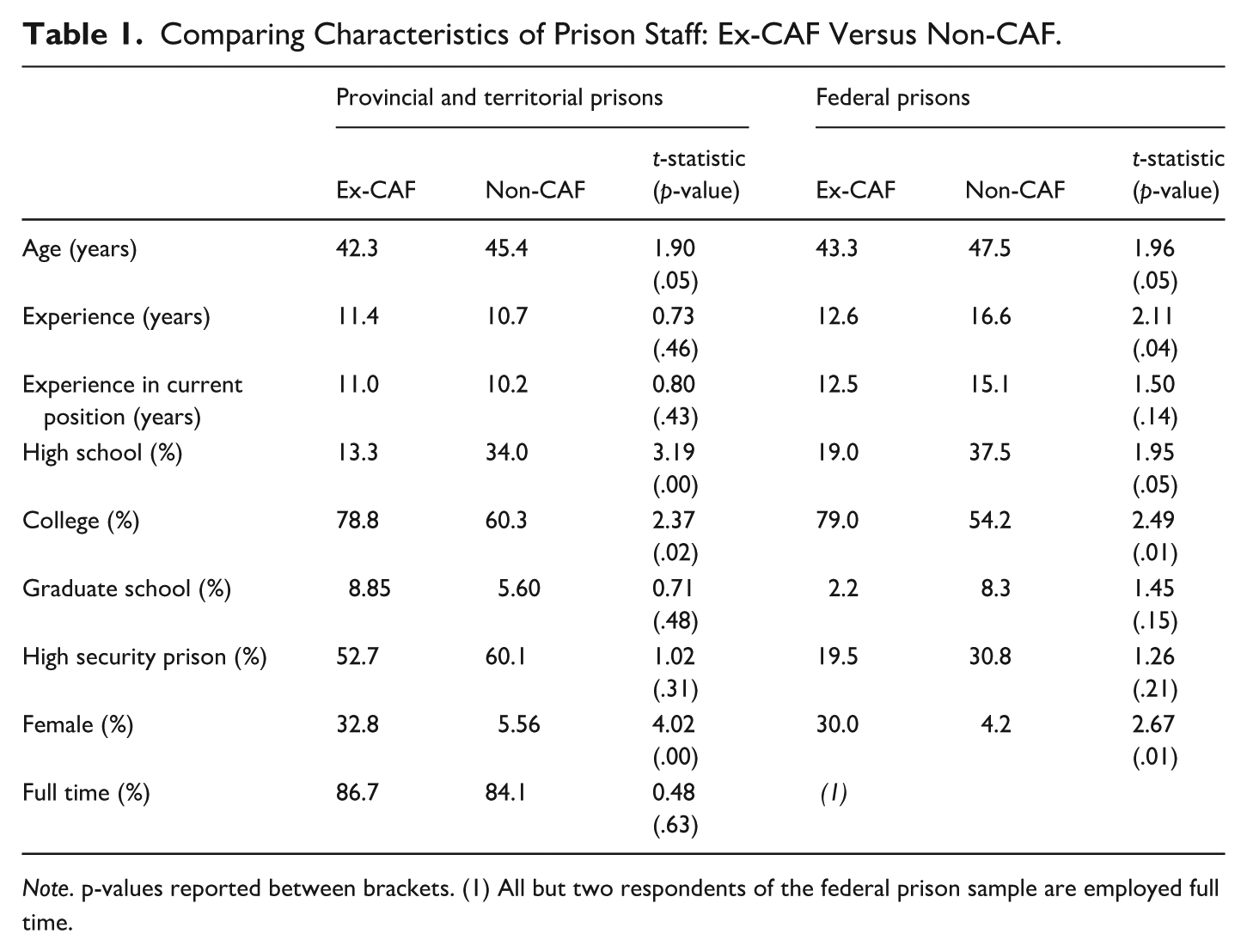
Note. p-values reported between brackets. (1) All but two respondents of the federal prison sample are employed full time.
Results and Discussion
WH1: Correctional Work Attracts Veterans With Similar Military Career and Military Exit Profiles
Military Career
Table 2 shows information about the military service and leaving profiles of the respondents with a military background. As there are no meaningful differences between respondents in P&T and federal prisons, we report percentages for all ex-CAF respondents. The majority of ex-CAF served in the Army rather than the other Forces. Across all prisons and all forces, 41.1% saw combat. To our knowledge, there is no publicly available data that reports combat experience in the Canadian Armed Forces as a whole (or by force). In the absence of such data, we follow Turner and Moran’s (2023) suggestion to take reference from Maclean’s (2011) U.S. study that reports 30% of male respondents as participating in action that can be defined as combat. To this end, we infer correctional work seems to attract a higher number of persons with combat experience. However, it is not possible to discern whether this is chance, or a result of preference on the part of the veterans themselves, and/or the selection and recruitment procedures of correctional systems. In studies examining the difference combat experience makes on occupational outcomes in the prison context, such as Logan et al.’s (2022) analysis of veterans working in prisons in the United States, the percentage composition is not reported. Accordingly, in addition to scant knowledge about the military percentage more broadly, we are unable to specify more accurately the preference (or otherwise) for specific type of military experience.
Summary of Military Service and Leaving Profiles of Ex-CAF by Force.
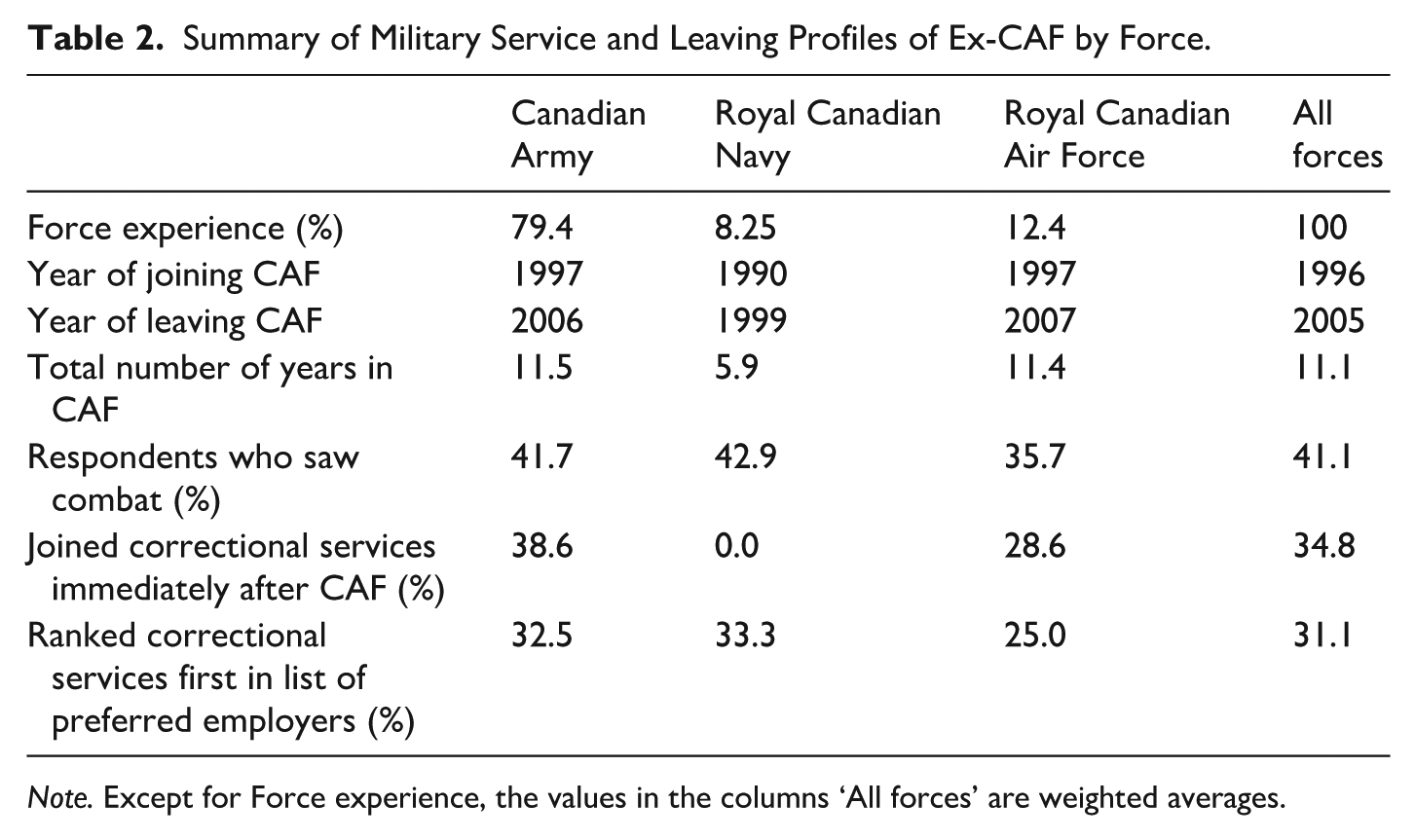
Note. Except for Force experience, the values in the columns ‘All forces’ are weighted averages.
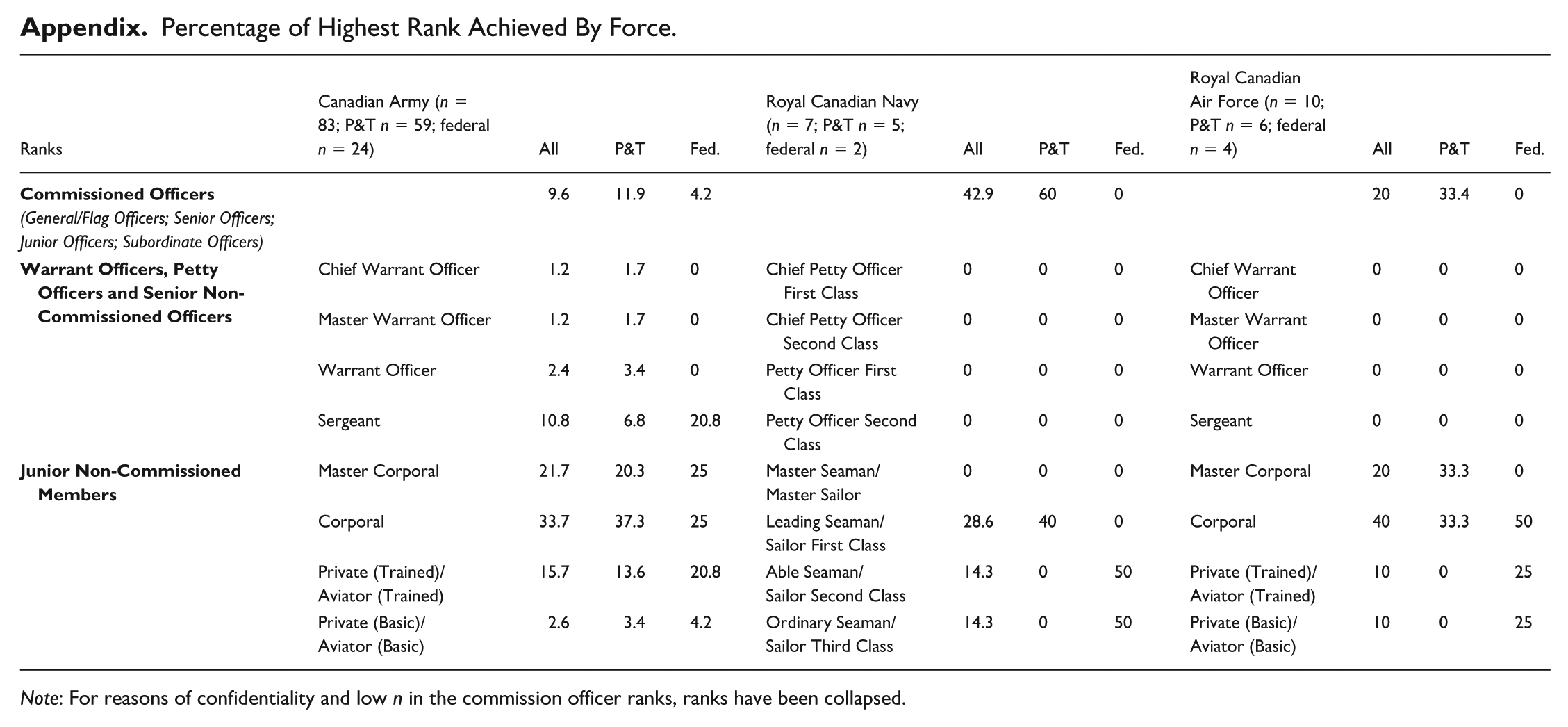
In terms of the ranks achieved by ex-CAF members going on to careers within correctional services, we see that General/Flag Officers and Senior Officers are irregular among our cohort (see Appendix). There may be differences according to prison system in relation to Royal Canadian Navy and Royal Canadian Air Force leavers, but the size of the cohort in both makes the variations difficult to establish as significant. However, we do see some differences in terms of ranks achieved for staff within P&T and federal systems for Canadian Army-leavers. Although the total percentage of Junior Officers, Subordinate Officers, Warrant Officers, Petty Officers and Senior Non-Commissioned Officers is the same for both types of correctional system, we see a much more varied distribution of ranks in the P&T system. Among these higher ranks, in federal prisons, most Army-leavers achieved the rank of Sergeant. This is surprising given that federal prisons exhibit a more militarised training period, which might be more suited to persons who have achieved higher ranks. However, given the general lack of commissioned officers within the federal system, it might be plausible that such individuals were less likely to seek out a work environment where they would ‘follow’ rather than ‘lead’. Commissioned officers may have sought P&T environments with greater flexibility to take on more senior roles. This aligns with the work of Moran et al. (2026), which indicated that veterans were less likely to be promoted in federal prisons than in the P&T system.
Outflow From the Armed Forces
Almost 40% of our cohort left the CAF as part of voluntary outflow, 20% indicated medical discharge and 28% cited other reasons (which were broadly indicative of voluntary outflow); only 12% of participants indicated their outflow because of time-expiring. This indicates that most ex-CAF respondents were generally voluntary leavers, perhaps indicating some major dissatisfaction with life in the military. This appears to align with CAF leavers more broadly. The Canadian Armed Forces experience an average annual attrition rate of approximately 8% to 9% (Department of National Defence, 2022, p. 15) and, although no specific data is published in the CAF Retention Strategy, other studies suggest that up to two-thirds of this attrition is voluntary (Godlewski & Kline, 2012). Many of these voluntary outflows take place ‘during the first 90 days of service [when] 1 in 7 recruits leave the CAF, of which 85% do so voluntarily’ (Department of National Defence, 2022, p. 65). Among our respondents, a similar percentage of participants indicated voluntary outflow or other independent decisions to leave, which could indicate dissatisfaction with military life.
Our other findings offer further insight into this situation. Participants were asked to indicate their feelings about leaving the military. Aggregating responses that indicated ‘Agree’ or ‘Strongly Agree’, nearly half of all respondents expressed feeling sorry or reluctant to leave the military (see Table 3). Although some feelings of uncertainty were common (feeling lost; lacking a sense of purpose; were unsure about their next steps; had no idea what job they wanted to pursue after leaving), respondents generally felt prepared for civilian life. Around half reported feeling confident about the future and civilian life, with around 40% believing they understood what civilian life would mean for them and the majority already had an offer of employment or knew what their next steps would be (see Table 4). Interestingly, we found some differences between ex-CAF in P&T and federal prisons. Participants in federal prisons were significantly more likely to report feeling glad to leave the military, comfortable about civilian life, and having a clear plan for the future. Furthermore, respondents in federal prisons were more likely to report knowing their next steps and knowing exactly which job they wanted to do next. Overall, these findings suggest a mix of apprehension and preparedness among CAF members transitioning to civilian life. However, individuals going on to employment in federal prisons were more likely to report a sense of readiness and clarity regarding their transition.
Statements About Situation Among Ex-CAF Before Leaving.
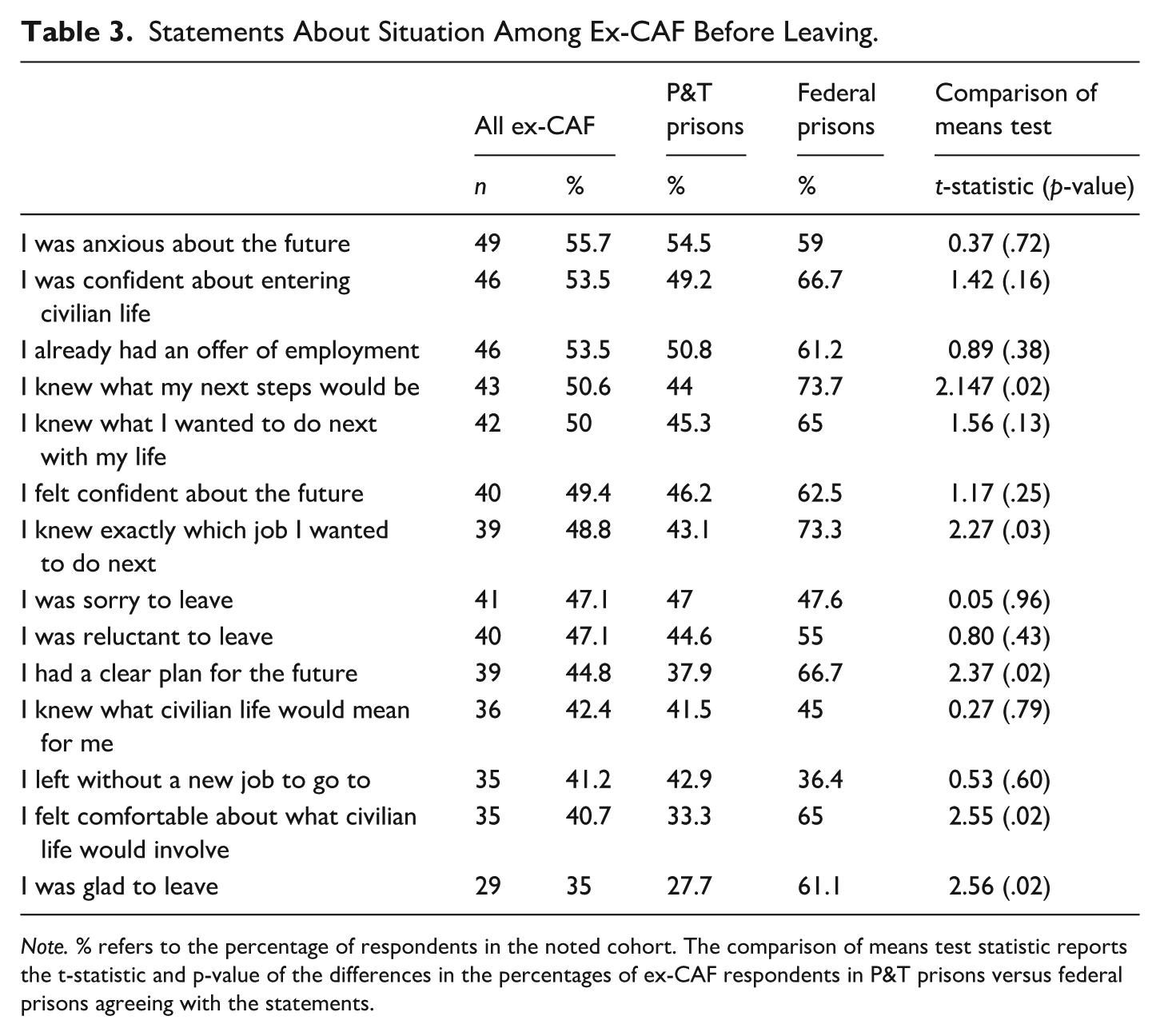
Note. % refers to the percentage of respondents in the noted cohort. The comparison of means test statistic reports the t-statistic and p-value of the differences in the percentages of ex-CAF respondents in P&T prisons versus federal prisons agreeing with the statements.
Knowledge About Correctional Services (CS) Prior to Leaving CAF.
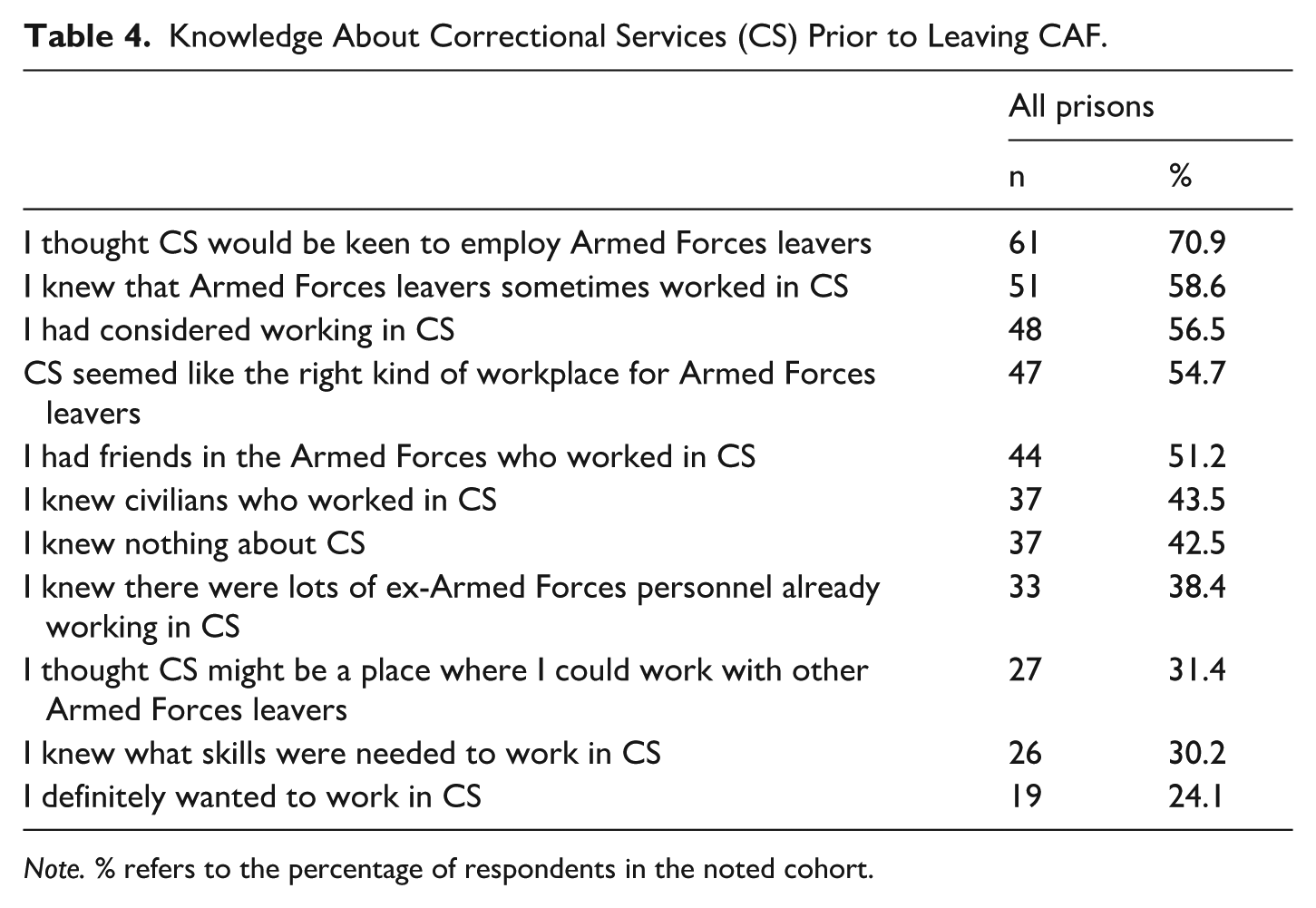
Note. % refers to the percentage of respondents in the noted cohort.
WH2: Veterans Deliberately Target Public Safety Occupations and, in Particular, Correctional Services After Leaving CAF, Which Results in a High Percentage of Veterans in the Correctional Workforce
Ex-CAF form a high percentage of the employee cohorts within the correctional system. As previously noted, when considering both prison systems, although most respondents did not have military experience, they nevertheless represent a substantial minority (25.3%, n = 90; 29.9% P&T; 18.3% federal). Although our survey cohorts are likely to report some completion bias towards CAF with an interest in the topic, we consider our military percentage to be reasonably reliable. Replicating Moran and Turner (2022b), we also calculated the estimated military percentage as reported by current correctional staff. Here, findings indicated that respondents estimated that there were currently 20.6% of ex-CAF in P&T and 17.0% of ex-CAF in federal prisons, which is broadly consistent with our sample. Deciding if this is a disproportionate population in comparison to, say, other types of employment is a difficult endeavour. Data regarding the military background of corrections staff is scant. Moran and Turner (2022b) reported that, in the United Kingdom, up to 25% of prison staff have/had a military background. In Logan et al.’s (2022) study, 17.6% of the sample from Kentucky, USA, were veterans. However, to our knowledge, we have no comparable Canadian data. We can make some inferences using data from the Canadian Census. According to the 2021 Census, there were 461,240 veterans in Canada. Of those, 261,095 fell within the core working ages of 25 to 64. This represents 1.09% of Canada’s core working-age population. If employment were evenly distributed across all professions, we would expect veterans to make up about 1.09% of workers in most sectors. However, in both our sample and the figures reported by our respondents, ex-CAF percentage within the correctional workforce is significantly higher, indicating that veterans are overrepresented in that field.
Our survey also asked former military personnel to reflect on their feelings when leaving the CAF regarding working in correctional services, specifically focusing on their awareness of opportunities, perceptions of correctional services as a suitable workplace, and whether they had considered a career in correctional services. As there were no significant differences between the two cohorts, we present the responses for the two cohorts together in Table 4. A large majority believed prison systems would be keen to employ ex-CAF, suggesting a clear value to military experience. Just over half of the cohort perceived corrections as a suitable workplace for ex-CAF, highlighting a potential fit between the skills and experiences of ex-military personnel and the nature and demands of prison employment. However, only around a quarter of all respondents expressed a definitive desire to work in correctional services, with the remainder ranking other public safety occupations such as the police as a higher priority for post-CAF employment. Accordingly, veterans seem to agree that prisons are a suitable place to work, but it is not the case that correctional work is a ‘go to’ job for most of them.
Respondents were also asked about their specific reasons for applying to the prison service (see Table 5). Across both prison systems, job security and salary were the most prominent reasons for joining. Other factors which we might associate with military employment, such as staff ranks, wearing a uniform, and the ability to help vulnerable people, were reported less frequently in both groups. Ex-CAF in federal prisons indicate more often that pensions are important, suggesting federal prison staff may be more motivated by long-term benefits. Respondents working in federal prisons also appear to have made a more conscious choice to work in this type of prison, as the percentage of respondents who indicate that they didn’t know what else to do is significantly lower among these respondents. In contrast, respondents in P&T prisons are more likely to indicate that opportunities for progression and promotion are important.
Reasons For Joining Correctional Services.
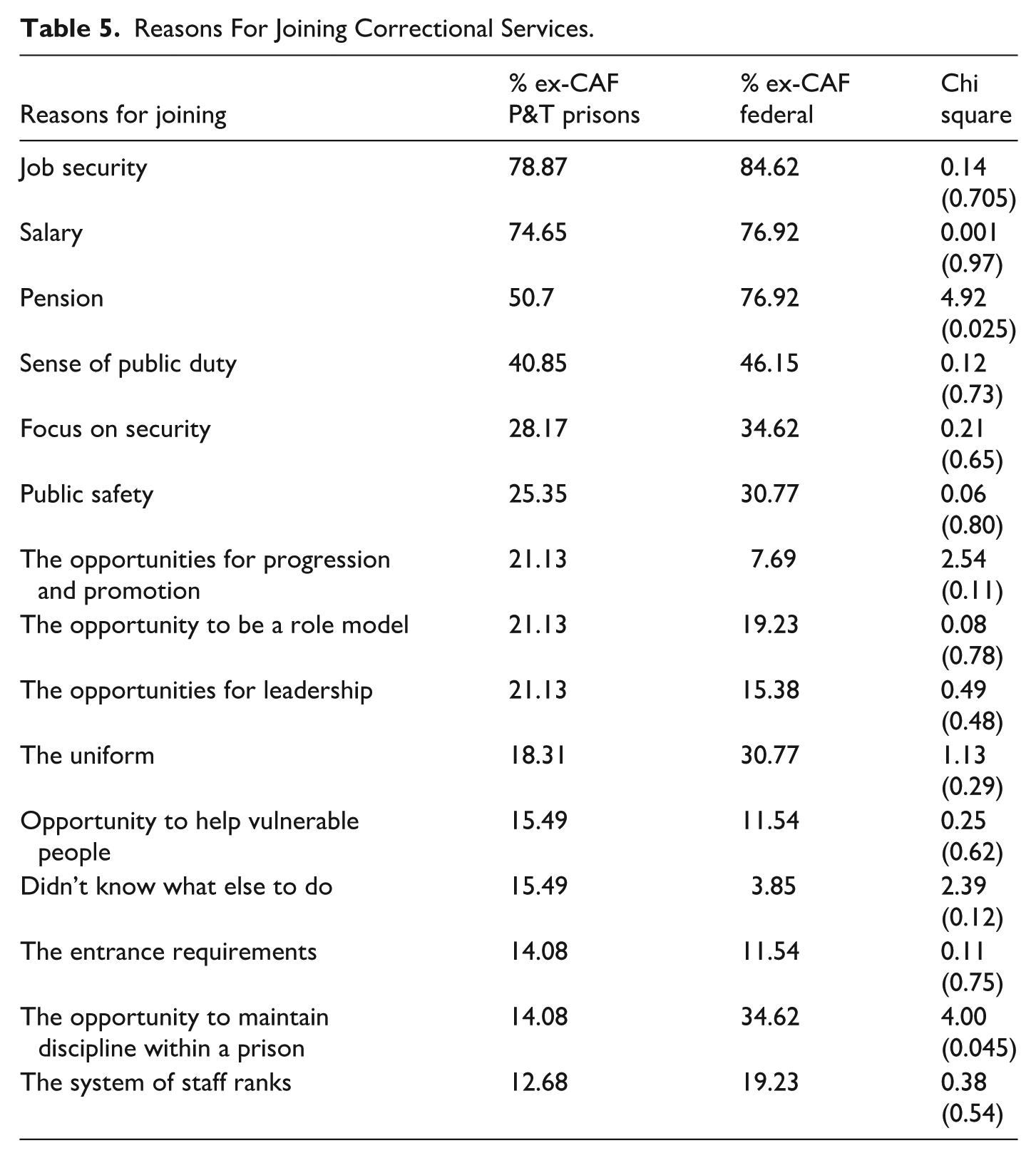
We can reflect on these reasons in conjunction with reported rationales for voluntary outflow from military employment. Given such a high level of voluntary outflow, it is not surprising that the reasons are wide-ranging. Of its voluntarily released members, the 2013 to 2017 CAF Exit Survey reported a 35.4% incidence of job dissatisfaction, with 32.0% acknowledging geographical instability and 24.7% citing issues with career progression as a barrier to continued employment. Other factors such as salary and benefits, and questions surrounding the meaning of the work were important for more than 1 in 10 voluntary leavers (Department of National Defence, 2022, p. 69). When we look at the reported reasons for joining the correctional service, individuals are directly attracted to aspects that they believe they are more likely to find here than in their prior military experience.
WH3: Veterans Are Comfortable With ‘Military-Like’ Aspects of Correctional Work, as Evidenced by Their Initial Training Period and Their Early Experiences Within Correctional Employment
A major component of the survey explored experiences with job training and any potential differences between persons with and without military experience. We first examine WH3 using descriptive comparisons of non-CAF with ex-CAF respondents and then assess whether the observed patterns persist once we condition on a limited set of respondent characteristics.
As Table 6 shows, regardless of prison type, veterans consistently rated their training experience as less militaristic, less intense, and with greater advantages stemming from their prior military background. Non-veterans, on the other hand, seemed to perceive the training as a more militaristic experience, with greater intensity and a greater resemblance to a bootcamp. These differences highlight the role of prior military experience in shaping perceptions of training, with veterans possibly finding the training to be more aligned with their existing skills and less overwhelming.
Assessment of Correctional Services Training.
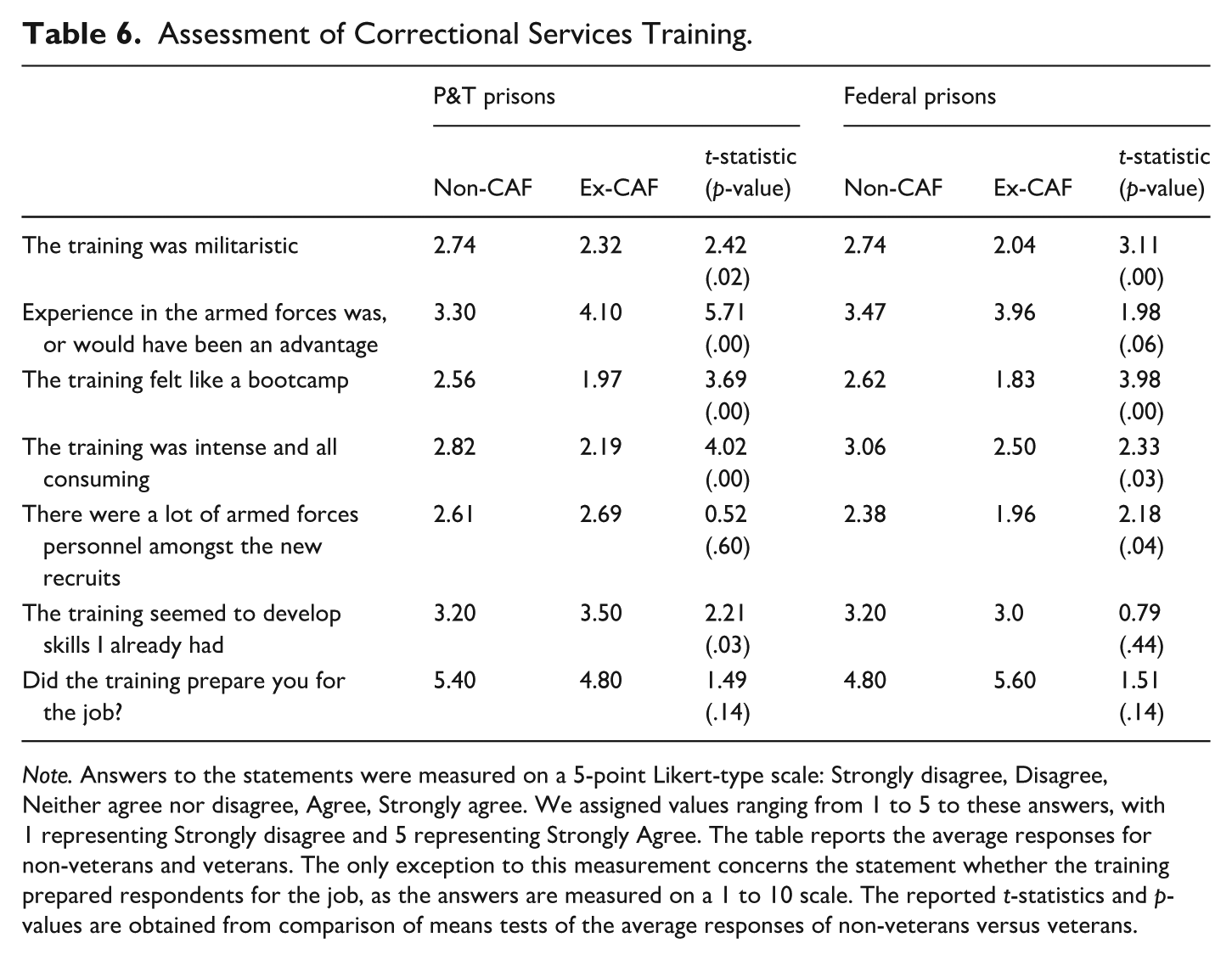
Note. Answers to the statements were measured on a 5-point Likert-type scale: Strongly disagree, Disagree, Neither agree nor disagree, Agree, Strongly agree. We assigned values ranging from 1 to 5 to these answers, with 1 representing Strongly disagree and 5 representing Strongly Agree. The table reports the average responses for non-veterans and veterans. The only exception to this measurement concerns the statement whether the training prepared respondents for the job, as the answers are measured on a 1 to 10 scale. The reported t-statistics and p-values are obtained from comparison of means tests of the average responses of non-veterans versus veterans.
A limitation of the results presented in Table 6 is that they compare ex-CAF and non-CAF, without conditioning on other characteristics of the respondents. To assess whether the observed differences associated with ex-CAF status persist once such characteristics are taken into account, we estimate a set of simple logit models. To do so, we transform the variables of Table 6 into dichotomous variables taking the value 1 if respondents Agree or Strongly agree with the statements and 0 otherwise. For the variable usefulness of training as job preparation, we create a dichotomous variable taking the value of 1 when the rating for usefulness is 7 or higher and 0 otherwise. Using these dependent variables, we estimate a set of multivariate logistic regression models:

‘Ex-CAF’ is a dummy variable identifying respondents with a military background. We condition on a small set of respondent characteristics capturing institutional context, timing of entry, gender, employment status, and education. ‘High security’ is a dummy variable identifying respondents working in prisons with high-risk prisoners. We include this variable as it is likely that training programmes are more stringent if COs would deal with higher-risk individuals in their job roll. ‘Latest decade’ is a dummy variable identifying respondents who started working in the prison service within the last decade. We include this variable to capture any differences between recent training programmes and older programmes. The variable ‘Female’ identifies respondents who indicated themselves to be of female gender to capture any differences in experience between males and females. ‘Full-time’ is a dummy variable taking the value 1 for respondents employed in the prison service on a full-time basis. This variable captures any differences in training programmes that part-time and full-time staff members receive. Finally, we include categorical variables capturing the level of education of the respondents. Using a high school degree as reference category, we distinguish between some college education, college degree and graduate degree. This variable captures any differences in training programmes offered to staff members with different education levels, assuming such levels are related to different job types and functions.
As our focus of this analysis is to assess whether having a military background is associated with experiences with the training programmes, while having controlled for the effects of the other control variables, we report the estimated marginal effects of the variable ‘ex-CAF’ on the experiences with the training programmes graphically in Figure 1. 2
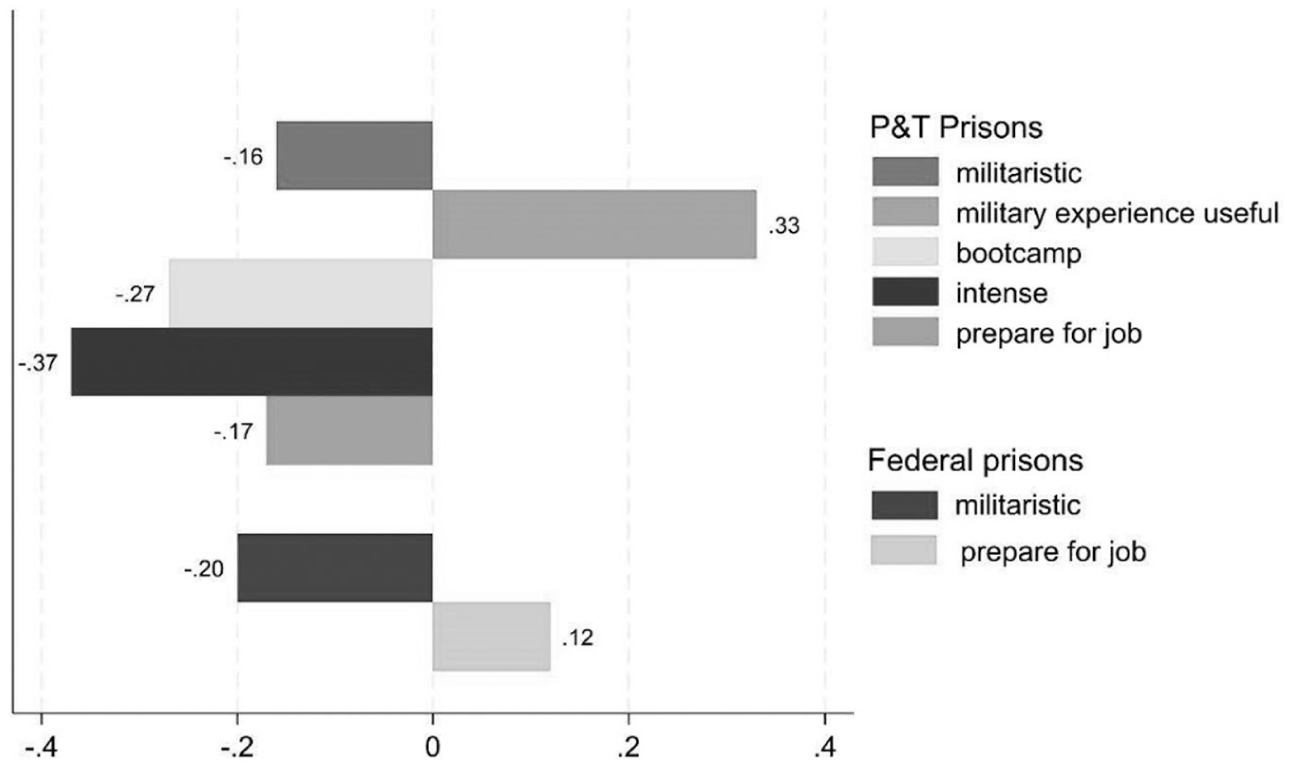
Marginal Effects of Veteran Status and Training Programmes: P&T and Federal Prisons.
As shown in Figure 1, ex-CAF in P&T prisons are 16% less likely to agree with the statement that the training felt militaristic and 27% less likely to liken it to ‘bootcamp’, even after controlling for the other characteristics of the respondents. We find the largest marginal effect for the characterisation of the training programmes as being intense, with ex-CAF being 37% less likely to agree with this statement. In contrast, ex-CAF are 33% more likely to agree with the usefulness of having military experience. Interestingly, ex-CAF were also significantly less likely to agree with the statement that the training programme provided a good preparation for the job in the prison service. We see fewer differences between ex-CAF and non-CAF working in federal prisons, which seems surprising given the more robust training programmes and rigid structures. This could be the result of a selection effect, where non-CAF who are attracted to work in federal prisons are prepared for the more stringent training programmes that this type of prison offers. There is a significant difference between ex-CAF and non-CAF when it comes to labelling the training programmes as ‘militaristic’, as ex-CAF are 20% less likely to agree with this statement (although we must note that while ex-CAF have military experience, non-CAF are comparing the prison training to a potentially highly varied impression of what ‘military’ might mean). However, in contrast to veterans working in P&T prisons, ex-CAF in federal prisons appear to value the training programme to a higher degree, as they are 12% more likely to agree with the statement that the training programmes provided a good preparation for their job in the prison service.
Next to experiences with military-like characteristics of the training programmes, we also enquired about the early employment experiences within correctional services. Several of our questions concerned such experiences that can be linked to whether the respondents have a military background, thereby providing information whether such a background may be helpful to facilitate the transition into working in the prison system. To assess whether this is the case, we focus on the following questions: ‘I quickly understood the ranking system’, ‘I was always punctual’, ‘I was proud to wear the uniform’, ‘It felt natural to use formal forms to address (“sir” and “miss”)’, ‘everything felt like a big responsibility’, ‘It took a while to get used to the system of seniority amongst staff’, ‘It took a while to get used to uniform’, ‘I felt out of my depth’ and ‘It felt weird to use terms such as “sir” and “miss”’. In the survey, the responses to these statements are measured on a 5-point Likert-type scale. Like our statistical analysis of differences in training experiences, we created a set of dichotomous variables, with 1 representing ‘Strongly agree’ or ‘Agree’ and 0 otherwise. Using these as dependent variables, we estimated a set of logistic regression models specified similarly to regression model (1) in terms of other respondent characteristics. We present the findings graphically in Figures 2 (P&T prisons) and 3 (federal prisons).
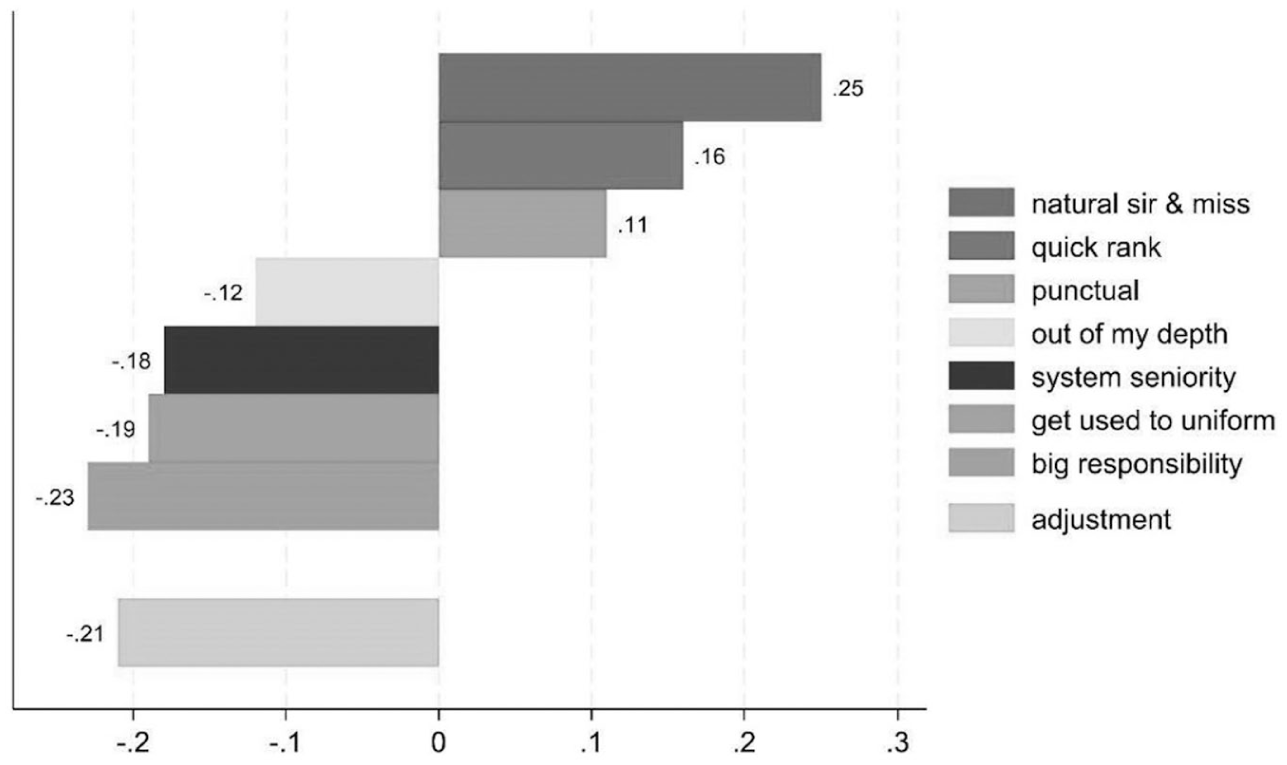
Marginal Effects of Veteran Status and Early Experiences in Correctional Employment: P&T Prisons.
As shown in Figure 2, military-style experiences within the early days of correctional employment appear to be important. For instance, ex-CAF are 25% more likely to be comfortable using formal forms of address. They are also more likely to quickly become used to the ranking systems and be punctual. The estimated negative marginal effects indicate further aspects where veterans appear to benefit. They are close to 25% less likely to feel their job as a big responsibility. They also find getting used to the uniform and the system of seniority easier, and they are less likely to feel out of their depth.
In addition to our findings on these individual statements, we also examined whether we could obtain a more general indicator of the differences between ex-CAF and non-CAF in terms of early employment experiences. To do this, we conducted a factor analysis on the answers to the full set of questions related to these experiences. The findings from the factor analysis indicate that the replies to the following statements load highly onto a common factor: ‘It took a while to get used to getting to my shift on time’; ‘I felt like the odd one out’; ‘It took me a while to get used to the system of seniority amongst the staff’; ‘The prison felt like an alien environment’; ‘It took a while to get used to the uniform’; ‘I felt out of my depth’ and ‘It felt weird using terms such as “sir” and “miss”’. We created a variable, labelled ‘adjustments’, calculated as the respondents’ average score on this group of variables. When estimating the regression model with this alternative dependent variable, we find that ex-CAF are 21% less likely to indicate to experience from these adjustment problems.
Figure 3 shows the main findings from estimating the regression models on the data for federal prisons. The estimated positive marginal effects of it feeling natural to use formal forms of address (‘sir’ and ‘miss’) and being punctual are consistent with the findings for ex-CAF in P&T prisons. Again, the largest negative marginal effect concerns the feeling as if everything about the job felt like a big responsibility. The other two estimated negative marginal effects (‘It took a while to get used to uniform’ and ‘I felt out of my depth’) are also similar to the findings for ex-CAF in P&T prisons. Finally, we estimated the conditional association between veteran status and the variable ‘adjustments’. As in P&T prisons, respondents with a military background working in federal prisons are significantly less likely to indicate that they experience problems with adjustment into their first job.
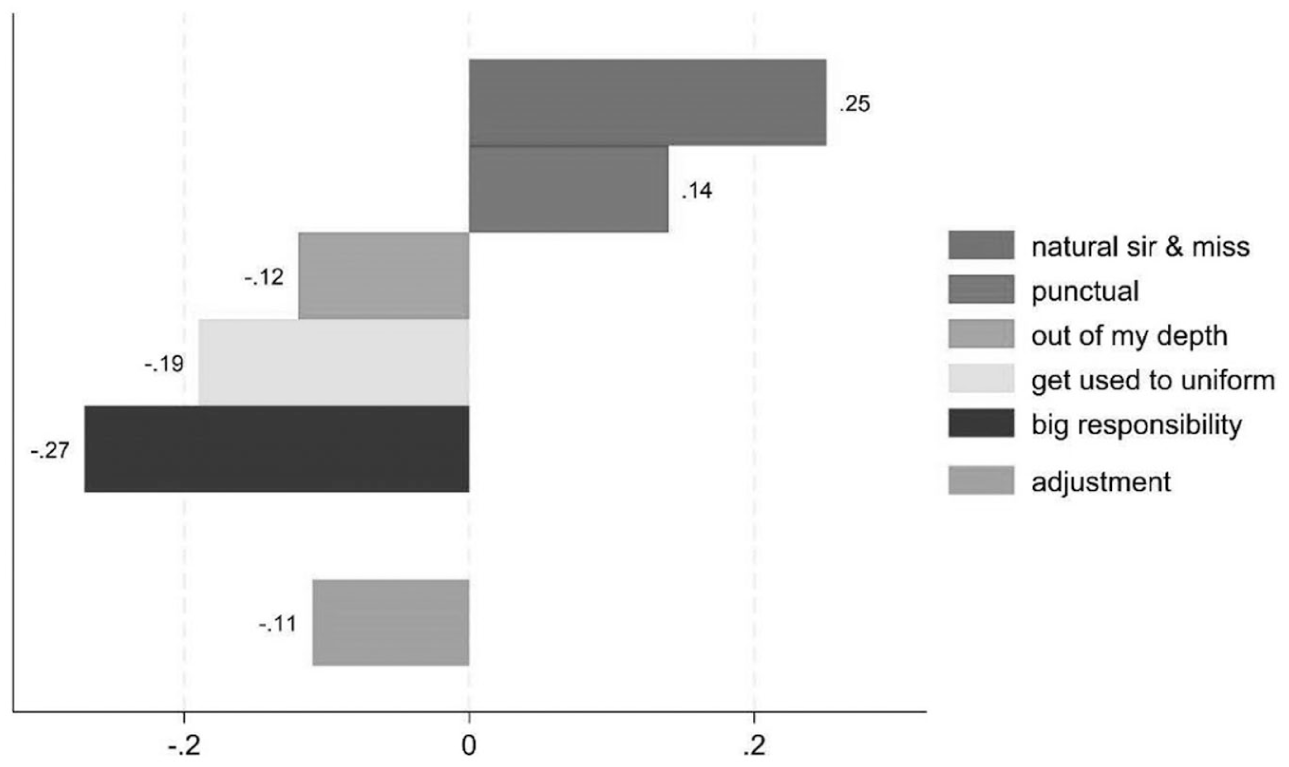
Marginal Effects of Veteran Status and Early Experiences Within Correctional Employment: Federal Prisons.
Discussion and Conclusion
The Canadian prison system attracts a high percentage of persons with military experience, which is likely indicative of a high degree of skill transferability, where military experience aligns with the security-, disciplinary- and crisis management elements that are synonymous with correctional jobs. This may also reflect hiring preferences where public safety occupations including correctional services prioritise veterans due to their background in structured environments. From our cohort, we encountered a strong awareness of veterans following pathways to prison employment and a core assumption suggesting they would be suited to this type of work.
Despite correctional services being recognised as a good career option and substantial percentages of staff members with a military background in both P&T and federal prisons, working in prisons was not the top choice among individuals transitioning out of the military. This desire to explore wider career options may, however, reflect less a lack of strong interest in corrections work and more the tendency of this veteran cohort to prioritise practicality, career progression and salary. The relatively high percentage of people who considered correctional work as an option suggests, while it might not be the ideal second career, corrections is still a viable option, confirming the notion that the transition into corrections is widely recognised among military personnel, which might smooth the path for those who do eventually pursue a career in corrections. Regardless of the type of prison employment, most ex-CAF believe correctional services would be eager to hire them, likely because of the transferable skills they possess. This aligns with the idea that correctional services seek individuals with qualities like discipline, structure, and security experience that military personnel often bring.
Among the respondents, ex-CAF personnel who join correctional services are predominantly leavers from the Royal Canadian Army. Although there are some persons who held higher ranks, most were Junior Non-Commissioned members. In P&T prisons, there is a greater range of more senior ranks, which may influence or be a result of the greater propensity for ex-CAF to be promoted in this correctional system (see Moran et al., 2026). Although there are a few statistically significant differences between individuals working in the federal and provincial and territorial correctional systems, there are some nuances in some areas. On leaving the military, individuals who went on to work in federal prisons exhibited a higher degree of confidence about their future, perhaps indicating that federal prisons attract persons better equipped to deal with the military-civilian transition. Without further data, these findings are difficult to interpret. However, the more confident, better-equipped veterans may emerge within the federal prisons sample because the recruitment process is more rigorous, seeking more specialised staff with stronger professional backgrounds who might excel in more structured environments with more extensive training. In contrast, provincial and territorial prisons may not be as selective in their recruitment process, which could result in a broader pool of applicants with lower certainty or confidence about their future. P&T prisons might attract individuals who are still struggling with the transition from military-to-civilian life, as demonstrated by more feelings of uncertainty (e.g., feeling lost, lacking a sense of purpose, or unsure about next steps) from this cohort.
Once in employment, veterans highlight various qualities related to their military background as being inherently beneficial to their training and early employment experiences. Ex-CAF in both prison environments were significantly more likely to indicate familiarity with formal modes of address such as ‘sir’ and ‘miss’, as well as being punctual. Ex-military personnel also did not tend to feel that their role was a big responsibility, which indicates ex-CAF felt equipped for the tasks ahead. This is also supported by the finding that veterans are less likely to experience adjustment costs. Ex-CAF were also less likely to consider federal training militaristic. We might expect this in the P&T systems, where training is generally less mentally and physically demanding. And, although federal prisons focus on a higher level of intensity in terms of practical skills, procedural knowledge, and perhaps psychological resilience, the way training is delivered may lack the overtly military structure or discipline to which veterans are accustomed. However, veterans in P&T were less likely to agree that their correctional training prepares them for the job. In federal prisons, they were more likely to agree with this statement. This highlights an important consideration when designing correctional training programmes: training must recognise that veterans’ experiences in the Canadian Armed Forces differ from those in correctional environments. While ex-CAF in federal prisons may not specifically agree that their training is militaristic, this training appears to resonate more effectively with them in preparing them for the job. On the other hand, veterans in P&Ts may find the training less aligned with their expectations, especially in terms of intensity and readiness for the correctional role. This difference in experience emphasises the need for training programmes to be tailored to the specific demands and realities of the correctional environment, while also considering the diversity of experiences among recruits, including veterans.
This study contributes to the literature on military–civilian transition and prison studies by examining the pathways of ex-CAF personnel into correctional work. Our findings reveal that ex-CAF form a significant proportion of the correctional workforce in Canada. However, while military experience aligns well with correctional roles – given the shared emphasis on discipline, structure, and security – most veterans do not initially intend to pursue careers specifically in correctional services. Contrary to assumptions that military-civilian transition may be enhanced by replicating ‘military-like’ settings, respondents reveal that provincial and territorial prisons – with their less rigid structures and less intensive training periods – may offer a more beneficial transition experience. However, the training offered in those prisons may be less effective for the veteran cohort. Where veterans are recruited to the prison system, training should adequately recognise the diversity of their background. Further to this, career advice mechanisms for military leavers (including those developed by Veterans Affairs Canada’s (VAC) Career Transition Services (CTS) and the National Veterans Employment Strategy (‘Service after Service’)) should better manage the expectations of the training for and everyday reality of the correctional role, before offering correctional work as a post-military career option.
Our exploratory research raises two critical questions regarding the recruitment and training of ex-CAF personnel in correctional services, which could underpin future theory generation. First, we ask, are veterans ideal candidates for correctional roles? Given their structured backgrounds, discipline, and experience in high-pressure environments, ex-military personnel seem well-suited to the demands of correctional work, as evidenced particularly by their training experiences. Also, their lower adjustment costs and familiarity with hierarchical systems suggest they integrate more smoothly into correctional work compared to non-military recruits. However, many ex-CAF entering correctional services are voluntary military leavers who may carry unresolved frustrations or unfulfilled career aspirations. We are therefore cautious about making suggestions that might encourage prison services to recruit more veterans to the prison system because our results do not have the capacity to demonstrate whether this is beneficial for either the veteran population or the prison population. Further research is therefore required to understand how veterans’ departure experiences impact their functioning in the prison systems, including their job performance, interactions with prisoners and institutional culture and to offer solutions where needed. Furthermore, exploring whether the prison environment could indeed provide a form of professional continuity to mitigate these effects or, given the stresses of prison work, instead exacerbate them, is prudent. This type of knowledge is currently missing from international studies of both veterans and prisons. Understanding how these competing dynamics influence prison operations, institutional culture and prisoner interactions is crucial both for developing policies that ensure a stable workforce, maintain security and foster a rehabilitative environment, while mitigating any potential challenges that arise from employing military leavers (in any correctional context, in Canada or otherwise), and for theorising the ways in which military leavers progress their future careers. Indeed, there is a tendency towards recruiting veterans in countries such as the United States, Canada and the United Kingdom, which leaves future scope for comparative studies that would help to illuminate the particular experiences and challenges for the veteran cohort in the correctional workforce more broadly.
Finally, the nascent nature of scholarship on military experience and correctional work means that there is considerable scope to contribute to the development of theorisation of veteran transition to corrections. By advancing and testing a range of hypotheses informed by the growing body of literature in this field, we have shown that prior military experience exerts a complex set of influences over motivation to join, and early experience within, correctional work, and in so doing, we pave the way for future theorisation of this critical transition.
Footnotes
Appendix
Percentage of Highest Rank Achieved By Force.
| Ranks | Canadian Army (n = 83; P&T n = 59; federal n = 24) | All | P&T | Fed. | Royal Canadian Navy (n = 7; P&T n = 5; federal n = 2) | All | P&T | Fed. | Royal Canadian Air Force (n = 10; P&T n = 6; federal n = 4) | All | P&T | Fed. |
|---|---|---|---|---|---|---|---|---|---|---|---|---|
|
(General/Flag Officers; Senior Officers; Junior Officers; Subordinate Officers) |
9.6 | 11.9 | 4.2 | 42.9 | 60 | 0 | 20 | 33.4 | 0 | |||
|
|
Chief Warrant Officer | 1.2 | 1.7 | 0 | Chief Petty Officer First Class | 0 | 0 | 0 | Chief Warrant Officer | 0 | 0 | 0 |
| Master Warrant Officer | 1.2 | 1.7 | 0 | Chief Petty Officer Second Class | 0 | 0 | 0 | Master Warrant Officer | 0 | 0 | 0 | |
| Warrant Officer | 2.4 | 3.4 | 0 | Petty Officer First Class | 0 | 0 | 0 | Warrant Officer | 0 | 0 | 0 | |
| Sergeant | 10.8 | 6.8 | 20.8 | Petty Officer Second Class | 0 | 0 | 0 | Sergeant | 0 | 0 | 0 | |
|
|
Master Corporal | 21.7 | 20.3 | 25 | Master Seaman/ |
0 | 0 | 0 | Master Corporal | 20 | 33.3 | 0 |
| Corporal | 33.7 | 37.3 | 25 | Leading Seaman/ |
28.6 | 40 | 0 | Corporal | 40 | 33.3 | 50 | |
| Private (Trained)/ |
15.7 | 13.6 | 20.8 | Able Seaman/ |
14.3 | 0 | 50 | Private (Trained)/ |
10 | 0 | 25 | |
| Private (Basic)/ |
2.6 | 3.4 | 4.2 | Ordinary Seaman/ |
14.3 | 0 | 50 | Private (Basic)/ |
10 | 0 | 25 |
Note: For reasons of confidentiality and low n in the commission officer ranks, ranks have been collapsed.

Funding
The authors disclosed receipt of the following financial support for the research, authorship, and/or publication of this article: This project was funded by the Social Sciences and Humanities Research Council of Canada Insight Development Grant (2020).
Declaration of Conflicting Interests
The authors declared no potential conflicts of interest with respect to the research, authorship, and/or publication of this article.