







Abstract
As the national governance focus shifts downward, the administrative burden on street-level bureaucrats(SLBs) continues to increase. Consequently, SLBs appear less inclined to exercise their discretion, resulting in the phenomena of “lying flat” and “avoiding responsibility” at the grassroots level. This study uses a survey experiment to simulate street enforcement scenarios and analyze the relationship between administrative burden and the willingness of SLBs to exercise their discretion. The study found that SLBs’ willingness to exercise discretion weakens under administrative burdens. Additionally, public service motivation may exacerbate the perception of administrative burden in high-enforcement-burden scenarios. The research findings offer a framework for optimizing the structure of grassroots administrative burdens and increasing the willingness of SLBs to exercise their discretion.
Keywords
Introduction
Discretion, serving as a form of “identity tag” for street-level bureaucrats (SLBs), is a significant factor shaping the implementation of public policy and the realization of public welfare (Jones, 2001). On one hand, discretion enables SLBs to make decisions in complex working environments, facilitating the effective execution of public policies. As the “nerve endings” of the public administration system, SLBs – including caseworkers, police officers, social workers, and grassroots judges, play a crucial role in the practical application of policy. They do not merely enforce regulations; rather, they interpret these regulations in intricate daily interpersonal contexts through discretion, which encompasses judgment, coping strategies, and improvisation, leading to “policy re-decision” or “policy making.” As Lipsky (1980) described in “Street-Level Bureaucracy: Dilemmas of the Individual in Public Services,” the decisions of SLBs, the routines they establish, and the strategies they devise to cope with uncertainty and work pressures, in fact, constitute the public policies they implement (p. 12). On the other hand, discretion affects both the manner and the effectiveness with which SLBs deliver public services. As public officials who engage directly with the public in the course of their duties and wield significant discretion in their roles (Lipsky, 2010), SLBs can convert abstract state power into tangible public services that address the complex and varied interests of the community. When SLBs make decisions that promote public welfare and facilitate social development, the influence and authority of the state are correspondingly enhanced. This implies that how SLBs exercise their discretion will have a direct bearing on public trust and satisfaction with street-level bureaucracies as well as with the government.
In recent years, as the focus of national governance has shifted toward grassroots levels, the trend of government decentralization and the delegation of power have led to a significant expansion of public services at the forefront of governance, thereby markedly increasing the frequency of interactions between citizens (Chang & Brewer, 2023). In light of this context, the burdensome experience of SLBs in implementing policies also has continuously increased. They serve a dual role as intermediaries between the government and society, functioning both as “state agents” and “public agents,” tasked with the dual responsibilities of executing national policies and addressing public needs. Consequently, SLBs inevitably create “friction” in their interactions with both the state and the public, while concurrently grappling with the burdens imposed by top-down enforcement and bottom-up responses. Under the weight of this dual administrative burden, the discretion exercised by SLBs appears to be “trapped in the sandwich layer.” And their willingness to make decisions is markedly diminished, which makes them more inclined to shift responsibility or limit their efforts (Burden et al., 2012). This phenomenon has garnered considerable attention from both practitioners and the academic community. In China, the General Office of the Central Committee of the Communist Party and the State Council issued “Several Regulations on Rectifying Formalism and Reducing Burdens on Grassroots” that emphasize the need to “alleviate the burdens on grassroots levels” and to encourage grassroots officials to “actively take responsibility and exert more energy in implementation”(Central People’s Government of the People’s Republic of China, 2025). Concurrently, academia has also initiated research on the behaviors of SLBs, including “lying flat,” “avoiding responsibility,” and “inaction.” Beneath the surface of these issues lies a theoretical proposition about political power and government actions. The negative decision-making exhibited by SLBs reflects the invisible face of their decision-making power—“non-decisions” (Bachrach & Baratz, 1962). Consequently, elucidating the reasons behind SLBs’ reluctance to exercise discretion in decision-making, particularly under the weight of dual administrative burdens, holds significant practical and theoretical importance.
Since Lipsky’s seminal work, scholars have engaged in extensive discourse about the discretion exercised by SLBs. Existing research has examined the factors that influence the exercise of discretion among SLBs from multiple perspectives, including organizational characteristics, institutional traits, individual attributes, and client characteristics. Research indicates that organizational support incentives, supervisory management, an emphasis on administrative objectives, and the structure of organizational members can all influence the exercise of discretion by SLBs (Gershgoren & Cohen, 2024; Gofen, 2014; Keulemans & Groeneveld, 2020). The rigidity and flexibility of the system will shape SLBs’ preferences in the exercise of discretion (Barnes & Grayer, 2025; Davidovitz et al., 2021; Gershgoren & Cohen, 2023; Maynard-Moody & Musheno, 2003). SLBs’ enforcement style, their perception of justice, individual professional factors, and personality traits affect their willingness to exercise discretion (Barnes & Grayer, 2025; Hassan et al., 2023; Henderson et al., 2018; Riccucci, 2005). The enthusiasm and cooperation clients exhibit during interactive negotiations, along with their expectations and diverse needs, will influence the motivation of SLBs in exercising their discretion (Busch, 2023; Johannessen, 2019; Marvel & Resh, 2015).
Through a review of the literature, we found that, although the academic community acknowledges that the administrative burden faced by SLBs affects their willingness to exercise discretion from the standpoint of mainstream theoretical perspectives, largely missing is systematic and targeted analysis and discussion of the causal mechanisms linking the two. In particular, within practical frontline governance scenarios, SLBs frequently encounter various types of administrative burdens concurrently. Most discussions surrounding administrative burdens, however, are currently fragmented across research on the discretion of SLBs or are limited to specific types of burdens in localized contexts, indicating a need for further in-depth exploration. For example, some scholars report solely from the perspective of psychological burden that SLBs’ perception of reputational damage (or stigmatization) makes them more cautious in exercising discretion in decision-making (Park, 2025). Other scholars emphasize that SLBs’ compliance with the relevant policy framework and are unwilling to expand the discretionary space when faced with the systemic burdens of the bureaucratic system (Bell & Smith, 2022).
During the literature review process, we also discovered that the controversy surrounding the concept of administrative burden is a major factor contributing to the current scarcity of academic discussions regarding the causal mechanism between administrative burden and the willingness of SLBs exercise discretion. On one hand, recent research findings reveal that many scholars utilize the term administrative burden to refer to the learning costs, compliance costs, and psychological costs incurred by citizens when accessing public services and exercising their political rights (Moynihan et al., 2015). Yet, they overlooked the concept of administrative burden, which was initially introduced to describe the strain experienced by grassroots administrators and their higher-level officials due to excessive workloads (Burden et al., 2012). This oversight has resulted in many studies failing to adequately and comprehensively address the administrative burden when the administrative burden SLBs experience when deciding whether and how to exercise discretion. While we need to establish a new conceptual framework in the form of administrative burden to focus on public perception, this does not mean that administrative burden cannot be studied among public managers or employees (Madsen et al., 2022). On the other hand, the concept of administrative burden itself is rather complex and ambiguous, lacking a clear definition and appropriate classification. Not only is administrative burden closely associated with concepts such as red tape, sludge, and ordeal mechanisms (Madsen et al., 2022) but it also encompasses multiple dimensions (such as learning, compliance, and psychological costs) that often interconnect, complicating the task of distinguishing them completely. In summary, the administrative burdens SLBs face is a significant yet under-researched area, providing a new perspective on the willingness to exercise discretion among SLBs.
In this context, this article poses the following questions: Will administrative burdens influence SLBs’ willingness to exercise discretion, and if so, in what ways? What are the differences in the effects of enforcement burdens and response burdens on the willingness to exercise discretion? To examine these questions, this article constructs an analytical framework based on self-determination theory (SDT) to explore the causal relationship and intrinsic mechanisms between administrative burdens and the willingness to exercise discretion among SLBs. The research makes several contributions. First, we redirect the focus of studying administrative burdens to the dilemma SLBs encounter, emphasizing their dual burdens stemming from both top-down and bottom-up burdens during policy implementation. Second, this study enriches the discourse on the discretion exercised by SLBs, providing new evidence and uncovering novel mechanisms of action, thereby offering valuable insights for mitigating the administrative burden on these officials and enhancing their willingness to exercise discretion. Third, on a methodological level, we employ a survey experiment to investigate the impact of administrative burden on the willingness of SLBs to exercise discretion, effectively circumventing the endogeneity issues commonly associated with quantitative research methods, such as those represented by traditional questionnaire surveys and the causal inference challenges they present.
Theoretical Analysis and Hypotheses
Street-level bureaucracy theory posits that SLBs predominantly employ two principal narratives to characterize their work: they act as “state agents” and as “public agents.” When adopting these distinct roles, the administrative burdens encountered by SLBs also vary. The former primarily endures the top-down enforcement burden imposed by the bureaucratic system during policy implementation. The latter mainly confronts the bottom-up response burden arising from societal demands when addressing public needs. From the perspective of enforcement burden, influenced by existing institutional structures and technological governance paradigms, SLBs are required not only to comply with various bureaucratic formalities to fulfill directives and evaluations from their superiors, but also to manage an increasingly complex, variable, and potentially limitless array of administrative tasks with very limited policy resources. In terms of response burden, SLBs must respond to public concerns promptly. When public expectations conflict with policy norms, however, SLBs often find themselves in a dilemma of “role conflict,” making it difficult to make effective decisions. At the same time, public oversight, social accountability, and pressure from public opinion push the government and its officials to reshape the official discourse system and the public decision-making process. In reality, SLBs often hold a dual identity as both “state agents” and “public agents,” confronting the double constraints of enforcement burdens and response burdens. At this point, the discretion of SLBs is “trapped in the sandwich layer,” leading to a continuous weakening of their willingness to exercise discretion. Even negative behaviors, driven by the desire to evade responsibility, increasingly supplant positive behaviors motivated by a sense of accountability.
Administrative Burden and SLBs’ Willingness to Exercise Discretion
The administrative burden faced by SLBs can be categorized into enforcement and response burdens. The enforcement burden pertains to the significant challenges that SLBs encounter when implementing policy requirements and directives from higher authorities, which can be regarded as a type of compliance cost. Constrained by institutional structures and resource limitations, these bureaucrats frequently experience the dilemma of a “small horse [that] pulls a big cart” (Jiang & Waley, 2020), as they are required to manage policy tasks and performance targets that surpass their capacities, scope of responsibilities, and available resources. Furthermore, influenced by the principles of technical governance, SLBs are often compelled to adhere to complex, inefficient, and dysfunctional policy rules and procedures (Madsen, 2024), like a lot of paperwork (Rao et al., 2017). Second, the response burden refers to the heavy experience that SLBs face when responding to public demands and interacting with the public, which is more of a psychological cost. On one hand, when the professional ideal of being a “public servant” conflicts with the actual role of being a “rule enforcer,” SLBs, under their own moral constraints, will bear significant psychological costs. On the other hand, the relationship between SLBs and the public plays a distinctive part in shaping the public service environment. The widespread notion of public accountability and the stigmatization propagated by the media have contributed to a “deterioration” of the public service environment, heightening risk perceptions and decision-making pressures faced by SLBs, thus elevating their psychological costs.
The enforcement burden primarily hinges on policy resources, assessment requirements, and red tape. Firstly, the abundance or scarcity of policy resources serves as an important criterion for measuring working conditions and is a key factor in explaining frontline policy implementation (Peeters & Campos, 2023). When SLBs are deprived of the necessary resources to facilitate policy execution, the intended policy objectives transform into a significant “shackle” that confines them. If they actively exercise discretion in decision-making, they must employ various strategies to secure additional resources, which often requires substantial time and effort. For instance, SLBs in China frequently attempt to negotiate with their superiors for increased resource allocation through informal consultation mechanisms (Liu & Wang, 2023). This process inevitably leads to increased workloads for SLBs, who may also perceive it as “a thankless task.” To reduce workload and avoid potential risks and liabilities (Andersen & Guul, 2019), their willingness to exercise discretion decreases. Secondly, whether assessment requirements are met will directly affect the political performance and promotion opportunities of SLBs. If assessments do not meet the standards, SLBs may face top-down political accountability (Tu & Gong, 2022). Therefore, under the influence of political competition and accountability, overly burdensome assessment requirements will lead SLBs to have to “self-impose” assessment targets, resulting in a lack of energy to handle work outside the assessments. Consequently, when confronted with work tasks that do not facilitate assessment, SLBs exhibit a diminished willingness to exercise discretion and are more inclined to evade decision-making through symbolic “inaction” or by postponing choices (Steffel et al., 2016). Ultimately, red tape is a detrimental organizational phenomenon that embodies cumbersome or unrealistic bureaucratic processes and regulations that impede organizational (Bozeman & Youtie, 2020). It may be regarded as a compliance burden. Red tape “refers to excessive restrictions” on SLBs (Kaufmann et al., 2019), consuming considerable amounts of their time and energy, even encroaching upon their discretionary space, which ultimately results in a decline in work enthusiasm or a deliberate postponement of their duties (Huang et al., 2022; Jacobsen & Jakobsen, 2018). This indicates that the more bureaucratic red tape SLBs experience, the weaker their willingness to exercise discretion.
The response burden mainly depends on the complexity of the demands, role conflicts, and social accountability. The more complex the public’s demands are, the harder it is for SLBs to satisfy and coordinate various demands. Consequently, they may be more inclined to avoid certain responsibilities or implement a one-size-fits-all approach, often driven by cost-saving considerations and the desire to avoid complications, which ultimately leads to a reduction in the utilization of discretion. Role conflicts refer to the phenomenon where the individual choices of SLBs frequently diverge from established policies. They are required to make decisions within the confines of limited rationality and moral autonomy (Gofen, 2014). When public interest conflicts with policy norms, individuals are compelled to make challenging decisions—either compromising some personal values or contravening specific policy norms (Mo et al., 2023). SLBs must invoke various normative systems to justify their decisions in order to fulfill public demands. This complexity increases the challenges of policy implementation and may even result in breaches of policy requirements, leading to accountability for the SLBs. Conversely, if decisions adhere to policy rules while disregarding public needs, this creates a conflict with personal professional ideals and values. Therefore, when role conflicts are evident, SLBs are more likely to feel entangled. They may may be more inclined to exercise their discretion restrictively by quantifying or routinizing services (alienating service recipients) or adopting adversarial stances toward service recipients (e.g. rigidly interpreting rules; Masood & Nisar, 2022). Social accountability, as a bottom-up accountability mechanism outside of the hierarchical system, is an intervention that reduces the discretion of SLBs in decision-making (Stenderup, 2024). When the public and social media are dissatisfied with the services provided by SLBs, they will hold them accountable, even resorting to “violence” (Davidovitz & Cohen, 2022a). When the oversight and participation rights the system affords to the public or media are transformed into tools for private gain, public biases and stigmatizing accusations, coupled with the chaotic influence of media opinion, ensnare SLBs in an intolerable work environment. This situation amplifies the decision-making concerns of SLBs, further undermining their willingness to exercise discretion. Some scholars suggest that SLBs’ “fear of negative evaluation” may compel them to limit their use of discretion (Gershgoren & Cohen, 2023). This concern arises from the belief that “more actions lead to more mistakes,” which could adversely affect their promotional prospects and reputation. Consequently, as the pressure for social accountability increases, the willingness of SLBs to exercise discretion diminishes. The discussion so far leads to the following hypotheses:
The Moderating Influence of PSM and POS
Self-determination theory suggests that individuals have awareness and self-regulation abilities. Individual behavior is oriented on a continuum from a motivation to extrinsic motivation and then to intrinsic motivation (Ryan et al., 2021). This means that ultimately individuals will integrate the demands of the external environment with their self, forming their behavioral orientation (Ryan & Deci, 2020). SDT distinguishes between two types of self-regulated behavioral motivations: autonomous motivation and controlled motivation (Deci & Ryan, 2000; Grenier et al., 2024). The former refers to a sense of “autonomy and choice experience.” The latter denotes “a feeling of oppression and being compelled to act” (Gagné & Deci, 2005). Public service motivation (PSM) refers to the orientation of individuals to provide services to others and society to do good (Hondeghem & Perry, 2009), characterized by a sense of autonomy (U. T. Jensen & Bro, 2018; Ritz et al., 2020). Andrews (2016) also pointed out that PSM assumes that motivated individuals perform their duties autonomously. This indicates that PSM is consistent with autonomous motivation in SDT. Perceived organizational support (POS) is one of the most significant environmental factors influencing employees’ behavioral choices within the organization, serving as an extrinsic motivation. Individuals respond in their work attitudes and behaviors based on the organizational management practices and work environment they perceive (Tsui et al., 1997). SDT suggests that creating a supportive work environment for employees can lead to intrinsic motivation (the transformation of extrinsic motivation into intrinsic motivation), while the opposite may inhibit employees’ autonomous behaviour (Deci et al., 2017). Based on SDT, the PSM of SLBs and their POS may exert a potential moderating effect on their exercise of discretion. It is important to note that this study employs a questionnaire for experimental investigation, which can assess the willingness of subjects to exercise their discretion, but cannot measure their actual behavior. Research has indicated, however, l that behavioral intention predominantly reflects an individual’s preparedness to take action (Chen et al., 2022). SDT, then, is applicable.
PSM is a key characteristic of public sector employees, directly associated with SLBs’ governance effectiveness and behavioral choices (Ritz et al., 2020). Work autonomy, prosocial behavior, and empathy are important indicators of PSM among SLBs. Numerous studies have demonstrated that PSM increases frontline employees’ willingness to exercise discretion. Henderson et al. (2018) analyzed street-level bureaucratic mechanisms in Romania utilizing survey data. Their findings indicate that the greater the autonomy and prosocial nature of the work SLBs performed, the stronger their inclination to exercise discretion. D. C. Jensen and Pedersen (2017) reported that the relationship between empathy and the discretion exercised by SLBs is highly significant. Through discrete choice experiments, they confirmed that prison staff exhibiting high levels of empathy prioritize client-related issues more than their counterparts with lower levels of empathy. Zhu et al. (2023) found that in high-risk environments, public servants who possess strong PSM are more inclined to utilize work resources and proactively exercise discretion to safeguard the public interest. Existing research also has indicated that individuals with higher PSM are more likely to develop effective coping mechanisms for work burdens. This is attributed to their tendency to perceive work burdens as challenges to be overcome in the pursuit of their values and goals, rather than as uncontrollable threats to be avoided. This cognitive approach enhances their ability to regulate negative emotions more effectively (Shim et al., 2017). This indicates that the PSM of SLBs will mitigate the adverse effects of administrative burden on their willingness to exercise discretion.
We propose the following hypotheses:
POS describes employees’ overall awareness of the extent to which the organization values their efforts and contributions as well as its concern for their well-being. In other words, it refers to the support that employees perceive from the organizations in which they work (Eisenberger et al., 2002; Rhoades & Eisenberger, 2002). According to organizational support theory, when employees perceive that the organization cares for, supports, and recognizes them, they are likely to perform well in their work (Eisenberger et al., 2001). Cohen (2022) reported that, in the context of life-threatening situations, SLBs’ POS significantly influences their judgment, thereby affecting their discretionary decision-making and potentially leading them to willingly endanger their lives for the public. Homberg et al. (2019) found that POS is positively associated with taking charge behavior. Meanwhile, Davidovitz and Cohen (2022b) discovered that when SLBs report a lack of confidence in organizational support, their services are typically confined to parameters established by the organization. Conversely, when they perceive such support, their services may extend beyond policy objectives and better align with the needs of clients. POS then may mitigate the adverse effects of administrative burdens on SLBs’ willingness to exercise discretion.
Figure 1 displays the study’s theoretical framework.
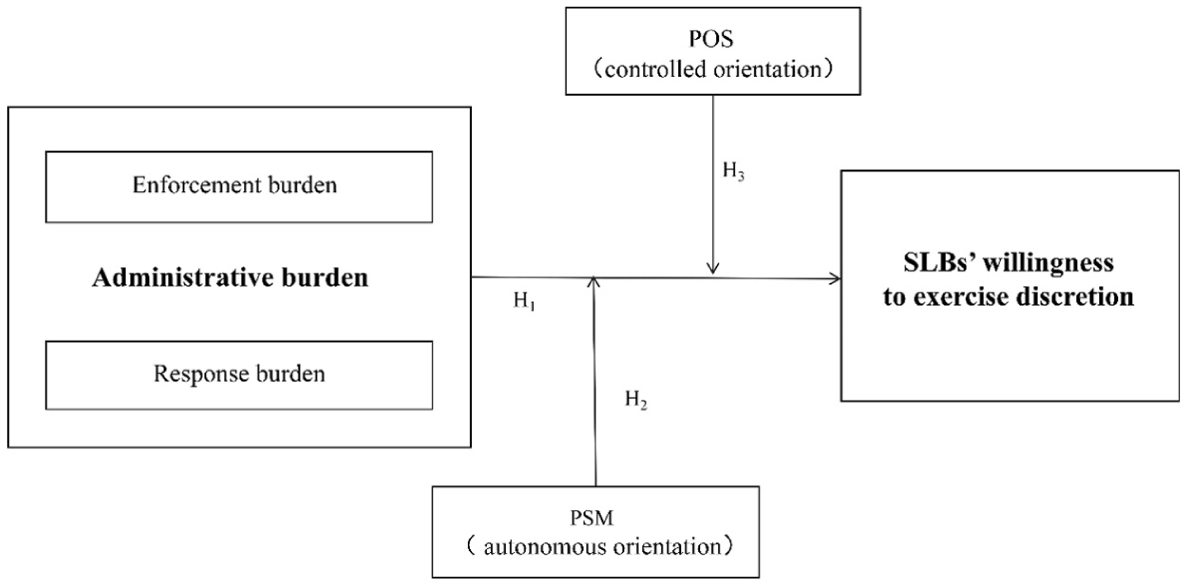
Theoretical framework.
Research Design
Sample
The fundamental assumption of survey experiments is that individuals act as utility maximizers, and their preferences are expressed through their choice behavior. In the social sciences, the survey experiment has emerged as a central tool for causal inference. This methodology typically necessitates that respondents select or evaluate multiple hypothetical object descriptions (commonly referred to as “profiles” or “scenarios”). These descriptions are distinguished by various dimensional characteristic attributes, which are predetermined as key factors affecting choices or evaluations (Hainmueller et al., 2015). In order to investigate the influence of top-down enforcement burden and bottom-up response burden on the willingness to exercise the discretion of SLBs, we employ a vignette experimental approach within survey experiments. This method effectively integrates experimental research with social surveys, aiming to capture nuanced work behaviors (Aguinis & Bradley, 2014). In the course of experimental design, while manipulating and controlling the independent variables, we strive to simulate actual enforcement scenarios as closely as possible in order to elicit resonance among participants and to enhance the external validity, credibility, and generalizability of the research findings.
Before the formal experiment, G*Power software was utilized to estimate the required sample size (Qiu et al., 2025). Drawing upon existing research, the effect size f was set at a moderate level of 0.25, the statistical power β at .95, and the significance level α at .05, yielding a required sample size of 210 for the two-factor between-subjects ANOVA (Faul et al., 2007; Tu & Gong, 2022). The data collection period for the research spanned from early March 2025 to mid-May 2025. Simultaneously, we used our university’s cadre education training base and MPA education platform to distribute questionnaires to grassroots civil servants in China through various channels, both online and offline, via open recruitment. The national (China) cadre education and training base and MPA education platform recruit students from across the country. These include a large number of grassroots civil servants from various regions (such as county and township cadres, street office staff), which overlaps with the focal research group. This is more conducive to the distribution and collection of questionnaires, allowing for a more accurate reflection of the diversity of the subjects.
We used WJX (Enterprise version) to develop the survey questionnaire, employing its “scenario randomization” feature to ensure that one scenario is presented at random each time. This approach facilitated the process control of randomly distributing experimental scenarios, resulting in the collection of a total of 292 questionnaires. The questionnaire initially comprises two items designed to tap the participants’ perception of the administrative burden within the specific context they were presented:
“During the process of promoting
‘Non-grain Conversion’ efforts, I perceive the workload to be quite substantial and the procedures cumbersome.” And “I find the farmers’ demands to be rather complex, and I am also quite concerned about Mr. Wang’s intent to petition.” After excluding 54 questionnaires that did not pass the tests on these two items and those with response times shorter than 150 s, a total of 238 valid questionnaires were obtained, with a valid recovery rate of 81.51%. In the context of experimental randomness, the average occurrence for each context is 59.5, with a minimum occurrence of 56 times and a maximum of 65 times. The standard deviation of the occurrence frequency is 4.04. Of the 238 respondents who submitted valid questionnaires, 122 (51.26%) were male; respondents aged 30 and below and those between 31 and 40 years old comprised 39.93% and 37.82% of the sample, respectively. Furthermore, 87.82% of the participants identified as members of the Communist Party of China. Meanwhile, just over one-third of the respondents (34.03%) had worked in their positions for 5 years or less, 28.15% reported tenures between 6 and 10 years . Additionally, 44.96% of the participants had undergraduate degrees, while 28.99% possessed a graduate degree or higher. (See Table 1.)
Description of Participants.
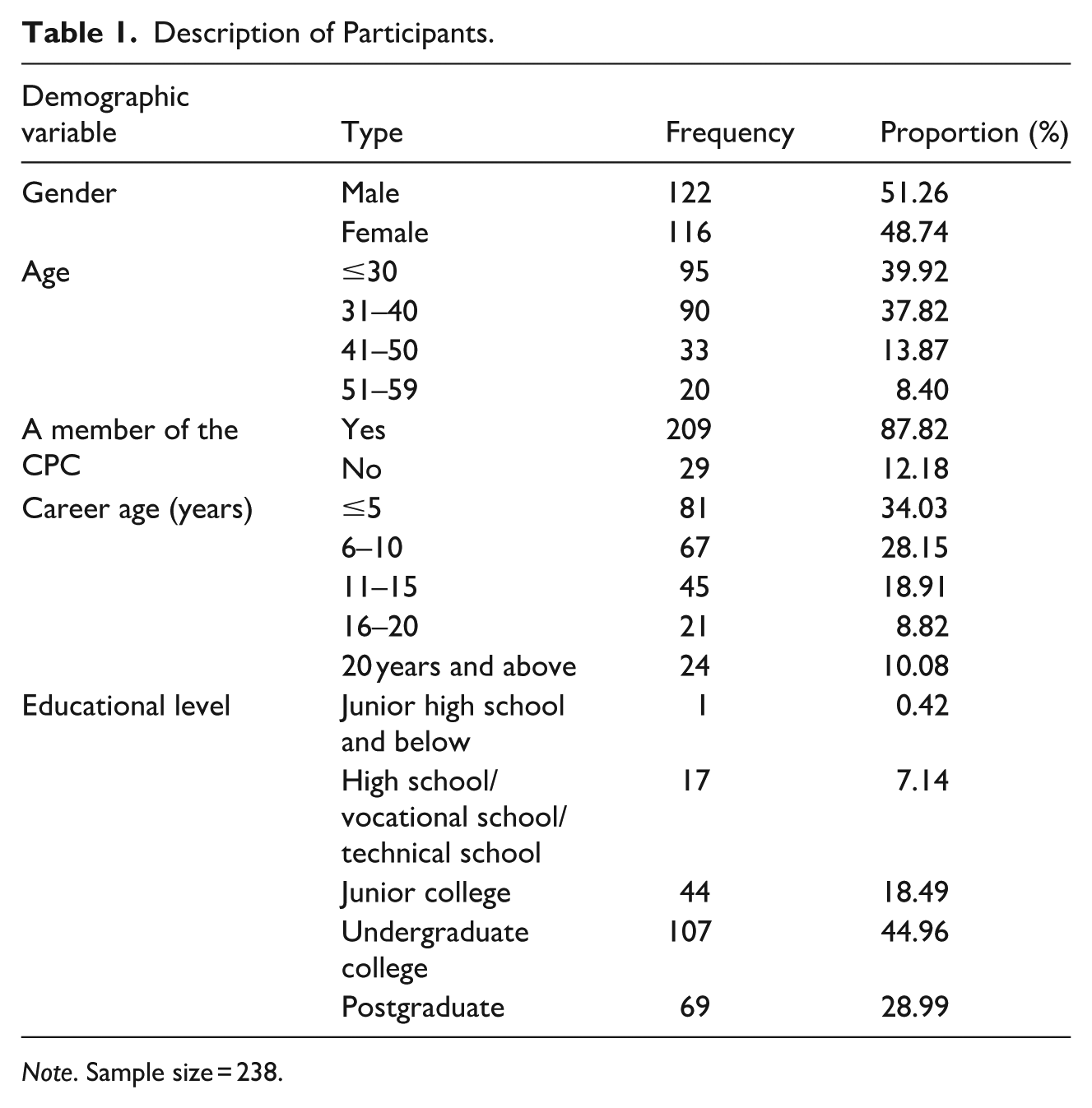
Note. Sample size = 238.
Survey Experiment Design
We utilize the example of “correcting satellite image errors in ‘Non-grain Conversion’ work” as an experimental scenario to examine the willingness of SLBs to exercise discretion. In order to simulate a realistic experimental scenario, the researcher interviewed the mayor, the section chief of the relevant responsible departments, and the general clerical staff of Town M, County J, Western China, during the field investigation. Furthermore, based on pertinent news reports, specific intervention materials were developed for the independent variables. The scenario encompasses two distinct types of situational conditions: an enforcement burden scenario and a response burden scenario.
As mentioned earlier, the emergence of enforcement burdens is closely related to policy design (Yu, 2024). Functional and structural issues in policy design are key reasons behind the unreasonable allocation of resources, excessive red tape, and overly high assignment requirements. At the same time, excessively high assignment requirements exacerbate resource shortages on the front line and amplify the negative impact of red tape. Red tape may consume the resources or motivation of SLBs, reducing the time they spend preparing and handling clients’ cases, lowering their flexibility in scheduling meetings with clients, and making them less likely to use their own discretion to provide individualized guidance (Madsen, 2024). In other words, policy resources, red tape, and assessment requirements are interconnected and influence each other. When SLBs simultaneously face problems such as unreasonable resource allocation, excessive red tape, and overly heavy assessment requirements, their implementation burden will be relatively high. Therefore, in the experiment, implementation burden is specified in terms of policy resources, assessment requirements, and red tape. Policy resources can be categorized into tangible and intangible resources. The former primarily pertains to the adequacy of human, material, and financial resources available to townships for the execution of supporting policies. The latter refer to the political capital necessary for policy implementation, specifically regarding whether the policy exerts a greater influence compared to other policies (which can be interpreted in China as the level of attention it receives from leadership). The assessment requirements focus on whether the county-level government has established specific regulations about the timing, efficiency, and outcomes of the township’s “Non-grain Conversion” works. Red tape pertains to the operability and complexity of the satellite image spot correction appeal process.
Response burden mainly refers to the psychological costs arising during the interaction between SLBs and the public. Specifically, the public’s complex and diverse interests lead to the continuous accumulation of conflicts. SLBs lack the “moral distance” possessed by other bureaucratic groups. They often face public conflicts directly and bear the resulting moral, emotional, and psychological toll (Nisar & Masood, 2020). The dual role of SLBs makes it difficult for them to make choices and judgments between work obligations and client needs, often leaving them with few alternatives and further increasing their psychological burden (Davidovitz, 2025). In most cases, the contradictions and conflicts arising during interactions worsen the public’s perception of SLBs, causing them to face criticism, stigmatization, and frequently even violence (Davidovitz & Cohen, 2022b). A chain reaction evidently exists between complex interest demands, role conflicts, and social accountability, which often coexist in frontline enforcement scenarios. When SLBs face complex demands, role conflicts, and social responsibility at the same time, their administrative burden will be relatively high. The experiment defines response burden as the complexity of demands, role conflicts, and social accountability. The complexity of demands is the number of farmers subjected to “Non-grain Conversion” and the intricacies of their circumstances. Role conflicts pertain to the discord between the policy requirements of “Non-grain Conversion” and the interests of farmers. Social accountability refers to the means, attitudes, and stability risks that the involved parties pose to the township government when articulating their demands. (See Table 2.)
Design of the Survey Experiment.
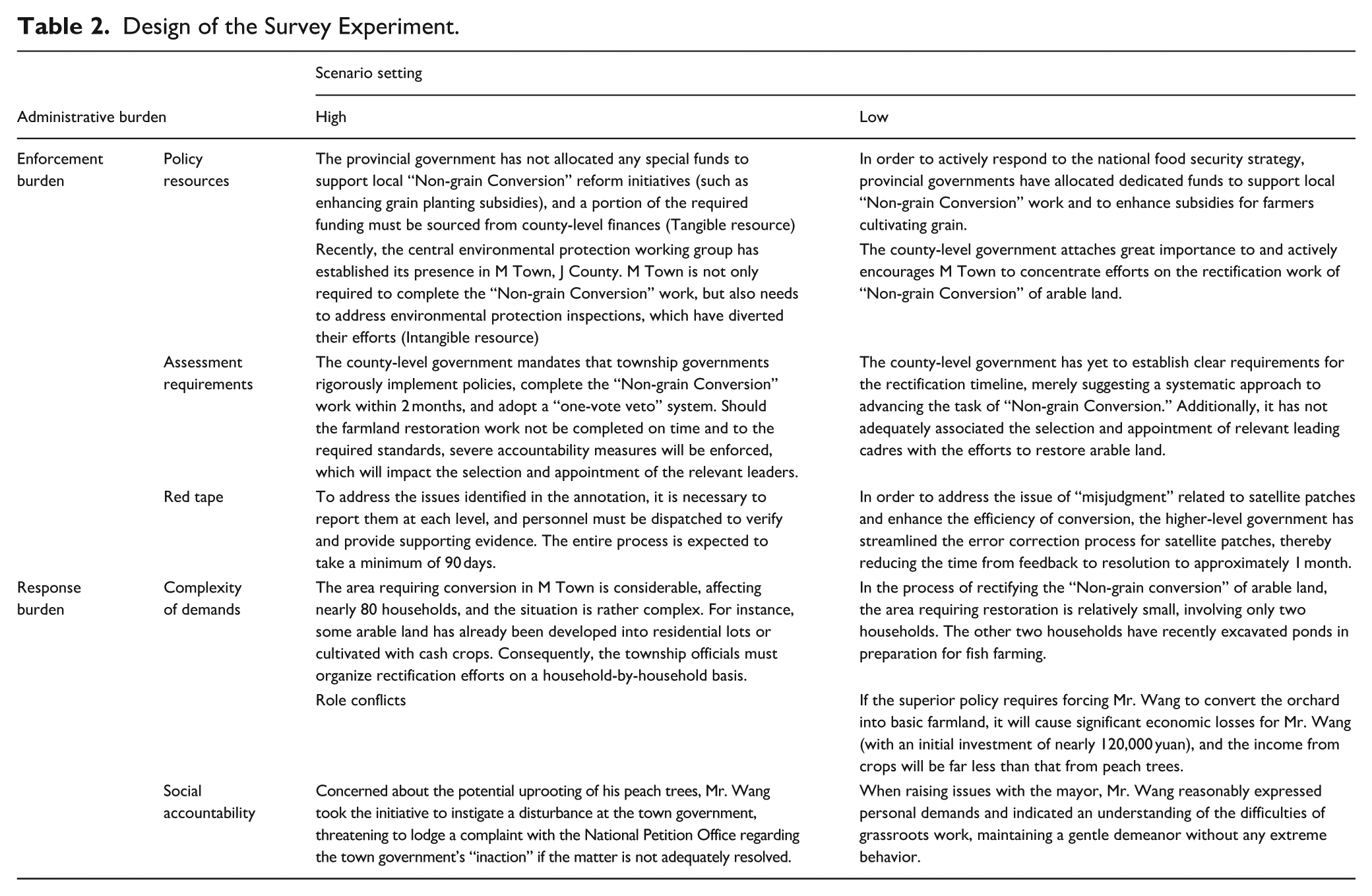
The combination of enforcement burden (high, low) and response burden (high, low) creates four scenarios, as illustrated in Appendix A. In the experiment, role induction is initially performed, during which participants are presented with the identity role of “Assuming you are the mayor of M Town in J County, responsible for the ‘Non-grain Conversion’ work of the town.” There is no distinction among the groups in this segment. Subsequently, participants will be randomly presented with a scenario description. After reading each description, they will proceed to the survey response phase. First, participants are required to evaluate their perceptions of the enforcement burden and response burden associated with the implementation of the “Non-grain Conversion” work, with two items established for each category (where the minimum score is 1 and the maximum score is 5 for each item). A higher score reflects a stronger perception of either the enforcement burden or the response burden among SLBs.
Measure
Willingness to Exercise Discretion
Discretion is defined as “the range of choices available to bureaucrats within a set of constraints on their actions (Scott, 1994).” It enables policy executors to make independent judgments and flexible decisions based on actual circumstances within the boundaries established by regulations. Proactivity and initiative are essential criteria for assessing the willingness of SLBs to exercise discretion (Cullen, 2009). These two dimensions not only represent the actual state and level of SLBs making autonomous decisions as executors, but also reflect their subjective attitudes as respondents and their efforts to respond to public needs. Due to the complexity and diversity of policy enforcement scenarios at the street level, however, there is currently no unified and systematic analytical framework that specifically addresses the willingness of SLBs to exercise discretion. To integrate both proactivity and positivity into the assessment of SLBs’ decision-making willingness, we delineate positivity and proactivity into two distinct dimensions: “Positive-Negative” and “Proactive-Passive.”
First, combining initiative and proactivity, we construct four types that reflect SLBs’ decision-making behavior: “Proactive-Positive,” “Passive-Positive,” “Proactive-Negative,” and “Passive-Negative.” Secondly, the operationalization of proactivity and positivity is addressed. On one end, measurement of proactivity relies on the categorization and measurement of the dimensions of SLBs’ enforcement styles de Boer (2021) proposed.Among these, the legal and accommodation dimensions are constrained by legal norms and internal organizational perspectives, reflecting passive characteristics. The facilitation dimension pertains to SLBs making concerted efforts to promote compliance in law enforcement through communication and other means, thereby reflecting proactive characteristics. On the other end, Davis (1969) pointed out that discretion is fundamentally the power to choose between taking action and remaining inactive. That is to say, the positive and negative behaviors of SLBs reflect the extent of their willingness to exercise discretion. Therefore, the basis for distinguishing positivity is determining whether SLBs actively “take responsibility”; that is, whether they engage in substantial actions to solve problems for the sake of the public interest. Once again, based on four categories, we design specific measures based on the principles of mutual exclusivity and exhaustiveness in item selection and the principle of objective neutrality in language expression. First, proactive-positive is tapped by the response : “Act immediately after communicating and understanding the situation”;”second, passive-positive by either“Take action under policy conditions” or “Ask for approval from leaders and then act immediately”; third, proactive-negative by “Actively communicate, but only make verbal statements”; and, fourth, passive-negative by either “Strictly adhere to policies and do not overstep boundaries,” or “After asking for leadership’s guidance, wait quietly for the results.” Finally, based on specific experimental contexts, six possible behavioral tendencies of SLBs reflect underlying behavioral intentions, ultimately constructing a measurement scale for the willingness to use discretion by SLBs. (See Table 3.)
Measurement Scale for the Willingness to Exercise Discretion.
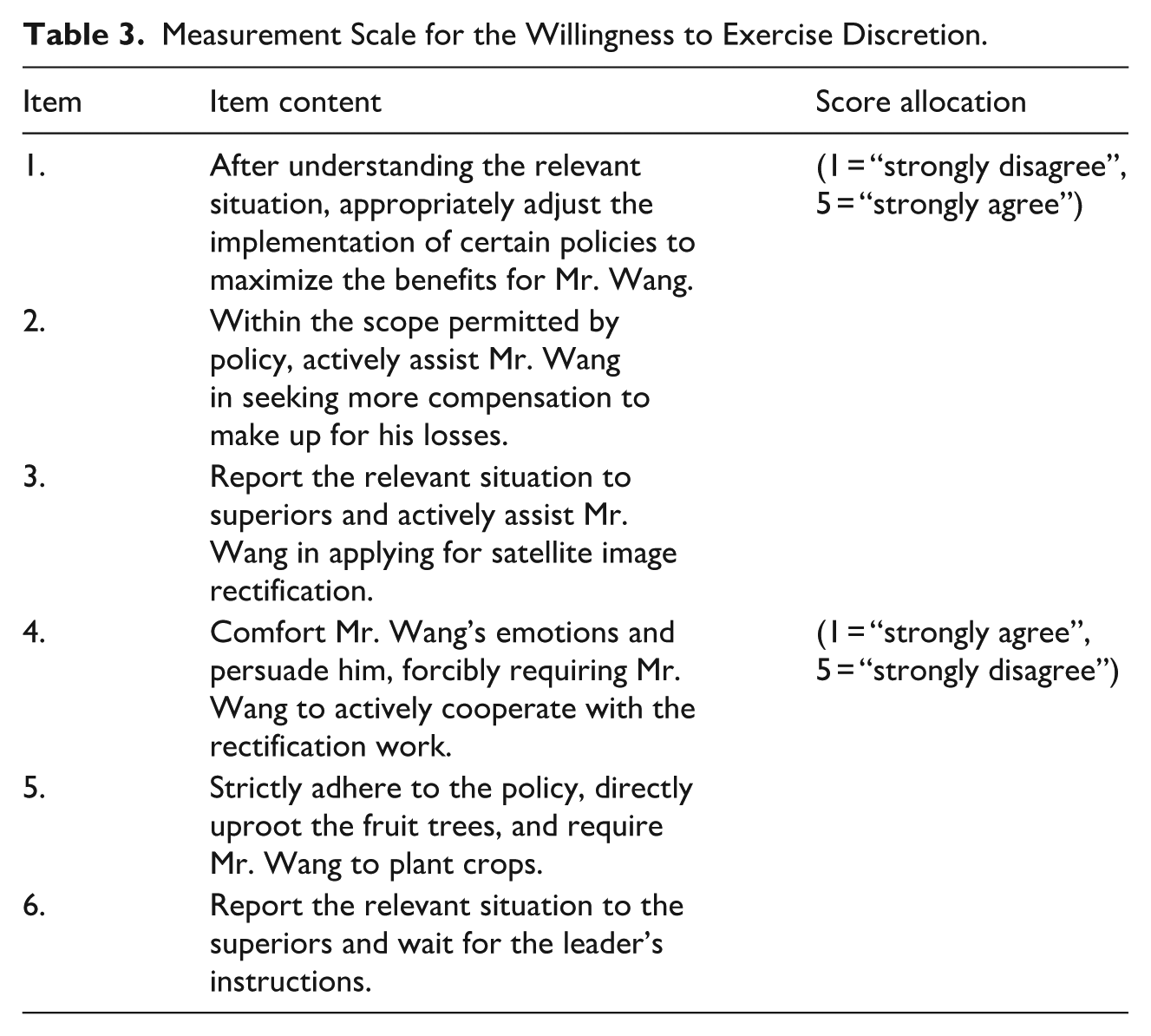
Turning to the measurement of variables, each item was assessed using a 5-point Likert scale. Items 1 to 3 tap willingness to exercise strong discretion and were scored positively. The Cronbach’s alpha for this dimension is .729, indicating good internal consistency. Conversely, Items 4 to 6 reflect reported willingness to exercise weak discretion and were scored negatively. The Cronbach’s alpha for this dimension is .665, demonstrating adequate internal consistency.
Moderating Variables
PSM is often used to systematically describe the intrinsic motivations of professionals in the public sector and is a key variable for understanding their work perspectives and administrative behaviors (Klatt & Fairholm, 2023). Existing research primarily concentrates on the PSM scale established by Perry (1996), along with the revised version by Kim (2009), and modifies it following real-life scenarios. It generally encompasses four dimensions: attraction to public policy making, compassion, commitment to public interests, and self-sacrifice. Considering that the participants are all from China, this article employs the PSM measurement scale developed by Bao and Li (2016), which is tailored to the Chinese contextand makes minor adjustments in wording to better reflect frontline working scenarios and to mitigate cultural and linguistic differences. Based on the theoretical dimensions of Kim’s scale, this scale extracts the two items with the highest factor loadings from the original study’s Chinese sample, resulting in a concise scale comprising four dimensions and eight items. Each item is tapped using a 5-point Likert scale (1 = “strongly disagree”, 5 = “strongly agree”). The Cronbach’s alpha coefficient for this scale is .926, indicating a strong internal consistency.
POS is a crucial variable for comprehending the organizational behavior of public sector employees. The assessment of POS typically employs the scale developed by Eisenberger et al. (1986), including 36 items. Given the one-dimensionality and high internal validity of the scale, numerous studies have opted to extract only a limited number of items for measurement purposes, prioritizing practical convenience, and no significant issues have been identified (Kottke & Sharafinski, 1988). Consequently, this study selected four high-load items to assess the organizational support provided to SLBs, making minor adjustments to the wording following frontline work scenarios. The Cronbach’s alpha coefficient of this scale is .878, indicating good internal consistency.
Results
Random Grouping and Validity Testing of Experimental Manipulation
First, to assess whether the sample distribution of the four experimental groups is random (that is, whether it is balanced), we used ANOVA to analyze the mean differences of demographic variables across the various experimental groups in the questionnaire (see Table 4). The results indicate no statistically significant differences (at the .05 level) in demographic characteristics among the various experimental groups. This suggests that the overall sample achieved a satisfactory level of random allocation, ensuring a good balance among the experimental groups, which helps to mitigate systematic errors.
Balance Test.

Second, based on participants’ responses to the statements, “During the process of promoting the ‘Non-grain Conversion’ efforts, I perceive the workload to be quite substantial, and the procedures cumbersome,” and “I find the farmers’ demands to be rather complex, and I am also quite concerned about Mr. Wang’s intent to petition,” we conducted independent samples t-tests for the “high” and “low” groups on execution burden and response burden (see Table 5). The results indicated statistically significant differences between the high and low groups for both types of burdens, demonstrating the effectiveness of the experimental intervention.
Effectiveness Test of Experimental Manipulation.
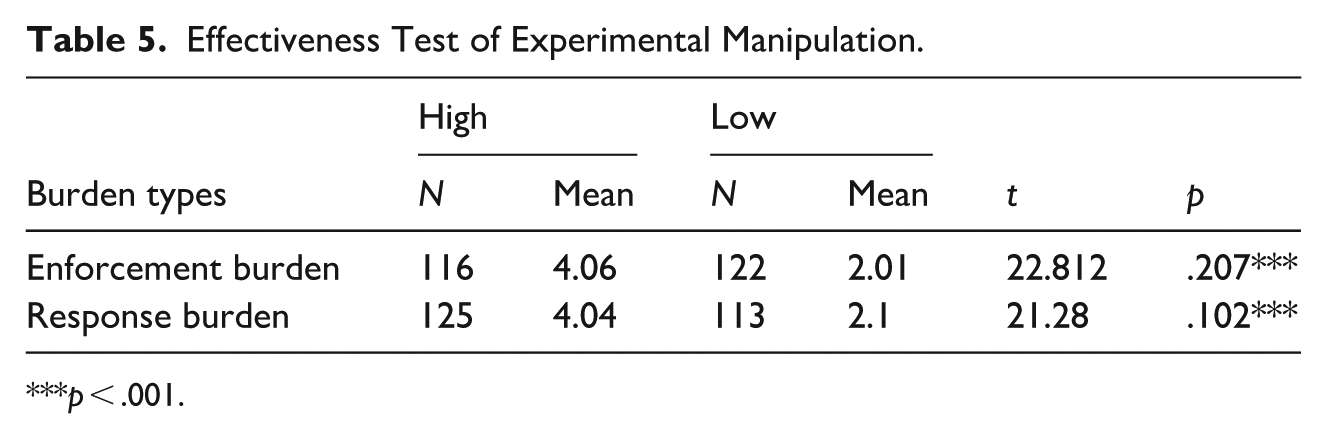
p < .001.
Hypothesis Testing
ANOVA
This study considers enforcement burden (X1: 0 = low, 1 = high) and response burden (X2: 0 = low, 1 = high) as the independent variables, and SLBs’ willingness to exercise discretion as the dependent variable. Demographic characteristics such as gender and age are incorporated as covariates. A two-way ANOVA is employed for hypothesis testing to investigate the effect of the interaction between enforcement and response burdens on the willingness of SLBs to exercise discretion (see Table 6). The results indicate that the main relationships between SLBs’ willingnesss to use discretion in the presence of enforcement burdens (F = 29.709, p < .001, partial η2 = 0.115) and of response burdens (F = 25.75, p < .001, partial η2 = 0.101) are significant, further suggesting that the level of administrative burden affects how willing SLBs are to use discretion. As illustrated in Figures 2 and 3, when compared to the low enforcement burden, the high enforcement burden results in a swift decrease in SLBs’ willingness to exercise discretion. The response burden exerts a statisticaly significant negative influence on SLBs’ inclination to use discretion. This suggests that as administrative burden increases, the willingness of SLBs to exercise discretion diminishes.
Test of Between-Subjects Effects.
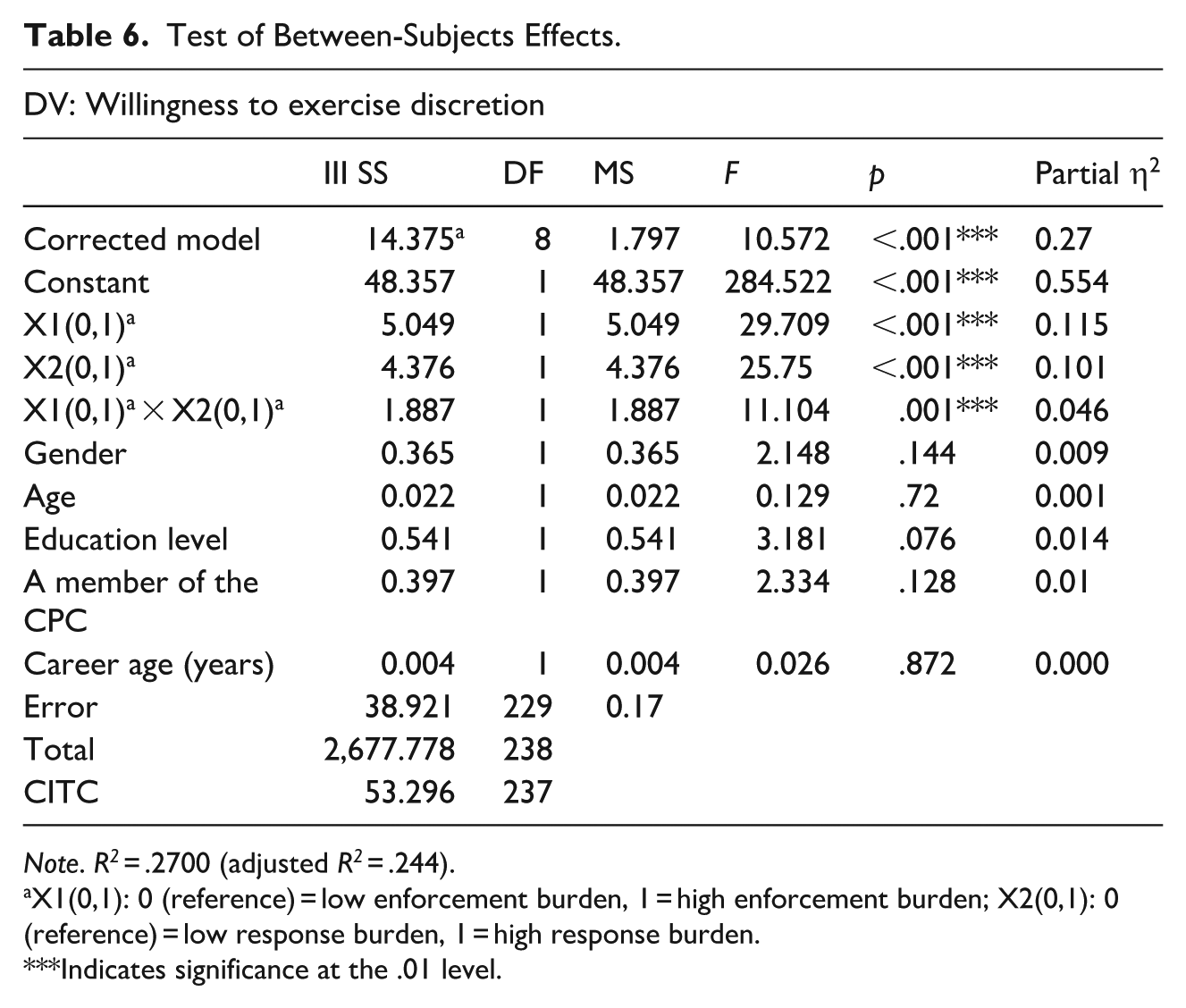
Note. R2 = .2700 (adjusted R2 = .244).
X1(0,1): 0 (reference) = low enforcement burden, 1 = high enforcement burden; X2(0,1): 0 (reference) = low response burden, 1 = high response burden.
Indicates significance at the .01 level.
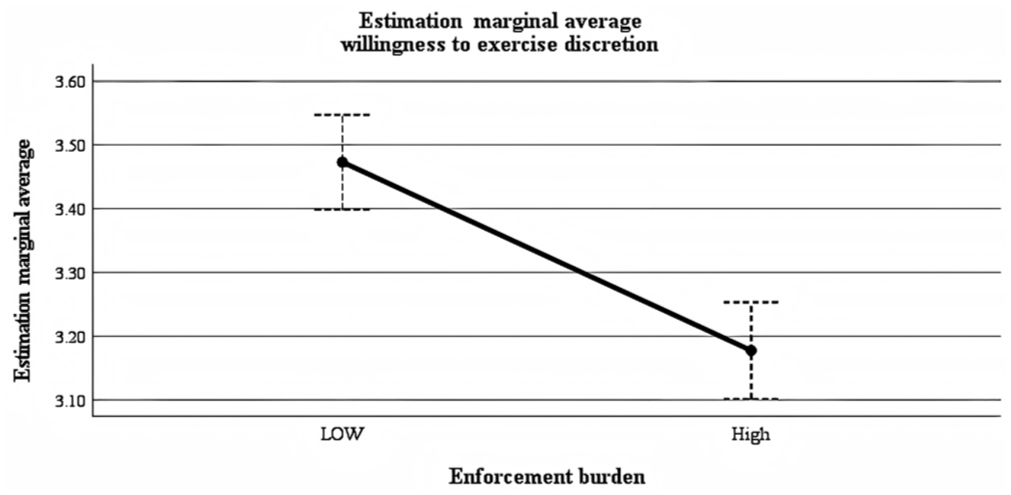
The impact of enforcement burden on the willingness to use discretion.
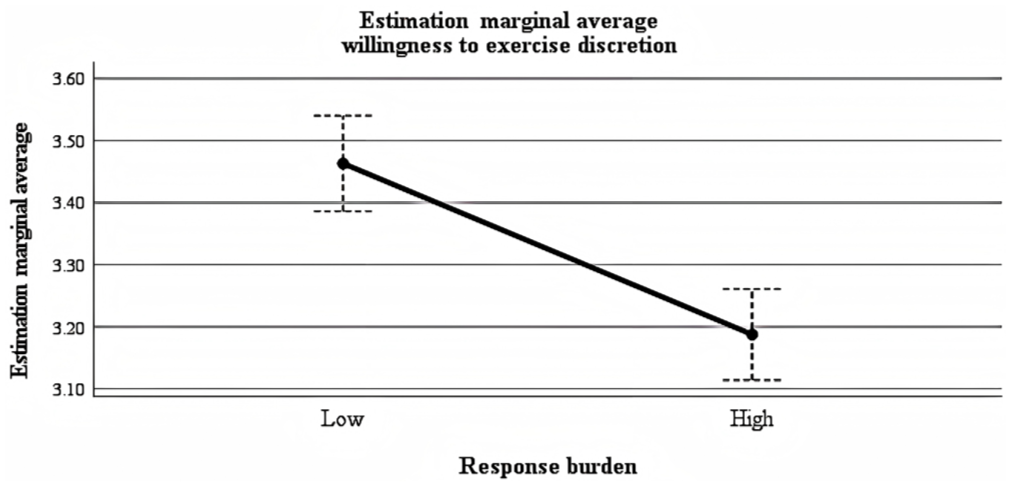
The impact of response burden on the willingness to use discretion.
Further findings reveal that the interaction effect of enforcement and response burdens is significant (F = 1.887, p = .001, partial η2 = 0.046; see Table 6). Figure 4 also indicates that in situations with a lower response burden, an increase in enforcement burden more strongly weakens SLBs’ willingness to use discretion. By comparison with situations with a higher response burden, the negative impact of enforcement burden on SLBs’ willingness to use discretionary power is relatively minor. To investigate the differences in the effects of various combinations of two burdens on the willingness to utilize the discretion of SLBs, this study employs LSD for the analysis of simple effects (pairwise comparison). The findings indicate that when the enforcement burden is excessively high, the influence of the response burden on the willingness to exercise discretion of SLBs is not statistically significant (p = .214). Similarly, when the response burden is excessively high, the effect of the enforcement burden on the willingness to exercise discretion among SLBs is insignificant (p = .117), see Table 7. This indicates that the response burden serves a moderating role in the relationship between the enforcement burden and the willingness to exercise discretion of SLBs, suggesting a specific substitution effect between the two.
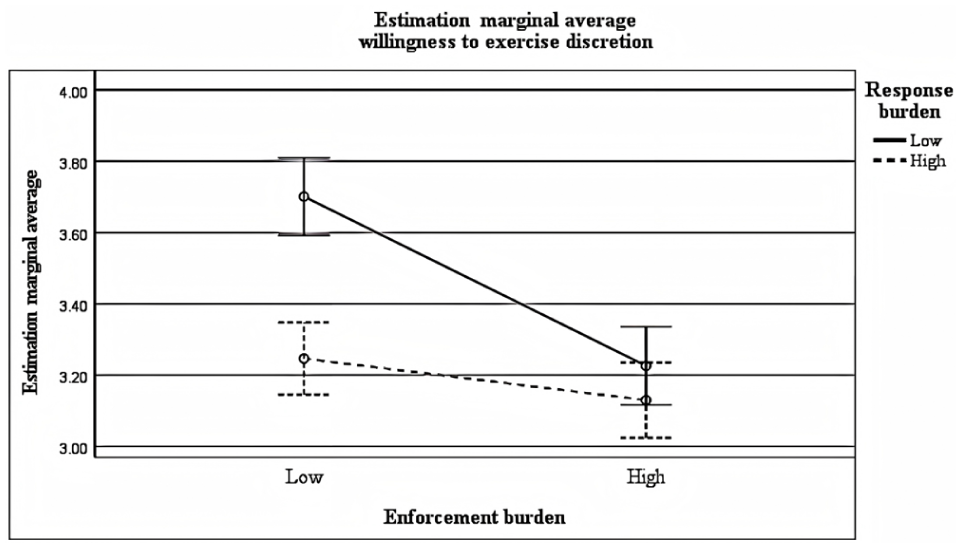
The interaction effect between enforcement burden and response burden.
Pairwise Comparison.
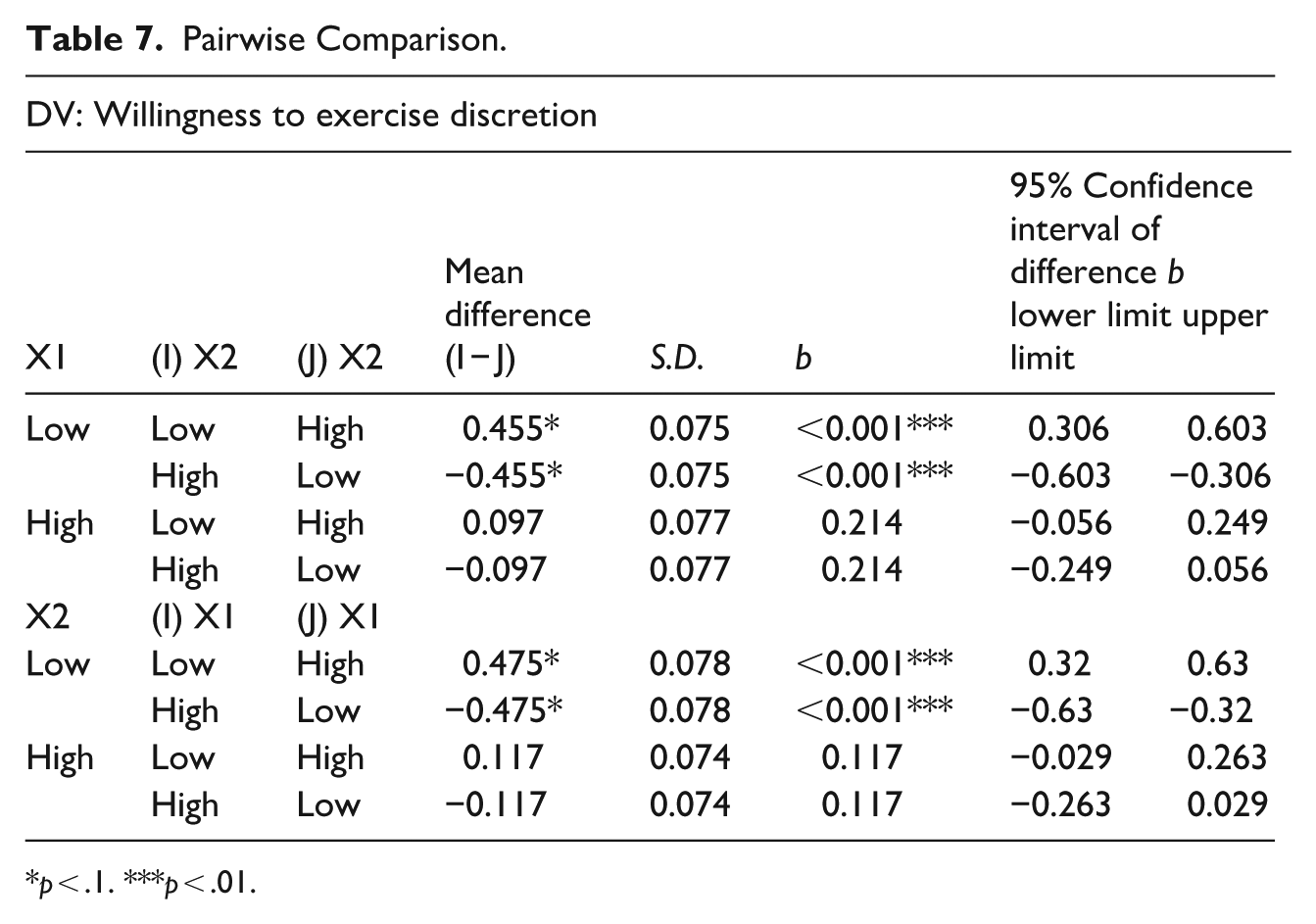
p < .1. ***p < .01.
Regression Analysis
Based on the above results, we turn to OLS regression analysis to further examine the impact of enforcement burden, response burden, and their interaction on SLBs’ willingness to exercise discretion. We look as well at the possible moderating effects of PSM and POS on SLBs (see Table 8).
OLS Regression Analysis Results.
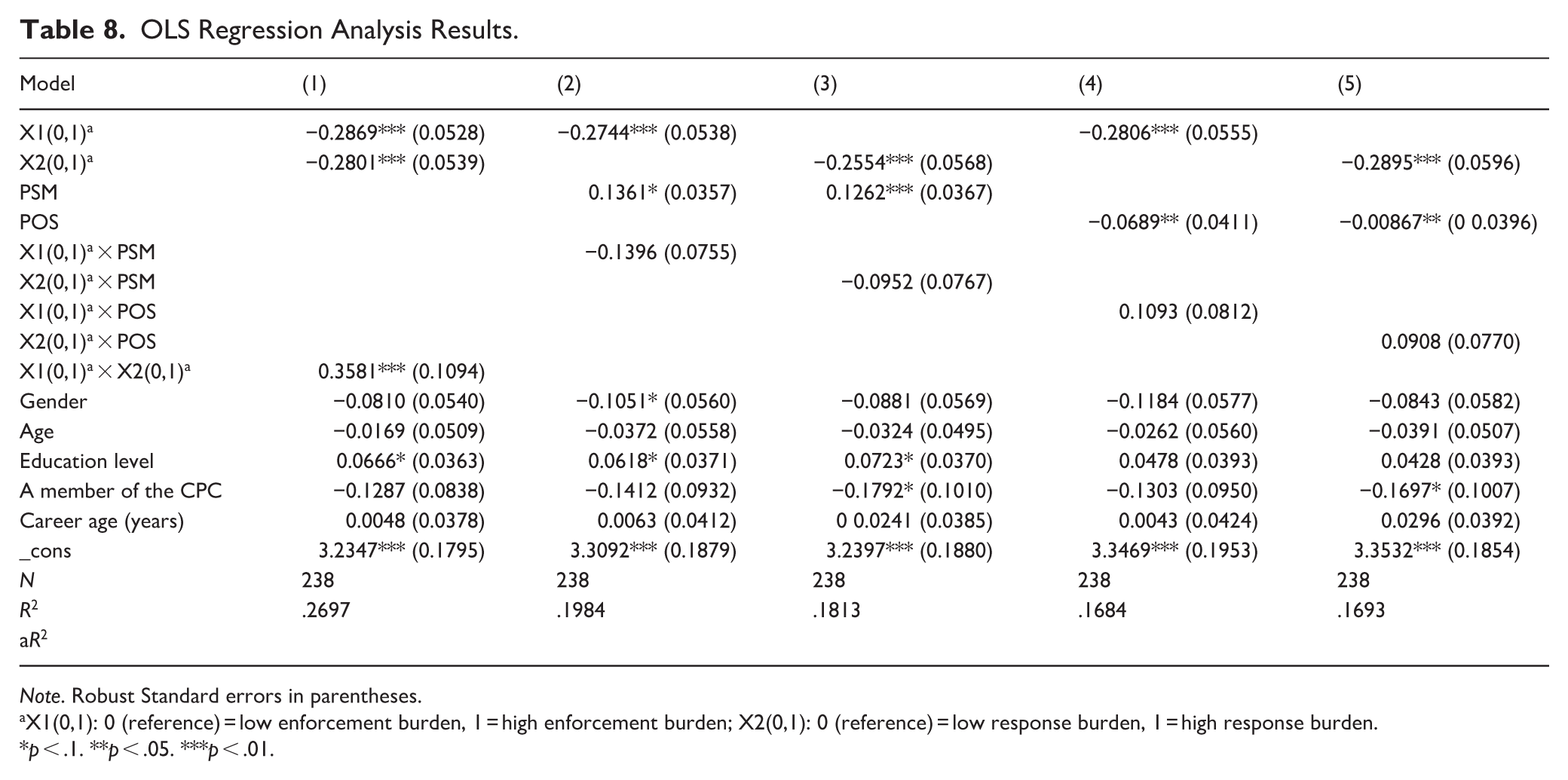
Note. Robust Standard errors in parentheses.
X1(0,1): 0 (reference) = low enforcement burden, 1 = high enforcement burden; X2(0,1): 0 (reference) = low response burden, 1 = high response burden.
p < .1. **p < .05. ***p < .01.
Recall that we treatable enforcement burden (X1) and response burden (X2) as independent variables, with expressed willingness to exercise discretion as the dependent variable. Meanwhile, the interaction between enforcement and response burdens is included in model (1), controlling for demographic variables. The results indicate a statistically significant negative correlation between both enforcement and response burdens and the willingness of SLBs to exercise discretion. In other words, the greater the administrative burden, the less inclined SLBs are to exercise discretion.
Secondly, this study examine the moderating effect of PSM in
Finally, the study examined the moderating effect of POS in
Discussion and Policy Recommendations
Results and Discussion
In the new era of public governance, governments worldwide need SLBs to exercise discretion in providing public services to achieve valuable social outcomes (Larsen et al., 2025). Yet, imited attention has been paid to the factors influencing the discretionary behavior of SLBs, particularly the role of administrative burden. Grounded in the “dual” identity of SLBs, this study categorizes administrative burden into two types: enforcement and response burdens. We conducted a survey experiment to examine whether and how administrative burden affect SLBs’ willingness to exercise discretion. Drawing upon self-determination theory, we explored the moderating effects of PSM and POS on the willingness to exercise discretion of SLBs.
We found, first, both enforcement and response burdens were negatively related to SLBs’ willingness to exercise discretion. When confronted with a shortage of policy resources, complex and burdensome assessment requirements, and unnecessary regulations, the discretion of SLBs evidently is “compressed” from the top down. They lack the necessary courage and legitimacy to exercise discretion, thus resorting to standardized or even rigid operations to minimize decision-making costs (Ansell et al., 2023). When policies encompass a complex and diverse array of public needs, resulting in considerable perceived losses and accompanied by the risks of public resistance and collective action, the discretionary space of SLBs becomes “compressed” from the bottom up. Although they strive to protect public interests to the greatest extent possible, they find themselves constrained bybiases about and stigmatization of SLBs, lacking the social support and motivation to exercise discretion. In this context, SLBs behave as “Responsibility Dodgers,” opting to strictly adhere to policy implementation (Liu & Wang, 2025).
Second, there is a positive interaction effect between SLBs’ enforcement and response burdens of SLBs. This indicates that when the burdens of enforcement and response increase concurrently, their combined impact may prompt a strategic adjustment by street-level bureaucrats, resulting in enhanced willingness to exercise discretion. On one hand, SLBs will have to choose between administrative burdens and control of discretion. When faced with high enforcement and high response burdens simultaneously, SLBs realize that it is difficult for them to make a choice that balances the demands from “the top and down.” Whether they comply with rules or protect public interests, they may be held accountable by the bureaucracy or society. At this juncture, they rely increasingly on their judgment to exercise discretion, flexibly and adaptively implementing policies. This corroborates the findings of Bernards et al. (2024), who argue that SLBs frequently engage in prosocial behavior to assist service recipients, and may even be inclined to contravene organizational rules to achieve this objective. On the other hand, the dual burdens may convey a message about the seriousness and significance of the policy to SLBs. This message could compel SLBs to “dance with shackles,” transforming enforcement pressure from administrative burdens into motivation for implementation, creatively utilizing discretion to innovate policies and achieve policy objectives. Particularly in the context of prolonged administrative burden overload, SLBs are more inclined to reflect on institutional deficiencies and proactively transcend management rules, adjusting strategies through their discretionary power to enhance the efficiency of policy implementation (Larsen et al., 2025). The positive interaction term between enforcement and response burdens reveals the adaptive wisdom of SLBs in navigating “policy gaps.” They are not merely mechanical executors of policies. This conclusion further supports the notion that SLBs coping with administrative burdens respond with a certain degree of rationality (Doughty & Baehler, 2020).
Thirdly, PSM exacerbates the negative effect of the enforcement burden on the willingness of SLBs to exercise discretion. Although PSM is typically regarded as a positive influence that encourages public service behavior, the findings reveal that the interaction term coefficient between PSM and enforcement burden is negative. This suggests that with a strong sense of PSM, they are more likely to restrict their discretion under a high enforcement burden, thereby indirectly exposing the “dark side of motivation.” On the one hand, PSM can exacerbate the enforcement burden. The study by van Loon et al. (2015) identified a significant correlation between high PSM and high work stress, which is often triggered by workload. This means that the aspect of “self-sacrifice” within PSM may prompt proactive SLBs to deplete their resources and diminish their judgment, ultimately surpassing their threshold of endurance (van Loon et al., 2015). This, in turn, increases their enforcement burden and further undermines their willingness to exercise discretion. On the other hand, PSM leads SLBs to comply with policies unthinkingly. SLBs with high PSM are highly sensitive to the public interests. They firmly believe that all policies are reasonable, view policy objectives as a personal mission, excessively pursue compliance and fairness of rules, and neglect the complexity of the context. Under this rigid “obedience” mindset, SLBs perceive that flexible discretionary decision-making may diverge from policy objectives or provoke societal inquiries regarding fairness, diminishing their inclination to exercise discretion. However, PSM does not significantly influence the response burden experienced by SLBs. This may be attributed to the fact that, in situations characterized by a substantial response burden, SLBs frequently face public stigmatization and criticism. This negative feedback can weaken their PSM. Simultaneously, the structural dilemmas inherent in policies, along with the complex and diverse interests of the public, give rise to conflicts that are both uncontrollable and challenging to reconcile. Even if SLBs possess a strong motivation for public service, they recognize that resolving structural contradictions solely through individual efforts is a difficult endeavor.
Fourth, POS did not significantly mitigate the negative impacts of enforcement or response burdens on SLBs’ willingness to exercise discretion. This conclusion may be attributed in part to the design of the scales the study employed. To streamline item design and prevent the test results from being affected by an excessive number of items, we substantially reduced the scale, measuring POS in a rather general manner, included only four items, which may have affected the measurement’s accuracy. Furthermore, the scale did not differentiate among emotional, instrumental, and institutional support. This implies that the organizational support we assessed may not have been connected to the underlying causes of the administrative burdens that the SLBs encountered in satellite patch rectification work, thereby obscuring some key mechanisms.
Policy Recommendations
The study’s findings hold practical significance for optimizing the structure of administrative burdens, motivating grassroots law enforcers, encouraging them to take the initiative, and expanding the discretionary space of street level bureaucrats.
First and foremost, it is essential to appropriately alleviate the execution burden on SLBs. The government should not only reasonably allocate resources and facilitate the downward flow of resources to front line workers, but also establish scientifically sound and reasonable assessment criteria, enhance accountability mechanisms, and avoid “too much” accountability (Thomann et al., 2018). Furthermore, the government should seek to improve the efficiency of bureaucratic operations to the greatest extent possible by streamlining unnecessary procedures, eliminating redundant regulatory requirements and reducing superfluous paperwork.
Secondly, it is crucial to reduce the response burden on SLBs. The government can reasonably expand these bureaucrats’ discretionary space within clearly defined boundaries of power. This will address gaps in policy implementation and allow for the adoption of innovative measures to tackle challenging issues. Meanwhile, the government should improve the social supervision system to enable the public to participate in overseeing law enforcement activities, while preventing the public from misusing supervisory power. This approach will help alleviate the pressure that SLBs face from public opinion.
Thirdly, it is essential to enhance institutional design and capitalize on the positive functions of administrative burdens. Administrative burdens can occasionally fulfill significant institutional roles. Consequently, bureaucratic agencies should differentiate between “compliance burdens” and “redundant burdens,” mitigate the latter, and improve the effectiveness of policy tools associated with the former (Moynihan et al., 2015). At the same time, the government can capitalize on the positive interplay between enforcement and response burdens to strengthen institutional constraints and incentive mechanisms. This would grant flexible authority to SLBs, encouraging them to transform the dual burden pressure into governance coordination and innovative momentum.
Lastly, it is important to enhance care and support for SLBs. On one hand, bureaucratic institutions should prioritize these individuals’ physical and mental well-being, identifying those who are overloaded and exhibit tendencies toward “self-sacrifice,” while assisting them in establishing a proper value orientation toward public service. On the other hand, leaders of street-level bureaucracy must emphasize the needs of their frontline personnel, comprehend the challenges they face, and provide timely and necessary instrumental, institutional, and emotional support.
Value and Limitations
In light of the evolving focus of national governance and the increasing demands placed on frontline personnel, this study redirects attention to grassroots administrative staff concerning their administrative burdens, offering a fresh perspective on the discretion exercised by SLBs. Although a limited number of studies have examined the influence of red tape or perceptions of stigmatization on the discretion of these bureaucrats, their scope has been confined to specific aspects of administrative burdens. In the realm of grassroots governance, SLBs frequently encounter various forms of administrative burdens. Consequently, this study proposed a frontline enforcement scenario that interweaves execution burdens with response burdens, beginning from the dual identity characteristics of SLBs as “state agents” and “public agents.” The conclusions of the research suggest that the “lying flat” or “inaction” of SLBs does not necessarily imply their unwillingness to exercise discretion in active decision-making; rather, it is more likely a passive coping strategy in response to the pressures of excessive administrative burdens. Secondly, the research also theoretically confirm the “rationality” of moderate administrative burdens, suggesting that proper guidance and reasonable control of execution and response burdens can promote the initiative and innovative behavior of SLBs in law enforcement. Additionally, by assessing the motivation of SLBs for public service, the study revealed that PSM does not necessarily alleviate administrative burdens, thereby supporting the notion that PSM possesses a “dark side.” Finally, at the methodological level, this research utilizes survey experiments to investigate the effects of both enforcement and response burdens on the willingness of SLBs to exercise discretion. By employing virtual scenarios that closely mirror real-life situations, it addresses the endogeneity issues commonly associated with quantitative research methods, such as questionnaires, along with the causal inference challenges they pose.
Nevertheless, this study has limitations. Firstly, the scope of the sample is too limited. Since the subjects in this study were primarily drawn from the cadre education training base and the MPA education platform at the researchers’ university, their geographical distribution is predominantly concentrated in China, which may not adequately represent SLBs from other regions or countries. Additionally, China’s distinctive hierarchical culture and political system may influence SLBs’ willingness to exercise discretion, potentially constraining the generalizability of the findings. Future research should strive to include SLBs from a broader array of regions and countries to enhance sample diversity and improve the applicability of the research conclusions. Secondly, this study employs OLS regression analysis to account for variations in the willingness to exercise discretion. The empirical findings reveal a relatively low R² value, which could stem from our oversight of other key variables influencing the willingness to use discretion, such as policy latitude and individual competence. In future research, the theoretical framework might be expanded to incorporate potential omitted variables, thereby enhancing the explanatory power of the model. Thirdly, the reliability and validity of the “willingness to exercise discretion” scale necessitate further verification. Given that no direct scale is currently available to scholars seeking to measure the willingness to exercise discretion, this study combined actual research contexts and referenced pertinent studies on the behavior and discretion of SLBs to design measurement items from both positive and negative perspectives. However, the universality and reliability of the scale warrant additional testing. Future research could endeavor to refine the scale for measuring willingness to use discretion, incorporating more dimensions for a more comprehensive assessment to help ensure its authenticity and validity. Fourthly, although this study conceptualizes the elements constituting execution burden and response burden, it lacks empirical testing of the effectiveness of how these elements combine. Moreover, constrained by the existing experimental design, it could not examine each component’s potential independent or interactive effects on discretion. Nevertheless, this study represents a relatively preliminary exploration of the administrative burden SLBs face, and the variables have been operationalized based on theoretical dimensions. Future research might further examine whether there are heterogeneous or interaction effects between different dimensions and elements in more detail.
Footnotes
Appendix
Experimental Materials.
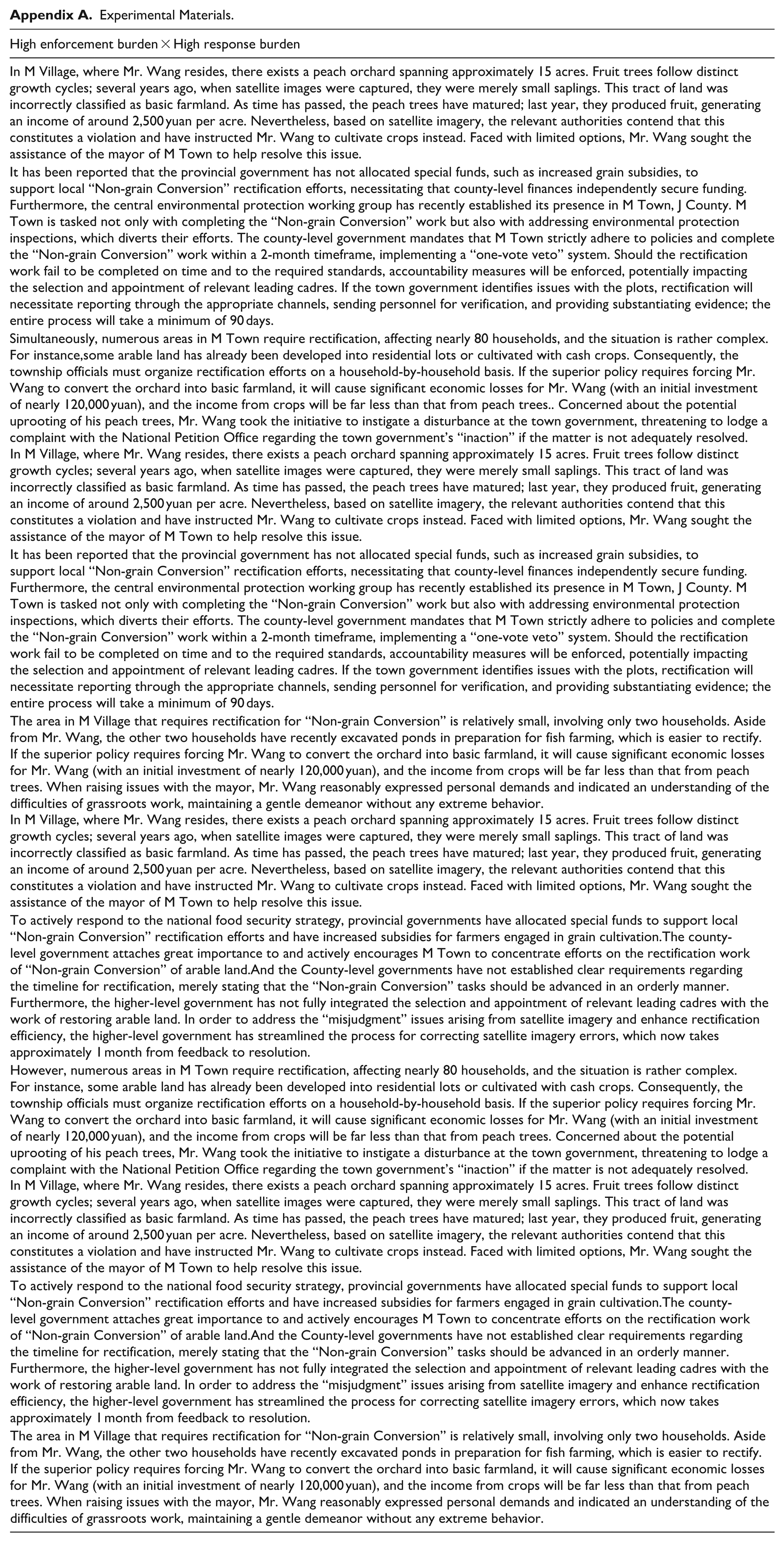
| High enforcement burden × High response burden |
|---|
| In M Village, where Mr. Wang resides, there exists a peach orchard spanning approximately 15 acres. Fruit trees follow distinct growth cycles; several years ago, when satellite images were captured, they were merely small saplings. This tract of land was incorrectly classified as basic farmland. As time has passed, the peach trees have matured; last year, they produced fruit, generating an income of around 2,500 yuan per acre. Nevertheless, based on satellite imagery, the relevant authorities contend that this constitutes a violation and have instructed Mr. Wang to cultivate crops instead. Faced with limited options, Mr. Wang sought the assistance of the mayor of M Town to help resolve this issue. |
| It has been reported that the provincial government has not allocated special funds, such as increased grain subsidies, to support local “Non-grain Conversion” rectification efforts, necessitating that county-level finances independently secure funding. Furthermore, the central environmental protection working group has recently established its presence in M Town, J County. M Town is tasked not only with completing the “Non-grain Conversion” work but also with addressing environmental protection inspections, which diverts their efforts. The county-level government mandates that M Town strictly adhere to policies and complete the “Non-grain Conversion” work within a 2-month timeframe, implementing a “one-vote veto” system. Should the rectification work fail to be completed on time and to the required standards, accountability measures will be enforced, potentially impacting the selection and appointment of relevant leading cadres. If the town government identifies issues with the plots, rectification will necessitate reporting through the appropriate channels, sending personnel for verification, and providing substantiating evidence; the entire process will take a minimum of 90 days. |
| Simultaneously, numerous areas in M Town require rectification, affecting nearly 80 households, and the situation is rather complex. For instance,some arable land has already been developed into residential lots or cultivated with cash crops. Consequently, the township officials must organize rectification efforts on a household-by-household basis. If the superior policy requires forcing Mr. Wang to convert the orchard into basic farmland, it will cause significant economic losses for Mr. Wang (with an initial investment of nearly 120,000 yuan), and the income from crops will be far less than that from peach trees. . Concerned about the potential uprooting of his peach trees, Mr. Wang took the initiative to instigate a disturbance at the town government, threatening to lodge a complaint with the National Petition Office regarding the town government’s “inaction” if the matter is not adequately resolved. |
| High enforcement burden × Low response burden |
| In M Village, where Mr. Wang resides, there exists a peach orchard spanning approximately 15 acres. Fruit trees follow distinct growth cycles; several years ago, when satellite images were captured, they were merely small saplings. This tract of land was incorrectly classified as basic farmland. As time has passed, the peach trees have matured; last year, they produced fruit, generating an income of around 2,500 yuan per acre. Nevertheless, based on satellite imagery, the relevant authorities contend that this constitutes a violation and have instructed Mr. Wang to cultivate crops instead. Faced with limited options, Mr. Wang sought the assistance of the mayor of M Town to help resolve this issue. |
| It has been reported that the provincial government has not allocated special funds, such as increased grain subsidies, to support local “Non-grain Conversion” rectification efforts, necessitating that county-level finances independently secure funding. Furthermore, the central environmental protection working group has recently established its presence in M Town, J County. M Town is tasked not only with completing the “Non-grain Conversion” work but also with addressing environmental protection inspections, which diverts their efforts. The county-level government mandates that M Town strictly adhere to policies and complete the “Non-grain Conversion” work within a 2-month timeframe, implementing a “one-vote veto” system. Should the rectification work fail to be completed on time and to the required standards, accountability measures will be enforced, potentially impacting the selection and appointment of relevant leading cadres. If the town government identifies issues with the plots, rectification will necessitate reporting through the appropriate channels, sending personnel for verification, and providing substantiating evidence; the entire process will take a minimum of 90 days. |
| The area in M Village that requires rectification for “Non-grain Conversion” is relatively small, involving only two households. Aside from Mr. Wang, the other two households have recently excavated ponds in preparation for fish farming, which is easier to rectify. If the superior policy requires forcing Mr. Wang to convert the orchard into basic farmland, it will cause significant economic losses for Mr. Wang (with an initial investment of nearly 120,000 yuan), and the income from crops will be far less than that from peach trees. When raising issues with the mayor, Mr. Wang reasonably expressed personal demands and indicated an understanding of the difficulties of grassroots work, maintaining a gentle demeanor without any extreme behavior. |
| Low enforcement burden × High response burden |
| In M Village, where Mr. Wang resides, there exists a peach orchard spanning approximately 15 acres. Fruit trees follow distinct growth cycles; several years ago, when satellite images were captured, they were merely small saplings. This tract of land was incorrectly classified as basic farmland. As time has passed, the peach trees have matured; last year, they produced fruit, generating an income of around 2,500 yuan per acre. Nevertheless, based on satellite imagery, the relevant authorities contend that this constitutes a violation and have instructed Mr. Wang to cultivate crops instead. Faced with limited options, Mr. Wang sought the assistance of the mayor of M Town to help resolve this issue. |
| To actively respond to the national food security strategy, provincial governments have allocated special funds to support local “Non-grain Conversion” rectification efforts and have increased subsidies for farmers engaged in grain cultivation.The county-level government attaches great importance to and actively encourages M Town to concentrate efforts on the rectification work of “Non-grain Conversion” of arable land.And the County-level governments have not established clear requirements regarding the timeline for rectification, merely stating that the “Non-grain Conversion” tasks should be advanced in an orderly manner. Furthermore, the higher-level government has not fully integrated the selection and appointment of relevant leading cadres with the work of restoring arable land. In order to address the “misjudgment” issues arising from satellite imagery and enhance rectification efficiency, the higher-level government has streamlined the process for correcting satellite imagery errors, which now takes approximately 1 month from feedback to resolution. |
| However, numerous areas in M Town require rectification, affecting nearly 80 households, and the situation is rather complex. For instance, some arable land has already been developed into residential lots or cultivated with cash crops. Consequently, the township officials must organize rectification efforts on a household-by-household basis. If the superior policy requires forcing Mr. Wang to convert the orchard into basic farmland, it will cause significant economic losses for Mr. Wang (with an initial investment of nearly 120,000 yuan), and the income from crops will be far less than that from peach trees. Concerned about the potential uprooting of his peach trees, Mr. Wang took the initiative to instigate a disturbance at the town government, threatening to lodge a complaint with the National Petition Office regarding the town government’s “inaction” if the matter is not adequately resolved. |
| Low enforcement burden × Low response burden |
| In M Village, where Mr. Wang resides, there exists a peach orchard spanning approximately 15 acres. Fruit trees follow distinct growth cycles; several years ago, when satellite images were captured, they were merely small saplings. This tract of land was incorrectly classified as basic farmland. As time has passed, the peach trees have matured; last year, they produced fruit, generating an income of around 2,500 yuan per acre. Nevertheless, based on satellite imagery, the relevant authorities contend that this constitutes a violation and have instructed Mr. Wang to cultivate crops instead. Faced with limited options, Mr. Wang sought the assistance of the mayor of M Town to help resolve this issue. |
| To actively respond to the national food security strategy, provincial governments have allocated special funds to support local “Non-grain Conversion” rectification efforts and have increased subsidies for farmers engaged in grain cultivation.The county-level government attaches great importance to and actively encourages M Town to concentrate efforts on the rectification work of “Non-grain Conversion” of arable land.And the County-level governments have not established clear requirements regarding the timeline for rectification, merely stating that the “Non-grain Conversion” tasks should be advanced in an orderly manner. Furthermore, the higher-level government has not fully integrated the selection and appointment of relevant leading cadres with the work of restoring arable land. In order to address the “misjudgment” issues arising from satellite imagery and enhance rectification efficiency, the higher-level government has streamlined the process for correcting satellite imagery errors, which now takes approximately 1 month from feedback to resolution. |
| The area in M Village that requires rectification for “Non-grain Conversion” is relatively small, involving only two households. Aside from Mr. Wang, the other two households have recently excavated ponds in preparation for fish farming, which is easier to rectify. If the superior policy requires forcing Mr. Wang to convert the orchard into basic farmland, it will cause significant economic losses for Mr. Wang (with an initial investment of nearly 120,000 yuan), and the income from crops will be far less than that from peach trees. When raising issues with the mayor, Mr. Wang reasonably expressed personal demands and indicated an understanding of the difficulties of grassroots work, maintaining a gentle demeanor without any extreme behavior. |
Acknowledgements
Thanks to Mayor Wu Yuanyang for providing us with questionnaire materials and interview information during the process of writing the paper.

Funding
The authors disclosed receipt of the following financial support for the research, authorship, and/or publication of this article: This work is supported by the National Social Science Fund of China [Grant Number: a22BZZ073] and the Philosophy and Social Science Fund of Sichuan Province, China [Grant Number: SCJJ23ND28].
Declaration of Conflicting Interests
The authors declared no potential conflicts of interest with respect to the research, authorship, and/or publication of this article.
Data Availability Statement
Data sharing not applicable to this article as no datasets were generated or analyzed during the current study.