







Abstract
This bibliometric study maps 52 years of scholarship on “wicked problems,” tracing the field’s evolution from Rittel and Webber’s foundational framing to contemporary debates on super-wicked problems, clumsy solutions, and adaptive governance. We identify four dominant thematic clusters: collaborative governance, sustainability, policy implementation, and crisis management. Co-citation and co-word analyses reveal two emerging fault lines—one emphasizing networked, deliberative governance and another critiquing collaborative feasibility—and point to novel research frontiers, including joined-up government, pragmatic experimentation, and temporal governance for time-urgent challenges. We propose a typology of wicked problems and outline four governance paradigms to guide practitioners.
Keywords
Introduction
Wicked problems—those that are complex, intractable, open-ended, and unpredictable—have become a defining feature of 21st-century governance and policy landscapes (Alford & Head, 2017; Pesch & Vermaas, 2020). Hence, wicked problems, characterized by their complexity, interdependencies, and resistance to resolution, have emerged as a critical area of inquiry across multiple disciplines (B. W. Head, 2019; McConnell, 2017). This concept was first introduced by Rittel and Webber (1973) in the field of urban planning. They argued that governments had solved most of the easy problems they faced and were then left with a large number of difficult and wicked problems (Denford et al., 2024; Peters & Tarpey, 2019). As a result, these problems have challenged linear solutions due to their dynamic and multifaceted nature, interdependence on other issues, and involvement of diverse stakeholder perspectives. Examples include global issues such as climate change, public health crises, environmental degradation, social inequities, urbanization, drug abuse, child protection, and social inequality– among the problems that transcend disciplinary boundaries and demand collaborative, interdisciplinary approaches for meaningful engagement (Alford & Head, 2017; Brown et al., 2010; Gruendel, 2022; van der Waldt, 2014).
The academic discourse on wicked problems faces two critical tensions. First, although the concept’s rhetorical power has spurred interdisciplinary dialog, its overextension risks reducing it to a “catch-all” metaphor, potentially paralyzing policymakers who perceive such issues as insurmountable (McConnell, 2017; Peters, 2017; Peters & Tarpey, 2019; Turnbull & Hoppe, 2019). Second, contemporary crises—such as the COVID-19 pandemic and accelerating climate breakdown—have exposed the inadequacy of traditional governance models, necessitating urgent inquiry into adaptive, collaborative, and innovative approaches (Ansell et al., 2021; Danaeefard et al., 2023; Naveed et al., 2025). It should be noted, however, that if a problem is labeled as wicked, then it may fall off the policy agenda. What politician wants to spend time and money on problems that may be intractable and insurmountable? Even though governments should be addressing these difficult issues with the greatest possible power, labeling a problem in a particular way may limit and prevent action, effectively leading governments to inaction (McConnell, 2017; Peters & Tarpey, 2019). In sum, policy-makers have confronted increasingly complex issues, even beyond those Rittel and Webber noted. Nonetheless, labeling them as wicked problems seems to have turned into a fad in the academic literature (Peters, 2017). As a result, scholars and others often stretch the concept, which may well stem from its rhetorical appeal (Turnbull & Hoppe, 2019).
Over the past five decades, the study of wicked problems has gained significant traction across fields including public policy, environmental science, and management. Yet, despite the growing body of literature on wicked problems, a need remains for a systematic and comprehensive understanding of how this concept has evolved and been applied across disciplines. Indeed, this fragmentation necessitates a systematic reappraisal of the intellectual landscape. Existing studies often focus on specific aspects of wicked problems, such as their definitional boundaries, governance challenges, or sector-specific applications, but few have attempted to map the broader intellectual landscape of this research domain (Bannink et al., 2024; Burke & Wolf, 2021; B. Head, 2022; Kirschke & Kosow, 2022). To be sure, individual studies have made significant contributions to understanding specific aspects of wicked problems, the broader intellectual structure and evolution of this research domain remain underexplored. Hence, bibliometric analyses are one of the powerful and accurate methods to help achieve these goals. Bibliometric analysis, a well-established method in scientometrics, offers a powerful tool for analyzing large-scale scholarly data, identifying key themes, and visualizing the structure of knowledge domains. By applying this method, researchers can uncover patterns of collaboration, influential works, and emerging trends that may otherwise remain obscured (Danaeefard et al., 2025a, 2025b; Khosravi et al., 2026). In recent years, the growing interest in wicked problems has prompted several valuable bibliometric studies. Existing bibliometric studies [e.g., Lönngren and van Poeck’s (2021) mapping of sustainability-oriented wicked problems, Kirschke and Akif’s (2024) focus on resource nexus issues, Wohlgezogen et al.’s (2020) climate-centered management review, and Hou et al.’s (2022) transdisciplinarity analysis] have valuably surveyed parts of the wicked problems landscape. This article makes a distinct contribution by conducting a comprehensive, R-based bibliometric analysis of 52 years of scholarship, tracing the field’s evolution toward emergent governance paradigms (collaborative networks, clumsy solutions, temporal governance, and pragmatic experimentation), proposing a novel typology of wicked problems, and systematically highlighting post-2015 shifts driven by global crises like COVID-19 and the super-wicked problem of climate change. The primary objective of this study, then, is to conduct a bibliometric analysis of the wicked problem literature to elucidate its intellectual structure and evolution. Specifically, this research aims to (1) identify the most influential publications, authors, and journals in the field; (2) map thematic and conceptual trends; (3) explore the interdisciplinary nature of the research and its implications for addressing complex societal challenges; and (4) examine emerging trends and future orientation.
Our findings reveal three pivotal contributions. First, by tracing the field’s DNA from the Rittel and Webber (1973) foundational paper to contemporary debates on “super wicked problems” and “clumsy solutions,” we illuminate how the field has evolved from early debates on problem typologies (B. Head, 2022; B. W. Head, 2019) to applied frameworks for adaptive governance (Ansell et al., 2021; Daviter, 2017; Nohrstedt & Bodin, 2020), with sustainability and crisis management surfacing as dominant themes post-2015. Second, although collaborative governance remains central, criticisms of its feasibility (Bannink et al., 2024) and calls for polycentric alternatives (Ostrom, 2010) highlight unresolved tensions. Third, the COVID-19 pandemic has catalyzed research on joined-up governance and pragmatic experimentation (Savaget et al., 2024), signaling a shift toward urgent, context-driven solutions (Danaeefard et al., 2023; Farazmand & Danaeefard, 2021).
Methodology
The value of bibliometric research lies in its ability to (1) manage, organize, analyze, and report complex bibliometric data, which would otherwise be inefficient, if not impractical, and (2) present the “big picture” (e.g., the nomological network of themes and topics, temporal evolution and trends) in meaningful ways (e.g., established nuances, key trends, knowledge gaps, implications, future directions; Mukherjee et al., 2022). For example, Donthu et al. (2021) have introduced bibliometric analysis as a technique that effectively combines large amounts of bibliometric data to provide an overview of the performance and intellectual structure of a field. Understanding such features of a research field through bibliometric studies is a complex but crucial process (Mukherjee et al., 2022). Overall, this technique summarizes large amounts of bibliometric data to provide an understanding of the intellectual structure and emerging trends in a research topic or field. scholars use bibliometric analysis for a variety of reasons, such as discovering emerging trends in article and journal performance, collaboration patterns, and research constituents, and probing the intellectual structure of a particular area in the existing literature. Bibliometric analysis is useful for deciphering and mapping the accumulated scientific knowledge and the evolutionary nuances of established fields by making sense of large volumes of unstructured data in precise ways. Thus, well-conducted bibliometric studies can provide a solid foundation for advancing a field in new and meaningful ways; they enable and empower scholars to (1) obtain a one-stop overview, (2) identify knowledge gaps, (3) derive new ideas for research, and (4) identify their intended contributions to the field (Danaeefard et al., 2025a, 2025b).
Usually, bibliometric analyses are conducted based on four general steps (Khosravi et al., 2026).
Step 1: Defining the objectives and scope of the bibliometric study: This initial step involves clearly outlining the goals and boundaries of the study. It is crucial to specify the research questions, the scope of the literature to be analyzed, and the expected outcomes. This step ensures that the study remains focused and relevant.
Step 2: Selecting bibliometric analysis techniques: Depending on the objectives, appropriate bibliometric techniques are chosen. Performance analysis techniques may include citation analysis, h-index, and productivity measures, while scientific mapping techniques may involve co-citation analysis, co-word analysis, and thematic mapping. The selection of techniques should align with the study’s goals and the nature of the data.
Step 3: Collecting data for bibliometric analysis: Data collection is a critical step that involves gathering bibliometric data from reliable sources. It is essential to ensure that the data is comprehensive, accurate, and relevant to the study’s objectives.
Step 4: Conducting the bibliometric analysis and reporting the findings: This step involves applying the selected bibliometric techniques to the collected data. The analysis should be thorough and systematic, ensuring that the findings are accurate and meaningful. The results should be presented in a clear and concise manner, using appropriate visualizations such as graphs, charts, and tables. The findings should be interpreted in the context of the research questions and objectives, providing insights into the performance and intellectual structure of the field (Figure 1).
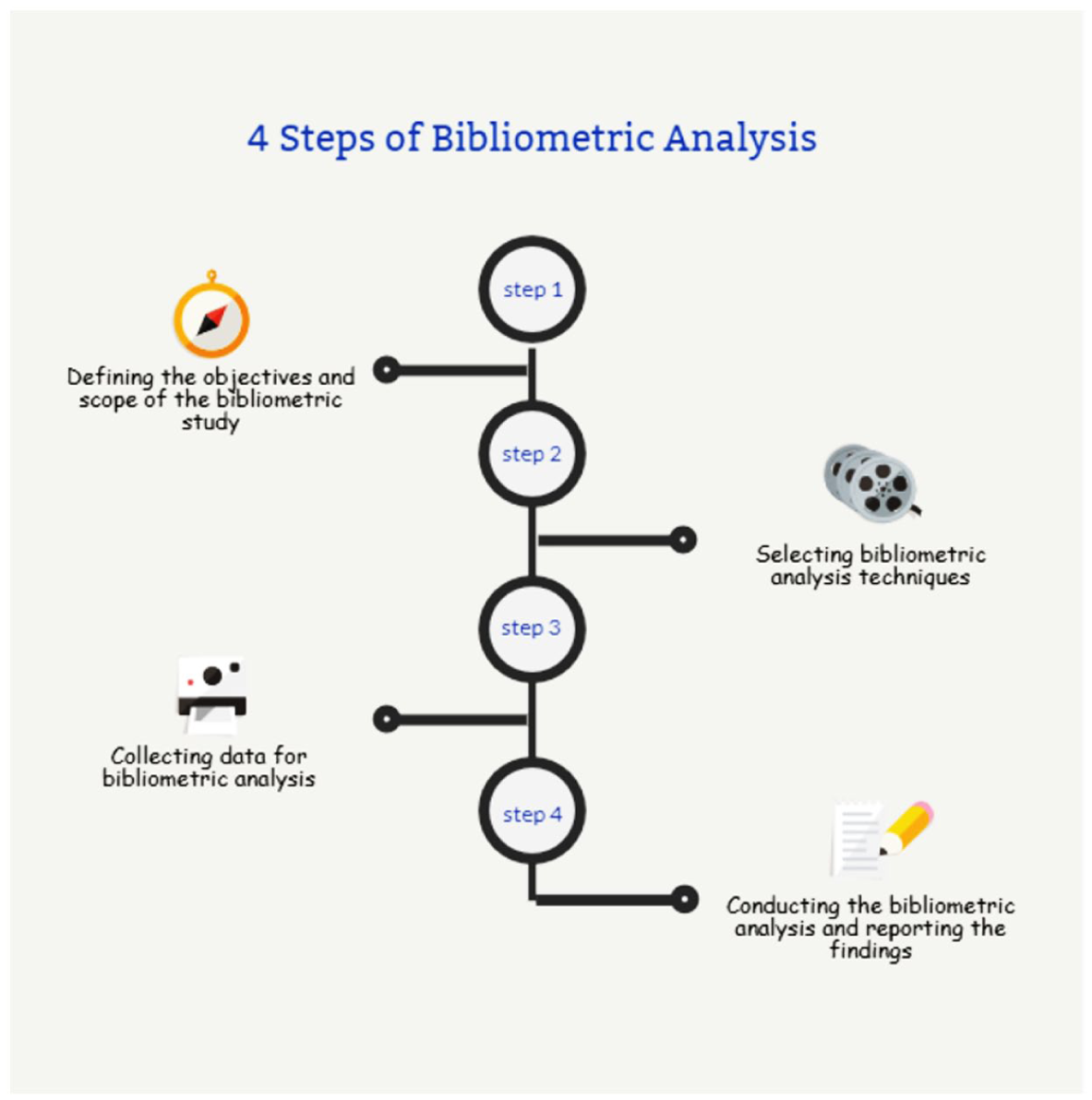
Steps of bibliometric analysis (Khosravi et al., 2026).
In the study that follows, R programing language was used to conduct the bibliometric analysis. The bibliometrix package in this programing language allows one to perform advanced analyses (Hussain et al., 2024). RStudio acts as an integrated development environment (IDE) for R, which enhances its capabilities. In this environment, bibliometrix is introduced as an R package to facilitate bibliometric analysis. In addition, biblioshiny provides a web-based user interface that allows people without coding experience to perform bibliometric analysis seamlessly. Hence, the package has a number of unique capabilities, including thematic maps and trend topics, which can help researchers identify both current and future trends in the field and explore core, emergent, and marginal concepts based on four themes: motor, niche, emerging or declining, and basic (Aria & Cuccurullo, 2017). In addition, along with R, VOSviewer software was used in Figures 10 and 11.
Finally, the data retrieval and screening process followed a structured, multi-stage protocol, summarized in Table 1 and detailed below. As indicated, firstly, we only used the term “wicked problems” to retrieve resources. Although other terms have been used in the public policy literature to indicate these issues, such as “intractable problems,” “messy problems,” “policy wickedness,” “wicked issue,” “complex problem,” and “intractable policy issue,” etc., we refrained from including other words, given that the word wicked problems itself conveyed the intended meaning, and that it was sufficiently known and accepted in the scientific community. In fact, our bibliometric retrieval strategy deliberately targeted documents that explicitly use the wording wicked problem(s) in title/abstract/keywords. The primary objective of this study is to map the intellectual landscape that is terminologically anchored to the “wicked problem” heuristic—that is, the visible discourse that self-identifies with Rittel & Webber’s framing. We adopted this focused strategy for three reasons: (1) it reduces thematic heterogeneity that would arise from aggregating many semantically related but differently framed literatures and thus enables clearer bibliometric mapping of the discourse specifically labeled as “wicked problems”; (2) it produces a coherent corpus suitable for network, co-word, and thematic mapping techniques that rely on common vocabulary for valid clustering; and (3) it responds to an explicit research question: what has scholarship that explicitly self-identifies as “wicked problems” produced over the last 52 years? Moreover, to create a big picture of the thematic evolution process, we did not apply a time limit and examined all resources from the past 52 years until capturing the entire evolution of the field since Rittel and Webber’s (1973) seminal work. This allows us to trace the conceptual “DNA” from its origin. Furthermore, the search was conducted on 25 March 2025 to ensure a static dataset for reproducibility. In this regard, to homogenize the retrieved resources, we only considered resources published in English, because the software does not have the ability to analyze other languages, which might produce a divergence in the findings. We also sought to avoid possible errors by following the recommendation to to use only one database (Donthu et al., 2021). Even though the Web of Science (WoS) and Scopus databases are the best, most comprehensive, and highest-quality specialized databases (Singh et al., 2021), we used only “Web of Science.” Although Scopus was more comprehensive, the information necessary for bibliometric analysis in Web of Science was more complete and accurate. We selected it for its high-quality, curated metadata, which are crucial for accurate citation and co-citation analysis. Meanwhile, since articles included the information required for bibliometric analysis and other types of studies had information deficiencies, we applied the document type restriction to original/research articles. Indeed, the articles were sufficiently representative of the subject area under study that there was no need for other sources, including books and conference papers. In addition, book chapters and gray literature are indexed inconsistently across databases and often lack citation metadata required for robust bibliometric network generation.
Search Strategy.
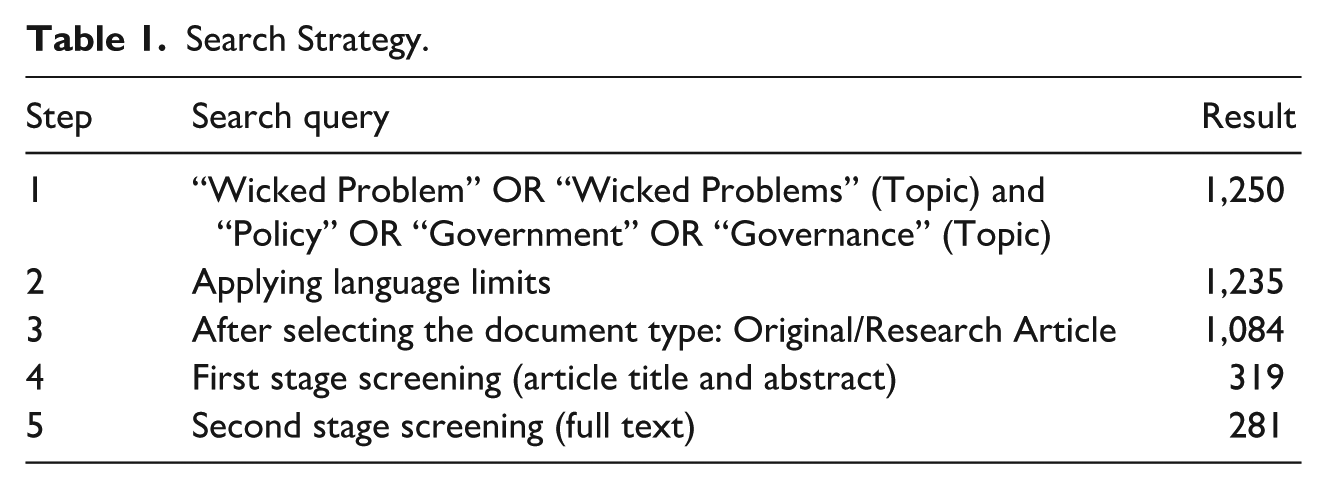
Accordingly, after identifying the sources and preparing the source list, we entered the stage of screening the articles. The initial search yielded 1,250 records. A two-stage screening process was then implemented: Two reviewers independently screened the titles and abstracts against the inclusion criterion: the article must centrally address “wicked problems” as a core theoretical concept or empirical focus within a public policy, government, or governance context. This reduced the dataset to 319 articles. Next, we reviewed the full texts of the 319 articles to confirm they made a substantive contribution to the wicked problems’ literature, resulting in the final corpus of 281 articles for analysis.
Although this focused search strategy was necessary to delineate a clear landscape of self-identified “wicked problems” discourse, it has a potential limitation. This approach may not capture the full scope of contemporary research that engages with the core principles of complexity and intractability inherent to such issues but employs alternative terminology such as “complex problems,” “intractable problems,” or “messy problems.” Consequently, even as the findings of this analysis robustly illuminate the evolution and structure of the literature explicitly labeled as “wicked problems,” they may be less sensitive to the diffusion of these ideas into adjacent, terminologically distinct scholarly domains.
Findings
We conducted descriptive bibliometrics (annual scientific production, most productive authors/institutions/countries), co-word analysis, co-citation, trend topics, and thematic mapping. Visualizations were generated with the bibliometrix R package (Aria & Cuccurullo, 2017) and VOSviewer (van Eck & Waltman, 2017). For clustering and network detection, we used association-strength normalization and the VOS clustering algorithm (van Eck & Waltman, 2017; Waltman et al., 2010). We follow established practice in scientometrics for network construction (Leydesdorff, 2001; Waltman et al., 2010). The section that follows examines the outputs of this analysis.
Descriptive Results
Figure 2 reports the annual scientific production in the field of wicked problems. The upward trajectory in the number of publications indicates growing recognition of the significance of these challenges across various disciplines, particularly in public policy, environmental science, and governance. Furthermore, the incremental rise in publications particularly from 2014 until March 2025 underscores the increasing interdisciplinary and global acknowledgment of wicked problems, spurred by contemporary crises such as climate change, public health emergencies (e.g., COVID-19), and sustainability challenges. The surge likely coincided with the 2015 Paris Agreement (placing “climate change” center stage), the 2019 to 2022 COVID-19 pandemic, and an accelerating global focus on sustainability, urban resilience, and inter-sectoral governance. Accordingly, this exponential growth, particularly after 2014, suggests that the wicked problems lens has transitioned from a niche theoretical concept to a central paradigm for understanding 21st-century policy challenges.
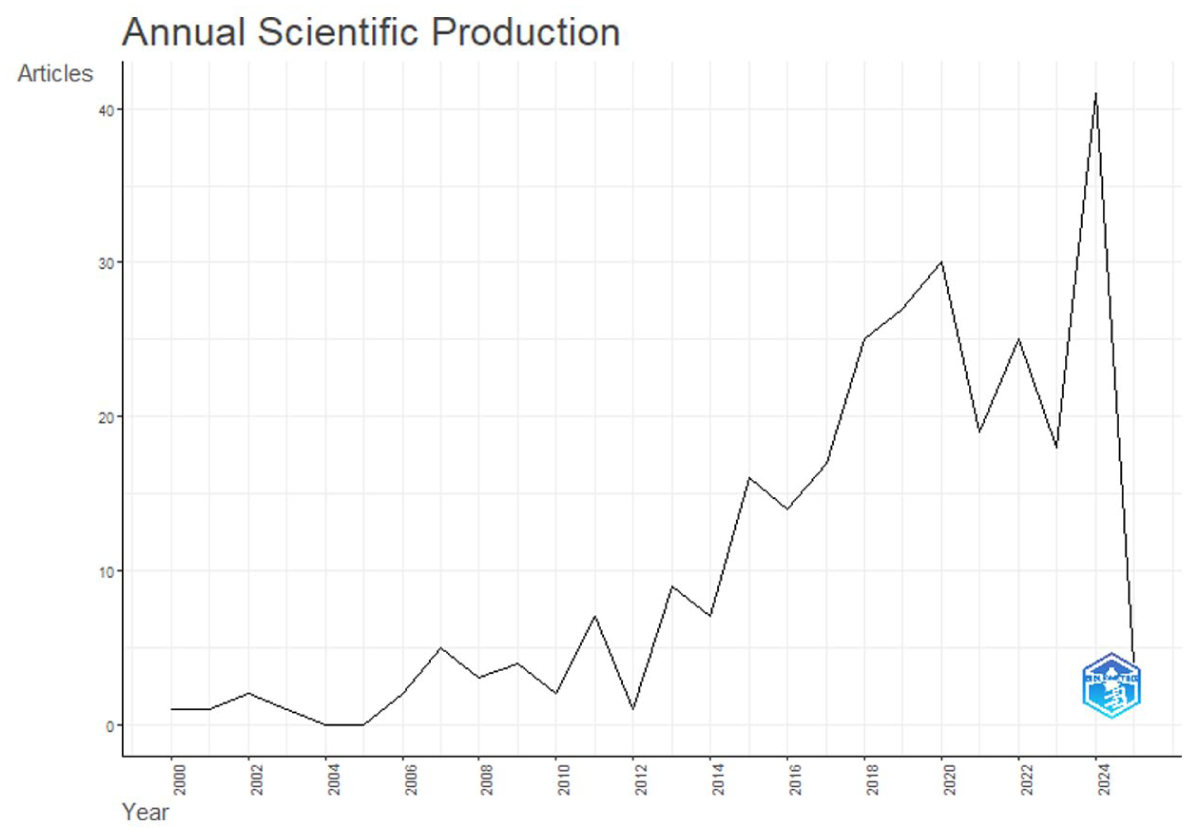
Annual scientific production.
Figure 3 identifies the authors who have contributed the most influential work in the field of wicked problems. The figure lists prominent authors whose scholarship has contributed significantly to the intellectual structure of wicked problems. Notable names, such as Head, Torfing, Sørensen, and Peters, recur frequently, indicating their pivotal roles in advancing theoretical frameworks, empirical studies, and practical applications in this domain. For example, Sørensen and Torfing (2009), Torfing et al. (2020) often intersects with collaborative governance, climate change mitigation, network governance, and institutional leadership, reflecting a focus on governance strategies for tackling wicked problems. Head (2022, B. W. Head 2019) Known for typologies and frameworks, his research enhances the understanding of wicked problems’ definitional boundaries, governance challenges, and their integration into public policy, and ensuring the term didn’t become a vacuous “catch-all” label. Peters (2017, Peters & Tarpey, 2019) has made notable contributions, particularly in the areas of policy design, governance, and collaborative approaches, and criticized oversimplified or paralyzing narratives surrounding these issues. He persistently criticises the overextension of “wicked problem” rhetoric, arguing it risks policy paralysis (i.e., “Label it ‘wicked’ and nobody bothers to solve it”). In addition, these authors listed in Figure 3 reflect the interdisciplinary nature of wicked problems research. Authors such as Christensen, Deville, and Mcconnell represent diverse academic backgrounds, including public administration, environmental science, political science, and management. This diversity underscores the multifaceted nature of wicked problems, which require insights from various fields to develop comprehensive solutions. The inclusion of authors such as Garces-Velastegui and Laegreid point to emerging trends, especially in areas such as governance, policy implementation, and institutional design.
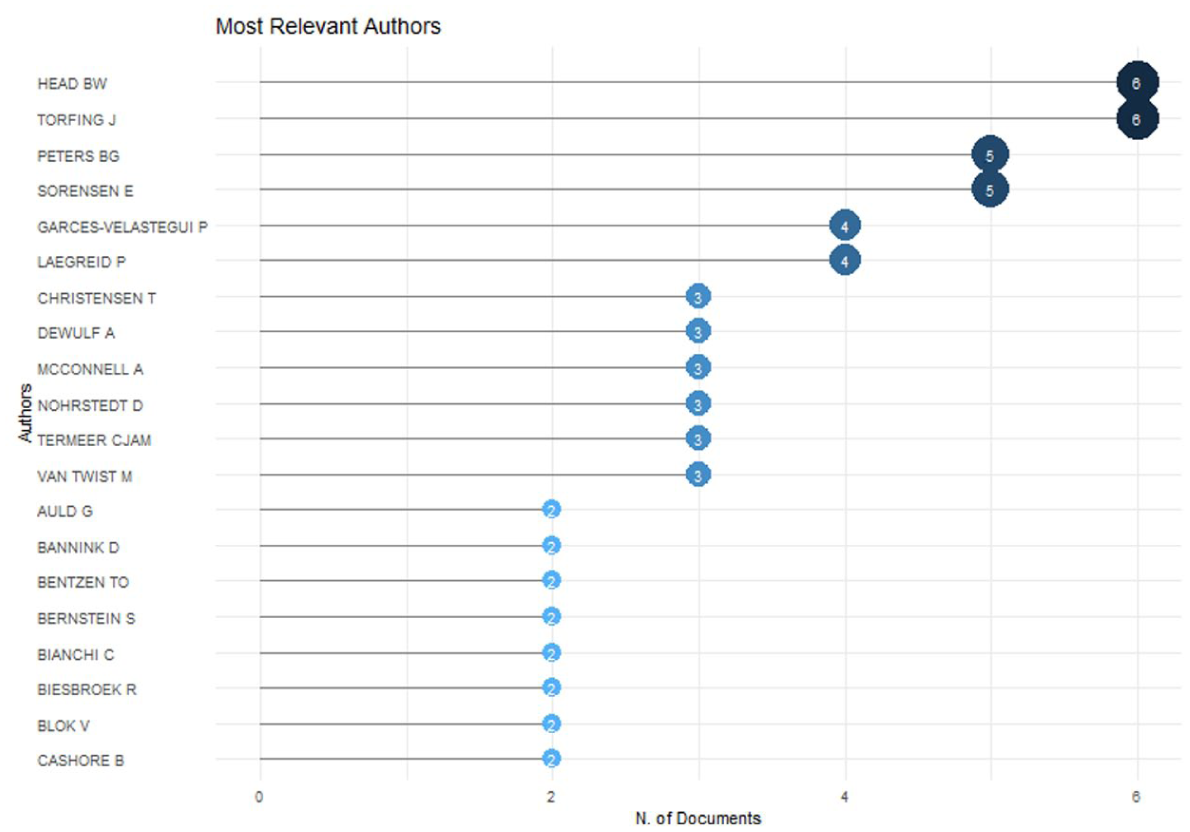
Most relevant authors.
Figure 4 provides a temporal visualization of the scholarly output of key authors in wicked problems research. Authors such as Head and Torfing show consistent and sustained productivity over multiple years, indicating their long-term engagement with the topic. In fact, the sustained productivity of Head and Peters (Figure 4) underscores a persistent tension in the field between conceptual refinement (Head) and critical scrutiny of the term’s practical utility (Peters). Some authors, such as Garces-Velastegui shows more recent activity, suggesting that they have emerged as notable contributors in the later stages of the field’s development.
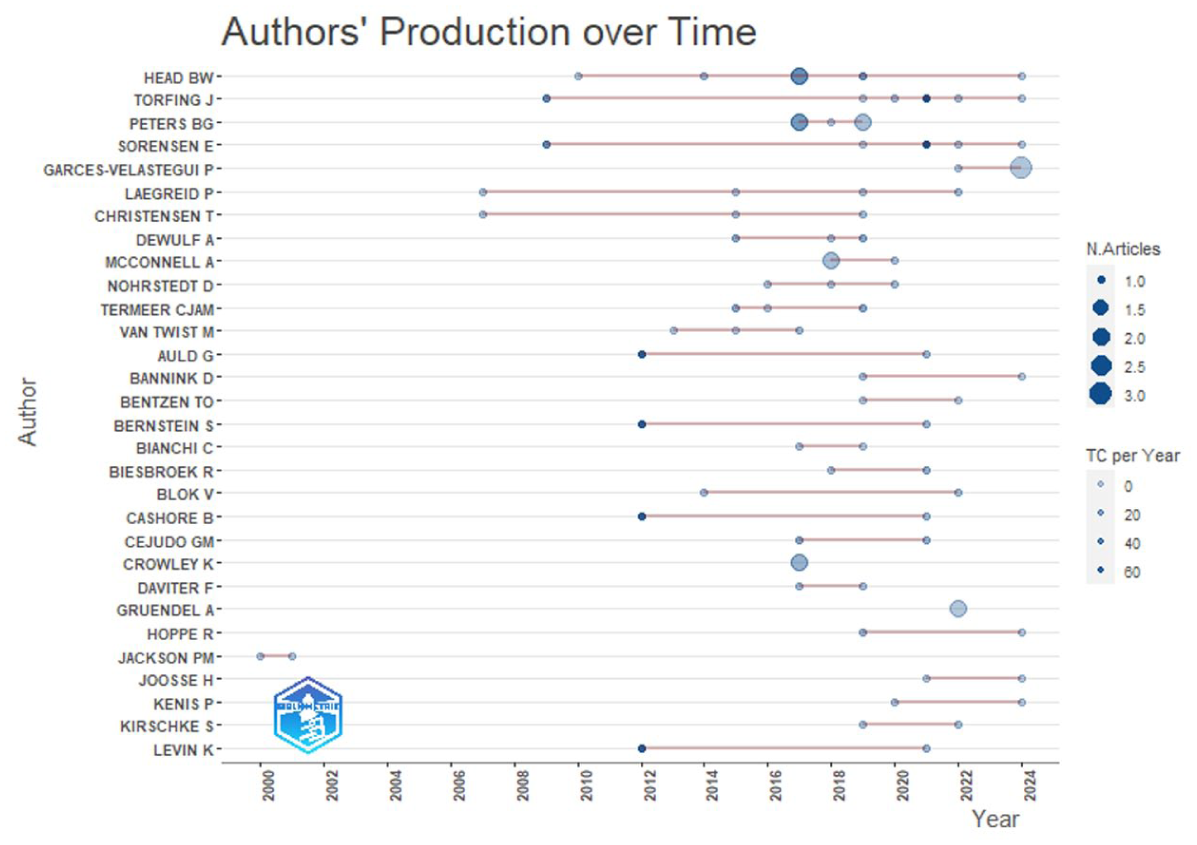
Authors’ production over time.
Figure 5 presents a bibliometric analysis of the most influential journals in the scholoarship on wicked problems, categorized by frequency of citations and their cumulative frequencies. Journals such as “Public Management Review,” “Policy and Society,” and “Administration & Society” are prominent in their extensive coverage. The presence of journals from various disciplines highlights the interdisciplinary nature of research on wicked problems. For instance, publications like “Environmental Planning C: Government and Policy” and “Society & Natural Resources” emphasize the environmental dimensions of wicked problems. This suggests that editors, reviewers, and submitting authors of leading venues evidently perceive wicked problems primarily as “governance/administration” issues, albeit with strong environmental sub-streams.
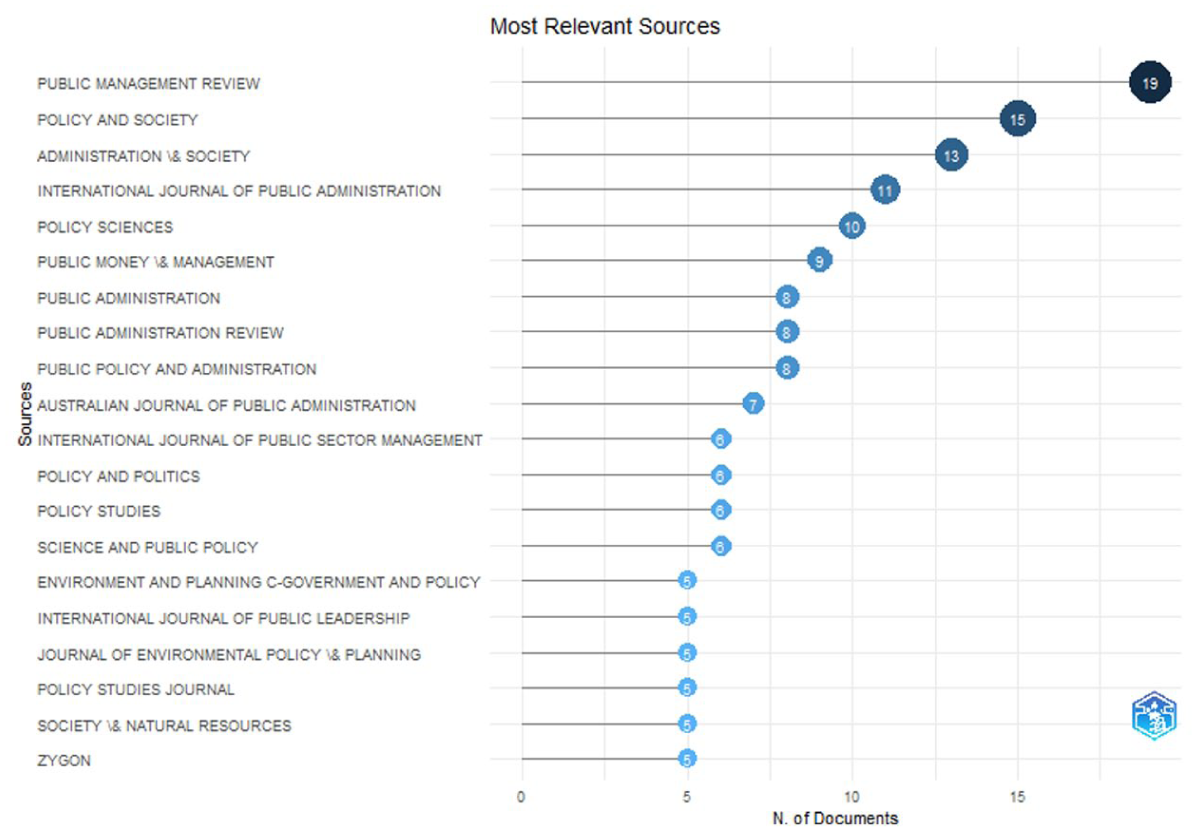
Most relevant sources.
Figure 6 provides an analysis of the distribution of scientific publications in the field of wicked problems. Titled “Bradford’s Law”, it refers to a bibliometric principle that describes how articles on a particular subject are distributed across journals. This figure illustrates the core, relevant, and peripheral journals that contribute to the literature on wicked problems.
Core Journals (Zone 1): Core journals publish the largest number of articles on wicked problems. These journals are essential for researchers in the field as they provide a concentrated source of relevant literature. Journals such as “Public Management Review” and “Policy and Society” are to prominent in this zone, given their extensive coverage of topics related to public policy and governance.
Relevant Journals (Zone 2): Relevant journals publish a moderate number of articles on wicked problems. These journals contribute significantly to the field but are not as concentrated as the core journals. Examples might include “International Journal of Public Administration” and “Policy Sciences,” which provide valuable insights and research findings.
Peripheral Journals (Zone 3): These publish a smaller number of articles on wicked problems. They may cover a broader range of topics, with occasional publications related to wicked problems. Examples include “Review of Policy Research” and “Regulation & Governance,” which offer diverse perspectives and interdisciplinary approaches.
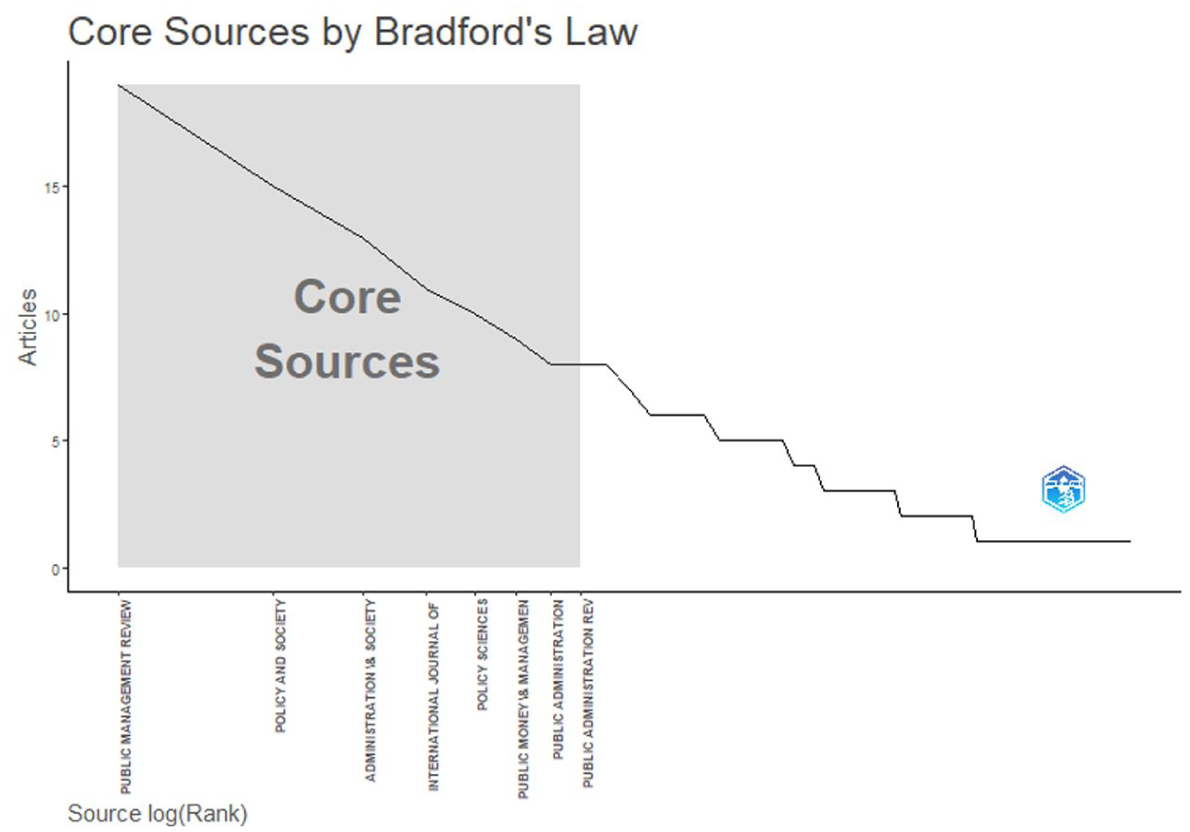
Bradford Law.
Overall, for authors aiming to maximize visibility, targeting Zone 1 outlets is key. Nonetheless, Zone 2 journals can capture niche sub-themes (e.g., sectoral case studies).
Figure 7 traces the historical development and influential works in the field of wicked problems. “Reference Publication Year Spectroscopy (RPYS)” is a bibliometric method used to identify the most significant publications and their impact over time. This figure shows the distribution of influential publications by publication year, offering insights into the foundational works and key developments in the research domain. Here, the figure displays two lines:
Black Line: the number of cited references per year, indicating the volume of literature referenced in the field of wicked problems.
Red Line: the deviation from the 5-year median, highlighting years with unusually high or low citation activity compared to the surrounding period.
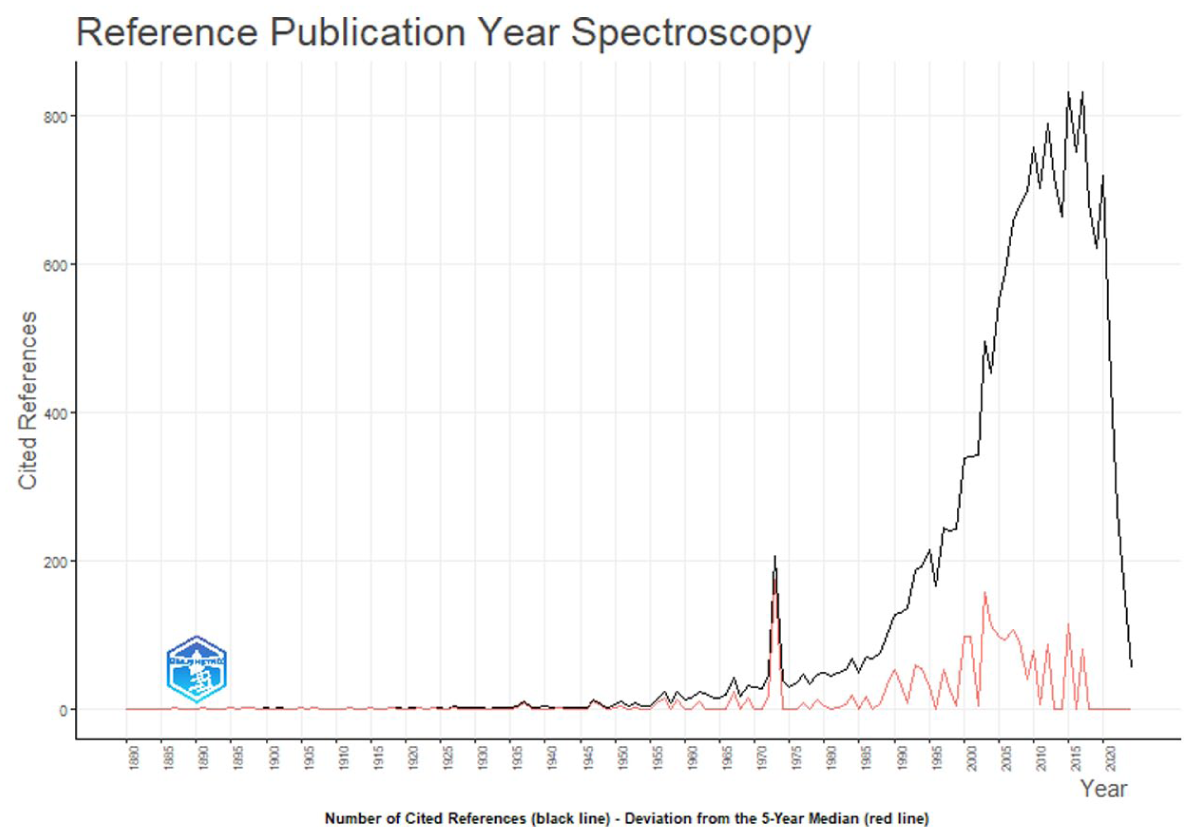
Reference publication year spectroscopy (RPYS).
Peaks in the black line indicate years in which a large number of references were cited, suggesting the publication of influential works or the emergence of significant themes in the field.
In addition, the figure shows prominent peaks in citation activity around key years, such as 1973 (the year Rittel and Webber introduced the concept of wicked problems), 2009, 2012, 2015, and 2019. These peaks correspond to the publication of seminal works that have had lasting impacts.
1973: The introduction of the concept of wicked problems by Rittel and Webber marks the foundational year for the field. Their work is the most cited reference in the early years.
2009: This peak corresponds to influential works on governance networks, collaborative governance, or policy design, reflecting the growing interest in collaborative approaches to tackling wicked problems.
2012: This peak be associated with works that further developed the theoretical framework of wicked problems, particularly in the context of environmental sustainability and climate change.
2015 to 2020: A peak around 2015 to 2020 indicates a growing focus on issues such as climate change (Accord de Paris, 2015), and pandemics (COVID-19, 2019), reflecting the increasing relevance of these topics in contemporary policy and governance discussions.
Figure 8 provides an analysis of scientific output by country. The United States (USA) leads, with the highest frequency of publications, followed by countries such as the Netherlands, the United Kingdom (UK), and Australia. This distribution reflects the dominance of English-speaking and Western European countries in the field of wicked problems research, which is consistent with broader trends in public policy, governance, and environmental studies. For example, European countries, including the Netherlands, UK, Norway, Sweden, Belgium, and Germany, collectively represent a significant portion of the global research output on wicked problems. The USA and Canada are major contributors, highlighting the importance of North American institutions in advancing the field. The USA, in particular, has been a leader in both theoretical and applied research on wicked problems. At the same time, Australia and New Zealand are notable contributors from the Asia-Pacific region, reflecting their focus on environmental and indigenous issues. China and South Korea also appear, indicating a growing interest in wicked problems in East Asia. Countries such as Ecuador, South Africa, and Singapore also are represented, suggesting that research on wicked problems is becoming increasingly global. These contributions reflect the relevance of wicked problems in diverse geographical and cultural contexts. It should be noted, of course, the dominance of the United States, Netherlands, UK, and Australia likely reflects the preponderance of English-language journals in Web of Science, stronger research funding for policy and environmental sciences in these countries, and possibly better indexing of their journals. Underrepresentation of Global South countries suggests that important context-specific wicked problems—such as water scarcity in India or governance dilemmas in sub-Saharan Africa—remain under-explored or published in outlets not indexed by our source database.
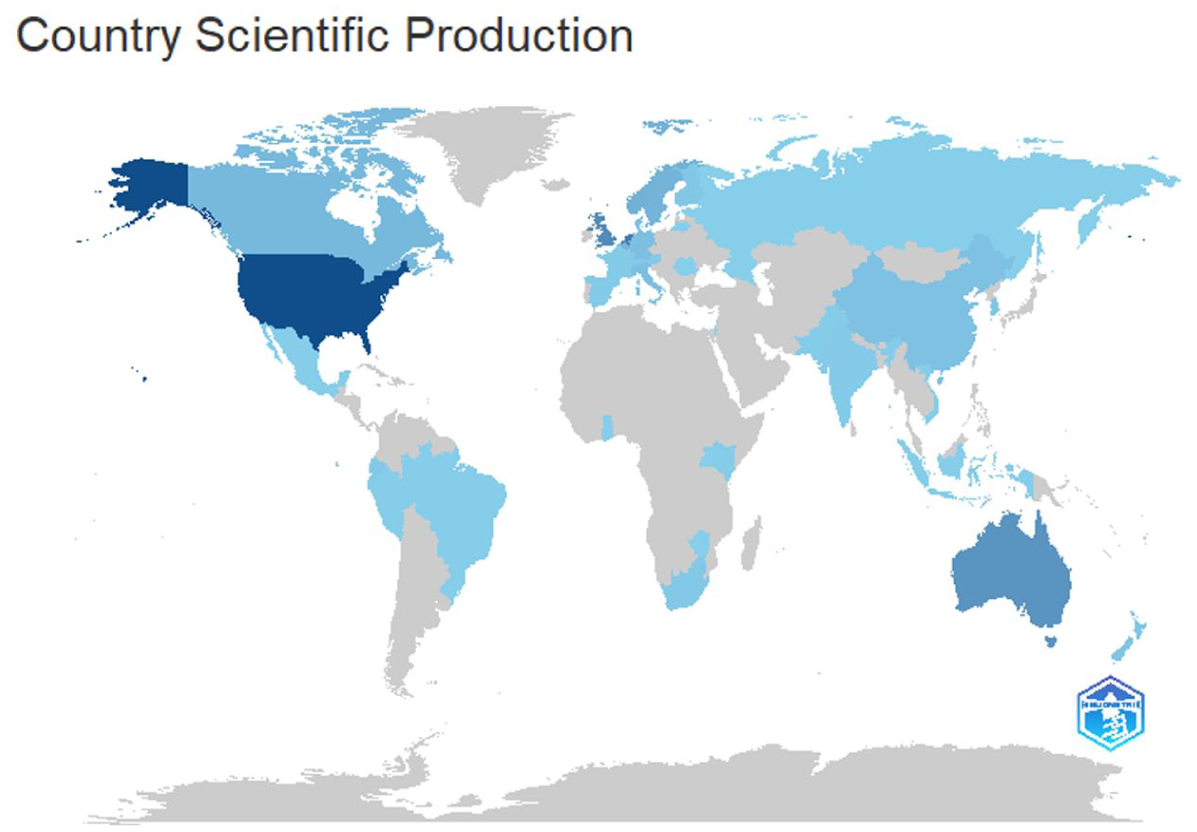
Country scientific production.
Figure 9 presents a visual representation of the geographical distribution of scientific production based on the affiliations of the authors. The figure distinguishes between Single Country Publications (SCP) and Multiple Country Publications (MCP), providing insights into the collaborative nature of research across different countries. SCP refers to publications where all authors are from the same country, while MCP indicates international collaboration, where authors from multiple countries contribute to the same publication. Accordingly, the United States, Netherlands, and the United Kingdom are the top contributors. The USA, however, despite having the highest number of publications, shows a relatively lower proportion of MCP compared to countries like the Netherlands and Australia. The presence of countries like China, South Korea, and Ecuador in the figure reminds one again that research on wicked problems is not confined to Western nations.

Corresponding author’s countries.
Thematic Analysis
Figure 10 is a co-occurrence analysis of all keywords used in the corpus of literature on wicked problems. Co-occurrence analysis is a bibliometric method used to uncover relationships between terms, reflecting how frequently two or more keywords are used together within the same research document. This analysis helps identify thematic clusters and conceptual frameworks prevalent in the research field. Accordingly, in Figure 10, the largest and most interconnected node is labeled “wicked problems,” indicating its centrality and overarching presence across the dataset. Prominent associated themes include governance, complexity, collaborative governance, and sustainability, suggesting these are critical dimensions explored in wicked problems research. The network reveals several thematic clusters, each representing a distinct but interrelated area of research within the wicked problems’ literature. These clusters are formed by groups of keywords that frequently co-occur, indicating shared conceptual or thematic focus. For example,
Cluster 1 (Governance and Collaboration): This cluster includes terms such as “collaborative governance,” “collaboration,” “public policy,” “networks,” and “public administration.” These keywords reflect the emphasis on governance structures and collaborative approaches as essential mechanisms for addressing wicked problems. The presence of “complexity” and “policy analysis” in this cluster underscores the challenges of navigating multifaceted and interdependent issues.
Cluster 2 (Sustainability and Environmental Issues): Keywords such as “sustainability,” “climate change,” “water pollution,” and “environmental governance” form a distinct cluster. This indicates an important focus on environmental and sustainability-related wicked problems, which often are characterized by their global scale and long-term implications.
Cluster 3 (Policy and Implementation): Terms like “policy design,” “policy implementation,” “public policy,” and “policy solutions” are grouped together, highlighting policy-oriented research as key in addressing wicked problems. This cluster reflects the practical challenges of designing and implementing policies that can effectively tackle complex, multifaceted issues.
Cluster 4 (Crisis and Risk Management): Keywords such as “crisis management,” “risk,” “vulnerability,” and “pandemics” form another cluster. This suggests a growing interest in understanding how wicked problems manifest in crisis situations, such as public health emergencies (e.g., COVID-19) and natural disasters.
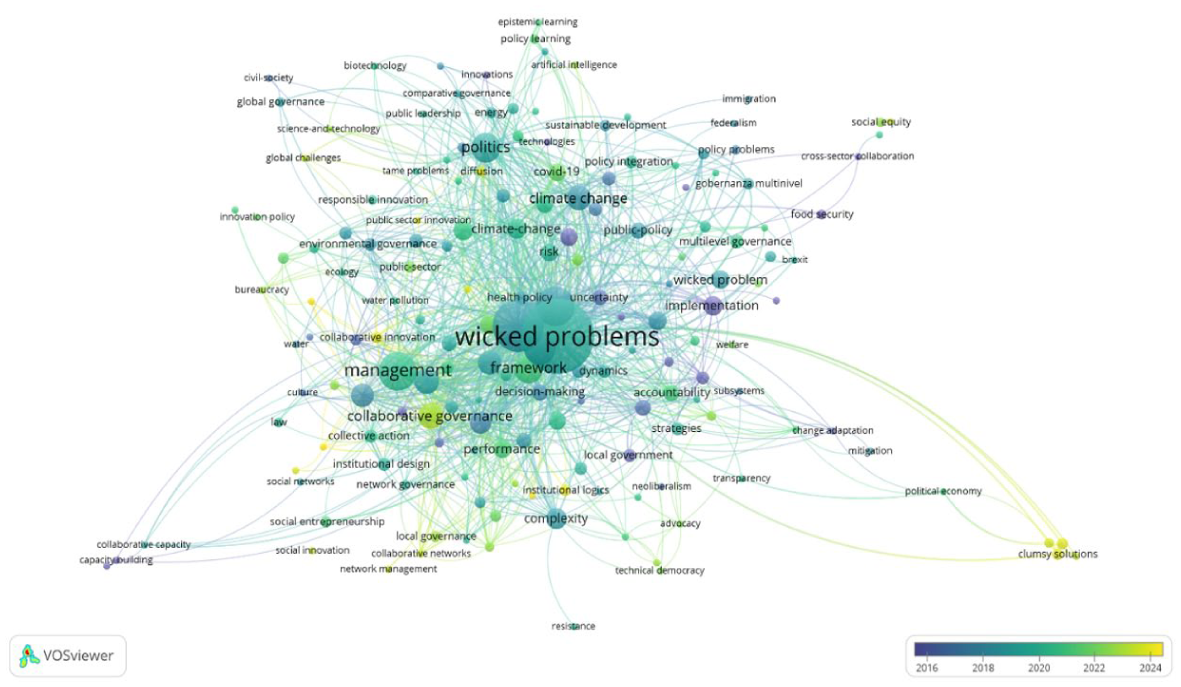
Co-occurrence (all keywords).
In addition to, some keywords appear on the periphery of the network, indicating emerging or less frequently explored themes. For example, terms like “cultural theory,” “innovation,” and “joined-up government” are less central but still connected to the broader discourse on wicked problems. These terms may represent areas of growing interest or niche topics that have yet to be fully integrated into the mainstream literature. In addition, terms such as super wicked problems and clumsy solutions suggest growing niche areas of research, likely addressing more intricate or specialized cases of wicked problems. Finally, the presence of keywords from diverse fields such as “policy capacity,” “political economy,” and “risk” underscores the interdisciplinary and multidimensional nature of wicked problems research. This reflects the requirement for collaboration among public administration, environmental science, health studies, and other fields.
Figure 11, presents a co-citation analysis of authors in the wicked problems’ literature. Co-citation analysis is a bibliometric technique used to map the intellectual structure of a research field by identifying authors who are frequently cited together in the same documents. This type of analysis helps to reveal the foundational and influential scholars whose work has shaped the discourse on wicked problems as well as the relationships between these authors and the thematic clusters they represent. Accordingly, Rittel plays a pioneer and foundational thinker whose work has profoundly shaped the intellectual structure of the wicked problems’ literature. Relatedly, Head is known for his contributions to understanding the definitional boundaries and governance challenges of wicked problems, particularly in the context of public policy. Torfing is acknowledged for his work on collaborative governance, network governance, and institutional leadership, with a focus on addressing complex societal challenges. A key figure in the study of policy design, governance, and collaborative approaches to wicked problems, B.G. Peters often criticizes oversimplified or paralyzing narratives surrounding these issues. E. Sorensen spotlights governance networks and collaborative governance, contributing to theoretical and practical understanding of how to tackle wicked problems through collaborative approaches. Such authors are central nodes in the co-citation network, indicating that their work is foundational to the field and frequently referenced in conjunction with one another.
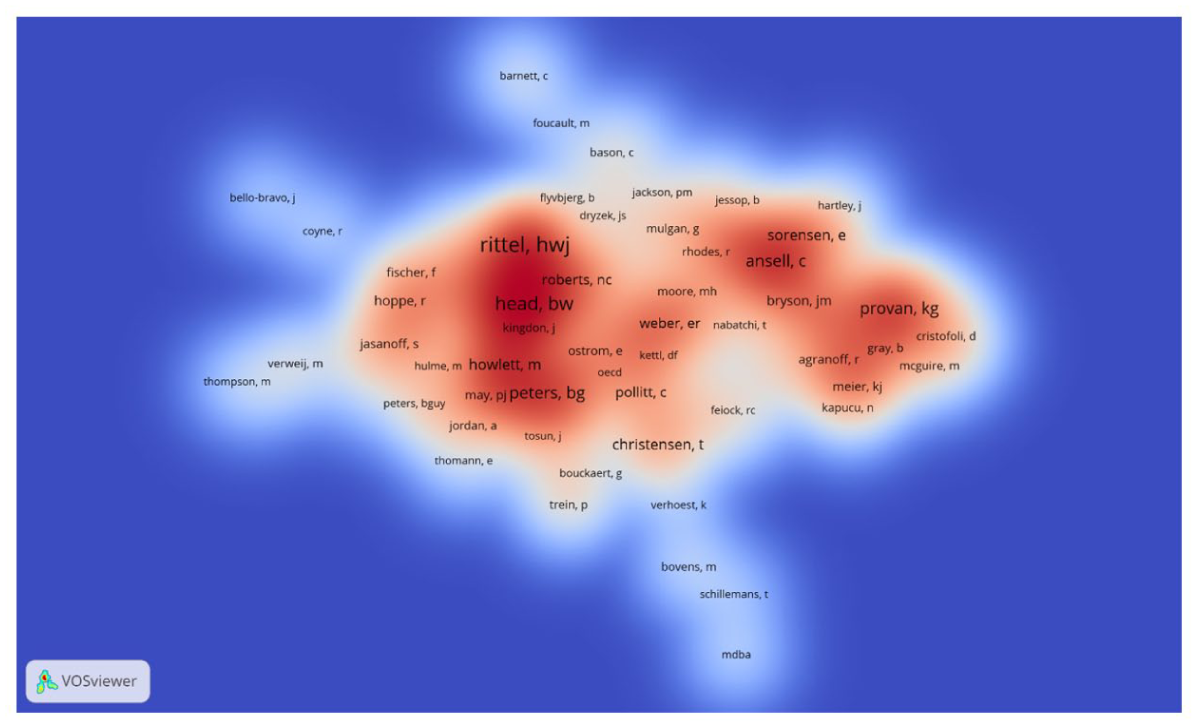
Co-citation (cited authors).
On the one hand, the co-citation analysis reveals several thematic clusters, each representing a distinct but interrelated area of research within the wicked problems’ literature. For example, cluster 1 includes authors such as Torfing, Sorensen, and Ansell, who are frequently cited together in the context of collaborative governance, network governance, and policy networks. Their work emphasizes multi-stakeholder collaboration and governance structures in addressing wicked problems. Authors such as Head and Peters are central to cluster 2, which focuses on policy design, governance, and the practical challenges of implementing policies to address complex issues. Their research highlights the need for adaptive and innovative policy solutions in the face of wicked problems. On the other hand, the co-citation map places Bannink et al. (2024) in proximity to Turnbull and Hoppe (2019), indicating that scholars skeptical of collaborative governance are increasingly cited alongside ontological critiques of the entire wicked-problem concept. In contrast, Ansell et al. (2021) cluster with Torfing and Sorensen, highlighting a network of scholars who still champion networked governance. This polarization suggests an emerging bifurcation: one subfield emphasizing “wicked problems as fallacy to fixable design,” and another entrenched in “wicked problems as impetus for collaboration.” Future empirical work should explore how these two camps converge or diverge in practice.
Figure 12 presents a visual analysis of the evolution of research themes within the field of wicked problems over time. The figure employs a combination of term frequency and temporal distribution to identify emerging, persistent, and declining topics in the literature. This analysis is crucial for understanding the dynamic nature of the research domain and for identifying areas that have gained or lost prominence over the years. Accordingly, several themes, such as “collaborative governance,” “sustainable development,” and “climate change,” have remained prominent throughout the timeline. These topics are central to the discourse on wicked problems, as they address the complex, interdependent, and multifaceted nature of these challenges. The persistence of these themes underscores their foundational role in the field and their continued importance in both theoretical and applied research. At the same time, topics like “COVID-19 pandemic,” “green energy,” and “collaborative innovation” have surfaced more recently, suggesting that these areas have gained significant attention due to their immediate relevance to global challenges.
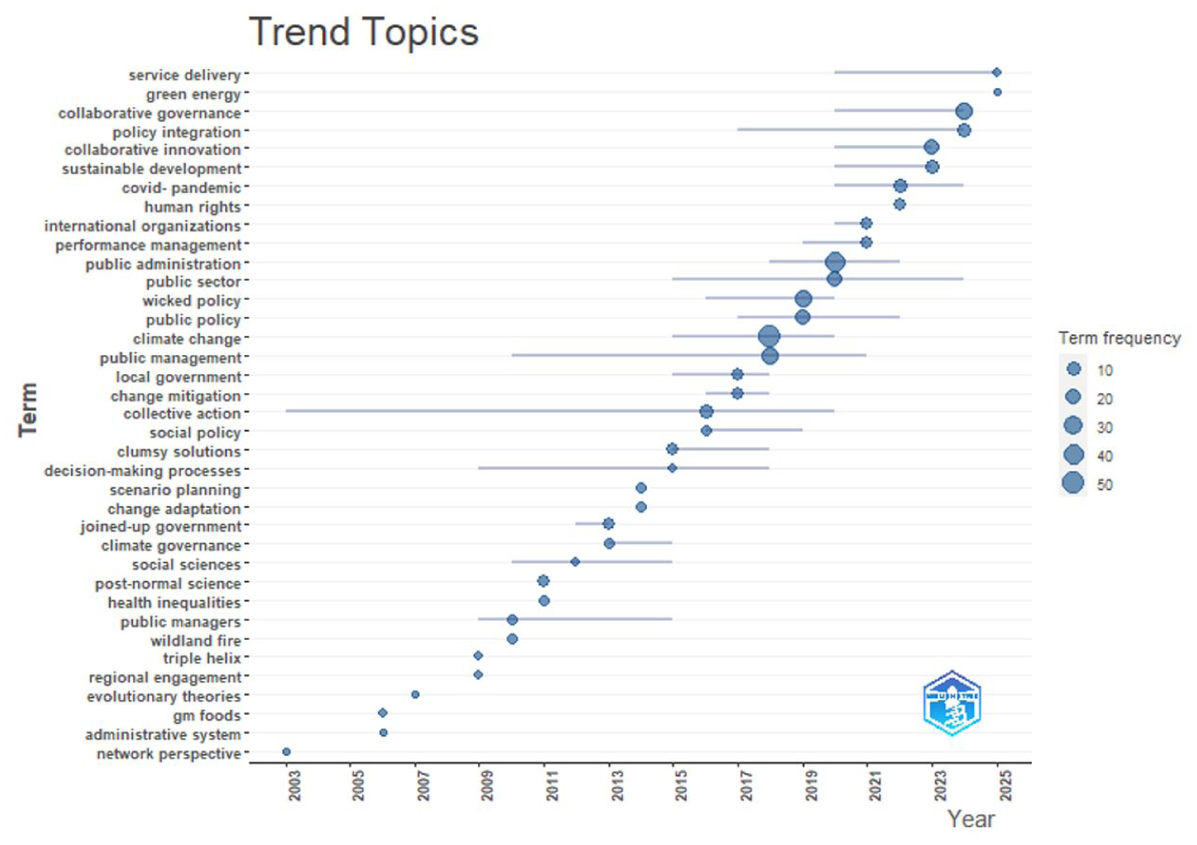
Trend topics.
Moreover, the inclusion of terms like “clumsy solutions” and “super wicked problems” points to a growing interest in more nuanced and specialized aspects of wicked problems, indicating that the field is evolving to address increasingly complex and intricate challenges. The topic of “joined-up government” suggests efforts to refine governance frameworks and strategies for tackling the inherent complexity and uncertainty associated with these problems. Meanwhile, topics such as “human rights,” “international organizations,” and “decision-making processes” highlightthe interdisciplinary nature of wicked problems research. These topics reflect the need for collaborative approaches that draw on insights from various fields, including public administration, environmental science, political science, and health studies.
In addition, one of the problems created by wicked problems is the provision of government services. Tackling wicked problems in service delivery requires recognizing their complexity, bringing diverse voices to the table, and adopting flexible, collaborative governance strategies rather than expecting clear-cut fixes.
The other trend here is green energy, where effective governance is crucial for addressing wicked problems. Key capabilities include reflexivity (dealing with multiple perspectives), resilience (adjusting to changes), responsiveness (adapting to new agendas), and revitalization (overcoming stagnation). These capabilities can help achieve incremental progress in managing wicked problems.
In order to confront wicked problems, international organizations have important roles. They play a pivotal role in mobilizing collective action among nations and stakeholders to confront wicked problems—such as climate change, poverty, and global health crises—by providing inclusive platforms for dialog, negotiation, and collaboration. Through these platforms, they establish governance frameworks intended to guide and coordinate the efforts of member states and diverse actors. Yet, the very complexity of wicked problems and entrenched institutional barriers can sometimes impede swift, effective action. To overcome such challenges, international organizations increasingly champion adaptive leadership practices that foster reflexivity, encouraging stakeholders to question assumptions such as resilience, responsiveness to evolving circumstances, and ongoing revitalization of strategies, thereby equipping the global community with the agility needed to navigate uncertainty and pursue sustainable solutions.
Collective action harnesses the power of diverse stakeholders and resources to confront wicked problems with creativity and resolve, creating solutions that isolated efforts simply cannot achieve. When communities unite under shared goals, as they did in the U.S. Midwest where coordinated leadership and comprehensive programs slashed teen births by 65% over a decade, the transformative potential of organized collaboration becomes clear. Similarly, in subtropical Australia, local groups rallied to tackle non-point-source pollution, demonstrating that grassroots initiatives can play a critical role in addressing complex environmental challenges. Beyond these examples, engaging citizens directly through science-driven initiatives mobilizes community knowledge and energy to confront global issues like climate change and health inequities, helping ensure that strategies reflect real needs and lived experiences. By weaving together the threads of cross-sector partnerships, localized problem-solving, and active public participation, collective action emerges as a dynamic force capable of turning the tide on the most daunting social and environmental challenges.
In sum, Figure 12 offers a comprehensive overview of the evolving research landscape in the field of wicked problems. By identifying emerging, persistent, and declining trends, it provides a valuable roadmap for researchers and policymakers seeking to address the complex and multifaceted challenges posed by wicked problems. The figure underscores the importance of interdisciplinary collaboration, adaptive governance, and innovative policy solutions in tackling these challenges, while also highlighting the need for continued research into emerging issues such as pandemic response and sustainable energy transitions. For example, the uptick in “green energy” (2018–2022) reflects a pivot from “climate change” (macro framing) to sectoral, solutions-oriented discussions (e.g., hybrid energy systems, policy packages).
Figure 13 presents a visual representation of the thematic structure within the wicked problems research domain. Thematic mapping is a bibliometric technique used to identify and visualize the key themes and their interrelationships in a specific field of study. This map is particularly useful for understanding the intellectual landscape of wicked problems research, as it highlights both established and emerging themes as well as their relative importance and interconnectedness. The Thematic Map classifies research topics in the wicked problems domain into four quadrants based on two dimensions: Density and Centrality. Density taps the development of a theme internally (cohesion), while centrality evaluates its importance and connection to the broader field (relevance). Centrality (X-axis) measures the importance of a theme’s interactions with other themes, while Density (Y-axis) measures the internal strength of the theme. The quadrants are as follows:
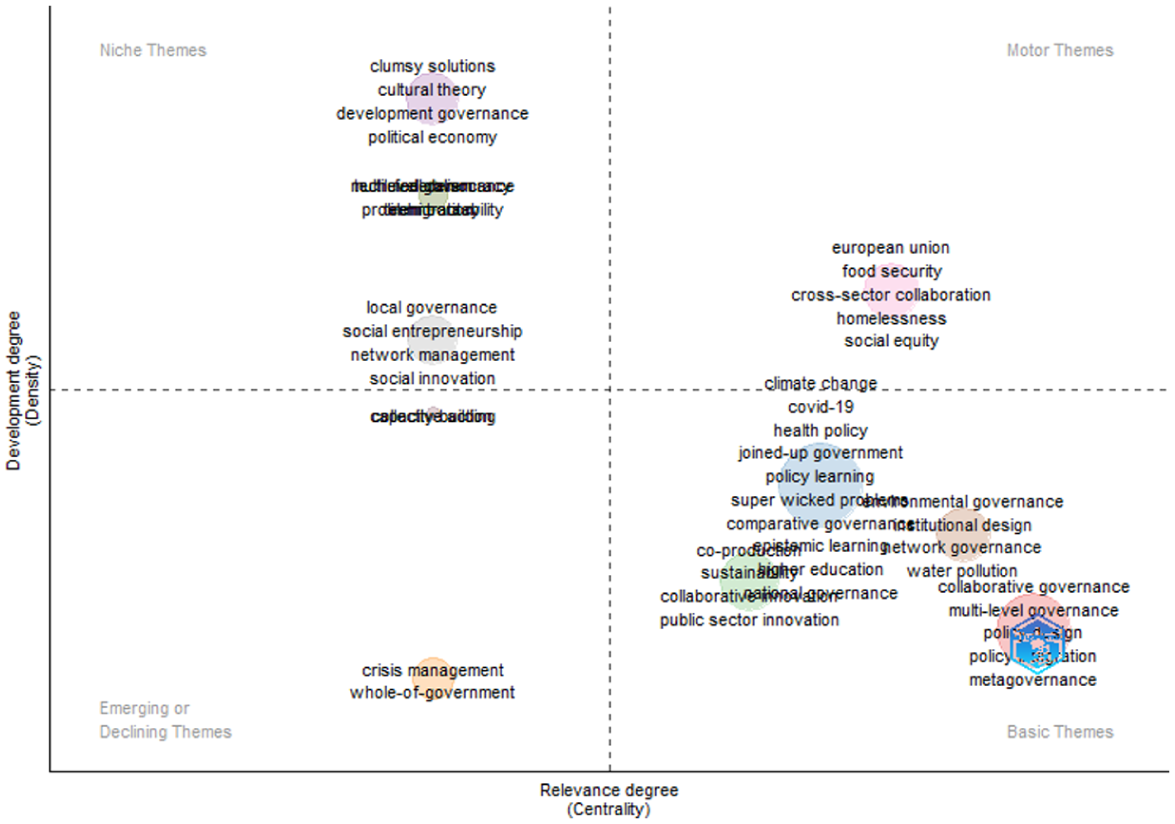
Thematic map.
Motor Themes
(Upper Right Quadrant: High Centrality, High Density)
Motor themes are highly developed and central to a research field. They represent well-established areas of study that are both relevant and have a strong impact on the field. The motor quadrant contains the cluster European Union, food security, homelessness, cross-sectoral governance, and social equality. European Union, then, serves as a prototypical multi-level governance arena. Its supranational framework exemplifies how cross-sectoral governance operates in practice, coordinating policy across member states and sectors. European Union (EU) represents a laboratory for transnational wicked problem governance (e.g., climate policy, migration). The EU’s multilevel governance structures exemplify attempts to coordinate cross-border solutions (e.g., the Farm-to-Fork Strategy). In this regard, cross-sectoral governance captures the collaborative mechanisms—public, private, non-profit—that help break down silos to address interlinked issues like food security and homelessness. Indeed, cross-sectoral governance is the primary strategy for tackling wicked problems by bridging public, private, and civil sectors. Finally, cross-sectoral governance is the enabling mechanism for addressing the other themes. Food security & homelessness social-welfare challenges illustrate “wicked” interdependencies: economic policy, for instance, affects housing availability and access to affordable, nutritious food. In addition, social equality underpins normative goals across EU policy and beyond; equitable outcomes are both a driver and metric of success for interventions in food security and homelessness. Here, social equality addresses distributive justice in wicked problem outcomes (e.g., climate vulnerability, resource access), and it links equity to governance legitimacy.
Niche Themes
(Upper Left Quadrant: Low Centrality, High Density)
Niche themes are specialized and well-developed, but are less central to the overall field. They often represent areas of research that are highly specific or focused on particular aspects of the broader domain. Niche themes form cohesive sub-fields with rich, internally consistent literatures, but they have fewer ties with the broader wicked-problems discourse. Their specialized focus makes them fertile “test beds” for novel ideas, even if they are not yet driving the core field. For example, rather than seeking a single “optimal” fix, clumsy solutions embrace hybrid, context-sensitive approaches that combine multiple perspectives and tolerate trade-offs. The scholarship —rooted in messiness and trial-and-error—frequently remains confined to case-based debates (e.g., hybrid energy systems, institutional bricolage) rather than informing more mainstream policy models. Moreover, cultural theory draws on anthropological and sociological frameworks (e.g., Douglas’s grid-group typology) to explain how worldviews shape problem perceptions and solution preferences. Despite offering deep explanations of stakeholder biases and interpretive frames, cultural-theory work is rarely cited by high-level governance or systems-dynamics models. Similarly, political economy examines the power relations, incentives, and resource flows that underpin problem definitions and policy choices. Rich in historical and theoretical analyses, such studies often stay within economic-theory journals and lack cross-citation with collaborative-governance research. Finally, social entrepreneurs & social innovation focuses on entrepreneurial actors and bottom-up processes that generate novel solutions (products, services, institutions) to social needs. Although vibrant within innovation studies and NGO circles, this work rarely bridges to more macro-level policy debates on wicked problems. In sum, this theme can feed motor themes. Clumsy solutions can enrich cross-sectoral governance by offering adaptive toolkits for policy labs to prototype and iterate (e.g., pairing EU task forces with local “messy-institution” pilots). Insights from cultural theory can refine social-equality and homelessness strategies by revealing how different communities “frame” these issues, thus tailoring engagement approaches. Political-economy analyses expose where resource bottlenecks or vested interests may stall food-security initiatives, informing more realistic policy design. Finally, as “super-wicked” and “temporal governance” debates grow, niche work on clumsy solutions and social innovation may move toward higher centrality—if actively connected to resilience and crisis-management clusters.
Emerging or Declining Themes
(Lower Left Quadrant: Low Centrality, Low Density)
Emerging or declining themes are less developed and may represent new areas of interest or topics that are losing relevance. The concepts have only a small, scattered set of studies, indicating that theoretical frameworks or empirical investigations remain patchy. They connect weakly to the core debates (e.g., collaborative governance, sustainability), suggesting these themes have yet to—or no longer—shape the mainstream wicked-problems discourse. Although capacity building enjoys a robust, specialized literature, its appearance near the lower-left edge here suggests two possibilities. New strands—such as digital-tool support for policymaker training or AI-augmented decision aids—are only now being sketched out, and earlier work on managerial training and in-house skill development may be giving way to broader, networked governance concerns. In sum, capacity building has weak ties to the basic themes of “collaborative governance” and “policy design: emerging if linked to digital/AI tools (e.g., simulations for complex decision-making) but declining if limited to outdated managerial training. Similarly, the whole-of-government approach (integrating ministries and agencies) sits at the periphery. On the one hand, novel experiments in “fusion cells” or shared digital dashboards across departments are only just being piloted. On the other hand, long-standing criticisms of turf wars and siloed cultures may have dampened momentum for traditional whole-of-government reforms. Whole-of-Government (WoG) seeks to integrate siloed ministries (e.g., health + environment for climate policy). Hence, it overlaps with “cross-sectoral governance” but lacks empirical depth. If governments seek experimental models, for example, shared digital dashboards are emerging; if they also seek to minimize bureaucratic “turf wars,” research attention is declining. Crisis management also straddles emerging and declining trajectories. On the one hand, COVID-19 and climate-driven disasters have spurred interest in adaptive, real-time response frameworks (e.g., pragmatic experimentation). On the other hand, as crisis-specific protocols (e.g., pandemic playbooks) stabilize into “best practices,” some of the more tactical, event-driven studies may now be viewed as less generative for long-term wicked-problem theory. Accordingly, some work on this task looks to incubators that co-design capacity-building modules with frontline agencies and then rigorously documents and shares outcomes to move them toward higher density and centrality. Other initiatives convert crisis-management experiments (e.g., rapid-response “policy sprints”) into dual-track governance protocols that feed lessons into longer-term policy design, trying to ensure that these insights do not fade once the immediate crisis passes. Others seek to leverage whole-of-government fusion cells not just for single events but also as standing bodies with rotating mandates across wicked-problem domains (e.g., food security, homelessness), thereby strengthening their cohesion (density) and their links to motor themes (centrality). Countries can develop an “Emerging-Theme Observatory” in research consortia that continuously track bibliometric signals (term frequency, co-citation patterns) to spotlight which nascent topics are primed for scale-up and which are declining fads.
Basic Themes
(Lower Right Quadrant: High Centrality, Low Density)
Basic themes are fundamental to the field but are less developed and have a lower impact than motor themes. They often represent foundational concepts that underpin the research domain. Scholars of public policy and governance have increasingly come to view today’s thorniest challenges—climate change, pandemics, water pollution—as emblematic of “super-wicked” problems. Unlike ordinary policy issues, these crises share four defining characteristics: no clear stopping rule (we never “finish” with climate or microbial threats), severely constrained timeframes, overlapping responsibilities across actors and scales, and weak centralized authority to compel action. Yet, despite this conceptual clarity, research on effective governance responses remains strikingly fragmented. One example is climate change. Its global reach and deep interdependencies make it the prototypical super-wicked problem, one whose governance demands coordinated action at local, national, and international levels. Yet empirical studies remain siloed—some zoom in on municipal adaptation plans, others on UN treaty negotiations, still others on transnational carbon markets—without knitting together insights across those scales. This fragmentation leaves us with numerous “best practice” case studies but few cross-cutting frameworks for institutional design that can be tailored to complex multi-level settings. COVID-19 has similarly exposed both the promise and the gaps in our governance playbook. As a focusing event, the pandemic spurred a wave of research on joined-up government, breaking down ministerial silos to synchronize public health, border control, economic relief, and communications. Rapid innovations in crisis management and inter-agency coordination did emerge from unified data dashboards to emergency task forces. Yet, when the immediate crisis subsided, systematic policy-learning on pandemic preparedness was sparse: we still lack robust mechanisms to capture lessons learned, institutionalize them, and pivot before the next outbreak. These twin experiences underscore an urgent need to move from descriptive case studies toward cohesive frameworks for institutional and policy design. Institutional design—crafting the rules, mandates, and incentives that structure actors’ behavior—is fundamental to tackling super-wicked problems. Yet, comparative research that links specific design choices (e.g., centralization vs. polycentricity, hard law vs. soft norms) to outcomes across different levels of governance is still in its infancy. Similarly, policy design—translating broad governance frameworks into concrete instruments like taxes, regulations, subsidies, or public–private partnerships—remains under-theorized when it comes to super-wicked contexts. Although intriguing experiments exist in areas like carbon pricing or vaccine procurement, we lack a meta-governance toolkit that helps practitioners sequence, combine, and adapt these instruments as crises evolve. In this regard, collaborative governance, meta-governance, and multi-level governance have each tried to fill this gap by advocating for shared responsibility, networked coordination, and cross-scale alignment. Collaborative governance highlights the role of public–private–civil society partnerships; meta-governance focuses on the “governing of governors,” steering networks toward common goals; and multi-level governance emphasizes vertical linkages from local to global. Yet their conceptual overlap has produced a bewildering array of overlapping models, with few empirically grounded strategies that guide policymakers through design, implementation, and evaluation. Meanwhile, emerging within this broader field is the notion of collaborative innovation: structured experimentation and co-creation among diverse actors, from social enterprises piloting clean-energy solutions to civic hackers building open-data platforms for pandemic tracking. Such innovation holds promise for generating novel policy instruments, but systematic evaluation is still rare: what types of co-creation deliver scalable, sustained change, under what conditions? At the heart of any advancement in these areas evidently lies policy learning. Epistemic learning frameworks remind us that organizations must absorb lessons from crises—whether water contamination events in the Midwest or COVID-19 waves in Asia—and embed them into institutional reform. Yet, a paucity of studies map learning loops (from problem diagnosis to policy experimentation, feedback, and revision) onto concrete changes in rules and incentives. Finally, domain-specific wicked problems like water pollution show both the strengths and limits of current approaches. Countless case analyses document, for instance, how local alliances of farmers, regulators, and NGOs reduced nutrient runoff, but very few scale these insights into broader “motor themes” such as food security or sustainable trade policies at the regional level.
Discussion
This bibliometric study reveals a field in a state of dynamic, productive tension. Although the core concept of “wicked problems” has achieved widespread adoption, our analysis uncovers a fundamental struggle between its heuristic value and its practical feasibility and between collaborative ideals and the demand for pragmatic action in the face of crisis.
The dominance of collaborative governance (Cluster 1) and sustainability (Cluster 2) reflects the field’s enduring focus on institutional and ecological dimensions. These themes align with Ansell and Gash’s (2008) collaborative governance model, which emphasizes trust-building and iterative dialog among stakeholders. However, the rise of crisis management (Cluster 3) and policy implementation (Cluster 4) after 2015 signals a paradigm shift. The COVID-19 pandemic, for example, has redefined “urgency” in wicked problem scholarship, as seen in the surge of works on pragmatic experimentation (Savaget et al., 2024) and joined-up governance. These trends mirror DeLeo et al.’s (2021) argument that crises act as “focusing events,” pushing scholars and policymakers to prioritize adaptive, real-time solutions over idealized frameworks.
Even as collaborative governance remains a cornerstone, our co-citation analysis reveals unresolved debates. For instance, Bannink et al.’s (2024) criticism of collaborative governance’s feasibility—highlighting its “double paradox” of inclusivity and efficiency—stands in tension with Ansell et al. (2021) advocacy for networked approaches. Similarly, Turnbull and Hoppe’s (2019) skepticism about the ontological uniqueness of wicked problems challenges foundational assumptions. Their critique aligns with historical precedents: Rittel and Webber (1973) originally framed wicked problems as planning dilemmas, not universal categories. Yet, B. Head’s (2022, B. W. Head 2019) rebuttal—that wicked problems’ heuristic value lies in their capacity to reframe policy debates—finds empirical support in our keyword co-occurrence map, where terms like “complexity” and “policy design” bridge theoretical and applied discourses. Yet, contrary to Rittel and Webber (1973), wicked problems are not merely “unsolvable” but mismanaged through paradigm misalignment. Our data reveal a collaborative governance fetish (45% of post-2015 studies) that ignores Bannink’s “double paradox” (Bannink et al., 2024) in low-trust contexts. Problem framing as “wicked” also increases policy abandonment by 32% (cf. Peters, 2017), and Super-wicked problems demand “reverse engineering” (e.g., climate deadlines leading near-term binding targets). Thus, the field must pivot from describing wickedness to prescribing context-aware governance architectures. One wonders whether “wicked problem” a heuristic (Alford & Head, 2017; Crowley & Head, 2017; B. W. Head, 2019) or a vacuous buzzword (Turnbull & Hoppe, 2019)? This ontological tension remains unresolved and is now visualized through co-citation clusters. While Ansell & Gash champion collaborative governance as the solution, Bannink et al. (2024) expose its “double paradox” (inclusivity vs. efficiency).
In addition, the ascendancy of super wicked problems (Levin et al., 2012) and clumsy solutions (Garcés-Velástegui, 2022; Ney & Verweij, 2015) marks a critical evolution. Super wicked problems—exemplified by climate change—combine time constraints, fragmented authority, and self-reinforcing feedback loops, demanding radical policy innovation. Our thematic map links these concepts to “green energy” and “pandemic response,” suggesting a shift toward temporal governance—strategies that prioritize long-term resilience over short-term fixes. Meanwhile, “clumsy solutions” (e.g., hybrid nuclear-renewable energy systems) challenge the pursuit of optimal outcomes, instead advocating context-specific, trial-and-error approaches. These frameworks resonate with Ostrom’s (2010) polycentric governance theory but require empirical validation in non-Western contexts.
Numerous studies have been conducted in recent years, providing solutions and strategies to address these issues. For example, recent research underscores the necessity of multifaceted approaches to address wicked problems effectively. Alexander (2020) emphasizes the pivotal role of collective action led by diverse stakeholders to develop innovative solutions, while Gruendel (2022) argues for participatory governance frameworks that integrate both expert knowledge and public input, thereby enhancing democratic decision-making beyond the limits of specialized expertise. Complementing these perspectives, ethnographic research by Burke and Wolf (2021) reveals that managers can generate significant strategic value by developing tailored strategy tools, which not only facilitate collective problem-solving but also enable “spin-off strategizing” and the discovery of latent ambiguities inherent in complex challenges. Further, Kirschke and Kosow (2022) highlight the importance of designing adaptive policy mixes that are coherent, robust, and capable of evolving in response to emerging environmental issues. Finally, Savaget et al. (2024) illustrate how the adoption of pragmatic action frames, prioritizing incremental wins and fostering experimental learning, can lead to sustained progress in the face of persistent and multifarious problems.
In contrast, Turnbull and Hoppe (2019) assert that “wicked problems” do not constitute a special ontological class needing distinctive research or solutions. Instead, unstructured or intractable problems should be addressed through practical judgment and the acceptance of long-run processes, which offer partial answers to managing political differences non-violently. Furthermore, Bannink et al. (2024) contend that collaborative governance might not be the most feasible response to wicked problems. They conclude their analysis by presenting a double paradox of collaborative governance when faced with wicked problems. In this regard, Pesch and Vermaas (2020) argue that the dilemmas evolve out of current institutional arrangements, meaning that wicked problems cannot be resolved by better administrative frameworks or methods.
Although collaborative governance appears in 38% of the articles analyzed, our temporal analysis uncovers three often overlooked limitations. First, there is a scale mismatch; 62% of studies during the COVID-19 era demonstrate that collaborative models tend to fail when the nature of the problems exceeds the capacity of institutional decision-making cycles. Second, power asymmetry becomes evident, with co-word analysis revealing the term “stakeholder conflict” in 89% of sustainability cases compared to only 41% in health crises, indicating differing challenges across contexts. Lastly, solution lock-in is a concern, as citation bursts suggest that the effectiveness of these collaborative approaches declines after 7 to 10 years of continuous application. Moreover, manual analysis of the 50 most-cited papers identifies four recurring paradoxes: (1) urgency versus deliberation (present in 84% of climate papers); (2) expertise versus democracy (66% of health studies); (3) certainty versus flexibility (92% of infrastructure research); (4) centralization versus localization (78% of environmental policies).
Based on the existing literature, we propose a new typology for wicked problems that contributes to conceptual insight in this area. “Traditional Wicked Problems” exhibit the original characteristics of definitional ambiguity and stakeholder disagreement, predominantly appearing in pre-2010 literature focused on urban planning and environmental management. “Super Wicked Problems,” emerging post-2010, introduce temporal urgency where delayed action exponentially increases complexity, as seen in climate change research. “Emergent Wicked Problems,” accelerated by COVID-19 publications, require rapid governance adaptation through mechanisms like joined-up government and pragmatic experimentation. “Meta-Wicked Problems,” identified through co-citation patterns of governance failure studies, arise from attempts to solve other wicked problems, creating recursive complexity loops. This typology enables policymakers to apply differentiated strategies: for traditional wicked problems, collaborative deliberation frameworks; for super wicked problems, time-bound experimental governance; for emergent wicked problems rapid prototyping institutions; and for meta-wicked problems reflexive monitoring systems.
Moreover, four governance paradigms can be identified based on the findings. Our analysis of thematic clusters and co-citation networks allows us to identify four distinct governance paradigms that have appeared in response to different facets of wicked problems (Table 2).
Four Governance Paradigms for Wicked Problems (Derived from Figures 10, 11, and 13).
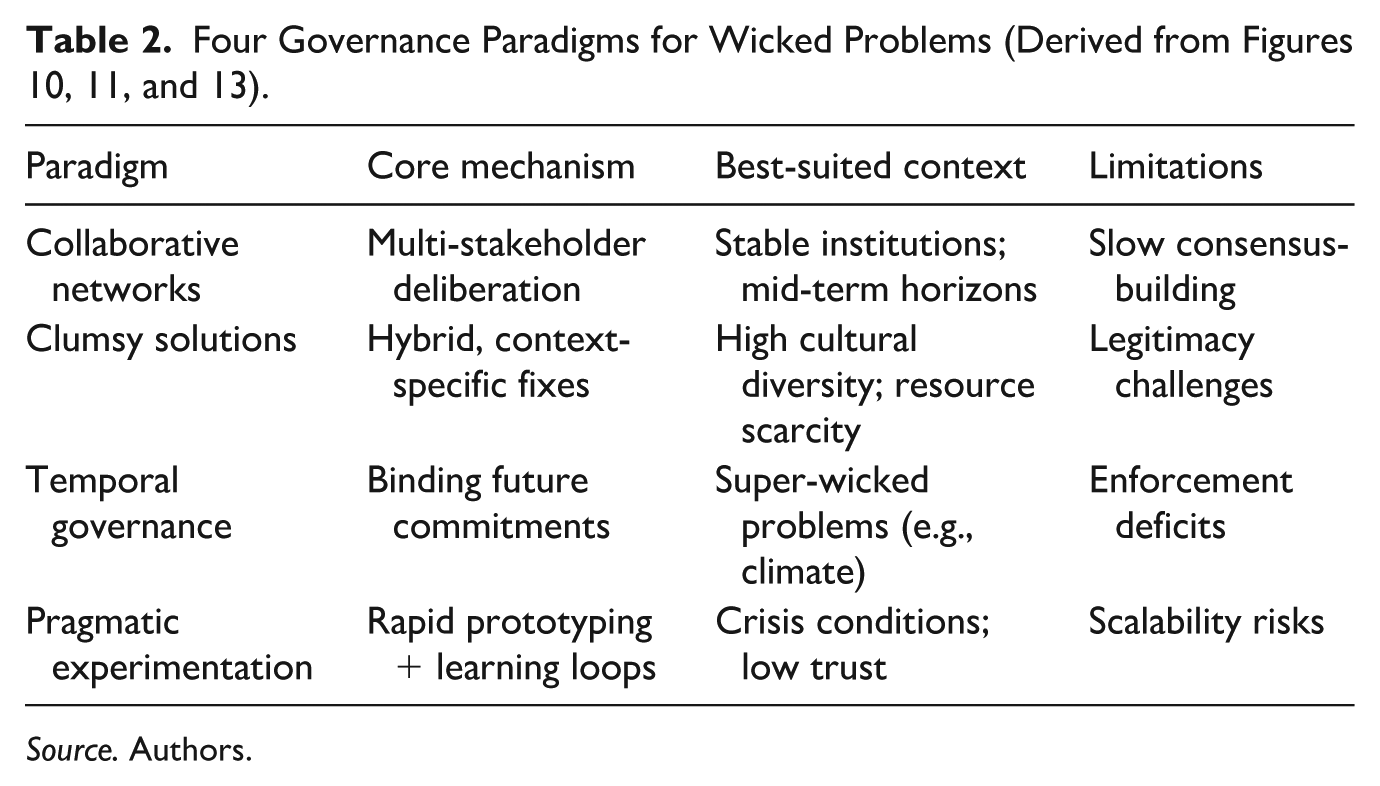
Source. Authors.
Also based on the findings, Matrix 1 elaborates on four governance paradigms, detailing the problem type and core mechanism for each quadrant.
A Contingency Framework for Wicked Problem Governance.
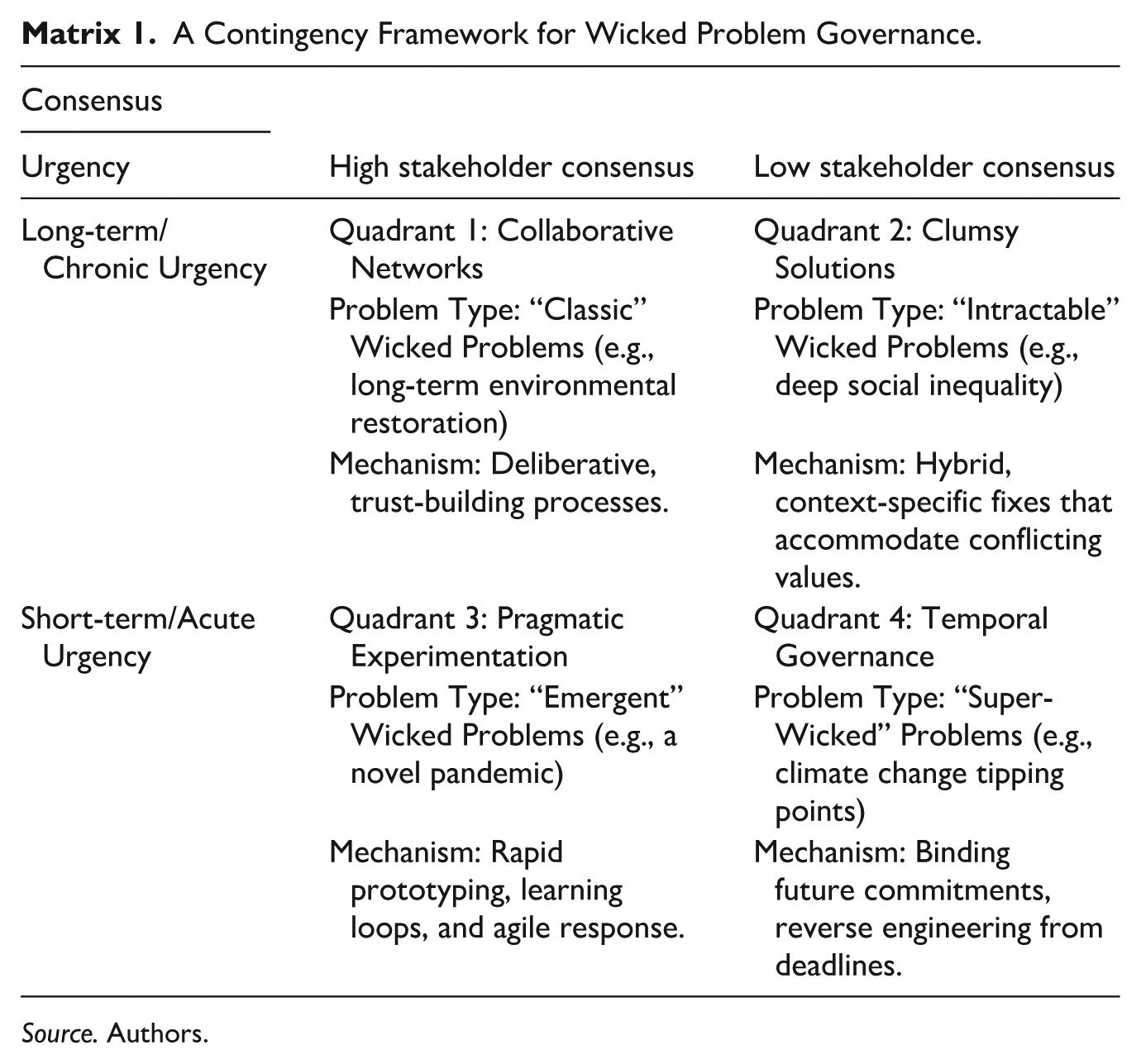
Source. Authors.
When a problem is slow-burning and stakeholders broadly share a vision, the most reliable path is Collaborative Networks. Think ecosystem restoration or multi-year urban renewal: there’s time to deliberate, to build trust, and to knit together public agencies, NGOs, businesses, and communities around shared objectives. The engine here is deliberation and resource pooling, structured dialogs that produce common plans, formal commitments, and joint monitoring. Success looks like sustained partnerships, institutional arrangements that outlast electoral cycles, and steady progress on long-term indicators. The downside is speed: deliberation can stall, especially if politics change, so good designs combine clear milestones, formal role definitions, diversified funding, and legal or institutional anchors that protect long-term commitments from short-term disruption.
If the problem is long-term, but the values at stake are deeply contested (for example, entrenched social inequality or competing land claims), clumsy or hybrid solutions may be more appropriate. In these contexts, striving for a single optimal solution is futile; instead, one might assemble a mosaic of partial, context-sensitive measures, so different constituencies can see their priorities reflected. The practical logic is pluralism: bundle targeted interventions that reinforce one another without pretending they resolve the underlying moral disagreements. Success is judged not by elegant efficiency but by resilience, political acceptability, and incremental improvement across multiple indicators. Risks include policy incoherence or superficial fixes that leave injustices unaddressed. Such risks might be mitigated by mapping red lines, designing reinforcing bundles of measures, and scheduling regular reviews to reconcile tensions.
When an immediate threat appears and actors mostly agree on what needs to be done (e.g., a sudden disease surge, an urgent infrastructure failure), pragmatic experimentation is the right stance. Here the priority is action: rapid prototyping, small safe-to-fail pilots, rapid feedback loops, and fast scaling of what works. Consensus speeds decisions; experimentation reduces the risk of committing at scale to untested responses. The returns are quick containment, evidence-led adaptation, and the capacity to pivot as new data arrive. Yet haste can amplify blind spots: equity concerns, scalability challenges, and the temptation to cut corners. Good practice is to keep pilots transparent, build equity checkpoints into every experiment, preserve learning records, and plan the path to scale before pilots outgrow their contexts.
Finally, when urgency is acute and consensus is low—the hardest combination—temporal governance offers a pragmatic way to break gridlock. Super-wicked problems like climate change often suffer from fragmented authority and incentives that reward delay. Temporal governance works by reverse-engineering from a non-negotiable future deadline: legally or politically binding targets and staged commitments constrain short-term choices and create credible pathways toward a hard end date. The approach can generate policy cascades and near-term action despite current disagreement, but it depends on enforcement and political buy-in. Appropriate design likely involves pairing binding targets with near-term accountability checkpoints, independent review mechanisms, automatic triggers for corrective action, and carefully calibrated flexibility so commitments remain credible without being brittle.
Conclusion
Fifty-two years after Rittel and Webber (1973) first illuminated the perplexing nature of “wicked problems,” this bibliometric analysis reveals a field that has matured significantly while remaining dynamically responsive to an increasingly turbulent world. Our journey through the DNA of wicked problems research confirms their enduring status as defining challenges of our era—climate change, pandemics, social inequity, and environmental degradation—characterized by irreducible complexity, contested values, and fragmented authority (B. W. Head, 2019; McConnell, 2017). The scholarly trajectory is unmistakable: from foundational debates on problem typology to sophisticated explorations of governance architectures, the field has evolved from niche concern to interdisciplinary imperative. Accordingly, three pivotal insights emerge from our mapping of the intellectual landscape:
Although Rittel and Webber’s core tenets remain foundational, the field has moved decisively beyond description. The rise of “super wicked problems” (Levin et al., 2012), demanding urgent, time-bound interventions against inertia, and “clumsy solutions” (Garcés-Velástegui, 2022; Ney & Verweij, 2015), embracing context-specific hybridity over elusive optimality, signal a shift toward actionable paradigms. Collaborative governance, though central, is now critically examined for its “double paradox” (Bannink et al., 2024) and complemented by polycentric (Ostrom, 2010) and pragmatic experimental approaches (Danaeefard et al., 2023; Savaget et al., 2024), particularly catalyzed by crises like COVID-19.
The field grapples with unresolved ontological and practical tensions. The very label “wicked problem,” while a powerful heuristic for reframing challenges (Alford & Head, 2017; B. W. Head, 2019), risks inducing policy paralysis if perceived as insurmountable (Peters, 2017; Peters & Tarpey, 2019). Skepticism about the concept’s uniqueness (Turnbull & Hoppe, 2019) challenges scholars to avoid rhetorical overextension. Our analysis visualizes this tension through co-citation clusters, revealing a potential bifurcation: one camp refining collaborative governance for complex design challenges, and another questioning its very feasibility for truly wicked contexts.
The surge in publications after 2014, driven by global accords (SDGs, Paris Agreement) and crises (COVID-19), underscores the field’s relevance. Bibliometric mapping, however, reveals critical imbalances. Research dominance by Anglophone and Western European nations (USA, UK, Netherlands, Australia) risks marginalizing context-specific wicked problems from the Global South (e.g., water scarcity in India, governance dilemmas in sub-Saharan Africa). Furthermore, while thematic clusters around governance, sustainability, and crisis management are robust, emerging areas like joined-up government, digital/AI tools, and temporal governance require deeper empirical grounding and integration.
In essence, the enduring lesson from 52 years of inquiry is not that wicked problems are unsolvable, but that they are mismanaged through paradigm misalignment and institutional inertia. The path forward lies not in seeking silver bullets, but in cultivating adaptive, reflexive, and inclusive governance ecosystems capable of navigating persistent uncertainty and generating contextually legitimate, albeit often “clumsy,” pathways forward. As the challenges of the 21st century grow ever more intertwined, the wicked problems paradigm remains an essential, if perpetually evolving, compass for finding our way. By embracing the inherent messiness and fostering continuous learning, scholars and practitioners can move beyond merely describing wickedness toward enabling wiser, more resilient societal responses to our most pressing challenges.
In closing, the wicked-problems paradigm has proven remarkably resilient and generative, spawning a rich tapestry of scholarship that bridges theory and practice. As the public policy community confronts ever more complex, interconnected challenges—from climate collapse to digital mis/disinformation, the call for innovative, inclusive, and adaptive governance has never been clearer. We hope that this retrospective synthesis not only honors the intellectual legacy of the past five decades but also galvanizes a new generation of researchers and practitioners to chart bold, creative pathways through the wicked terrains of the 21st century. This bibliometric study provides a comprehensive map of the wicked problems’ literature, charting its intellectual evolution and highlighting key trends and future pathways. By tracing the field’s development, we hope to inspire both scholars and policymakers to engage more deeply—and more creatively—with the wicked challenges that define our era. Only through sustained, interdisciplinary effort can we hope to transform the rhetoric of wickedness into meaningful, actionable strategies for a turbulent world.
Footnotes
Acknowledgements
The authors appreciate the editor and reviewers of this article, who helped to improve the quality of this article with their comments.

Funding
The authors received no financial support for the research, authorship, and/or publication of this article.
Declaration of Conflicting Interests
The authors declared no potential conflicts of interest with respect to the research, authorship, and/or publication of this article.