







Abstract
Female representation in government has long been advocated for promoting good governance, and its potential effect on corruption has attracted sustained scholarly attention. Yet theoretical reasoning and evidence remain fragmented and contested. This preregistered meta-analysis, synthesizing 588 effect sizes from 57 quantitative studies, confirms a statistically significant negative association between female representation and corruption. It further shows that this effect is larger in studies using subjective corruption measures, descriptive representation, only one type of female representation, and excluding country-fixed effects. The results advance our understanding of how and when female representation influences corruption and offer insights for anti-corruption policies.
Introduction
Female representation in government is widely regarded not only as a matter of justice but also as a mechanism for promoting good governance and inclusive development. Empirical studies have linked greater female representation to a range of favorable results, such as enhanced government legitimacy, increased citizens’ trust, and greater civic engagement (Baniamin & Jamil, 2023; Meier & Funk, 2017; Riccucci et al., 2014; Riccucci et al., 2016; Van Ryzin et al., 2017). In light of the growing practical need and scholarly interest in addressing corruption (Bozeman et al., 2018; Lee et al., 2023; Meyer-Sahling et al., 2018), a substantial body of interdisciplinary research has converged on a central question: whether increasing female representation in political bodies, such as parliaments and cabinets, can help reduce corruption.
Since the seminal works of Dollar et al. (2001) and Swamy et al. (2001), more than two decades of research have produced conflicting answers. Although many studies report a negative relationship between female representation and corruption, others find no substantial association between the two (Debski et al., 2018; Sung, 2003, 2012), and some even suggest that greater female representation may, under certain conditions, correlate with higher corruption (Bjarnegård et al., 2018; Guajardo & Schwindt-Bayer, 2024). This lack of consensus leaves several questions unresolved, including whether, to what extent, and under which conditions female representation can help reduce corruption.
Two major gaps help explain these inconsistent findings. First, the ways in which national contexts may shape variation in the relationship between female representation and corruption remain underdeveloped in theory and underexamined empirically. Although institutional mechanisms such as gender quotas have diffused globally (Bush & Zetterberg, 2021), the association between female representation and corruption still varies widely across political settings. For example, in systems with strong electoral accountability, female representation may strengthen integrity (Esarey & Schwindt-Bayer, 2018). By contrast, where female representation serves merely as “window dressing” or emerges from corrupt networks, greater female representation may fail to reduce corruption (Bjarnegård et al., 2018; Valdini, 2019). Without considering the role of national context, we cannot fully understand the relationship between female representation and corruption. Although some cross-national comparative studies have identified institutional and cultural conditions as potential moderators (Debski et al., 2018; DiRienzo, 2019; Esarey & Chirillo, 2013), further work is needed to develop a more contextualized understanding of when female representation may or may not contribute to lower corruption.
Second, conceptual and methodological choices are a major source of heterogeneous findings. Female representation has been conceptualized and measured in different ways, most notably as descriptive representation (e.g., the share of women in parliament) versus formal representation (e.g., gender quotas) (Cho & Kim, 2025; Dollar et al., 2001; Watson & Moreland, 2014). Similarly, corruption has been measured using both subjective perceptions and objective indicators (Bauhr et al., 2019; Dong & Torgler, 2013; Jha & Sarangi, 2018). These distinctions matter because the underlying relationship may appear differently depending on the conceptual lens applied. Moreover, methodological choices, such as whether to include country fixed effects (FE) or use instrumental variables, may meaningfully shape the estimates. Without a clearer understanding of these dynamics, it remains difficult to establish the conditions under which the societal benefits of female representation may be realized (Dollar et al., 2001).
What is the overall effect of female representation on corruption? Under which conditions does this effect vary? This study addresses these questions through a meta-analysis of more than 20 years of published and unpublished scientific literature. It shows that the overall effect of female representation on corruption is negative and significant, based on a synthesis of 588 effect sizes from 57 quantitative studies. Furthermore, our analysis identifies key factors that moderate this relationship. The effect is stronger in studies that (a) rely on subjective perceptions rather than objective measures of corruption, (b) conceptualize representation descriptively (e.g., the share of women in parliament) rather than formally (e.g., gender quotas), and (c) use model specifications that exclude country FE or incorporate only a single measure of female representation.
This study contributes to the literature on theoretical, empirical, and practical grounds. Theoretically, it synthesizes quantitative studies directly related to female representation and corruption and identifies how contextual, conceptual, and methodological factors moderate this relationship. It therefore contributes to a more nuanced and contextually grounded understanding of how female representation shapes corruption. Empirically, although the role of women in public administration is now widely discussed (Schachter, 2017), the possible effects of female representation in bureaucracy on corruption remain less examined in public administration, and the findings remain contested. This meta-analysis bridges disciplinary divides by bringing key insights from political science and economics to a public administration audience. It also informs broader debates on the effect of female representation on corruption by providing the first comprehensive overview of the quantitative evidence from the past two decades. This approach improves the reliability of the conclusions by drawing on a broader body of evidence and reducing the bias of individual studies. From a practical perspective, the findings offer useful insights for anti-corruption strategies and institutional reform. Rather than treating female representation as a uniformly effective remedy, the results highlight the contextual and institutional conditions under which female representation is more likely to contribute to corruption control. In doing so, the study outlines a research agenda for advancing the field and informs governance reform, especially in developing and transitional contexts, where efforts to strengthen accountability and promote inclusive representation often proceed in parallel.
Theory and Hypotheses
Theoretical Foundations for the Relationship Between Female Representation and Corruption
Corruption is commonly defined as the “misuse of public office for private gain” (Treisman, 2007). Public administration scholars have long reflected on the role of women in prioritizing the public good over private profit (Stivers, 1995). However, the idea that higher female representation is associated with lower levels of corruption began to attract empirical attention only after the seminal studies by Dollar et al. (2001) and Swamy et al. (2001). Over the past two decades, scholars have expanded this line of inquiry and proposed several theories to explain this association (summarized in Table 1).
Summary of Theories on Female Representation and Corruption.
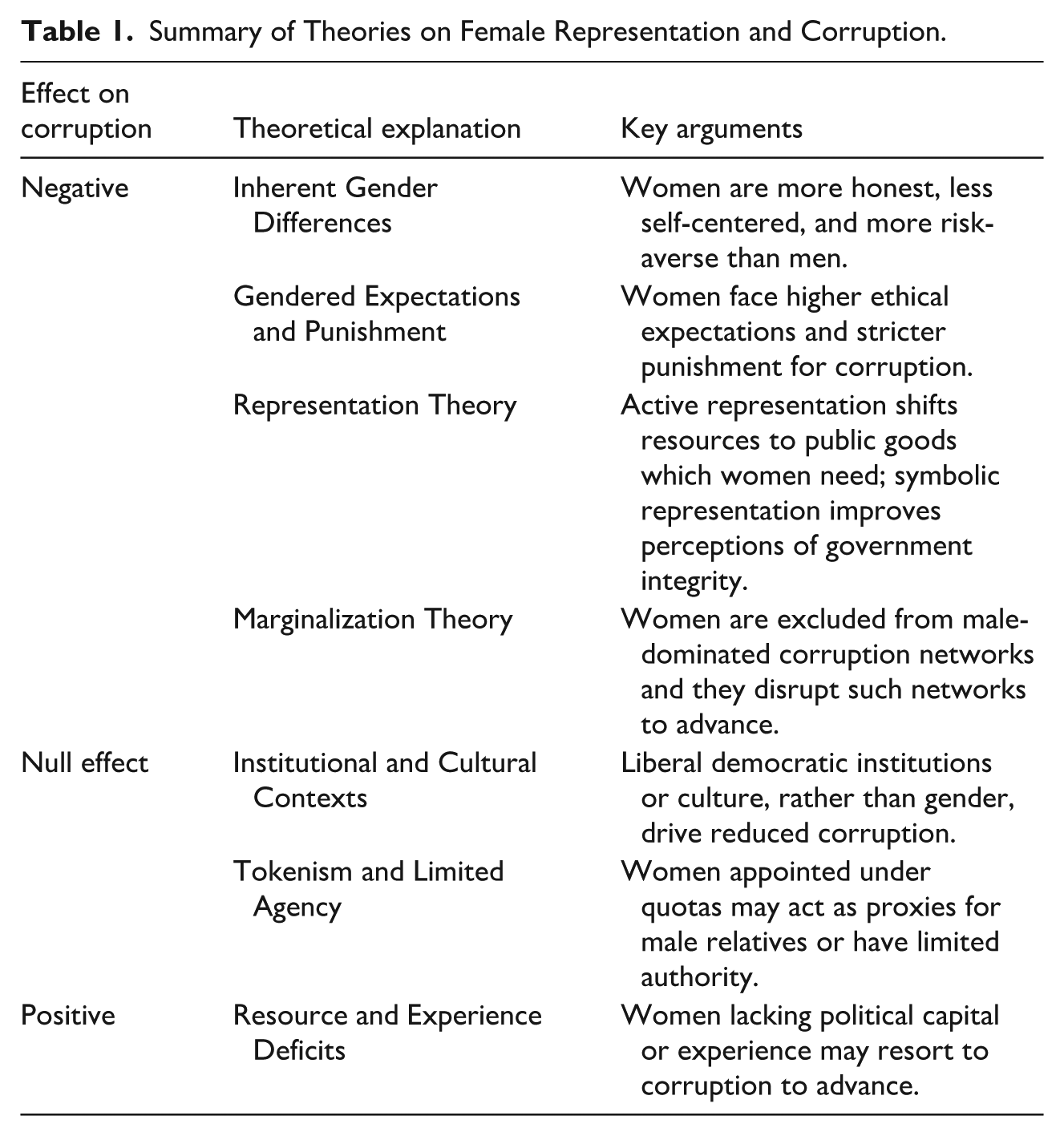
Four theories have been proposed to explain the negative relationship between female representation and corruption. First, early studies emphasize inherent gender differences to explain women’s role in reducing corruption (Dollar et al., 2001). A series of experimental studies supports the argument that women are more honest, less self-centered (Eckel & Grossman, 1998; Glover et al., 1997), and more risk-averse than men (Booth & Nolen, 2012; Holt & Laury, 2002).
Second, gendered social expectations and punishment provide another explanation for women’s normative behavior. Women are often perceived as more honest and are held to higher standards in public life than men (Armstrong et al., 2022; Barnes & Beaulieu, 2019). They may also face harsher punishment from voters for engaging in corruption, which may discourage their involvement in such behavior (Bauhr & Charron, 2021; Esarey & Schwindt-Bayer, 2018).
Third, representation theory proposes two possible mechanisms: active and symbolic representation. Active representation refers to officeholders seeking to advance the interests of clients with similar characteristics when making policy-relevant decisions (Bradbury & Kellough, 2011; Pyo, 2026; Song, 2018). Female politicians may prioritize social welfare and public service delivery to meet the needs of women (Bratton & Ray, 2002; Chattopadhyay & Duflo, 2004). This may help combat corruption because resources are directed to public goods rather than private gain, and citizens are less likely to resort to bribery to access public services (Bauhr et al., 2019). By contrast, symbolic representation refers to the effect of passive representation on citizens’ perceptions and actions even in the absence of substantial policy change (Wang, 2025; Zhang & Wang, 2025). The mere presence of women in government has been shown to shape citizens’ perceptions of government legitimacy, fairness, and corruption (Baniamin & Jamil, 2023; Riccucci et al., 2014; Watson & Moreland, 2014).
Fourth, some scholars argue that women politicians can disrupt the male-dominated corruption networks from which they have historically been excluded, thereby helping reduce corruption (Bauhr et al., 2019; Goetz, 2007). Stockemer (2011) and Bjarnegård (2013) show that corruption networks are homosocial networks built on tradition and trust and are often inaccessible to women. Women’s entry into traditionally male-dominated political spheres may disrupt collusive arrangements among men, thereby helping reduce corruption (Cho & Kim, 2025). Moreover, male-dominated corruption networks may hinder women’s political advancement (Stockemer, 2011; Stockemer & Sundström, 2019), prompting women to mobilize against these networks to secure promotion (Bauhr et al., 2019).
By contrast, another stream of literature questions this relationship and argues that female representation has no effect on corruption. Some scholars contend that the observed association is spurious and driven by country-specific factors, such as liberal democratic institutions or cultural conditions, which may simultaneously increase female representation and reduce corruption (Debski et al., 2018; Sung, 2003). Another line of research argues that greater female representation promoted through gender quotas may not affect corruption. Women elected through quotas may become delegates for their fathers or husbands or serve as “window dressing” for parties seeking public support, which limits the effect they can have on corruption (Bird, 2003; Bjarnegård et al., 2018).
Finally, a small number of studies suggest that female representation may increase corruption under certain conditions. Guajardo and Schwindt-Bayer (2024) argue that female politicians, lacking the resources and political capital available to men, may resort to corruption to advance their careers. Using the national policy of randomly assigned political quotas for women in India, Afridi et al. (2017) find that villages with reserved female headships are more likely to experience inefficiency and corruption at an early stage because female leaders lack political and administrative experience. Similarly, Goel and Nelson (2023) find that countries with quotas for women’s political participation experience higher corruption because gender quotas may create opportunities for nepotism and graft in the selection process.
Given the discussion above, and consistent with the broader literature, our first hypothesis proposes an overall negative effect of female representation on corruption:
Moderating Effects
Mixed empirical findings and competing theoretical explanations in this field have prompted scholars to examine the conditions under which greater female representation is associated with lower levels of corruption. This study uses meta-analysis to synthesize evidence from existing quantitative studies and identify moderators of this association. Variation in the findings may be partly explained by factors such as corruption measures, measures of female representation, institutional and cultural contexts, and research design. These factors inform our hypotheses.
Multiple Measures of Corruption
Corruption measures can be categorized into two types: subjective and objective (Heath et al., 2016). Subjective corruption measures capture corruption perceptions through indices derived from experts or public surveys (Esarey & Schwindt-Bayer, 2018; Kubbe, 2018). Cross-national research typically relies on corruption perceptions as a measure of corruption levels. Because perceptions may diverge from actual corruption cases and citizens’ experiences (Abramo, 2008; Donchev & Ujhelyi, 2014), several studies have begun to use objective measures of corruption, such as citizens’ reported experiences of corruption (Jha & Sarangi, 2018), conviction statistics (Dong & Torgler, 2013), audit data (Guajardo & Schwindt-Bayer, 2024), and corruption risks in public procurement (Cho & Kim, 2025).
Distinguishing subjective corruption perceptions from objective corruption measures is essential, because female representation may affect corruption perceptions and actual corruption to different degrees and through different mechanisms. For example, increased female representation in politics symbolizes governments’ commitment to change and embodies values of justice and inclusivity, which can directly alter public perceptions of government corruption, even without tangible policy actions (Riccucci et al., 2014; Riccucci et al., 2016; Watson & Moreland, 2014). However, actual corruption levels may not be reduced in this case. In contrast, female politicians may also take concrete policy actions, such as directing more resources to public services, which can reduce both corruption perceptions and actual corruption. Informed by the literature, we hypothesize that:
Types of Female Representation
Pitkin’s (1967) seminal work identifies four dimensions of representation: formal, descriptive, substantive, and symbolic representation. Among these, scholars have primarily focused on descriptive representation—the compositional similarity between officeholders and their constituents—to examine the relationship between female representation and corruption. The most common measure of descriptive representation is the proportion of women in parliament (Esarey & Schwindt-Bayer, 2018). Other studies have focused on female representation in executive roles, such as women mayors, the share of women in cabinets, ministerial positions, and lower government levels (Guajardo & Schwindt-Bayer, 2024; Stensöta et al., 2015; Stockemer & Sundström, 2019).
Formal representation, which refers to the institutional rules and procedures by which representatives are chosen, has also attracted scholarly attention, as many countries have adopted gender quotas (Franceschet et al., 2012). Gender quotas are institutional mechanisms that seek to increase the female representation in political or bureaucratic positions by reserving a specific percentage or number of seats for female candidates. Although the adoption of gender quotas is correlated with increases in descriptive representation for women (Schwindt-Bayer & Mishler, 2005), studies examining formal and descriptive female representation have yielded mixed findings regarding the relationship between female representation and corruption. For example, Watson and Moreland (2014) find that female descriptive representation is correlated with lower corruption perceptions, while gender quotas are associated with higher corruption perceptions.
This divergence may reflect the fact that the adoption of gender quotas has not fundamentally changed gender inequality or substantially strengthened women’s political influence. During elections, the implementation of gender quotas creates a significant demand for women politicians, which may exceed the number of potentially qualified candidates (Dahlerup & Freidenvall, 2005). This mismatch can lead to the perception that “quota women” are unqualified, undermining their potential to combat corruption (Franceschet & Piscopo, 2008). The limited pool of female candidates may also leave room for powerful parties to select women from their collusive networks, reinforcing existing patterns and diminishing both the symbolic and substantive effects of female politicians (Bjarnegård et al., 2018). Once in office, women elected through quotas often face governance challenges that may exacerbate corruption risks. As Afridi et al. (2017) demonstrate, women lacking administrative experience may increase inefficiency and irregularities in public program delivery. Moreover, women nominated under quotas often have limited political capital, which may lead them to engage in corruption as a means of furthering their careers beyond a single term (Guajardo & Schwindt-Bayer, 2024). Based on the discussion above, we therefore propose the following hypothesis:
Institutional and Cultural Contexts
Previous research has revealed substantial heterogeneity in effect sizes across nations, suggesting that the institutional and cultural characteristics of a country may explain the varied effects of female representation on corruption (Debski et al., 2018; Esarey & Chirillo, 2013). To further understand the female representation-corruption relationship, we should take these national contexts into consideration.
The first is institutional context. Sung (2003) claims that the relationship between female representation and corruption is mainly caused by liberal democratic institutions, which facilitate female entry into political positions and restrain the chance for pervasive corruption. Further studies show that, compared to authoritarian regimes, democratic institutions, especially electoral accountability, strengthen the relationship between female representation and corruption (Esarey & Chirillo, 2013; Esarey & Schwindt-Bayer, 2018). The reason is that corruption is less tolerated in democratic governments and easier to detect in the presence of electoral competition and press freedom, making risk-averse women more reluctant to participate in corrupt practices. Therefore, the conclusion drawn about the relationship between female representation and corruption might be significantly affected by whether primary studies control for democratic institutions.
Religion, a common proxy for cultural context, also merits consideration. Hazarika (2018) argues that failing to control for religious variables may have contributed to the overestimation of the effect of female representation on corruption in previous studies. Religion may shape perceptions of corruption and gender norms, which can moderate the relationship between female representation and corruption. For example, Protestantism promotes an egalitarian and individualistic culture in which corruption is less acceptable and more easily punished than it is in Catholicism, Eastern Orthodoxy, and Islam, which are linked to hierarchical and familistic traditions (Dreher et al., 2007; La Porta et al., 1997). Given that women may be more strongly constrained by cultural norms, they are less likely to engage in corruption in cultures with harsher attitudes toward corruption (DiRienzo, 2019). Hence, the effect of female representation on corruption can vary depending on whether religious variables are considered in primary studies.
Data and Methods
To evaluate the overall effect of female representation on corruption and identify the moderators underlying this relationship, this study employed meta-analysis, a quantitative systematic review method that combines and generalizes findings from a large body of existing studies (Glass, 1976; Ringquist, 2013). It enables the detection of potential moderators embedded in research designs or settings that affect the magnitude and variation of study findings. More than 40 years after its introduction, meta-analysis is now widely accepted as a research synthesis tool across disciplines, and the number of published meta-analyses has risen rapidly (Gurevitch et al., 2018). In this study, we followed the Preferred Reporting Items for Systematic Reviews and Meta-Analyses (PRISMA) guidelines, a recommended protocol for systematic reviews (Moher et al., 2015). We preregistered our research protocol before conducting the analysis to reduce confirmation bias and improve the reproducibility of the meta-analysis (Lakens et al., 2016). 1
Literature Search and Inclusion Criteria
The meta-analysis began with a systematic search for relevant studies. Following previous practice (Lee & Hung, 2022; Wang & Guan, 2023), we searched five databases: EBSCOhost and Web of Science for published journal articles, ProQuest for PhD dissertations and master’s theses, and NBER and SSRN for working papers. We did not include books because they may duplicate journal content and are difficult to retrieve systematically. The search string used in this analysis was “corruption AND (women OR woman OR female OR gender OR sex OR feminist).” We searched the title, abstract, keywords, and full text in Web of Science, NBER, and SSRN. For EBSCOhost and ProQuest, we searched the title, subject, and abstract. Although restricting the search to English-language publications may introduce coverage bias, this decision was made to ensure search replicability and consistency, as major academic databases provide more comprehensive indexing of English-language journals. Moreover, scholars from non-English-speaking countries often disseminate their findings through English-language publications to reach a broader international audience, suggesting that the most influential work in this field is likely to be captured by our search strategy. The search identified a total of 5,197 articles as of September 20, 2024.
We then conducted two stages of screening. In the first stage, two coders reviewed the titles and abstracts of the collected articles and identified 301 potentially relevant studies. In the second stage, two coders examined the full texts of these 301 candidate articles to determine whether they met the inclusion criteria. The inclusion criteria for eligible studies were as follows. First, we included only studies that examined how national and subnational female representation affected corruption levels, excluding experimental studies based on individual-level data. We selected only studies that examined formal and descriptive female representation in public office. Studies on women’s economic representation were excluded. We also excluded the only study examining the effect of women’s substantive representation on corruption due to the limited sample.
Second, studies that measured subjective corruption perceptions and objective corruption (e.g., corruption experiences, cases, and risks) were included. We excluded studies that used tolerance of corruption and acceptance of corruption as dependent variables because these variables measure attitudes toward corruption rather than corruption itself. Third, we screened the remaining articles to ensure that they reported sufficient statistical information, including correlation coefficients, sample sizes, standard errors, t values, or other statistics needed to calculate effect sizes. Because meta-analysis is a quantitative synthesis method that requires comparable effect sizes derived from statistical analyses, we restricted the sample to quantitative empirical studies reporting multivariate analyses or at least zero-order correlations between female representation and corruption. Qualitative studies, review articles, and studies reporting only descriptive statistics, although valuable for understanding contextual and causal mechanisms, were excluded because they do not provide the standardized statistical information required to compute effect sizes. In both screening stages, the two coders worked independently. In cases of disagreement, they consulted a third researcher and reached consensus through discussion. Intercoder reliability was 92.10% (Cohen’s kappa = .78) in the first stage and 93.92% (Cohen’s kappa = .81) in the second stage.
We also used a complementary search strategy through Google Scholar to cross-check our findings by identifying earlier studies cited in the studies already retrieved. This approach added seven studies. The final sample for the meta-analysis therefore consisted of 57 studies and 588 effect sizes, including 49 cross-national studies and 8 single-country studies at the subnational level. These 57 studies comprised 44 published articles and 13 unpublished studies. A summary of these studies is provided in Supplemental Appendix 1, and the complete list appears in Supplemental Appendix 2. Figure 1 presents the procedures for the literature search and study inclusion.
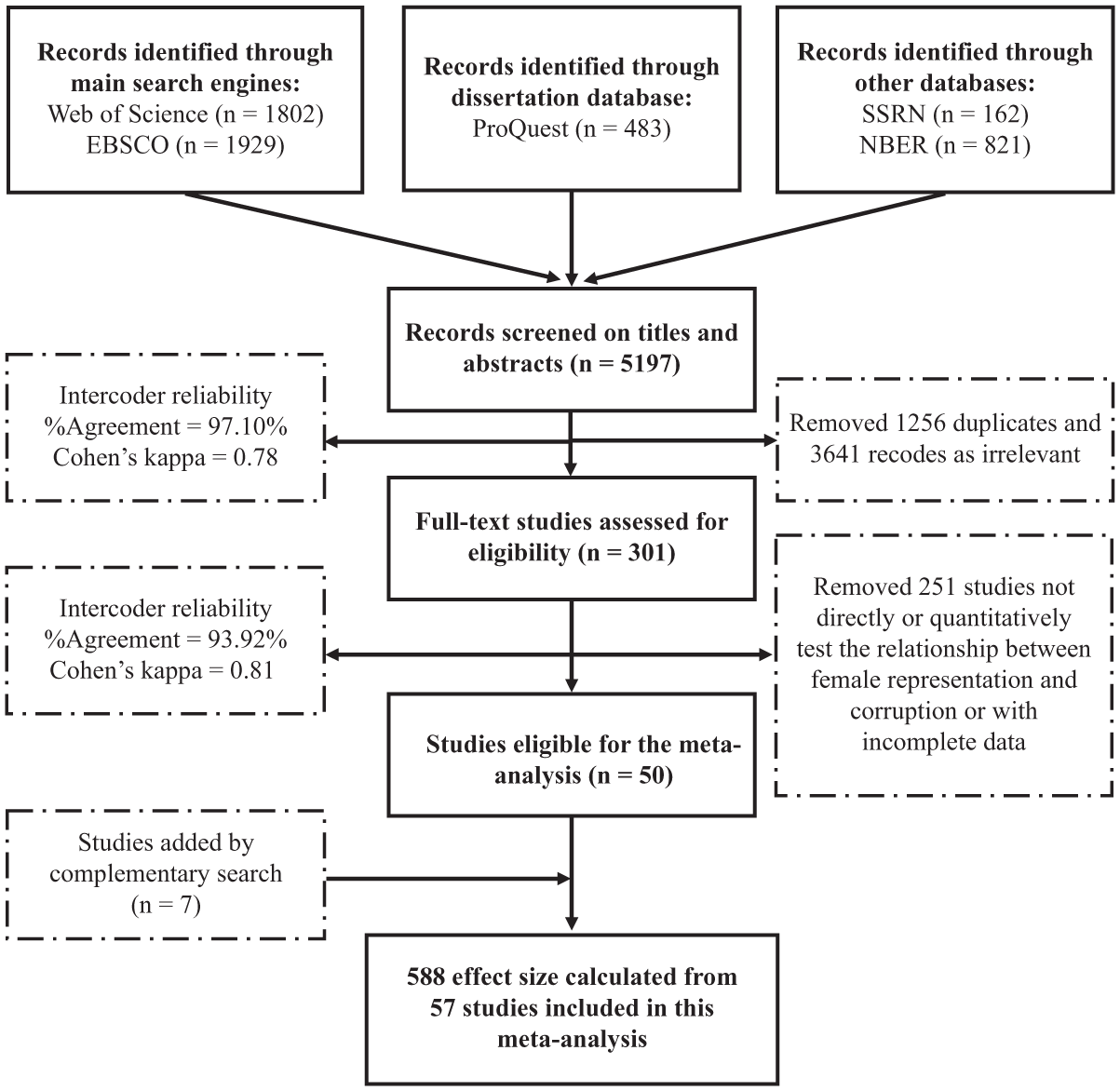
PRISMA flow diagram.
Coding Procedure
We then extracted and coded effect sizes and moderator information from the eligible studies. The effect size served as the dependent variable in this meta-analysis and captured the relationship between female representation and corruption. Following Ringquist (2013), we used an r-based effect size. When the coefficient r was not reported in the primary studies, we calculated it from the t or z statistic using the following equations: 2


Some studies reported multiple effect sizes. To preserve within-study variation, we converted all of them into r. Although r is easy to calculate and comparable across studies, it has several limitations. It is subject to a small downward bias and is bounded between −1 and 1. In addition, the variance of r depends strongly on its value (Ringquist, 2013). To address these limitations, we transformed r to Fisher’s Z, which was calculated as follows:

with variance:

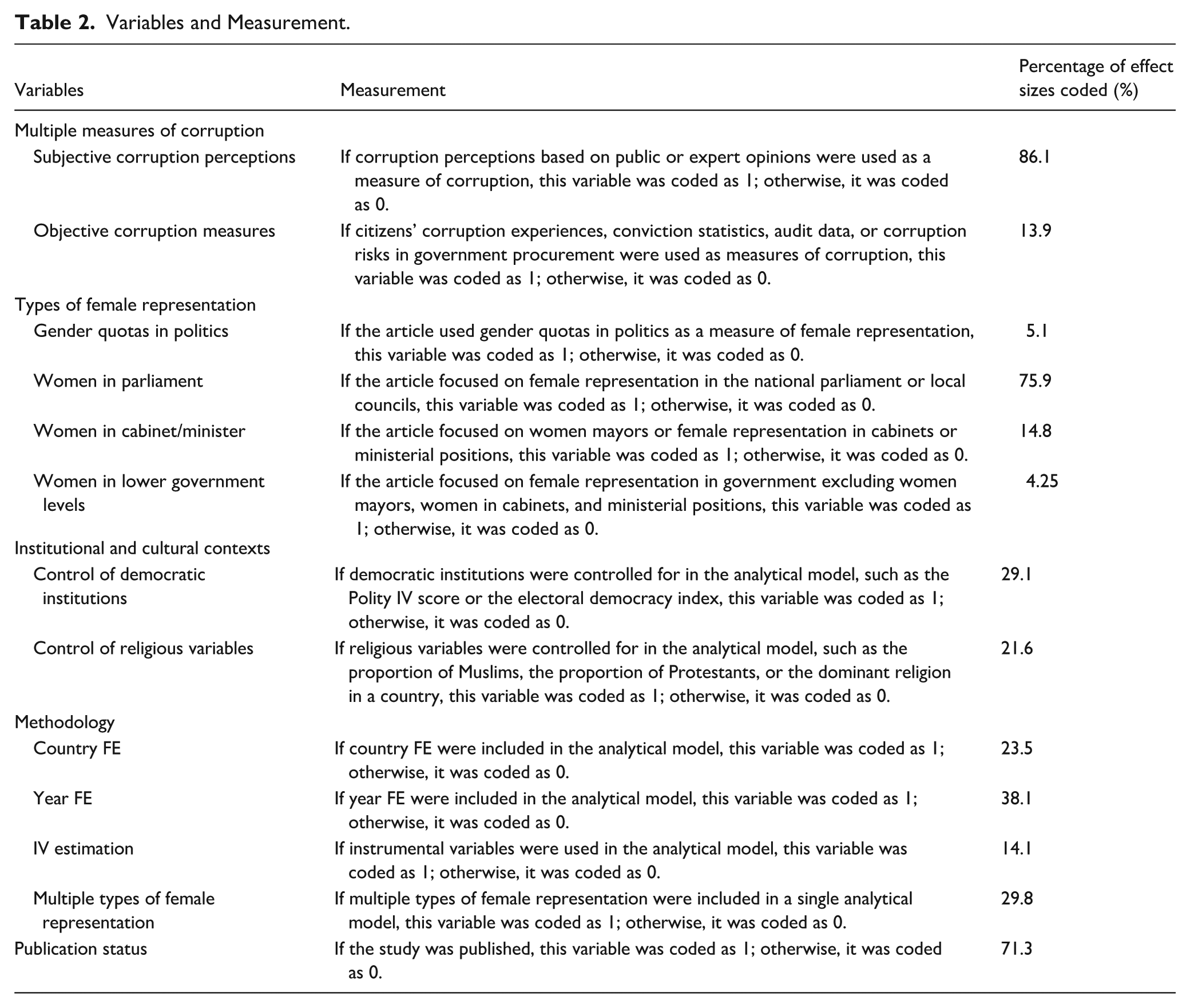
We also extracted and coded moderator information from the primary studies to examine its role in the relationship between female representation and corruption. Specifically, we generated 13 dichotomous moderators across five dimensions. The detailed measurement and coding of these moderators are presented in Table 2. Descriptive statistics for the effect sizes and moderators are reported in Supplemental Appendix 3.
Variables and Measurement.
Analysis Strategy
A random-effects model was used to pool effect sizes, based on the assumption that the effect of female representation on corruption varies across contexts, as supported by the effect-size heterogeneity tests (Higgins & Thompson, 2002). The Q test yielded a statistic of 9,270.29 with a p value below .01, indicating substantial heterogeneity among the effect sizes. Moreover, an I2 value of 93.7% further confirmed the high level of heterogeneity across studies. These results justified the use of a random-effects model to pool effect sizes.
Meta-regression analyses were conducted to examine whether moderators could explain variation in the relationship between female representation and corruption. Notably, most studies reported more than one effect size because authors often used different model specifications and subsamples to test the robustness of their results. In addition, to examine the effects of different types of female representation, some studies included multiple forms of female representation in a single analytical model [e.g., Swamy et al. (2001)]. These features create empirical challenges, including effect-size heteroscedasticity and nonindependent observations. To address these issues, we used clustered robust variance estimation (CRVE) and generalized estimating equations (GEE) to specify the meta-regression model (Ringquist, 2013). The former addresses heteroscedasticity by using clustered robust standard errors and weighting each effect size by the inverse of the sample size. The latter reduces the influence of multiple effect sizes from the same study to account for observational nonindependence.
Results
Population Effect Size Analysis
Figure 2 shows the distribution of effect sizes at the study level and the weighted population effect size. Study-level effect sizes ranged from −0.494 to 0.044, indicating substantial variation. The population effect size was negative and significant (−0.15, p < .01), falling between a small and a medium effect. 3 This finding indicates that female representation can reduce corruption to a modest but observable extent. Thus, our results support H1 and indicate that greater female representation is associated with lower levels of corruption.
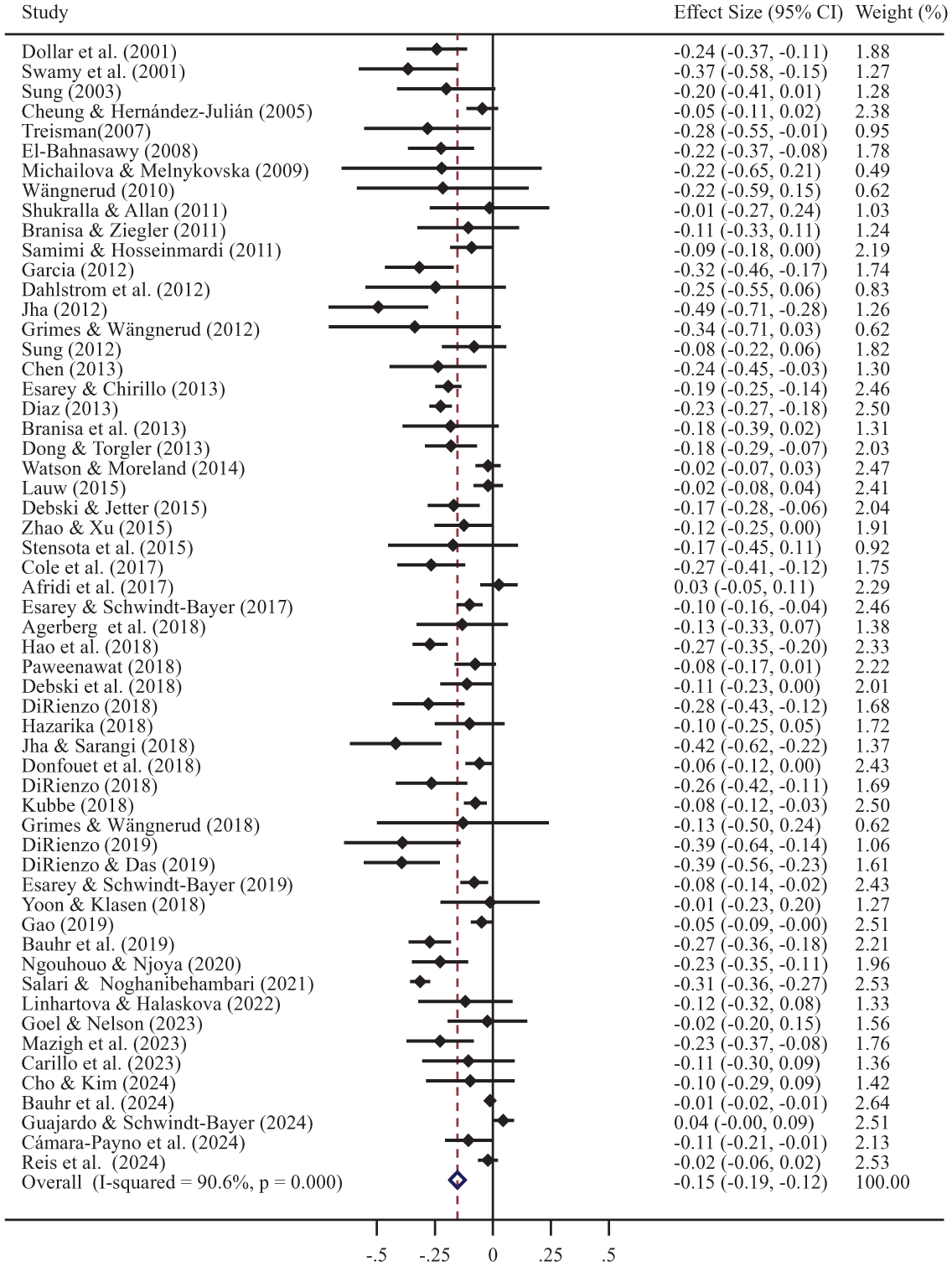
Distribution of study-level effect sizes across existing studies.
Meta-Regression Analyses
We conducted meta-regression analyses to evaluate the effects of the moderators proposed in the hypotheses. The regression model is specified as

where
We controlled for four methodological moderators to address potential heterogeneity in effect sizes arising from research designs and analytical models. We included country FE and year FE as control variables because some primary studies added them to their specifications to account for country-specific characteristics and temporal trends, respectively (Debski et al., 2018; Esarey & Chirillo, 2013), which may yield different effect sizes for the relationship between female representation and corruption. Moreover, given the potential for reverse causality in this relationship, some scholars have used IV estimation to obtain more accurate estimates (Esarey & Schwindt-Bayer, 2019; Hazarika, 2018), which may also affect the magnitude of the effect sizes. Thus, IV estimation was included as another control variable. Because different measures of female representation may be strongly correlated, including multiple types of female representation in one specification may weaken the effect size for each type. We therefore included multiple types of female representation as a control variable. We also included publication status to test for publication bias.
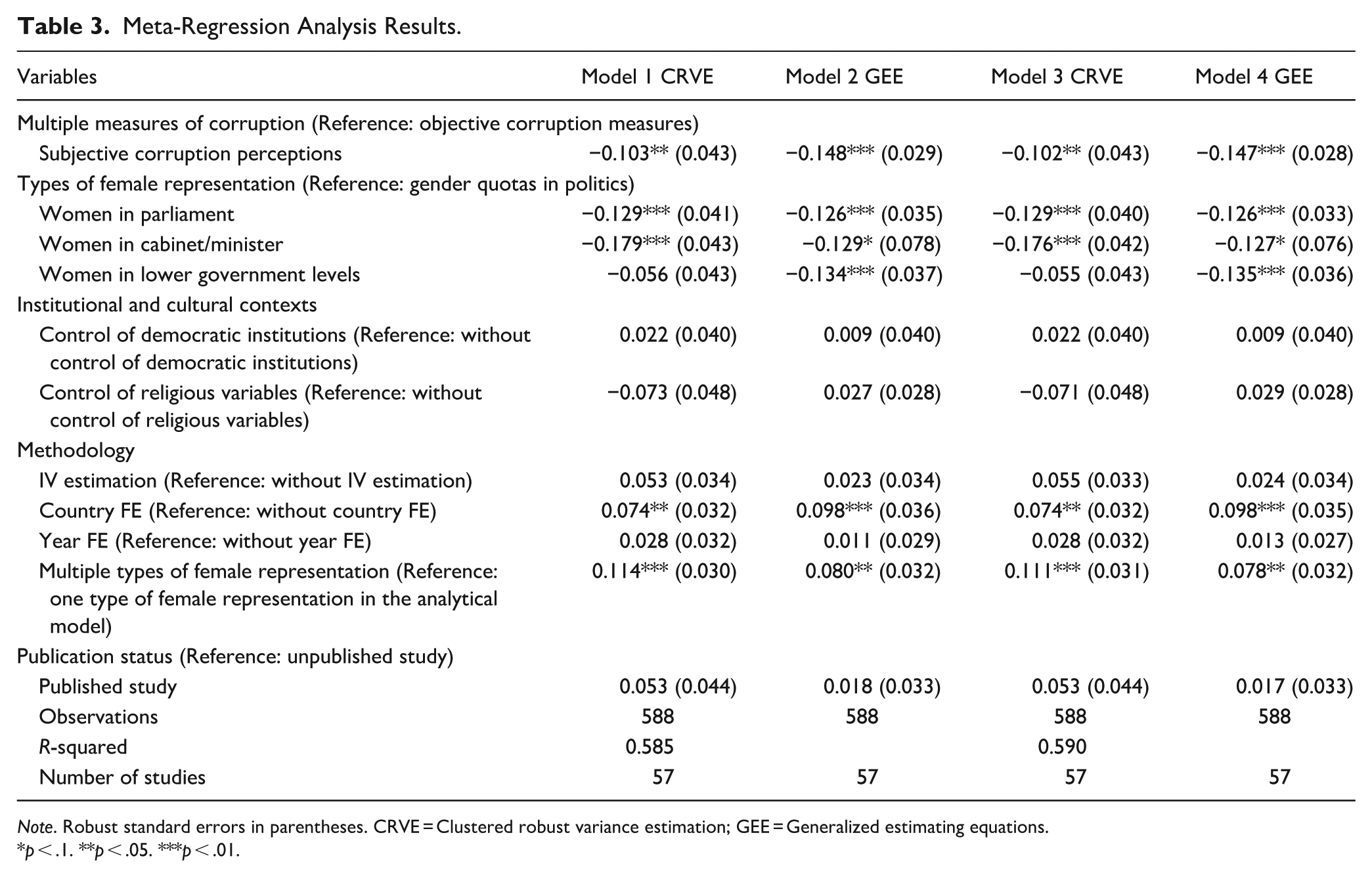
Table 3 presents the results of the random-effects meta-regressions using the CRVE and GEE models. Models 1 and 2 present the results from the full sample.
Meta-Regression Analysis Results.
Note. Robust standard errors in parentheses. CRVE = Clustered robust variance estimation; GEE = Generalized estimating equations.
p < .1. **p < .05. ***p < .01.
Models 3 and 4 show the results from the winsorized sample to limit the disproportionate effects of outliers. 4 Given the negative relationship between female representation and corruption, a negative coefficient indicates that, relative to the reference group, the moderator strengthens the relationship.
Table 3 shows that the relationship between female representation and corruption is stronger when studies focus on subjective perceptions rather than objective corruption measures in both the CRVE (p < .05) and GEE (p < .01) models. This supports H2 and suggests that corruption perceptions are more readily affected by female representation.
Effect sizes in studies using descriptive female representation are stronger than those in studies using formal representation measured by gender quotas. Across different samples and models, the coefficients for women in parliament (p < .01) and women in cabinet/minister (CRVE: p < .01; GEE: p < .1) are negative and significant. The coefficients for women in lower government levels are significantly negative in the CRVE models (p < .01). Therefore, H3 is supported. When controlling for democratic institutions and for religion, the coefficients are positive but statistically insignificant (p > .1). These findings suggest that democratic institutions and religious contexts do not adequately account for the divergent results observed across the primary studies. Thus, we find no support for H4 or H5.
In methodological terms, effect sizes in studies with country FE are smaller than those in studies without country FE (CRVE: p < .05; GEE: p < .01). This finding indicates that the association appears to be partly driven by unobserved country-specific factors. However, effect sizes do not differ significantly when year FE is included (p > .1). The coefficients for IV estimation are positive but insignificant (p > .1). Including multiple types of female representation in one model has a significant positive effect on the relationship (CRVE: p < .01; GEE: p < .05). This pattern is understandable given the strong correlation among different types of female representation.
Publication Bias
Publication bias occurs when studies with statistically significant results are more likely to be published than studies with insignificant results (Gunby et al., 2017). It can also arise when scholars abandon projects with insignificant findings or continue adjusting variables until statistically significant results are obtained.
Following the recommendations of Ringquist (2013), we conducted a thorough literature search to include as much unpublished literature as possible, and more than 20% of the included studies are unpublished. To assess whether publication bias exists, we conducted visual and statistical tests. As shown in Figure 3, the funnel plot exhibits an asymmetrical pattern, suggesting an overrepresentation of negative effect sizes among the studies. This result is confirmed by Egger’s test (p < .01) and Stanley and Doucouliagos’s test (p < .01). Funnel asymmetry tests are often interpreted as evidence of small-study effects and systematic asymmetry, which may be driven by conventional publication bias favoring statistically significant results, as well as specification searching and selection related to language and database coverage. Given that our search was restricted to English-language studies, we discuss this potential coverage-related limitation in the Conclusion section.
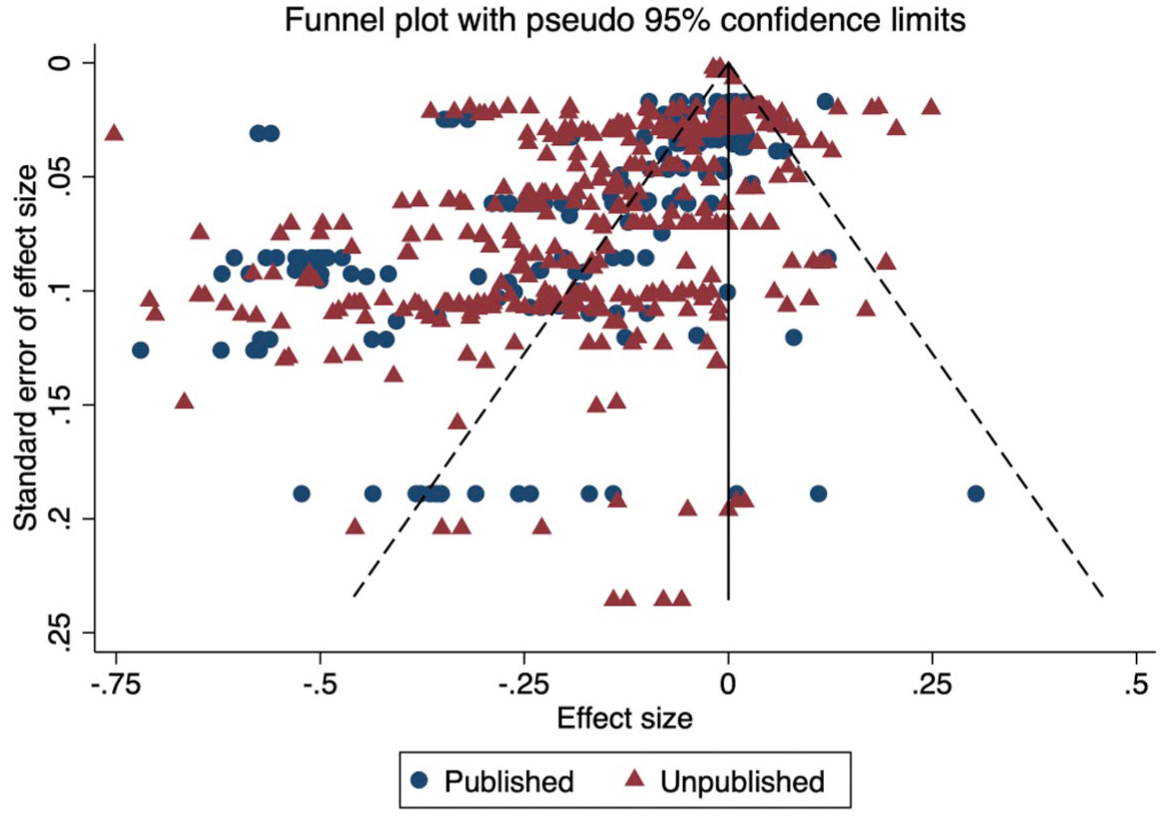
Funnel plot of effect sizes.
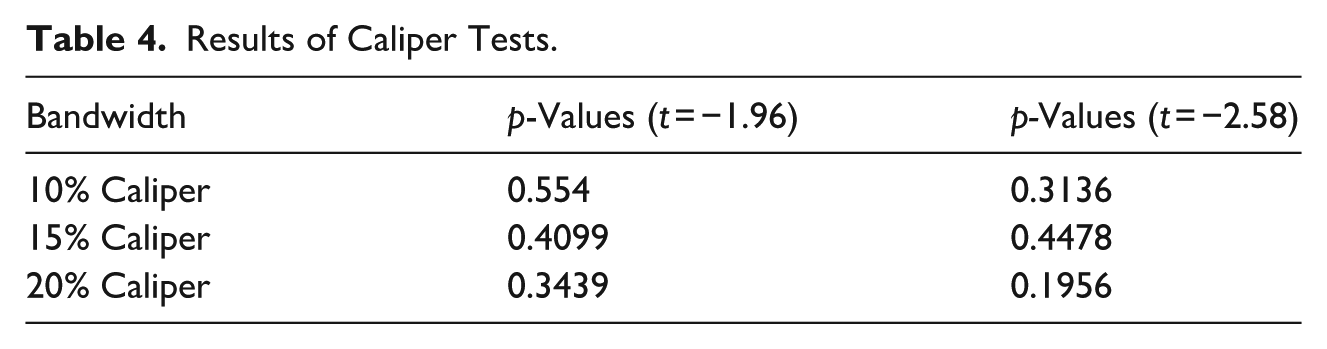
We also applied the caliper test proposed by Gerber and Malhotra (2008) to assess whether discontinuities were present in the distribution of test statistics around conventional significance thresholds. The caliper test compares the frequency of reported t statistics in narrow bands immediately below and above a critical value. As reported in Table 4, the caliper tests are not statistically significant under the 10%, 15%, and 20% bandwidths, suggesting limited evidence of threshold-driven selective reporting.
Results of Caliper Tests.
We further explored publication bias in the meta-regressions by evaluating differences between effect sizes derived from published and unpublished studies. In both the CRVE and GEE models, the positive coefficients for published studies indicate that effect sizes from published studies are slightly smaller than those from unpublished studies, but the differences are not statistically significant (p > .1). In other words, we cannot reject the null hypothesis that the effect-size difference between published and unpublished studies is zero. Caution is still warranted, however, because the small and insignificant differences between published and unpublished studies may mask a much larger difference between never-written-up results and those that are published.
Discussion
Scholarly interest in the relationship between female representation and corruption has grown steadily since the seminal studies by Dollar et al. (2001) and Swamy et al. (2001). This meta-analysis is the first to quantitatively synthesize findings from studies published over the past 20 years and to identify moderators of the relationship between female representation and corruption. We find that female representation has a significant, negative, and small-to-medium association with corruption. Moreover, our analysis of a broad set of moderators shows that the effect is stronger in primary studies that use corruption perceptions and descriptive female representation as measures, exclude country FE from the analytical model, and incorporate only one type of female representation. These findings contribute to current debates by providing an empirical synthesis of effect sizes across cross-national and subnational settings and have clear implications for public administration research and practice.
Implications for Research
First, our findings show that female representation has a stronger association with subjective corruption measures than with objective measures. This pattern may reflect the fact that subjective perceptions can be shaped both symbolically, through the mere presence of female representatives, and substantively, through policy actions. By contrast, actual corruption is more likely to be shaped through substantive policy change, and such change may not occur immediately after women take office. Future research should distinguish between subjective and objective corruption measures, as these metrics capture different aspects of corruption, and female representation may operate through different mechanisms in shaping perceptions versus actual corruption. More fine-grained theorizing and empirical work is also needed to explain why female representation affects different corruption measures in different ways.
Second, the varying effects of different types of female representation on corruption highlight the multidimensional nature of representation (Pitkin, 1967; Watson & Moreland, 2014). Our meta-analysis points to the need for future research to adopt an integrated framework of representation and to identify how different dimensions of female representation shape corruption. In particular, we encourage more studies of formal and substantive female representation, which have received less attention than descriptive representation. Moreover, our results show that studies using formal representation, measured by gender quotas, report smaller effect sizes than studies using descriptive representation. Future research should examine the reasons for this difference and identify the conditions under which gender quotas can contribute to corruption reduction. In addition, we encourage more research on how women in bureaucracy, particularly across sectors and hierarchical levels, shape corruption, as most studies have focused on elected officials, who operate under a different institutional logic from bureaucrats (Stensöta et al., 2015).
Third, the relationship between female representation and corruption remains when studies control for democratic institutions and religious variables, suggesting that women can make a distinctive contribution to curbing corruption. However, this does not mean that context is unimportant, because controlling for country FE significantly weakens the relationship between female representation and corruption. As Chappell and Waylen (2013) suggest, we call for more comparative studies and more ethnographically grounded work to identify the formal and informal contextual factors that shape female behavior, such as power structures, social structures, ideologies, cultural norms, and other societal conditions.
Implications for Practice
Our findings also have important practical implications. First, they support initiatives to increase female representation in government as a means of curbing corruption: empirical evidence suggests that female representation is negatively associated with corruption. Despite global progress in increasing women’s descriptive representation, women remain underrepresented in senior political and bureaucratic positions. Policies that promote women’s participation in politics, particularly their advancement to higher positions, are needed to strengthen both their policy influence and their symbolic effect. Additionally, our results suggest that gender quotas alone may not directly translate into greater political influence for women. Although gender quotas can effectively increase women’s descriptive representation (Bauer, 2008), their effect is often constrained by nepotism, persistent gender inequality, and women’s limited political experience and capital (Afridi et al., 2017; Goel & Nelson, 2023; Guajardo & Schwindt-Bayer, 2024). Moreover, the implementation of gender quotas varies substantially with quota design and the degree of control political parties exert over recruitment processes (Bjarnegård et al., 2018). In countries where parties exert less control over elections, women recruited from new networks, rather than established corrupt ones, may help reduce corruption. To strengthen the symbolic and substantive effects of female representation on corruption, more refined recruitment processes under gender quotas and additional strategies to improve women’s status are needed.
Conclusion
As efforts to reduce corruption intensify and female political representation becomes more prominent, a growing body of literature has turned to the role of female representation in curbing corruption. However, the existing literature presents competing theories and conflicting findings. Does female representation really reduce corruption? If so, how and under what conditions? To address these questions, scholars in political science and economics have conducted many empirical studies. This study brings together insights from these disciplines by proposing a theoretical framework to explore the association between female representation and corruption and by meta-analyzing quantitative studies on this relationship. In summary, our results support the expected negative relationship between female representation and corruption and show that this relationship is moderated by corruption measures, types of female representation, and research design.
What does this line of research add to traditional public administration frameworks? Public administration research has traditionally examined representation mainly among street-level and executive-level bureaucrats and has focused on organizational and procedural mechanisms. This study broadens the scope of representative bureaucracy by synthesizing cross-disciplinary literature that offers a macro-level and structural understanding of whether and how female representation shapes governance results through institutional mechanisms. This literature highlights the need to examine national structures and the broader governance context to understand representation. By incorporating these perspectives, public administration scholarship can move beyond conventional theories centered mainly on bureaucratic behavior and organizational context (Meier, 2019) and consider how gender dynamics interact with cultural settings and political contexts.
Furthermore, our examination of national-level context as a moderator of the relationship of interest also adds to recent research on bureaucracy and corruption (Cho & Kim, 2025; Meyer-Sahling et al., 2018). Because bureaucratic behavior is often deeply embedded in social and political institutions (Stensöta et al., 2015), our research helps explain how the effects of representation emerge and why they produce different results, insights that are often obscured in single-country studies.
Lastly, examining how female representation contributes to reducing corruption is especially relevant in regions with different cultural traditions and systems of government, such as Asia (Dong & Torgler, 2013), Africa (Ngouhouo & Njoya, 2020), and Latin American countries (Guajardo & Schwindt-Bayer, 2024), which remain underexamined in the political science and public administration literatures. We encourage scholars to further investigate the relationship between female representation and corruption across diverse contexts, particularly in light of emerging cross-national datasets on personnel and performance in bureaucracy. 5 This line of inquiry could help refine theoretical frameworks in public administration and generate policy implications that promote greater accountability, transparency, and equity in governance.
Our study has several limitations that point to directions for future research. First, this meta-analysis cannot capture the insights provided by qualitative research, which is well suited to uncovering the contextual, institutional, and causal mechanisms underlying observed relationships. Future studies could use meta-synthesis or other integrative methods to synthesize qualitative evidence and provide a richer, more contextually grounded understanding of this relationship. Second, the exclusion of books and non-English publications may introduce two forms of coverage bias. On the one hand, this decision may underrepresent research from non-English-speaking and developing countries, where the dynamics linking female representation and corruption may operate through different institutional and cultural mechanisms. On the other hand, restricting the sample to English-language publications may introduce ideological bias, because English-language journals based in Western academic settings may be more receptive to studies that support a negative relationship between female representation and corruption, a conclusion that aligns with prevailing Western frameworks of gender equality and good governance. Future research would benefit from systematically incorporating non-English publications and conducting cross-linguistic comparisons to assess whether findings are consistent across different scholarly traditions and cultural contexts.
Supplemental Material
sj-docx-1-aas-10.1177_00953997261441813 – Supplemental material for Can Female Representation Reduce Corruption? A Meta-Analysis
Supplemental material, sj-docx-1-aas-10.1177_00953997261441813 for Can Female Representation Reduce Corruption? A Meta-Analysis by Juan Du, Xiaojia Zhu and Xufeng Zhu in Administration & Society
Footnotes
Acknowledgements
The earlier version of this article was presented at 2024 Annual Conference of American Society for Public Administration (ASPA) in Minneapolis and 2024 International Conference on Comparative Public Policy in Tsinghua University, Beijing. The authors thank the discussants and our colleagues for all of the valuable feedback.

Funding
The authors disclosed receipt of the following financial support for the research, authorship, and/or publication of this article: This work was supported by the Major Research Project of Philosophy and Social Sciences of the Ministry of Education in China (23JZD042) and the National Natural Science Foundation of China (72304100).
Declaration of Conflicting Interests
The authors declared no potential conflicts of interest with respect to the research, authorship, and/or publication of this article.
Data Availability Statement
Replication data and do files are available upon request.
Supplemental Material
Supplemental material for this article is available online.
Notes
Author Biographies
References
Supplementary Material
Please find the following supplemental material available below.
For Open Access articles published under a Creative Commons License, all supplemental material carries the same license as the article it is associated with.
For non-Open Access articles published, all supplemental material carries a non-exclusive license, and permission requests for re-use of supplemental material or any part of supplemental material shall be sent directly to the copyright owner as specified in the copyright notice associated with the article.
