






Abstract
Artificial intelligence (AI) has revolutionized the public sector. However, AI adoption in the public sector remains underexplored, especially the factors that induce citizens’ acceptance of AI-powered e-government services (AAIPEGS) for efficient and improved service delivery. Utilizing the UTAUT framework, the study examines the factors associated with the AAIPEGS in Ghana to illustrate a developing country’s perspective on AAIPEGS. We applied structural equation modeling using SmartPLS-4 to 478 valid responses collected via self-administered online questionnaires from a cross-section of Ghanaian society (e.g., teachers, students, public sector workers, and other members of society). The results indicate that performance expectancy, effort expectancy, facilitating conditions, and security and privacy (SP) are notable drivers of people’s AAIPEGS. Yet, social influence failed to stimulate the AAIPEGS. The government regulatory framework for AI drives the AAIPEGS, performance expectancy, effort expectancy, and SP of AI-powered e-government services. Furthermore, institutional capacity significantly moderates the effects of both effort expectancy and SP on the AAIPEGS. Findings indicate that an efficient regulatory framework and vibrant institutional capacity are vital components for improving public AAIPEGS. The study underscores the direct impact of the government regulatory framework and the moderating role of institutional capacity on AAIPEGS. This study suggests adequate regulatory mechanisms to guide the rollout of AI-driven public services. The institutional capacity of public sector agencies should be strengthened and continuously adjusted to adapt to the transformation of public services through AI-powered e-government. Theoretical and policy consequences for the advancement of AI-driven public services are thoroughly discussed.
Keywords
Introduction
Information technologies have contributed to the operations of e-government (EG) and public sector organizations to optimize the provision of public services that are efficient and cost-effective, and to transform internal and external relationships with other sectors (Carter et al., 2022). EG facilitates public services, making such services more instant, efficient, cost-effective, and quality-driven by making them accessible to all key stakeholders, such as citizens, businesses, government agencies, organizations, and employees (Ndou, 2004; Paul, 2023). Therefore, EG utilizes cutting-edge electronic technologies to transform government agencies to provide efficient public services to people and companies, seeking to achieve higher productivity, greater quality, and efficient delivery of government services while reducing costs (Al-Mushayt, 2019; Hooda et al., 2022).
For developing countries, EG plays a pivotal role in creating a robust economic environment for governments, citizens, and businesses. It brings transparency and confidence among participants to engage effectively with government services and to provide environmental support to the helm of e-governance (Al-Mushayt, 2019). The user’s access to quality services and government information through transparent and user-friendly technologies can deepen the level of trust between citizens and the government (Al-Mushayt, 2019). Furthermore, EG systems enhance citizen participation in the governance system, reflecting citizen opinions and encouraging their active involvement in building their own future (Al-Mushayt, 2019). The EG system also has environmental benefits, as it reduces paper usage and electricity consumption during the maintenance and operation of the technology system in developing countries (Al-Mushayt, 2019).
AI-powered e-government services (AIPEGS) are based on highly sophisticated technological systems to drive and support governmental efforts to offer transformative public services to its stakeholders (Al-Mushayt, 2019). They are also beneficial for the betterment of inhabitants, particularly in the context of speedy governmental agencies’ services such as finance, taxation, administration, police, local government, and public health (Chohan & Akhter, 2021). AI technologies can help in addressing the challenges associated with EG implementation (Chinnasamy et al., 2023). An AI-powered computer system can emulate the acumen of mankind’s conduct with improved performance (Al-Mushayt, 2019; Mintz & Brodie, 2019). It is a self-governing device’s intelligent behavior that can perform complex and sophisticated tasks (Al-Mushayt, 2019). The embedment of AI technology in EG can facilitate and automate e-government services (EGS), leading to improved trust, efficiency, transparency, and effectiveness of EGS (Al-Besher & Kumar, 2022; Al-Mushayt, 2019). Therefore, AIPEGS can provide a more intelligent EG system to enhance citizen-centric EGS. It reduces processing times, decreases costs, and increases public contentment with government public services (Adadi et al., 2015; Chinnasamy et al., 2023).
The use of AI technologies in developing systems of EG to promote the diffusion of e-government services has been widely advocated (Al-Besher & Kumar, 2022; Al-Mushayt, 2019). However, limited studies have scrutinized the factors prompting the acceptance of AI-powered e-government services (AAIPEGS) in developing nations. This article explores the factors inducing the behavioral AAIPEGS using an extended UTAUT Model from a developing country (Ghana) perspective.
The faster pace of AI development signals both opportunities and challenges for developing countries, particularly, there is a need for a well-structured policy framework to harness the benefits of AI while at the same time alleviating the risks (Folorunso et al., 2024). Creative AI solutions can empower developing countries to promote sustainable economic development, enhance productivity, and improve service delivery (Folorunso et al., 2024). However, Dreyling et al. (2022) argue that the use of AI in designing EG systems and adopting EG systems is a new field of investigation and remains underdeveloped. Thus, the study of AIPEGS is vital, as the literature lacks research on the application and utilization of AI-based systems (Lee & Chen, 2022) from the EG perspectives. Additionally, a thorough appreciation of citizens’ acceptance of AI-powered technology in the public service delivery system is absent (Gesk & Leyer, 2022). This work extends the UTAUT model by including additional variables: the security and privacy (SP) of AI technologies, government regulatory framework for artificial intelligence (GRFAI), and institutional capacity (IC) of public sector agencies to understand the behavioral AAIPEGS in the Ghanaian context.
The SP of AI-technology is critical in behavioral AAIPEGS because they encompass various aspects, including data protection, algorithm transparency, and ethical considerations (Yanamala et al., 2024). AI-powered systems require vast amounts of data to train themself, including sensitive personal information. Thus, appropriate techniques are required to anonymize data used in AI models to prevent the identification of individuals. Additionally, AI-powered systems should provide secure storage solutions to prevent unauthorized access to sensitive data. Data should be encrypted to protect it from interception or theft. These measures offer greater comfort for users to trust in the SP of AI-powered e-government systems. Furthermore, governments and regulatory bodies are increasingly focused on creating frameworks to govern the development and deployment of AI-powered systems (Kozuka, 2019; Taeihagh, 2021). These frameworks aim to address various concerns, such as ethical considerations, safety, accountability, transparency, and the impact of AI on society, including future employment (Dignum, 2020; Z. Li, 2024). The regulatory framework provides a strict mechanism to establish responsibility when AI-powered systems cause harm or make errors, including liability for developers, operators, or users. It can also provide mechanisms for individuals and groups to seek compensation or rectify issues arising from AI-powered systems.Additionally, the institutional capacity (IC) of public sector agencies plays a crucial role in implementing AI-powered systems in e-governance. IC strengthens public agencies’ ability to adopt, integrate, and effectively utilize AI technologies to enhance public services. Moreover, it improves administrative efficiency and fosters citizen engagement. Consequently, the successful integration of AI in e-government hinges on the strength of the IC of public sector agencies. This involves investing in technology, data governance, human capital, and effective engagement with stakeholders. Therefore, institutional capacity (IC) is a vital factor in addressing public demand for efficient and accessible EGS.
The proposed extended UTAUT helps to identify how external factors and organizational contexts shape the users’ experiences, and ultimately their willingness to embrace AI innovations in e-government. The UTAUT model is considered the most vigorous, validated, and useful framework to predict the adoption and utilization of information systems (IS) and information technology (IT) innovations (Ali & Warraich, 2024; Dwivedi et al., 2019). The integration of the three new variables in the UTAUT model addresses the identified gaps, and it will contribute to scholarship by, first, demonstrating how security and privacy (SP) issues of AI shape the individual AAIPEGS. Second, it will explain how the government regulatory framework for artificial intelligence (GRFAI) enhances users’ understanding of the performance expectancy (PE), effort expectancy (EE), SP, and AAIPEGS. Third, it will explore how public sector institutional capacity (IC) moderates the interaction between PE, EE, facilitating conditions (FC), SP, and AAIPEGS. The broader research question for investigation in this research is: What factors drive the AAIPEGS from a developing state angle? The explicit research questions are: (1) To what extent do the core variables of the UTAUT, such as PE, EE, SI, FC, along with SP, influence the behavioral AAIPEGS? (2) To what extent does the GRFAI influence behavioral AAIPEGS, PE, EE, and SP of AI systems? (3) To what extent does public sector IC moderate the influence of PE, EE, FC, and SP on the behavioral AAIPEGS? The validation of these research questions provides the government and policymakers with the right practical mechanism to drive the design, development, and execution of AIPEGS. It also promotes AIPEGS, which offers quality, accessibility, efficiency, effectiveness, and user-friendly service delivery for all stakeholders.
Research Background
AI in the Ghanaian Context
AI-powered technologies possess tremendous capacity to transform diverse sectors such as finance, economy, agriculture, Fintech, and e-governance in Africa. It holds vast opportunities in the area of economic transformation/development and growth, as well as societal impact (Kwarkye, 2025). The Ghanaian government launched the Ghana National Artificial Intelligence Strategy (GNAIS) in 2022, aiming to become part of the global AI race and community. The strategy is expected to last for 10 years (2023–2033). The Ministry of Communication and Digitalization has developed an AI policy strategy, aiming to position Ghana as an emerging AI country and a leader within the sub-region and beyond Africa (DigWatch, 2022). The GNAIS vision is to “transform Ghana into an AI-powered society [by 2033] where AI advancements drive social and economic transformation, enabling competitiveness in the global digital economy and positioning Ghana as an African AI hub” (DigWatch, 2022). The vision is developed around eight major pillars: expand AI education and training; deepen digital infrastructure and inclusion; facilitate data access and governance; coordinate a robust AI ecosystem and community; accelerate AI adoption in key sectors; invest in applied AI research; and finally, promote AI adoption in the public sector that is, promote the use of AI in government operations to improve public service delivery and policy decision making (DigWatch, 2022). The key focus of the overall GNAIS strategy is shown in Figure 1.
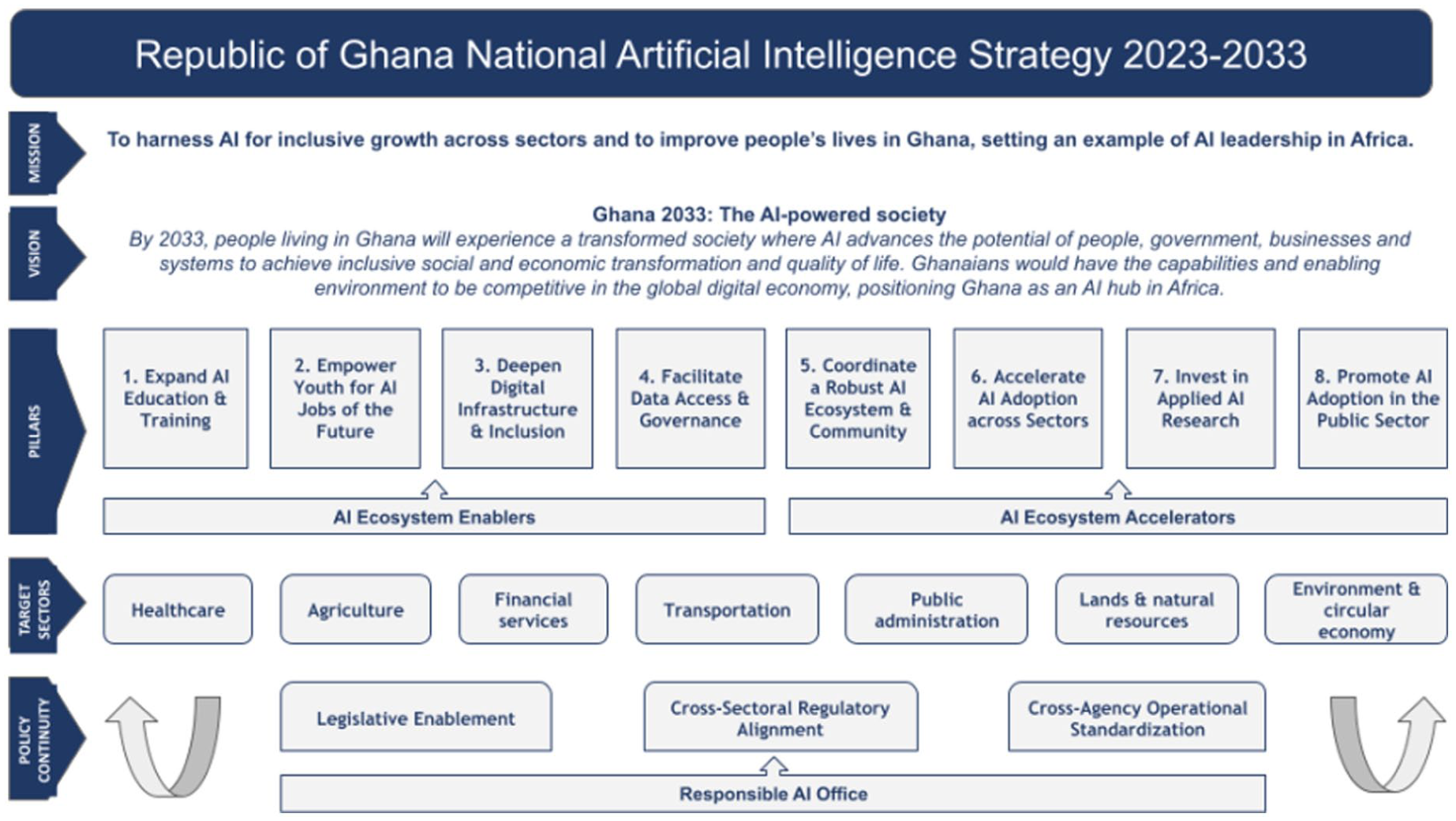
Republic of Ghana National Artificial Intelligence Strategy 2023-2033.
GNAIS provides a fundamental test situation for other countries on the African continent focusing on innovation, talent development, and dealing with AI-associated challenges via ethical and regulatory systems (Kwarkye, 2025). It is noted that Ghana can draw lessons from the EU AI Act to drive its development of a pleasant AI legal system to handle ethical challenges and human rights, transparency, and accountability (Yin, 2025). Additionally, Ghana’s expanding AI sector calls for AI-tuned regulations that see human beings, safety, and dignity as priorities (Yin, 2025).
Furthermore, the African Union Executive Council also approved the Continental AI Strategy at its 45th Session in Accra, Ghana, in July 2024. The continental strategy on AI provides Africa’s commitment to an Africa-centric, development-focused approach to AI and ensures ethical, responsible, and equitable practices in the use of AI (AU. 2024). The 15 action sectors of the continental strategy on AI are shown in Figure 2.
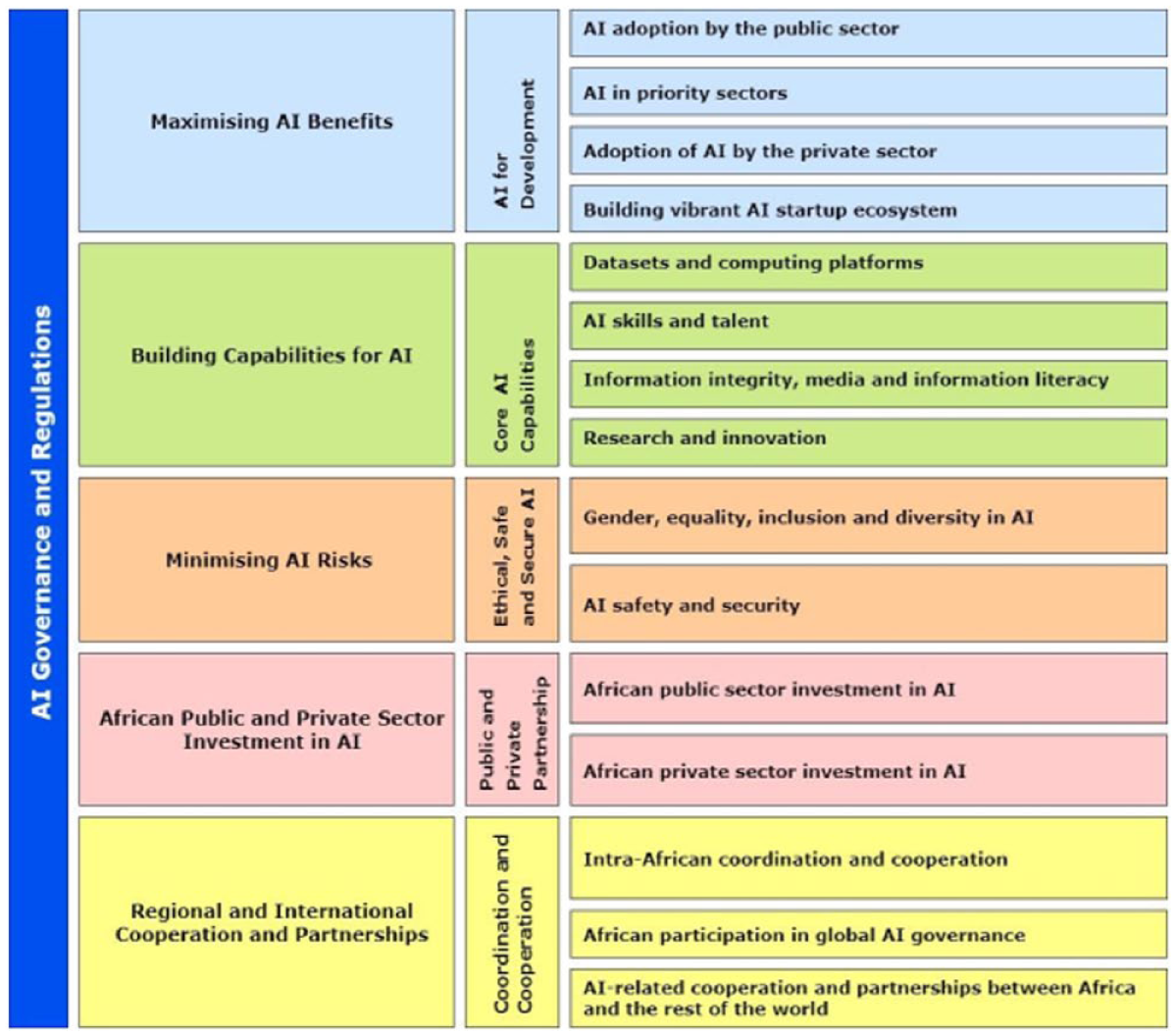
Action areas of the African Union Continental AI Strategy.
Ghana’s E-Government and Digital Divide
In Ghana, the implementation of e-government policies and programs is entrusted to the National Information Technology Agency (NITA) to achieve the core objectives of developing external relations (e-society), government process refinement (e-administration), and connecting citizens (e-service and e-citizens; Tchao et al., 2017). Developing countries are investing heavily in e-government systems to ensure efficient, fast, and high-quality services for their citizens. E-government systems aim to engage citizens in decision-making systems, increase transparency and accountability of state institutions in policymaking, and, more importantly, reduce the risk of corruption (Bakon et al., 2020). These investments in the Ghanaian context have reflected its performance in the latest E-Government Development Index (EGDI), an output of the United Nations E-Government Survey 2024. Globally, the world average EGDI value was recorded as 0.6382 in 2024, and high-income countries hold the leading position in e-government development (UNEGS, 2024). Ghana is grouped in the high OSI (Online Service Index) category, an indication of strong progress in online services provision relative to infrastructure and human capital development (UNEGS, 2024). In the regional (Africa) context, the average EGDI value is 0.4247, which is the lowest in all the regions, an indication of persistent digital divides on the continent (UNEGS, 2024). Mauritius (0.7506) and South Africa (0.8616) are the only two African countries to appear in the very high EGDI category, while Ghana is among countries with high OSI values, including Rwanda, Kenya, and Morocco (UNEGS, 2024). Narrowing down to the West Africa sub-regions, Ghana stands out with many other countries having middle or low EGDI values, like Nigeria and Benin. Additionally, Ghana’s OSI level (high) surpasses its EGDI level (high; UNEGS, 2024), which indicates that while online services in Ghana are improving, telecommunications infrastructure and human capital require additional investment to enhance EGDI to match countries that lead in e-government development.
Ghana faces the issue of a digital divide that could prevent the full achievement of e-government goals. To address the concern, policy strategies might prioritize e-government programs that bridge the gap by way of improving internet connectivity, digital literacy, and access to technology (Acquah, 2024). Meanwhile, there is evidence of progress in terms of internet access and connectivity in Ghana. The digital divide in Ghana is a result of high access costs, low digital literacy rates, and the absence of adequate infrastructure, which is a challenge in dealing with issues of equity, equality, and inclusion in the digital transformation space (Ohemeng & Zaato, 2024), particularly in the e-government context. Ghana’s digitalization focuses on e-government programs to build a technology-based society where the government can use technology to improve accountability, transparency, inclusivity, and quality service delivery to all (Kuuyelleh et al., 2025).
Theoretical Framework—Unified Theory of Acceptance and Use of Technology (UTAUT)
Individuals’ adoption of innovative technological systems is an important managerial challenge and thus often attracts the attention of scholars of information systems and information technology. Venkatesh et al. (2003) established the UTAUT to coordinate scholarship on in the recognition of new information systems literature and to offer new perspectives on individual acceptance of innovation systems. The UTAUT is composed of four key variables: Performance Expectancy (PE) (the extent to which individuals have confidence that the utilization of a system will empower them to attain greater efficiency or output in their job performance; Effort Expectancy (EE) (the degree to which a user thinks that it will be easy to use that a technological system); Social Influence (SI) (a user’s belief that other individuals also believe that they should make use of the system; and Facilitating Conditions (FC) (the presence of appropriate managerial and technical infrastructure to encourage the usage and adoption of particular innovations (Venkatesh et al., 2003). In addition, “gender, age, experience, and voluntariness of use” moderate these constructs (Venkatesh et al., 2003). These independent, dependent, and moderating variables in the UTAUT model enable scholars and experts to better predict individuals’ likeliness to use a technological innovation.
The UTAUT model is grounded in the systematic review and incorporation of eight well-known theories and models: the “Theory of Reasoned Action” (TRA), the “Technology Acceptance Model” (TAM), the “Motivational Model” (MM), the “Theory of Planned Behavior” (TPB), a “Combined Theory of Planned Behavior/Technology Acceptance Model” (C-TPBTAM), the “Model of PC Utilization” (MPCU), “Innovation Diffusion Theory” (IDT), and “Social Cognitive Theory” (SCT). Venkatesh et al.’s (2003) study indicated that UTAUT performed better (R-square, 69%) than these individual eight models.
Since its inception, UTAUT has been widely applied in technology acceptance and diffusion-based studies as the theoretical foundation for examining individual user intention and behavior in diverse fields (Yee & Abdullah, 2021). Some of these studies have modified and extended the model with new constructs. For instance, one study introduced two variables (trust in the system and ethics of the Internet) into the UTAUT to explore the sustainability of e-government acceptance. It showed that the ethics of the Internet moderates the influence of trust in systems on social impacts, PE, and behavioral intentions (Zeebaree et al., 2022). A related study, designed to analyze the influence of e-government information quality dimensions on the adoption of e-government services, that the EE and FC positively influence the intention to use and recommend the acceptance of EGS (Mensah & Mwakapesa, 2025). All these studies (Mensah & Mwakapesa, 2025; Zeebaree et al., 2022) are constructed on UTAUT principles, highlighting and reiterating the relevance, strength, and reliability of the UTAUT to elucidate user acceptance of new technological systems. This is why we applied the theory as the theoretical groundwork for this research.
The National Institute of Standards and Technology (NIST) Cybersecurity Framework (CSF)
The cybersecurity space is complicated with diverse, sophisticated threats that target every aspect of the digital landscape, from ransomware, phishing, and zero-day exploits, posing a serious challenge to organizations (Edwards, 2024). This complexity is amplified due to the rapid development of new technologies and the growing digital footprint of organizations, making safeguarding digital assets an ever-evolving battle (Edwards, 2024). NIST-CSF 2.0 is relevant to offering guidance on best practices to industry, government agencies, academia, and other organizations to manage and reduce cybersecurity challenges/risks (NIST, 2024; Parmar & Miles, 2024). The NIST-CSF outlines outcomes that are easily understandable by a wide range of users, including managers and practitioners, regardless of their expertise in cybersecurity (NIST, 2024). The CSF performs functions (see Figure 3) such as Govern, Identify (threats to people’s data appreciation), Protect (execute safeguards), Detect (monitor breaches), Respond (mitigate breach occurrences), and Recover (restore trust post-breach) to successfully determine cybersecurity outcomes (NIST, 2024). The GOVERN feature deals with measures that inculcate cybersecurity into broader organizational risk management strategies, and the IDENTIFY dimension classifies the assets of an organization in terms of data, hardware, software, systems, services, and people, and related cybersecurity risks. The PROTECT function seeks to safeguard and manage organizations’ cybersecurity risks once they are identified and prioritized. The protection mechanism provides support systems to secure assets (via identity management, authentication, and access control, data security, and system security, as well as the technology infrastructure resilience) to prevent breaches in organizational cybersecurity.
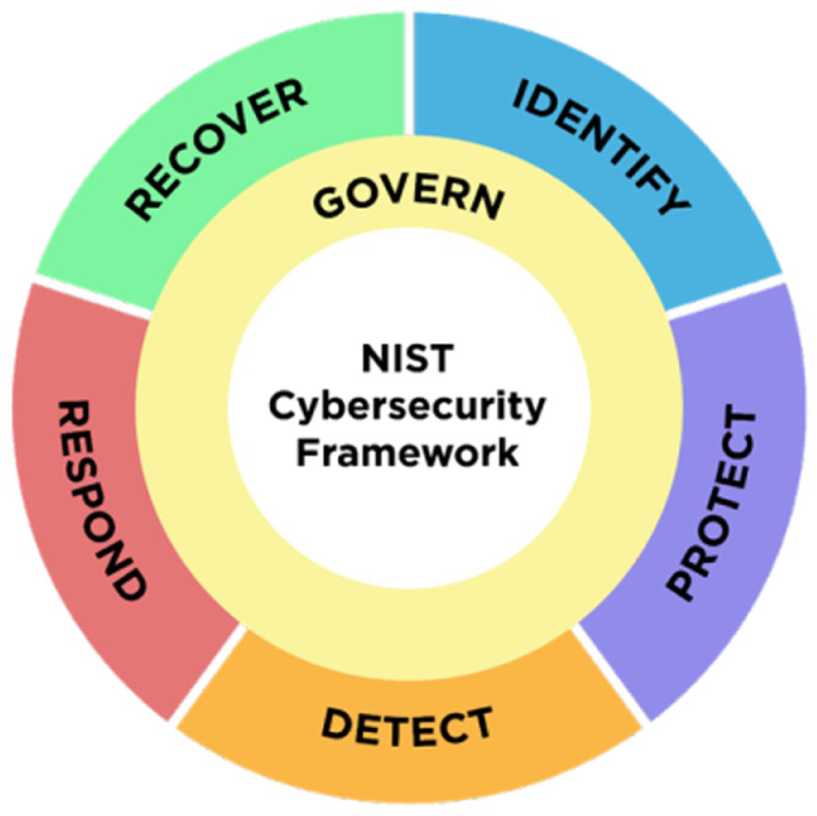
NIST-cybersecurity framework.
Additionally, the DETECT function finds and analyzes the likelihood of cybersecurity attacks and compromises, and RESPOND provides support to contain or handle the effect of cybersecurity incidents, which covers incident management, analysis, mitigation, reporting, and statement. Lastly, the RECOVER function provides restoration of normal operations to mitigate the effects of a breakdown in the cybersecurity network.
NIST-CSF was selected to provide a theoretical basis for the inclusion of security and privacy (SP) risks in the context of the adoption of technology. It theoretically grounds the SP in the model, particularly since UTAUT/UTAUT2 does not explicitly integrate SP as a driver of technology utilization. The SP construct is grounded in NIST-CSF, highlighting cybersecurity roles in addressing individual users’ concerns about data protection and system integrity in the course of technology adoption, like AI-powered e-government services.
Research Model and Hypothesis Development
UTAUT’s core constructs – such as PE, EE, SI, FC, and SP are projected to stimulate the AAIPEGS. Additionally, we anticipate that the GRFAI will affect the behavioral AAIPEGS, PE, EE, SI, and SP. Finally, IC is projected to positively moderate the influence of PE, EE, FC, and SP on AAIPEGS. The extended conceptual model is presented in Figure 4.
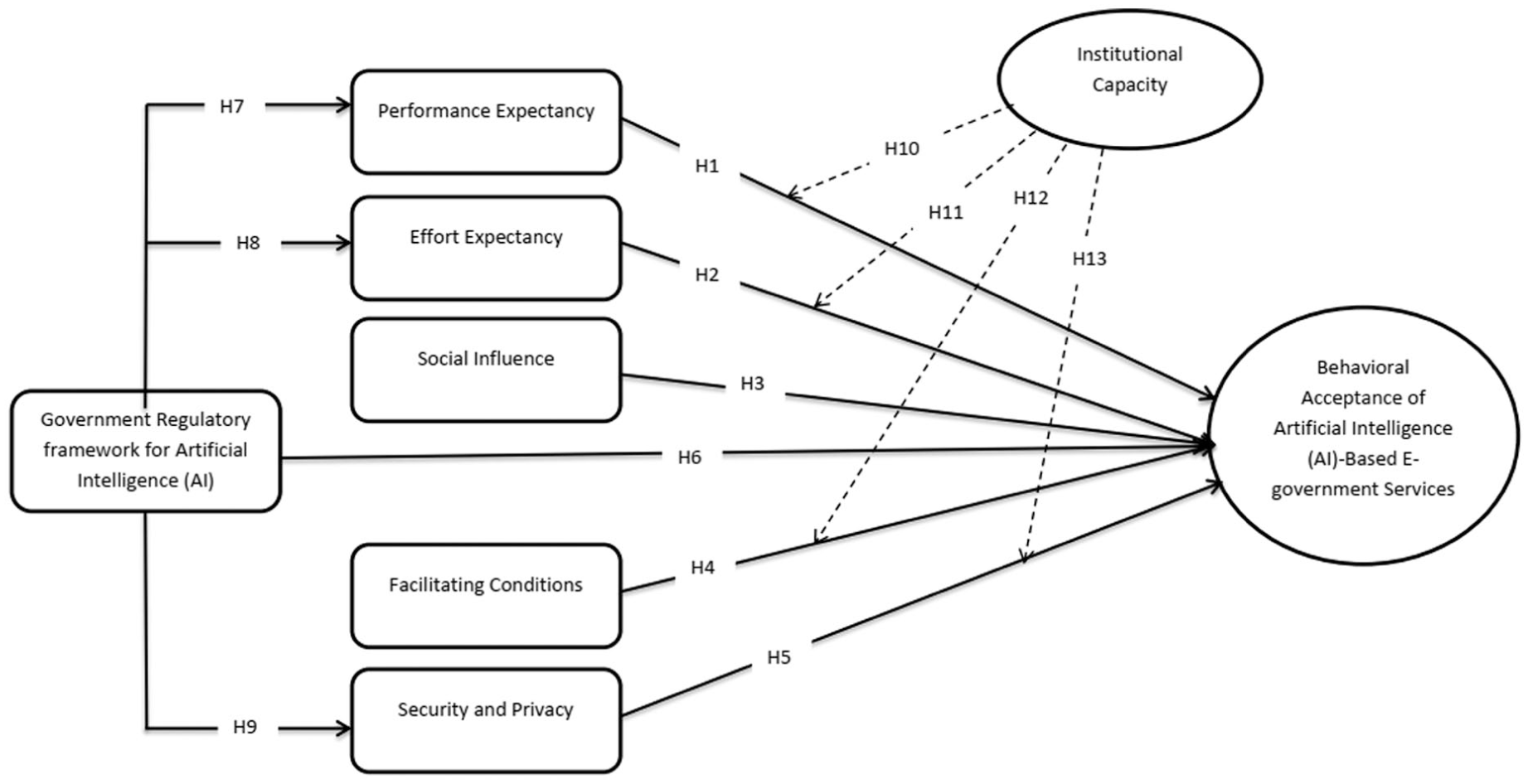
Proposed conceptual model of AI-powered e-government services adoption.
Performance Expectancy (PE)
PE is the consumer’s perception that the utilization of any novel information technology-driven services will augment their work output (Venkatesh et al., 2012). The PE of technology is viewed as the major construct that drives individual attitudes and behaviors in connection with the usage of any kind of technology system (Al-Mamary, 2022). It is also reflected in the user perception that the usage of any system will bring benefits that will transform a person’s life and perceptions of such a technology (Al-Mamary, 2022). The use of AI in the development of EGS has been emphasized as playing a major role in enhancing the capacity of e-government services (Al-Besher & Kumar, 2022). AIPEGS further strengthens the capacity of EGS, reduces costs, and ensures the efficiency and effectiveness of services offered. It offers a transparent system, ensures accountability, and ultimately ensures the timely delivery of required public services (Al-Besher & Kumar, 2022). Thus, AI-driven e-government services provide better avenues for realizing the performance expectancy of e-government as anticipated by citizens and could lead to a transformation of people’s lives and standard of living. It can meet the performance expectancy of users, especially in terms of providing high-quality e-government services, and consequently encourage greater usage. Research has shown that the PE of EGS is linked to the intention to use EGS (Hermanto et al., 2022; Sabani et al., 2023).
Effort Expectancy (EE)
EE taps the ease of use of new information systems. It is a belief that using innovative systems will be free of effort (perceived comfort) (Davis, 1989; Venkatesh et al., 2003). The ease of use connected with technology is projected to have crucial implications on users’ attitudes and intentions to use such advanced systems as AIPEGS (Aljazzaf et al., 2020; Manoharan et al., 2021). AIPEGS are developed to rationalize the expectations of users’ comfort and ease. If these services are less complex and integrate more user-friendly interfaces/systems, they would increase information readability, accessibility, and smooth navigation for users (Wimmer & Holler, 2002), which will drive wider EGS diffusion. Enhancing the usability of AIPEGS has a direct relationship with the quality of governance through people’s satisfaction, government transparency, and civic engagement (Ma & Wu, 2020; Rexhepi et al., 2021). AI-powered applications can improve problem-solving efficiency, enabling government sectors/agencies to quickly and accurately gather the required information to serve people efficiently. Additionally, usability of AIPEGS ensures greater flexibility and interoperability of AI-powered e-government applications and services with other systems (Al-Besher & Kumar, 2022). AIPEGS, with ease of use and user-friendly configurations, will contribute to greater user adoption and wider diffusion of e-government services. Several studies have found that the ease of use of EG, is directly linked to usage intention (Chen & Aklikokou, 2020; Teoh et al., 2023).
Social Influence (SI)
SI is instrumental in influencing people’s behavioral intention to use a particular innovation, and it is the fastest approach to stimulate the pace of technology diffusion (Al-Mamary, 2022). Venkatesh et al. (2003) argue that SI is the extent to which individuals influence the trust of those around them to consider using new information technology systems (Venkatesh et al., 2003). It is a consequence of the opinions of other persons or organizations to exert societal pressure on people to adopt new information technology systems (Al-Mamary, 2022). Since AIPEGS are a new technological innovation to augment the effective development and provision of services to people, SI can work as “word of mouth” or “e-word of mouth” communications, to the endorsement of AI-powered e-government from friends, family, and key personalities in society, which can become a major channel to spread the acceptance and diffusion of AIPEGS in society. Studies indicate that people’s decisions to adopt new technology are driven by the nature of social interaction with groups and individuals (Huang et al., 2025). Studies also report that SI is connected to the usage intention of technological systems (Huang et al., 2025; Joa & Magsamen-Conrad, 2022).
Facilitating Conditions (FC)
FC refers to the presence of managerial, technological, and economic infrastructure to encourage the use of a technological system (Venkatesh et al., 2003). The successs of AI-powered e-government services depends on the extent to which the crucial elements of managerial, technological, and economic infrastructure are readily available to kindle their acceptance and diffusion. Wider internet availability and access, particularly access to connecting devices (e.g., computers and mobile handsets), broadband data connectivity, mobile and technological infrastructure, and stable electricity supply are major facilitating conditions whose presence can enhance efficiency and effectiveness as well as sustainable delivery of AIPEGS (Ambarwati et al., 2020). Facilitating conditions can support the expansion and diffusion of AIPEGS, including resources/facilities to use AIPEGS, knowledge of AI-driven e-government system usage, AI-powered e-government system compatibility with other systems, and the instant availability of help from others when faced with challenges using AIPEGS (Venkatesh et al., 2012). Thus, the presence of facilitating conditions to aid the EGS adoption will, in turn, encourage its wider adoption. Past studies have affirmed that facilitating conditions are positively associated with the user’s acceptance of EGS (Al Sayegh et al., 2023; Muhammad & Kaya, 2023).
Security and Privacy (SP)
SP is fundamental to the design and diffusion of innovative technological systems like AIPEGS. Security and privacy have vital consumer protection concerns with regarding the adoption of innovative technologies in the digital world (Sarabdeen et al., 2014). Privacy is the individual’s right to control how their personal information is viewed and utilized, while security is the protection against threats or danger to personal data/information, that is, against unauthorized access to individual personal and transactional data (Weber, 2010; Xiao & Xiao, 2013). Privacy ensures the right of individuals to manage their personal information and data, whereas security guarantees the protection of personal information/data from hackers as well as from online cybercriminals (Palanisamy & Mukerji, 2014; Shah et al., 2022). SP is a pivotal element in safe and efficient e-government ecosystems. People expect that e-government systems should be safe and protected; that is, that the confidentiality of online information will be duly safeguarded (Palanisamy & Mukerji, 2014; Susanto & Almunawar, 2016). Similarly, security and privacy are primary concerns for users in their acceptance of AIPEGS, even when AI adoption may offer innovative opportunities to address socio-economic issues in developing countries (Elliott & Soifer, 2022; Shah et al., 2022). A wider AAIPEGS, then, can only be achieved through well-secured and protected AI-powered e-government service systems. AI can play an instrumental role in providing secure and privacy-protective systems for EGS (Yang et al., 2019). Studies consistently find that SP in e-government systems drives EGS acceptance among citizens (S. Cho et al., 2021; Kanaan et al., 2023).
Government Regulatory Framework for Artificial Intelligence (GRFAI)
A government regulatory framework offers succinct guidelines to regulate the AI industry (e.g., AI developers, deployers, and individual users) to meet the requirements and obligations for effective utilization of AI-powered technologies. The government AI-regulatory framework reduces the administrative and financial challenges for businesses and further promote safety and security by insuring the fundamental rights of users (Risse, 2019; Saragih et al., 2023). AI-powered governance applications offer, distinctive prospects for increased economic efficiency and enhanced quality of life, but they can also pose new forms of risks and create unexpected/intended consequences if not handled properly (Taeihagh, 2021). Thus governments and their government programs and agencies must realize the scope and depth of risks attached to the deployment of AIPEGS and ensure the benefits from the operationalization of AI while reducing its unintended risks through an effective regulatory framework to deal with unexpected AI challenges (Taeihagh, 2021). Governments should respond to the challenge AI poses by using regulations to avoid damage or harm from AI use (Wirtz et al., 2020). For instance, issues of liability and responsibility for damages arising from utilization of AI systems remain equivocal under several legal regimes (Xu & Borson, 2018). Regulated AI can help ensure responsibility in using AI in terms of accountability, liability, and culpability (O’Sullivan et al., 2019). Government promotion of responsible and accountable AI development via regulations has the potential to increase societal acceptance and public confidence in accepting AI (Deshpande & Sharp, 2022; Golbin et al., 2020). Well-crafted regulations and legal frameworks that deal with the risks in AI systems, identify high-risk systems, provide flawless standards for AI technology, describe precise responsibilities for AI users and providers, and undertake conformity evaluation before AI systems are commissioned can drive more reliable, robust, and trustworthy AIPEGS. Consequently, we expect that the regulatory framework for AI can catalyze AAIPEGS, enhance its PE (benefits) and EE (ease of use), and lastly, help ensure better security and privacy for AIPEGS. Accordingly, H6, H7, H8, and H9 were put forward.
Moderated Influence of Institutional Capacity (IC)
Not only do public sector institutions require access to financial resources to develop and implement a successful AI-powered e-government system, but they also need to have vigorous IC to organize, manage, finance, design, and execute quality AIPEGS. International organizations such as the “United Nations Development Programme” (UNDP) and “United Nations Disaster Risk Reduction Offices” (UNISDR) view IC as the ability of an establishment or organization to set and attain social and economic goals via the integration of the entity’s knowledge, skills, and systems (Wannous & Velasquez, 2017). IC building is a continuing procedure in which people and systems operate in an energetic context, and augment their potential/abilities to develop and implement strategies to achieve their anticipated goals for improved performance in a sustainable manner (Healey et al., 2017; Wannous & Velasquez, 2017). It is an institution’s mechanism to effectively and efficiently design, implement, and evaluate development actions in line with its mission (Domorenok et al., 2021). IC has become an important vehicle to swiftly and lawfully accomplish new programs and activities. Public actors with strong IC in the form of expertise, knowledge, and resources are empowered them to plan, design, manage, and execute the operations of AIPEGS. This is both helps develop efficient and effective EGS for people and can encourages more people to use AIPEGS. Additionally, it can enhance the performance and effort expectancy of AIPEGS; ensure better security and privacy of AIPEGS, and, importantly, make the required resources available to expedite AIPEGS implementation. Therefore, IC is projected to have an indirect (moderating) influence on the development of AIPEGS. Specifically, institutional capacity is hypothesized to moderate the influence of PE, EE, FC, and SP on behavioral AAIPEGS.
Research Methodology
Item, Measurement
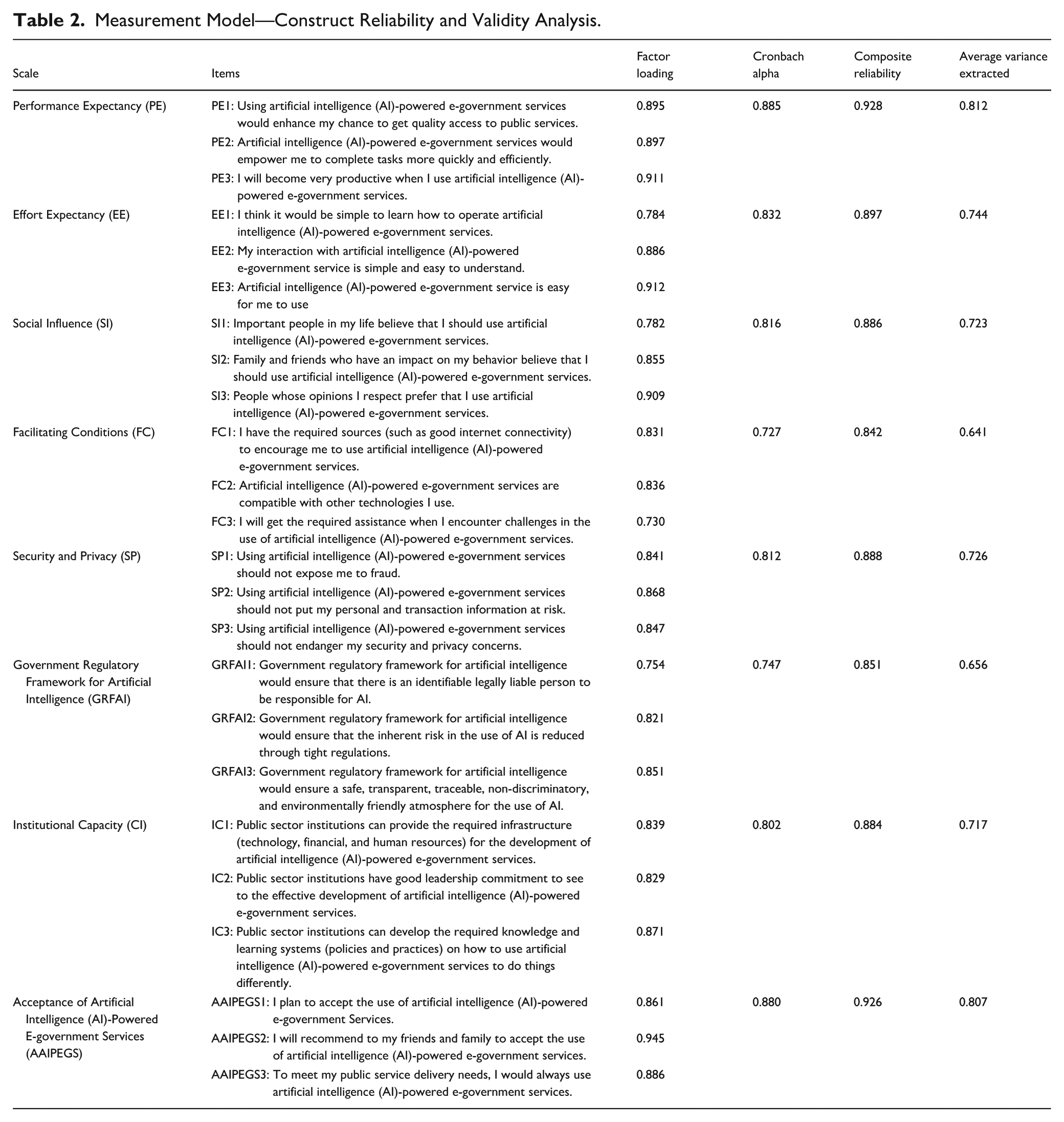
To examine the proposed research model, we adopted a quantitative research approach and designed our questionnaire based on research items selected from previous literature. The research items were edited to fit the context of this study. Model contains eight variables (independent, moderators, and dependent), all of which the questionnaire tapped (Table 2). The variables include PE (Baabdullah et al., 2019), EE (W. Li, 2021), SI (W. Li, 2021), FC (W. Li, 2021), SP (Kanaan et al., 2023), GRFAI (self-developed), IC (Gasco-Hernandez et al., 2022), and behavioral acceptance of AIPEGS (Zeebaree et al., 2022). Indicators for each variable included three close-ended questions, with responses on a five-point Likert scale, ranging from “1= strongly disagree to 5 = strongly agree.” The questionnaire also contains basic demographic questions (gender, age, education, and profession type) (See Table 2).
The self-developed construct of GRFAI was validated based on the scale development guidelines of Kyriazos and Stalikas (2018). First, we thoroughly reviewed government policy documents, Ghana’s National Artificial Intelligence Strategy (2023–2033; AI-Ghana, 2023) and EU policy on AI regulations (Europa, 2023), as well as studies of AI regulations (Arakpogun et al., 2021; Smuha, 2021). Secondly, we conceptually defined the construct and developed a pool of items based on our review of research and documents related to policy on AI regulations (Schuett, 2023). Thirdly, two experts in public administration, e-government, and AI were asked to assess the clarity and relevance of the scale items. Fourth, we formatted the items on a 5-point Likert scale and conducted a pilot test with a small sample (n = 60). Fifth, we conducted a confirmatory factor analysis with smart PLS to examine construct reliability and validity. Finally, we selected a three-item scale based on factor loadings > 0.70, Composite reliability (CR > 0.80), Average Variance Extracted (AVE > 0.50), and discriminant validity (Hair et al., 2019; Kyriazos & Stalikas, 2018). (Please see the Appendix for list of abbreviations and acronyms.)
Procedure and Participants
The questionnaire was pre-tested and piloted with 60 participants to ensure clarity (i.e., comprehensibility of the questions) and to reduce ambiguity to facilitate accurate responses to the survey instrument. This helped assure us that the were clearly phrased and the response preferences were pertinent, inclusive, and mutually exclusive, from the viewpoint of the researchers and the respondents (Bowden et al., 2002; Meadows, 2003).
We posted the research questionnaire and the written informed consent letter on the online platform “Google Forms” between November 1, 2023, and December 31, 2023. The questionnaire link/QR code was shared with the target population via social media platforms, including WhatsApp and Facebook. We also emailed a research questionnaire link/QR Code to a cross-section of Ghanaian society, including university students, teachers, and public and private sector workers who resided in Accra, the capital city of Ghana, to complete and share it with their families and friends. Thus, we employe a convenience (non-probability) sampling approach to collect data. We did this due to its efficiency, accessibility, and suitability in reaching a wider population of digitally active participants, since the study focused on AI-powered e-government adoption.
A social media-based convenience sampling approach frequently is used given the constraints of financial resources, time limitations, and data accessibility (Etikan et al., 2016). Moreover, the use of social media networks such as WhatsApp and Facebook in non-probabilistic sampling can enhance the sample size (response rate) and representativeness of the target population (Baltar & Brunet, 2012). Although convenience sampling limits the generalizability of research findings, it is still an appropriate approach for exploratory research and theory testing, particularly in studies applying the TAM or UTAUT model to test hypothesized relationships rather than estimate population parameters (Hair et al., 2017).
Participation in the research was voluntary, and no financial incentives were offered to induce participants to complete the survey. Informed consent was obtained by informing the participants that by agreeing to participate in the study, they consented to the use of data generated. Informed consent was implied when they accessed, completed, and submitted their responses. This research was carried out in compliance with established ethical research standards. Ethical approval was not required for this study, as the questionnaire focused solely on gathering self-reported demographic data. The questions posed no foreseeable risks to the participants, and all collected data were handled with the highest level of confidentiality and respect. Participants were made aware of their right to withdraw from the study at any point without facing repercussions.
We applied a priori power analysis using G*Power 3.1.9.7 to determine the minimum required sample size for the proposed model (Faul et al., 2009). The input parameter was set as two tails, effect size f2 = 0.15, α err prob = .05, Power (1 – β) = 0.95, with 7 predictors. G*Power analysis recommended a minimum sample size of 89 respondents to test the proposed model. We received 524 responses from online platforms during the study period. After careful review, we discarded 46 questionnaires due to incomplete information and used 478 valid responses for data analysis. The retention rate of the completed questionnaire was 91.22%.
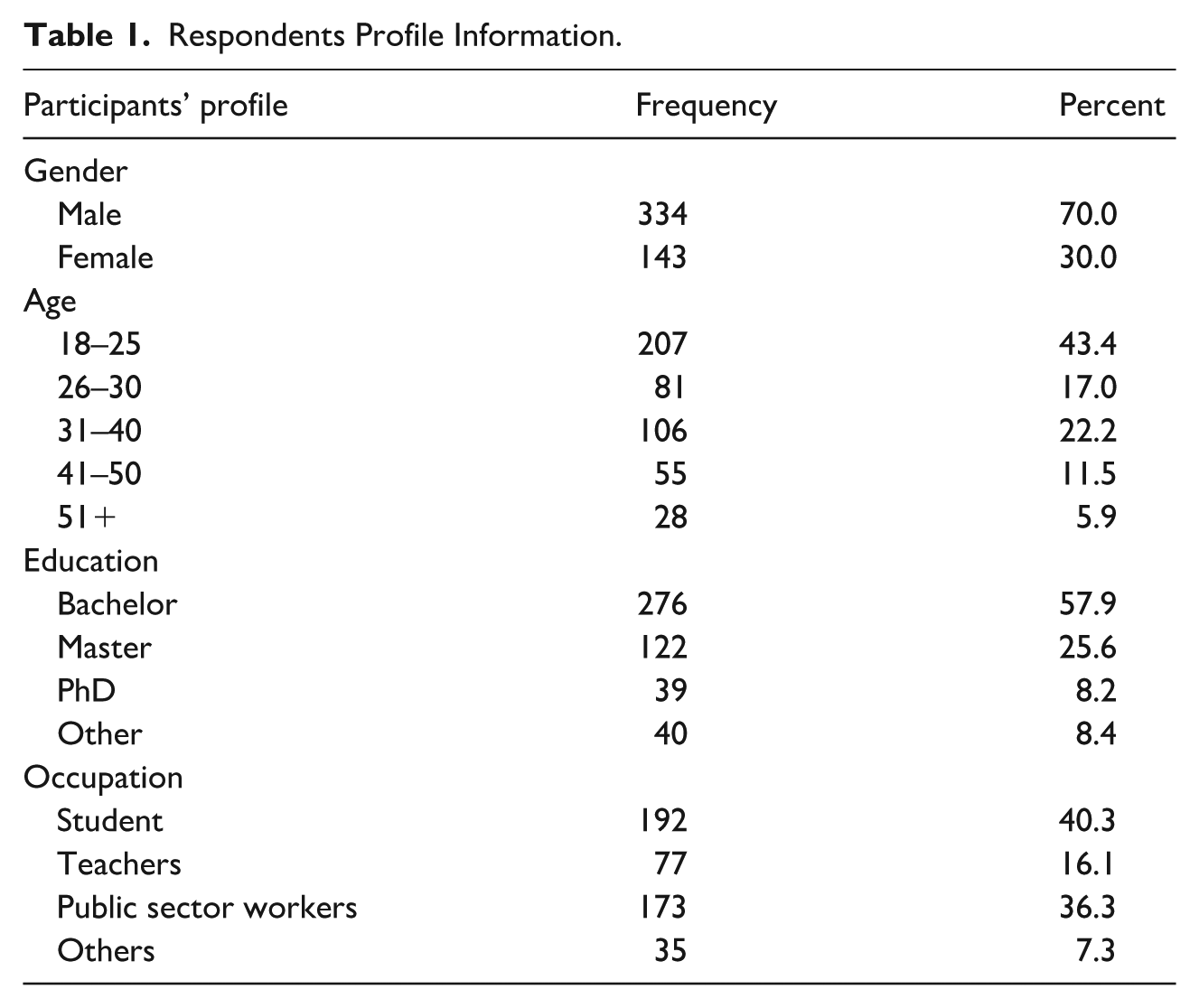
The study was dominated by male respondents (n = 334, 70%). However, a sufficient number of females (n = 144, 30%) also participated in this study. Other demographic statistics appear in Table 1.
Respondents Profile Information.
Data Analysis Tool and Procedure
The study utilized partial least squares structural equation modeling to validate the responses to authenticate the proposed model using SmartPLS version 4.0.9.2 software. PLS-SEM employs a nonparametric approach to statistically analyze the quantitative data for both types of constructs, which are formative and reflective. It can efficiently handle skewed data and does not require a larger sample for accurate analysis (Hair et al., 2012). It is also capable of validating hypothetical assumptions, dealing with complex theoretical models, and building theories with high precision (Hair et al., 2019). Furthermore, PLS-SEM provides “a single determinant score for each SEM composite for each observation” (Sarstedt et al., 2021).
Measurement Model
Smart PLS-4 software was used to evaluate the internal consistency reliability (ICR), convergent validity (CV), and discriminant validity (DV) of the reflective constructs to assess the reliability and validity of our research model (Hair et al., 2019). We used Cronbach’s alpha (CA) and Composite reliability (CR) tests to examine the ICR of the constructs. The results meet the required standard parameter/value of .70 or above (Table 2). The construct’s convergent validity in this study was measured through the outer factor loading and the Average Variance Extracted (AVE). All of the constructs’ factor loadings exceed the standard value of 0.70 or above. Similarly, the study meets the required standardized value of 0.5 thresholds or above as the AVE values of all the construct items are bigger than 0.641 (Hair et al., 2019; Table 2).
Measurement Model—Construct Reliability and Validity Analysis.
To evaluate the discriminant validity of our research model, we applied cross-factor loadings and the Heterotrait-Monotrait Technique (HTMT; Sarstedt et al., 2021). The results demonstrate that the HTMT ratio for all constructs is lower than the compulsory standard threshold of 0.90 (Franke & Sarstedt, 2019; Table 3). Likewise, the cross-loadings of all items within each construct are well aligned with their respective constructs (Table 4).
Discriminant Validity (HTMT).
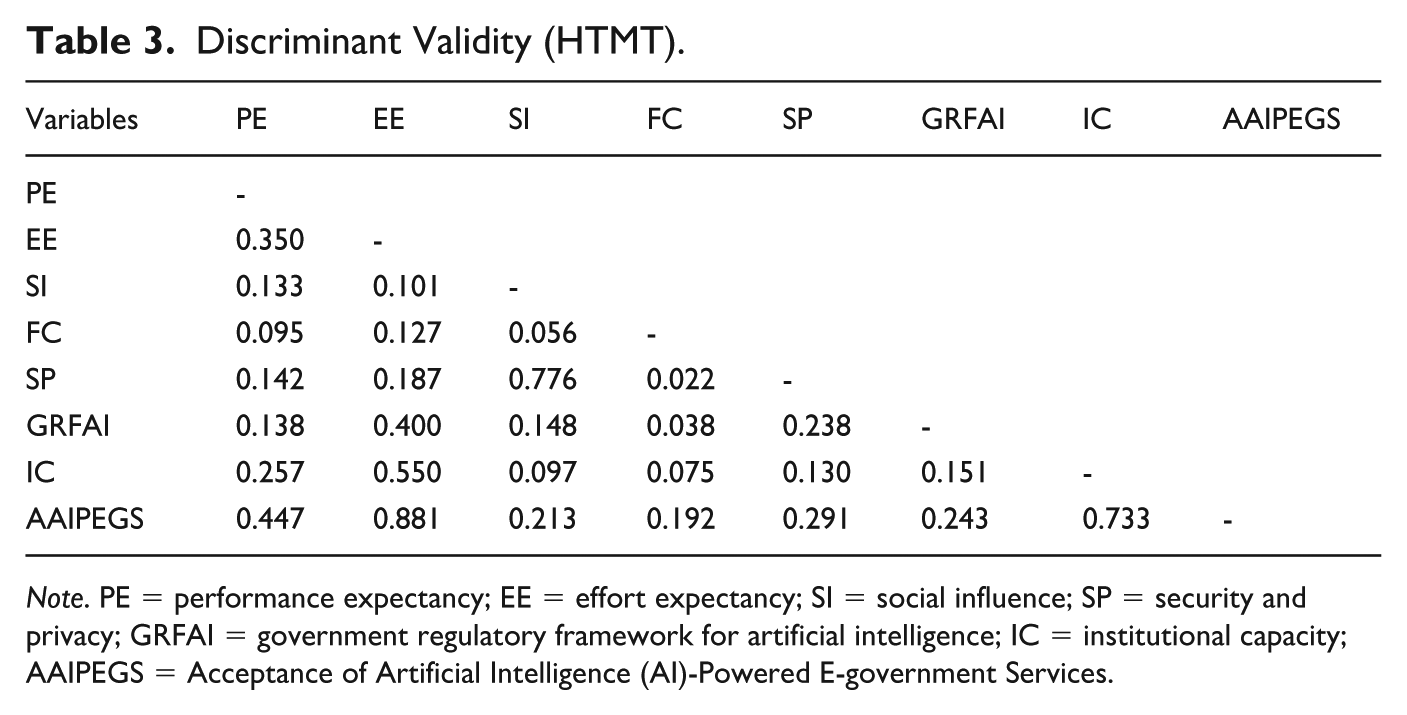
Note. PE = performance expectancy; EE = effort expectancy; SI = social influence; SP = security and privacy; GRFAI = government regulatory framework for artificial intelligence; IC = institutional capacity; AAIPEGS = Acceptance of Artificial Intelligence (AI)-Powered E-government Services.
Cross-Loadings (Discriminant Validity Test).
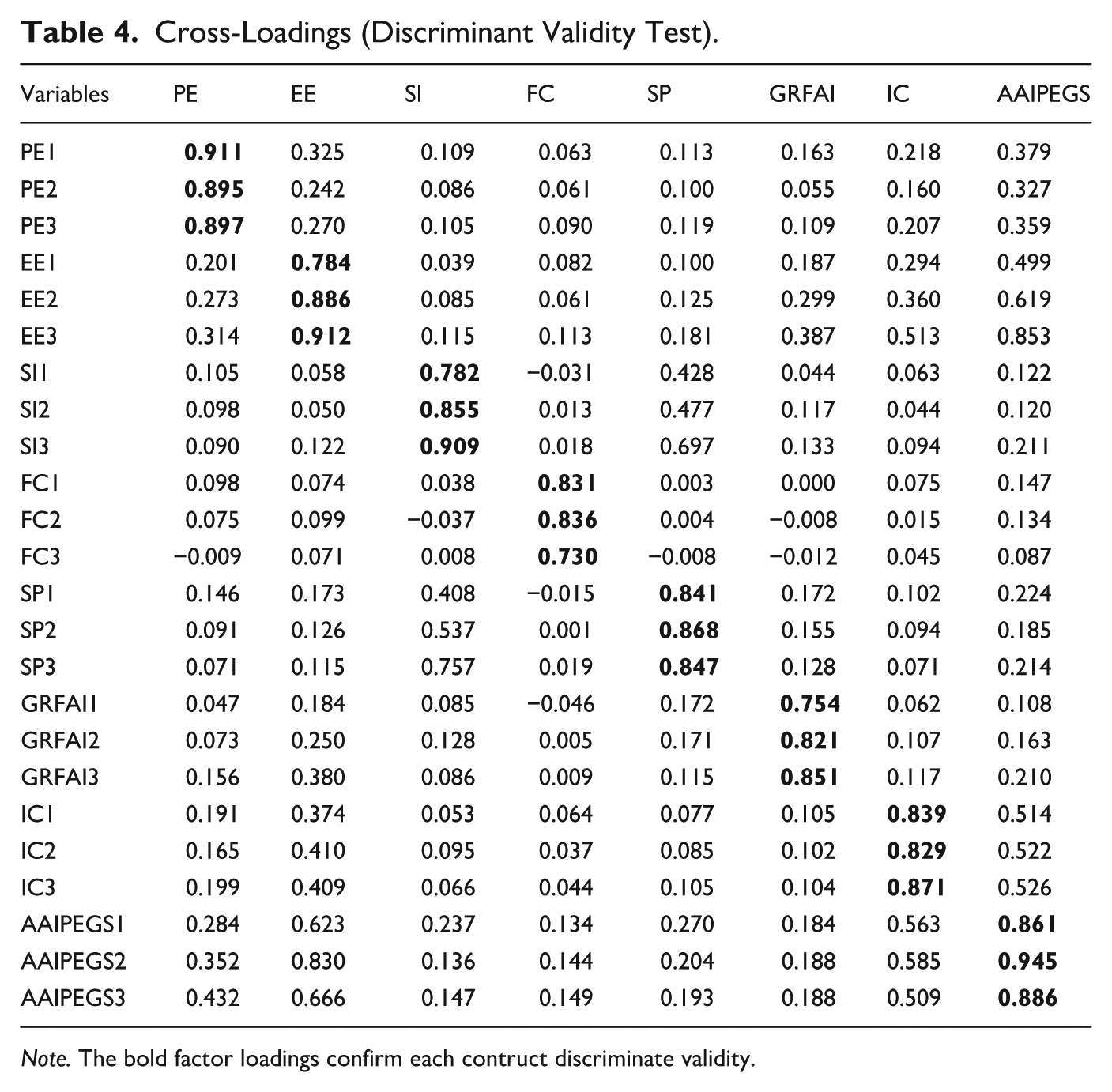
Note. The bold factor loadings confirm each contruct discriminate validity.
We also conducted a full collinearity test, using variance inflation factors (VIF) to find common method bias (CMB) in the survey. VIF values of all the constructs used in this study are below the threshold value of 3.3 (Kock, 2015), and we concluded that the proposed model generally is at low risk of CMB.
Structural Model
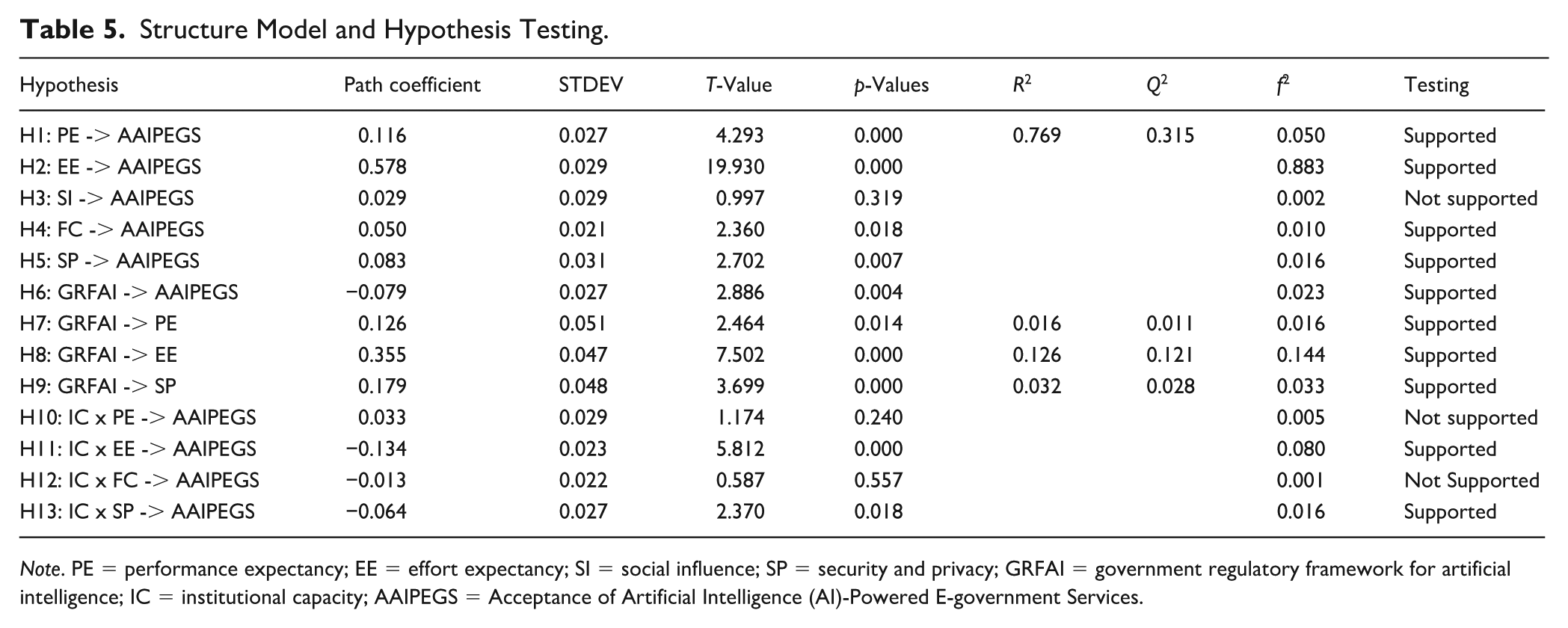
To evaluate model fit, we used 5,000 bootstraps to run the model with 478 valid responses, using in Smart PLS-4 software. The standardized root mean square (SRMR) value of 0.061 indicates a good fit (G. Cho et al., 2020; Henseler et al., 2016). We also examined the coefficient of determination (R2), cross-validated redundancy (Q2), and effect sizes (f2) for information on the relevance and predictive power of the model. The AAIPEGS model has With an R2 .769, suggesting that the exogenous variables (PE, EE, SI, FC, SP, and GRFAI) account for 76.9% of the variance in AAIPEGS. Meanwhile, the R2 values for PE (.016), EE (.126), and SP (.032) all are lower indicates that GRFAI explains 1.6% of the variance in PE. Scholars (Hair et al., 2020; Shmueli et al., 2016) suggest that the R2 and Q2 values of endogenous variables should be higher than zero to demonstrate the predictive significance of the research model.
To examine the predictive relevance of the research model, we applied the PLS prediction procedure in Smart PLS-4 to measure Q2 values for each endogenous variable (Hair et al., 2020; Shmueli et al., 2016). They are 0.315 for AAIPEGS, 0.011 for PE, 0.121 for EE, and 0.028 for SP, indicating that the model achieved significant predictor relevance and explanatory power (See Table 5).
Structure Model and Hypothesis Testing.
Note. PE = performance expectancy; EE = effort expectancy; SI = social influence; SP = security and privacy; GRFAI = government regulatory framework for artificial intelligence; IC = institutional capacity; AAIPEGS = Acceptance of Artificial Intelligence (AI)-Powered E-government Services.
Moreover, we found a sizable effect of the exogenous (independent) variable on the endogenous (dependent) variables. According to Cohen (2013), the effect size of an exogenous variable can be determined through the f2 value: small if f2 = 0.02, medium if f2 = 0.15, and larger when f2 is greater than 0.35. Here, among the effects on AAIPEGS, PE, SI, FC, SP, and GFRAI have small effects and EE a strong effect. Meanwhile, GRFAI has a relatively small effect on PE (f2 = 0.016), GRFAI has a medium effect on EE (f2 = 0.14), and GRFAI has a small effect on SP (f2 = 0.033). Similarly, the interaction of IC and PE (f2 = 0.005) and IC and FC (f2 = 0.001) on AAIPEGS are weak to non-existent. Yet, interactions between IC and EE (f2 = 0.080) and IC and SP (f2 = 0.016) on AAIPEGS are stronger (Table 5).
Even though some of the effect sizes in this study are small and weak, they still are statistically significant and evidently have theoretical and practical applications. Small effects are not uncommon in multifactorial technology adoption models (Holden & Karsh, 2010; Venkatesh & Davis, 2000). For example, the TAM2 model shows a small but statistically significant effect of perceived ease of use on behavioral intention (Venkatesh & Davis, 2000). Similarly, multiple predictors jointly influence the adoption of new technologies (e.g., AAIPEGS), and each variable is expected to account for a portion of the variance (Holden & Karsh, 2010). Small effects also may be the result of early adopters’ initial cognitive reactions to new technologies (e.g., AAIPEGS) due to subtle perceptual changes, which may be amplified through social influence and network-based diffusion as the technology gains traction in third-world countries such as Ghana (Katz & Shapiro, 1985; Rogers, 2003).
Hypotheses Testing
The findings indicate that PE and EE are is positively related to behavioral AAIPEGS (β = .116, t = 4.293, p < .001; β = .578, t = 19.930, p < .001). However, the relationship between SI and behavioral AAIPEGS is not statistically significant (β = .029, t = 0.997, p > .5). Support exists for H1 but not for H2 or H3.
Furthermore, FC and SP both are positively linked to behavioral AAIPEGS (β = .050, t = 2.360, p < .05; β = .031, t = 2.207, p < .01), as H4 and H5 predicted.
Similarly, GRFAI is significantly and negatively associated with the behavioral AAIPEGS (β = −.079, t = 2.886, p < .01). GRFAI also is positively related to AAIPEGS’ PE (β = .126, t = 2.464, p < .01), EE (β = .355, t = 7.502, p < .001), and SP (β = .179, t = 3.699, p < .001) of AIPEGS. These results are consistent with H6, H7, H8, and H9, respectively.
Findings on the moderation hypotheses are more mixed. IC significantly and negatively moderates the influence of EE (β = −.134, t = 5.812, p < .001) and SP (β = −.064, t = 2.370, p < .05) on behavioral AAIPEGS. Yet, the expected moderation of IC and PE (β = .033, t = 1.174, p > .05) or IC and FC (β = −.013, t = 0.587, p > .05) on behavioral AAIPEGS was statistically significant. H11 and H13 are supported, while H10 and H12 are rejected.
To explore the moderation effects further, we applied slope analysis to evaluate the moderation effects of IC on the interaction between EE and AAIPEGS as well as between SP and AAIPEGS. Lower IC has a much steeper line than higher IC, suggesting that the influence of EE on AAIPEGS increases when IC is low and decreases when IC is high (Figure 5). Similarly, we found that the impact of SP on AAIPEGS increases when the IC is low, but high IC is not significantly related (Figure 6).
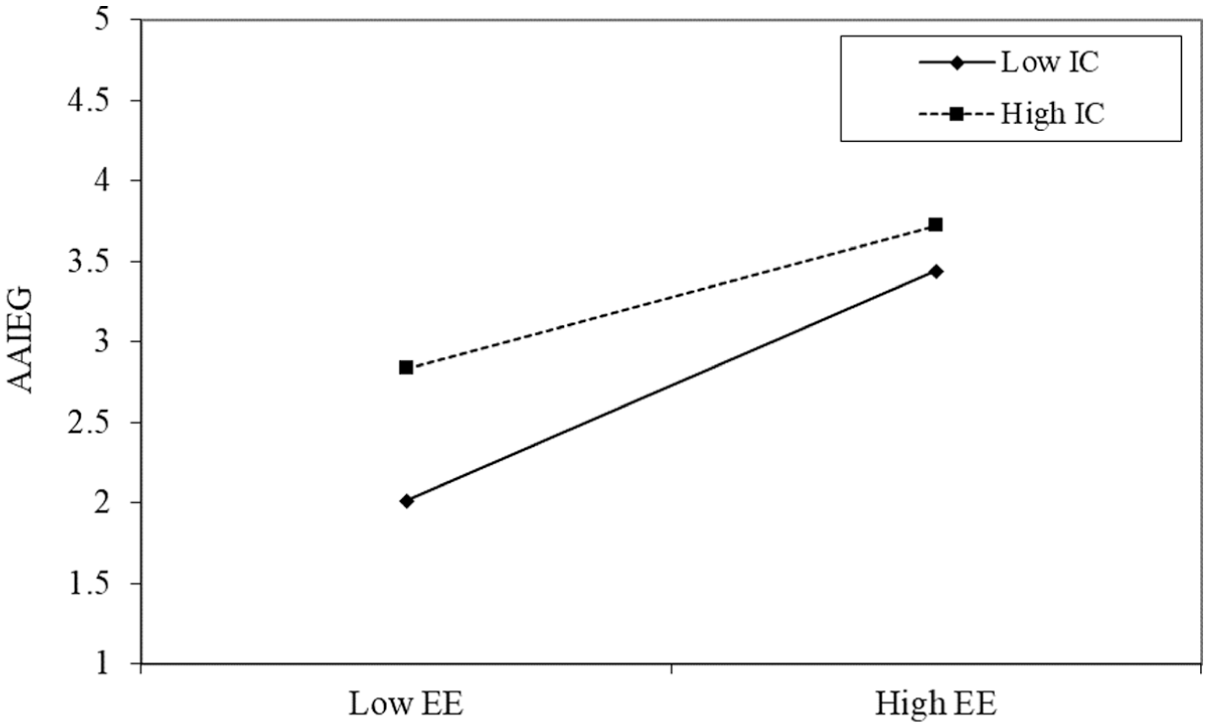
Moderation effects of Institutional Capacity (IC) on the relationship between Effort Expectancy (EE) and Acceptance of Artificial Intelligence Powered E-government Services (AAIPEGS).
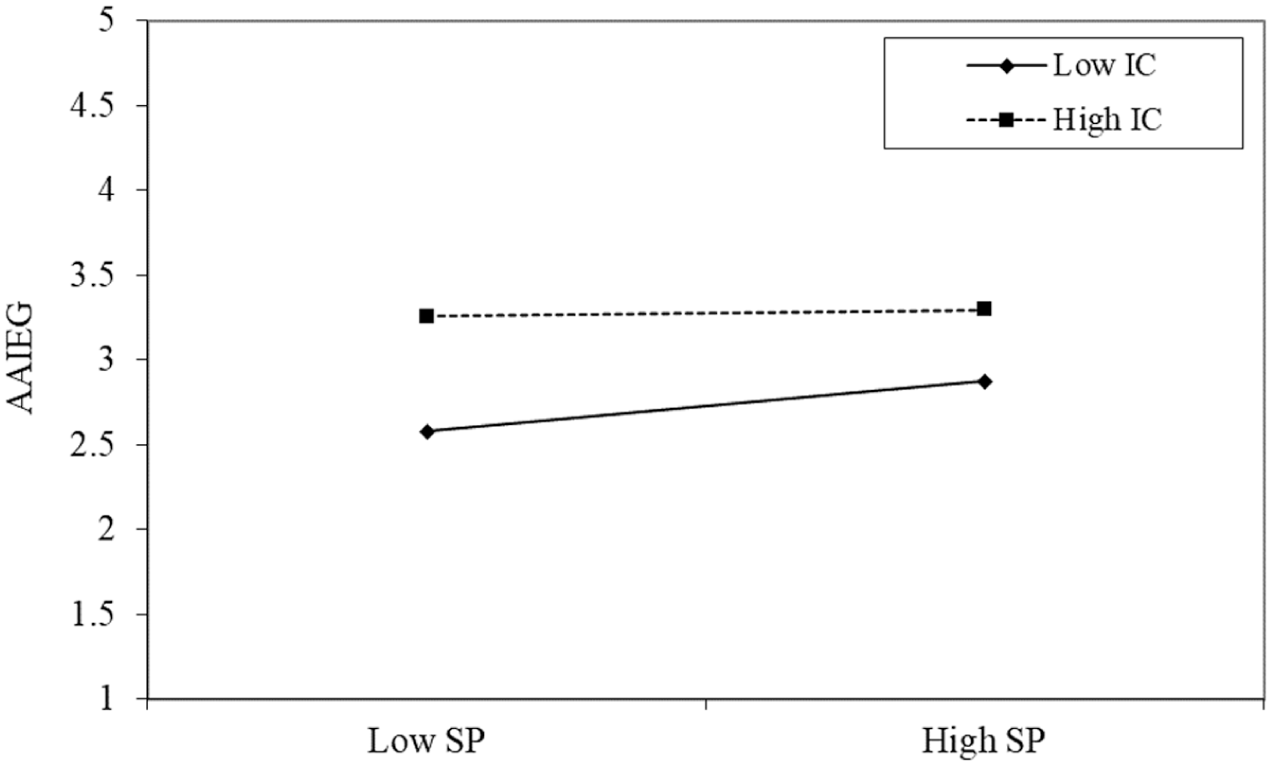
Moderation effects of Institutional Capacity (IC) on the relationship between Security and Privacy (SP) and Acceptance of Artificial Intelligence Powered E-government Services (AAIPEGS).
Discussion
The integration of AI-powered technologies in e-government has revitalized the delivery of speedy, efficient, and low-cost public services to citizens. It also has transformed the quality of both the supply side of e-government (the necessary supply of infrastructure and digital services to execute and accept EGS) the demand side to meet the expectations of individuals, businesses, and other stakeholders. Based on an extended UTAUT model, this study elaborates on the vantage point of a developing nation-state. The findings advance discussions on the integration of AI in the design and execution of EGS for more effective, efficient, and speedier public service delivery to the citizens. Horvath et al. (2023) argue that acceptance of government use of AI-powered applications in the provision of public services is a vital component for the legitimate and effective use of AI-powered e-government public services. Our findings suggest that PE, EE, FC, and SP are key drivers of the AAIPEGS but that SI is not. Moreover, GRFAI evidently shapes the PE, EE, and SP of AIPEGS. It also predicts individuals’ acceptance of e-government public services. The IC of government sector organization toward e-government significantly moderates the relationship of EE and SP with such acceptance but, contrary to expectations not that of PE or FC.
The positive impact of PE on citizen AAIPEGS is an indication that if AIPEGS are designed with robust functionalities that give maximum beneficial output to citizens and provide uninterrupted, quality public services to citizens, they will be widely utilized. It further suggests that when citizens have high expectations of AI-powered systems to perform well in improving government services, they are more likely to accept and use those AI-driven solutions. In addition, when citizens anticipate that AI-powered systems will provide personalized experiences tailored to their needs, they are more likely to accept such innovations. Similarly, PE is heightened when users expect that AI-powered services will better fit their lifestyles and preferences. Our findings support prior studies that the perceived usefulness of e-government systems drives their acceptance (Al Sayegh et al., 2023; Méndez-Rivera et al., 2023). Additionally, the positive impact of EE on the acceptance of AIPEGS means that the AIPEGS should be driven primarily by ease of use and user-friendly features. The latter, such as flexibility, understandability, and effortlessness, can help ensure that people can easily access e-government services through AI-powered technologies without few challenges, especially for those who are less privileged or have less familiarity with innovative technologies. Citizens are more likely to trust AI technologies if they perceive them as user-friendly and accessible. Trust is a critical factor in the acceptance of AI systems, especially when they are used for important public services (Al-Mushayt, 2019). A straightforward user experience reduces the barriers for those who may not be technologically savvy. This inclusivity can ensure that a broader demographic can access AI-driven government services, enhancing the overall effectiveness of e-government initiatives. Ultimately, higher EE leads to a more favorable reception of AI-powered e-government services among citizens. When citizens view these services as easy and accessible, it enhances user satisfaction, increases trust, encourages engagement, and promotes a culture of continuous usage, all of which are critical for the successful implementation and acceptance of AI in government. Previous studies have shown that EE of EGS influences the adoption of EGS in different contexts (Hujran et al., 2023; Mensah & Mwakapesa, 2025).
Interestingly, here SI failed to be related to acceptance of AIPEGS, indicating that among those we sampled the influence of opinions, beliefs, and recommendations from friends, family, acquaintances, and other important persons in society did not drive respondents decisions to accept AIPEGS. This indicates that social pressure, norms, or discussion about AI-powered e-government might lead to skepticism, hesitation, or outright resistance about these technologies in different cultural settings. The acceptance of AI e-government services might be shaped more by individual factors such as personal beliefs, perceived usefulness, or technical aptitude rather than social pressures or norms. Additionally, the level of digital literacy among respondents might affect their reliance on social influence. If individuals are generally technologically savvy and confident in their ability to evaluate AI-powered services independently, they may be less likely to consider the opinions of others when making decisions about adoption. Furthermore, a possible explanation for this outcome might be well-embedded in cultural context. Different cultures have varying levels of collectivism versus individualism, which can influence how social norms and peer behaviors impact individual decision-making. In collectivist cultures, individuals may be more influenced by social norms, whereas in more individualistic cultures, personal preferences and experiences might take precedence. In the context of our study, young, educated urban Ghanaians appear to be more focused on their own decision-making, valuing personal autonomy and less influenced by the opinions of their peers or family members. Therefore, SI could account for the negligible impact in our study. Studies have indicated that culture plays a visible and contrasting role in the connection between SI and embracement of new technology (Graf-Vlachy et al., 2018; McCoy et al., 2007). For example, Hujran et al. (2023) found a statistically significant positive impact of SI on adoption of EGS in the United Arab Emirates. Other studies (Hujran et al., 2023; Nguyen & Borazon, 2023) noted that SI can create trust and support and encourage EGS adoption in Vietnam. In contrast, Almaiah and Nasereddin (2020) suggest that SI does not drive individual acceptance of EGS in Jordan. These inconsistent reports highlight that SI may have a different impact on the adoption of new technologies across different cultures.
The positive and statistically significant relationship between FC and individual acceptance of AIPEGS is another signal that having the right technological and managerial resources to support individuals’ desire to use AI-driven EGS, they will gain wider acceptance. FCs may cover fostering partnerships with AI technology providers, government agencies, and funding agencies for building AIPEGS. Provision of technical training and support and of dynamic digital infrastructure (e.g., uninterrupted power supply, faster internet connectivity, AI-technological infrastructure) can inspire acceptance of AIPEGS. This further shows that facilitating conditions play a crucial role in individual’s acceptance of AI-powered e-government services. These conditions can influence users’ perceptions, experiences, and ultimately their willingness to engage with such services. When citizens understand how AI services can improve their interactions with government, they are more inclined to use them. Additionally, providing channels for users to give feedback on AI e-government services can increase engagement. Ultimately, ensuring that AI-powered EGSs are interoperable with existing systems will allow a smoother transition and enhance user experience. Individuals are more likely to adopt services that seamlessly integrate with other platforms they already use. This finding is consistent with other studies (e.g., Al Sayegh et al., 2023; Mensah & Mwakapesa, 2025).
SP is another important driver of AAIPEGS. If government addresses SP concerns about the development of AI systems, it will encourage more people to accept them. AI systems raise concerns about privacy and security risks due to their rapid development and handling of big data without appropriate regulatory frameworks. A robust security and privacy regulatory framework can help assure guarantee SP in AIPEGS, especially protecting and safeguarding users’ personal and transactional data. Implementation of advanced security technologies (like encryption, multi-factor authentication, and regular security assessments) can enhance user confidence, leading to higher adoption rates. Dealing with the SP will ensure AIPEGS becomes successful, as well as build a socially responsible AIPEGS that can deliver greater public value for a longer period. Our findings support studies that have declared that SP is crucial to the acceptance of any given technology (Kanaan et al., 2023).
Furthermore, the findings indicate that government regulation of AI is related to AAIPEGS and the PE, EE, and SP of AIPEGS. Government policy framework and regulations on AI-powered technologies can provide the required blueprint to direct deployment of AI-driven e-government to ensure a more responsible AI-powered environment. This further means that government policies and regulations play pivotal roles in establishing the frameworks within which AI technologies can operate. Regulations can dictate the ethical use of AI, data privacy standards, and compliance with security protocols. Well-regulated AI systems that align with government standards are likely to showcase better performance metrics, enhancing user trust and engagement. If users believe that AI solutions provide important benefits and improve efficiencies, they are more likely to adopt them. Moreover, government regulations that provide guidelines or frameworks for implementing AI can reduce the complexities and learning curves associated with new technologies. Training programs, resources, and support systems promoted through regulations can lower effort expectations, facilitating smoother adoption processes. Concerns around data security and privacy are paramount in the context of AI. Government regulations can establish critical safeguards that protect user data and enhance the security of AI systems. Regulations that set and enforce data protection measures and compliance with privacy laws can reassure citizens about the safety of using AI-powered services, leading to higher adoption rates.
The moderating impact of public agencies’ IC of public sector agencies on the influence of EE and SP on AAIPEGS suggests the vital role of IC. Public sector institutions with the structural and human resources/capital to oversee AIPEGS development and deployment will be crucial for their success and sustainability. High IC can enhance users’ perceptions of effort expectancy. For instance, a well-resourced agency may provide better training, clear guidelines, and user-friendly interfaces, which can lower the perceived effort of adopting AI-powered services. Moreover, when institutions have strong capacities to secure data and ensure privacy, they can build user trust. This trust mitigates concerns about security and privacy, enhancing the likelihood of adoption. Institutions with higher capacity are more likely to implement better support mechanisms for users (e.g., help desks, user feedback systems), which can alleviate anxiety associated with adopting new technologies. Furthermore, the public sector’s high IC to engage and incorporate user feedback in EGS can foster a more favorable environment for adoption and reinforce more positive perceptions of effort expectancy and security/privacy.
Yet, this study’s negative moderation effects of IC on EE and SP imply that situations in which people are overconfident in an institution’s capacity may solidify trust in the government, reducing the need to assess the EE of AIPEGS. Perhaps especially in settings in which public sector institutions focus their capacity on backend efficiency rather than smooth interaction (frontend usability), negative moderation of IC may occur. Moreover, people in high IC settings may come across very complex or bureaucratic AI systems, limiting their potential positive impact on EE. Overall, this suggests means that in situations where IC is considered to be high, usability issues (that is, EE) should remain a top priority.
The negative moderating effect of IC on SP suggests that when IC increases, the influence of SP on AAIPEGS weakens. This may reflect that many in a high IC environment may assume that SP problems are addressed or managed automatically, diminishing the quest for SP when using AI systems. To put it simply: “if public sector institutions are capable or have the capacity, why should I be worried?”. This also may lead to complacency among users, resulting in fewer requests for transparency and limiting the positive effect of SP on users’ AAIPEGS. In environments of high IC, public sector institutions should demonstrate how they ensure SP via transparency and communication of clear policies, especially in terms of use control mechanisms such as data access, opt-out options, and content controls to sustain trust and minimize the negative effects of strong or high IC on SP. The negative moderating effect of IC on SP can also be linked to the privacy paradox concept (Kokolakis, 2017; Willems et al., 2023), where users may claim to be concerned about SP but act differently in a high IC context.
Nonetheless, institutional capacity’s apparent inability to moderate the influence of both PE and FC on AAIPEGS means that inclusion of IC does not augment the already established predictive power of PE and FC on AAIPEGS. This in turn may suggest that improvements in PE and FC could be more critical than reinforcing institutional capabilities. The adoption of new technologies like AI may be influenced by a variety of factors beyond institutional capacity. Factors such as user trust, perceptions of technology, cultural readiness, and alignment with existing processes also may play crucial roles. This study’s findings on GRFAI and the moderating influence of IC are distinctive and deserve further investigation.
Theoretical Implications
Our analysis contributes to scholarship on e-government literature, extending the UTAUT model with several new constructs, GRFAI, SP, and IC. These and the core constructs of the model accounted for 77% of the acceptance of AIPEGS, underscoring the importance of legal frameworks and institutional readiness as well as the technology itself. Our study indicates that a strong AI regulations framework is instrumental in shaping AI systems’ usefulness and ease of use while at the same time encouraging trust in the security and privacy of AIPEGS. It further revealed that even well-designed AIPEGS will struggle without capable government institutions to implement them, a crucial insight that reshapes how we think about technology adoption in the public sector, particularly in the context of the development of AIPEGS.
Practical and Managerial Implications
Among the study’s more applied implications are that AIPEGS should have an intuitive user interface, clear and concise interaction, seamless integration, personalization, and adaptability to shape the quality of user experience, the level of satisfaction, and ultimately acceptance of such governance systems.
IT infrastructure (both hardware and software), management support, capable IT personnel, and effective IT training and support are some common FC that should be present to drive the development and diffusion of AIPEGS. Additionally, the development of adequate SP protocols for AI systems to reduce or eliminate the threat from hackers and intruders that might challenge individual users’ personal information should be given priority. Access controls, user monitoring mechanisms, and language filters are some major security measures that can be instituted to reduce malicious activities and protect users from potential risks.
Public sector agencies should enhance their capacity for data management and data security mechanisms to safeguard users’ identities and maintain users’ anonymity. They should collect and retain only required personal data to reduce privacy risks and effectively address privacy and data security issues within AIPEGS; regularly scheduled privacy audits should identify potential system problems and proactively avert risk. Agencies should also explicitly communicate clear and well-illustrated privacy guidelines to end users.
Governments should adopt an effective regulatory framework for AI to handle the challenges of biases, misinformation, disinformation, unethical data collection, and cybersecurity threats, to facilitate the deployment of efficient and effective AIPEGS. These efforts should work to ensure the accountability, fairness, impartiality, autonomy, and due process of AIPEGS development and deployment. Government agencies also should also adopt mechanisms to help stakeholders deal with risks, uncertainties, challenges, and disruptions that accompany AI development. Additionally, they should guide, regulate, and facilitate the nature of interaction between users and AIPEGS. Such measures should focus on strengthening stakeholders’ confidence in AIPEGS by ensuring its higher integrity.
This study also offers suggestions to policymakers, informed by examples of successful regulatory practices in a range of settings, including developing countries, for building an effective regulatory framework for AI. First, there is a need to establish clear definitions of and categories for AI. Policymakers should define what constitutes AI and categorize its various applications (e.g., machine learning, natural language processing, robotics) to tailor regulations appropriately. For example, the European Union’s AI Act distinguishes between different risk categories associated with AI systems (e.g., minimal, limited, high, and unacceptable risk), providing a framework for regulatory responses that correspond to the specific risks posed by each category (Fink, 2021; Stuurman & Lachaud, 2022). Second, a dedicated autonomous AI regulatory authority (AIRA) is required to oversee artificial intelligence. It should guarantee high levels of expertise in both technological and ethical matters. For example, the Canadian Institute for Advanced Research (CIFAR) has played a pivotal role in promoting responsible AI development through consultations and policy recommendations. It also serves as a regulatory body to oversee AI initiatives in Canada (Escobar & Sciortino, 2022). Third, the promotion and establishment of transparency and clear regulations to ensure transparency in AI systems, particularly in high-stakes fields like healthcare and criminal justice. For instance, the UK’s National Health Service guidelines emphasize transparency and patient consent when deploying AI in diagnostics, ensuring patients understand AI systems’ impact on their healthcare (Taylor-Phillips et al., 2022). Fourth, there is a need for the development of robust data privacy regulations to enact data protection laws consistent with international benchmarks. The regulation should ensure the secure management of personal data and its ethical use for AI training purposes. As an illustration, Brazil’s General Data Protection Law (LGPD) mirrors Europe’s GDPR, providing a framework for data protection that empowers individuals and regulates how organizations use personal data, including data for AI development (Gadoni Canaan, 2023). Fifth, policymakers should encourage stakeholder engagement to foster partnerships among government, industry, academia, and civil society to formulate a unified approach to AI regulation. For example, the National Institution for Transforming India (NITI) consulted and engaged different stakeholders in various forums to incorporate their perspectives in the formulation of the National AI Strategy (Majid & Lakshmi, 2022).
Public sector organizations should take adequate measures to build the required IC to stimulate the development and deployment of AIPEGS. Capacity development can empower public sector institutions to strengthen, create, adapt, and maintain adequate capacity to oversee the functions and design of AI-powered systems to strengthen public service delivery. Capacity development should be a top priority for government and public institutions if the public sector is to see the maximum benefits from AI deployment. Public sector institutions’ capacity building in areas such as leadership, management, IT skills, AI technology, human resources, financial resources, and service delivery can make them proactive, innovative, and diligent in the design and deployment of AIPEGS.
Limitations and Future Research
The model and approach used in this work could be applied in any cultural context, but the results may well not reflect our findings and conclusions. We acknowledge that this study’s use of convenience sampling may well limit the generalizability of the study’s findings. We also relied on used cross-sectional data from a developing country (Ghana). Since no single work can comprehensively examine the factors driving AAIPEGS, future studies could engage in a comparative study including other African countries, where data from varying settings and countries can be analyzed for deeper insight into AIPEGS development at the continental level. It can also help to understand the cultural differences that underlie the development and diffusion of AI systems for public services. Future studies could employ other sampling strategies, such as stratified random sampling, to examine how Hofstede’s cultural dimensions (power distance, uncertainty avoidance, gender collectivism/individualism, and time orientation), digital literacy, political trust, infrastructure, and historical challenges in public sector reforms influence AAIPEGS. Furthermore, the underlying reasons for the lack of statistically significant findings with SI could be investigated by integrating likelihood moderators such as institutional trust and peer norms. GRFAI is a new construct that we created and validated; additional work explore its relevance to and performance in other settings.
Conclusion
The integration of AI into e-government services is a vital step to strengthen and enhance the efficiency and effectiveness of public service provision to the general public. However, studies on the underlying factors that drive the acceptance of AI-powered e-government services (AIPEGS) from a public perspective are lacking, particularly in developing countries. To address this gap, this study develops an innovative research model based on the UTAUT framework and incorporates new variables to understand their relationships with on the acceptance of AIPEGS from a developing country perspective. Results demonstrate that the PE and EE of AIPEGS are related to the decision of people to utilize AIPEGS. Similarly, FCs, along with adequate SP protocols, are also crucial factors that drive the AAIPEGS. Furthermore, GRFAI is not only vital the AAIPEGS but also to the PE, EE, and SP of AIPEGS. Finally, findings demonstrate that the IC of public sector agencies helps drive the building and diffusion of design, deployment, and diffusion of AIPEGS.
Footnotes
Appendix
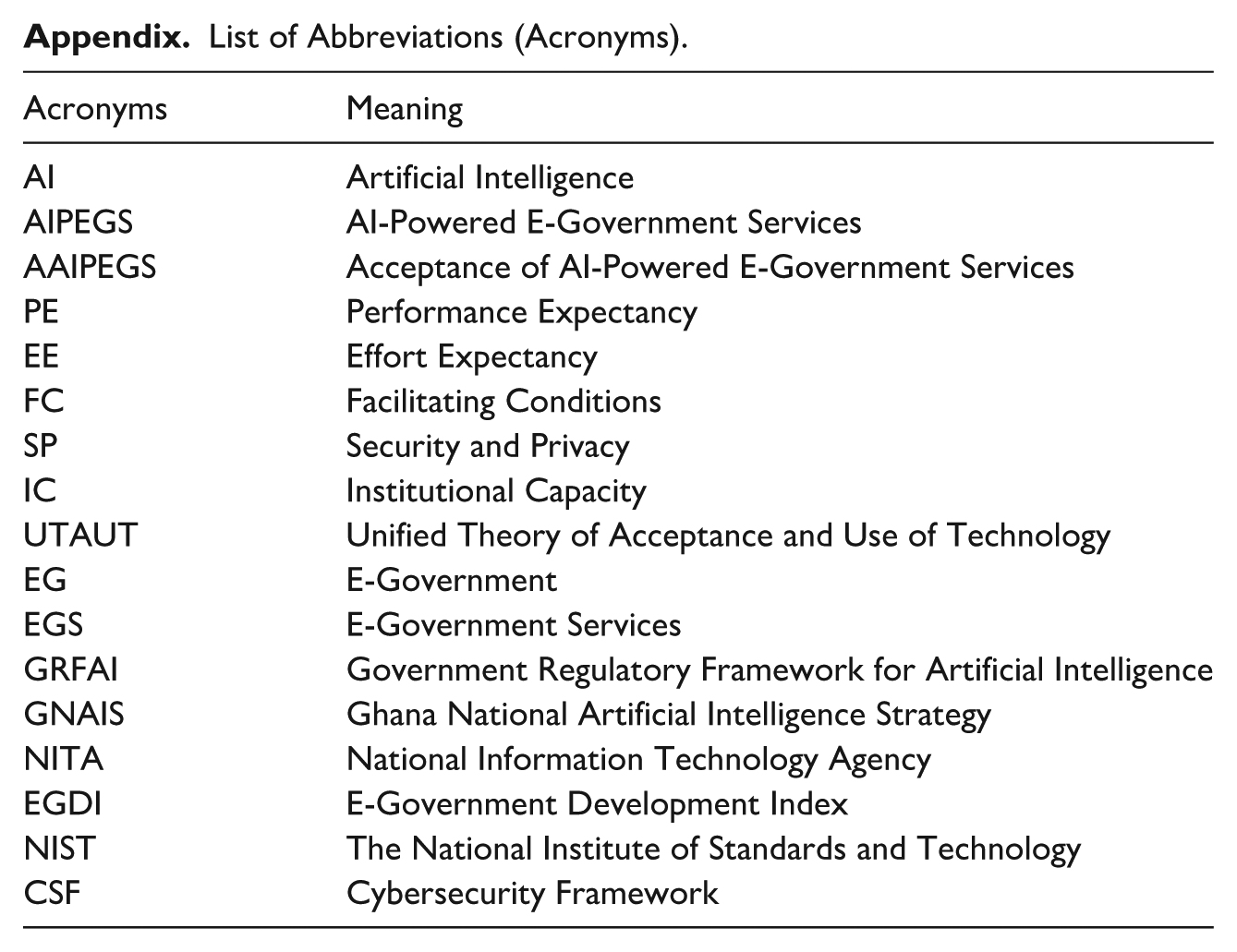
List of Abbreviations (Acronyms).
| Acronyms | Meaning |
|---|---|
| AI | Artificial Intelligence |
| AIPEGS | AI-Powered E-Government Services |
| AAIPEGS | Acceptance of AI-Powered E-Government Services |
| PE | Performance Expectancy |
| EE | Effort Expectancy |
| FC | Facilitating Conditions |
| SP | Security and Privacy |
| IC | Institutional Capacity |
| UTAUT | Unified Theory of Acceptance and Use of Technology |
| EG | E-Government |
| EGS | E-Government Services |
| GRFAI | Government Regulatory Framework for Artificial Intelligence |
| GNAIS | Ghana National Artificial Intelligence Strategy |
| NITA | National Information Technology Agency |
| EGDI | E-Government Development Index |
| NIST | The National Institute of Standards and Technology |
| CSF | Cybersecurity Framework |

Ethical Considerations
This study follows the 1964 Helsinki Declaration and its later amendments or comparable ethical standards. This research was carried out in compliance with established ethical research standards. Ethical approval was not required for this study, as the questionnaire focused solely on gathering fundamental demographic data, such as age, gender, and educational background. The questions posed no foreseeable risks to the participants, and all collected data were handled with the highest level of confidentiality and respect. Participants were made aware of their right to withdraw from the study at any point without facing any repercussions, thereby ensuring that their autonomy and well-being were prioritized throughout the research.
Consent to Participate
The informed consent was distributed along with questionnaires, and implied informed consent was obtained from the respondents before participation in this study.
Funding
The authors disclosed receipt of the following financial support for the research, authorship, and/or publication of this article: This research was supported by the High-Level Talent Introduction Program and Hubei Private Enterprise Innovation and Development Research Center (HPEIDRC) of Wuhan College.
Declaration of Conflicting Interests
The authors declared no potential conflicts of interest with respect to the research, authorship, and/or publication of this article.
Data Availability Statement
Data will be available on request.*