






Abstract
This study examines how network governance enables social innovation through a stage-based analysis of Jeonju’s Community Care Project for the Elderly in South Korea. Drawing on qualitative data, it shows that a lead organization–governed network functions through three key mechanisms that operate differently across stages: trust-building, continuous communication, and coordination. These mechanisms facilitate joint problem-solving, resource mobilization, and legitimacy-building, enabling the scaling and institutionalization of social innovation. The study contributes to network governance theory by linking governance mechanisms to the dynamic process of social innovation and offers practical insights for sustaining network governance arrangements in community-based care systems.
Keywords
Introduction
This study examines how network governance facilitates social innovation in local communities within the broader shift in public administration from New Public Management (NPM) to New Public Governance (NPG). NPG emphasizes participatory and networked modes of governance that engage diverse actors in the co-production of public value (Bryson et al., 2014; Pestoff, 2011). Hierarchical arrangements under Traditional Public Administration and market-based mechanisms under NPM have proven inadequate for addressing complex and interdependent social challenges (Pollitt & Bouckaert, 2017). In response, governance arrangements have increasingly shifted toward interorganizational networks that enable joint problem-solving beyond organizational boundaries (Osborne, 2010). Within this paradigm, participatory and collaborative processes in policymaking and service delivery are regarded as essential for achieving more effective, democratic, and innovative outcomes (Torfing & Triantafillou, 2013).
In this context, social innovation has emerged as a central outcome of networked governance. It involves the development and implementation of novel and sustainable solutions to social problems through cross-sector collaboration (Voorberg et al., 2015). At the local level, its success depends on the engagement of local governments, third-sector organizations, private firms, and civil society (Notarnicola et al., 2020). Among these actors, social economy organizations (SEOs) play a distinctive role (González et al., 2010; Stott et al., 2019) because they prioritize social value creation over profit (Defourny & Nyssens, 2013; Laville, 2010). Through collaboration with local governments, SEOs deliver integrated services that address complex and often unmet social needs (Jensen & Fersch, 2019). However, collaboration between local governments and SEOs is not always successful (Hu et al., 2023). Divergent goals, power asymmetries, and coordination difficulties can weaken network effectiveness (Van Puyvelde & Raeymaeckers, 2020). Moreover, for social innovation to be substantive, it must be novel, sustainable, and impactful (Bozic, 2021; Sinclair & Baglioni, 2014). These challenges highlight the need for effective network governance to align actors, coordinate action, and sustain collaboration over time.
Although earlier studies emphasize networks as platforms for information sharing and resource mobilization in social innovation (Ki et al., 2020; McKague et al., 2023), important gaps remain. First, empirical evidence on how governance mechanisms shape social innovation processes is limited (van den Oord et al., 2023). Second, prior research has paid insufficient attention to the role of SEOs in governance networks (Ko et al., 2019; Park, 2025). Third, few studies have examined how different governance structures influence social innovation across its stages (Turrini et al., 2010). Consequently, the mechanisms through which network governance enables social innovation remain underexplored.
To address these gaps, this study investigates how network governance promotes social innovation and identifies the mechanisms through which it unfolds in networked settings. Specifically, it asks:
To answer these questions, the study conducts an in-depth qualitative case study of the Healthcare Safety Net Project within the Community Care Project in Jeonju, South Korea. By analyzing this case, it integrates the framework of network governance with a staged understanding of social innovation to explain how network governance produces innovative and durable policy outcomes.
This article offers both theoretical and practical contributions. Theoretically, it links network governance to the dynamic stages of social innovation, providing an integrated explanation of how governance structures and practices shape innovation processes. Rather than focusing solely on network design or outcomes, it identifies mechanisms, including trust-building, continuous communication, and coordination, through which governance influences each phase of innovation. In doing so, it contributes to network governance theory through analytic generalization by demonstrating how these governance mechanisms operate within a process-oriented framework. Practically, the findings offer guidance for policymakers and social economy organizations. For local governments, the study suggests strategies for designing and managing network governance arrangements that support innovation. For SEOs, it highlights approaches for effective engagement in networked governance to address complex community challenges. These insights are especially relevant amid the growing demand for integrated, community-based service delivery.
The remainder of this article proceeds as follows. The next section reviews the literature on social innovation and network governance. The subsequent section outlines the research design, including case selection, data collection, and analysis. The empirical section presents the findings, followed by a discussion of the theoretical and practical implications, including considerations of generalizability and transferability.
Literature Review
Social Innovation
Social innovation refers to the development and implementation of new or reconfigured social practices that meet social needs and produce meaningful improvements in communities (Peredo et al., 2019). As a demand-driven concept, it emphasizes not only novelty but also effectiveness in addressing unmet needs and generating sustainable solutions to complex social challenges (Cajaiba-Santana, 2014; Jalonen, 2022; Moulaert et al., 2005). Accordingly, social innovation can be understood as both a process and an outcome arising from collaborative efforts among multiple actors to create social value.
A defining feature of social innovation is its dynamic and processual nature. Earlier studies have tended to depict innovation as a linear sequence of stages (João-Roland & Granados, 2020; Mulgan, 2006). More recent research, however, highlights its iterative and nonlinear nature, underscoring the roles of feedback, experimentation, and adaptation throughout the process (Bund et al., 2013). This nonlinearity reflects both the trial-and-error dynamics of innovation (Galvin & Iannotti, 2015) and the institutional and organizational challenges that accompany its implementation (Bartels, 2017). Thus, social innovation is best conceptualized as an evolving, interactive process shaped by continuous learning among stakeholders.
To capture this complexity, the present study adopts the spiral model of social innovation proposed by Murray et al. (2010). The model views innovation as a multi-stage process encompassing six interlinked phases: prompts, proposals, prototypes, sustaining, scaling, and systemic change. This framework is both structured and flexible, providing a systematic view of how social innovation evolves over time while recognizing its adaptive and iterative nature.
The process begins with the prompt stage, where social problems are identified and framed through diagnosing root causes and engaging stakeholders (Mulgan, 2019; Notarnicola et al., 2020). The proposal stage follows, focusing on developing potential solutions through idea generation and collaborative planning. The prototype stage involves testing these ideas in practice and incorporating feedback to refine their feasibility and effectiveness (Mulgan, 2006; Murray et al., 2010). Once a viable approach is established, the sustaining stage seeks to secure financial, human, and organizational resources, often through partnerships that ensure continuity (Krlev et al., 2014; Mulgan, 2019).
As innovation matures, it enters the scaling stage, during which successful models establish effectiveness and legitimacy while expanding their reach through replication, diffusion, and institutional support (Choi & Majumdar, 2015). The final systemic change stage marks the institutionalization of new practices, norms, and governance arrangements that become embedded in broader social systems and drive long-term structural transformation.
Viewing social innovation as a staged yet iterative process offers a robust basis for examining how governance influences its emergence and evolution. This perspective enables a more systematic analysis of the governance mechanisms that shape the different phases of social innovation, providing a process-oriented understanding of the relationship between network governance and social innovation.
Network Governance
Network governance refers to the “institutions and structures of authority and collaboration to allocate resources and to coordinate and control joint action across the network as a whole” (Provan & Kenis, 2008, p. 231). It has become a key governance approach for addressing complex and interdependent social problems that cannot be effectively managed through hierarchical or market-based mechanisms alone. By promoting coordination among diverse actors, network governance enables collaborative problem-solving and resource sharing across organizational boundaries.
Provan and Kenis (2008) identify three primary modes of network governance: participant–governed networks, lead organization–governed networks, and network administrative organizations. These modes differ in the role of the coordinating entity and the degree of centralization within the network.
Participant–governed networks involve decentralized coordination, in which all members collectively manage activities through formal and informal interactions. They emphasize inclusivity, joint decision-making, and collective responsibility, and are generally effective in smaller or less complex settings where mutual trust is high.
Lead organization–governed networks are more centralized, with a single organization assuming responsibility for coordination and decision-making. The lead organization typically handles administrative tasks, mobilizes resources, and provides strategic direction while coordinating and facilitating collaboration among network members. Such networks often emerge when one actor possesses greater legitimacy, capacity, or expertise.
Network administrative organizations (NAOs) are coordinated by an independent administrative unit that does not directly provide services. Acting as a broker or facilitator, the NAO manages communication and coordination across a large and complex network through formal structures.
The effectiveness of network governance can be analyzed at multiple levels: actor, network, and community (Provan & Milward, 2001). Much of the existing research on network effectiveness has focused on actor-level performance, such as organizational outcomes, and network-level performance, including governance, accountability, and external legitimacy (Siciliano et al., 2021). In contrast, community-level effects have received much less attention (Raab et al., 2015; Shumate et al., 2023; Wang, 2016). Yet this level is particularly important in the context of social innovation, which seeks to address community challenges and generate broader social benefits (Shier & Handy, 2016; Vézina et al., 2019). The influence of social innovation often extends beyond direct beneficiaries to reshape broader social systems (Caroli et al., 2018). Therefore, assessing network governance in this context requires explicit consideration of community-level outcomes.
Beyond governance forms, network effectiveness has been analyzed through structural and functional perspectives (Turrini et al., 2010). Structural approaches focus on characteristics such as network density, centralization, and integration (Raab et al., 2015), whereas functional approaches examine the coordination and management processes that sustain collaboration (Agranoff & McGuire, 2001). This study adopts a functional approach that emphasizes governance mechanisms as key drivers of network effectiveness.
Although prior research affirms the importance of network governance for performance and collaboration, relatively little attention has been paid to how governance mechanisms operate across different stages of social innovation (van den Oord et al., 2023). To address this gap, this article integrates insights from network governance with a process-oriented perspective on social innovation, examining how governance practices shape each phase of the innovation process. Through this integration, the analysis identifies the mechanisms through which network governance facilitates the emergence, development, and institutionalization of social innovation. This provides a more comprehensive understanding of how collaborative networks generate community-level impact.
Research Design
This study employs an in-depth qualitative case study to examine the mechanisms through which network governance facilitates social innovation. A case study design enables a detailed investigation of contemporary real-world phenomena within their contexts, particularly when the boundaries between phenomenon and context are not clearly defined (Creswell & Poth, 2018; Stake, 1995). Given the process-oriented and context-dependent nature of both network governance and social innovation, this approach is well suited to capturing the dynamic interactions among actors and the evolving character of innovation over time. By integrating multiple data sources, the study aims to develop a comprehensive understanding of how governance mechanisms influence the emergence, development, and institutionalization of social innovation.
Case Selection
This study adopts an instrumental single-case design (Stake, 2003), aiming not merely to describe a particular case but to generate broader theoretical insights into how network governance facilitates social innovation. The single-case approach allows for an in-depth examination of the mechanisms underlying collaborative processes.
Building on this design, the study employs a critical case strategy, selecting a case that is theoretically significant for testing and refining existing propositions (Yin, 2018). A critical case allows researchers to examine whether theoretical expectations hold under conditions that are most favorable for their occurrence, thereby contributing to theory development by confirming, challenging, or extending existing explanations. The central proposition is that network governance facilitates the emergence and progression of social innovation across its stages.
Accordingly, the case was chosen as a theoretically strategic, most-likely case (Yin, 2018). Such cases are particularly useful for assessing whether the expected relationships between governance structures and innovation processes manifest under optimal conditions. Jeonju, one of the pilot cities in Korea’s Community Care Initiative, represents an exemplary setting. The city developed a distinctive and durable model of integrated community care through sustained collaboration between the local government and a social economy organization. Compared with other pilot regions, Jeonju stands out for institutionalizing its model and contributing to national-level policy development. These characteristics make it an analytically powerful case for examining how network governance supports the evolution of social innovation in practice.
Two criteria guided the selection. First, the case needed to demonstrate sustained and institutionalized innovation by extending beyond temporary experimentation and becoming embedded in local governance practices. Second, the case had to involve active and ongoing cross-sector collaboration between local government and social economy organizations.
Based on these criteria, the study selected the Community Care Project in Jeonju, implemented from 2019 to 2022, as part of Korea’s national initiative to provide integrated community-based services for older adults. The Community Care Initiative is defined as a “locally-driven social service policy that provides integrated services for older adults, including housing, healthcare, rehabilitation, caregiving, and support for independent living, to facilitate aging in place” (Ministry of Health and Welfare, 2019). Designed to address Korea’s transition toward a super-aged society, the initiative supported selected local governments in developing locally tailored models of elderly care. In 2019, eight regions were designated as pilot sites, five of which focused specifically on elderly care, including Jeonju.
Within this national framework, Jeonju implemented a distinctive sub-project, the Healthcare Safety Net Project (2020–2022), aiming to build an integrated system that combines healthcare, welfare, caregiving, and housing services. The project assessed the needs of single-person households aged 65 to 74 and categorized them into four “safety nets,” allowing for customized interventions. By enabling information sharing and service integration across organizations, this approach moved beyond the fragmentation typical of conventional welfare delivery and significantly improved service accessibility and efficiency for older adults.
A notable institutional characteristic of this initiative is its decentralized and adaptive design. Local governments were granted flexibility to design models suited to local conditions rather than rigidly adhering to central guidelines (Park, 2024). This autonomy allowed the Jeonju local government to serve as a central coordinator of social services and engage in experimental and collaborative policy design.
Crucially, the Jeonju case was underpinned by a network governance structure involving the local government, the Jeonju Health Welfare Social Cooperative, and other institutional partners. Through sustained collaboration among participating organizations, these actors established a network-based model of service delivery. This arrangement not only addressed complex social needs more effectively but also enhanced the overall quality of life for older residents.
In sum, the Jeonju Community Care Project constitutes a theoretically informed and empirically rich case for analyzing how network governance shapes social innovation. By examining the most-likely case where governance mechanisms are clearly observable, this study refines theoretical propositions on the relationship between governance structures, collaborative processes, and the progression of social innovation.
Data Collection
This study employed a multistage data collection strategy that integrated multiple sources to develop a comprehensive and contextualized understanding of the Jeonju Community Care Project as a case of social innovation. By combining documentary materials, primary interviews, and secondary data, the study ensured methodological triangulation, thereby enhancing the credibility, validity, and depth of the analysis.
Documentary data were collected from newspaper articles, policy reports, and government publications. Articles related to the Jeonju Community Care Project were systematically gathered, with particular attention to official publications and local news sources that provided continuous updates on project progress. These documents were used to construct a chronological account of key events, actors, and policy developments. To situate the Jeonju case within the broader policy environment, additional coverage of community care initiatives in other regions was reviewed. The study also drew on the Monitoring and Evaluation of the Community Care Pilot Project, an annual policy research report published by the Ministry of Health and Welfare from 2019 to 2022.
Primary data were collected through semi-structured interviews with individuals directly involved in the Jeonju Community Care Project. Following Institutional Review Board approval, seven participants were interviewed, including three public officials responsible for the project, three members of the Jeonju Health Welfare Social Cooperative, and one employee of a local intermediary organization in the social economy sector. Interviews were conducted between March 17 and March 27, 2023, ranging from 35 to 104 minutes, for a total of 508 minutes of recorded data. Data collection proceeded iteratively and concluded once theoretical saturation was reached, that is, when no new insights relevant to the research questions emerged (Creswell, 2014).
Participants were selected through purposive sampling based on their direct involvement in project design or implementation. Current public officials were identified via the Jeonju City Hall website, and group interviews were conducted at the participants’ request. To capture perspectives from earlier implementation stages, a former public official identified through newspaper archives was also interviewed. Members of the Jeonju Health Welfare Social Cooperative were recruited through direct contact with the organization, which recommended individuals with substantial project experience. Of the four individuals initially identified, three were included, and one was interviewed twice to clarify the issues that emerged during the interviews. An additional participant from a local intermediary organization in the social economy sector provided contextual insights into Jeonju’s social economy.
The interviews followed a semi-structured format to maintain flexibility while ensuring consistency across participants. The questions focused on four thematic areas: participants’ roles and responsibilities, the development and operation of the Healthcare Safety Net Project, collaboration and governance processes, and project outcomes and effectiveness.
To enrich the analysis, the study incorporated secondary interview data from an external research project funded by the National Research Foundation of Korea, titled Community, Entrepreneurship, and Local Economic Activation: Construction of a Database for Causality Verification and Big Data Application. After obtaining authorization, the study utilized an interview conducted on July 16, 2021 with a social entrepreneur from the Jeonju Health Welfare Social Cooperative to provide background on the cooperative’s development and its role in implementing the Healthcare Safety Net Project.
By integrating documentary sources, primary interviews, and secondary data, the study employs a triangulated design that allows cross-validation of findings and a rich, multilayered understanding of how network governance shapes social innovation in the Jeonju case.
Data Analysis
Qualitative data were analyzed using ATLAS.ti through a systematic and iterative multi-stage coding process designed to identify how network governance practices shape the progression of social innovation across its stages.
In the first stage, all interview transcripts and documentary materials were imported into ATLAS.ti for open coding. Each text was examined line-by-line to identify meaningful segments relevant to the research questions. Initial codes were generated inductively and remained closely grounded in participants’ accounts and documentary evidence. These codes captured recurring concepts related to network governance, such as communication patterns, coordination processes, and decision-making interactions, as well as key elements of the social innovation process.
In the second stage, axial coding was used to refine and organize the initial codes into higher-order categories. Two types of codes were distinguished. Empirical codes emerged directly from the data and captured observed practices, including communication routines, coordination mechanisms, and resource mobilization strategies. Theoretical codes, on the other hand, were derived from the study’s conceptual framework on social innovation, encompassing the stages of prompts, proposals, prototypes, sustaining, scaling, and systemic change. By systematically linking empirical codes to these theoretical categories, the analysis produced a structured interpretation of how governance practices function across different phases of social innovation.
In the final stage, selective coding was used to identify the underlying mechanisms connecting network governance and social innovation. This process involved examining relationships among categories and identifying consistent patterns across multiple data sources. Through iterative comparison, the analysis identified recurring governance mechanisms that facilitated social innovation across its stages.
To ensure analytical rigor, coding was conducted as an iterative and comparative process, with codes continuously refined and validated across data sources. Data collection and analysis occurred concurrently, allowing emerging insights to inform subsequent interviews and document review. Theoretical saturation was achieved when no new codes or themes emerged and when core categories were thoroughly developed and consistently supported across all sources (Creswell, 2014). This process ensured that the identified mechanisms were firmly grounded in empirical evidence.
Findings
The Healthcare Safety Net Project Within the Community Care Project
Jeonju, a city in the southwestern region of South Korea (Jeollabuk-do), launched its Community Care Project in 2019 to enhance the quality of life of local residents, particularly older adults. Within this broader initiative, the Healthcare Safety Net Project, introduced in 2020, emerged as a central component. The project sought to establish an integrated system of community-based care that combined healthcare, welfare, and residential support services. To deliver tailored interventions, older adults were systematically categorized into four safety nets according to their health conditions and care needs (Lee et al., 2020).
Each safety net corresponds to a specific level of need and associated type of intervention. The first safety net targets relatively healthy older adults and emphasizes health promotion and disease prevention through education and lifestyle management. The second focuses on individuals with manageable chronic conditions such as hypertension or diabetes, offering nutritional counseling and disease management support. The third covers those facing difficulties managing chronic illnesses despite treatment, providing hospital-based services and pharmaceutical care, including medication counseling. Finally, the fourth safety net serves older adults with complex and high-risk conditions, such as uncontrolled chronic diseases, limited mobility, cognitive decline, or mental health issues, as well as their caregivers, providing intensive home-based medical and care services.
Effective implementation of the Healthcare Safety Net Project depended on coordinated collaboration among multiple organizations whose roles evolved over time. Since 2020, the Jeonju Health Welfare Social Cooperative and the Jeonju Medical Association have played leading roles. The cooperative primarily manages the fourth safety net by delivering intensive primary care through designated family doctors, whereas the medical association contributes through outpatient consultations, remote care, chronic disease management, and psychiatric services. Between 2021 and 2022, Jesus Hospital supplemented these efforts by providing additional intensive care. From 2022 onward, the Public Health Center expanded the project’s scope by offering health promotion and dementia care programs for patients and their caregivers.
Among all participating actors, the Jeonju Health Welfare Social Cooperative occupies a central position in both service delivery and coordination. In addition to managing the fourth safety net, the cooperative provides a range of medical services, including primary care, oriental medicine, and dental care. Its family doctors conduct regular home visits for older adults with complex needs, ensuring continuity of care. The cooperative also manages the Community Care Supporters Project, in which trained “health keepers” visit homes weekly to assess individual needs, connect residents with appropriate services, and monitor ongoing health conditions. For those in the first through third safety nets, the cooperative delivers outpatient care through its Healthy Community Oriental Medical Clinic.
The cooperative’s leadership role is grounded in its long-term development as a community-based healthcare provider. Established as a social cooperative in 2014, it has pursued a “Health and Sharing Community” model through continuous experimentation and program development. Two early initiatives, the Primary Care Program and the Health Keeper Program, formed the foundation of its current operations. The Primary Care Program, which provides home-based medical services, evolved from a Home-based Long-term Care Service Center established in 2008 in Pyeonghwa-dong, while the Health Keeper Program was designed to maintain regular contact with patients between medical visits. Since 2013, the cooperative has operated formal training programs for health keepers, supported by external funding and policy initiatives.
Building on these accumulated experiences, the Jeonju Health Welfare Social Cooperative has become a pivotal actor in implementing the Healthcare Safety Net Project. Its expertise in primary care and community-based service delivery enables effective coordination with other organizations, knowledge sharing, and integration of fragmented services. Consequently, through the cooperative’s central role and its coordination with participating organizations, the project has developed into a locally embedded, collaboratively governed model of integrated care that addresses the complex and interrelated health and welfare needs of older adults in Jeonju, South Korea.
Mode of Network Governance in the Healthcare Safety Net Project
The Healthcare Safety Net Project operates through a lead organization–governed network, in which the local government serves as the central coordinating body while promoting horizontal collaboration among major partners, including the Jeonju Health Welfare Social Cooperative, the Jeonju Medical Association, Jesus Hospital, and the Public Health Center. The structure of the governance network is illustrated in Figure 1, which shows how the network evolved over time to incorporate more extensive horizontal collaboration among participating organizations while maintaining a lead organization–based coordination role for the local government. Although the composition of participants changed over time, these organizations collectively delivered integrated healthcare and welfare services across 35 districts in Jeonju. Importantly, while the local government provided overall leadership, governance was not exercised through rigid hierarchical control. Instead, it relied on collaborative relationships that allowed each organization to contribute according to its expertise and capacity.
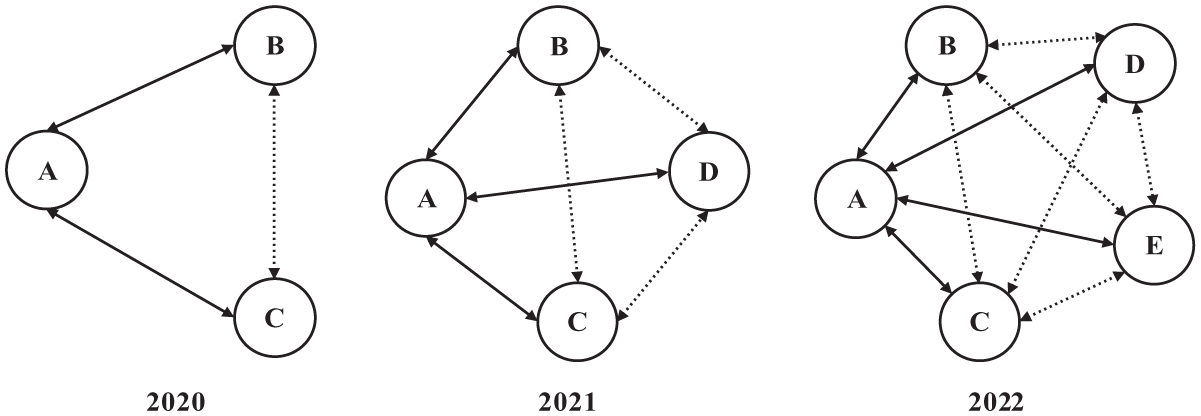
Evolution of the lead organization–governed network in the Jeonju Community Care Project (2020–2022).
Within this governance structure, the local government’s Department of Community Care plays a key coordinating and facilitative role. Public officials fostered trust and collaboration by maintaining open communication channels, providing timely feedback, and encouraging frequent interaction with partner organizations. These practices reflect a conscious effort to balance centralized coordination with horizontal collaboration, ensuring strategic alignment across organizations while preserving their autonomy.
To institutionalize collaboration, the local government created structured communication mechanisms through a series of regular meetings that served as the primary instruments for trust-building, coordination, and decision-making. Three types of meetings were particularly important in sustaining network interaction. First, case-specific coordination meetings were held to categorize older adults into one of the four safety nets. These meetings brought together public officials, cooperative staff, and medical professionals to jointly assess individual health conditions and service needs using survey data. This process enabled accurate classification and the development of targeted care plans, illustrating how interorganizational collaboration directly influenced service delivery.
Second, operational coordination meetings were conducted monthly among the local government, implementing organizations, and advisory groups. These meetings provided a platform for addressing implementation challenges, sharing updates, and aligning ongoing activities. Through regular dialogue, organizations refined their roles, resolved emerging issues, and adapted strategies to meet changing needs, thereby enhancing the responsiveness and effectiveness of the network.
Third, network-wide strategic meetings convened all participating organizations to discuss overarching project direction and policy issues. These sessions facilitated collective decision-making and reinforced shared objectives, creating opportunities for open dialogue and joint deliberation. As a result, they reinforced mutual trust and a sense of shared purpose among participants.
Together, these structured and ongoing interactions demonstrate that governance in the Jeonju case was enacted through routine collaborative practices rather than formal authority alone. The interplay of lead-organization coordination and horizontal collaboration allowed the network to operate cohesively while accommodating diverse organizational roles. Within this structure, trust-building, continuous communication, and coordination emerged as the defining governance mechanisms sustaining collaborative practice.
Network Governance Mechanisms Across the Stages of Social Innovation
The Prompt Stage: Problem Identification and Framing
Jeonju launched the Community Care Project in response to the city’s rapidly growing elderly population and rising demand for integrated care. Since 2019, residents aged 65 and older have accounted for more than 14% of the total population, officially classifying Jeonju as an aged society. In the same year, single-person elderly households represented 7.1% of all households. These demographic shifts revealed structural weaknesses in existing care systems and generated strong pressure for coordinated interventions, prompting the local government to take an active role in developing community-based care solutions.
In the initial stage, the Jeonju Health Welfare Social Cooperative emerged as a crucial partner in identifying and framing local problems. The cooperative had long prioritized elderly care and accumulated extensive experience in community-based service provision. Based in Pyeonghwa-dong, an area with high population density and a concentration of socially vulnerable residents, it had developed a deep understanding of local needs through sustained engagement with the community. Over time, the cooperative delivered primary care services and deployed trained “health keepers” to provide personalized, home-based support for older adults.
A defining feature of this stage was the cooperative’s ongoing communication with the community. Through continuous dialogue and close observation of daily challenges, it identified unmet needs and emerging gaps in existing welfare and healthcare services. This bottom-up insight complemented the top-down recognition of demographic pressures by the local government, ensuring that problems were defined not only through statistical evidence but also through the lived experiences of residents.
From a governance perspective, the prompt stage was characterized by collaborative interactions between the local government and a locally embedded social economy organization. The local government provided institutional impetus to respond to population aging, while the cooperative contributed community-specific knowledge gained through long-term engagement. The convergence of these perspectives produced a shared and contextually grounded understanding of elderly care needs, establishing a solid foundation for the subsequent stages of social innovation.
The Proposal Stage: Idea Generation and Development
In the proposal stage, the Jeonju Health Welfare Social Cooperative transformed identified community needs into actionable ideas through structured and collaborative processes. Internally, the cooperative facilitated idea generation and refinement through various meetings. Specialized teams, such as community care and elderly employment teams, held regular sessions focused on domain-specific issues. Weekly general meetings addressed ongoing operational challenges across the organization, while annual evaluation meetings, held at the transition between years, reviewed past performance and guided future planning. These multilevel and continuous interactions fostered ongoing reflection and deliberation, enabling the cooperative to generate new ideas while improving existing initiatives.
Externally, the cooperative expanded its knowledge base by collaborating with other organizations. To facilitate such collaboration, it established the Healthy Community Welfare Network, a coalition of 12 local organizations built on long-standing community relationships. By organizing the network, the cooperative mobilized locally embedded resources and services while reinforcing collaboration among participating organizations. The network served as a platform for learning by enabling members to exchange experiences, identify best practices, and adapt effective models to local conditions.
A prominent outcome of this interorganizational learning was the Community Kitchen with the Health Chatter Project, designed to alleviate social isolation among older adults who live alone. Recognizing the health risks associated with loneliness, the cooperative created a project that encouraged participants to gather, cook, and share meals. The initiative not only improved nutritional well-being but also strengthened social connectedness and mutual support. The project was inspired by a similar initiative from another social economy organization and adapted to local conditions, illustrating how external ideas and local knowledge can produce context-specific innovation.
From a governance perspective, the proposal stage reflected the interplay between internal coordination and external knowledge exchange. Continuous communication within the cooperative nurtured idea refinement, while collaborative relationships within the broader network facilitated learning and diffusion of ideas. Together, these mechanisms fostered shared learning and creative capacity, enabling the development of feasible and community-responsive project proposals. This process demonstrates how network governance supports social innovation during the proposal stage.
The Prototype Stage: Testing and Refinement
In the prototype stage, proposed ideas were tested, refined, and transformed into implementable initiatives through multilevel coordination within the governance network. This phase involved both internal validation within the cooperative and external alignment with public and organizational partners.
Within the cooperative, each initiative underwent a formal review process. Proposals were first considered by the management committee and then reviewed by the board of directors to ensure alignment with the organization’s mission and long-term strategy. As the highest decision-making body, the board approved only those initiatives deemed both feasible and consistent with the cooperative’s overarching goals. This internal process ensured that projects were conceptually sound before advancing to network-level coordination.
Following internal approval, the cooperative worked closely with public officials and other organizations participating in the Healthcare Safety Net Project. Because the local government organized and financed the project, its implementation required compatibility with municipal priorities and administrative procedures. Proposed initiatives moved forward only after being incorporated into the cooperative’s official business plan and receiving local government approval. This process underscored that innovation was co-produced through interorganizational coordination and alignment, rather than driven by a single organization.
Active collaboration with other implementing partners, such as the Jeonju Medical Association and Jesus Hospital, was equally critical. Regular joint meetings provided structured forums for sharing progress updates, exchanging feedback, and coordinating responsibilities among the stakeholders. These interactions helped prevent service duplication, ensured consistency in delivery, and enabled flexible responses to emerging issues. Through this iterative process, preliminary ideas were refined into practical models that could be effectively integrated into the broader community care system.
From a governance perspective, the prototype stage demonstrates the importance of coordinated decision-making and adaptive collaboration across organizational boundaries. Internal autonomy within each organization was balanced with external coordination, allowing innovation to evolve collectively rather than unilaterally. Continuous communication, transparent approval procedures, and joint problem-solving enabled the network to translate ideas into feasible and well-coordinated interventions. This illustrates how network governance bridges creative design and practical implementation.
The Sustaining Stage: Resource Mobilization and Continuity
In the sustaining stage, maintaining and expanding the Community Care Project required continuous mobilization of resources within an environment of financial constraints. Although the project operated under a multilevel funding system, with 50% from the central government, 10% from the province, and 40% from the local government, these funds were insufficient to fully cover implementation costs. Approximately one-quarter of the total budget was allocated to the Healthcare Safety Net Project, making efficient resource use and the acquisition of supplementary funding essential for ensuring continuity.
Resource allocation among participating organizations was negotiated collaboratively between the local government and implementing partners. Each organization submitted budget proposals based on its operational needs, which the local government then reviewed and adjusted based on overall funding availability. When requested budgets were only partially approved, organizations revised their plans to reflect the reduced amount. The final allocations considered factors such as organizational capacity, project scope, and the number of beneficiaries. These decisions emerged through ongoing meetings and discussions, demonstrating that financial coordination was managed through continuous negotiation and collaboration rather than unilateral control.
To overcome funding limitations, the local government pursued financial resources to sustain and institutionalize the initiative. A key strategy was to align the Community Care Project with other national programs, such as the Independent Living Support Pilot Project for Persons with Disabilities and the Home Healthcare Pilot Project, to secure supplementary funding. This vertical coordination across government levels allowed Jeonju to expand its services and strengthen fiscal sustainability, illustrating how alignment with broader policy agendas can enhance the sustainability of social innovation.
Concurrently, the Jeonju Health Welfare Social Cooperative mobilized complementary resources through its horizontal networks. Drawing on relationships within and beyond the Healthy Community Welfare Network, the cooperative engaged local organizations to jointly support service delivery. This network operated as a flexible resource pool, enabling the cooperative to access additional financial, material, and human resources outside formal budgetary channels. A mobile platform further streamlined coordination and resource matching, allowing needs to be identified and addressed efficiently across organizational boundaries.
A representative example of this network-based resource mobilization was the Emotional Support Project, designed to reduce social isolation among older adults. The project organized small celebrations for meaningful occasions, such as birthdays and traditional holidays. Despite limited funding, the cooperative successfully implemented these activities through collaborations with local organizations: the Ttobagi Cooperative provided discounted lunch boxes, while the Ureonggaksi Self-Sufficiency Center supplied flower baskets at a reduced cost. These in-kind contributions lowered operational expenses and ensured the program’s continuity.
From a governance perspective, the sustaining stage underscores the importance of both vertical and horizontal resource mobilization. Coordination with higher levels of government provided access to additional institutional funding, while collaboration among local actors enabled flexible and context-specific resource use. Through continuous negotiation, interaction, and coordination, the network maintained and expanded social innovation despite financial limitations. This outcome shows that the sustainability of social innovation depends not only on formal funding frameworks but also on the capacity of governance networks to mobilize, coordinate, and adapt diverse resources.
The Scaling Stage: Effectiveness, Legitimacy, and Sustainability
In the scaling stage, the Community Care Project extended its impact beyond individual interventions, producing measurable community-level outcomes and demonstrating its effectiveness as an integrated model of elderly care. Sustained collaboration between the local government and Jeonju Health Welfare Social Cooperative led to tangible improvements, including the prevention of lonely deaths, reductions in medical expenditures, and overall enhancement of the quality of life for older adults. These outcomes provide empirical evidence of success, a critical precondition for the wider diffusion and institutionalization of social innovation.
One of the most significant achievements was the prevention of lonely deaths through proactive monitoring and rapid intervention. The Community Care Supporters Project facilitated regular home visits by paired supporters who monitored the well-being of older residents and identified early signs of risk. To complement this initiative, the Health Call Project implemented routine phone-based check-ins by health keepers. When repeated calls went unanswered, the cooperative immediately launched follow-up visits. This integrated monitoring system reduced response times, strengthened reliability, and ensured that high-risk individuals received timely care and support.
The project also produced measurable financial benefits. A difference-in-differences analysis reported in an evaluation study commissioned by the Jeonju local government (Lee et al., 2023) compared medical expenditures between participants and nonparticipants in Wansangu and Deokjingu from 2018 to 2021. The findings showed that per capita hospital expenses in Wansangu decreased by KRW 1,060,000 over 6 months (a 37.1% reduction), while outpatient costs fell by 3.1% and hospitalization rates dropped by roughly 12% in both districts. These outcomes demonstrate that the project not only improved care delivery but also alleviated financial burdens on older adults and the healthcare system.
Improvements were also observed in the quality of life and chronic disease management. A 2022 survey of 500 participants (Lee et al., 2023) measured well-being across multiple dimensions, including self-reliance, care support, residential conditions, and caregiver burden. Respondents rated their overall quality of life as “good,” with scores ranging from 3.55 to 4.55. Measures of self-reliance, assessed through Activities of Daily Living (ADL) and Instrumental Activities of Daily Living (IADL), consistently exceeded 4 out of 5 and improved compared to the previous year. Additionally, 85.26% of the respondents reported high adherence to chronic disease management guidelines (average = 4.07 out of 5), and nearly 75% indicated an above-average self-management capacity. These results suggest that the project strengthened both service accessibility and individual health management skills among participants.
From a governance perspective, the scaling stage demonstrates how empirically validated outcomes, such as the prevention of lonely deaths, reductions in medical expenditures, and improvements in quality of life, reinforced legitimacy and sustained collaboration within the network. These results, directly attributable to trust-building, continuous communication, and coordination, strengthened confidence among the participating organizations and enhanced their commitment to the project. In addition, the accumulation of positive outcomes attracted continued policy attention and support, further stabilizing the network. Taken together, the Jeonju case shows how demonstrated effectiveness can reinforce network legitimacy and coordination capacity, contributing to the sustainability of network-based social innovation.
The Systemic Change Stage: Institutionalization and National Embedding
In the systemic change stage, the community care model developed in Jeonju moved beyond a temporary project phase to become embedded within both local governance structures and national policy frameworks. This stage marks the institutionalization of social innovation through the stabilization, formalization, and integration of new practices into existing governance and service delivery systems.
At the local level, the continuation of the model beyond its original project period clearly demonstrates institutionalization. After the Community Care Project officially ended in December 2022, Jeonju launched the Pilot Project for Integrated Medical and Care Support for Older Adults in July 2023, directly building on the framework and lessons learned from its earlier initiative. Because Jeonju had successfully implemented and refined the model since 2019, it was chosen as a pilot site for this new national program. To maintain continuity during the interim period, the local government independently financed the community care system until June 2023. This sustained local commitment shows that the model had become embedded in municipal policy and administrative routines rather than remaining a time-limited experiment.
At the national level, the Jeonju model contributed to broader systemic change through institutional embedding and program expansion. In December 2021, the Community Care Supporters Project was incorporated into the National Elderly Employment Project through collaboration with the Korea Labor Force Development Institute and the National Health Insurance Service. Renamed the Vulnerable Groups Care Service Project, it expanded rapidly to employ 1,806 care supporters across 54 institutions by February 2023 (Korea Labor Force Development Institute, 2023). This progression illustrates how a locally developed innovation was scaled up and institutionalized within a national policy framework.
A key mechanism enabling this diffusion was the standardization of practices. To ensure consistency and quality across regions, the national program adopted a training curriculum developed by the Jeonju Health Welfare Social Cooperative. By codifying the knowledge, protocols, and methods refined through local experimentation, this curriculum transformed a place-based practice into a formalized and transferable policy tool, facilitating its adoption across jurisdictions.
From a governance perspective, systemic change was driven by the interaction between sustained local collaboration and institutional alignment across levels of government. Long-term partnership between the local government and the cooperative provided the stability and credibility necessary to develop an effective model, while proven results encouraged its adoption at higher administrative levels. Through this process, social innovation was not only maintained but also embedded within formal policies and diffused across jurisdictions.
Discussion
This study provides both theoretical and practical contributions and clarifies the extent to which its findings can be analytically generalized and transferred to other contexts.
Theoretical Implications and Analytic Generalizability
This research advances the literature on network governance by explicitly linking governance modes to the process of social innovation. Building on the framework developed by Provan and Kenis (2008), the findings demonstrate that a lead organization–governed network is effective not merely because of its structural configuration but because of the governance mechanisms through which it functions, particularly trust-building, continuous communication, and coordination. While trust-building and continuous communication establish the relational foundation for collaboration, coordination translates these relationships into practice through formalized mechanisms for joint decision-making and resource alignment. Whereas earlier studies have often focused on structural design, relatively few have examined how these structures are enacted in practice to sustain collaboration and enhance effectiveness (Pulido-Gómez et al., 2025; van den Oord et al., 2023). This study extends existing scholarship by demonstrating that governance mechanisms are critical for aligning diverse actors and sustaining collaboration over time. By emphasizing functional mechanisms, including trust-building, continuous communication, and coordination, the analysis here complements the predominantly structural focus of earlier network research (Turrini et al., 2010).
The study further contributes by shifting analytical attention to community-level outcomes of network governance. Prior research has largely assessed performance at the actor level (e.g., organizational performance) or the network level (e.g., governance, accountability, and external legitimacy) (Siciliano et al., 2021). In contrast, this study demonstrates that networked governance can produce broader social impacts, including improvements in community well-being and systemic care integration. This responds to calls for greater attention to community-level effectiveness (Raab et al., 2015; Shumate et al., 2023) and highlights the importance of evaluating governance in terms not only of internal functioning but also of its social impact.
This study also enriches the literature on social economy organizations (SEOs) by clarifying their function within network governance arrangements. Consistent with prior findings (Jungsberg et al., 2020), the study confirms that SEOs play a pivotal role in identifying local needs and developing community-based innovations. It further advances the field by demonstrating that their effectiveness depends not only on their internal capabilities but also on their embeddedness within interorganizational networks (Ko et al., 2019). The Jeonju Health Welfare Social Cooperative exemplifies how SEOs serve as intermediaries connecting public institutions, service providers, and community actors, thereby enabling knowledge exchange and resource mobilization (Biggeri et al., 2017).
Moreover, this study integrates network governance theory with a processual understanding of social innovation. Earlier work has tended to emphasize networks as enabling environments for information sharing and resource mobilization (Ki et al., 2020; McKague et al., 2023), whereas this study shows that governance mechanisms evolve across stages of innovation. In the early stages, trust and shared goals are central to problem recognition and proposal formation, whereas in later stages, continuous communication and coordination become increasingly important for sustaining innovation, reinforcing legitimacy, and facilitating institutionalization. This stage-based perspective demonstrates that the influence of network governance is dynamic and context-dependent, shaping innovation differently as it matures.
Finally, this study employs the logic of analytic generalization (Yin, 2018) rather than pursuing statistical generalization. Its theoretical contribution lies in refining propositions about how key governance mechanisms, including trust-building, continuous communication, and coordination, interact with distinct phases of social innovation. These mechanisms represent general relational and organizational dynamics that extend beyond the Korean context, offering a framework for analyzing cross-sector collaboration and innovation in diverse settings.
Transferability of Findings: Conditions, Adaptations, and Barriers
To evaluate how the findings of this study may apply beyond the Korean context, several enabling conditions, necessary adaptations, and potential barriers should be considered.
First, transferability depends on key enabling conditions. Effective implementation requires (a) capable and locally embedded social economy organizations that possess community knowledge and local trust, (b) local government commitment to collaborative and relatively horizontal governance structures, and (c) stable or complementary funding that allows for policy experimentation and long-term program continuity. In the absence of these conditions, the governance mechanisms this study identified, such as trust-building, continuous communication, and coordination, are unlikely to function effectively.
Second, contextual adaptation is essential because the governance model should be adjusted to different institutional environments. Variations in welfare regimes, administrative traditions, and the strength of local civil society influence how network governance arrangements are structured and implemented. In contexts where civil society organizations are relatively weak or possess limited organizational capacity, collaborative efforts may depend more heavily on public agencies or intermediary organizations for coordination. Nevertheless, the core governance mechanisms identified in this study can be transferred across policy areas when appropriately adapted to local conditions.
Third, potential barriers may hinder replication and scaling. These include low levels of mutual trust among actors, limited organizational capacity, and unstable or short-term funding arrangements. In contexts dominated by hierarchical administrative cultures or where the civil society sector remains underdeveloped, collaborative processes similar to those observed in Jeonju may struggle to emerge or persist.
Overall, the transferability of this study’s findings depends on the presence of capable and locally embedded social economy organizations, local government commitment to network governance, and stable or complementary funding arrangements that support long-term policy continuity. When these conditions are met, the governance mechanisms identified in the Jeonju case can inform broader efforts to build effective, collaborative, and innovative systems of community-based governance.
Practical Implications
This study offers several practical implications for local governments, social economy organizations, and central policymakers, highlighting how network governance can enhance the design and sustainability of community-based social innovation.
First, local governments should move beyond formal coordination and actively institutionalize network governance practices. Sustained and structured interaction is essential for aligning goals, coordinating actions, and maintaining network effectiveness. Establishing structured communication platforms, including case-based coordination mechanisms, interorganizational coordination forums, and network-wide strategic meetings, can facilitate continuous information exchange, collective problem solving, and collaborative decision-making. Local governments should adopt a facilitative rather than a hierarchical role, encouraging horizontal collaboration, supporting shared decision-making, and sustaining interorganizational coordination. These practices foster mutual trust and strengthen the resilience of governance networks.
Second, social economy organizations (SEOs) should reinforce their capacity to serve as coordinators and integrators within collaborative networks. Their effectiveness depends on their ability to connect diverse actors and align fragmented services across organizational boundaries. This requires investments in capabilities such as interorganizational coordination, service integration, and information-sharing. SEOs should focus on substantive collaboration, such as joint problem-solving, resource pooling, and co-production, rather than symbolic participation. Building and maintaining trust is equally important, as it lowers coordination costs, enhances transparency, and sustains long-term collaboration across sectors.
Third, central policymakers should cultivate an enabling institutional environment for local collaboration. Stable, long-term funding mechanisms are essential for supporting innovation beyond the pilot phase and ensuring the continuity of successful initiatives. Policy incentives should be designed to promote cross-sector collaboration and support alignment among participating organizations. Additionally, central governments should allow flexibility for local adaptation while safeguarding national policy coherence. Facilitating knowledge exchange and learning across regions can further support the scaling and diffusion of best practices derived from pioneering cases such as Jeonju.
Finally, these insights are directly relevant to broader implementation of integrated community care systems. As governments increasingly prioritize coordinated service delivery, the Jeonju case demonstrates that effective integration depends not only on institutional design but also on functional governance mechanisms such as trust-building, continuous communication, and coordination. Embedding these mechanisms within policy and administrative frameworks can strengthen the effectiveness, sustainability, and scalability of community care systems across diverse local and national contexts.
Conclusion
This study explored how network governance facilitates social innovation through a stage-based analysis of the Jeonju Community Care Project. The findings show that governance mechanisms, including trust-building, continuous communication, and coordination, function differently across innovation stages, shaping its emergence, development, and eventual institutionalization.
By integrating the concept of network governance with a process-oriented understanding of social innovation, the study offers a framework for explaining how network governance arrangements generate sustainable and scalable policy outcomes. The results emphasize that the effectiveness of network governance depends not only on its structural configuration but also on the ways governance mechanisms are enacted and sustained in practice over time.
Overall, the Jeonju case demonstrates that locally embedded collaboration between public institutions and social economy organizations can lead to durable and transferable innovations in community-based care. It provides evidence that trust-based coordination and inclusive governance practices can transform local experimentation into formalized and replicable policy models. Future research could extend this analysis through comparative studies across different institutional and cultural settings, thereby refining the stage-based understanding of how network governance drives social innovation in diverse contexts.
Footnotes

Funding
The author received no financial support for the research, authorship, and/or publication of this article.
Declaration of Conflicting Interests
The author declared no potential conflicts of interest with respect to the research, authorship, and/or publication of this article.
Data Availability Statement
The data that support the findings of this study are not publicly available due to ethical and confidentiality considerations, as the interview data contain potentially identifiable information and were collected under Institutional Review Board (IRB)-approved conditions of confidentiality.