







Abstract
Having social support substantially reduces the effects of stressful experiences. Family relationships are central components of social support for African Americans. In a community-based sample of African Americans (n = 255), the relationship between family functioning and stress was examined, as well as possible mediators of this relationship, independent of demographic variables. Using multiple regression analysis, close and flexible family relationships were linked to lower perceived stress levels. The association of family functioning and stress operated through the internal processes of anxiety, depression, daily hassles, and higher hardiness and explained more than half of the variance in stress levels. These findings also remained above and beyond the known stressor of discrimination and the known stress reducer of spirituality. These findings suggest that expanding traditional stress management programs to include strategies for bolstering family functioning could have significant benefits.
Social support substantially reduces the negative effects of stressful experiences (Barrera, 2000; Uchino, 2006), and family relationships are central components of social support for African Americans (Hill, 1998a, 1998b). From childhood through adulthood, having positive support decreases an individual’s risk for negative outcomes, such as academic issues (Crosnoe & Elder, 2004) and excessive drinking (Jennison & Johnson, 2001); it also promotes well-being (Taylor, 1995). Conversely, not having social support is linked to increased depressive symptoms (Barrera, 2000; Glass, De Leon, Bassuk, & Berkman, 2006) and higher rates of mortality in adulthood (Uchino, Cacioppo, & Kiecolt-Glaser, 1996).
Although families can both increase stress and help individuals deal with stress better (Neighbors, 1997), African American families have been described as “stress absorbing systems” (McAdoo, 1982, p. 479). Yet few studies have specifically examined the association between family functioning and stress in African American families. Traditionally, studies examining family factors and stress in African American families have focused on specific aspects of family functioning or on specific populations. For example, relationship stress was linked with smoking among low-income African American women (Budescu, Taylor, & McGill, 2011). Additionally, having social and emotional support from extended family moderated the impact of family stressors on children’s externalizing behavior and stressful feelings such that when children had support, family stressors were no longer associated with acting out or emotional adjustment (McCabe, Clark, & Barnett, 1999); similarly, family support was linked to decreases in life stress in specific populations, such as emerging adults (Brody, Chen, Kogan, Smith, & Brown, 2010), low-income single parents (McCreary & Dancy, 2004), and college students (Chapman, Kertz, & Woodruff-Borden, 2009). Furthermore, families that functioned well helped families with a child with sickle cell disease adjust (Barbarin, Whitten, Bond, & Conner-Warren, 1999). Also, women who were HIV positive who were from well-functioning families were less affected by changes in their CD4 count (an indicator of immune system strength; Robbins et al., 2003). Other findings depict African American family functioning as either solely positive or solely negative (Gabalda, Thompson, & Kaslow, 2010; Littlejohn-Blake & Darling, 1993; Murry, Brown, Brody, Cutrona, & Simons, 2001), which provides a global picture of family functioning and stress but does not capture the impact of relationship quality. The quality rather than quantity of relationships often engenders positive results (Brody et al., 2010; Taylor, Tucker, Chatters, Jayakody, & Jackson, 1997). Below, the principles of family functioning are discussed, followed by a discussion of the broader role of the context in family functioning. The key principles of family functioning include flexibility and cohesion, while the broader context includes cultural, psychological, and psychosocial factors. The focus throughout is on applications to African Americans in particular.
Family Functioning
The present study is informed by family systems theory, which views the family as an identifiable system and not just a collection of individuals: It is an interacting system and an entity itself. A key component of systems theory is that “the whole is greater than the sum of its parts” (Whitchurch & Constantine, 2004, p. 328). Thus, one must examine systemic concepts that demonstrate interactions within the system. Constructs such as flexibility and closeness demonstrate systemic interactions that form overall family functioning.
As a system, families function with two predominant characteristics: flexibility (moving from rigid to flexible) and cohesion (from distant to close; Olson, 2000). Optimal family functioning is considered to be a balance of cohesion and flexibility, with suboptimal functioning at the extremes (i.e., too close or too disengaged; too chaotic or too rigid; Kane, 2000; Olson, 2000). Flexible families who remain close tend to have the highest functioning members (McCreary & Dancy, 2004). Balanced levels of cohesion and flexibility help stabilize family systems. According to the concept of homeostasis from systems theory, individuals strive for stability through balancing the system (Whitchurch & Constantine, 2004). Cohesion pulls families close while flexibility allows them to adapt to change, simultaneously stabilizing the system. If systems are not balanced, then they can cause stress as they strive to restabilize (Whitchurch & Constantine, 2004), or conversely, systems that are balanced could help protect its members from extra stress. This is the main premise of our study. Families that are able to adapt and change while remaining close are theoretically better able to meet the challenge of stressors.
Being close and flexible also tends to be key characteristics of African American families (Hill, 1998b; Pinderhughes, 2002). For example, rights and responsibilities in the household tend to be shared with children, and kinship obligations can shift from parents to other family members or close friends (McLoyd, Cauce, Takeuchi, & Wilson, 2000). Indeed, African Americans tend to have a more expanded definition of family that demonstrates flexibility. Hill (1998b) defines African American families as “constellations of households related by blood or marriage or function that provides basic instrumental and expressive functions of the family to the members of those networks” (p. 18). These characteristics also lend to family systems that value interdependence or collectivism (Karenga, 2007; McLoyd et al., 2000), which theoretically protect family members and reduce stress.
On the other hand, family relationships can also be direct sources of stress (Neighbors, 1997). Kasper et al. (2008) examined persistent family stress over 30 years and found that family stress predicted physical health, pain, and depression among African American women, independent of socioeconomic status. Additionally, a majority of respondents to the National Survey of Black Americans Panel Study cited interpersonal difficulties as a major source of stress (Neighbors, 1997). These findings show a significant link between family functioning and individual outcomes.
Family Functioning in Context
It is also important to understand the context outside of the family system (McLoyd et al., 2000). In family systems theory, context is a hierarchical suprasystem that interacts with the family system (Whitchurch & Constantine, 2004). Examining the context in which a family operates helps create a more complete understanding of both family and individual functioning. For example, in this study, a key contextual factor is being African American. Earlier research tended to pathologize African American family functioning (as discussed in Hill, 1998b); however, the past decade has seen an emphasis on diversity and cultural competence in social science so the processes within specific ethnic/racial groups need to be understood to further cultural competence (Kane, 2000). Although research has begun to focus on positive, protective, and resilient factors of African American families (Kane, 2000; Littlejohn-Blake & Darling, 1993; McAdoo, 1982), gaps in the understanding of family functioning exist, particularly relating to positive family functioning and stress in relatively healthy populations (Murry, Brown, et al., 2001; Murry, Bynum, et al., 2001). These contextual variables include cultural, psychological, and psychosocial factors.
Drawing from family systems theory and previous research, there are many positive and protective factors of African American families (Boyd-Franklin, 1989; Hill, 1998a; Kane, 2000; McAdoo & Younge, 2009). In addition to a strong reliance on the family (McAdoo, 1982; McAdoo & Younge, 2009; Stack & Burton, 1993), strengths include extended kinship networks, a strong reliance on religion (Pinderhughes, 2002), and support against discrimination (Littlejohn-Blake & Darling, 1993; McAdoo & Younge, 2009; Murry, Brown, et al., 2001). For a concept such as stress, multiple levels of factors (individual, family, and external) could combine to enhance or help relieve stress. Although our focus is on family functioning as a key influential factor, it is important to use a holistic perspective to account for multiple dimensions of African American lives (Hill, 1998a; Pinderhughes, 2002); therefore, the present study also focused on additional levels of influence related to stress: discrimination, spirituality, and individual processes (depression, anxiety) and appraisals (hardiness, daily hassles).
Discrimination
African American families have been shaped by the cultural and social context of being Black in America (Hammack, 2003; Hill, 1998b; Murry, Brown, et al., 2001). African Americans frequently experience racial discrimination. In an earlier study on the frequency of discrimination, 98% of African American families reported experiencing racism in the past year (Landrine & Klonoff, 1996). Whereas discrimination appears to amplify reactivity to other stressors, such as negative family functioning (Murry, Brown, et al., 2001), close family relationships can mitigate the effects of discrimination (Cutrona et al., 2003). Nonetheless, it is well established that discrimination induces stress (Jackson, Inglehart, Hobfoll, & deVries, 1995; Jackson & Stewart, 2003; Murry, Brown, et al., 2001) and predicts psychological distress more than negative life events (Utsey, Giesbrecht, Hook, & Stanard, 2008).
Spirituality
Many scholars have highlighted the importance of religion (McAdoo, 1995) and the church for African Americans (Hill, 1998b; Krause, 2006). The church has historically played a significant role in buffering societal stress (Mosley-Howard & Burgan Evans, 2000), as well as promoting health among African Americans, and operates as a larger system that interacts with families. Specifically, support from relationships within the church decreases stressful feelings (Krause, 2006).
Depression and Anxiety
Stress responses induce depression and anxiety (Kessler, 1997), and correlates of anxiety and depression likely vary by racial group, along with various cultural, contextual, and family variables (Aneshensel, 2009; Hunter & Schmidt, 2010; McGuire & Miranda, 2008). For instance, Herman, Ostrander, and Tucker (2007) reported that low family cohesion was related to depression among African American adolescents. Dearing (2004) also found racial differences in a study of parenting styles and depression and reported that whereas restrictive parenting had negative effects among Caucasian children, it had positive effects among African American children. Last, in a theoretical review of depression in African American urban youth, Hammack (2003) highlighted the importance of the quality of social interactions in combination with individual factors for a more integrated model to better understand depression.
Hardiness
How one views life and events has a significant impact on stress levels. For example, having a positive outlook on life and perceiving to be in control of one’s life (a concept called cognitive hardiness) positively affects one’s ability to deal with stress (Cutrona, Russell, Hessling, Brown, & Murry, 2000). For the purposes of examining stress, we focus on cognitive hardiness, which has some theoretical and empirical overlap with constructs such as internal control, self-efficacy, and neuroticism, but it is distinguished by the ability to buffer individuals from the negative effects of stress. Hardiness is often defined as having three components: commitment, control, and challenge (Kobasa, 1979; Maddi, 2002). Hardy individuals find meaning in life and everyday tasks (commitment), actively take control of experiences and problems (control), and view difficulties as challenges (Maddi, 2002). Hardy individuals are more likely to be stress resistant and therefore resilient in the face of hardship (Beasley, Thompson, & Davidson, 2003; Kobasa, 1979). Thus, hardiness appears to be a crucial stress-reduction characteristic and process and is important to include when examining stress. The relationship between hardiness and family functioning remains unknown, but it is of interest, given its link with stress.
Daily Hassles
The accumulation of hassles tends to increase stress. Dealing with general life stress increases distress and primes individuals to be more reactive to additional stress (Grote, Bledsoe, Larkin, Lemay, & Brown, 2007; Pieterse & Carter, 2007). These daily hassles can be found in the family, in the daily management of life, or through individual processes such as forgetfulness, tardiness, and indecision (Kanner, Coyne, Schaefer, & Lazarus, 1981).
Hypotheses
As described above, multiple factors may be related to family functioning and stress. We currently have a better understanding of the strengths related to African American family functioning, how different aspects of family functioning are related to individual outcomes, and of some factors associated with elevated (or reduced) risk for stress in African Americans. What remains unknown and the primary aim of this article is to understand how family functioning affects stress for African Americans. We hypothesized that flexible and close family functioning would be negatively related to individual perceived stress. Furthermore, we speculated that the relationship between family functioning and stress levels would be influenced by selected mediator variables: depression, anxiety, daily hassles, and hardiness. Through examining these mediational hypotheses, we expected to gain a better understanding of how family functioning is linked to individual perceived stress in African American families. We tested our hypotheses by controlling for multiple factors that can influence family functioning and stress, such as gender, age, education, number of children, and marital status. Additionally, given the well-known stress buffering resource of spirituality, and the stress-inducing factor of discrimination, additional models testing the above hypotheses and controlling for discrimination and spirituality were examined to understand the net effect of family functioning.
Method
Participants included 255 self-identified African Americans men and women aged between 18 and 60 years of age. They were recruited through newspaper ads and community bulletins for a larger experiment addressing health disparities in a large metropolitan city in the mid-Atlantic region. The study was approved by the university’s institutional review board and written informed consent was obtained from all participants. Sample characteristics are presented in Table 1. Most participants were African American (82.9%), followed by African (8.9%) and African Caribbean (2.2%). Most participants were female (63%), and mean age was 44.1 ± 11.1 years. Responses to “who did you include in your definition of family” were grouped into five categories (see bottom of Table 1). Most participants included parents/stepparents (65.1%), but many also included extended biological family (30.2%) and nonbiological kin (29.8%). These categories of family members were not mutually exclusive, and 59.6% of participants included individuals from two or more of the categories.
Demographic Characteristics (n = 255).
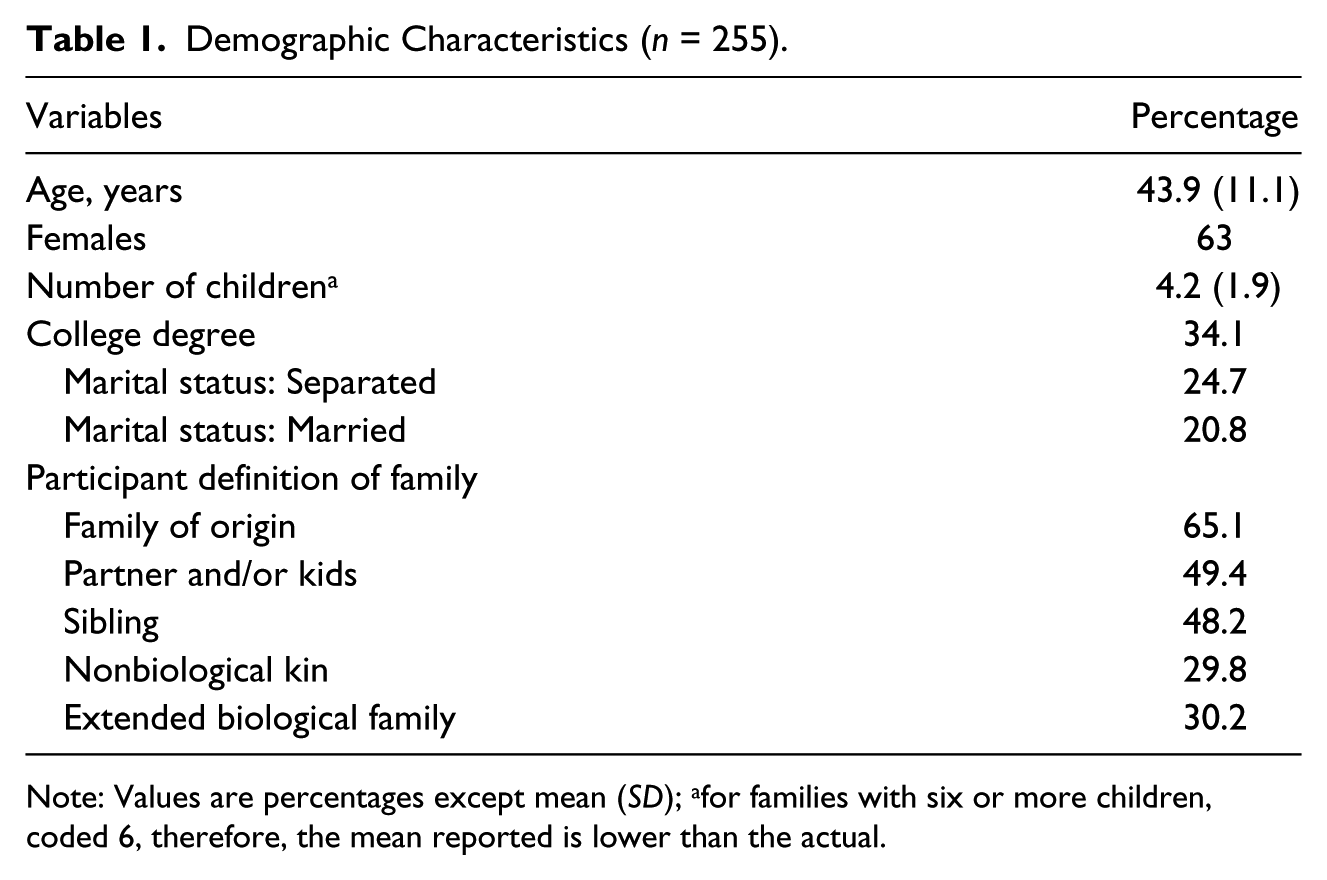
Note: Values are percentages except mean (SD); afor families with six or more children, coded 6, therefore, the mean reported is lower than the actual.
Measures
The questionnaires for family functioning (independent variable), stress (the dependent variable), four potential mediators (depression, anxiety, hassles, hardiness), and additional covariates of interest (discrimination, spirituality) are described below. Mean values for psychological questionnaires, along with Cronbach’s alpha, are presented in Table 2.
Questionnaire Mean (SD) Scores, Range, and Reliability Coefficient (n = 255, Except Where Noted).
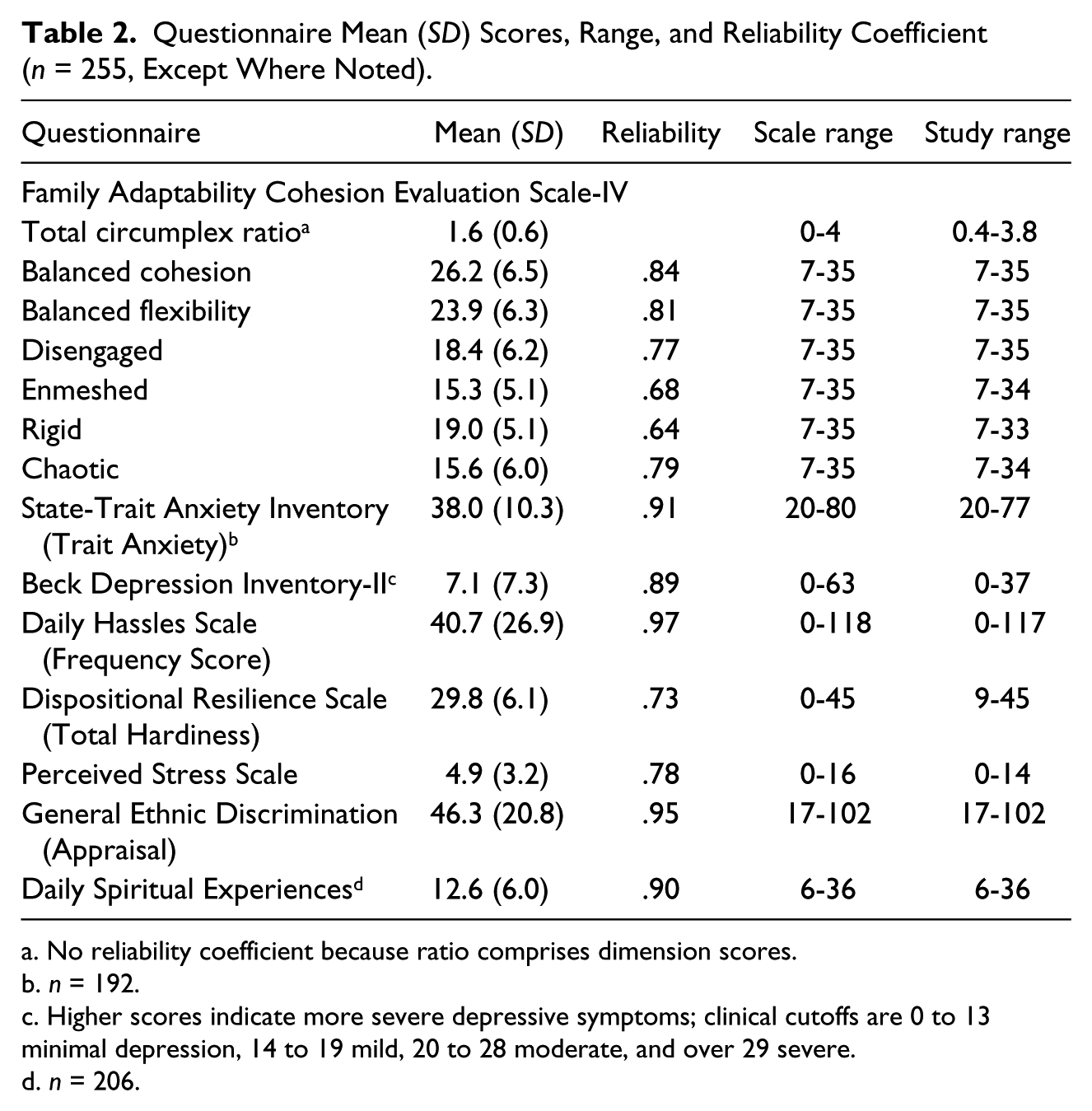
No reliability coefficient because ratio comprises dimension scores.
n = 192.
Higher scores indicate more severe depressive symptoms; clinical cutoffs are 0 to 13 minimal depression, 14 to 19 mild, 20 to 28 moderate, and over 29 severe.
n = 206.
Family Functioning (Independent Variable)
Family functioning was measured using the most recent version of the Family Adaptability and Cohesion Evaluation Scale (FACES) (Gorall, Triesel, & Olson, 2006). Previous versions of the FACES scale have been used in clinical settings for 25 years, in around 1,200 research studies (Kouneski, 2001), including studies with African Americans (Utsey et al., 2008). The fourth version of the scale, FACESIV consists of 62 questions assessed on a 5-item Likert-type scale, ranging from 1 = strongly disagree to 5 = strongly agree. It comprises two types of scales, those which assess a family’s balanced versus unbalanced traits. There are two balanced scales: cohesion (e.g., “Family members are involved in each other’s lives”) and flexibility (e.g., “In solving problems, children’s suggestions are followed”) and four unbalanced scales: disengaged (e.g., “Family members feel closer to people outside the family than to other family members”), enmeshed (e.g., “Family members feel pressured to spend most free time together”), rigid (e.g., “There are strict consequences for breaking rules in our family”), and chaotic (e.g., “There is no leadership in our family”). The Total Circumplex Ratio (TCR), which is equivalent to a total score, measures the level of “functional versus dysfunctional behavior perceived in the family system” (Gorall, 2006, p. 16). The ratio is calculated by dividing the average of the two balanced scales by the four unbalanced scales, with high scores indicating healthy or balanced family functioning and low scores indicating unhealthy/unbalanced family functioning. The present study used the TCR as an overall measure of family functioning, although mean raw scores from the six FACESIV subscales are presented as a more detailed representation of family functioning in the present sample, and to allow for comparison with other studies.
Individual Stress Levels (Dependent Variable)
The main outcome variable, stress, was measured using the Perceived Stress Scale (PSS), Short Form, which is a 4-item 5-response Likert-type scale questionnaire that measures the “degree to which situations in one’s life over the past month are appraised as stressful”—developed by Cohen, Kamarck, and Mermelstein (1983, p. 385). This scale reports on individuals’ overall view of their own stress level. Low scores indicate low levels of perceived stress and high scores indicate high levels of perceived stress (scores range from 0 to 16).
Mediating and Contextual Variables
Hardiness
Individual hardiness was measured with the Dispositional Resiliency Scale (DRS) by Bartone (Bartone, 1995). This 15-item scale (rated on a 4-point scale from 0 indicating not true to 3 completely true) measures personality hardiness, or the manner in which a person approaches and interprets experiences. It contains three subscales—commitment (e.g., “Most of my life gets spent doing things that are worthwhile”), challenge (e.g., “I enjoy the challenge when I have to do more than one thing at a time”), and control (e.g., “When I make plans I’m certain I can make them work”)—which combine to yield a total hardiness score. The present study used the total score. The scale has good reliability (reliability coefficient = 0.83) and internal consistency (Bartone, 1995).
Depression
Depression was measured with the Beck Depression Inventory-II (BDI; Beck, Steer, & Brown, 1996), which is commonly used to assess depression in clinical and research settings. The BDI is a valid and reliable scale, and it has been used in a variety of patient groups and validated across ethnic groups including African Americans (Beck et al., 1996; Sashidharan, Pawlow, & Pettibone, 2012).
Anxiety
Anxiety was measured with the State Trait Anxiety Inventory (STAI, Form Y; Speiberger, 1983). The STAI consists of 40 questions, answered on a 4-point Likert-type scale. Half of the items assess state or transitory feelings of anxiety, and half of them assess trait or stable individual differences in anxiety. This widely used scale has demonstrated adequate reliability across different ethnic groups (Novy, Nelson, Goodwin, & Rowzee, 1993; Speiberger, 1983). Since the STAI was added to the study after it began, 27% of the participants do not have STAI data. For analyses involving the STAI, demographics of participants with and without STAI data are compared with each other.
Daily Hassles
Levels of everyday stressors were assessed using the Daily Hassles Scale (DHS; Kanner et al., 1981), a 117-item inventory of everyday hassles (e.g., “too many responsibilities,” “care of pets,” etc.). Participants rate whether they experienced each hassle in the past week, and if they did, then they rate the hassle’s severity on a 3-point scale (somewhat, moderately, or extremely severe). The DHS produces a frequency score (a count of hassles that were endorsed), along with severity (sum of the severity ratings) and intensity (severity divided by frequency) scores. The present study used the frequency score as a measure of daily stressors.
Discrimination
Discrimination was assessed with the General Ethnic Discrimination Scale (GED), which consists of 18 contexts in which people may experience racial/ethnic discrimination (e.g., by neighbors, institutions, etc.; Landrine, Klonoff, Corral, Fernandez, & Roesch, 2006). For each context, participants provide three ratings: the frequency of discrimination within the past year (rated on a scale of 1 to 6, with 1 = never and 6 = almost all the time), over entire life (same scale as over past year), and how stressful the discrimination was (6-point scale, 1 = not at all stressful to 6 = extremely stressful). The GED is a reliable scale (reliability coefficient = .93), and it has been adapted for a variety of contexts (Landrine et al., 2006). The present study used the scale based on the stressfulness ratings, which is called the appraisal discrimination scale.
Spirituality
Spirituality was assessed with the Daily Spiritual Experiences (DSE, Short Form), a measure of spirituality that focuses on everyday feelings (e.g., “I feel God’s presence”) and experiences (e.g., “I find strength and comfort in my religion”) rather than explicit religious beliefs (Fetzer Institute/National Institute on Aging, 1999). Participants rate the frequency of six experiences on a 6-point scale (ranging from many times a day to never or almost never), with lower scores indicating higher spirituality. The Fetzer Institute/National Institute on Aging (1999) originally developed a 16-item DSE questionnaire, and later studies used a 6-item version (Davis, Smith, & Marsden, 2004), which was also studied and found to be reliable (reliability coefficient = .85) in a large African American sample (Loustalot et al., 2011).
Covariates and Controls
Since a large body of previous research in African Americans has focused on discrimination and spirituality, it was important to determine whether the mediational analyses were affected by these two variables, in addition to studying their main effects. Participants also completed a demographics questionnaire. In order to understand the association between family functioning and stress independent of demographic variables that could possibly influence our main variables of interest (Cain & Combs-Orme, 2005; Johner, 2007; Kasper et al., 2008; Keith, 1997; McAdoo, 1995; McLoyd et al., 2000; Petterson & Albers, 2001; Pinderhughes, 2002; Williams, Yu, Jackson, & Anderson, 1997), we controlled for age, gender, marital status, education, and number of children.
Analysis
Mean values and psychometric properties are reported for each questionnaire, along with participant demographics, with a focus on family structure (or which participants are considered to be in their family). Multiple regression analysis was used to test the relationship between family functioning (FACESIV, TCR) and stress (PSS). All reported regressions controlled for demographics, which included age, gender, education level, number of children in family, and marital status. Education was used to represent socioeconomic status instead of income, because 11.4% of participants preferred not to report income. Since there can be significant differences between categories, we wanted to examine the association of our main variables of interest above and beyond the control variables; therefore, we dichotomized demographic variables to indicate participants with a college degree or higher, marital status of divorced or married (coded separately), and last, number of children was coded as 0 to 5, or, for families with six or more, 6.
Analyses were conducted to determine potential mediators of the relationship between family functioning and stress, which included depression (BDI), anxiety (STAI), hardiness (DRS), and hassles (DHS). Mediation was tested using Baron and Kenny’s (1986) steps: (1) the independent variable (in this case, family functioning) was regressed onto the dependent variable (stress); (2) in a separate model, the independent variable was regressed onto the mediator (in this case, hardiness, depression, anxiety, and hassles); (3) in yet another model, the mediator was regressed onto the dependent variable; and (4) in a final model, the independent variable was regressed onto the dependent variable while controlling for the mediator. The Sobel test (Sobel, 1982) was used to assess whether the mediation effect was statistically significant based on the coefficients and standard errors from Steps (2) and (3) above. If the effect was significant (based on the Sobel test), the percentage of the relationship explained by the mediator was assessed based on the findings from Steps (1) and (4) above (Szklo & Nieto, 2006). Last, discrimination (GED) and spirituality (DSE) were assessed as covariates, in order to determine whether they affected the mediation analysis above. Additionally, their relationship to family functioning and stress was also assessed.
Results
Family Functioning and Stress
Family functioning was negatively associated with stress, β = −.32, t(255) = −5.00, p < .001, R2 = .12, when controlling for demographics variables (age, sex, education, family structure, and marital status). Regression results are presented in Table 3.
Regressions Examining the Association of Family Functioning and Perceived Stress: Mediation Models, Independent of Control Variables (n = 255).

Note: “DV” = dependent variable; “→” indicates which DV is used; n = 255 unless noted (^n = 192 for models involving Anxiety), independent of control variables, demographics (age, gender, number of children, marital status), and education level. **Significant at p < .001. Each line represents a unique regression model. Labels are as follows in the diagram: a = the association of family functioning (FF) and stress, independent of control variables; b = FF and mediator; c = mediator and stress; a2 = the association of FF and stress, including the impact of the mediator. Sobel equation used to determine mediation significance.
Mediator Variables
Mediation was assessed by determining (1) whether family functioning was associated with the mediator variable, (2) whether family functioning was associated with the dependent stress levels, and (3) when adding the mediator variable into the model with the family functioning and stress, whether the mediator variable was associated with the dependent variable. The following mediators were tested: depression, anxiety, daily hassles, and hardiness. Summary results from mediation analyses are graphically depicted in Figure 1.
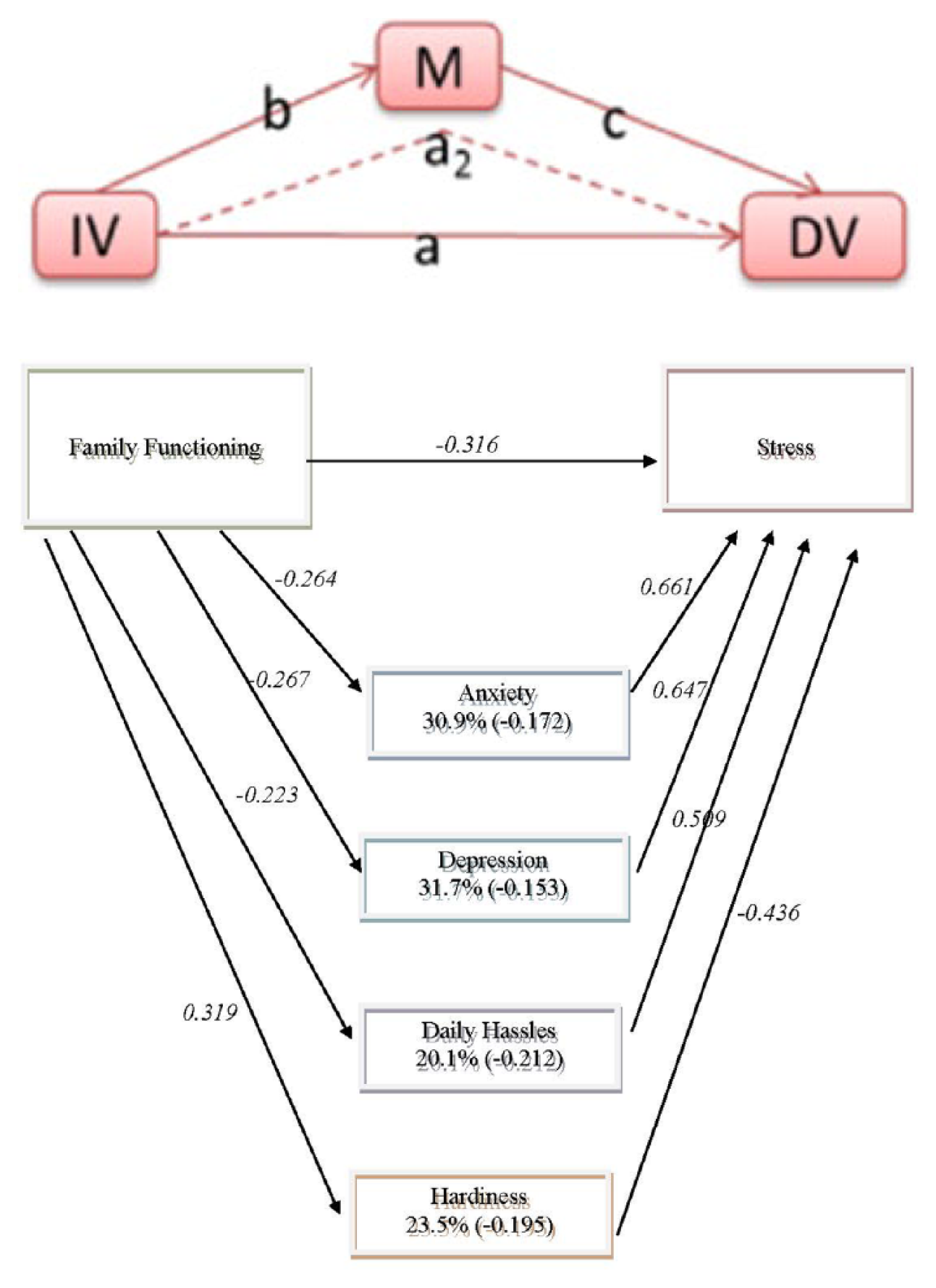
The association of family functioning and stress: Percent mediated by anxiety, depression, daily hassles, and hardiness, independent of demographics.
Anxiety
Out of the 255 participants, 63 did not complete the measured of anxiety (STAI). Compared with the rest of the sample, participants with missing anxiety data did not differ along the other psychological questionnaires, but they were on average younger (41.2 ± 11.6 vs. 44.7 ± 10.9, t = 2.2, p < .05), were more likely to have a college degree (46% vs. 30%, χ2[1, N = 255] = 5.3, p < .05), and were more likely to be married/living together (35% vs. 16%, χ2[1, N = 255] = 10.2, p < .05). Within this sample, family functioning was related to anxiety (β = −.37, t[192] = −4.63, p < .001), and anxiety was related to stress (β = .61, t[192] = 11.3, p < .005). Anxiety was a significant mediator (Sobel test = −3.53, p < .001), and after controlling for anxiety, the relationship between family functioning and stress decreased (β = −.17, t[255] = −2.88, p < .005, R2 = .47), mediating 30.9% of the relationship.
Depression
Family functioning was related to depression (β = −.27, t[254] = −4.27, p < .001), and depression was related to stress (β = 0.65, t[254] = 12.87, p < .001). Depression was a significant mediator (Sobel test = −4.85, p < .001), and after controlling for depression, the relationship between family functioning and stress decreased (β = −.15, t[254] = −2.92, p < .05, R2 = .44), mediating 31.7% of the relationship.
Hassles
Family functioning was related to daily hassles (β = −.22, t[254] = −3.52, p < .001), and daily hassles were related to stress (β = .51, t[254] = 9.06, p < .001). Daily hassles was a significant mediator (Sobel test = −3.25, p < .001), and after controlling for daily hassles, the relationship between family functioning and stress decreased (β = −.21, t[254] = −3.70, p < .001, R2 = .31), mediating 20.1% of the relationship.
Hardiness
Family functioning was related to hardiness (β =.32, t[254] = 5.09, p < .001), and hardiness was negatively related to stress (β = −.44, t[254] = −7.6, p < .001). Hardiness was a significant mediator (Sobel test = −4.2, p < .001), and after controlling hardiness, the relationship between family functioning and stress decreased (β = −.20, t[254] = −3.16, p < .002, R2 = .22), mediating 23.5% of the relationship.
Discrimination
Mean scores on the GED scale (46.3 ± 20.8; past year: 41.6 ± 15.8; lifetime: 41.6 ± 15.8) were comparable to those reported from other African American samples (Landrine et al., 2006). Controlling for demographic variables, appraised discrimination was not related to family functioning (β = −.12, p = .06). As expected, appraised discrimination was related to perceived stress (β = .24, p < .001), and controlling for discrimination somewhat reduced the effect size of family functioning on stress (from β = −.32 to β = −.28, p < .005), indicating that it accounted for some, but not much, of the relationship between family functioning and stress. Adding discrimination did not significantly alter any of the mediation analyses above. Discrimination emerged as a significant predictor of stress in the hassles (β = .12, p < .05) and hardiness (β = .20, p < .005) mediational models, but this had a minimal effect on the effect sizes of the other variables within those models.
Spirituality
Spirituality was related to both stress (β = .22, p < .001) and family functioning (β = −.16, p < .01; Note: low scores indicate high spirituality). Similar to appraised discrimination, controlling for spirituality somewhat reduced the effect size of family functioning (β = −.32 to β = −.29, p < .005), indicating that it accounted for some but not much of the relationship between family functioning and stress. When it was added to the mediational analyses, the DSE did not have a significant effect on the model. It did come out as a significant predictor of stress in the hassles mediational model (β = 0.13, p < .05), but this had a minimal effect on the effect sizes of the variables within that model.
Discussion
Following a family systems approach, the association of family functioning and individual stress levels was examined, as were factors that could influence this relationship. Findings from the current study build and extend previous research (Barbarin et al., 1999; Kane, 2000; Littlejohn-Blake & Darling, 1993; McAdoo, 1982; Robbins et al., 2003), which has found that specific aspects of family functioning influence individual outcomes (Johnson & Jennison, 1994; McCabe et al., 1999). As hypothesized, we found that close and flexible family relationships were linked to lower individual perceived stress levels. This relationship also remained above and beyond the known stress maximizer of discrimination and the known stress reducer of spirituality. Our findings also provide an additional understanding of the pathway from family functioning to stress levels, taking into account individual processes, as our hypotheses were supported for mediation. Specifically, the impact of family functioning on stress operated through the internal processes of anxiety, depression and daily hassles, and the buffering of hardiness.
Families as Stress Absorbing Systems
Previous research highlights being flexible and close as common protective characteristics of African American families (Gabalda et al., 2010; McCreary & Dancy, 2004; Robbins et al., 2003). Our findings also suggest that closeness and flexibility are important stress-reducing properties for African Americans. The relationship between positive (i.e., close and flexible) family functioning and stress highlights the positive impact that specific characteristics of family relationships can have on individual stress levels. Family relationships can provide valuable support (i.e., closeness) while adapting to changes (i.e., flexibility), whereas families that are more distant and rigid do not confer these helpful stress-reducing functions. Our findings clearly support that family relationships can be “stress-absorbing systems” for African Americans (McAdoo, 1982, p. 479)—when balanced with closeness and flexibility.
Our measure of family functioning (FAVESIV) covered a continuum of functioning, allowing for the distinction between those individuals from families with balanced levels of closeness and flexibility and those from families with apparently distant and rigid family dynamics. This spectrum offers a more thorough understanding of family functioning than dichotomizing as positive versus negative family functioning and shows that family functioning and relationships can have both positive and negative effects on stress (Neighbors, 1997). Respondents in our study who reported being from a family with more balanced levels reported lower stress. Indeed, other research has defined positive or “effective” family functioning within African American families as being affectionate, communicative (sharing, advising, and encouraging), doing things as a family, helping each other, and appropriate parenting (McCreary & Dancy, 2004)—characteristics of closeness and flexibility. Hill (1998a) emphasizes that positive communication, social engagement, and flexible functioning are key resilience-building characteristics for African American families.
Family Factors Influential of Individual Processes
Since family relationships do not operate in a vacuum, our findings provide an additional understanding of the path from family functioning to stress, taking into account individual processes that can influence stress. Specifically, the impact of family functioning on stress operated through the internal processes of anxiety, depression, daily hassles, and hardiness, independent of control factors. Flexible and close family relationships were associated with lower levels of anxiety, depressive symptoms, and daily hassles and higher levels of hardiness. These findings follow family systems theory suggesting that family functioning is a key factor influencing individual processes and outcomes. This builds on previous findings that an individual’s relationship with his or her intimate partner help them be less likely to become depressed or anxious, thus highlighting the positive effect relationships can have on individual processes (Murry, Brown, et al., 2001).
Our findings provide additional context from a systemic perspective. Flexible and close family functioning is linked to better individual processes and outcomes—and taken together, they predict half of the variance in stress levels. These findings underscore the importance of the link between positive family functioning and lower levels of depression, anxiety, and daily hassles. Having loved ones who support and adapt with you through life’s challenges appears to exert a calming effect that is linked to lower levels of anxiety, depression, daily hassles, and, ultimately, to less stress. Of note, the association between family functioning and stress operated through each individual process similarly. For example, family functioning was negatively associated with the negative processes of depression, anxiety, and daily hassles (and stress) and positively associated with the positive process of hardiness.
Our finding that flexible and close family functioning is linked to higher hardiness levels is an addition to the literature. Having a positive outlook on life and perceiving to be in control of one’s life (key factors of hardiness) are well known to positively impact one’s ability to deal with stress (Grote et al., 2007). Extensive research shows the protective effect that feeling in control has on individual stress levels (Cutrona et al., 2000; Grote et al., 2007). Our findings extend this research to link hardiness with family functioning and stress. Individuals who have a positive outlook on life and feel more in control of life are more likely to be proactive in dealing with stressful feelings, thereby mitigating them (Grote et al., 2007). It is also likely then that these characteristics of hardiness would apply to family functioning—as our study found. In our sample, individuals who reported more flexible and close family relationships reported higher levels of hardiness, which, in turn, were linked to less stress. However, caution in generalizing this finding should be exercised as causal references cannot be made because of the cross-sectional nature of our study. Whether hardy individuals are less sensitive to negative aspects of family functioning, or whether positive family functioning begets greater hardiness, remains to be explored. However, Black, McBride, Cutrona, and Chen (2009) found a complimentary finding by using a similar mediation model, which showed that mothers who were involved in their church, community, and family activities reported lower anxiety and depressive symptoms and, in turn, better physical health than mothers who were not involved. In addition to engagement in external and family activities, Black et al. found that feeling more in control (one aspect of hardiness) was associated with lower depressive and anxiety symptoms, which linked to better physical health. Their findings, similar to ours, demonstrate how external factors operate through individual processes to influence individual outcomes.
Controlling for Discrimination and Spirituality
Last, the relationship between family functioning and stress remained above and beyond the known stress maximizer of discrimination and the known stress reducer of spirituality. This supports and extends previous research. Historically, spirituality has played a significant role in buffering societal stress (Mosley-Howard & Burgan Evans, 2000), and discrimination in increasing stress for African Americans (Murry, Smith, & Hill, 2001); this is reflected in our findings. Interestingly, family functioning was the most influential external factor we examined, as our findings remained significant after taking into account the relationship of discrimination and spirituality, respectively, with stress. This further suggests that close and flexible family relationships are important stress-reducing resources and serves as a unique resource that remains effective in the face of discrimination for individuals above and beyond spirituality.
Practical Applications
Our findings identify key factors related to stress that can be focused on for programming and practical applications. First, positive family functioning can have multiple benefits, given that it was related to many individual processes. It could be helpful to expand traditional stress management programs and psycho-education about stress to include the potential positive effect of family functioning. Second, family functioning may act through individual processes as well. Helping families balance flexibility and closeness might confer valuable stress-buffering qualities that are twofold—help individual and family processes. And since families operate as a system, the stress-reduction properties could reverberate throughout the family—providing stress relief for more than one individual. Indeed, Brody et al. (2010) suggested that positive, supportive relationships can help “block the effects of life stress” by helping individuals be able to downregulate negative emotions, increase positive emotions, and work toward goal accomplishment. Close and flexible family relationships can be fostered through focusing on the following behaviors/aspects: being emotionally nurturing and affectionate to each other; sharing, advising, and encouraging each other verbally or behaviorally; doing activities as a family; being helpful in tangible ways; and parenting children effectively (McCreary & Dancy, 2004). Practitioners who work with families can focus on building positive functioning through these enhancing behaviors.
Last, multiple levels of stressors and resources were examined in our study. Our findings that hardiness and family functioning are linked highlight a possible intervention point building on previous research. Grote et al. (2007) suggested that stressed individuals can learn how to identify stressors that are changeable and those that are nonmodifiable. This bodes well for family relationships as oftentimes family relationships can be modifiable, fostered, and enhanced through skill acquisition (e.g., communication training) and outside assistance, as needed (e.g., Marriage & Family Therapists; Hawkins, Blanchard, Baldwin, & Fawcett, 2009). Additionally, given how family relationship quality conferred significant positive benefits to individuals above and beyond the impact of stressors such as discrimination, low educational attainment, and typical family stressors, such as number of children, could indicate that regardless of the type of external stressor, positive family relationships could bestow important stress-reduction properties.
Limitations
Our findings should also be considered within the context of the study’s limitations. Since our sample is community based, it is not a representative sample and only generalizable to African Americans in our large, metropolitan area. Additionally, examining multiple individuals in the same family would help us better examine family functioning from multiple perspectives. Also, what is unknown, and possibly a topic for future research, is how multiple positive resources, such as family relationships and spirituality, work together to impact individual processes and combat stressors in daily life.
Strengths and Conclusion
Our study has many strengths. First, in order to apply a culturally sensitive lens to better understanding family functioning, our respondents self-identified who they considered to be in their family—through blood, adoption, kinship ties, and/or friendship. Previous research has found that African Americans tend to have an expanded definition of family, which is sometimes overlooked in studies that limit the definition to nuclear family and/or biological or legal ties (Hill, 1998b; Kane, 2000). In fact, the traditional definition of family has been replaced by a more inclusive definition in concert with the African American definition. Therefore, our measure of family functioning asked open-ended questions related to who respondents considered to be in their family, and it is consistent with Hill’s (1998b) definition of African American families. Second, our sample consisted of individuals not screened for a particular disease or criterion variable, thus representing a relatively healthy sample. Third, by examining family functioning as a whole, we gained a better understanding of the entire family system rather than focusing on a specific dyad within the family system. Our findings indicate that close and flexible family relationships are linked to lower stress levels, whereas individuals from distant and rigid families report higher stress levels. Additionally, the association of healthy family functioning on lower stress operated through internal processes—lower anxiety, depression, and daily hassles and higher hardiness—independent of control factors. By examining individual, family, and contextual factors, we were able to have a better global understanding of how family functioning affects individual processes that in turn affect stress levels. Our findings suggest that expanding traditional stress management programs to include bolstering and enhancing family relationships could have significant benefits. Last, our study fills a gap in the literature with regard to increasing the understanding of family functioning within African American families from a strength-based perspective.
Footnotes
Authors’ Note
The opinions and assertions expressed herein are those of the authors and should not be construed as reflecting those of the Uniformed Services University of the Health Sciences or the Department of Defense.
Declaration of Conflicting Interests
The authors declared no potential conflicts of interest with respect to the research, authorship, and/or publication of this article.
Funding
The authors disclosed receipt of the following financial support for the research, authorship, and/or publication of this article: The project was funded by NCMHD, National Institutes of Health, Bethesda, Maryland, Establishing Exploratory NCMHD Research Centers of Excellence (P20), RFA-MD-07-001.